
You are currently browsing the category archive for the ‘Fine Art’ category.

Liquidation Sale VII, 2000. Mitch Epstein New Orleans Museum of Art, Louisiana II, 2005. Mitch Epstein
–
After six months of media pantomime and make-America-proud electioneering, the U.S. presidential scrap finally kicked off last night. At last, we got to the beginning of the start of the business end of choosing the candidates who are to duke it out in November.
The Iowa Caucuses threw up some winners and some losers, but I was most interested in how the billionaire Trump bombed and how avowed Socialist Bernie Sanders went toe-to-toe with the SuperPAC-fuelled Hillary machine.
Strangely, early in the races, news commentary threw Trump and Sanders in together as outsiders and insurgents. They both represented challenges to political orthodoxy. Bernie adheres to the principles of leftie politics; he’s almost by-the-book socialist. A pure version of the left. (Whether Trump is the pure version of rightwing politics, I’ll leave to others to debate. He does seems to have taken conservatives’ hatred to it’s extreme.)
Presidential campaigns invariably come down to economics and 2016 has proved no different. The United States is more than seven years on from the Great Recession and yet still wealth disparity is at the forefront of political debate. Either we (oil) barrel our way out of economic malaise hoping that everyone wins a piece of the wealth-pie or we seek to tax the United States’ gradually growing economy to redistribute the wealth.
Iowa was fascinating because it was the first taste of how voters think about daring approaches to national fiscal management. Trump, an anti-establishment bully of capitalism, lost out in the Hawkeye State whereas Sanders, the optimistic, social program-loving senator held his own.
In this moment, we must remember that the term “The 1%” did not exist in public lexicon before the Occupy Movement. Sanders resonated because he faces the economic facts. We know the economic gap is larger than ever before. What’s this got to do with photography? Well, depicting economic forces and inequality is no easy task. Not one image can do it, but perhaps a collection can. No collection does it better than Myles Little’s 1%: Privilege in a Time of Global Inequality.
In a follow up to my article Photos of the 1% and the Interests They Protect and to mark the occasion of Lyttle’s exhibition making it to book, I have shared Geoff Dyer’s introductory essay on Vantage.
–
Geoff Dyer on Globalization, Inequality and Photography
This resilience [as read in Lange and Evans’ photographs] was easily incorporated into the ideology of ceaseless endeavour that continues to underpin the system of exploitation that condemned them to destitution in the first place. It’s just that now, instead of loading up your jalopy and heading for California, you take a second, badly paid job; The Grapes of Wrath has turned into Nickel and Dimed. The iconic photographs of the Great Depression, meanwhile, have acquired a kind of stonewashed glamour.
Read the piece in full: Geoff Dyer on Globalization, Inequality and Photography
–

Refugees arriving on Kos, Greece, in August 2015. Jörg Brüggemann—OSTKREUZ 

Untitled #5, from Hedge. 2010. Nina Berman—NOOR

Opéra de Monte-Carlo, Monte Carlo, Monaco. 2009. David Leventi

Untitled #IV, Mine Security, North Mara Gold Mine, Tanzania. 2011. David Chancellor
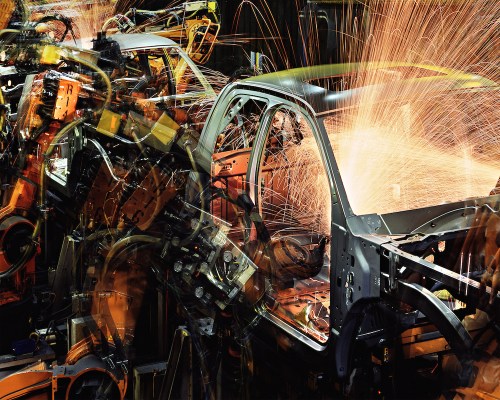
Chrysler 300. 2007. Floto+Warner 
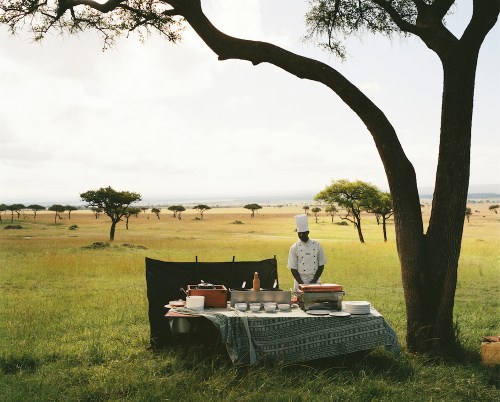
A chef from a nearby luxury lodge waits for his guests to arrive from a hot air balloon excursion before serving them champagne in the middle of the Maasai Mara National Reserve, Kenya. 2012. Guillaume Bonn—INSTITUTE

Tong, aged twenty-nine, poses for her wedding pictures at Princess Studio, a wedding photo studio in Shanghai, China. 2013. Guillaume Herbaut—INSTITUTE 

Jeff Koons, Stedelijk Museum, Amsterdam. 2012. Henk Wildschut

Cole Haan, Chicago, IL, 2013. Brian Ulrich

Looking East Over Unbuilt “Ascaya” Lots, Black Mountain Beyond, Henderson, NV. 2010. Michael Light

Rivoli Theater, Berkeley, CA, 2013. Opened as a cinema and performance space in 1925, closed in the nineteen-fifties. Subsequently used by various supermarkets. Yves Marchand and Romain Meffre 

A twenty-five-year-old British man in London undergoes surgery to reduce the size of his nose. 2011. Zed Nelson
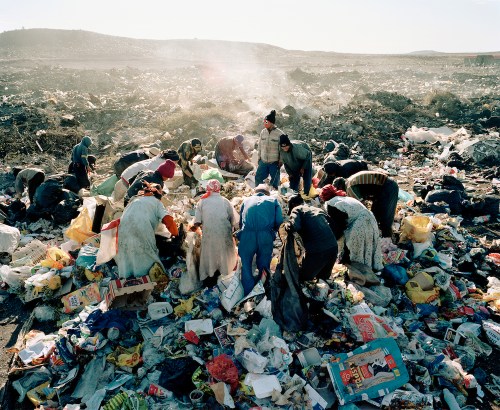
Residents, Vaalkoppies (Beaufort West Rubbish Dump), 2006. Mikhael Subotzky, courtesy Goodman Gallery

Before Christmas, I mentioned that Zora Murff‘s first photobook Corrections–published by Ain’t Bad Editions–was out. I was invited to write the introduction essay. Murff and I agreed that it’d be nice to share the essay with some images here on the blog.
The title of the essay “Off Paper” comes from a common phrase used by many of the children with whom Murff worked. It refers to the time when they will no longer be supervised, monitored, checked, tested or on probation. I thought it interesting that they describe paper documents as the form that control takes. Especially as it is networked, electronic, digital devices that are increasingly used to maintain the day-to-day control over their activities.
Paradoxically, Murff has tried to describe the children’s experiences and individuality beyond the formless, GPS surveillance, the case number and the rules under which each lives. Murff has used photography–and specifically the photobook–to do that. He has put them on paper. Unlike legal paper, the paper of art is non-binding and possibly more sympathetic.
The kids hope they are only temporarily on paper, in the legal sense, but Murff’s book locks them permanently in. And on.
Scroll down for the essay.
–

–
OFF PAPER
“My therapist said that I’m a criminal because I think like a criminal. She’s wrong. I’ve just made some bad choices when I’m in the moment. It doesn’t mean I’m not capable of doing right.”
– A youth in the Linn County Juvenile Detention & Diversion Services system.
–
The extreme cruelties and systemic failures of the United States’ brutal prisons are, at this point, well known. Far from being a solution, mass incarceration in America has exacerbated profound social problems, widened the gap between the haves and have-nots and set generations back. We’re starting to accept these truths and admit our collective mistakes. We’re starting to think less-and-less of prisons as institutions that solve the behaviors and social dynamics that lead to the state’s need to control; we’re starting to identify them as the problem. Across the country, prisons and detention are now considered a last resort for the disciplining of children.
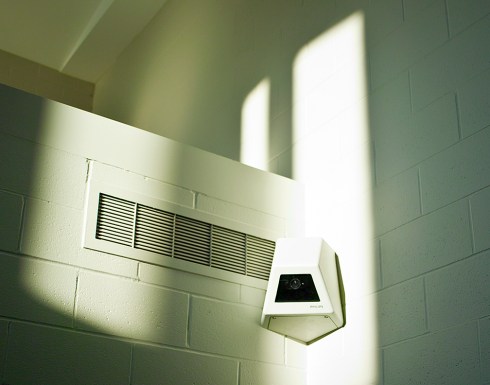
As criminal justice agencies employ community supervision more and more, monitoring systems are used more and more. James Kilgore — academic, activist and a man who was once electronically monitored — has described ankle bracelets as “going viral in the criminal justice system.”
In 2005, 120,000 people wore electronic monitoring ankle bracelets; in 2012, the figure was 200,000; and in 2015, we can assume the figure has grown further still. Proportionally, within the 7 million people under correctional supervision in the United States, a larger percentage of youth wear monitoring devices than adults.
Imprisonment is known to negatively impact young minds and bodies far more severely than those of adults and current policy — and carceral logic — deem ankle bracelets a palatable, convenient and more humane alternative. There are some blind-spots to this logic.


Corrections comes at a crucial moment. Electronic monitoring (EM) has come into its own in the age of GPS. Faster, more accurate and more reliable than previously-used radio-based devices, GPS technologies provide the state agencies responsible for managing sentenced and pre-trial citizens with the rhetoric of control, the vision of the future and assurances to the public of total security.
EM is presented as a more humane, productive and progressive means of social control. Companies such as iSecure Trac, Secure Alert, Pro Tech, GEO and Omnilink which manufacture ankle bracelets also talk up the cost savings to their state clients.


All this to say, that this moment, in which we as a society are turning ever more faithfully to electronic monitoring, is not based solely on enlightened policy based upon supposed enlightened morals and the prioritization of the humane. No, it is based in large part to salesmanship in growth industries and the rhetorical promise of redemption through technology.
Corrections is an opportunity to reflect upon what is means to rely on widespread, diffuse and near total surveillance to correct antisocial behaviors. Furthermore, it is an opportunity to interrogate the outcomes of such surveillance upon larger society and the problems GPS-powered panopticism purports to address. Do ankle bracelets prevent criminal acts? Does EM propel, distract or compliment our investment in educational, economic and healthcare systems–systems we know improve citizens and reduce anti-social behaviors?
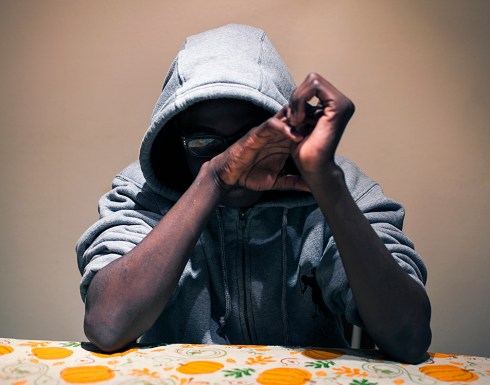
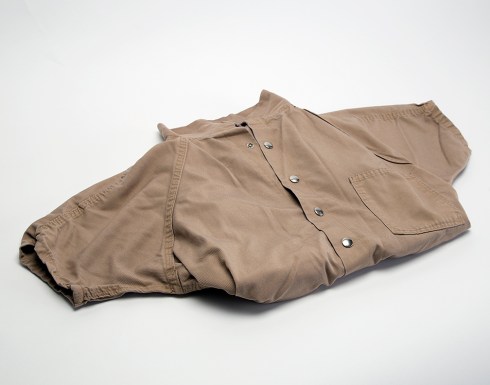


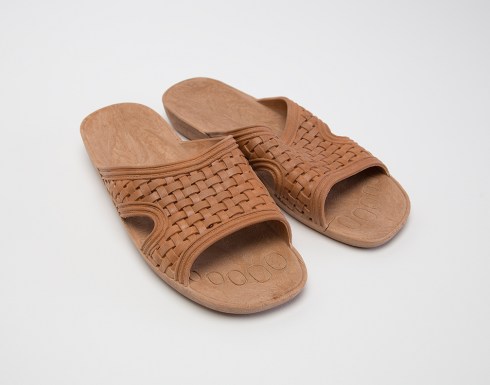
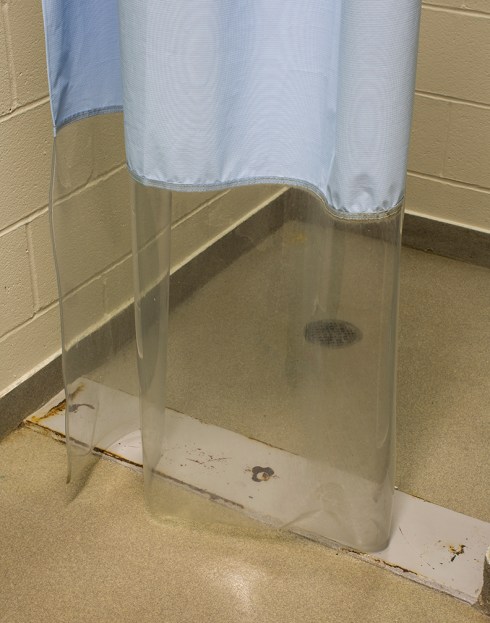
While many of the recent headlines about juvenile justice reform have focused on New York State, California and the South, ankle bracelets are utilized nationwide. It is fitting that Corrections emerges from Iowa, the heartland of America. The young men and women in Murff’s photographs are ordinary children, just like all children are ordinary. And yet, we have a propensity to think of urgent debates about the social contract we share as being those centered around the big cities. GPS tracks kids the same in the Midwest as it does in urban cores; it “knows” geography but does not adhere to our regional stereotypes. Corrections, in its modest way, puts the debate about electronic monitoring of youth into all our communities.
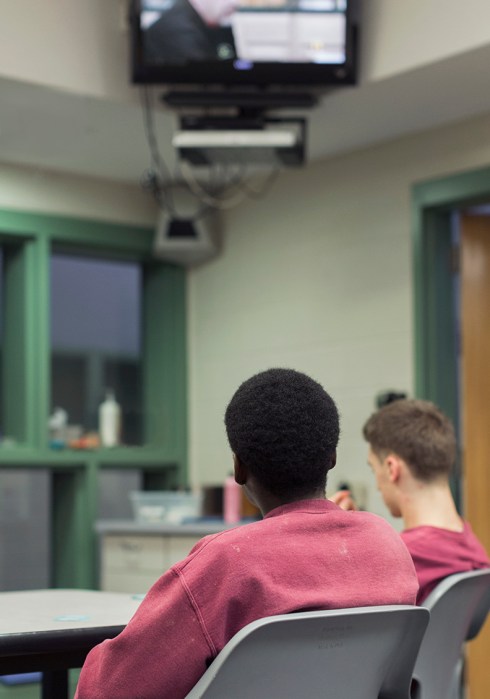
Helping children to modify and understand their behavior is a vital task — a fact Murff acknowledges. Ask any of the teens he monitored and they’d say they were happier being out in the community than locked up. Murff grew close to many of the children through face-to-face contact with youths on a regular basis. He talks of “watching the youths grow throughout the probation process.” But that does not mean that all the teens evaluate their monitoring as fair or right. Having a clunky box strapped to ones leg can hamper ones feeling of freedom just as much as being locked within a box. This tension–this constant to-and-fro about the costs and benefits of EM–is what informs Murff’s photographs, and his images provide some avenues to explore the tension.



The kids in Corrections are anything but armed and dangerous. The portraits came out of collaboration, discussion and sometimes accident. The evasive gesture and posturing of anonymous subjects is, for me, less a metaphor for the youths’ prior furtive behavior, but more a metaphor for our collective unknowing of the mechanism of the monitoring systems that we fund in order that they might inhabit them.
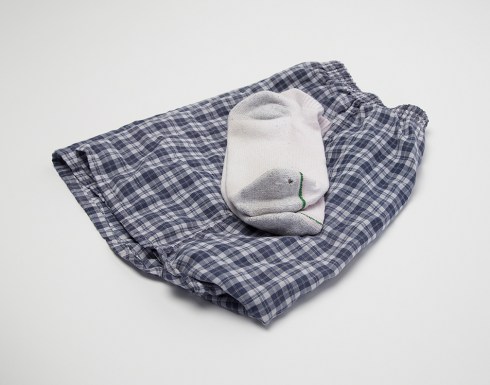
If the portraiture in Corrections is artful and poetic, then the studies of objects are pure documentary. Images of standard-issue deodorant, case files, uniforms, bracelets and other accouterments remind us of the regime and remind us of the industries behind it.


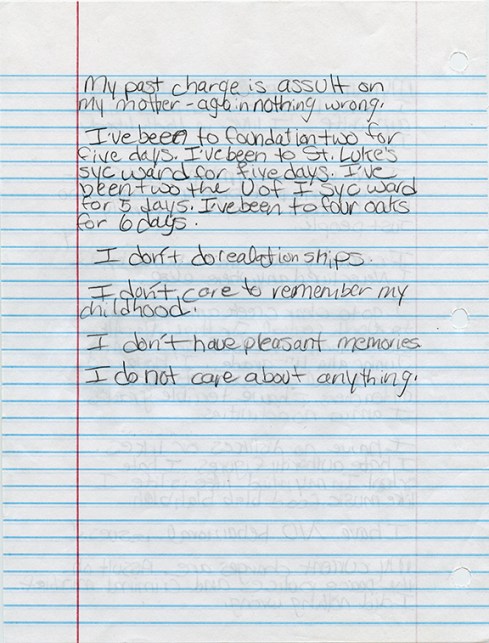
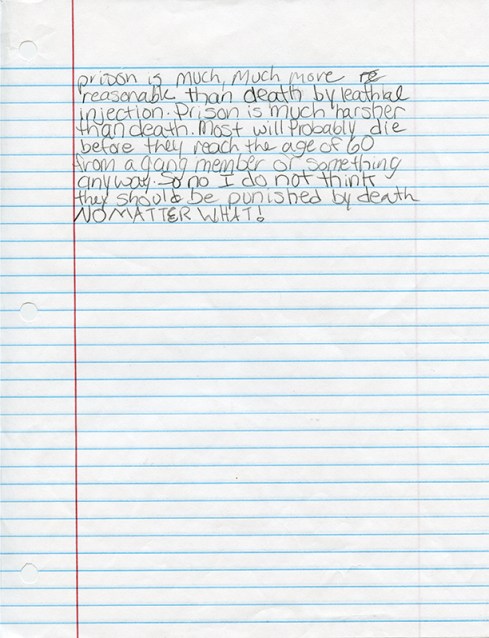
A youth writes “I have what I need to be fine,” on a self-assessment form and reminds us of the gulf, often, between what a child in crisis needs and what a caring society might be able to provide. It puts us right there. In tension. By contrast, a beautiful sun-dappled portrait of a youth seems so very far removed from the contested system and its narratives. Until you notice the ankle bracelet.

(But) seeing the system and understanding the system are not necessarily the same thing. Indeed, the ability to see is a great privilege. GPS “sees” relentlessly. Can Corrections help us understand the psychology and control at play as well as EM purports to understand the needs of youth and community?
Some of Murff’s images fill our gaps in knowledge; others inhabit blind spots in our collective understanding of a legally protected arena. What we learn, mostly, from Corrections is that we’ve more to know about how we’re helping troubled kids. We know that we’re using electronic monitoring more readily. How far will we proceed with this brave, new technology? Some Texas school districts, which include a large number of black and latino students, have expanded the use of EM for kids with histories of excessive truancy.
What does Murff’s documentation of fracture and healing from Iowa tell us about this very 21st Century practice? What is this version of freedom and control? Do we accept it?


One afternoon, Murff was sat in the bedroom of a young man for whom he was responsible for monitoring. The teen was playing his guitar and Murff was making a photograph. Then, a friend of the teen came to the bedroom window. He was confused by Murff, his camera, and the scene before him. Without missing a beat, the teen told his friend that he had just been signed to a record label and that Murff was from Rolling Stone Magazine.
I end with this anecdote because the teen, in spite of his circumstances, was witty and present. And he had agency. Lighthearted moments are harder to come by when people are implicated in the criminal justice system. Corrections is a serious body of work about a serious project, but it has been built on years of very personal interactions. For the protection of the youths, all of Murff’s subjects remain anonymous but that doesn’t mean they are distant.
What we think today affects what we do tomorrow. As you leaf through these pages, think about how you would feel as a kid under monitoring, think about your current attitudes about “delinquent” kids, and think about if those can change. Think about these things today because, certainly, there’ll be more electronic monitoring devices tomorrow.
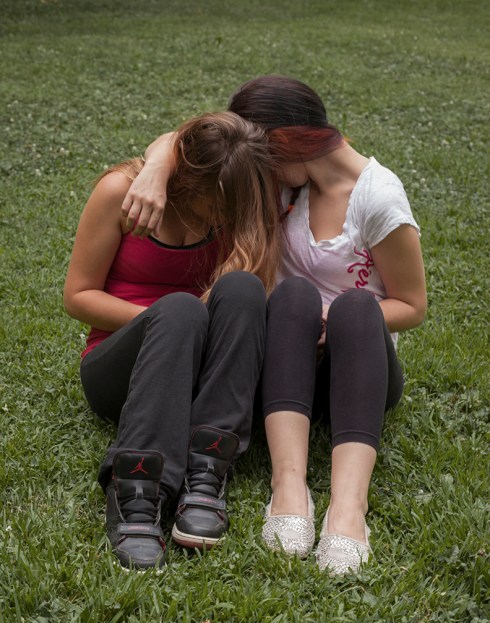
–
CORRECTIONS THE BOOK

Title: Corrections, 2015
Size: 9.75 x 7.75 in
Page Count: 80 pages, 40 images
Publisher: Aint-Bad Editions
Edition Size: 450, signed and numbered
Print: 8×10 signed and numbered edition of 50
ISBN: 978-1-944005-01-6
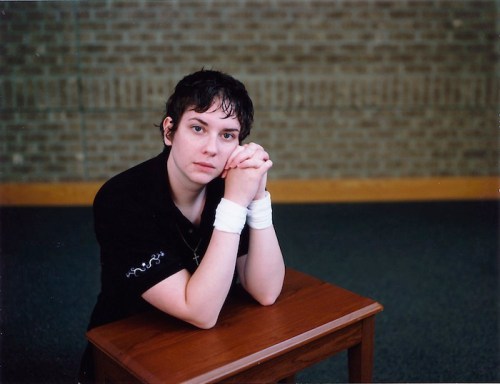
Photo: Kristen S. Wilkins, from the series Supplication
–
Bit of housekeeping folks! I need to let you know three things about Prison Obscura:
- Prison Obscura is going to Washington State.
- Prison Obscura is going to Oregon.
- Prison Obscura will be retired in June, 2016.
WASHINGTON
The exhibition opens at Evergreen State College in Olympia Washington this Thursday, January 16th, from 4pm-6pm. I’ll be there giving a curator’s talk.
Evergreen is hosting Prison Obscura as part of Kept Out/Kept In, a series of talks, shows and presentations examining carceral culture.
–

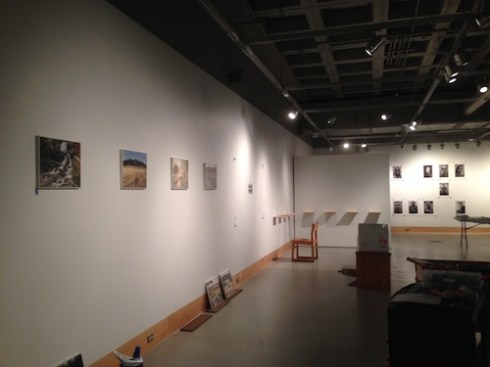
Prison Obscura Installation in progress, Evergreen State College.
The show is up January 14 – March 2 at Evergreen Gallery, Library 2204, Evergreen State College, 98505 (Google Map)
–
OREGON
Between April 1 – May 28, Prison Obscura is on show at Newspace Center for Photography in Portland, Oregon.
Mark your calendars waaaaaaay in advance for the opening reception 6-9pm on Friday, April 1st (no joke). I’ll be in Portland all weekend, giving a curator’s talk at the opening and then convening with others for events and panels.
1632 SE 10th Ave., Portland, OR 97214. (Google Map)
–
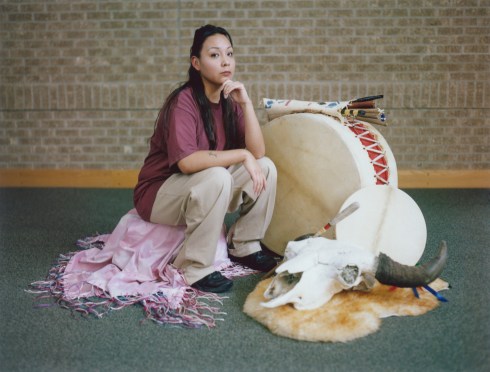
Supplication #4, Landscape. From the series ’Supplication.’ “The Pryor Mountains. It is so special to me because I am from Pryor and I miss home. Castlerock at sunset.” Photo: Kristen S. Wilkins.

Supplication #4, Landscape. From the series ’Supplication.’ “The Pryor Mountains. It is so special to me because I am from Pryor and I miss home. Castlerock at sunset.” Photo: Kristen S. Wilkins.
–
RETIRING ‘PRISON OBSCURA’
To say that the Cantor Fitzgerald Gallery at Haverford had never travelled a show before, they–namely Matthew Callinan–have done a magnificent and utterly-indispensible job in administering Prison Obscura over what will be seven venues.
I didn’t know exactly what was involved in traveling a show such as this and I’m so so grateful that Callinan had the support of his peers at Haverford College to produce an exhibition that could stretch beyond Philadelphia where it all began. We learnt together.
It’s been a great run. After Olympia and Portland though, it’s time to say goodbye. I celebrate Prison Obscura‘s unexpected and gratifying success, but I know that after 2-and-a-half years, it’s time to move energies on to other things. I need to step back and to think about what next, if anything, is appropriate for a prison-based exhibition.
There are massive amounts of vital work and organizing being done around prison activism, policing, power and community-empowerment. I’d like to learn more; take the time to hear and see. Observe and act more; perhaps talk and type less–for a while, at least.
No doubt, I’ll have more to say when Prison Obscura wraps up in Portland, the final show, toward the end of May. For now, I hope that if you are in the Pacific Northwest you’ll be able to check out the show and engage with the ideas its artists propose. Thanks to Alyse Emdur, Robert Gumpert, Steve Davis, Mark Strandquist, Kristen S. Wilkins, Josh Begley and Paul Rucker and the City of Philadelphia Mural Arts Program and the men of the Restorative Justice Project at Graterford Prison.
–
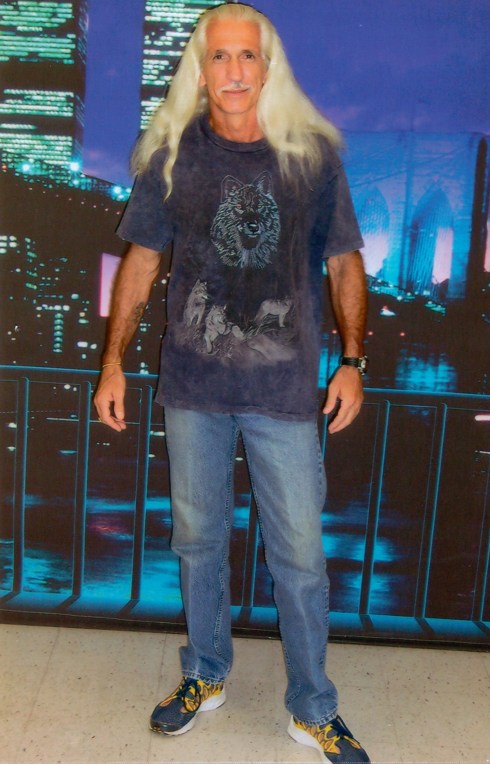
David Wells, Thumb Correctional Facility, Lapeer, Michigan. From the series ‘Prison Landscapes (2005-2011).’ Photo: Anonymous, courtesy of Alyse Emdur.

© Kate Peters
Here we are at the end of the first week of 2016. How’s it going so far? I spent the holidays lying in, reading stuff and watching my team Liverpool at silly hours of the morning. When at my desk, I was putting together a series of year end proclamations for Vantage.
It was a marathon, and by marathon I mean a six-parter. Still, that was more than 10,000 words and scores of images.
Part 1: The Best Nature Photos of 2015
Part 2: The Best Photobooks of 2015
Part 3: The Best San Francisco Street Photographer of 2015
Part 4: The Best Portraiture of 2015
Part 5: The Best GIFs of 2015
Part 6: The Best Photography Exhibition of 2015
Are these actually the best of the year? Are these the most watertight objective statements? Of course not, and I admit as much in the pieces. What they are though is my strongest arguments as to why these projects and ideas are more relevant, caring (even), fruitful and connecting.
Put your feet up. Have a glance.
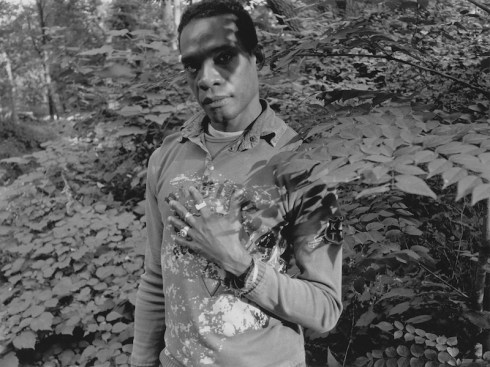
© Thomas Roma

© Alan Powdrill

© Troy Holden

© Suzanne Opton

© Thomas Roma

© Vicente Paredes

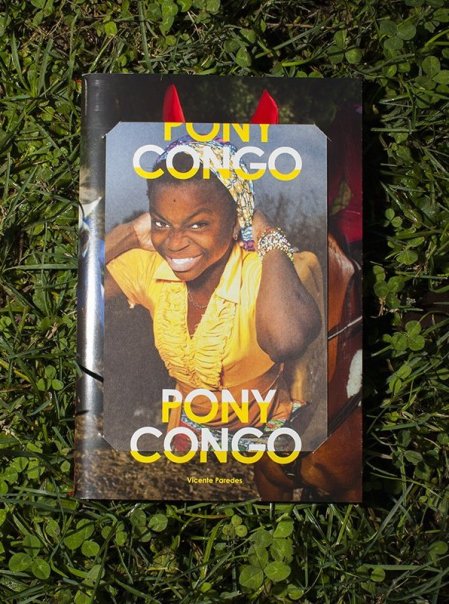
Book cover of Vicente Paredes’ Pony Congo

© Brandon Tauszik

© Sara Terry + Mariam X
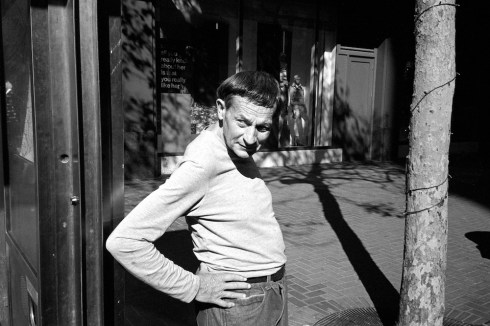
© Troy Holden

Alonso Castillo is a freelance photographer based in the state of Sonora in northwestern Mexico. Predominantly, he works as a stringer for Reuters. Most of his work focuses on the border and he is a specialist in reporting on migration and social issues. He has instructed workshops in the past, is a college teacher and, since 2009, has worked as an editor at www.numerof.org.
Mauricio Palos, a mutual friend of Castillo and I, contacted me to tell me of Castillo’s 2013 photography workshop in a local youth prison, the Instituto de Tratamiento y de Aplicación de Medidas para Adolescentes (ITAMA) which is in the city of Hermosillo, in Sonora, northwestern México.
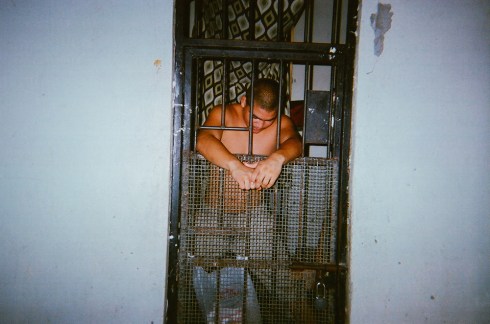
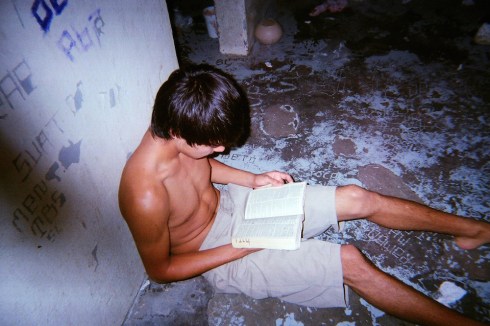
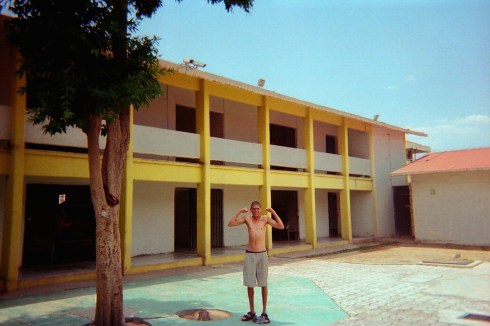
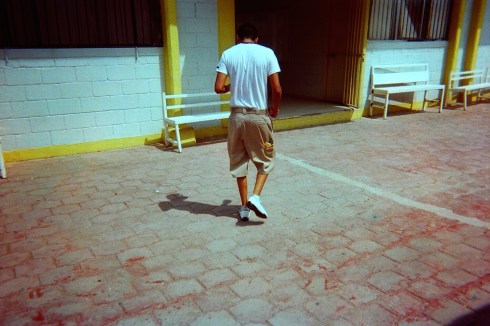
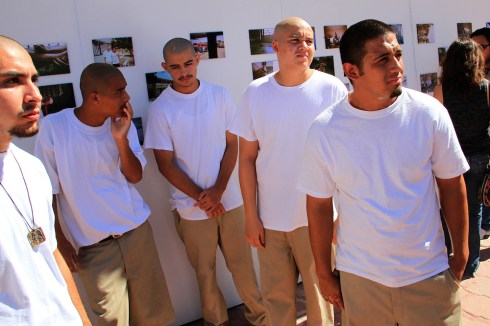
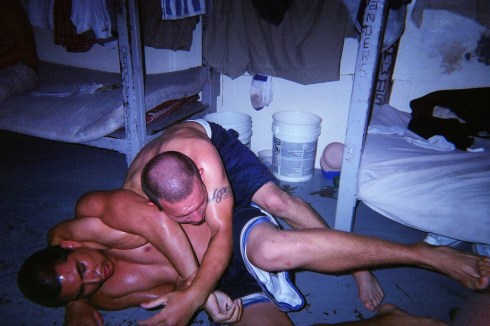
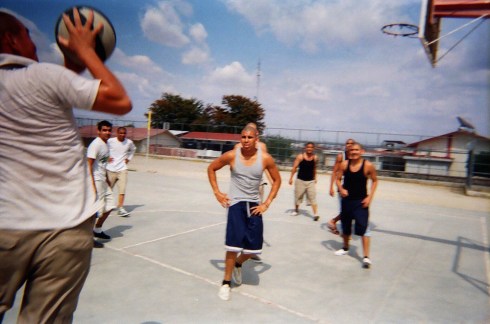
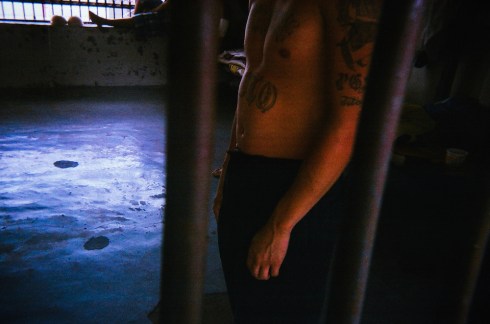
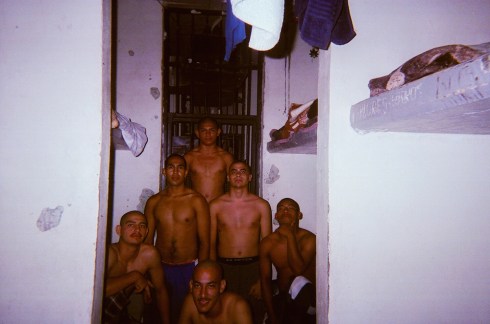
ITAMA houses approximately 450 boys and men. All the prisoners were convicted as juveniles but currently 70% of the prisoners are adults as they’ve turned 18 during their incarceration. Castillo led a photography workshop with 10 boys aged between 15 and 21. When he sent me the photographs I was floored by how sparse and rudimentary the environment for these kids appeared. I wondered if this was a case in which, more so than others, the camera didn’t lie?
All these photographs were made by the 10 participants. Castillo and his colleagues only made technical recommendations in order for the boys to take advantage of available light and framing. “The boys decided how to work and what to photograph,” says Castillo.
Kindly, Castillo answered some questions about the project to accompany this exclusive showing of the juvenile prisoners’ photographs.


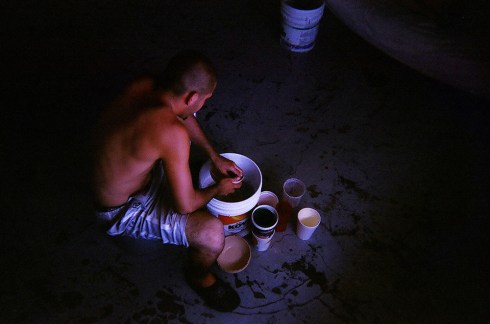
Q & A
Prison Photography (PP): Did you find prisons/social justice first? Or did you find photography first?
Alonso Castillo (AC): It is hard to say, I come first of photojournalism but this area is combined with social justice; that is, I do believe that our work is for the other. In this case this two territories are combined with an equal third one that is working with young people who have committed crimes.
Anyway, due to my job, I suppose I found photography first.

Alonso Castillo and his students in the middle of a workshop session.
PP: What gave you the idea to do a workshop in the prison?
AC: I’ve taught, and participated in, workshops before—in Mexico, Cuba, El Salvador, Ecuador and Colombia. I try to make workshops part of broader and more complete projects of research into specific topics, or provide media training, or instruct on the practices of street journalism.
I knew a writer, Carlos Sanchez, who taught literature and creative writing at ITAMA. Together, we planned to work with young prisoners and teach photography. Carlos usually facilitates writing workshops so this was the first in which we worked with photography. For me, as a journalist and teacher, it was also a means to research and observe [the prison]. And the way things worked out, it was a very enjoyable observation.

PP: How did you get access?
AC: The workshop was organized in conjunction with Fotoseptiembre an annual photography festival which recently celebrated its 25th year anniversary. Although Fotoseptembiere no longer takes place in all countries, it still exists in the city where I live. The festival served as a pretext to get authorization and work with these guys as part of a program that also included an exhibition to show the end results.


PP: How long was the course?
AC: It lasted about 40 hours but we sometimes relaxed the formal schedule to adjust to the schedule of the boys or what was needed to complete the exercises. It is more accurate to say that we worked during the months of July and August 2013, and mounted a small exhibition in September. First we worked in the classroom with classes on theory; we saw some portfolios and documentary photography and we talked with the group and watched movies about photography. Later, disposable film cameras were given to each participant.
Participants were ten young people from five cities in central, northern and southern Sonora. Some of them came from the border municipalities for drug trafficking and murder.
The first exercise was carried out, then the cameras were processed and together we reviewed the work they had done. Then they were given yet another camera and had a chance to improve the ways they were seeing.
Much of the discussion topic was “everyday life”—their daily lives within ITAMA.


PP: What was the aim of the course?
AC: We wanted to share with them tools and skills to help with their rehabilitation and reintegration; they could acquire knowledge and then approach a job when they finished their detention. We also wanted to give them occupational therapy during their time inside the ITAMA.
As we move forward in the activities it became a very human exchange of experiences between us and them, in which analyzed and talked topics of art, history, music, cultural references and social problems.
The photography and talk about photographs was as a part of healing.

PP: Did you achieve the aims?
AC: It is difficult to know if what we did at that time will serve for something when they came out, which was an important part. With what happened in the classroom, yes, I am satisfied.
While in detention because they committed crimes (and some of them very serious), it was very emotional to reveal their “other faces”, the other sides to these young people.


AC: Although criminals, they remain children. This plain fact is something that the system ignores or cannot sufficiently deal with. All these boys are in the middle of a long learning process and maturation; they experience the same intangible fears as any of us. It is a matter of influencing the values and beliefs they have, rather than corrective measures and punishments.
There are also other related matters. The environment has a very strong and decisive weight. These facilities provide for the operation of organized crime on the streets and in the offices of government. Rehabilitation doesn’t work if the institution operates in the midst of corruption. The Mexican political system besides not favoring conditions for social security and education, seems to be working to do otherwise.

PP: Any unexpected surprises?
AC: They showed huge interest in the workshop, which very often does not happen when you’re outside teaching boys in the regular education system and even in college. It is sad but sometimes you find more resistance in a student who had better educational opportunities. With this group, everything happened in an easy way.
There was a boy with a natural look, he made some of the best photos of the workshop; he had a sophisticated way of seeing that gave the images a very contemporary look.
That happens sometimes in the workshops: anyone can worry so much about making a picture look easy and then someone comes in and just do it.
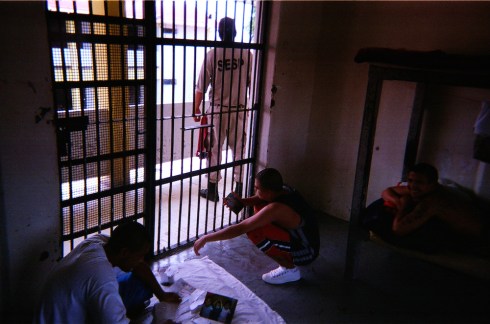
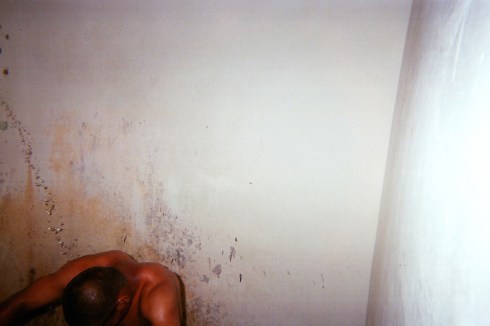

PP: Anything you’d want to do differently if you wanted to/could teach another prison photography workshop?
AC: Of course. Working on more personalized projects. The conditions are limited but we could work with them in a better recognition of the environment. Projects could be designed for collective or personal response — online journals, a newspaper produced by themselves, and so on.
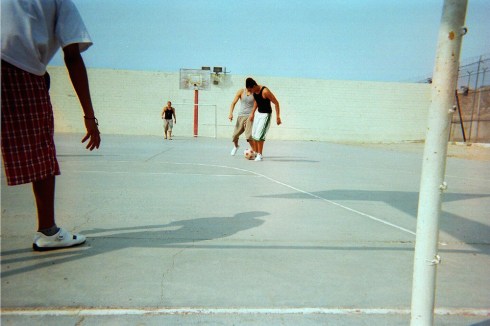
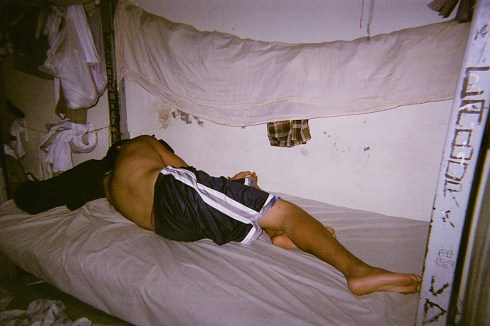
PP: Why did the prison authorities let you in?
AC: I think they did not take us seriously to consider us as a threat, except for us to fulfill the security conditions such as the introduction of dangerous objects or not allowed.
PP: Had you been in a prison before? What did you expect to find? What did you find?
AC: Yes, I had been before taking pictures for a story. The access we now had was restricted only to the area to teach the workshop, so we only saw facilities from afar … and in photographs!

PP: What were the boys’ reactions? How did they work?
AC: The first reaction kept at a distance but then it broke. There were different profiles and even some involving more than others, empathy was virtually total. Then we work with maximum freedom. Sure, they are young and at some point they laughed at us but at no time was any kind of rejection or problem.

AC: After the workshop we had a very modest exhibition in the courtyards of ITAMA, with some family and other visitors. When we worked on that, we processed some film close to the date and we found a picture of the soles of the boys feet. As the exhibition was to be called Desde Adentro (From Within), the boys did a special photo for that—they sat on the floor and wrote the name of the exhibition on the soles of the feet. That was something we were not expecting.
In 2014, a selection of work from the boys won an honorable mention in a local photo competition.
PP: What was the staff’s reactions to the boys walking around with cameras?
AC: We did not know of any reaction. You know, reading the photograph depends on the social construction and context. It is that possible for them and the staff of the detention center, there was no threat from outside, were themselves taking pictures around. We did not go as journalists and we weren’t there to make a report or complaint or observation of human rights in the prison.
In a subtle way, these photographs depict these young people for whom we have used the prison to delete their presence and hide them … and we’ve done so only for our own convenience. These photographs confront us with facts that lay counter to our simplistic thinking.
PP: Do prisons work?
AC: Prisons serve as a reflection of human behavior in which the administration of justice becomes confused with revenge.
We want justice but don’t think very deeply about its application. People go to prison for many different types of crime but when they’re inside we make no distinctions. Initially, justice is operational and later it is a process that becomes bureaucratic, expensive and exhausting for those who experience it. The legal part of the system is a mess; it is much harder to get out even with the law in your favor. Prisons may be where all traffic comes to a dead end.

PP: Can photography heal social ills?
AC: Yes. It is an effective tool to communicate, to visualize and generate impact to social problems. Although it’s not a massively used tool for educational purposes, I think no efforts are small and everything we do is important.
In the near future, I want to train groups of people to jump-start local journalism projects involving vulnerable sectors of population and minorities (native groups, sexual minorities, neighborhoods, and others.
PP: So reach is a big factor too.
AC: Yes. César Holm, who works on a project for the professionalization of photographers in Mexico, in a conversation we had recently, mentioned the need to get an audience for photography and the promotion of a profile for teaching. I agree with him.
I say it is not a massive tool because although photojournalism represents a broad global distribution circuit, I have the impression that we are producing for ourselves. This phrase I heard a few years ago and I still like it, “only photographers know photographers”. We like to publish books that we read, there are contests and scholarships for specialized circle of consumers, who are we and our friends.
I think we could expand that circle.

My list of fave photobooks is the Vantage list of fave photobooks. I noted the subheader should read: How four books mailed to the author and two other books he bought in crowdfunding campaigns made the grade
THE ANOINTED ONES
Fan by Rian Dundon (Modes Vu)

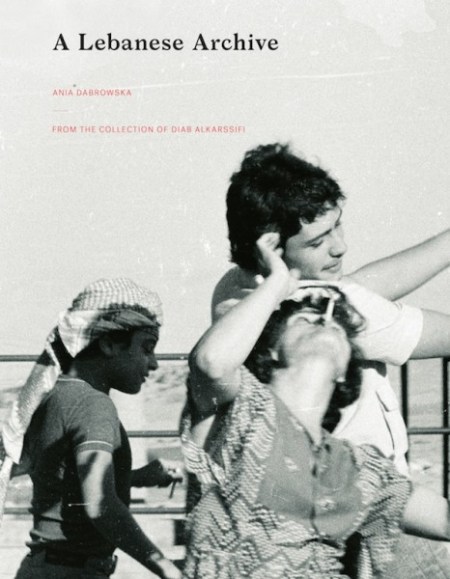
A Lebanese Archive by Ania Dabrowska (Bookworks + Arab Image Foundation)
Deadline by Will Steacy (b.frank books)

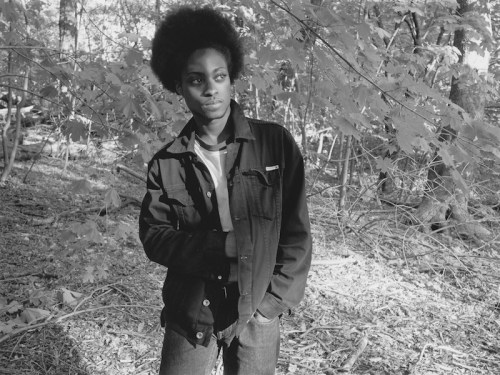
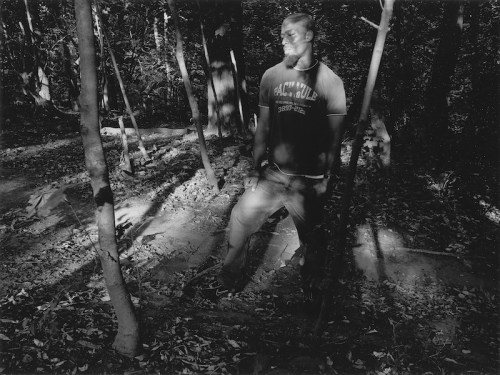
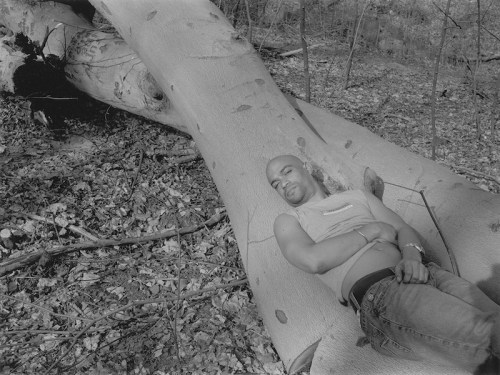
In The Vale of Cashmere by Thomas Roma (Powerhouse)

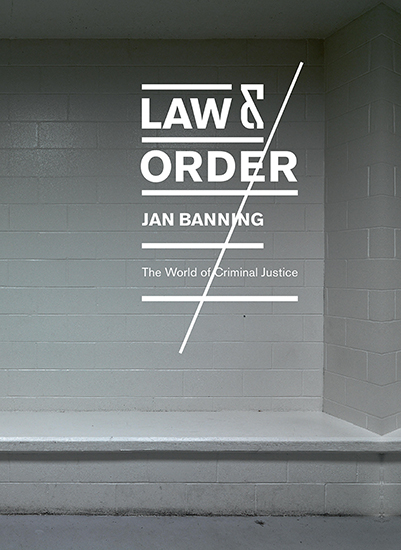
Law & Order by Jan Banning
Pony Congo by Vicente Paredes (This Book Is True)
–
I’m perplexed by how exactly the photo-world goes about constructing its holiday exhortations. So much so that Joachim Schmid’s polite takedown of the Photobook-Industrial-Complex is just the best thing.
–
READ THE FULL REASON BEHIND THE LIST HERE

Thomas Roma‘s book In The Vale Of Cashmere is probably familiar to you. It has had enjoyed widespread press and positive comments. And rightly so. It’s one of my favourite books of the year. I just did a review of the book and project for Vantage.
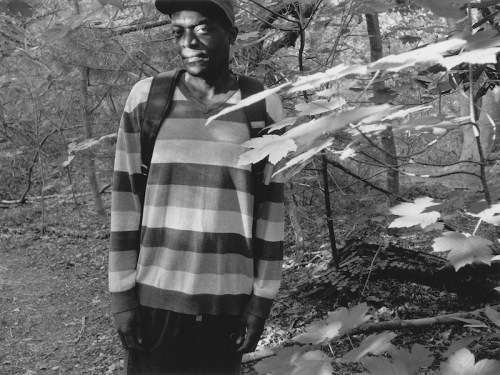
Roma’s arresting photos go inside the Vale of Cashmere a renowned casual hook-up spot that has, for decades, hidden in plain sight on the northern side of New York’s prospect Park–an overgrown, knotty pocket of criss-crossing paths that is of Brooklyn’s most active gay cruising spots. The Vale of Cashmere is commonly, but not exclusively, frequented by African American and Caribbean men.

Not only are Roma’s portraits–that take us on long and repeated walks through the foliage and dappled light–wonderful so too is the contributing essay by G. Winston James. Between the two of them we are able to encounter, pass or pause with the men who meet among those trees.
I write:
James reminds us that sex is an activity designated for private spaces, namely the domestic space of the home. But for gay men living in the late nineteenth and early twentieth century, homosexual sex could not be expressed at home so it became a public act in public space. Crucially though, gay cruising and meeting spots only function as such at designated times.
“The most defining characteristic of queer space is its temporality. Queer space is not a permanent fixture of the urban landscape, but a sudden transformation that briefly renders traditional public spaces as something more dynamic,” Shaw once wrote.
James adds, “It is precisely this process of transformation (witnessed by a relative few), this dynamism, this history, that Thomas Roma has photographed.”
–
Read the full review: Loving Portraits Of Gay Black Men Cruising In Prospect Park



From Thomas Mailaender’s book ‘Illustrated People’ which won the Paris Photo+ Aperture Foundation Award for “Photobook of the Year 2015”
–
THREE WEEKS AFTER THE PARIS ATTACKS, I’D LIKE TO SAY THESE THINGS
Paris Photo 2015 will be remembered for reasons we never wanted.
Photographers went to Paris to see old-friends, hob-nob with moneyed institutions and to blur the lines between work and vacation. Some of them ended up documenting one of recent memory’s worst terror attacks.
Paris Photo opened the doors to the Grand Palais the day before the bombs shook Paris and 130 lives were taken. One of the biggest international photo events on the calendar, artists, publishers, gallerists, collectors and enthusiasts descended on the French capital for four days of viewing, networking, buying and selling.
After the tragic events of November 13th, Paris Photo was cancelled. No one was thinking about art sales. No one was talking about awards. Shuttering the event was the only sensible and respectful decision to make.
As with any massive event, though, the activity and conversation surrounding Paris Photo had long led up to the long-weekend. Check the social media timelines of any of the 147 galleries or the 60,000 visitors to understand anticipation and the pre-sales hype. Paris Photo can be career-defining, it can provide a crucial contact, it might be a platform to test or showcase ideas. And then there’s awards too.
On Thursday November 12th, Aperture announced the winners of the 2015 edition of the Paris Photo–Aperture Foundation Photobook Awards.
Some people say the best way to move forward is, after the memorials, to live life as you would. To continue with a full life. I would have written about these awards before the attacks and so now, three weeks on, I feel I should write about them still. I cannot make sense of murderous ideology, but I can make sense of books, photos and how they exist in the world.
Below, in each of the four categories, I offer some analysis followed by Aperture’s official blurb and videos. I end with some concluding thoughts about the four entrants considered in unison.
What To Make of the Winners?
Let’s do things the backward way round and start with the Special Jurors’ Mention category as opposed to the three main categories.
Special Jurors’ Mention
Will Steacy
Deadline. b.frank books (Philadelphia, 2015)
Designed by Will Steacy
MY THOUGHTS
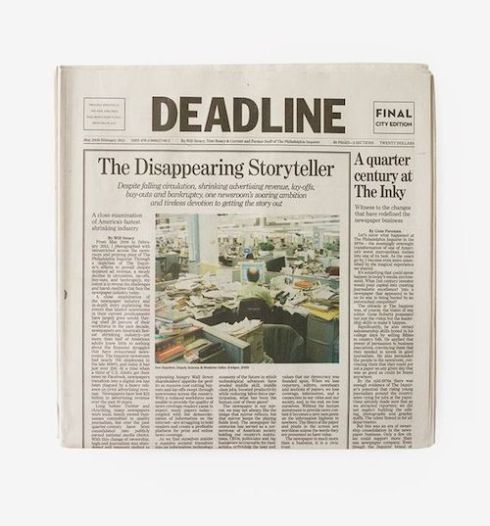
Will Steacy’s Deadline is my book of the year (slide 42), so a tip-of-the-hat here is no surprise. Deadline is about the heritage of storied newspaper Philadelphia Inquirer and about the forecasted chaos of downsizing. It was printed on the same presses that churned out the Inquirer over decades.
Deadline is a look to the past with an eye on the future. Most of all, it’s a tribute to the working man. When labor movements are usually talked of in the past tense, Steacy is putting workers’ issues into art world discourse, reconnecting art with politics.

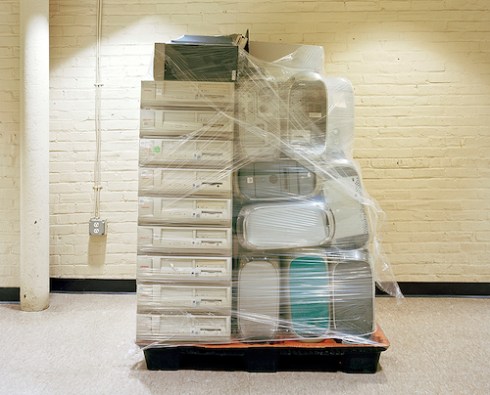

Union membership has fallen from 1 in 3 workers to 1 in 10, over the past 50 years. I’m no blind preservationist, but I do want to know that progress is made for the benefit of all and not at the expense of any. As I wrote for time:
“Fanatical in its view of both the newsroom and the printing presses, Deadline honors the labor of the copyboys, the reporters, the inkers and the editors equally. Decorated journalists reflect back on the Inquirer’s “Golden Age” and Steacy’s dad reflects on generations of their family working in newspapers. In five sections, the amount of research, fact-checking, phone-calls, line-editing and captioning in Deadline is astounding.

Deadline is dense, daring and difficult to pigeonhole; I think that’s why it got the special mention but not one of the category gongs. It didn’t fit neatly, but it was impossible to ignore.
OFFICIAL APERTURE BLURB
Will Steacy’s Deadline is a newspaper about a newspaper: the Philadelphia Inquirer, where he spent five years photographing the newsroom, employees, and printing plant. Thanks to the Internet, most newspaper staffs are a fraction of what they once were. The Inquirer is no exception, and Deadline chronicles its history — with texts by current and former staff, and archival photographs alongside Steacy’s own — through to its very uncertain future; the final pages see the formerly prominent newspaper moved into a much smaller office.
For Steacy, who comes from a family of newspapermen, this story is personal — his father was an editor at the Inquirer for nearly thirty years, till he was laid off while Steacy was working on this project. The materials, design, and printing quality of his son’s contribution are all in line with family tradition (it was even printed at the Inquirer’s own press), but the focus has been turned inward. As Christoph Wiesner comments, “it serves both as a history of the journalism sector and a work of subtexts, revealing a process of deconstruction or mise en abyme.” Deadline is less a case study than it is a eulogy.
Winner of Photobook of the Year
Thomas Mailaender
Illustrated People
Archive of Modern Conflict and RVB Books (Paris, 2014)
Designed by Thomas Mailaender and Rémi Faucheux.
MY THOUGHTS
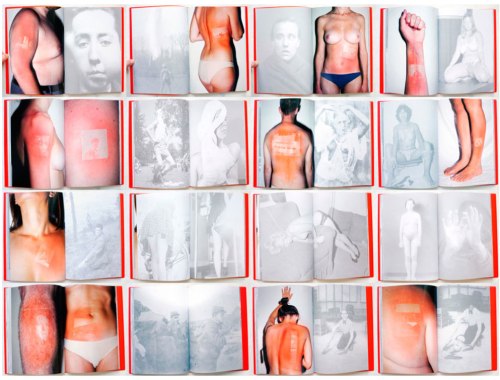
One thing’s for sure: there’s no other photobook like it. Whatever gaveThomas Mailaender the idea to burn images onto people’s skin with UV light? I can’t work out if Illustrated People is fringe genius or just a gimmick, but the answer to the question is less important than the inquiry. For the deeper you go on these photos the more disturbing shit gets.
Let’s start with the easy obvious stuff, though. The coupling of images from the Archive of Modern Conflict on dull paper in washed out B&Ws with glossy glaring blood reds is very striking. It’s a catchy reference to red-top newspapers, so activist posters, to Soviet graphics to political and military propaganda.
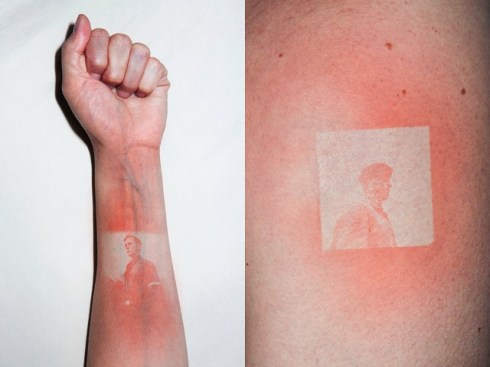

It’s strange that we might be put off by Mailaender’s violence toward his volunteers’ bodies. After all, these are images are taken from an archive devoted to war and technological chaos fo the 20th century. By comparison to any bullet or nuke, Mailaender’s work is playful. Maybe that’s the point? Is Illustrated People a manic embrace of disorder and a Dr. Strangelove-esque riding of the bomb?
Yet, even in acknowledgement — and some celebration of — Mailaender’s flippant wit, I can’t stop thinking that these are like some scorched-earth futuristic nightmare. Like this is sci-fi gone awry; a vision of a time in which humans are branded with culture, not creators of it, and a dystopia in which bodies are a drain on resources on an overheated, water-scarce planet. Or given the side-boobs and pin-up girls, is Illustrated People just a photo-sadist’s wet dream? That I’m still guessing is (and talking) is a good sign. Can. Not. Unsee.
OFFICIAL APERTURE BLURB
When artist Thomas Mailaender was given access to the Archive of Modern Conflict’s photo archives, he decided to “print” some of the negatives he found onto a whole new medium: the human body. Using a UV lamp, Mailaender projected these negatives onto models’ pale skin, leaving sunburnt imprints of the images.
Full-color documentation of this performance alternates with archival images inIllustrated People, a playful softcover book encased in a translucent red plastic jacket. While the archival images have a faded appearance, printed in black-and-white on plain matte paper, the “sunburn” pages are bright and glossy. “What’s interesting to me is the relationship between the immaterial archive and the living bodies,” says Yannick Bouillis. “He made something that goes beyond just the selection of images — he’s putting pure culture onto something natural, the body.”
Winner of Photography Catalogue of the Year
Diane Dufour and Xavier Barral
Images of Conviction: The Construction of Visual Evidence
LE BAL and Éditions Xavier Barral (Paris, 2015)
Designed by Coline Aguettaz and Xavier Barral.

The Images a Charge/Images of Conviction book cover features a photo by Rodolphe A. Reiss, rendered in the negative, showing a demonstration of the Bertillon metric photography system.
MY THOUGHTS
Images of Conviction was one of the curatorial highlights of 2015, but a great exhibition doesn’t always guarantee a great catalogue, so it’s wonderful that the excellence of Dufour and Barral’s presentation of material on walls is matched by their presentation of content on paper.
Coincidentally, like Mailaender’s book, the only time grayscale is punctuated in this catalogue is by the red tones and exacting dots. Many of the images here are drawn from government archives, official reports, military imaging or sites of forensic investigation (even if the photographers, Meiselas below for example, are not forensic photographers).

Grace A-South, Koreme, North of Iraq, June 1992 © Susan Meiselas, Magnum Photos.
Images Of Conviction brings together ten case studies in which images were used to establish truth and narrative in the wake of death — be that of a single person, of a religious tale or of an entire people.
I think of Images Of Conviction as the sister exhibition to the Tate’s epicConflict Time Photography in 2014. But whereas the Tate focused on the changing types of photographs made in response to conflict over time, Dufour and Barral focus on the changing technologies use to make photographs. Whereas the Tate considered subjective response (prints, photobooks, memorial), Dufour and Barral are concerned with the application of objective fact. Whereas Tate was sympathetic to artistic response, Dufour and Barral’s framework has little room for it.
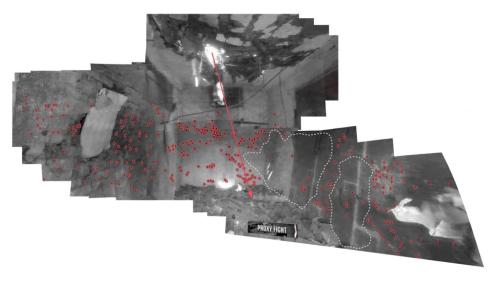
Photography extract from Decoding video testimony, Miranshah, Pakistan, March 30, 2012 © Forensic Architecture in collaboration with SITU Research.
In an uncomfortable echo of Mailaender’s work we see the body as a battle ground. Mailaender subjects are willing participants but, by contrast, Dufour and Barral show us images in which the dead are drawn into space of the contested narrative. Here, dead bodies are used to to deliver or deny accusations of a fatal crime against them.
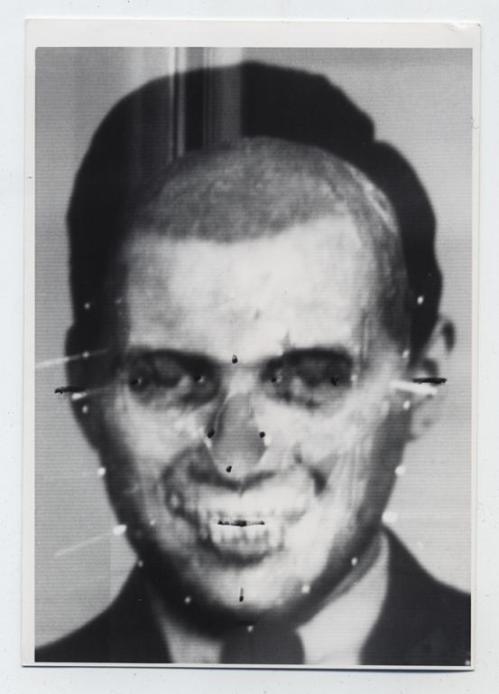
Richard Helmer’s face/skull Mengele superimposition 1985 © Photo Richard Helmer Courtesy Maja Helmer, 1985.
Folks in the art-world often forget that photography underpins judicial, political, labour and territorial infrastructures. Images Of Conviction reminds us that pretty pictures are just papering the cracks over fizzing, and sometimes terrifying, realities.
OFFICIAL APERTURE BLURB
In this meticulously designed catalogue, photography itself is put on the witness stand. Published to accompany an exhibition of the same name that originated at LE BAL, Paris, Images of Conviction is a fascinating historical survey of the ways photography has shaped official versions of truth — from the Shroud of Turin to crime-scene photography of the freshly dead, to video evidence of drone strikes.
The design is sedate but never boring, alternating between pale gray and clean white paper. The images are all reproduced in black and white, with a chilling negative image printed on the cover. “Everything is made so that the catalogue stays neutral, but not cold,” says Julien Frydman, who also praises the diverse, well-edited texts. The volume offers a variety of answers to the question posed by editor Diane Dufour in her introduction — “How does the image take shape in truth-seeking scientific and historical discourse?” — without losing its sense of mystery.
Winner of First Photobook
Daniel Mayrit
You Haven’t Seen Their Faces
RIOT BOOKS (Madrid, 2015)
Designed by Verónica Fieiras and Daniel Mayrit

MY THOUGHTS
The former Arsenal and Brazil midfielder Gilberto Silva expressed his dismay this week that next to no professional footballers were speaking outabout the FIFA corruption scandal that is tearing the heart out of the beautiful game. Maybe it’s that the story is old or maybe it’s that we don’t know how or where to pinpoint our anger at white collar crimes?
Despite millions of people losings their homes, pensions and security, still no-one has been prosecuted for their role in the housing crisis and consequent global meltdown. Daniel Mayrit’sYou Haven’t Seen Their Faces uses news and public domain images to mimic CCTV captures. The 100 people featured in this stack of butcher-paper fly-posters are those deemed most powerful in the City of London in terms of policy, politics, and those in control of banks, corporations and regulatory bodies.

The title is a cheeky inversion of Margaret Bourke-White’s landmark You Have Seen Their Faces (1937) a book about poverty in the Southern states. In the 20th-century we thought we could, as a society, come together and solve social ills. Now, however, we struggle to know from where the confusion festers and we rely pathetically on mischievous artists to out the beneficiaries of 21st-century capitalism.
Images were once tools of humanitarian witness, now they’re cheapened, desperate and frustrated gestures toward the insulated power-classes.
OFFICIAL APERTURE BLURB
Daniel Mayrit plays with the semiotics of law enforcement in You Haven’t Seen Their Faces. Full-bleed close-ups of the declared “100 most powerful people in the city of London” are printed in the style of grainy CCTV footage, with condemning information against them scrawled on every image. The book is a response to police fliers handed out after the 2011 riots in London, when surveillance images of alleged rioters’ faces were publicly distributed in a presumption of guilt. Mayrit flips this visual language on those believed responsible for events that are arguably far more damaging: the recent economic crises that have wracked Europe.
Yannick Bouillis calls the design “streetwise”; held together by screws at the top, the images are printed on lightweight brown pages akin to butcher paper, and fastened to stiff cardboard. A map of the suspects’ headquarters is tucked into the back.
Conclusions
It was not obvious to me until I really approached the final drafts of this review how depressing the four photobooks are in conglomeration. In them we have the slow death of free press, corporate criminals at large, homicide, dispute, intimate violence, microcosms of global warming, total surveillance, harrowing medical procedures, genocide, labor camps and the havoc of the markets.
The Paris attacks exploded out of fear, hatred, deep-level antipathy and dehumanisation. ISIS’ acts of terror are a symptom of profound division: Western military meddling and foreign bombs in the Middle East + Whackball religious ideology = Crumbling social fabric. Unfortunately, I think that the attacks will also serve as cause; the cause of more military meddling and fundamentalism.
The international community, and the French people in particular, have already shown that they will not be divided by murderous acts. Nor should France sacrifice its ideals of liberty, equality and brotherhood in response to the extremist nutters. However, increased military incursions into Syria and strikes on ISIS will, I fear, only poor flames on the fire.
France launched attacks on ISIS positions the Monday after the attacks. President Obama has sent U.S. troops to carry out raids throughout ISIS-held territory. This week, the British and German governments voted to launch airstrikes in Syria.
Seeing Is Power
And so we have two types of “sight” in the Global War on Terror (GWOT). Abroad, is drone recognizance, military mapping and satellite imagery providing data upon which awesome bombardments are planned. At home, throughout European cities and transit hubs, citizens are subject to pernicious and exacting CCTV. In both cases, the application of these technologies is meant to prevent further killing (perversely, in the case of guided-bombs, by killing targets not civilians) but also to establish moral cause and “truth” in the aftermath of death. CCTV will be used as evidence. News channels will be fed footage of bombs striking combatants through air vents. Facial recognition software will identify people IRL and in the digital realm at exponentially faster rates.
This writer cannot see how more bombs in a region already pummeled into unknown levels of chaos is likely to help, but geopolitical strategy is above my pay grade. Righteous anger is an understandable response, but should it make for armed retaliation? Let’s just say this writer is comfortable deferring to Nicolas Hénin, a man who was held hostage by ISIS, who cautions against massive military airstrikes:
While we are trying to destroy Isis, what of the 500,000 civilians still living and trapped in Raqqa? What of their safety? What of the very real prospect that by failing to think this through, we turn many of them into extremists? The priority must be to protect these people, not to take more bombs to Syria. We need no-fly zones — zones closed to Russians, the regime, the coalition. The Syrian people need security or they themselves will turn to groups such as Isis.
The fallout from the tragic events of November 13th will inevitably involve more bloodshed.
Anxiety reigns currently. That is understandable. Some reaction to the anxiety is less understandable. Sometimes, it is easy to overlook or downplay the constant state of vigilance in which people, and especially government agencies, operate. The Paris attacks revealed the threat is real.
As much as the Paris Photo-Aperture Photobook Awards reflect cultural production, and as much as cultural production reflects common concerns and public psyche, we can identify in these four winners the trauma and violence that bubbles constantly under the surface in our global community
These four books are not entirely unrelated to the violence that broke the peace in Paris three weeks ago. They are documents of our time and, sadly, they deal with miseries that harken back long before these tense times.
The Paris Photo-Aperture Foundation award winning photobooks on view
Aperture Gallery, New York (December 12, 2015–February 8, 2016); Huis Marseille, Amsterdam (December 2015–January 2016); Scotiabank CONTACT Photography Festival, Toronto (May 1–31, 2016); Self Publish Riga, Riga Photomonth, Latvia (May 12–June 3, 2016); 15th International Festival of Photography in Łódź, Fotofestiwal 2016, Poland (June 9–19, 2016); Landskrona Foto Festival, Landskrona, Sweden (August 19–27, 2016).

 Prison Photography