
You are currently browsing the category archive for the ‘Fine Art’ category.

I just ran across these. They belong to a narrative of a science-fiction scenario that I am not familiar with.
Check out all of Lugonious‘ classic-toy futurescapes!


– – –
All this appreciation of Lego brings to mind Legofesto‘s more sinister, reality-based Lego sculptures of abuses at Abu Ghraib and Guantanamo – here, here, here and here.
Happy weekend!


Armed police barricaded the gates of Drik Gallery to prevent the exhibition Crossfire, organisers opened the exhibition on the streets outside of the Drik Gallery. March 22, 2010. © Saikat Majumder/DrikNews/Majority World
Since the March 23rd censure and closure of Shahidul Alam’s exhibition at the Drik Gallery by Bangladeshi police, events have been well reported and BLOGGED!
Robert Godden who writes the The Rights Exposure Project blog looked forward to the exhibition but warned it may face closure. David Campbell noted Rob’s foresight with his post ‘Crossfire’ censored – the power of documentary photography (cross-posted on A Developing Story blog)
LENS Blog followed up its preview by catching a soundbite of Alam‘s and reflecting his pride in the mobilisation of protestors:
“It really has galvanized public opinion. People were angry and ready — they just needed a catalyst. The exhibit has become in a sense iconic of the resistance.”
Peter Marshall has been as diligent as ever with two posts – Crossfire and More on Crossfire
100Eyes also had the scoop with a large image of the human chains an d protestors. Robert Godden returned to the issue highlighting the very serious issue of Death threats issued to organisers. Eyeteeth (a new favourite of mine) also followed the shut-down.
Of course, if you only have time for one source it should be Shahidul Alam’s own blog, to which two posts have been posted – firstly, Siege of Drik Gallery and secondly Drik: Photo power.
– – –
What’s my point? My point is that if we bloggers are to be be labelled prairie dogs (here and here), perhaps we should be noted for our hard work, solidarity and a long gaze that goes further than the end of a trustee’s vault?
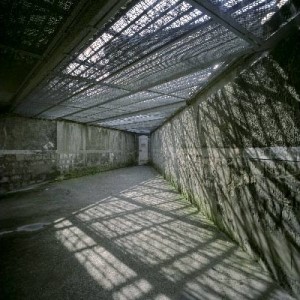
© Jacqueline Salmon
 “In France, photography and prisons have rarely got along” says Clair Guillot for Le Monde (translated). Guillot, prompted by the current exhibition L’Impossible Photographie, Prisons Parisiennes (1851-2010), speculates on the common conditions for prison photographers listing limited access, lack of light and space, constant supervision and uncertain scheduling.Guillot quotes Mathieu Pernot, a photographer occupied by issues of the Panopticon, ‘In prison, the main body is the eye, because the buildings are designed to improve monitoring. At the same time prisoners are held [partly] to deprive them of self-image [and held to deny society his image and presence.]’ I paraphrase due to the vagaries of translation.
(Pernot is flavour-of-the-month, right now, exhibiting in Fotodok’s State Of Prison show in Amsterdam as well as this Parisian outing.)
Guillot goes on to suggest that there has been a recent rise in the practice of prison photography, yet she doesn’t provide projects or practitioners on which she bases that statement.
Whether or not praxis and interest in prison photography is on the up, the ever-existing requirement of French law not to show the faces of prisoners is a steady constant. This is a paradox that needs explaining and, to some extent, apologising for. The effort and will of prison photographers to reveal the hidden arguably achieves the opposite; images of faceless prisoners only contribute more abstracted views of prisons.
Is photography the right tool for the job of describing prisons and the lives within?
Let’s take a look at the work of a couple of the prison photographers in the l’Impossible Photographie show, and evaluate their contributions to this proposed fledgling genre. Matheiu Pernot, Jacqueline Salmon and Michel Semeniako were commissioned for the show. A request was made access for five photographers, but the authorities only allowed three.JACQUELINE SALMON
Jacqueline Salmon‘s photograph are straight environmental studies. In some works she uses the silhouettes of cage, fence and shadow. Often Salmon’s images will offer the promise of a window or vista only to present a barrier or razor wire immediately behind the promise. These are images of frustration. When Salmon documents open doors, they are within larger areas of containment, not strategically imperative and are not policed by the disciplining authority. Through some of these are the work and leisure activities offered at Le Santa Prison, Paris; gymnasium, family rooms, kitchen, chapel and laundry.
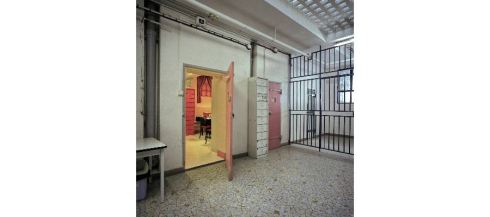

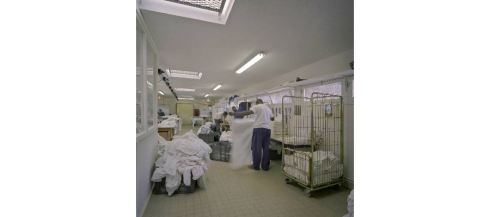
Salmon’s use of orange is occasionally reminiscent of Mikhael Subotzky’s studies in South African prisons and of course echoes the jumpsuits we’ve come to associate with the global and most lawless of prisons – allied sites of detention, Guantanamo, Bagram and beyond …
It is very difficult to be a fair judge when one only has 300 pixel wide website images to go by, but there are 40 images to browse and take in. Aside of the debates about artistic merit, the project as a contemporary document of an old and famous prison in the French capital is an achievement in itself.
MICHEL SEMENIAKO
Salmon’s impartial observations lie in contrast to Michel Semeniako‘s close engagement with the inmates. Semeniako conducted portrait workshops but not permitted to exhibit this work he collaborated with inmates on still lives of their possessions; portraits of men as evidenced by the objects they possess.
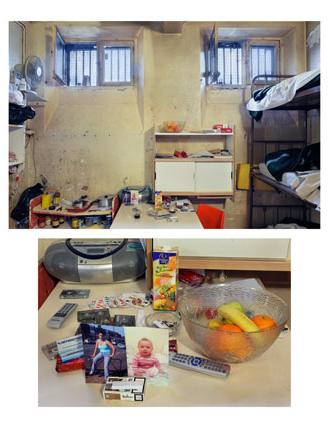
Screengrab. Varga Traian, Maison d’arrêt de Paris-la-Santé, 2009. © Michel Semeniako.
It’s an interesting concept and an approach used by other prison photographers (Jeff Barnett-Winsby and Edmund Clark spring to mind). For Semeniako’s project, each prisoner is a co-author of the images. Could we argue that this is part rehabilitation, part art, part documentary? I guess one must decide on how wants to judge Semeniako’s project first.
I’ll judge it on two criteria; firstly, on the self-esteem and therapeutic advantages for the prisoners in discussing and constructing ones own environment for presentation; and secondly, on the otherwise impossible connection to prisoners’ lives which is afforded to viewers of the photographs. This connection informs (just a little) and in so doing completes a minor but profound transaction initiated by Semeniako and each prisoner during their discussion on how to assemble their still lives.
EXHIBITION REVIEW
Brendan Seibel penned an overview of the l’Impossible Photographie. Seibel concludes that the exhibit is large and potentially overwhelming;
“Tying the exhibition together is not chronology but classification. Rooms are broken down by location, with contributions by a steady cast of photographers spread throughout. Women’s prisons La Petite Roquette and Saint-Lazare reveal a jarring juxtaposition of nuns and incarceration, the role of religion in rehabilitation. The men’s – Grand Roquette, Sainte-Pelagie, Mazas and Santé – lay clustered together, more barren and austere. Throughout the exhibition essays on each prison, brief summations of photographers, developments in regulations and politics accompany each turn of the corner.”
Seibel was particularly engaged by the archive of Henri Manuel from the 20s and 30s. Manuel was employed by the French government to document the prison and justice systems. He gained unprecedented access and his prints are pivotal in the genre of prison photography.
Other artists include photographer Pierre Jouve (talking here, in French, about his juvenile detention photographs), also designer/photographer Anne-lise Dees and the photographer/oral historian Catherine Rechard.
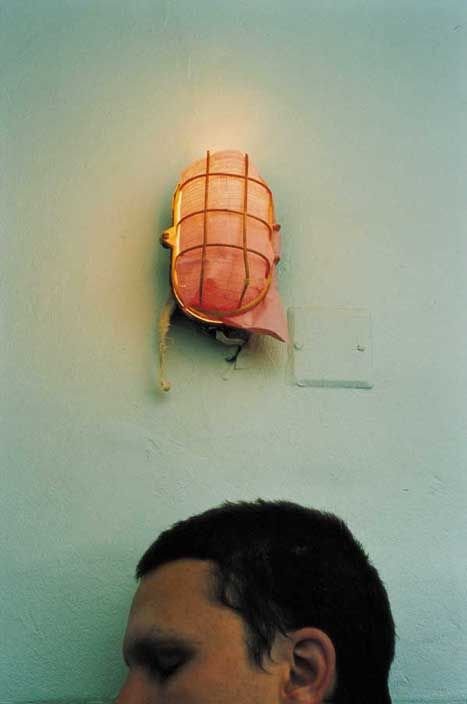
© Catherine Rechard.

– – –
All in all, this exhibit is a significant attempt to reconcile the curiosity and desire to see the activities of the state (think about the ethics and standards debates about military embedded journalists) with the work of artists who endeavour in to do so. Perhaps Guillot is right, perhaps following this exhibition, prison photography may be defining the parameters of its own genre?
– – –
The Carnavalet is hosting a series of tours, discussions and other events related to the exhibition. A schedule can be found here.
l’Impossible Photographie
From now until 4 July 2010
7€/5€ Reduced 10:00-18:00
Closed Mondays and Holidays
Musée Carnavalet
23 rue de Sévigné
Mº St-Paul/Chemin Vert
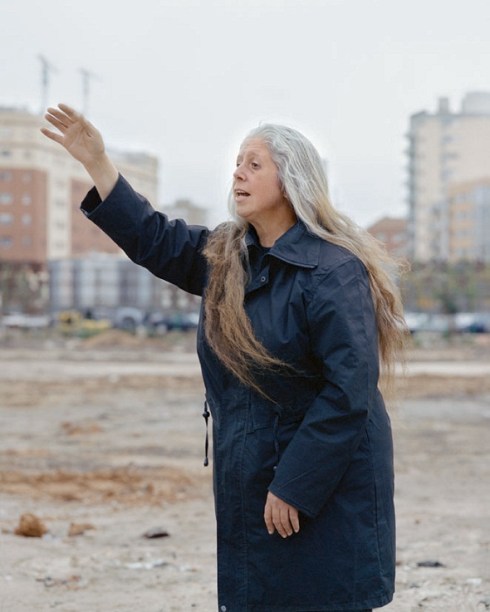
I posted an image of Mathieu Pernot‘s earlier this week, but I thought his work was so novel it required a post of its own.
Les Hurleurs (The Howlers) – completed between 2001 and 2004 – is a series of photographs of people screaming to detainees in three prisons – Les Baumettes, Marseilles, France; Avignon Prison, France (which is now luxury apartments); and the Unidad Hospitalaria Penitenciaria D’homes, Barcelona, Spain.
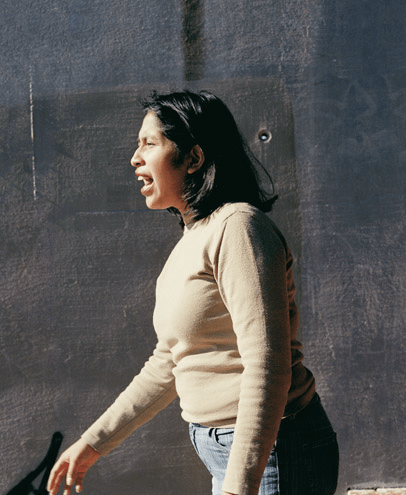

Pernot “portraits” are surprising more than anything else and – for me at least – touch upon the diminished possibilities of family and friends when someone close to them gets locked up. The severance, deserved or not, results in desperate and almost pitiful tactics by Pernot’s subjects. Indeed, these images are meant to be seen alongside Pernot’s other series Panopticon which takes a documentary view of structures of the carceral “machine”.
Pernot’s work is intelligent in that it shows both sides of the experience and the deafening silence of his interior prison shots are roundly supported by the unheard vocal efforts of Pernot’s subjects.
View the full set here.


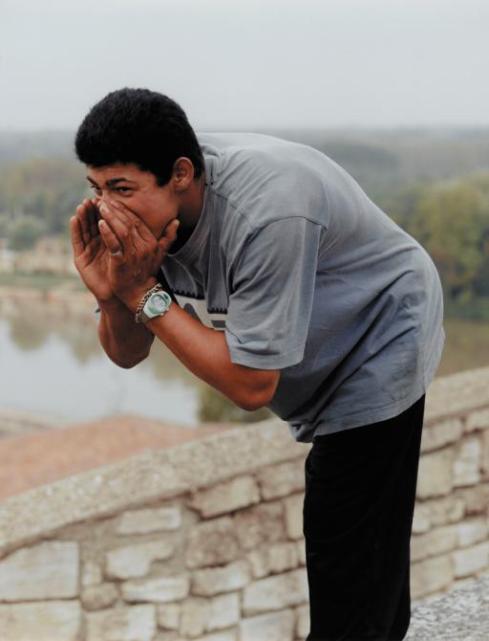

© Nico Bick
I just received an email from FOTODOK who present this month State of Prison, an exhibition with work of Nico Bick (The Netherlands), Carl de Keyzer (Belgium) and Mathieu Pernot (France). Also included – I am proud to say – are two photographers I’ve interviewed for Prison Photography – Stephen Tourlentes (United States) and Jürgen Chill (Germany).

© Jurgen Chill
FOTODOK statement:
“Photographing official institutions such as schools, government buildings, prisons and old people’s homes often goes hand-in-hand with limitations. PR and communication departments conscientiously guard their image and impose restrictions on photographers.”
“Even so, photographers still succeed in making individual and meaningful series in these places that go further than PR photos. From surreally painted Siberian prison camps to screaming family members outside the prison walls.”
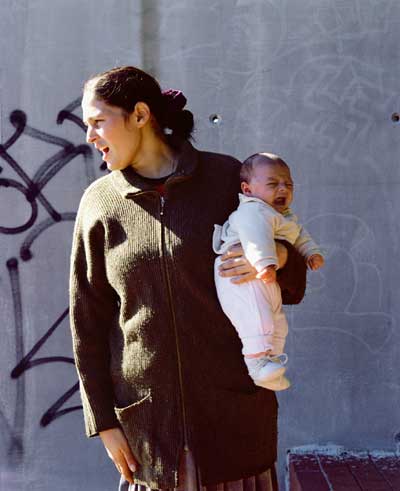
© Mathieu Pernot
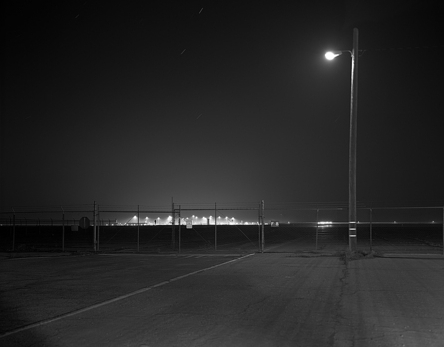
Federal Prison, Atwater, CA, 2007. © Stephen Tourlentes
The curator is photographer Raimond Wouda (The Netherlands) who himself has taken a look at the impression of institutional architecture upon its users, most notably the social spaces of Dutch high schools.
Throughout 2009, Raimond Wouda reported on his research on FOTODOK’s website. This process and all the findings of the past year have been compiled into a collection of words and images. The publication will be presented during the opening. I’d love to get my hands on that!
– – –
The exhibition runs from the 26th March to the 25th April 2010. An opening will held this week at 19.30pm on the 25th March at Van Asch van Wijckskade 28, Utrecht (map).

From the ZONA series. © Carl de Keyzer
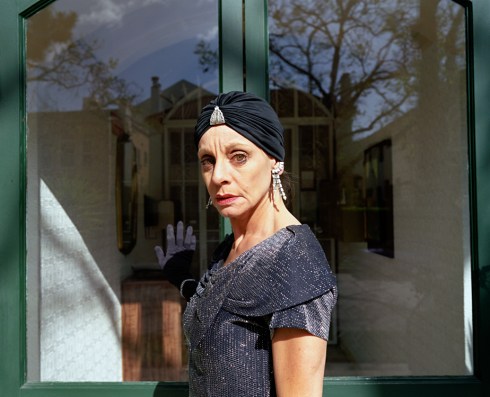
Sharon at the front door. Simone Lueck
CRITICAL MASS: 593 entrants, over 200 jurors, 181 shortlisted photographers, 50 finalists, 6 contenders, 2 eventual book deals.
For months, the Critical Mass jurors nudge and judge portfolio across the internet casting their opinions by way of prescribed digits – NO (0), YES (1), MEGA-YES (3), WOW (7). It’s numbers-gymnastics.
The 36,000 scores are then thrown into a big statistics cauldron and Shawn Records, one of CM’s organisers informed us back in November that the difference between the “lowest score on the list and the highest one that didn’t make the cut was just 0.01314411684.”
Down at the Photographic Center Northwest, Seattle the scores and calibration tables are forgotten as each of the Top50 winners is represented by a singe print chosen by juror Andy Adams of FlakPhoto.
RUNNERS AND RIDERS
The Top50 have been online for three months now. The names in the show are likely familiar, but the chosen prints possibly not. In some cases the anointed print on show didn’t satisfactorily deputize for the complete portfolio, and in other cases the strength of a single print was spur for a second glance at a portfolio.
Simone Lueck’s Sharon at the front door was a stand-out print, as garish and perky as the subject’s make-up. Sharon holds your stare as the direct sunlight degrades her skin by the second. “Let me help you with that door” I urged, worried for the integrity of the l’Oreal face-goop.
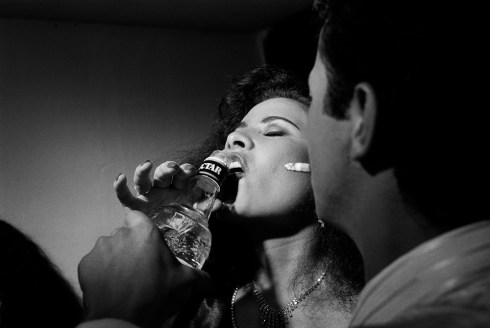
Aguardiente shots backstage at the beginning of the Miss Light pageant, Mesitas del Colegio, Colombia. Carl Bower
Women and the politics of appearance featured strongly throughout. Carl Bower’s project Chica Barbie examines the beauty pageant phenomenon of Colombia placing the contests within the context of the country’s pervasive violence; pageantry as escapism.
Bower’s work compresses pride, anxiety, routines, achievement and exploitation, but never casts aspersions upon this particular cultural more. Bower’s even-handedness presumably stems from his photojournalist background.
Bradley Peters’ print was banished to the stairwell, yet his work is strong enough to endure. Earlier on the night of opening, PCNW gallery director Ann Pallesen described juror Andy Adam’s FlakPhoto project as “off-kilter” – Peters is perhaps the best proponent of that look. Peters constructs scenes that so flauntingly blur art and documentary the viewer is hooked. I was befuddled last year when Peters came on the scene.
I liken Peters to Crewdson but without the six-figure budget; perhaps Crewdson on Valium. Peters also won the Conscientious Portfolio Competition, 2009.

© Bradley Peters

Ponce. Ellen Rennard
Also on the stairs, Ellen Rennard. Let me tell you, I generally don’t care for pictures of aninals but Rennard is the type of special talent to get my stubborn eyes seeing again. The runners and riders in the stables are partners, total equals. Respect runs through this series from photographer to subject, man to mammal. Rennard’s work is as compelling as any documentary portrait project I’ve seen in the past two years.
Dead dogs anyone? No, how about dead cats then? Mary Shannon Johnstone cares deeply enough about animal welfare and responsible stewardship that she went inside a North Carolina euthanasia clinic. Breeding Ignorance is a view we’ve not seen before and it may not be one you want to see again such is the visceral rendering of matted fur, stiff eyelids and garbage-headed biomass.

Cats Disposed. Mary Shannon Johnstone

Tree, Boston Public Garden, 2009. Pelle Cass
Talking about fur, Pelle Cass specializes in composite images of frantic activity, human and animal. The print from Selected People chosen for this show depicts a tree covered in scores of pudgy, russet squirrels surrounded by less fat humans and a flutter of birds in various stages of take off and perch. Cass’ work made me laugh, which is always a good sign.
Jane Fulton Alt’s portfolio Burn series is delicate but underwhelming if isolated. Fortunately, it is not isolated in that Fulton Alt has followed up on previous work with great intelligence. In 2005, Fulton Alt worked as a social worker in the aftermath of Hurricane Katrina. At dusk she’d document the ruined city. Burn series continues the same washed out grey of her Katrina series Look and Leave, only here it is smoke and not the “toxic, metallic air” of New Orleans. Fulton Alt observed upper respiratory problems among post-Katrina survivors and it as if this work is a lingering acknowledgement of legacy complications after the fact. Disasters are never just natural or man made but always a spiteful conflagration of the two … the air needs to clear … the dust needs to settle … the poisons sometimes burn slow.

Burn No. 81. Jane Fulton Alt
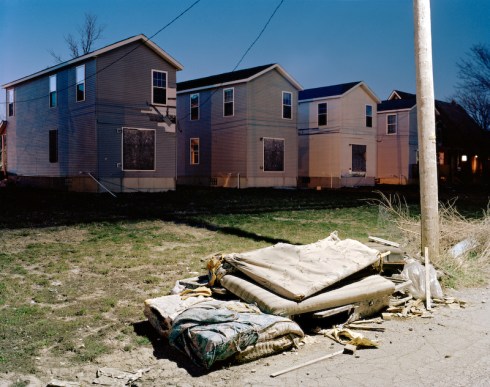
Alley Behind Ferris St. © Will Steacy
I really enjoy Will Steacy’s politic (his blog rants are a breath of fresh air) and he seems to be one of the hardest working photographers out there. The chosen print was luminous. However, I get the impression that Steacy only cares about these streets in as much as the debilitating effect they have on their inhabitants and itinerants. I’d have like to have seen one of his figure studies.
Manuel Capurso and Samar Jodha both pierced the darkness with portrait studies. Capurso’s chiaroscuro isolates his subjects and communicates the loneliness of life’s latter stages. Jodha literally spotlights the Phaneng people with whom he has lived for four years; they are a people on the verge of extinction and he has photographed every member of the 1,500 deep tribe. Both artists were effective.
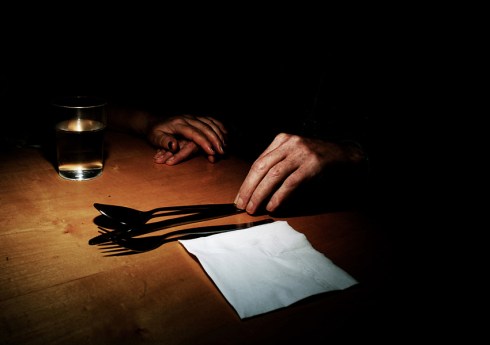
Untitled. © Manuel Capurso

Phaneng 1. Samar Jodha
Alejandro Cartagena was one of the two book award winners this year and I wouldn’t argue with the selection; he is doing immensely important work about mass-suburbanisation/social-housing projects in Mexico. However, I would argue for the case of half a dozen prints from his portfolio before the one chosen for this show.
David Taylor and Victor Cobo are also engaged in important inquiries both probing issues of immigration and policing, family and place. In each case though, the print did neither of their theses any favours. Cobo’s print was bright and with humour but, without context, it receded quickly from memory. Taylor’s print was large and empty but perhaps that was the point to suggest the illegal immigrants as helpless, lost and losing agency?
Definitely spend time with Cartagena, Taylor and Cobo’s online portfolios as I think they are three vital political thinkers in photography. Perhaps that was the problem, my hopes for the print were too high ?…

Mi Abuela, México, 2003 © Victor Cobo

Untitled © Ed Freeman
Up until last Friday, Joni Sternbach had single-handedly carried the genre of surf photography. She now has Ed Freeman to help her with the load. Generally, I dislike pictures of surf (bar the odd Friedkin print) as much as I dislike pictures of animals, but Ed Freeman’s print really stood out. His online portfolio is as balanced too. Definitely the surprise of the evening.
Finally, leaving the best to the last, Andrea Camuto’s print romped home with the win in the ‘gut-punching-and-my-world-is-better-informed-for-seeing-this’ category.
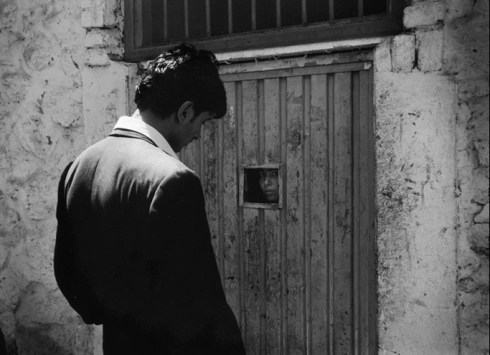
Visitation, Waleyat woman's prison, Afghanistan © Andrea Camuto
Camuto is interested in the needs of families to survive as they have migrated in and out of Afghanistan and in and out of the capitol Kabul in bids to find livings.
From Camuto’s statement, “Feeling great compassion for their struggles, I was compelled to return several times, most recently in 2009. As my ties with these families deepened, I followed them into such places as the women’s hospital and the women’s prison. Each trip furthered my understanding of the political and social complexities of Afghan culture. Entrenched attitudes, coupled with rampant illiteracy, create the oppressive conditions under which Afghan women are forced to live. In these photographs I call attention to these ordinary Afghans, who go unnoticed and unrecorded in the larger narrative of the conflict in Afghanistan today.”
While the chosen print is a literal depiction of enclosure, the house arrests and claustrophobic hardships of rural life as portrayed in Camuto’s work bring a heavier weight to bear on the viewer. Camuto’s is the latest in a slew of projects I’ve seen recently coming out of the AfPak region that don’t depict military engagement. These personal struggles, significantly, are dictated by larger political and infrastructural battles currently being fought in Afghanistan.
The helplessness served up in Camuto’s work is bitter blow and one that lasts.
– – – – –
EXPOSED: CRITICAL MASS will be on show at the Photographic Center Northwest, 900 12th Avenue, Seattle, WA 98122 until the 18th May.
Screengrab
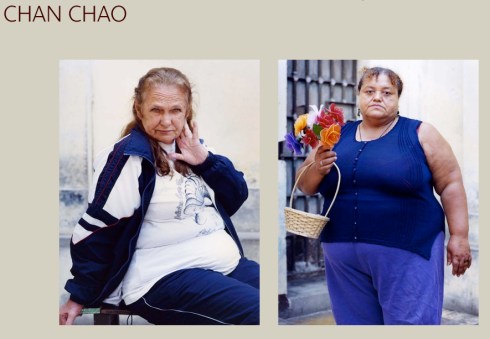
Chan Chao‘s portraiture is about the intimate moment he allows the viewer with his subject. For Chao portraiture is “communication through body language and facial expression.”
Santa Monica features the women of Santa Monica Prison, Lima, Peru. The prison is recognised as the site of detention for women caught and implicated in drug smuggling activities. There are dozens of foreigners from all over the globe. Santa Monica Prison contains an unusually diverse convergence of lives, stories and needs.
Not just in Santa Monica but in all his series, Chao intersperses his portraiture with environmental studies and in so doing expresses the inescapable strong-arm of military, government and judiciary.
In the portrait studies, Chao deliberately deemphasises the background; backdrops are evocative but not descriptive. The women of Santa Monica Prison are thus gifted something quite precious by Chao, their stage for a moment, and individual acknowledgment outside of a carceral context.
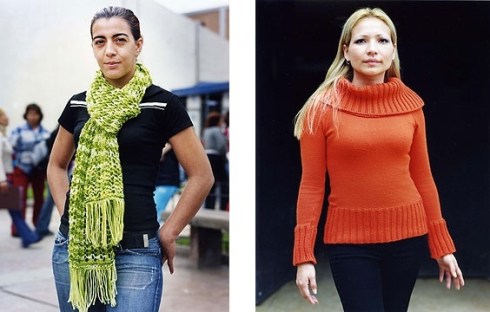
Two portraits from the 'Santa Monica Prison' series. © Chan Chao
Chao is well known for his nude studies for Echo, and his three-trip project to the border camps of Burma, his country of birth (See Chao describe his Burma project). Cyprus, again, reverently, deals with the portrait sitter.
All of Chao’s series should be viewed; together they create an winsome cloud of emotional sound. Wrap yourself up.
BIOGRAPHY
Chan Chao (born 1966 in Kalemyo, Burma) is an American photographer known for his color portraits. He and his family left Burma for the United States in 1978. Chao studied under John Gossage at the University of Maryland, College Park. When he turned 30, Chao decided to visit Burma for the first time since his family left but was denied a Visa. Instead, he travelled to the Thai-Burma and Indian-Burma borders where he photographed Burmese rebel and refugee camps. These images comprise his books Burma: Something Went Wrong and Letter from PLF, both published by Nazraeli Press. Nazraeli also published Chao’s book of female nudes entitled Echo. His Burma portraits were included in the 2002 Whitney Biennial. Chan Chao lives in the Washington, DC area. He teaches photography at George Washington University.
REPETITION IS DIFFERENT TO PLAGIARISM
I just posted on Christopher Sims’ series Hearts and Minds. It recalled the work of Todd Deutsch, Philip Toledano, Robbie Cooper, Adriaan van der Ploeg and Shuana Frischkorn who have all pointed their lenses at engrossed computer-gamers.
Joerg, Harlan and Hey, Hot Shot! have all mentioned this obvious repetition of subject before. The gamer-portrait-meme is so recognisable/memorable that accusations of plagiarism are foolhardy. None of these photographers are trying to pass off the idea as their own nor obscure the work of other artists.
ON BURDENY
Burdeny, on the other hand, tried to hoodwink his audience and pass off the idea of the work as his own. That is the difference.
Burdeny shows a deliberate interest in replicating exactly on at least half a dozen occasions the work of a single artist’s work – Sze Tsung Leong’s work. Did Burdeny research Leong’s GPS coordinates?
I must presume Burdeny is a provocateur and that he manufactured this stunt to either get away with it, OR – worst case scenario – become the talk of the town. All publicity is …
To me, Burdeny will always be the bloke that ripped of that other photographer. Terrible decision making and a tough reputation to push back against. What a prat. It’s just bad form. People have repeated to me many times that the photography world is small. If that is indeed true then Burdeny might struggle from here on in?
NB. The repeated assertion that the photography world is small may or may not be true, it might be a meme. It’s definitely not plagiarism.
GAMERS IN PHOTOGRAPHY


- © Philip Toledano

- © Shauna Frischkorn


- © Todd Deutsch
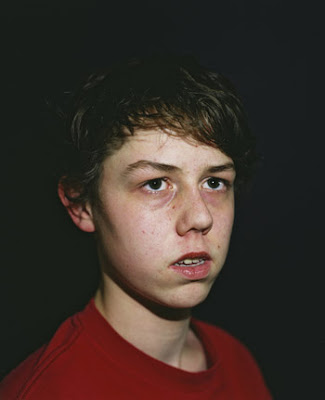
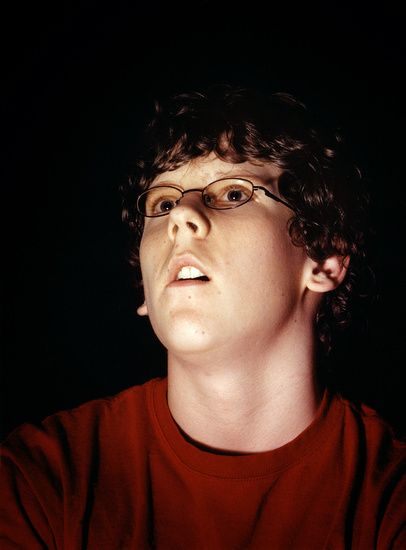
- © Adriaan van der Ploeg

 Prison Photography