
You are currently browsing the category archive for the ‘Fine Art’ category.
DEMOS: BOOK
I’ve had a lot to say about the mothballed Wapato Jail in North Portland. Last year, I said it’s use as a film set for an activist web series against solitary was the only good thing to come out of the facility, so I was very happy this year when artist collective ERNEST was brought to Portland by c3:Initiative to work on an artist residency about the vacant lock-up.
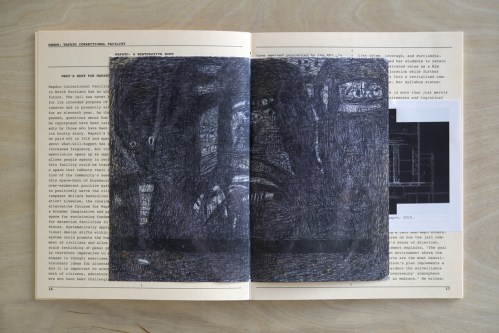
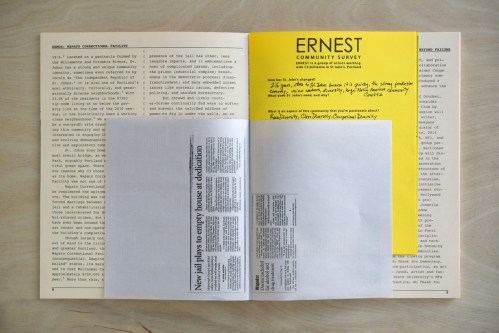
ERNEST produced a film, photographs, hosted community engagements, a roundtable, artists’ event and a book-club about mass incarceration. They also put out a publication to which I contributed. That essay, I’ll post here with illustrations shortly. But I just wanted to let you know that the book is now for sale.

The design of the book is by Container Corps, it’s a bit mad with tip-ins everywhere. And it’s brilliant.
The book features contributions from Ace Lehner, Sarah Fontaine, Ernest Jerome DeFrance, Dan Gilsdorf and the ERNEST team (George Pfau, Amanda Curreri, Llewelyn Fletcher and Hannah Ireland).
VIDEO
Demos: Wapato Correctional Facility, which is on view at c3:Initiative until Nov 22, probes the many concerns that the vacant jail suggests: breakdowns in democracy, prevailing power structures.
Here’s some “episodes” of themed footage that were woven together for ERNEST’s final centerpiece video installation.
Enjoy!

Rutgers Prins Discord
The curatorial concepts are pioneering, the viewing experience nerve-wracking, and the conclusions occasionally terrifying, but the exhibition DATA RUSH — unlike the powers and digital infrastructures upon which it sheds light — will leave you empowered.
I just wrote, for Vantage, an in-depth review of Wim Melis and Hester Keijser‘s show DATA RUSH, which was the centerpiece to this years Noorderlicht Photofestival in the Netherlands.
The piece is titled This Exhibition Sees Our Ties to Data, Reveals the Future Is Now but it might as well be titled Finally, a Photography Show That Actually Deals with Our Relationship to Screens and Networks!

Arnold Koroshegyi. Electroscapes, 2011-2012
It was a slow process getting my head around the sheer volume of artists’ projects (45) in the show, but it was worth it. Virtually every project is worth a symposium in itself.
For photography, a comparatively conservative medium, DATA RUSH is light years ahead of most presentations. It’s precisely where our discussions about photography need to be if it we’re to comprehend the ways in which we are subject to images and image indexing.
Read the full piece which also boasts bigger images and some photos not included here below.

Hannes Hepp. Not So Alone – Lost In Chatroom, 2012-2015
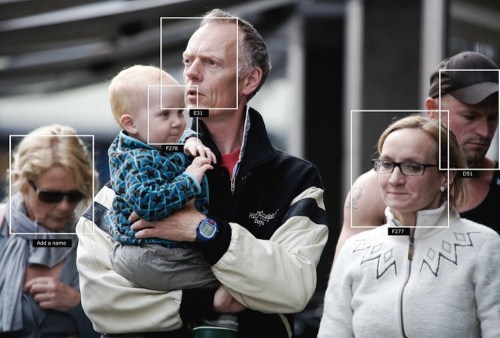
Simon Høgsberg Grocery Store Project

Andrew Hammerand. The New Town, 2013

Fernando Moleres. Internet Gaming Addicts, 2014
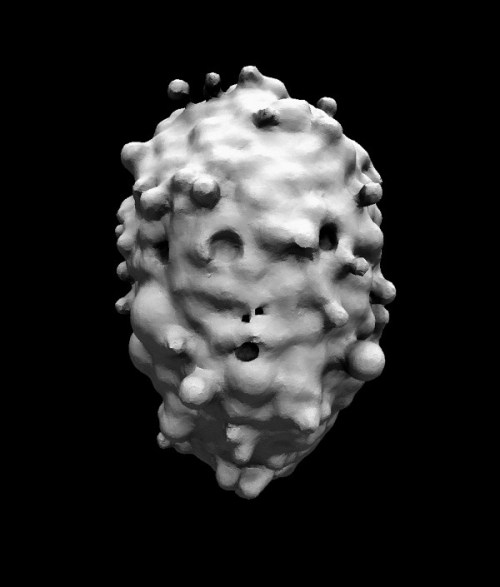
Sterling Crispin, Data Masks

Julian Röder. Mission and Task, 2012/2013. Situation room of the FRONTEX headquarters in Warsaw, Poland, June, 2014

Catherine Balet. Strangers in the Light, 2009
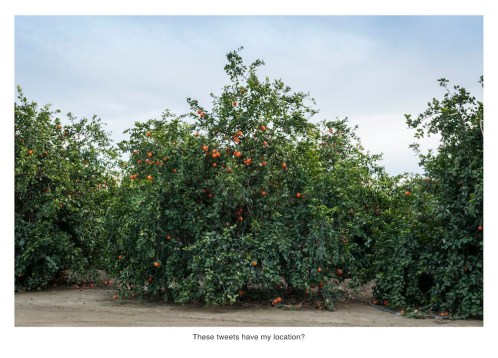
Nate Larson & Marni Shindelman. Geolocation, 2009 – present

Dina Litovsky. Untag This Photo, 2010-2012
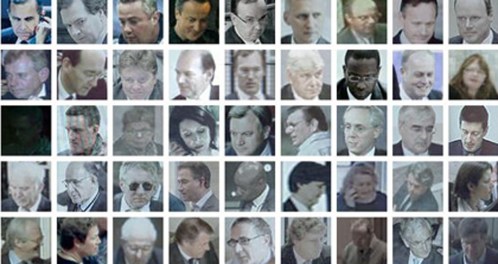
Daniel Mayrit’s You Haven’t Seen Their Faces (detail)

Mintio. ~T.H.O.H.Y~ (aka The Hall of Hyperdelic Youths), 2010

Heinrich Holtgreve. The Internet as a Place, 2013-2015

I’m being facetious of course. Playful, yes. And earnest, oh yes.
Love the Hurford Center for Arts and Humanities (HCAH). Over at HCAH, they’ve got Matthew Callinan the hardest working man in the Greater Philadelphia area and the fellow who gave me my big break.
Callinan, the campus exhibitions coordinator at Haverford College, builds four shows every year, from the ground up. He’s interested not in the big names per se but the emerging ideas of curators, artists and collectives who’ll connect Haverford students to the world as it is now.
And there’s a good amount there for photo-lovers, too. For example, the recent The Past is a Foreign Country a solo show for François-Xavier Gbré and Possible Cities, curated by Ruti Talmor including the work of photographers Sammy Baloji, Pieter Hugo, Salem Mekuria, Sabelo Mlangeni, Guy Tillim and IngridMwangiRobertHutter.
Check out the archive. There’s Zoe Strauss and Hank Willis Thomas, too.
Oh, and how could I miss the current show?!?! The Wall In Our Heads is a themed show about the Berlin Wall, curated by the legendary Paul M Farber who has written extensively on the TV show, The Wire. Do not miss Farber’s paper The Last Rites of D’Angelo Barksdale: The Life and Afterlife of Photography In The Wire.
How better to follow this hotbed of innovation than through the Instah?

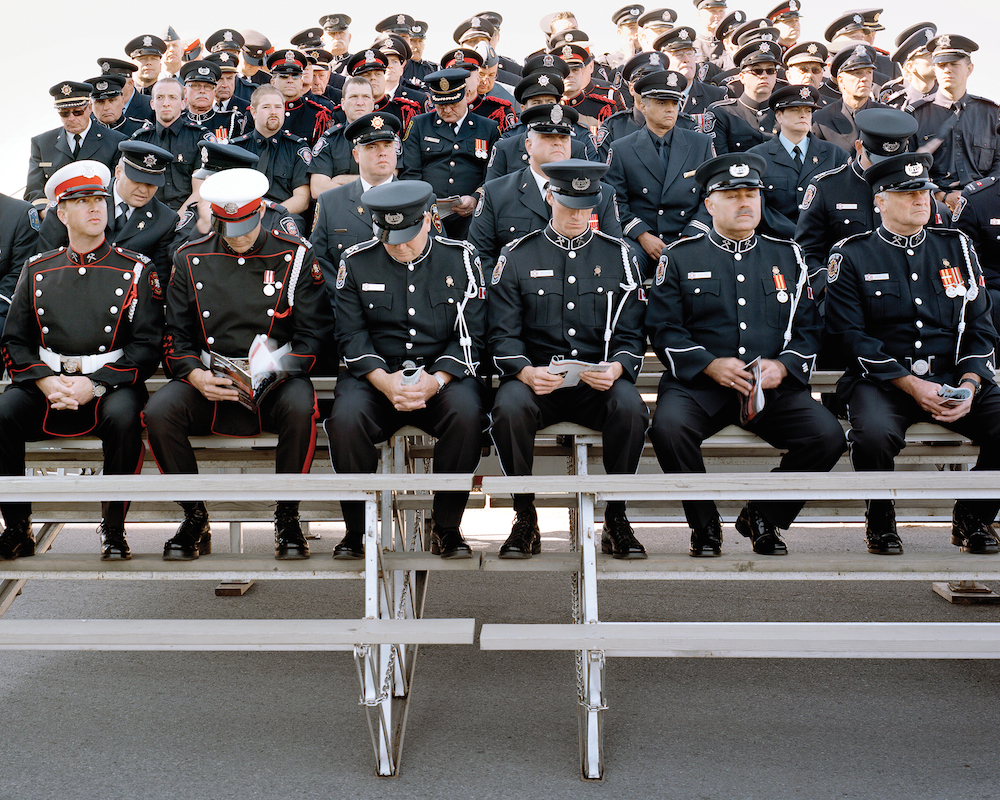
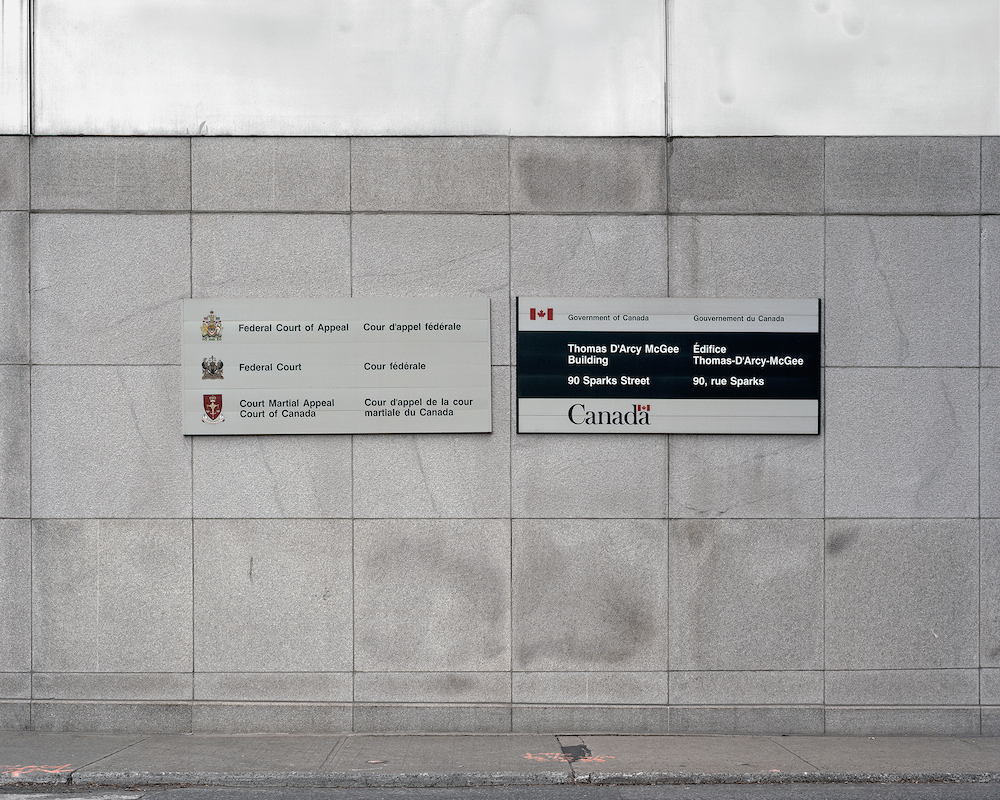
Photographer Tony Fouhse photographed his hometown of Ottawa. Then he made a newspaper of his images and gave all 2,000 of them away for free. The project is called Official Ottawa.
I dig Fouhse’s images of politics, power, pomp and circumstance in Canada’s capital. The concept was great, the execution fine and the distribution in cafes and at truck-stops brings a smile to my face.
FREE FOTOGRAFY WILL SET YOU FREE!
I interviewed Tony about the project for Vantage in a piece titled Control and Containment in the Canadian Capital.
About Ottawa, Fouhse says:
“There is a kind of pervasive fear that percolates through the city. Not a fear of getting mugged or anything, rather, a fear of saying or doing the wrong thing. Workers here seem to know which side of their bread is buttered and who is buttering it; they certainly wouldn’t want to put their pensions at risk. An atmosphere like that dampers a lot of healthy thinking and questioning and certainly precludes action.”
–
Read Control and Containment in the Canadian Capital.





Set photo, from the filming of Demos: Wapato Correctional Facility. © ERNEST
In the northern reaches of Portland Oregon, in the quieter quarters of the St. John’s neighbourhood, sleeps a beast. Wapato Jail was built for $58 million but never opened. It has sat vacant since 2004. It has been used as a film set. They tried to sell it. At one point, the City of Portland put out an open call for alternative uses proposals. Some suggested it could be used as a garden and rehabilitation center. Others suggested it could be used to house Bush, Cheney and other war criminals.
Wapato has costs the tax payer $300,000 per year (a conservative estimate) to just keep the thing offline. One long expensive joke. Systems normal but never operational.


Demos: Wapato Correctional Facility, video still, 2015. © ERNEST
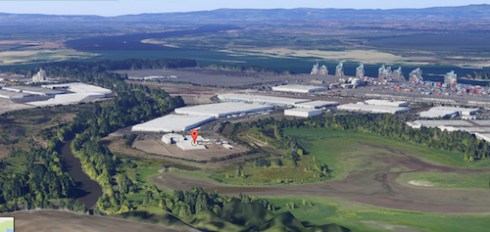
Screengrab of a Google Maps angled, aerial view of Wapato Jail, looking northwest.
ERNEST and DEMOS
When the arts organisation c3:initiative moved into St. John’s in 2014 it didn’t take them long to turn its focus to the empty jail. c3:initiative sponsored artist collective ERNEST as artists-in-residence. ERNEST have produced a multi-medium art installation, film, a book and public programs.
“Demos: Wapato Correctional Facility probes the many concerns that the vacant jail suggests: breakdowns in democracy, prevailing power structures,” reads the exhibition statement.
During ERNEST’s early research they discovered that coyotes had dug under many fences. Video footage shows that they will scale fences too to cross and inhabit the lush ground within the jail perimeter. These wily mammals, that have roamed the area far longer than the jail has stood, have found a way to ignore the unwelcome interruption of a hard and fast boondoggle. Coyotes continue their evolved routine and instead of fighting the jail just orient themselves around it. Ultimately, they operate to ignore the jail’s presence and minimise it’s impact on their rhythms.
Is the coyote a good metaphor? Might we find new solutions to old problems if we approach prisons, jails and social ills with a similar low-key pragmatism. Prisons might be the problem but so to might our strategies of opposition?
“Acting as a conjuror of sorts, the character of Coyote leads the video component of Demos, transforming the specific architecture, history and politics of Wapato Jail into a platform for conversation and collaboration,” says the press release.
While ERNEST are allied to prison reform and abolition arguments, their work doesn’t necessary look like the typically political and didactic protest-imagery. Bringing the subtlety of fine art to a brutish topic such as the abusive prison industrial complex is intriguing. I don’t know what to expect truthfully, which is why I am in Portland right now for tomorrow’s opening.
OPENING RECEPTION
Friday, September 18, 6:30-9:30pm
At c3:initiative, 7326 N. Chicago Avenue, Portland 97203.
Visitors are invited to join c3:initiative and the artists from ERNEST in marking the opening of Demos: Wapato Correctional Facility. Complimentary drinks and light refreshments will be served.
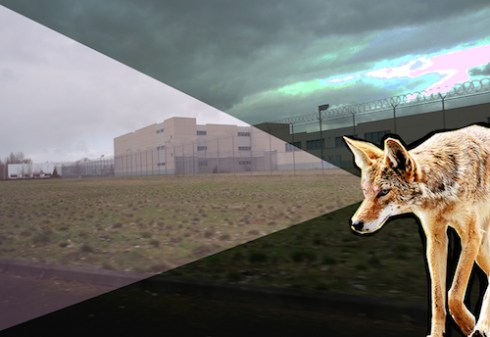
A graphic by ERNEST from an early conceptualisation stages of the project Demos.

Demos: Wapato Correctional Facility, video still, 2015. © ERNEST

Demos: Wapato Correctional Facility, video still, 2015. © ERNEST
THAT TITLE?
The project’s title takes its meaning from various interpretations of the word “demos”. The Greek word “demos” (pronounced “day-moss”), refers to the “village” or “people.” In English, “demo”, is used as a shorthand for “demonstration”, as reference to the “demo mix-tape”, or as the vernacular for “demolition”. ERNEST thus uses “demos” to refer to its interest in keeping their methods experimental and provisional, while creating opportunities for local participatory engagement.
PUBLICATION
The book, published by Container Corps, includes a collection of essays, artworks, research and primary documents. I have an essay in there about sketches made in solitary by a man named Ernest Jerome DeFrance.
The book’s contents are both specific to Wapato Correctional Facility, and related to general issues of incarceration, participatory citizenship, and the role of art in social justice and storytelling.
BIG SATURDAY EVENT
I’ll also be in the room for an open roundtable conversation — a broadened investigation of themes relating to the empty jail facility, both locally and nationally.
Saturday, September 19, 2015, 11am-1pm. Followed by a 12-1pm community meal and conversation.
I look forward to hearing from panelists:
Emanuel Price is the Founder and current Executive Director of Second Chances Are For Everyone in Portland, OR. S.C.A.F.E. works to reduce the rate of recidivism by providing support services to promote employment, empowerment, and community engagement for men in transition because Second Chances are for Everyone. Price is currently leading the organization in developing key programs and resources that will help reduce criminals going back into destructive lifestyles after being released from jail or prison. More information about Price is available here.
Melissa Salazar is a May 2015 graduate of Pacific Northwest College of Art, where she studied Communication Design. Melissa has recently become involved in activist work focusing primarily on incarceration of black and brown individuals. She has been influenced by events in her own life and seeks to bring awareness to an invisible society behind bars.
Yaelle Amir is a curator, writer and researcher who currently holds the position of Curator at Newspace Center for Photography in Portland, OR. Her writing and curatorial projects focus primarily on artists whose practices supplement the initiatives of existing social movements, rendering themes within those struggles in ways that both interrogate and promote these issues to a wider audience. She has curated exhibitions at Artists Space, CUE Art Foundation, Center for Book Arts, ISE Cultural Foundation, The Elizabeth Foundation for the Arts, Marginal Utility, and the Wallach Art Gallery at Columbia University, among others. Her writing has appeared in numerous art publications includingArt in America, ArtLies, ArtSlant, ArtUS, Beautiful/Decay, and Sculpture Magazine. She has also worked at major art institutions, such as the International Center of Photography, the Museum of Modern Art, and NYU’s Institute of Fine Arts.
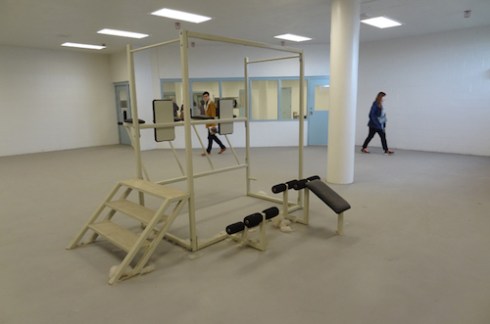
Members of ERNEST tour the gymnasium in the empty Wapato Jail, Portland, OR.

Demos: Wapato Correctional Facility, video still, 2015. © ERNEST

Photo taken in Wapato Jail, Portland, OR as part of ERNEST’s early research.
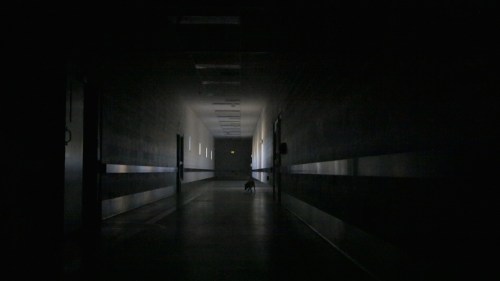
Demos: Wapato Correctional Facility, video still, 2015. © ERNEST
DETAILS
Demos: Wapato Correctional Facility
A project by ERNEST
September 18–November 22, 2015
Gallery Hours: Fri–Sun, noon–5pm at c3:initiative, 7326 N. Chicago Avenue, Portland 97203.
OTHER EVENTS
Reading Group: The New Jim Crow – Wednesdays, October 7, 14, 21, 7:00-8:30pm
Stories in Movement – Saturday, November 7, 5:00pm
No Thank You Democracy, The politics of non-participation, by Ariana Jacob – Sunday, November 22, 4:30pm.
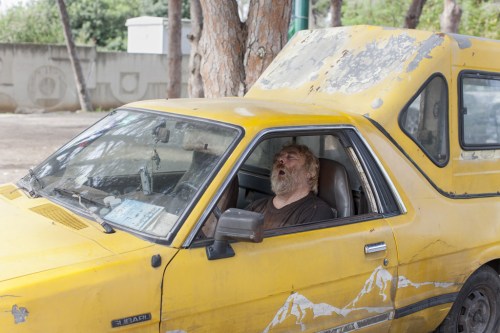
You gotta love Martin Kollar. He just won the 2015 Prix Elysée. I was cheering for Mari Bastashevski, but I can’t complain with the ultimate choice of Kollar. His work is dark and hilarious. Kollar freezes awkward. In his world, military men are less heroic, stunt men are suicide cases, and practice makes imperfect. Is this shit even real?
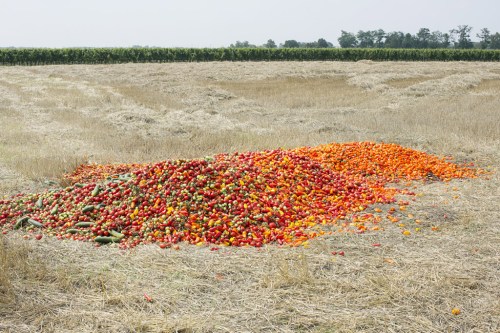
Kollar travels through research labs, checkpoints, sports events, training scenarios, parliaments, dentists, barrios and wheat fields. He isolates people from context and time to create solitary and uncanny moments. The list of photographers interested in documenting simulation and facade is long — Lisa Barnard, Paul Shambroom, Yann Mingard, Richard Barnes, Max Pinckers, An-My Lê to name a few — so it is a little surprising Kollar’s work stands out for me and truly strikes a chord. I reckon this is because his work is consistently good. And by good, I mean convincing. I am convinced he has looked really hard to find these scenes. I am convinced he is a good editor, or has good editors around him. I am convinced of his skill because it’s hard to make this look so easy. Check out his notebooks.
Photography is “an intermediary stage, a kind of transitional memory between two times” says Kollar who, according to the Prix Elysée, “belongs to the temporary generation, moving from job to job, from apartment to apartment, relationship to relationship.”


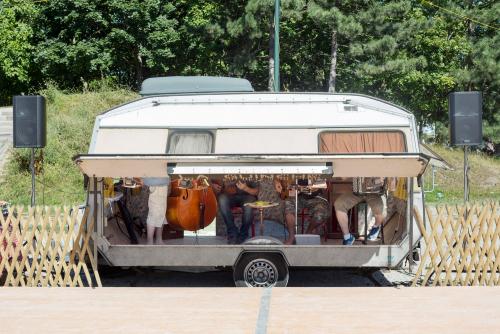
Originally from Slovakia, Kollar’s projects build upon ideas from the previous. He constructs huge stepping stones and jumps from one to the next when he feels he’s considered the ideas central to each project from all angles. “Then the next idea comes, which usually corrects the previous one,” he says. “My projects are generally linked to limited territories and spaces, whether it be Eastern Europe, the European Parliament or Israel.”
Kollar’s photographs evoke a certain amount of wandering and wondering. For Prix Elysée, Kollar took a geographically unspecific overview.
“Provisional Arrangement, conceived in the spirit of a road movie, aims to capture those moments when the permanent becomes provisional,” says Prix Elysée.
Again, not an easy task. To locate and understand the gaps you’ve got to have a good grasp on what the formed and formal landscape of knowledge is for a places … or in Kollar’s cases many (unidentified) places.
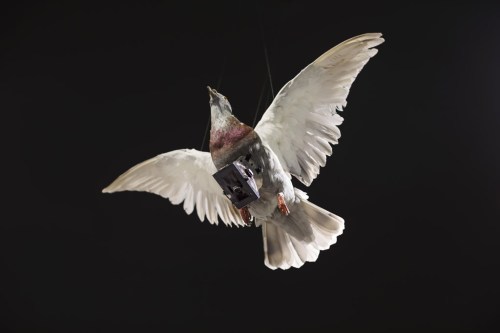
In the Museum of Military History in Dresden, he photographed an installation showing pigeons wearing tiny cameras during the Second World War.
“They evoke today’s drones. In this case, photography is an intermediary stage, a kind of transitional memory between two times. That’s what I want to work on, filling the void, building something in the interstices,” says Kollar. “I wanted to do work that isn’t linked to any place, which revolves around temporality and provisionality.”
In winning the Prix Elysée, Martin Kollar won 80,000 Swiss Francs. He has one year to make an exhibition and a book which extends Provisional Arrangement. It’ll go on show at at Museum Elysée in Lausanne, Switzerland in September 2016. We already know he has a wit when it comes to installation.
Good luck Martin.
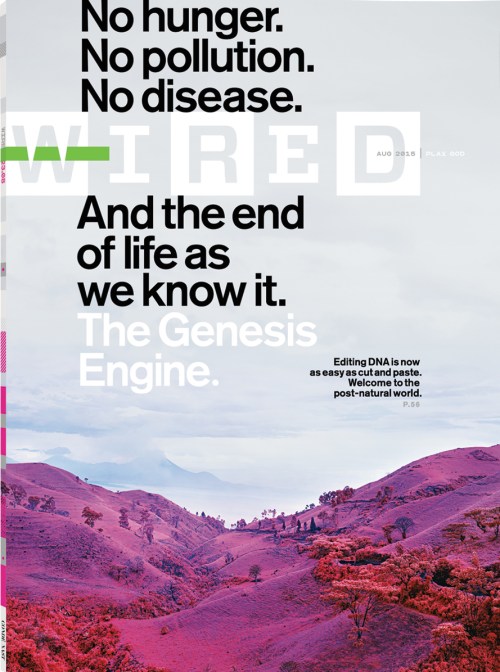
I just published What’s a War-Torn African Nation Got To Do with Editing DNA?, a piece on Vantage about Wired Magazine’s choice of a Richard Mosse photograph Myths Of The Near Future (2012) for the cover of its August issue.
The photograph was made as part of Mosse’s series Infra about the ongoing civil wars in the Democratic Republic of Congo, but the story is about the science behind– and the copyright battles over–Crispr-Cas9 a genetic engineering technique. The gulf between the original subject matter and the nature of the story raised some questions for me.
I must mention that, in light of 5.4 million deaths in DRC, the line “And the end of life as we know it” emblazoned in 48-font on the front cover, seems a little clumsy, but I’m too clueless about the magazine world for that to be my line of main inquiry. Someone else can muse over those loose words if they think there’s anything more in them than a disconnect between packaging and content typical of the marketplace.
[…]
Perhaps I am so discomfited because Mosse’s work makes so much more visual sense being bent ever-so-slightly for this futuristic narrative, than it does for its original intended political purpose?

Mosse pitched in on Twitter with the following three comments, they’re part of a longer back-and-forth with a couple of threads between Ed Brydon and I. Chase those threads if you can.
@brookpete @WIRED @WIREDPhoto Myths of the Near Future shows an active volcano and has a pre-Anthropocene element, relevant to the story.
— Richard Mosse (@richard_mosse) August 4, 2015
@edbrydon @vantagephotos @WIRED @amymaxmen A photo can have numerous meanings / interpretations and sustain multiple contexts? Head explodes
— Richard Mosse (@richard_mosse) August 4, 2015
@vantagephotos @edbrydon @amymaxmen Crispr's manipulation of reality. Turning tragedy to utopia. Many reasons I felt it's a good fit
— Richard Mosse (@richard_mosse) August 4, 2015
Read the full piece and see what you think.
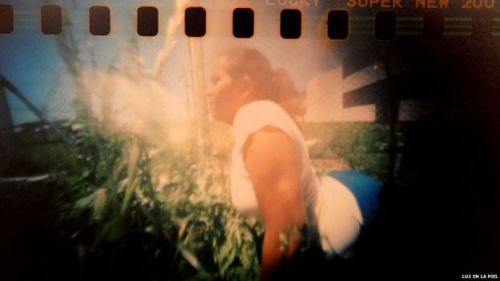
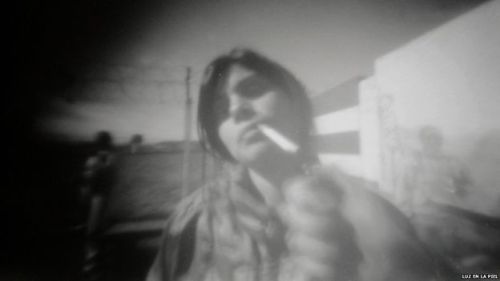
This weekend, the BBC ran a piece about a pinhole photography workshop in a women’s prison in Argentina. I greatly admire pinhole photography in prisons.
The images are atmospheric – retro, a little blurred and with almost fish-eye perspective in some. They look like stills from some 90s skate video or something (I don’t know why that matters). They are awash in color, not unlike every hipster’s favorite, the aura portrait (not sure why that matters either).

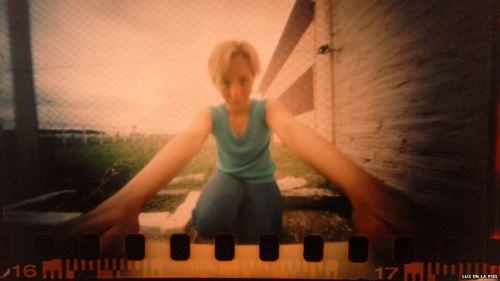
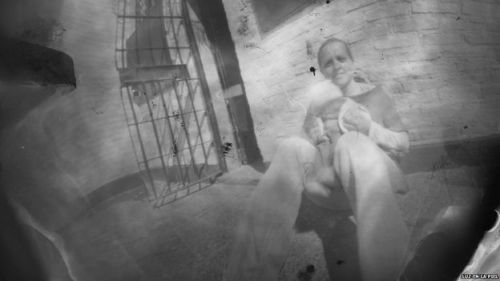
Maybe it was precisely because these images didn’t look like a prison that I was attracted to them. If they weren’t the feature of an article about prison and rehabilitation, they’d have scuttled right by during my day of contestant image flow. naturally, I wanted to know more about their production.
[ SEE MORE OF THE IMAGES HERE ]
They were made during a workshop offered YoNoFui, a organization that provides teaching, community, skills, personal development to prisoners. The organization was founded by Maria Medrano who believes prisons can become productive places for women, cultivating their individuality, esteem and confidence. Currently, they offer nothing of the sort. Medrano has ben recognized as an esteemed Ashoka Fellow and upon the Ashoka website we can find out more about her and YoNoFui’s philosophy.
“Convinced that the prison is the last link in a chain of exclusion and disenfranchisement that ensnares poor women, Medrano pioneered a relationship-centered continuum of education and engagement for women prisoners and ex-convicts to create concrete opportunities for women out of prison and to change the mindsets of prisoners, their families and communities,” it reads.


YoNoFui (translated as “It wasn’t me) also offers courses in poetry, journalism, textiles, bookmaking and carpentry. It’s providing a “holistic approach to transform the way the criminal justice system conceives of and treats women prisoners, making it a productive and more nurturing place. […] Maria’s program deals with the root problems affecting the women, including their lack of labor skills, emotional marginalization and poor self-confidence.”
Some of this language is familiar to us, but a lot of it has not been implemented in Medrano’s home country.
“Women prisoners are the most marginalized segment of Argentine society,” writes Ashoka. “The vast majority are mothers and housewives from very low economic segments of society. 90% of them also come from broken and dysfunctional families, with abusive or drug-addicted husbands and children—whom they often bore while in prison. Many come from two or three generations of women who have been unemployed, and who lack formal education and the social customs that familiarized them with a culture of work. Most never learned the values a healthy workplace inculcates, such as personal responsibility and self-respect. The children of these women are often either neglected or abandoned outright, sent to live with a relative or put into state institutions. About 41% of these women are immigrants with few connections to the local society, having migrated on their own without official papers to seek a better fortune in Argentina, or who were victims of transnational trafficking rings.”
Women end up committing low-level crimes and misdemeanors in Buenos Aires, more out of desperation or necessity rather than from a pathological sense of criminality. However, once sentenced the path is predictable. Argentine prisons reflect upon the most disenfranchised exactly what they had experienced in free society – social exclusion, and permanent second class status. The effects of this exclusion are ben more pronounced upon immigrant women. The majority of people in Argentina are unsympathetic to female prisoners unaware of the complex web of causes to their situation.
Rehabilitation has not been the way.
“Prisons in Argentina function in a militarized way, due to a law passed in 1973 under the military dictatorship. They bear very little emphasis on policies and practices that help support reinsertion of men and women into the labor and social mainstream, leading to high rates of recidivism—although the public ministries do not even care to record the exact figures,” says Ashoka.
Until Medrano’s efforts, reform efforts were largely absent. Focuses first on building individual relationships, belonging and interdependence, Medrano hopes to break the cycle. It’s hard for us to believe but many women in prison have not been exposed to, shared in, or shown how to believe in themselves.
Medrano is going further than just offering classes; she is tying all education into self-improvement and cultivating buy-in from all constituents. Only with the support of the authorities is she implementing cultural change.
“Success for the effort requires a complex series of negotiations with multiple ministries whose support will be required,” says Ashoka. “Negotiations have already begun with the Ministry of Education and Ministry of Labor, where YoNoFui is holding workshops. By developing broad constituencies among multiple ministries, Medrano is beginning to overcome bureaucratic intransigence, while also shifting the program’s dependence on the penitentiary system, which is part of the Justice Ministry, to other ministries with less of a “law-and-order” stigma attached.”
YoNoFui is working in two of the five federal prisons in Argentina, both in Buenos Aires, with some 600 women prisoners each. Medrano plans to scale up and move into other facilities.

Financial support comes a number of governmental departments astutely identified by Medrano — subsidies for micro-enterprises through the Social Development Ministry; job training grants through the Ministry of Labor; seed capital from the Ministry of Industry. YoNoFui connects women with housing and jobs subsidies.
What they begin in the prison they continue outside. YoNoFui also works with agencies for Social Issues, Prisons, Migrants and Gender Issues, with the Secretariat for Children, Youth and Families — both of which have responsibilities related to the young people whose mothers are incarcerated.
Former prisoners return to the jails to work as teachers, and they are new positive role models to the women inside. Relationships are key. Skills ALONGSIDE psychological and emotional health. Arts and trades continue outside of the penal institutions — carpentry, bookbinding, textile design, textile machinery, weaving, graphic design, silkscreen, photography, poetry and journalism.
The organization is young but Medrano wants a permanent, staffed, full-time “School for Work” inside the prison. In the way, YoNoFui considers young people too in helping them re-establishing their bonds of family, re-adapt to society, YoNoFui can be though of as akin to The Harlem Childrens Zone. Targeting both the practical and the attitudinal is key, that is to build key skills but also to shift the mindset of an entire downtrodden group.
[ SEE MORE OF THE IMAGES HERE ]
Inspiring stuff. Now, aren’t you glad you took a closer look? I am.

 Prison Photography