
You are currently browsing the category archive for the ‘Institutional’ category.
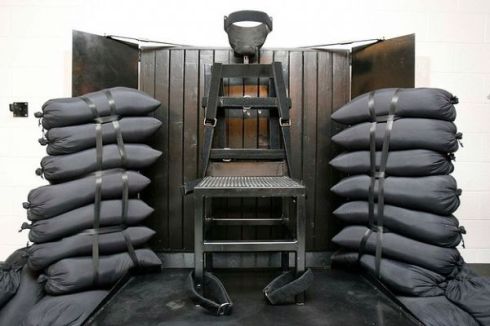
© Trent Nelson/AP - Pool
BagNewsNotes ran the above photograph with commentary. It goes without saying that I am opposed to the death penalty, which is nothing more than foolish symbolic act in our political economy.
Four bullets passed through Ronnie Lee Gardner. In this photograph, three bullet-holes are visible in the wood. Photographer, Trent Nelson presented a six-part series on his coverage of the case, appeals and execution in Utah. Part six is titled ‘The End’:
I’m told that I can only bring one camera, no camera bag, and I must have a lens cap on my lens. That changes things. I grab a body with a 16-35, stick a flash on top, pop in my most reliable battery and an 8 gigabyte card. It’s an uncomfortably light kit for such a big assignment.
The photographs and text are a detailed account of a surreal event:
Immediately there are disagreements about details. Standing at the window of the execution chamber after Gardner was shot, one reporter had drawn a sketch of the target on Gardner’s heart indicating the four bullet marks. He insists his sketch of the target is accurate, while another reporter disputes it, saying that two shots were actually on the left not the right.
and
Reporters are soon climbing all over the chair, pointing at the bullet holes, poking their fingers in them.
In this execution chamber, in this prison, the media record the evidence and in so doing confirm the deed done. Very surreal.

Polaroid 636 Close-Up
The ever diligent DLK Collection reminded us recently of what is likely the final chapter in the Polaroid Collection – its dispersal and the auction of its individual parts. DLK tell us of Ansel Adams’ donated time and prints to a collection he thought destined for a museum. The intention and the assets have been devoured by greed. Allow me to defer to DLK;
“The whole sordid story, with its corporate buyers, Ponzi schemes, legal wranglings, bankruptcy proceedings, and angry artists has been faithfully investigated and recorded by esteemed critic A.D. Coleman in the past year and a half on his blog, Photocritic International (here). While the rest of the media generally ignored the Polaroid story, Coleman has produced 19 meticulously researched posts covering its many facets, with particular attention paid to tracking down where all the pictures have gone. It’s well worth the time to read through the entire series to see how this drama has unfolded over the past months.”
Bang on! Anyone interested in the “sordid affair” absolutely should check out A.D.Coleman’s coverage. He has pursued the criminal acts and legal gymnastics with tenacity. I admire Coleman’s work as much as I am aghast at the details of the case – a lot.

This is a neat idea. It tells you nothing about football, but a lot about massive environmental change, process or flux.

A couple of weeks ago I posted four Library of Congress photographs (attributed to Russell Lee) of Tule Lake internment camp .
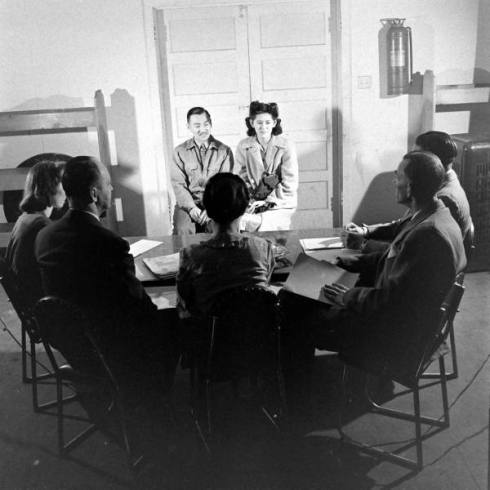
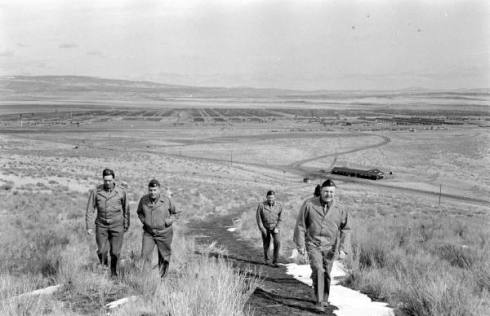
In follow up, I encourage you to check out the 200+ images of Tule Lake by Carl Mydans on the Google/LIFE archive. Mydans took these for a LIFE Magazine feature in 1944. [More down the page]


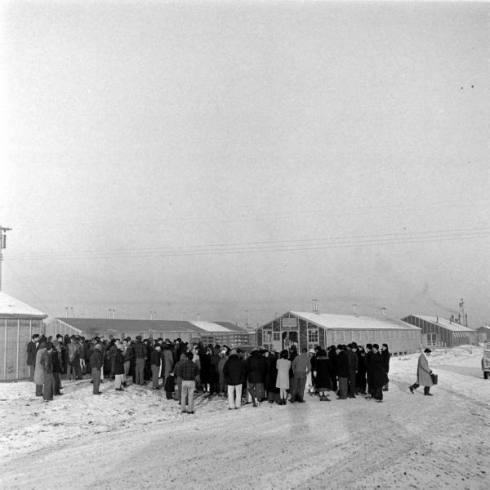
I am especially drawn to the photographs in which Mydans’ presence cannot be ignored – a blinding flash,or fixed stare. Are some of Mydans prints are attempts to be poetic? The scenarios for other prints seem invasive. [More, scroll down]
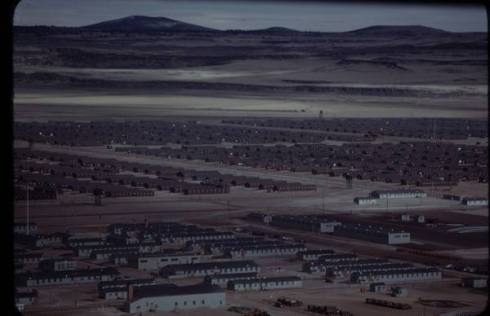


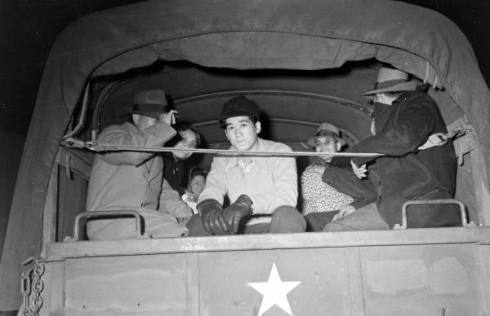


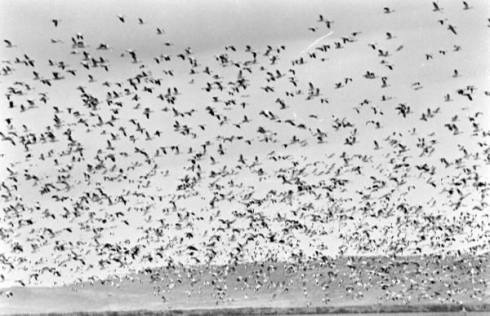


Mydans’ success was his portraits; his reportage of the interactions between internees and authorities appear to be staged. Maybe pictures were staged, or maybe authorities just fidgeted in front of the camera?



– – – – –
For more about Japanese-American Internment during WWII, refer to the Densho archive of video-recorded oral testimony paired with images and documents of the time. It is the most thorough archive I know of.
– – – – –
Found via International Center for Photography, FANS IN A FLASHBULB blog:
http://fansinaflashbulb.wordpress.com/2010/05/29/tule-lake-internment-camp/

Photographer Unknown
Billy Baque‘s Cuban Polaroid describes a camera’s self-contained process:
“A wooden box with the bellows and lens from a folding camera mounted at one end with a complete darkroom inside. Using photographic printing paper the photographer would expose a sheet of paper for the negative, develop, stop, and fix it inside the camera, then put a copy stand on the camera and photograph the negative (to obtain a positive), develop, stop, and fix, then wash the final print in a coffee can of water attached to his homemade tripod.”
Baque, then provides a global visual tour of street photographers using (often for official purposes) DIY cameras.
UPDATE
Joe Van Cleave commented at Baque’s site with a volley of links about photographers work in India and Bangladesh.
Mark Dummett (photographs and words) reported on Bangladeshi photographer Safder Ali. Ali’s been running his passport-sized photography business with an antique box camera by the side of a busy street in Dhaka since 1952.

© Mark Dummett
– – – –
Found via Make Magzaine
I was first aware of João de Carvalho Pina‘s work a couple of years ago when Jim pointed to Pina’s photographic homage to the political prisoners of Portugal (1926-1974). Two of Pina’s grandparents were imprisoned by the Portuguese regime.
Just as that terror ended in Europe, another began across six countries in South America. Pina’s project Operation Condor has just featured on the New York Times’ Lens blog, for which Daniel J. Wakin explains:
“Operation Condor was a collusion among right-wing dictators in Latin America during the 1970s to eliminate their leftist opponents. The countries involved were Brazil, Argentina, Chile, Paraguay, Uruguay and Bolivia.”
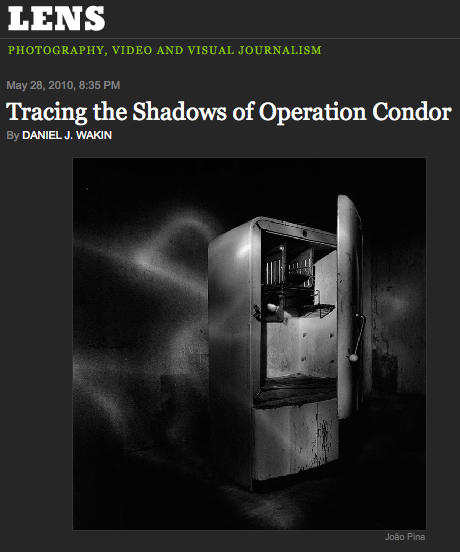
More from the NY Times on the sites of detention:
Mr. Pina said he was struck by how ordinary the locations were — garages, a sports stadium, offices. “Most of them are places that can be in the corner of our houses,” he said. “They’re very normal places”
Very important work, not least the portraits of survivors. Pina’s goal is to create a visual memory of the era working against a relative dearth of historical documentation, “to show people that this actually happened. There are hundreds of thousands of people affected by it.”
The first four chapters of Naomi Klein’s Shock Doctrine deal with the military juntas and international interference in South America from the mid 50s until the 80s. Highly recommended.
– – – –
I have been working on a series of posts about the Desaparecidos in Argentina specifically, one group of nationals affected by the continental ideological wars of South America in the 70s and 80s. Expect follow up posts on this subject.
ELSEWHERES
Pina works on incredible breadth of issues, all related by their focus on the harshest of social violence. Most recently, his work on the gangs of Rio de Janeiro has garnered attention, here and here.
Below is an image from his Portuguese political prisoners project (source).


© Kevin Miyazaki
Last year, I met Kevin Miyazaki. I told him of my project at Prison Photography and he told me off his recent project Camp Home.
Before I deal specifically with Kevin’s personal project of insistent history, let me briefly set some context for thinking about photography as it relates to WWII Japanese internment. Kevin and I discussed the well known photographers who visited the internment camps in California – Clem Albers, Dorothea Lange and Ansel Adams.

“Richard Kobayashi, farmer with cabbages, Manzanar Relocation Center, California.” Ansel Adams, photographer. Photographic print, 1943. Reproduction numbers: LC-USZC4-5616 (color film copy transparency); LC-A35-4-M-31 (B&W film negative)
Adams’ was often criticised for his seemingly apolitical – almost bucolic – images of internees. The accusation was that Adams made the place look like a site of vacation and not of incarceration; this was a criticism I held too … until I met Kevin.
Kevin explained that Adams purposefully avoided depicting the internees as victims; Adams knew his (government-assigned) photographs would reach a large population, and into that population internees would eventually return. Adams’ intention was to protect, promote – even elevate – the dignity of his subjects.
One astonishing fact from this era, is that over two thirds of internees were American citizens.
Kevin and I also talked about Andrew Freeman, Mark Kirchner (both dealing with Manzanar) and the late and great Masumi Hayashi.

CAMP HOME
During WWII, at the age of thirteen, Miyazaki’s father was interned at Tule Lake in the Klamath Basin, CA, just shy of the Oregon border. Kevin work deals with the physical and domestic remains of that historical moment and movement:
“The barracks used to house Japanese and Japanese American internees were dispersed throughout the neighboring landscape following the war. Adapted into homes and outbuildings by returning veterans under a homesteading movement, many still stand on land surrounding the original camp site. In photographing these buildings, I explore family history, both my own and that of the current building owners – this is physical space where our unique American histories come together. Because photography was forbidden by internees, very few photographs of homelife were made by the families themselves. So my pictures act as evidence, though many years later, of a domestication rarely recorded during the initial life of the structures”, explains Miyazaki.
Well, I’d like to share with you a few Library of Congress images (1, 2, 3 & 4) I located on Flickr.

Japanese-American camp, war emergency evacuation, [Tule Lake Relocation Center, Newell, Calif. 1942 or 1943] 1 transparency : color. Collection: Library of Congress.
While looking at these Russell Lee attributed photographs consider these words about Miyazaki’s Camp Home by Karen Higa, Adjunct Senior Curator of Art at the Japanese American National Museum, wrote:
“President Franklin Roosevelt Delano Roosevelt ignored his own administration’s intelligence and in February 1942 issued Executive Order 9066, a presidential decree that paved the way for the largest mass movement of civilians in modern American history. Initially Japanese Americans were forbidden from living in western coastal regions; weeks later the US government began moving more that 110,000 civilians into temporary detention centers and finally to permanent camps. Over 700 government issued barracks were constructed o the dry lake bed at Tule Lake creating what amounted tot he largest population in a region of wind-swept sage brush.”
“The people that settled in Klamath after the war may not bear the specific responsibility of incarceration, but they share a generalized sense that something happened. their homes have a prior life worth recognizing.”

Japanese-American camp, war emergency evacuation, [Tule Lake Relocation Center, Newell, Calif. 1942 or 1943] 1 transparency : color. Original caption card speculated that this photo was part of a series taken by Russell Lee to document Japanese Americans in Malheur County, Ore. Re-identified as Tule Lake because of similarity to LC-USW36-789, which shows Abalone Mountain. Title from FSA or OWI agency caption. Photo shows eight women standing in front of a camp barber shop. Transfer from U.S. Office of War Information, 1944.

Japanese-American camp, war emergency evacuation, [Tule Lake Relocation Center, Newell, Calif. 1942 or 1943] 1 transparency : color. Original caption card speculated that this photo was part of a series taken by Russell Lee to document Japanese Americans in Malheur County, Ore. Re-identified as Tule Lake because of similarity to LC-USW36-789, which shows Abalone Mountain. Title from FSA or OWI agency caption. Photo shows eight women standing in front of a camp barber shop. Transfer from U.S. Office of War Information, 1944.

Japanese-American camp, war emergency evacuation, [Tule Lake Relocation Center, Newell, Calif. 1942 or 1943]. 1 transparency : color. Original caption card speculated that this photo was part of a series taken by Russell Lee to document Japanese Americans in Malheur County, Ore., and showed people transplanting celery. Re-identified as Tule Lake because of similarity to LC-USW36-789, which shows Abalone Mountain. Title from FSA or OWI agency caption. Transfer from U.S. Office of War Information, 1944. Repository: Library of Congress, Prints and Photographs Division, Washington, D.C. 20540 USA, hdl.loc.gov/loc.pnp/pp.print Part Of: Farm Security Administration – Office of War Information Collection 12002-55 (DLC) 93845501.
ELSEWHERES
It’s uncanny how the internet works sometimes. This image was the subject of some debate over at the Oregon State University Flickr Commons archive. Unsurprisingly, Kevin’s work was noted and praised there too.

KEVIN
As well as an excuse to wade through the various photographic approaches to Tule Lake internment camp, this post was to bring attention to Kevin’s ongoing contributions to the photo community. Kevin extends his teaching beyond his Milwaukee classroom and does us all a service by listing the interviews he serves up his class, on the class blog. Last week, Flak Photo called out for some more suggestions to the pile.
Kevin also launched collect.give last year which offers choice prints by respected photographers for prices no-one can quibble. All proceeds to good causes.
– – –
Kevin J. Miyazaki (b. 1966, USA) is a freelance editorial and fine art photographer based in Milwaukee, Wisconsin. He began his career on the staff of The Cincinnati Enquirer, and later became the photography director at Cincinnati Magazine. He went on to become the photographer at Milwaukee Magazine. His publication credits include, Time, Newsweek, Forbes, Fortune, National Geographic Traveler and numerous others. He is represented by Redux Pictures.
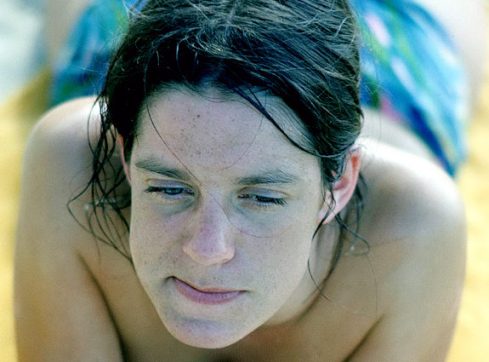
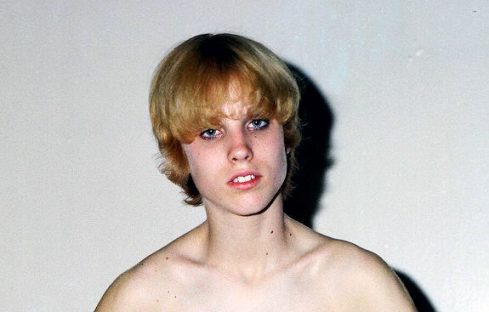
The NYPD has released 215 photographs taken by convicted serial killer Rodney Alcala in an attempt to secure identifications and restart cold case inquiries.
Alcala was recently sentenced to death for three murders in California in the late seventies. In the early seventies, Alcala lived intermittently in New York; some of the photographs found in his storage upon his arrest are thought to be from his time in New York
“They should be in every newspaper, on TV and on the Internet,” Sheila Weller, cousin of victim Ellen Hover, said before the NYPD decided to release the pictures.
RESPONSE
The collection is one of the most discomfiting things I’ve been audience to. To look at these photographs is to ready oneself the very limited likelihood of recognizing someone. It is a very grave and uneasy type of involvement with the image and the serious context by which it has come to be viewed.
Usually, personal portraits have their story shared and history mutually written, but – in viewing these previously unknown images of unknown persons – the viewer potentially writes the story’s end.
The public release has already yielded results:
The photos were kept quiet until Alcala was sentenced to death last month. “We needed an unbiased jury,” said retired Huntington Beach Detective Steve Mack.
Last month, Huntington County cops posted 137 of the less graphic pictures online. So far, 21 have been identified, often by the women themselves.
Four families of missing women say they recognized their loved ones, but police have not yet been able to confirm a link.
Most of the photos sent to the NYPD were not among those posted online. They include details that suggest they were taken in New York, sources said.

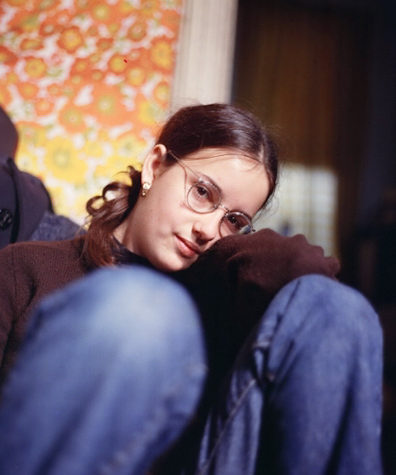


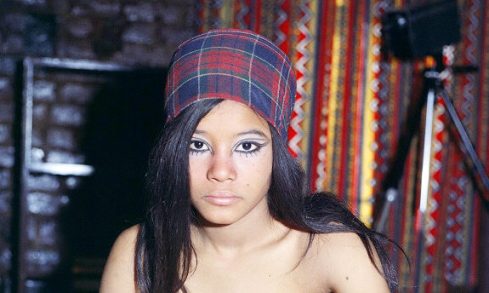
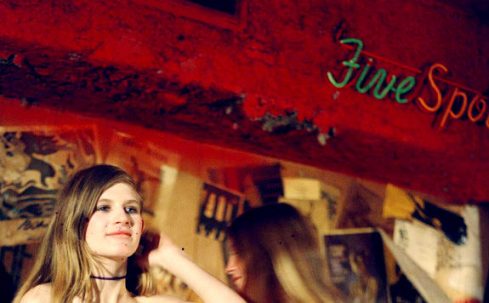
Found via Elizabeth Avedon
– – – –
NY Daily News coverage
NYPD not releasing pictures taken by sicko serial killer Rodney Alcala of possible victims (April 20th, 2010)
NYPD releases serial killer Rodney Alcala’s photos of women — seeks public’s help in ID’ing them (April 21st, 2010)
Gallery: NYPD seeks clues from photos taken by serial killer Rodney Alcala (April 21st, 2010)

 Prison Photography