
You are currently browsing the category archive for the ‘Non-Prison’ category.

Joerg‘s been on a collage kick recently and even opened up a new Collage Art category for his blog. I came across the work of John Beech this week (I can’t remember where) and I like what I see. Beech uses recycled/discarded materials in his sculpture and mixed media works, so why not play on the idea in his photo-collage also?
Check out Beech’s Hybrid Dumpster Drawings.
Collage is a deceptively tricky discipline. It seems to me that the best collages are often the ones that exist at the extreme ends of the spectrum. At one end of that spectrum are collages that incorporate fragments too numerous; visual orgies that have the head spinning, for example Neil Chowdury’s photo-montages.
At the other end of the spectrum are those that incorporate the barest elements; John Beech’s use of only two images would be good examples of that, and of course the least an artist can do to qualify their work as collage.
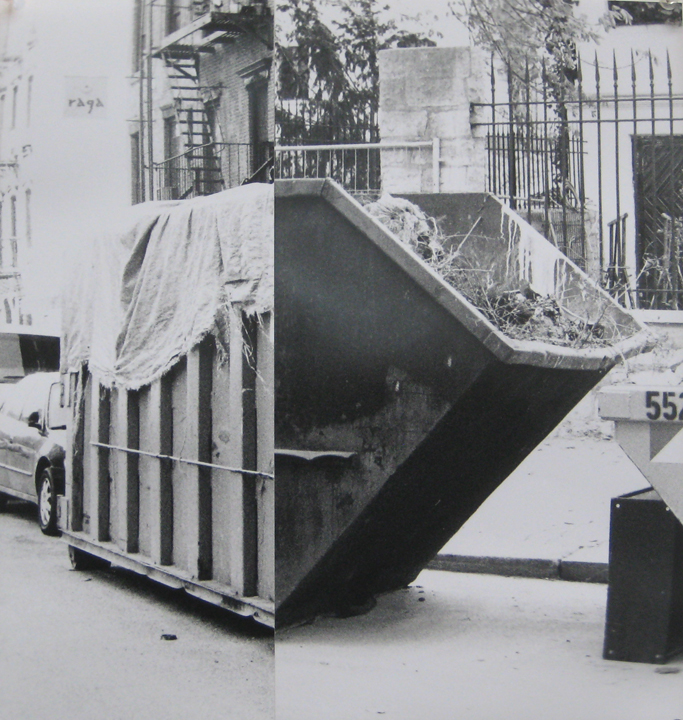
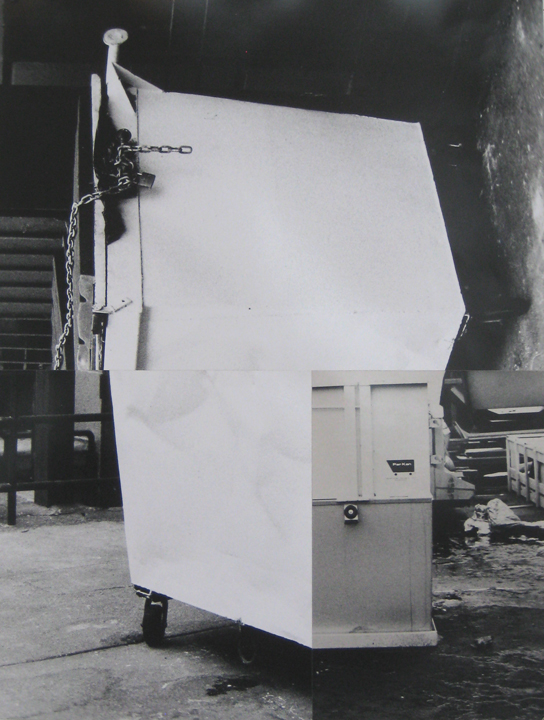
Beech also plays around with metallic tape atop of prints to obscure subjects.


John Beech’s The State of Things is on show at Peter Blum Gallery, 526 West 29th Street, New York, NY 10001

The nine minutes of grainy video footage George Holliday captured of Los Angeles police beating Rodney King 20 years ago helped to spur dramatic reforms in a department that many felt operated with impunity. (George Holliday)
Twenty years ago yesterday, Rodney King got the living shit kicked out of him in Los Angeles.
Amazing as it may seem, those 9 minutes of grainy footage, shot by George Holliday on his clunky Sony Handycam, may never have existed.
At the time, Holliday obviously didn’t know the significance of what he was filming, nor that it would change the consciousness of Black America, the trajectory of the Los Angeles Police Department and race relations in the City of Angels.
This, from the Los Angeles Times:
The simple existence of the video was something unusual in itself. Relatively few people then had video cameras, Holliday did — and had the wherewithal to turn it on.
“It was just coincidence,” Holliday reflected in an interview a decade ago. “Or luck.”
Today, things are far different and the tape that so tainted the LAPD has a clear legacy in how officers think about their jobs. Police now work in a YouTube world in which cellphones double as cameras, news helicopters transmit close-up footage of unfolding police pursuits, and surveillance cameras capture arrests or shootings. Police officials are increasingly recording their officers.
When I can find the time, Lebbeus Woods‘ blog is always a treat to dip into.

© Ross Racine
On Ross Racine‘s digital drawings, Woods says:
Artists and poets have struggled over the centuries to make works that startle us with their originality and, in effect, wake us up to depth of human feelings in our own uniqueness and individuality. The artist’s and the poet’s originality connects with our own, invoking the feeling that to be human is to be unique. The artist is a mirror of ourselves, inspiring us not to be artists but individuals […] But the raw fact is, most of us are not so unique. Our lives, except for the smallest details, pretty much resemble the lives of others, particularly those in our social group, whatever it might be, defined by economic class, race, educational background and many others. The truth is that we are intensely social creatures and our social context often overwhelms our individual traits and aspirations. This would seem to be the message imbedded in Ross Racine’s drawings of suburbs.
View Ross Racine’s work here.
– – – –
Woods’ post on Libya is also rather rousing. It discusses (not in any related way) the push for another type of individual recognition.
I include the map below, because despite my web-surfing it was new to me and it may be to you also.

(Click to view large)
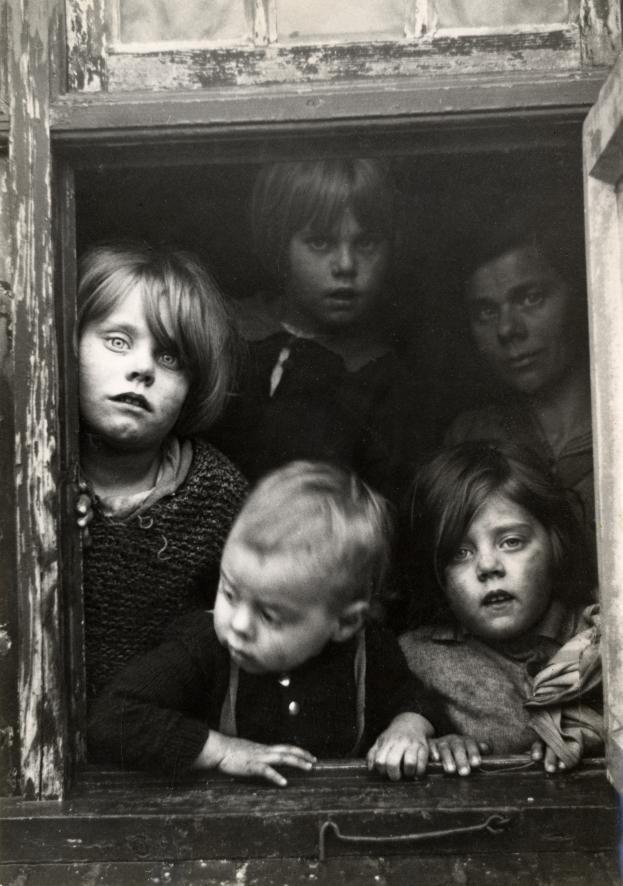
Children of the family Raaymakers, hit by the crisis, getting help thanks to an action of magazine Het Leven. Best, The Netherlands, 1936.
The National Archive in The Netherlands just published a 30 image set on the theme of poverty.
The strength of some of the images blew me away. (Click any image for a larger view) The set spans nationals and eras so this isn’t a photo essay, just a moment to reflect. Through history, photography has indulged the upper classes, but how has it treated the impoverished? I don’t have the answers, just a meandering of a visual train of thought.
Children with scars and with gazes that cut through time …

Irish tinkers: mother and child in front of improvised tent, 1946
… and children slowly erased by time.
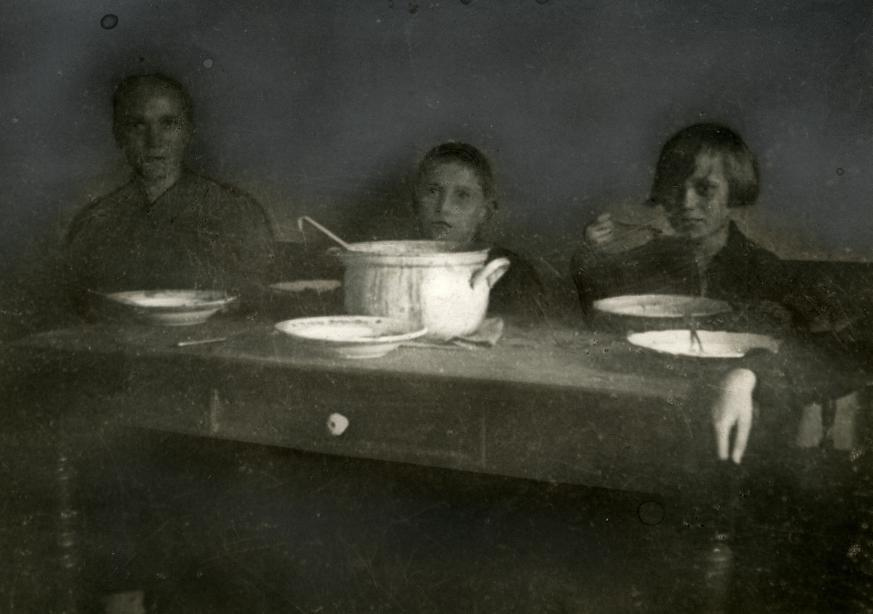
Poor German miners’ families eating at a soup kitchen, 1931
Jobs programs that have adults digging dirt like children digging beach sand …
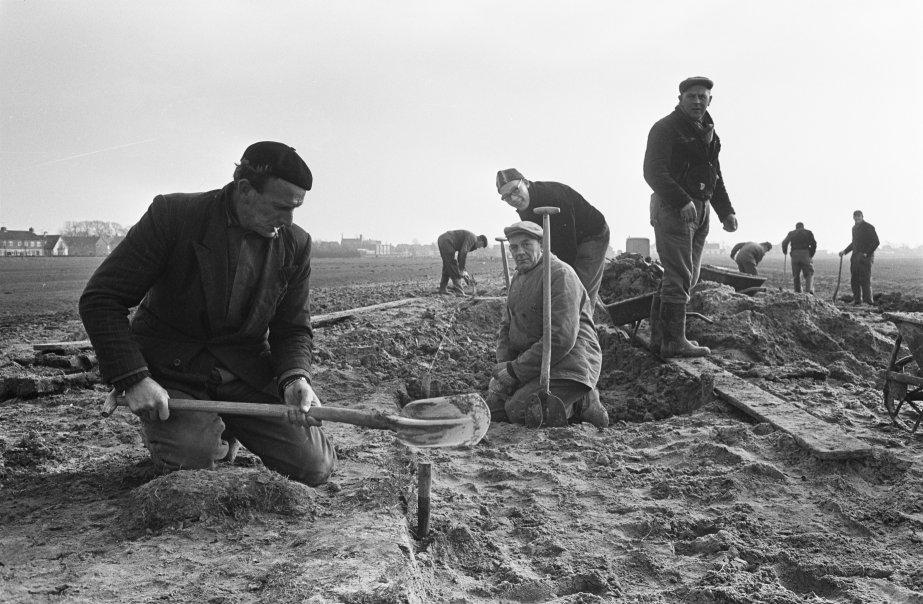
Unemployment relief program in Schagen, Netherlands, 1967
… then, poor people who have carted each other across cobbles …

Woman transported on a hand-cart, Amsterdam, 1934
… and those that sleep beneath them.
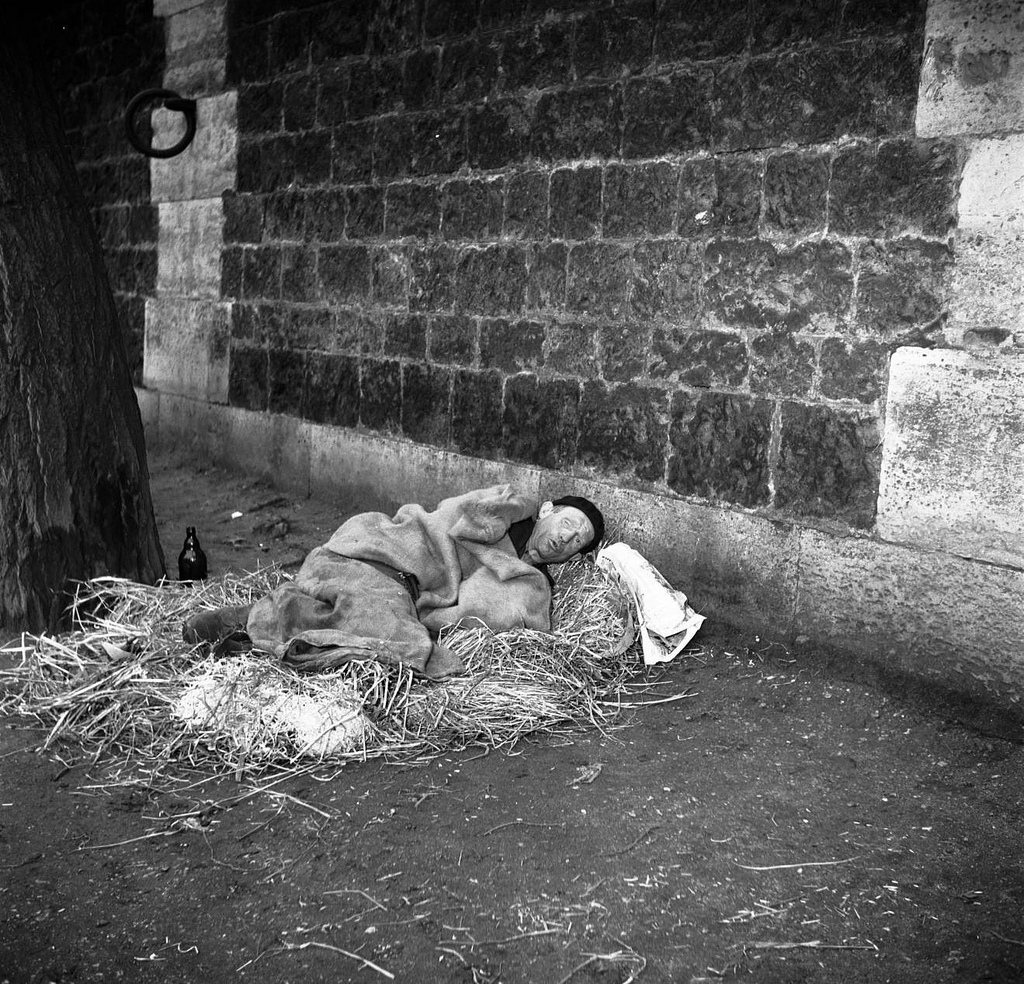
French man spending a night under a bridge, catches a glimpse of photographer Willem van de Poll, date unknown.
Men have begged for the charity of the richest …
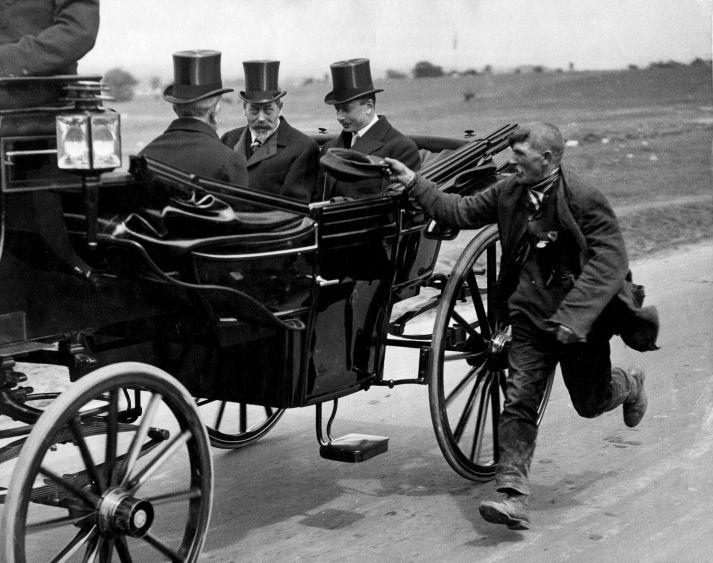
Man begs for money from George V (1865-1936), Epsom Downs, Derby Day, 1920.
…but usually received from the humblest.

Soup kitchen, Rotterdam, The Netherlands, 1917
Poor people have been asked to rent dentures …

Man bites down on available dentures for hire, United States, 1940.
… and they have been made into leaders …

Dutch tramp who became a politician, Amsterdam, 1921
… and in so much as the poor man is the worker, they’ve seen it all.
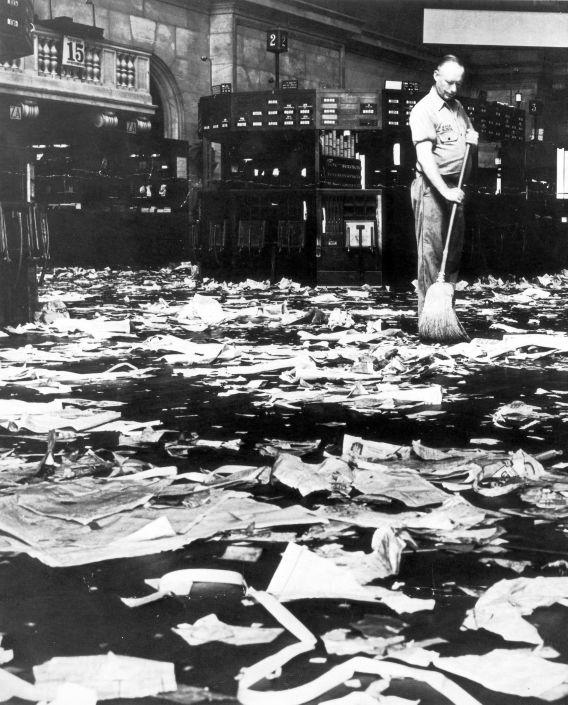
Worker sweeps the floor in the New York Stock Exchange following the Wall Street Crash, 1929.
More images can be seen within the Collectie Spaarnestad: www.spaarnestadphoto.nl
Blake has compiled a great little piece about the final images of some of the best known photobooks.
Here’s what Blake has to say about Eggleston:
The final image in Eggleston’s Guide is typical Eggleston. It’s so banal it almost seems meaningless. Yet I’ve always found this picture loaded and menacing. Peaked hoods in the south creep me out. I wouldn’t make this my last image before bedtime.
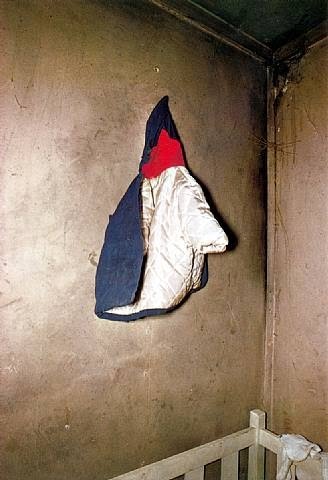
Near Jackson, Mississippi, 1970, William Eggleston
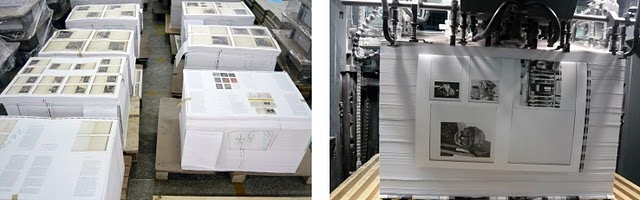
Jeff Ladd explains over at PhotoEye, why, what and how Errata Editions came to be:
“It was in 2004 after Martin Parr and Gerry Badger’s The Photobook: A History Volumes I and II were published that I realized not only the huge scope in the array of photobooks (two-thirds of their choices I hadn’t even heard of) but how elusive most were. Nearly 90% of what had been referenced as the “most important” photobooks are out of print and really only accessible to a few wealthy collectors or through research libraries. As a photography teacher, the idea that a young photographer just learning their craft couldn’t, without great effort or expense, experience what came before them was very disturbing to me. It begged the question of consequence; what if the greatest literature or poetry was not available for young writers to be informed by? That seemed to be the current state of the history of photobooks.”
[My bolding]
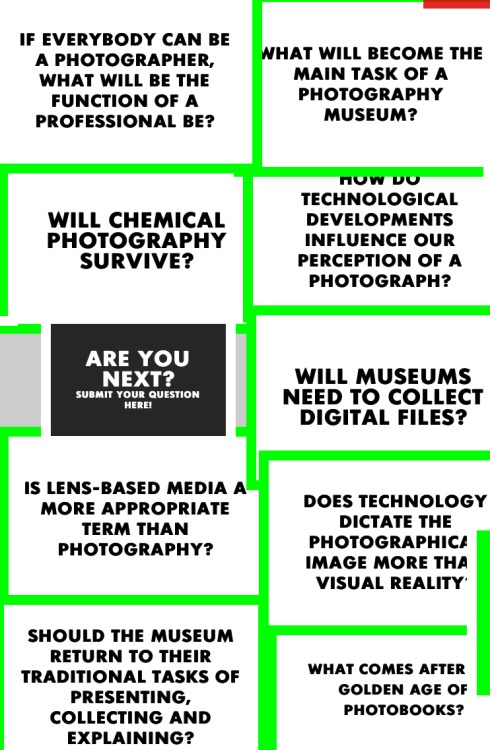
FOAM Magazine has launched WHAT”S NEXT, a platform for discussion of future trends in photography. Covering the questions about digital/chemical photography and the future of photobooks is no surprise.
It is pleasing to see questions about museum curatorship and preservation practices. After all, we can take care of our own archives, but who, how and where to take care of culture’s archives are much larger questions.

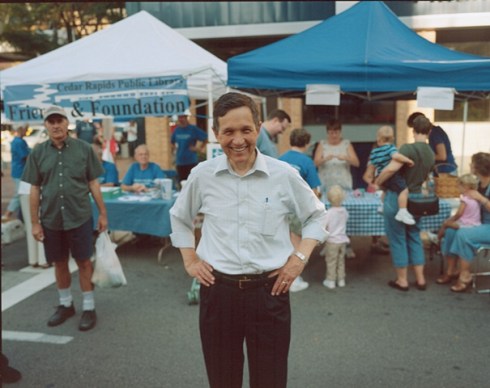
Hillary Clinton at Uncle Nancy’s Coffeehouse, Newton, Iowa April 21, 2007 © Richard Colburn
Richard Colburn‘s Iowa Caucus is a poke in the eye to the super-production value of big media. His famous politician subjects are vulnerable and open, maybe confused or amused. I guess being exposed is a fair reflection of their experience meeting voters in the high-stakes early battle-state of Iowa. But I don’t get the impression Colburn is being cruel or ironic.
How does he isolate these public figures?
Colburn, like his images, might be very disarming. For me, this project has just become a barometer for other political portraiture.
I like these gentle versions of politicians. Instead of hawkish advisors, backroom deals and lobbyist “donations”, I’m thinking about grandparents and pie and mowing the lawn.

 Prison Photography