
You are currently browsing the category archive for the ‘Non-Prison’ category.

First off, some disclosure. M. Scott Brauer is a close friend, but I have a lot of friends who produce stuff and it’s never a prerequisite for promotion.
I enjoy this project.
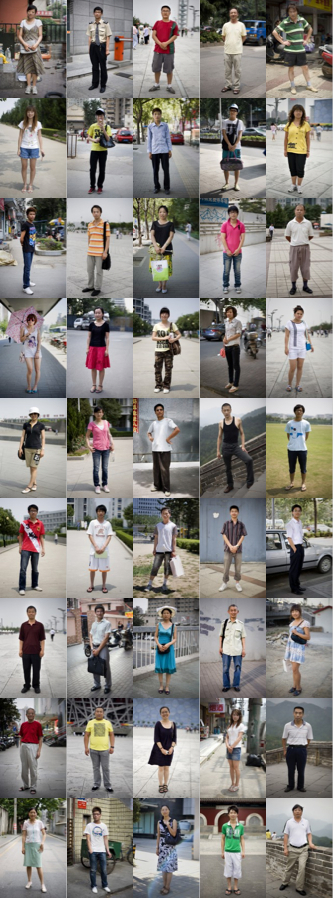
‘We Chinese‘ is several things. It is part break-up/part love-letter for Scott after relocating back to the States after years spent in China. It is a project to hum in the back of our minds whenever we think – or talk – about photography in China today. A nation of 1 billion can never be summed up by a single image or series, but good photography can provide firm foundations for thought.
Scott asked each subject two standard questions. The responses “range from prosaic to poetic, from rote to inspired, and from unemotional to patriotic.”
My favourite response is that of Wangbaoning, aged 20, who is unemployed but works for free as a building security officer. As compared to his assured fellow countrymen and women, his second answer is decidedly undecided.
What does China mean to you?: It stands for a unified China at this stage realizing hopes to be the master of its own affairs into the future.
What is your role in China’s future?: I haven’t really thought about it at this point, we’ll see, depends on motivation.
ALSO WORTH A LOOK
M. Scott Brauer’s Best Photographs of 2010

Nieman Labs reports:
“Starting in February, The Atlantic will have a new section on its website: In Focus, a photography blog featuring “photo essays on the major news and trends of the day.” Editing the site will be Alan Taylor, who’s moving to the magazine from the Boston Globe, where, for the past two-and-a-half years, he edited Boston.com’s celebrated photo-essay feature, The Big Picture.”
The incredible thing about this story is the figures it detailed. The Big Picture had 8 million page views per month. That is an incredible number of eyes on an incredible number of images. Rather naively, I’d never imagined that scale of internet image distribution … and I don’t really know what it means.

Jeremy Ramsden © Richard Nicholson
I was pleased as punch to feature Richard Nicholson‘s project Analog today on Wired’s Raw File.
When Nicholson began the project in 2006, there were 204 photo printing labs in and around London, printing images from film stock to paper. By 2009, only six remained.
Nicholson: “Each image was made in total darkness. I would switch off the lights, open the camera’s shutter, and then walk around the darkroom illuminating the scene with multiple bursts from a handheld flashgun.”
See the 12 image gallery and read our full interview: Photo Enlargers Loom Like Dinosaurs of the Film Age [Here’s a free tip. Click the view all button to see everything on one page.]
Considering the objects of extinction, it’s no surprise that there are many photographers composing photographic obituaries of the analog craft. Kindred projects to Nicholson’s Analog include Michel Campeau’s Darkroom, John Cyr’s Developer Trays and Robert Burley’s The Disappearance of Darkness.
IF YOU’RE IN LONDON
Analog — The Last One Out, Please Turn On the Light is on show at Riflemaker Gallery, 79 Beak St., Regent Street, London W1F 9SU, until March 11. E-mail: info@riflemaker.org.

© Maja Daniels
You may have noticed that I like to talk not only about prisons but also about other total institutions.
Maja Daniels‘ Into Oblivion photographed on a Protected Unit of a French geriatric care institution “attempts to create a discussion about our institutionalized, modern way of living as well as the use of confinement as an aspect of care.”
Many of the images in Daniels’ series feature patients at the door to the secured wing:
“Ruled according to the “principle of precaution”, residents in the unit can circulate freely within the secured area but due to a lack of activities and a limited presence of carers in the ward, the locked door becomes the centre of attention for the elders who question the obstruction and attempt to force it open. The daily struggle with the door, damaged due to repeated attempts to pick the lock, can last for hours.”
“[Gaga] swore and postured during the CES press conference in a way that would have angered [Polaroid cofounder] Edwin Land immensely.”
“Out of three products revealed by Polaroid from the Lady Gaga Grey Label collection, only one was in its working state. Bobby Sager, the new head of Polaroid, stood beside her dressed in a curious outfit with sneakers on his feet and a cardigan tied around his shoulders. It’s a curious outfit because in reality Sager is a Boston bruiser with a hard-nosed business sense. He ain’t no Lady Gaga loving dilettante whatever image he wanted to pedal in Vegas.”
“The New Polaroid is like New Coke – a terrible idea. It now pumps out crappy television, awful digital photo frames and instant cameras that look like they were designed by some state-owned skunk work in a former Soviet State. Lady Gaga could not care less about Polaroid or its heritage.”
– from, Look away while Lady Gaga molests the corpse of Polaroid
PREVIOUSLY ON PRISON PHOTOGRAPHY
Check out Lady Gaga is Not an Offender, She’s Just Offensive

The Shpilman Institute for Photography (The SIP) invites scholars and independent researchers from all over the world to submit their applications for research on photography and on philosophy and photography.
All details on guidelines, themes, the application process can be found on The SIP website.
Grants are based on proposals for research leading to the completion within the grant period of a written document, whether an essay or extended research paper. All submissions and papers for both the calls must be in English. Grants for individuals and group research will range from US $5,000 up to $15,000. Deadline for submissions is March 1, 2011.
www.thesip.org/open_calls/general_call_poster.pdf
www.thesip.org/open_calls/philosophy_call_poster.pdf
Fancy a dabble?
Okay, I know it’s premature, but it is also easy to laud writing and exposé such as this in the Guardian:

In short, US forces failed to secure Qa’qaa, Iraq’s largest and deadliest munitions complex. The IAEA warned them of its extreme hazard prior to the March 2003 invasion of Iraq. Looted explosives were used for attacks against US and coalition troops. The Bush administration covered all this up in the two weeks before the 2004 election, Al-Qaida took control of the site and promptly murdered hundreds if not thousands of local Iraqis.
Excerpts:
In 1991, following the Iraqi rout in Kuwait, inspectors from the International Atomic Energy Agency (IAEA) gained access to Qa’qaa, where they found 145 tonnes of pure RDX and PETN … [and] hundreds of drums of an off-white, crystalline powder. About as highly explosive as high explosive gets, High Melt Explosive (HMX) is used to detonate nuclear warheads. Qa’qaa had nearly 200 tonnes of it. The IAEA moved all the explosives to secure bunkers on the south-west corner of the facility, then closed the doors with tamper-proof seals. And there the 341 tonnes sat for more than a decade.
…
Two weeks after the start of the war, Jacques Baute, the head of the Iraq nuclear inspection teams, visited the US mission to advise, again, that the weapons sites needed protection. He specifically mentioned Qa’qaa. Just days before the invasion, he told officials, inspectors had inventoried the facility’s HMX, RDX and PETN stores and ensured that the seals were still intact. This kind of materiel, the Frenchman suggested, should be kept out of the hands of looters. There was no reaction.
…
By 8 May 2003, when the Pentagon’s Exploratory Task Force arrived at Qa’qaa to search for WMDs, all of the PETN, RDX and HMX was gone.
…
In 2004, al-Qaida established a camp inside the Qa’qaa complex itself. “We had a firing range, like a tunnel. It was used to shoot small-calibre bullets,” says Ali. “It became a training camp for terrorists.”
Anyone entering the facility without permission was killed. Al-Qaida spread horror stories about its activities, intimidating locals into collaborating. An execution room was set up with a makeshift gallows. Yusuf was part of the operation. “We used to kill people in terrible ways, torturing them to give al-Qaida more influence.” Mutilations, murders and decapitations were filmed and copies were distributed around [the local area] Yusifiyah to discourage dissent.
Read the full piece here.
____________________________________________
This catastrophic turn of events began in the first hours of the invasion of Iraq and conituned as the West gawked and applauded the staged toppling of Saddam’s statue.
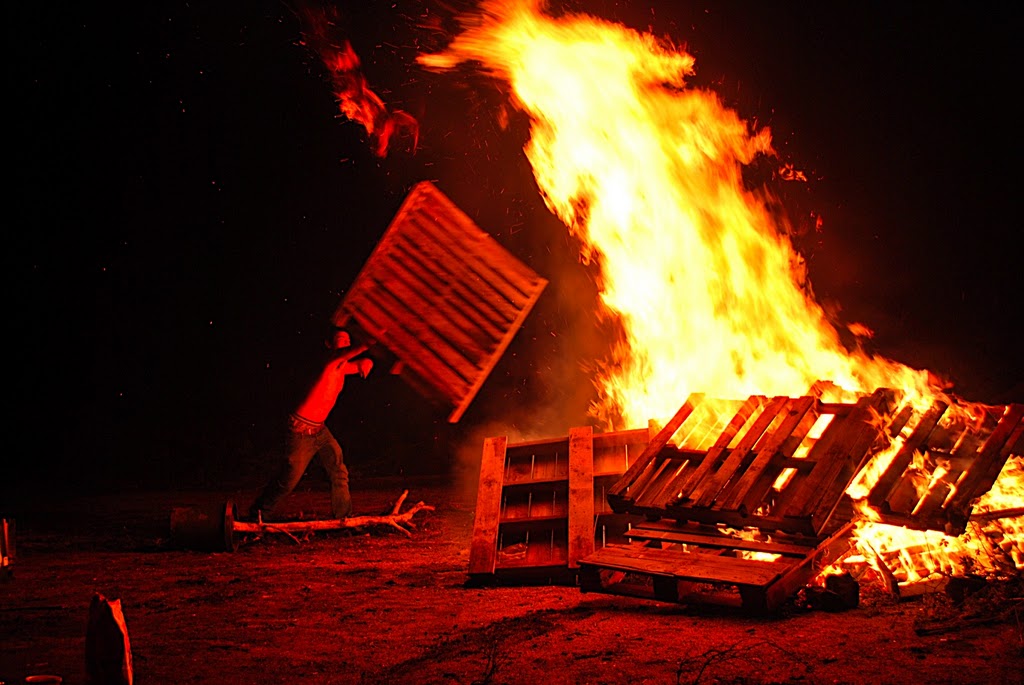
2011 is the new 2010. Should be an interesting one. I brought in the new year with the King of Beers, bongo drums, Extra Dry Korbel and 80 burning palettes. Now back in Seattle and back to work.
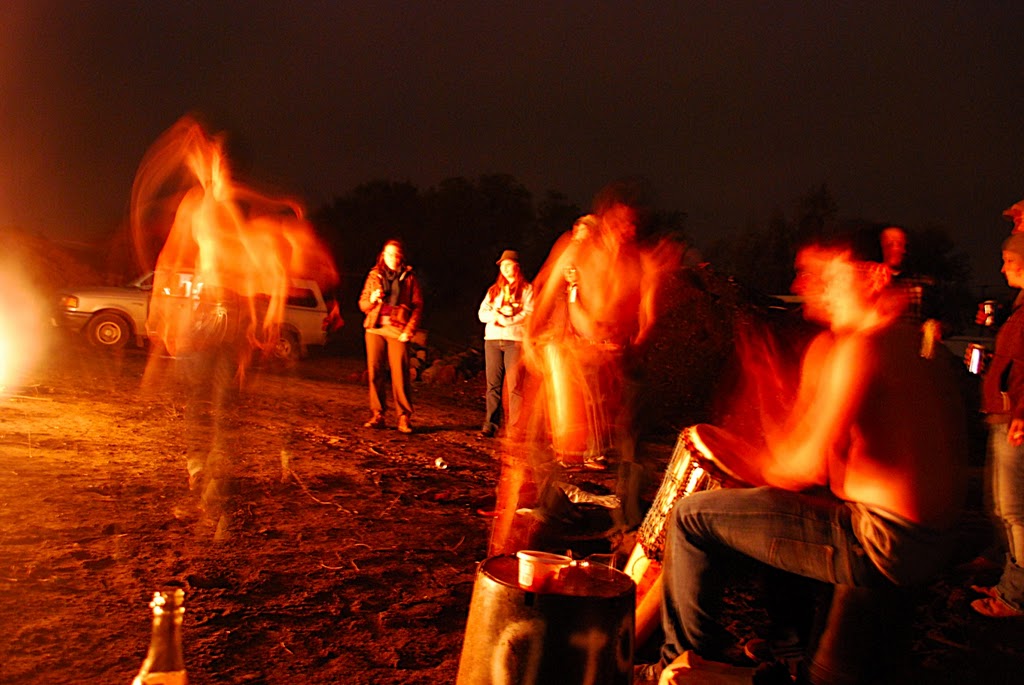


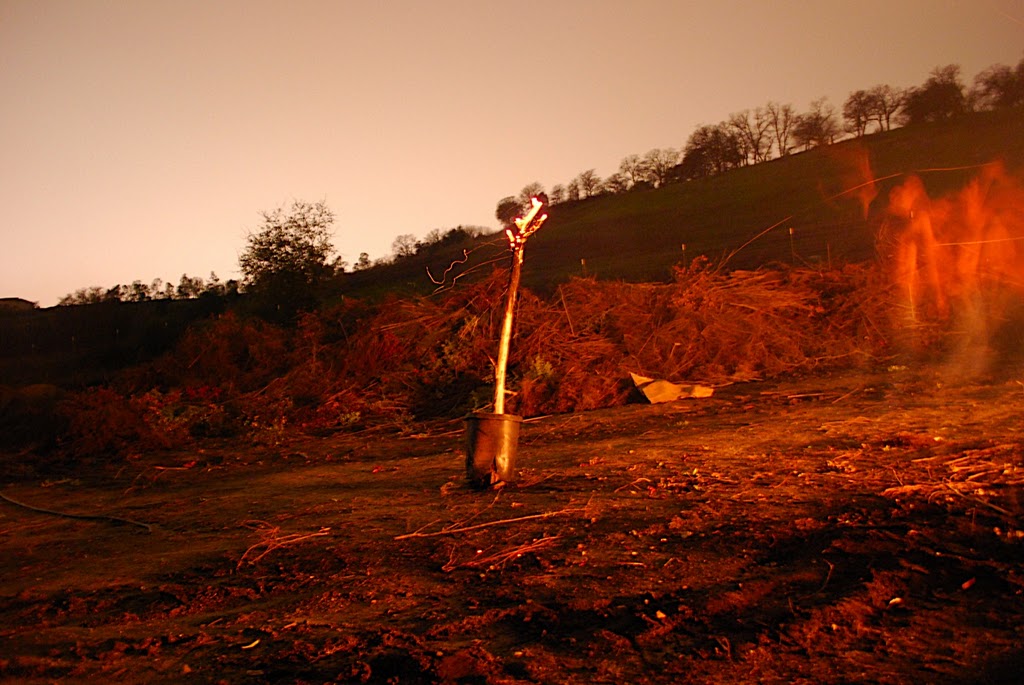
Thanks to Joel for the images.

 Prison Photography