
You are currently browsing the category archive for the ‘Non-Prison’ category.
“What’s done we partly may compute, But know not what’s resisted.”
– Robert Burns, Address to Unco Guild
I recently benefitted to the tune of $11,215 (less the 8.5% taken by Kickstarter and Amazon) to do Prison Photography on the Road. It was one of the most exhilarating and productive experiences of both my life and work.
Since completing the road-trip, I have postponed the publication of the remaining PPOTR audio and the delivery of incentives to funders. This is due to the time required preparing for Cruel and Unusual, an exhibition that I consider an extension of the PPOTR mission.
I let funders know about this delay, but I am still a little uneasy.
This week, I spotted a couple of pieces published about crowdfunding.
Matt Haughey wrote Lessons for Kickstarter creators from the worst project I ever funded on Kickstarter.
The lesson here isn’t necessarily avoiding the mistakes Matt details because the mistakes were specific to the particular project. Rather, know that if you promise something on the internet to potential funders, you had best be able to deliver. Success AND FAILURES will be shared as widely as you originally cast the net for funding.
Matt’s piece was about process and about communication. Joerg Colberg’s article Crowdfunding is Not a Cash Cow is a bit about communication, but more precisely about relationships based upon transaction. Joerg:
“Artists need those relationships. In the past, these kinds of relationships were usually established with wealthy collectors only. Now, crowdfunding offers the chance to establish them with a much larger, much more diverse, much more democratic group of people.”
Joerg urges creators/artists to think of funders as patrons and not “cash cows”, that is that they might come back a second time if they feel you were straight, delivered on your promises and valued the relationship.
That’s pretty much been my position throughout PPOTR; not necessarily that people would come back a second time to give me more money, but that they’d come back a second time to have a conversation.
For people involved in such activities, making art or photographs or writing forms the basis of how people measure ones integrity. All of that is put to one side when you meet someone in person. Their measures of your integrity are now based on how you introduce yourself, how you engage them and how much you value the interaction. Appealing for crowdfunding is like introducing yourself to the world and winning funding is beginning a friendship.
I’ve been asked a lot about advice on how to mount a successful Kickstarter and up until now I’ve felt uncomfortable giving tips on the nuts and bolts of a campaign. That’s because crowdfunding is much more than that; crowdfunding is personal, it’s gut- instinct, it’s sometimes spontaneous and it’s about friendship and respect.
So, these are not the rules per se for crowdfunding. This is the etiquette of crowdfunding. Which, for me, are one and the same.
1. Make a blooming good video.
This is your elevator pitch. 30 seconds. Probably 2 or 3 minutes. Maybe 5.
Without a good pitch few other things can happen.
Anticipate the widest audience; explaining your project to people who’ve never heard of you and simultaneously to your longtime friends is tricky. Be clear and passionate. Let potential funders know why you’ve the skills to carry through the project better than anyone else. Not easy in just a couple of minutes.
2. Search out honest advice.
BEFORE
Seek advice from people in the know. For me, I contacted 20 other photobloggers and asked if they thought my plan was viable. They all said “yes” or “don’t know, but I’d be interested to see you try.” Without their support, I’d not have pitched PPOTR on Kickstarter.
DURING
Ask a trusted friend to tell you if your video pitch makes sense. You need to know if it represents your idea in the best possible way. I find it very difficult to establish distance from my work. Things I take as given are not familiar to everyone. People unfamiliar with your area of work need to be compelled enough by the pitch to buy in.
AFTER
Ask for feedback as your project comes to a close. Hopefully your funders will be happy with your efforts and relationship. If so, pat yourself on the back. If they’re not, you will still benefit from their feedback and from the honest-note you close on.
3. Incentives should be personal, imaginative, exclusive and offer potential funders a wide array of funding levels.
Be creative, even funny. Try to be non-virtual. Snail mail still exists. I underestimated the simple postcard but PPOTR funders loved them! The same goes for hand made art and prints.
People could back PPOTR with any amount between $1 and $1,750. This range is not unusual and often goes higher.
4. Have a really strong set of existing networks.
Cold calls don’t work at the best of times, and here they’ll just be a thankless time sap.
5. Be prepared to promote the crap out of it.
For a full month, I promoted PPOTR like it was a part-time job. Answering calls, sending emails; requesting info; co-ordinating photographers involved; doing interviews; keeping people updated on progress.
6. Involve the community.
If you’re asking for community funding then involve the community.
Firstly, it’s much more fun. Obviously, some projects are more suitable than others for community involvement. It was much easier for me to involve folk because I proposed interviewing scores of photographers, I slept on people’s couches, and I relied on prison photographers to provide the high-end Kickstarter incentives.
Another advantage to this is that all those people you involve will promote your project in their networks.
7. Be realistic about the amount of time and energy it will take to deliver the incentives.
I totally underestimated the time it’d take to write a postcard to every single funder. While on the road, with a little help from friends, I managed to send 100. But I still have 60+ to do and I consider myself fortunate that I’m currently in exotic climes such as the UK and Holland from which to send unique cards. Better late than never.
8. Treat your funders like royalty.
Folk have said they kept up partly with PPOTR via Facebook and Twitter. But folk are not funders.
From the start, I was adamant that ONLY funders would have access to behind-the-scenes information. I published the most complete updates through the Kickstarter website. It was important to me that funders saw my road diary as written for them and them only.
It would have probably benefitted me and my visibility online (on which I rely for maintaining a reputation) if had I made my diary public on Prison Photography blog. BUT, to do so would not have directly benefitted the trip.
By providing exclusivity to funders, I was investing in a select number of relationships.
9. Only ever do one Kickstarter.
I’ve made this “rule”, mainly for myself, since finishing PPOTR.
Partly, because planning a project, designing the pitch, launching and promoting it, completing the work, maintaining relationships with your funders and then delivering on the final product(s) is A LOT of work.
Partly, also it’s about image. You don’t want to appear greedy or entitled. For me, going back for more would look a bit tacky. That’s a personal opinion – more of a feeling – and I wouldn’t be able to debate it at length.
Any thoughts and any questions don’t hesitate to raise in the comments.
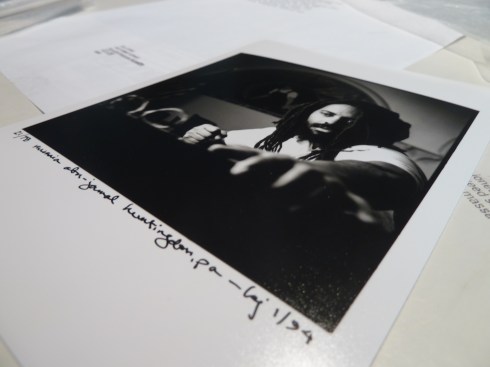
Print of Mumia Abu-Jamal portrait by Lou Jones. During the PPOTR interview at his Boston studio, Jones said when he made the portrait it was the first time in 5 years that Mumia had been photographed without shackles on his wrists.
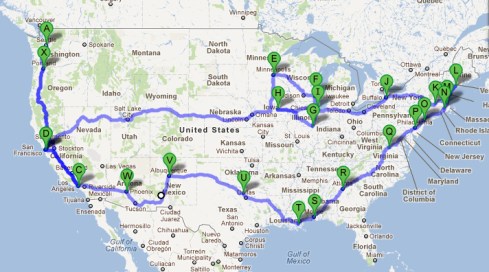
Prison Photography on the Road concluded at approximately 11pm, December 20th.
I’m hugely privileged to have had the opportunity to hit the road and throw myself, an audio recorder, and a sleeping bag at my intellectual passion.
On the 21st December, I hopped aboard a flight bound for holiday cheer, cask ale, mince pies, friends and family in the UK. With Christmas in Yorkshire and New Year in Scotland, I’ve enjoyed an extended period of down-time and in many ways needed that time to digest all that was achieved during PPOTR. And, now, I must responsibly and efficiently share what was learned and gained.
I anticipate 2012 to be a year of flux. I’ll be experimenting with new ways of sharing information. I don’t want to disclose too much at this point as many projects remain in planning stages. Still, expect a shake up here at Prison Photography.
Whilst I get to work, I thought you’d be interested in some figures that in some small ways indicate the parameters and spirit of the trip.
RUNNING THE NUMBERS
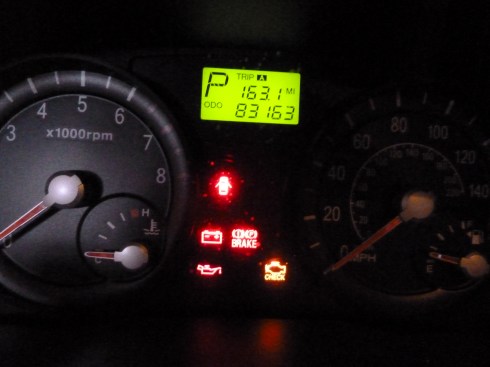
12,333 miles total
1,443 image files made with the Lumix digital camera
762 miles – longest drive in a single day (Salt Lake City, Utah to Kearney, Nebraska)
500+ people I spoke with and exchanged ideas
374 gallons of petrol
155 CDs played on car stereo
120 cups of coffee
103 different wi-fi connections
100 postcards sent (at time of writing, number set to increase)
90 days and nights
78 showers
71 pet cats and pet dogs I met
67 interviews (3 interviews every 4 days)
46 destination cities
39 photographers
31 states
28 criminal justice reform experts/advocates
18 ruby Texas grapefruit
16 batteries spent
6 lectures delivered
4 oil changes
3 prisons visited
2 hotels
2 nights sleeping in the car (New York; Arizona)
2 parking tickets (Milwaukee; San Francisco)
1 night camping (in an Iowa thunderstorm)
1 Occupy Movement protest march (Philadelphia)
1 speeding ticket
1 arrest
0 car problems

(Silent movie)
… Joseph Bristow from Harrogate, UK!
The four books will wing their way to you as soon as you provide a mailing address.
The 25 entries came in from 9 different countries. And for those 13 U.S. entrants, I might just be tapping you up for a couch in the next 10 weeks.
That was fun. Enjoyed that.
Videography by Sye Williams

Schedule, 50x50cm, Ed. 3+2P/A
The two airliners flown into the World Trade Center towers were props of a devastatingly selfish and lunatic ideology. Ten years ago, my Dad and I watched the telly in his front room and watched the first tower burn and the second plane hit. It was just before 2 in the afternoon.
The visual shock of fireball plumes at eighty storeys above ground, or the dispersal of debris and bodies, or the engulfing clouds of dust over Lower Manhattan, cannot compare to the emotional shock and trauma spread far and wide as a result of those two murderous impacts on that clear September morning.
As I watched footage of the 9/11 Memorial in New York my heart went out to the victims’ families and I cannot imagine difficulties faced for those in their many journeys of healing.
Just as the events of September 11th 2001 make no sense, so too has the American response. I want to say simply that while sympathies for the victims and victims families are essential, sympathies for the Bush administration’s decade of war are not.
A few weeks ago, I got an email from James Pomerantz asking, “Have you seen this craziness?” James was referring to Francisco Reina‘s Strauss’ Legacy.

Peacemaker 03, 50x35cm, Ed. 3+2P/A
Strauss’ Legacy may be incendiary, angry and even a bit cack-handed, but as I’ve already suggested there have been many reactions to 9/11 and, I for one, am not ready to dismiss a photographic project based purely on the fact that the imagery is coarse and confusing. U.S. foreign policy since 9/11 has been coarse and confusing.
From Reina’s statement:
Strauss’ Legacy focuses on the so-called neocons and the way in which their presence in the American presidential administration on September 11, 2001 shaped events. Particularly close attention is given to the role played by a number of multinational corporations in a conflict which began under the name “Operation Enduring Freedom” and turned into a perfect market niche for multi-million dollar earnings. […]
Ideas were espoused by Strauss’s disciples and followers, leading to the creation of the Project for the New American Century (PNAC) in 1997.
PNAC is a highly controversial organization. Many people claim that the project advances the notion of total military and economic world dominance based on the idea that the 20th century was the “American Century,” and that this supremacy must continue into the 21st century. The only way to achieve this domination is by scaring the public with the specter of a dark enemy whose mere existence posed a threat to the survival of the American nation, thereby making it possible to carry out their ambitious plans. This is one of the goals of the neocons, and they were prepared to do whatever it took to attain it. September 11, 2001 was the match that lit the fuse on the savagery that continues today.
9/11 was a catastrophic day. For the 3,000+ people that died then and the hundreds of thousands that have died since in the folly that was the War on Iraq and in the unwinnable war in Afghanistan. Profits and gains have been made but very few of them have been for American families.

Enduring Freedom, 67x85cm, Ed. 3+2P/A

A Meeting of the Harvard Corporation, which invests Harvard’s endowment, guarded by police. © Gregory Halpern
As a resident alien, much of the American revelry is lost on me. But Labour Day? That’s a national holiday dedicated to the social and economic achievements of American workers. That’s something I can celebrate.
Today then, I point you in the direction of Gregory Halpern‘s neatly edged project Harvard Works Because We Do (it has a beginning, a middle and an end) about the service workers employed by Harvard University. From portraits to playful presentation (above) to messy colour film shots of a student sit-in to a successful outcome securing over $10 million in pay and benefits for the more than 1,000 service workers on campus.
Harvard Works Because We Do is a project full of character and a clear voice. Halpern was one of the sitting students. From his portfolio:
“Between 1994 and 2001, the endowment of Harvard University tripled, making the school the wealthiest non-profit in the world, second only to the Vatican. In the same years, Harvard heavily outsourced many service jobs to lower-paying companies, thus resulting in average wage cuts of 30% for the schools’ custodians, food-workers and security guards. In response, I got involved with a student group called the Harvard Living Wage Campaign and I began this project. My goal was to publicize the situation, to share the stories of a number of service-workers I had come to know, and to raise questions about the prevailing class-structure at Harvard and on college campuses in general.”
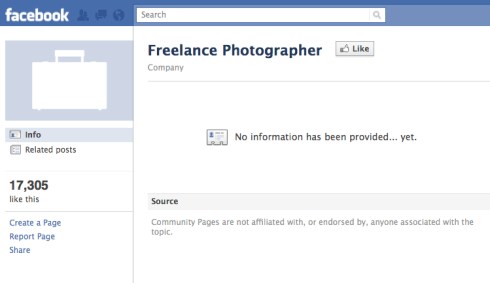
Many moon tides ago, I read an article about the fledging Googleplex in Mountain View, California. The piece was throw-away pub-philosophy blarp with a flimsy premise; that being that one definition of ‘a God’ would be that of an all-knowing intelligence and inquiry. In the lobby of the Googleplex was (maybe still is) a stock-market-esque ticker. It reads as a series of the most searched searches across the globe; the giddy red pixels peeled across the screen in real time. This was shared curiosity knowledge and inquiry. This was God? In the least, this was as close to a collective conscience as you could get? An ultimate energy? Well, no, but I bring up the point to say that while Google has grown even more massive and come to own the air, seas, sky, vocabulary and minds of all humans with two dollars to rub together, there at least some pretenders to the throne. If anyone is going to topple Google, it might be Bookface … but only when the can tell us what a Freelance Photographer is.
You Like?
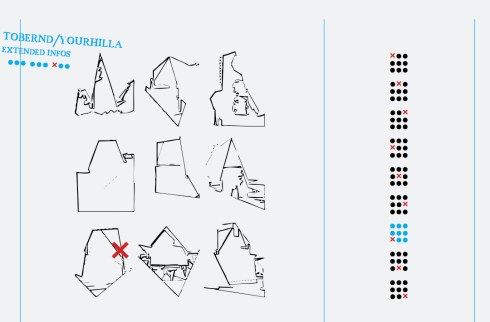
You might be asking what’s the funny doodle in the new banner?
I should precursor my answer with a history of pain as regards the banner image. Back in 2008, I used a detail of a crumbling wall – a poor metaphor of the hundreds of thousands of carceral sites if there ever was one. Soon after, I abandoned that for the commonly-used image of a line-up of book spines. But, still, the books were a mere representation of knowledge … and of whose knowledge, it wasn’t exactly clear.
So, when I learnt about the project TOBERND,YOURHILLA, with it’s distribution of etch-a-sketch-like graphics relating to the Becher’s oeuvre I was tempted. The tickling generosity of TOBERND,YOURHILLA toward the photoblog community is also a nice touch. I decided I was happy to give over the banner to some sort of distant artistic force.
Dider Falzone quotes the introduction to the 2008 exhibition “Bernd and Hilla Becher: Landscape/Typology” at The Edward Steichen Photography Galleries, to put TOBERND,YOURHILLA in context:
“The Bechers are best known for their “typologies”: grids of b/w photographs of variant examples of a single type of industrial structure. […] At each site the Bechers also created overall landscape views of the entire plant, which set the structures in their context and show how they relate to each other. The typologies emulate the clarity of an engineer’s drawing, while the landscapes evoke the experience of a particular place.”
Falzone draughted nine of these landscape plans (see above) with the intention that each would become a calling card on photography blogs. He adds, “each slot of the 3×3 logo grid evokes one of the storage silos arranged into grid for comparation of form and design. Once the nine logos are assigned, the digital manipulation will mirror itself in a systematic auto-generated community.”
That might be grand language for what I appreciate as a cheeky game and badge of membership to a club of like-minded, whimsical bloggers. I got to the party late, but was lucky enough to snag Slot ●●● ●●● ×●●. The only other remaining slot has since been claimed. As such, Prison Photography finds itself in good company; below are seven photoblogs also part of this doodle-based nonagon group.
Slot ●×● ●●● ●●●

Slot ●●× ●●● ●●●
Lenscratch

Slot ●●● ×●● ●●●
Sister I’m A

Slot ●●● ●×● ●●●
Melanie Photo Blog

Slot ●●● ●●× ●●●
Mrs. Deane

Slot ●●● ●●● ●×●
On Landscape

Slot ●●● ●●● ●●×
MOSSfull
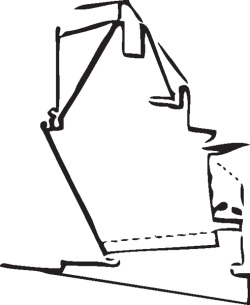
INTRODUCING THE NEW LOGO

The Prison Photography logo (above) is a pretty solid walled-in shape. It reminds me off some modern prison cells that have gone beyond the four-wall cuboid (below). I also like the fact it resembles an arrow pointing down to everything else that will pass through the pages of Prison Photography; whatever goes on between the lines and limits of this blog, you can always be reminded ‘You Are Here’.
Q. How long will the logo last?
A. As long as life continues without a better alternative and – given the fun and oblique references of the TOBERND,YOURHILLA project – I expect that to be quite some time.

© Steve Davis
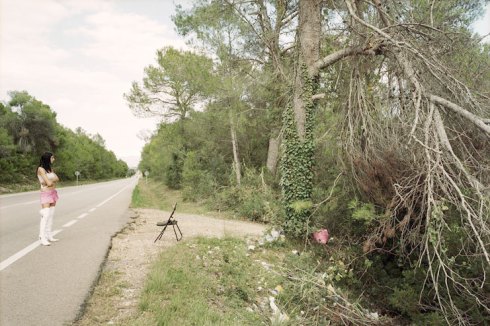
Following on from my comparative analysis of Mishka Henner and Paolo Patrizi’s documenting of Italian roadside prostitutes, a reader directed me to Txema Salvans‘ Spanish Roads.
I wanted to alert you of this series and suggest that the impact of this work and that of Henner and Patrizi for American (and in my case, British) audiences is the shock of the new. It is a surprise to see scenes of prostitution in public and plain view. The juxtaposition of illicit activity and wide open vistas is jarring and it corrects the over-romanticisation of Mediterranean culture that often occurs in the U.S.
Indeed, with Salvans’ work, one can begins to think that roadside prostitution may not be an uncommon part of the contemporary southern European landscape. From Salvans’ statement:
“These are the beings we fleetingly glimpse when our comings and goings in our safe cars allow us to perceive the scars of a landscape where both the city and the country disappear; uncertain scenarios that expose the cruelty of a breakneck productive culture that invents uninhabitable spaces that are nonetheless lived in.”


All images © Txema Salvans

 Prison Photography