
You are currently browsing the category archive for the ‘Opinion’ category.
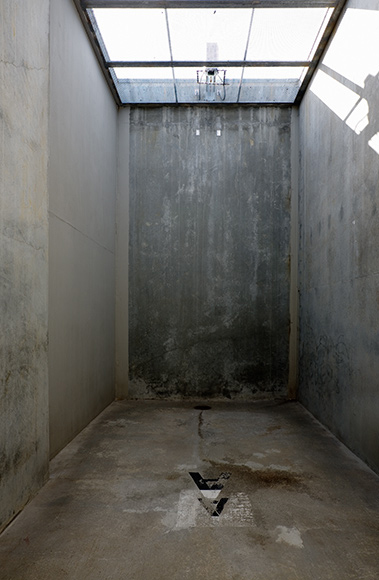
© Richard Ross
Pelican Bay State Prison in Crescent City, California is one of the most oppressive regimes of the U.S. prison system. It was designed to control and isolate the growing gang affiliations within California prisons following the CDCR’s massive expansion throughout the 1980s. It opened in 1989 and established THE model for maximum security prisons in states across the U.S.
Pelican Bay Prison specialises in solitary confinement. When photographer Richard Ross documented prisons as part of his Architecture of Authority project he went to Abu Ghraib, Guantanamo Bay and Pelican Bay.
The most segregated inmates spend 22 and half hours in a cell barely larger then your bedrooms or bathrooms. For the other 1 and a half hours they occupy a concrete pen for “exercise.”
Pelican Bay is notorious for it’s history of violence and despair. It is also, according to Christian Parenti, a boon for small town economics.
It is a god-forsaken hole.
The most isolated prisoners have put together a strike plan. Yes, they have demands, but more than that they want to make a point about the inhumane and invisible conditions they inhabit. Yes, many of them have committed heinous crimes but cooping them up like dogs serves only to increase tension, anger and danger.
BACKGROUND AND DEMANDS
Prisoners in the Security Housing Unit (SHU) at Pelican Bay State Prison have called for an indefinite hunger strike as of July 1, 2011 to protest the cruel and inhumane conditions of their imprisonment. The hunger strike was organized by prisoners in an unusual show of racial unity. The prisoners developed five core demands.
California Prison Focus supports these prisoners and their very reasonable demands, and calls on Governor Jerry Brown, CDCR Secretary Matthew Cate, and Pelican Bay State Prison Warden Greg Lewis to implement these changes. California Prison Focus has also joined “Prisoner Hunger Strike Solidarity,” a coalition of grassroots human rights activist groups in the Bay Area supporting the demands of the prisoners participating in the hunger strike.
Briefly the five core demands of the prisoners are:
1. Eliminate group punishments. Instead, practice individual accountability. When an individual prisoner breaks a rule, the prison often punishes a whole group of prisoners of the same race. This policy has been applied to keep prisoners in the SHU indefinitely and to make conditions increasingly harsh.
2. Abolish the debriefing policy and modify active/inactive gang status criteria. Prisoners are accused of being active or inactive participants of prison gangs using false or highly dubious evidence, and are then sent to longterm isolation (SHU). They can escape these tortuous conditions only if they “debrief,” that is, provide information on gang activity. Debriefing produces false information (wrongly landing other prisoners in SHU, in an endless cycle) and can endanger the lives of debriefing prisoners and their families.
3. Comply with the recommendations of the US Commission on Safety and Abuse in Prisons (2006) regarding an end to longterm solitary confinement. This bipartisan commission specifically recommended to “make segregation a last resort” and “end conditions of isolation.” Yet as of May 18, 2011, California kept 3,259 prisoners in SHUs and hundreds more in Administrative Segregation waiting for a SHU cell to open up. Some prisoners have been kept in isolation for more than thirty years.
4. Provide adequate food. Prisoners report unsanitary conditions and small quantities of food that do not conform to prison regulations. There is no accountability or independent quality control of meals.
5. Expand and provide constructive programs and privileges for indefinite SHU inmates. The hunger strikers are pressing for opportunities “to engage in self-help treatment, education, religious and other productive activities…” Currently these opportunities are routinely denied, even if the prisoners want to pay for correspondence courses themselves. Examples of privileges the prisoners want are: one phone call per week, and permission to have sweatsuits and watch caps. (Often warm clothing is denied, though the cells and exercise cage can be bitterly cold.) All of the privileges mentioned in the demands are already allowed at other SuperMax prisons (in the federal prison system and other states).
The Pelican Bay hunger strikers have support form the other SuperMax in California Corcoran Bay Prison.


On this blog last week, I raised questions about the viability of the Leica Oskar Barnack Award jury process. The 2011 winner Jan Grarup is a colleague with one of the five jurors, Stanley Greene.
Grarup and Greene, with seven other photographers, co-founded the NOOR Images Agency, based in Amsterdam, The Netherlands in September 2007.
I emailed the offices of both the Leica Oskar Barnack Award and NOOR Images with the following questions:
Do you see this as a conflict of interest?
Did you foresee this as a problem before judging began?
Was Stanley Greene exempt from voting on entries by fellow NOOR photographers?
I am interested to know the jury process and if Leica Oskar Barnack Award believes it needs to defend itself against ethical questions.
The questions were designed to be relatively open and non-accusatory while getting at each bodies’ staked and defendable positions.
TINA WIESNER ON BEHALF OF THE LEICA OSKAR BARNACK AWARD
Leica Camera AG invited 5 jury members for the 2011 judging of the Leica Oskar Barnack Award / Newcomer Award.
The jury voted “unanimously” for the winner. There was no conflict of interest.
Please note that we received more than 2000 entries, representing photographers from 89 countries, many of them independent or working for renowned agencies. During the judging process, the jury concentrates on the editing of the series of 10 – 12 images and the information given about the story behind.
CLAUDIA HINTERSEER ON BEHALF OF NOOR IMAGES
One of our photographers was invited to be on the jury and another NOOR photographer was allowed to enter work according to the Leica Oskar Barnack entry rules.
The Leica Oskar Barnack organization has judging rules in place and a secretary to oversee these are being abided to. Like most other international photography competitions, their judging rules includes a clause that at crucial moments jury members have to announce specific working and/or personal relationships where there tends to be a conflict of interest. I know that Stanley Greene has made no secret of the fact that he, Jan Grarup and seven other photographers (and myself) founded a photography collective several years ago. Taking into account the professionalism of the other jury members of this year’s LOB competition, and trusting the fact that the Leica Oskar Barnack secretary does his/her duty, I trust that the multi-membered jury’s decision was made on the basis of the outstanding quality of Jan Grarup’s work, rather than on the basis of one jury member’s particular business interest.
In his career, Jan Grarup has been honored with some of the most prestigious awards from the photography industry and human rights organizations, including: World Press Photo, UNICEF, W. Eugene Smith Foundation for Humanistic Photography, POYi and NPPA.
Looking at other international photography contests you will be amazed how often jury members are professionally or – as is very common in our industry – personally (on the basis of friendships) related to photographers whose work is rewarded.
A few things:
I am still unclear as to whether Wiesner’s “unanimously” means Greene voted or abstained on Grarup’s work; whether his vote was important or not to Grarup’s win.
Hinterseer’s argument is a little more convincing than Wiesner’s, mainly because she explains the mechanics of the jury process.
Grarup’s past awards have no relevance to this issue.
Hinterseer softens the blow by saying pretty much that this sort of thing happens all the time. And it is this last point that I think is the take away. I’ve not given it any thought in the past. Let’s change that.
I took a quick look at the judging process at the World Press Photo and noted Stephen Mayes, managing director of VII Photo. I thought it a pretty safe bet that a VII Photo photographer won something at WPP. Sure enough, Ed Kashi won the Contemporary Issues: 2nd Prize Singles.
No judgement on Kashi, Mayes or VII; I’ve just used them to illustrate Hinterseer’s point. Besides, the labyrinthine WPP jury process probably rinses out much direct influence.
So, I’ll conclude with two questions. 1) Is this situation – as suggested – really unavoidable? 2) If so, what are we to make of this web of casual association and sanctioned incest when it comes to industry awards?

James Richard Verone peers through the glass of a visitation booth at the Gaston County Jail on Thursday June 16, 2011, where he is being held while awaiting trial for an alleged bank robbery. (Ben Goff / The Gazette)
There has been a portrait of an incarcerated man with wide eyes circulating the news this past week (above). Photographer Ben Goff (Flickr here) released of one other image (below) from his assignment photographing James Richard Verone in Gaston County Jail, N.C.
Verone, as Zachary Roth succinctly puts it, “robbed bank to get medical care in jail.” This is a man on the very brink. Or is he? Verone made a very drastic, but reasoned, decision to carry out a non-violent act outside the law. It’s an extreme protest admittedly, but he’s carrying all the risk. So cut him some slack.
Given that he thought through his bank robbing etiquette, waited patiently for the police and explained his motives to the press, don’t you think this man has a complex understanding of consequence? Could this be a photo of a man who knows how image and media work? Admittedly, there is potential that viewers will presume Verone’s mental health – as well as his physical health – is suspect. But could Verone be performing for the camera? I’d like to suggest Verone is in an interaction with one of the few people (Goff) who is in the business of creating testimony to stories so that they may be publicly consumed. As such, Verone consciously provides the exact facial expression he thinks we need to see.

James Richard Verone peers through the glass of a visitation booth at the Gaston County Jail on Thursday June 16, 2011, where he is being held while awaiting trial for an alleged bank robbery. (Ben Goff / The Gazette)
Verone is not pushing a political agenda; he’s trying to save his own life. He is just asking for us to see his truth. If we were in Verone’s circumstances we’d probably be severely unsettled (or, in the vernacular) crazy.
But here’s the paradox of the image: it is easier and lazier to think of Verone, even in a very small way, as crazy than it is to think of him as a rational being; to do so, would push us to ask why a rational person is behind bars. Wouldn’t logic dictate that the medical, societal and legal systems that conspired to put a rational man in jail are in fact themselves illogical?
Verone is a logic-evangelist and we need to see the light.
Within the fabric of our society, there exists a vast gulf between the ways people interface with services and institutions. To me, that is crazy.
I’m partly, suggesting a false dilemma here. There are, of course, more than two alternatives in how we see/react to the portrait. And yet, the glass of the visiting booth provides an excuse for our distance; an us and them; 1s and 0s; have and have-nots; not crazy and crazy.
Goff captions his two images Crazy Eyes and Crazy Eyes 2. Denigratory, clumsy and observant all in one, Goff describes the first startle (the first impression, if you like) Verone gives to his audience. But the introduction is only one part of this cruel photo that brims with abundance.
FREE
When I used the phrase “Verone gives to his audience” it was deliberate. That reaction is yours. Take it for free. That reaction is the opening gambit of an interaction between you, Verone and your conscience.
We believe that physical freedom ensures also the freedoms to worship, speech, choice, vote and so on and so forth. But in terms of providing immediate critical health-care, none of those things have provided for Verone. In “free society”, Verone was in economic shackles.
TRUST US
Verone’s dire straits have not been helped by America’s recession. How does Verone’s non-existent $1 bank robbery compare to the Inside Job in 2008 on Wall Street? What do we want to focus on? The pseudo-crime of an individual or the corruption of the finance sector? Michael Capuano, a Democratic representative for Massachusetts, once rebuked a panel of banking executives. He said, “You come to us today telling us we’re sorry, we won’t do it again; trust us. Well, I have some people in my constituency that actually robbed some of your banks, and they say the same thing”.
“Trust Us.” I’m sure Verone has said it to explain his truth, and I’m sure we’d say it too. “Trust us, trust me, I’m not crazy.”
LISTEN TO US
Verone’s story will resurface in the presidential debates I’m sure. It provides cheap political ammo for all parties depending on how it is spun. Verone’s face is read as either the failure of Democrat-led health reform or as the result of Republican-led economic meltdown. In either case, Verone plays both tragic hero and bogey man. Of which, he is neither.
CARE FOR US
The worst thing we could do would be to presume Verone has achieved, or will achieve, his objective. California demonstrated lethally how facilities of incarceration can fail to provide healthcare that meet minimum constitutional standards.
REMEMBER US
On the 1st of this month, an Ohio inmate who was denied medical care committed suicide. The prisoner, Greg Stamper hanged himself at Ohio’s Allen Correctional Institution. The press release from the Ohio Justice and Policy Center reads:
[Stamper] was suffering excruciating pain as a result of a nerve condition, and Dr. Myron Shank had refused to give him pain medications multiple times for non-medical reasons.
Stamper has his own truth and logic too. There’s likely two reasons his suicide was not widely circulated in the media. 1) It’s too final and upsetting. 2) Unlike Verone’s story, Stamper’s story is typical for the prison industry.

A public flogging in Delaware in the early 1900s. Ullstein Bild, The Granger Collection.
For the Chronicle of Higher Education, Peter Moskos justifies the title of his new book, and explains why In Defense of Flogging is really about our bloated failed prison system:
The opening gambit of the book is surprisingly simple: If you were sentenced to five years in prison but had the option of receiving lashes instead, what would you choose? You would probably pick flogging. Wouldn’t we all?
My defense of flogging […] is meant to be provocative, but only because something extreme is needed to shatter the status quo. We are in denial about the brutality of the uniquely American invention of mass incarceration. In 1970, before the war on drugs and a plethora of get-tough laws increased sentence lengths and the number of nonviolent offenders in prison, 338,000 Americans were incarcerated. There was even hope that prisons would simply fade into the dustbin of history. That didn’t happen.
Some time in the past few decades we’ve lost the concept of justice in a free society. Historically, even though great efforts were made to keep “outsiders” and the “undeserving” poor off public welfare rolls, society’s undesirables—the destitute, the disabled, the insane, and of course criminals—were still considered part of the community. The proverbial village idiot may have been mocked, beat up, and abused, but there was no doubt he was the village’s idiot. Some combination of religious charity, public duty, and family obligation provided (certainly not always adequately) for society’s least wanted. Exile was a punishment of last resort, and a severe one at that. To be banished from the community was in some ways the ultimate punishment. And prisons, whether or not this was our intention, brought back banishment and exile, effectively creating a disposable class of people to be locked away and discarded. True evil happens in secret, when the masses of “decent” folks can’t or don’t want to see it happen.
(My bolding)
Particularly with the last paragraph, I couldn’t agree more.

© Walter Iooss for Sports Illustrated
With over 300 Sports Illustrated covers under his belt, Walter Iooss is no slouch. Check this out! and this.
But still, I had to laugh when I read the last paragraph of his bio, describing his specialisation in SI swimsuit specials later in his career:
“Walter matured with his swimsuit work. Ah, the Sports Illustrated swimsuit issues for which the Iooss lens has born fruit, all the riper for the backgrounds. As in the action shots, the portraits of SI’s swimsuit issues reveal an uncanny graphics sense and Rembrandt-like reverence for light and shadow. He sought and found more control in his swimsuit photographs, especially in the early days traveling light with only cameras and beautiful women, without the interference of art directors.”
More power to him.
BTW, check out the Sports Illustrated Vault Twitter Feed for smile-worthy images of past sportsmen and sportswomen (but mostly sportsmen) doing goofy stuff.

© David Maisel, from the series Library of Dust
A new database should help infamous cremated remains find their way back into the possession of family members.
David Maisel‘s Library of Dust is well-known by now. Maisel got early access to a basement of decaying copper cans that hold the cremains of nearly 3,500 former mental institution patients who lived and died – and remained unknown and/or unclaimed – at Oregon State Psychiatric Hospital.
Maisel’s images reflected the keen interest the story garnered across the US (see Oregon’s Forgotten Hospital, Oregonian and Long-forgotten Remains of Oregon’s Mentally Ill, New York Times).
I placed Maisel’s work in the context of a longer visual history of the institution.
Last month, Oregon authorities – pushed by a committed volunteer Don Whetsell – announced a new venture to locate surviving families. The Los Angeles Times reports:
“Officials now hope that the launch this year of an online database detailing the 3,476 canisters yet to be claimed will help other relatives reunite, or unite for the first time.”

Photo Credit: Nina Berman
Recently, Bryan Formhals pleaded for photographers to write more; Joerg repeated the call.
Nina Berman, a very intelligent photographer, is also a fierce writer with undeviating message. On the 6th May, Berman wrote this:
“The Taliban stone women, we act outraged, spend billions trying to destroy them. And here in the land of the free? We dress girls up, shove shit in their mouths, make them plead for more, smile while they’re being tortured, gang bang them with multiple partners in multiple entry points, infect them, drug them, then dress them up with fake tits and travel them on the convention (prostitution) circuit. Annual US sales $10 billion. Worldwide porn industry sales are more than Apple, Google, Amazon and Microsoft combined.”
From Spinning Head:
“Dayanita Singh is an Indian photographer. She used to be an internationally famous photojournalist until the day she realized that the India editors kept asking her to shoot was not what she herself was experiencing. There was a gap between the cliches being asked of her and the complexities, human and social, that she knew lay unexamined behind so many of the stories she was being asked to do. Whether the stories were about poverty, prostitution, child labor or any number of the conventional cliches we seem to love to produce from India, Dayanita Singh was unable to turn off her mind. She was amongst the first to produce a series of images of India’s emerging middle class. She had seen this phenomenon at a time when others would not take it seriously.”

 Prison Photography