
You are currently browsing the category archive for the ‘Photography: Non-Prison’ category.
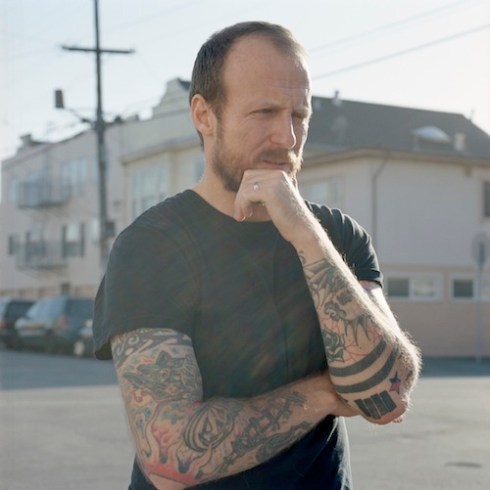
What happens when you’re a soldier and you are asked to fight in a war your conscience tells you is immoral?
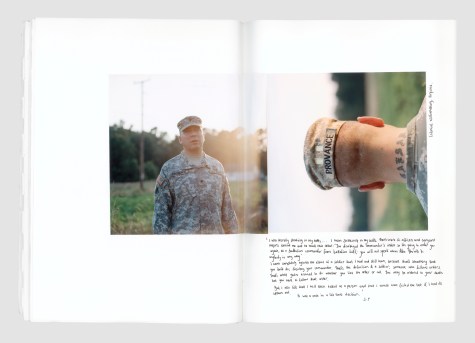
Jo Metson Scott‘s series The Grey Line and accompanying book interrogates this conundrum and those that lived – and continue to live – it.
I’m not from a military background and I always opposed the Iraq War, so it was a stretch for me to empathise with Jo’s struggling subjects who, to me, simply made – and continue to justify – rational assessments. How difficult or taxing can common sense be? To get me out my own head, I called on Jo to explain this emotional minefield of a topic.
Scroll down to read our Q&A.

Q&A
Prison Photography (PP): Where does the title come from?
JMS: The title is to try and explain the difficult position so many of the soldiers found themselves in. Nothing is ever black and white, nothing is ever as simple as right or wrong, and these people were having to make a decision between what they were contractually obliged to do and what they felt was the right thing to do. I felt The Grey Line was a way of explaining the difficult line they were choosing to walk.
PP: You say some of the soldiers were imprisoned for their views?
JMS: Actually, none of the soldiers were imprisoned for speaking out against the Iraq war. Some of the soldiers refused to fight in the Iraq war and were imprisoned for going AWOL, but not for speaking out.
Each person’s story is very different, so I’m always nervous about generalizing. So instead, I’ll give an example. Kevin Benderman was one of the older and higher rank soldiers I interviewed and he was very opposed to the Iraq war. He was deployed to Iraq for a short period. Over there his opinions really became clear and he felt strongly that being in Iraq was the wrong thing to do. When he came back he applied for Conscientious Objector status but it was denied. So he refused to go back. He was court martialed and given a 15 month prison sentence.
Kevin said he always knew that he would get a prison sentence. It was fascinating to hear how his morals were so strong he was compelled to go against the military and risk his career. It wasn’t that he was a pacifist, or had found God, he just strongly believed that what America was doing in Iraq was wrong. That’s what really impressed me about some of the people I interviewed, they really stayed true to how they felt. Kevin knew if he spoke out and refused to fight, his career would be ruined, he’d be accused of being a coward and he faced imprisonment, but he still refused to go to Iraq.
It’s like another person I met who refused to deploy to Iraq. He was openly gay, and could easily have got out through the ‘Don’t Ask Don’t Tell’ Policy, but he felt if he wanted to leave for moral reasons it would be wrong as he would see it as taking the easy option. Instead, he applied for Conscientious Objector status, which was denied, so was then imprisoned for refusing to be deployed.
Kevin Benderman can explain his situation so much more clearly that I ever will. He said to me:
“Have you heard the term, “I cannot in good conscience do that…?” Well, that’s how it was for me.
I took a look around when I got over there. We weren’t fighting an army, there were no weapons of mass destruction. None of that stuff was there. We were just bullying the civilians. We weren’t fighting soldiers; we were just kicking doors down of civilians’ houses and taking them out and that’s not what I joined the army to do. I mean, if there had been a soldier over there I would have fought a soldier, but that’s not what we were doing… not at all[…]
There was no doubt in my mind that I’d go to prison. I had to be made an example out of. I mean, I was an NCO for one. I wasn’t a young kid and they knew that if I was able to do what I was trying to do it would only strengthen my argument. They had to make an example out of me so that no one else would try it.
With all the charges they were trying to give me I could have got seventeen years. They tried to charge me with larceny, desertion, missing movement. I knew it was a bunch of bullshit. I knew they weren’t gonna be able to stick all that stuff on me. I was convicted of missing movement by design, which carried a fifteen month sentence. It was a dishonourable discharge but it was upgraded to bad conduct. But that still isn’t very good. I mean you can’t really do a whole lot with a bad conduct discharge.
I know I did the right thing but it just didn’t really change anything, you know? I invested twelve years of my life in the military. I gave that away. I gave away my retirement. I lost my home, my wife … I can’t really find a … well, I’m stuck here driving a truck.
I had more trouble with my family – sisters, brothers and brother-in-law – than with people in general.
My family didn’t even want to hear my reasons for doing what I was doing and they still don’t. Most of the ones who have openly criticised me have never served and don’t know what they’re talking about. More soldiers and veterans agree with me than my own family do. But I’m not really concerned about their opinion and that makes them mad. You know, that was part of the stress; my own family chose George Bush and his stupid ass doing something illegal over defending me, and they wouldn’t even hear my reasons why. […]
There’s still people who say I’m a hero. Well no, I’m not a hero. I was just doing what I thought was right and I really thought that people who made noises about the constitution and the law would stand up for that instead of just wanting someone to be a figurehead for them. […]
A few years ago I took a job in Afghanistan as a civilian contractor. I wanted to go back was because I know I’m a good mechanic and there’re still soldiers over there and I figured they deserved somebody who was conscientious about the work. I had given them the best vehicles that they possibly had. I didn’t leave the military to abandon the people that I served with, but I knew that it didn’t matter. Whether or not it was right to be there […] I’m a good mechanic and they’re still over there. They’re not coming back and we’re not prosecuting Bush and I wanted to make sure that they had the best possible vehicles. Should we be there? No. Are we there? Yes.


PP: Benderman’s is one story of how many? What was the number of soldiers you met?
JMS: Over the space of 5 years I met in total 45 soldiers. 29 are in the book.
PP: Has the story of conscientious objectors been adequately told?
JMS: Before I started the project, I had only associated the term Conscientious Objector to the first and second world war – to times of conscription. So I was intrigued to know why someone would need to apply for conscientious objectors status when they had willing signed up. Meeting with the veterans and doing this project made me realise that of course people who are in the military can have a change of morals and principles just like any ones else does, and some people also realise that they no longer want to be a part of war.
But not all of the people I met with were conscientious objectors. Many of them didn’t even know that the process existed. I was interested in meeting people who had moral doubts about their involvement in the Iraq war, not all were conscientious objectors.
Some people choose to whistle blow and speak out to the media about their experiences, others simply refused to fight and went AWOL. Others chose to keep quiet until they left the military and then spoke out. Speaking out from within the military is a very difficult thing to do. The quote below is from a veteran called Ryan. He was in the Marine Corp and was deployed for 7 months to Iraq. After he was honourably discharged from the military, he decided to speak out about his experiences in the military and about what he came to see as atrocities that he and his colleagues committed in Iraq.
After I made my public testimony, my brother disowned me on Facebook for everyone to see. He said I was a traitor and I wasn’t his brother anymore, that I wasn’t even a man.
Every single person that I served with in the war found out about my testimony and have publicly said that I’m a liar, a bitch, that I’m full of shit, that I’m a fucking American flag-burning, troop-hating, communist.
I understand why a lot of these guys did what they did; they’re not ready to accept that what we did was wrong … because it’s hard. It’s hard to accept that what you believed in was wrong. And not just wrong like two plus two is five, but wrong like you fucking killed somebody and that’s something you have to live with for the rest of your life. Some people just aren’t ready to live with that yet.

PP: What do you hope to communicate with The Grey Line?
JMS: Many of the people I spoke to were very torn between their duty, the bond with the people they fought with and their own belief that what they were doing was wrong. Several soldiers talked about being ordered to do things that they felt very uncomfortable about doing, but that they knew were legal.
I spoke to one soldier who had been a military Intelligence officer in Abu Ghraib. He had absolute faith in the military, but was feeling very uncomfortable with what he was being asked to do. In the quote below, he talks about his experiences of interrogating a young detainee.
He was 16; just a kid, scared to death, and skinny as a rail. We went out to get him from the ‘general population’ [prisoners who aren’t in solitary confinement] area to interrogate him. The general population area was right next to the questioning booth, but they still wanted me to put one of those sacks over his head to transport him. It wasn’t like a normal sack, it was like a plastic sand bag with sand all over it. It barely fit on his head and he was shaking as I put it over him. We used it so he couldn’t see where we were taking him, even though we could see the booth from where we were standing. We had to cuff him too, but his wrists were so skinny you couldn’t put the handcuffs on him. So he just kind of carried them instead. I felt so rotten.
The weirdest thing was when we were in the room with the kid and an MI guy came in and gave the interrogating officer a handful of Jolly Ranchers. It was meant to be put on the table like, if you talk we’ll give you some apple Jolly Ranchers, you know? The kid knew nothing. He was just this guy’s son. Originally we were supposed to interrogate his father, a general in Saddam’s regime, which was why I had agreed to be a part of it. It sounded interesting. But then when we got there, they told us that he had already been ‘broken’ and as a sort of consolation we were told we could interrogate his son.
I only found out afterwards what they had done to break his father. His son had been doused in cold water, driven around in a truck in the freezing cold night, and covered in mud. I guess, at the same time his father was being interrogated somewhere else and from what I understand they told him that they’d take a break from the interrogation and let him see his son.
So the general’s thinking he’s gonna see his son and have some kind of a reunion with him, but instead they just allowed him to see his son naked, shivering, and covered in mud.
A lot of people will probably wonder why I didn’t say something publicly right away, but it would have been pointless. Even though I thought what was happening was wrong, doesn’t mean that it was illegal anyway.

PP: What are your thoughts on the Iraq and Afghanistan wars, Jo? Was it wrong, justified, legal or illegal? Is your opinion of importance? Does it come through in the work? Or need to come through?
JMS: I was shocked when Tony Blair took my country to war. I couldn’t believe that he could go against the majority of the country’s wishes. I was shocked that he didn’t listen to the advice of the UN. Maybe it was naive of me, but that is how I felt. I think that is why I became interested in the soldiers stories. I had really believed in Tony Blair when he had come to power. I never would have dreamt he would have taken us into a war like Iraq. And that’s why I wondered how some soldiers must have felt. Many people join the military having complete faith in their government, so what happens if then the government goes into wars you think are wrong? As a soldier you have no choice.
People will always say. “You can’t have military that questions every order their given,” but on the flip side what if it was you? If it was you being asked to do something you felt in the bottom of you stomach was wrong? Something you felt went against everything you been taught? Do you ignore that feeling and carry out your contractual obligation or do you listen to your conscience?
In the end I didn’t particularly want to look at the politics of the Iraq war (though a lot of issues are raised in the book). What I wanted to explore was how an individual deals with the doubts they have in times of war. I wanted to look at the more complicated issues affecting a soldier’s decision. There are so many other things that affect one ability to make a decision – commitments to colleagues, expectations of family, financial implications, confusions of loyalty and legality. The aim of the book was to explore the complexity of their situation. There wasn’t a right way or a wrong way of doing things.
PP: How does The Grey Line fit in with your other work? You’ve recently been in Sri Lanka, you hang out with Beth Orton. I mean, to me, all your work is gentle, warm and purposeful so I’m not asking about the style or aesthetics in The Grey Line, I’m asking about its purpose for you as an artist.
JMS: I love doing commercial work and the challenges and opportunities it brings. But my approach and my purpose in doing commercial work is different to my personal work, and its difficult to compare them.
I am interested in people and because I have a camera it allows me to enter their lives in a unique way. I like to tell other peoples stories through my photographs.
For a long time now the theme of morality is something that I have questioned and explored – my own sense of morality and other people’s sense of morality, and how that affects their decisions… I think that I was unintentionally looking for way of exploring this theme with my photography, and when I first met Robert, something clicked.
PP: Can you imagine not having explored this issue? Can you imagine not having made this statement to the world?
JMS: It doesn’t really feel like I made a statement, or at least it wasn’t my statement to make. The men and women that were in the military and had the courage to question are the people making a statement.
PP: Thanks Jo.
JMS: Thank you, Pete

BOOK LAUNCH
On 20th March (6.30 -10pm) The Grey Line, published by Dewi Lewis, is having a book launch at Fishbar Gallery, 176 Dalston Lane, E8 1NG.
[Right click on the images below to view them larger.]


BIOGRAPHY
Jo Metson Scott is a portrait and documentary photographer whose work highlights the relationship between people and their communities. She has been commissioned by organisations including The New York Times, The Telegraph and The Photographer’s Gallery and her work has been exhibited in both the UK and Europe, including Arles Photography Festival, Nottingham Castle Art Gallery, Hereford Photography Festival and the Venice Biennale Fringe. She is repped by Webber Represents. Jo lives and works in London.
Recently, I was asked if I knew Gaylord Herron‘s photography from within prisons. Know the work? I didn’t know the photographer. I haven’t tracked down any of his prison stuff yet, but while I busy myself with that I recommend you watch this film.
The documentary (broken into three bite-size Youtube clips) is a fantastic intro to the life of an extremely talented news-man and photographer. The film revisits the moments of serendipity, hard work and dreamlike exploration in the lives of Dan Mayo (publisher), Bill Rabon (muse) and Herron himself.
Vagabond (1975) was met with huge critical acclaim but it simply wasn’t distributed effectively. Copies are now collectors items.
Sure, there’s anger, disillusionment in Vagabond but there is also lightness or as someone comments in the film, “There is magic.” Vagabond it is a visual poem that stands next to and up to the grittiness and bleak outlook of Larry Clark’s famous book Tulsa. The two photobook projects were contemporaneous.
What I like about the film is that there are no regrets from any of the players. Herron suggests the journey had while making the book was its main purpose. All three of them feel that the book was a product realised in a particular time and that the exploration necessarily had an end point. The story is strangely and simultaneously both wistful and pragmatic.
Herron now runs a bike shop in Tulsa, Oklahoma.
A couple of months ago, I was contacted by the Magnum Foundation (MF) and asked to nominate six photographers who were pursuing projects of social importance. The MF was readying itself to disperse the 2013 Emergency Fund grants.
Today, in conjunction with TIME LightBox, the Magnum Foundation announced the 10 chosen photographers and their bodies of work:
Adam Nadel, Getting the Water Right
Alex Welsh, Home of the Brave
Giulio Piscitelli, From There to Here
Jehad Nga, Unmasking the Unthinkable
Mari Bastashevski, State Business
Olga Kravets, Radicalization
Rafal Milach, The Winners
Tanya Habjouqa, Occupied Pleasures
Philippe Dudouit, The Dynamics of Dust
Tomoko Kikuchi, The River
Two of my nominations won support. That’s a one-in-three strike rate; better than the current form of Blazers’ guard Wesley Matthews.
Nominations by myself and 14 others resulted in a pool of 100 photographers. From that 100, a three-person editorial committee – Philip Gourevitch, contributing writer for the New Yorker and former editor of Paris Review; Marc Kusnetz, former Senior Producer of NBC news and Consultant for Human Rights First; and Bob Dannin, former Editorial Director of Magnum Photos, and professor of history at Suffolk University – chose 10 projects.
10 grants have been dispersed. Regional photographers who live and work near their homes each received between $4,000 and $7,000, while the photographers working internationally secured grants between $7,500 and $12,000.
“The EF 2013 grantees are a group of talented photographers, working internationally and within their home regions. All of the projects anticipate emerging issues that are underreported and show great promise to reveal new perspectives through a range of visual styles and approaches. […] The selected projects address a range of pressing issues including human impact on one of the world’s most delicate ecosystems, systemic roots of violence in vulnerable communities, investigation of human rights abuses, and post-arab spring immigration flows,” says the Magnum Foundation.
Due to the sensitive nature of many of these projects, MF is being careful about the amount of information it shares publicly about the projects’ details and geography. We’ll just have to follow the photographers’ output closely.
Congratulations to all grantees.
See the work at TIME LightBox.
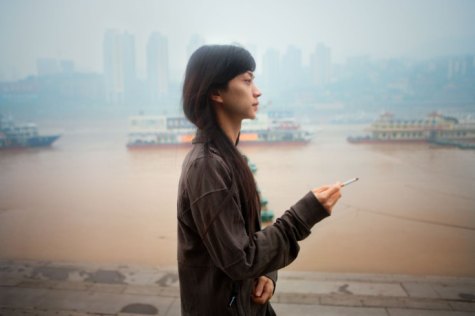
Above image: Tomoko Kikuchi, from the series The River.
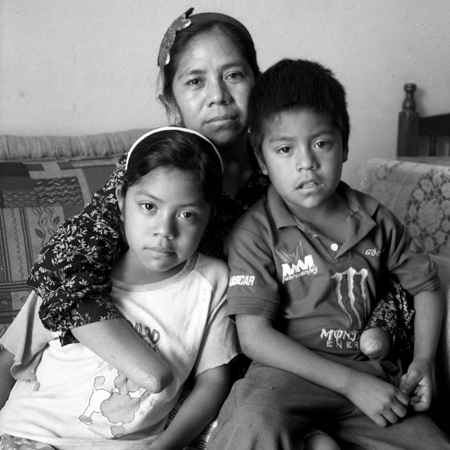
Alan Pogue is one of the best documentary photographers you’ve never heard of. Not one to get mixed up in the social media conga line, Pogue instead spends his time hunting down important stories. Very important stories.
Rosa Moreno lost her hands last year in an industrial accident in Reynosa, Mexico. Pogue writes:
“They needed to step up production and Rosa was asked to operate a machine that stamps out the back plate for a particular model of flat screen monitor because it was a little complicated and she was good and she was faster than most. She was also a little more brave. It scared some of the others who declined to work at this machine on the line. She stepped up.
It happened just after 2 in the morning February 20, 2011. As she was positioning a piece of steel plate, the machine suddenly jumped into action and clamped down on her hands with tons of force. She knew she had to maintain her presence of mind, since it would be necessary for her to argue for being taken to the right hospital. […] but the company would not allow an ambulance to be called. They did not want her taken to the hospital Rosa wanted because it might be more expensive, and because the accident would be on the record. With her hands now flat as tortillas and meshed into the monitor back plate, she walked to a co-worker’s car and was taken to the hospital, where they amputated her hands, still enmeshed in the steel plate.
She gets by on the Mexican government’s equivalent of Social Security disability, about $230 dollars a month. There is no workman’s comp. She had no insurance. There was no union. Some church groups help her out a bit with food and some money. The company offered to give her a one time payment of $4500. But she refused. Even though it is not clear that there is a way to obtain a better settlement through the court system under NAFTA, she holds out.”
Alan Pogue has photographed extensively across North and Central America focusing on social issues, labour issues, civil rights, criminal justice and the Texas prison system. I had the pleasure of meeting him last year and when we talked about his stories, water gathered in his eyes and his voice wobbled. This is work that he really feels and Rosa’s is a cause he deeply, deeply believes in. Please think about helping this holiday season.
via Susan Noyes Platt.

All I want for Christmas is more weird images.
Twelve months ago, I posted To You, Happy Christmas, From Google Image Search. I guess now that I’m revisiting the format, it’s now a holiday tradition? I don’t know if this years selection tops last. I’ll let you be the judges.
Merry seasonal cheer to one and all.














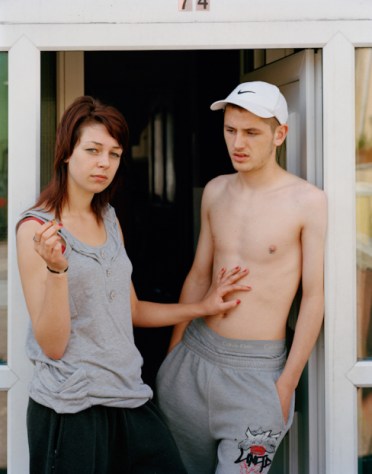
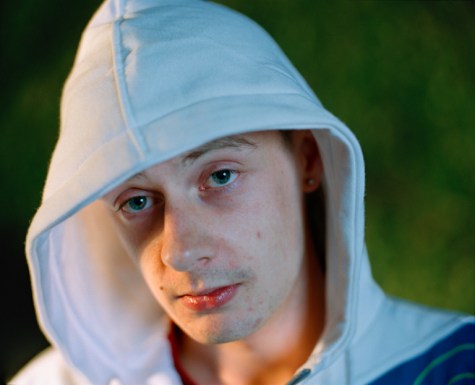
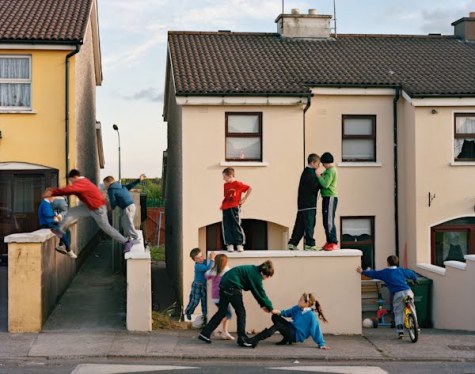
Doug Dubois needs no introduction in photocircles, but he did when he stepped on to the Russell Heights estate in Cobh, Ireland. Doug was running workshops with the youth in Cobh but making no photographs. Out of compulsion he asked to go to their homes to inspire his photography.
After last weeks events in Newtown, Connecticut, the preciousness of childhood is on the minds of millions. Childhood and teenage years deserve celebration. Dubois’ My Last Day At Seventeen is a celebration. There’s no portfolio on his website but you can see selects on Piece Of Cake.
Often, when you hear teachers reflect about their work, you’ll hear, “I learnt more from the students than they learnt from me,” or some variant of. It seems this was Doug’s experience.
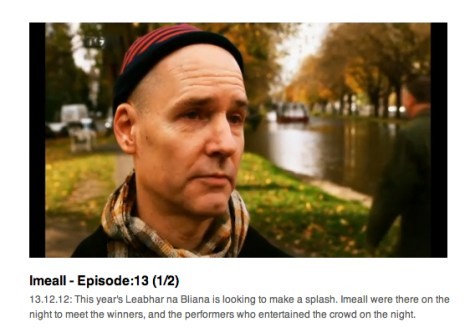
“I’m interested in the glow of youth; its fragility. As I’m older, I know it will disappear, but they don’t,” says Dubois in a beautifully produced feature in the 13th episode of the Irish culture and arts television program Imeall. Dubois spent four consecutive summers working in Russell Heights through the artist in residency programme at Sirius Arts Centre.
“He spent four years photographing my life,” says Erin Mackessy, one of Dubois’ main subjects (above, on the left) who speaks throughout the film (click the image below). The respect between Doug and Erin is described really well. It’s nice to hear both photographer and subject talk about one another so familiarly.
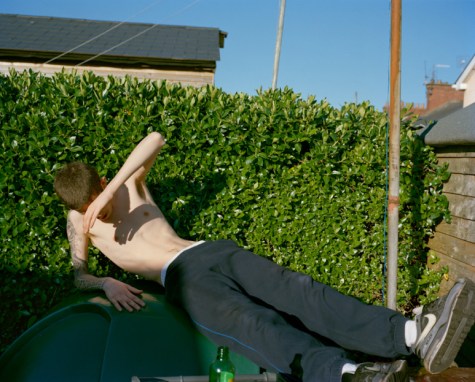
It always a delight when you find gorgeous photographs. It’s a double delight when the photographer can write with genuine and compelling words. Sarah Hoskins – whose Girl’s School work I featured on Prison Photography in September – was recently featured on Roger May’s excellent Walk Your Camera website.
In presenting her series. The Homeplace, Hoskins recounts a car crash she and her daughter suffered this summer and the response of her subjects and new friends.
In the fall of 2000 I stood in the middle of Frogtown Lane map in hand, I didn’t know a soul. On June 11, 2012 I lay strapped down in an emergency room in Somerset, Kentucky a hundred miles away from that lane.
I had left the African American hamlets of the Inner Bluegrass Region that morning, where I had been photographing for the past week as well as the past twelve years. […] The residents of the hamlets arrived like the cavalry in Somerset within hours of the car accident, dropping everything to rescue my daughter and myself as well as all of our belongings including my cameras and film from the wreckage that was our car.
[…] I am being wheeled through the in the emergency room of UK hospital in Lexington, Kentucky. I am brought into yet another emergency room. I can still only look up. I see the eyes that are Derek’s, the same eyes his daddy had. He strokes my hair that is matted and covered in dried blood. His warm coal colored hand holds my cold pasty white one. The nurse says, “Only relatives are allowed in here. How are you two related?” I hear the smile in Derek’s voice, “It’s a long story.”
Heartfelt stuff. Read more.

A prisoner at the Estrella Jail, Phoenix, Arizona makes a face before he is photographed. © Scott Houston
Friend of the blog, Scott Houston, has a spangly new website featuring not one but four portfolios of his work from Maricopa County, “Tent City” and the show that is Sheriff Arpaio’s chain gangs.
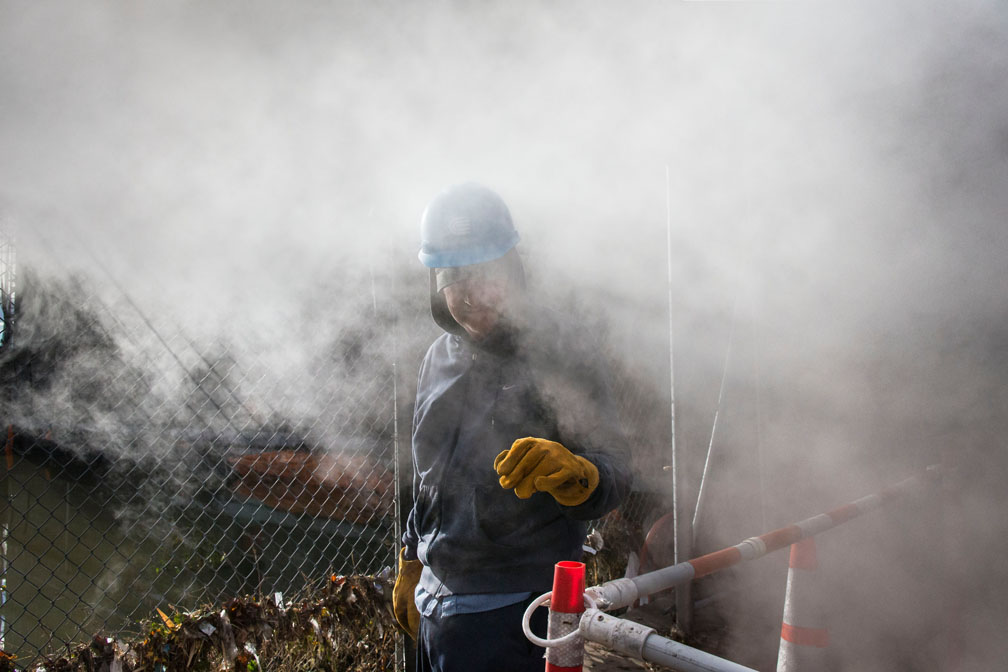
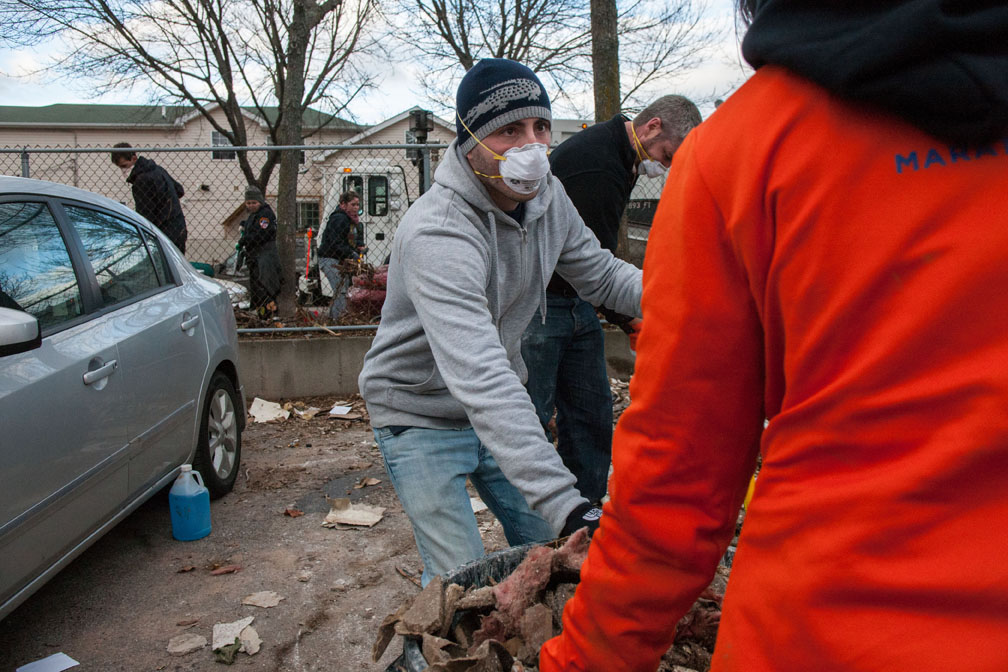
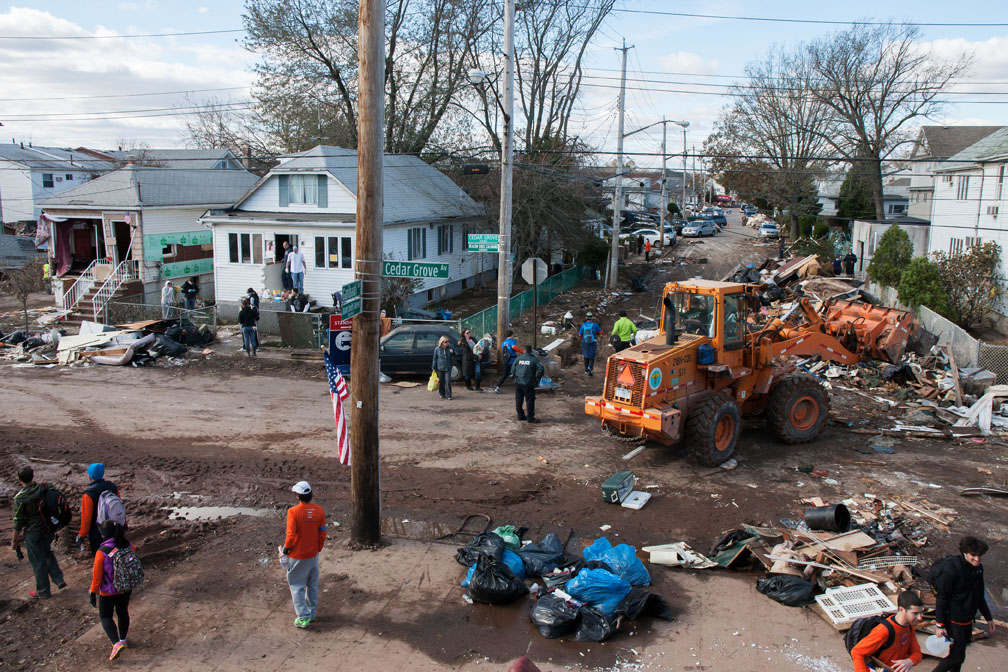
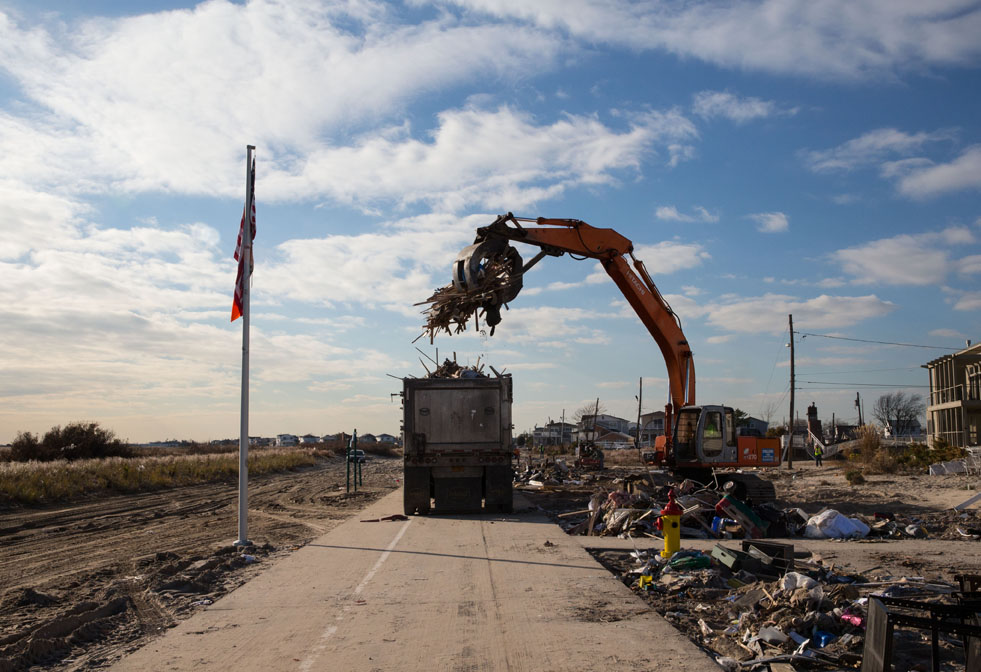
Scott is a New York resident and like most with a camera got out to photograph the aftermath of Hurricane Sandy. He sent me some images. I’ve had my own thoughts on the photo coverage of Sandy, so I’ve tried to select an edit here that shows some things other photographs have not – namely Con Ed workers, different-enough compositions and laughter (click any image to see it larger.)
CON ED, MANHATTAN

NEW DORP BEACH, STATEN ISLAND



BREEZY POINT, QUEENS



 Prison Photography