
You are currently browsing the category archive for the ‘Photography: Non-Prison’ category.

Thor. © Clarke Galusha
“It’s the best show of portraits I’ve seen in Portland in a long time,” said Blake Andrews when he told me he was interviewing Clarke Galusha whose tintype portraits of children are on display at Newspace Center for Photography in Portland through November.
“For many of the subjects in this project, this might have been the first picture-taking experience where they were not asked to smile,” says Galusha who only learned to make tintypes a few months ago!
Read the full interview with Clarke Galusha on Blake’s blog.

Photo: Timothy Briner, from It’s A Helluva Town, in Businessweek.
THE BEST SHOT
Timothy Briner is doing the most different stuff. Whether being different will distinguish it from the crowd, we’ll see.
I was disappointed with early coverage of the Hurricane. Given the superstorm conditions photographers were getting many more misses than hits.
The biggest miss was TIME’s first dispatch of Instagram images the day after Sandy hit. Only Michael Christopher Brown of the five photographers – Kashi, Quilty, Lowy, Wilkes and Brown – had some successful frames. TIME has continued adding to its gallery of Sandy images so the older photos (31 – 57) are toward the end.

Photo: Michael Christopher Brown/TIME. Con Edison workers clean a manhole on 7th Avenue and 22nd Street in Manhattan. Source
BUT, photographers were not at fault. It was editors’ mistakes to publish below par images. Half of the photographers images I saw in the first 36 hours were from assigned photographers carrying smartphones. In low light, blustery weather the smartphones fell way short of the test.
THE MONEY SHOT
Kenneth Jarecke lays into TIME for their use of Instagram photos. Okay he references Gene Smith where there is perhaps little relevance and lists all sorts of other reasons such as Instagram getting rich of millions off other peoples’ content, but those are not the core of his burning anger. Jarecke is angry because the pictures are poor, and I can’t disagree with him. Of TIME, Jarecke says:
It’s shameful and you should be embarrassed. Not to say these shots weren’t well seen (which is the hardest part), just that they were poorly executed. Which is to say they fail as photographs.
What was weird was that in a Forbes article largely defending TIME mag’s use of Instagram images there was little discussion of the images qualities, more an emphasis on stats and page views.
Time’s photography blog, was “one of the most popular galleries we’ve ever done,” says [Photo Editor, Kira] Pollack, and it was responsible for 13% of all the site’s traffic during a week when Time.com had its fourth-biggest day ever. Time’s Instagram account attracted 12,000 new followers during a 48-hour period.
Pollack’s description of Lowy’s bland, color-field image of a wave chosen for the print magazine’s front cover as “painterly” due to its low res sums it all up; the TIME cover is known to favor photo-illustrations over straight photographs.
THE CHEAP SHOT
Sometimes articles are written as if it is still some surprise that amateur photographs shape our media and consciousness. American Photo describes the lifecycle of a viral photo.
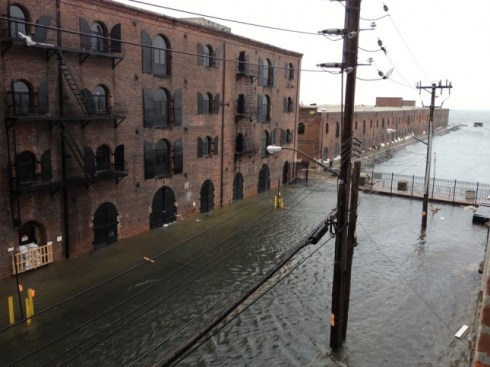
Photo: Nick Cope. Rising flood waters as seen from the window of his Red Hook, Brooklyn apartment.
When we’re all hungry for information and we’re all sharing everything we can get a peek at then an amateur snap, if it is informative enough, will find it’s way to us very quickly.
I admire that American Photo quoted fully from this dude who got that photo.
“It was hard to track [the photo’s path to “viral”] — I was also preparing for a hurricane at the time! And for a good part of the morning I was at a cafe in the neighborhood, chatting with the owner who was mixing up Bloody Marys, and so it was a combination of hanging out with folks in the neighborhood and getting prepared for the storm. And then I start getting all these calls.”
THE TRUSTED SHOT
As ever, Damon Winter makes a bloody good fist of it for the New York Times.
The BIG Atlantic In Focus delivers with a typically epic selection off the wires. Crushed cars, boats on boats, burnt embers, friends hugging/crying, aerial shots of devastation, gas lines, strewn debris (homes), rescued old english sheepdog, destroyed pier and amusement rides, phones charging, pitch black streets, canoe in a living room, downed bridge and then this incredible picture by Seth Wenig of food being dumped.
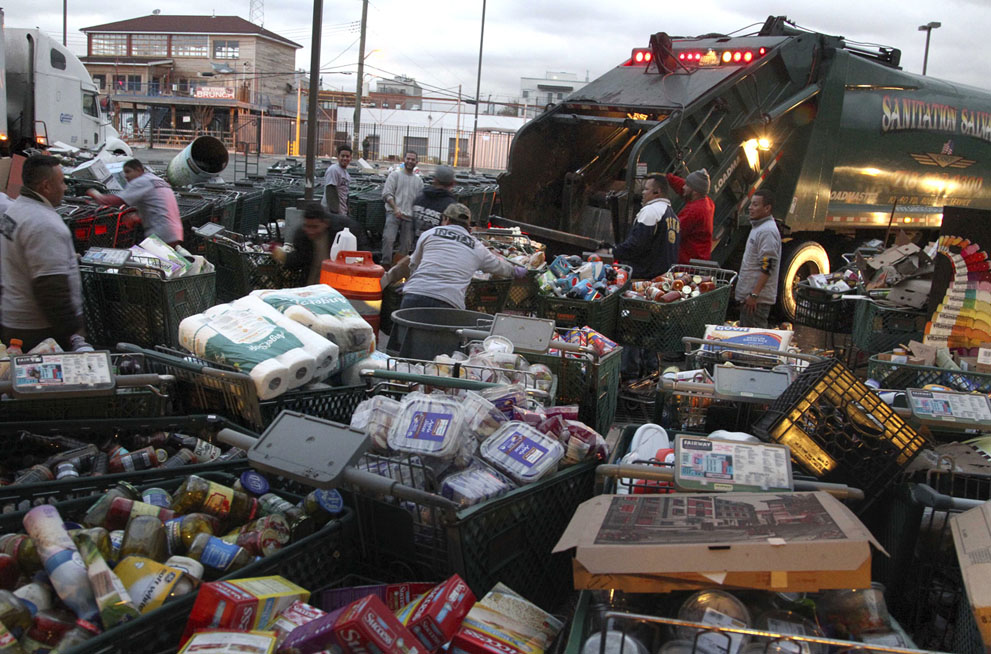
Men dispose of shopping carts full of food damaged by Hurricane Sandy at the Fairway supermarket in the Red Hook section of Brooklyn in New York, on October 31, 2012. The food was contaminated by flood waters that rose to approximately four feet in the store during the storm. (AP Photo/Seth Wenig)
THE HORROR SHOT
Gilles Peress‘ very personal letter in which he appears to be having a breakdown is shared with the world.
“I have to say that in twelve years, to have shot pictures at 9/11 downtown, and again downtown in 2008 when the financial system collapsed, and now, is intense: big city, big tragedies, and a sense of having entered into a different period of history.”
I really want to know who CK and GH, the letters recipients, are.
Peress talks about homelessness and the poor being forgotten in the delivery of aid and services. Michael Shaw at BagNewsNotes wrote about the homeless being forgotten in the coverage.
Back to In Focus. Today, another good edit by Alan Taylor’s team. These two images stood out.
John De Guzman photographs a massive pile of mucky, busted furniture and appliances.

Photo: John De Guzman. A street lined with water-damaged debris in Staten Island.
John Minchillo photographed a lady who is better camouflaged than the national guardsmen beside her. I wonder what she bought at Whole Foods?
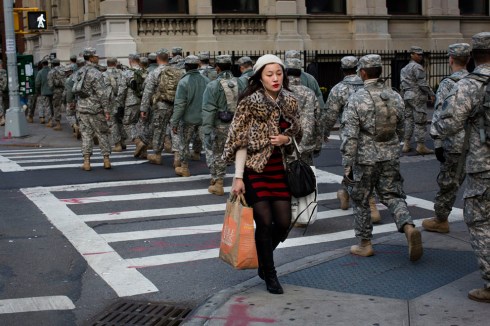
Photo: AP Photo/John Minchillo. A woman passes a group of National Guardsmen as they march up 1st Avenue towards the 69th Regiment Armory, on November 3, 2012, in New York. National Guardsmen remain in Manhattan as the city begins to move towards normalcy following Superstorm Sandy earlier in the week.
THE EVERYTHING SHOT
Everybody’s been very excited about the New York Magazine’s cover aerial photograph of a lightless Lower Manhattan.
It’s only fitting to finish these thoughts with a nod to two perhaps lesser feted Instagram photographers – after all, Instagram had record number of hashtaggles for #Sandy #HurricaneSandy and #Frankenstorm.
Wyatt Gallery has been following clean-up closely.
Clayton Cubitt is a bit more wry in his approach including this GSV comparison which is typical of Cubitt’s sideways thinking on most things visual. Good stuff.

Photo: Clayton Cubitt. Posted on Instagram, “One day you’re living the American dream. The next…”
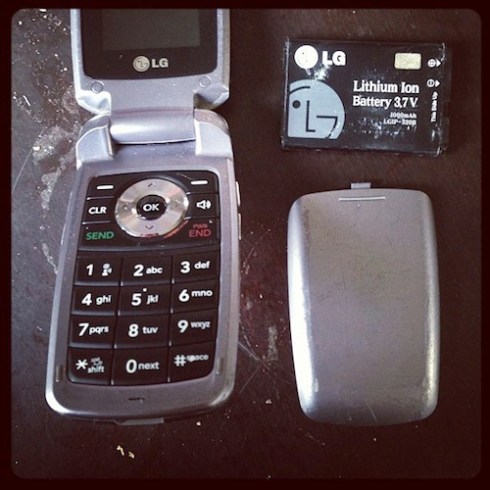
LG VX5400 flip hone. Born 2006. Laid to rest 2012.
After 6 years with the same LG flip phone, it was long overdue to get a smartphone. The timing was right to get the iPhone 5. Friends who’ve had iPhone’s in the past just want to hold the 5, “It’s so light,” they fawn.
I waited a day to turn the iPhone on – I was hesitant because I was about to voluntarily submit to yet more corporate networks. But, I’d reconciled that with my decision to go for an iPhone weeks ago when I placed the order. Breathe deeply. Sync the thing with Twitter. First app? Instagram. It reamins the only app on my phone.
So yeah, I’ll be using Instagram with the handle @p3t3brook. But I have rules.
THE RULES
1. No cats.
2. No dogs.
3. No cocktails.
4. No pints/jugs of ale.
5. No frothy coffees.
6. No plates of food.
7. No babies. Already bent that rule with my second Instagram pic, but the baby is unidentifiable and I tell myself that the leaf the chubby baby hand holds is the actual subject.
THE WHY
It’s not that there’s anything wrong with cats, dogs or babies; they are wonderful things in life to be with and be around, but as I don’t have any children or pets, it’s hard for me to justify why I’d make photos of those things.
As for food, well, food has become the fastest most unquestioned trope on Instagram. People used to think it silly to waste film on photographs of food, but the digital age allows us to indulge a common urge. We all want to share – and brag about – what we’re about to demolish. Food Instagram photos are part homage, part evidence, part guilt sharing, part all sorts of things but not something I want to be part of. There’s too many photos of food online and you don’t need any more from me.
On beer, cocktails and coffees, just read the previous paragraph replacing the word ‘food’ with the word ‘drink.’
THE WHAT
So what does that leave? Here’s a few things I think are a bit of a challenge.
1. Street photography. Must be well edited. High contrast, light and shadow, unknowing subjects, knowing subjects, reflections, bustle. Avoid reliance on signs; you want the picture to tell you the story, not words (I’ve already failed on that one.)
2. Strange unidentifiable details, preferably achieved by found texture, not filter, but I’ll still take a mix of the two.
3. Inside views of current projects. Tidbits. Teasers.
4. New landscapes. Mad infrastructure. Clever combinations of light as it pings off man-made stuff. LOOK UP!
5. Portraits of strangers.
I’ll try to make images along these lines and I’ll find value in others’ doing the same. So, an emphasis on photos made on the fly and inpublic yes. Which is precisely the point of having a camera with you all times. But, I still want to bring a standard to it – if I feel a photograph is poking fun at someone, or voyeuristic in a creepy way, or that the photographer decided not to get close enough or maybe even have a conversation, I might not Like it.
If Instagram is used consciously, it can be an exercise in mindfulness. Look for interesting views, take the pic, upload, put the phone in your pocket. I want people around me to know that I’m using it in a directed manner. Instagram (and its streaming-app-brethren) counters browbeaten, downward gazes. It remedies our forgetfulness to look up.
Clearly, the majority of what is on Instagram is not good photography, but I reckon we’re seeing millions of experiments of people heading toward good photography, AND at a faster pace than in the past. The end result? Hopefully, widespread understanding of what makes a good photograph.
ALL OVER THE PLACE
If you are short of things to read on the topic of Instagram and cell phone photography:
From Memory To Experience: The Smartphone, A Digital Bridge (Stephen Mayes on Jens Haas’ blog)
Wired Opinion: Rip Off the Filters – We Need a Naked Instagram (Wired.com)
Dappled Things: Pinkhassov on Instagram (The New Inquiry)
Everyone shoots first: reality in the age of Instagram (Verge)
Instagram — It’s About Communication (John Stanmeyer)
Stefano De Luigi’s iDyssey (The New Yorker)
Instagram, The Nostalgia Of Now And Reckoning The Future (Buzzfeed)
Hipstamatic Revolution (Guernica Magazine)
Ben Lowy: Virtually Unfiltered (New York Times)
Magnum Irrelevant? (Wall Street Journal)
Instagram: Photography’s Antichrist, Savior, Or Something In Between? (Huffington Post)
Picturing Everyday Life in Africa (New York Times)
reFramed: In conversation with Richard Koci Hernandez (Los Angeles Times)
In an Age of Likes, Commonplace Images Prevail (New York Times)
Why Instagram is Terrible for Photographers, and Why You Should Use It (Photoshelter)
New Economies of Photojournalism: The Rise of Instagram (British Journal Of Photography)
Instagram Isn’t an App, It’s a Publishing Platform (So Treat It Like One) (Photoshelter)

Photobloggers have come out in force to deliver their tributes to photographers doing significant work. These sprawling congrats are congealing into a tasty list of practitioners who exhibit cunning, skill, bravado and novelty in their approach and product.
Colin Pantall began all these shenanigans fresh from a summer of non-blogging and sipping fines teas. He says these photographers are leading us toward “a brave new world.”
Joerg has listed the names put forward so far:
Stan Banos: Aaron Huey, Taryn Simon, Eva Leitolf, Matt Black, Brenda Ann Keneally, James Baalog, Edward Burtynsky, Bruce Haley, Daniel Shea
Harvey Benge: Paul Graham, Jason Evans, Adam Broomberg & Oliver Chanarin, Jens Sundheim & Bernhard Reuss, Collier Schorr, Antoine d’Agata, Martha Rosler
Bryan Formhals: Asger Carlsen, Jessica Eaton, Kate Steciw, Alec Soth, Paul Kwiatkowski, Vivian Maier
Julie Grahame: Michael Massaia
Tom Griggs: Bryan Graf, Amy Elkins, Paul Graham, Abelardo Morell, Jessica Eaton
Mark Page: Mishka Henner, Philippe Spigolon, Craig Atkinson, Stuart Griffiths, TomRS
Colin Pantall: Mishka Henner, Lauren Simonutti, Stephen Gill, Tony Fouhse, Paul Graham, Claus Stolz, Olivier Jobard and others
Christopher Paquette: Zoe Strauss, Alec Soth
Heidi Romano: Taryn Simon, Myoung Ho Lee
Joerg Colberg: Thomas Ruff, Katy Grannan, Erik Kessels, Geert van Kesteren, Christian Patterson
Some superb photographer and photomanipulators. I wholeheartedly agree with choices Broomberg & Chanarin and Geert van Kesteren who have cleverly worked with archives and cell phone wartime images respectively.
I’ve got six on my list.
1.
I’ll be another to name Mishka Henner. I think his time has come. Bound to wind a few folk up, he at least steps forward to defend his use of satellite, GSV and Google Earth images. He’s forcing everyone past the unnecessary reverence we have for images as single art objects and imaginatively pointing out the visual cultures all around us.
Henner does not lazily appropriate and his next series (which I’ve seen snippets of on his iPhone) is a robust political critique of humans’ abuse of the environment. And then there is Photographers, a 10 minute montage looking at photographers on the silver screen. Surprising, fun, entertaining.
2.
It might seem strange to add a well established photographer like Jim Goldberg to this list but I’m interested in his reissue of Rich and Poor with TBW Books in Oakland, CA.
I also saw Rich and Poor at Pier24 recently and was left angered and energised; the best possible reaction to art.
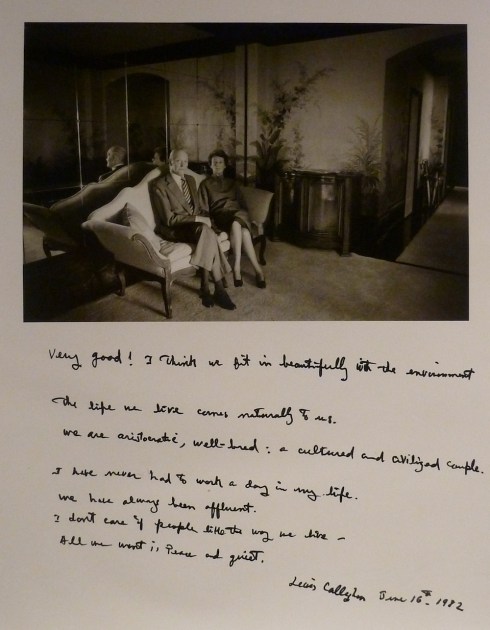
Jim talked about his reasons for revisiting old work including the legendary Raised By Wolves with TIME’s Lightbox this week:
“The children in Raised by Wolves were living hard lives—lives that were leading to nowhere. So now, when I reheard a recording that Brandon the intern had found in some box, and I heard the voice of, lets say, Tweeky Dave, well that added something that would extend to the viewers experience of the project.”
It’s pretty ballsy to hand over the reigns to the intern! But great product.
3.
Alyse Emdur‘s name on the list reflects my interest in prisons, but I was impressed by her Photograph A Recruiter before she got neck deep in the visual culture of incarceration. Emdur’s correspondence with hundreds of prisoners and their donated prints reveal a specific, a widespread, but a little seen genre of vernacular American photography.
Her book is just around the corner! My interview with Alyse.

4.
Alixandra Fazzina is one of the least self-promoting documentary photographers I know. Her work about Somali refugees A Million Shillings – Escape From Somalia is one of the best pieces of social reportage from Africa in this century and the last. And the book is beautiful.
5.
The Instagramer. I’m being contrary with the inclusion of Peter DiCampo on this list, but he is young, using Instagram, and less well known than other famous photographers such as Kashi, Stanmeyer and Pinkhassov making images with their phones.
No need to argue anymore; cell phones allow us to share images instantly and there is an inherent worth to that. Peter DiCampo represents that seismic shift we’ve yet to get to grips with. See his Everyday Africa project.
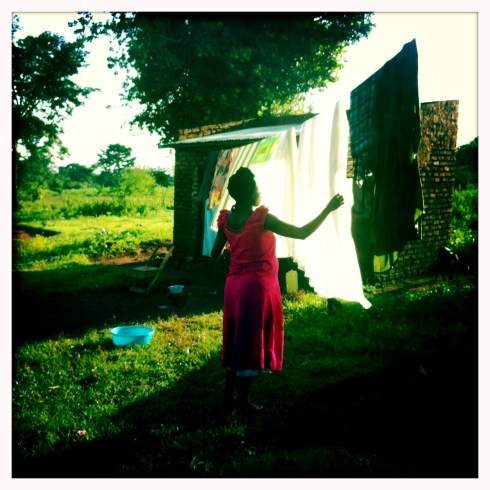
A woman hangs laundry in Takira, Uganda on May 29, 2012. © Peter DiCampo.
6.
Another recent discovery, Tomoko Sawada is a self portrait specialist. I spent ten minutes in front of Recruit/Grey knowing that they were all images of her but still unwilling to accept it. She’s a grand manipulator in the quietest way; a refreshing tonic to Cindy Sherman.


Sometimes you come across a photobook that disrupts all expectations. I picked up The Tattooed Cat in a downtown Los Angeles book store, late last year. It’s written by Steven Wood with photographs by Dawn Mamikunian. It was published in 1993.
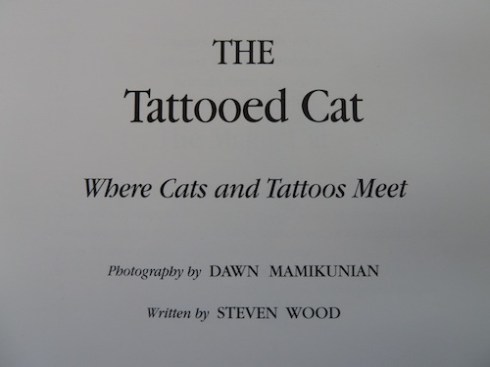
Mamikunian now makes her living as a portrait and wedding photographer and videographer. She’s still dealing with love except now it’s between two humans and not a man and his many cats.
The book is about Chas Taylor and the photographs follow him to the Ace Tattoo parlour where he is routinely inked with portraits of cats – mostly his own. There’s also touching scenes of domestic life – naps, feeding, cohabitation and the like.
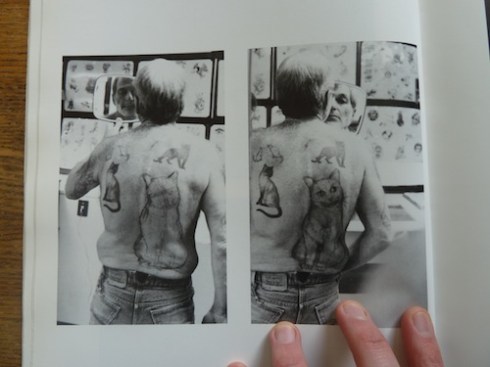
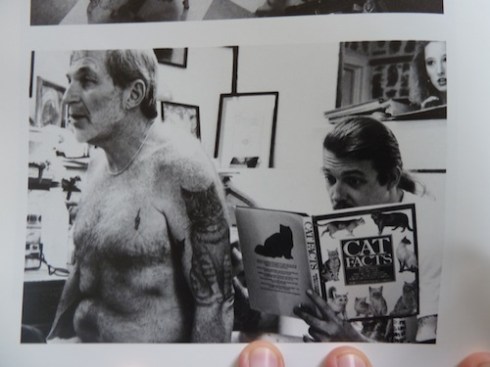
What’s fascinating about the book is that the B&W images play with depth to the point that Chas tattoos and the limbs of his felines merge, sometimes indistinguishably. I can imagine this is the intent of both Chas and of the photographer too.

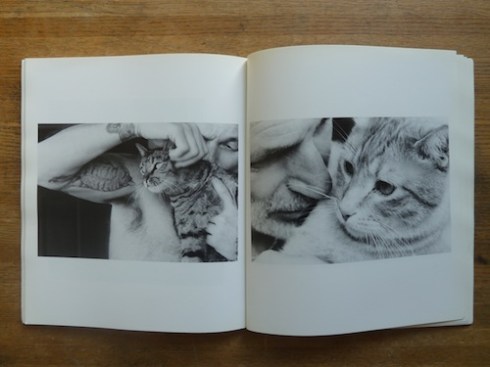
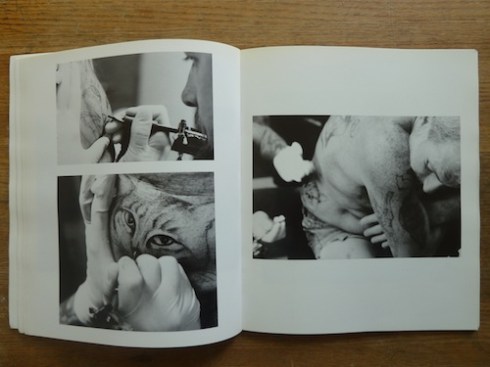
Here’s Wayne, the cat in our house, interacting with the book …
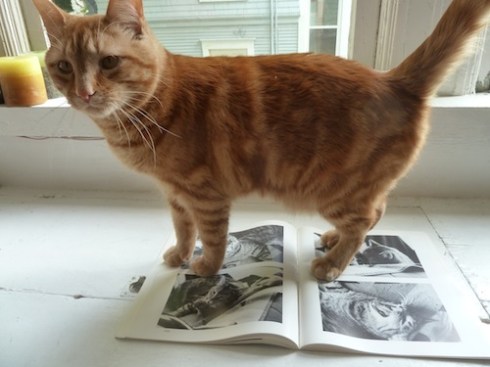
… and interacting with the camera-strap.

By the way, did you hear about August’s Internet Cat Video Film Festival being hosted at the Walker Art Center, Minneapolis?
With hindsight it is easy to say that The Tattooed Cat is an analogue precursor to LOLCATS and Youtube viral hits of cats doing the “craziest things“.
The Tattooed Cat predates the Internet’s (our?) obsession with cuteness, only it nails it down to one man and his story. The Tattooed Cat is a really bizarre look at an unorthodox approach to pet-ownership. It’s a pretty modest gesture too. I’ve never seen anything like it and so it stays in the memory.
CATVERTISING
Footnote: You should know that Cat videos will soon replace online advertising in squeezing the dollars out of your pockets!
As many of you will be aware, Noorderlicht Photo Gallery and Photo Festival are threatened with closure if the Dutch government decides to go ahead with advice – by the Dutch National Advisory Board for Culture – to cut €500,000 in funding. That amount represents 50% of Noorderlicht’s annual budget.
As many of you will also be aware, I have been a public champion of Noorderlicht. Last month I described my delight with working with the professionals at Noorderlicht; the post covers all the reasons I believe Noorderlicht is unique, principled and vitally important to the documentary tradition, as well as to all discourses within photography.
I won’t repeat myself here then in this post. Instead, I’d like to look at some of the language used by both the Dutch National Advisory Board for Culture (or the The Cultural Council of The Netherlands, as it is alternatively known) and Noorderlicht.
CONTEXT

Noorderlicht has operated since 1980. It’s history and growth is impressive. There can be no mistake, Noorderlicht is of international importance. This is a fact, I think, the Dutch National Advisory Board for Culture has paid least attention to. The Dutch are known for their exception book design, but in Noorderlicht they have an international pioneer in the genre of socially engaged documentary.
Unfortunately, that is part of the problem. The Dutch National Advisory Board for Culture characterises Noorderlicht as having to heavy a focus on documentary work and not enough participation in “the art discourse, theoretical reflection and experimental development.”
Noorderlicht has publicly responded to the recommendations twice (one, two).
Up front and to the point, Noorderlicht quotes the Dutch National Advisory Board for Culture, listing the most direct of criticisms:
‘The figures for fund raising and sponsoring give evidence of limited insight.’ ‘Disappointing income of their own.’ ‘Because of the complex character it draws only a small audience.’ ‘Conveyance of information by discourse appears to weigh more heavily than visual qualities.’ ‘The number of visitors was very low.’ ‘Concrete plans in the area of education and an outreach to a wider public are lacking.’ ‘There is a concern that the peripheral programming with debates and publications is being privileged at the expense of appealing presentations.’
Noorderlicht does this in order to respond square on:
“Noorderlicht reaches a wider public than institutions that did receive a positive recommendation, has remained critical and self-critical, has generated great enthusiasm and earned an international reputation that the whole of The Netherlands can be proud of. That must not be allowed to be lost.”
Noorderlicht’s overall rebuttal goes into details of how it has “met all criteria.”
Ton Broekhuis, Noorderlicht director, wrote in an open letter to Joop Daalmeijer, president of the Dutch National Advisory Board for Culture:
“I dare to say that the Cultural Council’s final verdict on Noorderlicht was made on the wrong grounds; by this I mean purely theoretical, and certainly in terms of the interpretation of our quantitative data. You advise some whose requests were accepted to generate larger audiences and work on their business model. Noorderlicht has already accomplished these things. And yes, that was at the expense of the elitist, hothouse art debate.”
The politics of funding must also be examined. Noorderlicht argue regional inequalities and bias are at play:
Of the thirteen Northern institutions that several years ago were still financed wholly or in part by national disbursements, only four remain. Certainly in Groningen, where for instance all dance and all visual art is being scrapped, the clear fell is complete. A region where 17% of the country’s population lives is being palmed off with a disproportionately small share in national subsidies. The Council has clearly chosen for the Randstad (the conglomerate of big cities in the west of the Netherlands) and for a number of big players. In itself, this is not surprising: when only 10% of all the advisors come from outside the Randstad, a certain Randstad myopia is built into the process.
Dutch National Advisory Board for Culture also criticised Noorderlicht for not collaborating enough across the Netherlands. Noorderlicht’s response:
Why should Noorderlicht, as an autonomous institution which has set itself the task of operating internationally from the North of The Netherlands, have to show how it works with other institutions in the country? Are institutions in the Randstad also asked how they work together with national institutions in the region? How often do Randstad institutions present their products in Groningen?
Noorderlicht concludes with its view on the recommendation to cease funding:
“[…] The council is making a clear first move in a debate that has become urgently necessary. For whom is art? What is the role of art in society? In any case, Noorderlicht has a less narrow view on this than the Council does.”
This is all very punchy stuff and part of what is now undeniably a noteworthy, frank and public debate.
HAVE YOUR SAY
Noorderlicht has asked supporters to record video messages of support Send the file to Noorderlicht and they’ll post it on the Noorderlicht Youtube page. You have a spare minute?
Ed Kashi, on Noorderlicht Photo Gallery and Photo Festival: “National Jewel […] It is unthinkable to think that Noorderlicht would disappear.”
Other ways to support.
SEE ALSO
– Joerg Colberg’s Open letter in support of Noorderlicht: “Noorderlicht [has been] an important member of the photographic community for many years, a community that extends beyond regional or national borders.”
– Noorderlicht Photofestival faces closure, British Journal of Photography, 22 May 2012.
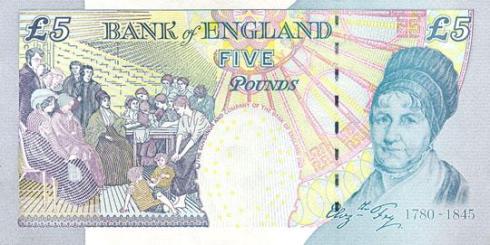
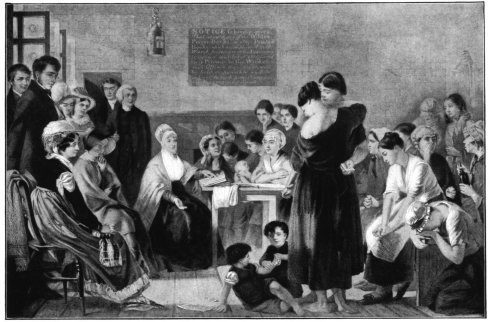
Elizabeth Fry was born this day 1780. If you live in the UK, she’s a familiar face. If not, you should make her soon a familiar face; she’s an example to all socially-engaged folk.
Fry is on the five pound note. She’s the Abe Lincoln of Britain (?!)
Fry knew about compassion before it was even in vogue. If she was kicking it today, she’d kick Jolie into touch. A one-woman hurricane of compassion; the “angel of prisons”; proper girl power; the matriarch, take a bow, Elizabeth Fry.




 Prison Photography