
You are currently browsing the category archive for the ‘Words’ category.
Prison Photography (PP): You use Twitter.
Ashley Gilbertson (AG): I initially got on Twitter because I found Facebook pretty boring. It was turning into people’s family photo albums, which is fine, but …
Twitter was a place that I was getting breaking news from. Not always correct but sources on the ground. That for me was very effective in terms of looking at primary sources and things as they developed. I still go to a few news sites, but I am getting my breaking news from Twitter. It sounds ridiculous, but I do.
I use Twitter for conversations and ideas too. I come across stories. Somebody can tweet something that sets the wheels turning in my head that can turn into a story idea. If I don’t want to cover it then I’ll retweet it and say this is potentially a good story idea. I try to share in this creative process.
PP: You use Instagram.
AG: I joined Instagram because VII started an account and I thought I’d be a team player. I keep trying but it’s not really my thing. My digital photographs suck and so therefore my iPhone photographs are freaking terrible.
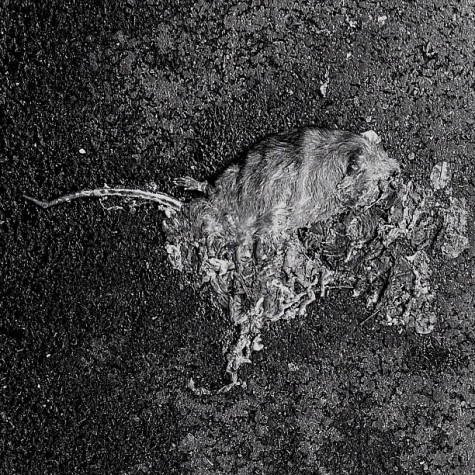
I took a picture of a dead rat I came across on the street, posted it and suggested I might do a series on roadkill and make a book. I’m trying to take the piss a little bit but no-one really gets it. Someone contacted me and said, “I hate to tell you Ash, but someone has already done that.”
I present certain photographs to the world that are very carefully edited and all of a sudden I’m making photographs on the fly and they’re bad! That’s got to hurt my reputation!
I love taking pictures of my wife and son but they are for me.
PP: I don’t want to know about your heroes, I want to know about how you think is making good work right now.
AG: I think Seamus Murphy is doing some really great stuff with multimedia – he takes unusual approaches that I thoroughly enjoy.
I love Peter van Agtmael. Peter’s a thinker. His work is very emotional, really textural, really beautiful and I think Peter is turning into one of the best photographs that we have out there working today. I have a lot of respect for his approach.
Todd Heisler. Reading the New York Times, his pictures just stand on their own. I like being able to look at a paper and know who the photographer is – “It’s Todd. He nailed it again.”
I like Mishka Henner‘s approach to the medium, I like his execution of ideas, and I like his defense of the work. That to me is the complete package. I’ve argued about Henner’s work without him in the room. One person was calling him a photographer, I was calling him a curator, and we realized it didn’t matter. Call him what you fucking want. Henner’s just interesting. Period.
I like people who are pushing the medium. While I have a hell of a lot of respect for traditional photography, I don’t see the need for ten photographers to all shoot the same scene in this reportage manner. I’d rather see three photographers, say from the New York Times, LA Times and Wall Street Journal [do straight shooting] and see the other seven trying to connect with an audience in a different manner.
PP: Cell phones?
The iPhone debate has legs. Cell phone photography is not that boring. It’s the first time photojournalists have ever let themselves go, stylistically. We’re not confined to having to reproduce colours in exactly the way that we see them or not add certain elements of light, sun-flares or whatever it is.
The problem with the conversation [about style and filters] is that it is so often talked about in a defensive manner.
PP: People start by defending the ethics of cell phone photography?
AG: Yes. And, of course it’s totally ethical. Rather they should start with, “Obviously, it is very different to how I shoot on a Canon 5D; it’s a totally different approach with a totally different understanding.”
It doesn’t bother me that photojournalism is loosening up.
PP: For the longest time, a mythos has surrounded anointed photojournalists. They’ve been treated as gods, if you like. But, with the rise Instagram – which is, paradoxically, considered a platform for navel gazing narcissism – famous photojournalists have become more familiar, less godlike.
AG: We’re from a new generation. The photographers I knew growing up were either dead or very mysterious. I remember picking through magazines and trying to find little scraps of information about Ron Haviv or James Nachtwey and these giants in the industry. They were so mysterious it was almost part of the allure. They’re not the story; they’re behind the camera and they are not there to talk about themselves, they were there to talk about their subjects and that to me was very effective.
But now, I realize that to reach the widest possible audience you often have to engage yourself in the production of the story. I need to explain how it was meeting hundreds of families who had lost a son or a daughter to the war. I think that adds to the story and to people’s compassion for the subject. But, it doesn’t sit well with me. It might look like it does because I am so open to it, but still I wonder if I should shut my mouth, close down all my social media, and just get on with photography.
– – – – – – – – – – – – – – – – – – – – –
Image by Ash Gilbertson, from his Instagram feed, a rat I think, sometime in late Summer, somewhere, accompanied by the caption, ‘Tyre Tracks!’
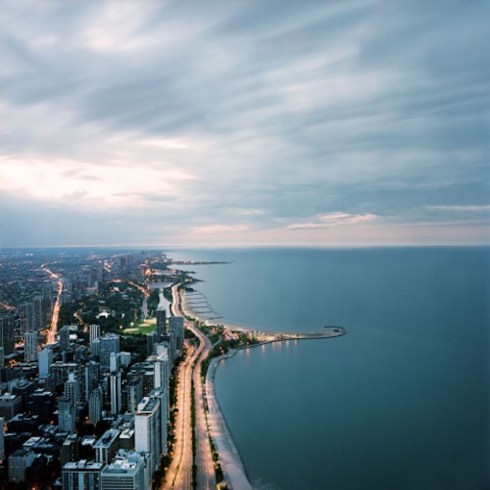
Request: “I would like to see the downtown Chicago or the lake of Chicago it will bring me happiness to see a real nice picture of the downtown. Please! A good place to eat! Nice cars! I been locked up for 17 long years!”
Last week, I asked Where Are All The Photographs Of Solitary Confinement? In terms of evidential imagery, the question still stands. A very different but equally interesting angle to take in the inquiry into images from within solitary is to consider the imagined and idealised images that persist within the minds of prisoners.
FROM LOCKED DOWN MINDS TO TANGIBLE PRINTS
Tamms Year Ten (TY10), a Chicago-based activist group campaigning to close down the controversial Tamms Supemax in Illinois, is not only finding out what the precious images are in the minds of men in solitary, they are going out into the world and making those images a reality – making files, prints to be mailed to each man, and prints for awareness-raising exhibitions.
TY10 asked scores of men in solitary, “If you could have one picture, what would it be?” The requests can be anything in worlds real or imagined. Once made, the images are opportunities for prisoners to see what they want to, what they used to, or perhaps what they may never see again.
Tamms prisoners never leave their cells except to shower or exercise alone in a concrete pen. Meals are pushed through a slot in the cell door. There are no jobs, communal activities or contact visits. Suicide attempts, self-mutilation, psychosis and serious mental disorders are common at Tamms, and are an expected consequence of long-term isolation.
The U.N. Committee Against Torture considers such conditions to be cruel, inhuman and degrading, and when the isolation is indefinite – as at Tamms – to be form of torture. Last year, the U.N. Special Rapporteur on torture Juan E. Méndez called for a global ban on solitary confinement in excess of 15 days.
This year, Governor Pat Quinn announced his plans to shut down the prison but closure has been halted because of lawsuits by the prison guards’ union, AFSCME.
FRAMEWORK FOR CONSIDERING THESE IMAGES
Below are a selection of the requests and resulting images. They are a hodge-podge collection of styles and approaches and clearly many of the images do not meet the standards of fine art aesthetics. But, those standards are not by which these images should be judged.
The images originate from the minds of men who exist in environments of severe sensory deprivation. Each image is conjured from the absence of imagery.
Process trumps product in the TY10 Photo Requests From Solitary project. These images connect and educate people across supermax divides – the most opaque divides of prison regulation. The Photos From Solitary Project – one of the many TY10 efforts to engage the public on the issue of cruel and unusual detention – was conceived of to capture the eyes and ears of people and draw them in to protest and resistance.
The processes in making these images buttress, and spread, committed social justice activism; that is their worth.
Active in the project are artists and photographers Greg Ruffing, Oli Rodriguez, Jeanine Oleson, Rachel Herman, Claire Pentecost, Colleen Plumb, Tracy Sefcik, Harry Bos, Chris Murphy, Billy Dee, Lindsay Blair Brown, Karen Rodriguez, Sue Coe, Danny Orendorff, Lloyd Degrane and others.
Requests remain open and you can get involved too. Contact tammsyearten@gmail.com
IMAGE GALLERY
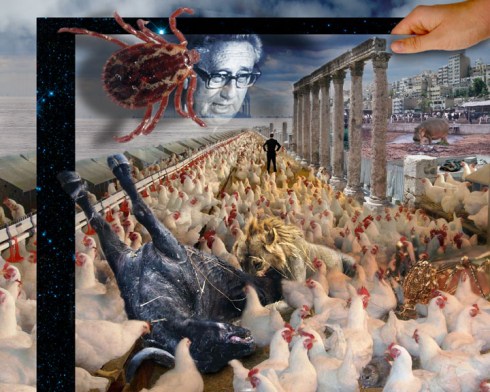
Request: “If you please, send me photographs of laser-printed image on white paper or the 10 most-dangerous land animals in the world. If you do not find it onerous and unreasonable, send me pictures of the land animals too, with a description of each animal.”
Photo montage by Mark Cooley; research and text by Stephen F. Eisenman.
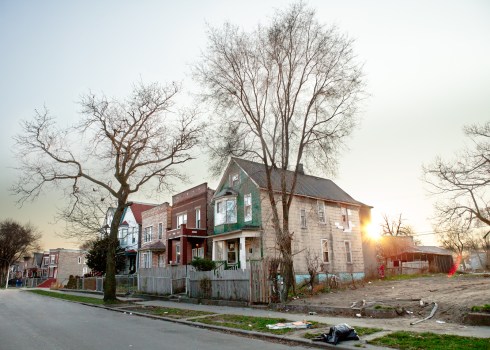
Request: “I want a photo of the whole block of 63rd and Marshfield, on the south-side in the Englewood community – the 6300 block of south Marshfield is where I’m from. I would like it taken in the day time, between two and four o’clock p.m. It’s a green and white duplex-like house – the only green and while house on the block – that my Auntie “Gibby” lives in. I want the picture taken from the sidewalk (that leads to the T-shape alley going towards Ashland and 63rd) in front of the alley, facing slightly towards 64th Marshfield. But, make sure majority of the west-side of the block gets pictured.”
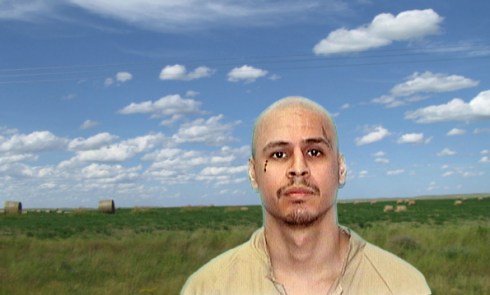
Request: “I would like my own picture done with an alternate background from the IDOC picture. I have no pictures of myself to give my friends and family. This would mean a great deal to me. If this is not able to be done. Then I’ll leave the picture for you to decide. If you can place my picture on another background. Nothing too much please. Something simple like a blue sky with clouds or a sunset in the distance would be fine.”
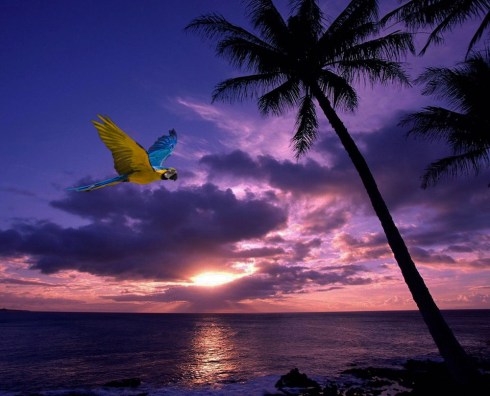
Request: “I would like to see a picture of a beach with the clearest water, and palm trees and birds with colorful plume, and maybe with the sun setting low on the horizon. The only instruction I have would be for you to create this photo with imagination and serenity.”
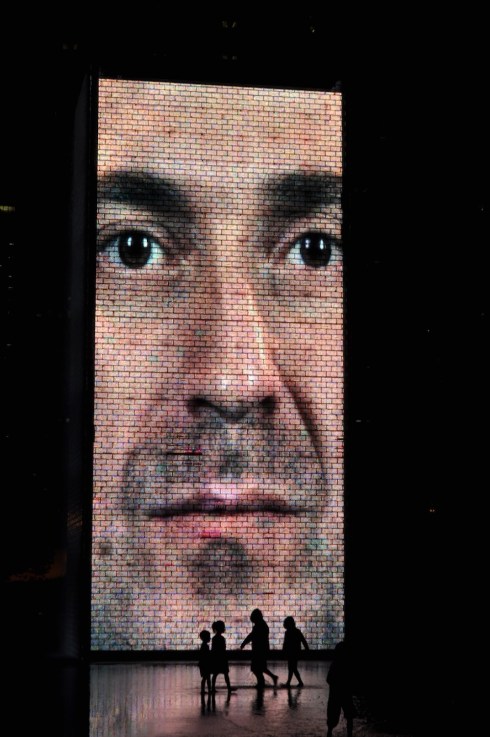
Request: “It’ll be great to get a picture of the chicago skyline at night, with all the big buildings (Willis Tower, etc) and lakefront. really I would just like pictures of the city, the x-mas tree down town, mag-mile, Mill park the places people come to chicago to see. Hey, you’re the photographer, just do what you do!”

Request: “Jennifer Lopez music videos with her ex Ben Affleck on the boat with her butt showing. I will like to see her butt.”
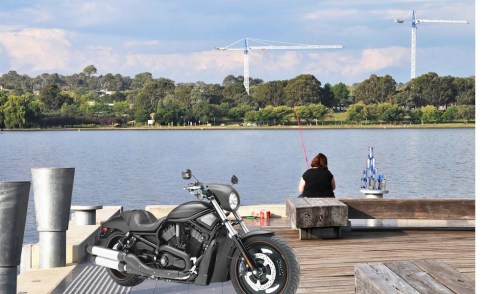
Request: “I would love a photograph of a woman setting by a lake fishing, with an empty chair next to her, with a cooler of beer. And in the empty chair have a sign with FreeBird on it! And have a Harley Davidson motorcycle in the background! I’d prefer the photographer take the photo from a boat out in the lake! Also, I’d prefer a woman that’s over 40!”
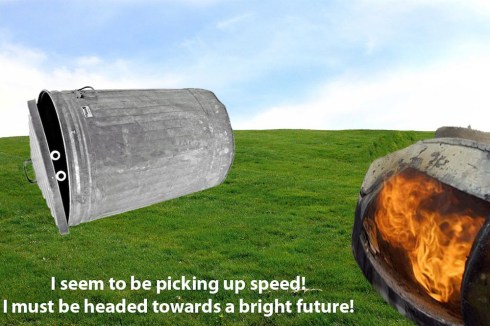
Request: “At 66 yrs. of age I try to use a little humor. I want a picture of a trash-can with the lid half off, with two eyes peeking out of the half-open lid. The trash can is rolling down the hill toward an incinerator with the caption: ‘I seem to be picking up speed I must be headed towards a bright future.’ I was in Florence, CO. So if you could get a picture of me in the Feds and in the state Max joints you could caption both: ‘From Max to Max and no end in sight’.”
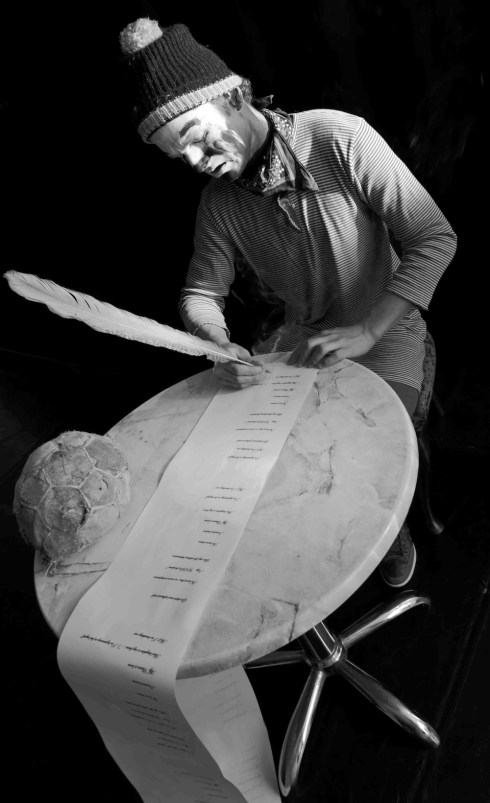
Request: “A lovesick clown, holding a old fashioned feathered pen, as if writing a letter. From the waist up, in black and white. As close up as possible with as much detail as possible, and with the face about four inches big.”
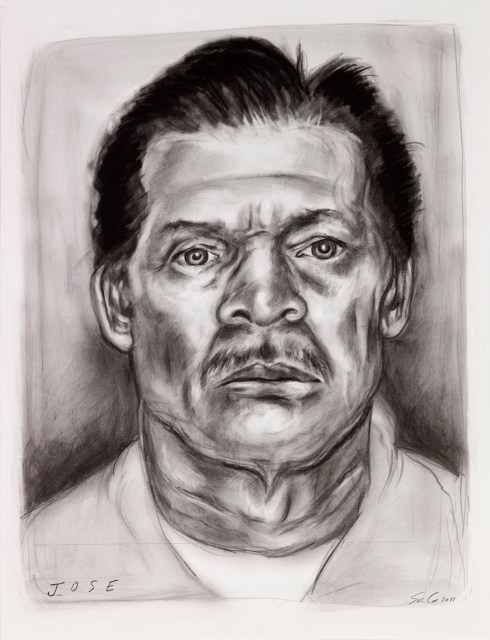
Request: “I would like this picture drawn my ID as is. Don’t add a thing. Just the face will do. Thank you for this blessing. I don’t have any pictures of myself; they all were confiscated, years back, when I was at Pontiac. So I would like to know if you could get a picture of me off the internet or the ID photo that I believe you have. Don’t worry I still don’t smile or laugh it’s been years since I smiled, but thanks to your offer I will be smiling if I get the picture your offering. I believe you could get my mug shot off the internet. The picture is to be sent to my mother in Puerto Rico.”
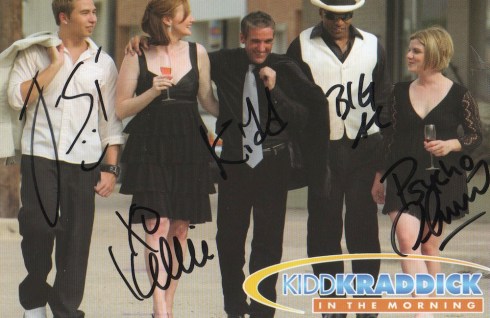
Request: “Cast of the Kidd Kraddick in the Morning Show: Kelly Rasberry; Big Al Mack; Jenna; Psycho Shannon; Kidd Kraddick; JS.” [This is the cast of the radio show he listens to every day. He has been in isolation for 12 years.]
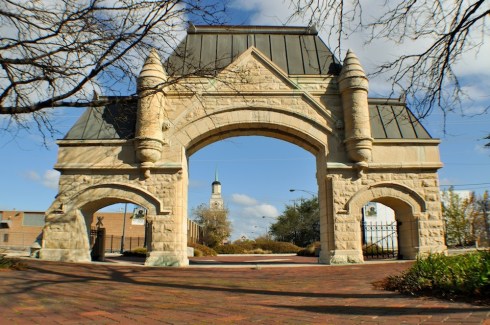
Request: “A picture of the stone archway in the back of the yard’s neighborhood located at 40th and Exchange St; between Halsted and Racine Streets on the South Side. It’s the last remaining thing from the Union Stockyards. I used to climb up on this structure as a kid; a few angle’s of it taken from different directions. I am not limited to any photo amounts.”
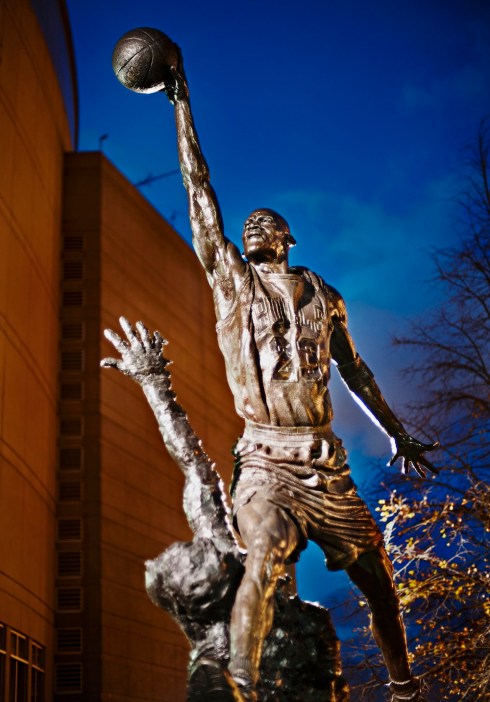
Request: “I would like a photograph of Madison and Ashland looking West towards the United Center, and if you could, I would like a full frontal view of the Michael Jordan statue in front of the United Center. THANK YOU!”

Request: “A photo of my deceased mother standing in front of a mansion, or big castle with a bunch of money on the ground and a black Hummer parked in front of it. I truly appreciate this a lot. I have been trying to get a picture of this, for a long time now. Please send the picture back when you are finished. We can’t receive Polaroids, just regular pictures that is 15 pictures, but 10 per envelope. I’m sending you two poems I wrote. I would truly appreciate it a lot from you helping me out, especially as I don’t have nobody out there. Now I know somebody out there in the world cares about us in here.”
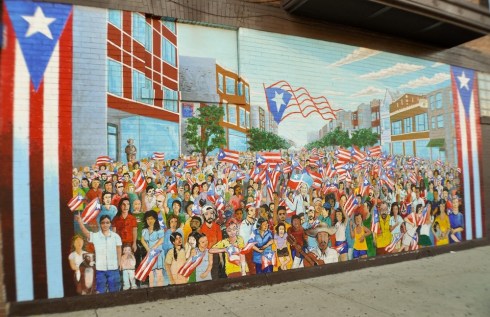
Request: “I would like to receive a photograph of a “8×10″ Puerto Rican Flag. Thank you in advance! This could be taken in the Humboldt Park neighborhood in Chicago.”
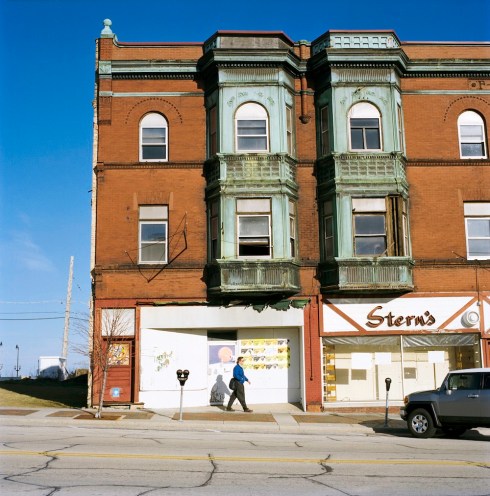
Request: “I would like a picture of downtown Waukegan, IL located in Lake County, IL. The best place to photograph would be Genesse St.”
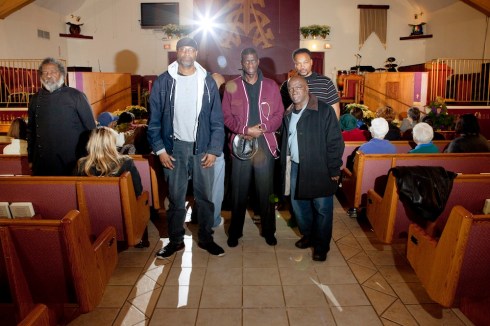
Request: “Photographs of Tamms Year Ten – that is, if they are not prohibited. :< I’d just like to be able to put the faces to the names we’ve seen over the years so the humanity of each can shine forth – a name on paper at the end of the day is still just a name on paper!”
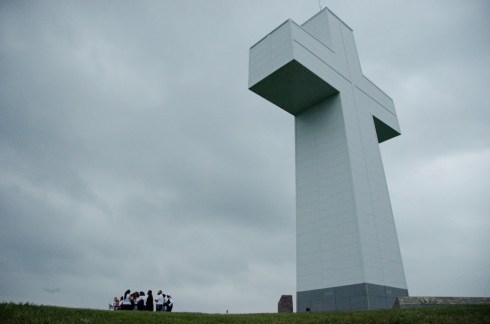
Request: “The Bald Knob Cross in the Southern area of Illinois with someone of the Christian faith going there praying for me with the Grand Cross in the picture praying that I am released from Tamms and that I make parole. I’ve been locked up 36 long years, and time in Tamms is hindering my chances of making parole. I am asking for intercession prayers for my release from Tamms by this personal Bald Knob Cross and the chain will cause my family and others to go there too. Be sure to include the Bald Knob Cross in the picture and to pray for my release from Tamms and to make parole. My family and church will also finish linking the chain of this event. Persistently offering prayers combined with solemn earnest efforts and devoted work to change things. God + Tamms Year Ten + dynamic team!”
TY10 note: We coordinated with the management at Bald Knob Cross, gathered his family members and others, drove six hours to Bald Knob Cross and held a beautiful litany with prayer, song and verse and every family member speaking. The next day we took family members to visit Tamms. Willie was transferred from Tamms the day before the prayer vigil! This summer – after 37 years in prison – he got parole. Willie was put on a Greyhound bus and was back in Chicago the next day. We had a Welcome Home party for him and he talked about this photograph.
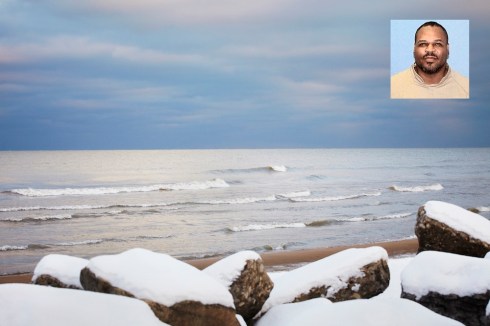
Request: “A photograph within a photo of me + the lake front. A photograph within a photo of me + Navy Pier. A photograph within a photo of me + wild lions. A photograph within a photo of me + wild wolves. A photograph within a photo of me + Chinese Dragon. For next Christmas mailing of cards. Please place me in the right, upper corner of the photo within a photo and make copies of them 5 each. Thank you very much and many blessings. Get my photo off the Tamms, prison profile website.”
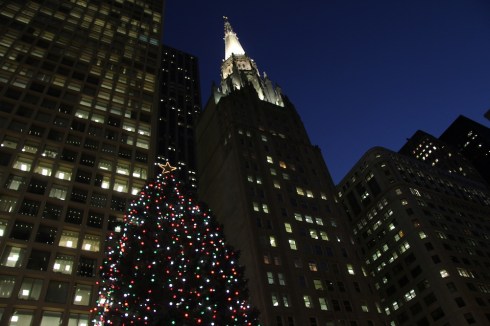
Request: “A photo of the Christmas tree downtown.”
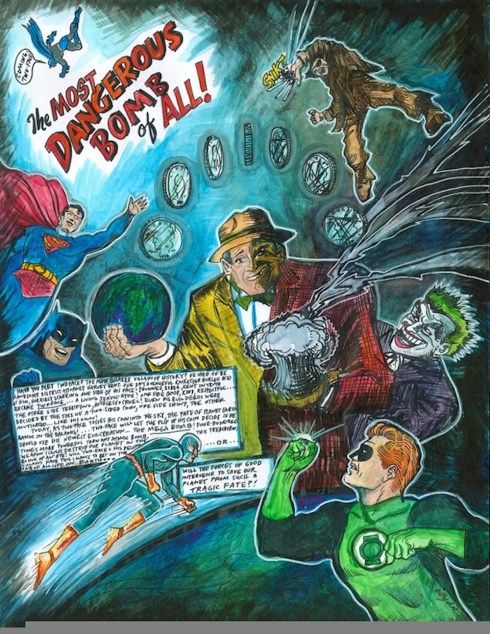
Request: “I don’t know if this like an artist drawing a picture if so I got into the whole superhero thing and I had this idea where two major comic Marvel/DC. It’s a mural with Thor, Captain America, Wolverine, Venom, Iron Man, Hulk teamed up with Superman, Green Arrow, Flash, and Batman against Two Face, Joker, Magneto, Dr Doom, Saber Tooth, Kingpin, and Green Goblin. A battle of good-vs-evil theme.”
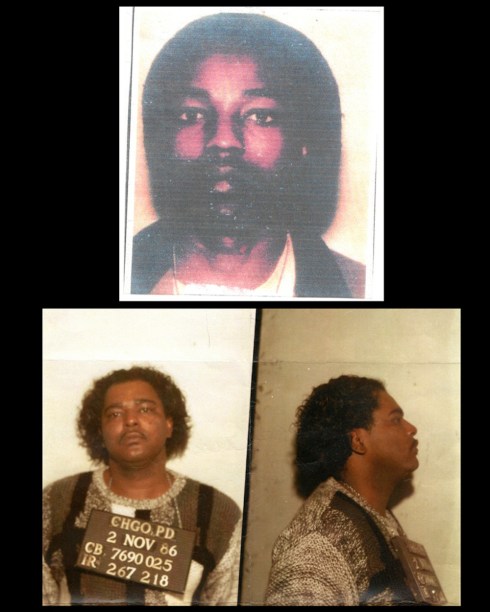
Request: “I would like to receive an image laser-printed on regular white paper photograph a myself off the internet without my criminal convictions or other information attached to the photo. I would like the three photographs I am sending to you copied onto digital paper that can be used in a computer enhancement. If someone can do this for me, I will appreciate it very much and thank you. If you can not do it send my photos back, please. “
TY10 Note: We completed this one and the IDOC censored it and returned it to us.

Request: “I would like a photographer to capture the image of a little boy and girl, sitting side by side, on a piano bench, the two of them playing together, with a single bright red rose on the piano keys. If possible, make sure the kids are anywhere from 3-7 years old, dressed in sunday best. It shall be a romantic photo, which I hope to give to my wife. 8×10 copy of the completed photo.”
TAMMS YEAR TEN & PHOTO REQUESTS FROM SOLITARY
The exhibition Photo Requests From Solitary is on show until the 21st December, at the Tamms Year Ten Campaign Office, Sullivan Galleries, School of the Art Institute of Chicago, 33 S. State St., 7th Floor, Chicago IL 60603.
The Tamms Year Ten Photos Requests From Solitary is supported by an Open Society Documentary Photography Audience Engagement Grant. In partnership with the National Religious Campaign Against Torture, the project is to expand to supermaxes in California and Virginia.
Tamms Year Ten is a grassroots coalition formed in 2008 to persuade Illinois legislators and the governor to reform or close Tamms supermax prison. Follow them on Facebook.
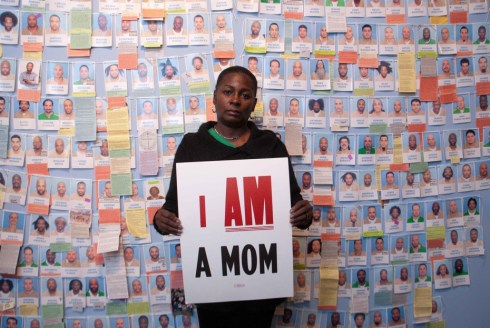
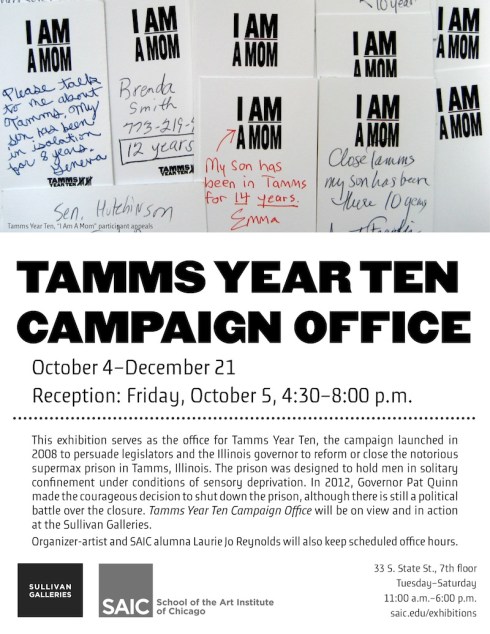
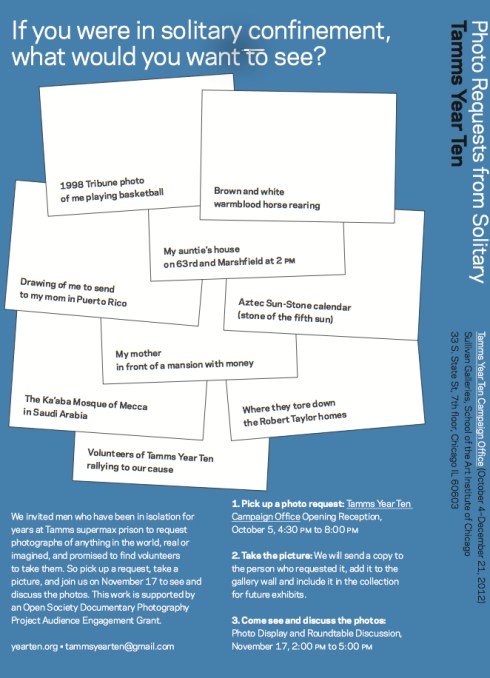

Photo: Roger May. (Source)
You’d think after 26 months in an Iranian prison, Shane Bauer would not be interested in seeing the inside of another cell. Think again. As I’ve noted before, Bauer is a journalist with human rights at the core of his stories.
Since his return to the U.S. he has been increasingly involved in describing the real problem we have with our approach to corrections. From Bauer’s Mother Jones feature piece:
I’ve been corresponding with at least 20 inmates in SHUs around California as part of an investigation into why and how people end up here. While at Pelican Bay, I’m not allowed to see or speak to any of them. Since 1996, California law has given prison authorities full control of which inmates journalists can interview. The only one I’m permitted to speak to is the same person the New York Times was allowed to interview months before. He is getting out of the SHU because he informed on other prisoners. In fact, this SHU pod—the only one I am allowed to see—is populated entirely by prison informants. I ask repeatedly why I’m not allowed to visit another pod or speak to other SHU inmates. Eventually, Acosta snaps: “You’re just not.”
Bauer excavates the policy and the logic, if you can call it that, used by the CDCR in their categorisation of prisoners and how those policies lands individuals in solitary. Pelican Bay State Prison, the oldest state-built Supermax, is Kafkaesque in its imprisonment of prisoners classified as gang affiliated. Bauer describes the *evidence* used by the CDCR in its case tying Dietrich Pennington to gang activity.
In Pennington’s file, the “direct link” is his possession of an article published in the San Francisco Bay View, an African American newspaper with a circulation of around 15,000. The paper is approved for distribution in California prisons, and Pennington’s right to receive it is protected under state law. In the op-ed style article he had in his cell, titled “Guards confiscate ‘revolutionary’ materials at Pelican Bay,” a validated member of the Black Guerilla Family prison gang complains about the seizure of literature and pictures from his cell and accuses the prison of pursuing “racist policy.” In Pennington’s validation documents, the gang investigator contends that, by naming the confiscated materials, the author “communicates to associates of the BGF…as to which material needs to be studied.” No one alleges that Pennington ever attempted to contact the author. It is enough that he possessed the article.
Getting out is a Catch-22 that is best described by Bauer than I.
For the longest time, there was a media blackout in California prisons and very few journalists got in to the SHU. I have heard from a few reporters and photographers this year who have visited Pelican Bay’s SHU but on a very tightly controlled media tour. Ultimately, Bauer wants to decode what purposes are served by solitary confinement. The CDCR argues it keeps prison violence down, but …
Prison violence fluctuates for myriad reasons, among them overcrowding, gang politics, and prison conditions. It’s impossible to say for certain what role SHUs play; what is clear is that in states that have reduced solitary confinement — Colorado, Maine, and Mississippi — violence has not increased. […] Since Mississippi State Penitentiary at Parchman released 75 percent of inmates from solitary in the mid-2000s, violence has dropped 50 percent. CDCR officials claim California is different because the gang problem is worse here, though they don’t have data to confirm this.
Bauer goes on to compare the correspondences he received as a prisoner with the letters he receives from Californian prisoners during his investigation. He describes the extreme psychological stress of solitary confinement and possibility of less labyrinthine regulation of SHUs with forthcoming CDCR policy changes (which may or may not transpire.)
He also offers readers to chance to contact the prisoners in the article.
Recommended read.
– – – – – – – – – – – – – – – – – – – – – – – — – – – – – – –
UPDATED: Oct 23rd, 2012
See Shane Bauer’s two-part conversation with Amy Goodman on Democracy Now – one and two – and his support for California Hunger Strikers alongside Sarah Shourd and Josh Fattal in Oakland, Oct, 2011.

© Nina Berman, from the series Homeland
Often the problems associated with large institutions is that they muster their own internal logic. Kathie Arseno’s account below describes a series of ridiculous actions, for which no single person in authority would surely want to take responsibility.
This account was sent to me by Nina Berman, with whom I spoke about Stop & Frisk. Astoundingly, Arseno’s account shows that the NYPD’s invasive policing commonly seen on the streets (Stop & Frisk) extends to the harassment of people in their homes (Arseno).
So, if you’re in NYC and are free in the morning head down to Bronx Criminal Court.
Dear Friends,
On September 3, 2011 I was arrested in the lower east side (Manhattan) for graffiti. I made a plea. I had to pay a fine of $145 and one day community service. Manhattan criminal court lowered my charges from graffiti to disorderly conduct. I have not done graffiti since my first arrest.
I do not have the approximate date but late in January I was arrested a second time. It was around 10pm and I was sleeping in my home. My son was with me. I get woken up by loud banging on the door. I wake up to four male officers at my door. I did open the door but just enough for them to see my face. Officer Pomrade stepped his foot into my apartment and I told him he is not allowed to do that, I did not invite him in and they did not have a warrant for my arrest. The officer became very aggressive and his supervisor told him to calm down. One officer was calling the precinct to see if I have any warrants. At this point I did let them into my home because I felt they were definitely not going to leave me alone. And the more I resisted they became visibly more agitated with me. The officer found out that I did have a bench warrant. My arresting officer said this automatically gives them the grounds to arrest me. They told me that I am being arrested for the graffiti I have done around the Bronx. I informed them that I have already been arrested and charged for graffiti in Manhattan. They said I am now being arrested and charged for the graffiti I have done in the Bronx prior to my first arrest. I began to cry because I was about to get arrested and my son was in the home. They let me call his father so he can be picked up. His father was on his way after I called.
When I got off the phone the officers asked me to come in the next day after work to the precinct so we can straighten everything out. They did not want to disrupt my family or my work. This will allow me to make arrangements to make sure my son was taken care of. I walked into the precinct the next day and was handcuffed as soon as I entered. I asked if this is going to happen anytime someone sees my tag. They said since my name and tags are in the system I can be charged for the graffiti I have done in that particular area. The officer told me not to worry, that I should not get arrested again as long as I stop doing graffiti.
I met with Vandal Squad police officers Zimmerman, Dwyer, and Ogilus. They said that I am not an artist they want to make an example out of. They were pressing me for information on other graffiti writers. They also charged me and stated that from now on I shouldn’t be arrested anymore unless I am caught red handed in the streets. They said in the rare case the police come to my home again to give them a call and they will help the situation. I was arrested on Wednesday early in the afternoon and did not see the judge until 8pm Friday night. I missed too many days of work. My next scheduled court date was for April 25, 2012.
On March 31, 2012 as I was soaking in the bath and baking cupcakes with a friend for a party I was going to have that evening, at approximately 9PM my son runs into the bathroom to tell me the police are at the door. I quickly jump out the bathtub and put only a t-shirt and basketball shorts. I step out my home to speak to the officers. My arresting officer asked if I was Kathie Arseno and when I responded yes he grabbed my wrist and stated to me that I am being arrested. In handcuffs I asked if they had a warrant and they did not answer. I asked why I was being arrested and he said “You know why you are being arrested.” Once in the precinct I was told the reason for my arrest. I was once again getting arrested for graffiti in the neighborhood. I became very upset and started protesting. I asked that they call Officer Zimmerman from Vandal Squad and to let me call my lawyer. I was never allowed to make a phone call. The officer was going to release me. I was having a conversation with another officer and he became highly upset stating that I think I can fool him. He threatened to have my son removed from me and actually called 911 and told them a crazy woman is having a breakdown when I refused to get up from my seat to walk into my jail cell. I asked for water but they refused to bring me any. I was interrogated for about an hour by a female police officer who was pressing me to share information on other writers if I want to be let out. I remained silent and they sent me to central bookings around 6am Sunday morning.
I was seen by the judge early afternoon on Sunday. My lawyer claimed double jeopardy and my case was dismissed without any charges.
On April 25, 2012 I went to court and the sentences they were trying to give me ranged from 5 to 90 days in jail with probation and community service. I did not accept any of the offers and my court date was adjourned for July 25, 2012. It still boggles me that I was caught red handed in Manhattan and was not charged with a crime but the Bronx has no evidence against me other than my prior arrest in Manhattan and I am facing these harsh sentences.
On May 18, 2012 around 10:15PM I had two police officers from the 44th precinct come to my apartment and try to arrest me for graffiti, again. I asked if they had a search warrant or a warrant for my arrest. They did not have any warrants so I did not agree to accompany them to the precinct. They told me I have two options, I can either voluntary go to their precinct or they will make a report to vandal squad and they will come to my home at anytime. I told them I will get in contact with my lawyer. And they left. I quickly emailed and left a message with my lawyer who advised me to remain silent at all times because they cannot keep arresting me for the same crime. She said she will get in contact with the A/DA assigned to my case to advise police officers to quit arresting me for the same crime. I have not had an officer come to my home since then.
On July 25, 2012 is my next court case at 9:30am. I am asking you to come to Bronx Criminal Court and show some support. My life has never been the same since my second arrest. Having officers come to my home three times to arrest you for the same crime has disrupted my family’s life completely. I even had to take a week off work after my last arrest because I could not sit through a meeting at work without breaking down in tears because of all the harassment and verbal abuse I had experienced. I literally had all my rights taken away from me in seconds. One minute I am home with my son and the next I am in a jail cell for a crime I already paid for. I know for a fact I am not the only one dealing with this type of harassment and I think its important for our community to make a stand and let them know that this is unacceptable.
Please forward this to any people or organizations who will like to show support.
Peace and Love, Kathie Arseno
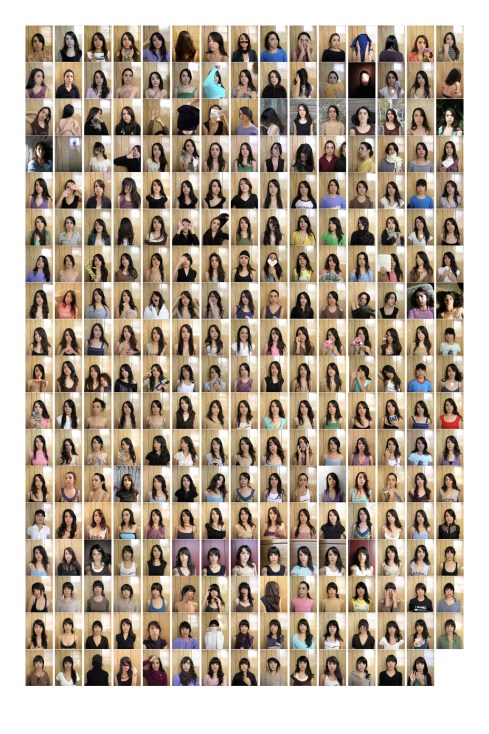
© Amy Elkins 269 self-portraits, part of Beyond This Place: 269 Intervals
Last week, I reviewed Photographs Not Taken (ed. Will Steacy, published by Daylight) for Wired.com. It is a book I have enjoyed thoroughly, which may seem a bit perverse as the majority of the tales seem to be about literal death and sullen loss. The other essays are all essentially about metaphorical death – death of an idea; the abandonment of an ideal; fractured and sudden awareness of mortality; or a shattering of photographer-bravado.
Bryan Formhals, many months ago, hollered for more writing by photographers. PNT would be the most recent, stand-out collection of essays to support that call.
PNT features two essays about prison.
Stefan Ruiz talks about his frustration with the limitations on camera during a seven-year stint teaching art at San Quentin State Prison.
“Most of the time […] I was a photographer in a visually amazing place with all these great subjects, and I couldn’t take a picture,” writes Ruiz.
Amy Elkins recounts a visit she and her brother made to see her dad in federal prison in 2005. She ends up describing a thousand or more photographs she didn’t take.
Call it compulsion, call it therapy, her response during the final 9 months of her dad’s imprisonment was to turn the camera on herself. Amy began making self-portraits began in 2006. Her self-portrait series, Beyond This Place: 269 Intervals became a mini internet sensation in 2007, by which time her dad was out but Amy was not out of the habit. Her self-portraits continue in Half Way There and Everybody Knows This is Nowhere.
“All three projects overlap with my father’s story,” says Amy “Half Way There continues as he lived in a re-entry house for 365 days under strict supervision. Everybody Knows This is Nowhere becomes more about re-entering the world and starting over. All in all I’ve shot over 6 years of these portraits.” Amy still photographs herself daily.
You can view the legacy blog posts here and Amy speaks about the relationship between her self-portraiture and family-life briefly toward the end of this conversation with Joerg.
AMY ELKINS’ PHOTOGRAPHS NOT TAKEN
We had been talking here and there. Once a week. Fourteen and a half minutes before hurried goodbyes were exchanged with uncertainty. It was our allotted time to share what we were experiencing. My new chapter in New York. His, in a federal prison, three thousand miles away. My father’s stories were endless. His seventy bunk-mates. Spanish ricocheting off of the concrete walls until it became static, white noise, a flock of birds. The mess hall. The books that had their covers torn off. The Hawaiian friend he made who sang like an angel. The night he woke to flashlights banging along the metal bunks, looking for inmates with blood on their clothes.
The teams that were formed. The chess matches and basketball games. Prison Break on the television in the rec room. The pauses in his voice. We had shared just under fifteen minutes a week for months from across the country. I mostly listened, the imagery leaping to mind, as his words came through the line. These were the things I wanted to make photographs of. By the time I actually had my one and only visit with him while he was in prison, my imagination had grown wild and I was so emotionally charged that I had to place my hands together in order to keep them from shaking, and to hide the amount of cold sweat pooling in them. There were metal detectors, x-ray machines, electronic drug tests, and questionnaires before my brother and I were led into locked waiting rooms, before we were led into a barbed wire walkway, before we were led to the visitors’ area. No cameras, cell phones, keys, wallets, jewelry, hats, purses, food, or gifts were allowed. Just myself, my brother, my father, and a small square yard of short brown grass containing picnic tables, a walkway, and vending machines, wrapped in barbed wire fences, two rows deep. My father, looking aged by stress, wore a tan uniform that seemed to fall all around him like robes. His hair had grown somewhat wild and was whiter than I remembered it. His eyes were youthful and tired.
The photograph was in my head. The moment of panic, of not knowing what to talk about or how to catch up in reality, while families reeled all around us with children and their mothers or grandparents. The vending machine coffees and board games. I longed for this moment to stay preserved, as if it would become more real if I could hold it captive on film.
Or that my story would be more intriguing if I could prove what it looked like. The photograph not taken, a portrait of what we had become, the fear that my family had failed me, the confrontation of unconditional love, a portrait of uncertainty. Instead, I sat with my hands tucked against the worn-out wood of the picnic tables, watching and listening to the sounds of what we were able to be for a moment.
THE SELF
The story runs deep. But how about the images? There’s a touch of naivety in Amy’s self portraits, but no more than any other young artists sussing his or her emotions. The portraits are paired with quotes by her father delivered in those weekly 15 minute calls, a text/image play that adds some depth.
Whatever life these photos have had or will have, I’d like to think they’re ultimately for future generations of her family; mementos of the quirky granny who grew up in the first quarter of the 21st century; the favourite aunt with certainty of narrative but evidence of younger faltering.
After all, we might be miffed if we missed that shot of those things over there, time and time again, but we have no excuse for not recording ourselves. We might hit old age and regret not having the photos to match our memories.
Short-sighted folk may criticise 269 Intervals for its seeming indulgence or vague manipulation; it is strange that images to represent a family temporarily smashed apart by the efficiency of the law are of a pretty las (occasionally in a state of undress) but take a long sighted view and admit you are intrigued by photo-a-day projects. Who hasn’t thought about doing one themselves? … If only you I had the discipline. Between Kessels, Karl Baden, Hugh Crawford, Noah Kalina and Homer Simpson, Amy is in good company.

Amy Elkins was born in Venice Beach, CA, and received her BFA in Photography from the School of Visual Arts in New York City. Her work has been exhibited nationally and internationally, including Kunsthalle Wien in Vienna, Austria; the Carnegie Art Museum in California; and the Minneapolis Institute of Arts in Minnesota. Elkins is represented by Yancey Richardson Gallery in New York, where she recently had her second solo exhibition.
As you may know, I’ve recently relocated to Portland, Oregon. The Portlandia TV comedy narrative would have you believe this is a town full of loveable counter-culture stereotypes; under-employed dreamers, kombucha-swilling hippies, and coffee-obsessed yoga-rock-climbers, to name a few.
But …
PORTLAND IS NOT PORTLANDIA
It is fair to say that on the West Coast, the tech boom of the nineties – centred on Seattle, San Francisco and Silicon Valley – bypassed Portland. And the joke is that people pursued fire-eating, tattoos and weed instead of HTML and Java-code.
But Portland is not a harmless bubble populated only by self-aware, contented contrarians. Portland has the same problems with failing schools, violence and inequality as many large U.S. cities. Furthermore, the State of Oregon as a whole has seen dwindling public funds for education as measured against its burgeoning law enforcement and corrections budgets.
As a reality check, I’d like to recommend two articles.
Firstly, Our preoccupation with incarceration costs us in education, by Naivasha Dean in Street Roots:
Oregon is one of only a handful of states in the nation that spends more money on prisons than on higher education, a statistic that is often met with dropped jaws by students struggling for financial aid. The Department of Corrections has been one of the fastest growing state agency budgets that is eating up an ever-increasing percentage of the state’s General Fund. This does not bode well for Oregon’s future and represents a deeply misplaced set of priorities and an archaic approach to addressing crime and public safety.
Why is Oregon’s prison spending so out of control? Oregon can trace the trend directly back to 1994, when voters approved Ballot Measure 11. Measure 11 established mandatory minimum sentences for approximately 20 “person-to-person” crimes, and it automatically sends youth charged with any of those crimes, aged 15 and over, directly to adult court. Mandatory minimums are a one-size-fits-all approach to criminal sentencing that prevent judges from using their discretion and prevents Oregon from using smarter approaches to accountability and crime prevention.
Shortly after the passage of Measure 11, Oregon’s governor and legislature approved plans for more than 8,000 new prison beds, including siting for six new prisons. Since then, the legislature has authorized more than $1 billion for prison construction. As anticipated, Oregon’s prison population exploded — from 6,000 inmates in 1995 to more than 14,000 today, and the Department of Corrections budget more than tripled.

Secondly, Portland, the US capital of alternative cool, takes TV parody in good humor, by Paul Harris. This Guardian article, partly, dispels the temptation to get carried away with TV’s version of PDX life:
Portlandia is not the whole picture of life in Portland. Not everyone is white, urbane, child-free and in their 20s, or acting as if they are. In fact the city is 8% black and 9% Hispanic– communities that often live in poorer neighbourhoods that are gentrifying with newcomers who push out long-established families who can no longer afford rents.
Portland also has a problem with gang violence. […] One man who sees this side of Portland close-up is John Canda, founder of gang outreach group Connected. “I personally have been to 358 funerals,” he said of two decades working in the field. Connected, formed last year after a series of shootings, seeks to lessen violence by having volunteers walk the troubled streets, reaching out to Portland’s youth.
“Our message is talk with us. It starts with a greeting,” he said. For Canda, as a native black Portlander, the world of Portlandia and its concerns over recycling and organic food seem unreal. “It is like a parallel universe,” he said.
Graph courtesy of the Prison Policy Initiative.

Cruel and Unusual, an exhibition of prison photographs that I co-curated with Hester Keijser at the Noorderlicht Photo Gallery in Groningen, Netherlands closes on Sunday (8th).
You probably know about it because I haven’t been shy to promote it; it is one of my proudest achievements. I’d like to take this opportunity to share with you some thoughts on the Noorderlicht team and publish some installation shots. Part debrief, part abridged journal entries.
The show balanced two interrelated parts. One could not exist with out the other.
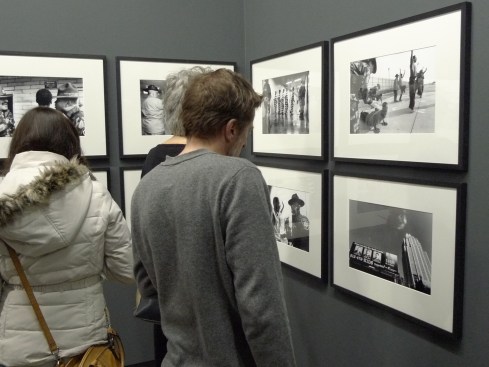
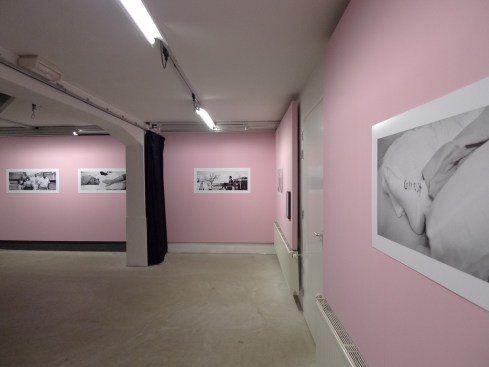
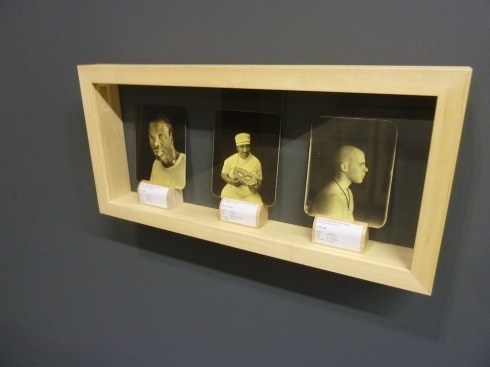
The main section of Cruel and Unusual looked exactly like a tradition photo show – ordered, framed prints of 11 named photographers. Cerebral and reliable. Mindful. The mind.
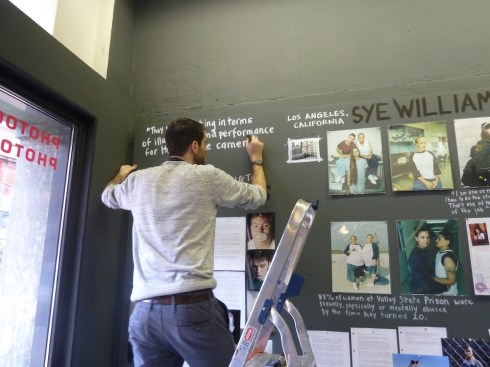
The counterpart was the PPOTR wall – a “mayhemic reflection” of some of the stories and images I encountered during Prison Photography on the Road. It included the photographs and quotes of another 18 photographers.
The PPOTR wall was messy, imperfect, unmediated, and attached to the core of my sprawling interest in prison imagery. It was the best solution Hester and I could think of to reflect our frantic immersion in international, blogging photo-territories. Physical, with tentacles, corporal. The body.
Body and the mind are inseparable. They communication with one another through a central nervous system. Noorderlicht, our host was backbone, nerve centre and sensitivity.
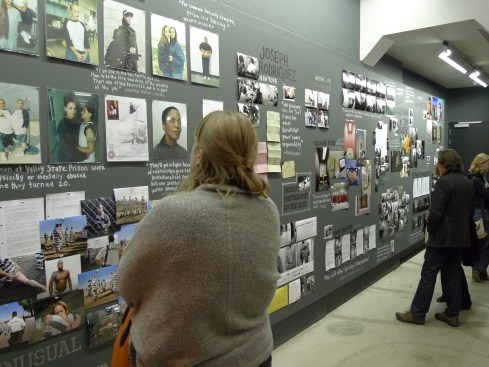

Outside of my home country (and my comfort zone) I clamped onto my host. Noorderlicht gallery connected mind and body; perfection with imperfection; polished ideas with raw, in-process threads; finished photographs with found stories.
The PPOTR wall was the first time I’ve tried to bring my sprawling project to some sort of overview suitable for visual consumption (lecture Powerpoint presentations excepted). As such, I was required to direct the PPOTR installation.
It is at the point of installation, one begins to appreciate the attitudes of the host and its staff.
As a practitioner with little experience in installation, the Noorderlicht installation team of Marco, Ype and Margriet were supportive without qualification, enthused, and willing to make gentle interventions when necessary. Their relaxed professionalism is one reflected through the organization from top to bottom. I worked with Charissa Caron on press liaison, with gallery director Olaf Veenstra on business decisions. Geert printed the work. There was always fresh coffee on hand. There were flowers in the gallery. At the opening they let dogs come in to see the artwork!
Noorderlicht is more than a workplace. It is a home.
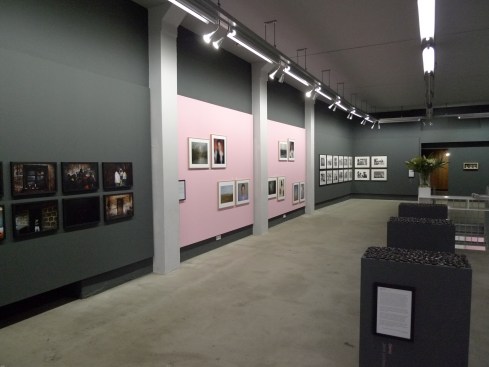


It was somewhat of a risk for Noorderlicht to commission two photobloggers to curate. Yes, we have the knowledge and the online networks, but blogging (writing emails, forging prose, editing online galleries) is very different to herding photographers and liaising with gallery staff for a physical show.
I should say that Hester is a much more accomplished gad about phototown with a long CV of collaborations and in the past year has taken on the role of curator at large for the Empty Quarter Gallery, Dubai. Her knowledge and discipline propelled the pre-show nuts-and-bolts organizing. Without her, I’d have been knocked on my arse early in the venture.
There is a reason Noorderlicht took a risk on us though. It is because they do it often. Noorderlicht is probably best known for its international photography festival. The size and reputation of their festival is astounding given the foundation’s modest size. Take a look through the festival archives and see how many big name photographers showed their work at Noorderlicht before they became big names. They are pioneers.
Groningen is in the north of the Netherlands, 3 hours drive from Amsterdam and the rest of the cultural heart of Holland in the west and south (den Haag, Utrecht, Lieden and Rotterdam). Because of this Noorderlicht often gets overlooked or pigeonholed. I think in some cases, folk might be slow to acknowledge Noorderlicht’s accomplishments. We know how London and NYC dominate the cultural psyches of the UK and the U.S., and I think a similar imbalance persists in the Netherlands. If I am in anyway correct – and I wish I were not – then this is everybody’s loss.
The risk paid off.
Cruel and Unusual was extended by a week due to public demand. Visitor numbers have been substantial and the Dutch press went doolally over it. National radio, newspapers, magazine features – the whole shebang.
This does not surprise me. For many reasons, the subject matter is compelling. But I think the show has been a success because there is a dearth of discussion about prisons in Europe. As grand an ambition it may sound, Hester and I hoped the show would be a warning shot across the bows of Europe: DON’T REPEAT AMERICA’S MISTAKES. DON’T MASS INCARCERATE! It would seem people were hungry for Cruel and Unusual because the topic was a challenging breath of fresh air. Much of the work was also being shown in Europe for the first time. As thrilling as photography can be, I think the show was a thrill.
At the opening, were visitors from Amsterdam photo circles. It was huge validation to welcome knowledgeable folk venturing such a distance from their reliable cultural locale. Another indicator of legitimacy.
I am grateful the show was a success. Prior, I didn’t think about it; I didn’t know how to define success with a show. And I don’t know what I’d have done if it had been a flop!
I’m happy for all the beautiful staff at Noorderlicht that it has worked out. Hester and I were treated like family. That’s not an exaggeration – I’ll leave you with the words of Ton Broekhuis, Noorderlicht Foundation Director as written to me in an email following my return to the U.S.
“Pete, you mentioned ‘being welcomed into the Noorderlicht family’. You did not mention leaving the Noorderlicht family, which is reasonable. Everyone who joins the family by free will makes – at the same time – a promise to come back. Family is family. It is forever.”


PRESS FOR CRUEL AND UNUSUAL
American Photo: “There’s a wide range of photography blogs on the internet, but how would it be possible to measure their impact on the real world? It’s difficult to see the offline effect of an idea published online. […] We’re interested to see what other ways photography bloggers choose to usher their projects into the real world, and Brook certainly sounds excited. “This is going to sound crazy,” he said, “but I’ve never seen these works any bigger than 600 pixels wide on a screen.” Spoken like a true 21st-century curator.”
Elizabeth Avedon: “Noorderlicht Gallery is producing a ‘must-have’ catalog for Cruel and Unusual, designed as a newspaper by Pierre Derks in an edition of 4,000. Along with visuals from the main exhibition, the catalog contains articles, interviews, ephemera and material from photographers Pete Brook encountered during his crowd-funded road-trip through the U.S.” (One and Two and Three)
Daylight Magazine: “What steps are being taken to productively rehabilitate inmates, rather than simply secluding them from society and releasing them once their term is up? The Nooderlicht Photogallery has curated a show from nine women photographers to explore the effect that mass imprisonment has had on our sense of justice and virtue.”
Marc Feustel: “Brook and Keijser write two of the most dynamic and esoteric blogs that you will find on the web. To state the obvious, prisons are not exactly a sexy subject and the fact that they have managed to put this show together is very impressive. Instead of a ‘traditional’ exhibition catalogue, the curators have put together a newspaper in an attempt to reach more readers than an expensive photobook could. The world of photography online can be an exasperating, sprawling mess, but the fact that it can lead to projects such as this one makes it genuinely worthwhile.”
Stan Banos: “If you’re interested in documentary photography and interviews with the top notch photographers who made the work, Cruel and Unusual [newspaper] is very much worth the look.”
Greg Ruffing: “How citizens (aka taxpayers) understand the prison system and life behind bars, and how do they formulate their thoughts and convictions about mass incarceration based on the information they receive (and where that info is filtered through)? Cruel and Unusual gets to the heart of that issue by examining how prisons and prisoners are presented in images, and how those images are created, distributed, and consumed.”
Colin Pantall: “It is testament to how the internet and blogs are having a real impact that is breaking new ground and making new visual discoveries and connections.”
No Caption Needed: “Cruel and Unusual will provide another occasion to consider how the carceral system condemns those within and without, and how photography can reveal and build relationships where before there was only confinement, within and without.”
re-PHOTO: “Regular readers will know that I’ve often mentioned Pete Brook’s Prison Photography blog on these pages. He’s someone who has often raised interesting issues, both photographic and political, and the forthcoming show Cruel and Unusual at Noorderlicht which he is curating together with Hester Keijser looks to continue in that vein.” (One and Two)
Lens Culture
Eastern Art Report
La Lettre De La Photographie
Wayne Bremser
GUP Magazine
Dutch Press
FotoExpositie
FocusMedia
PhotoQ
Hamburg Art & Culture blog
Dutch free daily, De Pers ran a double spread of Scott Houston’s Arizona Female Chain Gang work. Dutch and Google translated English.
Noorderlicht has links to the De Pers article as a PDF and also a PDF of the Vrij Nederland feature on Alyse Emdur’s work (Dutch only)
Hester did three interviews for Dutch Radio
Radio Netherlands Worldwide
NOS, Netherlands Public Radio (Dutch only)
VPRO, Netherlands Public Broadcaster (Dutch only)
*Auto-Press*
Hester with the announcement and the backstory, and Hester reflecting on the churn that was newsprint catalogue design and production.
Prison Photography: Announcement, thoughts on the newsprint catalogue, newspaper distribution.
And finally, a Feature Shoot interview I did with about how the road-trip and exhibition have shaped the Prison Photography “Project”.

There’s not a lot of humour to be drawn from America’s Prison Industrial Complex but, still, I made an attempt with an hours worth of April foolery and sarcasm:
Pleased to announce my new job! Special Reporter on Criminal Justice for FOX News. #FairAndBalanced
— Prison Photography (@brookpete) April 1, 2012
Justice Clarence Thomas to learn more about Juvenile Life Without Parole by committing his eldest grandchild to solitary confinement.
— Prison Photography (@brookpete) April 1, 2012
Marriott Group to partner with Bureau of Prisons to “develop a model prison that actually operates like a hotel.” #FairAndBalanced
— Prison Photography (@brookpete) April 1, 2012
Sweet-toothed Montana prisoner baffles authorities by smuggling a Cake into jail by hiding it inside a File. #FairAndBalanced
— Prison Photography (@brookpete) April 1, 2012
Pro-Death Penalty group’s report finds retribution is good for dopamine levels, maintaining shared standards on hypocrisy, national economy.
— Prison Photography (@brookpete) April 1, 2012
In Prison, and in Act of Ascetic Piety, Rod Blagojevich Stitches His Own Quiff Into Hair Shirt. #FairAndBalanced
— Prison Photography (@brookpete) April 1, 2012
CA families happy to take 16 hr roundtrip to visit imprisoned men in high desert prison, know that the air is “good for them”, report finds.
— Prison Photography (@brookpete) April 1, 2012
Prison college education programs proven to reduce recidivism by exactly the same amount the public doesn’t care about. #FairAndBalanced
— Prison Photography (@brookpete) April 1, 2012
For purposes of int’l press relations, U.S. senators approve SUPERJAIL portrait to represent nation’s prisoner class: 0.tqn.com/d/animatedtv/1…
— Prison Photography (@brookpete) April 1, 2012
Alcatraz Prison was not as impervious as legend has it, study shows. Throughout operation, Gift Shop represented a continuous security risk.
— Prison Photography (@brookpete) April 1, 2012
Tensions rise as diplomats from U.S., China, Iran & Saudi Arabia continue to disagree on the best methods to use to kill their own citizens.
— Prison Photography (@brookpete) April 1, 2012

 Prison Photography