image05

He went back every year for four years. Between 2007-2010, photojournalist Louie Palu made six trips to Guantanamo. Not quite a compulsion, but more of a requirement, Palu had to go. He’d photographed in Afghanistan and it made sense that he’d take  opportunities to document America’s chosen *homeland* site for its Global War On Terror (GWOT). Guantanamo is another piece in the puzzling puzzle of war against an expanding list of enemies. It is more contained and less flash-bang than any theater of war, but no less violent. Inside Gitmo, coercion and so-called Enhanced Interrogation Techniques do the damage, replacing mortars and EIDs.

Why did Palu go? We know Guantanamo is so controlled that a photographer’s work is compromised. And yet, he returned time and time again. Perhaps he though he’d be the one reporter who’d see the nugget, catch the frame and get out of there with the shot? Not so. After every visit, all photographers are required to hand over their DSLRs. A member of the Joint Task Force will look over all images and delete any that don’t meet military rules. The photographer is given forms with each digital file number listed individually. The procedure is called an “Operational Security Review.”

Palu’s latest publication GUANTANAMO: Operational Security Review is a 24-page conceptual newsprint publication. It combines his Gitmo images with scans of the official forms. It is available at Photoeye Books.

GUANTANAMO: Operational Security Review is abstract, elusive and slippery … which I think is the point. I asked Palu a few questions about it.

Scroll down for our Q&A

[Click any image to see it larger]

image03

Q&A

Prison Photography (PP): Why did you ever want to go to Guantanamo?

Louie Palu (LP): The detention center at Guantanamo Bay is one of the most infamous results of the “War on Terror” — the most internationally known detention facility of our time. I’ve always been interested in the relationship between history, political events and the human experience. Especially, I am engaged by events or issues that define our time politically.

9-11 and Guantanamo will forever be connected. I am also fascinated by the legal and morale paradox that Gitmo, as it is known, represents in the face of the U.S. Constitution with regards to detaining people indefinitely without trial.

PP: You went many times. Why stop?

LP: Relatively speaking the access went from good, to getting better, to very poor and finally I gave up. I follow Carole Rosenberg’s reporting in the Miami Herald, she is perhaps the best source of reporting on Gitmo there is.

PP: She recently spoke at Columbia Journalism School about her professional experience covering Guantanamo. I follow Rosenberg on Twitter too.

LP: In a recent report she did, it seems the current military public affairs unit there has become exceptionally difficult to work with. I would like to go again, but it looks impossible to work there right now.

Normally each trip lasts four-days.

Day 1: Fly in and get settled. Day 2: Tour various parts of the detention center. At the end of each day everyone goes through what’s called an “Operational Security Review”, also known as an OPSEC Review. In my case as a photographer this involves the deleting of certain photographs right off my memory cards. Basically anything that reveals security features of the prison or direct frontal views of the detainees faces is deleted. Day 3: More touring the facility and more photography and one more OPSEC Review. Day 4. Fly home.

I did do two special photo tours years ago. Most tours have writers as part of the tour group and you can spend hours in areas of no interest to photographers. One of these special photo tours in particular was I think the best access ever for a civilian photojournalist. I think I hold the record for longest OPSEC Review ever, it was an all-nighter! I don’t think they’ll give a tour like that ever again and a number of areas in the prison are now closed and access to the detainees is very limited and basically everyone gets the same photographs now.

PP: You’re a wisened, experienced photojournalist. What did you expect from Gitmo? What did you get?

LP: I try not to expect anything from any assignment, subject or project except that I will do my best and that I am personally engaged in the subject matter. Beyond that, I hoped to make pictures that would last as documents to an important subject in our history.

I think that the manner in which we are forced to take pictures with extreme control should be a part of the history. The control on how I took pictures and the limited access made the images and approach unique. That is what my concept newspaper is partly about.

image02

PP: We’ve stopped taking about Guantanamo ever since we realized Obama couldn’t/wouldn’t close it down. Why is that? Where does it leave your work?

LP: When you say “we” I would take that as mostly the general public, many journalists keep talking about Gitmo and it’s impact and implications. Though relatively speaking I agree people seem to have disengaged from the issue.

However, we have to understand that Guantanamo Bay is a recruiting poster for many extremists and terrorists and it will continue to be especially while it is open. Take for example the video ISIS (aka ISIL, IS) made of journalists they are executing in Iraq/Syria. The journalists are on their knees in orange jumpsuits. In my mind it’s a copy of the same imagery of the first images released by the U.S. government of detainees in Guantanamo in orange jumpsuits right after 9/11. The image the detention center at Guantanamo Bay paints of America goes against every value the United States stands for in my opinion. So long as the detention center at Guantanamo remains open and the detainees are not given a trial, the United States will have a hard time holding any moral high ground on human rights. It makes it a very serious issue to continue to try and find a solution to. If I interest only a handful of people to keep talking about it I did my job.

The reason I think that we stopped talking about Gitmo is also limited access to the detainees by journalists being one reason and right now there is no shortage wars and disasters of all kinds to deal with, plenty of “fog of war” to keep us off the issue that challenges one of the core value systems of the United States, which is the constitution.

The eyes of history will judge my work years from now. For now, I am satisfied to have published the work and kept the issue in the public’s eye, no matter how small a contribution I have made. From the point of view of a photojournalist the newspaper is a part of that.

PP: Briefly, tell us about your decision to go with a newspaper format to publish the work from Guantanamo.

LP: Well, I had a fellowship with a think tank in Washington DC called the New America Foundation, which involved covering the Mexican drug war. I created a concept newspaper called Mira Mexico. I created it so you could take it apart and re-edit the order of the pictures and also hang it as an exhibition. It was meant to directly engage the viewer to understand how our images are controlled by governments and the media. It’s about the manipulation and our perception of an issue. It’s explained in this video.

Creating an object as something that goes beyond the news cycle is important to continue to engage the public in on important issues. The newspaper format is important in challenging not only traditional formats of news, but also the manner in which we consume information and the platforms we see them in. You can also hang it as an exhibition as each spread is a poster and you can turn it into an educational lesson in editing or controlling pictures. GUANTANAMO Operational Security Review is the part two to my first concept newspaper on Mexico. I am also making a statement in making a newspaper in which the only content is Guantanamo Bay. No advertising or competing content. I edited out every other story.

image04

PP: What do you hope people take away from GUANTANAMO Operational Security Review?

LP: Well the project has a two-fold purpose. One, obviously it is meant as an artist’s concept fused with journalism to continue to engage the public in a dialogue on the issue. Second, it is meant to challenge the modes in which we are delivered our content and who the gate-keepers are to our news. We need to always ask, who are the editors, curators and or censors we don’t see or ask enough about that shape the way we understand the world through photographs?

I am about to go on a workshop/lecture tour through universities in Canada and the U.S. just as I did with the Mira Mexico newspaper. I’ll be using GUANTANAMO Operational Security Review in classes teaching visual literacy to students. It will be a workshop format where students will each have a copy of the newspaper and re-edit and present to the class why they selected the images they did on Guantanamo. I think empowering young minds to understand how their opinions are manipulated by the use or misuse of photographs is critical to our future.

PP: How does GUANTANAMO Operational Security Review relate to your other bodies of work and areas of interest?

LP: I try to create multi-platform uses for my work and always engage a topic over a long period of time, and usually beyond any news-cycle. My average project lasts between 3-5 years. My first one lasted 15-years. But that won’t happen again!

PP: You must have looked at plenty of other photographer’s work on Gitmo. Who else has done it well?

LP: Actually, I haven’t! I have seen a handful of wire photos from there that are not my style of work, but gives a base of understanding of how news photographers have had to work there. I also have seen numerous art based documentary photographers do bodies of work there, in the end they have all taken many of the same photographs because of the strict control over access. I don’t think anyone has done it “well” including myself since the access is so controlled and photos are deleted. There are sections of the newspaper that deals directly with that issue — the *age of extreme image control* is one of the main layers of meaning in the newspaper. The newspaper is, an object and document that says my access and images were controlled on this issue.

I can’t show you how Guantanmo really is. However, with the newspaper maybe I can show you how it was for me. That is why I created it.

PP: Have you any thoughts (regarding visibility, perhaps?) about how Guantanamo relates to America’s extrajudicial prisons around the globe?

LP: Digital photography is a blessing and a curse. Media campaigns and disinformation operations are easier now than ever. The newspaper is also about photojournalism. You know photojournalists control what we see as well, editing can be seen as censorship by some media critics.

Let me explain, it’s about interpretation of what we are doing, right? If I take 1000 photographs on assignment and I edit only 15 for you to see, what do you call that editing or censorship? This newspaper questions photojournalism as a whole and everyone involved in it including me.

PP: How will Guantanamo end?

LP: I don’t know how Guantanamo will end. Even if it does end as a physical structure, it has become visually symbolic for extremists, they have turned government released visuals linked to the detention center into a disturbing propaganda tool. Events and places like the detention center at Gitmo are never looked at very kindly through the eyes of history.

PP: Thanks, Louie.

LP: Thank you, Pete.

image01

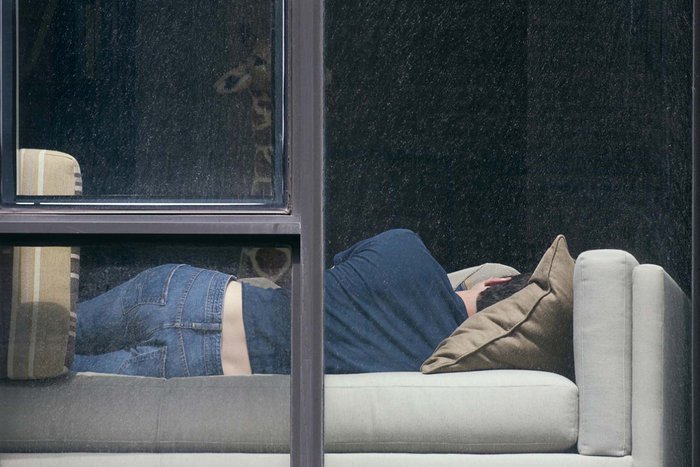
Svenson_Neighbors_11

Arne Svenson, The Neighbors #11, 2012 © Arne Svenson, Courtesy Julie Saul Gallery, New York

The Prying Eye Of The Public Lens, a response piece I wrote for the Carnegie Museum of Art’s Hillman Photography Initiative was published earlier today.

A greater cynic than I might argue that Arne Svenson was working for the state when making photographs of his neighbors. One might suggest this not because there is any inherent value, lest any valuable information about the individuals within the snooping shots, but rather, because the brouhaha that erupted around the exhibition of The Neighbors at the Julie Saul Gallery was a distorting and damaging version of the ongoing conversation about privacy in our society.

I go on to explain how the protestations of Svenson’s (very affluent) neighbours, lawsuits and public outcry derailed us from actually seeing the more pernicious and invasive layers of surveillance we are subject to daily … and especially in New York city.

Read the 1,200 words here.

THE HILLMAN PHOTOGRAPHY INITIATIVE (HPI)

The inaugural HPI at CMOA “investigates the lifecycle of images: their creation, transmission, consumption, storage, potential loss, and reemergence. Technology accelerates the pace of this cycle, and often alters or redirects the trajectory of an image in unexpected, powerful ways.”

Transition and consumption: Love that. I’m proud to be associated with CMOA’s broader consideration of images within society. HPI is getting inside the bloodstreams of the media and changing the discussion.

2

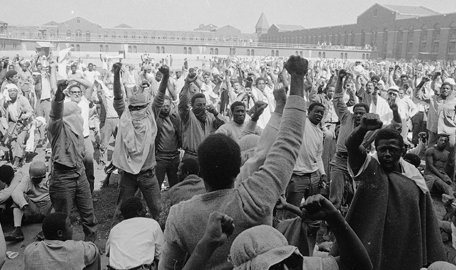
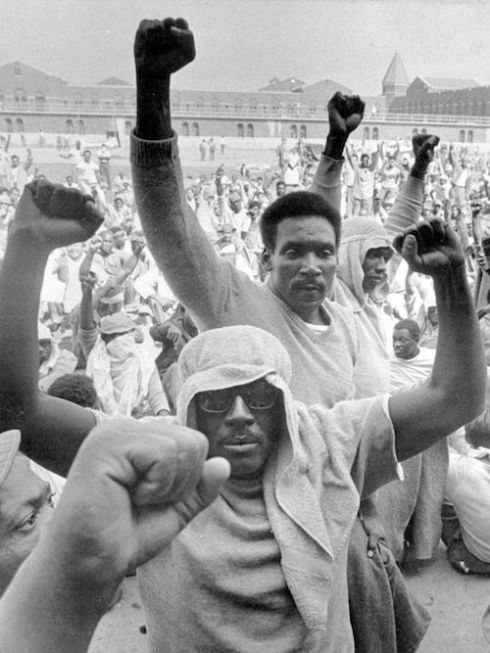
Photo: Bob Schutz. Inmates at Attica State Prison in Attica, N.Y., raise their hands in clenched fists in a show of unity, Sept. 1971, during the Attica uprising, which took the lives of 43 people.

Last week marked the 43rd anniversary of the historic Attica Rebellion. In conjunction with the anniversary, Critical Resistance New York City (CRNYC) has launched the Attica Interview Project, to support prison closure organizing in New York. CRNYC is looking for people with personal archives stories and will collect and facilitate oral history, video and audio recordings, and still images.

CRNYC’s documentation is grounded in a philosophy of self-representation.

“People who participate determine how and when they are photographed and recorded,” says a CRNYC statement. “We strive to represent interview participants not as victims, but as agents of social change struggling individually and collectively to improve their lives and conditions.”

ATTICA INTERVIEW PROJECT

Bryan Welton, a member with Critical Resistance New York City wrote:

At the time of the rebellion, the US prison population was less than 200,000. On the fourth day of the prisoner-led takeover of Attica, September 13th, 1971, then-Governor Nelson Rockefeller deployed New York State Troopers to set murderous siege on the prison. A campaign of sustained terror and repression to restore the power of guards and administrators at Attica followed. The systematic attack against the gains won by struggles inside and outside prison walls, which nourished the spirit of revolt in Attica and the broader prisoner movement of the period, parallels the rise of the prison industrial complex to where we stand today. Few people then imagined that the imprisoned population in the US would explode to 2.4 million.

The Attica Rebellion developed not only in response to conditions of dehumanizing racism and violence in the prison, but was strengthened by the confluence of imprisoned revolutionaries from Black liberation, Native and Puerto Rican anti-colonial, and anti-imperialist movements. The demands articulated by the Attica Liberation Faction unleashed an abolitionist imagination that continues to propel prisoner-led struggles up to today. Through oral history, the project seeks to document the legacy of repression, survival and resistance at Attica, while using material to shape a broader narrative about the PIC and abolition and fuel ongoing demands to close Attica.

Supported by sentencing reforms won through organized opposition to the Rockefeller Drug Laws and fights over deadly conditions in New York prisons and jails, prison populations in New York have decreased by 15,000 people since 2000. This decrease combined with the costs of maintaining staffing and infrastructure for empty prisons moved Governor Andrew Cuomo to close nine prisons in four years, with four more closures projected within the year. Although dispersed across the state and including both men’s and women’s prisons, what is common among these closure targets is their classification as minimum or medium security prisons holding people convicted of low-level drug offenses and “nonviolent crimes.” As we seize on any and all opportunities for prison closures, we understand the threat of cementing the “worst of the worst” classification for people held in maximum security, supermax and solitary confinement units and how the deepening of that logic enables the disappearance, dehumanization, torture and death of people in prisons everywhere. This criminalization is being amplified as prison-dependent economies, from the political representatives of prison towns to the 26,000 member guards’ unions (NYSCOPBA), desperately mobilize against decarceration and prison closures.

The stories of resistance, resilience, and struggle coming from the survivors of Attica and prisons across the country can offer not only a reminder of the history in which our movement is rooted, but a signal fire of which direction we should head. In the words of Attica Brother, LD Barkley, “The entire prison populace has set forth to change forever the ruthless brutalization and disregard for the lives of the prisoners here and throughout the United States. What has happened here is but the sound before the fury of those that are oppressed.”

CONTACT

To get involved contact:

Critical Resistance New York City
212.203.0512
PO Box 2282
New York NY 10163
Email: crnyc@criticalresistance.org

19

Attica Riot Documents

Photo: AP. Prisoners of Attica state prison, right, negotiate with state prisons Commissioner Russell Oswald, lower left, at the facility in Attica, N.Y., where prisoners had taken control of the maximum-security prison in rural western New York. Sept. 10, 1971.

1

THE NEED

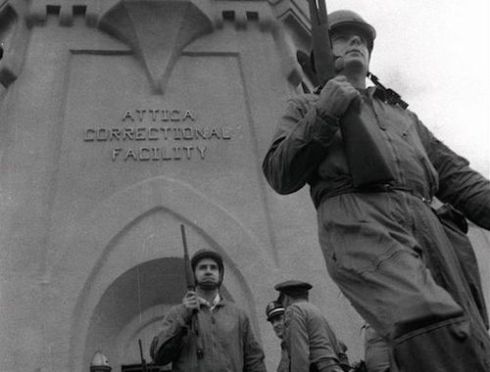
Such a careful approach and revisiting of Attica’s history is timely and essential. An accurate version — and not the official state version — must be established. Following Attica, there were a number of inquiries (for example, Cornell Capa’s photographic survey of the facility here and here), however, not all inquiries met or served public need. Suspicions of a cover up of excessive violence and extrajudicial murder during the retaking of the prison have been constant.

The second and third parts of the Meyer Report (1975), an investigation of a commission headed by New York State Supreme Court JusticeBernard Meyer, were sealed and never released to the public.

The Democrat & Chronicle reports:

The focused on claims of a cover-up of crimes committed by police who seized control of the prison with a deadly fusillade of gunfire. Those allegations came from Assistant Attorney General Malcolm Bell, who had been part of an investigation into fatal shootings and other possible crimes committed during the retaking.

Wikipedia, quoted civil rights documentary Eyes On The Prize, triangulates the claims:

Elliot L.D. Barkley, was a strong force during the negotiations, speaking with great articulation to the inmates, the camera crews, and outsiders at home. Barkley was killed during the recapturing of the prison. Assemblyman Arthur Eve testified that Barkley was alive after the prisoners had surrendered and the state regained control; another inmate stated that the officers searched him out, yelling for Barkley, and shot him in the back.

It is believed parts two and three of the Meyer Report detail grand jury testimony given during an investigation into the riot and retaking. Late last year, a New York judge ruled the documents could be opened. It came at a request of Attorney General Eric Schneiderman. The majority of people are in support of the move, understandably given the length of time since the murders. The state troopers are opposed.

It’s high time the people had access to the same information the state has had for nearly four decades. Only then can we confirm or dismiss a state cover-up and the protection of law enforcement individuals and those from whom they took orders, namely then-Governor Nelson Rockefeller.

9

Photo: Goran Hugo Olsson. Source.

18

Bobby Seale, 11 Sept 1971. Seale, co-founder of the Black Panther movement, was brought in at one point during the rebellion to help with negotiations.

16

A prisoners’ make-shift hospital during the rebellion.

Source: Salon, Empire State disgrace: The dark, secret history of the Attica Prison tragedy

7

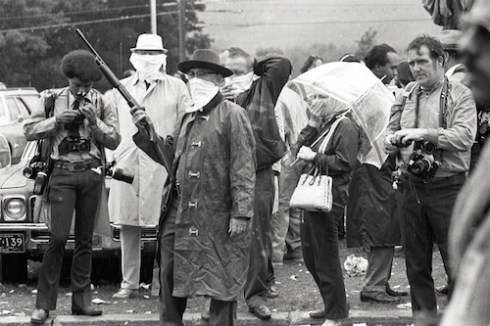
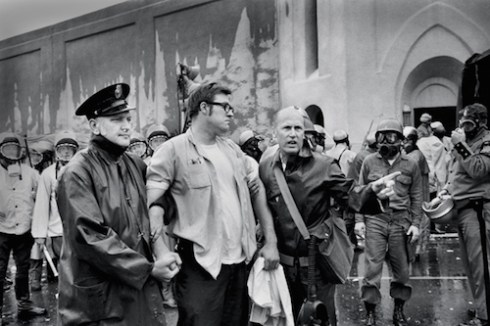
Law enforcement, civilians and press cover their nostrils from the airborne teargas following the state’s storming of Attica Prison, Sept. 13th, 1971.

5

17

Photo: John Shearer. Law enforcement escort a prisoner out of Attica following the storming of the facility.  (Source)

14

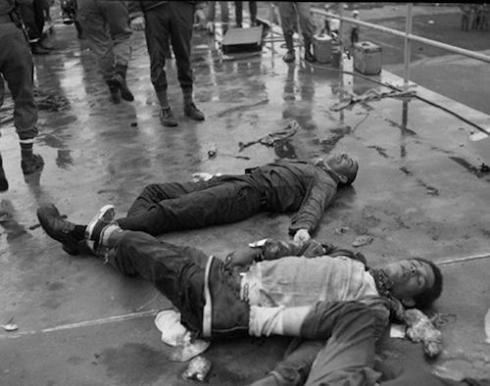
This gruesome photo is one of several of murdered corpses included on this webpage. The images are uncredited, so I cannot verify there veracity. I’ve not seen them elsewhere. The boots, railings and sunken yard look consistent with Attica.

6

15

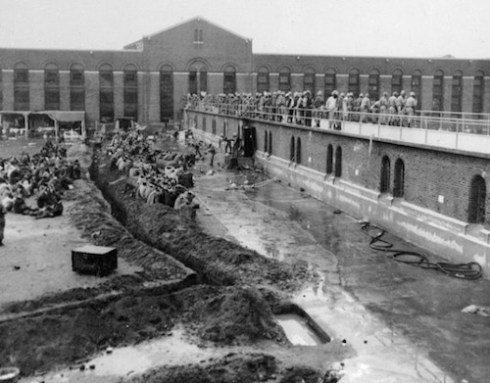
Prisoners are regimented following the state’s retaking of control of Attica Prison. (I have no idea when the trench was dug, by whom or for what purpose).

8

4

An injured prisoner is assisted out of D-Yard, following the state’s teargassing and assault upon the prisoners.

12

The aftermath.

13

Clean up.

RESOURCES

There’s so much out there online for you to dig into, so I humbly recommend these starting points:

Attica Uprising 101, is the best brief description of the events those 5 days in September 1971.

Forgotten Survivors of Attica, a group of guards and prisoners’ families alike who are in search of transparency and believe there was a state cover up.

Project Attica, a recent project with school children to teach them about racial politics, oral histories and Black America using Attica as a prism through which to do so.

Attica Rebellion Film Collection

Here is one of the better collection of images online in a single place.

Finally, I’d like to know if these photographs of prisoners’ corpses can be verified as being from Attica on the 13th, September, 1971. They are presented as images of those killed as a result of the state assault on the prison.

14774318399_fc8446284d_z

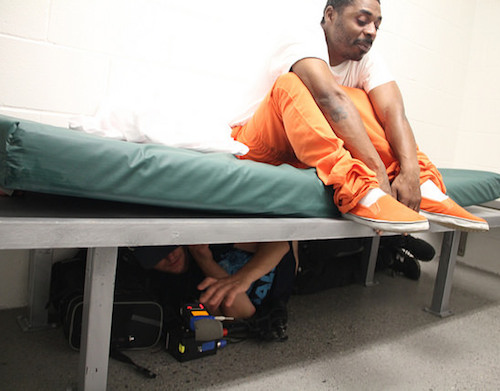
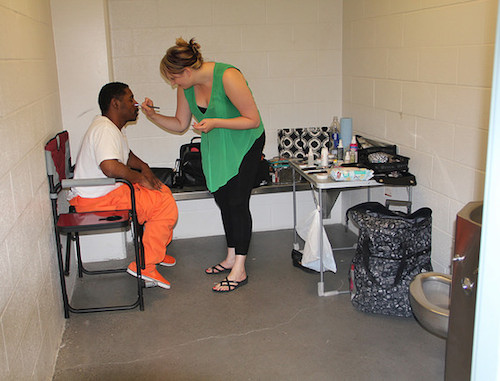
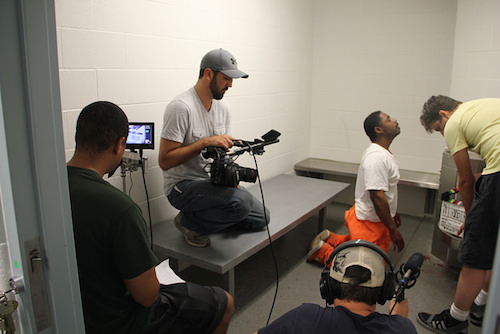
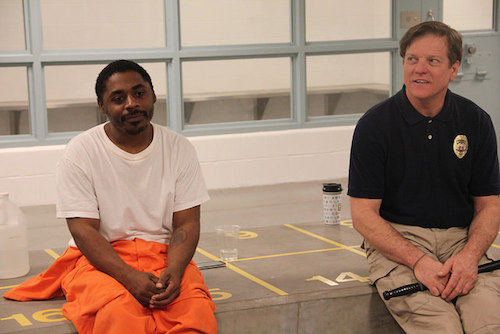
At first glance, the image above looks like the usual press photograph of a suspect accompanied to the stand, being escorted between holding cells and a courtroom. Alternatively, it could be a scene from inside a jail. Jumpsuit, shackles and guards are glaring visual clues and we think we know what we are seeing. But, in most cases we don’t. And in this case were aren’t. This is a photo from the set of the in-production web series wHole, for which filming began last month at the vacant Wapato Jail in Portland, Oregon.

wHole, made by Think Ten Media and directed by Ramon Hamilton (who is actually to the left in this picture) aims to raise awareness about the sensory deprivation and widespread use of solitary confinement in American today. The limited information this fictional scene provides us is akin to the limited visual information available to us generally of solitary confinement in America’s prisons. (Aside of photography, we must recognise there is currently a good swell of great advocacy journalism about solitary, not least by Solitary Watch).

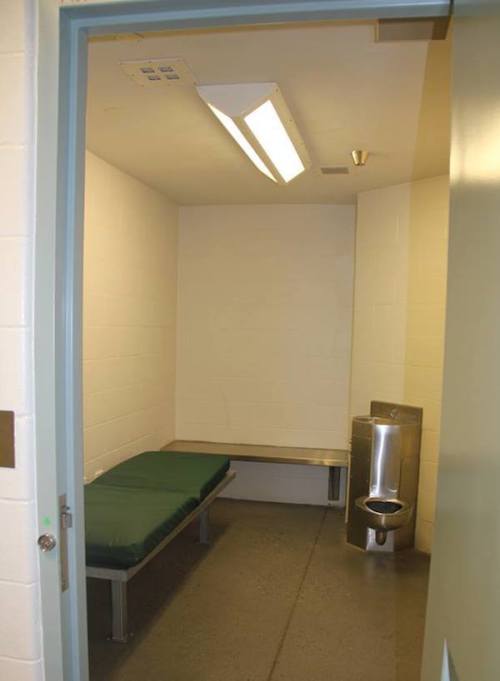
Even though Wapato was designed as a medium-level-security county jail. Think Ten Media thought it a worthy location for depicting Supermax facilities. wHole might be the only good thing to come out of this waste of space and money.

14958014021_437c68453d_z

In 1996, the taxpayers of Multnomah County (Portland, Oregon) approved a bond measure to build a 168,420-square-foot, 525-bed jail back, but county leaders never set aside money to open and operate it. Construction was completed ten years ago at a total cost of $58M. Wapato was a bad idea to start with, but changes in legislation and a drop in crime proved it a terrible idea. The jail never went into operation. Don’t get me wrong, it is a good thing that no-one has been locked up at Wapato, but it is a terrible thing that it was built in the first place. What could have that $58M (plus the $3M of tax payers money spent over the past decade to merely to maintain the place) achieved in terms of rehabilitation, jobs training and addiction treatment?

Last year, sensible suggestions such as repurposing the jail as a drug rehab center, a homeless shelter or a community center were invoked but didn’t develop. More recently, the county made concerted efforts to sell the jail and get it off the books. In a typical Portlandish well-meaning, transparent but somewhat comic and farce-like public relations stutter, the county called for proposals from companies and citizens alike and then promptly rejected them. The proposals? Some people wanted to make a community garden for at-risk youth, other a prison for international war criminals. A TV production company wanted to make a reality TV show and a private prison firm wanted to use it and use it for you can guess what.

There has been a persistent myth in Portland that Wapato sat empty and was never used for any type of revenue raising, including the exploitation of opportunities presented by the many production companies wanting to film at Wapato. That’s simply not true. Maybe, more filming and more money could’ve been supported, yet, speculation aside and to date, wHole is the 32nd project filmed there int he past 6 years.

That wHole is about mass incarceration makes it, in my book, the most worthy of projects. When the nearly two-month-long California Prisoner Hunger Strike kicked off in the summers of 2011 and 2013, filmmakers Ramon Hamilton and Jennifer Fischer knew they wanted to make a project about solitary. wHole is intended to be “raw and real.”

The locals are excited about the future impact of wHole, which is a far cry from Orange is the New Black. While no mainstream TV show has depicted prisoners so sympathetically, Orange Is The New Black carries its fictional aspects and as such doesn’t reflect reality.

I wanted to know more about how you get into a jail to film and so asked Jennifer Fischer, Think Ten Media co-founder, a few questions.

Scroll down for our Q&A and then further still for more information on the project.

6

14958044081_b9e89d486e_z

4

Q & A

Prison Photography (PP): How many vacant jails or prisons are there in the U.S. in which to make feature films or TV series?

Jennifer Fischer (JF): I am not sure. I know Fred C. Nelles Youth Correctional Facility is used often for filming by productions in the Los Angeles Area. I believe Hancock shot there, and there’s lots going on with it right now.

PP: Why did you choose Wapato?

JF: There was really nothing like Wapato Jail that was reasonable in terms of cost. There is a facility in New Jersey I recall Five mentioning to me. I lost all of my research notes about prison locations when my hard drive crashed recently!

We looked into shooting at Nelles and at other locations, but all were prohibitively expensive for our project being made on a limited budget. There were other challenges, such as no running water or electricity, the requirement of a water truck on site.

Some active prisons and jails are often used for filming! But with these locations, if they need the cell you are shooting in, you get booted. At Wapato we’d have access to the entire facility.

PP: How was the process to secure use of the facility?

To secure the facility, we had to speak with Mark Gustafson, who is the property manager. He had a few questions, but the process was really pretty simple. The important thing was getting the correct insurance. Here’s the county’s property management webpage for Wapato jail.

PP: Were the rates reasonable?

JF: Yes, the rates are quite reasonable, basically covering the cost to operate — security guard on site, opening and closing of the facility and any janitorial costs incurred from our use.

In fact, we initially went up to Portland because of the [relatively low] cost of the facility. Before we went we were still considering building a cell somewhere in L.A. when the whole series was greenlit.

However, given how wonderful and support everyone in Portland was and how professional the local cast and crew were, we are now absolutely committed to being back in Portland at Wapato to shoot the entire show.

Scroll down for more info on the web series and links to production photos.

5

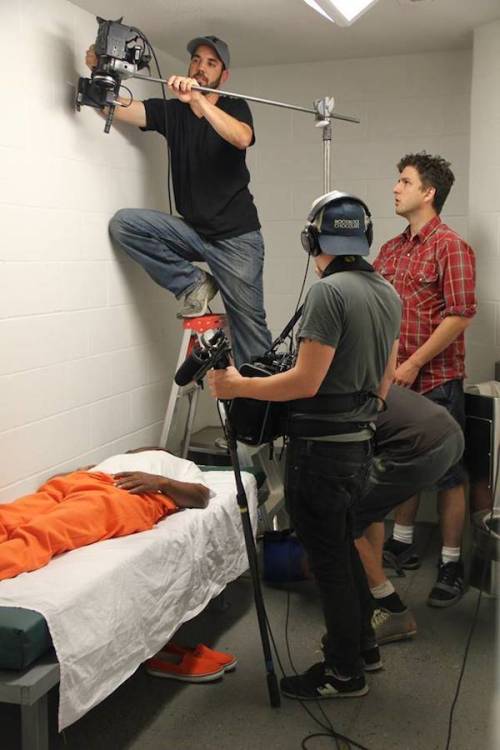
Filming the filmers.

14958502181_b3275ee7f6_z

A cell doubles as a make-up room.

14938095556_10b5265c0e_z

Filming inside a cell.

INTIMATE EXPERTISE

wHole draws on the intimate knowledge of two people who have been incarcerated.

Actor William Brown plays the protagonist in wHole. He has served time in prison. Fischer and Hamilton connected with Brown through Deborah Tobola who runs the Poetic Justice Project, a theater program in California for individuals who have been incarcerated. Tobola and Brown worked together when he was in prison in a program called Arts in Corrections.

Five Mualimmak is a co-producer for the project. Mualimmak also spent time in solitary confinement, 5 years, before he was exonerated. Mualimmak works with the Campaign to End the New Jim Crow and is the Executive Director of the Incarcerated Nation Campaign.

“As I wrote the screenplay, I was in touch with Five throughout,” explains Hamilton who is the series writer and director. “I want to make sure that viewers get a real sense of what it is like for a person to live in complete isolation for years.”

Mualimmak wrote about Solitary confinement’s “invisible scars” for the Guardian.

SET PHOTOGRAPHS

In chatting with Fischer, one of the intriguing resources she pointed me toward was the set photography for wHole. I’ve included some of my preferred shots thorughout this post.

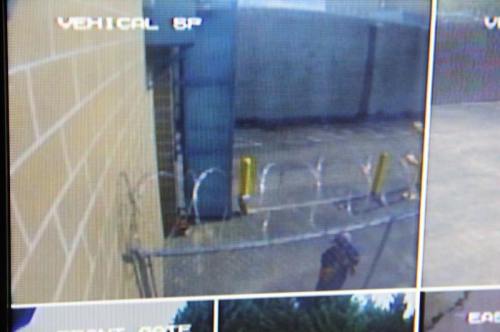
View images from day one, day two, day three and day four. Perhaps most interesting are photos made by crew of the facility’s control room, surveillance systems and control boards.

14774243709_74f555ed24_z

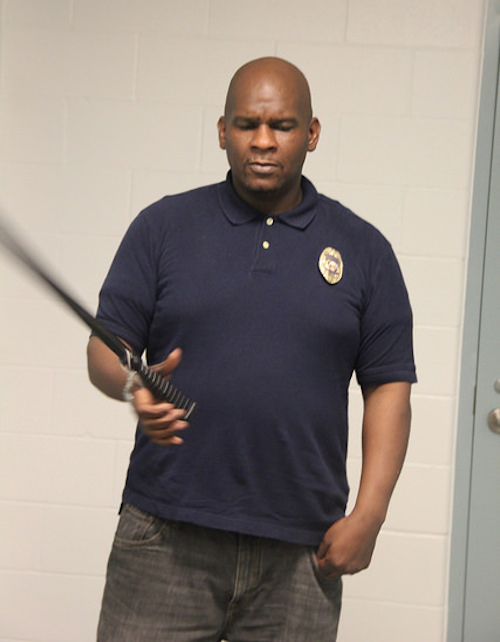
Five Mualimmak, who spent 5 years of his 12 prison term in solitary confinement, before being exonerated is co-producer on wHole. Above, he plays a prison guard.

14960882995_c6b3ab08d7_z

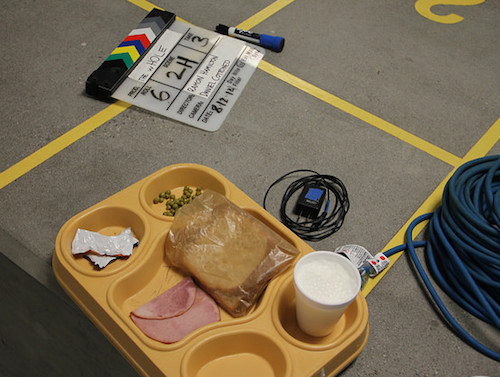
Lunch on set

14960339382_8a5a365b92_z

Looks depressingly accurate.

7

On set.

14774303588_cd0a642eb7_z

Downloading the day’s footage in the control room.

COLLABORATION

wHole was made in partnership with American Civil Liberties Union, Amnesty International, the American Friends Service Committee, the National Religious Campaign Against Torture, the United Methodist Church General Board of Church and Society, the Campaign to End the New Jim Crow, Incarcerated Nation Campaign, the Media Change Makers (of the University of Texas-El Paso), SendAPackage.Com, Broken On All Sides, Jail Action Coalition New York City, The Bronx Defenders.

Additionally, Academy Award-Winning Producer Jonathan Sanger is an Executive Producer for the project and Dr. Arvind Singhal is the Entertainment Education Specialist for the project.

In Portland, specifically, the assistance of Jan Elfers, Public Policy Director at Ecumenical Ministries of Oregon, and Shannon Wright, Deputy Director of the Partnership for Safety and Justice was crucial.

IMAGE USE

All images courtesy of Think Ten Media and William Meeker.

LAT

Prison Obscura got a nice review by Carolina Miranda in the Los Angeles Times.

An excerpt from Gut-wrenching photo evidence from Brown vs. Plata in ‘Prison Obscura’:

Perhaps most gut-wrenching is the series of pictures generated as evidence for the case of Brown vs. Plata, a class-action lawsuit against the state of California, related to issues of access to medical care and serious overcrowding in the state’s prisons. The case made it all the way to the U.S. Supreme Court, which ordered California to release 46,000 inmates in order to relieve conditions.

[…]

“[Prison Obscura] is aesthetically beautiful and challenging, and it’s didactic without being patronizing,” says Juliet Koss, who is the director of the Humanities Institute at Scripps. “But it also ties into what we are doing in the Institute. The theme for the semester is ‘silence’ and this was an interesting way of exploring that: of people who have been silenced or the general silence that there is about this topic.”

An absolute honour to have the attentions of critic Carolina Miranda, whose writings and focus on the vernacular, on everyday creativity and on pursuits of beauty and meaning beyond the restrictive parameters of the art market, I have long admired.

young-man-roses

FERGUSON

The unrest has abated in Ferguson. The quest for justice has not.

As I watched events unfold last month, I did not at any point feel I had something to add to the news coverage or commentary. I am still not convinced I do. That said, when the very soul of America is at stake, when the life of a young man has been taken, when the police turn up in military get-up, and when all this is being played out in front of the world’s media, I was aware questions needed to be asked of media-makers.

I take this opportunity not to make statements but to ask questions.

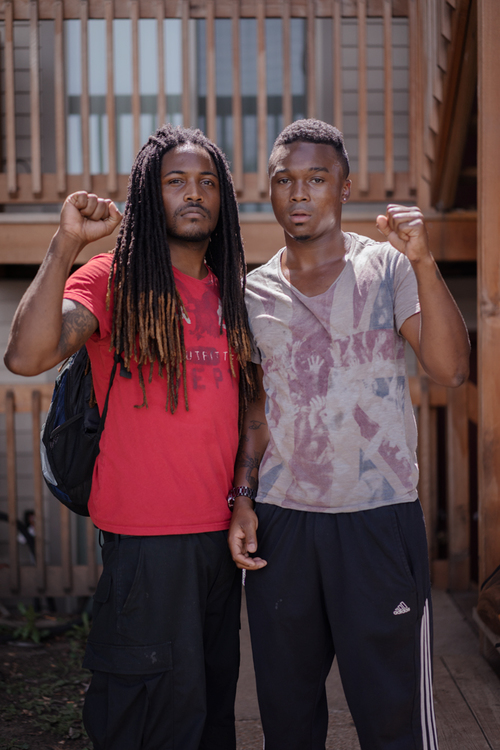
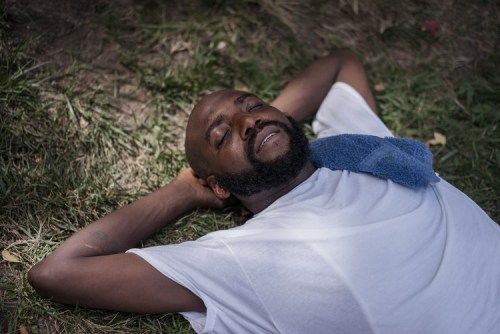
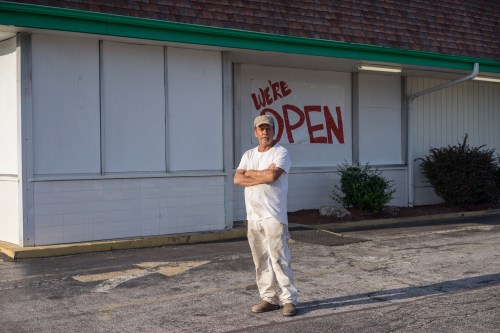
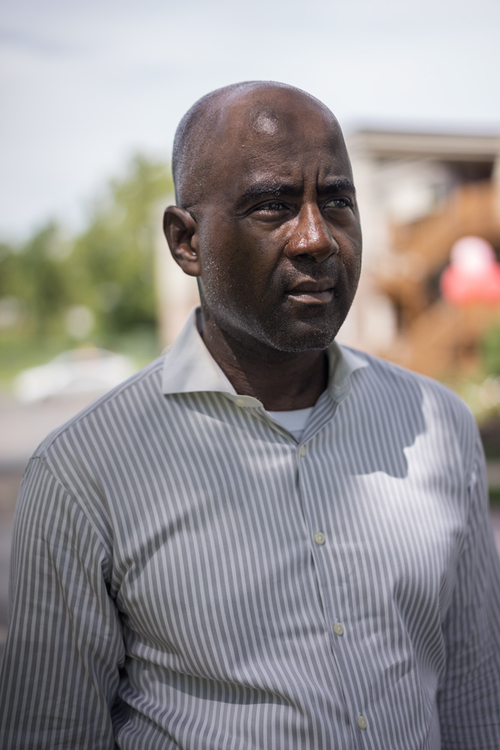
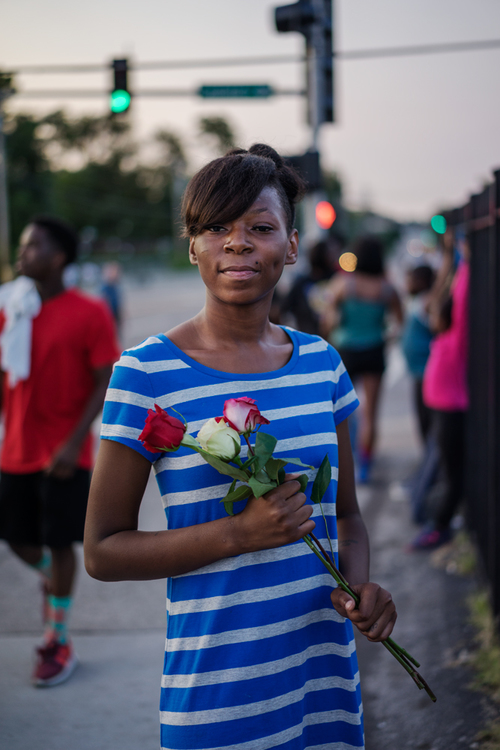
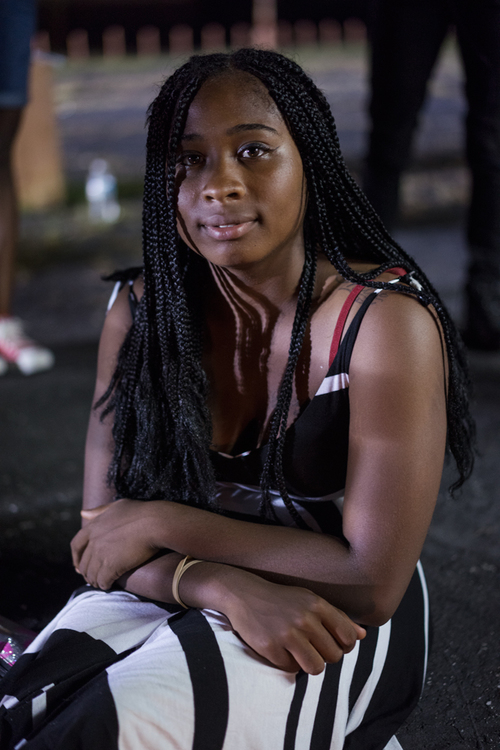
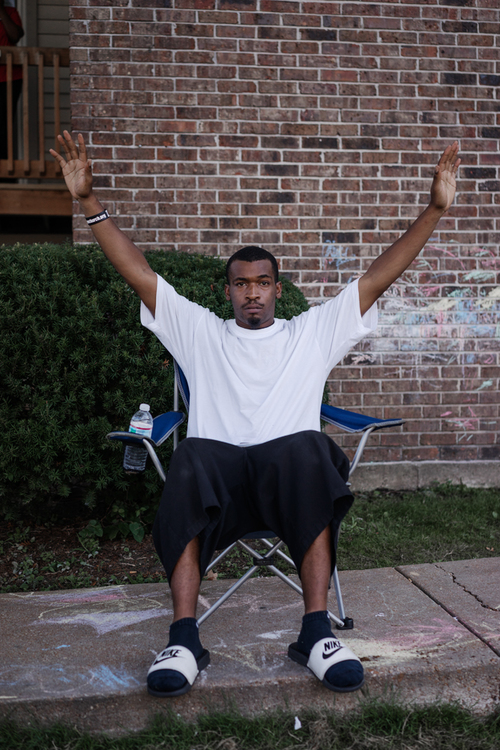
Barrett Emke, a young photographer from Kansas, was kind enough to share his photographs from Ferguson with me. He allowed me to make an edit. I publish them here alongside a short Q&A.

These are questions I’m just putting down in digital ink now, but probably come from weeks of thinking in circles. I was not brave or knowledgeable enough to write anything about Ferguson or its people when events were most immediate and raw; when people protested peacefully and faced off with law enforcement.

I want to start finding out about what photography did for the people of Ferguson and what it might do for them in the future. What might it do, or not do, for other communities wracked by racial inequities?

Barrett was in Ferguson August 19-21, I am penning this mid-September, but we know that from the tragedy of Michael Brown’s murder and from the town’s outrage must come long-term positive leaps forward; must come an accelerated and enlightened path to justice for us all as one.

Scroll down for the Q&A.

brothers

Q&A

Prison Photography (PP): Why did you go to Ferguson?

Barrett Emke (BE): I live in Kansas City, so the events in Ferguson definitely felt close to home. As a photographer and a person, I felt I had somewhat of a duty to go there and experience what was happening firsthand – this piece of history and injustice, and the community’s response.

I had to do something other than just watch what was happening on the news or read about it on the internet; maybe my photographs wouldn’t be seen by anyone or make any difference, but at least I would be there to document a piece of it.

PP: Did you know what you wanted to do beforehand?

BE: Not really. I just dove into the situation and worked intuitively, gauging the events as they came. From the first day I got there I had a rough idea that I wanted to make pictures of as many people as I could.

man-resting

hands-up-roses

man-chair-hands-up

man-open

PP: What does it feel like to have tank in the street?

BE: It was a little overwhelming at first, but you acclimate quickly.

PP: On your website you’ve presented a wider edit with B&W images, pictures of law enforcement who are in action or stationary.

I’m not that interested in your distant (usually nighttime) images of cops. They seem to break up the warmth that maintains throughout the portraits of Ferguson residents. Does that make sense?

BE: I can see that. Obviously, the images of the militarized police, and the tear gassing, and all of that are everywhere now, and I knew that I wasn’t going to do that. But the images I did include I feel have their place in the sequence – I think of them more as portraits of the officers who were part of the situation as well.

PP: How did you feel when your were in Ferguson?

BE: Honestly, I felt human.

The people I interacted with and photographed were open, genuine, and earnest. Beyond the conflicts and the clashes between protestors and police, I definitely felt a strong sense of community and humanity present there, among those who lived in Ferguson and others who had traveled from elsewhere to be there.

PP: How do you think your feelings compare with residents?

BE: It’s hard to say. Many people who I spoke with and photographed were totally willing to engage with me – in times of crisis, that sort of social barrier kind of breaks down. At the same time, I definitely heard residents express their anger and a certain distrust toward the media, this sentiment that after the spectacle has ended, their lives in Ferguson go on.

hand-balloon

woman-mic

pastor-david

PP: What was the behavior of the media like in Ferguson?

BE: I think the presence of the media was essential, to record and broadcast what was happening. At the same time, it became a little gross to the see the camera crews flocking to and descending upon every little scrap of conflict each night, trying to get the scoop. It definitely seemed vulture-like at certain moments, and there were instances in which I felt like the media’s presence was exacerbating the situation.

There were times when interactions between protestors, police, and the media became problematic, with the media fanning the flames a bit. I’m not sure what the alternative would have been; if the media hadn’t been there reporting, would the militarized aggression of the police have only escalated? Would Michael Brown’s story and its larger implications have been told?

PP: How did people react to you photographing?

BE: Generally, people were receptive to me photographing. I tried to be as respectful and sensitive to the situation and individuals as possible.

PP: What did Ferguson residents think generally about the media and/or photographers?

BE: There was a certain ambivalence about the media that I picked up on. As I mentioned previously, I heard the sentiment echoed that once the media circus had skipped town, the residents still had to go on about their lives and their realities. But at the same time, I heard many people express that the situation would be worse between protestors and the police if the media wasn’t there to report on what was happening, and to check that militarized aggression.

boy-bandana

shrine-balloon

young-woman-rose

PP: What was the overall sentiment of the people you photographed?

BE: People were there on West Florissant in solidarity and were fed up with everything that had led to this point. Those I photographed were resolute in their anger and sought justice for Michael Brown, meaning the indictment of Darren Wilson and a major shift in policy, representation, and attitudes going forward. What I heard echoed again and again from people was that this situation wasn’t just about race, it was also a human thing. Beyond that, I perceived an overwhelming amount of positivity and hope from the individuals I met.

PP: Did this sentiment match that of the media generally?

BE: As in, did the media share the same drive for justice as the residents and protestors? I’m not sure, but I would say that they seemed to be there to do their job, which was reporting.

PP: Is America a racist country? I’m not being incendiary here; it actually seems like a fair question if we consider this excerpt from this New Yorker piece The Color of Justice:

Whites support tougher criminal laws at least partly because they overestimate black and Hispanic crime rates. Blacks and Hispanics do commit certain crimes more frequently, per capita, than whites, but not all. But whites consistently overestimate the difference, according to one study, by as much as twenty to thirty per cent. That perception affects attitudes toward offenders and sentencing. Studies show that the more whites attribute higher crime rates to blacks and Hispanics, the more likely they are to support harsh criminal laws. It is less that they are consciously seeking to subordinate racial minorities than that they fail to treat the negative consequences of high incarceration rates as their problem. As the report explains, “attributing crime to racial minorities limits empathy toward offenders and encourages retribution.”

This is a damning indictment. If anyone were to admit that they preferred the death penalty, life without parole, or harsh sentences because they believe the perpetrators of violent crimes are more likely to be black or Hispanic, we would immediately condemn them as the worst sort of racist. If a prosecutor, judge, or juror expressed such a sentiment, any resulting conviction or sentence would be swiftly overturned. No one admits that they feel this way, but the studies recounted by the Sentencing Project suggest that this is precisely what many white Americans feel.

BE: America is a racist country, with its long and complicated history of prejudice that it still cannot shake.

Racism in the United States is deeply entrenched and systemic, even today, as we’ve seen. As a white person, I have tried to be consistently aware of my privilege and the way racism can be internalized by someone who would never consider herself or himself “racist.” It is a process of learning and unlearning that I still grapple with. One can always do better, listen more. It is not enough to simply not be racist; one must be anti-racist.

When a person of color in America can’t be certain that she or he won’t be shot and killed during a routine encounter with police, or a total stranger, something is utterly, intrinsically wrong. I believe it is the duty of those who benefit from white privilege, male privilege, heteronormative privilege, to fight alongside those who are disenfranchised under the law and throughout society.

i-am-mike-browngirl-braids

cousins

PP: What did photography achieve during August for the messages coming out of Ferguson?

BE: I’ve seen an abundance of profound, earth shattering photographs come out of the events of Ferguson. I believe these photographs have been successful in demonstrating to the world what was unfolding and to preserve these moments as historical documents.

PP: Do photographers need to stay in, or return to, Ferguson soon? And/or often?

BE: Speaking for myself, I don’t feel like my work was simply done when I returned home. A situation like this is ongoing. Nothing is solved. There is still more work to be done, and I would like to return to make more photographs.

PP: Do you think that’s going to happen?

BE: I believe that to be committed and thorough in a situation like this, it has to be longterm.

PP: Thanks Barrett.

BE: Thank you, Pete.
young-man-red-jacket

toatm.05

THE DRAMA INSIDE

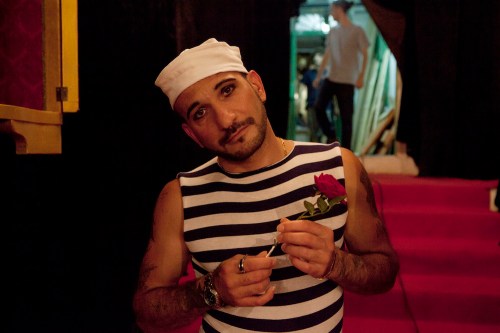
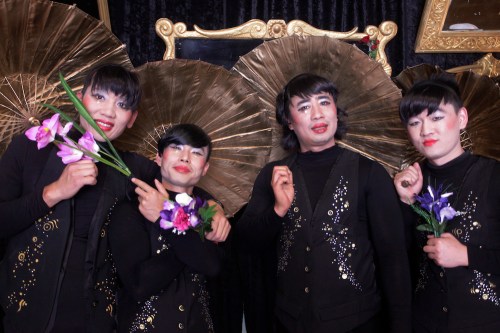
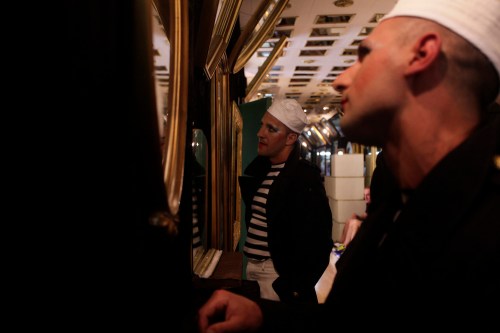
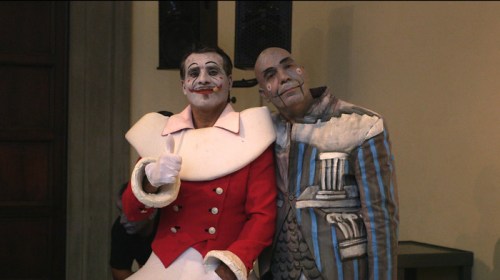
For over 25 years, prisoners at Volterra Prison in Italy have been performing elaborate, ruffled, high heeled performances of classic theater. The Compagnia della Fortezza, under the directorship of Armando Punzo is now stuff of legend in Italy. Shakespeare, Brecht, Virgil as well as the work of national playwrights have been acted out inside the walls but in front of attending publics. The company has had some coverage outside of Italy, but not nearly enough according to filmmaker Inaya Graciana Yusuf.

She and her crew observed, documented and lived this past season at Volterra Prison. It was a transformative experience. “We became part of something intensively rewarding and beautiful. We forged new friendships, bonded and engaged in each other’s stories,” says Yusuf.

Now back on home soil, Yusuf wants to share the atmosphere of positive change, unexpected growth and group achievement through a documentary film named The One & The Many which follows the fortunes, preparations and final performance of a prisoner theater troupe as they deliver a Jean Genet work.

“The film will explore how deeply impactful theatre and arts programs can be forprisoners,” says Yusuf.

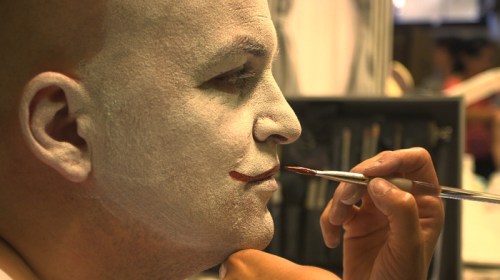
Yusuf looks forward to returning to Compagnia della Fortezza but her ability to do so depends on our help. Today, Yusuf and her production crew launched a Kickstarter to raise monies for the second round of filming (they spent the month of July in Volterra) and post-production, media management, editing, graphics, so on and so forth. I wish them luck. Prison theatre intrigues me. Without exception, prison theater productions deliver a different type of image — of course, that has a lot to do with the costume and the make up, but I think that the act of the act allows prisoners to explore new parts of personality. A good photograph can capture that even though masks and thick mascara.

I wanted to delve deeper and find out exactly what prison theater is and how it does what it does. Scroll down for a Q&A with Yusuf.

toatm.02

2ae2c88921aad267edbb9106b108657f_large

Q & A

Prison Photography (PP): Both yourself and the prisoners express great repeats for the director Armando. Can you describe briefly why his methods are so admirable and what aspects of his approach other prison theatre coordinators could learn from?

Inaya Graciana Yusuf (IGF): Armando is a progressive and stimulating individual. His mind is always going and in turn, his process is always evolving. He pushes boundaries and brings out something in you that you would otherwise never realize on your own. He essentially sees each individual as the person they are and not as a prisoner. Through encouragement he is able to bring out their best even humors them into embracing their flaws. Armando creates a balance.

I have learned about camaraderie and friendship through this tight-knit community. Everyone treats each other as equals, helping each other move forward with Armando’s guidance. I was able to understand that individual performances make up for the group’s performance collectively.

Armando always practices an open door policy. He welcomes opinions, criticism and direction because at an essential level, he is always inspired. Being able to supervise and influence, but equally empathetic and open minded are important abilities of leadership. So many other people facilitate programs and end up distancing themselves from developing human connection.

1a15d6c55a90fd84732c8ab43d2d3f89_large

toatm.03

PP: What is particular about drama and theater that makes it good for rehabilitation?

IGF: Theatre is a reflection of society. It is an inevitable reciprocity. It enables the mood of a certain [prison] community and mirrors different facets of life.

What significantly appealing about theatre is that it allows us to critically process civil life and the drama of the everyday. I think this goes back into the idea of dramaturgy and the role it plays in our personal and professional development. I have always been a fan of Erving Goffman, and I apply his theories into analyzing this idea of the multiple-self facilitated by the aspect of performance. Essentially we are all performers and what theatre can bring into rehabilitation programs is helping people understand how to utilize and integrate it with certain situations. Theatre provides us with wisdom, be it cultural, political or satirical of any kind. I think its perfect because you get to work on your social and presentation skills based on the role that eventually falls on your lap.

What theatre can do more than any other form is shift attitudes, articulate discontent and reflect the environment you are surrounded by.

toatm.01

toatm.04

PP: What sort of productions and scripts really resonate with prison population best? What characters do prisoners enjoy playing the most? And why?

IGF: Armando always reminds everyone “It is not you who choose theatre, it is theatre that chooses you.” It is in a way, true. You can choose as many texts as you possibly want but eventually, there is only a few that will resonate and stick to you. The prisoner-actors actually mentioned this to me on numerous occasions. They enjoy the texts to which they are exposed to because they provide them with challenges to overcome. It is always about how does it relate to them personally and how can they express it. A few prisoners really connected with Mercuzio Non Deve Morrire and Hamlice a couple of years ago.

The texts they perform are all experimental, written and directed by Armando himself. He adapts them from existing classical and/or modern plays. I think this gives room for interpretation and personalization for all participating actors, which makes it more enticing and powerful upon completion. The method is that of psychodrama — it heavily relies on creativity, participation and spontaneity. The final performance is more or less personal and experiential for each audience that attends.

2853c37adc270c4eba1a85422d33d087_large

a1488b53a8ea38e319aa5b54fc756f4d_large

PP: Have you seen the documentary 12 Angry Lebanese?

IGF: I have.

PP: It’s about a production of 12 Angry Men in a Lebanese prison. Overall, the show is a great success and actually brings about legislative change, but throughout the preparations, there’s stern words, positive reinforcement, mutual growth but also a main actor who drops out last minute — it was no smooth ride. How were the workshops, education and rehearsals for Santo Genet?

IGF: The rehearsals and education for Santo Genet were ongoing and they were trial and error.

More than anything, it is about knowing what is doable in a limited time. I have spoken to both Armando and the participants about this. Everything that is on the “idea book” will be tried and tested, what matters is, accepting that it has been tried and done. Everything is discussed openly in front of everyone. New ideas and interpretations will come up and old ones will die down. It is a cycle and more importantly it is a creative journey. I think what is crucial to understand that experimental theatre is based on spontaneity and improvisation.

Santo Genet is a great example of collaboration and teamwork. Armando, along with his collaborators, work extremely hard in putting together his vision. The prisoner-actors rehearse every day, either with each other or on their own, with or without supervision.

It is interesting that you say, “It was no smooth ride.” When is anything in such programs ever a smooth ride? Armando always works through the different challenges he faces daily, and it gives rise to some incredible outcomes. What Santo Genet rehearsals taught me is to always be ready for the unexpected. It may hit you from any direction, but it doesn’t mean that there is no solution.

4dda8a32b58013953b142edc9e20f042_large

PP: There are several prison theater projects like the one you feature. Can you name some in the U.S. that you admire and/or have heard positive things about?

IGF: Yes, locally, I admire the work of Rehabilitation for The Arts, they are facilitators for art based programs inside Sing Sing prison here in New York. They do great work. I would recommend people with teaching experience to seek them out and work with them.

Other programs that have been inspiring to me is Prison Performing Arts in Missouri run by Agnes Wilcox, The Prison Arts Coalition run by Buzz Alexander in Michigan, and of course Shakespeare Behind Bars. Each of them has something unique to bring to the table, especially in terms of approach and programming.

PP: A silly question, perhaps not, but my readers would be interested. How do the prisoners feel about wearing eyeliner?

IGF: This is a very funny question and I am glad you asked.

The majority of the men enjoy dressing up, performing and using makeup. They are playful and many take pleasure in seeing transformation. I remember one prisoner asking me if I could do his makeup because he saw me with eyeliner. I explained that makeup was not my forte! These men are adept and capable of any adventure.

PP: Thanks Inaya

IGF: Thank you, Pete.
CASH MONIES

GO THROW SOME MONEY IN THE ONE & THE MANY KICKSTARTER BUCKET!

toatm.06

Uncut-doom9lives

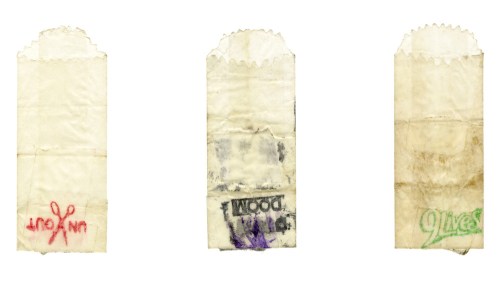
Even in the throes of addiction, Graham MacIndoe was able to take a relatively objective look at the visual culture of the drug trade. He collected more than 100 bags, in NYC, in which heroin was sold. 
When other addicts emptied these little baggies, and after they’d cooked and injected the contents, what did they see? Trash? Incriminating evidence? MacIndoe saw the anthropology and informal economics of dealing.

Now, four years clean, photographs of the bags are collected in a new book All In: Buying Into The Drug Trade (Little Big Man Books, San Francisco).

For Wired, I wrote about the series, MacIndoe’s story and his thoughts about what the baggies might mean for us all: The Dark, Ironic Branding Drug Dealers Use to Sell Heroin

aLLiN_cover

EMAIL

prisonphotography [at] gmail [dot] com

Prison Photography Archives

Post Categories