With only 3000 inhabitants, Vilobi d Onyar is defined its periphery. Large infrastructure projects such as the Costa Brava Airport, L’Eix Transversal, Mediterráneo Highway and the AVE train line surround the settlement. Townsfolk, seemingly, fall in line and fall in between the cracks; everyone living in temporary and interstitial space.
“Vilobi d Onyar’s ‘No man’s land’ condition turns it into a dismembered territory. Tunnels, retaining walls, bridges and fences form a landscape that has influenced inhabitants’ adaptation to the environment,” writes Blanch.
Diaz’s left arm had an 11-by-7 inch chemical burn from the lethal drugs. By the time the autopsy began, the superficial skin had sloughed off, revealing white subcutaneous skin. (Source: New Republic)
Yesterday, The New Republic published for the first time aset of photographs of a chemically burnt corpse. The body was that of Angel Diaz, a man executed by the state of Florida in December of 2006.
As author of the piece, Ben Crair explains, “The execution team pushed IV catheters straight through the veins in both his arms and into the underlying tissue.”
Diaz sustained horrendous surface and subcutaneous chemical burns.
“As a result,” Crair continues, “Diaz required two full doses of the lethal drugs, and an execution scheduled to take only 10 to 15 minutes lasted 34. It was one of the worst botches since states began using lethal injection in the 1980s, and Jeb Bush, then the governor of Florida, responded with a moratorium on executions.”
The photographs were made by a Florida medical examiner during Diaz’s autopsy. Crair discovered the photographs in the case file of Ian Lightbourne, a Florida death-row prisoner whose lawyers submitted them as evidence that lethal injection poses an unconstitutional risk of cruel and unusual punishment. While the details of Diaz’s botched execution have been known since 2006, this is the first time visual evidence of the injuries sustained from the lethal injection has been presented publicly.
I’d like to tell you that such images are anomalous, but sadly that is not the case.
I, myself, have seen a set of images of a burnt corpse post execution. The victim in that case was executed in the electric chair. Similarly, in that case, the images were in the possession of a lawyer (who had acquired them through family of the executed) and used in court in argument against the electric chair as cruel and unusual punishment.*1
May I suggest that the photographs of Angel Diaz’ corpse, and all those images like them, be accessioned into the Library of Congress?
If the Library of Congress’ mandate is to preserve those things that are central to American culture; central to the American conscience, dear to this nation’s body politic and truly reflective of our culture, then I hold there is no better collection of images than these.
Photographs of a botched execution are as American as apple pie.
Whether an execution is considered officially “botched” or not, the torture imposed on a body in the minutes before death is unconscionable. Crair pursued the story and the publication of the images, rightly so, in the aftermath of the recent botched execution of Clayton Lockett in Oklahoma.
“The execution team struggled for 51 minutes to find a vein for IV access,” writes Crair, “eventually aiming for the femoral vein deep in Lockett’s groin. Something went wrong: Oklahoma first said the vein had “blown,” then “exploded,” and eventually just “collapsed,” all of which would be unusual for the thick femoral vein if an IV had been inserted correctly. Whatever it was, the drugs saturated the surrounding tissue rather than flowing into his bloodstream. The director of corrections called off the execution, at which point the lethal injection became a life-saving operation. But it was too late for Lockett. Ten minutes later, and a full hour-and-forty-seven minutes after Lockett entered the death chamber, a doctor pronounced him dead.”
CLOSING THE BLINDS
The single detail about the Oklahoma debacle that really stuck in my mind was the state’s decision — upon realising the execution was being botched — to drop the blinds.
The gallery of spectators including press, victim’s family and prisoner’s family lost their privileged view.
In that instance when the blinds dropped, the scene switched from that of official, public enactment of justice to the messy, sick, complicit torture of a human. In that instance, the barbarity of the state revealed itself fully. And the state was ashamed. The public were no longer allowed to see.
The notion — indeed the internal logic of the state — that viewing one type of execution is acceptable and another is not is astounding. By virtue of its actions during Lockett’s botched execution, the state has distinguished between what types of torture (execution) it is acceptable to see. Quick, quiet, seemingly painless = good. Noisy, drawn out, demonstratively torturous = not good.
The distinctions are petty. All executions are cruel and unusual.
At this point, I can only presume those who still support the death penalty are those who subscribe to some pathological eye-for-an-eye illogic. Wake up! The state shouldn’t be involved in murdering people. Especially when we have seen 1 in 10 people locked up for life or on death row for capital offenses later exonerated due to DNA evidence or prosecutorial misconduct. The state shouldn’t be involved in murdering innocent people.
*1 People are under the misconception that the electric chair zaps a person and kills them instantly. This is not the case. Electricity takes the paths of least resistance which is outside of the body. Therefore, tens of thousands of volts serve only to burn the points at which they are attached, namely the lower leg and the skull. Death by electric chair is in fact just boiling the victims brain for 7 seconds. Boiling the brain alive.
For the last 30 years, there have been clear regional differences in states’ use of the prison, with the southern states relying on the prison the most often. (See larger.)
The small, independent and incredibly effective Prison Policy Initiative (PPI) has delivered us a great service once more.
“Until 2006, researchers, advocates, and policymakers could rely on state-level race and ethnicity incarceration rate data from the Bureau of Justice Statistics “Prisons and Jails at Midyear” series. Unfortunately, these state-level statistics have not been updated in eight years,” says PPI.
PPI has used data from the more recent 2010 U.S. Census counts to measure each state’s incarceration rates by race and ethnicity. Most (57%) people incarcerated in the United States have been convicted of violating state law and are imprisoned in a state prison. Monitoring trends at the state-level is imperative.
“State-level policy choices have been the largest driver of our unprecedented national experiment with mass incarceration,” says PPI. “Each state is responsible for making its own policy choices about which people to lock up and how for long. We can’t end our nation’s experiment with mass incarceration without grappling with the wide variety of state-level criminal justice policies, practices and trends.”
As such, PPI published yesterday the most comprehensive breakdown of demographics in our state prison systems to date. In three distinct sections:
In recent months, there’s been a number of interesting — and in some cases, urgent — photo stories coming out of prisons worldwide, that I’d like to draw you attention to.
ANDREW BURTON
Anthony Alvarez, left, 82, eats breakfast with Phillip Burdick, a fellow prisoner and member of the Gold Coats program at California Men’s Colony prison in December. Mr. Alvarez said he has been incarcerated for 42 years for a series of burglaries, possession of illegal firearms and escapes from county jail. He eventually got a life sentence due to three-strikes laws. Shown is Mr. Alvarez’s first day being assisted by the Gold Coats; he largely needs help with mobility. Mr. Alvarez tries to work out for a few minutes every other day. Mr. Burdick, 62, has been volunteering with the Gold Coats for more than 18 years and is the longest-serving member of the program. Mr. Burdick has served 37 years on a 7-years-to-life sentence for first-degree murder.
Andrew Burton‘s photographs of aging prisoners for the Wall Street Journal have been well-received. With one of the largest state prison populations, a history of long sentencing laws and inadequate healthcare, the old men and women have the odds stacked against them for a comfortable day-to-day living.
The percentage of prisoners 55 or older in the U.S. increased by more than 500% between 1990 and 2009.
Burton’s photos focus on the Gold Coats program at California Men’s Colony, in San Luis Obispo, which pairs younger, willing prisoners with older prisoners suffering dementia and terminal illness. In 1991, California Medical Facility created the first prison hospice program in the nation to deal with the AIDS crisis, and the hospice is now used for elderly prisoners who are terminally ill.
Great photos. Burton is realistic about the situation but seems clearly impressed with efforts there.
However, here’s some context. Ever since California’s medical prison system was deemed cruel and unusual and it was brought under federal receivership, the state has been making efforts to deliver specific facilities for health care. The largest was to open the California Health Care Facility in Stockton, CA. It is the largest medical prison in the world. At a cost of $840M it was supposed to solve many issues and provide care for 1,800 prisoners. Nothing is so straightforward. Since opening in July, 2013, it has been beset by waste, mismanagement and miscommunication between the prison and medical staffs.
Watch this space. Hopefully vast, vast improvements will ensue.
Erika Roberts, 26, of Hartford is a factory worker, a dancer, a teaching artist, a worshiper, a mother of three, and a felon.
Photographer Andrea Wise soon realised that when lives are intertwined with the criminal justice system nothing is straightforward. From the millions of effected formerly-incarcerated millions, Wise’s Freedom Bound manages to tell the story of Erika Roberts on very humanising terms. And with touching photographs.
“Her story is both a simpler one – a quiet story of a young family just trying to do the best they can – and a more complex and nuanced story about life in poor urban communities where people grow up in and around trauma, where criminal activity and incarceration are commonplace, and where Erika’s story isn’t all that uncommon,” says Wise.
Freedom Bound explores Erika’s quiet determination and struggle to break the cycle of incarceration.
“Erika strives for more from life, for her children, and for her community,” writes Wise.
“According to the National Penitentiary Institute of Peru (January 2012) Lurigancho has a capacity limit of 3,204 prisoners but it actually holds 6,713 with a ratio of one police officer to 100 inmates,” says Martel.
“With corruption, tuberculosis and drug dependency together with its appalling management by the state, the prison gained a reputation as one of the most dangerous prisons in the world,” Martel continues. “Today, Lurigancho is fighting to survive thanks to the internal organization of some prisoners and their work. These prisoners have managed to create a small, internal infrastructure that allows them to feed themselves and live a more dignified life.”
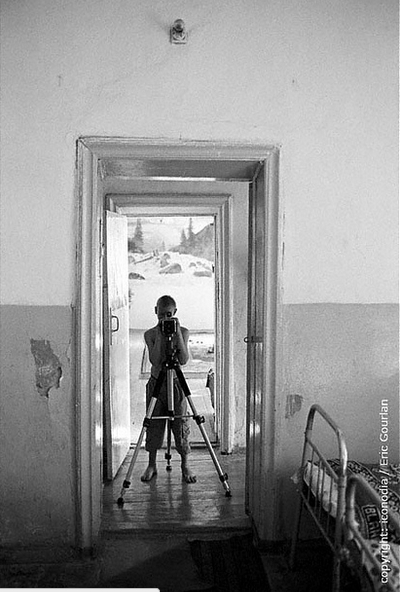
ERIC GOURLAN
French photographer Eric Gourlan voluntarily spent a month inside Kyrgyrzstan’s prison and documented life in two men’s prisons, one women’s jail, and a juvenile detention centre — all in the capital Bishkek.
There’s a great interview with Gourlan on the Institute for War and Peace Reporting website. Gourlan explains that he gained access through valuable partnerships with State Service for Execution of Punishment (GSIN), the United States Agency for International Development, Freedom House, the OSCE Center in Bishkek, the GSIN Public Oversight Council and the Kyrgyz NGO Egel — a long list which gives us an idea of the importance of partners for this type of work.
“I would really like to commend the openness of [prison] officials in Kyrgyzstan – I could go almost everywhere I wanted,” says Gourlan. “The only thing was that in the first two days, I was accompanied by guards until everyone got used to me. But then I was given more freedom and practically could move around on my own. On some occasions, I ate with prisoners.”
Gourlan met some hardened criminals but also met people who’ve been victims of overly-punitive sentences.
“One woman told me that she had been in a very difficult financial situation and somebody asked her to transport 30 grams of heroin from point A to point B for 100 [US] dollars. She was caught and given 12 years in prison. She had never used drugs before, never sold them, and never got her 100 dollars, but she has been locked up for 12 years,” explains Gourlan. “Obviously I do not know if those stories I was told were true or not. But that was not why I embarked on this project.”
Eric Gourlan’s project was backed by Freedom House, the OSCE Centre in Bishkek, a local NGO called Egl, and the prison service in Kyrgyzstan.
Isabelle Serouart‘s rare photographs from within a prison in Madagascar were published by SoPhot. The images are small and embedded, but I also found this footage Serouart made of female prisoners singing.
“In a very confidential way record of women song in a jail in Madagascar,” says Serouart. “To sing is a way for her to survive together.”
DAVID RYDER
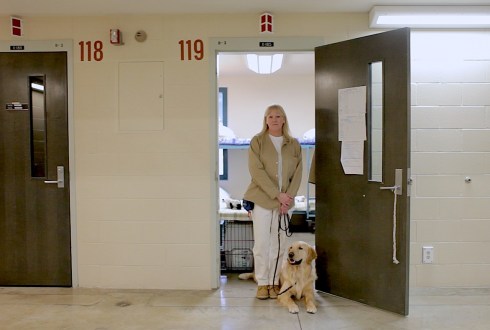
David Ryder, for The Wall Street Journal, made a video about the Prison Pet Partnership at the Washington Corrections Center for Women in Gig Harbor, Washington is an interesting watch.
“The program allows inmates to learn job and life skills while providing kennel and grooming services to clients from the surrounding community,” says Ryder. “In addition, unruly dogs from other programs (who might otherwise be put to sleep) are able to have a second chance by entering the prison’s training program.”
This is a win-win for the women, the dogs, the prison administrators and the media. Despite prisons being a continual source of distress and latent abuse, the press always needs new angles — depressing stories don’t have the readership coming back. A human interest story about (wo)man’s best friend and redemption plays well, and we’ve seen them before. Here’s a couple more similar project in Florida and Colorado.
Another thing that makes me slightly uncomfortable with the story is that simultaneously, just over an hour south, detained immigrants were on hunger strike for their confinement in solitary and slow progress of their cases. Now I know, the state prison system and U.S. Immigration & Customs Enforcement are different authorities, but if we’re to look at lock-up in Washington State, I’d suggest we factor in ALL types of prisons and prisoners. ICE facilities remain the most inviisble.
The full WSJ story, to accompany Ryder’s video, by Joel Millman and with photos by Stuart Isett, you can see here (behind a paywall).
As an aside, the most interesting photography project on prison dog’s programs remains Jeff Barnett-Winsby’s Mark West & Molly Rose. After Barnett-Winsby had photographed the prisoner (Manard) and the program administrator absconded from the Safe Harbor Program and escaped from Lansing Prison, KS and went on the lam for 11 days. A weird tale of fact and fiction, manipulation and unsaid knowns. The investigating police acquired Barnett-Winsby’s photos because he had made the most recent images of Manard’s tattoos. Yet Manard had drawn false tattoos for the shoot predicting their use later following his escape. Twists and turns. No photographer can ever plan or predict such a bizarre story, or implication in it.
MAE RYAN
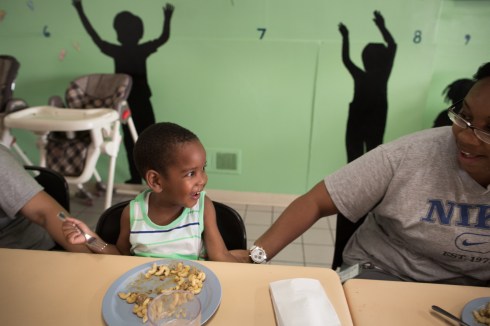
A child plays with his mother at the cafeteria inside The Community Prisoner Mother Program in Pomona, California. Mothers and their children live in open barracks shared with two other mother-child family pairs.
Pregnant in Prison offers a look at a select group of minimum security prisoners who may live with their young children until the child turns seven years old. Mothers live with their children in rooms shared with other prisoners. During the day, children are enrolled in the on-site preschool and Kindergarten and mothers take rehabilitation and other classes.
In 2011 and 2012, 233 female prisoners gave birth while serving time in the California prison system. So, this program applies to only a tiny fraction of women suffering California’s prison system. It is a welcome, forward-thinking program. Psychological studies are unanimous that close bonds between mother and baby, from the earliest hours, are vital in sparking healthy cognitive and social behaviours. Why wouldn’t we allow incarcerated mothers the ability to raise their own children?
In terms of such residential programs, most (and there are only a handful) allow mothers and babies to be together until the baby is 2 or 3 years of age. Pomona is exceptional.
Let me be clear though, I don’t want to see more prisons with this type of program; I want to see less prisons with lesser need for these types of programs. I want to see community supervision instead of incarceration and if prisons must be used, then for them to be bursting with positive programs designed around the women’s needs. That said, the Community Prisoner Mother Program has many elements to inform better care.
ANONYMOUS GREEK PRISONER
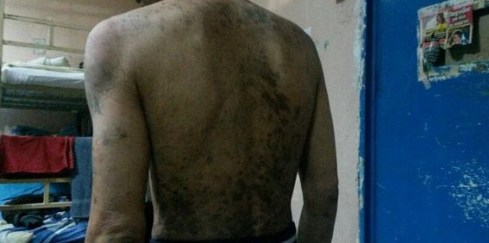
An expose by a Greek Prisoner registered on American news consumers’ radar when Medium published the piece Greece’s Biggest Prison Is Boiling by Yiannis Baboulias. The photographs accompanying the piece were taken by a prisoner and were then published repeatedly through the Twitter account @kolastirio.
He also got his footage out:
The expose caused outrage.
Baboulias writes, “People suffering from HIV, tuberculosis, psoriasis, cancer and other serious diseases, are discarded like trash in common rooms where hygiene is an unknown term. Spaces designed to hold 60 people, now hold more than 200. Reports say that some of these diseases have already started spreading amongst the inmates, making the prison a threat to public health in the general area. As inmates report, when the staff realises someone is close to death, he is quickly transported to a hospital, so his death won’t be recorded in the prison’s logs.”
Given that the infrastructure of Greece is collapsing in the wake of it economic meltdown, how surprising is this neglect? Hospitals are having budgets cut by 25% so what chance have the prisons and prisoners in the grapple for resources?
In an update, Baboulias says that the prisoner that leaked the photos and video has been prosecuted and faced trial.
VALERIO BISPURI
Valerio Bispuri has photographed in 74 prisons in South America, over a period of a decade. I was grateful to find a short interview with him as part of Fotografia’s ‘Prison Week‘
“It was clear to me that would have required a great time commitment when I realized that permissions to photograph in the prison were going to take months to obtain,” says Bispuri. “In a few cases I’ve had to wait for years.”
Women’s prisons are rarely any better.
“There certainly is anger in female prisons as well, which sometimes turns into violent attacks. Moreover, in most prisons, female inmates are denied the “intimate visit”, that is the possibility to have sexual intercourse with their husband or partner, which is instead granted to those male inmates who behave properly,” explains Bispuri.
The work has had some effect. Following an exhibition of Bispuri’s photographs, in Buenos Aires in 2009, in collaboration with Amnesty International and the Argentine Government, Mendoza Prison’s Pavilion N5 was closed down.
“Life conditions there were tragic,” says Bispuri.
Bispuri’s series Encerrados describes how hellish many of the facilities. He has had a knife held to his neck and infected fluids thrown at him as protest to being photographed. Still, Bispuri is sympathetic to the resolve of many prisoners.
Hope you appreciate these works and find something you like. Sorry this post is effectively an illustrated barrage of links, but we should be grateful there’s so much work being published! Let me know what you think of it all.
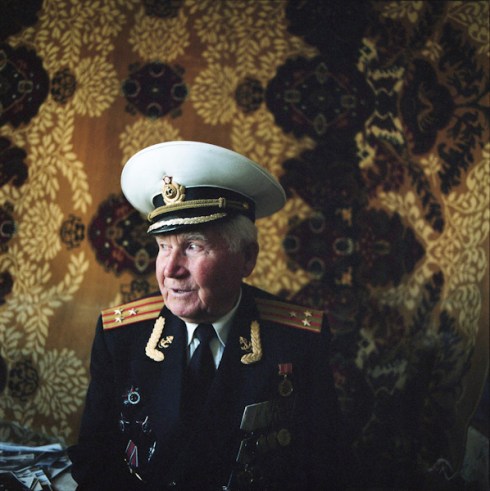
Throughout the ongoing events in Crimea, eastern Ukraine and Russia, we’ve seen many images. Some good, some bad, but most briefly (tomorrow’s chip-wrap, and all that). Has photography adequately described the unfolding turmoil? For me, the jury is still out, but I’m in a combative mood this evening.
Of the news photography coverage I was impressed with those by Brendan Hoffman and Sergei Ponomarev (who’s been shooting in the region for years) and as a scene setter, I liked Maxim Dondyuk’s old work from a Russian kids military training camp. Of the amateurs, Dima Tolkachov showed us just how ripe for image-making Maidan Square was.
Knowing that armchair critics such as myself would be decrying the fact that photojournalism was doing exactly as it was supposed to do — capture wrought images of struggle with smoke, barricades and actions — a few photographers aimed to make series that were descriptive of the people and the struggle, but forged new typologies. Stationary typologies of weapons and fighters from within the front lines. Anastasia Taylor Lind and the duo Jean-Marc Caimi and Valentina Piccinni both made portraits and (sometimes within arms reach) Tom Jamieson and Donald Weber made studies of DIY weapons and molotov cocktails respectively. Of Jamieson and Weber’s work I’m ambivalent, even if critics I respect are all for it.
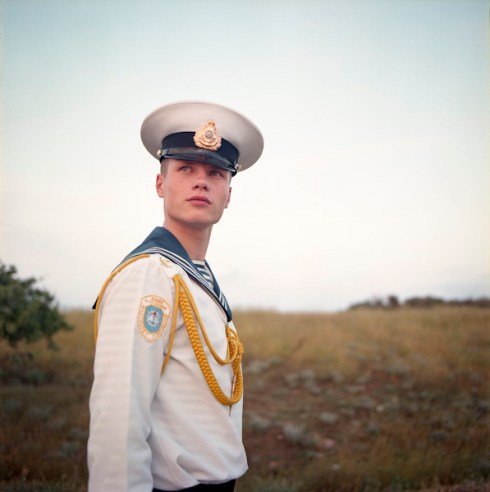
If I am being imprecise here, it is because I feel I can afford to be. I mention these photographers’ works as context for Julie David de Lossy‘s work which was made long before events erupted in Kiev. De Lossy’s series Black Sea Fleet Cadets and Black Sea Fleet Veterans are not reactive as the above-mentioned bodies of work are. Maybe, as a consumer of images, I am just more comfortable seeing formal portraits made in times of peace as opposed to times of shells and bullets falling all around?
Kolia, 20, Cadet at Nakhimova Institute
The Black Sea Fleet was an aging institution that was under threat of closure for decades. Somewhat ironically, the 2010 election of the now-ousted pro-Russian Yanukovitch as Ukraine president brought with it a new extended lease of the Black Sea Fleet facilities beyond 2042 (presumably now defunct). The Russians provided discounts on natural gas in exchange. Quite why the facilities to this old military group were part of negotiations between the Russians and Ukrainians is not entirely clear, yet de Lossy explains that it recruited both Russian and Ukrainian cadets and that both Russians and Ukrainians honoured the veterans. De Lossy adds that in Sevastopol — where the Black Sea Fleet was based — is considered by the locals as a Russian territory.
It is within the experience of the ranks young and old that we might begin to discover the historic and complex ties between Russia and Ukraine. De Lossy’s work requires us to do more than identify the good guy and the bad guy from afar; indeed it instructs us that as history collides with current affairs our labels may shift. Whereas the work of many photographers is literally made on one side of the barricades or the other, and whereas such work has buy-in from one side or the other, archive work such as de Lossy’s takes us back to a time before people were forced to stand one side of the line or the other. It takes us to a time that explains the now.
Images of violence are images of loss; loss of stability, loss of choice (to a degree) and loss of self. In mainstream (news) images of ongoing revolution and violence, loss is an abstraction — the parameters and extent of loss are still being determined. Made in times of non-violence, de Lossy’s photographs depict the absence of violence. Her quiet portraits of cadets and veterans are a requiem for times not shaped by nationalism and conflict.
Quietness replaced by conflict is a grave loss. For all. However they identify.
JULIE DAVID DE LOSSY
Julie David de Lossy studied political sciences and international relations. She worked for two years at the Ministry of Foreign Affairs in Brussels, before receiving a Masters degree in Conflict, Security and Development from King’s College London. For many years, she has photographed in Central Asia, working on the security and environmental issues in Tajikistan, Kyrgyzstan and Kazakhstan. She has an ongoing project called ’20 Years After: Soviet Legacy in Central Asia.’ She lives in Brussels.
It’s an open secret that the bail and bail bond systems — like other aspects in the criminal justice infrastructure — take a different toll on individuals depending on their ability to pay. When the poor can’t afford bail, the poor stay locked up. Making this point, a few years back Laura Sullivan for NPR made a phenomenal three-part series that skewered the bail bond system.
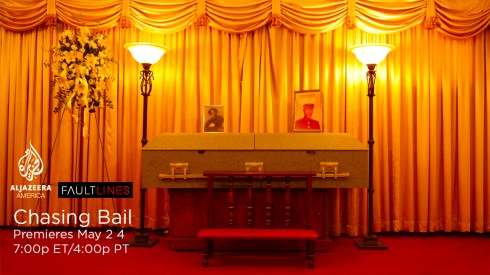
CHASING BAIL
We have a more recent view at the lives and fortunes at stake in a criminal justice system influenced by market rules. Al Jazeera’s Fault Lines series has a pedigree when it comes to criminal justice reporting, so I eagerly anticipate Chasing Bailwhich examines America’s multi-billion dollar bail bond industry. Two of approximately 15,000 bounty hunters are featured in the show, also.
In the show, reporter Sebastian Walker meets the family of 56-year old Jerome Murdough, who was found dead in a 101-degree Rikers Island jail cell, NY. Murdough was unable to make his $2,500 bail and awaiting trial at the time of his death. He was jailed for a misdemeanor trespassing charge.
The program makers also go to Prince George’s County Detention Center, Baltimore, MD — a region with one of the highest arrest rates in the country — and interviews prisoners incarcerated on bails of less than $3,000. People, the program explains, who are incarcerated pre-trial are far more likely to plead guilty.
The program also follows Rob Dick, a bounty hunters in Sacramento, CA — a county in which courts set over $16 million in bail money each month.
Al Jazeera writes:
The U.S. is one of only two countries (along with the Philippines) that allows companies to bail people out of jail at a profit. In all but 4 states, bail bondsmen are allowed to take almost any legal measure necessary to capture fugitives, including crossing state lines and breaking into homes. It’s a dangerous business for almost everyone involved, with few rules and little oversight.
In a nation where, on any given day, nearly 70% of the jailed population is awaiting judgment – how does money affect who goes free and who stays behind bars?
It is, unfortunately, rare that we see photography about mental illness in which the protagonist is also the creator. Christina Riley’s Back To Me bucks the trend.
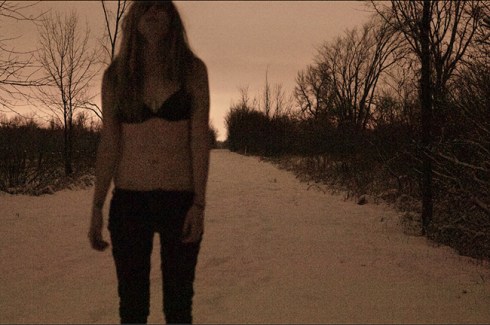
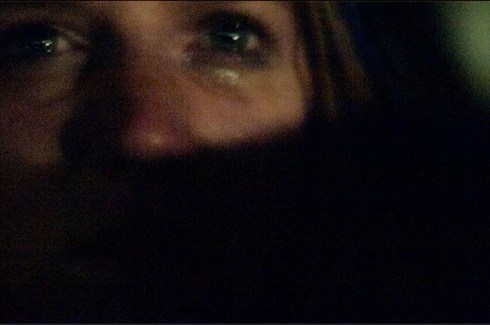
Back To Meis a visual dip into a disorienting episode Riley experienced when she briefly absconded from her medication routine. She was without anchor and the photographs trace her imperiled, but thankfully not fatal, journey before returning to a mental state she could claim as her own; before she found a way back to herself.
Simultaneously, Riley experienced euphoria and suicidal thoughts. Freewheeling brain chemistry forced her into an escape and explore mode, but the exhilaration was not something she could control. She describes being outside of herself and of living another person’s experience.
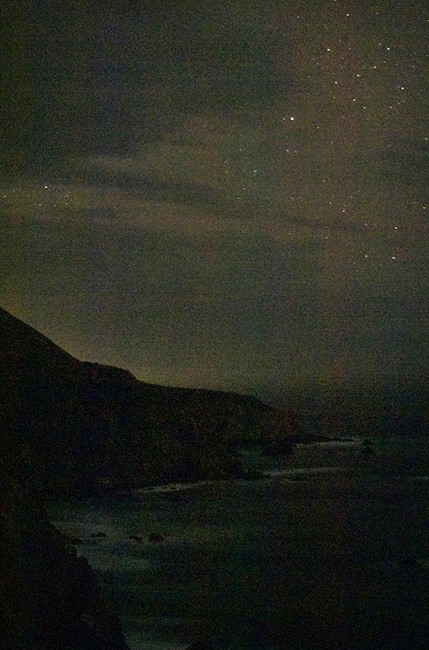
The facts of the episode are not immediately apparent from the grainy images alone. There’s a looming threat but as the images vacillate between self-portraits and landscapes of unidentified places, it’s difficult to figure out the source of the threat. Perhaps the two are one and the same?
Clearly something is not right, but it is only a brief text on the book’s penultimate page that contextualises Riley’s solitary portraits amid the dark, between the light snow and at the side of unknown roads.
Riley writes:
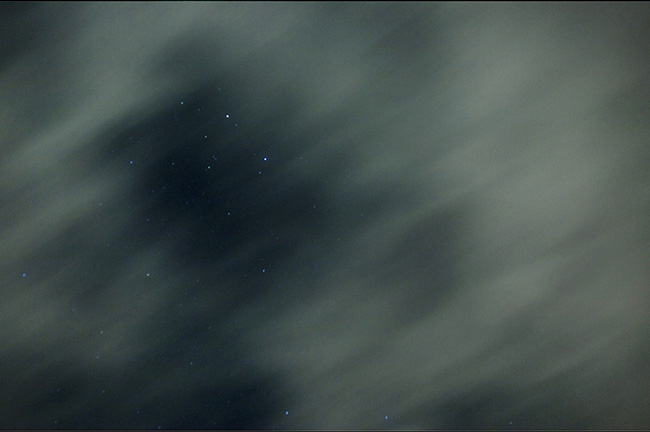
I remember driving down Highway 1 south feeling almost certain I wouldn’t return. The bottle of wine I planned to drink before jumping was sitting in the cup-holder alongside a bottle of Ativan and my camera. I cried the whole way to the bridge feeling guilt already for what I hadn’t yet done. I stepped out of my car to a cold, foggy blowing sky. But through all that, stars. I stood there in the darkness and they spoke to me. They were just for me and their message was clear.
It would kill him.
Riley somehow in the swirl of illogic and depression Riley saw the effect her suicide would have on a loved one. She didn’t jump, she turned back. What part did photographs play in the decision? Any at all? Are these photographs saving therapy? Or are they mere documentation? That this remains unclear is one of the strengths of this unique book.
Tony Fouhse, publisher at Straylight Press, says, “One way she grounded herself during this period of madness was by taking photos of herself and the strange world of mania and depression, euphoria and delusion, she found herself in.”
So, Back To Me is part memoir, part self-warning but mostly self-love. Riley came through it and a significant part of understanding and healing has been the sequencing and production of the book. She has found use — a secondary audience, if you will — for images and moments that at the time of making were only for her.
I wanted to ask Riley about that time and the times since, so I emailed a few questions.
Scroll down for the Q&A
Q&A
Prison Photography (PP): Describe your life and thoughts leading up to this episode of instability.
Christina Riley (CR): Throughout my life I have struggled with a mood disorder. At ten-years-old I started behaving extremely unpredictably. It came out of nowhere. My parents had no idea what was going on, until after attempting suicide twice, I was hospitalized for a year. I walked out of there at age 14 with a diagnosis of bipolar disorder.
Leading up to the most recent episode shown in Back To Me I was feeling pretty level (so I thought). It lead me to believe I was misdiagnosed, so I took it upon myself to go off of my medication. I remember my mind racing with ideas. I had endless energy. The world revolved around me. My self-confidence and sexuality was inflated. Things couldn’t get better. Then suddenly I was convinced I was in love with someone else. Then there was no stopping me. I thought my behavior was coming from a genuine place. I didn’t know I was sick.
I was launched into the world you see in Back To Me.
PP: Between which dates do you identify the episode? And between which dates were you making photographs.
CR: It’s all such a haze but I think the episode began in November 2011 and got very serious pretty quick. It feels like it was an eternity and somehow a dream. Time did not exist. I would say that the entire episode — including the slow transition into my “normal” self — lasted a year-and-a-half or something.
I began taking the pictures around December 2011 as things were becoming more intense and I was losing control. I really had an overwhelming feeling that it had to be photographed, like it felt somehow crucial to my existence. I would be in those moments of living in that other world, and there was no question. I stopped photographing it pretty much when I came around to seeing that I was better – that things were better. I could see it in the pictures and knew it was done.
PP: How, with what, and/or why did you come out the other side of the episode?
CR: It took a lot of will power, medication, therapy and support from family and friends to get here. Everything comes to an end, so it was inevitable one way or another. I’m just happy I didn’t kill myself. I came out of this a better, more secure person.
PP: You’ve said it was like someone else taking photographs.
CR: It’s so hard to explain. It was kind of a compulsion, so I guess it sort of feels like the illness took the pictures. But at the same time, looking back, I know it was part of me too, which makes sense considering the illness will always be a part of me, healthy or not. I just wasn’t with it enough to know what was really happening or to make logical decisions which makes me feel like it was completely out of my control.
PP: Do words (in this interview) or images (in the book) manage to reflect the emotion and psychology of the time?
CR: I don’t think it would be possible for me to convey what it felt like any better than with the photographs in the book.
The photographs in Back To Me are a true moment captured in an unreal time. I’ve never expressed myself or the illness in such a pure way. Even though there was stuff you don’t see happening in the time surrounding the pictures, I believe that each one encompasses how it felt as a whole.
PP: You say you’re grateful for the episode. It seems like it was a learning experience. Is this a fair characterization? Are the photographs key to that? In other words, are the photographs a valuable product from a less than ideal time? Would your view of that time be different if you had made no photographs and you had no book?
CR: Photographing this time in my life helped me more than anything else. I can’t imagine living through that without visual proof of it. It all felt so unreal that I wouldn’t know what to believe without them. I would feel so lost. It’s hard sometimes for me to look at the book because I can feel everything again. But it’s good for me. I know I don’t want to go there again because of it. I’m thankful because in the end, the pictures really have brought me to a better, more stable and aware place.
The book Back To Me is one of the most important things I have ever done. It is proof that I have an illness that I have to take care of. It is proof that I can get through it. It is a definite end to a crazy chapter in my life.
PP: Anything else you’d like to add?
CR: Many people think mental illness is a relentless hard slog against challenges that are unrewarding. But to the contrary, I feel that bipolar disorder has brought more positivity to my life than negativity. It has been hard, but it has made me a stronger, more accepting and maybe a more interesting person.
Without Straylight Press / Tony Fouhse, I feel my voice – my experience, which I believe so many people can relate to, would be lost.
PP: Thanks Christina.
CR: Thank you, Pete.
REVIEWS ELSEWHERE
Colin Pantall says, “Straylight, a publisher which makes direct books with direct themes. Straylight is kind of rough and ready but it hits the spot and is much more than a decorative publisher. It makes books about things that matter. And it publishes people who don’t get published elsewhere.”
Timothy Archibald says, “A quiet story, told in your ear. Not sad, not tragic at first glance. No high drama. It feels like introspection. Just the data, shared by the storyteller as if it happened to someone else. Rich with color, rich with grain, warm and tangible- not like you are drugged, but just like you are very tired, but your senses are working overtime.”
The event was hosted by Aperture Foundation and Open Engagement. As introduction, we discussed our own practices and priorities, followed by break-out groups to develop the conversation and canvas audience members’ views.
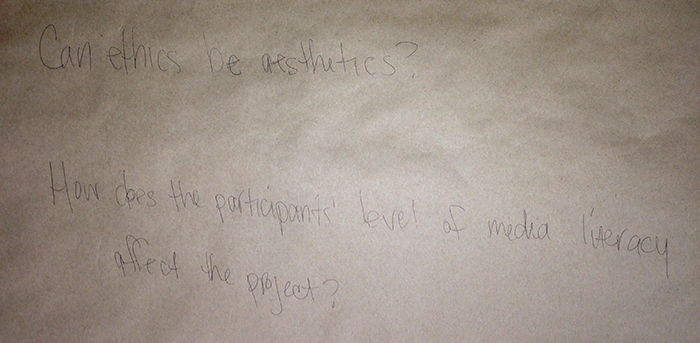
These conversations will influence our ongoing practices and be expanded upon in articles on the website Photography As A Social Practice throughout the summer, but for now here are some snaps of the ideas we noted during each group.









 Prison Photography