paggeti

No people, no explosions. Just heavy, damped-down, grounded-down city streets. Franco Pagetti‘s images of strategically positioned sheets in the Syrian city of Aleppo is powerful work.

From the VII Photo website:

Sheets line the devastated streets of Aleppo, Syria, acting as shields to obscure Free Syrian Army soldiers from the view of Bashar al-Assad’s security force snipers. Before the war, these sheets served a very different purpose as residents used them for privacy or to protect their homes from harsh weather. “Aleppo’s sheets serve the same purpose: they protect lives,” says Franco Pagetti. “But you’re always aware how fragile they are.”

It would be trite to say that the images look like stage sets and the sheets like backdrops; it evades the seriousness of the sheets’ necessity. It would be more appropriate to liken the sheets to those laid over the face of a body following death; huge covering-veils marking the death of a neighbourhood and its people.

Ultimately though, it is a cruel loop of irony inherent to these images that has me crushed.

Both photography (generally) and Aleppo’s sheets (specifically) are about vision and its manipulation. It is not necessary for these sheets to physically repel a bullet, they just need to negate the ability of a gunman to fire one.

And, even though it is fashionable these days to completely disown the notion that photography has agency to change attitudes, let alone directly change events (it would be insulting beyond measure to suggest photography could stop a war), we clamored for images of the conflict in Syria as it took hold in 2011 and 2012.

For many months, Syria’s war was top of the news-cycle; a surprisingly long time for our current attention spans. I think part of the persistent — almost nagging — interest was the fact that we were involved in debates about the veracity of citizens’ and fighters’ mobile footage. We wanted to know accurately of the events but we were also affronted by the fact “our” named journalists and outlets couldn’t or wouldn’t get into Syria.

Photographers such as Thomas Munita, Rodrigo Abd, Goran Tomasevic, Robert King, Jonathan Alpeyrie eventually got in and showed us the horrifying violence from both sides. Remi Ochlik died while he made photos in Homs in February 2012.

Today, nearly two-and-a-half years on from the start of the unrest, Pagetti’s work is a less frantic look at Aleppo; a look at the battered foundations of a city; at the persistent sadness of conflict; at the pathetic shreds that remain. It’s a requiem.

The sheets are death-masks and the fact they hang so poignantly and that Pagetti’s photographs are so poetic has me doubly crushed.

prisonpics

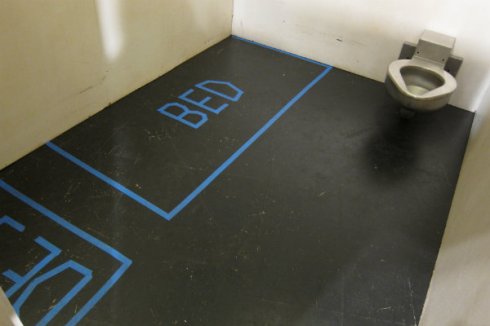
The NYCLU created a mock prison cell to show what life is like in solitary confinement. Kathleen Horan/WNYC

Today resumed a hunger strike by the prisoners of California’s Pelican Bay State Prison SHU (Secure Housing Unit). In solidarity, prisoners across the nation have also joined.

The main issue at hand is solitary confinement. Namely, its longterm use. UN Special Rapporteur on Torture, Juan Mendez, stated that any time over 15 days in solitary confinement constitutes torture. Yet California prisoners have been caged in solitary for 10 to 20 years or more. In addition, the prisoners kept under solitary confinement ask for nutritious food and the same educational programming accessible to prisoners in the general populations of state prisons.

Solitary confinement is an invisible cancer to those outside the system and a terror to those within it.

The prisoners — who refer to themselves at The Short Corridor Collective — are returning to protest that began two years ago. Neither Phase One (July/August 2011) and Phase Two (Sept/Oct 2011) secured the policy changes desired, despite promises from the California Department of Corrections to address the specific issues and reasonable demands made. In 2011, over 6,000 California prisoners went on hunger and work strike making it one of the largest peaceful protests in U.S. prison history.

The Pelican Bay State Prison SHU Short Corridor Collective state:

Our decision does not come lightly. For the past 2 years we’ve patiently kept an open dialogue with state officials, attempting to hold them to their promise to implement meaningful reforms, responsive to our demands. For the past seven months we have repeatedly pointed out CDCR’s failure to honor their word—and we have explained in detail the ways in which they’ve acted in bad faith and what they need to do to avoid the resumption of our protest action.

Five core demands

1. Eliminate group punishments.  Instead, practice individual accountability. When an individual prisoner breaks a rule, the prison often punishes a whole group of prisoners of the same race.  This policy has been applied to keep prisoners in the SHU indefinitely and to make conditions increasingly harsh. 

2. Abolish the debriefing policy and modify active/inactive gang status criteria. Prisoners are accused of being active or inactive participants of prison gangs using false or highly dubious evidence, and are then sent to longterm isolation (SHU). They can escape these tortuous conditions only if they “debrief,” that is, provide information on gang activity. Debriefing produces false information (wrongly landing other prisoners in SHU, in an endless cycle) and can endanger the lives of debriefing prisoners and their families.

3. Comply with the recommendations of the US Commission on Safety and Abuse in Prisons (2006) regarding an end to longterm solitary confinement.
  This bipartisan commission specifically recommended to “make segregation a last resort” and “end conditions of isolation.”  Yet as of May 18, 2011, California kept 3,259 prisoners in SHUs and hundreds more in Administrative Segregation waiting for a SHU cell to open up.  Some prisoners have been kept in isolation for more than thirty years. 

4. Provide adequate food.  Prisoners report unsanitary conditions and small quantities of food that do not conform to prison regulations.  There is no accountability or independent quality control of meals.

5. Expand and provide constructive programs and privileges for indefinite SHU inmates.  The hunger strikers are pressing for opportunities “to engage in self-help treatment, education, religious and other productive activities…”  Currently these opportunities are routinely denied, even if the prisoners want to pay for correspondence courses themselves.  Examples of privileges the prisoners want are: one phone call per week, and permission to have sweatsuits and watch caps. (Often warm clothing is denied, though the cells and exercise cage can be bitterly cold.)  All of the privileges mentioned in the demands are already allowed at other SuperMax prisons (in the federal prison system and other states).

You can download full text document of the demands here.

WHAT YOU CAN DO

Sign the petition.

Involvement in the July 13th Mass Mobilization!

Plan a solidarity action!

Donate!

Follow! On Twitter and on Facebook

Use your imagination and your skills; talk to your family and friends about it, and maybe provide them with a handful of shocking facts about the psychological torture that is solitary ? (See below)

Don’t get despondent, get angry.

WHAT IS SOLITARY CONFINEMENT?

In California, nearly 12,000 imprisoned people spend 23 hours-a-day living in a concrete cell smaller than a large bathroom. Across the United states it is conservatively estimated that 20,000 people are in solitary every day. It could be as high as 70,000; it depends on definitions related to time and contact.

In California  solitary cells have no windows, no access to fresh air or sunlight. People in solitary confinement exercise an hour a day in a cage the size of a dog run. They are not allowed to make any phone calls to their loved ones. They cannot touch family members who often travel days for a 90 minute visit. They are not allowed to talk to other imprisoned people. They are denied all educational programs, and their reading materials are censored.

UNFATHOMABLE SCALE AND WIDESPREAD USE

“The [psychological and cognitive effects of long term isolation] is not something that’s easy to study, and not something that prison systems are eager to have people look at,” says Craig Haney, psychology professor at the University of California at Santa Cruz, who notes that the widespread use of solitary is a very modern phenomena.

We have an overwhelmingly crowded prison system in which the mandate to rehabilitate and provide activities for prisoners was suspended at the same time as the prison system became overcrowded. Not surprisingly, prison systems faced with this influx of prisoners, and lacking the rewards they once had to manage and control prisoner behavior, turned to the use of punishment. And one big punishment is the threat of long-term solitary confinement. They’ve used it without a lot of forethought to its consequences. That policy needs to be rethought.

Writing for the New Yorker (Hellhole) in 2009, physician Atul Gawande quoted extensively from Haney’s research and added:

After months or years of complete isolation, many prisoners “begin to lose the ability to initiate behavior of any kind—to organize their own lives around activity and purpose. Chronic apathy, lethargy, depression, and despair often result. . . . In extreme cases, prisoners may literally stop behaving” (Haney). [They] become essentially catatonic.

Keep yourself informed; keep progressing; keep honest; follow news on the Prisoner Hunger Strike Solidarity website.

In solidarity, Pete.

Gabriela_Bulisova_01

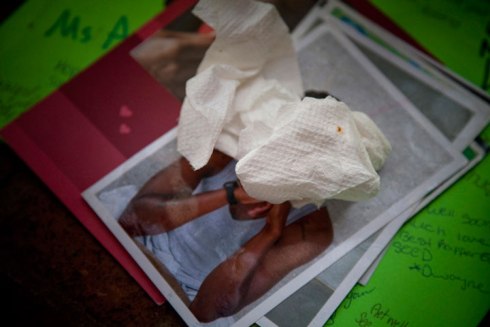
Washington, DC – 2012. “Even though it was a split second decision that caused those women their lives, it was not just one decision. My life pretty much sprouted out of control as far as me being teen mother, high school drop out, unemployed, drug addicted, alone; I was just immersed in the life of crime,” says Lashawna Etheridge-Bey.

This blog post is long overdue. Gabriela Bulisova is a committed multimedia storyteller who, for the past few years, has shaped stories about post-prison lives and focusing often on the experiences of women re-entering society.

In the excellent Convictions (2012) — a video about Our Place, a D.C. non-profit assisting currently and formerly incarcerated women as they transition out of the criminal justice system — Bulisova notes that over 1 million U.S. women are under correctional supervision (prison, jail, probation or parole) and that the female prison population has ballooned by over 830% in the past 30 years. Yes, you read correctly; an eightfold increase in the number of women locked up since 1980. There are 200,000 women behind bars.

Bulisova’s latest piece Time Zone “portrays the story of Lashonia Etheridge-Bey, a 39-year-old resident of Washington, DC, who spent half of her life in prison for a double murder and was paroled in December 2011. It focuses on Lashonia’s personal transformation while in prison, her difficult yet highly successful reentry into society, and the conflicts that remain within herself and with family members,” says Bulisova.

You can view a gallery of stills from Time Zone here.

When she was 16, Etheridge-Bey shot two teenage girls dead. She spent 20 years in prisons and due to her self-discipline and model behaviour was granted parole at the first hearing.

What is interesting about Time Zone is that it doesn’t focus on the systematic problems of the prison industrial complex. Instead, it focuses on the details of Etheridge-Bey’s own story. By exploring family ties, Etheridge-Bey’s feelings of guilt (at one point, she asks, “Do I deserve to forgive myself?”) her support systems and her coping strategies, Bulisova weaves a tale full of complex issues and challenging questions.

I almost feel like Time Zone should be screened in prisons and jails as an example of how extremely difficult circumstances are surmountable. If an incarcerated person has the right discussions, strong resolve and faithful allies in dealing with the past and future then

Etheridge-Bey credits prison — or more specifically, the fact it extracted her from society and a tough life — as a turning point. Prison forced her to examine her life. She took the opportunity and is undoubtedly a success story.

To say that prison is “good” by any definition is difficult for people such as I who advocate for prison-reform. But, of course, prison is only good if an incarcerated individual develops their own skills to make the most of limited resources available. All the while, prisons should meet basic health and safety needs, which is not always the case.

Through tenacity and discipline, Etheridge-Bey propelled her self-improvement. She maintained strong relationships with her family (her daughter’s words in the video are impressive, realistic and hopeful); she accumulated college credit while she was inside; she has beaten the hurdles to employment and study that many post-release felons face.

Reentry can be very difficult. The stigma of incarceration can be very difficult. Not every former prisoner will be as successful as Etheridge-Bey. The question we must ask is how much do we want to invest in people who have made mistakes — sometimes terrible, life-costing mistakes? If people must be locked up, how can we think imaginatively about maximizing the opportunities for prisoners to find a new track?

If you share the notion that prisons should be about rehabilitation and not warehousing, then how far do we push those efforts? For example, with 85-90% of all incarcerated women having suffered a history of domestic and sexual abuse, where is the line between their responsibility and society’s responsibility to break them from entrenched cycles of victimhood? Do we expect women to “pull themselves up by the bootstraps, regardless of their situations? I hope not.

If we must incarcerate people, we should expect and demand a change for the better. We must demand that institutions are imaginative and reflexive enough to match prisoners’ efforts toward self improvement. And to nurture those efforts, instead of stymie them.

I applaud Etheridge-Bey’s efforts. Unfortunately, her great advances are not typical of incarcerated women in America.

I don’t think prisons are invested in recognising the skills and potentials of individuals. Access to meaningful programs and relevant pedagogy varies widely, state-to-state, so I must be careful not to over-generalise, but often, personal advancement is achieved in spite of the system and not because of it.

Clearly, the use of incarceration only as a last resort would go a long way to maximising resources for prisoners. Improved and robust education, easier family visitation procedures, smaller facilities, better mental-healthcare, and better nutrition to name a few factors, prisons can do more, much more, to assist prisoners — both men and women — to realise their full potential.

Sondheim Artscape Prize

Along side Larry Cook, Caitlin Cunningham, Nate Larson, Louie Palu and Dan Steinhilber, Gabriela Bulisova is currently shortlisted for the Sondheim Artscape Prize.

The six finalists for the Sondheim Artscape Prize have their artwork installed in Special Exhibition Gallery of the Walters Art Museum, 600 N Charles St, Baltimore. (June 29 – August 31). The award announcement and reception is this coming Saturday, July 13th, at 7pm.

arthur4

Following its 66th AGM earlier this week, Magnum Photo Agency announced that Olivia Arthur and Peter van Agtmael are its newest members.

Good choices. Peter’s a nice guy and was kind enough to offer up images and his first hand account of a story we weren’t even sure was a story. I have not met Olivia Arthur. She is a photographer I’ve admired for a long time. I am amazed (and a little embarrassed) that I’ve not mentioned her photography before here on the blog.

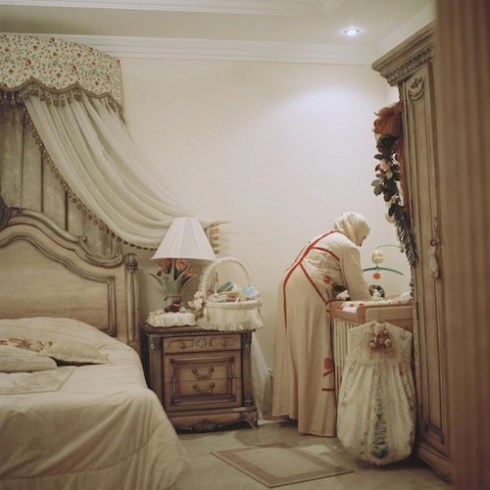
Jeddah Diary is one of the standout photography projects of recent years. Now is a good time to feature some images and publicly applaud Arthur’s tenaciously delicate observations of Saudi women.

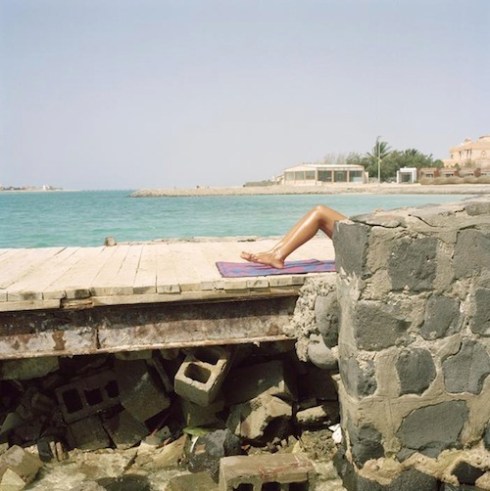
In 2009 , the British Council invited Arthur to conduct a two week photography workshop with women in Jeddah, Saudi Arabia. Jeddah Diary does not feature the photographs made by Arthur’s students; the products of the workshops largely remain a mystery. Instead, Jeddah Diary is comprised of Arthur’s own fragmentary observations and photographic concessions that emerged as she tried to make sense of depicting a veiled subject.

arthur1

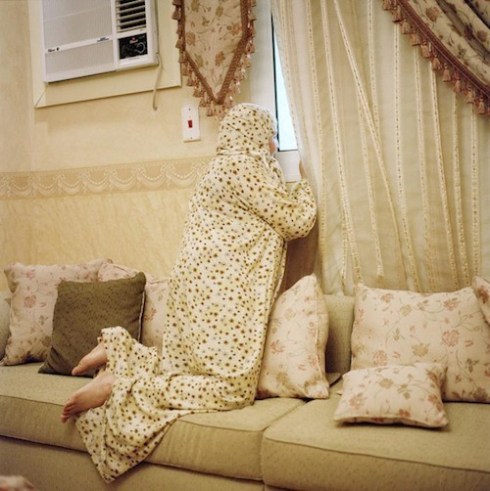
The cultural and religious traditions of Saudi Arabia restrict the opportunities to photograph many women who are not wearing the abaya. As I understand, both Arthur and the women did make images of each other unveiled, but the images could not seen or distributed; conceived of, but not shared.

Arthur says that her first impression of the city of Jeddah was that public spaces were empty. Perhaps the important (human) interactions went on behind closed doors? The abaya is only one form of cover in Saudi society. The fabric of architectures, court yards and corridors bend and shape relationships.

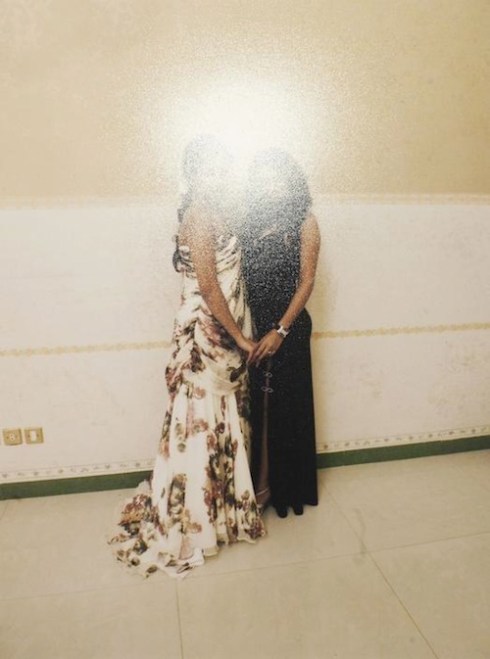
Saudi society thwarts many of the visual relationships — photographer/subject and photographer/audience — that are taken for granted in secular countries and in less traditional regions of the Arab world. As such, Jeddah Diary is a collection of work-arounds and solutions; rephotographed portraits, limbs and parts of people, plays with spotlight and night shadow to obscure identities.

arthur3

The parameters of negotiation between Arthur and the women about what could be shown trod, at times, strange ground. After using flash to anonymise her subject (above photo), Arthur showed it to the women and they responded, “That’s great, but can’t you show a bit more of her eyes so people can see how beautiful she is?” asked some of the women.

These unique discussions led to photographer and subjects becoming close friends. Arthur says:

“On my first trip to Saudi I worked in medium format but this photo was taken on my second trip, using a little Panasonic Lumix. Because this was the sort of camera the women themselves used, when I used it they started to stop seeing me as a photographer and saw me instead as a friend. At the beginning I’d been clear with them that – as professional photographer – I wanted to show these pictures, but the funny thing was that when I switched cameras they relaxed and I ended up taking pictures that afterwards they didn’t want me to use.”

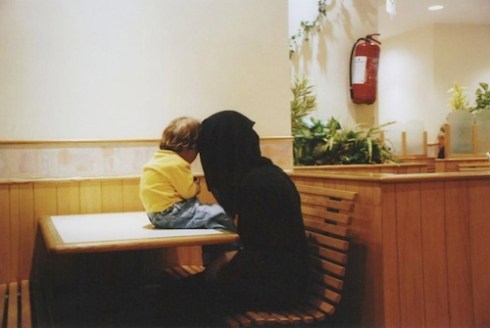
For me, the most compelling images are those of women veiled and in everyday moments; sitting on a kitchen counter, in a restaurant; fooling around while sharing tea. These are intimate events and the challenge to depict a hidden subject can be solved the moment one abandons a battle against restraints. Arthur’s interactions and discoveries are central to the book Jeddah Diary.

“I just thought, let’s take people on the journey that I went on, and show how confusing and contradictory it can be rather than trying to explain it; that’s the point when it finally made sense to me.”

And because of Arthur’s efforts, it starts to make sense for us. As Antone Dolezal remarks in his review of the book, “Jeddah Diary tells a story that could only be informed from a female perspective … a story both hidden from the world of men and only privately discussed in the world of women.”

arthur12

arthur2

arthur7

Jeddah Diary, by it’s nature cannot make full sense to us. Or rather, if we adopt our usual insistence to see idenifiable faces, and know names, and have place and date stamps attached to each image, we’ll be sorely disappointed. Arthur’s primary consideration was to protect her friend-subjects. As Sarah Bradley notes in her review of the book:

“It’s hard to tell who we are looking at in the images — some girls are named, but we see few faces, and in a small postscript Arthur makes it clear that in no way should one infer that the girls attending illegal parties are the same girls depicted elsewhere in the book. Her thank-yous show that many chose not to be named.”

Jeddah Diary is a moment of slippage. It is a document of the undocumentable. In that regard it is also a moment of reflection — and, for me, a cause of sadness — on the fact that Saudi women have limited choices in how they operate in society and interact with the world. Fashion is a flip topic, but clothing is not. It’s a simple point to make, but the abaya limits self-expression. I wouldn’t want to state the degree to which self-expression is limited or even what the results (positive and negative) emerge from a single, designated type of garb for one gender in a society.

The women in Jeddah Diary were, based on Arthur’s report, ambivalent about the project. And, I feel, probably reluctant to think of images as agents for social change.

“I was surprised how few of them had any major feedback. When I was there and tried to ask them how they felt about their situation, they’d say, “You know what – we’re okay” so I’d leave it. They were happy to be in the photographs but they’re not bothered about the comment I’m making on their society.”

arthur8

arthur10

arthur11

arthur

arthur5

SHU

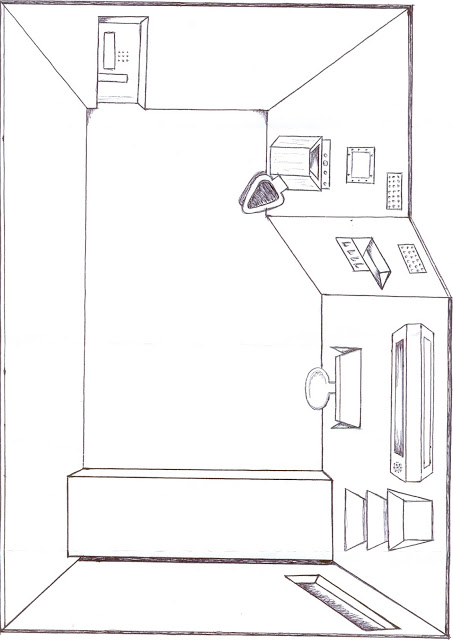
The image above was drawn by Katherine Fontaine, a San Francisco based architect, prison-questioner, friend to all, and book-art-space-collective co-runner.

“There are very few pictures of SHUs. The last drawing that was found at the Freedom Archives in San Francisco was from when Reagan was the Governor of California,” says Fontaine.

With solitary confinement, such a hot news topic, Fontaine was compelled to sketch when she realised there were very few images of solitary cells in circulation.

“I was given the few photos that exist from other similar prisons and a diagram that was used in a previous court case drawn by a prisoner while in an SHU at Pelican Bay. The drawing is what I came up with from the materials I was given,” explains Fontaine who hopes her drawing of a Pelican Bay State Prison Secure Housing Unit (SHU) will be used — in media materials and campaigns — by any organizations protesting solitary confinement.

Fontaine’s commitment to make reliable sketches of prison spaces and apparatus was spurred by a chance encounter with some fellow professionals in an unlikely place. She was among a crowd outside the Central California Women’s Facility protesting overcrowding inside the prison.

Fontaine noticed a person within the crowd with a sign that read ‘Architects Against Overcrowding In Prisons.’ On the back of the sign was www.ADPSR.org. The acronym stands for Architects, Designers and Planners for Social Responsibility. Despite her day job as an architect, ADPSR was not a group with whom she was familiar. Upon reading the statement for the Prison Alternatives Initiative, one of ADPSR’s projects, Fontaine was all-in.

ADPSR state:

“Our prison system is both a devastating moral blight on our society and an overwhelming economic burden on our tax dollars, taking away much needed resources from schools, health care and affordable housing. The prison system is corrupting our society and making us more threatened, rather than protecting us as its proponents claim. It is a system built on fear, racism, and the exploitation of poverty. Our current prison system has no place in a society that aspires to liberty, justice, and equality for all. As architects, we are responsible for one of the most expensive parts of the prison system, the construction of new prison buildings. Almost all of us would rather be using our professional skills to design positive social institutions such as universities or playgrounds, but these institutions lack funding because of spending on prisons. If we would rather design schools and community centers, we must stop building prisons.”

Fontaine’s sketches will regularly appear in Actually People Quarterly, partly to inform as partly as a means to focus her thoughts.

“People need to see them,” she says. “Also it was such a powerful thing for me to draw that SHU cell. I wonder if anyone else can have a similar feeling just by looking at it or if I just feel so changed by it because I drew it. Maybe it is because I’ve spent years of my life drawing, studying, measuring and designing spaces that in actually creating that image I imagined that actual space so much more clearly than I had before? To imagine being an architect and *designing* that space is incomprehensible to me.”

Incidentally, ADPSR was recently featured on the excellent podcast 99% Invisible in an episode called An Architect’s Codefollowing mainly the activities of Raphael Sperry, ADPSR’s founder.

Below is Fontaine’s sketch of cage used routinely within the California prison system. The cages are sometimes to hold prisoners during transfer between units but, increasingly, used for group *therapy* — an oxymoron if there ever was one.

caged therapy

I’d also like to take this opportunity to share the work of some other determined prison sketchers, some of whom are prisoners.

From the website, Solitary Watch:

One of the most prolific and talented artists in solitary is 60-year-old Thomas Silverstein, who has been in extreme isolation in the federal prison system under a “no human contact” order for going on 30 years. (He describes the experience here.) His artwork appears on this site. It includes meticulously detailed drawings of some of the cells he has occupied, including one pictured below, which is designed (with built-in shower and remote-controlled door to an exercise yard) so that he never has to leave it or encounter anyone at all.

silverstein-1

Next is this cell in Ohio, drawn by prisoner Greg Curry.

RedbirdCell0001

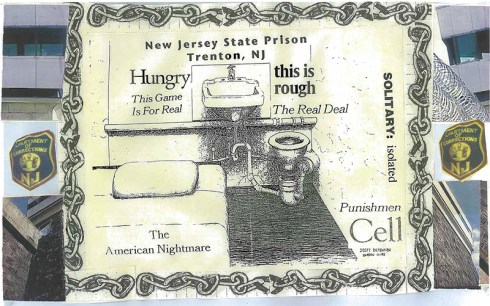
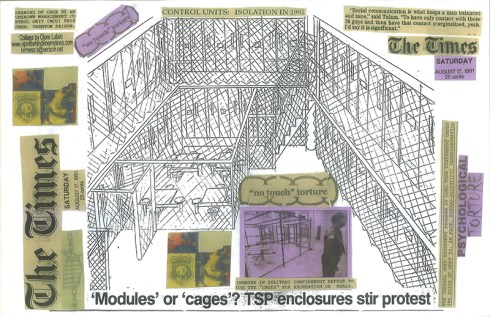
And finally, Ojore Lutalo has made some of the most politically charged prison art I’ve ever seen. Below, an isolation cell, and very below, Control Units, 1992.

When depicting prisons and their abuses there is no hierarchy of medium; sketches, photos, videos and oral testimony conspire to deliver a fuller picture. I will say though that these narrative rich drawings are more powerful than many photographs I come across.

Ojore-1-Left-Isolation-Cage2

Image

1339603076_juneteenth_art

I particularly liked this newsletter by Roger White, Campaign Director, of activist group Critical Resistance. I’ve reproduced parts below.

I especially appreciate White’s reinsertion of slave’s acts of resistance into the historical narrative.

Two and a half years after the Emancipation Proclamation was issued ordering states in the confederacy to release their slaves, Black people in Texas achieved their liberation from chattel bondage. On June 19,1865, General Order Number 3 was read from the Ashton Villa balcony in Galveston, Texas, that demanded that slaveholders free their slaves. That day has become an annual occasion for celebration, reflection, and education about the meaning of freedom and the on-going, universal struggle for liberation from domination.

These questions about the real meaning of freedom are more relevant to the work of abolitionists and those working against the prison industrial complex (PIC) than ever.

Today we struggle with how to stem and reverse the growth of imprisonment, surveillance, and policing. […] In our current work fighting against the construction and expansion of jails and prisons in California and New Orleans, we consistently find that the most durable victories against the PIC take place when the people are active participants in their own liberation. The same resolve that fueled the abolitionists in the state 150 years ago still lives today.

While the history of slave revolt in Texas is less well known, it is why we celebrate Juneteenth today. According to historian James M. Smallwood, “gangs of runaway slaves participated with Indians and Mexicans in a guerrilla-like warfare” against the planter class throughout the 1830’s. Resistance to slavery in Texas included everything from thousands of slave escapees fleeing into Mexico to freedom, to work slowdowns and refusals to submit to the enslavers. This record of resistance counters the popular narrative of a passive Black slave population in Texas that was freed by 2,000 heroic and benevolent Union soldiers on June 19, 1865.

To invoke the language of slavery abolition in calls to end the prison industrial complex may be confusing to some, even perverse to others. ‘What has the struggle to end slavery got to do with 21st century criminals?’ some may ask. For Critical Resistance, however, the inequality between the powerful and the powerless, between the wealthy and the poor are as marked now as ever. Racial bias is in sentencing, in the death penalty, in the drug war; it permeates our criminal justice system.

Critical Resistance is a member-led and member-run grassroots movement to end the Prison Industrial Complex (PIC) by challenging the belief that caging and controlling people makes us safe. Critical Resistance refers to their form of activism as abolitionism very deliberately:

“We call our vision abolition, drawing, in part from the legacy of the abolition of slavery in the 1800′s. As PIC abolitionists we understand that the prison industrial complex is not a broken system to be fixed. The system, rather, works precisely as it is designed to — to contain, control, and kill those people representing the greatest threats to state power.”

Read more on the logic behind CR’s language here. This brief history of CR’s trajectory will also help in positioning them on the political spectrum, which, is to say the far left.

I’ve been thinking about the absolute necessity of peoples’ power recently — about how it emerged briefly during Occupy and wondering where and how it bubbles since. I’m inspired by protests outside of prisons in solidarity with prisoners and when I hear about groups such as DecarceratePA marching from Philadelphia to the capitol in Harrisburg, I’m inspired and wish I could be with them. Walking (or standing) are distinctly undervalued forms of civil disobedience.

Measuring the successes of Occupy is a tricky proposition. Most people will admit that it shifted the politics of a national debate on economic justice back toward the centre, toward the interests of everyday people. Grassroots activism is achieving that constantly at a local level. I just wanted to celebrate that on this, the anniversary of one of the more progressive steps toward equity in American history. Love our neighbours and fight for them.

Mullin, Joanne

Refuge by Joanne Mullin “explores the nature of domestic conflict by examining shelters across Northern Ireland. It is a contemplative observation of a temporary place that allows for women and children to have a period of transition.”

StrandquistBridge2

If you’re strolling around the centre of Charlottesville these next few days and peep a red newspaper box, reach inside and grab yourself a copy of the free paper within.

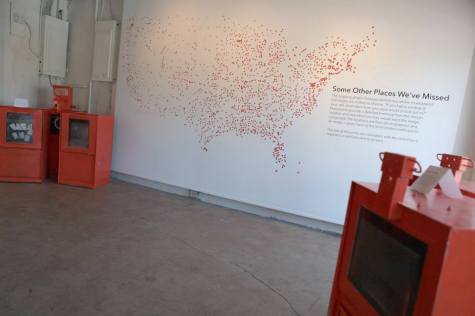
Accompanying his exhibition of Some Other Places We’ve Missed at The Bridge: Progressive Arts Initiative in Charlottesville, artist Mark Strandquist has created eight pages of photos, activist resources and a call to engage.

I have a vested interest in promoting this newspaper. For it, I wrote an editorial about the history of — and imperative of — photographers and artists working in American prisons. It is reproduced in full below.

Even if I wasn’t personally involved, I’d still be singing the praises of Mark’s work – I’ve posted about Some Other Places We’ve Missed before and I am including the work in a prison photography show next year. When Mark and I chatted about the exhibition of Some Other Places We’ve Missed, we got all giddy about the fact that his show is outside of the official LOOK3 program, and yet he is able to grab some mindshare among the throng of photobodies in Charlottesville this week.

prisonphoto_strandquist_8

© Mark Strandquist. A photograph made of a scene described by an incarcerated male.

ART AND SOCIAL ENGAGEMENT

For the longest time, photojournalism and documentary work has pursued common good, reliable information, hidden stories and social change. At least, that’s the ideal. With guests such as Susan Meiselas and Martha Rosler, and with Koudelka’s exhibit, the LOOK3 schedule looks serious and seriously good.

Mark and I are huge fans of this year’s LOOK3 line up, but LOOK3 remains a big festival where the cucumber martinis flow like wine and big name photographers will hold court in Charlottesville town center. Festivals are about learning, meeting and sometimes brown-nosing … and, for that, we love them. Everyone leaves photography festivals feeling connected and re-energised and that’s how it should be. But, there’s more.

Some Other Places We’ve Missed asks us to think about image-making in slightly different ways. Not everyone can produce a 20 foot tall Nat Geo vinyl banner, but everyone can have the type of  intimate conversations on which Some Other Places We’ve Missed is based. Of course, I am biased because Mark is having conversations with American prisoners and I think there’s rehabilitative value in that.

I’ll stop prattling on now and just say if your interest is piqued then you should attend the panel talk More than A Witness – Photography as Social Engagement on June 15, 2pm – 3:30pm. Speakers are David Levi Strauss, Chair of Critical Studies at the School of Visual Arts, Edgar Endress of Floating Lab Collective, Yukiko Yamagata of the Open Society Foundation, and Matthew Slaats, Executive Director of the Bridge. They’ll discuss how art facilitates dialogue and can be used to reach out to new subjects and engage broader audiences. Find out more on Facebook here.

Mark has programmed a busy schedule of events at The Bridge including a poetry reading and discussion between gallery-goers and prisoners via a direct feed from a local jail. Full details on The Bridge website.

[Scroll down for my newspaper editorial.]

StrandquistBridge

Installation shot of Some Other Places We’ve Missed, opening night at The Bridge, Charlottesville, VA.

EDITORIAL: DRAWING ON MEMORY, WORKSHOP GETS PRISONERS AND PUBLICS THINKING ABOUT PHOTOGRAPHY, STORY AND HIDDEN SPACE

In the 1970s, a purple barge floated up and down the Hudson River in New York state. Once moored, photographers emerged to teach workshops to communities traditionally outside of art circles; hospital patients, rural high-schoolers and — perhaps most remarkably — prisoners. The buoyant vessel with living and gallery spaces was operated by the Floating Foundation of Photography (FFP).

Not all New York State prisons are on the Hudson and so after initial offerings at Sing Sing, FFP ventured inland, eventually delivering photographic arts education in eight prisons. The majority of workshops were facilitated by founder Maggie Sherwood, her son Steve Schoen and a handful of close associates. But, the FFP enjoyed close ties with the New York arts scene and as such invited leading photographers in recent memory to deliver day-long workshops in the prisons – W. Eugene Smith, Arthur Tress, Mary Ellen Mark, Les Krims, Judy Dater, Lisette Model and Lee Witkin to name a few. The FFP mounted exhibitions of “outsider photography” on the anchored barge in Manhattan and in Central Park.

As one browses the images and stories within Some Other Places We’ve Missed, perhaps it is worth bearing in mind the history of arts education — and specifically the role of photography — in the rehabilitation of those locked up within our prisons and jails. The Floating Foundation represents a particular high point in this history; the access into prisons that it negotiated, the pedagogy it employed, and the optimism it eschewed stand out as extraordinary. These days, opportunities for arts education (with strong photographic components) in the prison industrial complex are rare. As such, projects such as Mark Strandquist’s deserve attention.

In the 1980s, mass incarceration began. In the past 35 years, the number of Americans locked up has more than quadrupled. The war on drugs, indeterminate and longer sentencing, broader definitions of criminal behaviour, the decimation of many safety-nets for society’s most vulnerable, and the politics of rhetoric and fear all contributed to the tumorous growth of America’s prisons. Even in states that entered a prison building boom, facilities were soon overcrowded. As costs soared, pressures mounted and efficiencies took priority, both the ability to provide — and belief in — the efficacy of education and arts to help in the rehabilitation of prisoners waned.

States previously provided high school and college education to prisoners as item lines on their budgets. These were scratched from budgets early, and when the Clinton administration revoked prisoners’ right to federally funded Pell Grants in 1994, the message was clear: prisons exist to incapacitate, not to rehabilitate. The majority of college level education provided in state prisons these days is administered by either earnest non-profits, University departments with social justice mandates, and sometimes the two in partnership. Prisons remain legally obliged to enroll prisoners without high-school diplomas into GED programs, but the success of students already alienated by public schooling often hampers success. To speak generally, it is the limited scope of — and limited opportunities for — education in prison that scupper advancement. To wright this ship, a huge shift in political will, informational (media) exchange and tax-payer attitude is required.

Prisoners are lining up to be part of this collective shift of consciousness. “Lucky” prisoners may live in state facilities close to a big city which can draw on volunteers to run programs previously provided by the state. Others find opportunities designed for successful reentry toward the end of their terms. But still, the majority of American prisoners have little to no voice and are for all intents and purposes invisible. Existing creative outlets include law libraries (although not in private prisons), pen-pal programs, and vocational work (prison factories remain because of the immediate profits they create), but these are programs that should exist for all and form merely first rung of the ladders to self-improvement and broadening of the mind.

Some Other Places We’ve Missed brings to us the voices, regrets, dreams and imagination of just a small number of men incarcerated in Richmond County Jail. Mark Strandquist provides us a bridge into their worlds. One needn’t share the political position of an artist to recognize the imperatives of a work or an action; intellectual curiosity and community engagement can saturate the entire political spectrum. Strandquist’s work is sadly exceptional, but it needn’t be. Perhaps, his tenacity is exceptional, but I believe it is within reach of us all. Whenever possible we should be thinking of ways that we can engage with our nation’s prison population. It is a population that has been strategically manipulated to the point of invisibility.

Cameras are a security tool for prison administrations, but in the hands of others are a security hazard. The ability to see, frame and witness life behind bars inherently involves power. In mugshots, in surveillance and in tightly-controlled visiting room digital portraits, prison authorities have a near monopoly on such power. Only rare and serendipitous moments (usually a sympathetic superintendent) give rise to an artist being permitted to use a camera in prison space — Robert Gumpert, Kristen Wilkins, Jenn Ackerman and Jeff Barnet-Winsby are a few examples.

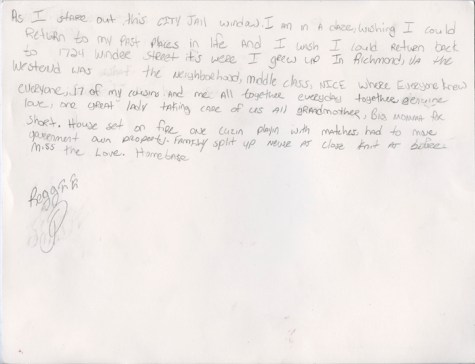
Strandquist navigated this potential barrier by conducting a photography workshop without any introduction of cameras into the classroom. His simple question, “If you had a window in your cell, what place from your past would it look out to?” acted as proxy to any release of the shutter. He asked students to think photographically. While the images are made by Strandquist beyond the prison walls, the essential discussions about memory, self-reflection, the power of photography and the comfort of the image all inform the project.

Through Strandquist’s photographs, we the public, are given an opportunity to connect with the incarcerated; their imagined windows become, momentarily, our window into their lives. But the 1/125th of a second needed to make a photograph is a perverse fraction of the months and years many spend imprisoned. Are the photographs enough? On their own, probably not. But the collaborative and educational core to the project is considerable. As audience, we should employ the same amount of imagination as Strandquist’s students and consider similar ways we can engage with incarcerated persons. There is every reason to think Strandquist’s methodology can be replicated in prisons and jails across the nation. With 2.3 million men, women and children behind bars Some Other Places We’ve Missed should also be a prompt for us to meditate on the millions of sights and experiences in American prisons that we never witness.

prisonphoto_strandquist2

“The neighborhood was middle class, nice, where everyone knew everyone. One great lady taking care of us all – grandmother; Big Momma for short. The house set on fire when one cousin playing with matches. Had to move into government owned property. Family split up. Never as close as before. Miss the love. Home base.”
statement_prisonphoto_2

StrandquistBridge1

BIOGRAPHY

Mark Strandquist is a multi-media artist and curator based in Richmond, VA, who creates work that incorporates viewers as direct participants, features histories that are typically distorted or ignored, and blurs the boundary between artistic practice and social engagement. His work has been featured in various film festivals and independent galleries as well as a current exhibit at the Art Museum of Americas in Washington, DC. He is currently working on a BFA at Virginia Commonwealth University. He has a Tumblr.

EMAIL

prisonphotography [at] gmail [dot] com

Prison Photography Archives

Post Categories