
–
I wanted to let you know that the blog will be quiet for six months. I’m going for a walkabout in the mountains. See you in October.
(Image: Penelope Umbrico)

The Image / Incarceration / Representation / Media / Social Justice / Responsible Photography
–
I wanted to let you know that the blog will be quiet for six months. I’m going for a walkabout in the mountains. See you in October.
(Image: Penelope Umbrico)

–
Louisiana State Penitentiary, known commonly as Angola, is the largest maximum security prison in the United States. Of its 6,300 prisoners, over 85 percent are serving life. This shocking fact is due to Louisiana’s harsh sentencing laws. Activists and reformers who fight against Life Without Parole (LWOP) sentencing refer to life sentences as “death by incarceration”. If we focus on the fact of death–as opposed to focusing on the crime, transgression, legal proceedings, or behaviour of the men during their incarceration at Angola–then we see with stark clarity the brutality of the system.
The catastrophic results of LWOP are many, but perhaps one that isn’t so obvious is an emotional turmoil surrounding the death of prisoner’s loved ones during incarceration. What do prisoners think about, do about and cope with when they hear of death beyond the prison walls? What are their responses to sudden death in free society when they’re condemned to a slow, slow death inside the prison industrial complex?
These questions were the starting point for Stories from Prison/Honoring Ancestors, a collaborative project led by Benjamin D. Weber in collaboration with Angola prisoners, their friends and family and students at the University of New Orleans (UNO).
“Due of the length of their sentences, most of Angola’s prisoners have experienced the loss of a loved one while they have been locked away,” says Weber. “Prisoners are quick to remind you, many are doing life for non-violent offenses and many others for first offenses that would not carry such a sentence in just about any other state.”
Weber decided to create a collaboration in which a group of allies could commemorate prisoners’ loved ones who had passed. The commemorations would be directed by prisoners.
Weber distributed forms at Angola on which prisoners could tell a story about a loved one who had died, and request for them to be commemorated in specific places that were meaningful to them. The prisoners chose whether they wanted their story to be shared publicly or not.
All of the commemorations, photographs and supporting documents are presented in interactive map form at the Stories from Prison/Honoring Ancestors website.
Groups of UNO graduate and undergraduate students and Weber performed the commemorations. They then mailed letters and photographs to the prisoners.
“Prisoners requested all sorts of different actions to be performed,” says Weber. “We released balloons inscribed with special messages, visited grave sites to recite poems, placed flowers and a bingo chip atop a waterfall, and even improvised a dance with relatives.”
In the process, Weber and the UNO students discovered that the photographs fell secondary to the performances and commemorations. The photographs are important documents, but creating the photographs was not the primary focus during the commemorations. When it came time to commune and be present with one another, making photographs didn’t always seem important, mindful or, frankly, appropriate.
“Many [photos] were snapped on students phones as we sought to document what we were doing without interrupting it too much,” says Weber.
Such adjustments to behaviours and goals were typical of Stories from Prison/Honoring Ancestors and, indeed, are common to similar socially engaged projects.
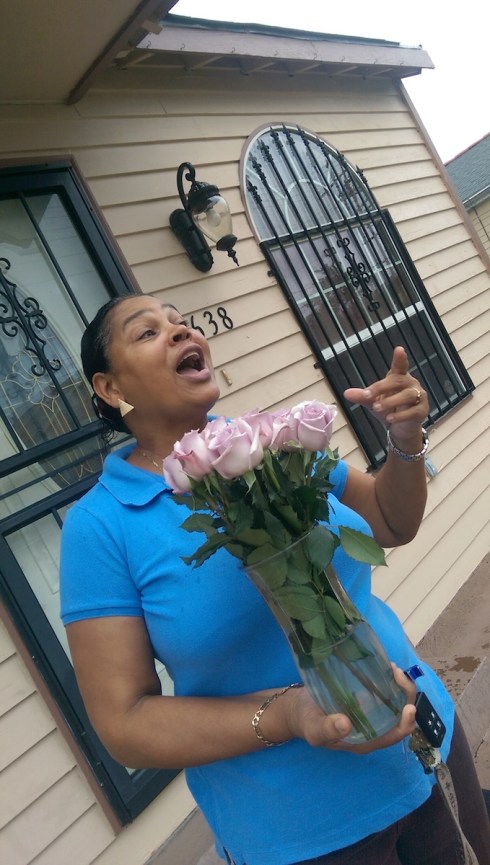
Weber was kind enough to speak about the motives, the involvement of the community, the students’ learning and the outcomes of the project. Here, we publish a Q+A and photographs fulfilling the requests of Gerald Davis, Derrick Allen, David Wilson and starting (below) with Elmo Duronselet
–

–
Q + A
Prison Photography (PP): Your PhD covers the eighty years between the Civil War to the end of WWII. You have many intersecting interests in prisons, policing, society. How do you summarize the origins and growth of the prison industrial complex in the United States?
Benjamin Weber (BW): There are a number of reasons why the dissertation covers that particular time period. The first is the massive expansion of racialized incarceration that took place after the Civil War, triggered in part by the “convict clause” of the 13th Amendment which allowed for the perpetuation of slavery and involuntary servitude as “punishment for a crime.”
I see the origins of this expansion of the prison system as being bound up with war-making and imperial expansion, first across the continental U.S. and then, especially after 1898, overseas. That’s why the dissertation focuses on practices of confinement and forced labor in places like the Pacific Northwest, the Panama Canal Zone, and the Philippines. I believe that if we can understand these things as part of a history of racial domination in U.S. empire, we might be able to think more clearly and critically about how to fight against them in the present. Or to put it slightly differently, if we can better understand the origins of the problem, as you point out, we might better understand the range of possible solutions.
PP: Where does your interest in incarceration stem from?
BW: I believe the problem of mass incarceration to be the defining social justice issue of our generation.
My academic interest comes from a place of trying to understand how various forms of injustice have operated and how people have struggled to combat them in the past, and the present. My personal commitment comes from experiences visiting friends and former students in jails back in California and witnessing first hand the way that young people, particularly people of color, are treated by the police and prison systems.
Working alongside others who have friends and family members who are locked up provides example after example of how terribly broken and institutionally racist the system is.
–


–
PP: You’re at Harvard. This project was at the University of New Orleans. Was this first project for which you’ve travelled and worked with students elsewhere? I ask this because I wonder if it could function as a pilot; with elements that are all replicable by you, or others?
BW: This project came together the way it did largely because my partner and I moved to New Orleans so she could do residency in her hometown and I could finish writing the dissertation and start in on the book manuscript down here. The timing worked well because UNO Professor Molly Mitchell was interested to have the Midlo Center participate in the States Of Incarceration national public history project. So, I agreed to come help run the Louisiana piece of that project.
The Midlo Center has a visiting scholars program that could be replicated by other universities. In terms of replicable elements, I think the workshop or toolkit model tends to be more common when it comes to traveling to work with students from other universities. It worked really well, for instance, to have Mark Strandquist come and do a workshop with my students and I’ve talked with him and many others about how to share materials, strategies, and best practices about teaching issues of racism and mass incarceration. There’s already some really great stuff out there as well; The Knotted Line, as one example, has some pretty creative and inspiring examples of educator resources and curriculum guides for teaching about the prison industrial complex.
PP: The methodology of the project was inspired by Mark Strandquist’s Windows From Prison, but there’s a key difference between the methodology of Strandquist’s project and yours: You are convening a group at a specific place for an action and memorial. Place and gathering is important, for example, in Photo Requests From Solitary by Tamms Year Ten, I was always thrilled by Rachel Herman’s photograph of Bald Knob Cross for Willie Sterling because Mr Sterling understood he could use the general offer to make a photograph to bring/force people together in a physical space, beyond the prison walls.
How important was it for you to convene a group? Was that the core of the project? What does that convening do?
BW: The Tamms Is Torture project is an amazing example, and reminds me in some ways of the role of art-activists like Jackie Summell and Brandan “BMike” Odums in the campaign to free the Angola 3 down here in Louisiana. The comparison with Rachel Herman’s photo is really apt, because we definitely saw ways that prisoners improved upon our project design in precisely this same way.
There were cases where they would write in a person’s name in the line that asked where they wanted us to perform the commemoration. They explained that we could best honor their deceased loved ones by talking, singing, and even dancing with their living relatives. These were some of the most moving experiences for everyone involved.
PP: How did your discussions with students differ or remain the same throughout this project as compared with lectures/seminars in the classroom about incarceration?
BW: In his workshop, Mark Strandquist encouraged us to do the commemorations in groups and spoke about the importance of embodied learning. This type of convening allowed for conversations that could never happen inside a classroom. It was also profoundly moving to see how people of different faiths and spiritual traditions talked and went about honoring ancestors, as it were.
–


–
PP: What were the responses of family and friends of the prisoners with whom you contacted and held memorials?
BW: There was definitely a range of responses, from the cautiously apprehensive to the overwhelmingly appreciative. Some relatives who weren’t especially religious were suspicious at first that we belonged to a church group, while others who were more religious promised that God reserves a special place in heaven for people who take time to do this kind of work on behalf of their friends and family locked away in the Louisiana State Penitentiary.
Some were somber in their recollections about deceased loved ones, while others laughed and joked as they told stories about the person a given prisoner had asked us to commemorate. When we went to find Elmo’s aunt Tamika and do a dance, as he requested, at first she laughingly begged us not to, but we all felt like we needed to honor his request down to the letter so ended up doing a little dance right there on her front doorstep.
Occasionally, interactions turned into more sustained collaborations. Liz, whose fiancé is at Angola, not only performed the commemoration along with us but has stayed involved with the project and will be coming with us to the States of Incarceration exhibit launch in New York City.
PP: Have you received feedback from Gerald, Derrick, Elmo, David or other prisoners about the photo/results of the project?
BW: We received thank-you letters from several of them, and some have carried on extended letter-writing exchanges with my students and I.
Derrick wrote to us that receiving the letter and pictures from the commemoration “kind of felt like the service itself to me,” and signed off with this quote: “there are things we don’t want to happen, but have to accept, things we don’t want to know but have to learn, and people we can’t live without but have to let go.”
Sean told us that “when my days get gloomy, now I have the memories of what you all have done for my mother and for me.”
Gerald and Hannah have now written upwards of ten letters back and forth. And the forms of communication flow in other ways as well. Liz’ fiancé called her during an event we were having at the Ashé Cultural Arts Center, for example, and we were able to put him on the microphone to speak to the audience.
Gavin spoke to one of his family members on the phone and had her email me for him to clarify some things about the commemoration we were planning for his father who had recently passed away.
–

–
PP: Shortly after you made this work with prisoners of Angola, the longstanding warden Burl Cain resigned amid still-as-yet unclear accusations of shady business dealings. What was your experience working with Cain? Did the prisoners have anything to say about his regime? What lies in store for Angola in the wake of Cain’s departure?
BW: I worked primarily with the staff at Angola’s prison museum, but did have to get approval for the pilot project from Warden Cain’s chief of security and the public relations manager there. There is always a period of transition where people are worried about how things were shift around and shake out when an entrenched figure like Burl Cain leaves a prison like Angola.
The prisoners we worked with didn’t say anything specifically about Warden Cain. Some mentioned being optimistic that the new Louisiana Governor, Democrat John Bell Edwards, will have a better stance on pardons and clemency than Bobby Jindal, the outgoing Republican Governor. As one of them put it in a recent letter to me: “The new governor is supposed to open up doors for some offenders a little early…”
I’m honestly not sure what lies in store for Angola in the wake of Cain’s departure, but I do know that we all need to continue doing absolutely everything we can to address the shamefully high rates of racial disparity in incarceration in Louisiana and around the country, and stop putting so many people in cages period.
Because we know that prisons don’t work.
https://www.instagram.com/p/BECPgbqux6o/
–
A quick heads up for a new photography project about prisons. Jessica Earnshaw has embarked on an investigation of aging in prison. So far, Earnshaw has visited Wabash Valley Correctional Facility in Indiana, Maine State Prison and Maine Correctional Center. to make stills and videos that reflect the circumstances of elderly prisoners.
Of course, the greying of America’s prisons is a massive issue. Compassionate release for men and women who are clearly infirm and clearly no threat to society as they may have been 10, 20, 30 or 40 years ago seems to me to be a no-brainer.
The project is in its very early stages and Earnshaw is sharing snippets on Instagram. Follow @AgingInPrison, listen and watch that space.
–
https://www.instagram.com/p/BECPET8ux5s/
https://www.instagram.com/p/BEFKg6fOx8d/
–
What happens if you’re released from prison in one country and deported to another? What happens if you’ve no recourse? What happens if your so-called “home” is not at all a home but a place you’ve not seen for 30+ years?
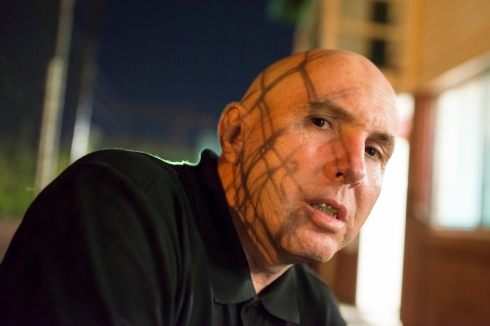
These questions can be answered, partially, by looking at the experience of Owen, who was sentenced to life in prison at the age of 32 in the United Kingdom. In late 2013, after serving 19 years, Owen was released aged 51.
“As an Australian citizen Owen was released as part of a scheme devised to reduce taxpayer expenditure and ease prison overcrowding in the U.K. by deporting foreign national prisoners,” explains photographer Cory Wright who met Owen in January 2014 a few months after his return.
“Owen was taken from a maximum security prison to a detention facility and then to the airport where he was flown back to Australia under guard escort,” continues Wright. “After clearing customs at Brisbane International Airport, he went his way and the guards went theirs.”
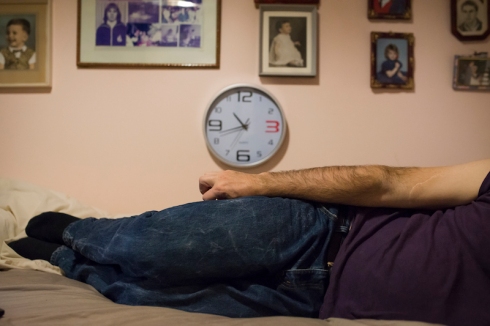
For his first few nights in Australia, Owen camped out in a wooded area behind a university campus. Having no family in Brisbane, he headed a local church to get some help.
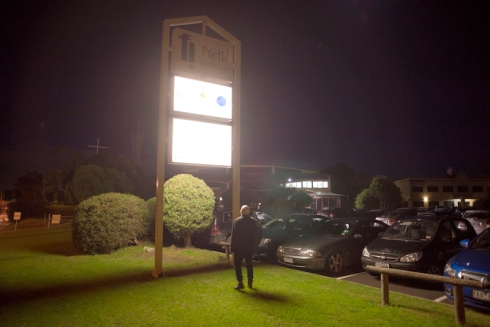
It was at a prison ministry conference in Brisbane that Owen and Wright first met. After striking up a conversation and learning about their recent histories and their need to unpack disorienting experiences. Owen and Wright decided to work together. For one year, through image-making, conversation and archives, they reflected upon Owen’s institutionalization, the social stigma of incarceration, repatriation and reentry.
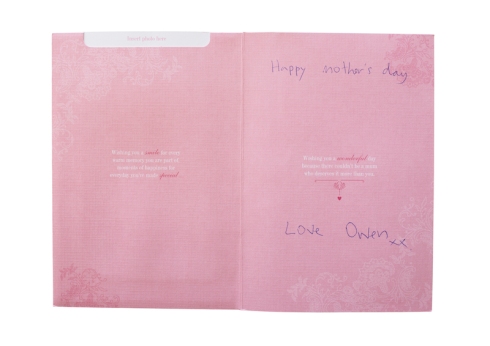
Soon, Owen moved from Brisbane to Melbourne where his ailing mother lives. He cared for her for a while until she has since moved to a nursing home where he expects her to stay from now on. She was in her 60’s when Owen was sentenced to life in prison and over 80-years-old when he was released.
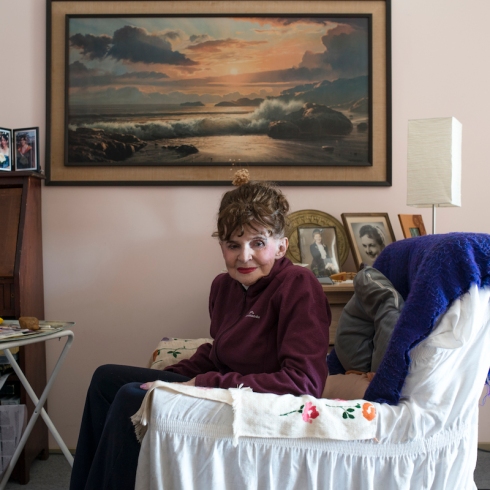
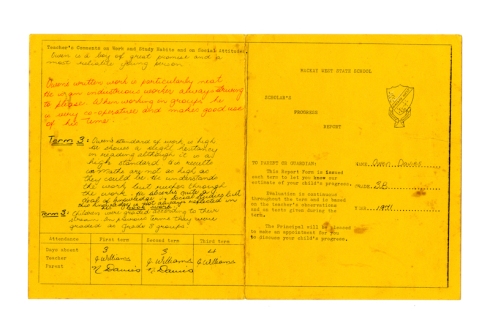
Wright titled the project A Boy Of Great Promise, a phrase taken from Owen’s year 3 report card, written by his then teacher.
Wright and Owen could not help becoming friends.
“With empathy and attention afforded to the victim, little thought is given to the lives of those who have “paid their debt to society”. The stigma of the crime is often residual as is the label it caries. It is difficult to be known as anything other than an ‘ex-con’. Furthermore, the lasting effects of prisonisation often make reintegration back into society especially difficult,” says Wright.
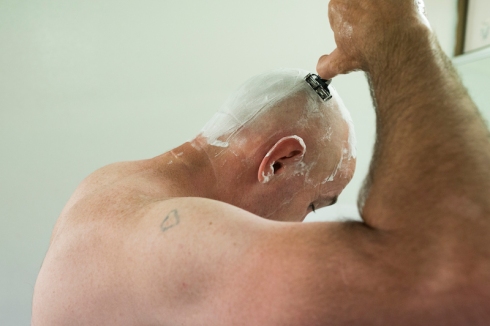
“While A Boy Of Great Promise offers no firm resolution, it starts discussion among those who, all to readily, apply this stigma and rely on assumptions to judge those who have been convicted of a crime.”
I wanted to know more. I sent Cory Wright a few questions. But he replied saying he wanted to share the repsonsibility with Owen. And so I sent a few more questions and Owen and Wright explain the project jointly.
How did you meet?
Owen (O): We met at the Uniting Care Prison Ministries Conference in Brisbane, March 2014.
Cory (C): I was encouraged to contact a local prison ministry in Brisbane, Australia and invited to attend the conference, which led me to meet Owen.
Due to the restraints outlined in the Queensland Corrective Services Act 2006, I was unable to photograph or interview any Australian individuals who were on parole as it is forbidden under the act since they are still classified as ‘prisoners’ by the state.
Owen’s circumstances were unique because he was incarcerated in the UK and therefore not considered a ‘prisoner’ under the Act.
I remain very grateful to Owen and members of his family for allowing me into their lives over a period of time.

Why did you both agree to document this transition?
O: Cory approached me with the idea, explaining he needed a subject for his university assignment. I’m always willing to help people. And I like the idea of prisoners/ex-offenders getting positive exposure.
C: I wanted to spend period of time documenting post-release transition. I wanted to learn more about life post-incarceration with specific focus on individuals who had been recently released. The term ‘paid their debt to society’ has always interested me and I wanted to know if it was ever ‘paid’ or whether it was something that individuals continue to ‘pay’ following their release.
What did you hope to get out of the project?
O: I do see myself as a kind of ambassador for ex-offenders. I wanted positive exposure for ex-offenders. I like art. I like turning life into art. There’s a freeing up and a cleansing that comes from it.
C: I hoped to learn more about life after prison. It’s not something that is discussed, certainly not in mainstream media. In Australia specifically, there seems to be a focus on vilifying criminal behaviour in order to support a tough on crime political approach. I’m not condoning crime, but I think there needs to be more thought and discussion on what happens after prison, which may lead to more consideration about what prisons are for.
Owen, do Cory’s photographs reflect your emotional state during this time?
O: Yes. I was happy and at peace, very happy to be released and enjoying my new found freedom. I think that is captured.
Cory, were you trying to reflect Owen’s emotional state?
C: I was documenting what I saw over a period of time, which was Owen gradually become more comfortable in Australian society. I saw happiness and relief yes, but I also saw Owen’s struggle to regain his place in a society from which he’s long been absent.
Owen repeated told me how relieved he was to be free, but he also said that he was worried he would be sent back to prison. There was a certain level of anxiety that the other shoe would fall and somehow he would be locked up again.


Owen, what preparation did the UK government give you for the return trip to Australia?
O: None at all.
Owen, what has worked and what has not worked in your transition back to civilian life?
O: Australia is an easy country to live in, which has made the transition easy. None of my former friends welcomed me back and hardly any of my family, which has been the hardest thing to accept. I found I needed to start again and accept that people wouldn’t generally be accepting of my circumstances. I don’t tell people about my criminal past any more.
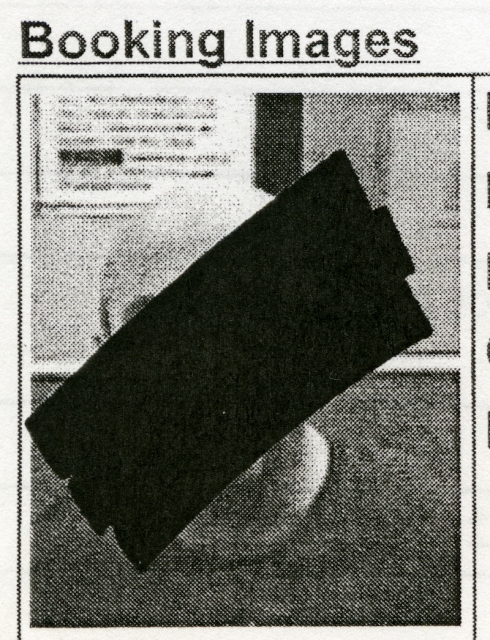
Why was the mugshot redacted?
C: I’m not sure why the Ministry of Justice decided to redact the image, especially since all of the consent forms and signatures they requested were provided.
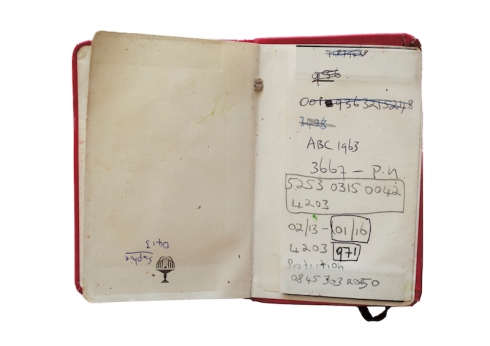
In one of our discussions Owen told me that being released after serving a long-term prison sentence is like returning from war in the middle-east with regards to the effect on the person. Your identity is effectively stripped away from you and you become a number. I felt that this redacted image reflected that.
How common is the removal of non-UK citizens from UK society after their release?
O: It’s only relatively recent that lifers have been returned to their country of origin after their sentence. The TERS (Tariff Expired Removal Scheme) agreement began three years ago. Fixed-termers get sent back regularly.
Owen, did you have any right of appeal?
O: There is an appeal system, but I doubt if a prisoner would have much success with it. I wanted to come back to Australia.
Owen, if you could be anywhere where would it be?
O: At the moment I’m still happily settling into life in Australia. I probably will travel when I get some money together – in Asia or Africa or South America.
Owen, why do you camp?
O: I like the freedom of it. After being locked up for so long I like not having four walls around me.

What would you like the world to understand through this project?
O: Good things can always happen.
C: I would like the people to give more consideration to a part of society that is largely ignored.
–
Cory Wright is a photographer based in South East Queensland. Connect with him on Twitter and Instagram.
All images: © Cory Wright

–
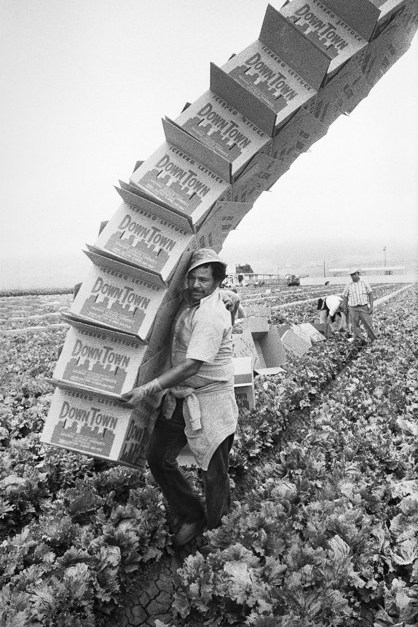
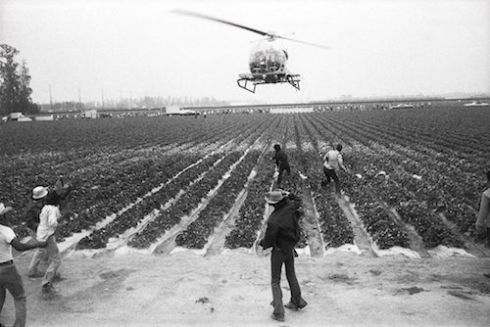
During the summer of 1975, Mimi Plumb spent months in the Salinas Valley, watching farmworkers make history.
“I traveled up and down the valleys of California photographing the young men living in farm labor camps, in chicken coops and under the sky, the children and adults working together in the fields, and the United Farm Workers Union (UFW) organizers and volunteers listening and talking with farmworkers about how elections in the fields might change their lives,” says Plumb.
Plumb shot dozens of rolls of film, which she developed at the time and made prints. But she didn’t show them much except for in the UFW field office and in an SFAI (San Francisco Art Institute) exhibition. A few images appeared in newspapers at the time.
Almost 40 years later, after her retirement from teaching, Plumb pulled the negatives and old prints from their boxes and started to put together the pieces. (An edit Pictures From The Valley is on her website).
It is an exhilarating re-emergence.

The photos are rich and pregnant; they deserve so much attention. And they get it. The California Humanities, a non-profit partner of the National Endowment for the Humanities, with help from the Center for Community Advocacy and the National Steinbeck Center, produced and funded efforts to identify the people in Plumb’s photographs and to seek out their stories.
The result is Democracy In The Fields, a visual record paired with oral histories. It’s the history of popular movements mixed with anthropology mixed with the history of labor. I love the way photographs have been leveraged here to shape a collective story that would otherwise have been dissipated and drowned out.

Among the subjects are Rosa Saucedo, Jose Renteria, Mario Bustamante, Alberto Magallon, Sabino Lopez, Celestino Rivas, Ricardo Villalpando, Cesar Chavez and the Amezcua Family.
Many of the people in Plumb’s photographs were identified by journalist Miriam Pawel who has written extensively about Chavez and the history of the United Farm Workers union. Together, Plumb and Pawel met with groups of former farmworkers who had been in Salinas in 1975.
“Children saw pictures of their parents as young adults for the first time. Grown men who had no photos of their fathers found them in Plumb’s images,” says the Democracy In The Fields website.
The faces in the images are luminous. Time and time again, there’s huge joy among the workers. Did they know they were marching to victory? Despite the grave consequences at stake, the workers and protesters seem unencumbered by the repsonsibility. The marchers particularly look as if they’re relishing ever purpose-defined moment.




Journalist Bob Barber was conducting interviews in 1975 in the fields. Tapes from his archives provide audio on the website. Plumb and Pawel also conducted their own interviews in recent years. Wendy Vissar finessed the workers’ stories into a digital form.
“Celestino, Ricardo, Rosa and Chuy often included me in their daily rounds, from the fields and camps to Maria’s kitchen table,” writes Plumb. “The UFW field offices were a hub of activity, of nightly meetings, and frequent visits from the union president, Cesar Chavez.”


“On June 5th, 1975, the California Agricultural Labor Relations Act (CALRA) became law,” explains Plumb. “In July and August of 1975, Chavez led a 1,000 mile march, to help bring attention to the landmark statute recognizing the right of farmworkers to vote for union representation. The first farmworker election was held on September 5th, 1975 with a vote of 15-0 for the UFW.”
What an incredible project.
It takes a while to meander through the history and the people involved in the movement, but it’s a rewarding wander.

–
For more images and info visit Mimi Plumb‘s website and the Democracy In The Fields website.
The project is ongoing. You can help identify people in Plumb’s pictures!
Connect on Facebook too.

–
I can’t go to this but everyone in the Bay Area should.
–
Fighting Mass Incarceration: Strategies for Transformation
277 Cory Hall (off Hearst Ave) UC Berkeley
April 12, 2016
3:30pm-5:00pm
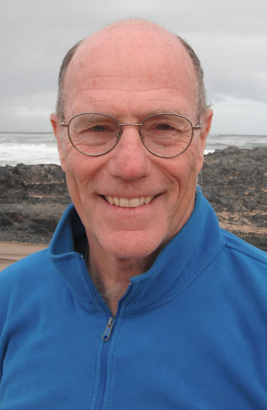
Discussion led by James Kilgore
With the sudden trendiness of opposing mass incarceration, Dr. James Kilgore will critically examine the idea that bipartisan unity and legislative change hold the key to transforming the criminal justice system. Dr. Kilgore will outline how his book, Understanding Mass Incarceration: A People’s Guide to the Key Civil Rights Struggle of our Time, and what it aims to achieve as well as discuss the potentials/pitfalls of the present moment in the struggle to end mass incarceration.
Kilgore argues that the key to this issue is to build a large social movement led by those who have been critically impacted by mass incarceration. It is a movement that makes alliances with those fighting other key struggles of our time (climate justice, gender justice, economic justice, etc.) and creates a collective alternative.
Topics will range from building out from the New Jim Crow analysis in relation to race, class and gender, examining political processes like reparations and Truth and Reconciliation Commissions as processes for transforming the criminal legal system and how we collectively imagine alternatives while fighting for important reforms.
Dr. James Kilgore is an activist, educator, and writer based at the University of Illinois. His most recent book is Understanding Mass Incarceration: A People’s Guide to the Key Civil Rights Struggle of Our Time. He is also the author of three novels, all which he drafted during his six and a half years in federal and state prisons in California.
277 Cory Hall (off Hearst Ave) UC Berkeley
Tuesday, April 12, 2016. 3:30pm-5:00pm

–
Photo criticism/journalism is a curious thing. I read Jacob Brookman’s BJP piece The Anatomy of Absence: Inside Croatia’s Only Prison for Women about Marina Paulenka‘s photographs at Požega Penitentiary. I was left agog. The language is another level of all sorts:
The Other Home is a patchwork of subtle symbolism: a synecdoche of nothingness. There is no home, only absence from a home. A non-existence preserved in the lies that prisoners tell to hide their state-issued confinement. An experience denied – time that can only be understood through the inverted kaleidoscope of its floccinaucinihilipilification.
Floccinaucinihilipilification.
And:
The convicts themselves are missing from the photos. We are therefore invited to examine the inmates’ status in absentia, raising questions of guilt, freedom, motherhood, femininity and the topography of the prison itself.
“Questions of guilt, freedom, motherhood, femininity and the topography of the prison.” What questions? I’m not saying that questions aren’t there, but help me, the reader, get to them. What’s at stake here? Inexact language takes us away from understanding the mechanisms and powers at play at Požega.
Despite the byzantine descriptions, I was eager to click through to learn more about Paulenka’s work. I’m glad I did. The wide edit of 58 images on Paulenka’s website is a thrilling, still and moody view of Požega Penitentiary. BJP was right to feature the work. It’s no surprise that Brookman was engaged by the images.
(Side-note: I’m surprised by the limited BJP image edit for the piece. The small edit, for me, seems to limit the audience’s capacity to understand Paulenka’s work.)
I’m grateful to Brookman for explaining that Paulenka made the images over 18-months and that the reason the photographs do not feature women is because the prison administration would not allow Paulenka to make portraits, even anonymizing portraits.
The piece closes with:
The rooms, devoid of living beings, are inhabited by their lives; simple, methodical, punitive. The Other Home is a quiet paean to suppressed femininity existing in a distant valley. It is an expression of vacancy: an anatomy of absence.
A fancy way of saying photos of stuff that’s not there.
I guess here’s the key: Paulenka’s photographs summon the atmosphere of the prison in a way Brookman’s words do not. I don’t like to throw snark at fellow writers because I’ve written plenty of flowery stuff in the past (It’s all online, forever) and this isn’t about Brookman or this review specifically. This is just an opportunity to say this:
Make words count. If words aren’t needed, don’t conjure them.
Sometimes, when dealing with photos, it’s best just to get the words out of the way.
See Marina Paulenka’s work here.
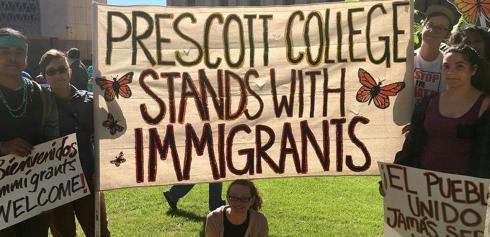
I mean really, at this point, what should we expect? I’m getting sick and tired of centrist, rightwing (and older) Americans ignoring the wonderful examples repeatedly set by youngsters about humane ways to treat one another.
Latest example? In Arizona, the students of Prescott College, a small liberal arts school focused on environmental education, recently voted by a huge majority to initiate a $30 added charge to their annual tuition fees. The $15,000 that will be raised is to pay for a scholarship for one undocumented person to attend the college.
It’s laudable. It’s community minded. It’s called the Freedom Education Fund.
A few things to note first.
Really, what is wrong with rightwing media like Fox and Breitbart who cast this empowered and beautiful move by students as a “levy” and a sneaky, “mandatory” subversive maneuver? What are right-wingers so fearful of? What whinging, narrow-focus on the world do you grip when youth solidarity bothers you but bloody-minded racism you let pass? What small world does one inhabit, if youngsters’ kindness to one another is cause for contempt?
Hurrah, kudos and all the very best to the students at Prescott College. Don’t listen to the haters and don’t let them distract you from the love you bear, the values you hold and the structural tweaks you make in the cause of social justice.
–
More at Mic and Phoenix Times.
 PETE BROOK ON MEDIUM PETE BROOK’S TUMBLR ‘PHOTOGRAPHY PRISON’
 Prison Photography