
You are currently browsing the tag archive for the ‘Angola’ tag.

Brixton Prison governor Paul McDowell: 'We don't let them have too much fun.' Photograph: Martin Argles
THE FACTS
The UK’s most well-known prison radio station is the Sony Award winning Electric Radio Brixton. It has come in for high praise.
The US’s boasts KLSP which broadcasts within Louisiana State Penitentiary, the prison commonly known as Angola. Andy Levin of 100Eyes photographed this New York Times coverage.
THE MISSIONS
In both cases, the radio stations serve to provide inmates with valuable, marketable skills AND to disseminate prison specific communications.
Electric Radio Brixton is the model for fifteen other prison radio stations up and down the UK. The Prison Radio Association is currently working with over 40 prisons and hopes eventually to build a national network for the benefit of all British prisoners. It is a community action.
Unlike Brixton’s radio initiative, the scope and model of KLSP is not intended to go national. KLSP was established in 1986 as a “means of communicating with everyone in the prison at once. Angola is the country’s largest correctional facility, with 5,108 inmates, so the need to disseminate information rapidly is critical.” The KLSP station at Angola is the only FCC-licensed radio station in the US facilitated by prisoners.
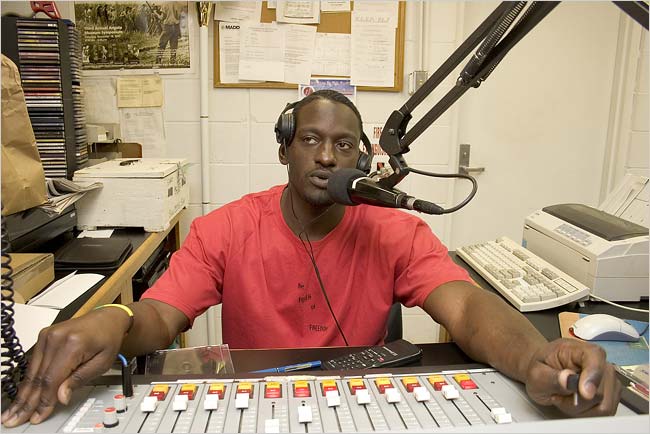
Sirvoris Sutton is a D.J. known on air as Shaq at KLSP-FM, the Louisiana State Penitentiary station where gospel wins out over gangsta rap. © Andy Levin/Contact Press Images, for The New York Times.
As with any enterprise at Angola, the radio station is implicated in Burls Cain’s philosophy of religious and moral rehabilitation. Warden Cain encourages all religious and spiritual practices, but inevitably most of Angola’s religious alliances and support are Christian:
KLSP is licensed as a religious/educational station, and, through Cain’s efforts, has formed a close alliance with Christian radio. Until recently, the station was using hand-me-down equipment courtesy of Jimmy Swaggart; last year, His Radio – Swaggart’s Greenville, S.C.-based network of stations – ‘held an on-air fundraiser for the prison, broadcast live from Angola. They quickly surpassed their $80,000 goal, raising over $120,000 within hours.
Cain used the money to update the station’s flagging equipment and train inmate DJs in using the new electronic system. In the months following their initial partnership, Cain deepened his relationship with Christian radio stations. KLSP now carries programs from His Radio and the Moody Ministry Broadcasting Network (MBN) for part of the day.
With regard the station and its remit, Brixton Prison Governor, Paul McDowell does not have the same influence as Cain. For one, the radio is operated by an independent charity, and two, the prison culture in Britain is not dictated by the personal cult/philosophies of the warden as in the US.
McDowell sees the radio station as a good way to develop critical and positive thought.
McDowell’s main work is to keep infamous inmates away from the airwaves and avoid unnecessary (sensationalised) criticism of the project;
I am a prison governor and half of my life is spent managing the politics of prisoners. One of the things I am not going to do is put Ian Huntley on a radio station to deliver a programme every week. That is opening us up [to attack] and if we get criticised for that then we might end up losing the whole thing.
I’d be dismayed if people in the UK could not see Electric Radio Brixton as a wellrun and sophisticated engagement of prisoners’ minds. I have personal reservations about the Christian focus at KLSP, but this focus has been the norm throughout Angola for 15 years.
Both of these enterprises deserve praise. Next, the content broadcast on their airwaves requires scrutiny.

Daniel Etter‘s project from Hohenschonhausen piggybacks on the story of Norbert Krebs to shape the narrative. Krebs was imprisoned in Hohenschonhausen – the primary Stasi Prison in the GDR – for questioning the reliability of election results. He now leads guided tours. In sites such as these, it is a solemn privilege to hear the first-hand experiences of anyone persecuted by prior political powers.
It is as much a dilemma for communities and nations as it is an opportunity to write and affirm history, when former prisons are repurposed. Prison museums, peace museums and memorials are all common solutions to the troublesome, contested and understandably hated sites.
Prison museums are very common – here’s a (non exhaustive) list of links.
US
Alcatraz Island
Texas Prison Museum
Angola Prison Museum, Louisiana
San Quentin Prison Museum
Folsom Prison Museum
Eastern State Penitentiary
Sing Sing Prison Museum
Old Montana Prison Museum
Burlington County Prison Museum
Museum of Colorado Prisons
Wyoming Frontier Prison
Elsewheres
Dartmoor Prison Museum, England
Lancaster Castle, England
The Clink Prison Museum, London
Robben Island Museum, South Africa
Port Arthur Historic Site, Tasmania, Australia
Fremantle Prison, Western Australia
Abashiri Prison Museum, Japan
The Changi Museum, Singapore
Kresty Prison Museum, St. Petersburg, Russia
If your interest is piqued, consult this huge inventory of prison museums from across the globe.
And here’s a random selection of photographs of a selection of prison museums.
Note: I have touched upon Hohenschonhausen before here and here.

Joshua, Angola State Prison, Louisiana 2002 © Alec Soth
Alec Soth shot to notoriety before I dipped my toes in photography appreciation. He also terminated his treasured blog before I could jump aboard.
I missed the early boat on Soth’s work and have always felt quite maudlin about that. Really there is no need for my malaise; Soth has travailed the papers, the cameras and the blogs as widely as he has the American Interstates. He has left a busy legacy of interviews.
The sheer number of interviews contributed further to my sense of awe – they amassed to an unscalable mountain of words that needed to be noticed because, as Soth continually insists, photographs cannot tell stories.
During his trips making Sleeping by the Mississippi, Soth asked many of his subjects “What is your dream?” He ended up not using the responses for the book, but held onto the scraps of paper on which folk had written their dreams.

Fort Jefferson Memorial Cross, Wickliffe, Kentucky 2002 © Alec Soth
Of all the responses, the man who stands second from left in the Kentucky prison work crew (above) had Soth’s favourite dream. He said, “I want to operate and own a pilot school”. Soth liked how the dream was “both specific and grand”.
I know this because Soth mentions it in this fantastic presentation and discussion with Andrei Codrescu at the Walker Art Center, Minneapolis. If you have an hour and seventeen minutes to spare this weekend watch and listen to it.
If not, bookmark any one of these interviews and read at some point in the next year.
Soth with Michael David Murphy
http://www.youtube.com/watch?v=R7PpxTHqYWI
Soth on Assignments
http://www.youtube.com/watch?v=GrNUoZ1ye6Y
Soth on Portraits
http://www.youtube.com/watch?v=Yvgg6bLhJE4
Soth with Ben Sloat
http://www.bigredandshiny.com/cgi-bin/BRS.cgi?section=article&issue=119&article=20091016133834289803794155
Soth with Aaron Schuman
http://www.seesawmagazine.com/soth_pages/soth_interview.html
Soth with Carrie Thompson
http://blog.magnumphotos.com/2007/11/interview_alec_soth_on_dog_days_bogota.html
Soth with Daniel Shea
http://toomuchchocolate.org/?p=1067
Daniel Shea on Soth
http://dsheaphoto.net/blog/?p=700
Soth with Anthony LaSala
http://www.pdnonline.com/pdn/esearch/article_display.jsp?vnu_content_id=1002235383
Soth with Paul Schmelzer
http://blogs.walkerart.org/visualarts/2006/05/01/the-binoculographer/
Soth with James Miller
http://www.americansuburbx.com/2009/07/interview-presience-and-poetry-james.html
Soth with Conor Risch
http://www.pdnonline.com/pdn/content_display/photo-news/photojournalism/e3i260af0867f21cdd31a1211bb5ab07a85
Soth with Jeff Severns Guntzel
http://www.citypages.com/2008-01-23/feature/freeze-frame/
Soth with Roger Rochards
http://www.digitalfilmmaker.net/photo/alecsoth/2004.html
Soth with Joerg Colberg
http://www.jmcolberg.com/weblog/2006/08/a_conversation_with_alec_soth.html
Soth with Paul Laster
http://artkrush.com/105630
Soth with Jen Bekman
http://www.photoeye.com/magazine/archives/fullsize.cfm?Issue=fall_2007&IssueID=080815010312-d1c9488974b54b24866088a30b84ccf8#magtop
Soth with Minnesota Public Radio
http://www.publicradio.org/tools/media/player/news/features/2005/06/15_newsroom_sothportraits
Minnesota Public Radio without Soth
http://minnesota.publicradio.org/features/2008/06/04_soth2/index.shtml
Hilarie M. Sheets on Soth
http://www.nytimes.com/2009/08/02/arts/design/02shee.html
and Rob Haggart on Soth’s back
http://www.aphotoeditor.com/2008/07/09/whats-up-with-alec-soth/
Yasmina Reggad interviews Soth with an exchange of images
http://thedignityofmovemenoftheiceberg.wordpress.com/
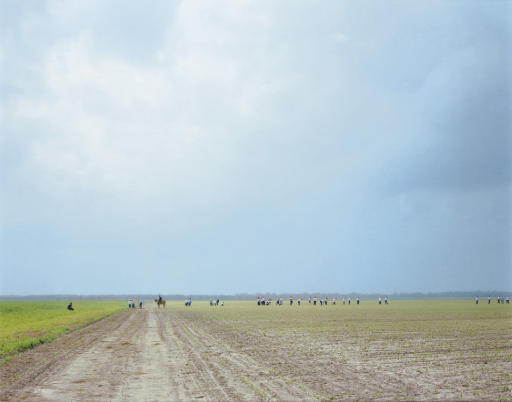
The Farm, Angola State Prison, Louisiana 2002 © Alec Soth
In the same discussion with Andrei Codrescu Soth confessed to avoiding too much research before he goes to a place; he doesn’t want to burden himself with the knowledge. He also expressed surprise and delight at coming across the histories of places and institutions he’d not consciously sought out … and of those he mentioned prisons.
I was going to add some analysis to these pictures but now that I have exorcised my fear of the massive cult, enjoyment and coverage of Soth, I think I’ll just drop him a line and ask him about incarceration in America. Stay tuned.

Too Much Chocolate
When Jake Stangel put out a call to interview Damon Winter for Too Much Chocolate I didn’t hesitate. How often do you get to bend the ear of a Pulitzer Prize winning photographer?
Jake assured me that Damon was – is – “a super-nice guy” as well. I might argue that Damon is too nice; he carried, without complaint, a sinus-busting cold to deliver the interview.
Damon and I spoke about his assignments in Dallas, L.A. and New York, the Obama campaign coverage, making portraits, Dan Winters, Irving Penn and Bruce Gilden. Read the full interview here.
_____________________________________________________________
Angola Rodeo
Not without my own agenda, I also asked Damon about his experience down at the Angola Prison Rodeo:
PP: Why were you there?
DW: I had gone out for two trips. It was when I worked at the Dallas Morning News. The way I pitched it was that the prison was expanding the program to launch a spring rodeo. I wanted any excuse I could get to go down there and photograph. It sounded absolutely incredible.
DW: And the paper ended up not being that interested. They may have run a small little blurb about it, but I did it for my own interest. It was fascinating – a completely wild situation. Most of these guys came from the cities. Some had never even seen a cow let alone roped a horse.

PP: Describe the atmosphere.
DW: The closest thing to modern day gladiators – something you’d see in a Roman Coliseum. The crowd is chanting for blood, they want to see a violent spectacle where prison inmates are the subjects. It’s the same reason people go to see a horror movie or stare at a wreck on the highway. It is a very strange situation but they want to see blood.
PP: Do you think it helpful to the local community?
DW: There is no interaction between public and inmates. The public is there to observe and the inmates are there to entertain. The benefit the inmates gain is at a level very specific to their situation. They risk injury being in the ring with massive bulls, and their prize is something I think anyone in the free world would laugh at, you know? Maybe a couple hundred bucks. But it is substantial in their environment.
It speaks to the bleak situation that those guys are in that this would be enticing – to risk bodily harm for a couple of hundred dollars.
I don’t know how constructive it is for relations between prison and non-prison populations.
PP: Which is unusual because in any other state across the country, there is no interaction between the public and the incarcerated population.
DW: What’s your feeling?
PP: I think it builds a division at a local level, but it also feeds a national view that excludes the realities of prisons. The inmates are put out there to be observed, photographed and consumed. Such a presentation is not unpalatable to the American public. To the contrary, the public feels as though it gains from it. I think here unexamined (and abusive) interactions can be confused with relationships.
I think the wasteful and very boring reality of prisons in America is not going to make it into newspapers or media, but the rodeo does. It skews perception. I think the rodeo is problematic.
DW: I felt the event was dehumanizing. It was done in a manner so that the inmates are reduced to the level of the beasts they are competing against. It seems the field has been leveled between animals and inmates and the feeling that you get from that is that they themselves are like animals. They are not seen terribly differently from the way that the animals are seen.
PP: I am not sure that that sort of spectacle would take place outside of Louisiana, certainly outside the South. Granted, Angola’s warden Burl Cain jumps at the chance to get the cameras in at any opportunity.
DW: Yes, I saw The Farm, a documentary filmed at Angola.
PP: I think Cain’s administration paired with the history of the event creates a spectacle at the rodeo that goes unexamined.
PP: Cameras are common at Angola; documentary shorts on the football team and photo essays on the hospice. It is a complex that has 92% of its population.
DW: You should look at Mona Reeder’s work. She works at the Dallas Morning News. I think it was called The Bottom Line and she turned the stats into photo essays and one of the stats was the number of prisoners in juvenile facilities. She got some pretty good access. She received a R.F. Kennedy Award.
PP: I certainly will. Thanks Damon.
DW: Thank you.
_____________________________________________________________
Below are three of Damon’s photographs from Afghanistan which stopped me in my tracks. Unfortunately, I discovered them after the interview so didn’t get Damon’s take on them.

The images of the boys really affected me. We see so many images of bearded men, U.S. Marines in the dirt, explosions, women in burqas, etc, but it is the children of Afghanistan who will carry the violent legacy for the longest. What pictures reflect that fact?
It is an impossible task of any image to near ‘truth’ or reality, but these two pictures get very close to the sad reality of conflict and the impressionability of youth.


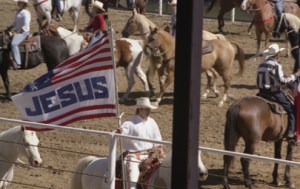

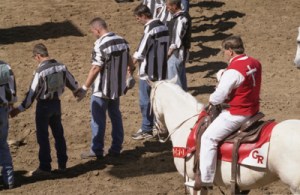
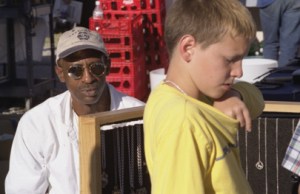
Yes folks, a US prison runs a rodeo for the entertainment of the public (from Louisiana and beyond). Believe it.
I have only ever discussed this event in terms of is dicey ethics, but being a weak-spined liberal never gone full-throtle in condemning it as exploitation. Matt Kelley and I were both agreed that we couldn’t fully judge the spectacle without having been ourselves or talked directly with participants.
I met Tim McKulka, one of many photographers to have shot at Angola, and asked for his impression.
The rodeo of course exploits the prisoners. It is gladiatorial . It is taking people without the skills to ride a bull and putting them on a bull for peoples’ entertainment. For the prisoners themselves, it gives them the opportunity to be a normal person a couple of weekends in the year. It is an opportunity to make some money, to see their family, to earn a belt … so what have they got to lose?
Do you think any of them are taking part precisely because they are on life sentences?
I don’t know what the percentage of the participants is in terms of lifers. I know in the prison itself has about 92% [of offenders on life sentences] Some of them for some absurdly minor crimes – a third offense or an unarmed robbery. But I don’t know. What I do know is that – from the prisoners I talked to – it’s a voluntary program and no-one is forced to do it.
They are being exploited but that prison in particular is the only prison in America that turns a profit so it is an exploitative institution anyway.
McKulka has since moved far away from the cultural mores of the American South. He has crossed an ocean and continent but continues documenting the politics of race and identity.
Tim McKulka started shooting for Edipresse Publications in 2003. With Jean-Cosme Delaloye, he covered diverse feature stories such as the crisis in Haiti in 2006, the Angola Prison Rodeo, the US presidential elections in 2004, illegal immigration into the US and New Orleans in the aftermath of Katrina. In 2005, he covered the presidential elections in Liberia. In 2006, Tim started with Jean-Cosme this project of a news agency. He later joined the UN as a photographer in the fall 2006. He is now based in Juba, in Southern Sudan.
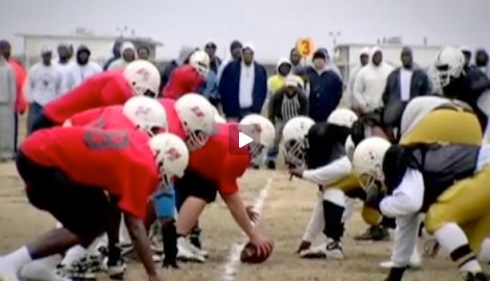
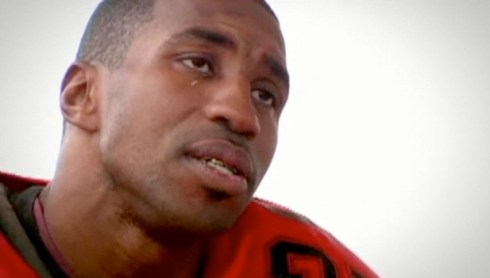
Troy West, Angola Inmate
Louisiana has the highest incarceration rate per capita of all US states. over 1,100 per 100,000 – that’s more than 1 in a 100. Angola (Louisiana State Penitentiary) is the mother of all prisons, carrying a weighty reputation and weightier history.
Only Georgia has a rate above 1 in a 100, as Louisiana does. The other Southern states make up the top five (Texas, Alabama and Mississippi).
These stats are due in most the more frequent sentencing of men to life without parole. The disproportionately high rate of prisoners who die within Southern prisons as compared to other state institutions makes for a very different culture.
Many photographers including Damon Winter and Lori Waselchuk have focused on the unique aspects of Angola culture. The rodeo is well known, the hospice less so, but least well known may be the football league.
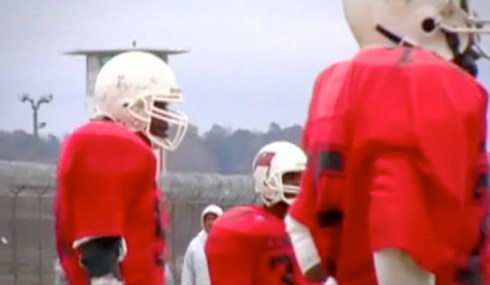

I have noted before the value of sports in prison, and Angola Prison Football a film-short by Charlie Gruet supports my position.
In it, Angola warden Burl Cain states his philosophy, “Good food, good medicine, good play and good pray. Lose any of those elements and you’ll have violence in your prison, but you would in your home. You think about it.”
The inmates back up the third point. It’s a well done documentary and to think that over 70% of the men in the film won’t ever get out just blows my mind. (Source: 2008 LSP Report).
Watch closely from 4.03 onward.
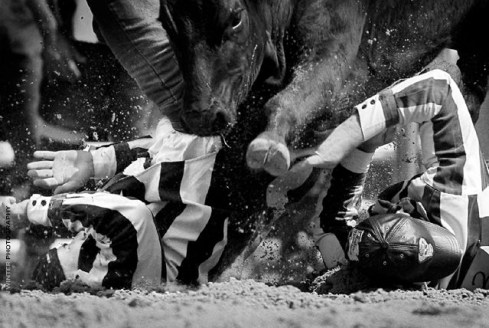
The blogo-photo-sphere has been spinning the past couple of days with the 2009 Pulitzer Prize announcements. Damon Winter took one gong for “his memorable array of pictures deftly capturing multiple facets of Barack Obama’s presidential campaign.” (Featured Photography). Patrick Farrell secured the other with his “provocative, impeccably composed images of despair after Hurricane Ike and other lethal storms caused a humanitarian disaster in Haiti.” (Breaking News Story)
Winter’s images are eye-catching, but to be honest I am suffering from ‘Obama-fatigue’. So saturated were we with so many high-quality images of the new 44th President, I now look for different material. A quick shufties through Winters website revealed all. His portraits of sports stars show a precocious willing to improvise with technique and composition. Winter has a seriously sentimental side also epitomised by his portraits of American Olympians from the 1984 Los Angeles games.
I guess, my hope is that he doesn’t become known as ‘that guy that did Obama’ … which is why I am more interested in his Angola Prison Rodeo photojournalism.
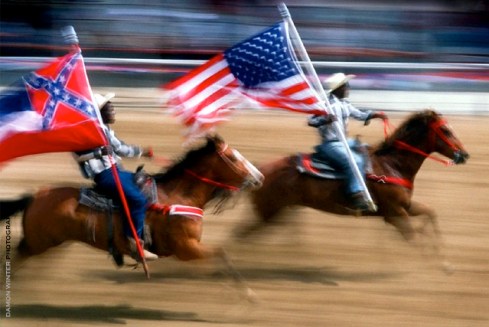
The rodeo featuring the prisoners of Louisiana State Penitentiary, commonly known as Angola, is an old – even traditional – event in the Louisiana calendar. Damon Winter is one of many photographers that have covered the community event. It is a raucous spectacle that brings together populations in and outside of the prison.
I still cannot reconcile this event my existing ethics which this event. There’s a charge that the rodeo is exploitative entertainment for which prisoners can suffer serious injury. Yet, I have not witnessed the rodeo-weekend first hand and I have read in the past that this is an event that provides long-term focus and short-term adulation for the prisoner-competitors. All I want to do is bring Winter’s photographs to your attention and hope they’ll compete with Obama for your attentions!
Winter’s pictures capture the strong forces and consequent risks of rodeo competition. I deliberately picked his colour images. The black & white stripes of inmates harry within Winter’s ‘red, white and blue’ palette. The star-spangled palette imbues the series with patriotism, pomp and faux-purpose. I almost feel we are subliminally less inclined to question Angola’s unique display of pseudo-gladiatorial entertainment when the games are suffused with hues of the American flag.
_________________________________________________________
View Damon Winter’s Obama campaign coverage for the New York Times, and listen to an audio interview with Winter about his experiences. Winter and PDN did an interview in 2008.
Chris Jordan was low on my list of priorities but this timely post by Mike Kelley at Change.org (a blog as impressive for its readers’ comments as it is for the straight forward presentation of Jordan’s work) compelled me to bump it up and champion the depressingly and unfathomable figures that arise when one simply runs the numbers.

Chris Jordan. Prison Uniforms, 2007. 10x23 feet in six vertical panels. Depicts 2.3 million folded prison uniforms, equal to the number of Americans incarcerated in 2005. The U.S. has the largest prison population of any country in the world.
In reading Change.org’s straight forward commentary on America’s broken criminal justice system, I signed up for Change.org and read a few of their older posts. In doing so I was presented with the catalyst to comment on Obama’s momentous inauguration without repeating the media-lovefest that has surrounded the 44th’s swearing in. This post will cover Jordan’s astounding artwork, Obama’s astounding tasks-at-hand and where they politically overlap.

Chris Jordan. Prison Uniforms, 2007. Partial zoom.
Chris Jordan has spent his time making larger and larger photographic constructions to communicate the scale at which American society wastes its resources, its environmental future and its grasp on logic. In his effort to catalogue the linear and thoughtless waste of the US, he has progressed from crushed automobiles, to cell phone chargers, to polystyrene cups to American prisoners.
Jordan is a bright guy, now consumed by his photography (which to be quite frank is eco-hip and brilliantly executed). He talks passionately about a sea-change in our cultural consumption. He specialises in highlighting “the behaviours that we all engage in unconsciously on a collective level … the actions we are in denial about and the ones that operate below our daily awareness … like when you’re mean to you wife because you’re mad about something else or when you drink too much at a party because you’re nervous.” Jordan is no prophet, he just sees the necessary u-turn we must all make in our habits and thoughts to move toward sustainable existence.

Chris Jordan. Prison Uniforms, 2007. 10x23 feet in six vertical panels. Detail at half actual size.
I like to think the strength of Jordan’s visual framework that deals with soda cans to the landfill as it does with prisoners to the cell blocks is deliberate. As hard as it is to acknowledge, the majority of Americans have turned their back on a seven-figure-minority as if it were worth no more thought than discarded packaging. Mass imprisonment is the result of widespread apathy, denial and unpinnable responsibility. How unconscionable is this situation? We are all responsible. Barack Obama talked very little about criminal justice and prison policy during his electioneering. This is not surprising as helping the invisible incarcerated masses is on the electorate’s mind as much as the whereabouts of their last twinkie wrapper. But, Obama also made it very clear that this was the time for personal responsibility and accountability.
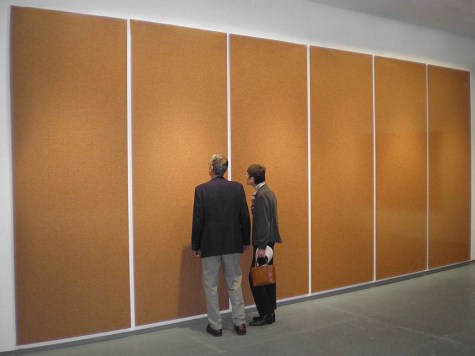
Chris Jordan. Prison Uniforms, 2007. Installed at the Von Lintel Gallery, NY, June 2007.
So after a week of photography gallery after gallery, the militarised eye vs. the personal touch, Gigapan-assisted user-generated snooping, faux controversy, minor mishaps, cult worship, sentimental clap-trap, unending debate, media catfights, nerdcore details, celeb fluff and even UFO’s isn’t it time we adopt the same realism that Obama trusted in for his inaugural speech?
A wonderful article from the Wall Street Journal lays out the realism and “the audacity of hope behind bars”. (Via Change.org). Angola prisoner, Mr. Dennis served up some REALISM: “He’s got his hands full: Two wars, the economy is going in the tank and the health-care costs are skyrocketing – I’d be surprised if he has time to brush his teeth in the next four years.” While another prisoner took care of the HOPE: “If the men here can have hope, then why can’t the rest of the country?”
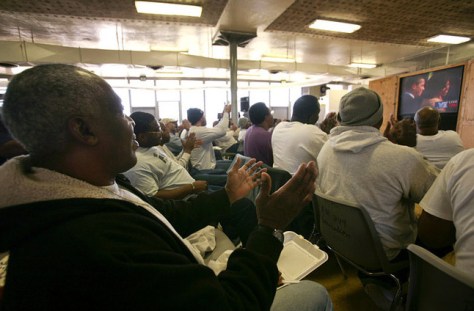
Prisoners at Louisiana State Penitentiary ("Angola") were given the day off to watch Barack Obama inaugurated as America's 44th president.
So how does this all connect? Jordan and Obama share the same call to think, with serious intent, about the things invisible to us. Both call us to consider the reality of our society and accept our shared responsibility for its faults, weaknesses and injustices. Both men challenge conventional wisdom; the logic that just because we didn’t turn the key nor bring down the gavel, we are not complicit – by our silence – in America’s mass incarceration.
What can you do? You can start by signing this petition immediately and by using web2.0 to access Obama’s administration as his team reached you during the election.
If you’d like to know more about Chris Jordan you could do worse than starting with this interview, this interview and this interview.

 Prison Photography