
You are currently browsing the tag archive for the ‘NYC’ tag.
At Photoville this year, you’ll find me and a team of pen-pushers in a container amassing The Depository Of Unwanted Photographs a crowdsourced archive of images and stories. We need your help and we need your submissions.
What is The Depository Of Unwanted Photographs?
The Depository Of Unwanted Photographs (TDOUP) is a few things: part social engagement, part fun, part an investigation of quality but mostly an opportunity to share our thoughts on how and what we think about our own photographs.
CURATORIAL STATEMENT
My explanation lifted straight from the The Depository Of Unwanted Photographs sparkly website of why I have conceived of TDOUP:
When asked to pick out a single image they absolutely treasure, people generally don’t hesitate. A snap of their children, a Polaroid of their parents, a formal pose from precious life event, or perhaps even a photograph with the prescribed artistic balance of composition, contrast and exposure. Whether the choice is dictated by emotional memory or technical concerns, the question “What is your best photo?” is not an unusual one.
But what about the question, “What is your worst photo?” To put it another way, what photograph of yours is obsolete, worthless, old news or just plain bad? Which single photograph of yours would you like to officially state on the record as unwanted?
During Photoville, submissions will be rotated in and out of display for public viewing. When the festival ends, the Photoville team will compile the images and create a reference book of “Unwanted Photographs”. The debate about what is good and bad in photography is as old as the medium itself, but what are the debate’s current touchstones? If we’re looking for good photography, we’ll find plenty of suitors in photobooks, galleries and publication, but where do we find a legitimate and well-researched presentation of bad photography? Does our discussion of what is good not also rely on a shared knowledge of what is bad, unwanted and unloved? Images do not exist in a vacuum, but emerge from contexts and histories. We think that your photos and stories are as relevant as the stories in news-photo exclusives and famous documentary images — your stories are central to discussions about how we consume and use photography. Therefore, we ask that each submitted image is accompanied by 50+ words on why it is not wanted by you, and not needed in the world.
We create and circulate millions of images every week. Many of these never exist beyond digital formats; stuck in our phones or transferred to computers on their way to social media sites. We are constantly employing choices, consciously and subconsciously, to share or overlook images. If we accept the mantra that ‘we are all photographers’ then aren’t we all photo-editors too?
There might be many of your images that you could trash, but by asking you to choose only one, we hope you’ll take the opportunity to think about the proliferation of images in society and your relationship to the ever-increasing number. Photoville will officially recognize your image as Unwanted with a numbered certificate and unique catalogue code. One-by-one, as the images interrelate and build the Depository, new meanings will emerge. The arbitrary definitions brought to the project by you the public will amount to a unique view. The Depository Of Unwanted Photographs is an unpredictable interrogation of quality that crucially is made by the public, not by the dominant voices of those in the media or culture industries.
HOW TO SUBMIT YOUR UNWANTED PHOTOGRAPH
During Photoville, you may make walk-in submissions at the TDOUP container which will be equipped with a scanner and computer to download, copy and catalogue your printed photographs and digital files.
For those of you who are unable to attend the event:
– Download the form (PDF)
– Attach a photograph and fill out the form
– Return the form for processing. You may either:
A. Scan the form and email it to receivables@unwantedphotographs.org
B. Place it in an envelope and mail it to 111 Front Street, Suite 204 – Brooklyn, NY 11201, USA
SHARING IS GOOD: #TDOUP
Please share the project and the www.unwantedphotographs.org URL far and wide. Please send us your jpeg and share your story.
Please use Facebook, Twitter and Instagram to hashtag your thoughts, observations and photos. We are #TDOUP
See you in NYC on Thursday!


Artist’s impression of projected cellphone imagery.
ART
Stop, a video installation will put faces to the numbers – hundreds of thousands – of people who are unjustly detained by police.
Stop is proposed by New York based Dread Scott and by Joann Kushner, an artist working in Liverpool, UK. As described by Dread Scott:
“Stop will be a projection of portraits of several youth from East New York, Brooklyn and Liverpool, UK. Brooklyn will be on one wall and Liverpool will face them on the other. The life-sized projections will stand and face each other, the audience will be in the middle. Over time, each of the young adults will reveal how many times they have each been stopped by the police during their lifetime. The youth will be having a virtual “conversation” across an ocean with each other as well as with the audience.”
PHOTO
Yesterday, I posted a long conversation with Nina Berman about Stop & Frisk. Berman had not found any other fellow photographers working on the issue of Stop & Frisk. I found one other photographer (who’s work is ongoing and wishes not to publicize it yet) and one artist – Dread Scott.
Dread’s a lovely guy; I’ve written about his work on the prison industrial complex before and I interviewed him last year during PPOTR. Here’s what he says about this Stop & Frisk and this project:
“Last year, New York police stopped almost 700,000 people as part of their “Stop and Frisk” policy. The overwhelming majority, about 90%, were doing nothing wrong at the time and were completely innocent. Most were young and Black or Latino. A similar policy exists in Liverpool and developed after NY police chief William Bratton was invited to be a consultant in another UK city, Hartlepool, in 1996.”
It should be added that UK Prime Minister David Cameron wanted to appoint Bratton as Commissioner of London’s Metropolitan Police Service following the London Riots of August 2011. Cameron was later overruled by Home Secretary Theresa May, who insisted that only a British citizen should be able to run the Service.
Dread has led photography and art workshops with young adults from East NY Brooklyn (a neighborhood with one of the city’s highest police Stop and Frisk rates) and Joann has been working with similar youth in Liverpool. Using cell phones, students have made a powerful series of photographs about their neighborhoods and lives.
Stop will be exhibited in Rush Arts Gallery, NYC from September 13th, 2012.
START KICKING
Kickstarter has definitely reached its saturation point; The Onion’s take made me laugh hardest.
But you don’t even need to feel guilty about this one; Dread’s already reached his target (sure, he’d like a little extra: who doesn’t?)
What’s more important is the message of his work. Until now, I’ve never seen connections made between the US and the UK – between New York and Liverpool – over the Stop & Frisk issue. The issue is rarely framed within the context of youth; we don’t think of the victims as kids … but in many cases they are.
Stop & Frisk is a canary issue. How the controversy resolves itself will be an indication of whether we have progressed; if we are interested and involved in the welfare of others, or if we remain indifferent. It’s driven by Homeland Security dollars and it messes with peoples’ lives. It’s born out of a divided society, just as prisons were. Now the heavy-handed response is on peoples’ doorsteps.

David Adler has been collecting prisoner made portraiture since 2006.
Adler’s work is very similar to Alyse Emdur‘s Prison Landscapes (readers will know Emdur is a favourite of mine.) But in fact, Adler and Emdur approach the visual culture and the act of collecting the photos very differently. I’ll be publishing an interview with Adler shortly, but to summarise, Emdur is thinking about social justice whereas Adler is thinking about the economics of the system. Both consider the painted backdrops as significant contributions to American artistic production.
Adler thinks of his work as a theoretically infinite, open-source project, that anyone could take on. Conversely, Emdur considers her presentations as collaboration with each of her subjects.
More to come.
Meanwhile, if you’re in NYC, Adler’s exhibition Prisoner Fantasies: Photos from the Inside is showing at the Clocktower Gallery in Lower Manhattan, until the end of August. Also, you can read a brief interview with Adler, by Harry Cheadle for VICE.

[Yes, the visual similarity between this post and the last was intentional.]
 There’s a new photo festival on the scene. It’s called Photoville and it is in New York. Specifically, it is in Brooklyn Bridge Park. Photographs will be displayed in 30 shipping containers. Public submissions will hang on a big fence.
Hester Keijser, my co-curator, and I are honoured that Noorderlicht selected Cruel and Unusual as the exhibition to represent them on these American soils.
We’ll have two containers to fill. Cruel and Unusual showcases 11 photographers work in the main part of the exhibition. I shall be installing a wall with the images of 20+ more photographers that I met during Prison Photography on the Road.
PANEL DISCUSSION
Yesterday, Photoville announced its schedule of talks and events.
Included is a panel discussion that I’ll be moderating titled “Cruel and Unusual: The Prisons, the Photography or Both?” Panelists include the hyper-talented Deborah Luster, Brenda Ann Kenneally, Lori Waselchuk and Yana Payusova.
Photoville literature describes a talk by me “about documentary, institutional, vernacular and legal photography and the political uses of images by media, activists and families” but this is in fact going to be a very brief introduction by way of explaining my interests. The majority of the time will be exploring the stories behind the Luster, Kenneally, Waselchuk and Payusova’s images (sampled below).
The panel discussion “Cruel and Unusual: The Prisons, the Photography or Both?” is from 3:30pm – 4:30pm, on Saturday, 23rd June. It would be great to see you there.
Stick around for Michael Shaw/BagNewsNotes‘ discussion about “The State of the News Photo” immediately after. I’m looking forward to that.
BITTERSWEET MOMENTS
This welcome opportunity for the photographers, Hester and I at Photoville comes at a worrying time. Well-documented is the threat of Noorderlicht’s closure (here, here, here, here and here) after being refused 500,000 Euros of funding from the Dutch government for the years 2013-2016.
Ironically, the Dutch Advisory Board to the Cultural Council thinks that Noorderlicht doesn’t engage enough with other global organisations. This is false. Cruel and Unusual at Photoville is a typical example of Noorderlicht – a pioneering institution of international scope and influence – collaborating with an equally pioneering organisation.
PHOTOVILLE
Photoville director, Sam Barzilay, used to work with the New York Photo Festival (NYPH). He doesn’t any more. If it is a schism, or a parting of ways, a clash of ideologies or just new opportunities being seized I don’t know.
I do know NYPH had come under some criticism for poor prints, a certain lack of organisation and even elitism. I should say I have never attended NYPH; these are things I’ve read or heard. I have not heard how this years NYPH (last month) went either.
Given that Photoville runs over nine days with six days of viewing, given that it is free, given that they’re involved the public’s photographs, given that there’s a beer garden and a dog park and it is in a park, I suspect Photoville with be quite different in character to many photo festivals, NYPH included. I’m imagining something quite free and easy, welcoming and fun, underpinned by serious photography. It wouldn’t surprise me if I end up juggling a hacky-sack while discussing the merits of the documentary tradition!?
I digress.
On the talks and events schedule alone there is Ed Kashi, Janelle Lynch, Ben Lowy, Michael Itkoff, Taj Forer, ICP, Adriana Teresa, Wyatt Gallery, Elinor Carucci, Lori Grinker, Glenn Ruga, Lomography, Mediastorm, ASMP, En Foco, Michael Foley, Ariel Shanberg, CFAP, Jennifer Schwatrz and Camera Club of New York.
I’m intrigued by the ‘Activism & Photography’ panel, but the panelists are yet to be announced. It’s the mystery card, so to speak. There’s a stack of socially engaged photographers I’d like to hear speak. We’ll have to wait and see.
The exhibition containers will showcase an impressive line up of which you should just read through.
PANELISTS

© Deborah Luster

© Yana Payusova
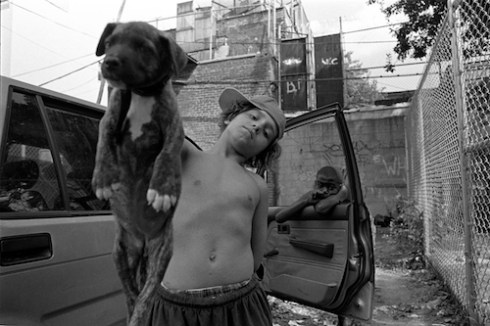
© Brenda Ann Kenneally

© Lori Waslechuk
MORE ON PHOTOVILLE
Running from June 22nd – July 1st, 2012, Photoville is a new Brooklyn-based photo destination; “a veritable village of 30 freight containers transformed into temporary exhibition spaces.”
Occupying more than 60,000 sq. feet in the heart of Brooklyn Bridge Park, Photoville includes exhibitions, lectures, hands-on workshops, nighttime projections, a photo dog run, a camera greenhouse, and a summer beer-garden with food trucks to “create a photography destination like no other.”
Photoville will be located on the uplands of Pier 3, along the Brooklyn Waterfront between DUMBO and Atlantic Avenue.
It is a project by United Photo Industries.
NOORDERLICHT
In operation since 1980, Noorderlicht is a many-faceted and international platform, originally only for documentary photography, but now for any photographer who has a good story to tell. It has a sharp eye for new developments, but averse to trends and hype.
Noorderlicht organizes an annual photography festival, mounts exhibitions in its photo gallery, organizes photographic commissions and arranges discussions, lectures and masterclasses. Noorderlicht publishes exceptional catalogues and photo books.
With its distinctive, cutting-edge programming and outstanding publications, Noorderlicht has built up an international reputation as an institution that is able to couple engagement with visual beauty. Noorderlicht productions are imaginative and compelling, enthusiastic and critical, personal and socially committed.
Noorderlicht is headquartered in Gronignen, The Netherlands.
CRUEL AND UNUSUAL
The title of the exhibition refers to the English Bill of Rights from 1689 and the Eighth Amendment to the America constitution, which stipulates that citizens must not be subject to ‘cruel and unusual punishment.’ But when is punishment cruel and unusual? To assist in the public discussion of this issue, photography helps by providing insight into the various facets play a role in the question.
Cruel and Unusual looks at how the prison system is presented in images, and how these images are created, distributed and consumed. How do citizens – tax payers and empathetic humans – come to an understanding of life in prisons on the basis of the information – politicized or not – which they receive?
Photographers Alyse Emdur, Amy Elkins, Araminta de Clermont, Brenda Ann Kenneally, Christiane Feser, Jane Lindsay, Natalie Mohadjer, Deborah Luster, Lizzie Sadin, Yana Payusova and Lori Waselchuk, each use their own strategies, materials and techniques. Given the extent of access to prisons, they work with amateur photography, alternative processes, texts, painted images, digital manipulation or traditional black and white documentary photography.
Cruel and Unusual takes a startling and sometimes disconcerting look behind prison walls around the world. It asks: how do current practices of mass incarceration reflect our changing sense of decency and justice?
‘I never talk to them… I don’t ask their permission. I don’t pay them… And eventually…I got into trouble’
– Philip-Lorca DiCorcia

I’ve been thinking about surveillance a lot recently.
Philip-Lorca DiCorcia leans on the ubiquity of CCTV to exempt him of guilt for taking portraits without the subjects’ knowledge. It’s a fair point; he worked in public space. Below he talks about his Heads series.
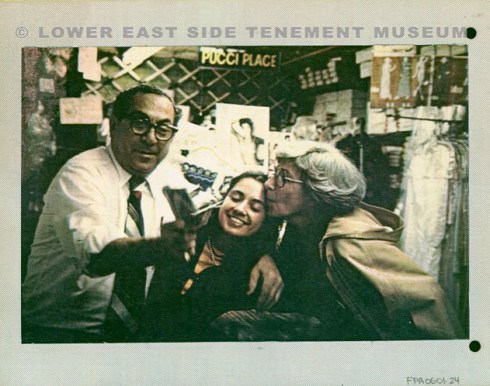
The Tenement Museum now has its photography archive online. What a treat! Go on, lose yourself …
(via)
“These analyses [of the prison system] – coupled with what I had seen firsthand – made sense, steering me to work towards the dismantling, rather than the reform, of the prison system. Resistance Behind Bars should not be mistaken for a call for more humane or ‘gender responsive’ prisons.”
Vikki Law (Source)
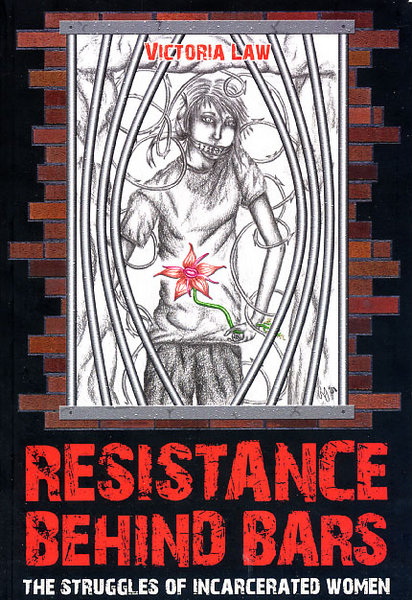
This is the second in a three part mini-series entitled Women Behind Bars, casting an eye over the work of writers and artists dealing with women’s struggle within the US prison system. The first installment featured journalist Silja Talvi’s work. Today we look at the activism of Vikki Law.
Speaking
“How many people know about the Attica prison riots?” asked Vikki Law. The majority of the audience raised hands. “How many of you have heard of the August Rebellion?” she then asked. No response. Point made.
The August Rebellion was staged in 1974 by women imprisoned at New York’s maximum-security prison at Bedford Hills. Protesting the brutal beating of a fellow prisoner, the women fought off guards, holding seven of them hostage, and took over sections of the prison.
Writing
Vikki Law wrote Resistance Behind Bars to counter the historical erasure of women’s prison resistance. The book challenges the reader to question why these instances and efforts have been ignored and why many assume that women do not organize to demand change. It fills the gap in the existing literature, which has focused mostly on the causes, conditions and effects of female imprisonment.
Law has worn many hats in the anti-prison movement. In 1996, she helped start Books Through Bars-New York City, a group that sends free books to prisoners nationwide. In 2000, she began concentrating on the needs and actions of women in prison, drawing attention to their issues by writing articles and giving public presentations. Since 2002, she has worked with women incarcerated nationwide to produce Tenacious: Art and Writings from Women in Prison and has facilitated having incarcerated women’s writings published in larger publications, such as Clamor magazine, the website “Women and Prison: A Site for Resistance” and the upcoming anthology Interrupted Lives.
Similar to Talvi’s work, her writing is uninfected with academese. Law’s focus is the self-organised activities of women prisoners such as forming peer education groups, clandestinely organizing ways for children to visit mothers in distant prisons and raising public awareness about their conditions.
Law will criticise writing that she deems unhelpful and misleading. For example she refutes author Virginia High Brislin’s work which stated “women inmates themselves have called very little attention to their situations,” and “are hardly ever involved in violent encounters with officials (i.e. riots), nor do they initiate litigation as often as do males in prison.”
Law urges us to acknowledge the existing patriarchy of society. The term feminism has become co-opted by predominantly white and privileged classes. The actions that would have previously fallen under the purview of feminism continue in pockets and without a top-down label. She states:
Once such case would be that is described below. Law takes the details from a letter written by the victim.
In the case of Barrilee Bannister, sentenced under Oregon’s mandatory sentencing law, she and seventy-eight other women were sent to a privatized, all-male prison in Arizona run by the Corrections Corporation of America (CCA). The approximately 1300 mile move completely cut the women off from family, friends and others whose outside support could have prevented their abuse. Only weeks after the women’s arrival, some were visited by a captain, who shared marijuana with them. He left it with them and then returned with other officers who announced that they were searching the cell for contraband. They promised that if the women performed a strip tease, they would not search the cell. “Two of the girls started stripping and the rest of us got pulled into it,” Bannister recalled. “From that day on, the officers would bring marijuana in, or other stuff we were not suppose[d] to have, and the prisoners would perform [strip] dances.” From there, the guards became more aggressive, raping several of the women. Bannister reported that she was not given food for four days until she agreed to perform oral sex on a guard. (Source)
Private prisons will forever provide opportunities for gross abuse of human rights, but this is obvious and a discussion for another time. Still, on this evidence, Law has a long road of resistance and a lot of public education to provide. I wish her well.
Photography
Law’s commitments don’t stop with the pen. She also wields a camera and has contributed significantly to the activist-photography community of NYC.

ABC No Rio through a 6-year-old’s Holga, 2006
In 1997, she organized a group of activist photographers to transform one of No Rio’s upstairs tenement apartments into a black-and-white photo darkroom for community use. Since then, she has remained actively involved in coordinating (and sometimes co-teaching) free photography classes for neighborhood youth. In addition, she has participated in and curated numerous exhibitions at No Rio’s gallery, many with themes addressing social and political issues such as incarceration, grassroots efforts to rebuild New Orleans, Zapatista organizing, police brutality and squatting.
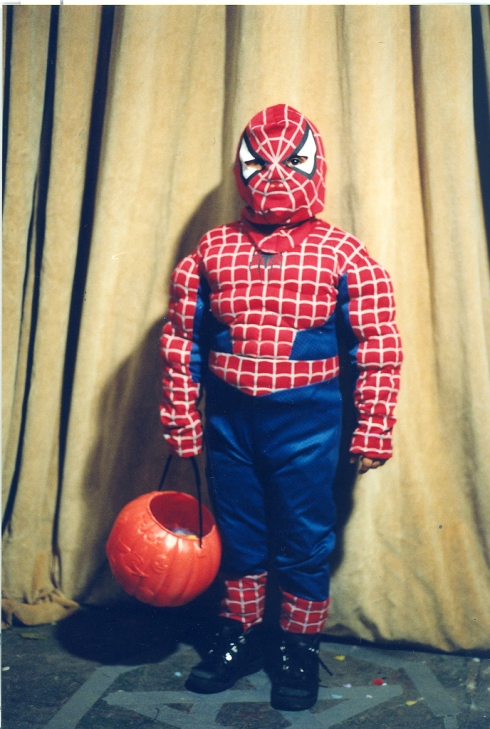
Every Halloween, Law also moonlights as a portraitist for ABC No Rio‘s free haunted house for kids. As she explains, “Over 400 kids from the neighborhood show up to shriek and scream their way through the first floor and backyard. Tipping my hat to Tom Warren’s “Portrait Studio” in the 1980s, I set up a portrait area to document some of the kids and their costumes.”
Below is Prison Photography‘s favourite.
Please read Vikki’s extended resume. Check out Vikki’s Flickr photostream. For a list of resources from The Action Committee for Women in Prison click here.
A few things emerging today to which I’d like to doff my cap.
Lenscratch
Aline Smithson at Lenscratch, rumoured to be in Santa Fe (Good Luck, Aline), celebrated all Lori Waselchuk’s documentary work; Waterlines, one project of many projects wrapped up in Louisiana, and Grace Before Dying community portrait of the Prison Hospice at the Louisiana State Penitentiary (Angola).

Lock Down Visit. Lori Waselchuk
Lori, a member of the New Orleans Photo Alliance, launched her project Grace Before Dying April 3rd at the Louisiana State Prison Museum in conjunction with the Louisiana-Mississippi Hospice and Palliative Care Organization (LMHPCO), the Louisiana State Prison Museum, and helped along with a Distribution Grant from the Documentary Photography Project of the Open Society Institute and Moonshine Studio.
The issues of age and health in prisons – together and in isolation – have been reasonably well covered. But, Waselchuk succeeds where so many others fail (with the exception of Edmund Clark) in really communicating the infirmity and vulnerability of the inmates
Fraction offered a good summary, as does Waselchuk’s Alma Mater. Critical Mass has the best gallery of Grace Before Dying
Bint PhotoBooks on Internet
Bint PhotoBooks on Internet got to grips with Martin Roemers‘ Relics of the Cold War which includes a Valencia orange room within a Stasi Prison. Roemers goes tête-à-tête with the Fuchs brothers in the communist-archaeology-photo genre.

Germany, East Berlin. Visitor-room in former Stasi prison Hohenschoenhausen. Political prisoners were held in this prison. Martin Roemers
Unrelated to prisons, I am also a fan of Roemers’ Lourdes Pilgrims series.
Subjectify
Subjectify grapples with the latent appropriation of images since the 2004 release of Abu Ghraib photographs.
much has been written about the ways in which war photography often echoes iconic religious imagery. but i have been wondering how, in turn, the iconography of the new war and torture photography is also influencing fine art photographers today?
Subjectify offers Jessica Somer‘s work ‘Origin’ from the Bend So Not to Break series as a case in point. I drew some interest along with disbelief and derision when I skirted the issue regarding Ballen and the torture aesthetic.

Origin. Jessica Somers
I believe artists biggest problem is to work away from viewers natural tendency to superimpose meaning so easily. I think Somers is safe. She’s got a style that stands on its own – it doesn’t get drowned out by media noise or green gloves.
AN Other
Yusuf Sayman‘s work on individuals going through Re-entry programs after long term prison sentences presented itself in the Independent‘s bizarre and confused “Britain’s Best Crime Photography” competition.
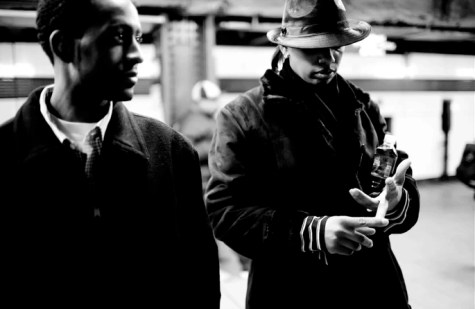
Starlene from the Free Again: Starlene series. Yusuf Sayman
Starlene Patterson is one of three former prisoners, Sayman has collaborated with after prison release for the Free Again series. Starlene is at college to qualify as a Social worker. “People need help.”
Starlene has written a book, Up Against the Wall. She says, “My book has a message. There’s a lot of young people who need guidance and they my not have that. If my book can help one [of those children] than I’ve achieved.”
Non-prison related I like Sayman’s Henry’s World series.

 Prison Photography