
You are currently browsing the tag archive for the ‘Texas’ tag.
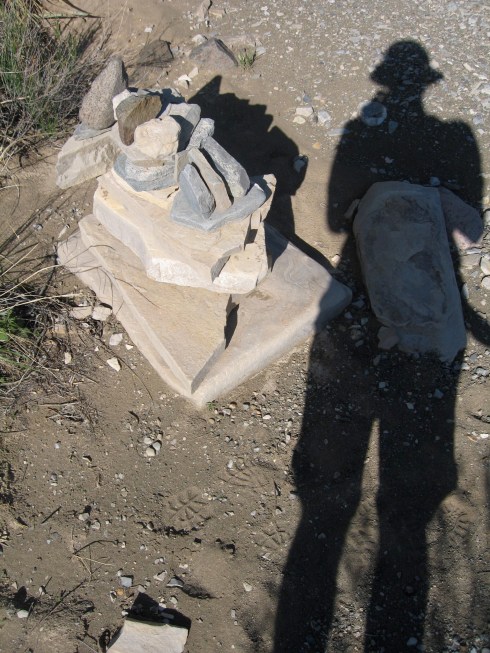
‘Duck and I’ © Pete Brook
Last month I went to Big Bend National Park, on the border with Texas and Mexico. The Chihuahuan desert is very hot during the day, even in spring. We took an 18-mile day hike, walking before and immediately following sunrise and later in the three hours before sundown.
On the trek out I was surprised to see (and super-amused by) the artistry of some ducks (called cairns in the UK); even in the inhospitable desert, some folks had taken the time and care to build these things. It occurred to me that I’d seen typologies of most things but not these essential, non-owned, geo-marking, petra-sculptures. On the way back, I photographed them.
As I have said before, I am not a photographer and I rarely want to share my images but I’ll share this bit of fun.


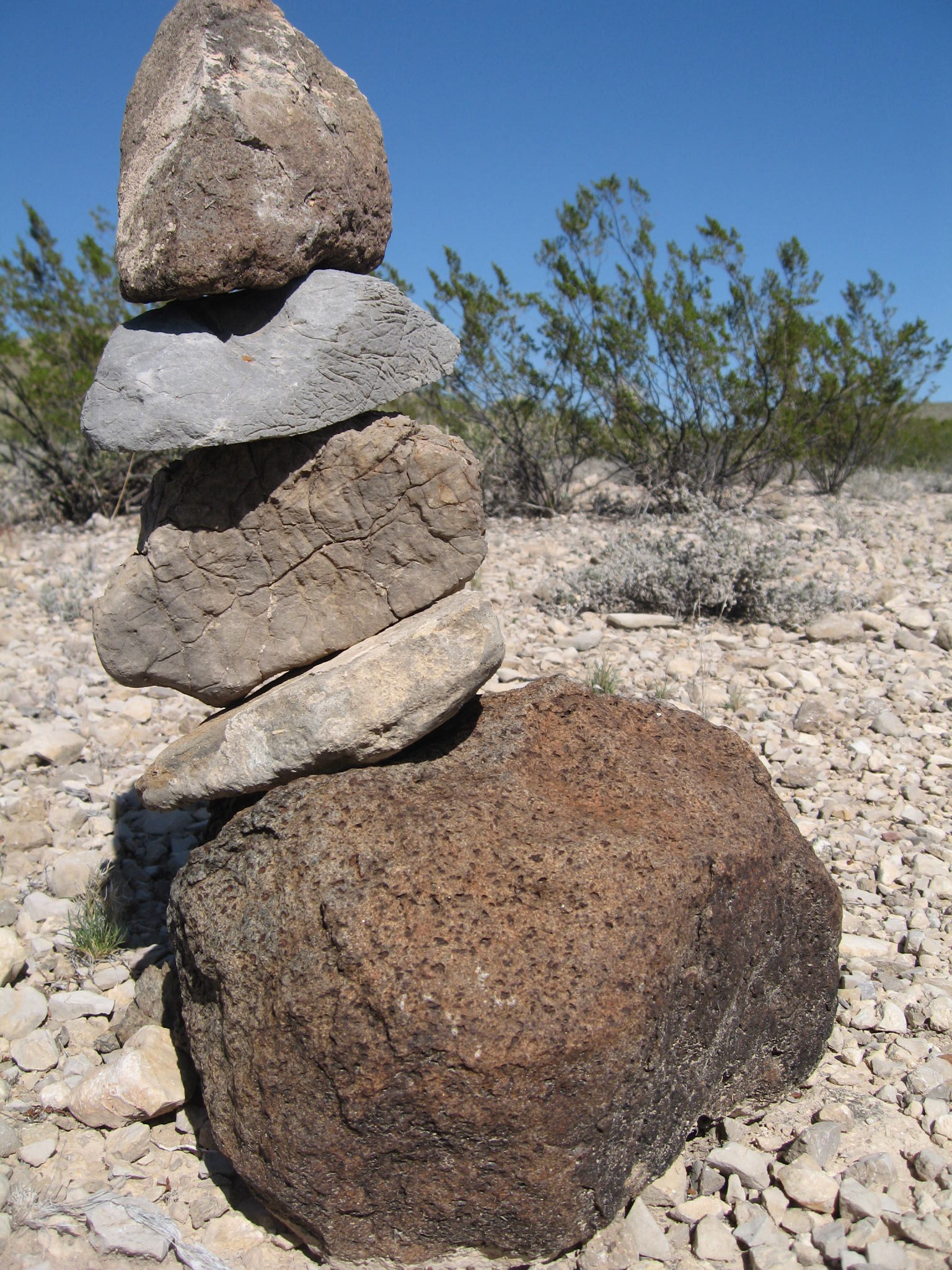

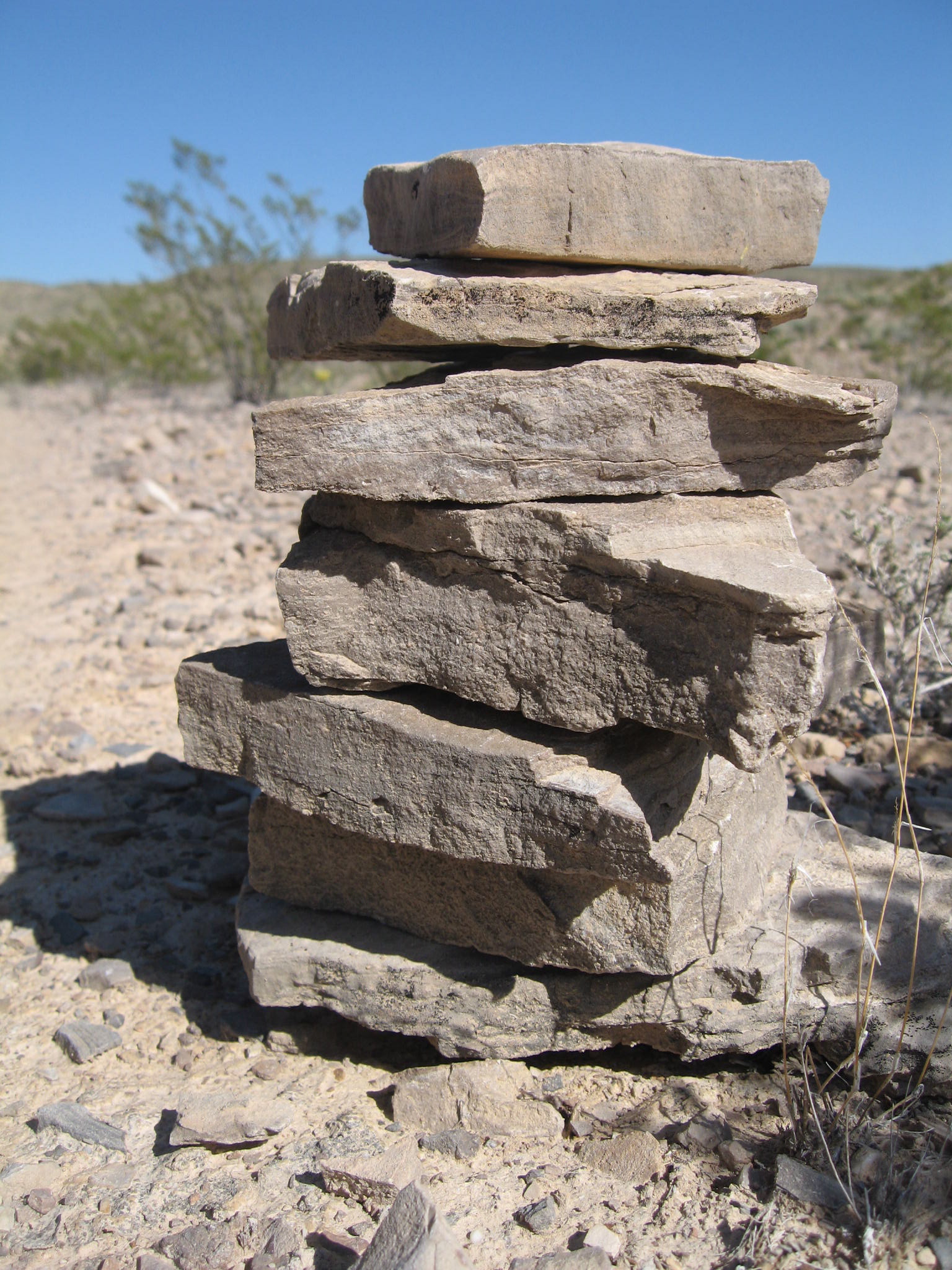


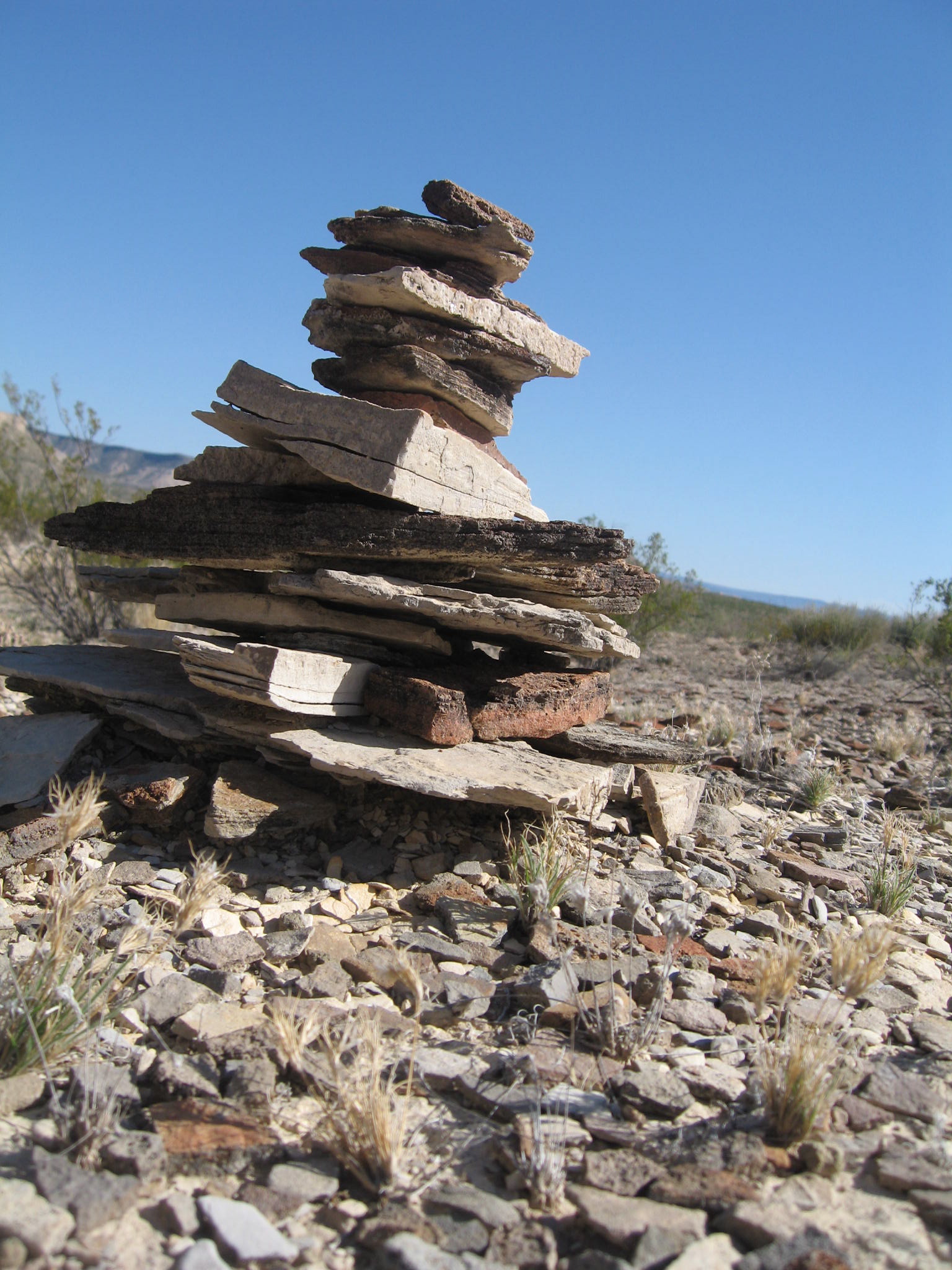


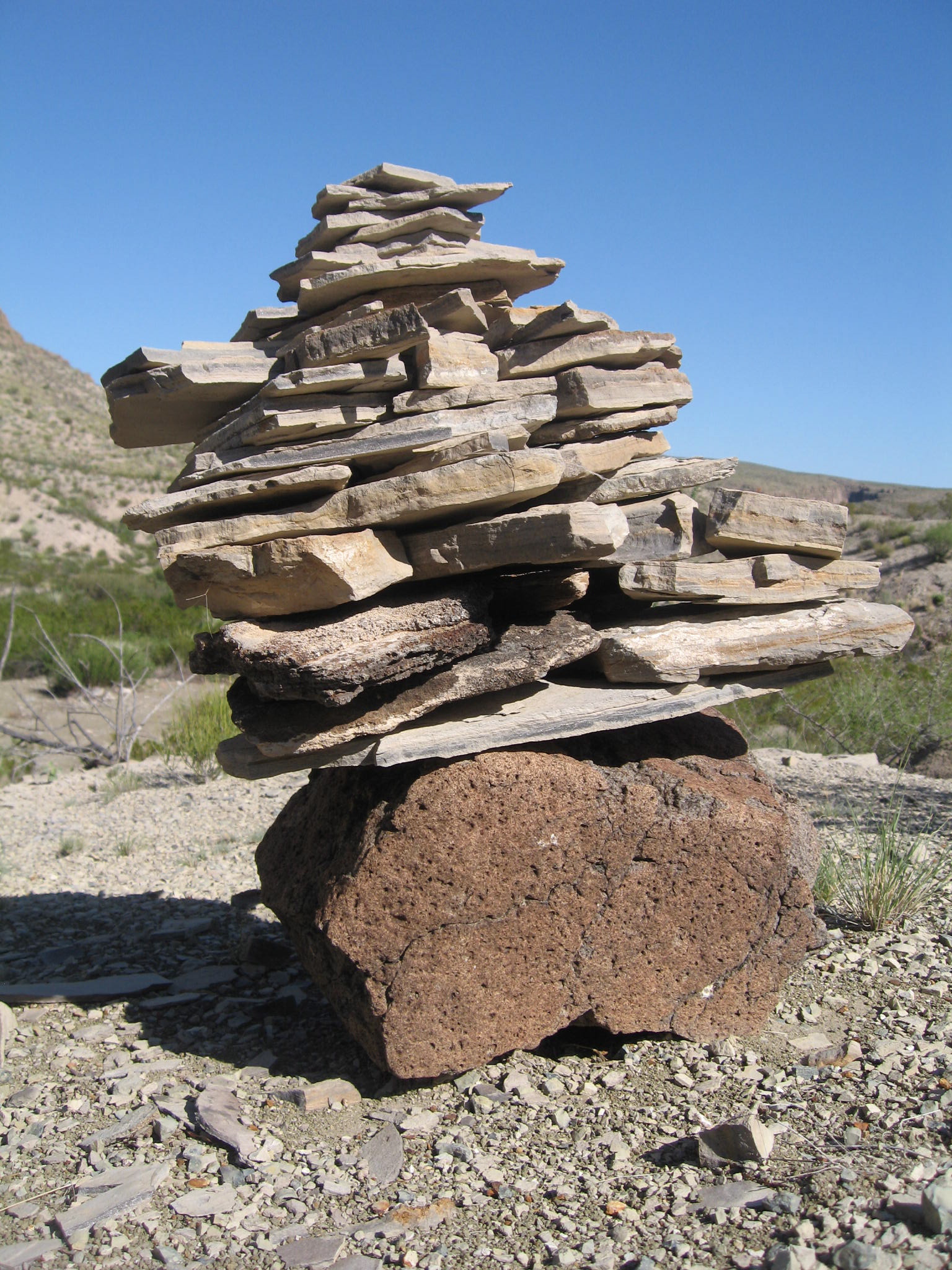

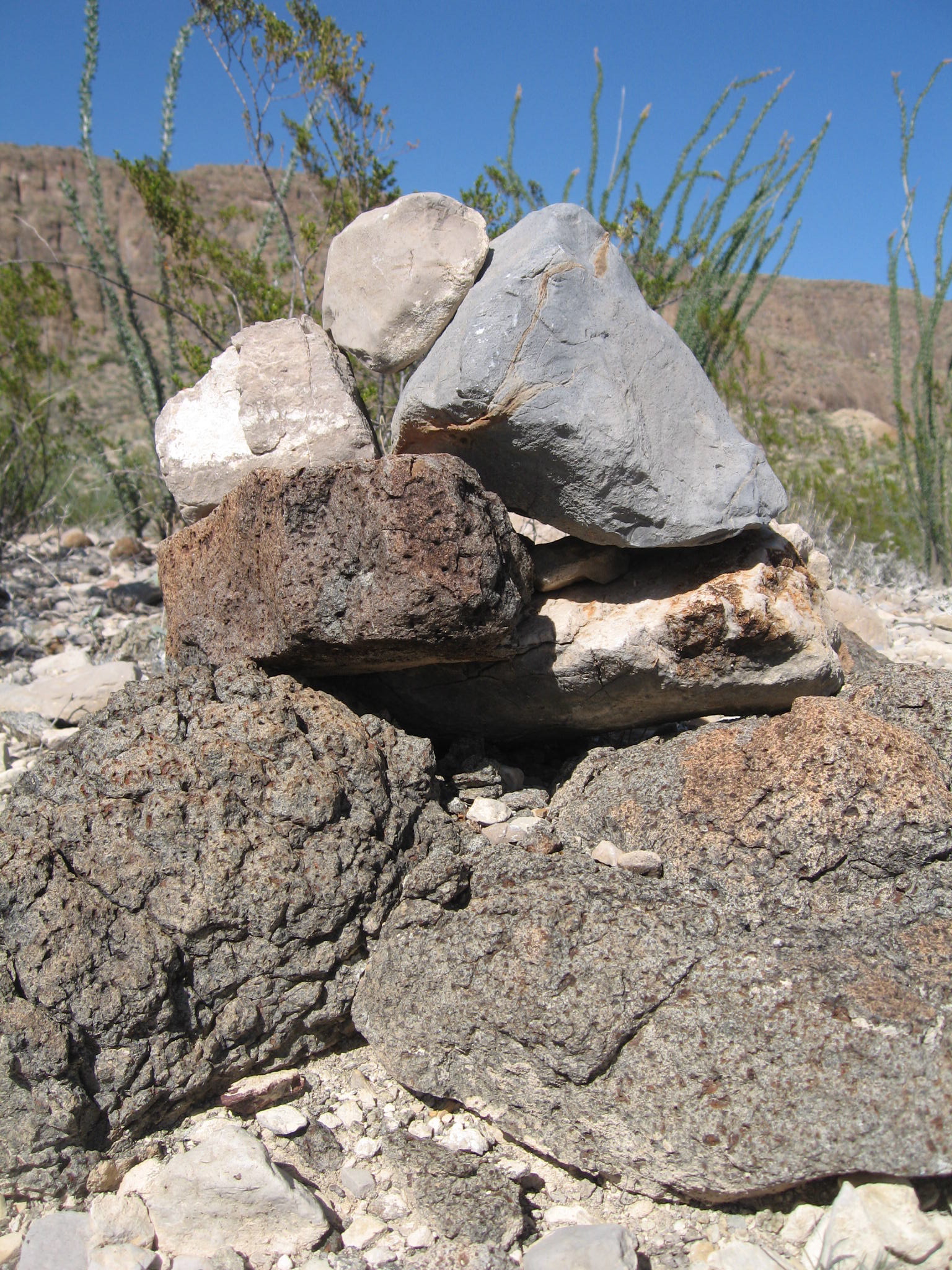
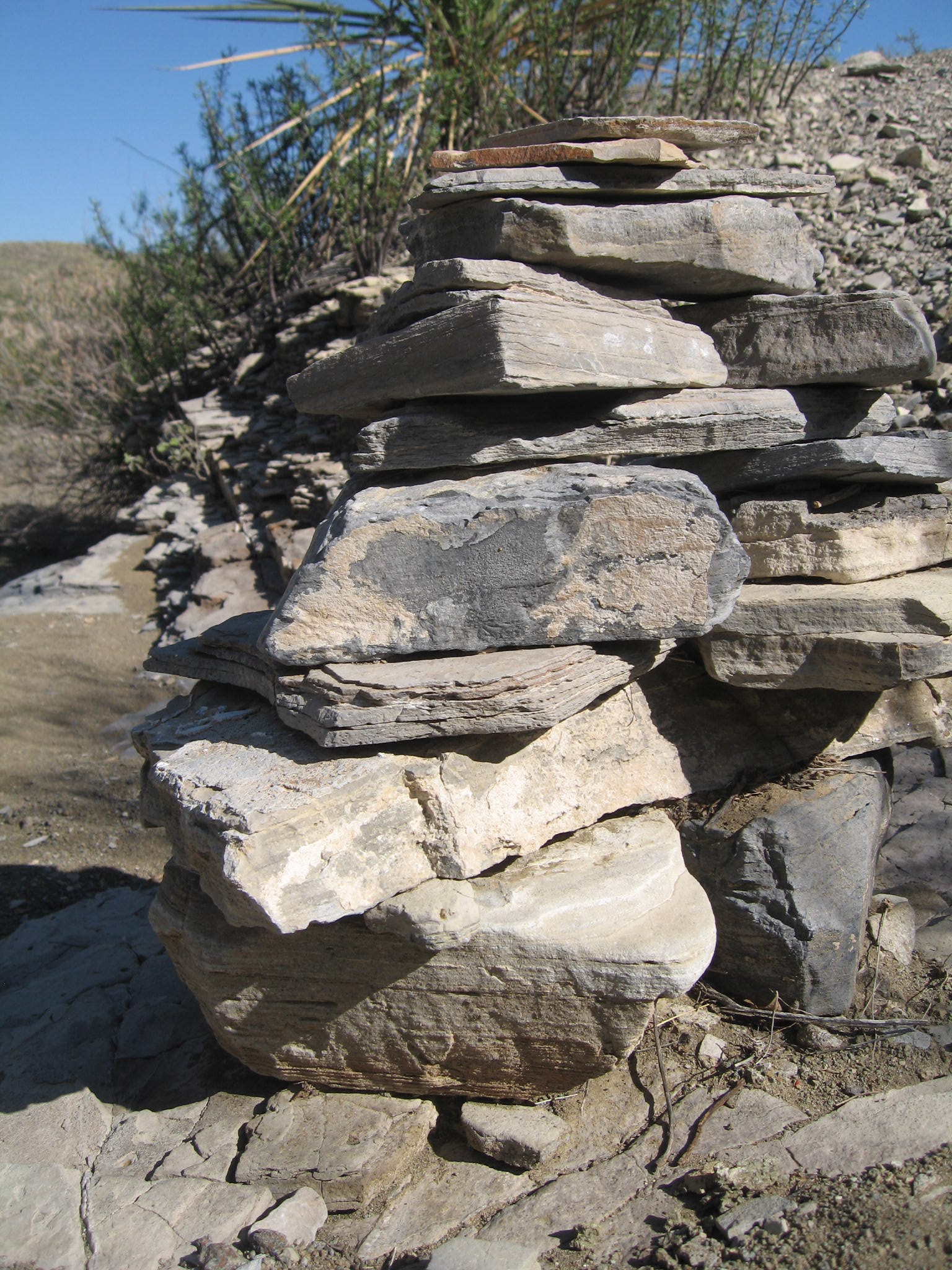

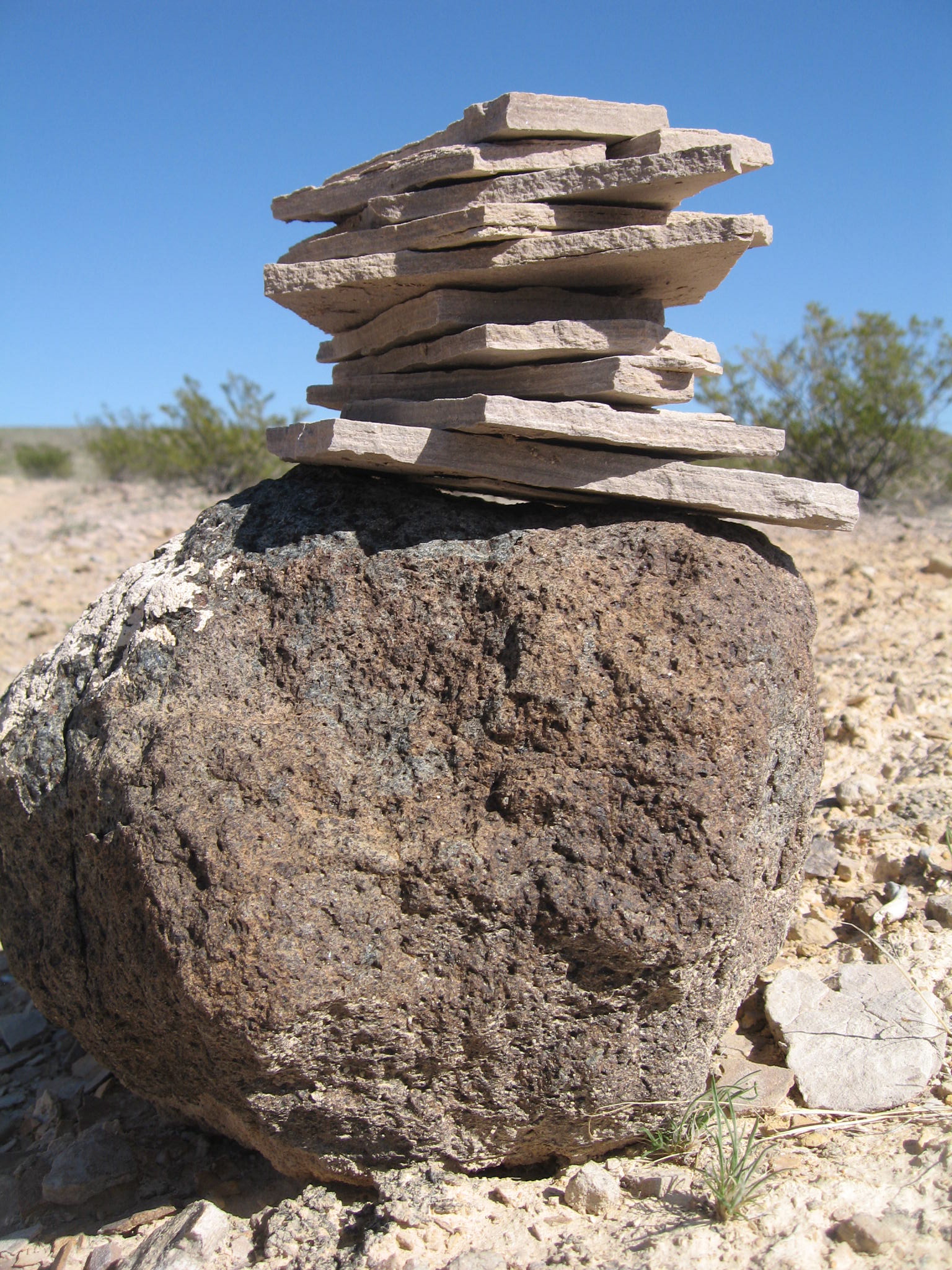
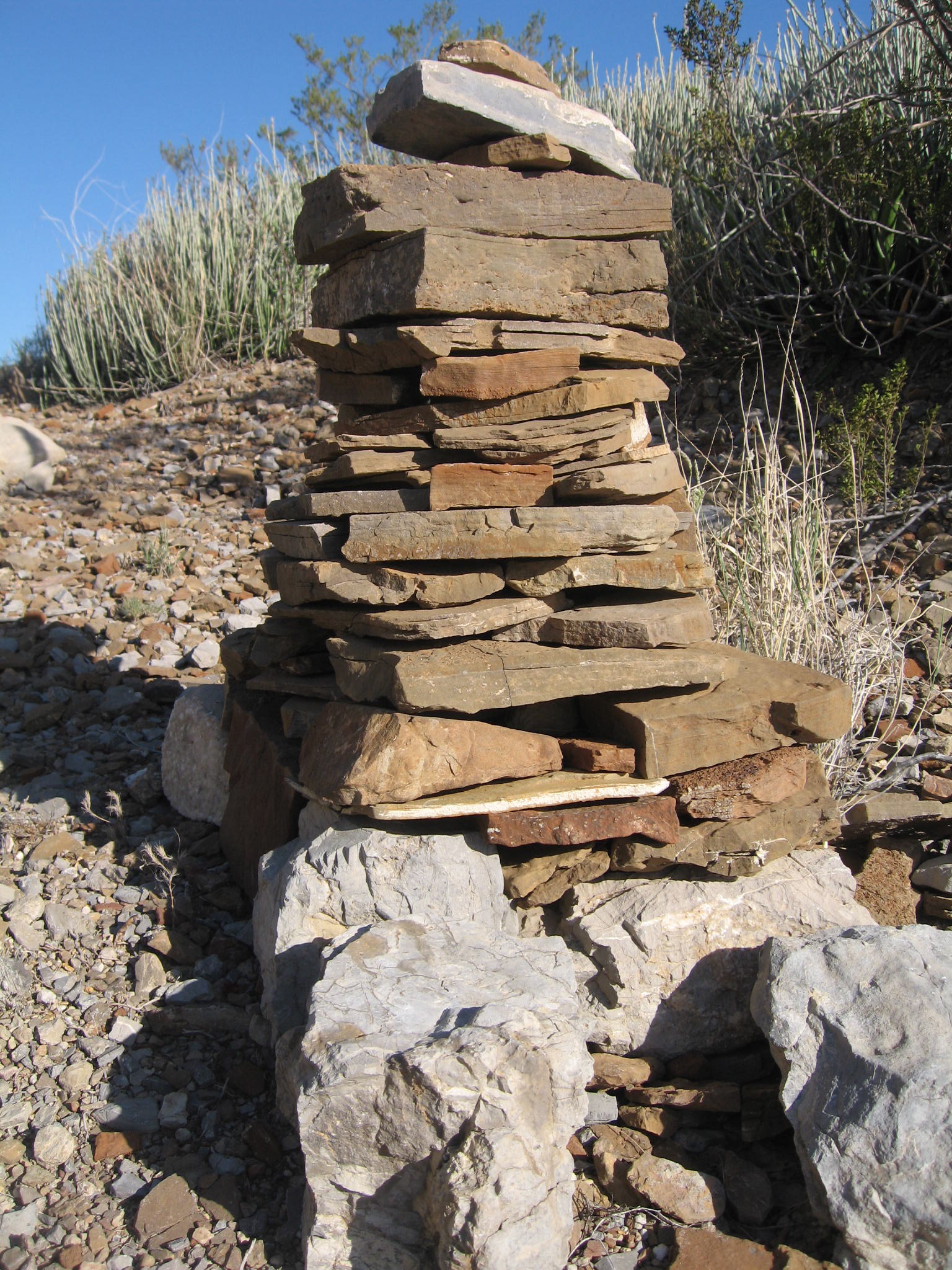
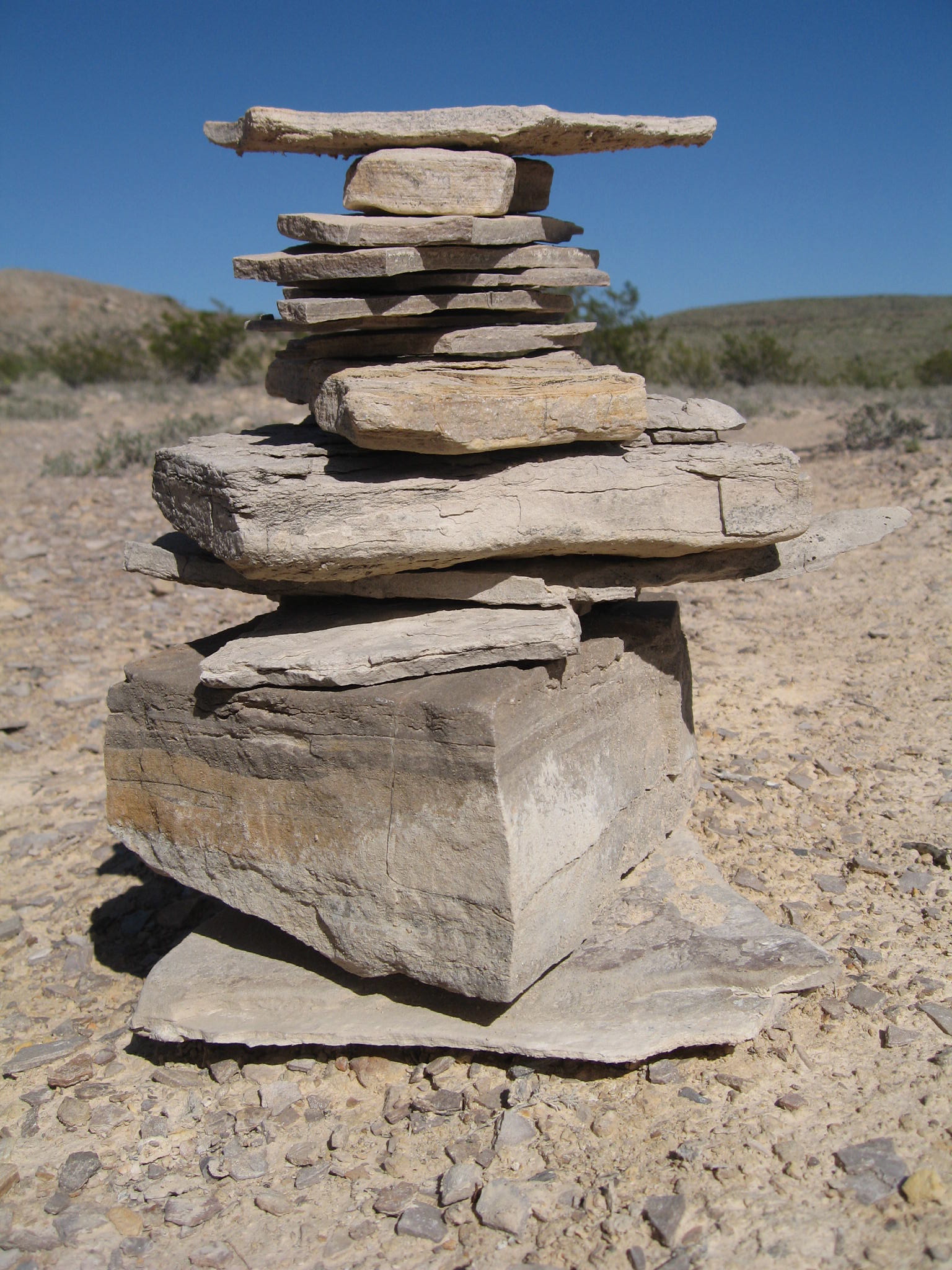

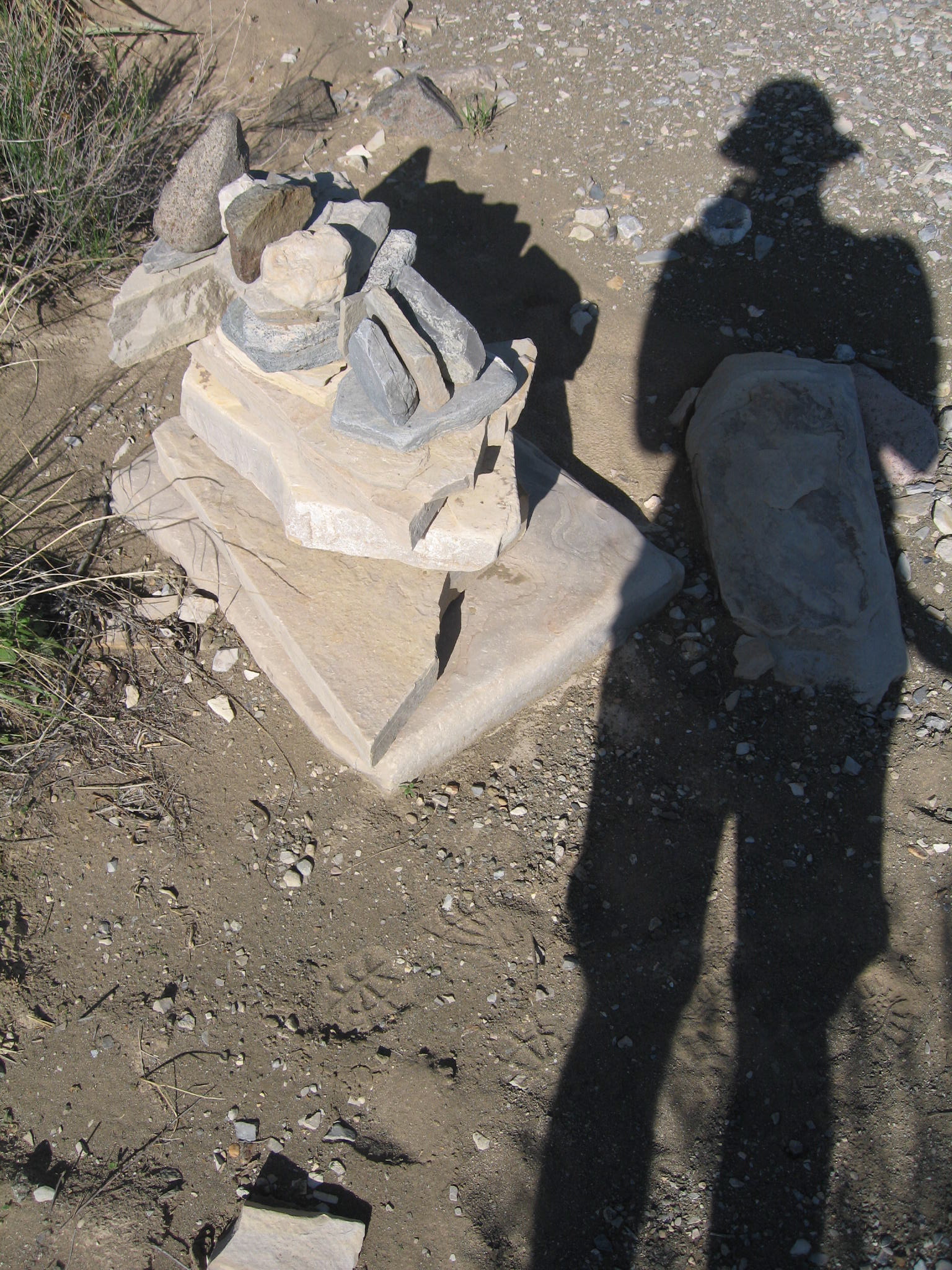


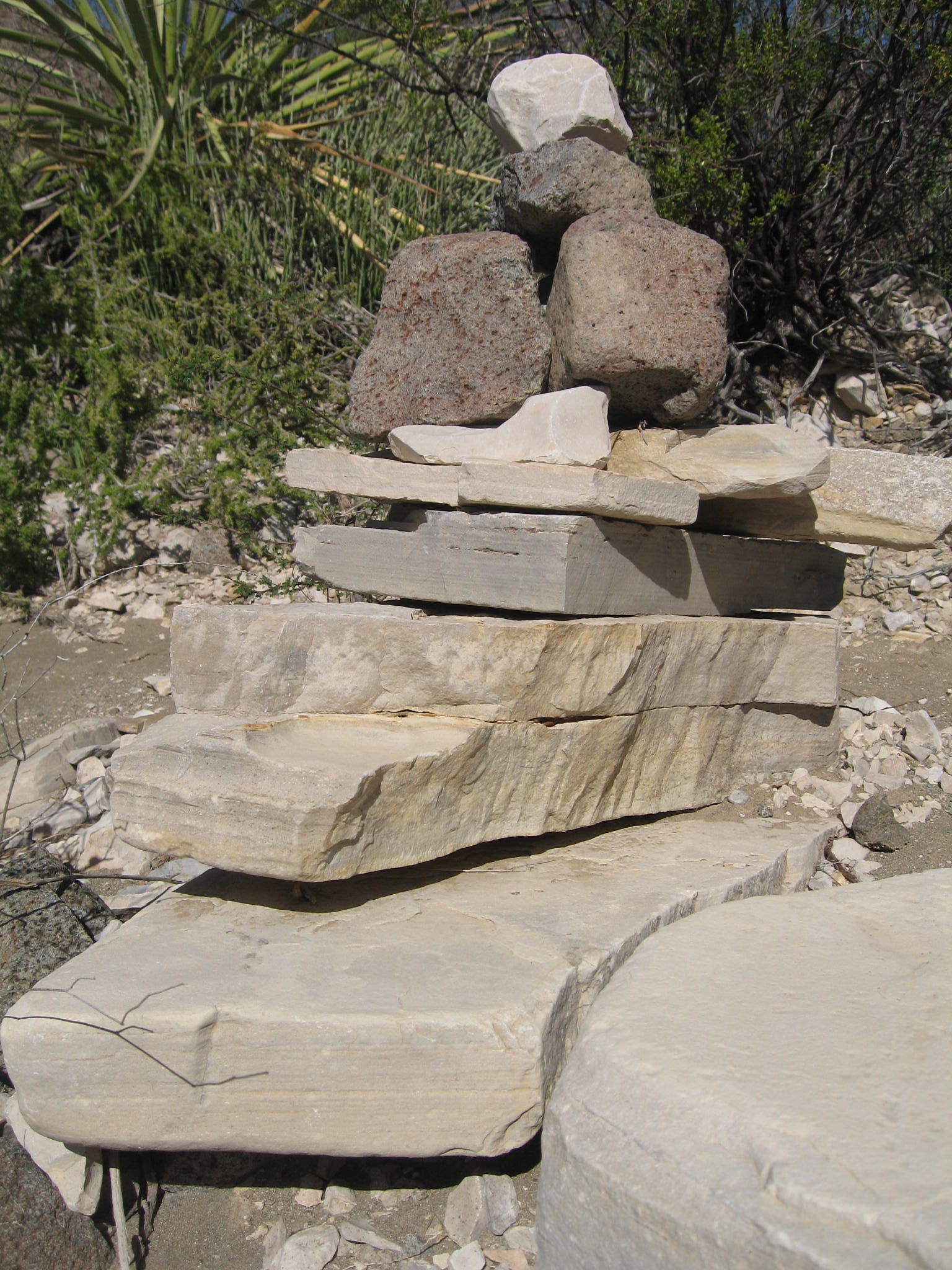

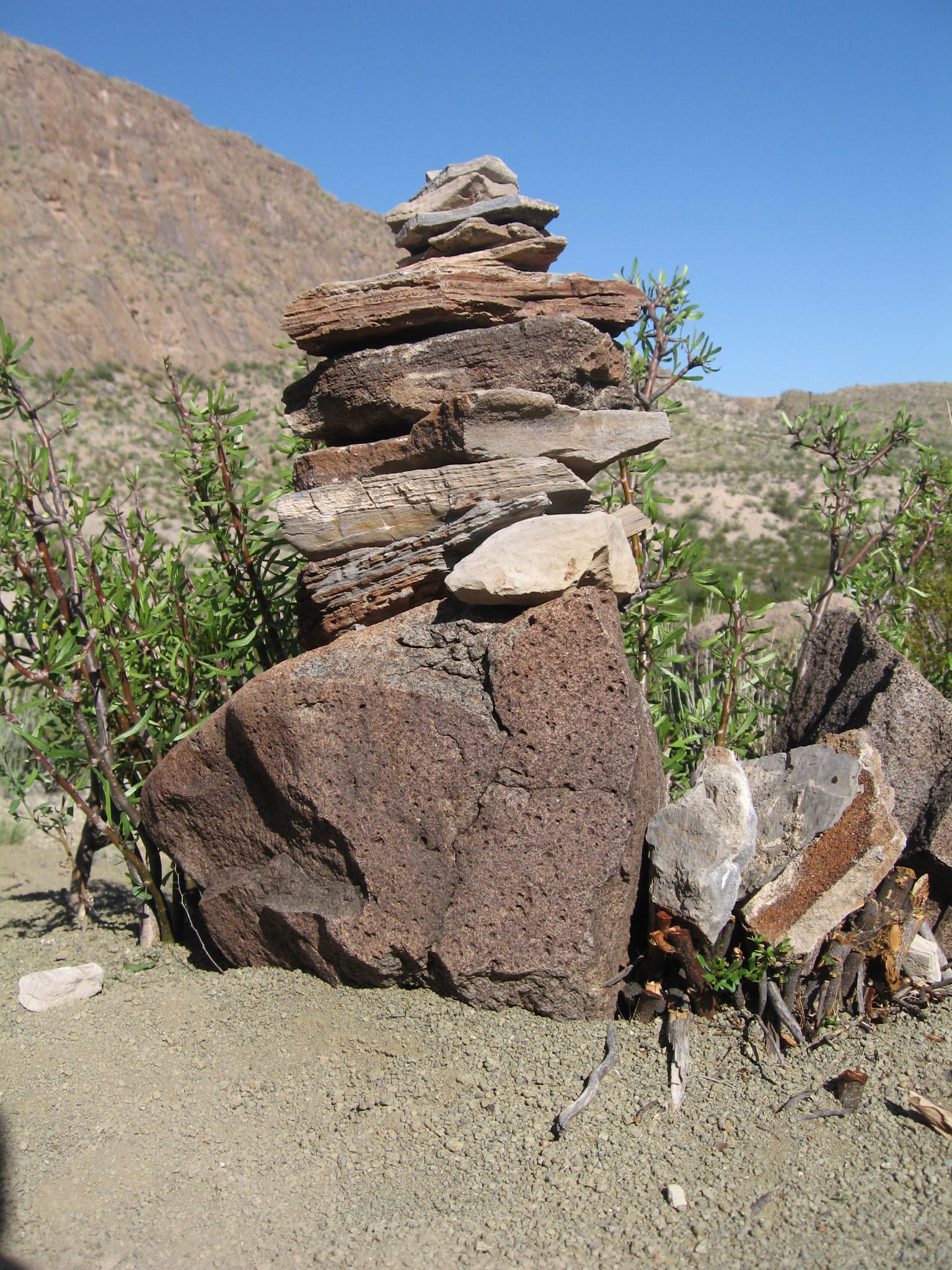

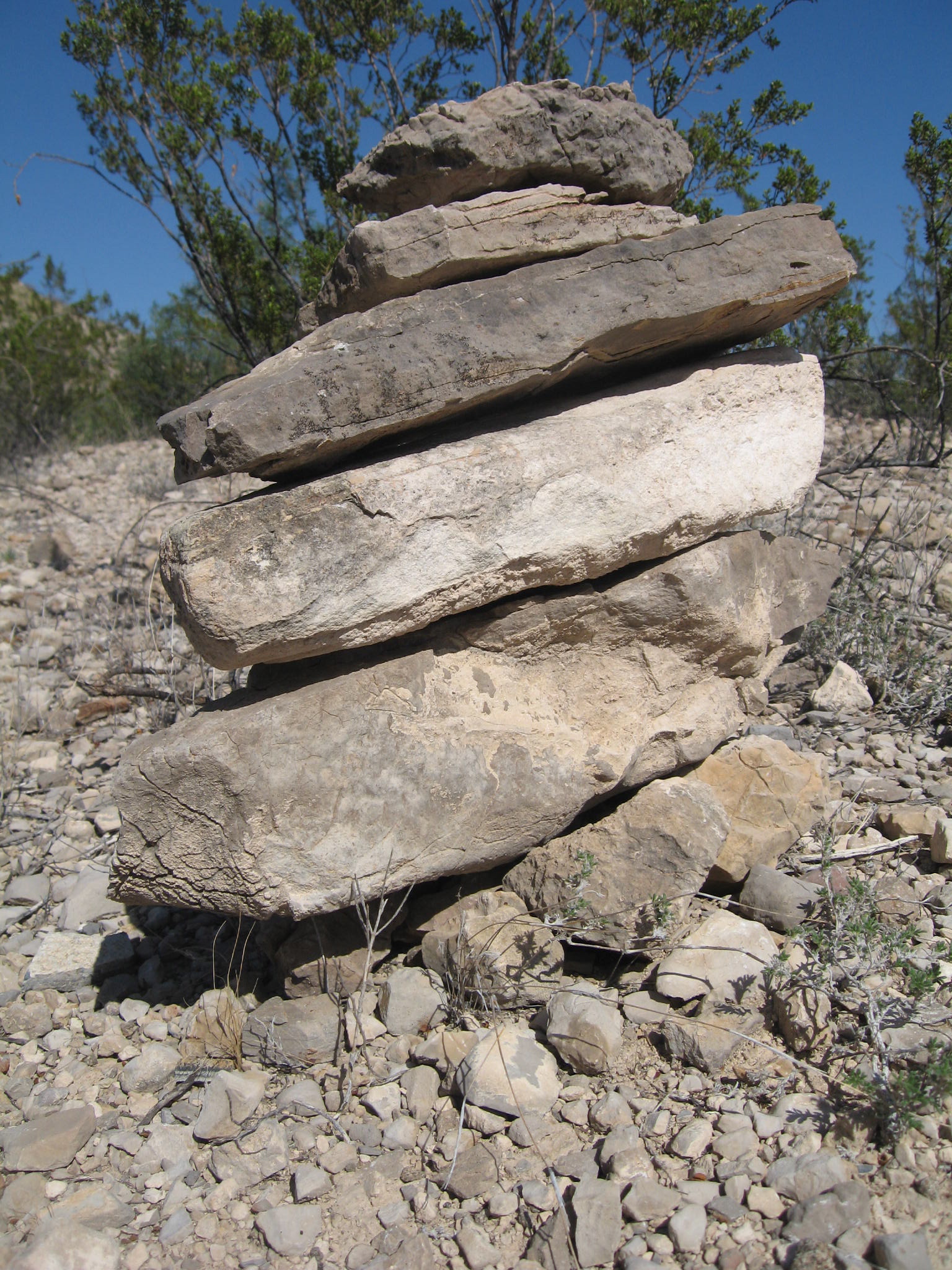


‘ROBODUCK’ © Pete Brook

Susan Wright. © Matthew Rainwaters
Matthew Rainwaters‘ Offender, an assignment for Esquire and Texas Monthly, depicts “two very different inmates inside the Texas Department of Corrections.”
The first is some bloke with a history of fraud and a penchant for escape.
I am more interested in juxtaposing Rainwaters’ portraits of a husband-killer and the prosecution attorney.
LADIES
Susan Wright was convicted of murder after stabbing her husband 193 times. She was recently granted an appeal and may be released after re-sentencing.
Prosecuting attorney Kelly Preistner doesn’t buy the battered woman’s syndrome defense. During closing arguments she reenacted stabbing her assistant 193 times for the jury.

Kelly Priestner. © Matthew Rainwaters
COMMERCIAL PHOTOGRAPHY
Generally, I don’t know what to make of commercial work and portraiture done inside prisons. I think I’ve only featured it once before on Prison Photography with a nod to Andrew Hetherington’s work for Wired on a story about cell phones and security breaches.
Evidently, Rainwaters’ is motivated to go beyond the requirements of assignment; he’s got the prison photography bug!
In an interview over at electronic beats he describes the fortune of the two stories coming at once, but that they catalysed a body of work upon which he wants to expand:
Rainwaters goes onto explain he hopes to photograph at Guantanamo. This leap is remarkable. I would not expect a commercial or editorial photographer to make such a transition. For me it stands to reason that one discusses Guantanamo and illegal US prisons in the same context as homeland penitentiaries, but I don’t expect others to always hold the same opinion. That a photographer is pressing this line is intriguing.
I’ll be eager to show Rainwaters’ Guantanamo work when it surfaces.
– – –
You can also see the selection of Rainwaters’ work at Behance.
Thanks to Scott for the tip.
Ken Light is a career photojournalist and a professor of photojournalism at Berkeley. If anyone is going to push back against the abuse of photographers rights, it’d be him right?
Well, he did. He won a small but symbolic $558
Last year, Light licensed his image of Cameron Todd Willingham to several media outlets coinciding with The New Yorker‘s exposé of dodgy arson forensics and the probable innocence of Willingham.
Current TV was not one of those he dealt with, yet they displayed Light’s image for a couple of months.
Light avoided federal court because it is costly and long-winded and filed a small-claims suit in San Francisco. PDN explains:
What is interesting here, is Light wonders avoiding the impractical, less-reflexive, federal route could be a better option for photographers:
“Yes, I got much less than I thought I deserved. [But] Maybe if we attacked in small claims courts and won, some of these companies might be more careful,”
I think Light has a good point and proven a repeatable tactic.
___________________________________________
Postscript: In the summer, I did multiple interviews and one of those was with Light about photographing on Texas’ death row. Everyday, I look at that untranscribed audio file and beat myself up that I haven’t published yet. It’s coming … I promise.
BANNED BOOK S PETITION
Two weeks ago I penned an article about the banning of books in Texas prisons. Attached to the article was a petition to Brad Livingston, Director of the Texas Department of Criminal Justice.
If you are opposed to politically motivated censorship, I urge you to sign the petition. Let me remind you that the book was about the conditions of women in American prisons and it was banned for describing the abuses two females had suffered early in life; abuses that had shaped self-destructive behaviour and consequent incarceration. The descriptions were not graphic. The descriptions were essential for discussion of cycles of violence, perpetrators and victims, and hopes for help instead of punishment.
If you need convincing that petition’s have an effect, I point to Change.org’s previous direct action that caused the Virginia Department of Corrections to overturn their ban on the Virginia Books Behind Bars program.
Signing the petition does mean making a profile at Change.org. Profiles are often a barrier to action but I ask that you put on your hurdling shoes in this instance.
Thanks, Pete
UPDATE: ALL PETITIONS
Change.org is so confident of the power of petitions they have set up a platform to deliver the petition tools of national non-profits to the hands of individuals.

“Our bloggers have recently begun using this tool to start petitions in response to news stories and have won close to a dozen campaigns – successfully pressuring companies and federal agencies to change their policies.”

Three months ago, I wrote about Silja Talvi‘s excellent book Women Behind Bars.
It turns out the Texas Department of Criminal Justice also noticed it. They banned it – along with another book, Perpetual Prison Machine by Joel Dyer. Both books are distributed by Prison Legal News – a phenomenal non-profit based here in Seattle that educates America’s incarcerated class on its human and legal rights.
Prison Legal News has launched a lawsuit against staff and senior officials of the TDCJ. Money is not as issue here, principle is. “PLN is seeking compensatory, punitive and nominal damages plus declaratory and injunctive relief for violation of its rights under the First and Fourteenth Amendments, as well as attorney fees and costs.”
WHAT TO DO
Visit Change.org and read my brief article.
Download the full PLN lawsuit (PDF).
Sign the petition to the TDCJ for reversal of their censorship policy.
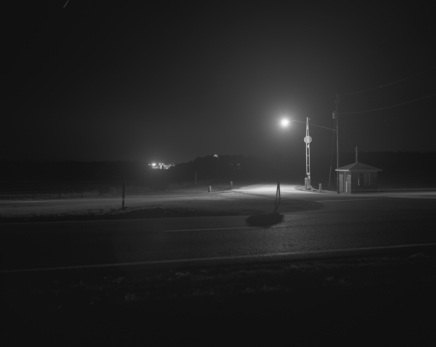
Alabama Death House Prison, Grady, AL, 2004. Silver print photograph. © 2009 Stephen Tourlentes
Stephen Tourlentes photographs prisons only at night for it is then they change the horizon. Social division and ignorance contributed to America’s rapid prison growth. Tourlentes’ lurking architectures are embodiments of our shared fears. In the world Tourlentes proposes, light haunts; it is metaphor for our psycho-social fears and denial. Prisons are our bogeyman.
These prisons encroach upon our otherwise “safe” environments. Buzzing with the constant feedback of our carceral system, these photographs are the glower of a collective and captive menace. Hard to ignore, do we hide from the beacon-like reminders of our social failures, or can we use Tourlentes’ images as guiding light to better conscience?
Designed as closed systems, prisons illuminate the night and the world that built them purposefully outside of its boundaries. “It’s a bit like sonic feedback … maybe it’s the feedback of exile,” says Tourlentes.
Stephen Tourlentes has been photographing prisons since 1996. His many series – and portfolio as a whole – has received plaudits and secured funding from organisations including the John Simon Guggenheim Foundation, the Massachusetts Cultural Council and Artadia.
Stephen was kind enough to take the time to answer Prison Photography‘s questions submitted via email.
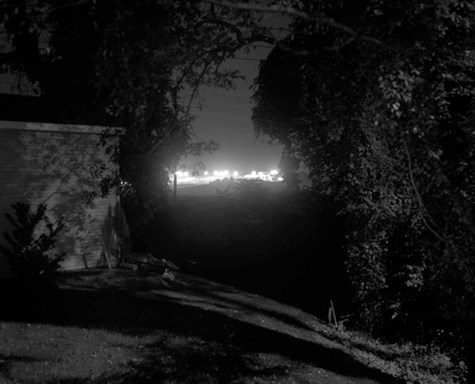
Penn State Death House Prison, Bellefonte, PA, 2003. © 2009 Stephen Tourlentes

Carson City, Nevada, Death House, 2002. Gelatin silver print. © 2009 Stephen Tourlentes

Blythe Prison, California. © 2009 Stephen Tourlentes
Pete Brook. You have traveled to many states? How many prisons have you photographed in total?
Stephen Tourlentes. I’ve photographed in 46 states. Quite the trip considering many of the places I photograph are located on dead-end roads. My best guess is I’ve photographed close to 100 prisons so far.
PB. How do you choose the prisons to photograph?
ST. Well I sort of visually stumbled onto photographing prisons when they built one in the town I grew up in Illinois. It took me awhile to recognize this as a path to explore. I noticed that the new prison visually changed the horizon at night. I began to notice them more and more when I traveled and my curiosity got the best of me.
There is lots of planning that goes into it but I rely on my instinct ultimately. The Internet has been extremely helpful. There are three main paths to follow 1. State departments of corrections 2. The Federal Bureau of Prisons and 3. Private prisons. Usually I look for the density of institutions from these sources and search for the cheapest plane ticket that would land me near them.
Structurally the newer prisons are very similar so it’s the landscape they inhabit that becomes important in differentiating them from each other. Photographing them at night has made illumination important. Usually medium and maximum-security prisons have the most perimeter lighting. An interesting sidebar to that is male institutions often tend to have more lighting than female institutions even if the security level is the same.
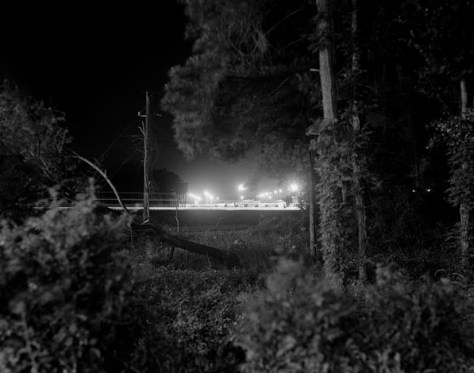
Holliday Unit, Huntsville, Texas, 2001. Gelatin silver print. © 2009 Stephen Tourlentes
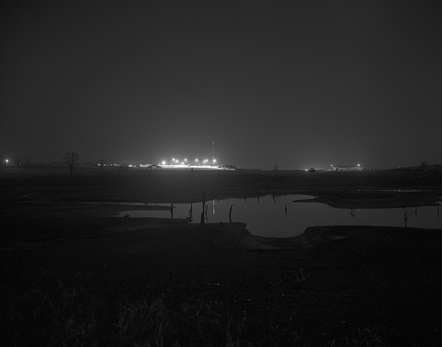
Springtown State Prison, Oklahoma, 2003. Archival pigment print. © 2009 Stephen Tourlentes
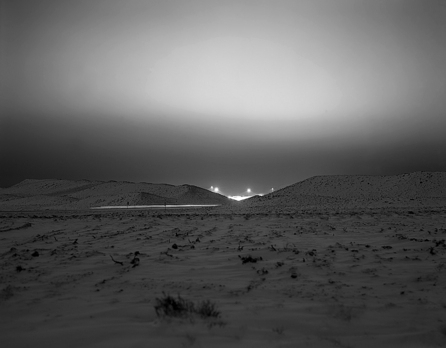
Death House Prison, Rawlins, Wyoming, 2000. Archival pigment print. © 2009 Stephen Tourlentes
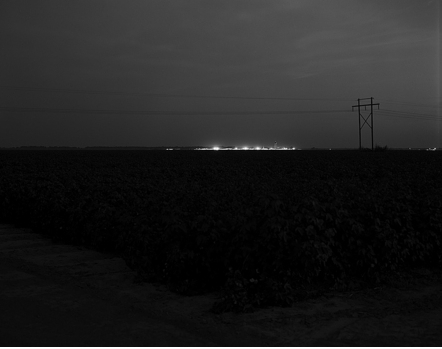
Arkansas Death House, Prison, Grady, AK, 2007. © 2009 Stephen Tourlentes
PB. Are there any notorious prisons that you want to photograph or avoid precisely because of their name?
ST. No I’m equally curious and surprised by each one I visit. There are certain ones that I would like to re-visit to try another angle or see during a different time of year. I usually go to each place with some sort of expectation that is completely wrong and requires me to really be able to shift gears on the fly.
PB. You have described the Prison as an “Important icon” and as a “General failure of our society”. Can you expand on those ideas?
ST. Well the sheer number of prisons built in this country over the last 25 years has put us in a league of our own regarding the number of people incarcerated. We have chosen to lock up people at the expense of providing services to children and schools that might have helped to prevent such a spike in prison population.
The failure is being a reactive rather than a proactive society. I feel that the prison system has become a social engineering plan that in part deals with our lack of interest in developing more humanistic support systems for society.
PB. It seems that America’s prison industrial complex is an elephant in the room. Do you agree with this point of view? Are the American public (and, dare I say it, taxpayers) in a state of denial?
ST. I don’t know if it’s denial or fear. It seems that it is easier to build a prison in most states than it is a new elementary school. Horrific crimes garner headlines and seem to monopolize attention away from other types of social services and infrastructure that might help to reduce the size of the criminal justice system. This appetite for punishment as justice often serves a political purpose rather than finding a preventative or rehabilitative response to societies ills.
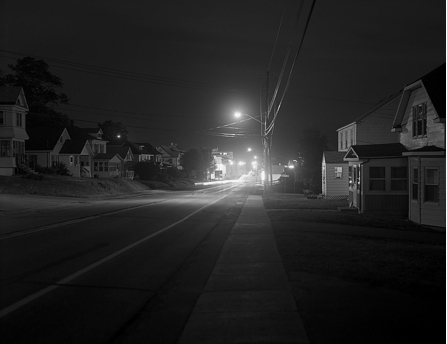
State Prison, Dannemora, NY, 2004. © 2009 Stephen Tourlentes

Prison, Castaic, CA, 2007. © 2009 Stephen Tourlentes

Federal Prison, Atwater, CA, 2007. © 2009 Stephen Tourlentes

Utah State Death House Complex, Draper, UT, 2002. © 2009 Stephen Tourlentes
PB. How do you think artistic ventures such as yours compare with political will and legal policy as means to bring the importance of an issue, such as prison expansion, into the public sphere?
ST. I think artists have always participated in bringing issues to the surface through their work. It’s a way of bearing witness to something that collectively is difficult to follow. Sometimes an artist’s interpretation touches a different nerve and if lucky the work reverberates longer than the typical news cycle.
PB. In your attempt with this work to “connect the outside world with these institutions”, what parameters define that attempt a success?
ST. I’m not sure it ever is… I guess that’s part of what drives me to respond to these places. These prisons are meant to be closed systems; so my visual intrigue comes when the landscape is illuminated back by a system (a prison) that was built by the world outside its boundaries. It’s a bit like sonic feedback… maybe it’s the feedback of exile.
PB. Are you familiar with Sandow Birk’s paintings and series, Prisonation? In terms of obscuring the subject and luring the viewer in, do you think you operate similar devices in different media?
ST. Yes I think they are related. I like his paintings quite a lot. The first time I saw them I imagined that we could have been out there at the same time and crossed paths.
PB. Many of your prints are have the moniker “Death House” in them, Explain this.
ST. I find it difficult to comprehend that in a modern civilized society that state sanctioned executions are still used by the criminal justice system. The Death House series became a subset of the overall project as I learned more about the American prison system. There are 38 states that have capital punishment laws on the books. Usually each of these 38 states has one prison where these sentences are carried out. I became interested in the idea that the law of the land differed depending on a set of geographical boundaries.

Federal Prison, Victorville, CA, 2007. © 2009 Stephen Tourlentes
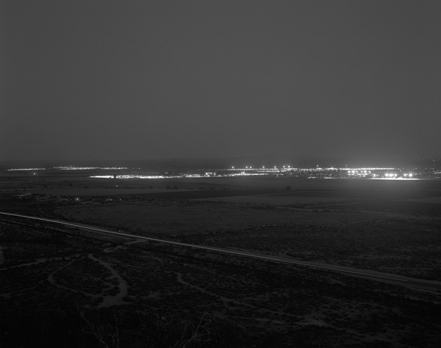
Prison Complex, Florence, AZ, 2004. © 2009 Stephen Tourlentes

Lancaster State Prison, Lancaster, CA, 2007. © 2009 Stephen Tourlentes
PB. Have you identified different reactions from different prison authorities, in different states, to your work?
ST. The guards tend not to appreciate when I am making the images unannounced. Sometimes I’m on prison property but often I’m on adjacent land that makes for interesting interactions with the people that live around these institutions. I’ve had my share of difficult moments and it makes sense why. The warden at Angola prison in Louisiana was by far the most hospitable which surprised me since I arrived unannounced.
PB. What percentage of prisons do you seek permission from before setting up your equipment?
ST. I usually only do it as a last resort. I’ve found that the administrative side of navigating the various prison and state officials was too time consuming and difficult. They like to have lots of information and exact schedules that usually don’t sync with the inherent difficulty of making an interesting photograph. I make my life harder by photographing in the middle of the night. The third shift tends to be a little less PR friendly.
PB. What would you expect the reaction to be to your work in the ‘prison-towns’ of Northern California, West Texan plains or Mississippi delta? Town’s that have come to rely on the prison for their local economy?
ST. You know it’s interesting because a community that is willing to support a prison is not looking for style points, they want jobs. Often I’m struck by how people accept this institution as neighbors.
I stumbled upon a private prison while traveling in Mississippi in 2007. I was in Tutweiler, MS and I asked a local if that was the Parchman prison on the horizon. He said no that it was the “Hawaiian” prison. All the inmates had been contracted out of the Hawaiian prison system into this private prison recently built in Mississippi. The town and region are very poor so the private prison is an economic lifeline for jobs.
The growth of the prison economy reflects the difficult economic policies in this country that have hit small rural communities particularly hard. These same economic conditions contribute to populating these prisons and creating the demand for new prisons. Unfortunately, many of these communities stake their economic survival on these places.

Kentucky State Death House, Prison, Eddyville, KY, 2003. © 2009 Stephen Tourlentes
PB. You said earlier this year (Big, Red & Shiny) that you are nearly finished with Of Lengths and Measures. Is this an aesthetic/artistic or a practical decision?
ST. I’m not sure if I will really ever be done with it. From a practical side I would like to spend some time getting the entire body of work into a book form. I think by saying that it helps me to think that I am getting near the end. I do have other things I’m interested in, but the prison photographs feel like my best way to contribute to the conversation to change the way we do things.
________________________________________
Author’s note: Sincerest thanks to Stephen Tourlentes for his assistance and time with this article.
________________________________________
Stephen Tourlentes received his BFA from Knox College and an MFA (1988) from the Massachusetts College of Art in Boston, where he is currently a professor of photography. His work is included in the collection at Princeton University, and has been exhibited at the Revolution Gallery, Michigan; Cranbook Art Museum, Michigan; and S.F. Camerawork, among others. Tourlentes has received a John Simon Guggenheim Foundation Fellowship, a Polaroid Corporation Grant, and a MacDowell Colony Fellowship.
________________________________________
This interview was designed in order to compliment the information already provided in another excellent online interview with Stephen Tourlentes by Jess T. Dugan at Big, Red & Shiny. (Highly recommended!)
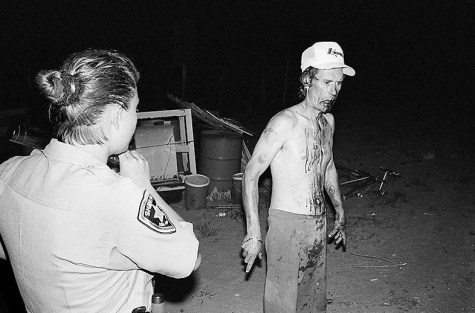
© 2009 Jerome Brunet Photography. All rights reserved.
Jérôme Brunet‘s photo essay Riding Shotgun with Texas Sheriff’s is a ferocious document of police activity and procedure in America’s ‘love-to-hate’ lone star state. I am in deep admiration of this project for it connects the dots and marries everything in a police officer’s routine from violent confrontation to mundane paperwork.
Brunet spent six months with Texas Sheriffs and the stark quality of his work demonstrates that.
Brunet’s work inevitably features sites of incarceration, but I contend viewers are more shocked Brunet’s depictions of inhumanity on the highways (and front yards) than they are of inhumanity within the confines of state institutions.
Prison Photography Blog embraces complexity and unanswerable questions and Brunet poses many. Prisons and jails are not isolated from society but a point of destination and departure throughout the cyclical mechanisms of state authority. It is right to feature a project that merges the chaotic unknowns (crime scenes) and prevailing controls (sites of incarceration) of police activity.
Brunet explains:
When asked why I’m interested in law enforcement, I’m compelled to reply, “We all should be.” The fact that we know so incredibly little about our ‘boys in blue’ all though we see them on our street corners and of course in more dramatized versions on television and in Hollywood, I’ve always been interested in the symbolic aspect of the modern day police officer; the man with the badge, gun and authority to dramatically change a persons life forever. Societies apparent answer to all life’s little and not so little problems. However bleak and insignificant a situation may seem, officers are constantly dealing with lost children, family quarrels, various assemblies of homeless and confronting each day, the violence and corruption humanity inflicts on each other everyday.

© 2009 Jerome Brunet Photography. All rights reserved.
Much of the Sheriff’s department’s work is devoted to tackling drug-smuggling and again Brunet comments with incredible even-handedness
Roads linking Mexico to the U.S., such as the I-10, are sensitive arteries of a flourishing contraband. Even though another deputy in a deep sigh, admitted to me catching only ten percent of the actual traffic, a task force made up of U.S. Customs, D.E.A., Texas and New Mexico police have seized over 30 kilos of heroin, 2 tons of cocaine and 75 tons of marijuana. Even though these quantities sound enormous, actually landing on a large bust was a different story, only luck and perseverance enabled me to land on what was to be one of US’s largest single drug bust in US’s history. As a nervous Mexican driver arrives at the U.S. border and a routine check is made on his car, officers reveal neatly packed away in the trunk, 23.3 pounds of black tar heroin, estimated at 24 million dollars. This package is later revealed to the local press in Hollywoodesque fashion. I watch in amazement and think of the outcome of this Mexican peasant paid 1000 dollars to transport this load into the land of the free.
As an editorial decision, I have not included Brunet’s images of the station or officers’ meetings, but they are as vital as the images from within the jail. The images inform one another.
Here are two desperate images from the station and I’d like to know the exact context. I shall not speculate, only present.

© 2009 Jerome Brunet Photography. All rights reserved.
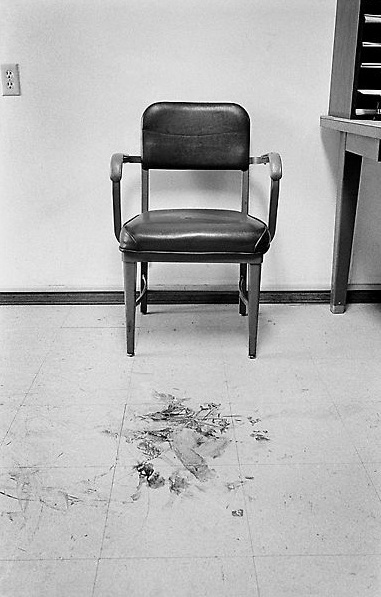
© 2009 Jerome Brunet Photography. All rights reserved.
Brunet offers insights into El Paso County Jail:
Texas, the second largest state in the U.S. also boasts the highest rate of incarceration (700 for 100 000). In an ultramodern county jail of El Paso, Texas, I witnessed different aspects of “the inside world”. Body searches, finger printing and delousing before the anonymous inmate dons the regulation blue overalls inscribed E.P.C.D.F. (El Paso County Detention Facility). On the top floor is the outdoor gym, from which you can admire the end of the Rocky Mountains and the beginning of the Sierra Madre into Mexico. Caged like lions, 40 federal prisoners await transport to a large prison. I am placed alone with one guard in this cage. Surprisingly enough, like a ghost, I hover through the crowd unnoticed, my heart beating for what felt like an eternity. Prisoners can only be exposed to the natural light of the gymnasium a sparsely granted privilege of only three hours a week.

© 2009 Jerome Brunet Photography. All rights reserved.
The photo essay even covers tactical training exercises.
An afternoon spent with the elite S.R.T. (Sheriff Reaction Team) proved to provide more excitement. This team made up of tough looking officers is specially trained to counter an unlikely riot in the prison. I was presented a billboard full of makeshift weapons made by previous inmates, everything from hand sharpened spikes, to knives made out of tooth brush handles with razor blades attached to their ends. All used for assassination purpose by gang members thriving too in the “inside world”.

© 2009 Jerome Brunet Photography. All rights reserved.
Brunet has admiration for officers “just like you and me”, whose work is unpredictable and occasionally very dangerous.
We will find in the police officers, goodness, honesty, corruption and brutality. In many cases we are the police, and like it or not we are responsible of their actions as much as our own. The more we know about them, the more we observe and tie ourselves to them, and the more this society will feel secure. This realistic testimony succeeds in making us share a few privileged moments into the life of these Texas and New Mexico cops as well as revealing the true backdrop of American culture.
Unlike other reportages of state authority, Brunet is keen to impress the absence of racial inequalities of power.
The majority of the men and women I interacted with were primarily Hispanic. Because of their ancestry they were able to bring forth a much appreciated warmth and understanding that I and, I’m sure, the rest of the townspeople, who were also Hispanic, enjoyed and accepted openly.

_________________________________________
Jérôme Brunet is a freelance photojournalist Jérôme Brunet was born in southern France and raised in London, Ontario (Canada). After obtaining his O.S.S.D. majoring in visual arts, he started his post secondary education in Paris, France, at the E.F.E.T. School of Photography, graduating in 1997. Jérôme Brunet has been published internationally through such diverse publications as Rolling Stone Magazine, Forbes and The New York Times. His client list includes The Discovery Channel, Fender Musical Instruments, Nikon Imaging Inc. and is currently featured on the official websites of musicians Eric Clapton, Carlos Santana and James Brown. Jérôme Brunet is currently working and residing in the Bay Area of San Francisco and is represented internationally by the Zuma Press agency.
Jérôme Brunet also takes portait pictures of musicians here and here.

 Prison Photography