
You are currently browsing the monthly archive for December 2012.
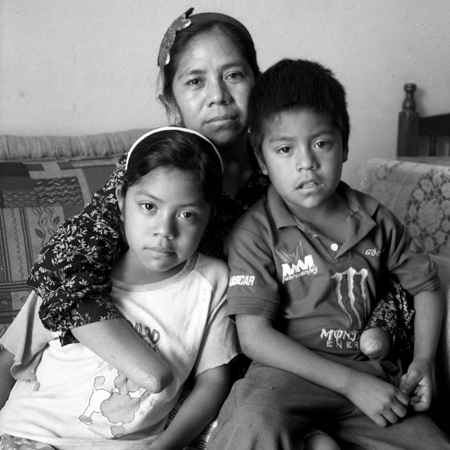
Alan Pogue is one of the best documentary photographers you’ve never heard of. Not one to get mixed up in the social media conga line, Pogue instead spends his time hunting down important stories. Very important stories.
Rosa Moreno lost her hands last year in an industrial accident in Reynosa, Mexico. Pogue writes:
“They needed to step up production and Rosa was asked to operate a machine that stamps out the back plate for a particular model of flat screen monitor because it was a little complicated and she was good and she was faster than most. She was also a little more brave. It scared some of the others who declined to work at this machine on the line. She stepped up.
It happened just after 2 in the morning February 20, 2011. As she was positioning a piece of steel plate, the machine suddenly jumped into action and clamped down on her hands with tons of force. She knew she had to maintain her presence of mind, since it would be necessary for her to argue for being taken to the right hospital. […] but the company would not allow an ambulance to be called. They did not want her taken to the hospital Rosa wanted because it might be more expensive, and because the accident would be on the record. With her hands now flat as tortillas and meshed into the monitor back plate, she walked to a co-worker’s car and was taken to the hospital, where they amputated her hands, still enmeshed in the steel plate.
She gets by on the Mexican government’s equivalent of Social Security disability, about $230 dollars a month. There is no workman’s comp. She had no insurance. There was no union. Some church groups help her out a bit with food and some money. The company offered to give her a one time payment of $4500. But she refused. Even though it is not clear that there is a way to obtain a better settlement through the court system under NAFTA, she holds out.”
Alan Pogue has photographed extensively across North and Central America focusing on social issues, labour issues, civil rights, criminal justice and the Texas prison system. I had the pleasure of meeting him last year and when we talked about his stories, water gathered in his eyes and his voice wobbled. This is work that he really feels and Rosa’s is a cause he deeply, deeply believes in. Please think about helping this holiday season.
via Susan Noyes Platt.

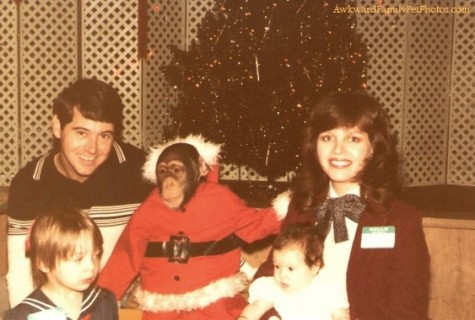
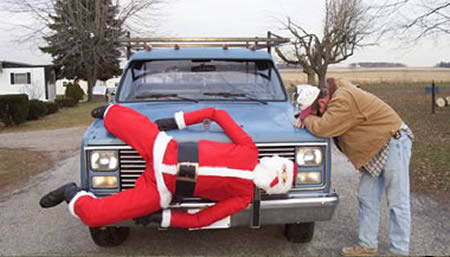
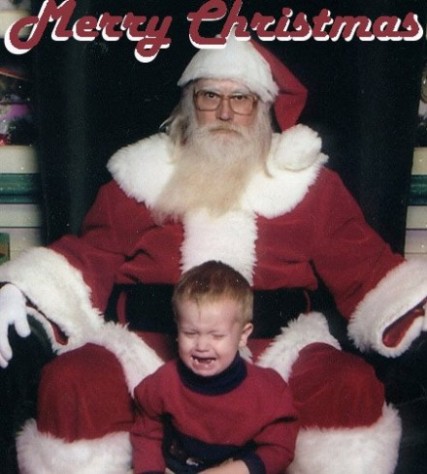
All I want for Christmas is more weird images.
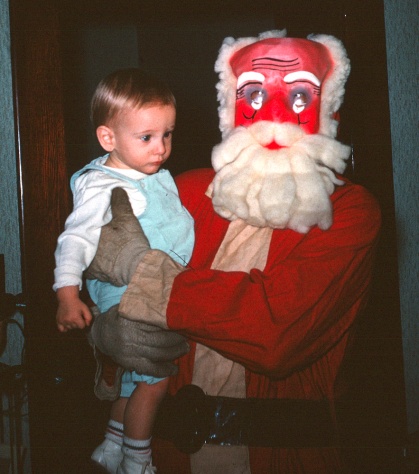
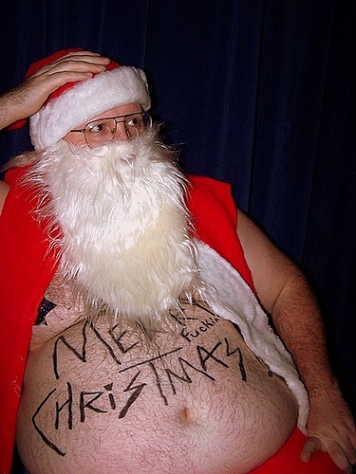
Twelve months ago, I posted To You, Happy Christmas, From Google Image Search. I guess now that I’m revisiting the format, it’s now a holiday tradition? I don’t know if this years selection tops last. I’ll let you be the judges.
Merry seasonal cheer to one and all.














Barack Obama is TIME’s Person Of The Year. The accolade is less interesting than Obama’s words in the TIME interview. The President of the United States talks about criminal justice and prison reform. Obama says,
“There’s a big chunk of that prison population, a great huge chunk of our criminal-justice system, that is involved in nonviolent crimes. I think we have to figure out what are we doing right to make sure that that downward trend in violence continues, but also, there are millions of lives out there that are being destroyed or distorted because we haven’t fully thought through our process.”
Granted it takes until the fifth page (of five) until we get to criminal justice issues. But, still. I’m going to say ‘wow’.
In November, I half-wrote a blog post about the complete absence of talk about criminal justice policy during the presidential debates. It never published; the details were more depressing than the simple fact. These words by Obama in some way make up for that. Watch this space. Watch Obama’s team.
via Prison Policy Initiative.
Prison Photography (PP): You use Twitter.
Ashley Gilbertson (AG): I initially got on Twitter because I found Facebook pretty boring. It was turning into people’s family photo albums, which is fine, but …
Twitter was a place that I was getting breaking news from. Not always correct but sources on the ground. That for me was very effective in terms of looking at primary sources and things as they developed. I still go to a few news sites, but I am getting my breaking news from Twitter. It sounds ridiculous, but I do.
I use Twitter for conversations and ideas too. I come across stories. Somebody can tweet something that sets the wheels turning in my head that can turn into a story idea. If I don’t want to cover it then I’ll retweet it and say this is potentially a good story idea. I try to share in this creative process.
PP: You use Instagram.
AG: I joined Instagram because VII started an account and I thought I’d be a team player. I keep trying but it’s not really my thing. My digital photographs suck and so therefore my iPhone photographs are freaking terrible.
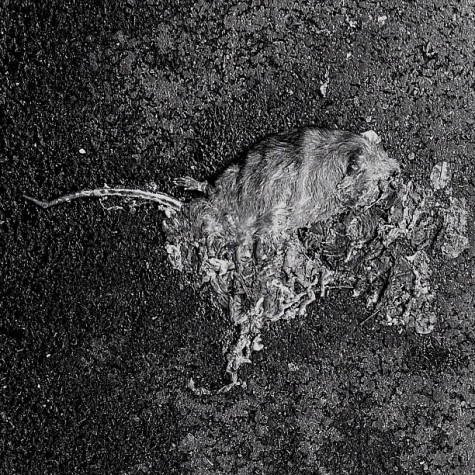
I took a picture of a dead rat I came across on the street, posted it and suggested I might do a series on roadkill and make a book. I’m trying to take the piss a little bit but no-one really gets it. Someone contacted me and said, “I hate to tell you Ash, but someone has already done that.”
I present certain photographs to the world that are very carefully edited and all of a sudden I’m making photographs on the fly and they’re bad! That’s got to hurt my reputation!
I love taking pictures of my wife and son but they are for me.
PP: I don’t want to know about your heroes, I want to know about how you think is making good work right now.
AG: I think Seamus Murphy is doing some really great stuff with multimedia – he takes unusual approaches that I thoroughly enjoy.
I love Peter van Agtmael. Peter’s a thinker. His work is very emotional, really textural, really beautiful and I think Peter is turning into one of the best photographs that we have out there working today. I have a lot of respect for his approach.
Todd Heisler. Reading the New York Times, his pictures just stand on their own. I like being able to look at a paper and know who the photographer is – “It’s Todd. He nailed it again.”
I like Mishka Henner‘s approach to the medium, I like his execution of ideas, and I like his defense of the work. That to me is the complete package. I’ve argued about Henner’s work without him in the room. One person was calling him a photographer, I was calling him a curator, and we realized it didn’t matter. Call him what you fucking want. Henner’s just interesting. Period.
I like people who are pushing the medium. While I have a hell of a lot of respect for traditional photography, I don’t see the need for ten photographers to all shoot the same scene in this reportage manner. I’d rather see three photographers, say from the New York Times, LA Times and Wall Street Journal [do straight shooting] and see the other seven trying to connect with an audience in a different manner.
PP: Cell phones?
The iPhone debate has legs. Cell phone photography is not that boring. It’s the first time photojournalists have ever let themselves go, stylistically. We’re not confined to having to reproduce colours in exactly the way that we see them or not add certain elements of light, sun-flares or whatever it is.
The problem with the conversation [about style and filters] is that it is so often talked about in a defensive manner.
PP: People start by defending the ethics of cell phone photography?
AG: Yes. And, of course it’s totally ethical. Rather they should start with, “Obviously, it is very different to how I shoot on a Canon 5D; it’s a totally different approach with a totally different understanding.”
It doesn’t bother me that photojournalism is loosening up.
PP: For the longest time, a mythos has surrounded anointed photojournalists. They’ve been treated as gods, if you like. But, with the rise Instagram – which is, paradoxically, considered a platform for navel gazing narcissism – famous photojournalists have become more familiar, less godlike.
AG: We’re from a new generation. The photographers I knew growing up were either dead or very mysterious. I remember picking through magazines and trying to find little scraps of information about Ron Haviv or James Nachtwey and these giants in the industry. They were so mysterious it was almost part of the allure. They’re not the story; they’re behind the camera and they are not there to talk about themselves, they were there to talk about their subjects and that to me was very effective.
But now, I realize that to reach the widest possible audience you often have to engage yourself in the production of the story. I need to explain how it was meeting hundreds of families who had lost a son or a daughter to the war. I think that adds to the story and to people’s compassion for the subject. But, it doesn’t sit well with me. It might look like it does because I am so open to it, but still I wonder if I should shut my mouth, close down all my social media, and just get on with photography.
– – – – – – – – – – – – – – – – – – – – –
Image by Ash Gilbertson, from his Instagram feed, a rat I think, sometime in late Summer, somewhere, accompanied by the caption, ‘Tyre Tracks!’

As you know, I’m a great admirer of photography programs and mentorships for youth. Expression in the arts gives children their voice. I’ve even wondered if the empowerment provided through self-representation could benefit prisoners.
There exist dozens of important non-profits and volunteer programs helping youth of all backgrounds, including at-risk youth, to tell their stories through photography.
Organisations such as Youth in Focus, Seattle; AS220 Youth Photography Program, Providence, RI; New Urban Arts, Providence; First Exposures by SF Camerawork in San Francisco; The In-Sight Photography Project, Vermont; Leave Out ViolencE (LOVE), Nova Scotia; Inner City Light, Chicago; Focus on Youth and My Story in Portland, OR; Picture Me at the MoCP, Chicago; Eye on the Third Ward, Houston; The Bridge, Charlottesville, VA; the Red Hook Photography Project, New York; and Emily Schiffer’s My Viewpoint Photo Initiative are exemplars of youth empowerment through photography.
One of the leading participatory photography bodies is Photovoice in the UK. It has 50 programs in 23 countries.
This holiday season, Critical Exposure in Washington DC, a youth photo workshop organisation is raising money.
Simply and brilliantly, Critical Exposure – which was founded in 2004 – gives centre stage to Samera, one of the students. Watch it and celebrate the resilience and thoughtfulness of youth. It’s uncomplicated and effective storytelling, and you will be convinced of the undoubted value of these photography programs.
Samera is a compelling voice. After describing her own situation, she makes quite a simple request. She asks that schools within the same metropolitan area have better communication. She identified a fault in the system and she asked that it be fixed so others wouldn’t have to go through the same clumsy and disappointing mal-communications between Washington school district and a charter school. It’s a fair request.
Communities we shape for better, engender growth. Youths’ enthusiasm to be raised in an encouraging environment should not be neglected.
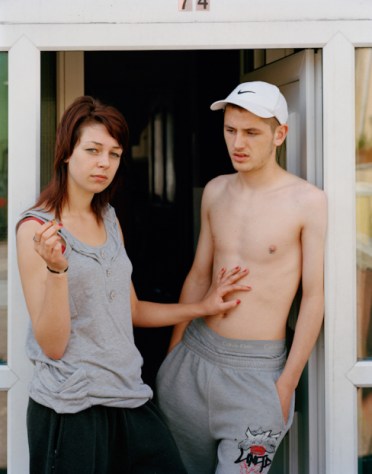
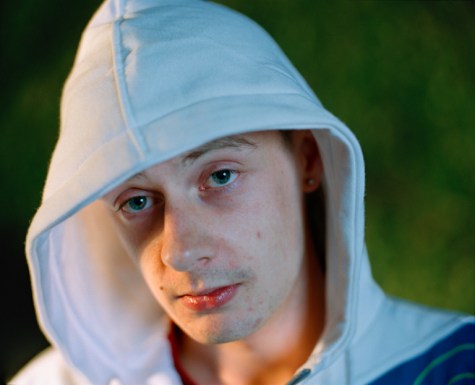
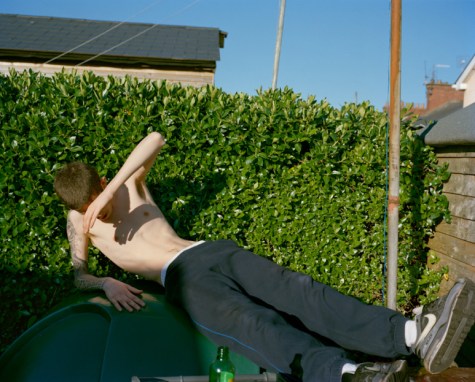
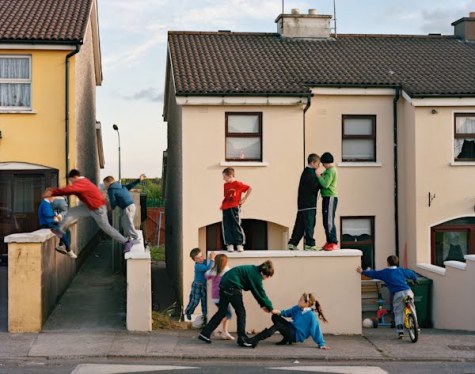
Doug Dubois needs no introduction in photocircles, but he did when he stepped on to the Russell Heights estate in Cobh, Ireland. Doug was running workshops with the youth in Cobh but making no photographs. Out of compulsion he asked to go to their homes to inspire his photography.
After last weeks events in Newtown, Connecticut, the preciousness of childhood is on the minds of millions. Childhood and teenage years deserve celebration. Dubois’ My Last Day At Seventeen is a celebration. There’s no portfolio on his website but you can see selects on Piece Of Cake.
Often, when you hear teachers reflect about their work, you’ll hear, “I learnt more from the students than they learnt from me,” or some variant of. It seems this was Doug’s experience.
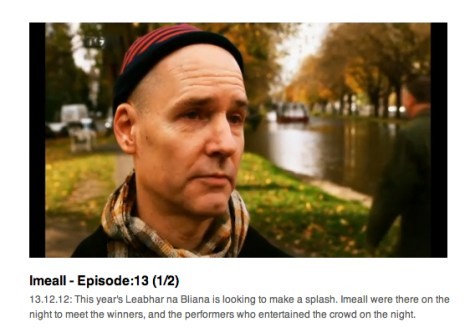
“I’m interested in the glow of youth; its fragility. As I’m older, I know it will disappear, but they don’t,” says Dubois in a beautifully produced feature in the 13th episode of the Irish culture and arts television program Imeall. Dubois spent four consecutive summers working in Russell Heights through the artist in residency programme at Sirius Arts Centre.
“He spent four years photographing my life,” says Erin Mackessy, one of Dubois’ main subjects (above, on the left) who speaks throughout the film (click the image below). The respect between Doug and Erin is described really well. It’s nice to hear both photographer and subject talk about one another so familiarly.
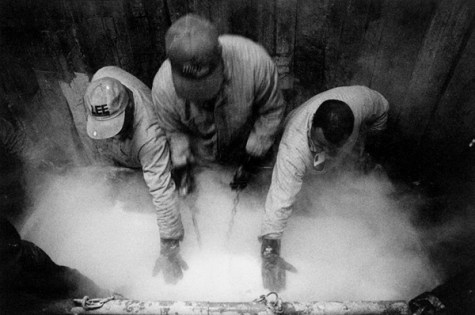
It always a delight when you find gorgeous photographs. It’s a double delight when the photographer can write with genuine and compelling words. Sarah Hoskins – whose Girl’s School work I featured on Prison Photography in September – was recently featured on Roger May’s excellent Walk Your Camera website.
In presenting her series. The Homeplace, Hoskins recounts a car crash she and her daughter suffered this summer and the response of her subjects and new friends.
In the fall of 2000 I stood in the middle of Frogtown Lane map in hand, I didn’t know a soul. On June 11, 2012 I lay strapped down in an emergency room in Somerset, Kentucky a hundred miles away from that lane.
I had left the African American hamlets of the Inner Bluegrass Region that morning, where I had been photographing for the past week as well as the past twelve years. […] The residents of the hamlets arrived like the cavalry in Somerset within hours of the car accident, dropping everything to rescue my daughter and myself as well as all of our belongings including my cameras and film from the wreckage that was our car.
[…] I am being wheeled through the in the emergency room of UK hospital in Lexington, Kentucky. I am brought into yet another emergency room. I can still only look up. I see the eyes that are Derek’s, the same eyes his daddy had. He strokes my hair that is matted and covered in dried blood. His warm coal colored hand holds my cold pasty white one. The nurse says, “Only relatives are allowed in here. How are you two related?” I hear the smile in Derek’s voice, “It’s a long story.”
Heartfelt stuff. Read more.
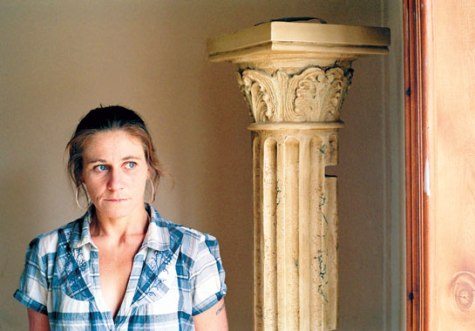
Adrian Clarke‘s portraits of female former prisoners in the UK are up front and honest. The ladies insisted they go on the record and speak openly about their experiences in HMP Low Newton, an unremarkable small prison for women and young offenders in the north of England. Each woman reported only good treatment during their incarceration.
Clarke’s work is not sugar-coated. He doesn’t have the answers and his subjects, some of whom have ongoing drug addiction struggles, are searching for them.
The women – although aware of their tough lives – do not paint themselves as victims. They want to step up and take responsibility but when you’re that far down it takes a Herculean effort to wright the ship.
Low Newton, like all good portrait series, offers insight. But it does not tie the loose ends. I am left to wonder about the different definitions of normalcy we carry in our day today lives and if these women will find their own versions of normalcy and stability.
Mostly, Low Newton deserves attention because it appears to reflect a complete respect between photographer and subject.
Adrian Clarke’s portraits of female former prisoners are in the latest issue of The Paris Review.

 Prison Photography