
You are currently browsing petebrook’s articles.

I just received an exquisite collection of prints by the Just Seeds Collective in celebration of Critical Resistance’s 10th anniversary (which was in 2008).
So stoked.


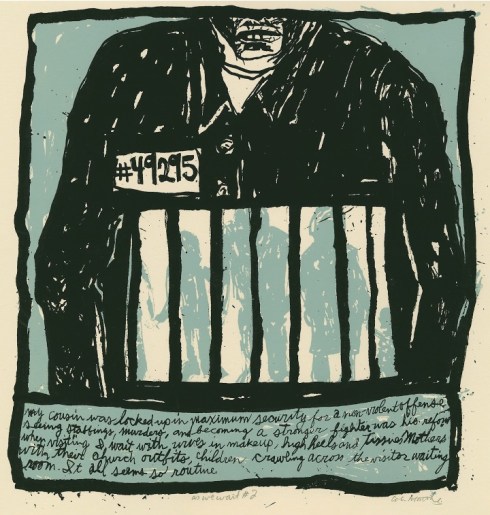
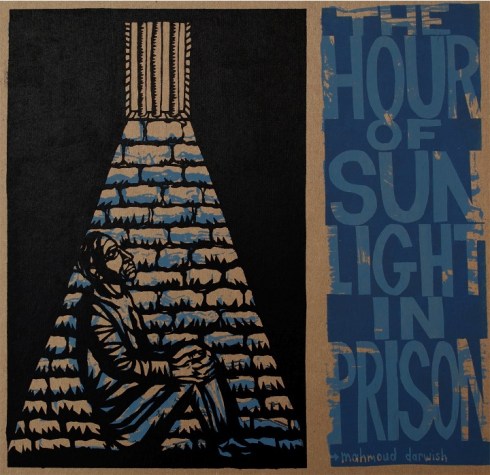
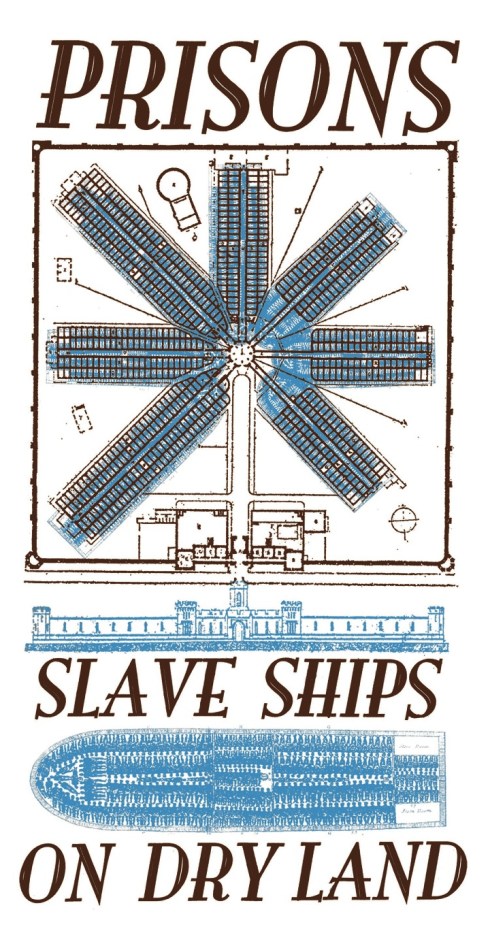
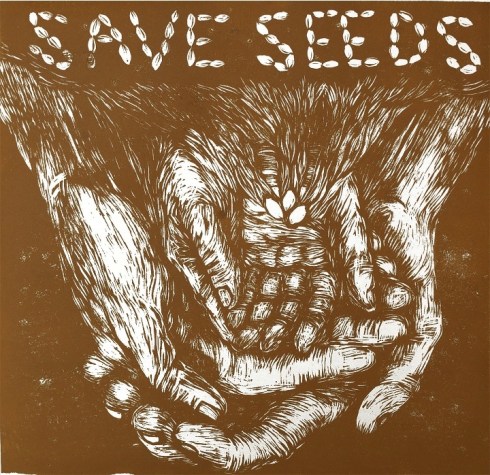
Artists (from top to bottom): Alec Icky Dunn; Lydia Crumbley; Jesse Purcell; Colin Matthes; Erik Ruin; Andalusia Knoll; and Meredith Stern.

MARTIN BATALLES REPRESENTING URUGUAY

LIVIA CORONA REPRESENTING MEXICO

MARCOS LOPEZ REPRESENTING ARGENTINA
Friend of Prison Photography, Emiliano Granado, likes football as much as he rocks at photography.
We pooled our knowledge to pair each country competing in South Africa with a photographer of the same nationality.
GROUP A
FRA France – JR
MEX Mexico – Livia Corona
RSA South Africa – Mikhael Subotzky
URU Uruguay – Martín Batallés
GROUP B
ARG Argentina – Marcos Lopez
GRE Greece – George Georgiou (Born in London to Greek Cypriot parent)
KOR South Korea – Ye Rin Mok
NGA Nigeria – George Osodi
GROUP C
ALG Algeria – Christian Poveda
ENG England – Stephen Gill
SVN Slovenia – Klavdij Sluban (French of Slovenian origin … I know, I know, but you try to find a Slovenia born photographer!)
USA United States – Bruce Davison
GROUP D
AUS Australia – Stephen Dupont
GER Germany – August Sander
GHA Ghana – Philip Kwame Apagya
SRB Serbia – Boogie
GROUP E
CMR Cameroon – Barthélémy Toguo
DEN Denmark – Henrik Knudsen
JPN Japan – Araki
NED Netherlands – Rineke Dijkstra
GROUP F
ITA Italy – Massimo Vitali
NZL New Zealand – Robin Morrison
PAR Paraguay – ?????
SVK Slovakia – Martin Kollar
GROUP G
BRA Brazil – Sebastiao Selgado
CIV Ivory Coast – Ananias Leki Dago
PRK North Korea – Tomas van Houtryve (it was difficult to find a North Korean photographer)
POR Portugal – Joao Pina
GROUP H
CHI Chile – Sergio Larrain
HON Honduras – Daniel Handal
ESP Spain – Alberto García Alix
SUI Switzerland – Jules Spinatsch
Emiliano has been posting images from each of the photographers and doubled up on a few nations where the talent pool is teeming. You can see them all over on his Tumblr account, A PILE OF GEMS
NOTES
* Don’t even begin arguing about who should represent the USA. It is a never-ending debate.
* I’ll be honest, finding photographers for the African nations was tricky, even for a web-search-dork like myself. But then we knew about the shortcomings of distribution and promotion within the industry, didn’t we?
* For Chile, we had to look to the past legend Larrain. I’ll be grateful if someone suggest a living practitioner.
* North Korean photographer, by name, anyone? We had to fall back on van Houtryve because he got inside the DPR.
* Rineke Dijkstra was one of approximately 4 thousand-trillion dutch photographers who are everywhere.
* Araki was the easy choice. Ill admit – I know next to nothing about Japanese photography (Marc, help?)
* I wanted a few more political photographers in there, while Emiliano goes for arty stuff. I think we found a nice balance overall.
* And, SERIOUSLY, name me a Paraguayan photographer! PLEASE.

AUGUST SANDER REPRESENTING GERMANY

JULES SPINATSCH REPRESENTING SWITZERLAND
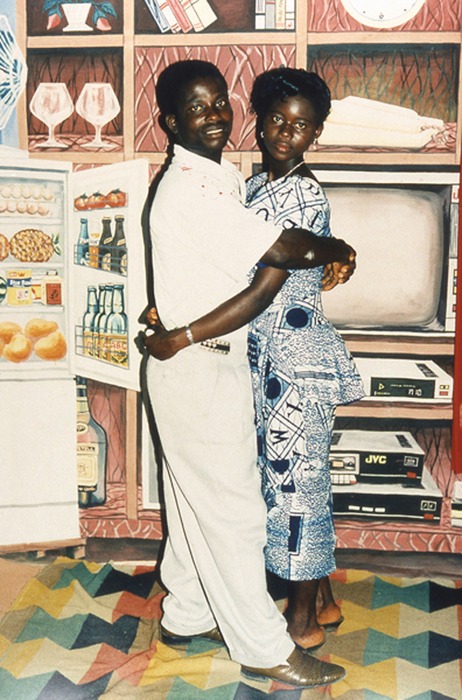
PHILIP KWAME APAGYA REPRESENTING GHANA
Ten years ago, Katy Grannan’s photograph of Jeff Stackhouse accompanied The Maximum Security Teenager, a Margaret Talbot article for The New York Times Magazine. Talbot’s long piece explored the growing number of teenagers serving time in adult prison facilities. Stackhouse was fifteen when the article appeared in 2000.

‘Jeff Stackhouse’, Chromogenic print, 2000. Published in New York Times Magazine, September 10, 2000. Collection of the artist, courtesy Greenberg, Van Doren Gallery, New York City; Fraenkel Gallery, San Francisco; Salon 94, New York City. © Katy Grannan
Katy Grannan is best known for her domestic and nude portraits of women (often non-models who Grannan connects with via newspaper ads), so this photograph of Stackhouse is a relative anomaly.
Grannan graduated as part of the Yale MFA grads taught by Gregory Crewdson and known affectionately and disparagingly in equal measure as ‘The Yale Girls’. The complaint has been that Crewdson engineered their early exposure on the art scene with the Another Girl, Another Planet exhibition.
THE BOY
Stackhouse’s portrait was taken on assignment but was also included in the Portraiture Now: Feature Photography exhibit (Nov. 2008-Sept.2009) at the National Portrait Gallery along with photographs by Jocelyn Lee, Ryan McGinley, Steve Pyke, Martin Schoeller, and Alec Soth. The exhibit deliberately selected photographers’ work “for publications such as the New Yorker, Esquire, and the New York Times Magazine, each bringing their distinctive “take” on contemporary portraiture to a broad audience.”
Despite lengthy internet searches, I cannot find any information on Jeff beyond the NYT Magazine piece and a 60 Minutes piece, both shortly after his incarceration. Being tried as an adult, Stackhouse potentially faced a 30 year sentence – incredible if you consider his transgression:
‘Jeff was under a kind of house arrest imposed by the juvenile court – he wasn’t supposed to leave home alone except to attend school. But on Feb. 23, 2000, he was arrested again. He and three other neighborhood kids his age had been ”play boxing,” as the police report termed it, at the school bus stop, and Jeff had given one of the boys a bloody lip. After the fight, the boy and his pals set out for Jeff’s house, where they called him out on the lawn, got him in a headlock and punched him. Jeff ran into the house, found an unloaded antique shotgun that his mother kept in her closet and brought it out to wave at the other kids, shouting, ”Get off my property!” The three boys headed home in a hurry. No one was hurt, and two of the three did not even want to press charges.’ (Source)
THE MAN
Jeff obviously had severe problems as a teenager – as Talbot’s article described – but he would be 25 years old now. The Arizona Department of Corrections returns no record of an inmate with his name. He may have been released, he may have not?
My point? I guess this is merely one of millions of images that have no (widely-distributed) follow up. The forlorn circumstances of Jeff’s experience in 2000 do not exist now; they could be better or worse, but the absence of knowing renders this decade old portrait virtually obsolete.
The portrait was taken as part of a story; as an anchor and human face to the description of changing, harsher laws for sentencing youth. These laws deal in years and so it is that Jeff’s story has unfolded over years. Only we don’t know the details.
I am curious what other events have transpired for Jeff, and mostly I am interested what Jeff thinks about his brief feature in the national media, the fact he has been on the walls of the National Portrait Gallery and if any of that ultimately mattered or changed things for him.
– – –
More of Grannan’s work at Salon 94.
The Fault Lines programme on English Al-Jazeera looks at America’s aging prison population. Reporter Josh Rushing gets exclusive access across the US, but the most astounding footage is from the Geriatric Unit of the Joseph Harp Correction Center, Lexington, Oklahoma.
Fault Lines also visits the Mabel Bassett Correction Center, Oklahoma’s largest women’s prison.
NOTES
* At the time of filming, Oklahoma’s prison system was operating at 75% staffing, referred to by administration as “warehouse mode”; housing but not rehabilitating prisoners.
* Check out Sherman Parker’s situation beginning at 9.38. Sherman is 100 years old. He is cared for by Seth Anderson, another inmate convicted for kidnap and drug and weapon possession. Anderson speaks frankly about the hospice care at the Dick Conner Correctional Center, Oklahoma.
* Prisoners over 55 years account for the fastest growing class of inmates in America.
* Only three out of every 100 inmates over 55 years return to prison after release, compared to the national average of over 60%.
* Fishkill Correctional Facility, 70 miles north of New York is the nations first purpose-built unit for the cognitively impaired. The average age is 63 and many prisoners suffer from Alzheimer’s and other conditions of dementia.
From CONTACT blog:
James Mackay‘s project ‘Even Though I’m Free I am Not’ is a confrontational investigation into Burma’s political prisoners. Travelling across the globe, Mackay documents Burma’s former political prisoners.
Visit CONTACT for an interview with James about the project.
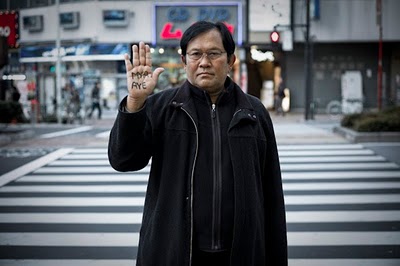
Dr Aye Chan, Insein Prison, Tharawaddy Prison, 7 years © James Mackay
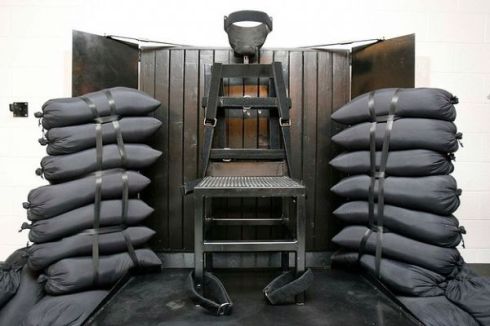
© Trent Nelson/AP - Pool
BagNewsNotes ran the above photograph with commentary. It goes without saying that I am opposed to the death penalty, which is nothing more than foolish symbolic act in our political economy.
Four bullets passed through Ronnie Lee Gardner. In this photograph, three bullet-holes are visible in the wood. Photographer, Trent Nelson presented a six-part series on his coverage of the case, appeals and execution in Utah. Part six is titled ‘The End’:
I’m told that I can only bring one camera, no camera bag, and I must have a lens cap on my lens. That changes things. I grab a body with a 16-35, stick a flash on top, pop in my most reliable battery and an 8 gigabyte card. It’s an uncomfortably light kit for such a big assignment.
The photographs and text are a detailed account of a surreal event:
Immediately there are disagreements about details. Standing at the window of the execution chamber after Gardner was shot, one reporter had drawn a sketch of the target on Gardner’s heart indicating the four bullet marks. He insists his sketch of the target is accurate, while another reporter disputes it, saying that two shots were actually on the left not the right.
and
Reporters are soon climbing all over the chair, pointing at the bullet holes, poking their fingers in them.
In this execution chamber, in this prison, the media record the evidence and in so doing confirm the deed done. Very surreal.
This excerpt (0.01 – 3.17 minutes) from Darkness and Light is particularly interesting in light of the recent unanimous celebration of Phil Toledano’s Days with my Father.
Avedon admits that his work was invasive and disturbing and that those tenets always exist within the arena for art. Avedon also faced accusations of exploitation for his later work In The American West.
Avedon’s work is good comparison to Toledano’s because reactions to Toledano’s work has been beyond positive. We have seen it as loving and we have seen it as our privilege; this is probably the case, but it doesn’t explain the absence of any discussion on ethics (however brief). Just a thought.
Personally, I am a fan of Toledano’s Days with my Father, and I wonder … do we respond to death differently today, do we respond to the approach of death in photography differently? Here’s a CNN clip of Toledano “blubbing” about his project.
Happy Fathers Day.
UPDATE: Matt emailed me to let me know of the second chapter in this story. View it here.
THE ROMA

A young man in the Stara Gazela camp. © Matt Lutton
Friend Matt Lutton has presented words and images in the latest Lens Culture (Issue #26). His story is about the destruction of a settlement in Belgrade and the subsequent relocation of the Roma inhabitants.
I know that Matt has been working on this story for a long time and it matters very much to him. In September of last year, Matt put together a small edit of the work with a caveat that he was still working through the project. Matt recommended this local Serbian article for background on the issue.
Matt’s words:
Gazela was an isolated community of over 200 Roma families living abjectly difficult lives under the Gazela road bridge in Belgrade, Serbia. They made their living from the recycling of metals and refuse, and the landscape around their homes was filled with toxic mounds of rotting waste. It was a ghetto split on the banks of one of the region’s most important rivers and on premium real estate eyed by the elites. This photo story begins with the community living under the bridge before its destruction and partial relocation on August 31, 2009.
The people living there, depending on their legal status, would either be given a new container to live in on the outskirts of the city, free transport back to their villages or if they had no papers, an unceremonious trip to the curb and likely a home in another improvised camp.

A girl runs through smoke near a suspected arson in an abandoned home in Nova Gazela, a camp on the New Belgrade side of the Sava River. The fire happened on the day before the relocation and destruction of the settlement. © Matt Lutton
Matt’s task, if he is to compete with other storytellers is tough. The Roma people exist across Europe and have fascinated generations of photographers. The bar was set high by Josef Koudelka upon the 1975 publication of Gypsies.
ROMA ACROSS NATIONS
In recent years, Carlo Gianferro‘s Roma Interiors showed us wealthy Roma residences.
Over seven years, Danish photographer, Joakim Eskildsen, traveled with writer, Cia Rinne, through seven Roma countries (Hungary, India, Greece, Romania, France, Russia, and Finland). Resulting in the book, The Roma Journeys. (Elizabeth Avedon write up).
Amanda Rivkin travelled to Slovakia to photograph Roma theatre productions.
Hungarian, Zsuzsanna Ardó, photographed the Roma travellers in her home country. (Video, via The Rights Exposure)
Similarly to Matt, Sanja Knezevic documented Roma people in Belgrade.
Marco Baroncini (whose work I’ve noted before) photographed the Roma in Italian capital Rome. Most of the 15,000 Roma are immigrants from the Balkans. This work impressed James Estrin and thus received Lens blog exposure.
Most recently, some Roma youth have taken up cameras empowering themselves to self-representat. Greg Ruffing gave a very good summary of the Chacipe Project:
“One project in particular this year has really intrigued me — Chacipe: An Exploration of Roma Images and Identity, which features selected images from the Chacipe Youth Photography Contest. The contest was organized by OSI’s Roma Initiatives and the Open Society Archives as part of the Decade of Roma Inclusion 2005-2015, an international initiative to bring together governments, NGOs and Roma civil society to work towards improving the welfare of Roma communities.”
CONCLUSIONS
If you are Matt, flourish in this rich photographic heritage. If you are not Matt, follow his work!

 Prison Photography