
You are currently browsing petebrook’s articles.


Okay, Jeff Barnett-Winsby did not aide and abet anyone.
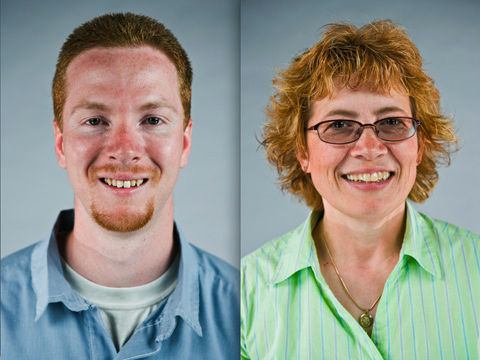
He was, however, indelibly tied to a fugitive pair of lovers – one an inmate, the other a prison volunteer. Winsby had done a couple of photo series at Lansing Correctional Center, Michigan. He knew – and photographed – both John Manard and Toby Young before Young drove a van out the prison with a dog-crate in the back. Manard was in the dog-crate. They were on the run for twelve days until the authorities caught up with them in Tennessee.
All the details about the police hunt and climactic high speed car chase, car crash and return to custody can be found here.
Toby was the founder and coordinator of the Safe Harbour Program, and John Manard, a dog-handler and Young’s escort within the prison. She was vulnerable, he was hopeful, they were close. Manard did most of the planning. “By the time he brought me in to what he was doing, I was in love with him and I couldn’t say no,” Young said. “I was not in a safe and sane place in my life, but I still could’ve said no, but I didn’t.” It seems like a straight up case of manipulation; a true power imbalance.
This tale is like something out of a movie. Jeff has muttered things about making a movie. We’ll see. At the very least, we can all look forward to his book Mark West & Molly Rose published J&L Books. Mark West and Molly Rose were Manard and Young’s aliases.
Barnett-Winsby dissects events as he experienced them over at Feature Shoot:
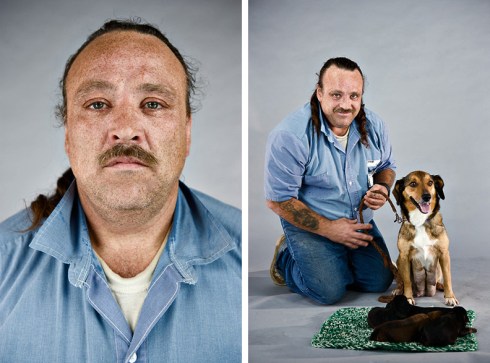
Barnett-Winsby’s gloss portraiture is pretty atypical of prisoner representations. It’s very giving.
The accompanying images of prisoners and their dogs work as a foil to the straight portraits. Instantly, our response to the inmate changes. Barnett-Winsby plays on visual dissonance. He exposes our inbuilt prejudice and softness toward animals: “If someone loves an animal they can’t be violent, right?”
As well as Safe Harbor, Barnett-Winsby also photographed the objects in single occupancy cells for his project Marks of Intention (below).
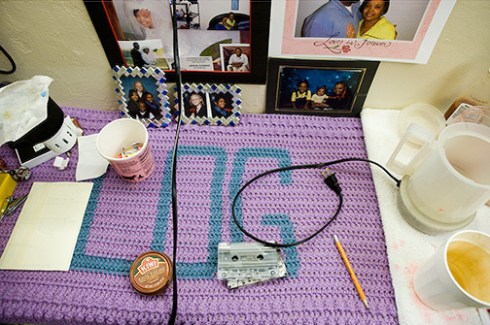
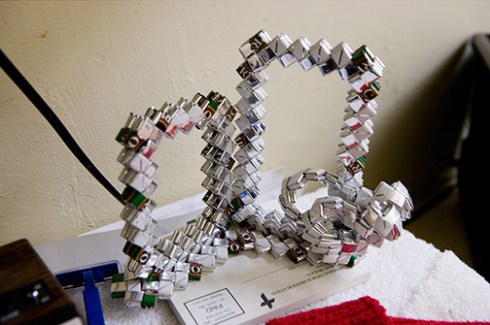

Barnett-Winsby has collapsed Safe Harbour and Marks of Intention along with images from the Mark West and Molly Rose story; it is a wide-reaching anthology of the Lansing facility and two lives that temporarily escaped its control.
You could say Barnett-Winsby had luck photographers only dream about when hunting for a good story.
Mark West and Molly Rose is published by J&L Books. The owner of J&L Books Jason Fulford was recently interviewed at Too Much Chocolate as was Jeff Barnett-Winsby.
It might be unwise. It might be aborted if it only increases the speed of my daily internet treadmill. But …
Photography Prison is on Tumblr.
It is the alter-ego of Prison Photography, focused on more things photography than things prison.
Basically, I see loads of cool things in any given day and I’d like to share them without the production that goes into Prison Photography.
Hope you find some worth. I’ll reevaluate this Tumblr thing in 4 weeks, but until then you know you can enjoy all these things …

© Anton Kratochvil, from the series 'Homage to Abu Ghraib' (2006)
It may not be wise to question a photography project that was conceived of, and produced, in honour of the photographer’s father who was tortured in Stalinist labour camps.
But, is not Anton Kratochvil’s Homage to Abu Ghraib obsolete?
Kratochvil spoke at this weeks photo expo.
We can presume that everyone who saw and then virally-forwarded these images knew already about Abu Ghraib. I can’t imagine that this series converted new recruits into the anti-war mindset or lured them into new emotional responses to the horrors of the War On Iraq or of Saddam’s primary prison/death-house.
Saddam Hussein’s ordered rushed and final hour executions of some opponents and turned others loose. Then the American Military moved in. Kratochvil’s images contain disconcerting echoes of US abuses at Abu Ghraib, but those echoes are insufficient, even unnecessary, in the context of the original images.
Only the personal catharsis and healing this series may or may not have provided Kratochvil could stand as basis for a discussion of worth here. And that, still, does not alter my personal opinion that this “homage” is misplaced at best, derisory at worst.
More here
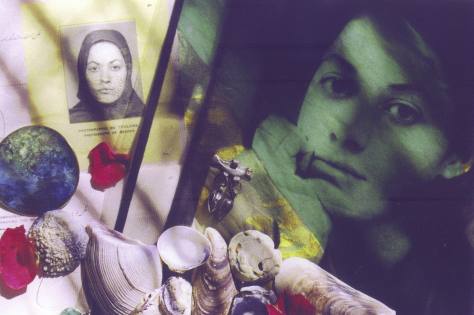
© Rana Javadi. (This image is not in the show, but the artist is.)
Photoquai‘s mission : to highlight and make known, artists whose work is previously unexhibited or little known in Europe, to foster exchanges and the exchanging of views on the world.
The 2009 Photoquai biennial is directed by Anahita Ghabaian Etehadieh, an Iranian gallerist and founder of the Silk Road Gallery, Tehran – the only space in Iran dedicated to exhibiting photography.
Photoquai shows the work of 50 contemporary photographers from around the world, unknown or little known photographic talents in European terms, who come from Latin America, North America, Asia, Oceania, Africa and the Near and Middle East.

© Nomusa Makhubu
Presumably, Photoquai will propel debates about diversity and representation. I desperately wanted to write something important about Photoquai.
It is a photo-festival hell-bent on avoiding the usual names and well-worn paths of sight and (re)appreciation. But …
As part of my due diligence (sat on my arse, browsing the web, dipping into sources) I was stopped in my tracks by Colin Pantall’s “rant”:
The idle, rapid-fire online viewing of photography has it’s knock on effects to writing about photography. Both are debased. I am as guilty as the next person.
So why should you listen to my opinion when I’ve not left my desk in the hour since I became aware of PhotoQuai? Read the following reviews from people who actually went and stood in front of the prints.
Jon Levy of Foto8 gives a pretty anemic description of his preview tour, but is ultimately thankful that new events are still blossoming despite the “undoubtedly harsh” climate for photojournalism.
Diane Smyth at 1854, the BJP blog, first has an overview of Photoquai. Smyth then provides a description of an “unusual exhibition in the Pavillon des Sessions at the Louvre. Portrait croises pairs a selection of 40 images from the Musee du Quai Branly’s extensive archive with indigenous sculptures and artworks from around the world.” Personally, the curatorial premise of this exhibit seems problematic – mainly because the pairings would seem to devalue the original meanings and conditions of production, if not strip them completely.
Marc Feustel of eyecurious loved the ambition but was “pretty disappointed” by the quality throughout. He felt guilty for criticising a small, brave, new-festival-on-the-block but couldn’t forgive the “photographers who should be tried for Photoshop crimes against photography.”
If you look through Jim Casper’s LensCulture gallery, you’ll sympathise with Feustel’s point.
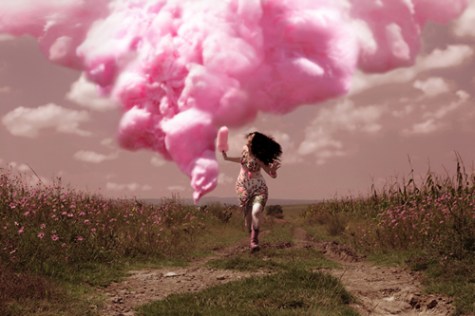
© Daniela Edburg
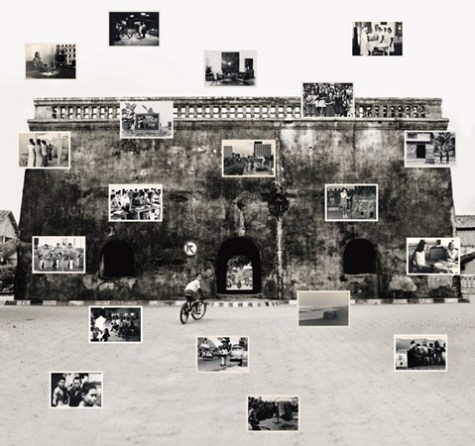
© Nadiah Bamadhaj
Conclusions:
Iranian photography gets special attention on the 30 year anniversary of the revolution, and the approximate 20 year anniversary of the end of the Iran/Iraq war.
Afghanistan photography inevitably remains within the implications of its ban during Taliban rule.
Only a few well-known names are knocking about, noticeably Abbas Kowsari.
Pablo Hare is the darling so far.
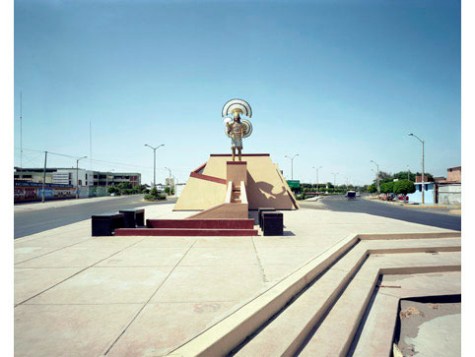
© Pablo Hare
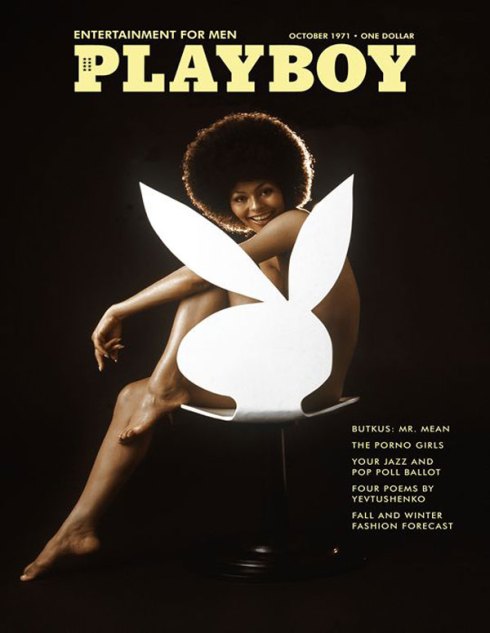
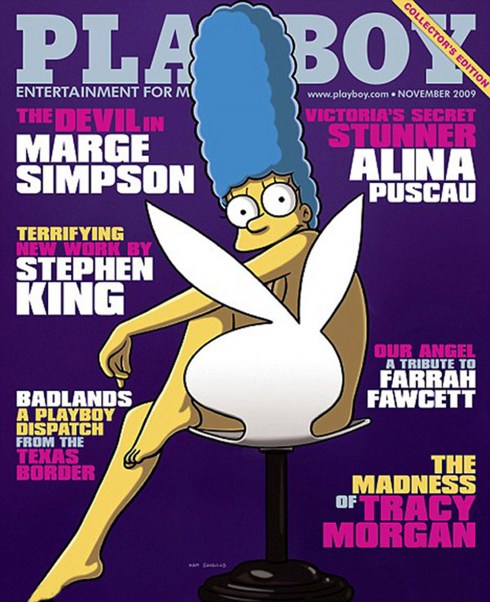
It is interesting that of all the Playboy covers over the years, the recent Marge Simpson cover mimics Darine Stern’s.
Darine was the first African American woman to feature on a Playboy cover.
Qiana Mestrich – whose blog I highly recommend – alerted us all to this fact and goes into more detail about Stern’s life and death.
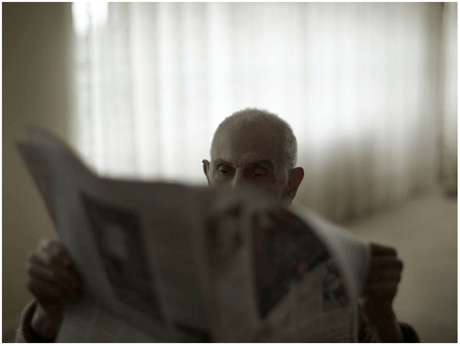
Philip Toledano‘s Days With My Father has got some coverage recently, and rightly so. There is a perfect balance and appropriate tone throughout the series which is inescapable. Aline Smithson included it in Photographing Family – her well reasoned Too Much Chocolate piece about the imperative of family to photographers.
It is even more remarkable because it is such a departure from his cynical but pointed political work America The Gift Shop.

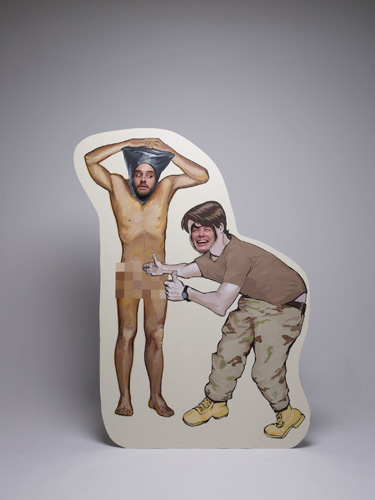
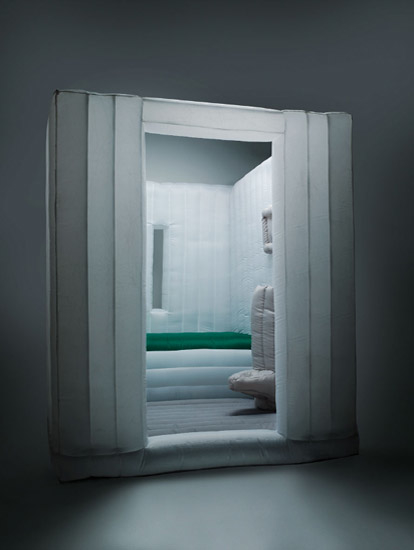
In a Decemebr, 2008 interview with Joerg, Toledano explained that for the really complex stuff he had to turn to China:
“Only the inflatable Guantanamo Bay prison cell and the Abu Ghraib bobblehead were made in China. The rest was made in America. To find Chinese manufacturers, I Googled ‘bouncy castle manufacturers, China’ or ‘bobblehead manufacturers, China’ and then emailed a few companies. It was really simple. And then, for the bobblehead, for instance, I sent the manufacturer the actual photo from Abu Ghraib, and they’d email me photos of progress, with me commenting along the way. The whole project, from start to finish, probably took me about six to eight months, all told. That’s the amazing thing about the web – ANYTHING is possible now.”
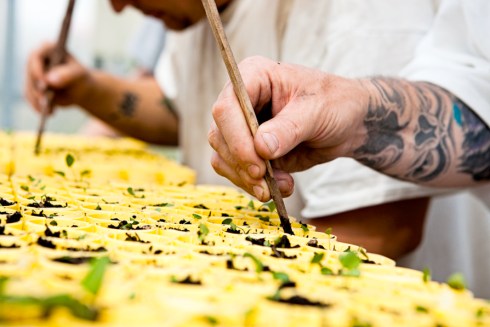
Benjamin Drummond and Sara Joy Steele have been in the news recently for their Facing Climate Change initiative. They were featured by PDN as photographers who cared and secured a $10,000 Grant4Change.
I was super happy then, to see them diversify and change focus from massive global issues to the environmental issues of our region here in Washington State.
They teamed up with Dr. Nalini Nadkarni, Evergreen State College and The Sustainable Prisons Project (which I have talked about before) to produce a 7-minute multimedia piece with a gorgeous mix of inmate, staff, student and academic volunteer voices. They also deliver the goods for the stills gallery.
__________________________________________________________
The Sustainable Prison Project has proved that environmental justice, social justice and fiscal conservatism can be delivered all in the same package. I teach in a prison and the resolve to try new programs and learn new skills is not something left wanting.
Drummond and Joy Steele’s documents make it clear more than ever that prisons often are not – and really never should be – the intimidating “neverwheres” that media (often TV and film) depict them as.
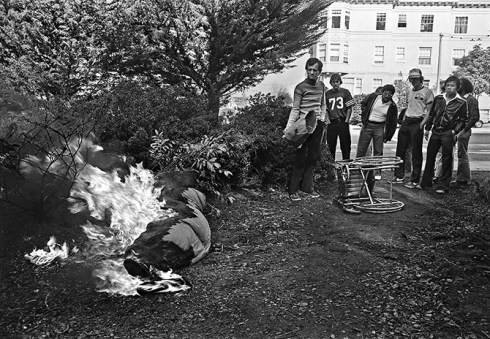
© Michael Jang
As far as I know, Michael Jang has not taken a photograph inside a prison … but he has been to many other altered sites.
My good friends Brendan Seibel (words) and Keith Axline (photos) did the real deal this week with an interview and gallery over at Raw File.
Blake followed a train of thought set up by Bryan this week about photography’s late-bloomers. Jang might have words of encouragement along the same lines. He hasn’t exactly had the typical career track; he was exhibiting at a high school seven years ago.
And photographs can change:
Put [a photo] away and let it age like a fine wine. … Some of the work I question, like the Beverly Hilton or the Jangs, if it would have been good when it first came out, or appreciated. I think maybe not. I think maybe you need to age 30 years so that we can look back on it.
Jang comes across as a man who has as few answers as the rest of us:
In the ’70s you could pick a subject: freaks, twins, brothers and sisters, and you’d be the first one to get it. Everyone’s done everything now. You’ve got dead body parts — we’ve done everything. So how do you carve out a niche for yourself now as a photographer? Is it more about the best person who can market themselves? The best schmoozer? The person who can make the connections? It’s a whole new ball game. I don’t know what I would do now.
Times were raw and opportune back then:
In the ’70s I happened to get a guy who committed suicide in Golden Gate Park. I knew I had the only pictures — I sold that stuff to the 11 o’clock news. But now it’s like, “send it to us for free” and you go, “yeah, I can get my name on there.” That kind of sucks for photographers making a living, right? It’s just so diluted now.
And, Jang’s response to the uncertainty? Keep shooting.
My daughter had friends that were in a band in high school and I said, “Oh man, can I shoot this?” and she said, “No! … Oh please? … No!” So what happened is they played the band shell in Golden Gate Park one day on a Saturday. Look, that’s fair game. They’re out in public. So I go there and I’m laying back; I don’t want to embarrass my kid. Eventually I start shooting and one kid kind of comes up and he starts talking to me and I end up telling him that I shot The Ramones. And that was it.
© Michael Jang
Jang also photographed around Preston, ID where Napoleon Dynamite was filmed.


