
You are currently browsing petebrook’s articles.
COLLECTIVES, YES
Photo collectives are to be admired.
More about network than net worth; more about camaraderie than competition; and more about group-strength than groupthink, I reckon collectives are the best. Being in one doesn’t guarantee an endless flow of fat-paying assignments, but it does guarantee a endless suuply of expertise, friends and feedback. If was a photographer I’d totally be in one.
Imagine my double-bliss when Boreal Collective invited me to the Boreal Bash which is itself is all about collectives.


Two pictures of Boreal Bash 2014.
BOREAL BASH 2015
The 2015 Boreal Bash is in Toronto from August 14-16th. What is it? It’s portfolio reviews, presentations by guest speakers, an exhibition, a thought experiment, and an important workshop. It is “a place where photographers can come together, learn from each other, drink and be merry,” they say.
And, if you can get yourself there, it is FREE.
Photo collectives MJR, Prime and Dysturb will be there.
DOLLARS, CANADIAN DOLLARS
Here’s the thing though, Boreal needs to cover overheads. I donated a sketch but that Kickstarter incentive was already snagged, so I can’t tempt you with that. Head over to the Boreal Bash Kickstarter page and let them convince you. Below are a bunch of prints, postcards and newspapers to get you revved up.
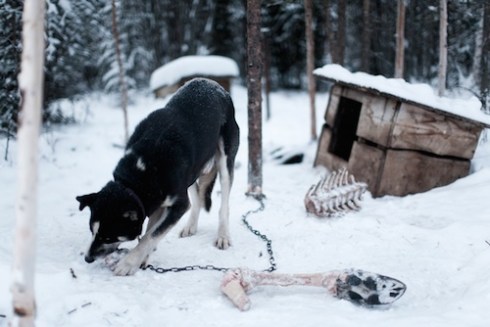
Sled dog eats moose leg. 12×8″ Rafal Gerszak. Yukon, Canada. 2015
WORKSHOP
New to this bash is the workshop. For this, Boreal Collective’s first ever documentary photography workshop THE ART OF BEING AN INDEPENDENT STORYTELLER you get two days (Fri Aug 14th – Sat Aug 15th) of intensive workshopping. They’re going to let you in on the secrets to make it as an independent photographer. They want you to have a project in progress — something for y’all to get your chops into. If I was a photographer, I’d totally be signing up.
WORKSHOP SCHOLARSHIP
The workshop ain’t free. But it can be. If you’re young and hungry and have the time to submit your work, there’s a scholarship spot up for grabs. I’ve got word from the inside that submissions have been slow (blame LOOK3) so statistically, your chances are good. Get on it. You’re one email from hobnobbing/editing with very talented photographers. One email from certain fame and glory.
Deadline is Midnight EST on Friday June 19th
BOREAL
Boreal are “united by a desire to document humanity and its intricate realities in our rapidly evolving world. […] At a time when the photographic industry is being dismantled, Boreal seeks to rise to the challenge of taking an active role in its redefinition.”
They are Laurence Butet-Roch, Aaron Vincent Elkaim, Rafal Gerszak, Brett Gundlock, Johan Hallberg-Campbell, Matt Lutton, Eamon Mac Mahon, Mauricio Palos, Jonathan Taggart and Ian Willms.
KICKSTARTER IINCENTIVES
Could be yours:
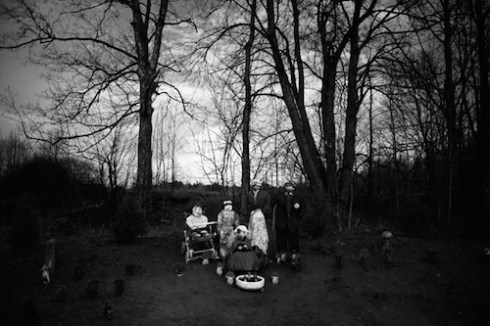
Ian Wilms. Scarecrow Family, Poland (2012) From the series Why We Walk Framed, 12×18 Giclée Print on Fine Art Baryta Paper, mounted on archival foam. Edition 1/12.

A Boreal 4×6″ postcard

Sleeping vigilante fighter. Brett Gundlock. 2013. 8×8″ Digital C-Print.
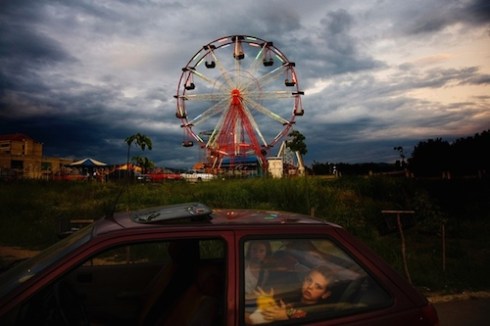
Amusement park in Prishtina, Kosovo. Matt Lutton. 2008. 11×14″ Digital C-Print.

Christmas Tree, Alligator. Mississippi. Brandon Thibodeaux. 2012 – 6×6 Gelatin Silver Selenium Toned Print ed. 20
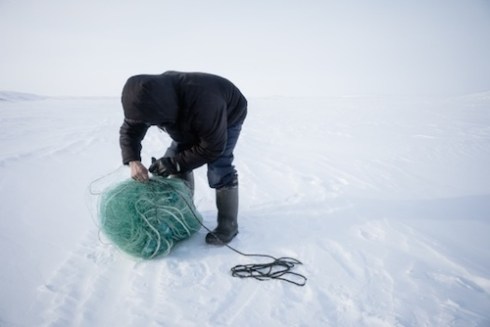
Niviaqsi and net ball, Iqalugaaqjuk, Nunavut. Jonathan Taggart. 2013. 8×12″ Digital C-Print.
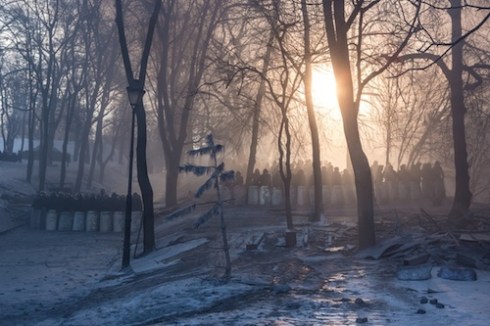
Berkut in Mariinskiy. Kyiv, Ukraine. Brendan Hoffman. 2014. 11×14″ Edition: 1 of 10

Hunter at Caddo Lake, Texas. Lance Rosenfield. 2014. 8″x8″ Digital C-print
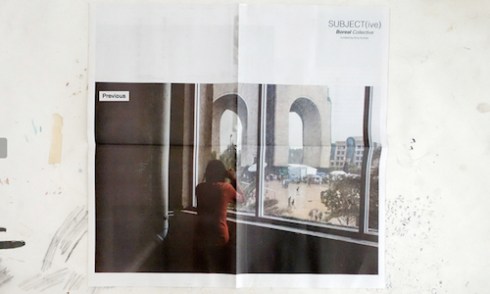
Boreal SUBJECT(ive) newsprint. 12 pages full colour.
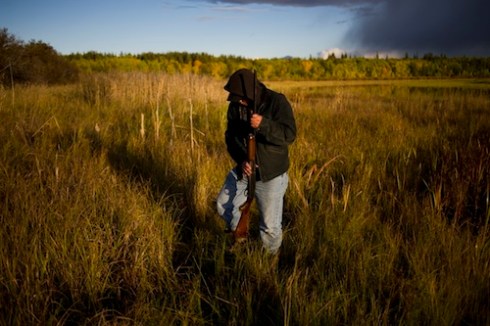
Métis Hunter at Big Point, Fort Chipewyan, Alberta (2010). Ian Willms. 8×12 Chromogenic Print.
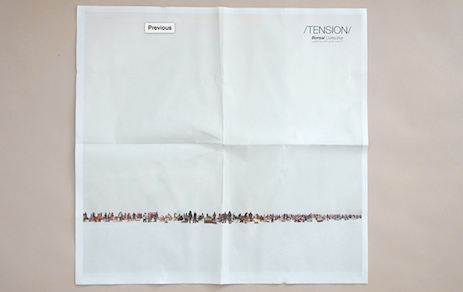
Boreal TENSION newsprint. 12 pages full colour.

View of the open air pit from the lookout. Thetford Mines, Quebec. Laurence Butet-Roch. 2009. 11×14″. Archival pigment print.
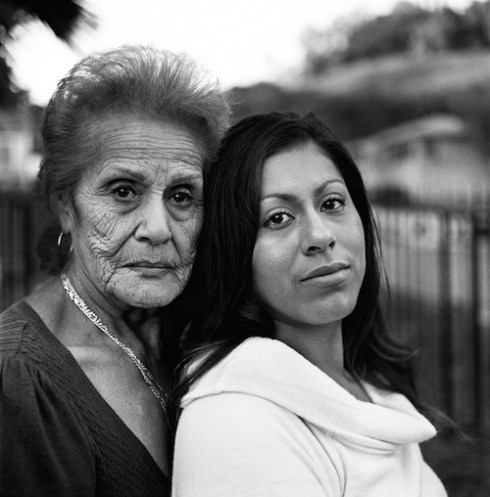
Darlene Escalante with her grandmother, Veronica, she is on a home visit that she earned at Walden House. Darlene talks about how both parents were in prison and affiliated with gangs. As young girl, she remembers going to Chino State Prison to visit her father. When her mother went to prison too, Darlene’s grandmother took her to make visits. “Both my grandmother and my mother were drug addicts. In 1989, my dad died after he changed his life, he was a nurse. He was gunned down and shot nine times. I want so much to change my life now, that’s why I came to Walden House. I don’t want to continue this horrible legacy that has existed in my family.” Los Angeles, 2008. From the series Re-entry.
–
IN CONVERSATION WITH JOSEPH RODRIGUEZ
A long time ago Joseph Rodriguez and I chatted. An edited version of the conversation just made the webs.
If you know Joe, you know he’s not short of words. We covered a lot, but given Mark Ellen Mark‘s recent passing, I wanted to highlight this anecdote with which Joe closed the interview.
I was shy. I gotta tell you. I did it at ICP. Going to school there was amazing. I remember Salgado looking at my pictures, and all I could do was photograph my life as a taxi driver. I was really very shy, and I just I wound up shooting through the windows a lot—stuff on the street. It was pretty cinematic, but he saw the pictures, and he didn’t say anything. I fucking blew it. That killed me!
Then I took a workshop with Mary Ellen Mark, and she was the one who really kicked my ass. She said, “You don’t believe in who you are.” I got defensive and said “What do you mean?”
“Well, you don’t believe in yourself as a photographer,” she said. So, she gave me this exercise. “When you get up in the morning in your underwear stand in front of the mirror and tell yourself you’re a photographer for 15 minutes.”
Doesn’t that sound a little hokey to you? Believe it or not, your boy did it, and I began to slowly believe more in myself as a photographer.
Now, I tell my students the same. If you don’t go out with reverence when you say you want to photograph somebody, they’re not going to take you seriously. You’re going to get a snapshot, nothing more.
I found photography in a very amateur way; it gave me happiness, gladness, and made me want to produce something that I was interested and excited about. To this day, though, I’m still nervous when I’ve got to go out and photograph.
Read the full conversation at the ICP website.

Homicide Detectives Dobine and Cedric Pacific Division. From the series LAPD.

The Quiles family at home. Ramiro and Danny from Marianna Maravilla, with their mother Aida, and sister Maria. East Los Angeles, CA, 1993. From the series East Side Stories.
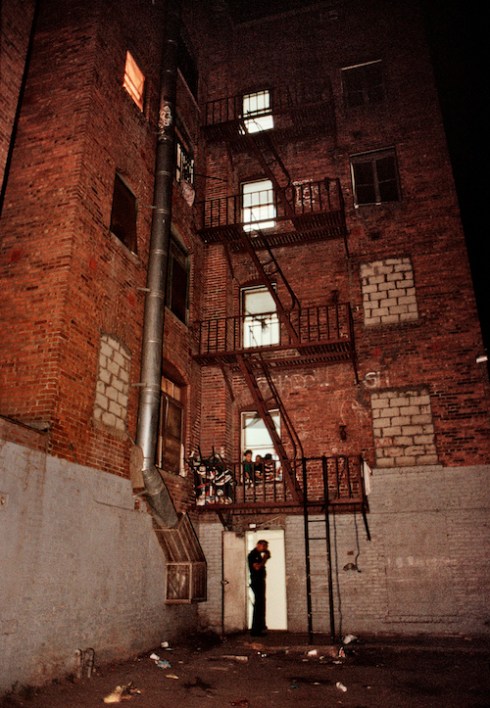
Rampart Officers search the house of a family of a man who was shot by a gang member in his living room. They check the building for the suspect. From the series LAPD.

Boyle Heights, Los Angeles, CA, 1993. From the series East Side Stories.

A Clarence Gang member is hit with five bullets from an automatic weapon on the night of a gang truce in East Los Angeles. His fellow gang members rush him to the hospital. From the series East Side Stories.

From the series Juvenile.

Rampart Division Officers detaining an arrested woman. From the series LAPD.
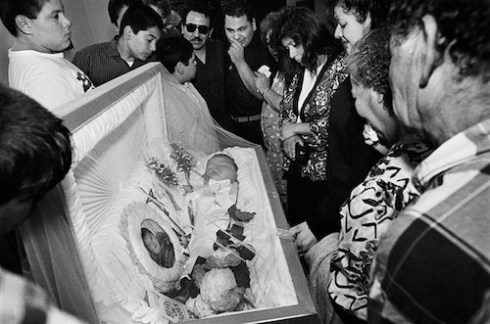
A family gathers the round of the coffin of Thomas Regalado III, who was killed by a stray bullet during a drive-by shooting. East Los Angeles, CA 1992. From the series East Side Stories.
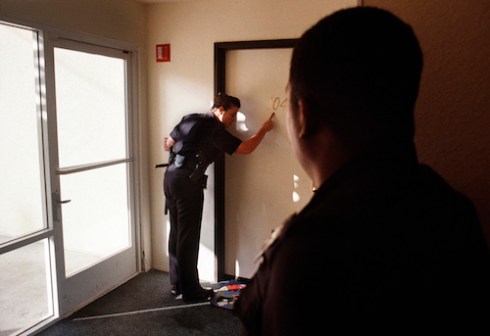
Officers responding to a domestic violence call. From the series LAPD.
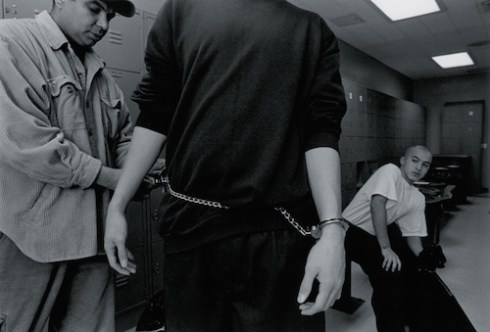
The minors are leaving the facility and are chained down for transporting. San Jose Juvenile hall. San Jose, California 1999. From the series Juvenile.

From the series Juvenile.
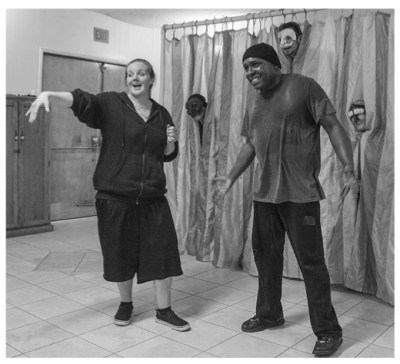
In the conventional definition of the word, there are not many funny things about prison. In spite of that, those oppressed by the system are still leveraging humour in order to process and overcome America’s dehumanising and oppressive prison industrial complex.
The Poetic Justice Project (PJP) is a case in point.
“Poetic Justice Project is California’s only theatre company comprised of formerly incarcerated actors appearing in plays that examine crime, punishment and redemption,” explains PJP whose latest production is INSIDE/OUT: A Comedic Look At Prison and Re-Entry
PRESS RELEASE
Bay Area audiences will witness a unique marriage in June: the happy union of a 500-year-old art form with cutting edge social justice theatre. Poetic Justice Project will present its Commedia Dell’Arte play, INSIDE/OUT, at St. Mary’s Center in Oakland and on Alcatraz Island.
Commedia Dell’Arte is a style of masked, improvisational slapstick comedy that dates back to 16th Century Italy. INSIDE/OUT follows character Damian from prosecution to prison to parole as he wears whatever mask he needs to survive. Damian is saved by the love of a good woman, and by his determination to never return to prison.
The play is directed by Gale McNeeley, a graduate of the Neighborhood Playhouse in New York City, the Dell’Arte International School of Physical Theatre and Scuola Internazionale Dell’Attore Comico in Italy. INSIDE/OUT was co-created by McNeeley and actors Leonard Flippen, Jorge Manly Gil, Janet Guess, Nick Homick and Caroline Taylor-Hitch. The actors have all been incarcerated—in prison, jail or juvenile facilities. Most have no previous theatre experience when they come to Poetic Justice Project.
INSIDE/OUT shows Friday, June 19 at 6 p.m. at St. Mary’s Center, 925 Brockhurst St., Oakland. Tickets are $15 and available from Brown Paper Tickets, 800-838-3006, and at the door. On Saturday, June 20 at 2 p.m., there is a free performance on Alcatraz Island.
Based in Santa Maria, the project was founded by Artistic Director Deborah Tobola in 2009. Tobola and Poetic Justice Project recently received the the Santa Barbara County Action Network’s “Looking Forward” Award for Leadership and Vision.
Poetic Justice Project It is a program of the award-winning William James Association, which provides arts instruction to prisoners, people on parole and probation, and youth at risk of incarceration.
QUESTIONS? MEDIA CONTACT
Deborah Tobola, Artistic Director
tel: (805) 264-5463
eml: deborah@poeticjusticeproject.org
P.O. Box 7196
Santa Maria
CA 93456
My latest for Vantage:
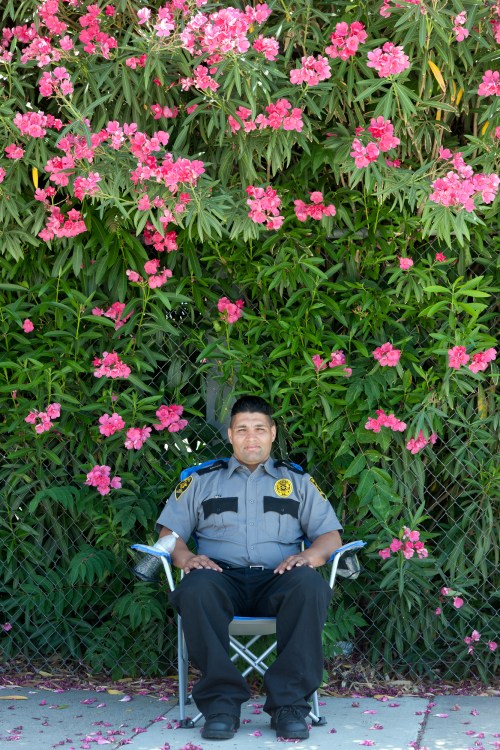
When Stockton filed for bankruptcy in 2012, it was the largest city in US history to do so. Kirk Crippens has spent the past three years photographing its residents.
It seems unlikely Kirk Crippens’ portraits are really going to affect the lives of the residents of Stockton, California. It is their portraits that make up his series Bank Rupture. Rather, it will be food banks, loan relief, and Stockton’s fiscal restructuring that will deliver much more direct — negative and positive — effects.
Grand statements and big claims aren’t Crippens’ style. Modest and curious, Crippens uses image-making to investigate and connect with the world. He photographs to establish relationships beyond his immediate working and daily experience. It might sound trite, but Crippens employs photography to show he cares. Having interviewed Crippens numerous times I’m confident in the claim.
“I served as witness. I immersed myself for a time and took some photographs along the way,” says Crippens.
Read the full piece and see a larger selection of images larger.
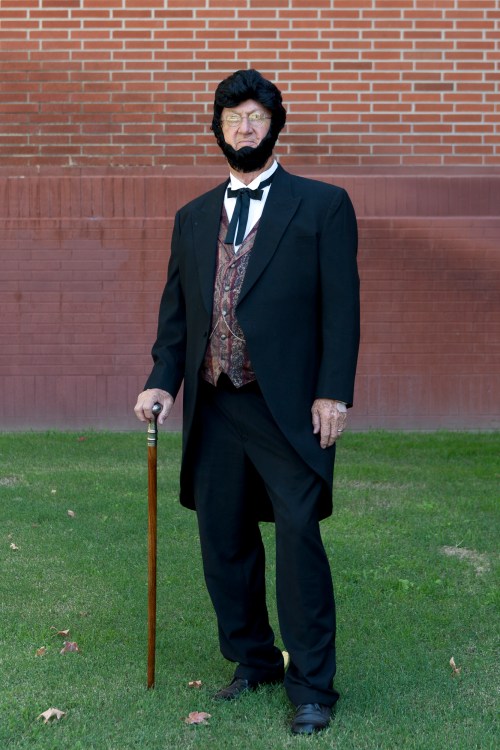




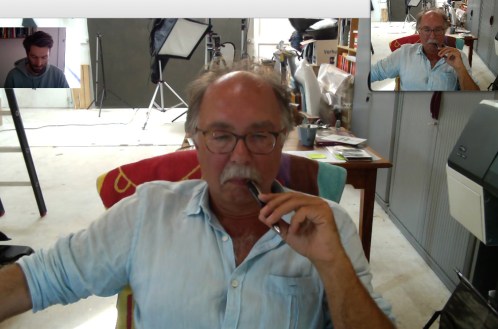
I spoke with Jan Banning yesterday. What a lovely fellow. He reads more than he photographs. He does non-fiction more than he does fiction. He does academic papers more than anything else right now. He’s been reading up on the philosophy of punishment, the biological roots of murder, and social control of “transgressive” women. What a lovely fellow.
Anyhoo, it’s going to take me a while to transcribe our hour long conversation which doesn’t help Jan in the immediate as he raises funds for his new book Law & Order.
Law and Order is a photo project that compares the criminal justice systems in Colombia, France, Uganda and the United States of America. Jan opted for this quadruplet after consultation with the Max Planck Institute for Foreign and International Criminal Law (MPI) in Germany … and after reading hundreds of pages of journal articles.
“Law and Order gives a human face to the authorities responsible for the investigation (police), trial of offenses (judges and lawyers) and the execution of sentences (prisons). Jan was able to gain access to these institutions – often with great difficulty – and he was also able to photograph suspects and convicts. Law & Order raises questions such as: How do we deal with criminals? What is the relationship between punishment and crime? Is confinement, besides being an instrument of punishment, also effective as a means of correction?”
It’s not just prisons. Jan photographed in police stations, courts and remand centers too.
The book will be designed by Peter Jonker, will be 144 pages, with 75 photos and measure 240 x 320 mm. Ipso Facto (Utrecht, Holland) is the publisher. Prison specialist, Michiel Scholtes provides an introduction and experts from the Max Planck Institute are contributing essays. Infographics and stats will abound too. Sounds like a dream.
Here’s the problem though. The pre-sales through the crowd funding have gone gangbusters in Holland and Jan hightailed it past his original target a long time ago. However, at the time of writing, Jan has only three pre-sales from people in the United States.
Jan didn’t use Kickstarter and so the fundraising campaign just didn’t run those media channels in America that Kickstarter has got locked down. That’s just the way it is. Ultimately though, it matters to Jan and it matters to his publisher and, quite frankly, it matters to me that interest exists among an American audience. At $55 (postcards too!) the book isn’t even an out of reach price-point.
Personally, I am looking forward to the new directions conversation will take once Jan and his Plancker friends crank the comparative cogs between these four geographically disparate spots. (Spoiler alert: the U.S. possessed the worst prison system Jan encountered).
So while you’re waiting for me to publish our conversation, you’ve time to go pre-buy Law & Order HERE or HERE (direct pre-buy at janbanning.com).

More here.
THE CORRIDOR
Solutions. Prison reform debate rages around solutions. Even when everyone at a given table agrees on the problem, the propose solutions can differ widely. There are many, they overlap and they are often interdependent.
(For the record, here’s a sampler of my long list of forward steps we could take: Release old and infirm prisoners; sentence children as children, do away with the death penalty, scale back on LWOP (life Without Parole), implement radical and retroactive sentencing reductions for all drugs offenses and non-violent offenses, eradicate solitary confinement, treat addiction with hospitals not prisons, fund services for youth and families to avoid the use of custody later in life, drawdown the bail system, issue an amnesty for outstanding warrants for non-violent misdemeanors, ban the box, make criminal record expungement available as a right, scale back sentencing guidelines to that of the European average, make prisons smaller, provide prisoners nutritious food, subject all staff to yearly self-care and mental health checks, reinstitute Pell Grants for access to college for prisoners, continue all voluntary work programs but provide more than cents on the dollar wages, increase the number of family days and trailer visits, and PROVIDE EDUCATION)
What last solution, what education looks like differs hugely. Some prisoners need parenting classes, some only want practical training (welding, HVAC, electrical, plumbing etc). Other prisoners want business training. Then there are some that want liberal arts college classes.
A staggering number of prisoners need a GED.
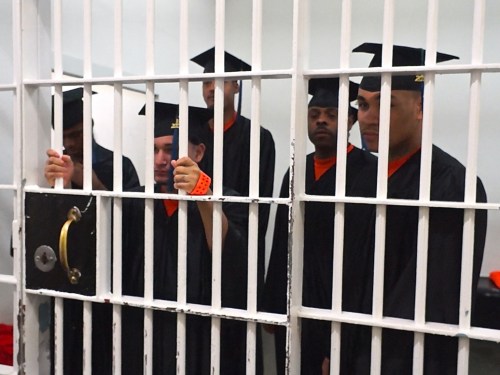
The Corridor portrays the nation’s first high school custom built inside an adult jail. The film follows one semester inside the experimental Five Keys Charter School in San Francisco.

In the film, we’ll meet students, teachers and staff. Referred to as the “crown jewel” of the SF Sheriff Department, enrollment in Five Keys Charter School is all but mandatory for incarcerated people who never received a high school diploma.
The problems for mandated GED programs are well known among prison and jail educators — it can be very difficult to engage a class of students with a high school curriculum when they did not respond to high school on the first round. This in-built tension makes any GED project in a prison or jail that more difficult as compared to other programs (with voluntary sign-up). Therefore, Five Keys represents a genuine innovation approaches to criminal justice.
Custodial staff maintain safety in a jail that houses members from a reported 22 active gangs. Meanwhile teachers follow a strict policy of not knowing their students’ criminal charges (in my experience, both common sense and common policy).
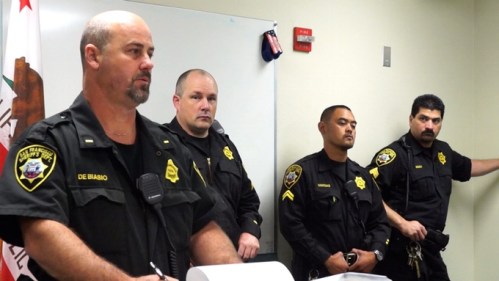
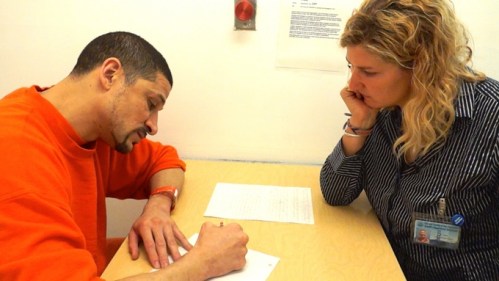
The Corridor follows lessons, learning, challenges and graduation in a school that won the 2014 award for best charter school in Northern California.
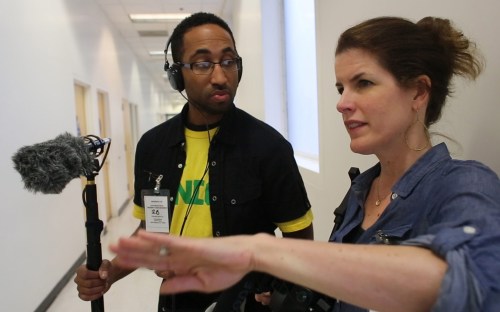
Filmmakers Annelise Wunderlich and Richard O’Connell began shooting in May 2013 and made over 100 hours of material. It took them over two years to negotiate access. Former Sheriff Michael Hennessey was the man who gave the green-light.
“Hennessey built his reputation on creating programs that go beyond what is mandated by law,” says Wunderlich and O’Connell. “He has said that what he enjoyed most about being the sheriff was to make and experiment with policy. His legacy lives on with the current staff.”
Wunderlich and O’Connell want to create “an immersive portrait that focuses on the inner workings of the school and the programs, capturing along the way conflicts, dilemmas and breakthroughs that arise in the course of carrying out its mission.”
They aren’t trying to make an argument for one type of custodial approach or another. They are interested in observing how education (in this particular case) is shoehorned into a criminal justice system to satisfy some of the system’s objectives — lowered recidivism, empowerment, self-realisation, reductions in violence.
I wish them luck.
Unbelievably, Five Keys has barely been replicated elsewhere. This is despite its measured achievements and despite growing research that education-based jail programs are the most effective way to reduce recidivism.
FILMMAKER’S PRESENTATION
If you are in the San Francisco Bay Area, Annelise Wunderlich will be speaking next Tuesday, 16th June at Bay Area Video Arts Coalition (BVAC).
“This edition of Storytelling Across Media,” reads the BVAC blurb, “brings together three innovative Bay Area media makers who will speak to the power storytelling holds for those “behind bars”. Although each panelist comes from a different artistic background (performance, documentary film, and fine art photography) they all share a commitment to helping incarcerated or formerly incarcerated individuals tell their stories and put their voices out in the world, whether through dance, film, or radio.”
Tuesday, June 16
6:30pm
BAVC
2727 Mariposa Street, 2nd Floor
San Francisco, CA 94110
Tickets are $10 for BAVC Members, $15 general. Seating is limited. Buy tickets here.
My pal Nigel Poor will also be speaking.
LINKS
Successful Kickstarter page with updates
It’s always nice to be able to applaud politicians who make good decisions and I think it is important to pause and acknowledge when they do so.
From Californians United for a Responsible Budget
PRESS RELEASE
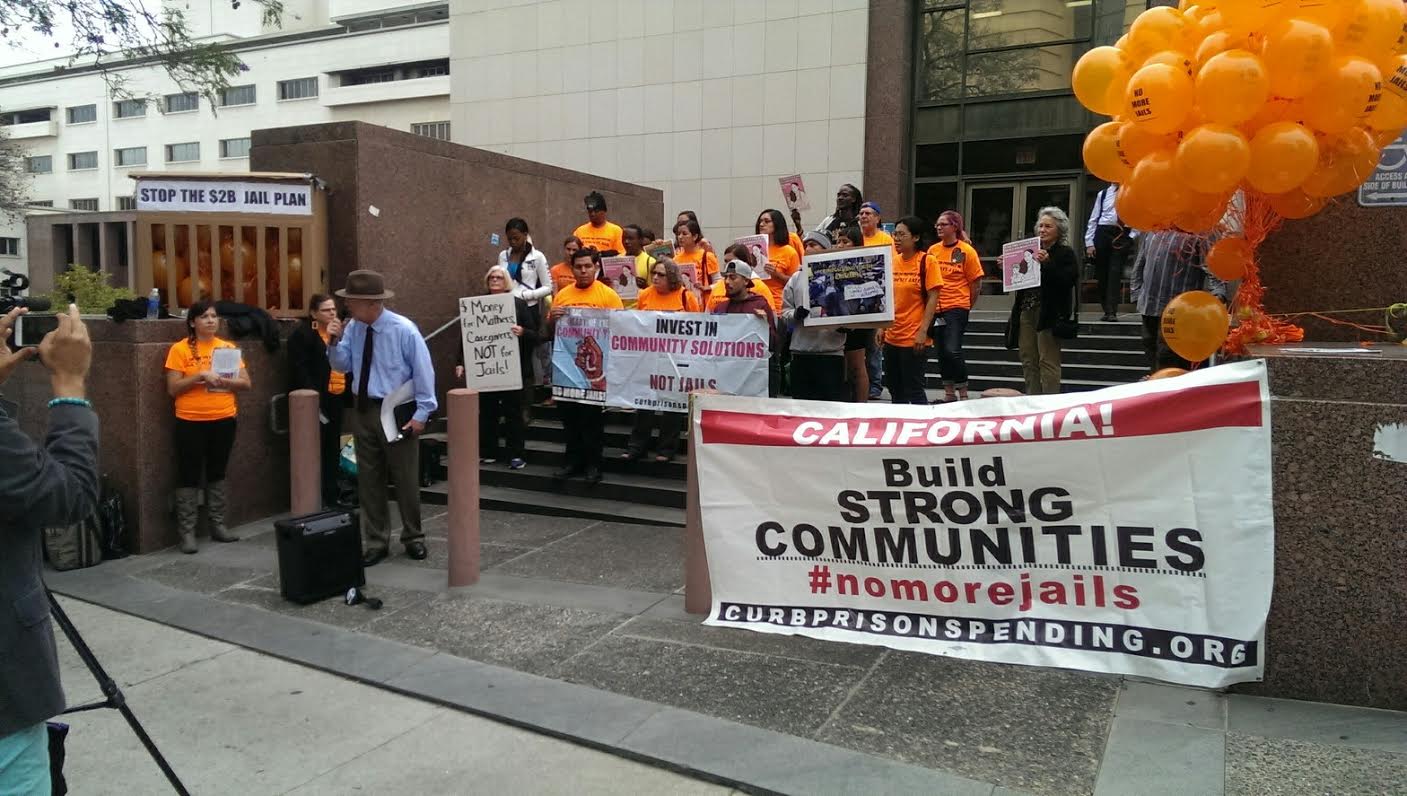
Today, the LA County Board of Supervisors voted 3 to 2 in favor of halting the proposed $2 billion jail plan, including a women’s jail and the “Consolidated Correctional Treatment Facility” in lieu of an independent analysis of what alternatives to treatment exist in Los Angeles County. Californians United for a Responsible Budget supports this motion and all efforts to prioritize alternatives.
“We commend the Supervisors for approving this game changing motion,” said Mark-Anthony Johnson of Dignity and Power Now. “We support Supervisor Kuehl in halting the Sheriff’s $2 billion jail plan. Expanding custody operations in a system where Black and Brown people with mental health conditions are more likely to be targets of sheriff violence undermines the growing momentum for diversion and alternatives to incarceration. The violence of lockup, especially against those with mental health conditions, cannot be fixed by building more. What will keep people safe is diversion from the jails and we are filled with hope by the leadership presented to assess what community based services are available in our community.”
The motion, introduced by Supervisor Kuehl and supported by Supervisors Solis and Ridley-Thomas, was applauded by about 100 community members who came out to oppose the notion that effective mental health treatment can take place in a jail facility.
“We are pleasantly surprised by the move by our Supervisors to halt the entire jail plan, especially the women’s jail,” said Diana Zuñiga of Californians United for a Responsible Budget. “The push to assess the community based services already in place is something long overdue for Angelenos. We hope that we not only assess what is out there, but leave room to envision what services can be expanded in our community instead of more jails. People need quality treatment, supportive housing, employment opportunities and sustained connection with their children in their communities, not another jail.”
Organizations, community members, and formerly incarcerated people pushed for concrete projections and benchmarks on how the District Attorney’s comprehensive diversion plan, split sentencing, risk-based pre-trial release, and proposition 47 will reduce the jail population.
“This is the time to move funding from the proposed jail plan to community based services that need these billions of dollars to keep people out of lockup,” stated Mary Sutton of Los Angeles No More Jails. “We are happy about this motion by the Board and hope to work with them to re-direct 50% of realignment dollars to community based organizations instead of in the pockets of law enforcement.”
MEDIA CONTACTS
Diana Zuniga — (213) 864-8931, Californians United for a Responsible Budget
Mark-Anthony Johnson – (818) 259-1322, Dignity and Power Now

 Prison Photography