You are currently browsing petebrook’s articles.

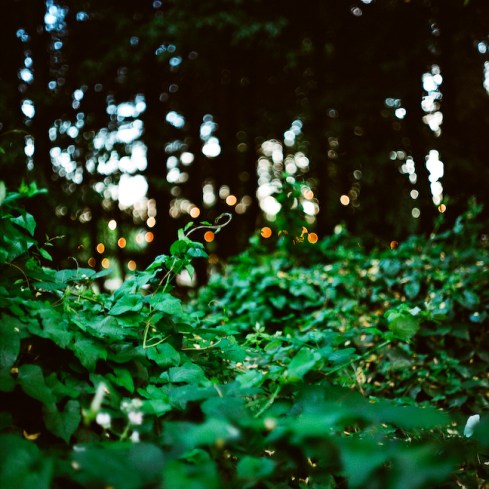
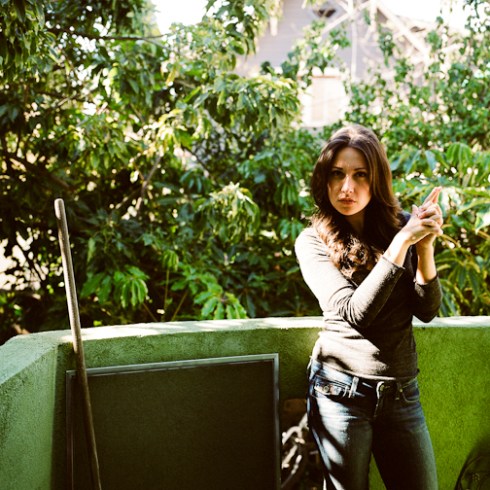
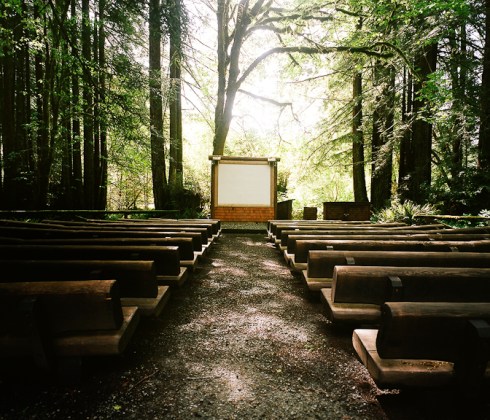
I first saw Julie Verdini‘s work in last month’s show DIALOGUEat Newspace curated by Laura Moya. On opening night, her print had a little red dot placed beneath it so Julie was grinning. Continuing my informal series, Eye on PDX, I asked Julie a few questions about her work.
What are better, humans or trees?
Trees are unrivaled in their ability to be silent and still. Without staring at a screen or being caught in deep R.E.M. sleep, humans have difficulty remaining aware and immobile. Trees’ receptivity make them a welcomed ally for an artist; they mirror creative energy and I find them to be great company.
Humans however, are far superior at moving, having distinct personalities and drinking spirits.
What are your influences?
The landscape influences me mostly. I definitely pay tribute to the new topographic movement and William Jenkins‘ idea of “stylistic anonymity.” I think its interesting that when this type of work was initially shown, many devalued its artistic merit. I appreciate how freeing the medium from stylistic implications allows for subtlety and historical perspective. I find nature to be so visually dramatic, photographically speaking, that I just try to get out of its way.
The habit of documenting typologies has always been inherent to my photography practice. Bernd and Hilla Becher are fine tuned examples of this technique mastered. Finding patterns and making connections exercises your visual thinking in such a playful way; it’s like being four years old perpetually. I appreciate how typologies can starkly document yet carry a whole set of theoretical implications about the human race.
I am influenced by Werner Herzog in part because my background is film-making. With environmental consciousness on the rise we frequently see portrayals of nature as victim to human destruction. Herzog speaks so bluntly about the vileness, disorder, chaos and “overwhelming murder” within nature during his time in the Amazon. The idea that nature is an unstoppable force that will prevail, long after our species has perished is one I find my camera seeking. I think that when you work with the landscape their is always a dialogue of the destroyer versus the destroyed. I find that some of my images speak critically of man’s relationship to nature while others come across as symbiotic or even idealistic. So the narrative comes from the environment itself, from each situation.
How do you characterize the photo scene in Portland?
Interested and open. Having lived here many years, the town is small enough to recognize names and faces. My personal experience points to the opportunities for education (Newspace, NCP, ASMP). But, my view could be slanted since I teach and am constantly thinking and talking about photography in an educational context.
Fine art opportunities exist here for certain (albeit through a very limited amount of top-notch organizations and galleries). However, I often feel I operate as a satellite and only occasionally cross paths with other fine art photographers. I would be interested to see opportunities for community growth beyond classes and occasional shows. However, I may not be the best person to asses the pulse of any social scene — after all, I am most often found in a cluster of trees rather than a crowd of humans.






– – – – – – – – – – –
Eye on PDX is a continuing, weekly series that features images and brief statements by photographers currently living in Portland, OR.

Zachary Allen moved to Portland more recently than I, which is recent indeed. I knew of his work and I was aware he had studied with Ian Van Coller in Bozeman, Montana, and that Zachary had also assisted Ian in South Africa in 2010. When I found out he was here in PDX I didn’t hesitate to contact him and grab a coffee.
In some ways, Zachary’s work is difficult to feature because much of his work is in-process; he stresses that Roseland (my personal favourite of his portfolios) is a twenty year project! Roseland is about land-use and residential planning in Virginia.
Still, I asked Zachary to pull together some images and pen a quote to introduce himself to the Portland photo scene.
Zachary:
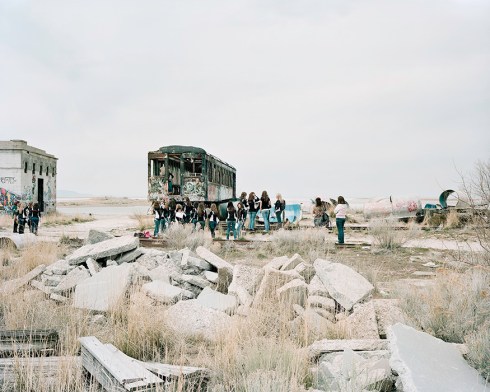
“Over the last couple of years I’ve been making photographs documenting my trips into the landscape. I’ve been attempting to stay away from a strict theme based project, which seems like the only acceptable form of photography these days. I kinda ended up with a bunch of mini projects at the end of three years. These mini projects explore several themes, such as nests, town relocations, and the intersection of nature and human influence, but the main thread has been the idea of being a “photographer” in the field. I’m interested in how we as photographers approach the landscape and interact with it. The photos from In The Field explore both my personal outings into the landscape and trips I have accompanied other photographers on. I think there is something really interesting when several people go out into the field just to have a look.”



Zachary Allen is a photographer, printmaker, and educator currently based in Portland, OR. He can be contacted on zachary@zacharysallen.com. Follow his work: Twitter, Book Experiments, and Broken Spine, a Tumblr exploring artists’ books.

– – – – – – – – – – –
Eye on PDX is a continuing, weekly series that features images and brief statements by photographers currently living in Portland, OR.
UPDATED: SEPT 4TH 2012. 9AM BST
A week after this blog post went to press, the Prison Reform Trust reported that 77 of the 131 prisons in England and Wales held more inmates than stated capacity.
London’s HMP Wandsworth, which is one of the the three prisons in Elphick’s photographs, is the seventh most overcrowded prison in the UK with 1,191 men being held in a facility only designed for 730 men. Wandsworth operates at 163% capacity.
In total, UK prisons hold 7,300 persons more than they were designed for.
– – – – – –

Hugh Elphick is a young British photographer who, in early 2011, took a cool and curious look at London prisons for his undergraduate photography BFA. The series is Inside.
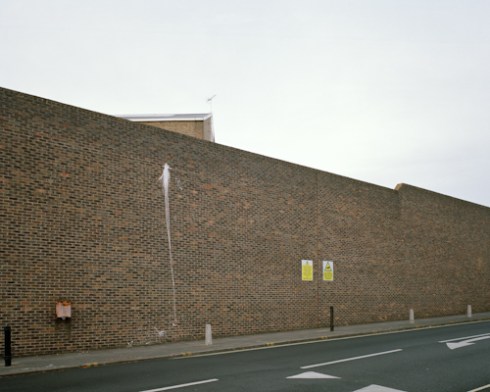
“I wanted to produce images which intrigued more than shocked,” says Elphick. “I discovered how much prisons actually blend into their surroundings and used this blurring the boundaries, with some of the angles I shot.”
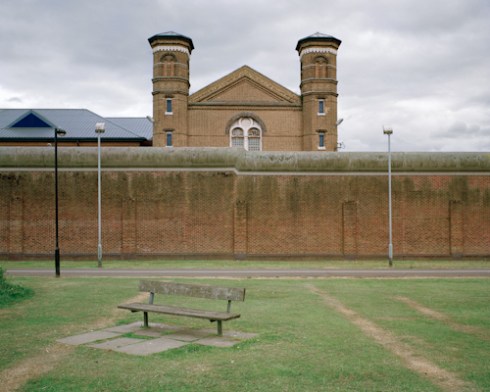
In the series of six photos, Elphick shows us the red-brick exteriors of three prisons – Pentonville, Wandsworth and Wormwood Scrubs. Elphick was working close to Wormwood Scrubs and began to wonder about human rights, the acceptability of the prison system, and if prisons work.
“In England, it is not a commonly known fact [that the UK has the second highest rate of incarceration after the U.S. among industrialised nations] and that it is not something that most people worry about,” says Elphick. “It could be argued that there is more concern that prison sentences are not long enough or that there are moral disparities in sentencing. However, this is not to say that there are not a large proportion of people who see the wider picture.”
Elphick’s focus specifically is about the age of these *famous* Victorian prisons. The Victorian era is steeped in imagery of inequality, squalor and hardship for the working classes. For Elphick, there are points of comparison between the class-stratified 19th century and the inequalities of the modern era and especially today in a time of austerity and cuts in services.
“Victorian architecture offers an allegoric association with harsh systems and possibly with periods such as the late 70 early 80’s economic downturn. Such institutional auras, I believe, explore some of the dilemmas and imbalances of our society,” says Elphick. “These prisons show how little progression there has been in the prison system due to confused government policies.”
Much like the approach of German photographer Christiane Feser, Elphick’s interest is in how these large, alien institutions interact visually with nearby residential communities. Unlike in the U.S., the economic fortunes of the nearby communities in the UK are not tied directly to or dependent upon the operation of a prison. These UK prisons are part of the urban puzzle but quite opposite to the prison-towns of central Wyoming or eastern Washington, which come to rely on jobs as traditional agriculture and industry wane. There is not the same attrition and competition in the job market in central London. Prisons in the UK are not perceived of as big business, partly because by comparison to the bloated U.S. prison system, it isn’t.
In fact, Elphick argues that prisons have almost become mundane in UK cities. He writes in his artist statement:
“The fragmentary nature of London’s development, and its destruction in WW2, have meant a breadth of architectural forms have spread into areas surrounding the prisons. The prisons no longer stand as the monolithic symbols of suffering they once did, and have melted into the architecture of our city. They are taken for granted, dismissed”
This is a peculiar paradox to deal with in images; subjects hidden in plain sight.
“I set out to make a graphic and symmetrical set of images and fortunately there were features which allowed me to do this and at the same time inject some curiosity such as the splash of paint, bench or repaired hole,” says Elphick. “The walls are rigid and literal boundaries which can be translated metaphorically and ironically in many ways to question the justice system and inequalities in society.”
– – – –
Inside was exhibited in the three-person show Behind Bars at One & A Half Gallery, London in September, 2011.




© Julia Ziegler-Haynes
There are many photography projects that image the last meals of America’s executed. Here’s the pile. Here’s Julia Ziegler-Haynes’ photographs.
Thanks to David Naugle for the tip.

‘Steph’ © Tony Foushe
There’s two things I hope you’ll carry away from this post. Firstly, the importance of Live Through This a photo series resulting from a-two year collaboration between Tony Fouhse and Stephanie. Secondly, that Tony has established Straylight Press to get limited-edition books and zines in the hands of photo-lovers. Live Through This is Straylight’s first publication.
To regular readers, Tony Fouhse will not be a new name. I’ve always admired Tony’s honest, weekly updates about his ongoing work, emotions and process. In my capacity as a Wired.com blogger, I recommended his blog drool as a top read.
LIVE THROUGH THIS
Four years ago, Tony began shooting USER, portraits of crack and heroin addicts on a single Ottawa city block. During that time, he met Stephanie, noticed something different about her, and asked, “Is there anything I can do to help?” She said she wanted help getting clean.
From that point it’s a long story of great-strides, trauma, dope sickness, humour, sunlight and friendship. Often photographers may distance themselves from the world by saying they’re mere observers. In the case of photojournalism, so-called objectivity sometimes excuses camera-persons from getting involved in even small practical ways to help those they photograph.
Tony is not a photojournalist and he is no hero either; he’s a guy that offered to help someone whose needs were greater than most. If you want to venture into the drool archives, Tony has told the story in great detail. Alternatively, Tony wrote a five-part series about his and Steph’s journey for the ever-excellent NPAC blog [one, two, three, four, five].
In December, Steph had a wobble and ended up in jail. In January, when I read Steph’s words about her court hearing it was clear that Tony has had a life-changing effect on her life:
When I went to Halifax I sat in front of the judge and the crown was asking for 4-6 months and my lawyer asked for probation and sure enough I got it. Then, when I went to Pictou courts my lawyer asked for 6 months house arrest and he got it too […] if it wasn’t for my lawyer in Halifax I would of been fucked. He fought for me to do house arrest because I did so much in the last year, like, he brought up how when I lived in Ottawa I met this man named Tony Fouhse was gonna help me get into a rehab called the R.O Royal Ottawa but I never came to the rehab because I ended up growing a cyst on my brain and how Tony ended up helping me ween from using Heroin to 1 4mg dillie (Dilaudid) a day and sent me home to my family where I could sober up and become a clean mom and we did a project of my life on the street.
It’s a bit embarrassing it’s taken me six months to share my wonder. As well as being photo-rich, Steph and Tony’s journey is a really compelling story. Live Through This is one of the most interesting photography projects I’ve followed in recent years.
STRAYLIGHT PRESS
Live Through This is all the more impressive because Tony and Steph have taken it upon themselves to promote, produce and distribute it. Tony describes Straylight Press as a “vehicle to produce and disseminate printed photo matter.”
Future projects include the unflinching work of Scot Sothern and Brett Gundlock’s Prisoners (which I saluted in the past) so it is exciting times. The idea is that the success of one project feeds the next, so if enough copies of Live Through This sell then profits go into producing the next photographer’s book. It’s a pre-sales fundraising model. In addition, Straylight zines are fairly inexpensive and the intent is to produce 3 or 4 each year.
“Straylight is kind of like a Kickstarter, but with more long-term commitment to projects that aren’t just my own,” says Tony. “Kickstarter projects, while a good and interesting idea, seem to me to be too much about the individual. Not that I have anything against that, after all, you need an ego to be a photographer. But …”
Last month, Tony talked with the Ottawa Citizen about Straylight: Tony Fouhse opens photo-book publishing house – and web gurus be damned.
Tony is flogging prints, books and workshops to raise money for Straylight projects.
Understandably, Tony is shifting his energies from his personal blog drool to the Straylight blog. Straylight is also on Facebook.
Good stuff.

“Art is not a mirror held up to reality, but a hammer with which to shape it.” – Bertolt Brecht
RedBird Prison Abolition is making a call to Columbus, OH artists to participate in an art exhibition against the U.S. prison system.
The show will include art by prisoners as well as by people on the outside. Submissions should address the prison system, incarceration or the US police state.
Requirements
Include a brief artist’s statement, dimensions/space needs, and how you’d like the work to be displayed/priced. There will be a silent auction for all pieces. All media will be considered. Send JPEG image submissions to: redbirdprisonabolition@gmail.com.
RedBird Prison Abolition
A group of people in Columbus Ohio who want to see the prison system come to an end. RedBird supports prisoners through publishing their writing, setting up pen pals, hosting events and raising awareness.
Deadline
Tuesday September 25th. Decisions will be made by Sept. 28th. More information: http://redbirdprisonabolition.org/
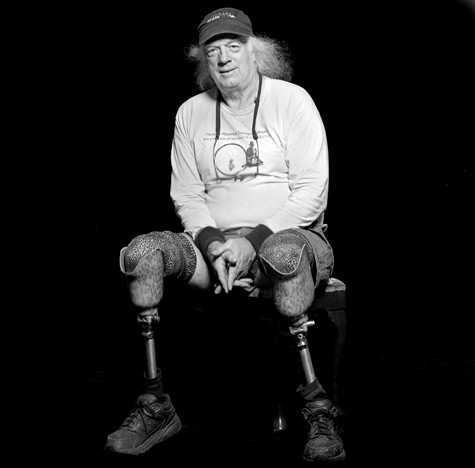
On September 1, 1987, while engaged in a protest against the shipping of U.S. weapons to Central America in the context of the Contra wars, S. Brian Willson and other members of a Veterans Peace Action Team blocked railroad tracks at the Concord, California Naval Weapons Station. An approaching train did not stop, and struck the veterans. Willson was hit, ultimately losing both legs below the knee while suffering a severe skull fracture with loss of his right frontal lobe. Subsequently, he discovered that he had been identified for more than a year as an FBI domestic “terrorist” suspect under President Reagan’s anti-terrorist task force provisions and that the train crew that day had been advised not to stop the train.
Mark Colman has lived in Portland, Oregon for five years. In the past 12 months, he has been working on a portrait project called Faces of Occupy. Each portrait is accompanied by words from the sitter; many of them thoughtful, loving and persuasive statements.
In addition to many original Portland Occupiers, Colman has photographed international figures including Ralph Nader, Dr. Vandana Shiva and Chris Hedges.
Please spend some time with each of the individuals upon whom he has trained his lens. As we know, Occupy touches upon many complex issues, and these are issues that deserve time. Any summary from me would be reductive. I did just have one question for Mark though. I asked what Occupy meant to him.
“Occupy is a way to spread awareness of many things that are wrong for 99% of Americans,” says Colman. “Whether it’s corporate personhood, Wall Street bailouts, illegal bank foreclosures, the government’s increasing attempts to take away our freedoms and constitutional rights with legislation such as the National Defense Authorization Act (NDAA), police brutality, lack of a livable minimum wage. The list is long, but the sooner people wake up, the sooner we will begin to solve these problems.”
So far, Colman has made 43 portraits.
“I plan on having 99 people by year’s end,” he says.
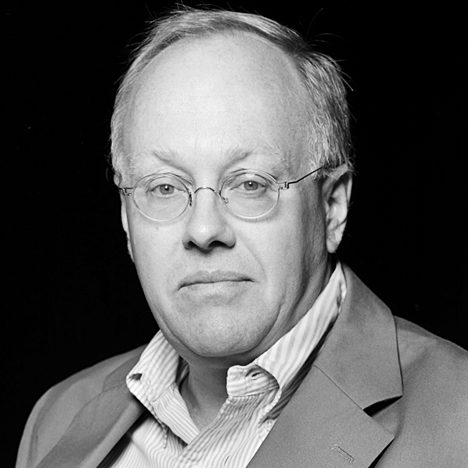
Chris Hedges: “The Authorization to Use Military Force Act, the Patriot Act, the FISA Amendment Act, you know it’s just one piece of legislation after another to strip Americans of their most cherished constitutional rights. I mean even the Obama Administration has not found it within itself to restore habeas corpus. All of this was put in place by Bush, but it was codified by the Democrats. In some ways Obama is worse because he’s used the Espionage Act now six times to go after whistle blowers and leakers.”

“A united educated public is the biggest threat to those that seek to exploit us for power and profit. We are learning and evolving. Where Occupy is headed is up to those who take a stand and get involved. We can take care of each other and work together to improve our quality of life.”
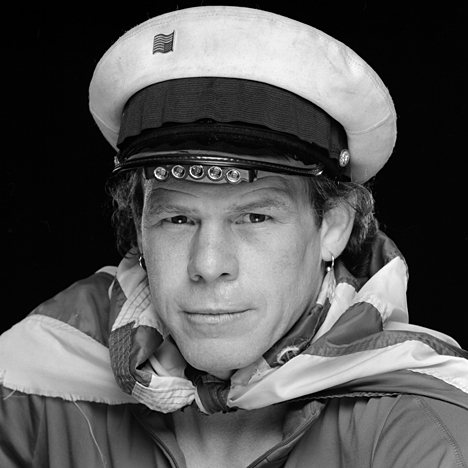
“My first civics lesson came at five years old: I couldn’t watch any cartoons – the Watergate Hearings were on every channel.”
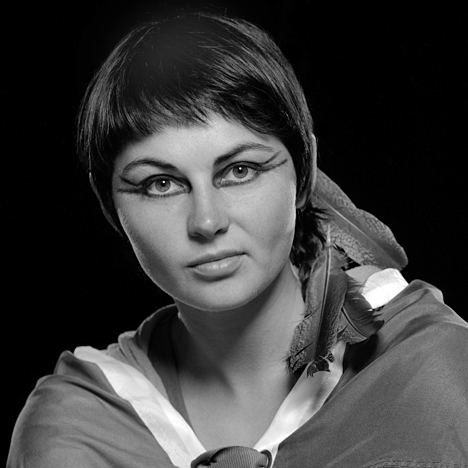
“We the people of Cascadia are learning – some slowly, some quickly – what it takes to live in harmony with the land; the principles of permaculture permeate. The blue, white and green stripes and symbolic doug fir of our flag acknowledge what is true wealth. Clean water, clean air, healthy ecosystems – that is what makes healthy, loving people. We say enough with greed, corruption, and exploitation.”

“Label us socialist, communist, trouble-makers, even Al Qaeda, just rest assured that we, The 99-percenters, will go away only when you, The Monopoly Capitalists, become content with being only millionaires instead of multimillionaires and when you allow some viable form of Democratic Socialism to become America’s form of government.”

In 2010, photographer Patrick Gilliéron Lopreno visited three Swiss prisons and created the series Puzzle Carceral. Yesterday, I featured a select edit from Puzzle Carceral.
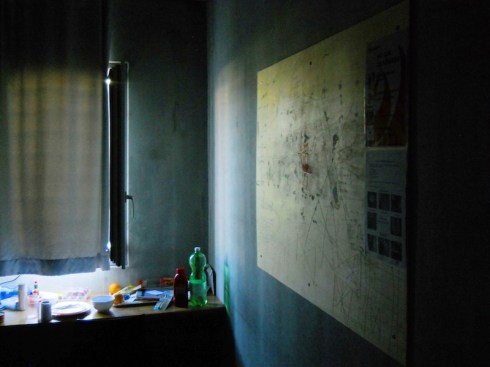
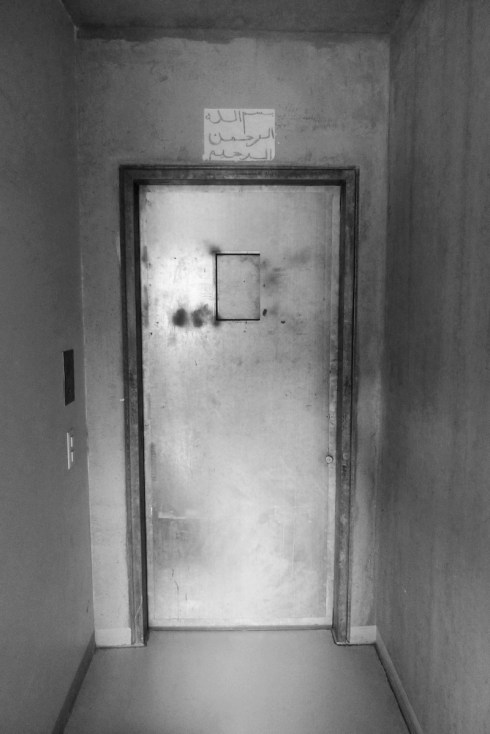
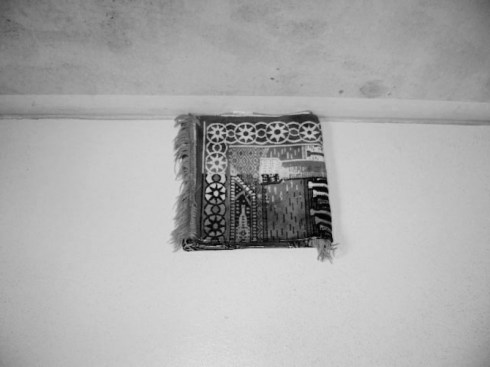
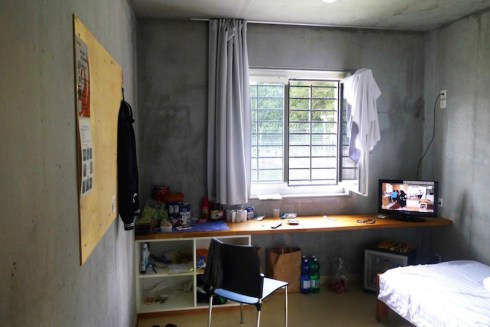
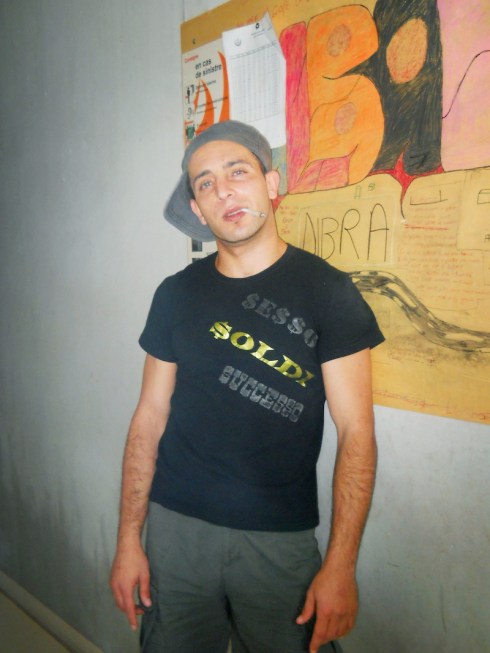
During his year spent on the project, Patrick doubled down on the photo-interventions with a prison photo workshop. Once a week, for two months, he met with prisoners of La Brenaz prison in Geneva. Some of the images are simple point-and-shoot portraits; some are documents of living conditions; others such as the image of an Islamic prayer-mat or the image of a low-lit corridor are more meditative.
I asked Patrick some questions about the experience and he provided a selection of prisoner-made images from the workshop.
Q & A
A workshop is very different to a single photographer, you, making images. What made you decide to put cameras in the hands of prisoners? What were your aims?
The idea was to produce a report with the prisoners on their conditions of detention. What mattered to me was their view of their confinement.
What did they want to do or convey with their photography?
For them the workshop was primarily a time of separation from their prison life. I did not claim to provide them with training and that was clear from the outset. Some men realised that they were able to make beautiful images and for once they made something others could compliment; they became creative.
What negotiations did you go through to conduct the workshop?
The social worker of the prison has helped me tremendously. She brought me into contact with inmates who wanted to participate in this workshop. I never asked for money from the prison for my class because I did not want to be paid. I wanted to stay as independent as possible and retain complete control.
Is a camera not a security hazard inside of a prison?
A camera in prison is never welcome – not for the prison [administration] or for the prisoners. I was not there to make pictures for the inmates’ files. I always asked each prisoner’s permission to use his image.
What stood out about the prisoners work? Any photographs that surprised you?
I was dazzled by the artistic and poetic qualities of their pictures. The best photos were developed and printed on large sheets and then exhibited in the prison.




 Prison Photography