
You are currently browsing the category archive for the ‘Activist Art’ category.
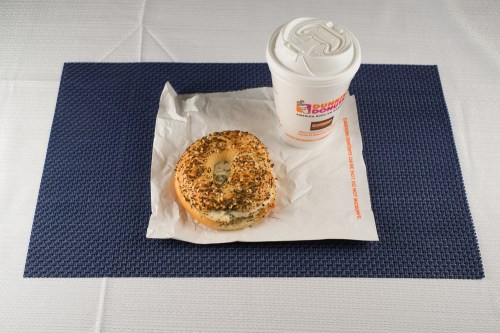
First Meal: Everything bagel with veggie cream cheese and a medium coffee from Dunkin Donuts. “I was craving a really good bagel,” said Keri Blakinger, 30, who served 21 months in female correctional facilities in NY. Blakinger, a vegetarian, subsisted mostly on canned vegetables and granola bars, which she received in packages from her parents. Since getting out, her diet has not changed much because she grew accustomed to not having to cook for herself. © Julius Motal.
There’s no shortage of projects about meals in the small corner of photographic practice concerned with prisons and human rights. Specifically, the final meals of condemned prisoners have stoked the macabre and outraged intrigue of artists.
Julius Motal‘s photographs of “first meals” are therefore something of a departure and a welcome addition to the visual narratives trying to convey the transitions out of prison and into society. Instead of an end point, Motal suggests a starting point (although the quality of help for reentry is up for question in many jurisdictions). Still, this work is simple and hopeful. Returning citizens cannot make it on their own. They’ll need to carry resolve and hope and see that reflected back from society. Perhaps Motal’s series with its extended captions helps humanise former prisoners?
The startling thing for me is the similarity in the types of food choices made by people about to face execution and people making a more inhibited choice once they’re outside of prison — almost without exception they go for fast food. Do returning citizens opt for fast food because they’re poor, have for the most part been poor, and eaten the cheapest and most accessible food? Or is it more simply a case of reaching out for easy comfort (supposing fast food equates to comfort) in times of relief?
There’s a reflection of class in Motal’s work, which is a good thing. It’s a healthy reminder how the prison industrial complex functions; hoe it brutalises communities of lower economic standing. Very few prisoners are like the middle class, liberal arts college educated Piper Kerman — or the TV show equivalent Piper Chapman — from Orange Is The New Black. Most people going to and leaving prison are poorer than the average American.
Currently, Motal’s series First Meals: This is What Freedom Tastes Like is only six images deep. I hope he’ll extend the survey and continue to ask ex-prisoners about their relationships to food. There’s many different directions in which this work could go not only in terms of interaction with subjects but in terms of public education to tie in with reentry services, food deserts, mother and child nutrition programs, and so on and so forth.
It’s significant that more than one caption refers to the overwhelming choice within — and paralysing nature of — grocery stores for former prisoners who were unaccustomed to variety and decision making power for extended periods. One caption reads:
For Stacy Burnett, the choices at the Burger King in Montrose, PA were overwhelming, so much so that she couldn’t make a decision. “I could feel the energy shift behind me,” Burnett, 39, said of the growing restlessness behind her. She finally told the cashier that she’ll have what the woman ahead of her ordered, which was a whopper, fries, a shake and a soda. For the first six months after her release, going to the supermarket was tremendously difficult. There were simply too many choices, and if she didn’t get anything in the first 10 minutes, she would leave without getting anything.
Last meals are a captivating topic but direct us only to the plight of 3,500ish people on death row in the country. Motals’ work about “first meals” directs us to the tough realities of the millions of people leaving jails and prison every year in America.

Image source: Insouciant Writing
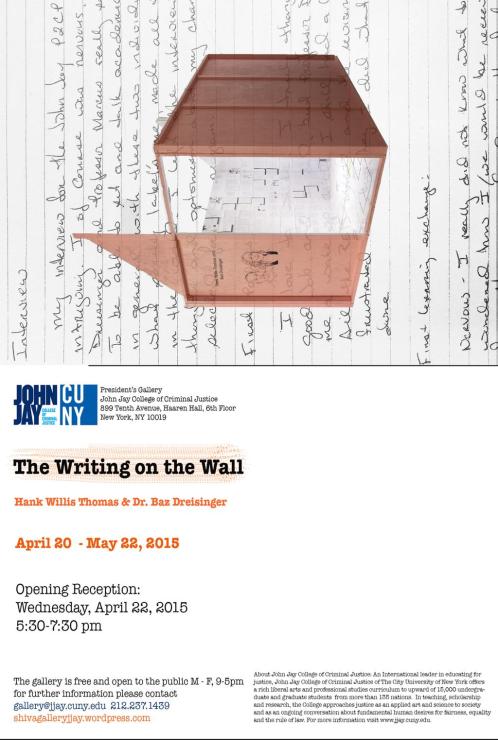
THE WRITING ON THE WALL
If you’re in NYC between now and May 22nd go see The Writing on the Wall, an installation by Hank Willis Thomas and Baz Dreisinger. It opened yesterday at the President’s Gallery at John Jay College.
The Writing on the Wall debuted in September 2014, at the Museum of Contemporary Art in Detroit (MoCAD) where it was part of the Peoples’ Biennial.
There’s an opening reception tomorrow night, Weds, April 22nd, from 5:30 to 7:30pm.
THE BLURB
The installation is made from essays, poems, letters, stories, diagrams and notes written by individuals in prison around the world, from America and Australia to Brazil, Norway and Uganda. The hand-written and typed pieces were accrued by Dr. Dreisinger during her years teaching in US and international prisons, in the context of both the Prison-to-College Pipeline program she founded at John Jay and her forthcoming book Incarceration Nations: Journeying to Justice in Prisons Around the World.
On a basic and literal level, The Writing on the Wall is about giving voice to the voiceless and humanizing a deeply de-humanized population. It represents a kind of modern-day hieroglyphics, projecting a hidden world into a very public space and allowing a people too often spoken of and for—by politicians and a punishment-hungry public—to speak for themselves, in the most intimate of ways. It is a tribute to the power of the pen, a deliberate verbal intrusion and an assertion that some words need very much to be seen in order to be heard. Indeed the writing is not just on the wall but on the floor, on every inch of the installation space, such that the viewer, unable to look away, is compelled to confront a crisis: global mass incarceration. The piece thus fittingly references the Biblical story in which the writing on the wall, as interpreted by the prophet Daniel, foreshadowed imminent doom and destruction.
Just as mass incarceration is a living, growing global phenomenon, The Writing on the Wall is an ever-evolving installation. With every iteration, it grows and assumes a new shape, because the documents comprising it—material written by those living behind bars—continue to land in Dr. Dreisinger’s hands and mailbox.

THE BIOGRAPHIES
Hank Willis Thomas is a photo conceptual artist working with themes related to identity, history, and popular culture. He received his BFA from New York University’s Tisch School of the Arts and his MFA in photography, along with an MA in visual criticism, from California College of the Arts (CCA) in San Francisco. Thomas has acted as a visiting professor at CCA and in the MFA programs at Maryland Institute College of Art and ICP/Bard and has lectured at Yale University, Princeton University, the Birmingham Museum of Art, and the Musée du Quai Branly in Paris. His work has been featured in several publications including 25 under 25: Up-and-Coming American Photographers (CDS, 2003) and 30 Americans (RFC, 2008), as well as his monograph Pitch Blackness (Aperture, 2008). He received a new media fellowship through the Tribeca Film Institute and was an artist in residence at John Hopkins University as well as a 2011 fellow at the W.E.B. DuBois Institute at Harvard University. He has exhibited in galleries and museums throughout the U.S. and abroad. Thomas’s work is in numerous public collections including the Whitney Museum of American Art, the Brooklyn Museum, the Guggenheim Museum, and the Museum of Modern Art. His collaborative projects have been featured at the Sundance Film Festival and installed publicly at the Oakland International Airport, the Oakland Museum of California, and the University of California, San Francisco. He is an Ellen Stone Belic Institute for the Study of Women and Gender in the Arts and Media, Columbia College Chicago Spring 2012 Fellow.
Baz Dreisinger is an Associate Professor in the English Department at John Jay College of Criminal Justice, City University of New York. She is the founder and Academic Director of the college’s Prison-to-College Pipeline Program (P2CP), which offers credit-bearing college courses and reentry planning to incarcerated men at Otisville Correctional Facility. She is also a reporter on popular culture, the Caribbean, world music, and race-related issues for the New York Times, Los Angeles Times and Wall Street Journal, among other outlets; she produces on-air segments for NPR and is the co-producer and co-writer of the documentaries Black & Blue: Legends of the Hip-Hop Cop, which investigates the New York Police Department’s monitoring of the hip-hop industry, and Rhyme & Punishment, about hip-hop and the prison industrial complex. The author of Near Black: White to Black Passing in American Culture (2008) and the forthcoming Incarceration Nations: A Journey to Justice in Prisons Around the World (2015), Dreisinger earned her Ph.D. from Columbia University and has been a Whiting Fellow and a postdoctoral fellow in African-American studies at UCLA.
THE DETAILS
President’s Gallery, John Jay College of Criminal Justice, CUNY 899 10th Avenue, Haaren Hall, 6th Floor , NY 10019.
Hours: 9am-5pm, Mon-Fri.
Contact: gallery@jjay.cuny.edu or 212.237.1439.

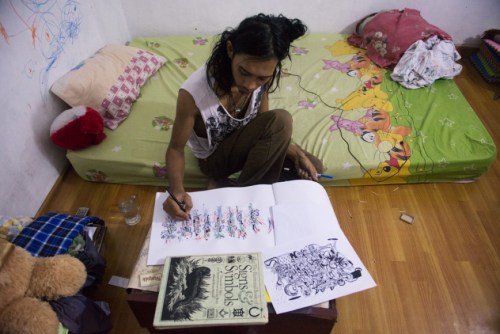
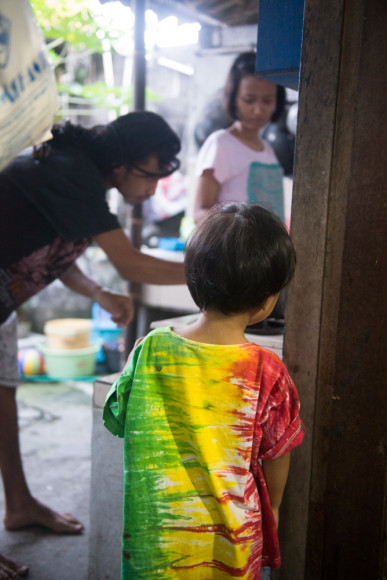
American photographer Willow Paule has spent half her time, in recent years, in Indonesia. She recounts in PsychoCulturalCinema how she slowly learnt about the past incarcerations of her two friends. Their conversations together led to more questions. Paule writes:
Through my research and conversations with these former prisoners in Indonesia, I discovered that they had faced rampant corruption, extortion, and violence in prison. I found that people were often convicted without solid evidence, that they sometimes possessed only small amounts of narcotics or marijuana but were given long drug distribution sentences, while large time dealers got off with lighter sentences. The person with the fattest wallet got the best treatment.
I learned that mentally ill people often became police targets, and periodically drugs were planted on them in order for police to meet arrest quotas. Once they were locked up, they didn’t necessarily receive adequate care, and they sometimes created turmoil in the cramped cells they shared with the general population. Many people told me disheartening stories about human rights abuses in Indonesian prisons.
My focus is the U.S. prison system, but as I say, dryly and reductively, on my bio page, “problems exist in other countries too.” Paule knows this all too well. She recorded the art that her two friends created as a matter of survival and also their difficult reentry into society. There, as here, jobs are difficult to come by for former prisoners and the stigma of prison lingers long.
The extent to my knowledge on the Indonesian prison system spans the length of Paule’s article. The system sounds dire.
“Prison sentence lengths were decided depending on bribe amounts and prisoners had to pay for a cell or face daily beatings and electrocution in solitary confinement,” writes Paule.
Connecting Paule’s years-old inquiry to today, in the U.S., is Paule’s desire to repeat the methodology and record the stories of returning citizens in America.
There’s no shortage of people in this country with whom Paule could meaningfully connect and weave their history and story over a long period as she did in Indonesia. It takes more than just images though; I encourage Paule and all young photographers to use audio, family archives, collaborative processes and — as Paule did here — a focus on non-photo 2D artworks. Most of all, I encourage young photographers to empower not only individuals impacted by incarceration through the telling of their stories but also to empower small local communities by exhibiting and programming the work with those most closely implicated in the issue.
Simply put, a show at the local community centre is as important as one in the brand name gallery downtown. The former deals in hearts and minds, the latter in sales.




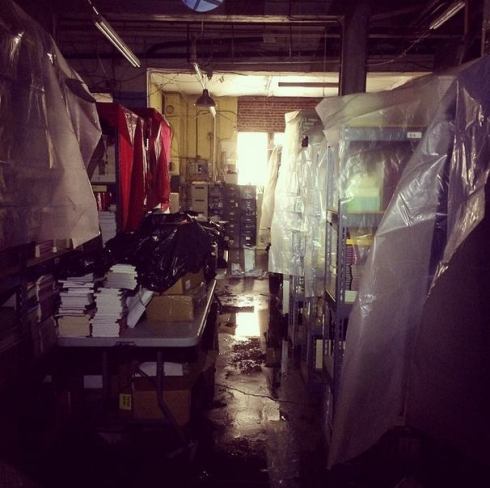
AK Press stock after the fire
ATTENTION
Stop what you’re doing. Listen up. Help out.
There was a massive fire in Oakland this weekend. Two people died. 30 people have been relocated from the now charred, smoky, water-damaged buildings. This is a costly tragedy from every angle you look at it. My respects go out to the victims and the victims’ friends and families.
The structure that went up was behind and attached to a building in which AK Press and 1984 Printing — two of Oakland’s phenomenal political publishing operations — operated. They lost paper stock, computers, presses, book inventory and more.
Here’s why they are both so impressive and this is why you should throw them some cash.
AK Press has published and distributed anarchist literature since 1990. It is worker run and collectively managed. Over the years, it has put out some of the staples of my library — including Captive Nation by Dan Berger, Resistance Behind Bars by Vikki Law, and Are Prisons Obsolete? by Angela Davis.
AK has consistently raised the bar for analysis of the prison industrial complex, state violence, violence against women and many other social justice urgencies. AK has built community and audience for radical writers. Precisely because the work has to be in the world, AK has to be in the world. Nobody does it better.
1984 Printing is one of the very few all-women-owned businesses I know. They’re happy, open, dog-loving crafts folk who turn the presses not to turn profit but to build knowledge for a better society. Amy and Richard know all their clients by first name and care for each and every project.
1984 does the best offset printing around — they’ve printed the two Carville Annex Press books So Many Mountains But This One Specifically, by Junior Clemons and It Hasn’t Stopped Being California Here, by Jordan Karnes. They also printed Rian Dundon’s Out Here series.
Yesterday, buildings were redtagged by the City of Oakland, meaning both operations are prohibited from occupying the warehouse and shops and shut down until further notice.
AK is raising money. GIVE
1984 is raising money. GIVE
If all you have between now and sanity is beer money and a punk spirit there’s a fundraising outlet for that with a benefit gig at 924 Gilman on May 9th.
Follow the situation at AK Press’ Facebook and Twitter and blog.
Follow 1984 on Facebook and the blog.


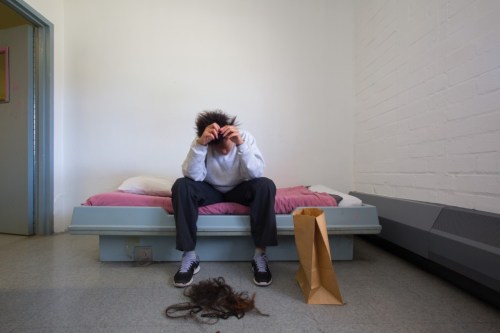
Of all the prison photographers in all of the U.S., Richard Ross is the probably the best at getting his work in front of eyeballs. I think that’s because he asks a lot and often.And because his images are compelling.
This past week, Ross showcased works form his latest book Girls In Justice on PBS News Hour.
By virtue of the sheer breadth of his survey of juvenile prisons, here’s a case of a photographer actually showing us things we wouldn’t otherwise see. The photographic medium is often hailed as being (almost magically) revelatory, but how often is that actually the case. It’s harder and harder to show people something they’ve NEVER seen before. That’s why closed prisons such as systems provide such an interesting locus for inquiry and why I continue my research.
I digress.
Go check out Ross’ work at PBS, and at the Juvenile In Justice website.
“I’m not a sociologist, I’m just the schmuck on the floor trying to make sense of all this,” says Ross.
–
Also, check out my essay What Are We Doing Here? (cross-posted to Medium) for the current Try Youth As Youth (TYAY) exhibition as David Weinberg Photography in Chicago. Ross is one of four artists in TYAY, a gallery show that is forcing the debate forward, and endorsing the ACLU in Illinois’ latest campaign against trying children as adults.
–
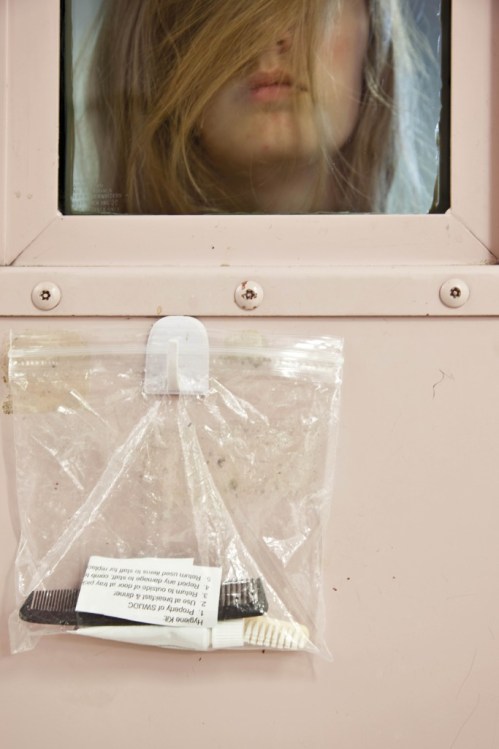
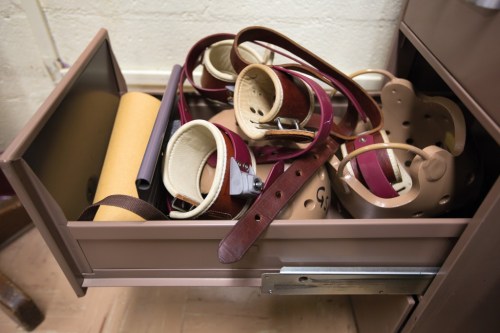
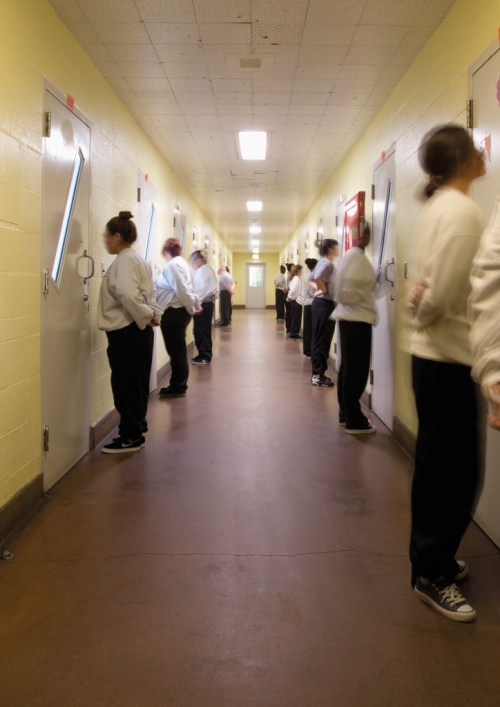
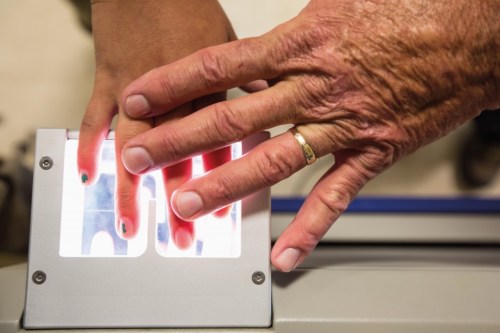

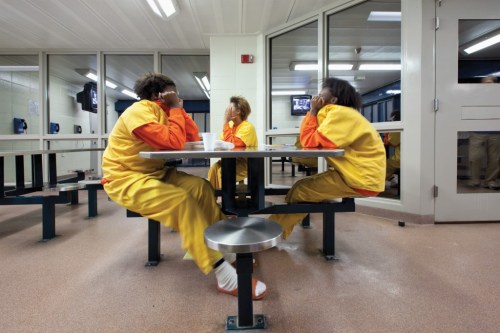


Pamela, by Morgan Campbell (’15), recipient of the first Diane Dammeyer Scholarship for socially engaged photography.
Never heard of this award before. It is substantial and it seems likely that it’d create the type of photographic portraits in which I am interested.
Diane Dammeyer Fellowship in Photographic Arts and Social Issues
The Diane Dammeyer Fellowship in Photographic Arts and Social Issues is a unique collaboration between the Photography Department at Columbia College Chicago and Heartland Alliance, a leading global anti-poverty organization.
This postgraduate fellowship creates a space for socially engaged artists to produce a compelling and dynamic body of work highlighting human rights and social issues. The goal of the fellowship is to use photographic practice as a point of departure for dialogue and engagement, elevating awareness of social, economic, and cultural issues by connecting subject, audience, and community to inspire positive social change.
A $25,000 stipend will be awarded for the 2015-2016 academic year to support a talented individual who has completed an MFA in photography and who is committed to active immersion and participation in this collaborative opportunity. The fellow will be expected to work closely with a Columbia Photography faculty mentor and Heartland Alliance project sponsor, culminating in a public presentation/exhibition/publication upon completion of the fellowship period.
APPLY
Deadline: April 1, 2015.
Go here to apply and for information on eligibility, review criteria, selection process, award and notification process.
Questions? Email: dammeyerfellowship@colum.edu
THE FELLOWSHIP
The Diane Dammeyer Fellowship is administered under the auspices of both Columbia College Chicago and Heartland Alliance, two internationally recognized institutions with deep roots in Chicago dating back more than 120 years. As a pioneer in arts and media education, Columbia combines its internationally recognized experience teaching creative students to develop authentic voices and meaningful skills in partnership with Heartland Alliance’s history of advocating for the rights of the world’s most vulnerable populations.
The fellowship is supported by Columbia alumna Diane Dammeyer, whose experience as a photographer for Heartland Alliance inspired her to create both an undergraduate scholarship and a postgraduate fellowship in the hope that emerging artists would conceive creative ways to use their skills to help a nonprofit organization better realize its goals.
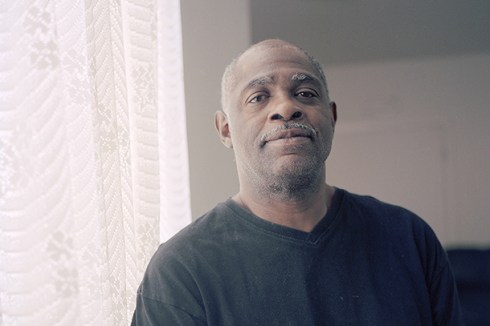
Gus, by Morgan Campbell (’15), recipient of the first Diane Dammeyer Scholarship for socially engaged photography.
Heartland Alliance
The leading anti-poverty organization in the Midwest, Heartland Alliance believes that everyone deserves the opportunity to improve their lives. Each year, it helps ensure this opportunity for nearly 1 million people around the world who are homeless, living in poverty or seeking safety. Because the causes of poverty, injustice and lack of opportunity are interrelated and interlocking, Heartland Alliance’s programs are similarly comprehensive and integrated, allowing the unusual synergy in meeting its participants’ needs. In addition to direct service, Heartland Alliance partners with lawmakers and organizations to shape public policies that fit the needs of everyone, ensuring that even the most vulnerable can realize a brighter future.
Diane Dammeyer
Upon finishing a career in real estate on Chicago’s North Shore, Diane Dammeyer enrolled at Columbia College Chicago to develop her skills in photography. Through her work at Columbia, she established herself as a philanthropic photographer, capturing images of children and young adults and their economic circumstances around the world.
After moving on from Columbia in the mid-1990s, Dammeyer worked as a volunteer photographer with the Chicago-based Heartland Alliance for Human Needs & Human Rights. She traveled all over the world, recording images of children in impoverished, war-torn settings like Rwanda. Her experience as a photographer for the Heartland Alliance inspired her to create both an undergraduate scholarship and a postgraduate fellowship at Columbia College Chicago, in the hope that emerging artists would conceive creative ways to use their skills to help a nonprofit organization better realize its goals.

Doug, by Morgan Campbell (’15), recipient of the first Diane Dammeyer Scholarship for socially engaged photography.
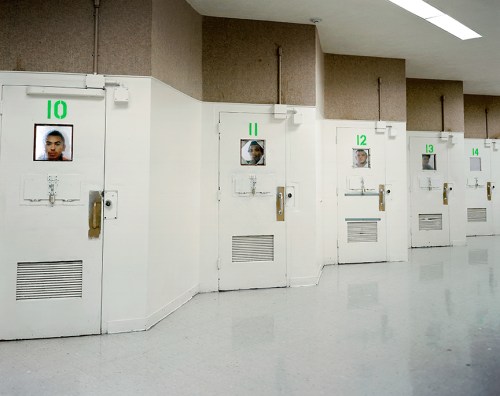
10, 11, 12, 13 & 14. © Steve Davis.
TRY YOUTH AS YOUTH
Currently on show at David Weinberg Photography in Chicago is Try Youth As Youth (Feb 13th — May 9th), an exhibition of photographs and video that bear witness to children locked in American prisons. As the title would suggest, the exhibition has a stated political position — that no person under the aged of 18 should be tried as an adult in a U.S. court of law.
In the summer of 2014, selling works ceased to be David Weinberg Photography’s primary function. The gallery formally changed its mission and committed to shedding light on social justice.
Try Youth As Youth, curated by Meg Noe, was conceived of and put together in partnership with the American Civil Liberties Union of Illinois. Here’s art in a gallery not only reflecting society back at itself, but trying to shift its debate.
The issue is urgent. In the catalogue essay Using Science and Art to Reclaim Childhood in the Justice System, Diane Geraghty Professor of Law at Loyola University, Chicago notes:
Every state continues to permit youth under the age of 18 to be transferred to adult court for trial and sentencing. As a result, approximately 200,000 children annually are legally stripped of their childhood and assumed to be fully functional adults in the criminal justice system.
This has not always been the case in the U.S. It is only changes to law in the past few decades that have resulted in children facing abnormally long custodial sentences, Life Without Parole sentences and even (in some states) the death penalty. In the face of such dark forces, what else is art doing if it is not speaking truth to power and challenging systems that undermine democracy and our social contract?
Noe invited me to write some words for the Try Youth As Youth catalogue. Given Weinberg’s enlightened modus operandi, I was eager to contribute. Here, republished in full is that essay. It’s populated with installation shots, photographs by Steve Davis, Steve Liss and Richard Ross, and video-stills by Tirtza Even.
–
Scroll down for essay.
–
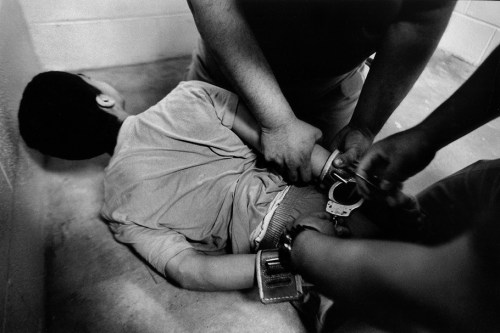
Image: Steve Liss. A young boy held and handcuffed in a juvenile detention facility, Laredo, Texas.
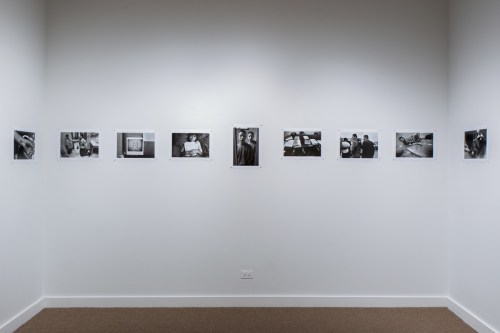
Installation shot of Try Youth As Youth at David Weinberg Photography, Chicago.
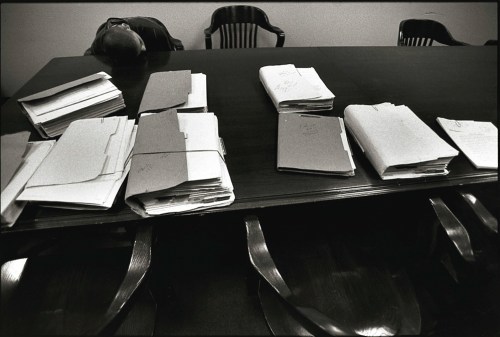
Image: Steve Liss. Paperwork for one boy awaiting a court appearance. How many of our young “criminals” are really children in distress? Three-quarters of children detained in the United States are being held for nonviolent offenses. And for many young people today, family relationships that once nurtured a smooth process of socialization are frequently tenuous and sometimes non-existent.
–
Try Youth As Youth Catalogue Essay
–
WHAT AM I DOING HERE?
–
Isolated in a cell, a child might wonder, “What am I doing here?” It is an immediate, obvious and crucial question and, yet, satisfactory answers are hard to come by. The causes of America’s perverse addiction to incarceration are complex. Let’s just say, for now, that the inequities, poverty, fears and class divisions that give rise to America’s thirst for imprisonment have existed in society longer than any child has. And, let’s just say, for now, that the complex web of factors contributing to a child’s imprisonment are larger than most children could be expected to understand on a first go around.
As understandable as it might be children in crisis to ask “What am I doing here?” it should not be expected. Instead, it is we, as adults, who should be expected to face the question. We should rephrase it and ask it of ourselves, and of society. What are WE doing here? What are we doing as voters in a society that locks up an estimated 65,000 children on any given night? In the face of decades of gross criminal justice policy and practice, what are we doing here, within these gallery walls, looking at pictures?

Installation shot of Try Youth As Youth at David Weinberg Photography, Chicago.
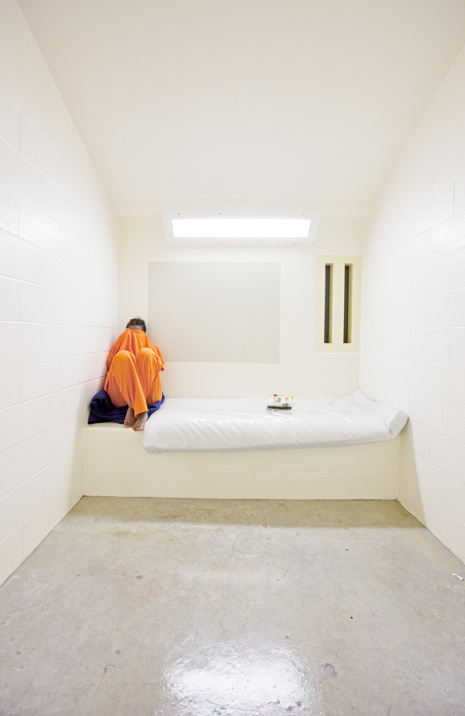
Oak Creek Youth Correctional Facility, Albany, Oregon, by Richard Ross. “I’m from Portland. I’ve only been here 17 days. I’m in isolation. I’ve been in ICU for four days. I get out in one more day. During the day you’re not allowed to lay down. If they see you laying down, they take away your mattress. I’m in isolation ‘cause I got in a fight. I hit the staff while they were trying to break it up. They think I’m intimidating. I can’t go out into the day room; I have to stay in the cell. They release me for a shower. I’ve been here three times. I have a daughter, so I’m stressed. She’s six months old. At 12 I was caught stealing at Wal-Mart with my brother and sister. My sister ran away from home with a white dude. She was smoking weed, alcohol. When my sister left I was sort of alone…then my mother left with a new boyfriend, so my aunt had custody. She’s 34. My aunt smoked weed, snorts powder, does pills, lots of prescription stuff. I got sexual with a five-year-older boy, so I started running away. So I was basically grown when I was about 14. But I wasn’t doing meth. Then I stopped going to school and dropped out after 8th grade. Then I was in a parenting program for young mothers…then I left that, so they said I was endangering my baby. The people in the program were scared of me. I don’t know what to think. I was selling meth, crack, and powder when I was 15. I was Measure 11. I was with some other girls — they blamed the crime on me, and I took the charges because I was the youngest. They beat up this girl and stole from her, but I didn’t do it. But they charged me with assault and robbery too. This was my first heavy charge.” — K.Y., age 19.

Installation shot of Try Youth As Youth at David Weinberg Photography, Chicago.
I have spent a good portion of the past six-and-a-half years trying to figure out just what it is that images of prisons and prisoners actually do. Who is their audience and what are their effects? If I thought answers were always to be couched in the language of social justice I was soon put right by Steve Davis during an interview in the autumn of 2008.
“People respond to these portraits for their own reasons,” said Davis. “A lot of the reasons have nothing to do with prisons or justice. Some people like pictures of handsome young boys — they like to see beautiful people, or vulnerable people, whatever. That started to blow my mind after a while.”
My interview with Davis was the first ever for the ongoing Prison Photography project. It blew my mind too, but in many ways it also prepared me for the contested visual territory within which sites of incarceration exist and into which I had embarked. Davis’ honesty prepared me to face uncomfortable truths and perversions of truth. It readied me for the skeevy power imbalances I’d observe time and time again in our criminal justice system.
The children in Try Youth As Youth may be, for the most part, invisible to society but they are not far away. “I was just acknowledging that this juvenile prison is 20 miles from my home,” says Davis of his earliest motivations. If you reside in an urban area, it is likely you live as near to a juvenile prison, too. Or closer.
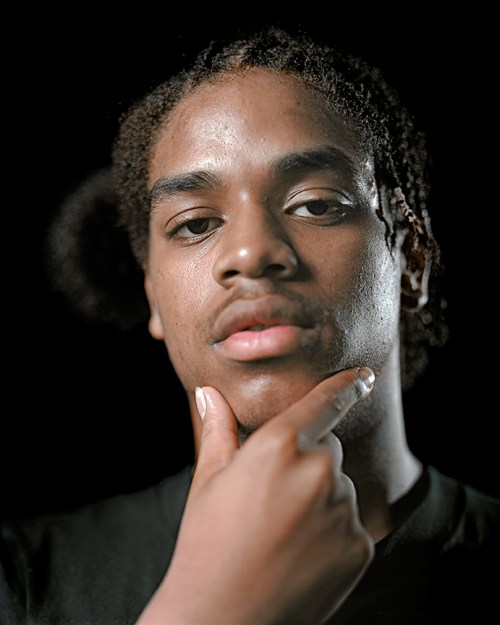
Image by Steve Davis. From the series ‘Captured Youth’

Image by Steve Davis. From the series ‘Captured Youth’
Prisoners, and surely child prisoners, make up one of society’s most vulnerable groups. Isn’t it strange then that rarely are they presented as such? Often depictions of prisoners serve to condemn them, but not here, in Try Youth As Youth.
As we celebrate the committed works of Steve Davis, Tirtza Even, Steve Liss and Richard Ross, we should bear in mind that other types of prison imagery are less sympathetic and that other viewers’ motives are not wed to the politics of social justice. A picture might be worth a thousand words, but it’s a different thousand for everyone. We must be willing to fight and press the issue and advocate for child prisoners. Our mainstream media dominated by cliche, our news-cycles dominated by mugshots and the politics of fear, and our gallery-systems with a mandate to make profits will not always serve us. They may even do damage.

Image: Steve Davis. A girl incarcerated in Remann Hall, near Tacoma, Washington State.
Given that the works of Davis, Even, Liss and Ross circulate in a free-world that most of their subjects do not, it is all our responsibility to handle, contextualize and talk about these photographs and films in a way that serves the child subjects most. It is our responsibility to talk about economic inequality and about the have and have-nots.
“No child asks to be born into a neighborhood where you can get a gun as easily as a popsicle at the convenience store or giving up drugs means losing every one of your friends,” said Steve Liss “They were there [in jail] because there was no love, there was no nourishing, there was anger in startling doses, and there was poverty. Tremendous poverty.”
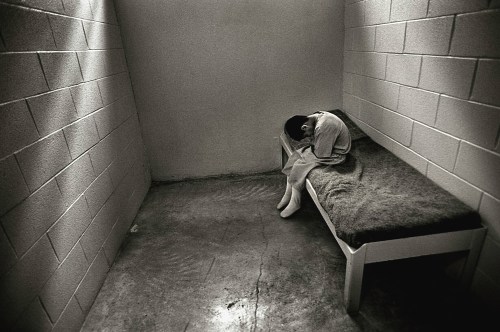
Image: Steve Liss. Alone and lonely, ten-year-old Christian, accused of ‘family violence’ as a result of a fight with an abusive older brother, sits in his cell.Every day the inmates get smaller, and more confused about what brought them here. Psychiatrists say children do not react to punishment in the same way as adults. They learn more about becoming criminals than they do about becoming citizens. And one night of loneliness can be enough to prove their suspicion that nobody cares.
Davis, Even, Liss and Ross understand the burden is upon us as a society to explain our widespread use of sophisticated and brutal prisons more than it is for any individual child to explain him or herself. The image of an incarcerated child is an image not of their failings, but of ours. We must do better — by providing quality pre and post-natal care for mothers and babies, nutritious food, livable wages for parents, and support and safety in the home and on the streets. Most often, it is a series of failures in the provision of these most basic needs that leads a child to prison.
“Poverty would be solved in two generations. It would require an enormous change in our priorities. Look at how we elevate the role of a stockbroker and denigrate the role of a school teacher or a parent, those who are responsible for raising the next generation of Americans,” says Liss.
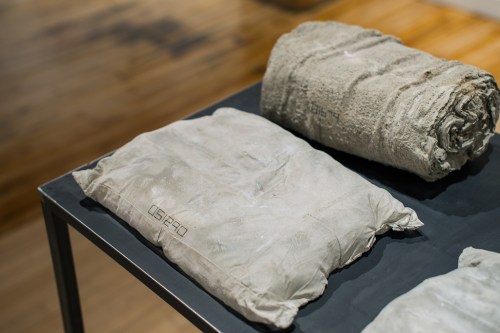


(Top to Bottom) Installation shot; video still; and drawings from Tirtza Even & Ivan Martinez’s Natural Life, 2014.
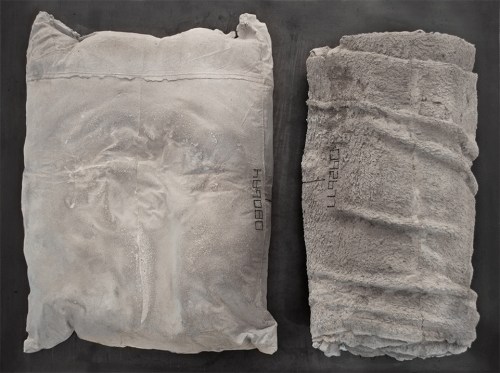
Tirtza Even & Ivan Martinez. Natural Life, 2014. Cast concrete (segment of installation). A cast of five sets of the standard issue bedding (a pillow, a bedroll) given to prisoners upon their arrival to the facility, are arranged on raw-steel pedestals in the area leading to the video projection. The sets, scaled down to kid size and made of a stack of crumbling and thin sheets of material resembling deposits of rock, are cast in concrete. Individually marked with the date of birth and the date of arrest of each of the five prisoners featured in the documentary, they thus delineate the brief time the inmates spent in the free world.
Each of the artists in Try Youth As Youth have seen incredible deprivations inside facilities that do not — cannot — serve the needs of all the children they house. Ross speaks of a child who has never had a bedtime. A social worker once told Davis of one child in the system who had never seen or held a printed photograph.
Documenting these sites is not easy and brings with it huge responsibility. Tirtza Even has grappled with the weight of her work “and how much is expected from them is a little heavy.” In some cases, these artists are the outside voice for children. Liss acknowledges that expectations more often than not outweigh the actual effects their work can have.
“People ask how do you get close to kids in a facility like that. That isn’t the problem. The problem is how do you set up enough artificial barriers so you don’t get too close. So you’re not just one more adult walking out on them in the final analysis,” he says. “I, at least, convinced myself into thinking it was therapeutic for the kids. At least someone was listening to them.”
So far, the efforts of Davis, Even, Liss and Ross have been recognized by those in power. Liss’ work has been used to lobby for psych care and an adolescent treatment unit in Laredo, Texas. Ross’ work was used in a Senate subcommittee meeting that legislated at the federal level against detained pre-adjudicated juveniles with youth convicted of committed hard crimes.
“That’s a great thing for me to know that my work is being used for advocacy rather than the masturbatory art world that I grew up in,” says Ross.

Sedgwick County Juvenile Detention Facility, Wichita, Kansas, by Richard Ross. “Nobody comes to visit me here. Nobody. I have been here for eight months. My mom is being charged with aggravated prostitution. She had me have sex for money and give her the money. The money was for drugs and men. I was always trying to prove something to her…prove that I was worth something. Mom left me when I was four weeks old — abandoned me. There are no charges against me. I’m here because I am a material witness and I ran away a lot. There is a case against my pimp. He was my care worker when I was in a group home. They are scared I am going to run away and they need me for court. I love my mom more than anybody in the world. I was raised to believe you don’t walk away from a person so I try to fix her. When I was 12 my mom was charged with child endangerment. I’ve been in and out of foster homes. They put me in there when they went to my house and found no running water, no electricity. I ran away so much that they moved me from temporary to permanent JJA custody. I’m refusing all my visits because I am tired of being lied to.” — B.B., age 17.

Richard Ross’ works in the Try Youth As Youth exhibition at David Weinberg Photography, Chicago.

Installation shot of Try Youth As Youth at David Weinberg Photography, Chicago.
The walls of David Weinberg are not the end point of these works’ journey. An exhibition is not a triumph it is a call to action. The work begins now.
Programming during the exhibition — phone-ins to prison, discussions with ACLU lawyers and experts in the field, conversations with formerly incarcerated youth — will all direct us the right way. The gallery space works best when it sutures artists’ creative processes into a larger process that we can shape as socially informed citizens. Our process of building healthy society.
“Kids need us,” says Liss. “They need our time, they need our involvement, and they need our investment. If you own an automotive shop, open it up to kids and the community. It does take a community.”
There are a host of wonderful arts communities doing work, here in Chicago, around criminal justice reform and social equity — Project NIA, 96 Acres, AREA, Prison + Neighborhood Art Project, Lucky Pierre and Temporary Services to name a few.
The arts can trail-blaze the conversation we need to be having. Photography and film are the ammunition with which we arm our reform arguments. First we see, then we do. If art is not speaking truth to power, then really, what are we doing here?
–
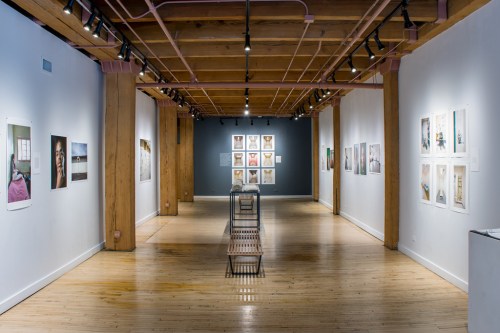
Installation shot of Try Youth As Youth at David Weinberg Photography, Chicago.
–

David Weinberg Photography is at 300 W. Superior Street, Suite 203, Chicago, IL 60654. Open Mon-Sat 10am-5pm. Telephone: 312 529 5090.
Try Youth As Youth is on show until May 9th, 2015.

–
Text © Pete Brook / David Weinberg Photography.
Images: Courtesy of artists / David Weinberg Photography.

If you’re in NYC, get yourself to lower Manhattan tomorrow evening.
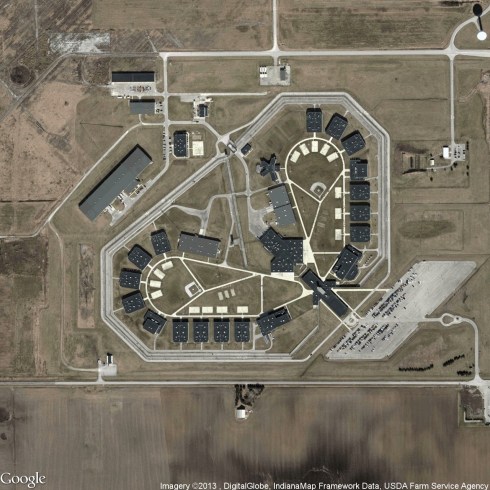
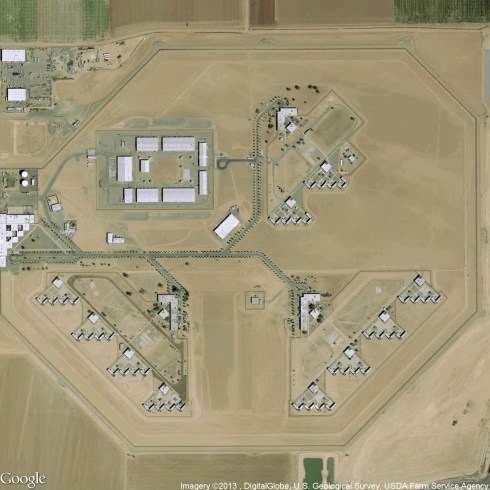
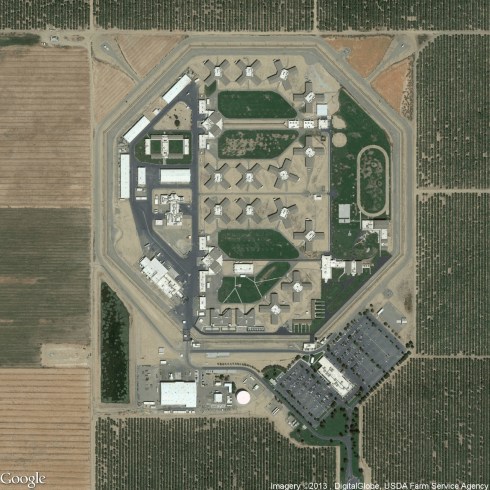
Josh Begley is a data artist and web developer, well known for creating an iPhone app to track every reported U.S. drone strike.
In his artist talk ‘Visualizing Carceral Space’, Begley will discuss his projects Prison Map and Dronestream (a.k.a MetaData).
Begley will speak from 6:00 to 7:30 pm, on Thursday March 12th, at the Sheila C. Johnson Design Center, 2 W13th Street in the ground-floor Anna-Maria and Stephen Kellen Gallery.
The talk is offered as part of the programming for Prison Obscura showing at Parsons which features an expanded, custom-made version of Prison Map.
Josh Begley‘s work has appeared in Wired, The New York Times, NPR, The Atlantic, New York Magazine, and at the New Museum of Contemporary Art. He currently works at The Intercept doing incredible things like this.
Follow Josh on Twitter at @joshbegley and on @dronestream.


 Prison Photography