
You are currently browsing the category archive for the ‘Activist Art’ category.
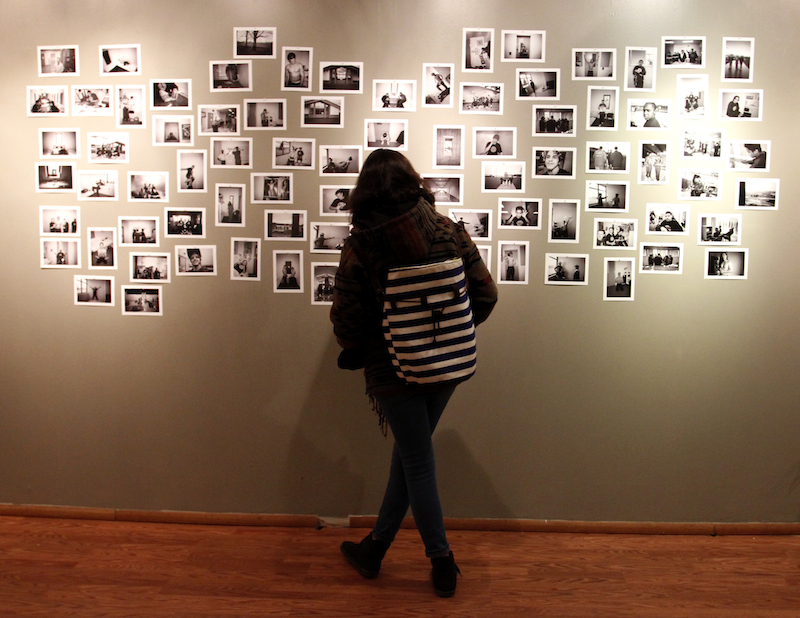
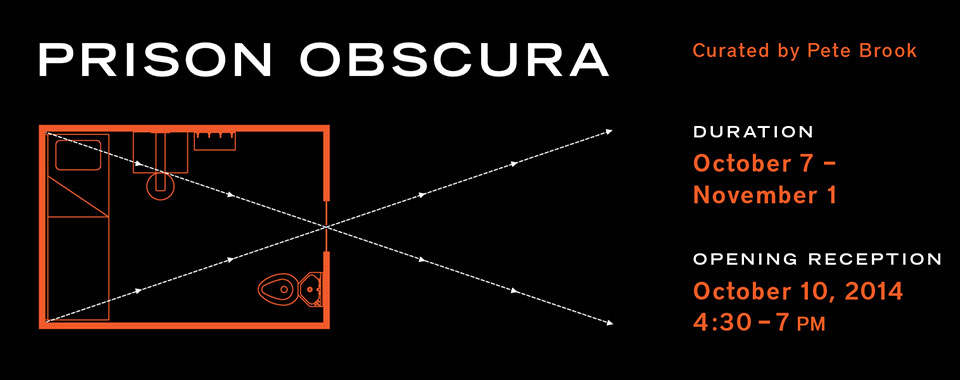
Prison Obscura continues to travel. If you’re in or around New Jersey then you should know a version (a tighter edit) of Prison Obscura is currently on show at Alfa Arts Gallery in downtown New Brunswick. The show runs until November 1st.
The official opening was last Friday (10th) and coincided with the Marking Time: Prison Arts & Activism Conference at Rutgers University and hosted by the Institute for Research on Women (IRW). To give you a taster of the presentation, below are some snaps taken by staff at Alfa Arts Gallery. But not before a few notes of thanks …
GRATITUDE
I’d like to thank Alfa Art Gallery-owners Chris Kourtev and the entire Kourtev family for generously giving over their space for three weeks to house the show. Thanks to Nicole Fleetwood, Sarah Tobias and all the staff at IRW involved in bringing Prison Obscura to NJ. Thanks for a wonderful conference too!
I’d also like to extend my thanks once more to Matthew Callinan, Associate Director of Cantor Fitzgerald Gallery at Haverford. Matthew continues to make sure the logistics for each venue are taken care of and, in this case, gave up an entire Sunday to drive from Philadelphia and install the show. Thanks to the staff at John B. Hurford Center for Arts & Humanities at Haverford, who continue to support the exhibition.
For more information about the exhibition, visit the Prison Obscura website.


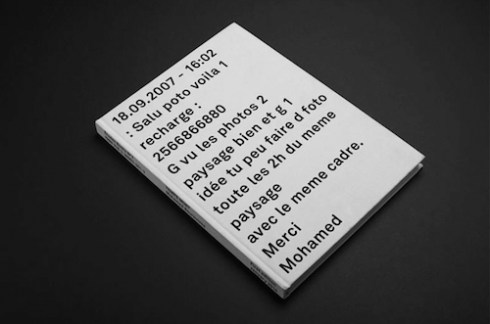
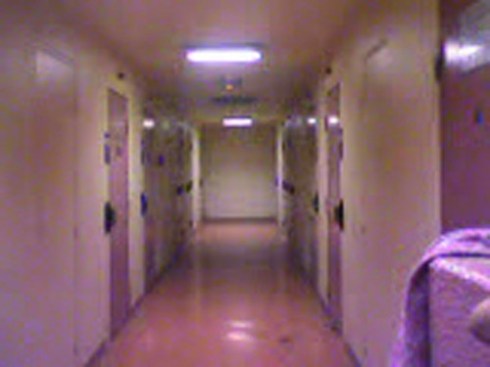
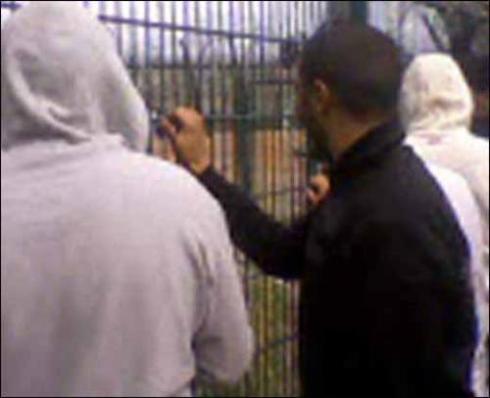
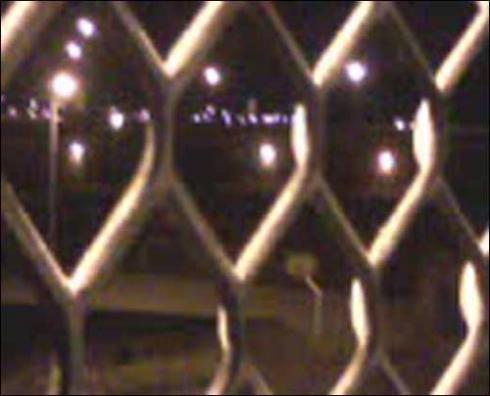
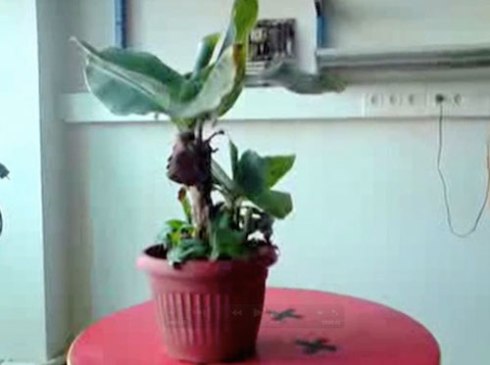
Ever since I came across the work Temps Mort it has haunted me. Haunted me in a good way; it has stayed with me. It resonates because of the power delivered by Mohamed Bourouissa and his collaborator’s low-res images. It resonates, also, because this is the only project made by an artist and prisoner with contraband cell-phones that I know of. Surely, there are exchanges like this happening all the time, but this is the only published example. And it was made with the express intentioned to make art.
So I was pleased to discover, recently, that Temps Mort is now a book.
Methodologically, Bourouissa is way ahead of the game. As well as asking for images made according to description and sketches, he asked for videos. Bourouissa would send example videos and his collaborator (whom we know only as Al) would mimic. Throughout the project, Bourrouissa is clearly thinking about how the work will look to secondary and tertiary audiences. We are asked to make sense of seemingly random glimpses of an institution’s innards.
In exchange for composed views of the inside, Bourouissa sent short videos of the Paris streets. The simplest gestures become impressive. Even the txtspk language that is reproduced in the book is touching. In prisons, cellphones are illegal, valuable and a scarce resource, but the two use the tool with abandon and they repeatedly text to make sure they’re adequately fulfilling one another’s requests for footage.
This is not a photobook heavy on photos, yet everything inside depends on the discussions about images between Bourouissa and Al. There’s a lot of white space. The texts ensure we know the timeline and the white space ensures we know — and sense — the slow passing of time.
Temps Mort is over 5 years old now and the book feels a little like a memorial to that audacious moment when an artist dared and a prisoner dreamed. The book is a document that will last longer than the exhibitions and the interest in cellphone videos that declare a moment in Parisian jail operations. This blog post is many more steps removed from the original gifts between Bourouissa and Al. This blog post has no audio/visual jacks nor 9-foot white cube walls. This blog post lags behind the thrill of the original creation of the works and behind the recent exhibitions Bourouissa has mounted. My humble hope, here, is to impress how impressed I am. There’s nothing like this project.
There’s been many projects made in collaboration with prisoners from Virginia to Tennessee, and from Louisiana to Illinois, artists have communicated with prisoners to conjure something beyond the limits of the cell. And yet, none of those efforts have used the illegally smuggled mobile phone as their tool. There’s a subtle two fingers to the man in Temps Mort that we shouldn’t deny. I’m inclined to celebrate it.
Here’s some images and videos appropriated without permission from the web. Enjoy.







© Ruddy Roye
PDX Design Week wrapped up last weekend. Before I moved out of the city, I was asked to do a guest post for the PDXDW blog. I don’t know much about design, so I wrote about photographers that are making good use of emerging technologies or commenting on our brave new world dominated by emerging and automated technologies.
Thanks to Taryn Cowart for her assistance getting it published.
With some line-editing, I crosspost the listicle below.

PHOTOGRAPHY’S BEST
Good photography is good vibes. Often, even bad photography is good vibes. The world needs Seflies, SnapChat cheekiness, cat GIFs, and Doge bombs. However, sometimes, we have to search out the good stuff. We need to look around and ask what’s at stake. Frankly, there’s not a lot resting on your cellphone pictures — they’re not changing the world. When the technologies and file formats with which they were made are obsolete, no-one will care if your phone snaps are lost forever. Least of all you?
When we talk about art, journalism and photography we should be able to single projects out and to define worth. Some creative endeavors are world-changing. I want to give a nod to photographers and artists working with images who inform us about the world and some of its urgent issues. As users and consumers, I want to believe we can leverage rapid publishing and sharing for political and social improvement.
BEST USE OF INSTAGRAM
Ruddy Roye was the first photographer to really stake his style on the meaningful caption. He ditched the hashtags and asked real people some real questions. Based in New York most of his portraits are of people in his neighborhood and jollies around the Big Apple. His feed drips with humanity and reveals stories you couldn’t imagine. This is the REAL Humans OF New York! Also, I like to credit Roye for landing the fatal blow to the snarky #TLDR hashtag.

© EverydayAfrica
SECOND BEST USE OF INSTAGRAM
Peter DiCampo and fellow journalist Austin Merrill (both white American) set up the Everyday Africa after years of reporting from the continent and witnessing nothing but sensational and scary images of war, tragedy and the like. What about the normal everyday stuff? In an attempt to make the most of boring daily things, DiCampo and a wide cadre of collaborator quickly put together a simple, illuminating, sometimes colorful, and intimate Instagram feed. It’s political but not difficult. Okay, so it’s a free-for-all that promotes aesthetically ordinary pictures, but I’ll take neoliberal relativism over neocolonialist manipulation every day of the week.
EverydayAfrica spurned dozens of loose collective of photographers who set up EverydayMiddleEast, EverydayAsia, EverydayIran and even EverydayBronx. Instagram sponsored an Everyday “Summit” at the 2014 Photoville Festival and ponied up cash to fly in contributors from all corners of the globe. These guys are much better IG-movement than the creepy Christians making VSCO lifestyle shots to pair with their #blessed affirmations and bible quotes.
Watch out though: EverydayUSA has some of the best photojournalists under it’s belt. Photo-industry-folk reckon EverydayUSA will soon eclipse all the other accounts, at which point the whole Everyday movement may have announced its death. Get on this young movement while it’s still fresh and focused on countries other than the one you live in.

© Mishka Henner
BEST USE OF GOOGLE EARTH
If there’s a controversial topic Mishka Henner hasn’t produced a body of work on, he’s probably in his studio, right now, making it. From censorship, to prostitution in the Mediterranean, from military bases to big-ag food production, from war to big oil, Henner doesn’t shy away from tough topics. His skill is to do so without really leaving his studio. Henner is one of the cleverest, canniest and hardest working artists dealing with Google and the machine age of image-making.
He winds people up with his methods that are anathema to photo-purists but what else is there to do with available imagery if not to capture, ‘shop and frame it in political terms. Google is the all seeing eye that doesn’t care.
© Tomas Van Houtryve
BEST USE OF PERSONAL DRONES
The Bureau of Investigative Journalism estimates American operated drones have killed between 2,296 and 3,718 people, as many as 957 of them civilians. That’s a whole lot of killing.
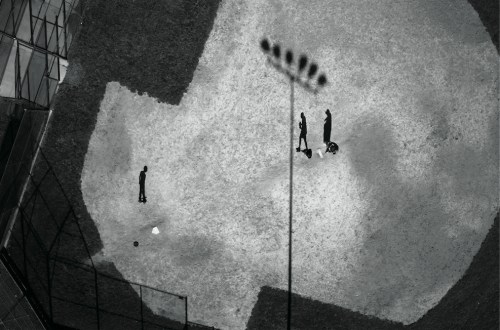
The program of U.S. airstrikes which began in 2002, but was only publicly acknowledged in 2012 is a remote war driven by a remote technology. Belgian photographer Tomas Van Houtryve decided the best way to grab Americans’ attention to the issue was to show them how drone attacks would appear in America.
There’s no shortage of projects about drones to get us thinking about the issue. John Vigg has his Google surveilled drone research labs and airports; Jamie Bridle traced a drone shadow in Washington D.C. last year and launched Dronestagram to populate social media sites with satellite views of drone strike sites; Trevor Paglen has photographed drones at distance; and Raphaella Dallaporta took a drone to Afghanistan under the guise of an archaeological survey.
Most recently Not A Bug Splat made a splash. Cheeky and powerful the project installed massive portraits of children in regions subject to U.S. drone strikes, with the intent of pricking the conscience of remote U.S. drone operators stationed in Nevada about to bring the hammer of destruction down on that Waziristan village.

Screenshot of Josh Begley’s Prison Map
BEST USE OF SURVEILLANCE IMAGERY AGAINST THE SYSTEM
Data artist Josh Begley specializing in scraping images from publicly available sources. He then creates App and websites to publish the info and produce push notifications you can’t avoid.
For his project Prison Map, Begley took the GPS coordinates of every prison, jail and immigration detention center in America and fed them into a Google Maps API code he had modified. He ran the script and it spat out more than 5,300 satellite images — one for every locked facility in the U.S. The prison population in this country has grown 500% in the past 30 years. One in every one hundred adults is behind bars and most of them are poor people. The recurrent patterns of brutally functional architecture within Prison Map are staggering. We’ve been building prisons in high desert and rural backwaters. Begley makes the Prison Industrial Complex (PIC) visible once more.
Likewise, for his project Profiling Is, Begley snagged the NYPD’s surveillance shots of business and residences in the NY boroughs which were under monitoring.
He doesn’t stop there. Begley’s App MetaData alerts users to U.S. drone strikes in Pakistan, Yemen, Afghanistan and elsewhere. This didn’t happen until the conclusion of a merrigoround of negotiation with the “apolitical” Apple. Begley finally got his drone strike App approved when he removed all mention the word drone! Now, you can get next-day updates of Obama’s largely-ignored drone war on Afghanistan, Pakistan, and Yemen straight to your smartphone.

© Mari Bastashevski
BEST USE OF PHOTOGRAPHY, MUCK-RAKING AND INVESTIGATIVE NOUS
Mari Bastashevski skirts a fine line between journalist, artist, researcher, photographer and tourist to dig up the personalities and money makers in the international arms trade. Here’s the feature I did for WIRED a while back. Her ongoing project State Business is devastating inasmuch it reveals how pervasive and complicit most nations are in making billions on the slaughter of humans.The US, the UK, Croatia, Azerbaijan, Georgia; Bastashevski’s following of the money takes us all over the place … sometimes even to the carport on the Facebook pages of international arms dealers.

BEST MAKING SENSE OF SURVEILLANCE
If you can’t beat ‘em join ‘em. In 2002, after Hasan Elahi was mistaken for someone on the terror watch list and detained for hours at Detroit airport, he decided he’d save the authorities the bother and monitor himself. Caustic, direct, creepy and amusing, Elahi photographed everything he did, ate, shit, saw and worked on. He also GPS tracked his every move on a live web map. The project is titled Tracking Transcience. One of the by-products of the self-monitoring is the creation of a typology of toilets. Taking sousveillance to another level and entertaining thousands while he does it. Brill.

© MigraZoom. A migrant on a cargo train traveling from Arriaga, Chiapas to Ixtepec, Oaxaca. After crossing the Mexican-Guatemalan border and traveling to Arriaga, migrants hitch a ride on top of cargo trains to Ixtepec. This trip takes about 12 hours. In addition to the risk of falling off the train (amputations and death are common), gangs frequently extort migrants, charging them $100 to ride. They face threats of being thrown off the train, kidnapped, raped or trafficked if they do not pay.
REALEST VIEWS OF IMMIGRATION
There’s some great fine art projects out there about the U.S./Mexican border. Probably, the stand out is David Taylor’s Working The Line, which documents the militarization of the border. But it can be criticised for being to distant and tends to rest on the creaking aesthetic mores of American landscape photography. If we want to see what is really going on during the tough journey’s into North America, we should pay attention to MigraZoom, a project by Spanish-born photographer Encarni Pindado which puts disposable cameras in the hands of economic migrants during their perilous treks northward.

© David Taylor
Another beautifully shot and more unexpected treatment of new arrivals is Gabriele Stabile’s Refugee Hotel which documents approved asylum seekers’ first nights in America at four hotels adjacent to four hub airports through which new refugee migrants arrive. Respectful documentation that is pregnant with uncertainty.
Taylor’s work is currently on show at the amazing ‘Covert Operations’ at Scottsdale Museum of Contemporary Art.
BEST USE OF INTERNET FOR DISCUSSION
Photographer Hank Willis Thomas is a prolific force. One of his most recent projects Question Bridge is a platform for black males to ask other black males questions about black identity. Participants do so through video and provide answers similarly. Access is easy, involvement free, connections priceless and it works well in exhibition format too. The murder of Michael Brown in Ferguson is the latest incident to demonstrate to the entire nation our shared need to face racial inequality int he country. Willis Thomas is doing his bit.
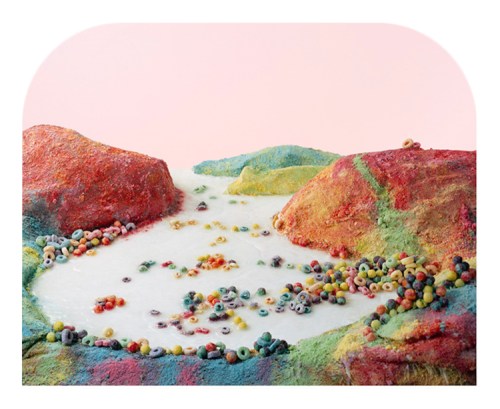
© Lindsay Lochman and Barbara Ciurej
BEST COMMENTARY ON MECHANICAL AGE FOOD PRODUCTION
With Ag Gag laws becoming ever more common, clever responses to imaging industrial food production must be inventive. Lindsay Lochman & Barbara Ciurej rip on the much-mythologized West and specifically on the hero-worship of Carleton Watkins by constructing sugar-coated and corn-fed diorama reconstruction of Watkins’ landscapes with shitty foodstuffs.
Will Potter ain’t a photographer but he’s putting imagery to good ends. Potter, a TED Fellow, has been reporting on the crack down on environmental activists under homeland security legislation that was designed to tackle terrorist. Instead of chasing bombchuckers, our law enforcement is going after tree huggers. The title of Potter’s book, Green Is The New Red, say its all. Routinely, it has been eco-activists who’ve brought us the shocking footage from inside factory farms. Potter, continuing the tradition of expose, wants to fly drones over feedlots and take advantage of laws being slow to be written. Again, we seeing the convergence of technologies and activist peel back the layers of obscurity purposefully put over our shady business practices in years past.
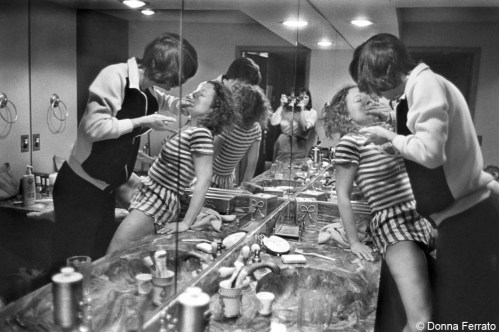
© Donna Ferrato
VIOLENCE AGAINST WOMEN
The greatest photography work being done to reveal the entrapped, terrorized lives of those victim to domestic violence, is done — perhaps not unsurprisingly by female photographers. Donna Ferrato has trained a lens on the topic for decades. Recently, young gun Sara Naomi Lewkowicz captured similar images to Ferrato as an intimate witness to partner abuse. The parallels were saddening proving that this is a strand of violent psychology we just are not dealing with effectively. To be frank, the issue isn’t being imaged enough; intimate partner abuse remains hidden behind closed doors.
Paula Bronstein was one of the earliest and most direct photographers to document the survivors of acid attacks in Asia. If we’re to mention women’s rights abroad we have to look at the work of Stephanie Sinclair, whose multiyear project Too Young To Wed is pitch perfect. Quiet, weighty, tragic and polychrome portraits of child brides throughout the world. Sinclair’s had help from all the major distributors and grant makers to cast the net of her survey far and wide. The transmedia project is about as good as it gets in terms of audience engagement tactics too.
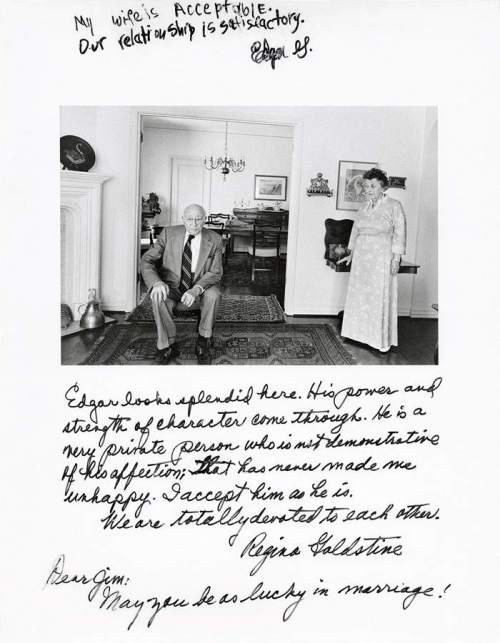
© Jim Goldberg
BEST COMMENTS ON WEALTH INEQUALITY
It’s difficult to name a stand out photographer who has taken on the wealth gap in a resonant way. It sounds strange to say but maybe cash is difficult to shoot? This apparent lack is consistent with other art forms though. If Occupy taught us one thing, some issues are designed for public performance, demonstration, walking and protest signs. Think of music, for comparison. In the sixties musicians such as Joe Strummer and Nina Simone emerged with brilliant anger toward social injustice. Despite public disgust made visible in anti-Iraq-war protests and Occupy, there’s not a protest song from the 21st century of note. Perhaps music isn’t the format for anger or the wealth gap either?
Don’t worry, I’m not being a pessimist here. Violent dismay certainly exists. I’m just not convinced art is the realm where we see the most direct political action. Gone are the days of the great labor photographers such as Lewis Hine and Jacob Riis. Inequality was laid bare in the photojournalism of the civil rights era (Ernest Cole, Charles Moore, Danny Lyon) and while those reportages were about money and opportunity they weren’t primarily about the markets. Check out the work of Gregory Halpern for your modern day Milton Rogovin.
The most indelible and forthright description of wealth inequality is Jim Goldberg’s Rich and Poor, which remains the high point and the tone at which aspiring photographers should aim.
Dang, that’s been a lot of men’s names. I think it right to end with LaToya Ruby Frazier’s name then. She, better than anyone currently making work, ties together class, race, income, post-industrial America, public health, personal health, family and environmental hazard with her generational survey of the women in her family and her home town of Braddock, PA, in The Notion OF Family.
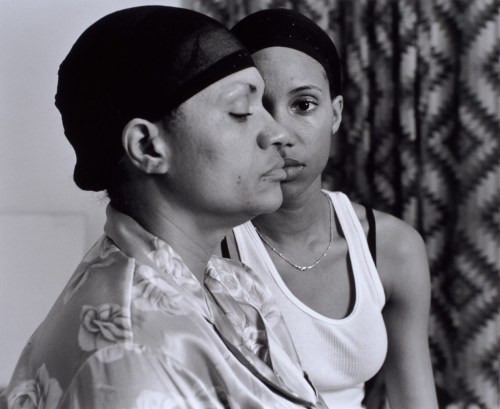
© La Toya Ruby Frazier
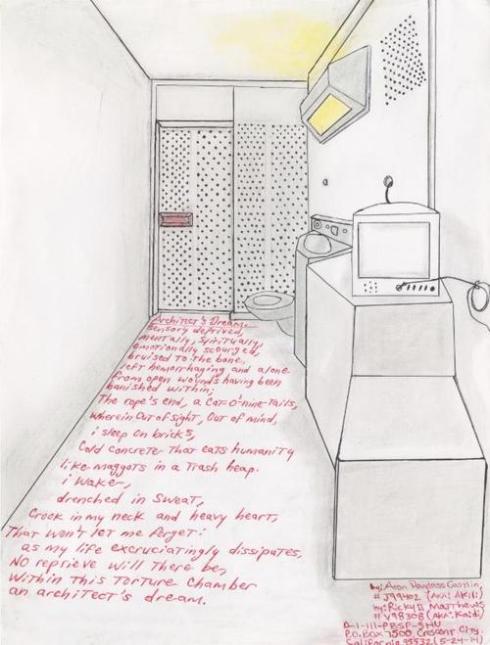
I’ve wondered before where all the photographs of solitary are. This question presupposes that the American public’s exposure to the inside of these modern dungeons will spur a degree of enlightenment, consternation and protest.
Putting the veracity of that string of causality aside for a moment, it might be worth saying that photographs are perhaps not necessary to stir emotional and political response. Maybe sketches can do these things as well, or better?
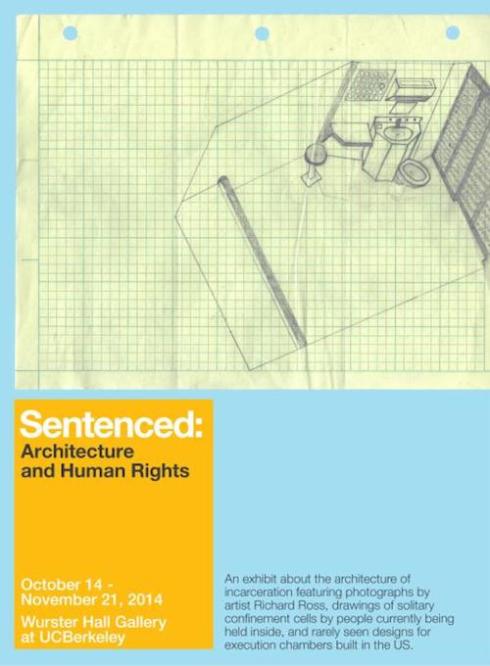
An opportunity to discuss this will arise in the next few weeks at the UC Berkeley’s Wurster Hall Gallery, in the College of Environmental Design.
Architects/Designers/Planners for Social Responsibility (ADPSR) present “Sentenced: Architecture and Human Rights,” an exhibit about the architecture of incarceration featuring drawings of solitary confinement cells by people currently being held inside.
In addition, rarely seen designs for execution chambers built in the U.S. and photographs by Richard Ross will be on show.
“Sentenced: Architecture and Human Rights,” highlights problematic and little-known spaces within United States prisons and detention centers that house activities deemed to violate human rights. What do these spaces have to teach us about the state of freedom in America?
The exhibit is free and open to the public M-F 10-5 until Nov. 21st, and the opening reception is this Tuesday, October 14th from 6-8pm, at which author Sarah Shourd, Professor Jill Stoner, and architect John MacAllister will be in attendance.
Here’s the announcement and here’s the Facebook event page.

“Tex Johnson, 60” by Ron Levine, courtesy of the artist.
Later this week, I’ll be attending the inaugural prison arts and activism conference, Marking Time.
Hosted by the Institute for Research on Women at Rutgers, and across multiple venues, the event brings together an incredibly committed and skilled cohort of practitioners throughout many disciplines — from dance to yoga, from occupational health to sculpture, and from film making to social work.
I’ll be moderating a panel discussion Imagery and Prisons: Engaging and Persuading Audiences, with Gregory Sale, Lorenzo Steele, Jr., and Mark Strandquist on Wednesday afternoon. In addition, a version of Prison Obscura will be on show at the Alfa Art Gallery in downtown New Brunswick.
To emphasise the breadth and depth of expertise I’ve copied out the schedule below. I have made bold and linked the names of artists, activists and academics’ names with whose work I am already familiar … and admire.
I pepper the post with artworks made by photographic artists attending Marking Time.
Marking Time runs 8th-10th Oct. Registration for the conferecne is free.
See you in New Brunswick this Wednesday?!?!

“Allen and Tanasha, 1998.” Family album. Courtesy of the Fleetwood family.
WEDNESDAY 8TH OCT.
Session 1: 9: 30 – 10:45 am
PANEL: Creative Arts and Occupational Health (ZLD)
Susan Connor and Susanne Pitak Davis (Rutgers University Correctional Healthcare) “Finding Meaning Thru Art”
Karen Anne Melendez (Rutgers University Correctional Healthcare) “The Concert Performance with Adult Females in Correctional Health Care”
Moderator: Michael Rockland (Rutgers-New Brunswick)
WORKSHOP: Steps Taken: Footprints in the Cell (NBL)
Rachel Hoppenstein (Temple University)
Ann Marie Mantey (Temple University)
Session 2: 11:00 – 12:15 pm
PANEL: Law, News, and Art (ZLD)
Regina Austin (Penn Law School)
Ann Schwartzman (Pennsylvania Prison Society)
Tom Isler (Journalist/Filmaker)
Moderator: Tehama Lopez
WORKSHOP: Utilizing Dance as a Social Tool: Dance Making with Women in Prison (NBL)
Meredith-Lyn Avey (Avodah Dance)
Julie Gayer Kris (Avodah Dance)
LUNCH: 12:15 – 1:15 pm
Session 3: 1:15 – 2:30 pm
PANEL: Imagery and Prisons: Engaging and Persuading Audiences (ZLD)
Gregory Sale (Artist)
Lorenzo Steele, Jr. (Founder, Behind these Prison Walls)
Mark Strandquist (Artist)
Moderator: Pete Brook (Freelance Writer/Curator)
PRESENTATION: The Political and Educational Possibilities of Exhibitions (NBL)
David Adler (Independent Curator)
Sean Kelley (Eastern State Penitentiary)
Rickie Solinger (Independent Curator)
Session 4 2:45 – 4:00 pm
PANEL: About Time (ZLD)
Damon Locks (Prison and Neighborhood Arts Project)
Erica R. Meiners (Northeastern Illinois University/Prison and Neighborhood Arts Project)
Sarah Ross (School of the Art Institute of Chicago/ Prison + Neighborhood Arts Project)
Fereshteh Toosi (Columbia College Chicago)
Moderator: Donna Gustafson (Rutgers-New Brunswick)
PANEL: Best Practices: Arts, Prisons and Community Engagement (NBL)
Robyn Buseman (City of Philadelphia Mural Arts Program)
Shani Jamila (Artist, Cultural Worker, Human Rights Advocate)
Kyes Stevens (Alabama Prison Arts and Education Project)
EVENING EVENTS
4:00 – 5:00 pm Artist Talk: Jesse Krimes (ZLD)
5:00– 5:45 pm Welcome Reception (ZL)
7:30 – 9:00 pm Opening Keynote: Reginald Dwayne Betts (KC)
Welcome Remarks: IRW Director Nicole Fleetwood
Introduction of Keynote: Dean Shadd Maruna, School of Criminal Justice – Rutgers, Newark

“Exercise Cages, New Mexico” by Dana Greene, courtesy of the artist.

“That Renown New Mexico Light” by Dana Greene, courtesy of the artist.
THURSDAY OCTOBER 9TH
Session 1: 9: 30 – 10:45 am
PANEL: Theater in Prisons (ZLD)
Wende Ballew (Reforming Arts Incorporated, Georgia) “Theatre of the Oppressed in Women’s Prisons: Highly Beneficial, Yet Hated”
Lisa Biggs (Michigan State University) “Demeter’s Daughters: Reconsidering the Role of the Performing Arts in Incarcerated Women’s Rehabilitation”
Karen Davis (Texas A&M) “Rituals that Rehabilitate: Learning Community from Shakespeare Behind Bars”
Bruce Levitt and Nicholas Fesette (Cornell University) “Where the Walls Contain Everything: The Birth and Growth of a Prison Theatre Group”
Moderator: Elin Diamond (Rutgers-New Brunswick)
PANEL: Prison Architecture, Space and Place (NBL)
Svetlana Djuric (Activist) and Nevena Dutina (Independent Scholar) “Living Prison”
Maria Gaspar (Artist) “The 96 Acres Project”
Vanessa Massaro, (Bucknell) “It’s a revolving door”: Rethinking the Borders of Carceral Spaces”
Moderator: Matthew B. Ferguson (Rutgers-New Brunswick)
Session 2 11:00 – 12:15 pm
PRESENTATION: Sustaining Engagement through Art: The US and Mexico (ZLD)
Phyllis Kornfeld (Independent Art Teacher, Author, Activist, Curator) “Thirty Years Teaching Art in Prison: Into the Unknown and Why We Need to Go There”
Marisa Belausteguigoitia (UNAM) “Mural Painting in Mexican Carceral Institutions”
WORKSHOP: The Arts: Essential Tools for Working with Women and Families impacted by Incarceration (NBL)
Kathy Borteck-Gersten (The Judy Dworin Performance Project)
Judy Dworin (The Judy Dworin Performance Project)
Joseph Lea (The Judy Dworin Performance Project)
Kathy Wyatt (The Judy Dworin Performance Project)
LUNCH: 12:15 pm – 1:15 pm
Session 3 1:15 – 2:30 pm
PRESENTATION: Visualizing Bodies/Space: A Performative Picture of Justice System-Involved Girls & Women in Miami, FL (ZLD)
Nereida Garcia Ferraz (Artist/Women on the Rise!)
Jillian Hernandez (University of California-San Diego/Women on the Rise!)
Anya Wallace (Penn State University/Women on the Rise!)
Moderator: Ferris Olin (Rutgers-New Brunswick)
PANEL: 25 Years of the Creative Prison Arts Project: Connecting Incarcerated Artists with the University of Michigan Community (NBL)
Reuben Kenyatta (Independent Artist)
Ashley Lucas (University of Michigan)
Janie Paul (University of Michigan)
PRESENTATION: The Art of Surviving in Solitary Confinement (RAL)
Bonnie Kerness (American Friends Service Committee Prison Watch Program)
Ojore Lutalo (American Friends Service Committee Prison Watch Program)

“Theda Rice, 77” by Ron Levine, courtesy of the artist.
Session 4 2:45 – 4:00 pm
PANEL: Restorative Arts and Aging in Prison (ZLD)
Aileen Hongo (Educator/Activist)
Anne Katz (University of Southern California)
Ron Levine (Artist)
WORKSHOP: The SwallowTale Project: Creative Writing for Incarcerated Women (NBL)
Angel Clark (Photographer/Filmmaker)
Bianca Spriggs (Artist/Poet)
Session 5 4:15 – 5:30 pm
PANEL: Resisting Guantanamo through Art and Law (ZLD)
Aliya Hana Hussain (Center for Constitutional Rights)
Matthew Daloisio (Witness against Torture)
Aaron Hughes (Independent Artist)
Moderator: Joshua Colangelo-Bryan (Dorsey & Whitney LLP)
WORKSHOP: Bar None: The Possibilities and Limitations of Theater Arts in Prison (NBL)
Max Forman-Mullin (Bar None Theater Company)
Julia Taylor (Bar None Theater Company)
EVENING EVENTS
5:45 – 6:45 pm Reception (NBL)
7:00 – 9:00 pm: Artist Talks: Russell Craig, Deborah Luster, Dean Gillispie, Jared Owen (AAG)

“Self Portrait” by Russell Craig, acrylic on cloth, 2014, courtesy of the artist.

“LCIW, St. Gabriel, Louisiana, Zelphea Adams” from One Big Self: Prisoners of Louisiana, by Deborah Luster, courtesy of the artist.
FRIDAY OCTOBER 10TH
Session 1: 9: 30 – 10:45 am
PANEL: Prison Lit (ZLD)
Helen Lee (University of North Carolina at Chapel Hill) “Eldridge Cleaver’s SOUL ON ICE: A Rhetoric of Confrontation in Prison Writing”
Suzanne Uzzilia (CUNY Graduate Center) “Lolita’s Legacy: The Mutual Imprisonment of Lolita Lebrón and Irene Vilar”
Carolina Villalba (University of Miami) “Radical Motherhood: Redressing the Imprisoned Body in Assata Shakur’s Assata: An Autobiography”
Moderator: Monica Ríos (Rutgers-New Brunswick)
PANEL: Photographic Education Program at Penitentiary Centers in Venezuela: From the Lleca to the Cohue (ZMM)
Helena Acosta (Independent Curator)
Violette Bule (Photographer)
Moderator: Katie Mccollough (Rutgers-New Brunswick)
PANEL: Narrating Injustice: Youth and Mass Incarceration (BSF)
Sean Saifa M. Wall (Independent Artist) “Letters to an Unborn Son”
Richard Mora and Mary Christianakis (Occidental College) “(Re)writing Identities: Past, Present, and Future Narratives of Young People in Juvenile Detention Facilities”
Beth Ohlsson (Independent Educator) “Reaching through the Cracks: Connecting Incarcerated Parents with their Children through Story”
Moderator: Annie Fukushima (Rutgers-New Brunswick)
Session 2 11:00 – 12:15 pm
PANEL: Gender, Sexuality, and Systemic Injustices (ZLD)
Michelle Handelman (Filmmaker, Fashion Institute of Technology) “Beware the Lily Law: Tales of Transgender Inmates”
Tracy Huling (Prison Public Memory Project) “‘She was incorrigible…’ Building Public Memory About A Girl’s Prison”
Carol Jacobsen (University of Michigan) “For Dear Life: Visual and Political Strategies for Freedom and Human Rights of Incarcerated Women”
Moderator: Simone A. James Alexander (Seton Hall University)

“Beware the Lily Law” by Michelle Handelman, high-definition video, sound, Installation at Eastern State Penitentiary, Philadelphia. Photo credit: Laure Leber, 2014.
PANEL: Life Sentences: Memoir-Writing as Arts and Activism in a Maximum Security Women’s Prison (ZMM)
Courtney Polidori (Rowan University)
Michele Lise Tarter (The College of New Jersey)
Samantha Zimbler (Oxford University Press)
Moderator: Fakhri Haghani (Rutgers-New Brunswick)
PANEL: The Politics of Imprisonment (BSF)
Dana Greene (New Mexico State University) “Carceral Frontier: The Borderlands of New Mexico’s Prisons”
Marge Parsons (Prisoners Revolutionary Literature Fund) “Free the Spirit from Its Cell”
Jackie Sumell (Independent Artist) “The House That Herman Built”
Treacy Ziegler (Independent Artist) “Light and Shadow in a Prison Cell”
Moderator: Angus Gillespie (Rutgers-New Brunswick)
LUNCH: 12:15 pm – 1:15 pm
Session 3 1:15 – 2:30 pm
PRESENTATION: Shakespeare in Prison (ZLD)
Tom Magill (Educational Shakespeare Company Ltd)
Curt Tofteland (Shakespeare Behind Bars)
PANEL: Building Effective Prison Arts Programs (ZMM)
Laurie Brooks (William James Association) “California Prison Arts: A Quantitative Evaluation”
Jeff Greene (Prison Arts Program at Community Partners in Action) “Beyond Stereotype: Building & Supporting Extraordinary Arts Programs in Prison”
Becky Mer (California Appellate Project/Prison Arts Coalition) “National Prison Arts Networking in the US: Lessons from the Prison Arts Coalition”
Moderator: Lee Bernstein
PANEL: Genre and Aesthetics in Prisons (BSF)
T.J. Desch Obi (Baruch College, CUNY) “Honor and the Aesthetics of Agon in Jailhouse Rock”
Anoop Mirpuri (Portland State University) “Genre and the Aesthetics of Prison Abolition”
Jon-Christian Suggs (John Jay College, CUNY) “Behind the Red Door: Real and Fictional Communism in Prison”
Ronak K. Kapadia (University of Illinois at Chicago) “US Military Imprisonment and the Sensorial Life of Empire”
Moderator: Jed Murr
Session 4 2:45 – 4:00 pm
PANEL: Twenty Years of Teaching Visual and Literary Arts in a Maximum-Security Prison (ZLD)
Rachel M. Simon (Marymount Manhattan College in Bedford Hills Correctional Facility)
Duston Spear (Marymount Manhattan College in Bedford Hills Correctional Facility)
WORKSHOP: Alternatives to Violence Workshops in Prison: Liminal Performances of Community and/as Activism (ZMM)
Chad Dell (Monmouth University)
Johanna Foster (Monmouth University)
Eleanor Novek (Monmouth University)
Deanna Shoemaker (Monmouth University)
WORKSHOP: More Than a Rap Sheet: The Real Stories of Incarcerated Women (BSF)
Amanda Edgar (Family Crisis Services)
Jen LaChance Sibley (Family Crisis Services)
Jenny Stasio (Family Crisis Services)
CLOSING REMARKS (ZLD): 4:00 – 4:30 pm
OPENING RECEPTION FOR PRISON OBSCURA (AAG):4:30 – 6:30 pm
EVENING EVENTS: 7:00 – 9:30 pm (SH)
Tales from the Cell, Mountainview Program
The Peculiar Patriot, Liza Jessie Peterson
Women on Our Own, acapella group of formerly incarcerated musicians
Films to be shown all day on October 9 & 10 at the Ruth Dill Johnson Crockett Building, 162 Ryders Lane (Douglass Campus), schedule to be determined.
—————————————————-
Key for venue codes:
AAG: ALFA ART GALLERY
BSF: BLOUSTEIN SCHOOL FORUM
KC: KIRKPATRICK CHAPEL
NBL: NEW BRUNSWICK PUBLIC LIBRARY COMMUNITY ROOM
RAL: RUTGERS ART LIBRARY
SH: SCOTT HALL
ZL: ZIMMERLI MUSEUM LOBBY
ZLD: ZIMMERLI MUSEUM LOWER DODGE GALLERY
ZMM: ZIMMERLI MUSEUM MULTIMAX ROOM
——————————————————-


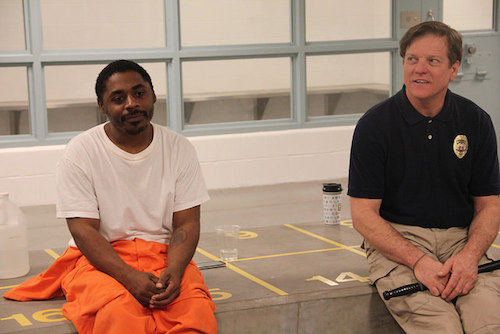
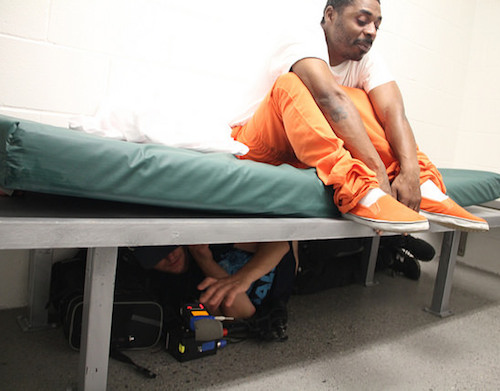
At first glance, the image above looks like the usual press photograph of a suspect accompanied to the stand, being escorted between holding cells and a courtroom. Alternatively, it could be a scene from inside a jail. Jumpsuit, shackles and guards are glaring visual clues and we think we know what we are seeing. But, in most cases we don’t. And in this case were aren’t. This is a photo from the set of the in-production web series wHole, for which filming began last month at the vacant Wapato Jail in Portland, Oregon.
wHole, made by Think Ten Media and directed by Ramon Hamilton (who is actually to the left in this picture) aims to raise awareness about the sensory deprivation and widespread use of solitary confinement in American today. The limited information this fictional scene provides us is akin to the limited visual information available to us generally of solitary confinement in America’s prisons. (Aside of photography, we must recognise there is currently a good swell of great advocacy journalism about solitary, not least by Solitary Watch).
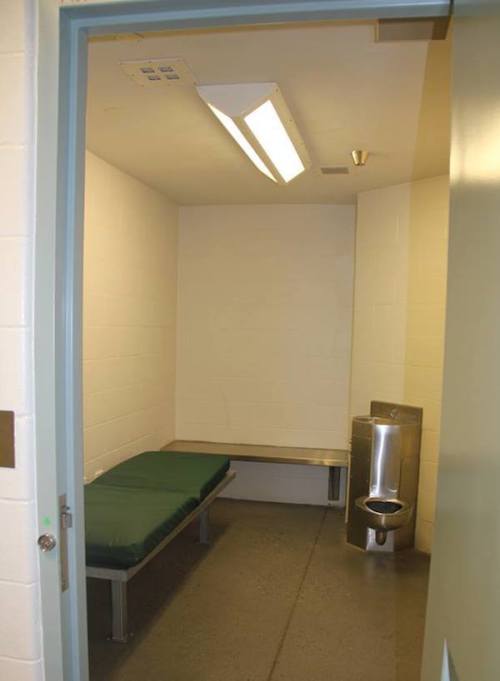
Even though Wapato was designed as a medium-level-security county jail. Think Ten Media thought it a worthy location for depicting Supermax facilities. wHole might be the only good thing to come out of this waste of space and money.
In 1996, the taxpayers of Multnomah County (Portland, Oregon) approved a bond measure to build a 168,420-square-foot, 525-bed jail back, but county leaders never set aside money to open and operate it. Construction was completed ten years ago at a total cost of $58M. Wapato was a bad idea to start with, but changes in legislation and a drop in crime proved it a terrible idea. The jail never went into operation. Don’t get me wrong, it is a good thing that no-one has been locked up at Wapato, but it is a terrible thing that it was built in the first place. What could have that $58M (plus the $3M of tax payers money spent over the past decade to merely to maintain the place) achieved in terms of rehabilitation, jobs training and addiction treatment?
Last year, sensible suggestions such as repurposing the jail as a drug rehab center, a homeless shelter or a community center were invoked but didn’t develop. More recently, the county made concerted efforts to sell the jail and get it off the books. In a typical Portlandish well-meaning, transparent but somewhat comic and farce-like public relations stutter, the county called for proposals from companies and citizens alike and then promptly rejected them. The proposals? Some people wanted to make a community garden for at-risk youth, other a prison for international war criminals. A TV production company wanted to make a reality TV show and a private prison firm wanted to use it and use it for you can guess what.
There has been a persistent myth in Portland that Wapato sat empty and was never used for any type of revenue raising, including the exploitation of opportunities presented by the many production companies wanting to film at Wapato. That’s simply not true. Maybe, more filming and more money could’ve been supported, yet, speculation aside and to date, wHole is the 32nd project filmed there int he past 6 years.
That wHole is about mass incarceration makes it, in my book, the most worthy of projects. When the nearly two-month-long California Prisoner Hunger Strike kicked off in the summers of 2011 and 2013, filmmakers Ramon Hamilton and Jennifer Fischer knew they wanted to make a project about solitary. wHole is intended to be “raw and real.”
The locals are excited about the future impact of wHole, which is a far cry from Orange is the New Black. While no mainstream TV show has depicted prisoners so sympathetically, Orange Is The New Black carries its fictional aspects and as such doesn’t reflect reality.
I wanted to know more about how you get into a jail to film and so asked Jennifer Fischer, Think Ten Media co-founder, a few questions.
Scroll down for our Q&A and then further still for more information on the project.
Q & A
Prison Photography (PP): How many vacant jails or prisons are there in the U.S. in which to make feature films or TV series?
Jennifer Fischer (JF): I am not sure. I know Fred C. Nelles Youth Correctional Facility is used often for filming by productions in the Los Angeles Area. I believe Hancock shot there, and there’s lots going on with it right now.
PP: Why did you choose Wapato?
JF: There was really nothing like Wapato Jail that was reasonable in terms of cost. There is a facility in New Jersey I recall Five mentioning to me. I lost all of my research notes about prison locations when my hard drive crashed recently!
We looked into shooting at Nelles and at other locations, but all were prohibitively expensive for our project being made on a limited budget. There were other challenges, such as no running water or electricity, the requirement of a water truck on site.
Some active prisons and jails are often used for filming! But with these locations, if they need the cell you are shooting in, you get booted. At Wapato we’d have access to the entire facility.
PP: How was the process to secure use of the facility?
To secure the facility, we had to speak with Mark Gustafson, who is the property manager. He had a few questions, but the process was really pretty simple. The important thing was getting the correct insurance. Here’s the county’s property management webpage for Wapato jail.
PP: Were the rates reasonable?
JF: Yes, the rates are quite reasonable, basically covering the cost to operate — security guard on site, opening and closing of the facility and any janitorial costs incurred from our use.
In fact, we initially went up to Portland because of the [relatively low] cost of the facility. Before we went we were still considering building a cell somewhere in L.A. when the whole series was greenlit.
However, given how wonderful and support everyone in Portland was and how professional the local cast and crew were, we are now absolutely committed to being back in Portland at Wapato to shoot the entire show.
Scroll down for more info on the web series and links to production photos.
Filming the filmers.
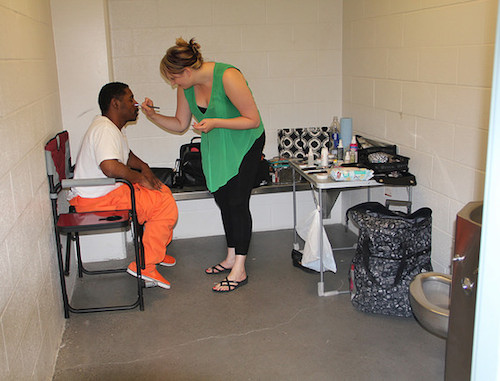
A cell doubles as a make-up room.
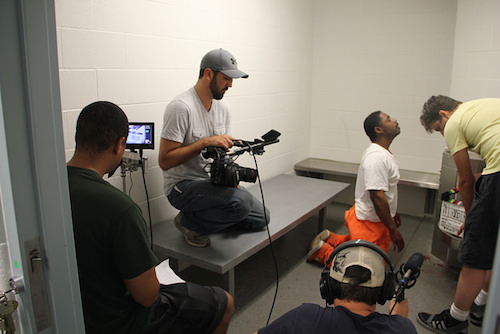
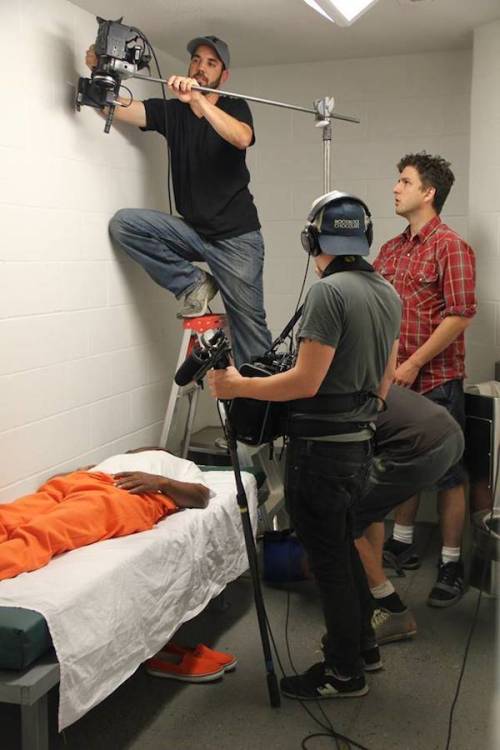
Filming inside a cell.
INTIMATE EXPERTISE
wHole draws on the intimate knowledge of two people who have been incarcerated.
Actor William Brown plays the protagonist in wHole. He has served time in prison. Fischer and Hamilton connected with Brown through Deborah Tobola who runs the Poetic Justice Project, a theater program in California for individuals who have been incarcerated. Tobola and Brown worked together when he was in prison in a program called Arts in Corrections.
Five Mualimmak is a co-producer for the project. Mualimmak also spent time in solitary confinement, 5 years, before he was exonerated. Mualimmak works with the Campaign to End the New Jim Crow and is the Executive Director of the Incarcerated Nation Campaign.
“As I wrote the screenplay, I was in touch with Five throughout,” explains Hamilton who is the series writer and director. “I want to make sure that viewers get a real sense of what it is like for a person to live in complete isolation for years.”
Mualimmak wrote about Solitary confinement’s “invisible scars” for the Guardian.
SET PHOTOGRAPHS
In chatting with Fischer, one of the intriguing resources she pointed me toward was the set photography for wHole. I’ve included some of my preferred shots thorughout this post.
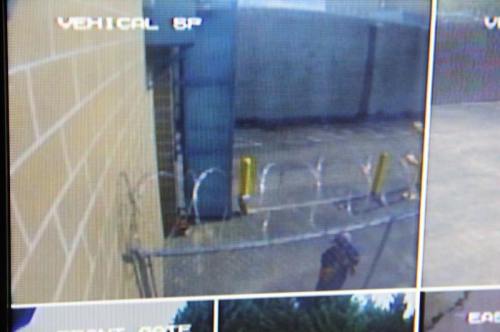
View images from day one, day two, day three and day four. Perhaps most interesting are photos made by crew of the facility’s control room, surveillance systems and control boards.
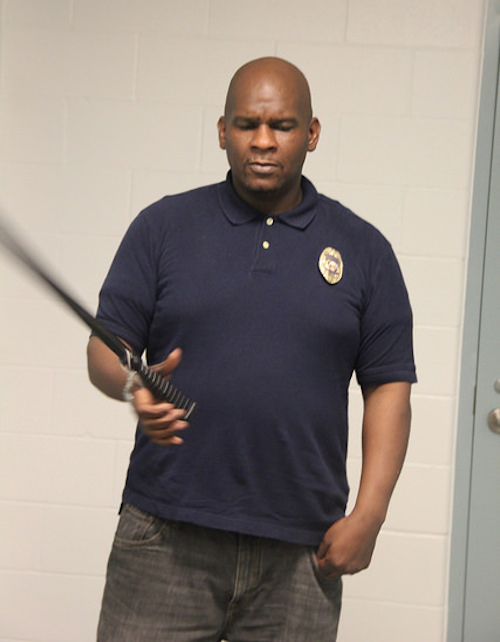
Five Mualimmak, who spent 5 years of his 12 prison term in solitary confinement, before being exonerated is co-producer on wHole. Above, he plays a prison guard.

Lunch on set
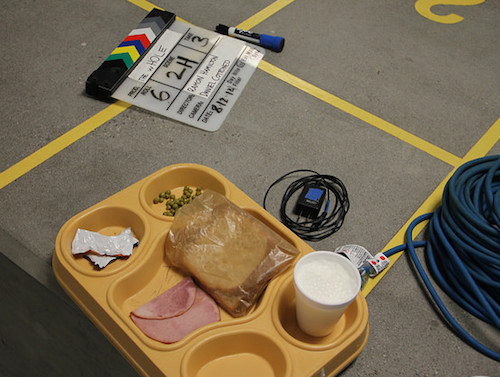
Looks depressingly accurate.

On set.
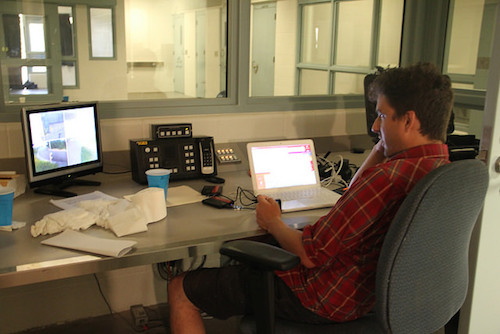
Downloading the day’s footage in the control room.
COLLABORATION
wHole was made in partnership with American Civil Liberties Union, Amnesty International, the American Friends Service Committee, the National Religious Campaign Against Torture, the United Methodist Church General Board of Church and Society, the Campaign to End the New Jim Crow, Incarcerated Nation Campaign, the Media Change Makers (of the University of Texas-El Paso), SendAPackage.Com, Broken On All Sides, Jail Action Coalition New York City, The Bronx Defenders.
Additionally, Academy Award-Winning Producer Jonathan Sanger is an Executive Producer for the project and Dr. Arvind Singhal is the Entertainment Education Specialist for the project.
In Portland, specifically, the assistance of Jan Elfers, Public Policy Director at Ecumenical Ministries of Oregon, and Shannon Wright, Deputy Director of the Partnership for Safety and Justice was crucial.
IMAGE USE
All images courtesy of Think Ten Media and William Meeker.

A few months ago, I shared an announcement for the ‘Marking Time’ Prison Arts and Activism Conference, organised by the Institute for Research on Women (IRW) at Rutgers University.
Earlier this week, IRW announced the schedule for the October 8the -10th conference. On it are some inspiring artists whose work I’ve long admired from distance. Great line up.
I’m also pleased to mention that I’ll be moderating a panel, the proposal for which, for your informations, I have copy&pasted below.
Panel: Imagery and Prisons: Engaging and Persuading Audiences
We produce and consume an enormous quantity of images each day (350 million photos are uploaded daily to Facebook alone and the average person sees 5,000 advertisements per day). While images often reify stereotypes and social causality, many artists are creating and distributing photographs or disrupting dominant visual culture in hopes of supporting or instigating prison activism and reform. By looking at three practitioners with distinct approaches, audiences and strategies, this panel will explore the power, limitations, and corresponding ethics of visual activism. What images do citizens have access to? Who controls cliche and motif? What new images of prisons and prisoners need to be made? How can collaborative modes of producing and understanding images be catalysts for collective action? How can photography get past its role as mere documentation of prisons to help create visions for alternatives to incarceration?
Across New York City, Lorenzo Steele Jr. exhibits photographs he made during his work as a correctional officer deep in Rikers Island. At church groups, in parking lots, in schools, and during summer community days, Steele brings graphic imagery directly to multiple generations within the catchment area of Rikers. Steele’s presentations are accompanied by a number of workshops on conflict reconciliation, criminal justice and community.
Gregory Sale has produced longterm large scale projects that with significant institutional support have managed to bring together many disparate constituencies orbiting the criminal justice world. Sale’s “It’s Not All Black & White” made a conscious effort to wrestle the visual motifs and cliche of crime (striped jumpsuits, pink underwear and even brown skin) that Arizona’s infamous Sheriff Joe Arpaio has manipulated for his own political advantage.
Mark Strandquist works with communities to create photographs requested by prisoners (“If you could have a window in your cell, what place from your past would it look out to?”). After sending images to the corresponding prisoners, the photographs are exhibited and expanded upon through extensive public programing that brings students, policy makers, former prisoners, and many others together to engage with the causes, effects, and alternatives to mass incarceration.
Moderator, Pete Brook will ask the panelists which approaches have worked and which have not. What presentations of material have engaged and persuaded audiences? What different expectations and needs do audiences have which we as artists and activists must consider?
BIOGRAPHIES
Gregory Sale is multidisciplinary, socially-engaged artist, whose work investigates issues of incarceration, citizenship, visual culture and emotional territories. In 2011, Sale orchestrated It’s Not All Black & White, a three-month residency exhibition at ASU Art Museum in Tempe, AZ. 52 programmed events brought together a wide array of constituencies including incarcerated persons, their families, parolees, ex-convicts, correctional officers, elected officials, government employees, members of the community, media representatives, artists, and researchers. It considered the cultural, social and personal issues at stake in the day-to-day workings of the criminal justice system in Arizona. Sale’s most recent project, Sleepover grapples with the challenges of individuals reentering society after periods of incarceration.
Sale is the recipient of a Creative Capital Grant in Emerging Fields (2013) and an Art Matters Grant (2014) . In summer 2012, as a resident artist at Yaddo in Saratoga Springs, NY, and at VCCA in Amherst, VA, Sale’s work has appeared in museums nationwide including the Ackland Art Museum, UNC-Chapel Hill and the Cheekwood Museum of Art, Nashville. Sale is Assistant Professor of Intermedia and Public Practice at Arizona State University in Tempe, AZ. Before that he served as the Visual Arts Director for Arizona Commission on the Arts, the Curator of Education at ASU Art Museum, and as a public art project manager for the Phoenix Office of Arts and Culture.
Lorenzo Steele Jr. is a former New York City Correction Officer. He worked for 12 years at Rikers Island, considered by some as the most violent adolescent prison America.
In 2001, Steele founded Future Leaders, a non profit youth that provides workshops, training, education and consultation to children, parents and educators about incarceration and the criminal justice system. Steele has worked as a New York City Board of Education vendor and assisted organizations — such as The Administration for Children’s Services (ACS), United Federation of Teachers (UFT) and the Nassau/Suffolk (BOCES) school district — with workshops on conflict resolution, bullying and literacy. He has also worked with the Brooklyn District Attorneys office providing gang and prison awareness to at-risk youth. He has lectured at college across the New York area. Steele is the recipient of awards from Congressional, Senate, and State Assemblymen for services to the community and to children’s development.
Mark Strandquist is an artist, educator, and organizer. His projects facilitate interactions that incorporate viewers as direct participants and present alternative models for the civic and artistic ways in which we engage the world around us. Each interactive installation functions not as a culmination but as a starting point and catalyst for dialogue, exchange, and community action. While photography is often used, the visual aesthetics and technical mastery of the medium become secondary to the social process through which the images are created, and the social interactions that each exhibition produces.
The ongoing project Some Other Places We’ve Missed: Windows From Prison was awarded the 2014 Society for Photographic Educators’ National Conference Image Maker Award, a Photowings/Ashoka Foundation Insights Changemaker Award, and the VCU Art’s Dean’s Award by juror Lisa Frieman. Strandquist’s projects have been exhibited and presented in museums, film festivals, conferences, print and online magazines, and independent galleries. The project Write Home Soon was exhibited in the 2012-13 international showcase of Socially Engaged Art at the Art Museum of Americas, Washington, DC. The ongoing project, The People’s Library is part of the permanent collection at the Main Branch of the Richmond Public Library and was presented by Strandquist and Courtney Bowles at the 2013 Open Engagement Conference. Strandquist is an adjunct faculty member at the Corcoran College of Art, a teaching artist with the University of Richmond’s Partners in the Arts, a Professional Fellow at the Virginia Museum of Fine Arts, and a Capital Fellow at Provisions Library.

 Prison Photography