
You are currently browsing the category archive for the ‘Activist Art’ category.

A temporary gig as a set photographer took Jordana Hall to San Quentin State Prison; her heart and consciousness propelled countless return visits. She has worked particularly closely with men who were convicted when juvenile (under 18) and were sentenced to life in prison.
Hall has worked as a volunteer in existing programs; launched her own project that melds poetry, family letters, snapshots and her own portraits; and visited the hometowns and families of prisoners. The ongoing body of work Home Is Not Here is part of Hall’s senior thesis exhibition. It will be on show – beginning April 2013 – at the Corcoran Gallery of Art in Washington, DC.
I wanted to learn more about Hall’s motives and discoveries.
– – – – – – – – – – – – – – – – – – – – – – – – – – – – – – – – – – – – – – – –
Prison Photography (PP): How did you get access to San Quentin State Prison?
Jordana Hall (JH): My work at San Quentin started in June 2011. I was hired as the set photographer for a documentary (working title, Crying Sideways) by SugarBeets Productions. The documentary details the stories of a group inside San Quentin called KIDCAT (Kids Creating Awareness Together).
PP: KIDCAT is a group of lifers sentenced as juveniles, correct?
JH: Yes, you can follow KIDCAT on Facebook.
PP: They describe themselves as “men who grew up in prison and as a group have matured into a community that cares for others, is responsible to others, and accountable for their own actions.”
JH: I began attending KIDCAT’s bi-weekly group meetings as a volunteer. During this period of volunteering, I developed a working relationship with the members of KIDCAT. Showing up when I said I would, being accountable, and most of all keeping an open mind and heart while inside re-assured the men of KIDCAT that I was a trustworthy member.
Then in June 2012, I started working on my senior thesis for my Photojournalism BFA at the Corcoran College of Art and Design. I approached Lieutenant Sam Robinson, Public Information Officer at San Quentin, with the idea of starting the “Home Is Not Here” project. If I had not had the relationship that I do with the men of KIDCAT, Sam would not have been so willing to help. It really is this relationship that I have with the group that has allowed me so many opportunities to continue my work there. I’ve been going into San Quentin for a year and a half now, and have only been able to bring my camera three times.
To be granted access to San Quentin – even minimal access – requires a lot of work. There needs to be a legitimate return for the prison community. In my case, publishing my work to Young Photographer’s Alliance, posting to my website, and eventually in an exhibition at the Corcoran Gallery of Art was enough justification for the prison to allow me to continue working inside.
I never take my access for granted.
There are strict rules about what you can and cannot do, wear and say. If I slip up – even just a little – my access is on the line.

PP: Why did you take on the project?
JH: After hearing the inmate’s stories during the documentary filming, I realized that all of them were just teenagers who were dealt a bad hand. This is not to say they don’t take responsibility for what they did. They definitely do. Their stories resonated to my core; the stories would impact anyone who heard them. I left the prison gates that day realizing that they could be my brother, father, or best friend. I began to think about their families. Most of the men in the group are in their mid-thirties; they have spent more than half of their lives in prison. I thought about how they struggle to keep working relationships with their loved ones for so many years through the prison walls. That wondering led me to my senior thesis project.
Home Is Not Here documents the relationships between an incarcerated person and his family. I seek out the ways in which their relationship can be kept when there are so many barriers involved.
PP: What have you learnt?
JH: I’ve learned that the families of incarcerated people are the least documented victims of crime. Communities shun them for “raising a criminal.” There are limited resources available for them to get help. These families mourn the loss of their loved one’s free life with little to no support.
I learned the truth in the statement, “When one person is incarcerated, at least five people ‘serve the time’ with them.” I have seen family members go about their daily lives with a piece of their heart locked away in prison.
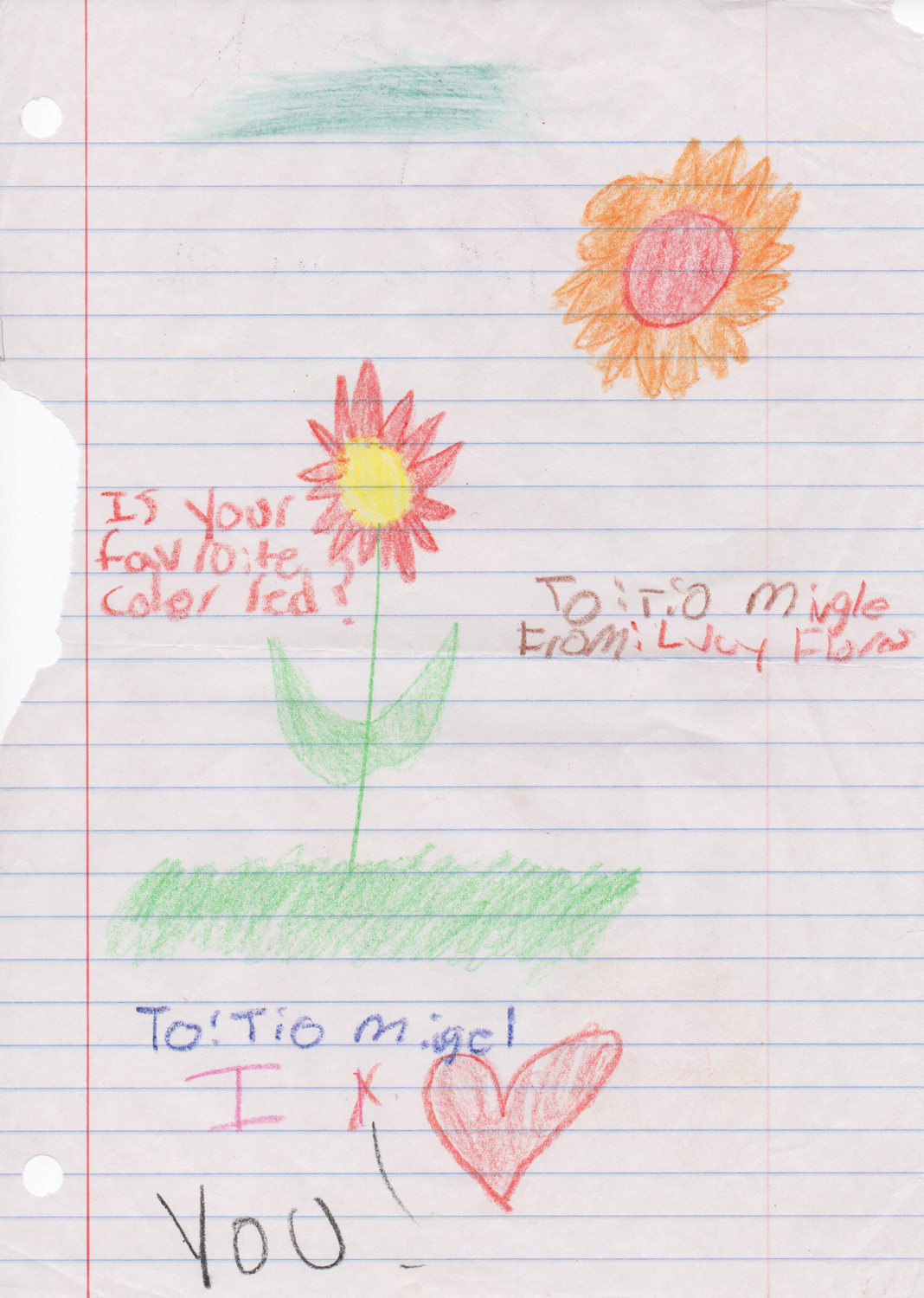
JH: I learned that letters from a child to their “Tio Miguel” (who they have never met outside of prison visitations) would break your heart. I learned that even the toughest looking men still get tears in their eyes when you ask about their family.
I am still learning.
PP: What did the prisoners think of being photographed?
JH: The first day they were most interested in seeing how a digital camera works. I am very hands-on with my subjects, and with the permission of Lt. Sam Robinson, I handed my second camera body to the guys to play with on the breaks during filming. It was both funny as well as saddening to watch their amazement at the foreign device.
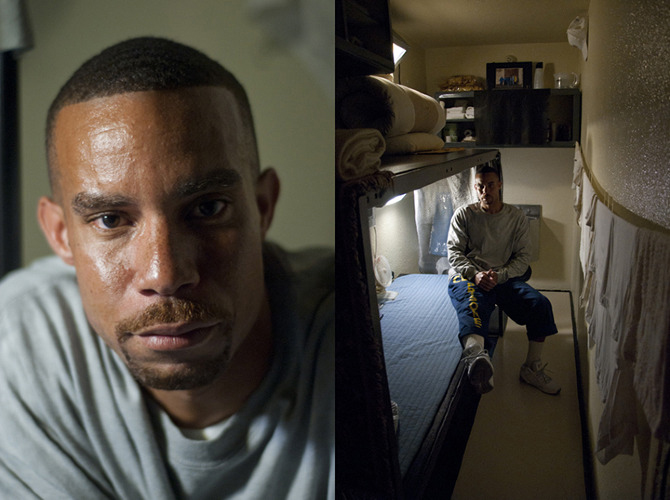
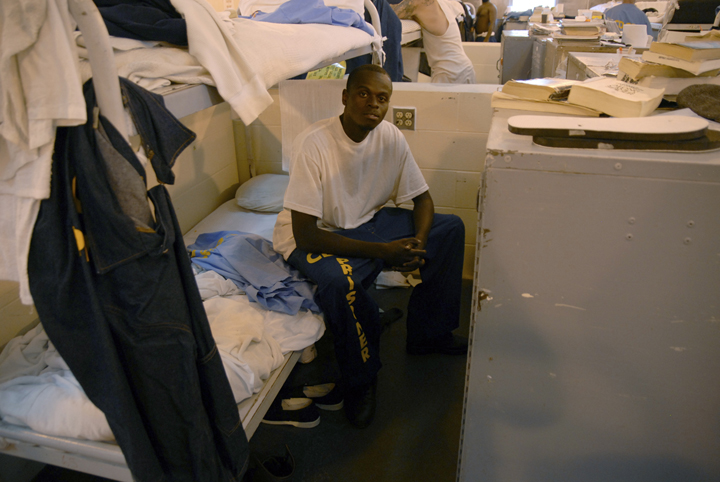
The first time I went in, I asked to see an inmate’s cell. The guys all looked at each other, waiting for someone to volunteer. One by one they denied my request to see their space. We ended up going to a stranger’s cell, just so I could poke my head in from the door. Soon after, I fully realized the shame that comes over them when asked about their cells. It is the only space that is their own, but it also the cage they are locked in at night. These 6 x 12 cement cages are a place both of safety and of degradation.
After I stuck around for a year, I approached the cell situation, again. This time they were excited to show me their space. Their family photos on the wall, bookshelf with notebooks, sketchbooks, and wall markings left from previous inmates. “Stay Focused” was scrawled into the yellowed paint next to the metal bunk. It took some time and a lot of trust building for me to get on that level with them.

PP: Did you give the men prints?
JH: Giving the guys the prints is absolutely one of my favorite parts!
The Home Is Not Here project had me traveling to the hometowns of three men. I went with only small clues of what and where to photograph – “The Dairy Queen where I took my first girlfriend on my first date,” or “The restaurant named after the city in Vietnam where my family was from.”
When I brought back prints from my trips, the guys were blown away by how much had changed, and how much had stayed the same.
I was asked by one inmate to visit the grave of his grandmother. They were extremely close and she passed away while he was in prison. When he saw the photograph I took there, he began to cry. It was almost as if I had delivered him a physical place to grieve her passing.
I try to give back to my subjects as much as I can. I try not to be that photographer that comes in, gets the story, and never comes back. They give so much of themselves when they allow me to photograph them, giving prints to them is the least I can do.
PP: What did the staff think of being photographed?
JH: I never photographed the staff, although some day I hope to see some really thorough work done about the people who work in prisons. It would be a fascinating story.
PP: I agree. I’ve yet to see a photography project that suitably deals sympathetically and deeply the complex and stressful dynamics of correctional officers’ work and lives.
PP: Could photography serve a rehabilitative role, if used in a workshop format in prisons?
JH: I think a workshop on photography in a prison would be an incredible idea. These men are so introspective and have so much to offer, creatively. The documentation of life inside prison by an inmate could offer such insight for us all.


PP: Are prisoners invisible?
JH: Yes, I believe prisoners are invisible. Everything about the prison system is set up for them to be invisible, and stay invisible. To be silenced, and out of sight. What I aim to do with this project is to shed some light on a piece of an inmate’s life that is not seen. When people think prison photography they think of hardened criminals, drug addicts, grimy hands gripping cell door bars, and the underbelly of society. I am offering the alternative viewpoint, which is the humanity inside. These men are fathers, sons, brothers, friends, and they all have people who care about them. They also have built communities of support for each other, inside.
PP: What’s been the feedback to your the work?
JH: As I work I like to get feedback from my peers. A lot of people who see photographs of inmates and due to their preconceived notions will shake their head and walk away thinking, “What monsters…” but with the work I do, I try to side step this notion and say, “No, look closer.”
No matter what I do, some people will never see it the way I’d like them to, but for people who can be open-minded, the work gives an inside look to the humanity that exists inside prison, and awareness of the struggles of their families.
PP: Anything else you’d like to add?
JH: As I move forward in my thesis, I am turning my focus to just one inmate in particular, Miguel Quezada. This is the working statement:
“Estamos Contigo (We Are With You)” – Miguel Quezada (below) was incarcerated at age 16. Now 31, he has spent half of his entire life in prison. Due to a harsh judicial decision that he should serve his sentences consecutively, his first parole hearing is not until the year 2040. He will be 60 years old. Home, for Miguel, rests between the realities of life at San Quentin Prison today, memories of his childhood cut short, and dreams of a faraway tomorrow. His family shares this stress, mourning the loss of their loved one’s free life. From the part of South Modesto, California known for its lack of sidewalks and high crime rate, Miguel grew up in poverty with his parents who immigrated from Mexico. His mother and father, Arturo and Lucila, are almost completely illiterate, so writing letters takes a lot of time and energy. Miguel appreciates it when they do write, but loves when they send photographs. His nieces and nephew, who he has never met outside of prison visitations, write him frequently and give him a sense of connectivity to the outside world. Miguel is one of hundreds of men in the state of California with similar stories – serving life for a mistake made as a teenager. The barriers of the prison walls will never restrain the emotional longing of one human being to be with another.
PP: We look forward to checking in again soon. Thanks, Jordana.
JH: Thank you.

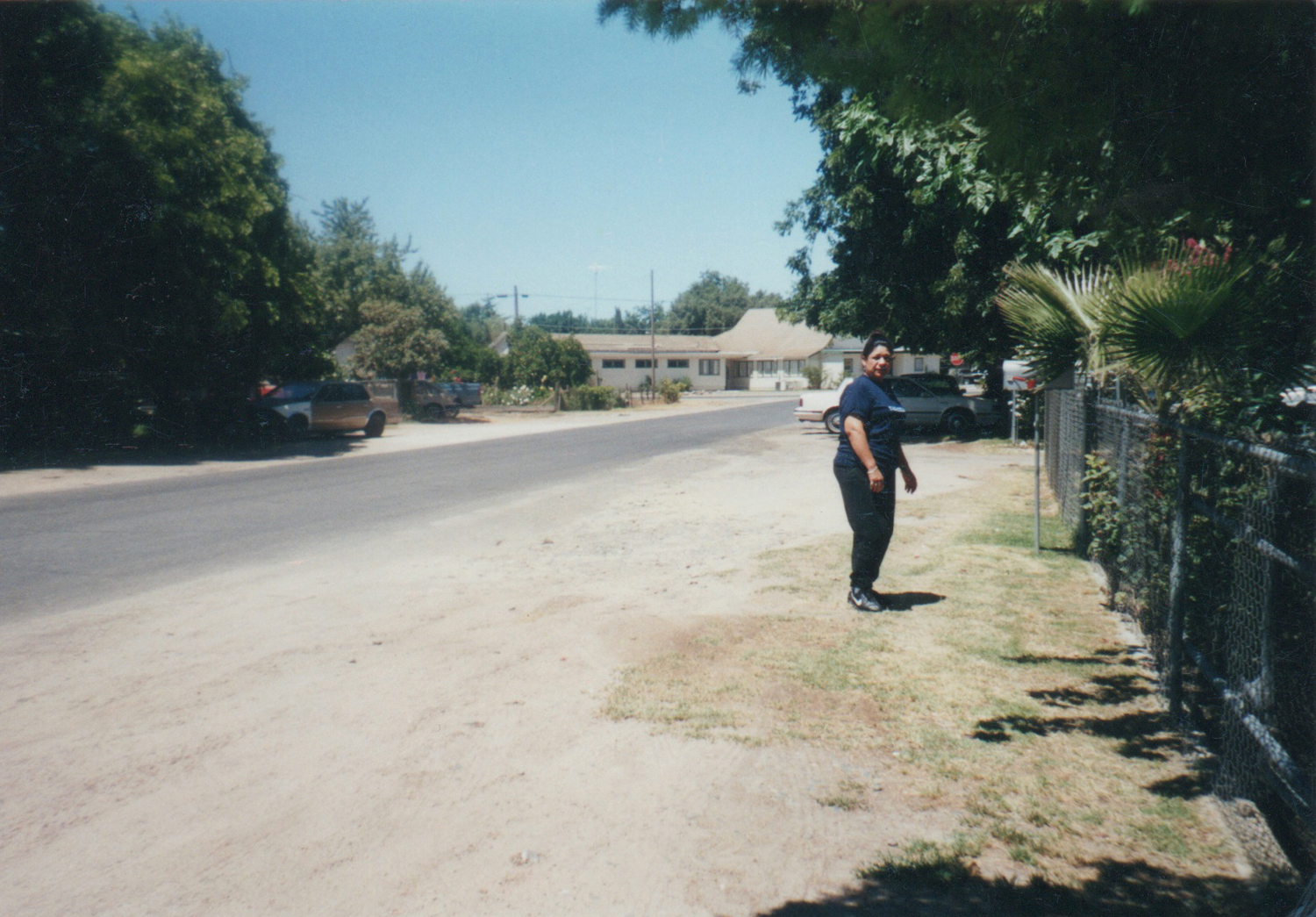
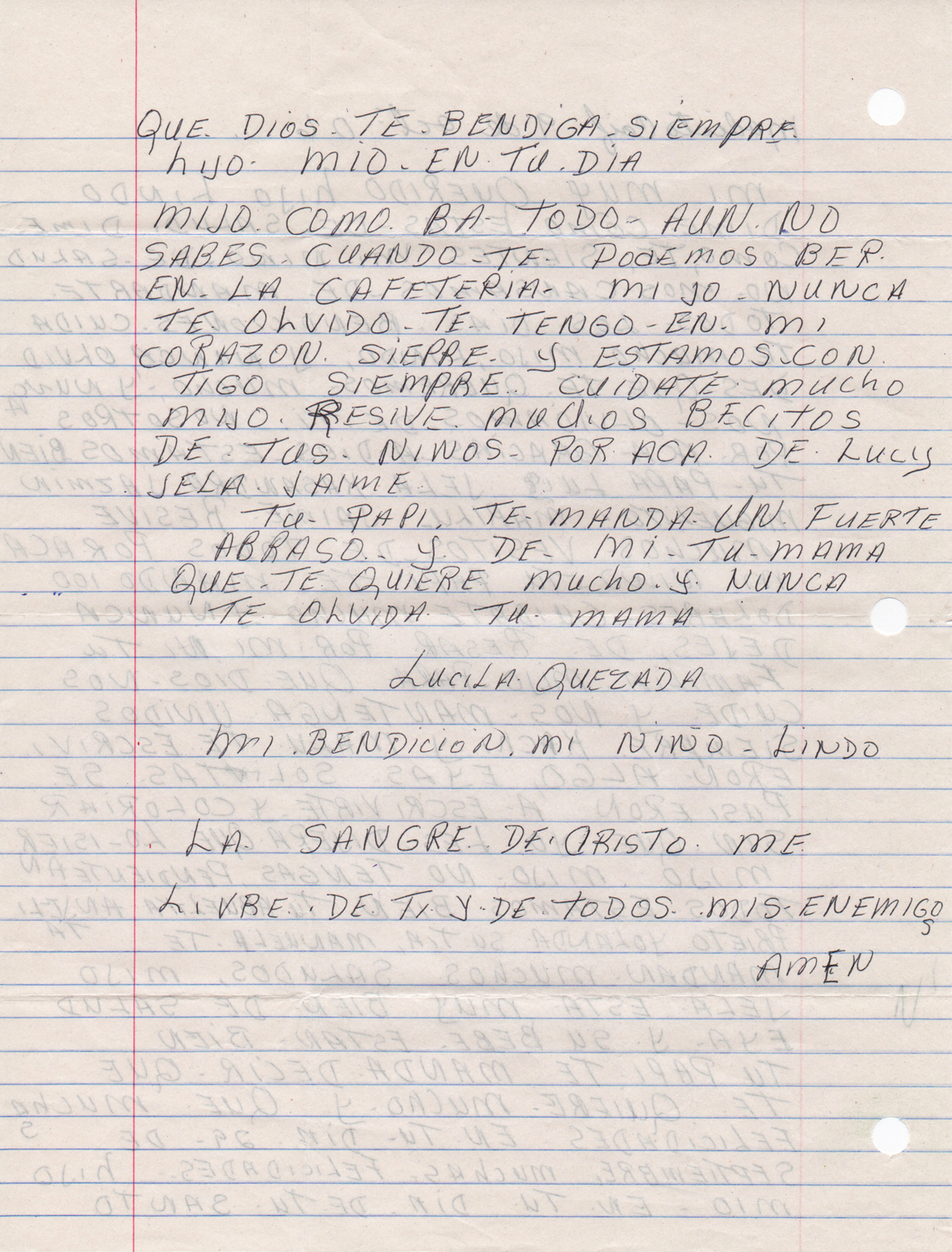


Photo: Leah Nash for The New York Times. Plates in “The Last Supper,” a show that features Julie Green’s plates depicting death-row meals.
A couple of years ago, I visited the studio of artist Julie Green. I was compelled to do so because I was convinced that her The Last Supper project was more relevant and hard-hitting than the many, many photo projects about the last meals of the executed.
Julie Green has painted the last meal requests of over 500 prisoners on individual plates. It’s an overwhelming body of work. The Last Supper is now on show at The Arts Center in Corvalis, Oregon.
Kirk Johnson has written The Last Supper for the New York Times:
The underlying and compelling theme of the work is choice. What do people who may have lived for years in prison with virtually no choices at all do with this last one they’re offered? Do they reach back for some comforting reminder of childhood? (Professor Green suspects as much in the cases of meals like macaroni and cheese or Spam.) Do they grasp for foods never tried, or luxuries remembered or imagined? (One condemned man ordered buffalo steak and sugar-free black walnut ice cream; another, fried sac-a-lait fish topped with crawfish étouffée.)
As Green says she won’t stop painting until the death penalty is abolished, there’s a long way to go with this project. It’s great to see it going from strength to strength and pressing the issue to the fore. Bravo, Julie.
BOOK
Accompanying the show is a 520-page lunker of a book. The Arts Center received sponsorship assistance to publish a full color catalog of the 500 plates. The catalog will be for sale during the exhibit for an introductory price of $50 (after February 16, 2013 the price will go up). To purchase a catalog, please contact Hester Coucke and let her know a good time to contact you during the business week.
PRESS
View the full NYT gallery here. And the NYT article, Dish by Dish, Art of Last Meals.
Green’s Interview with Oregon Public Broadcasting’s Geoff Norcross.
It was great to see Obama take on a liberal agenda yesterday with promises in his inauguration speech to improve equality for gays and lesbians and to reform immigration policy.
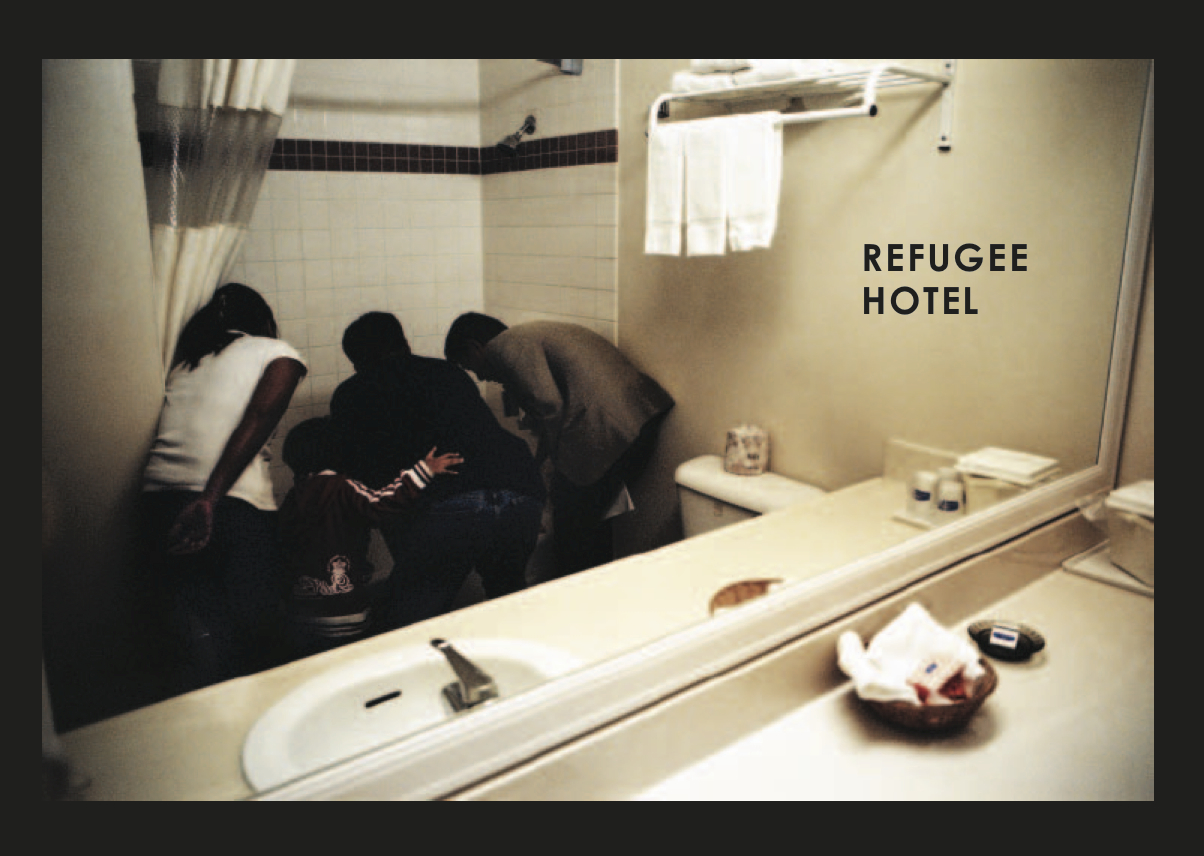
On the topic of immigration, or more precisely one arm of immigration – refugees and asylum seekers fleeing political or religious persecution – have you seen Gabriele Stabile and Juliet Linderman‘s new book Refugee Hotel?
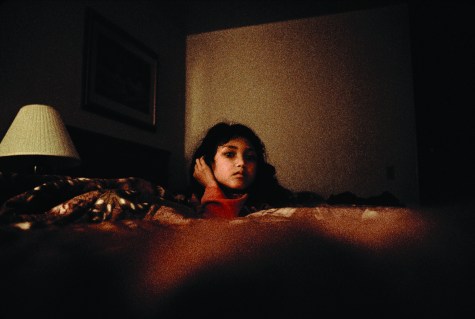
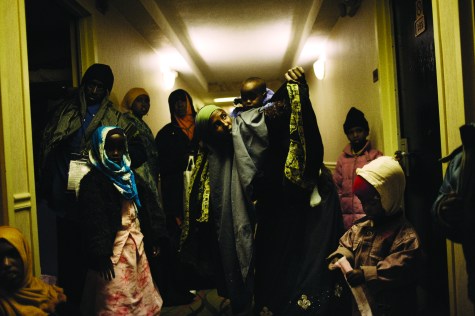
Refugee Hotel is a collection of photography and interviews that documents the arrival of refugees in the United States. Stabile’s images are coupled with testimonies from people describing their first days in the U.S., the lives they’ve left behind, and the new communities they’ve since created.
I noticed the work as the book was in planning 18 months ago. Good, now, to see it massaging its message in people’s hands.
The press release details the following testimonies:
Psaw Wah Baw was forced to flee her village in Burma amidst armed conflict. She describes how her family left their village with just five cups of rice, beginning an arduous journey toward resettlement that would take them through Bangkok, Tokyo, Illinois, and Texas.
Pastor Noel fled the civil war in Burundi in 1972 for a refugee camp in Congo. When war erupted in Congo in 1996, Noel was once again forced from his home. He now lives in Mobile, Alabama, and is a central figure in the African refugee community as he pursues citizenship.
Felix joined the rebel army in South Sudan as a teenager but was forced to flee to a refugee camp in Kenya when fighting within the army threatened his life. After long delays and identity theft by a fellow refugee, Felix now lives in Erie, Pennsylvania, where he works for Habitat for Humanity to assist African refugees in purchasing their own homes.

Refugee Hotel is the latest project by Voice of Witness, a small San Francisco-based non-profit, founded by author Dave Eggers and physician/human rights scholar Lola Vollen.
Voice of Witness uses oral history to illuminate contemporary human rights crises in the U.S. and around the world by publishing book series that depict human rights injustices through the stories of the men and women who experience them. The Voice of Witness Education Program then takes those stories, and the issues they reflect, into high schools and impacted communities through oral history-based curricula and holistic educator support.
Published by McSweeney’s, you can buy Refugee Hotel here.
Read more about the project on FADER and Miss Rosen and TIME LightBox.

View a large PDF of the Refugee Hotel Press Release
Published by McSweeney’s, you can buy Refugee Hotel here.
Delivered with some gusto, Cornell West explains why the use of Martin Luther King’s bible during President Obama’s inauguration was ill-advised.
Obama might be trying to fix economic inequality in free society, but West brings up at the half way point the role that the prison industrial complex has in punishing the poor.
Furthermore, the Obama administrations expanding drone program and the crimes against humanity in Iraq, Pakistan, Afghanistan and Guantanamo means Obama can not legitimately claim to be a righteous inheritor of MLK’s non-violent message.
What do you think? Was the use of MLK’s bible clumsy? Worse? Conceited? Obama has always been cast as a sharp-minded fellow, able to see beyond platitudes and any entourage of yes-men, but perhaps Obama and his inner-circle have started to believe their own hype?
What would people have said if George W. Bush had asked to lay his hand on MLK’s bible during his inauguration? He and Obama fought and are fighting the same wars abroad.
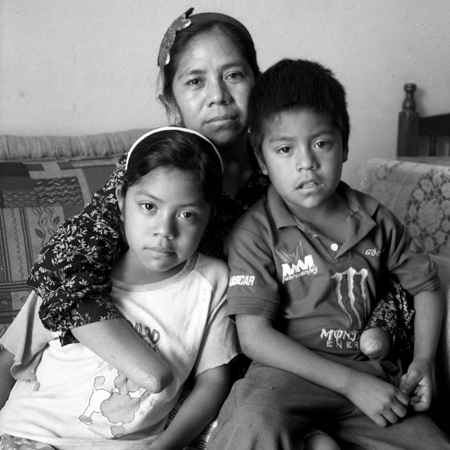
Alan Pogue is one of the best documentary photographers you’ve never heard of. Not one to get mixed up in the social media conga line, Pogue instead spends his time hunting down important stories. Very important stories.
Rosa Moreno lost her hands last year in an industrial accident in Reynosa, Mexico. Pogue writes:
“They needed to step up production and Rosa was asked to operate a machine that stamps out the back plate for a particular model of flat screen monitor because it was a little complicated and she was good and she was faster than most. She was also a little more brave. It scared some of the others who declined to work at this machine on the line. She stepped up.
It happened just after 2 in the morning February 20, 2011. As she was positioning a piece of steel plate, the machine suddenly jumped into action and clamped down on her hands with tons of force. She knew she had to maintain her presence of mind, since it would be necessary for her to argue for being taken to the right hospital. […] but the company would not allow an ambulance to be called. They did not want her taken to the hospital Rosa wanted because it might be more expensive, and because the accident would be on the record. With her hands now flat as tortillas and meshed into the monitor back plate, she walked to a co-worker’s car and was taken to the hospital, where they amputated her hands, still enmeshed in the steel plate.
She gets by on the Mexican government’s equivalent of Social Security disability, about $230 dollars a month. There is no workman’s comp. She had no insurance. There was no union. Some church groups help her out a bit with food and some money. The company offered to give her a one time payment of $4500. But she refused. Even though it is not clear that there is a way to obtain a better settlement through the court system under NAFTA, she holds out.”
Alan Pogue has photographed extensively across North and Central America focusing on social issues, labour issues, civil rights, criminal justice and the Texas prison system. I had the pleasure of meeting him last year and when we talked about his stories, water gathered in his eyes and his voice wobbled. This is work that he really feels and Rosa’s is a cause he deeply, deeply believes in. Please think about helping this holiday season.
via Susan Noyes Platt.

All I want for Christmas is more weird images.
Twelve months ago, I posted To You, Happy Christmas, From Google Image Search. I guess now that I’m revisiting the format, it’s now a holiday tradition? I don’t know if this years selection tops last. I’ll let you be the judges.
Merry seasonal cheer to one and all.













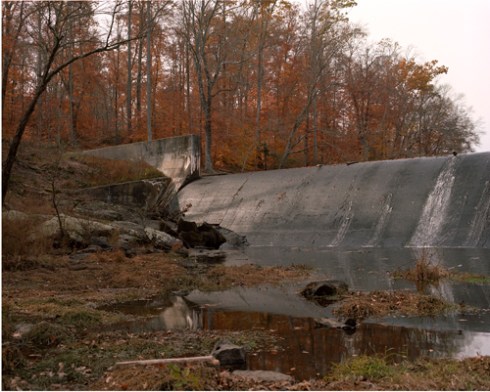
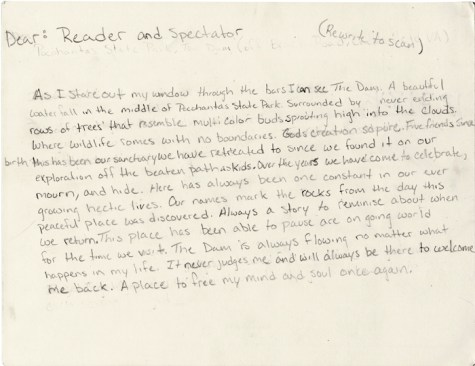
“I see a dam. […] For five friends since birth this has been our sanctuary we have retreated to since we found it on our explorations off the beaten path as kids. We have come to celebrate, mourn and hide.”
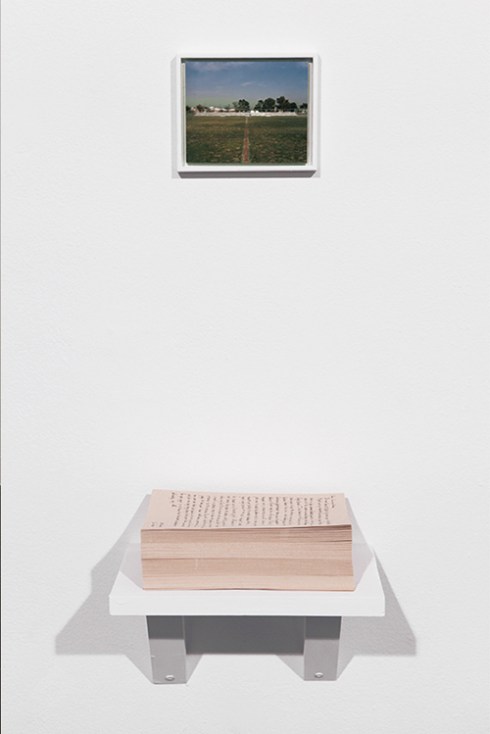
For his participatory project, Some Other Places We’ve Missed artist and photographer Mark Strandquist held workshops in various jails and prisons, and asked prisoners, “If you had a window in your cell, what place from your past would it look out to?”
Along with the written descriptions, individuals provided a detailed memory from the chosen location, and described how they wanted the photograph composed.
Strandquist then photographed and an image is handed or mailed back to the incarcerated participants. The size of photographs he made and later exhibited were/are consistent with the restrictions imposed on pictures sent into prisons.
It’s a strong project that involves many different groups. It attempts to build connections where none exist. If one artist can achieve this, think what a whole posse could accomplish?
NOTE
The scanned letters are difficult to read at this size; I recommend using you COMMAND + keys to enlarge the page and jpegs.
[Keep reading below]
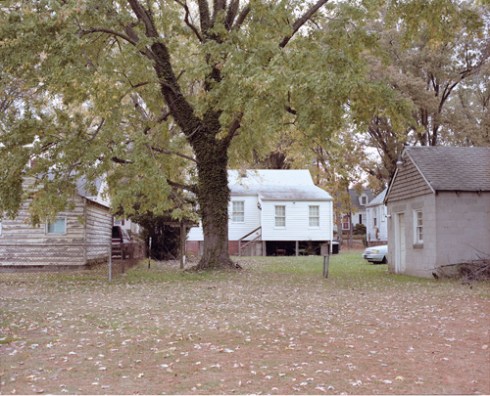
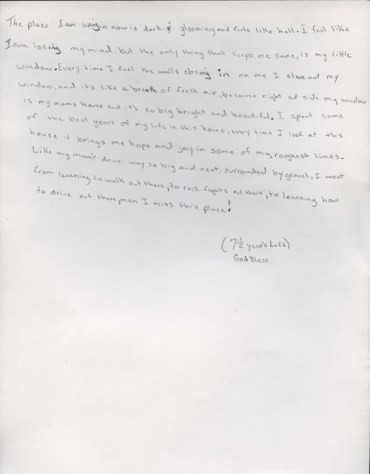
“Right outside my window is my mom’s house.”
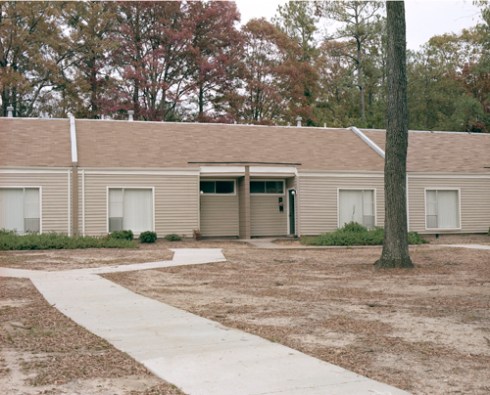
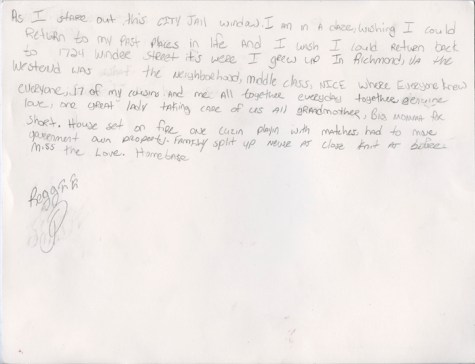
“The neighborhood was middle class, nice, where everyone knew everyone. One great lady taking care of us all – grandmother; Big Momma for short. The house set on fire when one cousin playing with matches. Had to move into government owned property. Family split up. Never as close as before. Miss the love. Home base.”

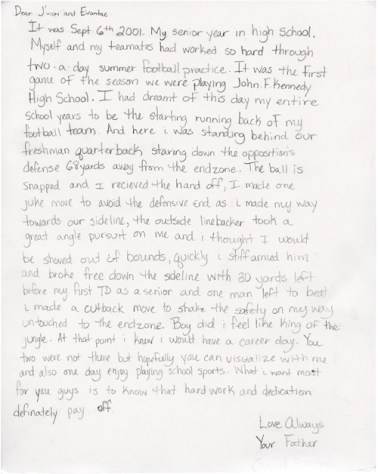
“Here I was standing behind our freshman quarterback staring down the opposition’s defense, 68 yards from the end zone. […] The outside linebacker took a great angle and I thought I’d be shoved out of bounds. Quickly I stiff-arms shim and broke free down the sideline … before my first touchdown as a senior. What I want most is for you guys to know is that hard work and dedication definitely pay off.”
In some ways the work is similar to the Tamms Year Ten Photography Project that asked Illinois prisoners in solitary confinement to describe one image they would like on their cell wall (and which I featured a couple of weeks ago).
Upon encountering the Tamms Year Ten Photography Project, Strandquist was “blown away”, yet he identifies differences between methodolgies.
“The Tamms Year Ten Photography Project is a really challenging project, but there’s so much to love – its diffusion of authorship; its performative aspects of individuals seeking out public spaces to make these images; and its deconstruction of fine art aesthetics,” says Strandquist.
“I believe the form and function of Some Other Places We’ve Missed moves in different, hopefully equally powerful ways. My project is as much about creating a window for the incarcerated participants as it is about creating a window for the public, a meeting ground where each participant’s challenging memories and realities mix with images shot intentionally to facilitate open associations. Part of me wants to hear the stories behind the Tamms requests … but maybe that’s the voyeur in me?” adds Strandquist.
In this case, a will toward voyeurism (to use Strandquist’s term) would indicate that the Tamms Year Ten Photography Project succeeded; it draws audience members in, to then go ahead under their own steam to learn more about the issue, the systems and the people within.
[Keep reading below]

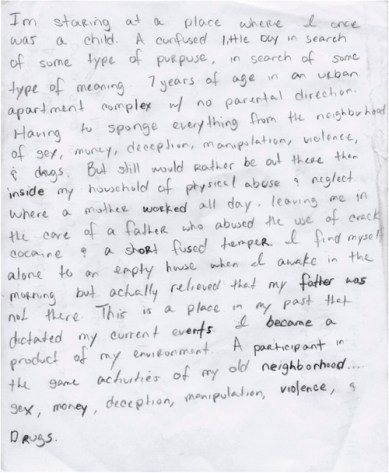
“I’m staring at a place where I once was a child. A confused little boy in search of some meaning. 7 years of age in an urban apartment complex with no parental direction.”

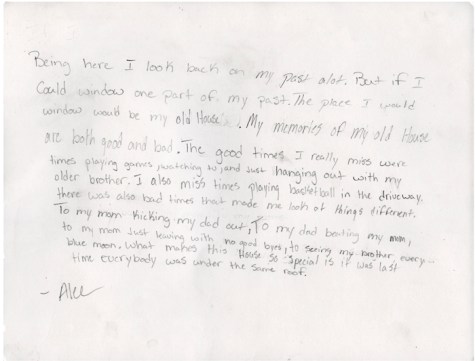
“My memories of my old house are both good and bad. Playing games, watching TV and just hanging out with my older brother. There were bad times that made me see things different – My mom kicking my dad out, my dad beating my mom, my mom leaving with no goodbyes, to seeing my brother every blue moon. What makes this house so special is it’s the last time everyone was under one roof.”
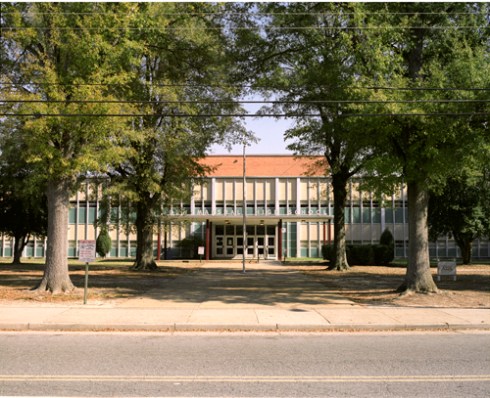
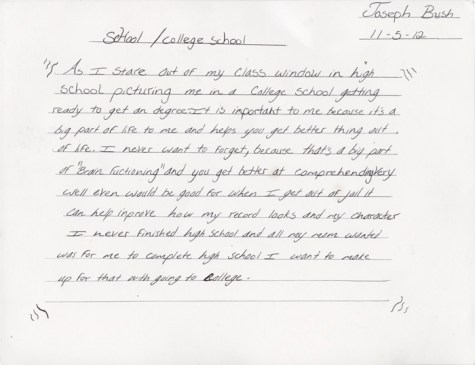
“… all my mom wanted was for my to finish high school. I want to make that up for that with going to college.”


“I miss the feeling of waking up early in the morning to the TV still being on and hearing my little sisters and brothers tearing the house down […] Sometimes it’s the little things that you never pay attention to that can effect you the most in the future.”
GET INVOLVED!
If you, or someone you know is incarcerated, and would be interested in participating in the project, you can email Mark at markaloysious@gmail.com
INSTALLATION
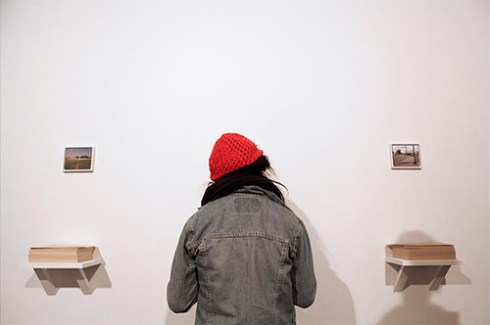
Strandquist recently exhibited Some Other Places We’ve Missed at Anderson Gallery in Richmond, VA. His interactive installation featured weekly prison letter writing workshops and a space to donate books to the local chapter of Books to Prisoners.
Visitors were given the opportunity to take with them copies of written statements by the incarcerated participant about the space to which they wish they had a window.

BIOGRAPHY
Mark Strandquist is a multi-media artist and curator based in Richmond, VA, who creates work that incorporates viewers as direct participants, features histories that are typically distorted or ignored, and blurs the boundary between artistic practice and social engagement. His work has been featured in various film festivals and independent galleries as well as a current exhibit at the Art Museum of Americas in Washington, DC. He is currently working on a BFA at Virginia Commonwealth University. He has a Tumblr.

Photo of San Quentin State Prison, found in a thrift store. Photographer unknown.
2013 will bring with it many new things and revelations. Among them: proof that the Mayans were full of crap and also, the Prison Photography photobook.
Some of you with your ears to the ground have known this announcement was coming, but it is exhilarating for me every time I think about a PP book. I’m proud to make a formal announcement.
The book, with the working title American Prisons: Photography In The Era of Mass Incarceration, brings together in 120 pages the research I conducted during Prison Photography On The Road and will also draw on previous work here on Prison Photography.
This week, Kevin Messina, founder of non-profit publishing house Silas Finch, and I laid out the format, the target-audience and the goals for the book. Silas Finch has published the work of Daniel D’Ottavio and Simon Hoegsberg. Raymond Meeks collaborated with Silas Finch to produce the Orchard series – three books of the work of Deborah Luster, Wes Mills and Mark Steinmetz. It is expected that the prison photography book will be – in terms of edition size – Silas Finch’s largest project to date.
In addition to the standard version (priced reasonably to secure as wide a readership as possible and stay true to the spirit of PPOTR), we’re producing a limited edition run of 100 books. Furthermore, plans are afoot for an App/digital version, which will include more images, audio of photographer interviews and potentially content from beyond American shores.
Portland based book maker and friend Rory Sparks (head honcho at EmSpace) is consulting on printing and design.
The planned publish date is September 2013. It’s going to be a busy year bringing together the work of 40+ photographers and penning words to do their work justice. My task is to frame four decades of American prison photography within a thesis that remains powerfully committed to social justice and accessible for all readers.
Part activism and part journalism, we intend the book to be a beautiful object. The images will dictate the mood and the narrative. Images are the main focus; they are the hook. My words will follow in an essay giving the 80+ pages of photography a context. Although it’s a historical survey we want to avoid producing something akin to an exhibition catalogue. It’ll be a fine balance, but if we achieve make it then we might just create a photobook that’s compelling and unique. It may even chart new territories.
Now, to work.

 Prison Photography