
You are currently browsing the category archive for the ‘Activist Art’ category.
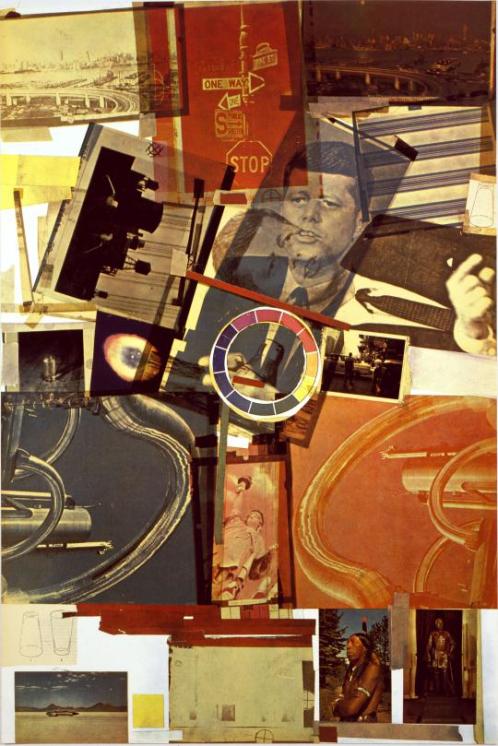
THIS ART MEGA-GRANT IS A SIGN OF THE TIMES
There’s a host of indicators that prison reform is firmly established near the top of the national agenda. In politics, journalism, art and culture the urgent voices and battles that constitute the discussion and solution-finding around mass incarceration are getting an airing they’ve not enjoyed during the past four decades of unfettered prison growth.
The battles brought by anti-prison activists and families (alongside the soul-searching among the rest of us) may define this moment. There’s a long, long way to go to reverse 40 years of failed policy, but it can only be done … incrementally, faithfully and with a long-view.
The Artist As Activist Fellowship program recently announced by the Robert Rauschenberg Foundation (RFF) could be part of a continued movement toward justice and toward national healing. Specifically, the RRF wants to support projects that “address racial justice through the lens of mass incarceration.”
There are more-and-more funding opportunities for artists looking at prisons, abolition and racial discrimination. I don’t have time to flag them all, but for this one I had to take pause. The size of this grant is quite remarkable. There’s been a couple of $15K and $25K offerings recently, but the RRF just upped the ante.
DEADLINE
You have until December 7th to argue your case for 100,000 USD in support.
RFF’S STATEMENT
Of the 2.2 million people currently in American prisons or jails, 1 million are African American. This rate of incarceration is a 500% increase over the past 30 years, and if current trends continue, one in three black males born today can expect to spend time in prison during his lifetime. Nationwide, African Americans represent 26% of juvenile arrests, 44% of youth who are detained, and 58% of the youth admitted to state prisons.
This constitutes an epidemic. Particularly so given mass incarceration’s intersection with wealth inequality and economic justice, voting rights, immigration rights, access to affordable housing, and inequitable educational policies. It is exhausting to unravel the complexity of this issue, let alone to design ways to dismantle the social and economic structures that produced mass incarceration as a phenomenon. Yet that is the task before all of us, one that requires an army of creative thinkers.
THE FELLOWSHIP
The 2016 Artist as Activist Fellowship provides the opportunity for creative professionals who are committed to making meaningful progress towards ending mass incarceration to seek a robust set of resources to advance their work. RRF believes that, at their best, art and artists are disruptive. The very nature of being a compelling artist is to generate new thinking and inspire new ways of being, whether through fostering empathy or by proposing radical alternatives to our current systems. If a new world is possible, it is the minds of artists, designers, culture bearers, and other creative professionals who will call it forth.
ABOUT RRF
The Robert Rauschenberg Foundation fosters the legacy of the artist’s life, work, and philosophy that art can change the world. The foundation supports initiatives at the intersection of arts and issues that embody the fearlessness, innovation, and multidisciplinary approach that Robert Rauschenberg exemplified in both his art and philanthropic endeavors.
MO’ INFO
Facebook
Twitter
Instagram
Tumblr
press@rauschenbergfoundation.org
212 228 5283
Robert Rauschenberg Foundation
381 Lafayette Street
New York
NY 10003-7022
IMAGE
Robert Rauschenberg, Poster for CORE (Congress of Racial Equality), 1965 (detail). Silkscreen print with varnish overlay, 35 7/8 x 23 7/8 inches.

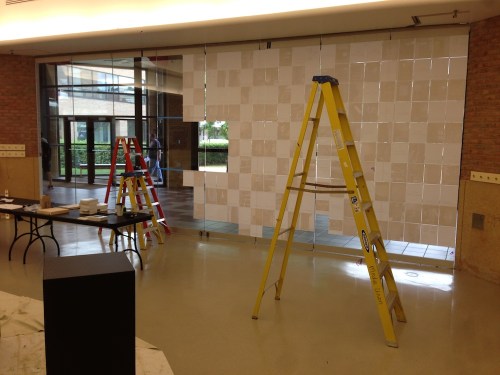
For a short run, Prison Obscura is on show at the University of Michigan. We installed in a marathon effort this week and opened yesterday. You have until 24th September to catch it!
Most proud of my installation of Brown/Coleman v Plata evidence images (above). The gallery has huge front-facing windows, I had 400+ pages of court documents!
Official installation shots are to be made next week, but I wanted to get this announcement up.
I’m also talking today:
CURATOR TALK / SYMPOSIUM
Friday, September 11, 1:00 – 4:00pm
Curator Talk followed by symposium Carcereal Visions: The Prison as Image/Object/Limit. A round table discussion featuring UM faculty Amanda Alexander, Ashley Lucas, Carol Jacobsen, Reuben Miller, Ruby Tapia, Heather Thompson, Isaac Wingfield.
WHERE TO GO?
Duderstadt Center Gallery
North Campus
2281 Bonisteel Blvd
Ann Arbor
MI 48109
Hours: Noon – 6pm, Mon-Fri, Noon – 5pm, Sun.
BLURB
Alyse Emdur’s collected letters and prison visiting- room portraits from across the nation and Robert Gumpert’s recorded audio stories from within the San Francisco jail system provide an opportunity to see, read and listen to subjects in the contexts of their incarceration. Juvenile and adult prisoners in different workshops led by Steve Davis, Mark Strandquist and Kristen S. Wilkinsperform for the camera, reflect on their past, describe their memories, and represent themselves through photography.
Prison Obscura moves from these intimate portrayals of life within the prison system to more expansive views of legal and spatial surveillance in such works as Josh Begley’s manipulated Google Maps’ API code and Paul Rucker’s animated videos, which offer a “celestial” view of the growth of the prison system.
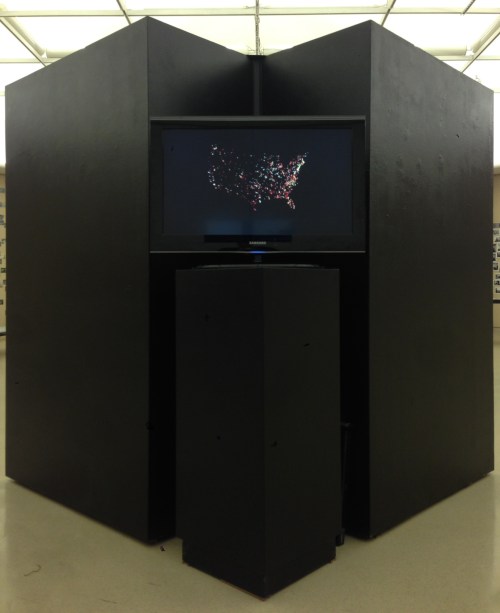
Installation shot of Paul Rucker’s Proliferation
BIG FIVE
U-Mich is the fifth venue for Prison Obscura, after outings at Haverford, Scripps, Rutgers and Parsons.
LIL’ HELP
Prison Obscura is a traveling exhibition made possible with the support of the edits John B. Hurford ’60 Center for the Arts and Humanities and Cantor Fitzgerald Gallery at Havorford College, Haverford, Pennslyvania.
It is sponsored by the University of Michigan’s Departments of Women’s Studies and English, Institute for Research on Women and Gender, Prison Creative Arts Project, Institute for the Humanities and the LSA Dean’s Office.
Also, the U-Mich campus is architecturally trippy. Here, the Lurie Tower which wouldn’t be out of place on a sci-fi movie set.

INFORMATION
Contact Ruby Tapia, Associate Professor of English and Women’s Studies, at rtapia@umich.edu, or Kathi Reister, Gallery Coordinator at kreister@umich.edu

Shadae Schmidt died in the Secure Housing Unit (SHU) of California Institute for Women (CIW) on 13th March, 2014.
–
“I went to borrow scissors from the cops last week, and I was told that they don’t lend out scissors anymore because they have special industrial scissors now for cutting down bodies. He showed them to me. That’s how normal this is. […] We have women dropping like flies and not one person has been questioned as to why we believe they are killing themselves. I have been down almost 20 years and I have never seen anything like this. Ever.”
– Letter from prisoner at California Institute for Women (CIW) 3/21/15
–
In April of this year, the California Coalition for Women Prisoners (CCWP) provided California Senator Mark Leno with a memo RE: “Female offenders” and medical and mental health care neglect. It opened with quotes that female prisoners had provided CCWP in hundreds of in-person interviews and letters.
“Medical care here is very poor. Inmates are treated like animal. Period. We’re looked at as if we’re not human beings.” and “I’ve gone back to medical for the same issue over a 100 times. So that they can get the $5 co-pay that I don’t have to give.” and “I feel they do not care…it’s my fault or I’m lying about being paralyzed…I had to ‘prove’ I was incontinent. They made me urinate in bed. They would not give me enough catheters.”
Medical care is dire. Mental-healthcare is desperate. Four women have killed themselves at CIW in San Bernardino County in the last 18 months. The suicide rate at the facility is more than eight times the national rate for female prisoners and more than five times the rate for the California prison system as a whole.
Before the recent surge, there were three suicides at CIW in 14 years.
Leno, a Democrat, has been one of the most progressive voices in the Golden State when it comes to prison reforms. It was hoped that he’d be able to open rigorous inquiries as why women are “dropping like flies”, as to why they were hanging themselves and cutting themselves in record numbers.
CCWP got a read on the mental healthcare provision inside CA prisons through interviews and a survey (conducted in summer 2014) from prisoners in California Correction Women’s Facility (CCWF) and CIW, and others recently released. CCWP found that medical and mental health care access and treatment in Californian women prisons fell well below constitutional standards. Suicide prevention is scarce if not lacking entirely.
The AP reported last month how this is “a shocking turnaround” CIW was cited last year as a rare example of good care of California prisoners.
“The prison’s psychiatric program was promoted as a positive example in May 2014 by Matthew Lopes, a federal court-appointed overseer who monitors mental health treatment for inmates. Of six inpatient programs for mentally ill inmates statewide, he found that only the one at the women’s institution was providing proper care.”
All four women who died at CIW were receiving mental health treatment in the days before their deaths.
OFFICIAL DATA
COMPSTAT data gathered by the California Department of CDCR backed up concerns of increased suicides and suicide attempts.
Figures from women’s prisons, over the 13 months 2/14-2/15.
CIW 16 attempted suicides 3
CCWF 7 attempted suicides 0
CMF 20 attempted suicides 1 suicide
FSP 2 attempted suicides 0 suicides
Figures from all men’s prisons not designated “high security” over the 13 months 2/14-2/15.
ASP 5 attempted suicides 0 suicides
CAL 5 attempted suicides 0 suicides
CEN 3 attempted suicides 0 suicides
CTF 6 attempted suicides 0 suicides
CVSP 1 attempted suicide 0 suicides
ISP 5 attempted suicides 0 suicides
MCSP 17 attempted suicides 2 suicides
PVSP 5 attempted suicides 0 suicides
SOL 8 attempted suicides 1 suicide
VSPW 7 attempted suicides 0 suicides
Source: CDCR COMPSTAT DAI Statistical Report.
CIW had more suicides reported by CDCR than any other CA prison in 2014; CIW also had an alarming number of attempted suicides in the same period. CIW had the third highest number of attempted suicides, but the highest rate of suicide attempts when adjusted for population.
THOSE THAT PASSED
Behind these tragic findings are even more tragic deaths. The deaths of Stephanie Felix, Gui Fei Zhang and Shadae Schmidt were reported by some local and solidarity press, but mostly went by unnoticed and, worse, unquestioned. For
Stephanie Felix committed suicide at CIW on 3/9/15, after previous suicide attempts and after asking for emergency mental health care several times, including that very same day. Ms. Felix had been housed in the SCU, but she was placed back in general population where her mental health declined. During a previous suicide attempt, two prisoners performed CPR on her to save her life, despite being told to stop and facing disciplinary consequences for their actions. (Reported to CCWP by letters 3/15)
Gui Fei Zhang, a 73-year-old Chinese woman, committed suicide on 2/17/15 at CIW. She was released from suicide watch back to general population the day before she killed herself. (Reported to CCWP in interviews 4/10/15)
Shadae Schmidt was a 32-year-old African-American woman who died in the CIW SHU on 3/13/14. Shadae had a stroke in February 2014 and was prematurely returned to the SHU. She was given medication that made her sick but her requests for a change in prescription were ignored. CCWP is still waiting to hear any reports of investigations into Shadae’s death. We have noticed that there is one preventable death listed in the CDCR data for the month she died. (Reported to CCWP by family and friends in 2014)
Uncovering the common causation factors between these deaths has been an ongoing concern for CCWP.
CONCLUSIONS
CCWP concluded generally that:
• Prisoners in the SHU at CIW report heightened medical and mental health care neglect
• CCWF and CIW have poor records of seeing patients in the period mandated once requests for mental health help are submitted.
• Processing time with mental health clinicians is too short – 15 minutes does not allow for adequate diagnosis, treatment, etc..
• Chronic care patients are required to be seen every 90 days, even though many patients require more medical attention; many chronic care patients are not seen every 90 days.
• Overcrowding at CCWF and CIW is still impacting mental health care access; the SCU at CIW is often overcrowded because of the increasing need for acute mental health care.
• The threat of being moved to the PIP prevents many SCU patients from seeking help.
• Patients in the SCU are increasingly cutting themselves to deal with emotional trauma and/or to get the mental health or medical attention they need.
• If people report suicidality after 2pm, mental health departments are closed and mental health workers retrieve patients from the cages (where suicidal patients are caged and cuffed) to treat patients in the emergency rooms of the medical departments — loud, chaotic environments with no chairs, and little privacy.
Specific to neglectful mental healthcare, CCWP noted that:
• Patients, including those who are very sick and/or disabled, routinely wait outside for scheduled doctor’s appointments for 2 to 5 hours in all weather (including rain and heat alerts). “Too many prisoners, too few doctors,” is the common experience.
• Patients do not feel respected, believed or listened to by their primary doctor. People are often told that they are “lying” when they report on health history, symptoms, or past treatments that have been helpful for them.
• Misdiagnoses are still too common.
• Serious lack of follow-up care after surgeries continues to be a significant problem.
• There are often significant delays in refilling prescribed medications. People are going without life-saving and chronic care medications while they wait.
• Treatment recommendations from specialists are rarely ordered and/or followed by doctors at the prisons.
• Gender non-conforming and transgender prisoners face increased medical and mental health neglect because of discrimination based on their gender non-conforming or transgender status.
• When prisoners file grievances (602s) for medical and mental health neglect, they often experience direct retaliation from healthcare providers and/or further denial of access to care.
Recommendations
Despite decades of lawsuits to remedy prison health care and court orders to reduce prison overcrowding, the inhumane conditions inside CA women’s prisons continue. The CCWP has called for an independent investigation into the circumstances surrounding all deaths at CIW in 2014 and 2015. The CDCR says it is monitoring CIW more closely than any other prison in the system.
CCWP calls, sensibly, for a reduction of overcrowding through the implementation of existing release programs. It also calls for immediate transfer of all prisoners with mental health issues from the SHU.
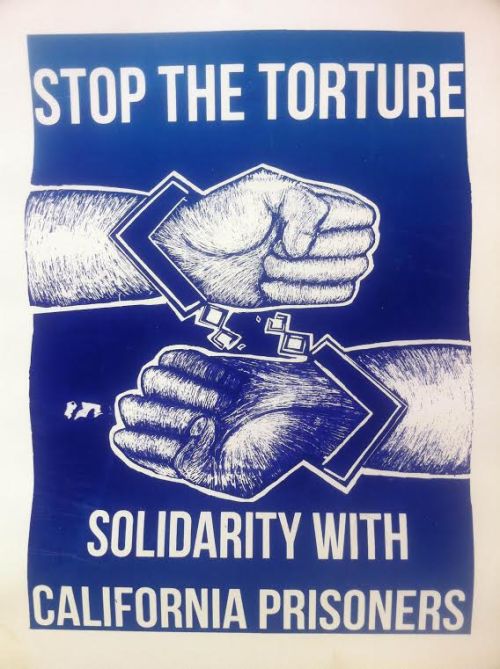
Prisoners in California will no longer be kept in windowless boxes indefinitely. That improves the lives of 3,000 people. It also brings California into line with the practices of virtually all other states. This is landmark.
Many groups were involved in the support of the plaintiffs in the class action suit. Legal Services for Prisoners with Children put out a press release. Below I copy the press release of the Prisoner Hunger Strike Solidarity group.
PRESS RELEASE
OAKLAND — Today, California prisoners locked in isolation achieved a groundbreaking legal victory in their ongoing struggle against the use of solitary confinement. A settlement was reached in the federal class action suit Ashker v. Brown, originally filed in 2012, effectively ending indefinite long-term solitary confinement, and greatly limiting the prison administration’s ability to use the practice, widely seen as a form of torture. The lawsuit was brought on behalf of prisoners held in Pelican Bay State Prison’s infamous Security Housing Units (SHU) for more than 10 years, where they spend 23 hours a day or more in their cells with little to no access to family visits, outdoor time, or any kind of programming.
“From the historic prisoner-led hunger strikes of 2011 and 2013, to the work of families, loved ones, and advocate, this settlement is a direct result of our grassroots organizing, both inside and outside prison walls,” said Dolores Canales of California Families Against Solitary Confinement (CFASC), and mother of a prisoner in Pelican Bay. “This legal victory is huge, but is not the end of our fight – it will only make the struggle against solitary and imprisonment everywhere stronger.” The 2011 and 2013 hunger strikes gained widespread international attention that for the first time in recent years put solitary confinement under mainstream scrutiny.

Prisoner Hunger Strike Solidarity (PHSS) coalition members commemorating the first anniversary of the 2013 hunger strike suspension.
Currently, many prisoners are in solitary because of their “status” – having been associated with political ideologies or gang affiliation. However, this settlement does away with the status-based system, leaving solitary as an option only in cases of serious behavioral rule violations. Furthermore, the settlement limits the amount of time a prisoner may be held in solitary, and sets a two year Step-Down Program for the release of current solitary prisoners into the prison general population.
It is estimated that between 1,500 and 2,000 prisoners will be released from SHU within one year of this settlement. A higher security general population unit will be created for a small number of cases where people have been in SHU for more than 10 years and have a recent serious rule violation.
“Despite the repeated attempts by the prison regime to break the prisoners’ strength, they have remained unified in this fight,” said Marie Levin of CFASC and sister of a prisoner representative named in the lawsuit. “The Agreement to End Hostilities and the unity of the prisoners are crucial to this victory, and will continue to play a significant role in their ongoing struggle.” The Agreement to End Hostilities is an historic document put out by prisoner representatives in Pelican Bay in 2012 calling on all prisoners to build unity and cease hostilities between racial groups.

Drawn by Michael D. Russell, Pelican Bay SHU
Prisoner representatives and their legal counsel will regularly meet with California Department of Corrections and Rehabilitation officials as well as with Federal Magistrate Judge Nandor Vadas, who is tasked with overseeing the reforms, to insure that the settlement terms are being implemented.
“Without the hunger strikes and without the Agreement to End Hostilities to bring California’s prisoners together and commit to risking their lives— by being willing to die for their cause by starving for 60 days, we would not have this settlement today,” said Anne Weills of Siegel and Yee, co-counsel in the case. “It will improve the living conditions for thousands of men and women and no longer have them languishing for decades in the hole at Pelican Bay.”
“This victory was achieved by the efforts of people in prison, their families and loved ones, lawyers, and outside supporters,” said the prisoners represented in the settlement in a joint statement. “We celebrate this victory while at the same time, we recognize that achieving our goal of fundamentally transforming the criminal justice system and stopping the practice of warehousing people in prison will be a protracted struggle.”

Drawn by Carlos Ramirez while in Pelican Bay SHU
Legal co-counsel in the case includes California Prison Focus, Siegel & Yee, Legal Services for Prisoners with Children, Weil Gotshal & Manges LLP, Chistensen O’Connor Johnson Kindness PLLC, and the Law Offices of Charles Carbone. The lead counsel is the Center for Constitutional Rights. The judge in the case is Judge Claudia Wilken in the United States District Court for the Northern District of California.
A rally and press conference are set for 12pm in front of the Elihu M Harris State Building in Oakland, which will be livestreamed at http://livestre.am/5bsWO.
The settlement can be read on CCR’s website, along with a summary. CCR has also put up downloadable clips of the plaintiffs’ depositions here.
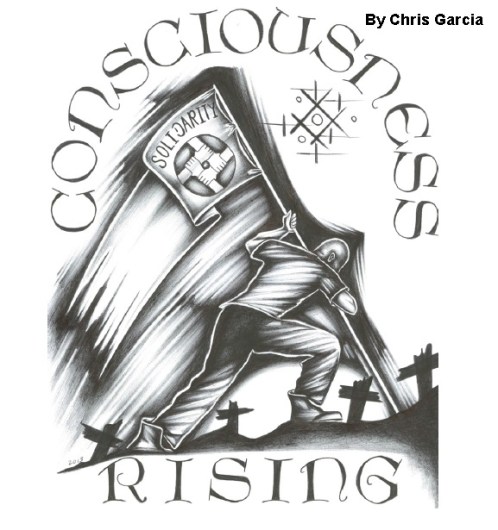
By Chris Garcia, drawn while in Pelican Bay SHU.

Susan Stellin and Graham MacIndoe are raising money to fund the exhibition of their project American Exile at Photoville this autumn.
DONATE TO AMERICAN EXILE HERE
American Exile is a series of photographs and interviews documenting the stories of immigrants who have been ordered deported from the United States, as well as their family members – often, American citizens – who suffer the consequences of the harsh punishment and are sometimes forever separated from a parent or partner transported to foreign lands.
These are people who, ostensibly, have — just as you or I — lived, worked and paid taxes in the U.S. for extended periods. Bar fights that occurred 20 years ago, Visa paperwork deadlines missed, and other minor matters have sometimes led to deportation.
The tumorous growth America’s prison industrial complex goes back four decades whereas the focus of Graham and Susan’s work — the establishment of an extended archipelago of Immigration and Customs Enforcement (ICE) detention facilities — is a much more recent, post 9/11 phenomenon. It is utterly contemporary and it meets the desperate need for journalism that probes ICE procedures.
DONATE TO AMERICAN EXILE HERE
MacIndoe spent five months in immigration detention in 2010, facing deportation because of a misdemeanor conviction – despite living in the U.S. as a legal permanent resident since 1999. After winning his case, he and Susan began gathering stories of families caught up in deportation proceedings, including asylum seekers, green card holders, and immigrants trapped in the bureaucracy of adjusting a visa.
I love Graham and Susan. They have a very comfortable couch. We’ve been friends for several years. Susan has a keen sense of justice and nous for a story and the will to bend an industry to our needs, not its. Graham is an addict who got clean, a street shooter, an artist, a great teacher (by all accounts) and a bit of a curmudgeon for all the right reasons.
–
DONATE TO AMERICAN EXILE HERE
–
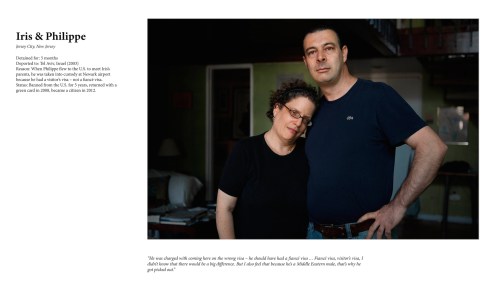
BIOGRAPHIES
Graham MacIndoe is a photographer and an adjunct professor of photography at Parsons The New School in New York City. Born in Scotland, he received a master’s degree in photography from the Royal College of Art in London and has shot editorial and advertising campaigns worldwide. He is represented by Little Big Man Gallery in Los Angeles, and his work is in many public and private collections. Follow Graham on Instagram and Twitter.
Susan Stellin has been a freelance reporter since 2000, contributing articles to The New York Times, New York, The Guardian, TheAtlantic.com and many other newspapers and magazines. She has worked as an editor at The New York Times and is a graduate of Stanford University.
In 2014, Susan and Graham were awarded a fellowship from the Alicia Patterson Foundation for their project, American Exile, and are collaborating on a joint memoir that will be published by Random House (Ballantine) in 2016.
–
DONATE TO AMERICAN EXILE HERE
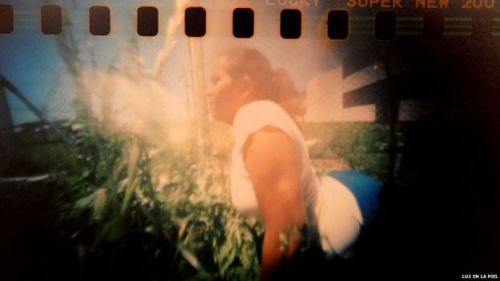
This weekend, the BBC ran a piece about a pinhole photography workshop in a women’s prison in Argentina. I greatly admire pinhole photography in prisons.
The images are atmospheric – retro, a little blurred and with almost fish-eye perspective in some. They look like stills from some 90s skate video or something (I don’t know why that matters). They are awash in color, not unlike every hipster’s favorite, the aura portrait (not sure why that matters either).

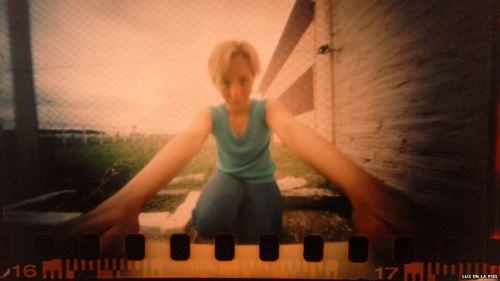
Maybe it was precisely because these images didn’t look like a prison that I was attracted to them. If they weren’t the feature of an article about prison and rehabilitation, they’d have scuttled right by during my day of contestant image flow. naturally, I wanted to know more about their production.
[ SEE MORE OF THE IMAGES HERE ]
They were made during a workshop offered YoNoFui, a organization that provides teaching, community, skills, personal development to prisoners. The organization was founded by Maria Medrano who believes prisons can become productive places for women, cultivating their individuality, esteem and confidence. Currently, they offer nothing of the sort. Medrano has ben recognized as an esteemed Ashoka Fellow and upon the Ashoka website we can find out more about her and YoNoFui’s philosophy.
“Convinced that the prison is the last link in a chain of exclusion and disenfranchisement that ensnares poor women, Medrano pioneered a relationship-centered continuum of education and engagement for women prisoners and ex-convicts to create concrete opportunities for women out of prison and to change the mindsets of prisoners, their families and communities,” it reads.


YoNoFui (translated as “It wasn’t me) also offers courses in poetry, journalism, textiles, bookmaking and carpentry. It’s providing a “holistic approach to transform the way the criminal justice system conceives of and treats women prisoners, making it a productive and more nurturing place. […] Maria’s program deals with the root problems affecting the women, including their lack of labor skills, emotional marginalization and poor self-confidence.”
Some of this language is familiar to us, but a lot of it has not been implemented in Medrano’s home country.
“Women prisoners are the most marginalized segment of Argentine society,” writes Ashoka. “The vast majority are mothers and housewives from very low economic segments of society. 90% of them also come from broken and dysfunctional families, with abusive or drug-addicted husbands and children—whom they often bore while in prison. Many come from two or three generations of women who have been unemployed, and who lack formal education and the social customs that familiarized them with a culture of work. Most never learned the values a healthy workplace inculcates, such as personal responsibility and self-respect. The children of these women are often either neglected or abandoned outright, sent to live with a relative or put into state institutions. About 41% of these women are immigrants with few connections to the local society, having migrated on their own without official papers to seek a better fortune in Argentina, or who were victims of transnational trafficking rings.”
Women end up committing low-level crimes and misdemeanors in Buenos Aires, more out of desperation or necessity rather than from a pathological sense of criminality. However, once sentenced the path is predictable. Argentine prisons reflect upon the most disenfranchised exactly what they had experienced in free society – social exclusion, and permanent second class status. The effects of this exclusion are ben more pronounced upon immigrant women. The majority of people in Argentina are unsympathetic to female prisoners unaware of the complex web of causes to their situation.
Rehabilitation has not been the way.
“Prisons in Argentina function in a militarized way, due to a law passed in 1973 under the military dictatorship. They bear very little emphasis on policies and practices that help support reinsertion of men and women into the labor and social mainstream, leading to high rates of recidivism—although the public ministries do not even care to record the exact figures,” says Ashoka.
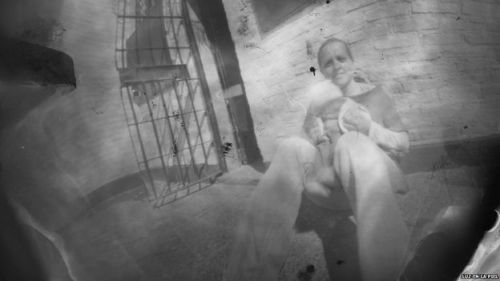
Until Medrano’s efforts, reform efforts were largely absent. Focuses first on building individual relationships, belonging and interdependence, Medrano hopes to break the cycle. It’s hard for us to believe but many women in prison have not been exposed to, shared in, or shown how to believe in themselves.
Medrano is going further than just offering classes; she is tying all education into self-improvement and cultivating buy-in from all constituents. Only with the support of the authorities is she implementing cultural change.
“Success for the effort requires a complex series of negotiations with multiple ministries whose support will be required,” says Ashoka. “Negotiations have already begun with the Ministry of Education and Ministry of Labor, where YoNoFui is holding workshops. By developing broad constituencies among multiple ministries, Medrano is beginning to overcome bureaucratic intransigence, while also shifting the program’s dependence on the penitentiary system, which is part of the Justice Ministry, to other ministries with less of a “law-and-order” stigma attached.”
YoNoFui is working in two of the five federal prisons in Argentina, both in Buenos Aires, with some 600 women prisoners each. Medrano plans to scale up and move into other facilities.
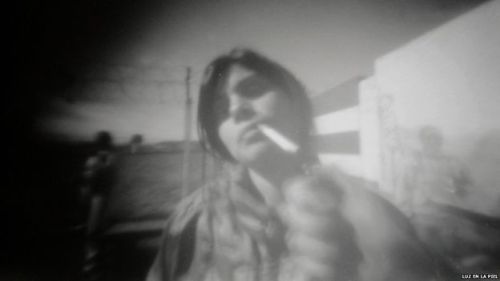

Financial support comes a number of governmental departments astutely identified by Medrano — subsidies for micro-enterprises through the Social Development Ministry; job training grants through the Ministry of Labor; seed capital from the Ministry of Industry. YoNoFui connects women with housing and jobs subsidies.
What they begin in the prison they continue outside. YoNoFui also works with agencies for Social Issues, Prisons, Migrants and Gender Issues, with the Secretariat for Children, Youth and Families — both of which have responsibilities related to the young people whose mothers are incarcerated.
Former prisoners return to the jails to work as teachers, and they are new positive role models to the women inside. Relationships are key. Skills ALONGSIDE psychological and emotional health. Arts and trades continue outside of the penal institutions — carpentry, bookbinding, textile design, textile machinery, weaving, graphic design, silkscreen, photography, poetry and journalism.
The organization is young but Medrano wants a permanent, staffed, full-time “School for Work” inside the prison. In the way, YoNoFui considers young people too in helping them re-establishing their bonds of family, re-adapt to society, YoNoFui can be though of as akin to The Harlem Childrens Zone. Targeting both the practical and the attitudinal is key, that is to build key skills but also to shift the mindset of an entire downtrodden group.
[ SEE MORE OF THE IMAGES HERE ]
Inspiring stuff. Now, aren’t you glad you took a closer look? I am.
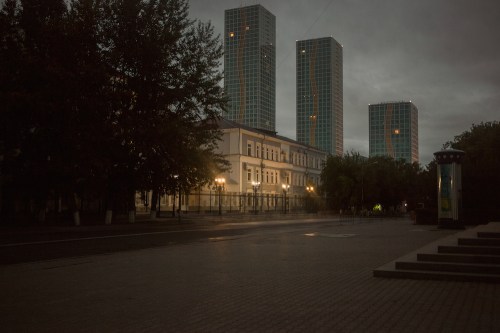
Verint Israel and NICE System Monitoring Center, Astana, Kazakhstan 2014.
Much of my weekend was spent putting a final editing-touches on the latest Vantage article Panopticon For Sale. The piece, details trade between authoritarian regimes (such as Uzbekistan, Kazakhstan, Azerbaijan, Bahrain and others) and corporations that manufacture and maintain cyber-surveillance.
The author, Mari Bastashevski, spent 12 months researching this shady industry — trailing paper work, filing FOIA requests, interviewing and protecting sources, and corroborating statements. Many previously unreported (but commonly suspected) business relations uncovered by Bastashevski have been confirmed by information included in the July 5th hack of Hacking Team (a company that manufactures surveillance technologies) when the identities of its clients were posted online.
As Bastashevski writes in her closing statements:
Companies like NICE, Gamma Group, Verint, and Hacking Team, who sell this power to governments for which “watched a YouTube protests video” constitutes criminal behaviour become co-arbiters of what is and isn’t a “wrong act”. Yet for the companies, much like for their clients, their own secrecy remains absolute and proprietary: not something for press consumption, researchers, or advocates.
Private corporations are facilitating the unfettered surveillance of citizens by paranoid rulers.

NICE Systems HQ, Ra’anana, Israel 2014.
The comparatively unregulated republics in the post-Soviet region are proving grounds for the shit that the power hungry can get away with.
I’ll stop yelling now, encourage you to read Bastashevski’s #longread, and leave you with an my editor’s foreword to further convince you to take in Bastashevki’s text and images.
This is a narrative built upon information that’s incredibly difficult to verify. Outside of the community of privacy advocates and cyber-surveillance researchers, no-one really saw this story, or necessarily knew what it was or why it mattered. That’s because everything that Bastashevski was looking at — or looking for — is invisible, confidential or both.
When Hacking Team was itself hacked, Bastashevski felt vindicated. Not only did the hack confirm the presence of Hacking Team in countries she investigated, it also confirmed the presence of other companies she knew were providing surveillance to those countries. The lies and questionable dealings of a catastrophic industry were laid bare.
“To photograph or to look at what exists on the verge of catastrophe,” critic Ariella Azoulay once wrote, “the photographer must first assume she has a reason to be in the place of the nonevent or event that never was, which no one has designated as the arena of an event in any meaningful way. She, or those who dispatch her, must suspend the concerns of the owners of the mass media regarding the ratings of the finished product and with her camera begin to sketch a new outline capable of framing the nonevent. Photographing what exists the verge of catastrophe thus is an act that suspends the logic of newsworthiness.”
By virtue of hackers’ actions, and not the logic of the news industry, I find myself in a position to publish Bastashevski’s remarkable findings. A condensed version of this work was exhibited at Musee de Elysee and published in the Prix Elysee catalogue (Musee de Elysee, December 2014). It has since been expanded to include a review of targets and surveillance in Azerbaijan, and cross references of the recent evidence obtained through Hacking Team leak.
This is not a photo essay but rather an essay with photos. Bastashevki makes photographs, in many ways, to show her stories cannot be photographed. These images are way-markers along roads of discovery.
–
Read the full piece Panopticon For Sale and see more large images.
–

Ministry of Communication Tashkent, Uzbekistan, 2014.
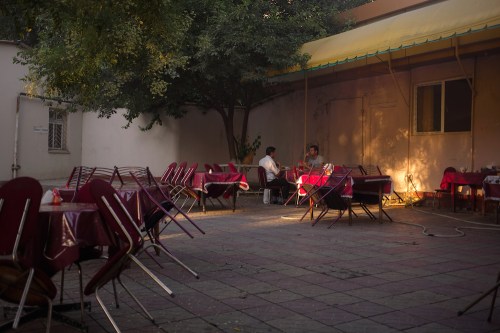
SNB lunch spot, secure Gazalkent district, Tashkent Uzbekistan. 2014.

Monitoring centre (roof) -Tashkent, Uzbekistan. 2014. Location where data obtained with Hacking Team, Nice Systems, and Verint Technologies is analysed and processed.
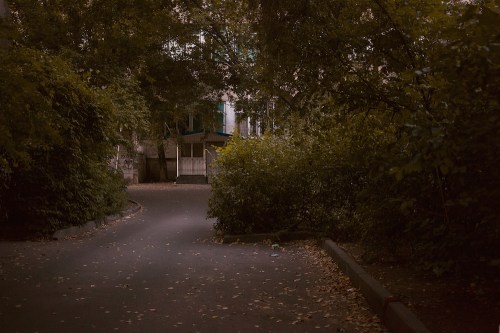
PU-data collection point Kazakhtelecom-Almaty, Kazakhstan, 2014.

Presidential Palace and MNS HQ, Baku, Azerbaijan 2013.
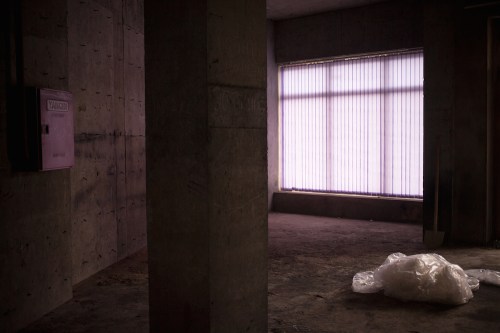

Inside Verint Israel HQ, Herzliya Pituach, Israel 2014.

Transaction — Dedeman Silk Road Radisson Blu, Tashkent ,Uzbekistan. 2014.
–
All images: Mari Bastashevski

Statewide Coordinated Action to End Solitary Confinement, Oakland
Critical Resistance, today, reflected back upon the California Prisoner Hunger Strike, which had several iterations beginning in 2011 and culminating in 2013.
The update:
Two years ago today, the largest prisoner hunger strike in California’s history was started by prisoners in solitary confinement at Pelican Bay State Prison. Within the first month of the strike, over 30,000 in California’s prisons had joined, raising the call for the five core demands in unified struggle. The strikers received overwhelming support, with prisoners from across the U.S., in Guantanamo Bay, and as far as Palestine sending statements of solidarity. Outside prison walls, families, loved ones, and organizers elevated the imprisoned voices to an international scale, sparking solidarity actions all over the world, and even prompting the U.N. to call on California to end the use of solitary.
However, the struggle continues. The prison regime has refused to meet the strikers’ demands in any meaningful way, opting to demonize and repress prisoners.
A class action lawsuit brought on behalf of Pelican Bay solitary prisoners in 2012 is ongoing despite numerous attempts by the state to weaken and halt it. Importantly, grassroots organizing has been reinvigorated, with the Prisoner Hunger Strike Solidarity Coalition organizing statewide coordinated actions on the 23rd of each month since March of this year to continue raising awareness and building the movement to end solitary, with the actions growing larger across the state.
In the words of Todd Ashker, one of the hunger strike leaders, “I personally believe the prisoncrats’ efforts to turn the global support we have gained for our cause against us will fail […] CDCr rhetoric indicates desperation – a very concerning desperation in the sense that it is demonstrative of CDCr’s top administrators’ intent to continue their culture of dehumanization, torture and other types of abusive policies and practices […] Our key demands remain unresolved. The primary goal is abolishing indefinite SHU and Ad Seg confinement and related torturous conditions.”
Especially in the wake of Riker’s Island scandal and Kalief Browder’s death, the nation is aware of widespread torture — by means of solitary confinement — in U.S. prisons. But, a few years ago the issue was only just beginning to register on the national conscience. It cannot be overstated how vital California prisoners’ efforts (with support from families and allies outside) led the march against this abusive and invisible practice.
Two long and short years … depending on which side of the box you are.
Also, not to be missed is this extended, #longread analysis of the situation two years on by the indubitable Vikki Law at Truthout, Two Years After Pelican Bay Hunger Strike, What’s Changed for People Inside the Prison?
Law writes:
The California Department of Corrections and Rehabilitation (CDCR) continues to claim that “there is no ‘solitary confinement’ in California’s prisons and the SHU is not ‘solitary confinement,'” but people inside the Pelican Bay State Prison’s security housing unit say they remain locked in for at least 23 hours per day. Meanwhile, in June 2015, the CDCR released proposed new regulations around its use of the security housing unit and administrative segregation – regulations that may, in part, curb participation in future strikes and other prison protests. […] The regulations are currently going through the required public comment period in which any member of the public, incarcerated or otherwise, can submit written comments. A public hearing is scheduled for August 7, 2015.
Author Todd Ashker, who was locked in the security housing unit at the Pelican Bay State Prison, disagrees with the California Department of Corrections and Rehabilitation’s assertion that its prisons do not have solitary confinement.
In a 13-page typed statement, Ashker describes how, along with over 1,000 other people, he is locked for 25 years of his life into 11-by-seven-foot cells for at least 22 hours a day. The security housing unit cells have no windows and their doors face a wall so that those inside cannot see each other through the door slot. Any time they are taken out of their cells – for a shower, a visit or an hour of recreation in an exercise cage – they are handcuffed and ankle chained.
“What would it be like to have one’s bodily contact with others reduced to the fastening and unfastening of restraints, punctuated with the most intimate probing of the surface and depths of one’s body?” Ashker writes in his statement.
Solitary still exists and for long as it does, and for as many years tick by, it must be opposed. By us. We.


 Prison Photography