
You are currently browsing the category archive for the ‘Documentary’ category.
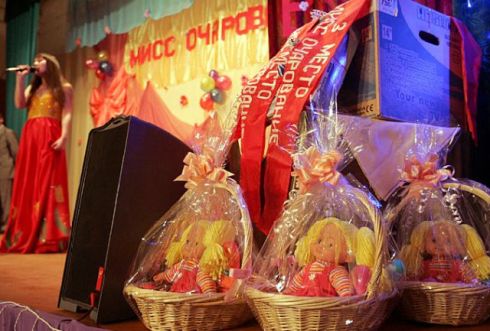
I realise things have been drab and monochromatic (and quite frankly depressing) on Prison Photography recently. My solution was to put up some prison beauty pageant images from Russia I found on a Russian website via BoingBoing.
I reckoned they’d stand in nice contrast to Jane Evelyn Atwood’s bleak images of the womens penal colony, Perm, Russia by directly testing Atwood’s view and undermining our preconceptions oncemore.
The photographs could also provide some much needed colour without much need for commentary, right? Wrong. The comments on BoingBoing suggest that not all, if any, are from Russian womens’ prisons.
Comparison with Fabio Cuttica’s work here and here holds up this assertion. Compare the two images below:
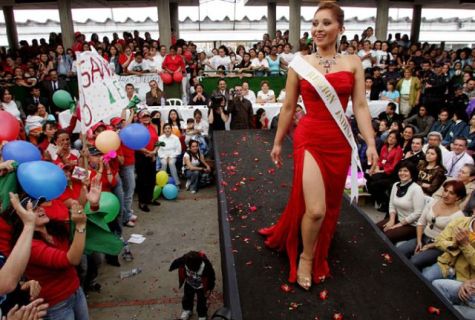
PHOTOGRAPH CLAIMING TO BE FROM RUSSIAN PRISON. Source: http://www.webpark.ru/comment/52940
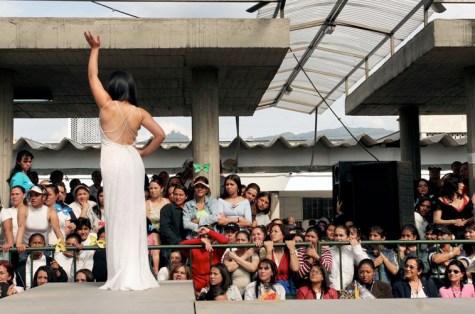
PHOTOGRAPH KNOWN TO BE FROM COLOMBIA. Credit: Fabio Cuttica. Source: http://www.nerve.com/dispatches/prisonpageant/
I’d proffer that seven of the fifteen images in the original (Russian) web posting are from the same pageant Cuttica photographed in Columbia.
The image at the top and the three below I would guess are from Russia, but who can be sure if they are even from inside a prison?
I am left wondering how often I’ve read a caption or commentary ON ANY PHOTOGRAPH – and taken it as truth. Very often, I bet. Which leads me to wonder how often we’re dangerously misled by images. Who knows?
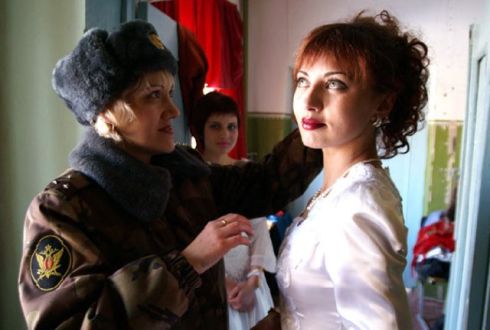

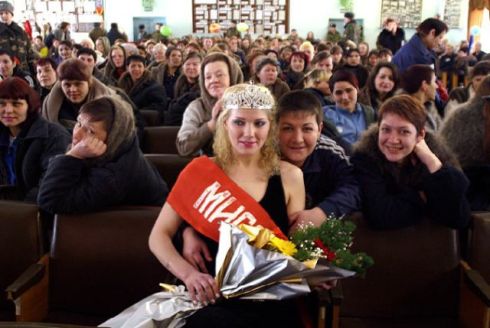
I suppose this only matters if you care if the images came from within a prison. Amputated from a true story, these images aren’t a malicious misrepresentation but probably a product of absent research. Although one wonders under what circumstances images from separate continents were sourced and paired.
So, beware the caption! Adam Broomberg and Oliver Chanarin have said “A photograph that relies on its caption to create meaning is impotent.” The reverse position holds sway too. Mustn’t captions be absolutely necessary at times to stave of the wild presumptions viewers bring to imagery?
“Curiosity was the initial spur. Surprise, shock and bewilderment soon took over. Rage propelled me along to the end.”
Jane Evelyn Atwood on photographing in women’s prisons.
This is the third and final installment in my series Women Behind Bars. The second part looked ta the writing of Vikki Law and the first looked at the journalism of Silja Talvi. It was Silja who recommended Jane Evelyn Atwood’s work.
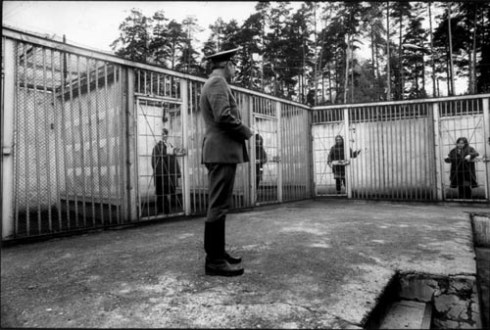
When discussing the work of a prison photographer, it is preferable to do so within the specifics of the region or nation they document. Prison Photography‘s key inquiry is how the photographer came to be in the restricted environment of a prison and these details differs from place to place. Such inquiry is complicated by Jane Evelyn Atwood‘s work because she visited over 40 prisons in twelve countries over a period of one decade. In some cases I know the location of a particular image and in others I don’t. I suggest you compensate for this by buying the book Too Much Time for yourself.
Above is a women’s penal colony in Perm, Russia. It holds over 1,000 women – the majority of who work forced hard labour. Here we see women who are in solitary confinement experiencing their yard privileges – half an hour in outside cages. Most women in the prison are there for assault, theft or lack of papers.
Below is a scene from a Czechoslovakian prison. The scars are not the result of genuine suicide attempts but of regular self-mutilation – a problem more common among female prison populations than male populations.

Another reason to pick up Atwood’s book would be that there isn’t much stuff out there on the web – and that which is is low resolution or small-size. You can see a small selection from Atwood’s Prison series at her website; small images at PoYI; and a really good selection of tear-sheets at Contact Press Images.
By far the best stuff on the web concerning Too Much Time is an Amnesty International site devoted to the project. It includes a powerful preface in which Atwood lays out her raison d’etre. Next Atwood provides a “world view” comparing the prison systems of France, Russia and the US (each a five minute audio). Then comes three specific photo-essays with audio (Motherhood, Vanessa’s Baby, The Shock Unit). Finally, Atwood provides six stories behind six photographs. The stories are many and the facts more astounding than the emotions.
While Atwood’s pictures present the many individual circumstances of the prisoners, Atwood has identified a common denominator; “Of the eighteen women I met in [my] first prison, all but one seemed to be incarcerated because of a man. They were doing time for something he had done, or for something they would never have done on their own.”
Atwood qualifies this, “One woman told me her husband forced to set the alarm to have sex with him three times a night. She endured it for years and finally killed the man that kept her hostage. Another woman’s husband was shot by her daughter after he had stabbed her in the arm as a “souvenir”, poured hot coffee on his wife’s head for not mixing his sugar, and urinated all over the living room after one of the children refused to come out the bathroom. The woman was serving time for “refusing to come to her husband’s aid.”

What is most impressive about Atwood’s work is that it predates photojournalism’s wider interest in prisons by a couple of decades. She had at first tried to gain entry into a French prison in the early eighties. Her failure is unsurprising given Jean Gaumy of Magnum was the very first photojournalist inside a French prison in 1976.
It is a scandal that the discussion over shackling women during labor and gynecological examination continues today. Atwood captured the brutality of it decades ago.

Atwood’s work veers consciously between two reality of the women’s situation – the environment and the body.
Many of her photos share a compositional austerity. The hard angles of institutions run according to ‘masculine mathematics’ (dictating sentencing and experience) are repeated. Atwood punctuates this stern reality with flourishes of femininity … and touch.

Some may think Atwood has over-reached herself with a global inquiry and I’d be sympathetic to the point if anyone else had come close to her commitment. Even considering each prison system in isolation, Atwood’s work can hold its own. Her work in Perm, Russia is particularly powerful as it orbits closely around the issue of uniform, identity and the complications it brought to bear directly on her documentary.
At the Amnesty site, Atwood brings up many interesting points of comparison. She identifies the US system as the most sterile with a legal mandate to treat female prisoners in the same manner as male prisoners. But she also says that if there is grievance or complaint to be settled, US prisoners have recourse to do so. Such allowances are not made in France.
On the other hand, children are excluded from all but a couple of US prisons. The security threat is cited as the reason: a child inside a prison is a constant vulnerable life and constant hostage target. The claim seems a little bogus when penal systems of other countries are brought into consideration.

Atwood was interviewed by Salon about the project. She has also worked on landmine victims and talked to Paris Voice about that. Here, she talks about Canon about her work in Haiti.

Jane Evelyn Atwood
Biography: Jane Evelyn Atwood was born in New York. She has lived in Paris since 1971. In 1976, with her first camera, Atwood began taking pictures of a group of street prostitutes in Paris. It was partly on the strength of these photographs that Atwood received the first W. Eugene Smith Award, in 1980, for another story she had just started work on: blind children. Prior to this, she had never published a photo.
In the ensuing years, Atwood has pursued a number of carefully chosen projects – among them an 18-month reportage of a Foreign Legion regiment, following the soldiers to Beirut and Chad; a four-and-a-half-month story on the first person with AIDS in France to allow himself to be photographed for publication (Atwood stayed with him until his death); and a four-year study of landmine victims that took her to Cambodia, Angola, Kosovo, Mozambique and Afghanistan.
Atwood is the author of six books. In addition, her work has been including the ‘A Day In The Life’ series. She has been exhibited worldwide in solo and group exhibitions. She has worked for LIFE Magazine, The New York Times Magazine, Stern, Géo, Paris Match, The Independent, The Telegraph, Libération, VSD, Marie-Claire and Elle. Atwood has worked on assignment for government ministries and international humanitarian organizations, including Doctors Without Borders, Handicap International and Action Against Hunger.
She has been awarded the Paris Match Grand Prix du Photojournalisme (1990), Hasselblad Foundation Grant (1994), Ernst Haas Award (1994), Leica’s Oskar Barnack Award (1997) and an Alfred Eisenstaedt Award (1998). In 2005, Atwood received the Charles Flint Kellogg Award in Arts and Letters from Bard College, joining a company of previous laureates including Edward Saïd, Isaac Bashevis Singer and E.L. Doctorow.
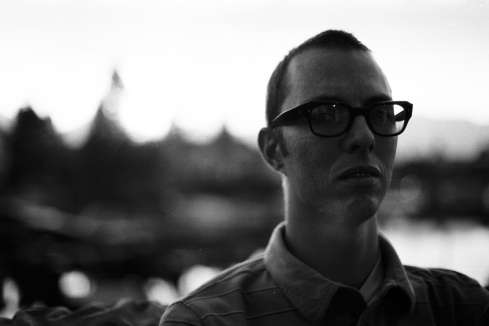
Had a fun time in New York last week. Stayed with Jack and Marisa. Below is not Jack. Below is Chris by Jack.
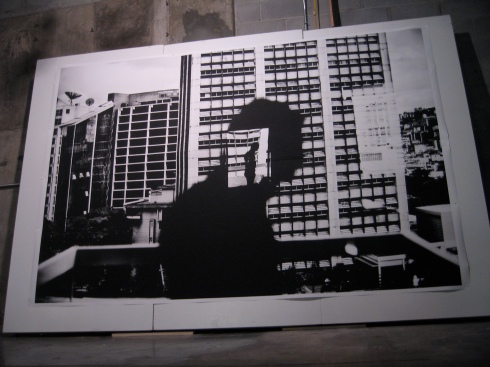
We went to Christopher Anderson’s book launch for Capitolio. It was great to see it after recent reviews, heated debates (check out comments) questions and wot not. I don’t think the selection of the images was the best.
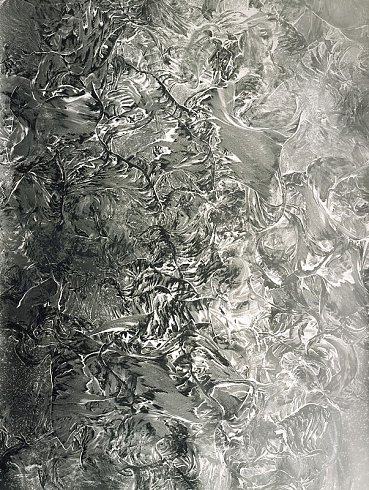
At the Metropolitan, Surface Tension: Photographs from the Permanent Collection was a pleasant whimsy into some mesmerizing works, notably Adam Fuss’ UNTITLED (1997) made by the metronome shimmers of snakes upon black dust upon white dust. Image Source: Cheim & Read
The Met’s photography department was putting together the final touches on Robert Frank’s The Americans which opened this week. It was all hands to the pump as evidenced by besuited Malcolm Daniel – who I spied carrying large, heavy object (post?) behind a partition and into the exhibition space.
Egg and Cheese Bagel.
Over at the Museum of Modern Art, I was pleased to see Russell Lee‘s work Bulletin Board in Post Office Showing a Large Collection of “Wanted Men” Signs, Ames, Iowa (1936). Who doesn’t love a mug shot?


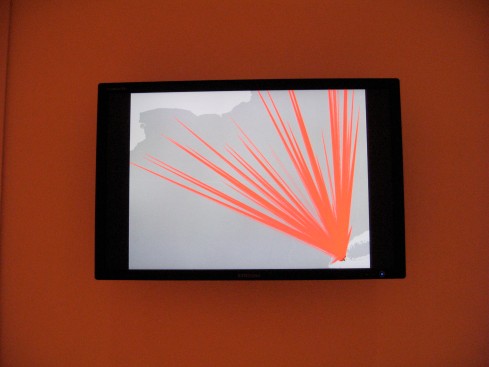
Bringing the practice of mapping of transgressions into the 21st century, the Spatial Design Lab from the Graduate School of Architecture, Planning and Preservation at Columbia University exhibited its Million Dollar Blocks Project (2006).

On Monday night I sat with Andrew Lichtenstein. We talked. Andrew recommended Brennan Linsley‘s work and was quite emphatic about the book ‘Concrete Mama‘. He also spoke highly of Max Kenner and the work at the Bard Prison Initiative
Tuesday, I met Emiliano Granado. We were first in contact over his San Quentin Giants pictures. We talked about many things including Trevor Paglen, Argentina, the Burke Gilman, and the Horticultural Society of New York, which recently lost Barbara Margolis who was an inspiring leader. Emiliano recommended Alessandra Sanguinetti‘s work.
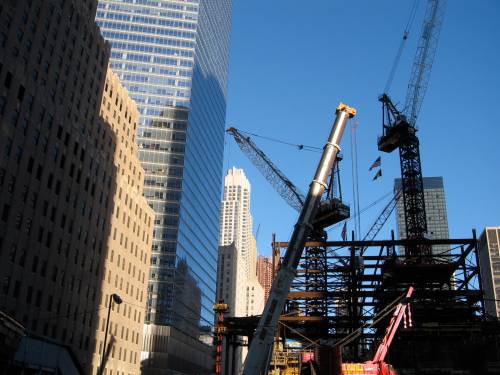
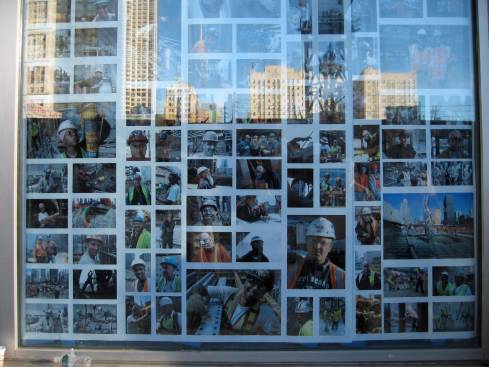
On Sunday, I’d been at the WTC construction site. There was some portraiture on display in a window. The space behind the window was closed but would usually be open. The photographs were easy on the eye.
On my last night I checked out Steven Hirsch’s Courthouse Confessions.
That’s Matt Kelley looking at Steven’s work. He’s coordinator for Change.org Criminal Justice, online communications for the Innocence Project and all together nice bloke. Matt’s double identity is twittered and can be followed here and here.
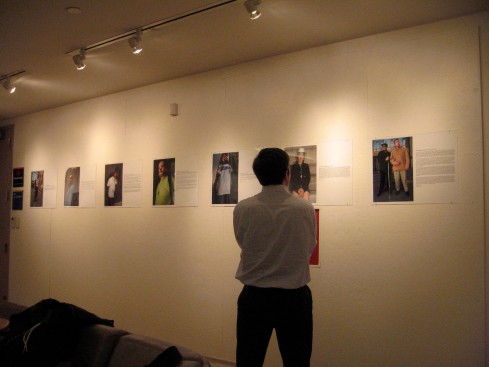
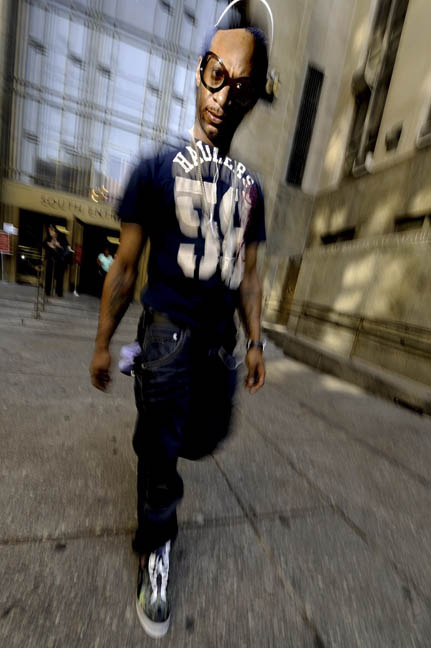
Hirsch takes street portraits of folk going to court, secures (in some ironic twist) a non-binding statement and then transcribes it verbatim to go with the portrait. Constantly moving the camera, Hirsch uses hard flash and distorted angles/zoom to depict these individuals as shape shifters; as anomalies. The fact Hirsch’s subjects (in most cases) seem alien to the logic of the courts – that any lessons arising from their cases are unlikely to effect sentencing laws in the future – should but be a source of disquiet for us as an audience.
One last thing. On Saturday, I saw John Baldessari sat outside a Grennwich Village coffeehouse, but I bottled saying anything. I’ve learnt that famous people abound in Manhattan and you see ’em everywhere.
Thanks to everyone who altered their orbits a little to coincide with mine.
Words
Prisoners All posits that we are all severely impeded, individually and as a community, because of bad politics, poor policy and family devaluation. The posts are really well composed.
The anonymous author – by the pseudonym of Zebulon Brockway – has “worked many years in [California] prisons, and worked many years in journalism” and believes “much written about prisons is misleading at best and wrong at worst. The false impressions and false information are not helpful to public discourse”.
Moving Images
John Malsbary contacted me at the start of the Summer to tell me of his new venture Prison in Cinema.
John’s moving across a country at the moment. His few posts suggest he’ll be worth watching. John brought to my attention the film The Jericho Mile made on location at Folsom State Prison in 1979. Anthony Friedkin photographed Folsom convict portraits twelve years later. Mann’s directing and Friedkin’s shooting share in visual dialogue.

Four Convicts, Folsom Prison, CA. Anthony Friedkin. 1991. Silver Print. 16 x 20 inches.
Reading
Governing through Crime; WA State Library; Grits and Bid’ness in Texas; and Ben Gunn (Serving prisoner) and John Hirst (Released) in the UK.
Followed LEAP’s twittering and other ones …
Stats
The Dallas News reported the ‘Circumstances, Evidence, Problems and Outcome’ of five cases of arson in Texas under re-examination. That includes the Cameron Todd Willingham case. (via The StandDown Project)
‘A Paperclip and a CD’
Matt Kelley at Change.org had a well reasoned rallying call for support of prison book programs. Take Action.
Edmund Clark
A favourite of mine. Since recommended by Nathalie Belayche. Colin Pantall (recently back from a summer blogatical) and LensCulture showing Clark‘s new prison series, ‘If the Light Goes Out: Home from Guantanamo’.
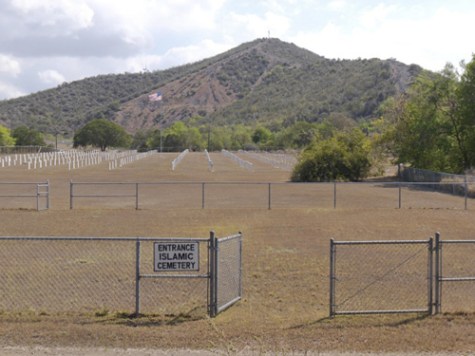
Naval Base Cemetery by Edmund Clark
Naval Base Cemetery (above) is not typical of the project. It is outside. ‘Home from Guantanamo’ uses the same detailed look at everyday institutional and domestic objects in their place. I don’t think it is as successful as ‘Still Life: Killing Time’, as I don’t think this approach lended itself as well to the War About Terrorism as it did to the Geriatric E-Wing of Kingston Prison, Portsmouth. ‘Killing Time’ is best viewed as a slideshow with Erwin James’ commentary.
Reciprocity Success
And finally, thanks to Stan for his coordinations and libations. Stan recommends Courthouse Confessions, as do I.

Cameron Todd Willingham in his cell on death row, in 1994. He insisted upon his innocence in the deaths of his children and refused an offer to plead guilty in return for a life sentence. © Ken Light.
Read the The New Yorker‘s article Trial by Fire about Cameron Todd Willingham, which asks, “Did Texas Execute an Innocent Man?”
Ken Light photographed Willingham fifteen years ago in his death row cell.
Willingham was accused of setting his house alight while his three children slept inside, tried for arson and murder, found guilty and sentenced to death. He always professed his innocence. Willingham was executed on February 17th, 2004. Before and since his execution, evidence supporting his conviction has been brought into question. Eye-witness testimonies conflicted and the fire forensics for the case are considered unreliable.
Recently, I spoke with Ken Light about his Texas Death Row.
The New Yorker only had one photographer to turn to for an image of the incarcerated Willingham. Without Texas Death Row (1994), we would have precious little photographic record of the lives and experiences of Texas’ institutions for the condemned.
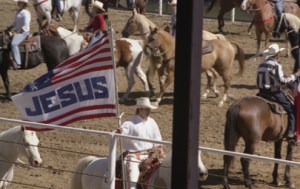

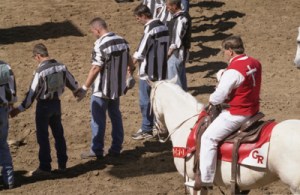
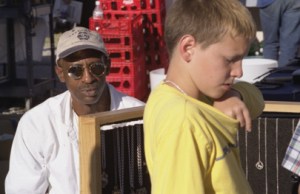
Yes folks, a US prison runs a rodeo for the entertainment of the public (from Louisiana and beyond). Believe it.
I have only ever discussed this event in terms of is dicey ethics, but being a weak-spined liberal never gone full-throtle in condemning it as exploitation. Matt Kelley and I were both agreed that we couldn’t fully judge the spectacle without having been ourselves or talked directly with participants.
I met Tim McKulka, one of many photographers to have shot at Angola, and asked for his impression.
The rodeo of course exploits the prisoners. It is gladiatorial . It is taking people without the skills to ride a bull and putting them on a bull for peoples’ entertainment. For the prisoners themselves, it gives them the opportunity to be a normal person a couple of weekends in the year. It is an opportunity to make some money, to see their family, to earn a belt … so what have they got to lose?
Do you think any of them are taking part precisely because they are on life sentences?
I don’t know what the percentage of the participants is in terms of lifers. I know in the prison itself has about 92% [of offenders on life sentences] Some of them for some absurdly minor crimes – a third offense or an unarmed robbery. But I don’t know. What I do know is that – from the prisoners I talked to – it’s a voluntary program and no-one is forced to do it.
They are being exploited but that prison in particular is the only prison in America that turns a profit so it is an exploitative institution anyway.
McKulka has since moved far away from the cultural mores of the American South. He has crossed an ocean and continent but continues documenting the politics of race and identity.
Tim McKulka started shooting for Edipresse Publications in 2003. With Jean-Cosme Delaloye, he covered diverse feature stories such as the crisis in Haiti in 2006, the Angola Prison Rodeo, the US presidential elections in 2004, illegal immigration into the US and New Orleans in the aftermath of Katrina. In 2005, he covered the presidential elections in Liberia. In 2006, Tim started with Jean-Cosme this project of a news agency. He later joined the UN as a photographer in the fall 2006. He is now based in Juba, in Southern Sudan.
Two things today. First an important debate. Second my own reflections and housekeeping.
debate
Ben Chesterton at DuckRabbit has had ongoing discussions with MSF / Medicin Sans Frontier / Doctors Without Borders for many months (years?) about the use of media and the fine line between MSF’s promotion of aid work and fair representation of the peoples they work with. Duck has opened a worthwhile debate with Pete Masters of MSF on the duckrabbitblog with regard this new MSF advertisement.
Feel free to add your comments over on Duck’s blog. I know Ben will appreciate and we should all benefit, right?
house keeping
In absolutely no way related – AND, I encourage you not to presume the fictional scene in the MSF ad as one set in Africa – I’d like to return to an image I featured on Prison Photography in December.

The image is by Tim McKulka. The caption reads: The container which serves as a detention facility as human rights and protection officers make an inspection of the capacity of police and prison service. UNMOs from Torit team site were engaged in a long range patrol to Chukudum along with various civilian sections of UNMIS in order to assess the security and social conditions of the area.
Last night, I had the great privilege of attending a YPIN World Affairs Council presentation by Tim McKulka and his partner Anyieth D’Awol about Human Rights in Sudan. There were a few thing that I took from the talk:
1. The problems in Darfur are very serious, but Darfur is not the only conflict in Sudan
2. Things are better now than they were one, two or three years ago – if you measure better by fewer deaths.
3. The predominant source of unrest in the Sudan always stems from the growth of the capital, Khartoum, at the expense of the periphery.
4. Since independence from the British in 1955, Southern Sudan has never known stable or benevolent governance (Civil wars raged from 1956 – 1975; and then from 1982 – 2005). The first war was settled with the drawing of a new boundary between North and South and newly provided autonomy. The second war began because rich reserves of oil were found within the territory of South Sudan and consequently Khartoum and the North reneged on the agreement, grasped for the wealth and resorted to aggression.
5. There exists to this day tribal conflicts in the central areas of contested lands, particularly Aybei where much of the oil reserves lie.
Needless to say the talk was humbling – Tim and Anyieth successfully gave a summary of culture and politics across the entire country, covering the last 60odd years. No small achievement!
I wanted to finally pin down some background to the image and so I asked Tim, “What is that container assemblage exactly?” His response,
It was in a place called Chukudum in southern Sudan, East Equatoria State and it shows that there is no other place to put prisoners. There are crimes being committed but there is no justice, no security; no security sector. The police don’t have guns, or cars, or transportation. They don’t have communications. So the container is what people are left to use when they have prisoners. What else can you do with them?
Tim has followed much of the peacekeeping and reconstruction work in Sudan. This has involved shadowing the training of new prison officers and the establishment of new institutions for juvenile justice. I hope to follow up on this with more involved comments from Anyieth as she, as a human rights lawyer, has far more knowledge in the area … and Tim deferred to her experience.
Here’s Tim’s portfolio Faces of Sudan.
Tim McKulka has been working as the senior photographer for the United Nations Mission in Sudan since September 2006. Prior to that, he was based in New York covering national and international news as a freelance photojournalist for Polaris Images. He graduated with a fine arts degree in photography from the School of Visual Arts in New York. His work has been featured in numerous national and international publications including The New York Times, Christian Science Monitor, Italian Vanity Fair, The Washington Post, and Time Magazine.
Anyieth D’Awol LLB, LLM is an independent researcher working in Southern Sudan. She has worked for the United Nations Mission in Sudan (UNMIS) as a Human Rights Officer. She also worked for the Joint Donor Office as a Policy Officer. Anyieth was a Senior Researcher for the Presidential Advisor on Gender and Human Rights with the Government of Southern Sudan, focusing primarily on sexual violence and human rights issues and the military. She is the founder of a civil society organization providing underprivileged women and girls opportunities for sustainable income through arts and crafts while creating opportunities for capacity development in literacy and numeracy, and providing information on HIV, gender and human rights issues.

No Caption Needed (NCN) is a bubbling blog-broth of visual politics and opinion that swills about their own cast-iron-think-piece cauldron. Last year, NCN (Robert Hariman & John Louis Lucaites) posted thoughts on America’s Prison Industrial Complex.
NCN began by stating, in my opinion, an irrefutable fact, “The prison system in the United States gives a hard meaning to the adage ‘out of sight, out of mind’.”

2008. Copyright: Andrew Lichtenstein
Specifically, NCN was reacting to the formidable work of Andrew Lichtenstein who has documented for many years America’s sites of incarceration. In 2006, he was a Soros Documentary Photography Grant recipient.
The words that stuck with me from NCN’s post The American Gulag were those that lamented Democrat and Republican obstinacy and mutual blindness to shared agendas. NCN suggests both major parties have ideological roots which should inform progressive positions on prison reform and thus the down-scaling of US reliance on custodial sentencing:
NCN’s brand of commentary on this type of pariah-issue is in stark comparison to the empty promises of politicians to reach across the aisle.

 Prison Photography