
You are currently browsing the category archive for the ‘Documentary’ category.
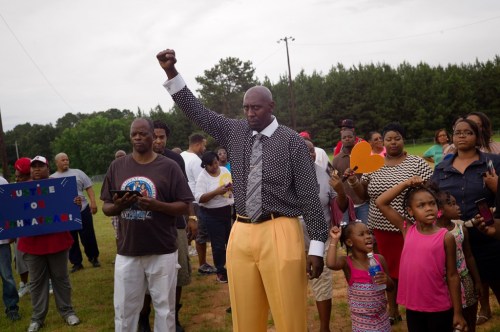
A rally in Stonewall, Mississippi calling for the indictment of Officer Kevin Herrington on charges of murder of Jonathan Saunders
The last thing I consumed on the internet yesterday was a story Another Reason To Question Whether Black Lives Matter In Mississippi by Alan Chin about the fatal shooting of a black man by a cop in rural Mississippi. His name was Jonathan Saunders.
The first thing I consumed on the internet this morning was a cop body cam video of said cop shooting an black man in the head. His name was Samuel DuBose.
Is it now a daily, normalised experience for myself, and for others, to consume death, filmed and online?
In between last night and this morning, I put the finishing touches to an essay for a fall publication about some haunting and frantic sketches made by a prisoner in solitary confinement. What is happening in the darkest, invisible, coldest cells of our criminal justice has everything to do with what is happening on our streets (after all, solitary confinement is disproportionately used against men of color and black men are 250% more likely to be thrown in the hole.) In my essay last night I wrote:
The Black Lives Matter movement has successfully tied over-zealous community policing, to stop-and-frisk, to restraint techniques, to custody conditions, to a bail system that abuses the poor, to extended and unconstitutional pretrial detention, to solitary confinement in a devastating critique of a structurally racist nexus of law enforcement. #SayHerName. Sandra Bland in Waller County, Texas; Jonathan Saunders in Mississippi; Tamir Rice in Cleveland; Charly Leundeu Keunang in Los Angeles; Sgt. James Brown in an El Paso jail; James M. Boyd in the hills of Albuquerque; John Crawford III in a WalMart in Ohio; Walter Scott in North Charleston; Eric Garner and Akai Gurley in New York; Michael Brown in Ferguson, Missouri; and thousands of more people over the past 12 months alone killed by law enforcement.
The Guardian is trying to keep track, and Josh Begley at the Intercept is trying to visualize killings by cop, but the statistics are frightening and as the cases come more and more often, they seem to get more and more egregious. Ray Tensing straight up murdered Samuel DuBose. No question. July is set to be the deadliest month of the year for people killed by police.
The tragedy heaped upon tragedies that Chin’s article hit home for me was that the news cycle can only deal with a handful of cases at any given time. But there’s scores of officer involved deaths every month. If the rate of killings continues, we’ll have seen over 1,100 deaths at the hands of law enforcement by the close of 2015.
I can’t imagine the trauma, anger and sense of injustice in Saunders’ family and community. I cannot fathom that 1,100 times over. I’m almost lost for words except for this thought. Pre civil rights, photography was used to boast of lynchings and hate crimes. During the civil rights struggle photography was ammunition in the fight for justice and the abolishment of racist laws. Since civil rights photography has broken from its usual documentary constraints to power the biggest growth of any society in the history of man, but despite massive wealth, we are still so poor in terms of understanding inequality and the combined effort by a society to fend it off. Now, images–moving and still–are taking center stage in public outrage and prosecution attempts toward law enforcement personnel who kill citizens. I just wonder what we will do with the footage of death — the jail surveillance tapes and the police body camera videos — if, in 10 or 20 years, we’ve not been able to change anything.
If nothing changes, the footage will become evidence against our own inaction in the face of massive racism and social inequality.
Change we must.
As I am lost for words, I’ll leave you (as Alan Chin did in his article) with the words of Frances Sanders, the mother of Jonathan Sanders.
“He is my son and I loved him and he didn’t deserve to die. There ain’t but one policeman who came to offer his condolences and he was black. So don’t tell me it wasn’t racism. We got a long way to go.”
–
See more of Alan Chin’s photos from the assignment at Facing Change.
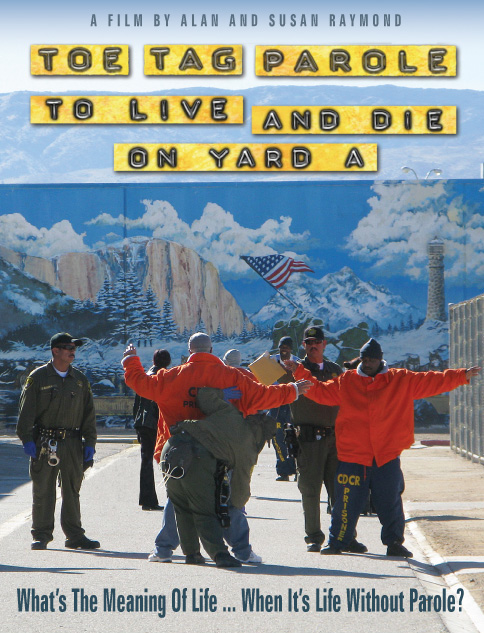
Toe Tag Parole premiers Monday, August 3rd at 9pm on HBO.
–
A: When it is a Life Without Parole (LWOP) sentence.
–
While criminal justice reformers, D.C. politicos, President Obama and the like are pressing for change they all too often focus on arguments for the release of non-violent (usually drug) offenders. Releasing that “category” of prisoner though doesn’t deal adequately with mass incarceration or prison overcrowding. We need, as a society, to look at how we treat those who are imprisoned for the longest sentences, how they got their and what we can do as a community to scale back on the vengeance and violence inherent to the prison system.
A literal life sentence is commonly referred to as Life Without Parole or LWOP. Activists tend to use the term Death By Incarceration.
In all other circumstances, parole is a complex and varied thing, but when the possibility of parole is removed it’s far simpler … and more brutal.
On HBO on Monday, there’s a documentary Toe Tag Parole: To Live and Die on the Yard, by Oscar-winning filmmakers Alan and Susan Raymond about LWOP.
To tell the story of LWOP, the Raymonds found an unusual facility in Los Angeles County, a maximum-security facility in the Mojave Desert. Yard A at California State Prison is the The Progressive Programming Facility — a space that committed LWOP prisoners and the California Department of Corrections forged together. With laws and sentences unlikely to change for those who are deemed the most dangerous, the “most dangerous” went about finding their own solutions.
Yard A — which inmates call The Honor Yard — is a prison yard is free of violence, racial tensions, gang activity and illegal drug and alcohol use. It’s the only type of its kind in the nation. 600 men living in The Progressive Programming Facility and seek self-improvement and spiritual growth through education, art and music therapy, religious services and participation in peer-group sessions.
The press release reads:
Ken Hartman, who beat a man to death at age 19 while drunk, and has been in prison for 36 years, says, “There’s a progression that these things go through. People used to be stoned to death and then they were shot and then they were hung, they were electrocuted. Each step along the way always the argument is made that this is a better kind of death penalty. I’m sentenced to Life Without the Possibility of Parole. It’s not better than the death sentence, because it is the death sentence.”
It promises to be a wonderful film. In an ideal world though, extraordinary efforts by men inside wouldn’t be needed because many of them would be offered the opportunity for improvement and release by the structures of the state.

It’s a long list of things that makes Angola Prison aka Louisiana State Penitentiary the most photographed prison in the United States. Top of that list is the fact of the prison rodeo.
Add Jana Asenbrennerova to the list of the many photographers who’ve been there before.
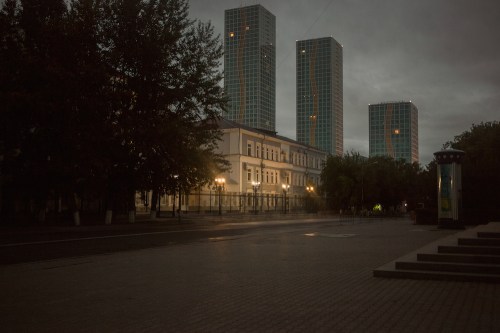
Verint Israel and NICE System Monitoring Center, Astana, Kazakhstan 2014.
Much of my weekend was spent putting a final editing-touches on the latest Vantage article Panopticon For Sale. The piece, details trade between authoritarian regimes (such as Uzbekistan, Kazakhstan, Azerbaijan, Bahrain and others) and corporations that manufacture and maintain cyber-surveillance.
The author, Mari Bastashevski, spent 12 months researching this shady industry — trailing paper work, filing FOIA requests, interviewing and protecting sources, and corroborating statements. Many previously unreported (but commonly suspected) business relations uncovered by Bastashevski have been confirmed by information included in the July 5th hack of Hacking Team (a company that manufactures surveillance technologies) when the identities of its clients were posted online.
As Bastashevski writes in her closing statements:
Companies like NICE, Gamma Group, Verint, and Hacking Team, who sell this power to governments for which “watched a YouTube protests video” constitutes criminal behaviour become co-arbiters of what is and isn’t a “wrong act”. Yet for the companies, much like for their clients, their own secrecy remains absolute and proprietary: not something for press consumption, researchers, or advocates.
Private corporations are facilitating the unfettered surveillance of citizens by paranoid rulers.

NICE Systems HQ, Ra’anana, Israel 2014.
The comparatively unregulated republics in the post-Soviet region are proving grounds for the shit that the power hungry can get away with.
I’ll stop yelling now, encourage you to read Bastashevski’s #longread, and leave you with an my editor’s foreword to further convince you to take in Bastashevki’s text and images.
This is a narrative built upon information that’s incredibly difficult to verify. Outside of the community of privacy advocates and cyber-surveillance researchers, no-one really saw this story, or necessarily knew what it was or why it mattered. That’s because everything that Bastashevski was looking at — or looking for — is invisible, confidential or both.
When Hacking Team was itself hacked, Bastashevski felt vindicated. Not only did the hack confirm the presence of Hacking Team in countries she investigated, it also confirmed the presence of other companies she knew were providing surveillance to those countries. The lies and questionable dealings of a catastrophic industry were laid bare.
“To photograph or to look at what exists on the verge of catastrophe,” critic Ariella Azoulay once wrote, “the photographer must first assume she has a reason to be in the place of the nonevent or event that never was, which no one has designated as the arena of an event in any meaningful way. She, or those who dispatch her, must suspend the concerns of the owners of the mass media regarding the ratings of the finished product and with her camera begin to sketch a new outline capable of framing the nonevent. Photographing what exists the verge of catastrophe thus is an act that suspends the logic of newsworthiness.”
By virtue of hackers’ actions, and not the logic of the news industry, I find myself in a position to publish Bastashevski’s remarkable findings. A condensed version of this work was exhibited at Musee de Elysee and published in the Prix Elysee catalogue (Musee de Elysee, December 2014). It has since been expanded to include a review of targets and surveillance in Azerbaijan, and cross references of the recent evidence obtained through Hacking Team leak.
This is not a photo essay but rather an essay with photos. Bastashevki makes photographs, in many ways, to show her stories cannot be photographed. These images are way-markers along roads of discovery.
–
Read the full piece Panopticon For Sale and see more large images.
–

Ministry of Communication Tashkent, Uzbekistan, 2014.
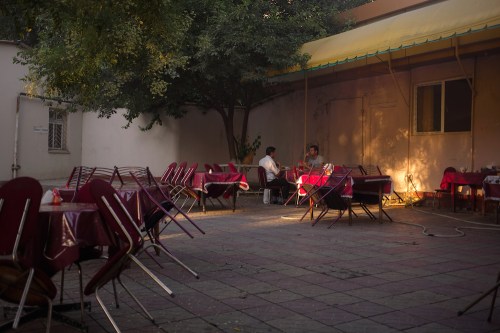
SNB lunch spot, secure Gazalkent district, Tashkent Uzbekistan. 2014.

Monitoring centre (roof) -Tashkent, Uzbekistan. 2014. Location where data obtained with Hacking Team, Nice Systems, and Verint Technologies is analysed and processed.
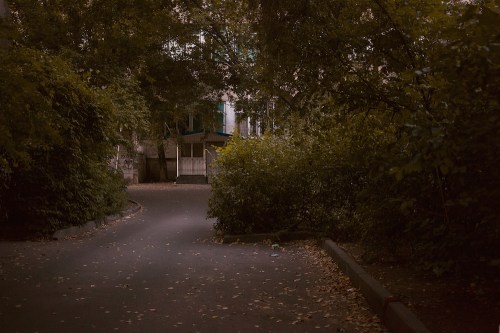
PU-data collection point Kazakhtelecom-Almaty, Kazakhstan, 2014.

Presidential Palace and MNS HQ, Baku, Azerbaijan 2013.
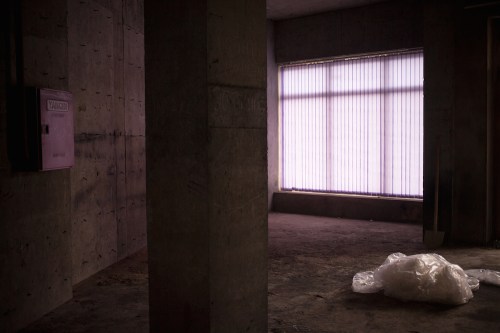

Inside Verint Israel HQ, Herzliya Pituach, Israel 2014.

Transaction — Dedeman Silk Road Radisson Blu, Tashkent ,Uzbekistan. 2014.
–
All images: Mari Bastashevski
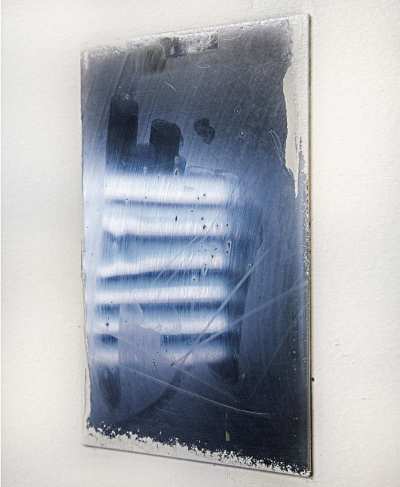
A small, unbreakable tin wall mirror in a solitary cell. Reflection is of a slatted window. Photo: Ashley Gilbertson/VII Photo for New York Magazine.
The suicide of Kalief Browder was the latest, most tragic reminder of how much of a hell hole Rikers Island is. It was the combined effects of broken bail and juvenile prison systems that killed Kalief.
Take your pick of the coverage from The Guardian and the New York Times, to New York Magazine. What has been consistent in the coverage of Rikers as information about conditions and treatment is that visuals have been limited and it has relied on the progression of lawsuits and news FOIA requests. Whistleblowers have been few and far between and prisoners’ testimonies are notoriously difficult to verify.
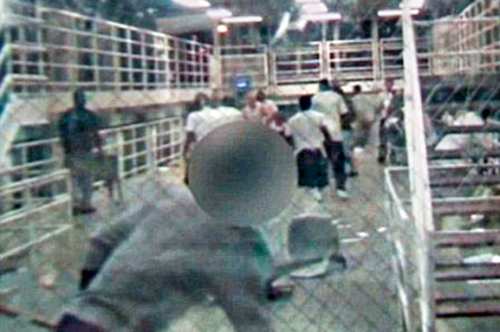
An August 2013 fight in the George R. Vierno Center, caught on surveillance tape.
That makes the recent feature Rikers Island, Population 9,790, a joint effort between The Marshall Project and New York Magazine noteworthy. In the expansive effort involving more than half a dozen journalists, we hear from a couple who both went to Rikers in the same year (she was pregnant); a teacher on Rikers; a couple of recent prisoners; an officer, the commissioner of the department of corrections; a girlfriend of a slain prisoner; a former volunteer-librarian; various visitors; a mental health professional; and others.
The selection of imagery (as well as an overview map) is one of the most diverse visual presentations of Rikers that I have seen online. It includes Ashley Gilbertson‘s straight shots from common areas, wings and solitary cells, Ruth Fremson‘s work from the kitchen, surveillance video stills, photos of prisoners by Clara Vannucci and Julie Jacobson, Instagram images found under the hashtag #Rikers, environmental studies by Librado Romero, and archival photos by my friend and former correctional officer Lorenzo Steele Jr.
Bravo to the photo editors of The Marshall Project and New York Magazine.
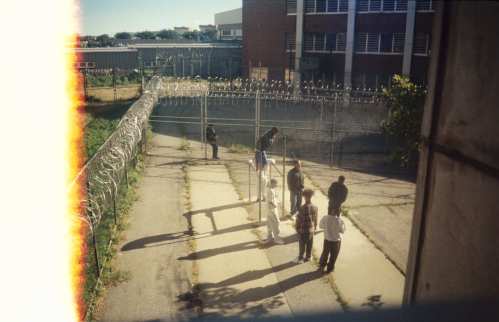
The recreation center at the bing. Photo: Officer Lorenzo Steele Jr.
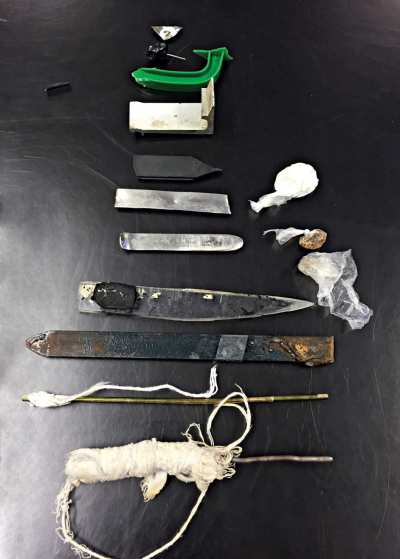
Contraband, including jail-made weapons and drugs. Photo: New York City Department of Correction via AP.
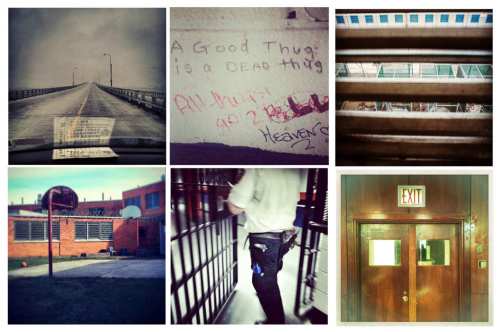
The view from Instagram, #Rikers: Clockwise from left: The bridge to Rikers; bathroom graffiti inside the vistors center; the new maximum-security wing; the entrace to a chapel; a correction officer at an adolescent unit; an exercise and recreation area. Photo: Kelsey Jorgenson/Edgar Sandoval/JB Nicholas/Bryan R. Smith/JR/Gee Force.
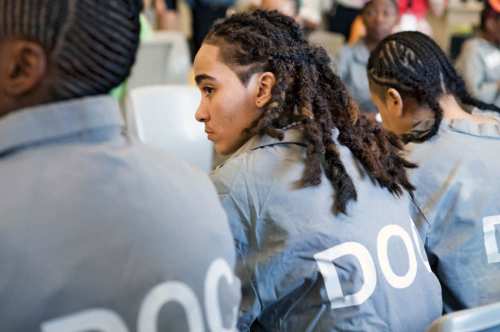
Prisoners at “Rosie’s” the women’s unit. Photo: Clara Vannucci.
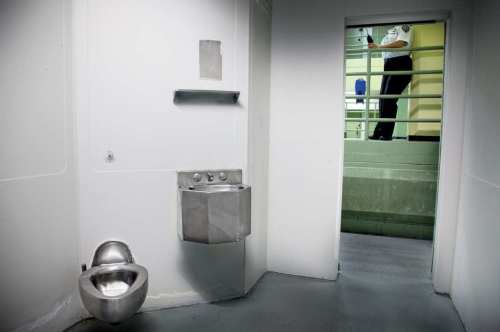
Inside a solitary-confinement cell. Photo: Ashley Gilbertson/VII Photo for New York Magazine.

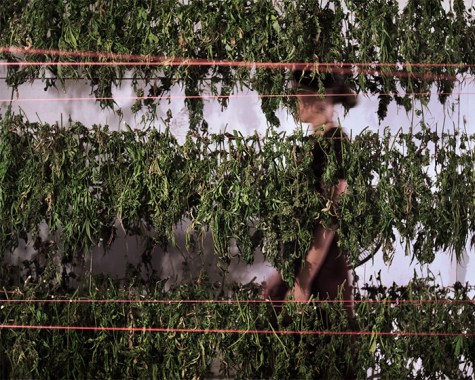
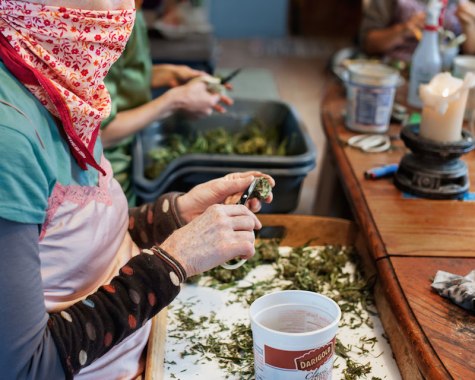
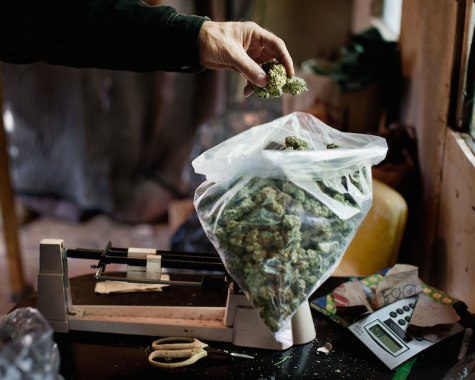
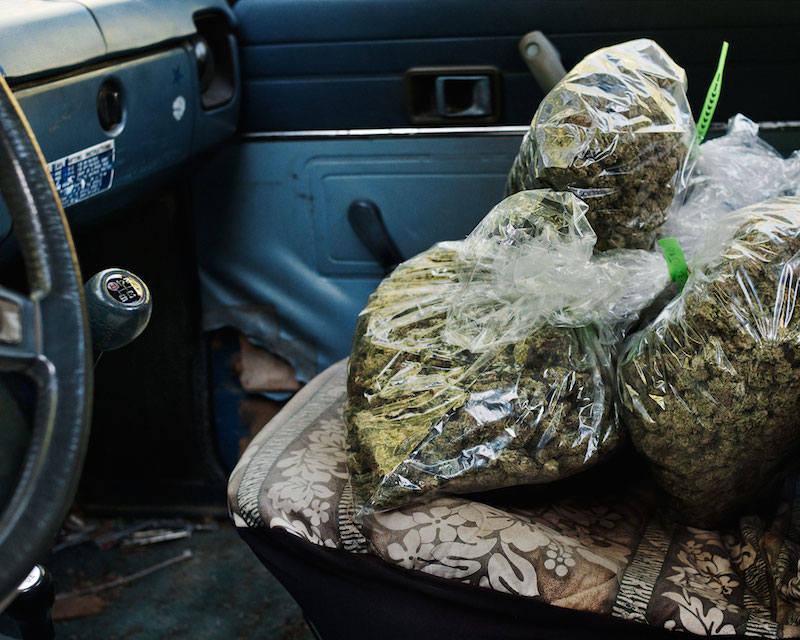
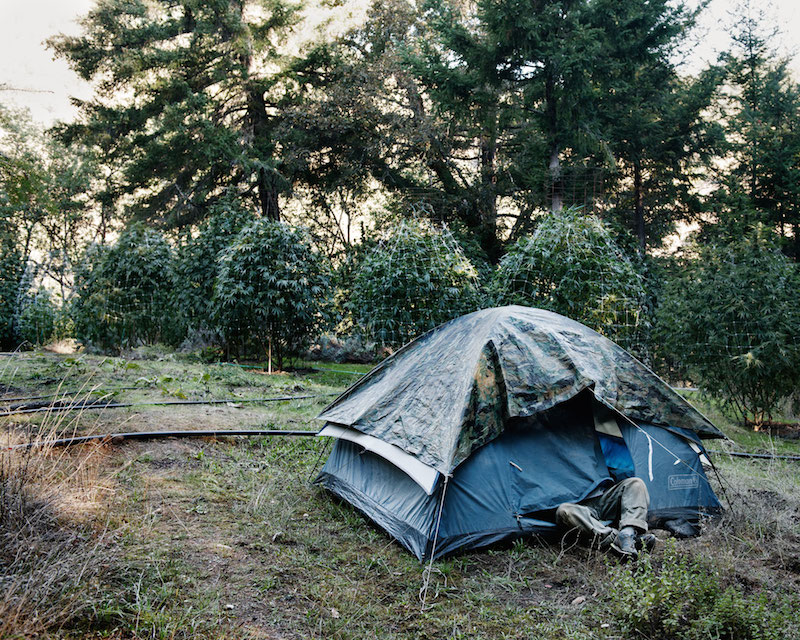
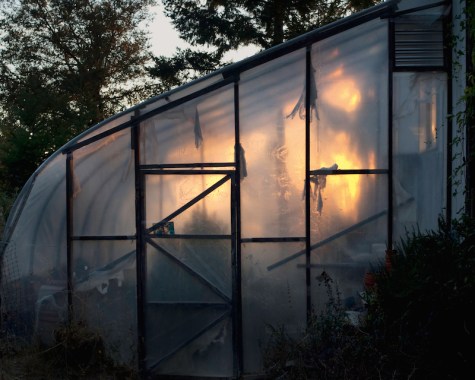
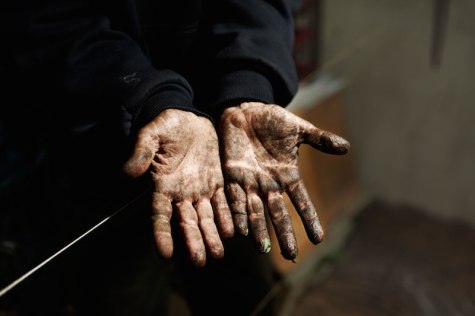
New piece over on Vantage about photographer H. Lee‘s embed on a Humboldt County weed farm.
–
In 2010, Lee spent a year running up to the fiercely contested Proposition 19 documenting the activities on a pot farm.
Prop. 19 was a ballot initiative that proposed regulation and taxing of the California marijuana industry. Small-holding growers feared its passage would mean the destruction of their livelihoods. Lee had been visiting the pot farm for 8 years prior but never made an image. Then, in 2010, when massive and crushing change loomed, she took up her camera.
H. Lee is a psuedonym. Promising subjects their anonymity by proxy of her own just made things easier.
“I gave my word to the people I photographed — whether I shot their faces, body parts, plants or farms — that I would use a pseudonym when presenting the work,” says Lee. “I only photographed those who were willing to be photographed.”
Prop 19 was voted down in November 2010.
Read the full story and see photos very large at Vantage: Inside the California Weed Industry
–







–
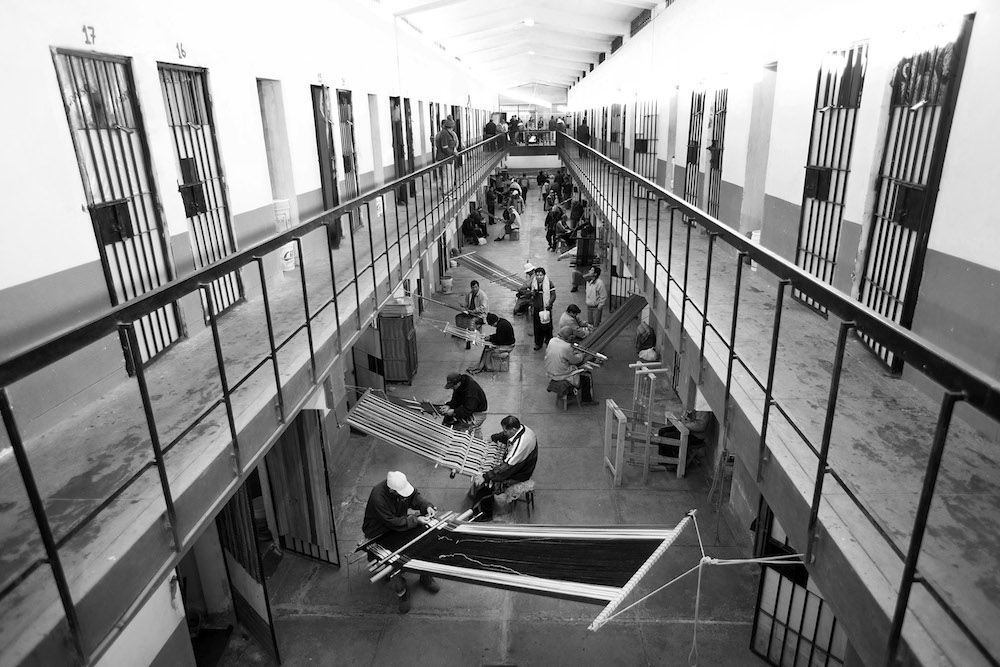
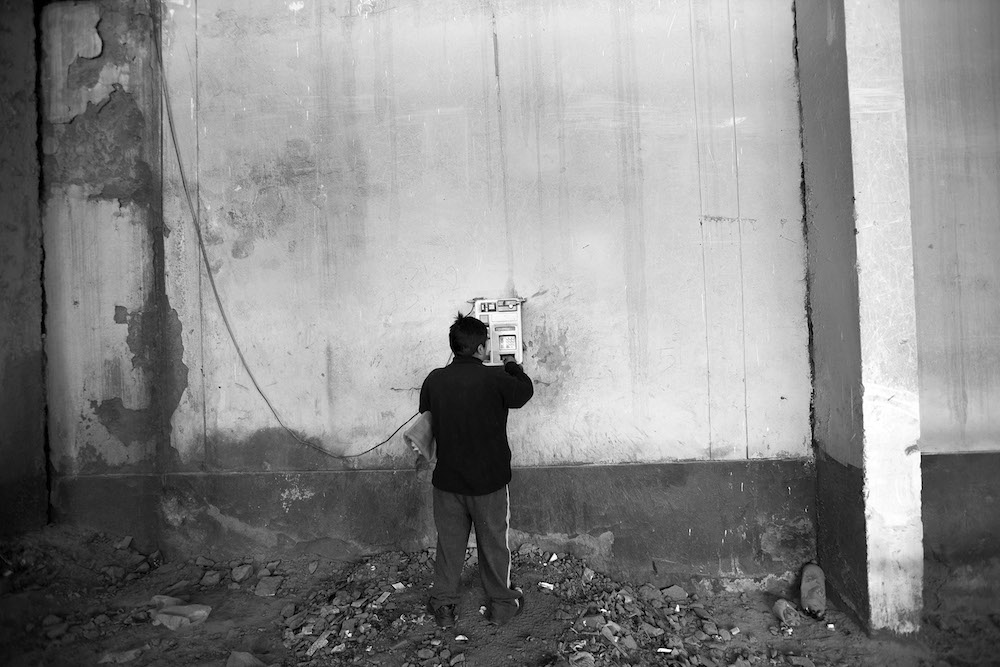
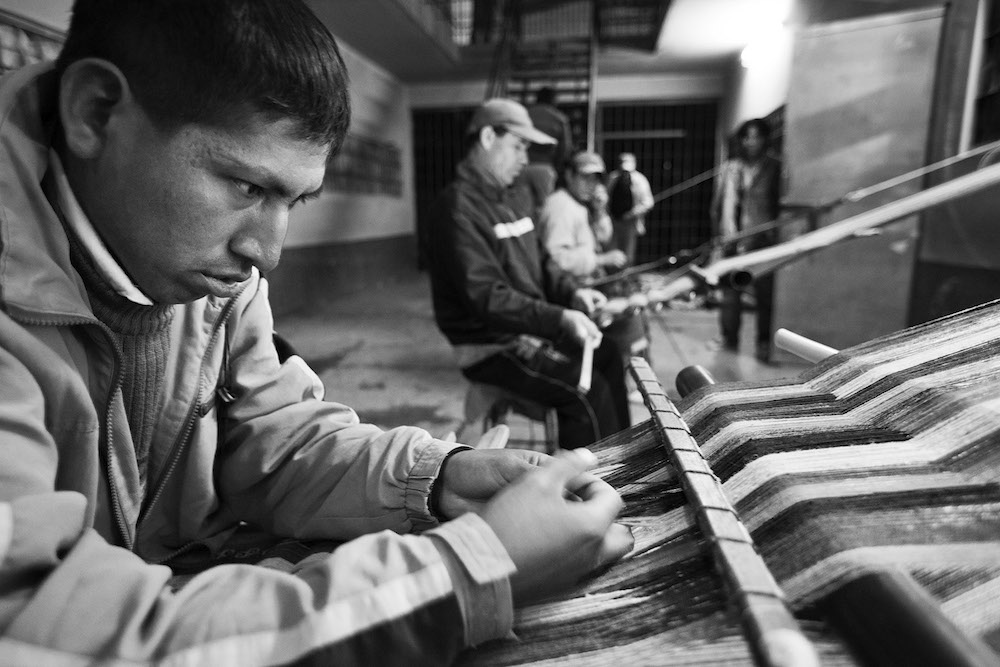
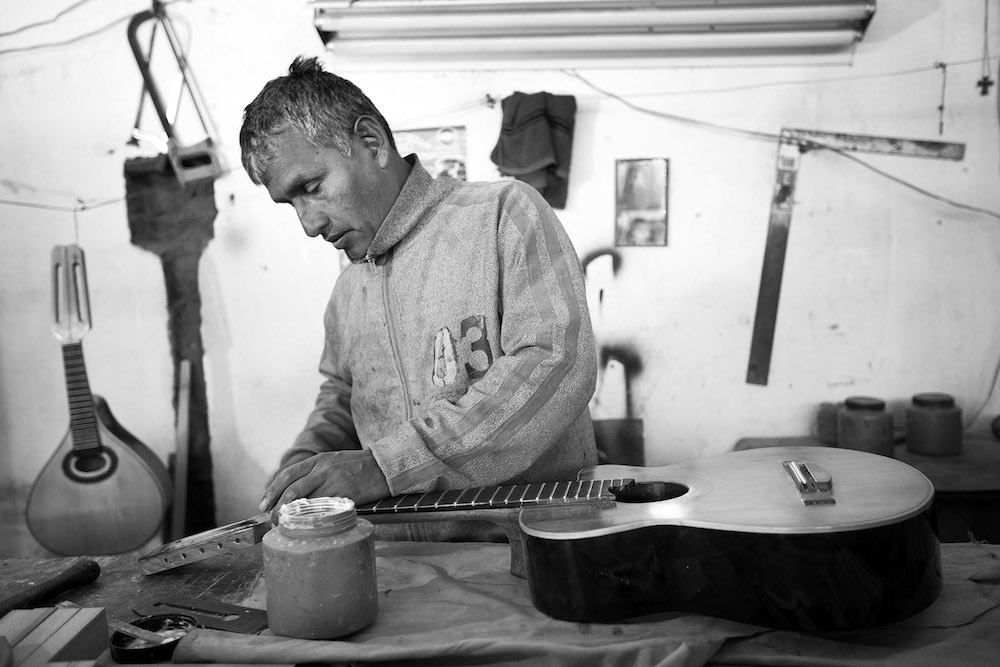
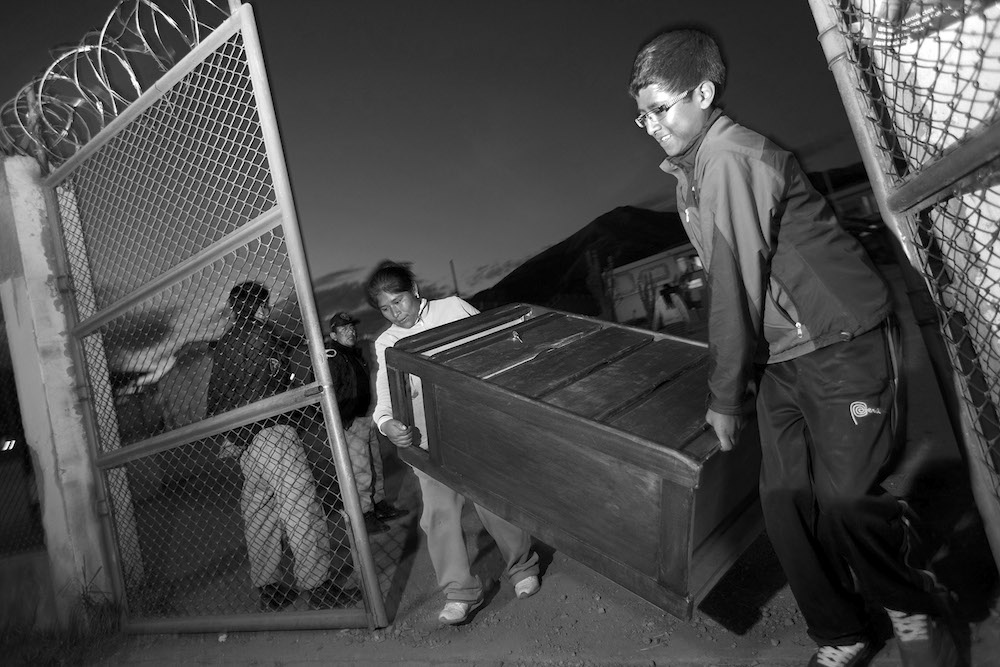
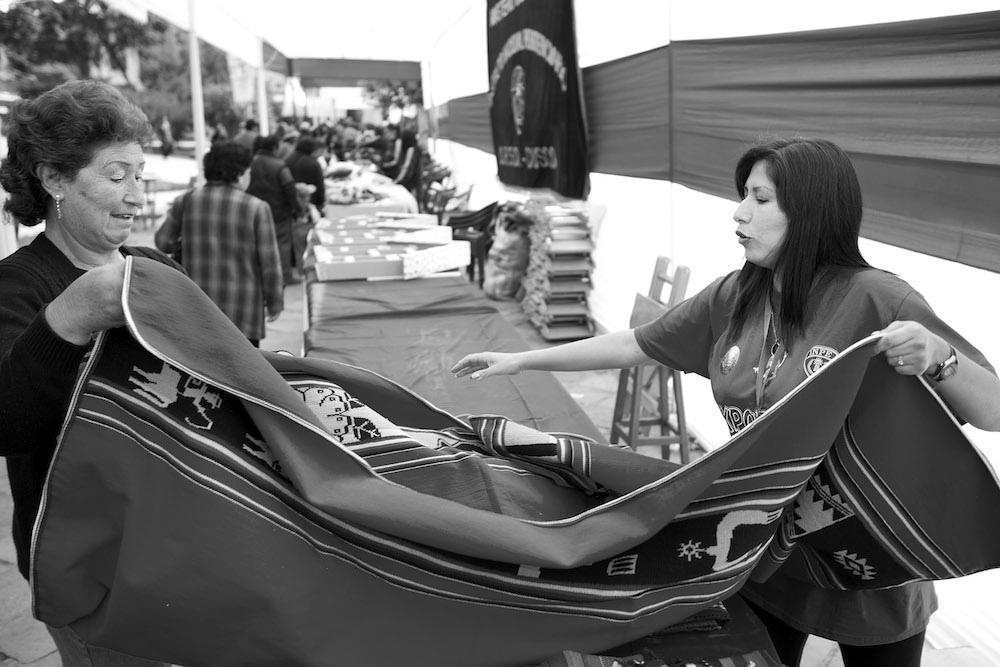
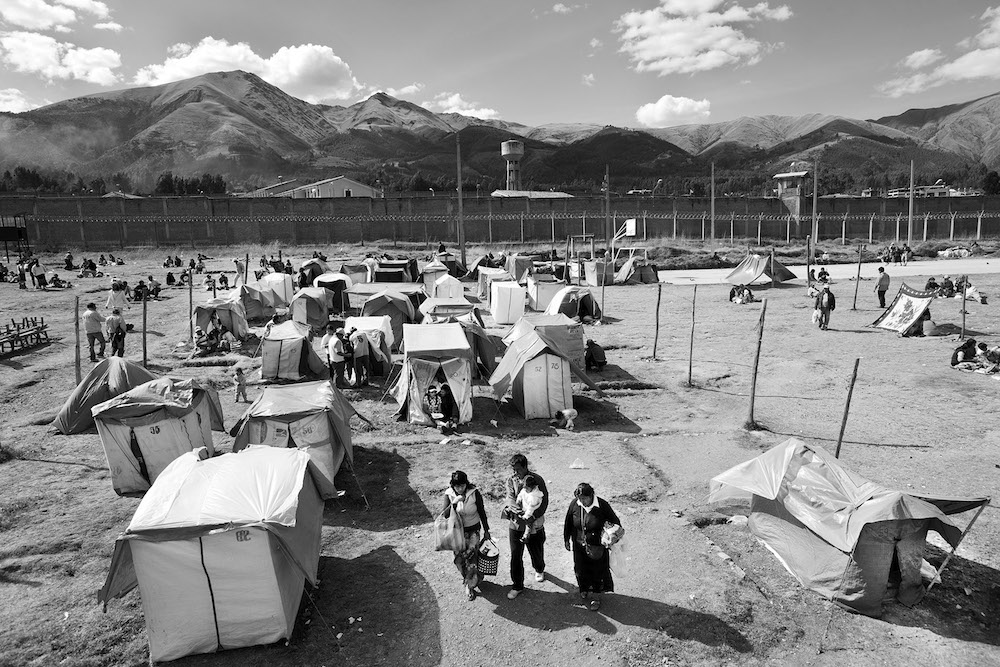
I spoke recently with photographer Kike Arnal about his experience documenting a crafts work program in the low security Quencoro Prison in Cuzco, Peru.
The World Bank/United Nations wanted to loan resources to the Peruvian government in order to replicate the programs in other prisons in the country. The World Bank also wanted to extend the educational programs being afforded the prisoners at Quencoro. Arnal had virtually no track record of photographing in prisons but the assignment opened his eyes and heart.
“I wanted to document the hardships and (if there was any to see) the positive aspects of prison life. To tell the story of the daily lives in a prison on the Altiplano of Peru. I did not anticipate what I was going to find at all, but once I was inside I was inspired by what I saw,” says Arnal.
Read our Q&A and see Arnal’s photographs large at Vantage: That Souvenir Andean Rug of Yours? Woven by a Prisoner in Peru, Probably
–






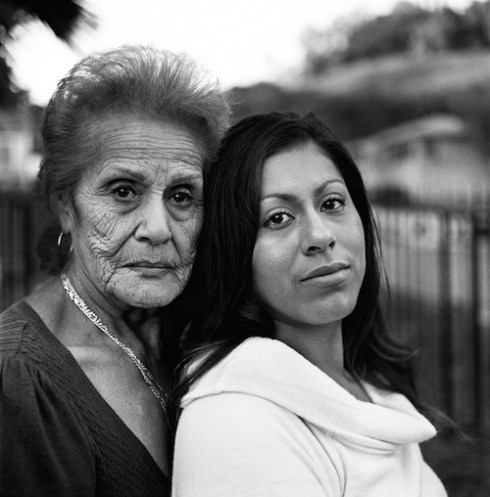
Darlene Escalante with her grandmother, Veronica, she is on a home visit that she earned at Walden House. Darlene talks about how both parents were in prison and affiliated with gangs. As young girl, she remembers going to Chino State Prison to visit her father. When her mother went to prison too, Darlene’s grandmother took her to make visits. “Both my grandmother and my mother were drug addicts. In 1989, my dad died after he changed his life, he was a nurse. He was gunned down and shot nine times. I want so much to change my life now, that’s why I came to Walden House. I don’t want to continue this horrible legacy that has existed in my family.” Los Angeles, 2008. From the series Re-entry.
–
IN CONVERSATION WITH JOSEPH RODRIGUEZ
A long time ago Joseph Rodriguez and I chatted. An edited version of the conversation just made the webs.
If you know Joe, you know he’s not short of words. We covered a lot, but given Mark Ellen Mark‘s recent passing, I wanted to highlight this anecdote with which Joe closed the interview.
I was shy. I gotta tell you. I did it at ICP. Going to school there was amazing. I remember Salgado looking at my pictures, and all I could do was photograph my life as a taxi driver. I was really very shy, and I just I wound up shooting through the windows a lot—stuff on the street. It was pretty cinematic, but he saw the pictures, and he didn’t say anything. I fucking blew it. That killed me!
Then I took a workshop with Mary Ellen Mark, and she was the one who really kicked my ass. She said, “You don’t believe in who you are.” I got defensive and said “What do you mean?”
“Well, you don’t believe in yourself as a photographer,” she said. So, she gave me this exercise. “When you get up in the morning in your underwear stand in front of the mirror and tell yourself you’re a photographer for 15 minutes.”
Doesn’t that sound a little hokey to you? Believe it or not, your boy did it, and I began to slowly believe more in myself as a photographer.
Now, I tell my students the same. If you don’t go out with reverence when you say you want to photograph somebody, they’re not going to take you seriously. You’re going to get a snapshot, nothing more.
I found photography in a very amateur way; it gave me happiness, gladness, and made me want to produce something that I was interested and excited about. To this day, though, I’m still nervous when I’ve got to go out and photograph.
Read the full conversation at the ICP website.

Homicide Detectives Dobine and Cedric Pacific Division. From the series LAPD.

The Quiles family at home. Ramiro and Danny from Marianna Maravilla, with their mother Aida, and sister Maria. East Los Angeles, CA, 1993. From the series East Side Stories.
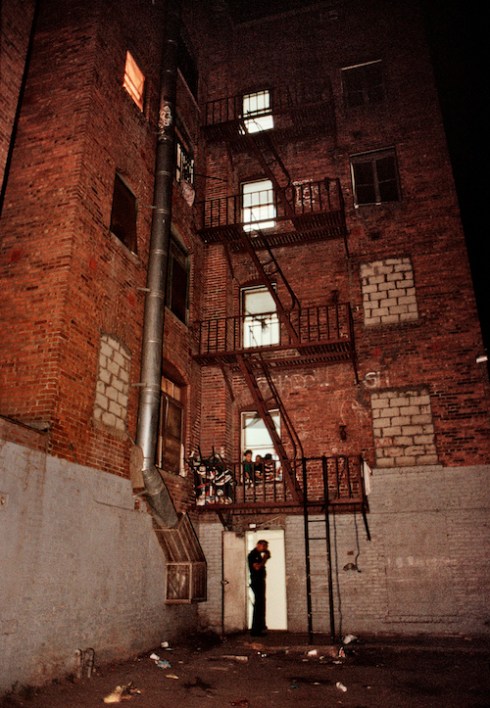
Rampart Officers search the house of a family of a man who was shot by a gang member in his living room. They check the building for the suspect. From the series LAPD.

Boyle Heights, Los Angeles, CA, 1993. From the series East Side Stories.

A Clarence Gang member is hit with five bullets from an automatic weapon on the night of a gang truce in East Los Angeles. His fellow gang members rush him to the hospital. From the series East Side Stories.

From the series Juvenile.

Rampart Division Officers detaining an arrested woman. From the series LAPD.
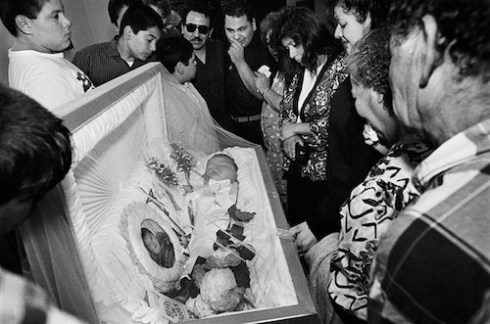
A family gathers the round of the coffin of Thomas Regalado III, who was killed by a stray bullet during a drive-by shooting. East Los Angeles, CA 1992. From the series East Side Stories.
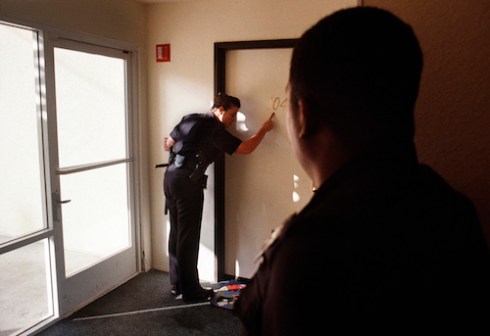
Officers responding to a domestic violence call. From the series LAPD.
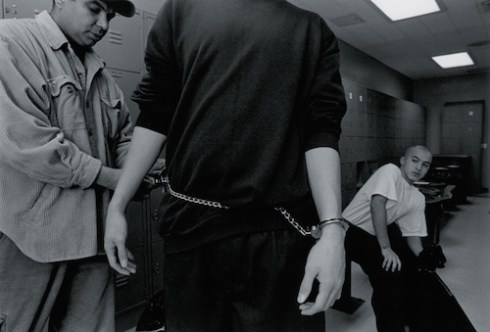
The minors are leaving the facility and are chained down for transporting. San Jose Juvenile hall. San Jose, California 1999. From the series Juvenile.


 Prison Photography