
You are currently browsing the category archive for the ‘Fine Art’ category.

In her series Missing Pauline Magnenat has photographed “places where people who disappeared without ever being found dead or alive were seen for the last time. Sometimes, belongings were found later on – a shoe, a skateboard, a jacket – sometimes, there was nothing but the inexplicable absence, the unsolved disappearance.”
Photographing absence is a recurring theme; absences of different sorts.
Jessica Ingram‘s A Civil Rights Memorial documents marked and unmarked sites of hate crime murders of African Americans, as well as Civil Rights triumphs such as interracial communities.
Kalpesh Lathigra‘s Transmission pairs eerie landscapes with portraits of the individuals who transmitted HIV at those sites. Directed at unremarkable spaces, I found myself feeling both hollowness and anger, which is almost inexplicable except for fact of the tragic witness.
Mari Bastashevski‘s File 126 documents spaces left absent by abductions in the Northern Caucases.
Likewise, Dalia Khamissy‘s The Missing photographs those left behind after the disappearance of approximately 17,000 people during Lebanon’s civil war (1975-1990).
Gustavo Germano‘s The Absent – Ausencias deals with those disappeared during Argentina’s Dirty War by asking people to pose in the same locations for photographs that previously included their now absent friends and family.
Even the way Will Steacy photographs Philadelphia at night asks the viewer to mediate on what once was. These Means Streets depicts “the loss and despair that prevails in urban communities to reveal a modern day portrait of the American inner city.”
To photograph absence or aftermath is, partly, to photograph time. It is to make a statement about time. It is to make a visual note of changing times and of changing attitudes, territories, and agreed histories.
There are hundreds of photo projects that wrestle with time. Many of them are listed in this discussion thread on the Develop Photo Facebook Page.
The majority use of photography is a vernacular use.
Vernacular photography (more than professional, purposeful photography projects) is about arresting or preserving time … and usually influencing and warping our perception of things through time; that image we untagged, that exposure we dodged and burned, those negatives we destroyed, that really good picture we circulated everywhere, that lie, that laugh, and that great hairdo.
We are manipulators of time.
For the most part, playing with time through photo is fun (and so it should be), so it stands to reason that more gravely serious content and themes, such as those in the six photo projects listed above, will jolt us.
But, there is a difficult truth in visualising suppressed histories and presenting photographs of absence. A photographer must trust viewers are ready to meet her or his work with openness and rigorous curiosity.
If a portfolio is about absence, then it is also about explanation and subtlety. I hope that the importance of projects about humanity, and its loss, are not themselves lost among the photos of holidays, cappuccinos and cats. My problem is not with fluffy images of that type, but with the prospect of them dominating our visual experience and edging out the education that can come through photos and stories of people beyond our daily experience.
Mishka Henner & Liz Lock published a blurb book called Photography Is, which is a collection of over 3,000 statements about the medium extracted from their original context without a source in sight. I was reminded of the book reading David Campbell‘s succinct The Difficulty Of Talking About Photography.
Ironically, it is Henner & Lock’s pilfered and reordered words, that mirror best our disparate, frustrating and ever conflicting thoughts toward the photographic medium. I think our expectations are a scatter-shot too.
Campbell asks, “What, if anything, connects stock photography, fashion photography, art photography, news photography, conceptual photography, documentary photography, amateur photography, forensic photography, vernacular photography, travel photography, or whatever sort of photography?”
What? Our responses and our choices, surely. We should be able to say we control these entirely.
We choose our viewing experiences. We can repeat ad infinitum the snaps we’re used to, or we can run headlong toward subtlety; toward difficulty.
Is your photo diet samey and fattening or is it lean, moderate and varied? How do you consume images? These are questions we should ask ourselves if we are to (as Campbell phrases it) figure out “what a photograph does, how it does it, and who does or does not want it to work in particular ways.”
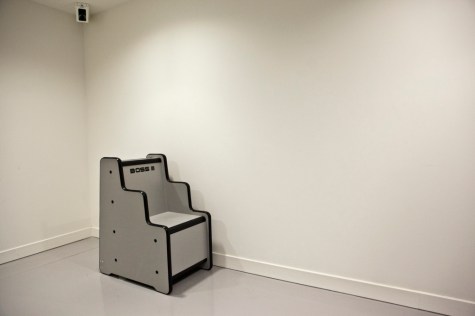
Body orifice scanner and surveillance camera, HMP Low Moss, 2012
UK photographer and artist, Jenny Wicks – working as an artist in residence at The Scottish Centre for Crime and Justice Research (SCCJR) at Glasgow University, the largest centre for criminological research in Scotland – set out a year ago to document spaces of said research. Invariably this meant photographing prisons. She photographed in two working prisons – Her Majesty’s Prison (HMP) Barlinnie and HMP Shotts. She also shot in a new prison, HMP Low Moss, prior to its opening.
I have posted before about Wick’s portrait project They Are Us And We Are Them also completed during the residency. Here, I’d like to focus on Wick’s prison interior photographs.
Wicks’ research broadly titled Working Spaces, Punishing Spaces: The Meaning and Construction of Place through Criminological Research sought to explore key boundaries: between innocent and guilty, researcher and researched.
“The conceptual frame for the project focuses on the ways criminological researchers relate to the spaces where research is conducted, analysed and disseminated,” writes Wicks. “A central premise is that working in particular spaces simultaneously contributes to their meaning as places of punishment.”
Wicks’ aim was to expose hidden sites. To differing degrees, this is a common aim of photography in prisons, so it is therefore paramount to say that Wicks delivers plenty of interesting images, the likes of which I, and we, have probably not seen before.
Keep reading below.

Scanner and cones on cell wing, HMP Barlinnie, 2012

Orifice scanner and zimmer frame, HMP Barlinnie, 2012
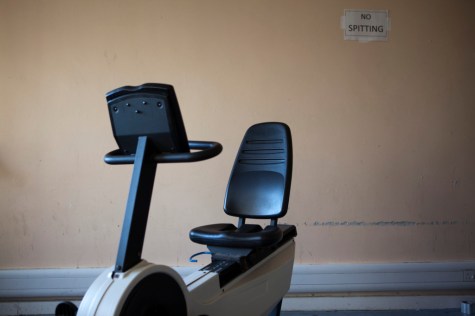
Gym, HMP Shotts, 2012.

Personal belongings tags, HMP Barlinnie, 2012
My dad used to use the same Carte d’Or ice-cream tubs (see above image) to store screws and brackets in the garage when I was young. It’s a jolt to see such a practical, modest storage solution crop up within a prison.
But then again, prisons are full of the mundane. Images of the ordinary (latex gloves, powdered milk, hygiene products, boring carpet) are balanced with constant, also pedantic details reminding us of the disciplining function of prisons (overly instructive signs, fire safety posters about escape, painted walkway instructions, holding cells, scanners).
Sometimes the juxtapositions seem too ironic, but then in turn sad. The awards that hang over the chairs in the medical office are shinier than the untarnished plaque of ‘quit smoking’ and ‘mouth cancer’ posters. There’s a flimsy lock on the back of the mugshot camera box. Stored neatly in a stairwell are an orifice scanner and zimmer frame side-by-side. This reminds me of Edmund Clark’s evidentiary images of clearly infirm prisoners in Portsmouth, England.
In Wicks’ book (see below), photographs of segregation cells for prisoners follow those of dog kennel cages.
In the HMP Low Moss new library, we see promise. An image of the books stored prior to shelving tells us prisoners read the same horror-schlock (Stephen King) as the everyman reads. Oh, and there’s a vacuum cleaner to maintain that boring carpet.
Also in the shiny new HMP Moss is a row of green-tint-windowed visiting rooms. They look like the sterile, institution environments of cinema – I’m thinking of the psychiatric wing of Michael Mann’s early eighties film Manhunter, in which Brian Cox stars as Hannibal Lector, not Anthony Hopkins.
The electrics still going in and Wicks captures the work of contractors at mid-point. The literal description of construction reminds us of the ties between labour and prisons. These are spaces paid for and made by society to meet a socially-agreed end. Hopefully resources and money invested in a new prison brings about better opportunities for rehab and a positive economic return further down the line through the reduction of crime and its associated social costs.
The prisoners must do work too. Wicks photographed recreation schedules as well as work rosters. We learn from an HMP Low Moss electronic notice board that “the finer details of prisoner mobilization plan are progressing,” a burauecratic way of saying they’ll be moving in soon. Alternatively, if we take note of text in the older prisons, we’ll be reading graffiti. Such-and-suchabody was here. We know that soon enough, prisoners will be there, in their new quarters. Does it matter if the burned graffiti reads “Jobby bum” or “jobby burn”? Does it instruct us more or does it just convince us that prisons are heavily used and heavily contested spaces? If anything, I hope Wicks’ coverage of Scottish prisons old and new demonstrate that – if we must incarcerate people – we do so in sanitary, safe places with wide provision of work, vocational and educational training.
If prisons fulfil those key criteria then prisons should theoretically be able to open gates to photographers. Imagine a day when human improvement and human rights could become the key content of prison imagery?
Keep reading below.
IMAGES: HMP BARLINNIE
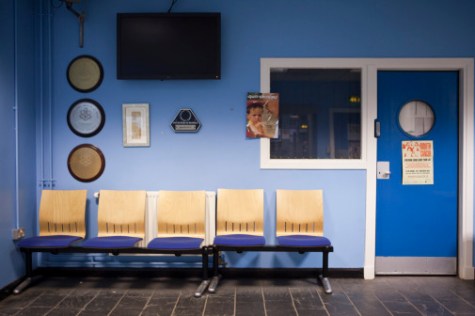
HMP Barlinnie, 2012

Detention dog kennels, HMP Barlinnie, 2012

Photography apparatus, HMP Barlinnie, 2012
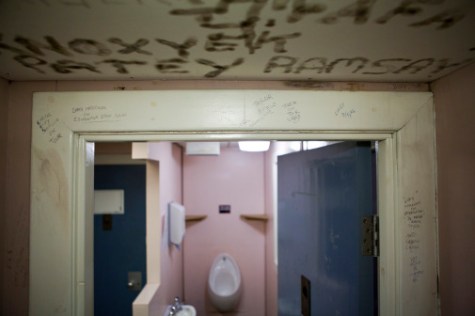
Toilets, HMP Barlinnie, 2012

Sinks, HMP Barlinnie, 2012

Personal belongings in a cell, HMP Barlinnie, 2012
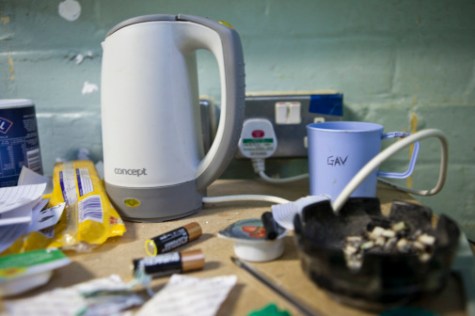
Personal belongings in a cell, HMP Barlinnie, 2012
Wicks believes (and I concur) that depictions of crime, and crime science, in popular culture represent that world through a narrow and increasingly hackneyed set of spaces – the crime lab and courtroom offering two examples.
“As the residency progressed I discovered striking juxtapositions of the mundane and the spectacular in the work of criminology,” says Wicks. “Suicide watch cells, the back of a prisoner transport van, a storage room holding physical restraint chairs and Zimmer frames mark sites of extreme human experience and yet at the same time are part of someone’s day at the office: a site where data is collected, transferred to spreadsheets and displayed to audiences in lecture theatres and conference halls. Exploring this dynamic tension is a key aim of the project.”
Keep reading below.
IMAGES: HMP LOW MOSS

HMP Low Moss, 2012

Bars and Irn Bru machine, HMP Low Moss, 2012
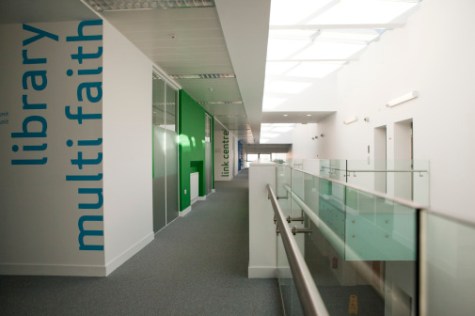
HMP Low Moss, 2012
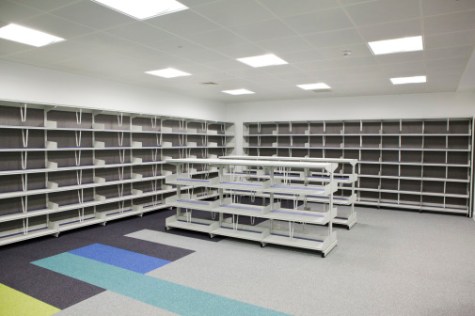
New library, HMP Low Moss, 2012
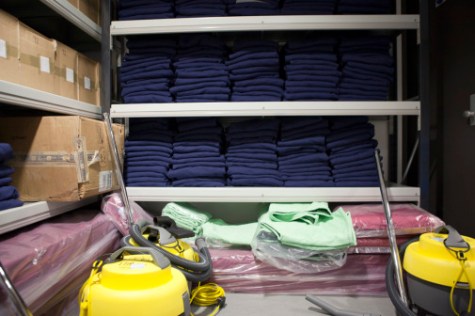
HMP Low Moss, 2012
THE BOOK, CORRECT
Wicks was kind enough to send me a copy of Correct. It’s a compact book of 86 pages. You can view a 25-page preview and buy the book through Blurb. My copy came with a fold out of 60 portrait thumbnails of portraits from They Are Us And We Are Them. I include some images below.
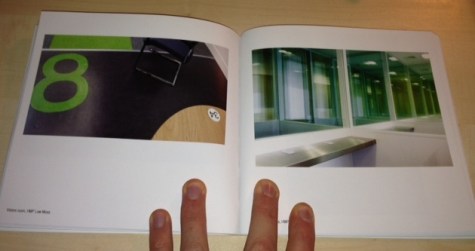


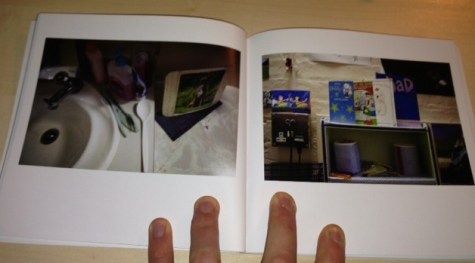

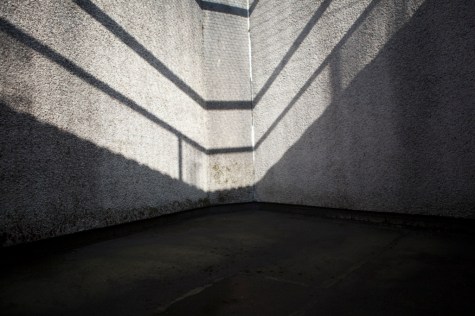
Segregation unit exercise yard, HMP Shotts, 2012.
THE EXHIBITION, CORRECT: THE MEANING AND CONSTRUCTION OF SPACE
The exhibition titled ‘CORRECT’: The Meaning and Construction of Place features two audio pieces, and an installation The Gallows, an installation of large format film giclée prints from They Are Us And We Are Them. You can see here a video of The Gallows previously exhibited in HMP Barlinnie.
The exhibition also features The Desk, a digital collage of giclée prints of criminologist’s desks.
“Closely cropped, excluding the life beyond the frame. Voyeuristic and subtly relating to the prison visiting experience: they are intrusive, this is a space where someone lives most of their waking week, a place the research comes back to and is pieced together. A personal space that appears impersonal. Cluttered with cheap plastic Chinese electronics, stationary, diary’s (hand made), mouse pads of choice, daily calendars, hand cream, distinctive handwriting and lots of notes,” writes Wicks.
Finally, and central, the exhibition includes digital C-type prints of prison interiors.
“They are an exploration of crime and justice spaces that criminologists inhabit. Such sites are more usually associated with highly iconic images of justice (bars, ankle tags, gavels) that are part of a larger popular essentialism of crime and punishment, i.e. places of cultural cliché,” writes Wicks. “I aim to demystify these places and the work criminologists undertake. Some of the images juxtapose the often-chaotic lives that occupy these spaces and contradict the harsh realities of prison life.”
‘CORRECT’: The Meaning and Construction of Place is on show now at The Briggait, 141 Bridgegate, Glasgow G1 5HZ from March 3rd – 22nd. Monday- Friday, 9.00 am to 5.00 pm.

HMP Shotts, 2012
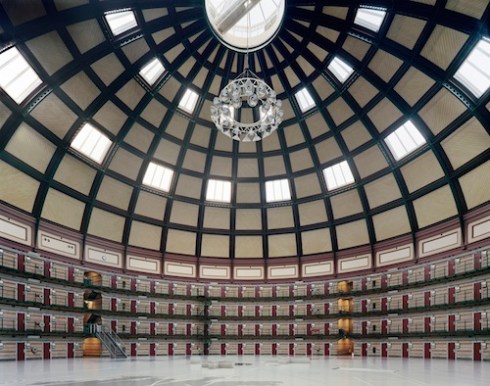
Arnhem Prison, Netherlands, 2011 © David Leventi
When photographer David Leventi saw Andreas Gursky’s famous shot of Stateville Prison, Illinois, he was captivated by the architectural form and wondered if there were more roundhouse prisons.
As we know, and as Leventi says, “everybody has photographed at Stateville.” However, not everybody had photographed the roundhouse prisons of the Netherlands. Leventi has.
I spoke with David via Skype. He provided me with some prepared answers to questions asked by photographer Sarina Finkelstein. I have interwoven answers to my questions. The quotes are verbatim, but the order is not. The flow works.
Q&A
Sarina Finkelstein (SF): What was the first round prison you photographed?
David Leventi (DL): The F-House at Stateville Correctional Center in Illinois is one of the most architecturally striking prisons — it is the last remaining cell block in the U.S. that follows Bentham’s Panopticon model. It was close to home with no language barrier to contend with, and therefore it became my first.
SF: How many round prisons exist in the world? Have you photographed all of them?
DL: Four working prisons and one ruin. I have photographed all the working ones: Stateville Correctional Center in Illinois, Breda Prison in The Netherlands, Arnhem Prison in The Netherlands and Haarlem Prison in The Netherlands. The ruin is the Presidio Modelo on the Isla de la Junvetud in Cuba. Fidel Castro was imprisoned there, and I hope to photograph it one day.
Prison Photography (PP): Now you’ve been to other roundhouse prisons, what do you make of Gursky’s photograph?
DL: All of Gursky’s photos make spaces look bigger. I think Gursky did a lot of post production, I think he extended the space, drawing the image out to the left and right making it look enormous, but its not.
In my photos, Stateville looks big because I’m shooting large format with a wide angled lens, but it’s not THAT big. It’s an illusion.
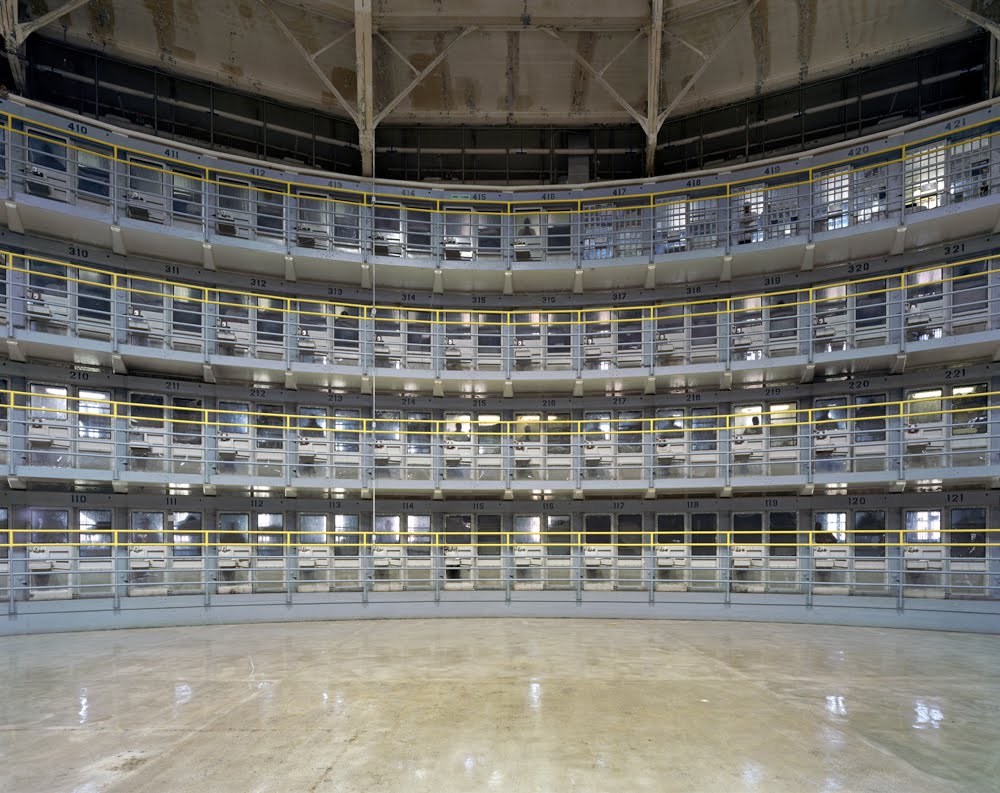
F-House #2, Stateville Correctional Center, Crest Hill, Illinois, 2010 © David Leventi
SF: This project photographing round prisons seems to be a drastic content shift from your previous work photographing world-famous opera houses?
DL: The prison project developed out of my previous project shooting opera houses. Each was photographed from center-stage and lit solely by the existing chandeliers and lamps.
The opera houses were spaces in which my Romanian grandfather, Anton Gutman, never got the chance to perform. He was a cantor who was interned in a Soviet prisoner-of-war camp called Krasnogorsk from 1942-1948. Another prisoner, Danish operatic tenor Helge Rosvaenge, heard my grandfather sing an aria from Tosca and gave him lessons. I grew up listening to him sing in our living room.
SF: So, in your previous project, you photographed cultural institutions that are social gathering spaces of entertainment. But, in this work, you’re photographing prisons — places where people are incarcerated and deprived of personal freedoms for commission of a crime. And, you’re specifically photographing domed prisons. How did you come to choose these particular buildings?
DL: Domed prisons are the closest examples of Jeremy Bentham’s Panopticon model of mass surveillance prison design – a central guard tower with a complete view of surrounding prison cells. This concept was designed so a central observer could monitor all of the prisoners at once, without any particular prisoner being able to feel under inspection.
The domed prisons have the same architectural structure as an opera house (without the opulence), but the difference is in who is observing whom. In an opera house, the audience of many is observing a few. In these domed prisons, it’s the reverse.
The domed prisons are stark buildings. On first inspection, I don’t believe that the viewer identifies the interior as a prison. The ceiling of Arnhem in The Netherlands reminds me of the tartan pattern now made famous by Burberry. The photograph is very graphic, quite unlike the opera houses.
Opera houses and prison houses become a study in contrasts between beauty and squalor, opulence and poverty, serenity and cacophony.
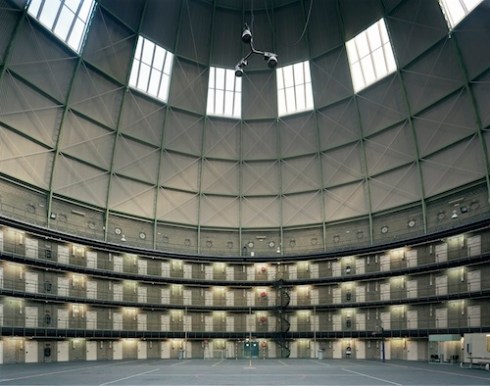
Haarlem Prison, Netherlands, 2011 © David Leventi
PP: How did you get access to the Dutch prisons?
DL: I tried to reach out to the prisons and I tried to reach out to the Minister of Justice but no one would return my emails or telephone calls. There was the language barrier too. Nothing was happening.
Then a man who ran a music company in Utrecht wanted to use one of my opera house images as wallpaper in his office. I gave him a quote and he wrote back saying he couldn’t afford it. I asked, “Would you like to barter?” I asked if he knew anyone who could get me into the prisons. He had a client who was a communications director for the Ministry of Justice. That’s how I got permission!
All three of the prisons are no more than an hour from Amsterdam. No crazy travel involved and all under the same authority. Get into one, get into all three, right?
PP: Are you able to compare Stateville with the Dutch prisons?
DL: Prisoners in Stateville prison are treated like animals. The U.S. government is going to say they committed crimes, well people in the Netherlands committed crimes too. Who knows if they are the same level of crimes but in the Netherlands they have privacy. They have microwaves, TVs; they’re like tiny little apartments. I’m not saying they are the best place to be but it seemed a lot more civilized.
Dutch roundhouse prisons had badminton courts, soccer courts, basketball courts. The Breda prison has trees and benches. Half of it is a covered with a glass floor and downstairs there’s a dining hall and ping-pong tables.
When I was there [in one of the Dutch prisons] some smoke was coming out one of the cells, and the guard there knocked on the door and asked, ‘Are you okay? What’s going on?’ They didn’t know, but the prisoner said, ‘Something caught on fire in the microwave, there’s no problem.’ The guard went away.
Once the [Dutch] cell doors close, the prisoners have privacy. At Stateville, with the standard open bars there is no privacy.
PP: You never intended to photograph prisoners, though?
DL: No, only the architecture. It was stipulated that I could not photograph faces anyway. After 6pm in the dutch prisons, men had to be in their cells. Then I was free to walk around and photograph. It’s seems funny for me to say they are beautiful spaces; they are prisons.
PP: Is Stateville beautiful?
DL: It is loud. The warden at Stateville gave me assurances. But he also told me not to show any fear. One prisoners was running against the bars the entire time I was there. Bang. Bang. Bang. Endlessly. It was shocking. Everything at Stateville was the complete opposite to what I experienced in the Netherlands.
SF: What was the process like? How was it different to be in that space, with all eyes on you, vs. being alone in an empty opera house?
DL: I have always had stage fright. Photographing from the center of a round prison causes anxiety. The inmates are all yelling, jeering, talking, in cacophony. You become the center of attention, and taking the photograph becomes a performance in itself. At first I was intimidated, but then I blanked everything out and focused on photographing. It must be the same for the performer.
SF: What equipment are you using and what conscious choices are you making visually?
DL: I work with a large-format camera so that I have the utmost control in making sure the composition of the image is architecturally symmetrical. I pay close attention to ensuring the lines are straight for perfect repetition, curves of the convolutions of ceiling and higher and lower catwalks are parallel and empasize Euclidean geometry.
With this camera, I am also able to flatten out the space to make it look more like a painting. For instance, the industrial chandelier hangs down, but it looks askew, as if it is tilted toward you.
SF: What is the importance of having 40×50, 50×60 and 72×90 inch prints?
DL: Prints have to be large in order for all of the details to separate and be seen. When they are small, details meld together and you lose the ability to feel the texture/coldness of the prison bricks, to see the blur of prisoners behind cell doors.
I want the viewer to experience what it feels like to be surrounded by the space.
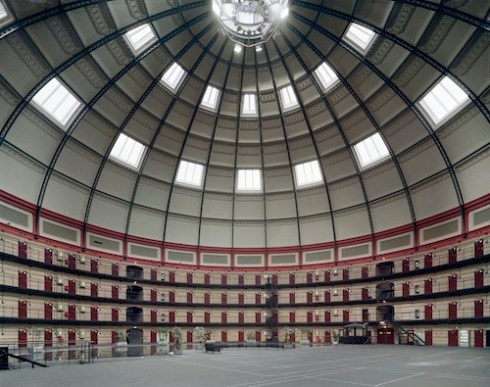
Breda Prison, Netherlands, 2011 © David Leventi

Death Row with Inmate Mural (Sad Clown) in Sing Sing Correctional Facility. New York, 2011.
My parents are thinking about moving out of the house I grew up in. They asked me how I felt about it. In truth, I don’t mind one bit. Still, I appreciate them asking. Places hold memories, for sure, and it was mindful of them to ask my brothers and I how we felt about the house, its relationship to our memories, and a future without it. We Brooks, though, are a pragmatic bunch and feel that as soon as the house is vacated it stops being a home and just bricks and mortar for others to occupy and make their own memories. Likewise, we Brooks will make newer memories in my parents’ new home when we gather for holidays and so forth.
This occurred to me as I was browsing Emily Kinni‘s series Sites Of Execution. Kinni is interested in how quickly the function and memory of places change and her pictures demonstrate how rapidly change can occur. She has photographed not just former sites of execution in the U.S. but, specifically, the former sites of execution in the 17 states that have abolished capital punishment. If the places in Kinni’s hold memories they are violent, sad, retributive and final.

Original Execution Chamber. Electric Chair and Lethal Injection. Now Unused Conference Room in the New Jersey State Prison. New Jersey, 2011.
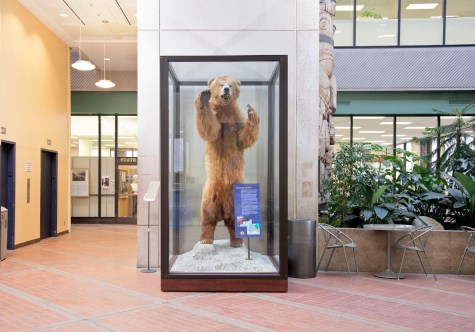
Original Site of Execution. Hanging. Lobby of the State office Department. Alaska, 2011.
I noted Kinni’s work 18-months ago, with criticisms that the series was not complete and that her statement was unintentionally misleading. I am pleased to report that my ‘Watch This Space’ caution has been met with a well-rounded project. Kinni’s survey of the sites (which took over two years) is thorough and her elusive images require work by the viewer to decipher what’s going on. The variety of reused spaces are convincing reminders of how fleetingly history and memory deal with even the most traumatising events.
Interestingly, Kinni is not a crusader for the abolition movement; her images are not intended as a call to challenge death penalty laws in 33 states … and nor do they read that way.
“My affinity for these sites, cannot be considered without the political and historical issues of the death penalty, but it isn’t where it begins,” says Kinni. “My interest is in the evolution of these sites – how places for execution are changed and what the sites become eliminating their historical relevance.”
Many photographers have dealt with memory and landscape by contrasting their images of seemingly benign sites with captions that describe past horrors or crimes. Four worth mentioning would be Eva Leitolf‘s Looking For Evidence – a survey of hate crimes in Europe; Jessica Ingram‘s A Civil Rights Memorial – photographs of hate crimes in America; Joel Sternfeld‘s Landscape In Memoriam – photographs of interpersonal, corporate and environmental crimes; and Taryn Simon‘s The Innocents – an obfuscation of memory and testimony.
Tensions between apparently innocuous images and their factual captions will always capture my attention. Such purposeful tensions are engaging.
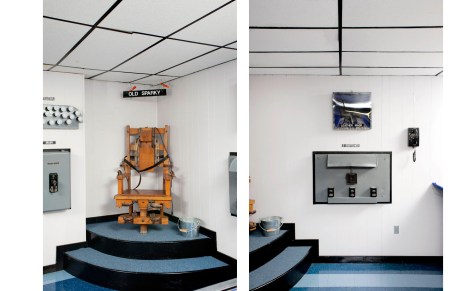
Old Sparky, West Virginia Penitentiary. 2011 (left); Leather Mask and Three Switches, West Virginia Penitentiary. 2011 (right).
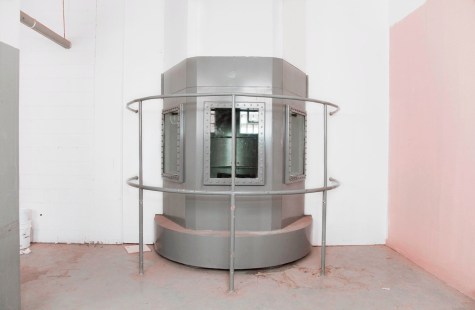
Gas Chamber on the Spectator Side. Gas Chamber. Still sits in the now abandoned New Mexico State State Penitentiary. New Mexico, 2011.

Original Execution Chamber. Electric Chair. Now a Vocational Space in Sing Sing Correctional Facility. New York, 2011.
Some of Kinni’s sites are no longer prisons and she was helped with her research by local experts.
“I was fortunate enough to meet people among a select few – if not the only people living – who possess facts and documents about where the last executions took place,” says Kinni. “They owned historical evidence within their personal collections and homes that didn’t exist elsewhere. Without their knowledge, I would have been at a huge loss.”
In other cases, where prison space has been repurposed, Kinni experienced the same labyrinthine negotiations common of prison photography projects.
“The level of negotiation varied state by state,” she says. “The hardest negotiations were in states where people I had begun communication with particular officials, who changed positions or retired unbeknownst to me.”
I like this project. Take a look.

Original Site of Execution. Hanging. Now a Janitorial Break Room. Minnesota, 2011.

The Original Site of Execution. Hanging. Now a parking lot in the Oahu Community Correctional Center. Hawaii, 2012.

Original Site of the Last Execution. Hanging. Now a Department Store. Rhode Island, 2012.

Original Site of Execution. Hanging. Now a Residence. Wisconsin, 2012.

Original site of the Execution Chamber. Was last used as a basketball court for inmates until the Prison closed. The chamber has been recreated using original materials inside the prison walls in its own museum. Electric Chair. West Virginia Penitentiary, 2011.
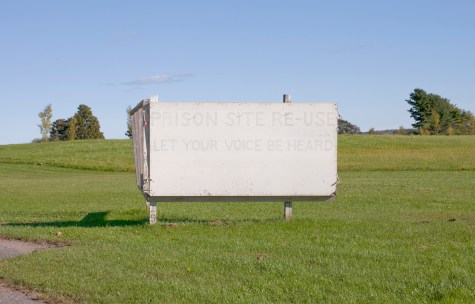
Original Site of Execution, Hanging. The prison was torn down and buried below the field which is now in it’s place. A Sign raises a question of what will be next for the site. Maine, 2012.
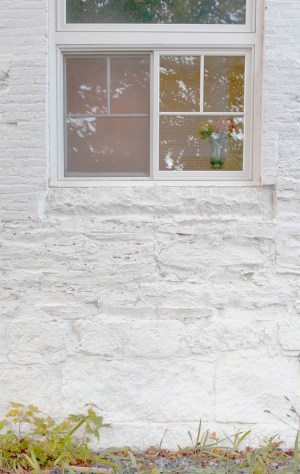
Original Site of Execution. Electric Chair. Now a Retirement Home. Vermont, 2012.
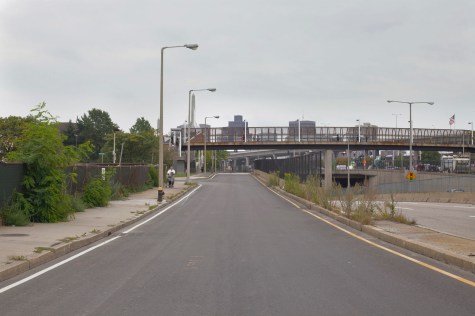
Original Site of Execution, Electric Chair. The prison was torn down and is now a highway lane. Massachusetts, 2012.

Gas Chamber, Closed, New Mexico State Penitentiary. 2011 (left); Gas Chamber, Open, New Mexico State Penitentiary, 2011 (right).

Site of the Original Execution Chamber, Hanging. Now Empty Space inside Iowa State Penitentiary. Iowa, 2011.
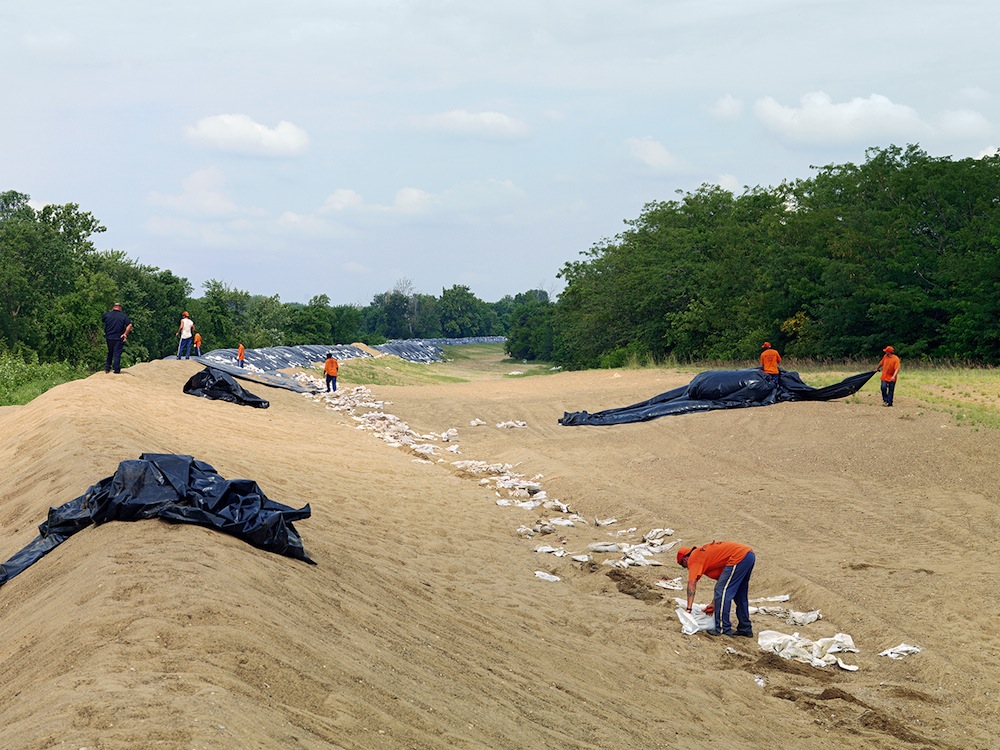
© Dave Jordano
Dave Jordano responded to yesterday’s question Have you ever seen prisoners on your daily commute or holiday road-trips? with the above image.
It shows prison workers maintaining the levee along the Mississippi River in southern Illinois. It is his only photograph of prisoners.
Dave and I had been in recent contact because I’d interviewed him for Wired.com and featured HIS AMAZING PHOTOS OF DETROITERS, including the one of Glemie below.
I write:
Unbroken Down is an attempt to set the photographic record straight. Jordano believes that Detroit is more than a tale of decline and images of the associated urban decay. Yet, a lot of celebrated photography projects made in Detroit recently have focused on ruination as if the apocalypse passed through and kept going.
“Detroit is still a living city. Why hasn’t this been part of the equation?” asks Jordano of most photographic output.
Please check out Captivating Photos of Detroit Delve Deep to Reveal a Beautiful, Struggling City. Many have enjoyed it; I am sure you will too.
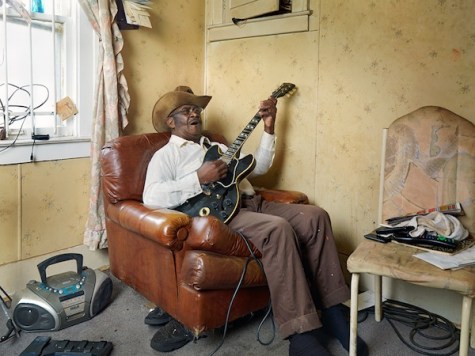
© Dave Jordano Glemie, Westside, 2011.
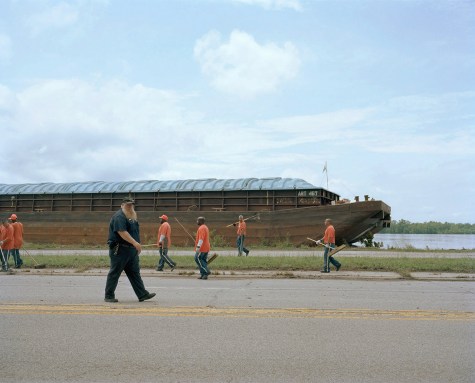
Prisoners cleaning the Great Mississippi River Road after the flood. Alton, Illinois, 2008. © Jo Ann Walters, from the series Dog Town.
Following on nicely from yesterday’s post about prisoners work details, is this image (right-click for a larger view) by Jo Ann Walters, from her series Dog Town.
Chance, or seemingly chance, encounters between photographers and prisoner road crews are not uncommon – portraits by Roger Kisby and Alec Soth spring to mind as similar types of images. Not to mention the dozens of photographers including Scott Houston, Jon Lowenstein and Jim Lo Scalzo who’ve photographed Sheriff Joe Arapio’s chain-gang publicity stunts.
I’ve always lived on the west coast and I haven’t happened upon prisoner work teams but I think this is because the work, for example, of the 200 fire crews and 4,000 offenders at the 42 California DOC Conservation Camps goes on in isolated areas.
How about you? Have you ever seen prisoners on your daily commute or holiday road-trips?
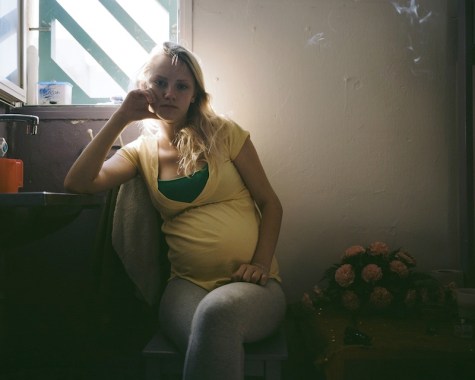
Neve Tirza, which houses 180 women, is Israel’s only women’s prison. In 2011, Tomer Ifrah, a photographer based in Tel Aviv, spent one day a week for three months photographing life inside. Ifrah’s series is Women’s Prison.
“The prisoners come from diverse social backgrounds, and mostly who belong to powerless minorities,” says Ifrah in his artist statement. “They must share their lives in close quarters. Most women in Neve Tirza Prison are serving their second or third terms there, trapped in a vicious cycle.”
Ifrah says that the relationships between the prisoners, the staff and he were rooted in mutual respect and trust. Cursory Google searches of Neve Tirza Prison reveals a history of abuse from 10 years ago; in particular threats to Palestinian prisoners; a recent influx of white collar criminals; and ongoing inhumane allotment of physical space. Neve Tirza has falsely been cast as a “paradise” by American TV. Conditions, on the evidence of our conversation, have since improved significantly.
Scroll down for the Q&A. Right click any image for a larger view.


Prison Photography (PP): Tell me about how you got access to Neve Tirza Prison.
Tomer Ifrah (TI): Going into the prison was such a lucky thing – even to get access for one day. I was sent by a local Israeli women’s magazine to photograph a single prisoner. I went to the prison with a reporter.
I had to wait for the reporter to do the interview, so they kept me in one of the segments of the prison. Of the five segments, I was waiting in the “easiest” one – the one in which you are kept if you have good behavior or committed minor crimes. I could talk with the prisoners quite openly.
I realized there was something in Neve Tirza for a project. I was quite skeptical [at the chances of doing a project] but I found out who was in charge and knocked on the door of the manager of the prison. I told her that I was interested in doing a project and she said immediately that it sounded good. After a few days and a few phone calls, I got in.
In the beginning, they didn’t know exactly what I wanted to do; it was the first time someone had go in and photograph the prisoners. They didn’t know exactly what to tell me. I wanted to go a few times a week, but they told me I could go in once a week.
PP: Neve Tirza is the only women’s prison in Israel. What’s the population of Israel?
TI: More than 7.5 million, perhaps 8 million.
PP: Just a single prison for women from such a large population seems incredible.
TI: What are the figures of incarceration in America?
PP: There are more than 200,000 women incarcerated in America. There are 2.3 million American prisoners in total.
TI: In Israel, there are 25,000 men in prison. Approximately, 13,000 or 14,000 are criminals. The remainder are incarcerated on security related issues – mostly Palestinians.
I watched a documentary by a woman who wrote a book about Neve Tirza. After she researched the topic, she was asked, ‘Why is there such a small number of female prisoners?’ She didn’t have a scientific answer, but she noted that it was the only women’s jail in Israel and so, maybe, they fit the prisoners into the space that they have. If you don’t have a place to keep female prisoners, perhaps they convict them less? I’m not sure, but this was the only answer I have found.
PP: On your website, I didn’t see text or information accompanying the images. What’s the main story in Women’s Prison?
TI: This project was made exactly at the time I got involved with Frames Of Reality, a project that is a partnership between Palestinian photographers and Israeli photographers. Each of the photographers could choose a subject, so I chose the prison.
While I was working on Women’s Prison, I came with new images to the group and each week professional photographers saw them. The main thing that came out of our discussion of the images was that Women’s Prison is about feelings, about sensations, about the prisoners and what they go through. I was photographing emotions.
PP: And what were the overriding emotions?
TI: Neve Tirza is a very difficult place to be. It is a very intense place. The atmosphere is not easy. It’s so small.
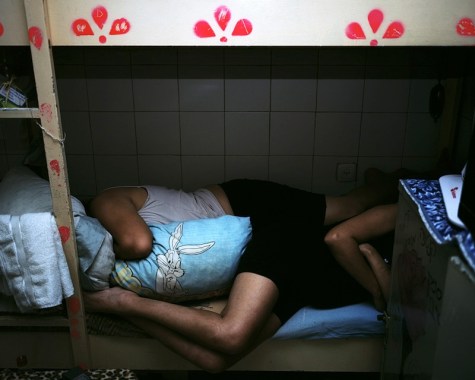
TI: Neve Tirza is very crowded compared to other jails in which each prisoner has his or her own cell. The women are kept six to a cell in some of the segments. Just imagine going into a very small cell and you have to live with five others? Most of the time – from 7pm until morning – the doors are closed. Outside of those times, you can go outside, but even then it is very crowded. Imagine the conflicts between prisoners in such a small place?
PP: Conflicts? Was it a violent place or was it pressurized?
TI: I can imagine that sometimes it comes to physical violence but I think that mostly it stays at the level of shouting and verbal abuse. But there’s the other side of it; if you stay close to someone for a long period of time, very strong bonds develop. There is lots of caring and love among the prisoners. It feels like a very close family.


PP: Because there’s so few prisoners, I must assume that the women have been convicted of serious crimes? And they come from diverse social backgrounds?
Most of the women are convicted for drugs issues, caught in a cycle. Most women were serving their second or third term. They don’t have any options when they are released. I think this is a universal fact, not just here in Israel.
PP: What do the women who are trapped in this cycle, as you describe it, think of prison? Is it an opportunity to rehabilitate?
TI: It goes both ways. The staff and the manageress are doing their best to help them; you can see it in their interactions. They treat them the best they can. The administration has the best intentions. But on the other hand, it is hopeless, because they don’t feel that they can ultimately help them.
There also is a lot of criticism because most of the people in Neve Tirza are not supposed to be in jail; they are supposed to be in psychiatric hospitals, possibly. When you’re inside there you understand that immediately. A big percentage of the women have mental disorders. If you put people who are unhealthy in their minds together it can be hell for them.
My personal opinion about it is that it doesn’t help anybody. The system must be changed if you want to really help them and not just lock them up away from society. If you really want to help them there are other ways to do it.
PP: What did the women think of you and your camera?
I was surprised. Some of them at first told me that they weren’t interested in being photographed, but there were very few. For the whole period of time, I respected that and didn’t photograph them.
The women I did photograph felt very comfortable being photographed or didn’t give it any special attention. For me, it was excellent because I could document as I wanted.
PP: Did they ask what you’d do with the pictures?
TI: Yes. I told them they were going to an exhibition by Frames Of Reality (the Palestinian/Israeli photographer project) and that it would probably publish in magazines. They were okay with that.
The bigger thing was to get the approval of the warden. She was more difficult [to satisfy] than the prisoners. There were some photographs she didn’t allow to be published.
PP: What photographs did the administration censor?
Photographs that they felt that the families of the victims would be hurt by. If I showed a prisoner sentenced to murder, it would cause difficulties as that a very sensitive issue with the family of the victim.


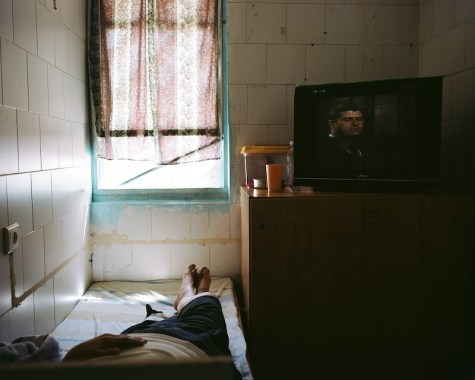

PP: What I find is quite common in American prison photography projects is there are different levels of complicity and expectations between the prisoners and the staff. And also there can be different motivations for inclusion in – and accommodation of – a photo project between the management of a prison and the staff of the prison.
TI: In the beginning I was helped by both management and staff. Towards the final stages of the project they felt they were taking a chance with me, and with my security. They were worried I might get hurt. They probably have a good sense about what’s going on there, but I felt it only in the final stages.
I feel I didn’t have enough time to photograph the project as I wanted. Even with several hours a week, many things could get in the way. I could lose hours of time making photographs if there was something going on in the prison [that restricted my access]. I can often feel that way with projects, but particularly this one. I said thank you for every minute I had to photograph but still …
PP: Do you know of other photographers who’ve photographed Israeli women in prison?
TI: I only know of one student. It was done well, but not a full body of work. The photographer probably didn’t have much time inside.
PP: Magnum photos has a single lonely image made by Micha Bar Am from 1969.

PP: Is Neve Tirza Prison an ignored topic?
TI: No, no. Everybody wants to get access. I was very lucky. I think if I’d asked six months before I wouldn’t have got access. It was perfect timing. They felt comfortable with me and they trusted me. I wanted to return that trust so every image that I photographed I immediately showed them. I was very honest with them.
The thing that helped me to photograph there most was the fact that the prisoners trusted me. They understood that I would not take pictures that they did not want me to take; I would publish it in an an honest way.
PP: Obviously, a lot of imagery that comes out of the Israel/Palestine region is politicized. I’ve seen some work of Palestinian political prisoners. How does your body of work fit into that visual territory?
TI: I was not allowed to photograph the Palestinian female prisoners, of whom there were very few in Neve Tirza. If it were to cause problems for the prison staff, I was happy to not do that.

PP: Why were you not permitted to photograph Palestinian prisoners?
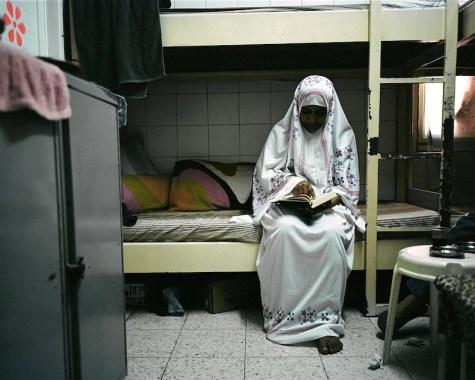
TI: There is a single image of an Arabic woman praying in her cell. She gave me permission as did the prison. It was okay with her but in one or two cases it was not allowed. The modesty in Arab culture is more strict. If it is men, it is usually okay, but if it is women it is more problematic.
There are many minorities in prison. In my images, you’ll see that many women are not Israeli born. Some of them are from Russia, or Ethiopia, or South America.
PP: Is that because minorities are generally marginalized in Israeli society?
TI: Exactly. I think this is also common in societies other countries.
PP: How many images did you make in total?
TI: I was photographing with medium format film. I made about 500 images in total.
PP: Tell me about Frames Of Reality, the joint Israeli/Palestinian photography project in which you are involved.
TI: Frames Of Reality is in its third year. The meetings are held in Beit Jala, a place near Jerusalem that is easy for both Israeli and Palestinians photographers to get to. We meet once a week with guest photographers or lecturers. It is financed by another country … I don’t know which. At the end of each year Frames Of Reality has a big exhibition and publishes a book.
PP: There’s many good photographers! Dan Balilty, Ahikam Seri, Eman Mohammed, Noah Ben Shalom.
TI: I’m not surprised people know Israeli photographers because the region is such a strong place to make photos.
PP: Specifically with Frames Of Reality, you’re trying to lead by example? Does photography have role to play in bringing different communities together.
TI: I just returned form the Israeli press contest where I saw all the core issues in the photographs – from photographs of East Jerusalem to Palestinian photographers working in Tel Aviv. Photography has role but I don’t know how much influence it has.
PP: Well, I encourage editors to get in touch so your photography can be seen. Thank you, Tomer.
TI: Thanks Pete.


Did you take your first photographic image when you were young? Ever thought it could go in a show?
Early Works, curated by Laura Moya and Laura Valenti Jelen, will bring together examines the naive imagery made by contemporary photographers when they were kids.
This seemed like an obvious concept for a photography exhibition, until I realised I can’t think of a similar show from the past. I’m intrigued. It’s a simple premise and in one-fell-swoop will probably cut through the bull crap that you get in a lot of artistic practice (and artists’ statements). Lovely. Simples.
“These early images often reveal surprising talent, visual intuition, and honesty,” say Moya and Valenti Jelen. “Kept for many decades in shoeboxes and faded albums, the images are often cherished belongings that play a key role in defining the self as artist. This exhibition will be a close look at photographers’ earliest works, paired with personal narratives about the images.”
Early Works will be hosted by Newspace Center for Photography and Rayko Photo Center.
There is no entry fee. The deadline to submit is February 4th, 2013. DO IT! Here are some examples of format for entries.

 Prison Photography