
You are currently browsing the category archive for the ‘Institutional’ category.

With the express intent to shine a light on the lives of women imprisoned in Oklahoma for non-violent crimes, Yousef Khanfar‘s project and book Invisible Eve should be an excellent contribution to the visual resources we can use to inform ourselves about mass incarceration. It is, but it doesn’t go far enough.
Invisible Eve has a couple of inherent problems that I think are worth pointing out. The first, to be fair, might just be a snag of language and a misinterpretation on my part, however, when I read that Khanfar asked the women to write statements of advice to younger generations so that “the fault of one being might be the salvation of another” it raised alarm bells. In the phrasing, there is a presumption of guilt that falls solely on the individual. Nothing is as simple as that and, for me, the way we warehouse non-violent offenders is as criminal as the act for which the individual is condemned and controlled.
If one accepts that the prison industrial complex is the problem, not the solution, any language that verges on the moralistic is troublesome.
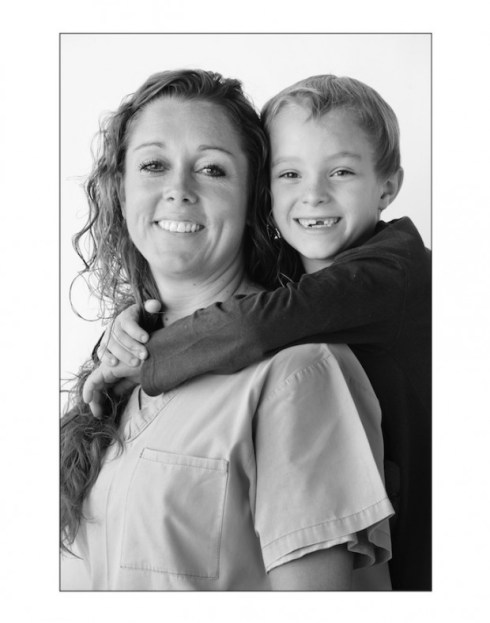
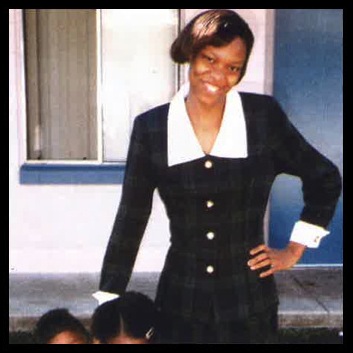
As for the portraits, they are fine. They’re straightforward, maybe a bit sugary, but probably exactly what the women would want (it is safe to presume Khanfar gave them multiple copies). For women with children, the portraits are a particular gift.
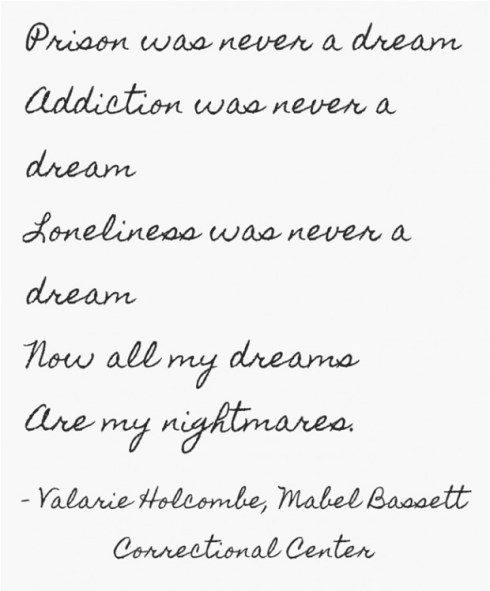
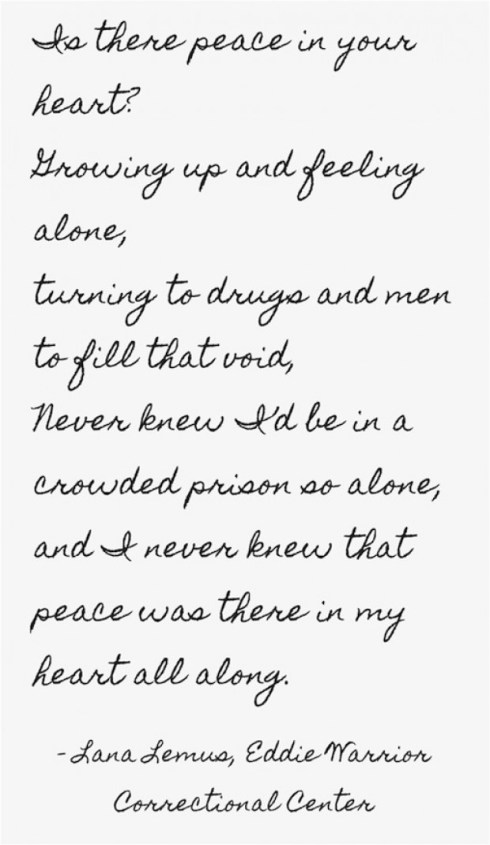
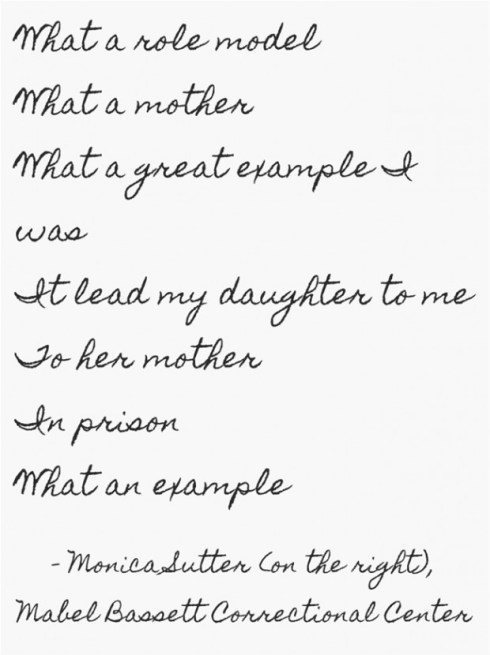
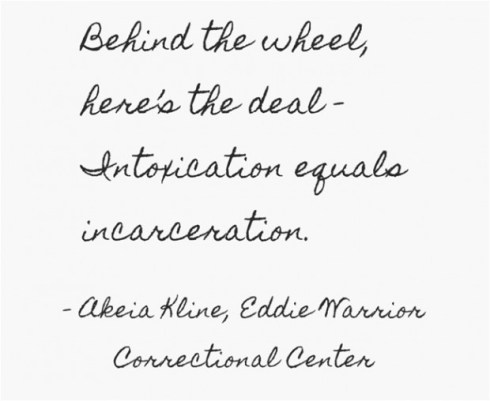
The second, and most glaring, issue for me are the “handwritten” notes. Bear with me.
Khanfar has said that his realisation that he couldn’t change the women’s circumstances and was his motivation to ask them to help others. Oklahoma has the ignoble distinction of being the U.S. state with the highest per capita rate of female incarceration. Khanfar notes that the women are “cast away and forgotten” and that his photographs are “not to condemn or commiserate, but to serve as bridges of understanding.”
Why then, did Khanfar choose to transcribe their words and publish them in a faux-handwritten font? The notes are all in the same handwriting! By choosing to do this, Khanfar has completely erased one of the few evidences that each of these women are individuals; one of the essential bridges to understanding.
The personal touch of individuals’ hand(writing) would have been a powerful element that has been overlooked in the project.
Take a look at the texts below and let me know what do you think. Am I being to precious or is the exclusion of the women’s own scripts a sizable mistake on Khanfar’s part?
Elainaise Mervil. Source: The Tallahassee Project via VICE
I was recently speaking with an advocate who visited women’s prisons in California to learn about their circumstances and build cases for release. She said to me, “There needs to be more media in prisons. The women with whom I have conversations totally complicate peoples’ ideas about who a criminal is.”
Unquestionably, photographic media plays a role in telling stories. Some photographs better than others. If storytelling is about connection and about empathy, then what better photographs than the family snap or the amateur portrait?
This week, the unavoidable ordinariness of prisoners’ portraits was in evidence on VICE.
Jamie Lee Curtis Taete did us the service of republishing images from the book The Tallahassee Project: One Hundred Prisoners Of The War On Drugs, by John Beresford, M.D.
“The majority of the women shown in the book were charged with ‘conspiracy’ based on the statements of informants who spoke to authorities in exchange for reduced sentences,” says Curtis Taete.
From a woman whose old phone, still in her name, was used by a drug dealer to a women who drove drugs across state lines. Yes, there may have been a poor decision or lack of inquiry involved but there was also coercion (usually by a male friend or family member) and the result is a long, long mandatory-minimum sentence. Such is the War On Drugs which has been largely responsible for an eightfold increase in the female prison population in the U.S.
It’s likely many women implicated in drugs investigations are mere runners and may not even possess the information needed to bargain with the authorities. The result is destroyed families and ruined lives. 16 years, 24 years and even life for a failure to cooperate with authorities. How do these numbers even make sense? They don’t. They are shameful.
Below, I include a particularly insightful contribution to The Tallahassee Project book [my underlining] by Elainaise Mervil (pictured above).
Inmate ID Number: 20982-018
Sentenced to 20 years for conspiracy to possess with intent to distribute cocaine base and cocaine hydrochloride .
Estimated release date: 08-07-2014
I am a Haitian lady who has left 4 minor children behind to do this mandatory sentence. I have no criminal history. I am a first-time non-violent offender. It seems the government is tearing families apart and the children are the ones that are really made to suffer for this “War on Drugs.” P.O.W.
I fell into the wrong crowd in Orlando, Florida. I have never had any problems with the law and only am now learning to read and write the English language. I am a native of the beautiful country of Haiti. I love America, but I believe that the judicial system needs some change and review.
Conspiracy is such an all-encompassing category that if no other charge may be brought forth, one is charged with conspiracy and subjected to the 10-year mandatory minimums which increase rapidly in direct proportion to hearsay evidence whether true or not true. It appears that a person who is found in possession of narcotics will receive less time than a person who was not found in possession of anything, since conspiracy seems like the only viable charge.
Conspiracy was originally designed to target “king pins” who are usually sheltered by runners, etc. But what has happened instead is that the king pins are the ones who receive the most favorable deals since they have the most to provide to the government for substantial assistance motions as they possess many many contacts. The “little man” who does not know as much suffers since his assistance is not as valuable; hence, falling victim to the harsh treatment under the law by being required to serve a decade-plus in prison.
I applaud this use of photography. Let’s see more activists and journalists in prisons gathering such image and word to amplify the voices of those callously thrown away by our society.
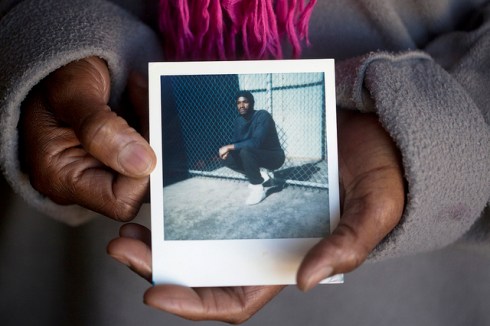
Marie Levin holds a photo of her brother, Ronnie Dewberry, taken at San Quentin State Prison in 1988. Until recently, it was the last photograph he’d had taken. Photo credit: Adithya Sambamurthy/The Center for Investigative Reporting
STARVED OF THEIR OWN IMAGE
We are now into the second week of the California Prisoners Hunger Strike. It is difficult to get firm figures on the number of participating prisoners. The Los Angeles Times reports 30,000; CNN reports 12,000 and Yahoo reports 7,000+.
I’m inclined to trust the figures sourced by Solitary Watch:
The hunger strike began on July 8th with participation of approximately 30,000 people in two-thirds of California’s prisons, as well as several out-of-state facilities holding California prisoners. In the first days of the hunger strike, approximately 3,200 others also refused to attend work or education classes as a form of protest in support of the hunger strike. As of Sunday, there are an estimated 4,487 still on hunger strike.
Still, formidable numbers.
INVISIBLE AND UNPHOTOGRAPHED PEOPLE
Last week, in conjunction with the initiation of the mass peaceful protect, Michael Montgomery for the Center for Investigative Reporting published an excellent article California Prisons’ Photo Ban Leaves Legacy of Blurred Identities about the ban on portrait photographs of prisoners held in solitary confinement.
Accompanying the article is the interactive Solitary Lives feature and a Flickr gallery.
The ban resulted from a tension between what a photograph meant or could mean.
For families, a photograph is a tangible connection to their loved one behind bars, but for staff of the four maximum security prisons that upheld the ban, photographs were potential calling cards — circulated by prison gang leaders — both to advise other members that they’re still in charge and to pass on orders.
The ban was lifted in 2011, following the last California prison hunger strike. Montgomery quotes Sean Kernan, the former Under-Secretary of the CDCR
“I think we were wrong, and I think (that) to this day,” he said. “How right is it to have an offender who is behaving … (and) to not be able to take a photo to send to his loved ones for 20 years?” Kernan directed prison staff to ease the restrictions for inmates who were free of any disciplinary violations.
The ban in the four Californian prisons was extraordinary.
“I have never heard of any other prison system or individual prison in America imposing a long-term ban of this kind,” said David Fathi, director of the American Civil Liberties Union’s National Prison Project.
As I have stated frequently on Prison Photography, prison (visiting-room) portraiture is one of the most prevalent types of American vernacular photography.
Until artists such as Alyse Emdur and David Adler began to draw focus to this disparate, decentralised, emotion-laden, and high-stake vernacular sub-genre, prison portraits were kept in wallets, on mantles and in side tables. There’s tens of millions of them out there.
And yet, for over 20 years, thousands of men in California were not allowed images of themselves. The additional ban of mirrors in solitary units meant that many men often did not see images of themselves for years on end. Again, to quote Montgomery’s article:
“I have asked my husband, ‘Do you even know what you look like?’ And he says, ‘Kind of, sort of,’ ” said Irene Huerta, whose husband, Gabriel, 54, has been detained at Pelican Bay for 23 years.
THE PHOTOGRAPH AS AN OBJECT OF DEPLOYMENT
In the free world, photographs are ubiquitous, easily created, shared and possessed. The fact that these seemingly innocuous objects were caught in the tussle of control between prison authorities and prisoners is astonishing, and speaks to the power struggle (real and imagined) between the kept and the keepers.
Michael Rushford, president of the Criminal Justice Legal Foundation, said easing the restrictions on prisoner photographs raised no major security concerns, so long as inmates had to earn them. “It’s not as if there’s been an epidemic of inmate photos on the street,” he said.
I am not sure how Rushford would measure this, or even it would significantly alter the lives of prisoners, specifically now during the hunger strike, and especially now when proven or alleged gang affiliations have been put aside by prisoners in solidarity for improved conditions for all.
In light of recent art market fetishism, it would seem the primary reason anyone would want to gather prison portraits would be to repeat Harper’s Books’ $45,000 hustle and cash in on the images?
As for the families (following the ban lift) the value of newly acquired images is not in any doubt:
Seeing an image of their incarcerated relative for the first time in years has sparked renewed hope and revived dormant family connections. For others, the photographs are a shocking reminder of the length of time some inmates have been held in isolation.
CENTER FOR INVESTIGATIVE REPORTING LINKS
Michael Montgomery’s California Prisons’ Photo Ban Leaves Legacy of Blurred Identities
Interactive Solitary Lives feature.
A BRIEF NOTE ABOUT THE SOLITARY WATCH WEBSITE
I cannot emphasize enough how important the website Solitary Watch is as a resource. Jean Casella, James Ridgeway, and their team of reporters produce high quality journalism — not only for their website but for other news outlets including The Guardian, Mother Jones, Al Jazeera, Columbia Journalism Review and The Nation.
Solitary Watch is an independent media and advocacy project, funded by grants and donations. It is a project of the Community Futures Collective, a 501(c)(3) non-profit. You can support the project here.
I don’t hesitate to say that Solitary Watch has driven much of the critical and visible public discourse about solitary confinement in U.S. prisons and jails.
As Solitary Watch describes, “Solitary confinement is one of the nation’s most pressing domestic human rights issues — and also one of the most invisible,” which is why I have a vested interest in their work; we’re each interested in making solitary and other egregious aspects of the U.S. prison system more visible.
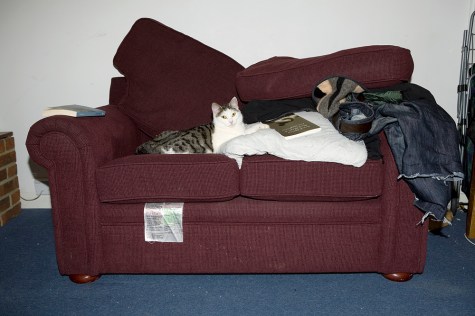
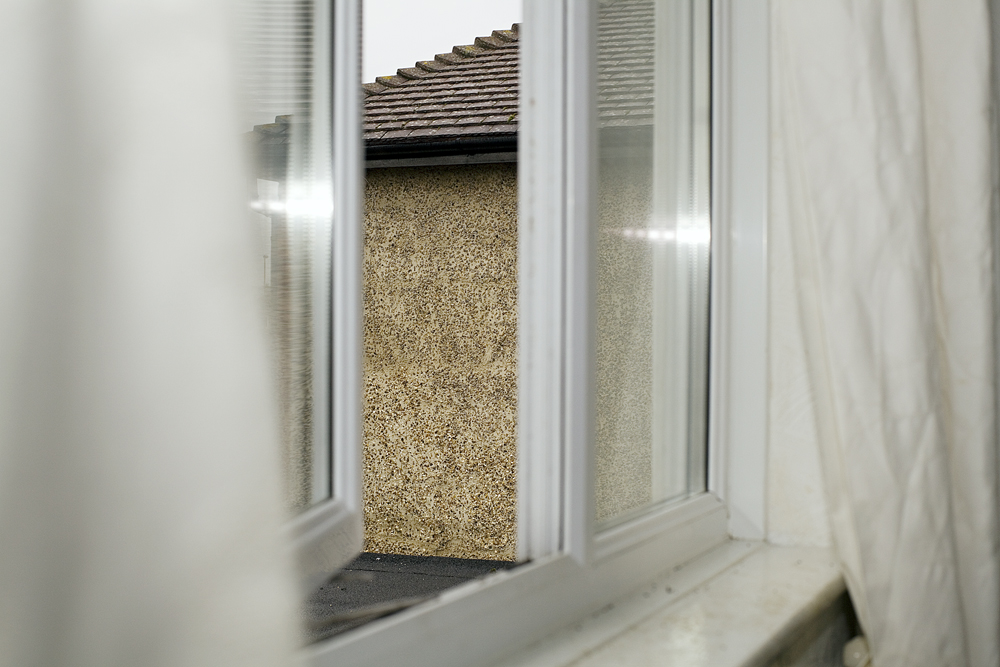
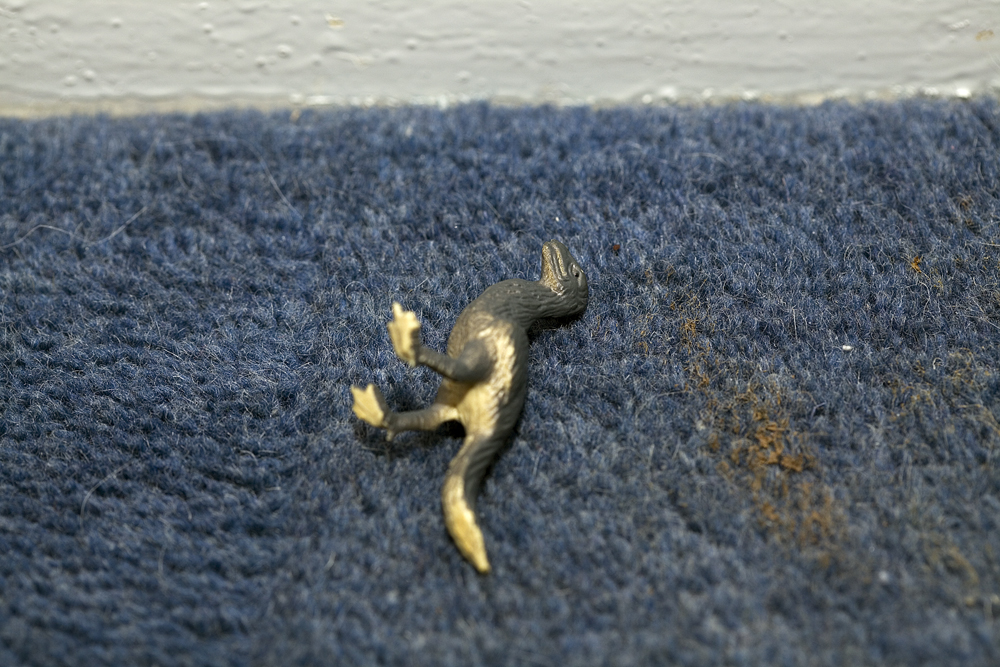
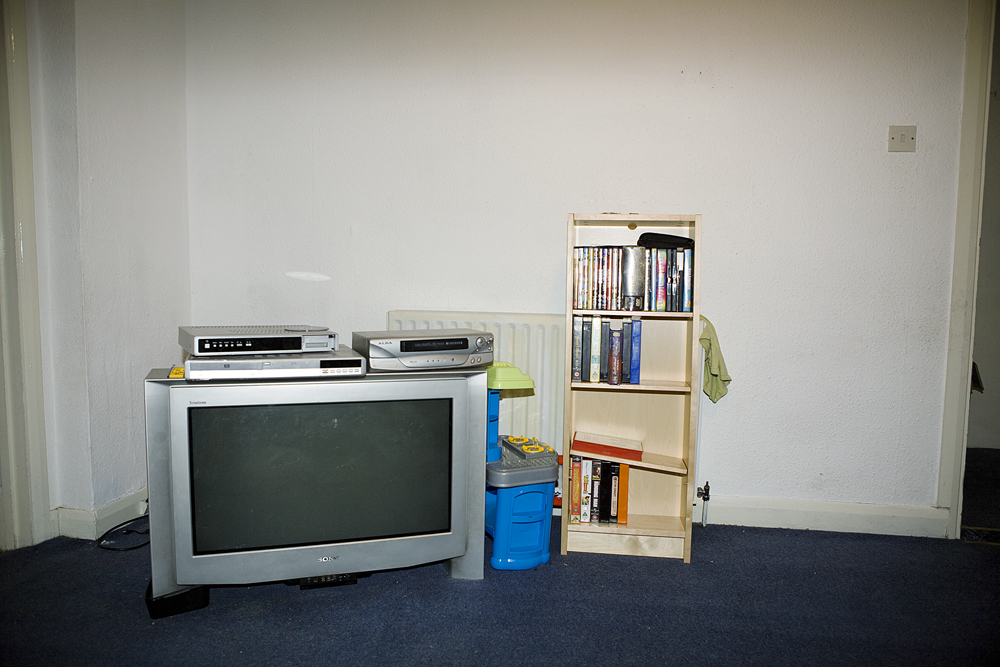
A few weeks ago I wrote, for Wired, a piece about Edmund Clark‘s latest body of work Control Order House. The piece carried the irreverent title This Incredibly Boring House Is a U.K. Terror Suspect’s Lockdown but the details of the project it gets into – two years of negotiating access, Clark’s process which riffs on surveillance and forensic photography, Clark’s the decision to present every photograph he took in the order he took them, etc. are important, mildly complex and worth getting one’s head around.
The house Clark documented belonged to a pre-trail UK terror suspect, under house arrested, referred to in legal documents as CE.
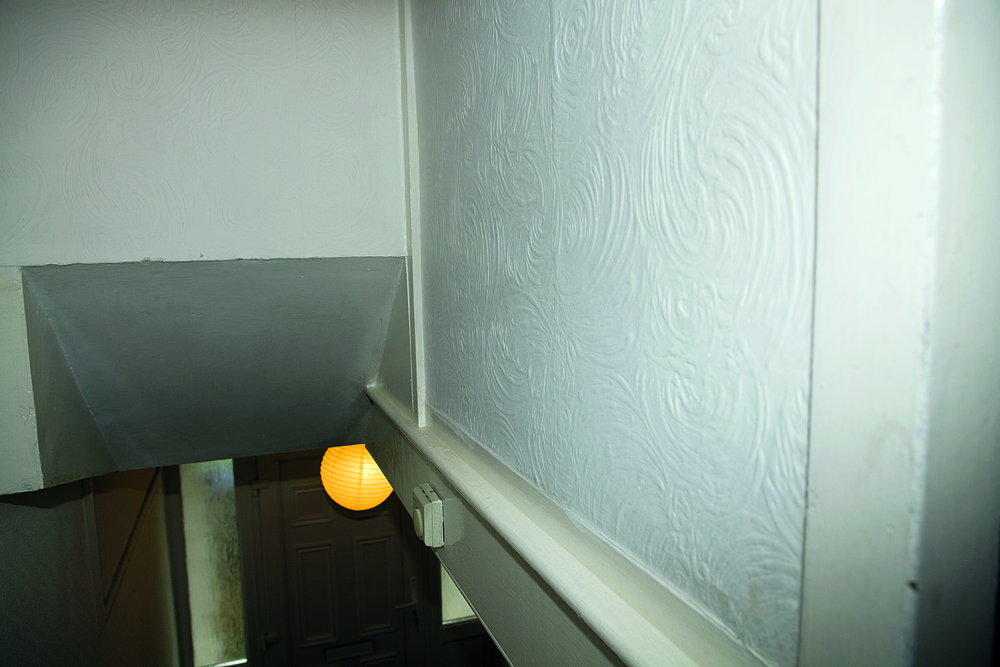

I wrote:
Control Order House is the only existing photographic study of a residence occupied by a person under a UK control order. It is not an exposé, however. Given the legal sensitivities, every image was vetted by UK government officials. Clark was not allowed to reveal the identity of the terror suspect — referred to in legal documents as “CE” — nor his location.
“To reveal CE’s identity would be an offence and in breach of the court-imposed anonymity order,” says Clark. “All the photographs I took or the documents I wanted to use had to be screened by the Home Office.”
For Clark, the project is best appreciated in its book form. Control Order House was published by HERE Press and released May 2nd.
Clark refers to the book as an “object of control” because at a point, he accepted that, with so many attached limitations, his photography was almost an extension of the state power he was documenting. All of his equipment had to be itemized and registered with the UK Home Office before his three visits.
Wired created a Scribd document (that has no URL, but is embedded in the article) with six pages of Clark’s correspondence with both the terror suspect and the UK Home Office employees.
“Even CE’s lawyers made it clear to me that the I had to careful about what I spoke to him about because the house was (very probably) bugged and that my telephone communication with him would be monitored,” explains Clark. “All my material, even my words here [in this interview] could become part of CE’s case.”

Control Order House is a finely balanced project. It is hampered by so many obstacles to unfettered depiction that our traditional notions of what photography is supposed to do are frustrated. It is not exposé; it is completely descriptive of its own limitations. It’s these limitations from which we must depart in thinking about photography in highly policed spaces. Control Order House should kick-start considerations of lesser seen photographs from the Global War On Terror (GWOT), namely, images of drone strike aftermath, Aesthetics of Terror (as, in this case, distilled by artists), redacted images in magazines distributed at Guantanamo (scroll down), Kill Team trophy photos, American personnel’s own vernacular war photography, and Jihad suicide posters.
Control Order House is about the act of photography. It’s self-referential as kids’ MFA work that deconstructs photographic process, but — unlike those studio experiments — it has roots in a clearly identifiable political territory. It shows us more than we knew but not as much as we would like to know. In so doing it reminds us of all the operations, violence and war crimes carried out on our tax dollar that we never see, never know.





Susan Wright, Texas
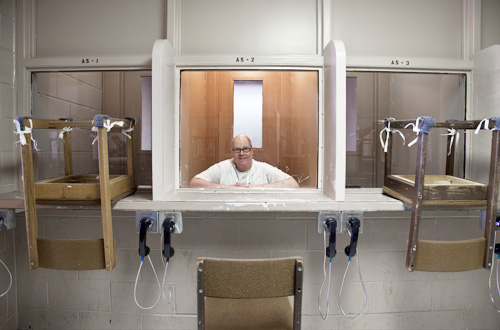
Matt Rainwaters is an editorial features photographer, based in Austin, Texas. Photographer Lance Rosenfield told me, “Matt is a specialist at making portraits through bullet proof glass.” For the past few years, Rainwaters has been the go-to-man in the lone star state for interview-room portraits. Collected, these portraits are the series Offender.
As well as Texas prison portraits, Offender includes some images from Rainwaters’ 2010 trip to Guantanamo.
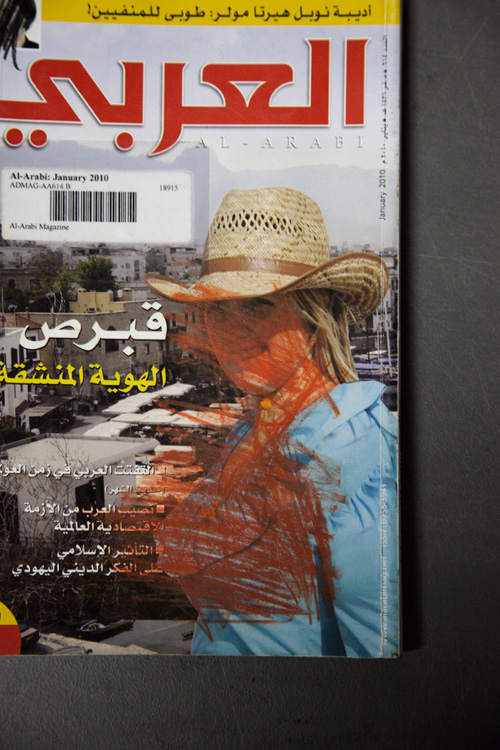
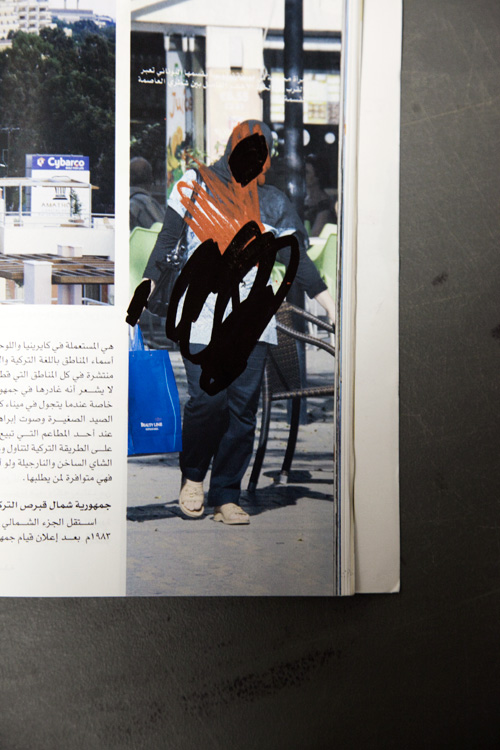
Of Rainwaters’ Guantanamo images, I have never before seen photos like his shots of magazines with crudely redacted images of women inside the pages. The layers, scrawls and obvious surface of those images of images seem to encapsulate the malevolent drudgery that is the deadlock between disfunctional fundamentalism and more disfunctional American legal standards. When two resolute systems that cannot accommodate each other an create faint-compromise, they do so with results of zero utility. Perverse and pathetic.
Unfortunately, when I spoke to Matt, I wasn’t familiar with the redacted-image magazine images, so I didn’t ask him about them. Darn! I hope they spark some inquiries of your own.
Scroll down for our Q&A.

PP: Recently, I spoke with Alan Pogue, a documentary photographer in your home city Austin. Alan said it’s easy to get a photograph in a visiting room but if you need to get inside the living quarters and inside Texan prison facilities you pretty much need a lawsuit. What do you think about that?
Matthew Rainwaters (MR): I’d say that’s fair. Getting access to the visiting rooms is fairly easy if you have a commission and if you have the media contact. Getting beyond that though I’ve never been able to.
The writer I work with and I have had great ideas for stories but getting past the visiting room is not gonna happen. There’s been times when literally I could have walked just past the line and made a much more compelling portait, but it’s just not allowed.
PP: How does one get access to the visiting rooms?
MR: If you go to the Texas Department of Justice website there is a ‘media’ section. Contact the media liaison with details of the publication that you’re working for. Once you have the commission, you tell them the story and the prisoner that you’re planning on working with. The negotiations are straight forward.
PP: In how many Texas prisons have you made portraiture?
MR: I’ve been to various facilities in Hunstville, TX; one in Palestine, TX; and I’ve been to four different facilities in East Texas.
PP: Are there any limitations on the equipment you take in?
MR:You are subject to a search every time you go in. I typically have my lighting kit – two strobe heads, a bag with stands and various modifiers, reflectors, cloths, back drops. I’ve never had a problem getting kit in and out.
PP: How do you shoot through reflective bullet-proof glass?
MR: There’s a few tricks that you can use. Sometimes a polarizer will help. Sometimes if it’s a small enough booth I can have an assistant stand behind me with a dark cloth and that will cut down on reflections and then from there it’s just understanding the fundamentals of photography. Lighting, contrast, and trying to work with the available light.
Trying to use a strobe through glass is next to impossible.
From there it’s just talking with your subject, getting to know them, and then trying to effectively communicate their story that the writer is also telling.
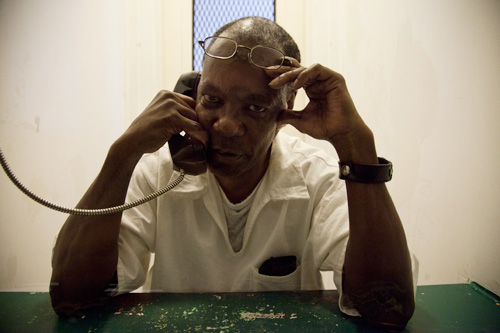
Wayne East, Texas
PP: Can you describe each of your subjects and their particular stories?
MR: I photographed Wayne East. He was convicted of a murder. This is a pretty compelling story. He spent 19 years on death row before a woman started championing his cause. Not incoincidentally, she was the victim’s cousin who believed that East is innocent.
She raised a bunch of money, spent a lot of her own money and basically petitioned to get him off of death row. He was recently paroled. after 30 years for the crime.
PP: It wasn’t a wrongful conviction?
MR: East has always said he is innocent. The question remains: Was he really guilty or is he innocent as she also believes?
The other story I was really close to was that of Susan Wright (top image). My images ran in Texas Monthly for an article titled 193. She was convicted of murdering her husband by stabbing him 193 times.
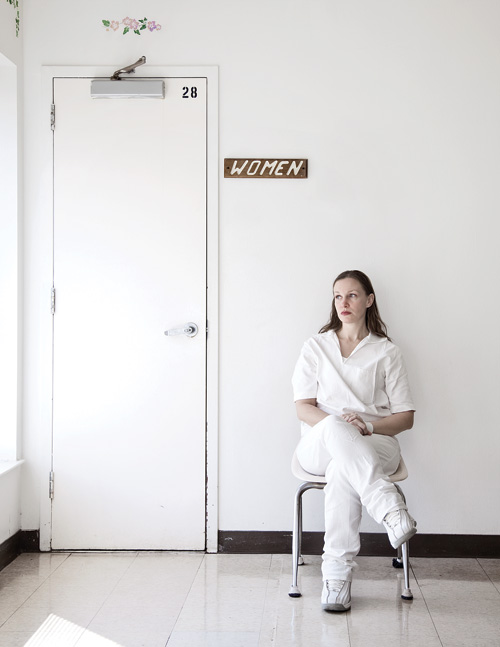
Susan Wright, Texas
MR: The story goes that Wright’s husband would come home and beat her. The defense attorney never brought up battered woman syndrome.
Well, one day he came home and started rough-housing with their kid, slapped him around, and that’s actually what drove her over the edge and she tied him to the bed and then ended up pulling a knife out and stabbing him 193 times. This whole idea of battered woman syndrome and her being psychologically damaged from years of abuse was never brought up during the defense. So she was up for an appeal for parole and I believe that’s still pending. I don’t know how that’s played out.
PP: There’s another compelling portrait of a female in that story was it the prosecuting attorney or the DA?
MR: Kelly Siegler, prosecutor in the Harris County district attorney’s office.
The court proceedings were aired on Court TV and Siegler was a controversial character because she was very theatrical in her closing arguments. She ended up tying one of her law assistants to the table and climbed on top of him and proceeded to count out 193 stabs, every single one she simulated with her pen. All on TV. A lot of people believe that those theatrics are responsible for convicting Susan.
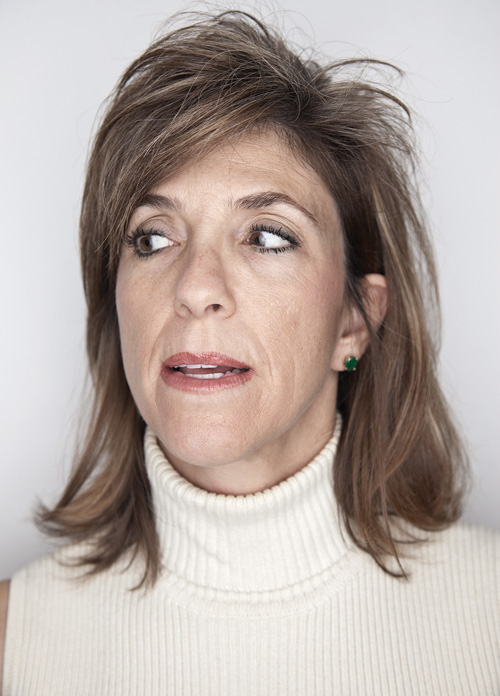
Kelly Siegler, District Attorney prosecutor, Texas
PP: What was your first prison shoot?
MR: Steven Russell. You may be familiar with him from the movie I Love You Phillip Morris starring Jim Carrey as Russell.
Russell is Texas’ most notorious escape artist. He’ll be in prison for the rest of his life, even though he was originally convicted of a white collar crime. Russell fell in love with a man in prison, escaped to be with him, and then continued to escape over and over again. So what could have been a relatively short prison sentence has been compounded by the crime of escape four times over.
Russell was in the most maximum security prison – the Michael Unit out past Palestine. He has one hour of sunlight each day. He’s locked up in the same way as the most violent offenders, although he’s a completely non-violent offender.
All four times that he escaped were completely nonviolent too, so it’s sort of tragic. Does he deserve to be there? You know, that’s questionable. He did escape but it’s a sad story nonetheless.

Steven Russell, Texas
PP: Let’s move from the US to the US’ outlying territories? When did you got Guantanamo and why?
MR: I went to Guantanamo for Esquire UK in March, 2010.
PP: For how many days?
MR: It was a three day stay on the base.
There’s a lot of misconceptions about Guantanamo Bay. The media portrays it as solely as a detention facility on the coast of Cuba but what I didn’t realize until I got there it’s been a functioning military base since 1906 – a lot of it’s operations have to do with immigration and refueling point for US allies.
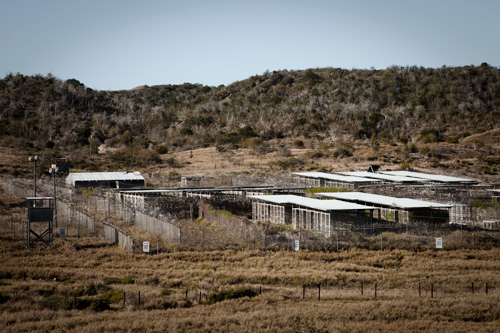
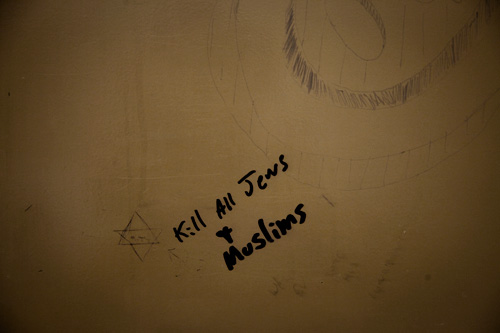
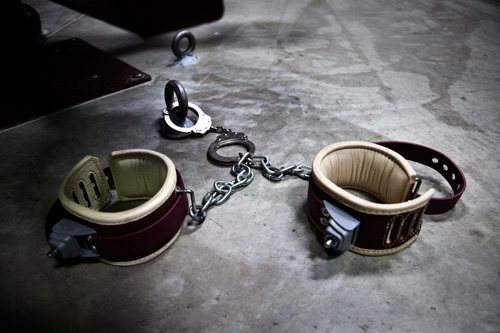
MR: We did the media tour of the prison facility. We went to some of the different camps. Saw how, in some cases, some of the inmates live communally, in other cases some of them are locked down. There’s definitely a lot of secrecy still. It’s not as transparent as they would have you believe. There’s some camps that you don’t have access to at all and there’s some camps that they don’t even admit to existing on the island and they don’t show up on any maps. But it’s been proven that there are certain inmates that are held there in a mysterious location.

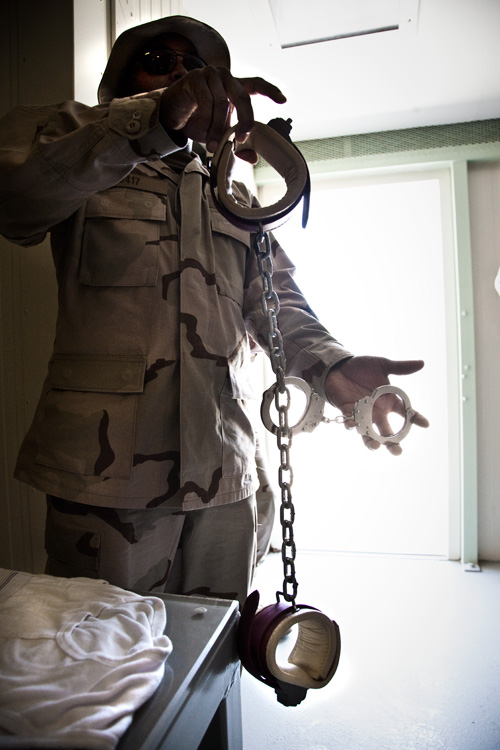
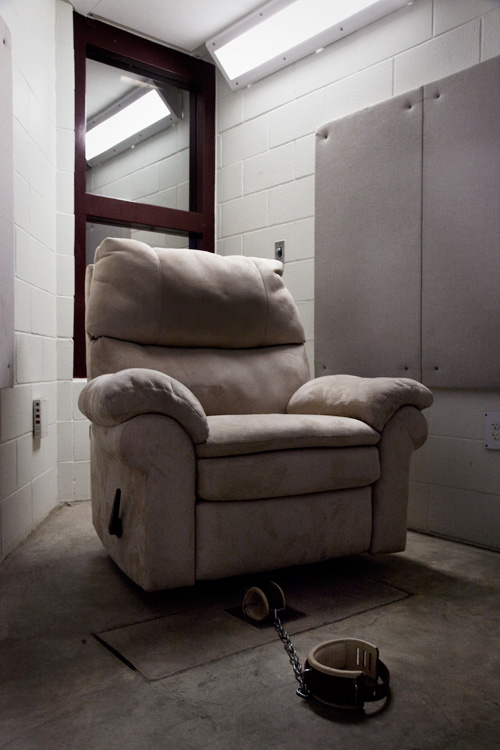
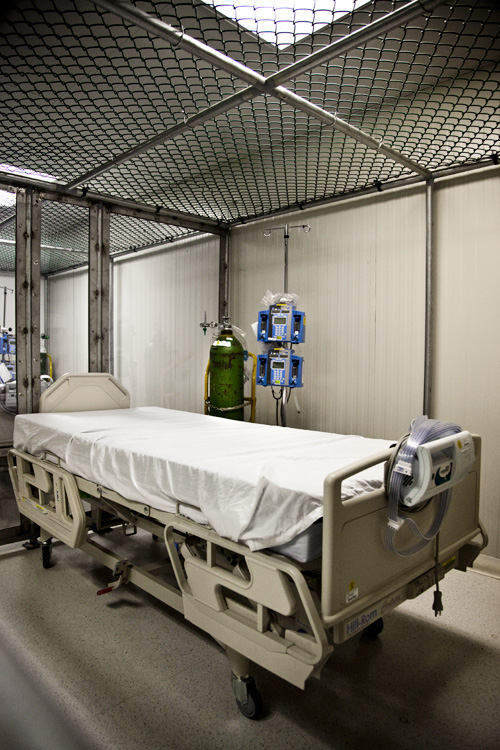

MR: What is extremely frustrating about photographing at Guantanamo Bay is the strict security protocol. At the end of every day, you sit down with an officer and they look through every single photo.
Sometimes very arbitrary reasons or sometimes very good reasons, they will delete a photo. If they don’t like the way it may represent the prison then they’ll delete those photos too.
Every single photograph goes through this “filter.” I had maybe 60% of the images I shot deleted before I came home.


PP: Is it fair to ask if there’s any points of comparison between Guantanamo and the Texas prisons? Did you feel as though the monitoring is different? Did you feel as though the administrations understood your role as a media person differently? Do you find any irony in the fact that Guantanamo is one of the most secure and notorious prisons in the world but they provide these three days media junkets, something state prisons do not provide?
MR: Within the Texas prison system we’re there to photograph a specific individual. So you’re led into an interview room or booth. I’m there to take a photograph of that person whereas in Guantanamo Bay the subject isn’t a specific person it is the entire facility.
PP: But in both cases, for different reasons, the authority is media savvy and happy to work with you?
MR: Yes.
Guantanamo Bay a lot of people believe, and quite possibly rightfully so, should be shut down because it is a publicity nightmare for the United States. Everything they’re trying to do with the media at Guantanamo is to try and show how fair, how honest, how transparent, everything is and they’re really trying to deflect this image of it being a detention facility that practices torture.
The institutionally genius part of Guantanamo Bay, from the administration standpoint is no-one is stationed at Guantanamo Bay. People are only deployed to Guantanamo Bay, so no-one stays there for longer than a year-and-a-half and that goes to the highest ranking people, including the admiral who’s in charge of the Joint Task Force.
So, when you ask them about issues of torture or enhanced interrogation methods everyone can default stock answer over and over again. We kept running into, “I don’t know, I wasn’t here.”
Institutionally it’s set up in that way and that was probably the most frustrating thing as a journalist. No one can tell the whole story. The institutional memory of the place is at best a year old.

PP: Your work has a very distinct look. So, how would you say it fits in with other photography made in prisons? And I’m asking that in terms of like who has the power? How does it inform the public?
MR: I’m photographing individuals and as an editorial features photographer. Portraiture is mostly what I do so I’m trying to set up a dialogue with my subject that is fair to them and it’s honest to the story. I have to quickly learn how to make people comfortable, disarm them, get them to open up to you so that you can be fair and honest to them.
I typically have an hour to work with a subject, it’s a different thing than say a documentary looking at a place over and over again. I’m working work within the confines of limited time and semi-limited knowledge of the person and trying to break all that down and create a portrait.
PP: What is the reaction of your subjects? What do they think will come about through your interaction with the camera as a mediator?
MR: A mixture of skepticism and hope. They hope that telling their story will better the legal decision that may be looming. Maybe it’s a plea for an appeal or they just want to tell their story. Maybe they feel like they haven’t been able to tell their side of the story?
But there’s also skepticism because they don’t know necessarily the turns that the story may take and they don’t know what the recent side of the victim’s story, nor the reactions to it.
Imprisoned subjects can be guarded at first. Usually, there’s 10 to 15 minute window where you’re talking on the phone through the plexi glass. I’ve got my camera just sitting there and I’m not taking photos, just taking the pulse of the person and getting to understand them … and that will dictate everything.

Wayne East, Texas
PP: You’re building what could be loosely characterized as a portfolio of visiting room prison portraiture. Is there a common aesthetic that runs through those that you’re either conscious of or you’ve just started to notice as these projects mount up. Not in a pejorative sense, I want to describe Offender as creepy. Is that okay?
MR: Well, it’s definitely that institutional aesthetic – you’re so confined with time and space you literally have to learn to make do with whatever’s thrown at you.
Now that I’ve done it quite a few times I know what to expect; “Am I shooting through plexi-glass today or am I shooting through a screen? Do we maybe have an open room to work with which maybe means I can actually set up a back drop and maybe a light or two? Am I free to interact with the person without talking on a phone?”
It’s a dark subject but it’s also mostly working with honest stories – fascinating stories, but yeah, creepy at times. Ultimately, these are stories that need to be told and that’s why I enjoy photographing, I believe it’s some of the most honest work that I do.
PP: Thanks Matt.
MR: Thank you, Pete.
Steven Russell, Texas.

Video still. On June 10, 2012, Maine Department of Correction’s employee, Captain Shawn Welch sprays OC spray into the face of prisoner Paul Schlosser who is bound in a restraint chair after Schlosser, who has an infectious disease, spat at an officer.
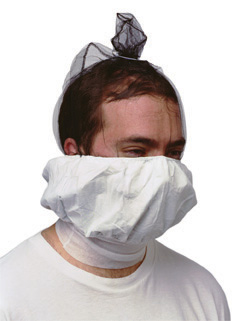
The pepper-spray – dispensed at point blank range – to the face of the restrained prisoner was horrific enough, but it was the use of the spit-mask that truly reflects the vindictiveness of this act of torture. Put on prisoner Paul Schlosser’s face after the pepperspray had doused his mouth, face and eyes, the spit-mask kept the irritant closer. If there was one consistent cry from Schlosser it was that the mask be removed.
Last week, the nation was shocked by video footage of Captain Shawn Welch, a Maine correctional officer discharging oleoresin capsicum (OC) spray, without warning, into the face of Paul Schlosser. Welch held the Mark 9 canister about 18 inches away. The Mark 9 is intended for disabling multiple people at a distance of no closer than 6 feet.
Some experts say the use of pepper spray can be a reasonable way to get control of a situation, even if a person is restrained, but in this case is seemed wholly unnecessary. It seems vindictive and personal.
 The incident occurred in June 2012 and the video came public following a leak. The Portland Press Herald broke the story. Welch was initially sacked but later reinstated following an appeal that took into account his service to the Maine Department of Corrections. It is scandalous that this man returns to a uniform.
Furthermore, as Press Herald OpEd argued the MDOC hunt for the source of the leak missed the point. The issue is the abuse the video shows.
The Press Herald’s coverage of the story has been thorough and I quote from it comprehensively below. The matter that stood out for me was the investigator’s observation that the confrontation became personal between Welch and Schlosser.
In the 24 minutes between Schlosser being sprayed and when he can wash the spray off his face, Welch strolls in and out of the cell holding the OC spray canister, telling Schlosser that if he doesn’t cooperate, “this will happen all over again.”
“You’re not going to win. I will win every time,” he says.
Welch says repeatedly, “If you’re talking, you’re breathing,” suggesting that as long as Schlosser was complaining, he was not in serious medical distress. Welch does call for a member of the prison’s medical staff.
At one point, he whispers to Schlosser, “Useless as teats on a bull, huh … What do you think now?” an apparent reference to an insult Schlosser directed at him two days earlier, according to the investigator’s report.
The investigator concluded that Welch’s treatment of Schlosser was personal.
“Welch continues to brow beat Schlosser and it looks like he has made this a personal issue,” said Durst in the report. “There is not one incident of de-escalation and in fact Welch continues to escalate the situation even after the deployment of chemical agent.”
Schlosser had been self-harming and refusing medical attention, actions which led to the extraction from his cell by riot-gear-clad prison guards.
Welch told an investigator that the use of pepper spray was appropriate because Schlosser, who has hepatitis C, had spit at an officer.
Schlosser gasps and fights for breath. He tries to lean forward to spit out the spray, but the guard holds his head against the back of the chair. One of the guards then puts a spit mask on Schlosser. The mask traps the irritant against Schlosser’s face, at one point covering both his mouth and nose.
Schlosser says he can’t breathe and promises not to struggle or argue anymore.
Pepperspray instantly dries out mucous membranes in the eyes, nose and mouth causing intense and overwhelming pain. Pepperspray leads to a sensation of not being able to breathe, although a National Institute of Justice study found it does not compromise a person’s ability to breathe.
“It’s just like getting jalapeno pepper in your eye, only multiplied by a bunch,” said Robert Trimyer, a use of force instructor and OC trainer with the University of Texas Health Science Center Police Department in San Antonio. Depending on the concentration, OC spray is roughly 300 times “hotter” than a jalapeno pepper.
“It’s painful, but it goes away. The people that have the problem breathing, it’s really more of the anxiety involved,” said Trimyer.
Yerger believes that putting the spit shield on top of the pepper spray would intensify the effect of the spray.
“I have never heard of any trainer I have ever worked with as a peer that would ever say, ‘Put a spit hood on someone after pepper spraying them,'” he said.
“They’re spinning out of control. Restraint, pepper spray, now cover their face — you’re just escalating the situation. In cases I’ve reviewed when people have died in a (restraint) chair, it’s not uncommon to see factors like that involved.”
DIRIGO
Above Schlosser’s restraint chair is the Seal of Maine, on which the latin word Dirigo, meaning “I lead” is emblazoned. Welch only demonstrated to his colleagues how to posture and escalate a situation. The irony ceases to matter when the outcome was so violent.
Independent experts and everyday folk can see that if spit born Hep-C was the real issue here then the spit mask should have been put on long before Welch whipped out his Mark-9 canister. And to be honest, wouldn’t anyone spit after pepper-spray to the face?
Scandalous.
Welch was ordered to take a personalised re-training program except the MDOC sent him away: It had nothing to teach him as he had already taken all recommended courses to the highest qualification. Didn’t seem to inform his conduct in this case, though.
After the episode, Schlosser was sent for a time to Maine State Prison in Warren for mental health treatment and returned to the Windham prison, where he is now in the general population. He said he is doing much better and has had no further encounters with Welch, although they see each other regularly.

Laura Schlosser, mother of inmate Paul Schlosser, watches the video Tuesday, March 12, 2013 of an incident involving her son and Welch. Shawn Patrick Ouellette/Portland Press Herald.
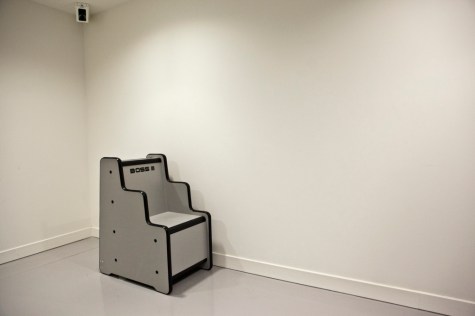
Body orifice scanner and surveillance camera, HMP Low Moss, 2012
UK photographer and artist, Jenny Wicks – working as an artist in residence at The Scottish Centre for Crime and Justice Research (SCCJR) at Glasgow University, the largest centre for criminological research in Scotland – set out a year ago to document spaces of said research. Invariably this meant photographing prisons. She photographed in two working prisons – Her Majesty’s Prison (HMP) Barlinnie and HMP Shotts. She also shot in a new prison, HMP Low Moss, prior to its opening.
I have posted before about Wick’s portrait project They Are Us And We Are Them also completed during the residency. Here, I’d like to focus on Wick’s prison interior photographs.
Wicks’ research broadly titled Working Spaces, Punishing Spaces: The Meaning and Construction of Place through Criminological Research sought to explore key boundaries: between innocent and guilty, researcher and researched.
“The conceptual frame for the project focuses on the ways criminological researchers relate to the spaces where research is conducted, analysed and disseminated,” writes Wicks. “A central premise is that working in particular spaces simultaneously contributes to their meaning as places of punishment.”
Wicks’ aim was to expose hidden sites. To differing degrees, this is a common aim of photography in prisons, so it is therefore paramount to say that Wicks delivers plenty of interesting images, the likes of which I, and we, have probably not seen before.
Keep reading below.

Scanner and cones on cell wing, HMP Barlinnie, 2012

Orifice scanner and zimmer frame, HMP Barlinnie, 2012
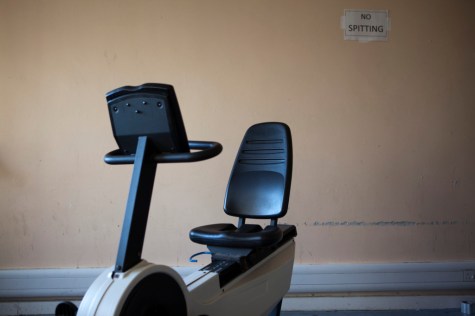
Gym, HMP Shotts, 2012.

Personal belongings tags, HMP Barlinnie, 2012
My dad used to use the same Carte d’Or ice-cream tubs (see above image) to store screws and brackets in the garage when I was young. It’s a jolt to see such a practical, modest storage solution crop up within a prison.
But then again, prisons are full of the mundane. Images of the ordinary (latex gloves, powdered milk, hygiene products, boring carpet) are balanced with constant, also pedantic details reminding us of the disciplining function of prisons (overly instructive signs, fire safety posters about escape, painted walkway instructions, holding cells, scanners).
Sometimes the juxtapositions seem too ironic, but then in turn sad. The awards that hang over the chairs in the medical office are shinier than the untarnished plaque of ‘quit smoking’ and ‘mouth cancer’ posters. There’s a flimsy lock on the back of the mugshot camera box. Stored neatly in a stairwell are an orifice scanner and zimmer frame side-by-side. This reminds me of Edmund Clark’s evidentiary images of clearly infirm prisoners in Portsmouth, England.
In Wicks’ book (see below), photographs of segregation cells for prisoners follow those of dog kennel cages.
In the HMP Low Moss new library, we see promise. An image of the books stored prior to shelving tells us prisoners read the same horror-schlock (Stephen King) as the everyman reads. Oh, and there’s a vacuum cleaner to maintain that boring carpet.
Also in the shiny new HMP Moss is a row of green-tint-windowed visiting rooms. They look like the sterile, institution environments of cinema – I’m thinking of the psychiatric wing of Michael Mann’s early eighties film Manhunter, in which Brian Cox stars as Hannibal Lector, not Anthony Hopkins.
The electrics still going in and Wicks captures the work of contractors at mid-point. The literal description of construction reminds us of the ties between labour and prisons. These are spaces paid for and made by society to meet a socially-agreed end. Hopefully resources and money invested in a new prison brings about better opportunities for rehab and a positive economic return further down the line through the reduction of crime and its associated social costs.
The prisoners must do work too. Wicks photographed recreation schedules as well as work rosters. We learn from an HMP Low Moss electronic notice board that “the finer details of prisoner mobilization plan are progressing,” a burauecratic way of saying they’ll be moving in soon. Alternatively, if we take note of text in the older prisons, we’ll be reading graffiti. Such-and-suchabody was here. We know that soon enough, prisoners will be there, in their new quarters. Does it matter if the burned graffiti reads “Jobby bum” or “jobby burn”? Does it instruct us more or does it just convince us that prisons are heavily used and heavily contested spaces? If anything, I hope Wicks’ coverage of Scottish prisons old and new demonstrate that – if we must incarcerate people – we do so in sanitary, safe places with wide provision of work, vocational and educational training.
If prisons fulfil those key criteria then prisons should theoretically be able to open gates to photographers. Imagine a day when human improvement and human rights could become the key content of prison imagery?
Keep reading below.
IMAGES: HMP BARLINNIE
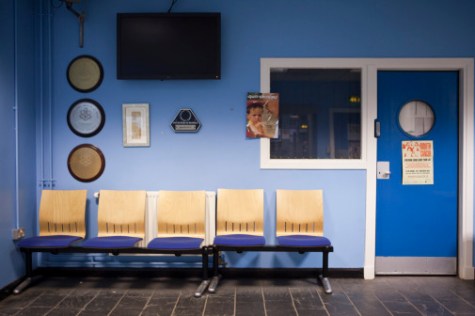
HMP Barlinnie, 2012

Detention dog kennels, HMP Barlinnie, 2012

Photography apparatus, HMP Barlinnie, 2012
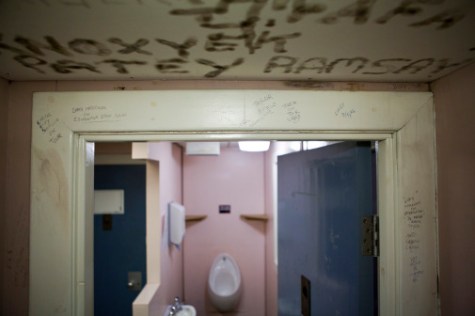
Toilets, HMP Barlinnie, 2012

Sinks, HMP Barlinnie, 2012

Personal belongings in a cell, HMP Barlinnie, 2012
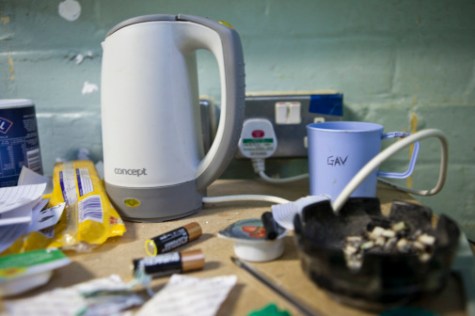
Personal belongings in a cell, HMP Barlinnie, 2012
Wicks believes (and I concur) that depictions of crime, and crime science, in popular culture represent that world through a narrow and increasingly hackneyed set of spaces – the crime lab and courtroom offering two examples.
“As the residency progressed I discovered striking juxtapositions of the mundane and the spectacular in the work of criminology,” says Wicks. “Suicide watch cells, the back of a prisoner transport van, a storage room holding physical restraint chairs and Zimmer frames mark sites of extreme human experience and yet at the same time are part of someone’s day at the office: a site where data is collected, transferred to spreadsheets and displayed to audiences in lecture theatres and conference halls. Exploring this dynamic tension is a key aim of the project.”
Keep reading below.
IMAGES: HMP LOW MOSS

HMP Low Moss, 2012

Bars and Irn Bru machine, HMP Low Moss, 2012

HMP Low Moss, 2012
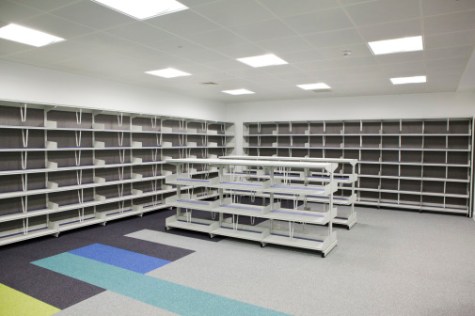
New library, HMP Low Moss, 2012
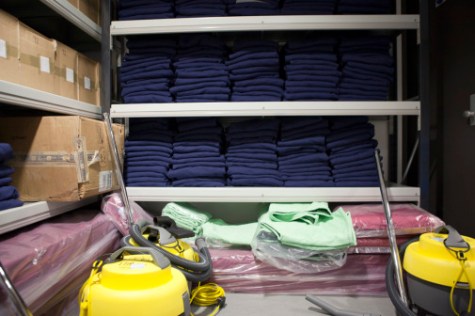
HMP Low Moss, 2012
THE BOOK, CORRECT
Wicks was kind enough to send me a copy of Correct. It’s a compact book of 86 pages. You can view a 25-page preview and buy the book through Blurb. My copy came with a fold out of 60 portrait thumbnails of portraits from They Are Us And We Are Them. I include some images below.
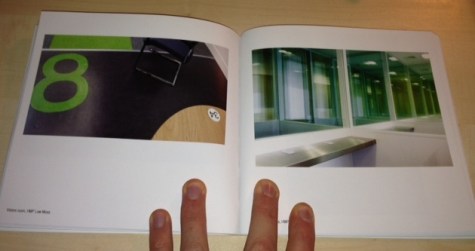


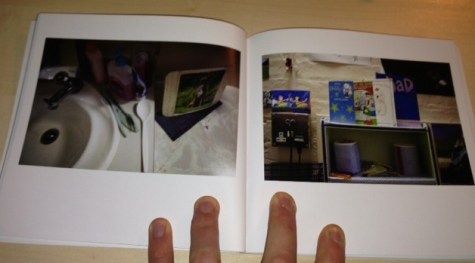

Segregation unit exercise yard, HMP Shotts, 2012.
THE EXHIBITION, CORRECT: THE MEANING AND CONSTRUCTION OF SPACE
The exhibition titled ‘CORRECT’: The Meaning and Construction of Place features two audio pieces, and an installation The Gallows, an installation of large format film giclée prints from They Are Us And We Are Them. You can see here a video of The Gallows previously exhibited in HMP Barlinnie.
The exhibition also features The Desk, a digital collage of giclée prints of criminologist’s desks.
“Closely cropped, excluding the life beyond the frame. Voyeuristic and subtly relating to the prison visiting experience: they are intrusive, this is a space where someone lives most of their waking week, a place the research comes back to and is pieced together. A personal space that appears impersonal. Cluttered with cheap plastic Chinese electronics, stationary, diary’s (hand made), mouse pads of choice, daily calendars, hand cream, distinctive handwriting and lots of notes,” writes Wicks.
Finally, and central, the exhibition includes digital C-type prints of prison interiors.
“They are an exploration of crime and justice spaces that criminologists inhabit. Such sites are more usually associated with highly iconic images of justice (bars, ankle tags, gavels) that are part of a larger popular essentialism of crime and punishment, i.e. places of cultural cliché,” writes Wicks. “I aim to demystify these places and the work criminologists undertake. Some of the images juxtapose the often-chaotic lives that occupy these spaces and contradict the harsh realities of prison life.”
‘CORRECT’: The Meaning and Construction of Place is on show now at The Briggait, 141 Bridgegate, Glasgow G1 5HZ from March 3rd – 22nd. Monday- Friday, 9.00 am to 5.00 pm.

HMP Shotts, 2012

Antoine Ealy, Federal Correctional Complex, Coleman, Florida
You all know I’m a big supporter of Alyse Emdur and her six year project Prison Landscapes, so it was great to feature her work on Wired.com.
It’s gratifying when my interest in prisons overlap with wider issues of visual culture and with the curiosity of mainstream readers.
The article coincides with Emdur’s book Prison Landscapes, published by Four Corners, London is now available. Alyse Emdur is very grateful that Four Corners will donate books to each of the individuals whose portraits feature in the book.
Please read my piece about Emdur on Raw File.
ELSEWHERES
Prison Visiting Room Portraits, An Interview with Alyse Emdur. (Prison Photography)
Escapist Landscape Art From Inside America’s Prisons: The paintings that hide and decorate the lives of the incarcerated. (The Atlantic)
Up Against The Wall: Prison Snapshots. (New York Times)
‘Prison Landscapes’ and the Interior World of the Incarcerated. (KCET)

 Prison Photography