
You are currently browsing the category archive for the ‘Interview’ category.
PART SIX IN A SERIES OF POSTS DISCUSSING PHOTOGRAPHERS’ ACTIONS AND RESPONSES TO THE KILLING OF FABIENNE CHERISMA IN PORT-AU-PRINCE, HAITI ON THE 19TH JANUARY 2010.
Jan Grarup was in Haiti from January 14th to 26th January.

In the central part of Port au Prince, looting is getting worse. Desperate people rob the stores and warehouses. Police try maintain law and order but can not control the increasing crowds. Tuesday, January 19th. Photo: Jan Grarup/NOOR Images
Fabienne was shot at approximately 4pm. What had you photographed earlier that day?
Mainly looting, things were going crazy in the center of Port-au-Prince.
Did you see Fabienne get shot?
Yes. I even think I photographed the police officer who shoot her.
How long was it until her family and father arrived to carry away Fabienne’s corpse?
Approximately, 30 to 40 minutes.

Osama Cherisma, Fabienne's father carries her away after followed by his son, Jeff (18) and his daughter, Amanda (13). Photo: Jan Grarup/NOOR Images
How many other photographers did you see at the scene? Do you know the photographers’ names?
I would guess about eight photographers. I know of at least five of them – Paul Hansen from Sweden, Jan Dago from Jyllands Posten … I’ll have to check the others.
How was the atmosphere? How did others behave?
Looting continued without stopping even when she was lying dead on the rooftop.
Did you discuss the tragedy with other photographers?
No, not really, it was a bad and very sad thing.
How does Fabienne’s death fit in with the visual narratives of Haiti’s earthquake aftermath?
It showed how desperate people were in order to survive.

Photo: Jan Grarup / NOOR Images
– – –
Jan Grarup is a photographer for NOOR Images. His portfolio of images from Haiti can be viewed here (Content warning). Images of and around the time of Fabienne’s shooting are on pages 1, 2 and 3.
Jan is working on a larger body of work about Fabienne but is not willing yet to offer any details.
– – –
The mentioned Jan Dago, Jyllands Posten photojournalist, could not be reached for interview. His dispatch can be viewed here (Content warning).
– – –
ALSO IN THE ‘PHOTOGRAPHING FABIENNE’ SERIES
Part One: Fabienne Cherisma (Initial inquiries, Jan Grarup, Olivier Laban Mattei)
Part Two: More on Fabienne Cherisma (Carlos Garcia Rawlins)
Part Three: Furthermore on Fabienne Cherisma (Michael Mullady)
Part Four: Yet more on Fabienne Cherisma (Linsmier, Nathan Weber)
Part Five: Interview with Edward Linsmier
Part Seven: Interview with Paul Hansen
Part Eight: Interview with Michael Winiarski
Part Nine: Interview with Nathan Weber
Part Ten: Interview with James Oatway
Part Eleven: Interview with Nick Kozak
Part Twelve: Two Months On (Winiarski/Hansen)
Reporter Rory Carroll Clarifies Some Details
Part Fourteen: Interview with Alon Skuy
Part Fifteen: Conclusions
PART FIVE IN A SERIES OF POSTS DISCUSSING PHOTOGRAPHERS’ ACTIONS AND RESPONSES TO THE KILLING OF FABIENNE CHERISMA IN PORT-AU-PRINCE, HAITI ON THE 19TH JANUARY 2010.
Edward Linsmier was in Haiti from January 15th to January 20th.
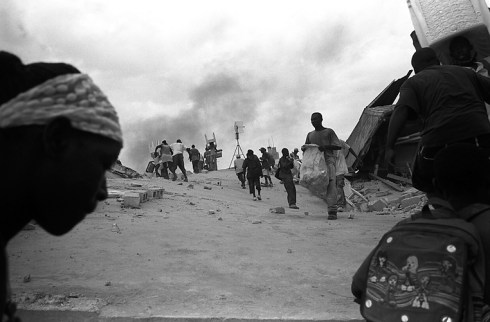
Members of the public on a collapsed roof moments prior to Fabienne's fatal shooting. Photo: Edward Linsmier
Fabienne was shot at approximately 4pm. What had you photographed earlier that day?
Michael Mullady, Nathan Weber and I were all traveling around together while in Haiti. Earlier that day we had made our way to the airport, hired a fixer and driver, been to the mass graves, fired our fixer and driver, met up with our old fixer and made our way downtown. We photographed at the General Hospital (it’s also worth noting that Eric Beecroft at the Foundry Workshops donated about $350 worth of badly needed medical supplies to the General Hospital, which we were able to deliver in person), the port and we were making our way back through LaVille (where the Iron Market is) towards the Presidential Palace when we walked into the crowds looting and heard the gunshots.
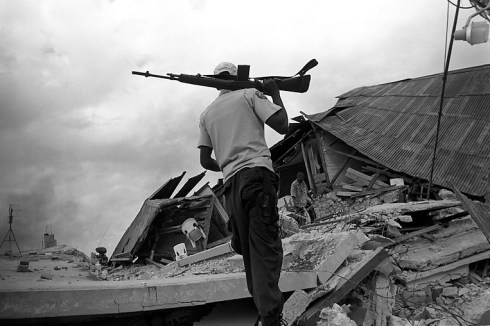
Policemen had been instructed to fire high into the air to disperse members of the public. Photo: Edward Linsmier
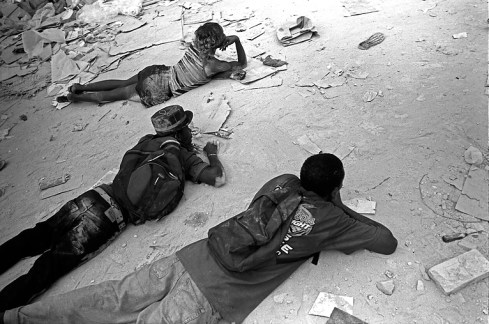
Three members of the public take cover presumably from shots fired on a collapsed roof. Photo: Edward Linsmier
Edward describes the lead up to Fabienne’s death on the Adjustment Layer blog:
Soon lines of people began gathering goods seized from the bowels of the destroyed buildings. We followed the line up onto a downed roof top that led to the exposed insides of several shops filled with the scavenging and excited crowd. We were making pictures. Some people briefly yelled at us not to take their picture but hesitated to stay around long enough to enforce their requests. More gunshots filled the air. We couldn’t tell where they were coming from but they seemed close.
There was a commotion from not far down the street. The fixer motioned for me to come because the police had caught a man and had him down on the ground. I, in turn, motioned for my friend and fellow photographer, Nathan Weber, who was still on the slanting concrete rooftop to follow me to the commotion down the road. I yelled his name and he looked at me with a blank stare. Nathan is someone who is on point in a situation such as this. He communicates quickly, clearly and with authority when needed. He is no stranger to photographing in similar situations but something of this magnitude was new to both of us. I knew he heard me and figured he would be right behind me as I headed down to the commotion.
I began photographing a man on the ground and the fixer stood near us and began translating what the police were saying into English, all the while keeping a keen eye on our surroundings. Then someone ran past our fixer and said something in Creole. Our fixer then yelled to us that someone had been shot where we had just been. We ran maybe 50 yards back and climbed back up on the roof to see Nathan in almost the exact same spot where I last saw him, except he was looking at a girl who was lying face down on the slanting concrete roof. As best as I can recall, Nathan spoke in short sentences, “I saw her fall. I thought she tripped and knocked herself out. She’s dead. Fuck. She got shot. I was right here.”
The decision to continue making photographs was instinctual. More photographers showed up and we were all making pictures, composing the dead girl in the foreground as the looters continued to walk past her, almost over her, carrying whatever they could. Several men stopped to turn her over, seemingly to identify the body. They gently took her arms and almost had to twist her just a little to face her upward. They looked at her with little emotion and left. She had been shot in the head. From what I could tell, the bullet entered her cheek and exited from the back of her head. The blood had been pooling in some picture frames she was carrying when she fell. After the men moved her, the blood began to run down the slanting concrete roof towards us. We all were still making pictures. To anybody else, it must have looked sick, a crowd of photographers vying for the best position to tell the story of the death of a girl.
Edward recalls a detail he had forgotten for the Adjustment Layer interview:
I had almost forgotten completely about the individual that came up and literally took the money out of Fabienne’s lifeless grip. Upon looking back through my digital take, I have a sequence of a teenage boy coming up and taking the money.

Member of the public peers at Fabienne's body. Photo: Edward Linsmier
Did you discuss the tragedy with other photographers?
During a lull in photographing Fabienne, I spoke briefly with a photographer from Canada, perhaps the Toronto paper, and asked him how he was doing. It was a hot day and all of the photographers had been working hard as it was a decently fast-paced situation even before the shooting. We were both kneeling, facing away from the body and he said that he was a little shaken up. I think several of us were shaken up for multiple reasons. First and foremost, we were all photographing a young girl who had just been shot and killed. But I think we were also shaken up because within the last five minutes no less than three or four of us photographers had walked those exact same steps Fabienne was walking when she was gunned down.
How long was it until her family and father arrived to carry away Fabienne’s corpse?
I could check the timestamps on my digital files but I believe from the time Fabienne was shot until the father came to pick her up was about 20 minutes, perhaps 25 minutes.
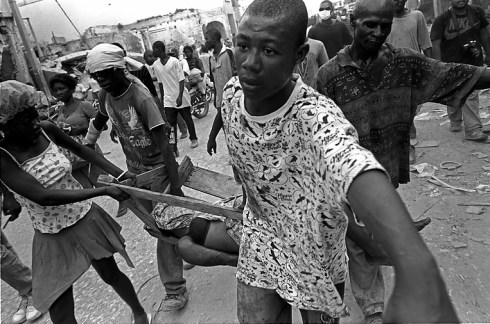
Osama Cherisma, Fabienne's father (back right), and others carry Fabienne's corpse. Photo: Edward Linsmier
How many other photographers did you see at the scene? Do you know the photographers’ names?
I would estimate that there were anywhere from 6-10 photographers that photographed at various points throughout Fabienne’s death and journey home. I do not know any other full names of the photographers except for Michael Mullady, Nathan Weber and myself.
The atmosphere among the photographers was very professional. The feeling in the air was that this was something important and we were all going to do the best job we could in covering it. It was rather intense. We tried to stay out of each other’s frames and share the best angles when we could. I have to say that I was impressed with the other photographers there. They all seemed to care very much about what they were doing and they were all working very hard, hustling to get every shot they could.
How was the atmosphere? How did others behave?
As far as I know of the situation, all the photographers were very respectful of the situation. As I mentioned before, I did not experience any sort of backlash from the people we were photographing at all. As chaotic as the situation was, I felt that they were very open to us and even glad we were there.

Samantha Cherisma mourns and screams over her sister's body in the street. Photo: Edward Linsmier
How does Fabienne’s death fit in with the visual narratives of Haiti’s earthquake aftermath?
Any story like this, where people have been killed or are suffering, deserves to be done correctly and to be done correctly you need to have resources. I don’t necessarily mean monetary resources, but definitely enough to hire a fixer/translator on the ground. I don’t know if anything our fixer did saved our lives, but he kept us from harm’s way and without him, we definitely would not have made the pictures we made that day of Fabienne.
As far as how Fabienne’s death fits into the story of the earthquake – I think it’s an all too tragic piece of the puzzle. The Haitian people are some of the most resilient I’ve ever met. Most of them lead incredibly tough lives. Their own government has all but abandoned them. They have been deprived of so much that we take for granted. I think it was only natural for people to loot. Most Haitians live on less than $1US per day. They saw a chance to gain possessions that most of them would never otherwise be able to afford. I’m not saying it was right or okay to loot, I’m just saying that I understand why there were doing it.
Anything to add?
Something else worth noting – Our fixer was on the roof with the group of photographers after Fabienne had been shot. The police were still shooting and someone had the forethought to ask our fixer to yell to the police that journalists were on the roof and not to fire in that direction any longer. I look back on it and realize how important that was. Some of us automatically think we are excluded from danger in a situation like that but nothing could be further from the truth. I’m not saying we didn’t make any mistakes that day, but I want to emphasize how important it is to go into a situation like that as prepared as possible.
Cherisma or Geichmar?
[For the Adjustment Layer interview] I failed to include Fabienne’s name in my description of events. I cannot 100% guarantee the accuracy of the spelling of the name as I have seen it differently elsewhere. My caption information for my photos with the info our fixer provided for us (he had a pen and paper and was talking to family members) is as follows:
“Fabienne Geichmar, 15, was fatally shot by a stray bullet while looting from a store on Rue Marthely Seiee in the LaVille section of Port au Prince. Violence and looting have been commonplace in downtown Port au Prince since shortly after the earthquake that devastated the Haitian capital.”
I’m not sure why I wrote that it was a stray bullet… I think because that’s what I wanted to believe and also because I could not confirm that police had shot her.
– – –
Edward will be in Haiti a second time from the 18th to 26th March.
View Linsmier’s images from his first stint in Haiti.
– – –
ALSO IN THE ‘PHOTOGRAPHING FABIENNE’ SERIES
Part One: Fabienne Cherisma (Initial inquiries, Jan Grarup, Olivier Laban Mattei)
Part Two: More on Fabienne Cherisma (Carlos Garcia Rawlins)
Part Three: Furthermore on Fabienne Cherisma (Michael Mullady)
Part Four: Yet more on Fabienne Cherisma (Linsmier, Nathan Weber)
Part Six: Interview with Jan Grarup
Part Seven: Interview with Paul Hansen
Part Eight: Interview with Michael Winiarski
Part Nine: Interview with Nathan Weber
Part Ten: Interview with James Oatway
Part Eleven: Interview with Nick Kozak
Part Twelve: Two Months On (Winiarski/Hansen)
Reporter Rory Carroll Clarifies Some Details
Part Fourteen: Interview with Alon Skuy
Part Fifteen: Conclusions
[This is part two of a three part series on prisons in Africa. Part one featured Julie Remy’s photography in Guinea.]

Muyinga prison
Nathalie Mohadjer and I sat down and talked about her vital photographic series The Dungeon.
Click on any image for its larger version. Please note, the four images of Gitega prison are not part of The Dungeon series, but were included because they related to our conversation.
– – –
PB: Can you explain how you came to work in Burundi and how you gained access to the detention jails?
NM: I was looking for organizations I could work with during the summer. International Bridges to Justice (IBJ) were searching for photographers and journalists. There was work being done in Burundi so I contacted the office. I was there for two months. I worked with the writer, Laura Gabriella Dix.
Through IBJ, Laura and I got to go out with local NGOs, particularly the Association for the Protection of Human Rights (APRODH) – the biggest local NGO. APRODH is very powerful and is one of the few Burundi NGOs with the ability to get people out of the detention cells straight away. With them we could get into the detention cells. We made appointments through them.
We worked together with them and later with another NGO, the Association of Burundi for the Defence of Prisoners Rights (ABDP) whose staff are all Burundians. Both groups were great, they knew who to talk to, and they knew all the detention jails that were hidden.
International NGO’s usually have no idea that the jails exist. There are detention jails all over Burundi – almost one in every small village. Also there exist detention jails that are illegal. People just get thrown in there when the police don’t know what to do with them. Prisoners have not been legally recognized, which is madness.
But local NGO’s know where the jails are because they have contact people.
[My visit] was not very planned; the NGOs don’t tell the police before they arrive. They arrive in the town and tell the administrator they expect to see the jail cells within half an hour, “We want to know who is there; how long they’ve been held; why they’re being held.”
If there is anything improper then prisoners can be set free straight away – at least in the case of APRODH – which was effective in releasing people immediately. That was amazing.

Muyinga prison

Muyinga prison
PB: ‘The Dungeon’? Tell us about the title of your series.
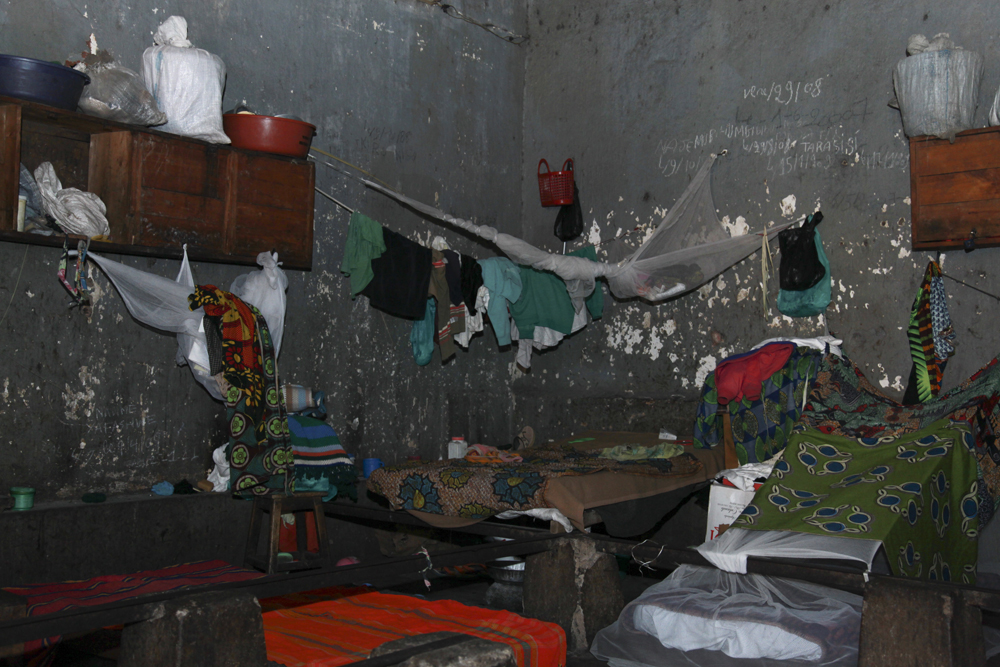
NM: I tried to find the most appropriate word. If you think of the word dungeon, you think of history, dark walls and holes. Dungeons are hidden and there is no light. It felt exactly like that. You can be in the centre of a village and people shall walk you around the back of houses and [show you] behind locked doors. The rooms are full of people just looking back at you. The walls are red and black, scratched with names of people who have been there. You almost feel like you’re witnessing a place of hell.
PB: Do the local communities sanction this mode of justice?
NM: For most, it is just the common practice. One of the problems is that Burundi is over-populated. There is no real law system; it has so many faults, they don’t know where to put these people.
In Giterany, there was a man in the jail who was a practitioner of witchcraft. The local people wanted to kill him. The police did not know what to do with him, so they put him in the jail [for his own protection]. It’s out of control. It’s not that people are aware or unaware, it is that they don’t know what else to do.
Of course, you’ve lots of people in the bigger towns and cities who protest [the situation] and make calls for a proper legal system. So people in Burundi realize [a need for reform], but they also realise it takes ages to establish this.
In December, there was a riot in Mpimba, the biggest prison in Burundi because it is so overpopulated.

Insight the detention cell of Cibitoke, where 38 man and children are captured. Most prisoners are held there up to 2 Years. By law the prisoners have to be judged after being captured for max. 14 days.
PB: According to Human Rights in African Prisons (ed. Jeremy Sarkin), Burundi’s prison system is operating at 230% of its designed capacity. This is among the worst prison overcrowding on the African continent. Burundi also has an incredible amount of pretrial detainees.
NM: Exactly, it was pretrial detainees in the jails who have not stood trial that I photographed. Sometimes it will be a year, or perhaps two before they see a judge.
In one image (above) the prisoners look directly into the camera. This is in Cibitoke, two hours away from the capitol Bujumbura. Prisoners there said they’d been incarcerated for two years.
Officially, it is illegal [to hold someone] after 14 days. Staying two years in a single room with 30 or 40 other persons is crazy. There are kids in there too. And kids have died in there.
The prisoners were so keen to tell us about the jail. They were well aware of why we wanted to show this [to the outside world]. My colleague Laura was writing everything down. The armed policeman told me I had one shot, but I took more discretely.
The prisoners who were held would go between me and the policeman to talk to him, so that I could take more pictures. They were helping me. I was more afraid of police than the guys inside.

14 year old Jamila (front) has been in Muyinga prison for four days. She helped her friend steal money from her landlord. Women sleep in the corridor. The Policeman say that there is no contact between the men and the women.
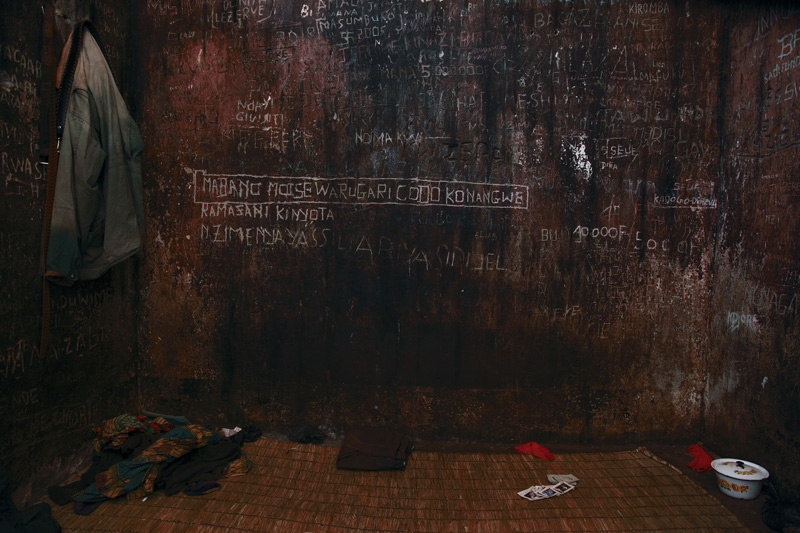
Muyinga prison

Jamila in Muyinga prison
PB: Lets talk about shared cell spaces.
NM: Males and females were separated in Cibitoke.
Buhinjuza, near Muyinga, was a site where you have girls mixed in the prison population. Muyinga is close to the Tanzania border. I show images of Jamila and her friend behind.
PB: This seems extremely problematic.
NM: Very. I was so shocked. They were 14 years old and the boys were grabbing them everywhere. But, when we were there it was an exciting moment for them, you know, 14-year-old girls …
In the image (below) of 11-year-old Marie scratching something on the wall, do you see the blue blanket behind? And the second picture? This is where the girls sleep. On the right hand side is a red door and that is the toilet. Behind the blue door to the left, is where the guys are held.
We asked the police if there was any contact. And he said “No contact, no contact”, grabbing the girl as he said that. Disgusting.
Every time the guys needed to use the toilet they’d cross this space. So we asked the prisoners for clarification, “Every time you use the toilet you have to ask the guard to unlock it?” and they responded, “No sometimes the door is open.” Which of course mean that there is contact.
In the detention cells that was the only site where boys and girls were mixed in.

11 Year old Marie who is captured since 3 weeks after stealing the cell phone of Muyinga Administrator.
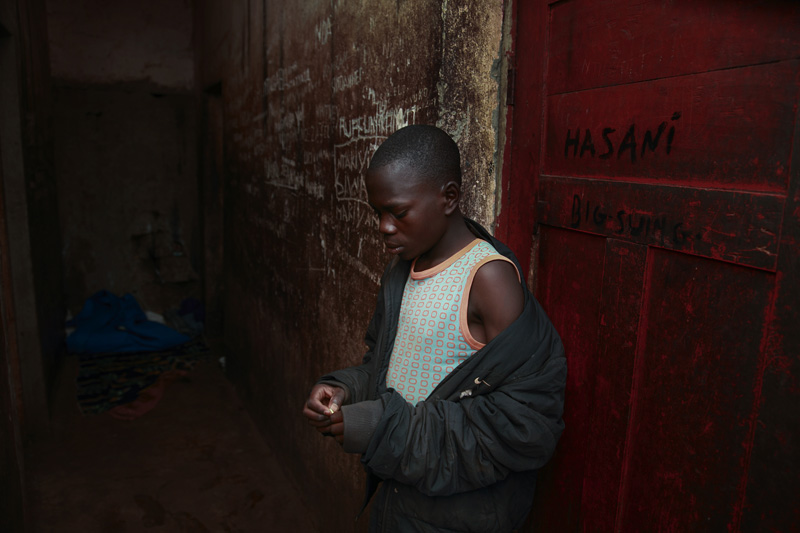
Muyinga prison
NM: In Burundi’s main Mpimba prison, in the capital Bujumbura, men and women are separated by a wall with holes in it. They have sexual contact through these holes. While I was in Mpimba I even saw women walking around in the men’s area. In Mpimba, there are babies born there. Relationships aren’t only among prisoners but of course between the guards and the women.
PB: But you took no photographs in Mpimba prison?
NM: No, it was not permitted.
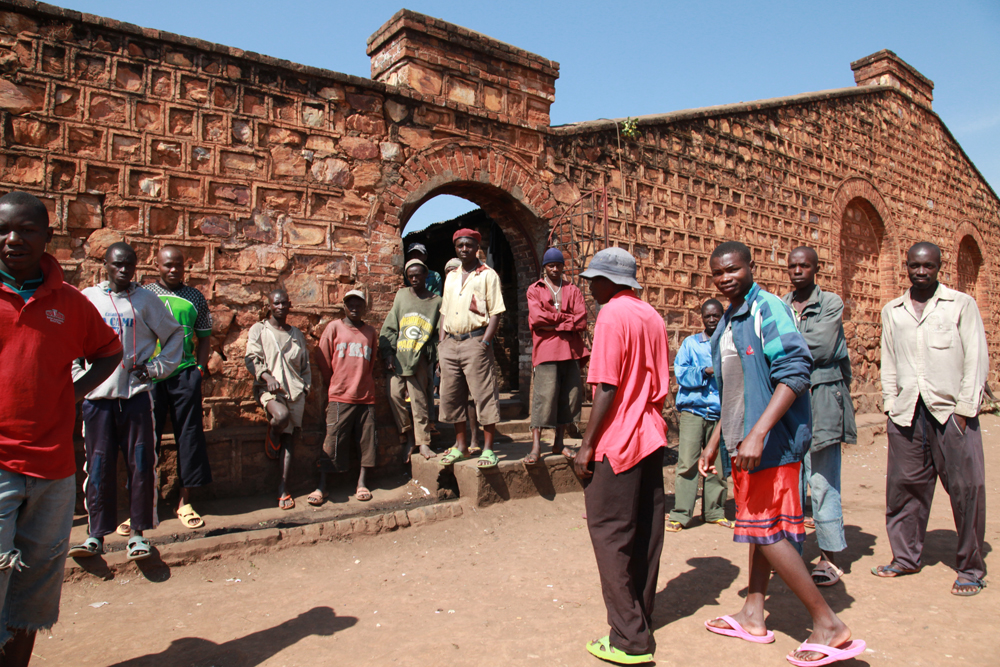
Gitega prison
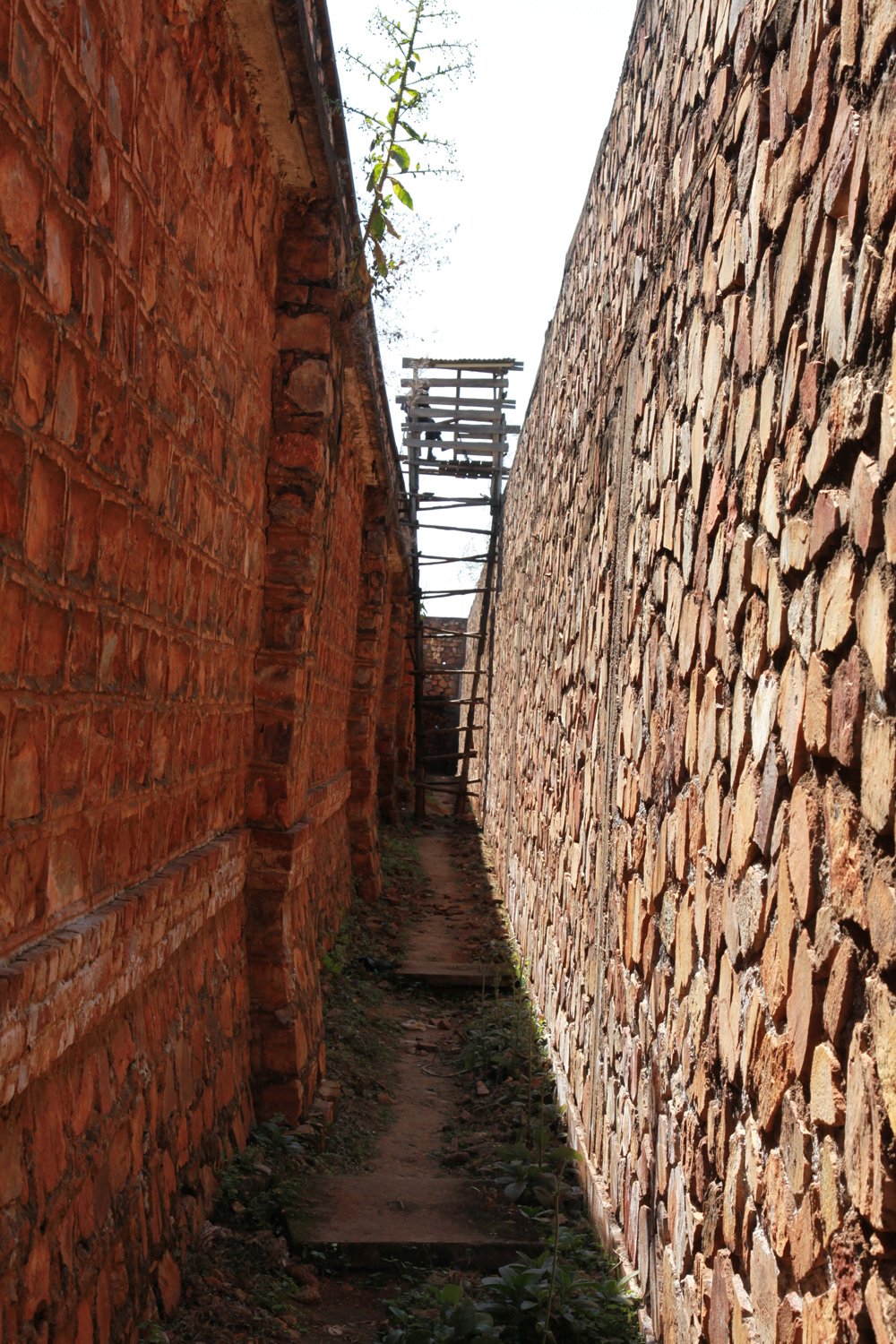
Gitega prison
PB: Tell us about these images (two above, two below) of Gitega prison and its women’s quarters.
NM: Gitega is a mixed prison. It is interesting because it is an old structure.
PB: It looks like a fortress.
NM: There is an outside wall and then just inside is the exterior wall of the building so you have an open-air corridor which circles the prison.
The director was naïve. I told him I was taking pictures only of the walls and not of the people. I must say that otherwise I would not be allowed to take pictures.
In this outside corridor there were condoms on the floor. There are male guards who go into the women’s area and have sexual contact. It’s horrifying.
PB: Are there any women’s only prisons or jails in Burundi?
NM: Ngozi is the only female prison that exists in Burundi.

Women’s quarters, Gitega prison
Women’s quarters, Gitega prison
PB: I read there are ethnic inequalities among the populations held in Burundi’s jails; that there are disproportionate number of Hutus in Burundi jails. Most people think only about Rwanda when they think of Hutu’s and Tutsis.
NM: Rwanda and Burundi used to be the same country,Ruanda-Urundi, so of course they have similar issues [and common conflicts].
After the revolution in the sixties Burundi established its own state and separated from the Belgian colonies. The difference [with Rwanda] is that in Burundi they stopped marking down who was Hutu and who was Tutsi in the Burundi passport. In Rwanda they still made the distinction.
As in Rwanda, the Tutsis were the more “sophisticated” because the Belgians had assigned them the higher race. Of course, there is no difference. Historically, ‘Tutsi’ means ‘owner of cattle’. That is all it means.
The Belgian authorities saw the Tutsis as taller, skinnier and looking “more European” … which is total bullshit. Consequently, Tutsis had higher standards [of living], more opportunities and more education and all services. [Tutsis] were more privileged. Even now if you talk to a lawyer he is probably Tutsi. They hold higher qualifications.
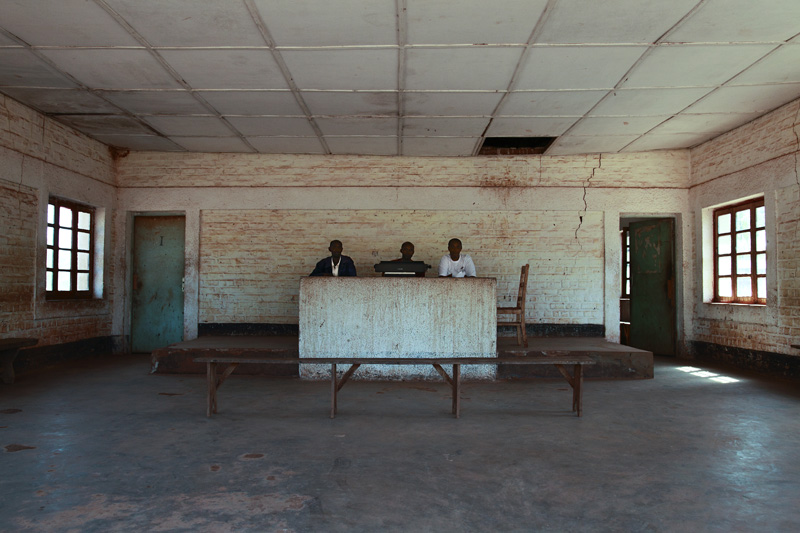
Judges waiting in Buhinjuza, near the city Muyinga.
NM: In 1972, there was a huge war in Burundi. It is not recognized as genocide but the Tutsi military went out and killed many Hutus. Hundreds of thousands of Hutus fled to Rwanda, to Congo and to Tanzania.
In 1993 the war actually began in Burundi when the Hutus started killing the Tutsi population.
PB: This aggression spilled over into Rwanda, I presume,
Laura and I met Hutu child soldiers who were recruited into the Hutu-led Palipehutu-National Liberation Forces (NLF) and started fighting because they had no food and they were angry about the situation. The Hutus are definitely the less privileged, the poorer people in Burundi.
NLF military forces still existed when we were there [Summer 2009]. They were out in the woods, not really active anymore. We went to some dissident camps; now demobilization camps.

Insight the detention cell of Cibitoke, where 38 man and children are captured. Most prisoners are held there up to 2 Years. By law the prisoners have to be judged after being captured for max. 14 days.

Cibitoke prison
PB: Would you say the Hutus are disproportionately represented in Burundi’s jails because of a typical class structure? Simply because, in current circumstances, they are a disempowered lower class?
NM: I would say so, I don’t really know the full reasons why there are more Hutus [in the jails]. I know Hutu fighters are now outlaws.
Generally, I think there are more Hutus living in Burundi than Tutsis, but I don’t know the percentages.
The National Council for the Defense of Democracy-Forces for the Defense of Democracy (CNDD-FDD) is the political party of the president Pierre Nkurunziza, and he is half Tutsi/half Hutu. The military used to be predominantly Tutsi. Now it’s a mix. The president had progressed the mix. Very few NLF dissidents still operate in remote areas.
PB: Explain more about over-population and the returning refugees.
NM: Burundi is very over-populated. Recently, Tanzania has been closing all its [refugee] camps. The Tanzanian government would say refugees could stay two more months, for example, and then they’d need to leave. You’d have 200,000 refugees coming back into the country. There have been 800,000 refugees since 1972.
These are Hutu refugees and now they must come back. There are so many Hutus who have never lived in Burundi, who were born outside of its borders. And now they must go back. They try to find the places they come from to get their old land back and of course others are now living on the land. Land conflict is the biggest issue in Burundi.
PB: Has Burundi had an influx of refugees from Congo these past few years? Is it a significant pressure?
NM: It is not significant. Congo has its own internally displaced people. The rural parts of Congo next to Burundi are where the war is and then other parts of Congo far away from Burundi are peaceful.
Rwanda, Burundi and Congo got all mixed up in the same war; it started in Burundi, went to Rwanda and now continues in Congo. Hutus killing Tutsis, Tutsis killing Hutus.

Prisoners in Citiboke receive no food by the government. Family members outside have to bring it to them. Some prisoners have no food for weeks and they beg the others for the left-overs.
PB: Moving back to the detention cells, what tensions existed in these small jails?
Laura wrote a good piece about how the system works when one is imprisoned in a detention cell. They ask you to buy a candle. The candle costs 20,000 Burundi franc – which is 20 Euros approximately – which is the equivalent of three months wage. If you can’t afford the candle, then you don’t get any food and you don’t get a place to sleep and you stand in the shit corner, where people shit.
PB: Have you photographs had much circulation? Can you measure the effect in the six months since you did the work?
NM: I have hope that people will want to know more about the jails. The images are important to for the NGOs because they are evidence of conditions and of kids being held.
Let’s face it, Burundi is just not important for the world.
I was talking to so many newspapers and they’re not interested. Maybe they’ll be interested when the presidential elections are held in Spring this year … but maybe they’ll only be interested if something bad happens?
Most magazines said The Dungeon is too specific, too dark, and it is not part of a war.
I am not getting any money from it, I don’t expect to, but the issue is getting out there. People can actually see it and ask questions. The most important thing is that the organizations can use the images.
The Dungeon will show at Visa pour l’Image, Perpignan 2010.
I’ve never worked on the topic of prisons or jails before, but I have worked – most of the time with NGOs – in refugee camps before (Buhomba, Burundi, Tuzla, Bosnia-Herzegovina 2005, Tuzla, Bosnia-Herzegovina, 2007). It was important speaking to the people in the jails. I’d tell them I’d try to get the story out and create some awareness.
PB: Thank you Nathalie
NM: Thanks Pete

Muyinga prison

© Daniel Morel / Corbis
Amidst the all the coverage of Haiti, I have found the interviews and words of photojournalists (eg. Damon Winter; Melissa Lyttle) FAR more interesting and informing than the images.
What an essential privilege to hear Haitian photographer Daniel Morel speak about not only his placement during the earthquake, but also the behaviour of the media, the complaints of Haitians toward said media and where he and Haiti go from here.
If I am going to put weight on any opinion it is Morel‘s.
I’ve gotten to know Adam Westbrook‘s work through mutual online friends. I signed up for his Twitter feed about the same time I did for the RSS feed on John Hirst’s Jailhouselawyer’s Blog.
John Hirst served 35 years for murder and now writes and advocates for prisoners rights. This year he has contributed at the Guardian.
It’s good to see these two folk collaborate.


Belva Cottier and a young Chicano man during the Occupation of Alcatraz Island, May 31, 1970. Photo: © 2009 Ilka Hartmann
Today marks the fortieth anniversary of the start of the Indian Occupation of Alcatraz, an action that lasted over eighteen months until June 11th 1971.
Photographic documents of the time are surprisingly scant. Over the past few decades, Ilka Hartmann‘s work has appeared almost ubiquitously in publications about the Indian Occupation. We spoke by telephone about her experiences, the dearth of Native American photographers, the Black Panthers, Richard Nixon, the recent revival of academic research on the occupation and what she’ll be doing to mark the anniversary.
Your entire career has been devoted to social justice issues, particularly the fight for Native American rights. Did your interest begin with the Alcatraz occupation?
No, it began earlier. I came the U.S. in 1964 and that was during the human rights movement. I was a student at the time but I really wanted to go and work with the Native Americans on the reservations of Southern California. I was connected to the Indian community here through a friend who had emigrated to California earlier. I learnt very early about the conditions for American Indians. It reminded my of what I had learnt as a teenager about Nazi rule.
When the occupation began I wanted to go but I couldn’t because I was not Native American, but I waited until 1970.
Concurrently you were photographing the Black Panther movement – centered in Oakland – and the other counter culture movements of the late sixties in the Bay Area. How did they relate to one another?
They were all the same, each group struggling to advertise their conditions, the police brutality and the lack of educational and cultural institutions. I was involved in the fights for American Indians, African Americans, Chicano and Asian Americans in Berkeley. We were protesting as part of the Third World Strike. For me everything was connected and it was the same people who were speaking up later at Alcatraz.
My new book is actually about the relations between the different groups of the civil rights movement. There was a lot of solidarity between groups. The Black Panther Party understood this. Many people think that the Black Panthers were concentrated on their own politics but they understood solidarity and got a lot of help from non-Black people. If you look at my pictures of the Black Panther movement a lot of supporters were the white students of Berkeley. There is a saying, “The suffering of one, is the suffering of everybody”.
In the Bay Area people were so willing to help the Indians at Alcatraz and help in the Black Panther movement and they really felt things were going to change.
I was a student at UC Berkeley and stopped in February 1970. I went to Alcatraz in May of 1970. I had learnt to open my eyes and emotions at UC Berkeley through all the different groups we had.
How many times did you visit Alcatraz during the occupation? And how long did you stay each time?
I only went twice to the island. It is funny because I didn’t even know if my photographs would turn out. I had a camera that I’d borrowed from a friend with a 135 mm Pentax lens … and also a Leica that a friend have given me too. But I didn’t have a light-meter for the Leica so I didn’t know if the photographs I took in the fog would come out. It was so light. I was amazed that they came out. I also went over in a small boat that same year.
So I made contact sheets and tried to get them published which was a big problem because you had to really work on that. My first picture of the occupation was published in an underground paper called the Berkeley Barb then in June 1971 I was at KQED, a Northern California Television station, for an interview with an art editor. I had hitch-hiked there from the area north of San Francisco and I just opened my box of pictures to show him topics I was concerned about when over the intercom came an announcement “The Indians are being taken from Alcatraz.”
I saw some video guys run by, I grabbed my bag and camera and asked them if I could join them. They said, “Yes, ride with us and say you are with us.” We got into an old VW and drove around on the mainland to see the occupiers and that is how I got those shots of the removal. It was an incredible coincidence because I actually lived far from the city. It’s quite incredible. I only went two times during the occupation and then I got those shots afterward.
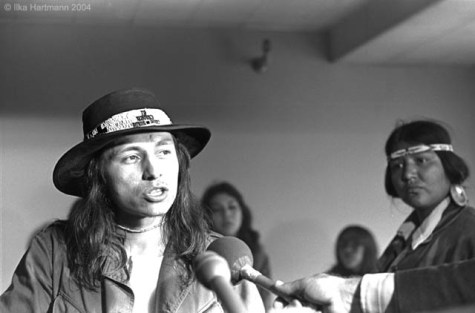

From then on I made contact with people and in that year I showed my pictures at an Indian Women’s conference, making very good friends with people in the American Indian movement. From then on I went to cultural events, powwows and so on and my pictures appeared in the underground press. I wrote articles and people contacted me for images. That’s how I made the connection.
So really you made no arrangements?
I didn’t make any arrangements. I followed everything from the first day in the papers and on that day in May … on May 30th the Indians asked all the journalists to go and I wanted to be there. That’s how it all started; they invited us there that day.
Did you realize at the time how profound an historical event it was?
Yes, I always felt how important it was. This was the first time they [Native Americans] spoke up. All over the world people wrote about it and the cause became known globally, and especially known in the United States. I believed in it … I still do.
What are your lasting memories of your time and work during the occupation?
It was a prison that had been closed so it was surrounded by barbed wire fence. Some of it had become loose and I took some pictures. The wire swung loose in the air and there was a sound across the island of the wind whispering over it. And if you looked out over the beautiful waters, you really got the sense – with the barbed wire – that the Indians were prisoners, as well as occupiers of the Bay. Prisoners of the Bay; which means prisoners of the World. In that sense I really had a strong feeling of the prison.
How did you react to the environment?
For me, strangely, the experience of going to Alcatraz has always been a very high and wonderful experience. It is hard for me to even explain. Of course I know it was a prison. On the tour of Alcatraz I got very upset, especially during the part when you’re taken downstairs to learn about the lesser known incarceration of Elders and also the cells for those people who didn’t want to go to war. So of course I know it is was a prison, yet when I go there I am struck by exuberance and hope about [Indian] people being able to make statements about their conditions.
I was a witness to that and wanted to be a conduit for those statements. There were no American Indian journalists, we were nearly all white. There was one Indian photographer, John Whitefox, who is now dead. But he lost his film. So we really saw it as our job, politically, as underground photographers and writers to cover what was part of the revolution and social upheaval.
Eldy Bratt, Alcatraz Island, May 1970. Photo: © 2009 Ilka Hartmann

Two Indian children play on abandoned Department of Justice equipment. Alcatraz Island, 1970. Photo: © 2009 Ilka Hartmann
San Francisco Bay has a strange history with islands, incarceration and subjugation. San Quentin was the focus of the Black Panther resistance – it is just ten miles north of the city. Angel Island was an immigrations station for Asians – it is known as the “Ellis Island of the West” and some Chinese migrants were kept there for years. And, then there’s Alcatraz. How do you reconcile all this?
It’s totally horrible to me. I come form Germany. Before I came I’d heard about Sing Sing on the river on the East coast. It was a horrible thought to me that they could put people in such prisons.
I drive past San Quentin most days, I have actually been inside and taken photographs. And of Angel Island – it is almost sarcastic to imprison people like that; it’s such a contradiction to the beauty of the Bay. It’s the hubris of human beings to do that to one another.
Of course there are people who should be in prison, like at San Quentin, but certainly the Chinese should not have been treated like that on Angel Island. The Indians and the anti-war demonstrators should absolutely not have been treated like that on Alcatraz. Actually the authorities were respectful to the antiwar demonstrators than they were to the Indians, but still both are an aberration of human nature to treat others like that. I don’t know what to do with murderers but I do know I am against the death penalty.
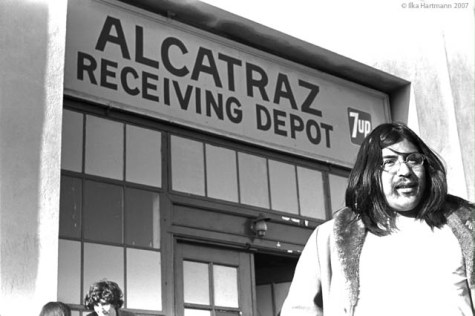
An Indian man arrives at Pier 40 on the mainland following the removal in June 1971. Indians of All Tribes operated a receiving facility on Pier 40, where donated materials were stored and where Indian people could wait for boats to transport them to Alcatraz Island. Photo: © 2009 Ilka Hartmann

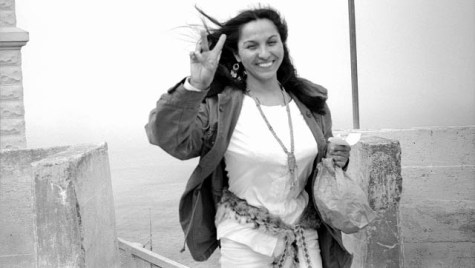
"We will not give up". Indian occupiers moments after the removal from Alcatraz Island on June 11, 1971. Oohosis, a Cree from Canada (Left) and Peggy Lee Ellenwood, a Sioux from Wolf Point, Montana (Right). Photo © 2009 Ilka Hartmann
How do you see the situation for Native Americans today?
When I started there was said to be one million American Indians and now statistics say there are one and a half million. This is down to two things: first, the numbers have increased, but secondly more people identify as Native Americans where they had tried to hide it before due to racism and prejudice.
I went on one trip with a Native American Family for six weeks across the southwest and I kept asking if the Indians were going to survive and there was some doubt, but now people really think the culture is growing and there has been a notable revival. There advances being made dealing with treatments for alcoholism and returning to free practices of traditional worship. I know that the Omaha are talking of a Renaissance of the Omaha culture. My friend and historian, Dennis Hastings, who was also an occupier of Alcatraz, said to me ten years ago “It could still go either way. Half the Native peoples are debilitated with alcoholism and the other half are vibrant and healthy.”
Great afflictions still exist but there are many more Indians who are able to function in the Western aspects of society and traditional ways of life. When I entered the movement there was only one [Native American] PhD; now there are over a hundred. There is hope now.
What we felt came out of Alcatraz was the influence that it had on Nixon. Because he was a proponent of the war I always used to think of him in only negative ways but that is a learning experience too. It is a shock that someone responsible for the deaths of so many people in the world, of so many Vietnamese, could do something good. He signed the American Indian Religious Freedoms Act (1978). Edward Kennedy also worked a lot on these laws.
We believe the returns of lands such as Blue Lake/Taos Pueblos in New Mexico and lands in Washington followed on from the occupation of Alcatraz. There is a famous picture of Nixon with a group of Paiute American Indians. I believe a former high school sports coach of Nixon’s from San Clememnte was Native American and so we think this teacher influenced him.
As a result of Alcatraz, as well as the land takeovers, the consciousness has been raised among non-Indians and this was very important. People in the Bay Area were very supportive of the occupation, until the point where people were not responsible; it got messy the security got too strong and there were drugs and alcohol. Bad things did happen but in the beginning all that was important to expose to the world was written about, particularly by Tim Findley and all the writers working to get this into the underground press.
Until about 15 years when Troy R. Johnson and Adam Fortunate Eagle wrote and researched their books we didn’t understand everything that had happened – we just knew it was exhilarating. We now have the information of policy changes and the knowledge of people who went back to the reservations; leaders such as Wilma Mankiller who was the principle chief of the Cherokee for a long time. Dennis Hastings was the historian of the Omaha people and brought back the sacred star from Harvard University.
Many people have done things to allow a return to the Native culture and it is so strong now – both the urban and reservation culture. American Indians are making films about urban America – part of modern America but also within their Indian backgrounds. Things have changed enormously.
The benevolence of Richard Nixon is not something I’ve heard about before!
Yes, You can read more about it in our book.
What will you be doing for the 40th anniversary?
I’l be going to UC Berkeley. I’ve been working on an event with a young Native American man who is part of the Native American Studies Program which was established in 1970 as a result of the Third World Strikes. I walked and demonstrated at that time many times. I’m very happy to be returning. LaNada Boyer Means who was one of the leaders of the occupation will be present. We’ll be thinking of Richard Aoki, who was a prominent Asian American in the Black Panther movement, who died just a few months ago.
When these people would lead demonstrations, I would photograph it and then I’d rush to the lab, work through the night to get them printed the next day in the Daily Cal and then have to teach my classes and then take my seminars and it would go on like that for weeks.
So, a young man Richie Richards has organized a 40th Anniversary celebration at Berkeley. It includes events that will run all week, films, speakers, I’ll be showing my slides and then on Saturday we’re going to Alcatraz for a sunrise ceremony. Adam Fortunate Eagle, who wrote the Alcatraz Proclamation, will lead the ceremony on the Island.
In addition at San Francisco State where the 1969 student protests originated their will be a mural unveiled to mark the occasion. There have already been recognition ceremonies for ‘veterans’ of the occupation this week in Berkeley and starting tonight there are events for Native American High School students from all over the area in Berkeley also. Interest has really rekindled recently. The text books have really changed so much and I think that is excellent for younger generations.
And many more to come …
Thanks so much Ilka.
Thank you, Pete.
_________________________________________
For this interview I used Ilka’s portrait shots from the occupation. There are many more photographs to feast on here and here.
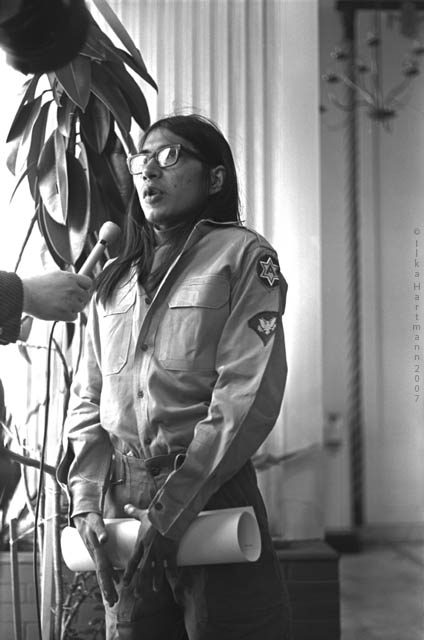
Overcoming exhaustion and disillusionment, young Alcatraz Occupier Atha Rider Whitemankiller (Cherokee) stands tall before the press at the Senator Hotel. His eloquent words about the purpose of the occupation - to publicize his people's plight and establish a land base for the Indians of the Bay Area - were the most quoted of the day. San Francisco, California. June 11th 1971. Photo Ilka Hartmann

Joshua, Angola State Prison, Louisiana 2002 © Alec Soth
Alec Soth shot to notoriety before I dipped my toes in photography appreciation. He also terminated his treasured blog before I could jump aboard.
I missed the early boat on Soth’s work and have always felt quite maudlin about that. Really there is no need for my malaise; Soth has travailed the papers, the cameras and the blogs as widely as he has the American Interstates. He has left a busy legacy of interviews.
The sheer number of interviews contributed further to my sense of awe – they amassed to an unscalable mountain of words that needed to be noticed because, as Soth continually insists, photographs cannot tell stories.
During his trips making Sleeping by the Mississippi, Soth asked many of his subjects “What is your dream?” He ended up not using the responses for the book, but held onto the scraps of paper on which folk had written their dreams.

Fort Jefferson Memorial Cross, Wickliffe, Kentucky 2002 © Alec Soth
Of all the responses, the man who stands second from left in the Kentucky prison work crew (above) had Soth’s favourite dream. He said, “I want to operate and own a pilot school”. Soth liked how the dream was “both specific and grand”.
I know this because Soth mentions it in this fantastic presentation and discussion with Andrei Codrescu at the Walker Art Center, Minneapolis. If you have an hour and seventeen minutes to spare this weekend watch and listen to it.
If not, bookmark any one of these interviews and read at some point in the next year.
Soth with Michael David Murphy
http://www.youtube.com/watch?v=R7PpxTHqYWI
Soth on Assignments
http://www.youtube.com/watch?v=GrNUoZ1ye6Y
Soth on Portraits
http://www.youtube.com/watch?v=Yvgg6bLhJE4
Soth with Ben Sloat
http://www.bigredandshiny.com/cgi-bin/BRS.cgi?section=article&issue=119&article=20091016133834289803794155
Soth with Aaron Schuman
http://www.seesawmagazine.com/soth_pages/soth_interview.html
Soth with Carrie Thompson
http://blog.magnumphotos.com/2007/11/interview_alec_soth_on_dog_days_bogota.html
Soth with Daniel Shea
http://toomuchchocolate.org/?p=1067
Daniel Shea on Soth
http://dsheaphoto.net/blog/?p=700
Soth with Anthony LaSala
http://www.pdnonline.com/pdn/esearch/article_display.jsp?vnu_content_id=1002235383
Soth with Paul Schmelzer
http://blogs.walkerart.org/visualarts/2006/05/01/the-binoculographer/
Soth with James Miller
http://www.americansuburbx.com/2009/07/interview-presience-and-poetry-james.html
Soth with Conor Risch
http://www.pdnonline.com/pdn/content_display/photo-news/photojournalism/e3i260af0867f21cdd31a1211bb5ab07a85
Soth with Jeff Severns Guntzel
http://www.citypages.com/2008-01-23/feature/freeze-frame/
Soth with Roger Rochards
http://www.digitalfilmmaker.net/photo/alecsoth/2004.html
Soth with Joerg Colberg
http://www.jmcolberg.com/weblog/2006/08/a_conversation_with_alec_soth.html
Soth with Paul Laster
http://artkrush.com/105630
Soth with Jen Bekman
http://www.photoeye.com/magazine/archives/fullsize.cfm?Issue=fall_2007&IssueID=080815010312-d1c9488974b54b24866088a30b84ccf8#magtop
Soth with Minnesota Public Radio
http://www.publicradio.org/tools/media/player/news/features/2005/06/15_newsroom_sothportraits
Minnesota Public Radio without Soth
http://minnesota.publicradio.org/features/2008/06/04_soth2/index.shtml
Hilarie M. Sheets on Soth
http://www.nytimes.com/2009/08/02/arts/design/02shee.html
and Rob Haggart on Soth’s back
http://www.aphotoeditor.com/2008/07/09/whats-up-with-alec-soth/
Yasmina Reggad interviews Soth with an exchange of images
http://thedignityofmovemenoftheiceberg.wordpress.com/
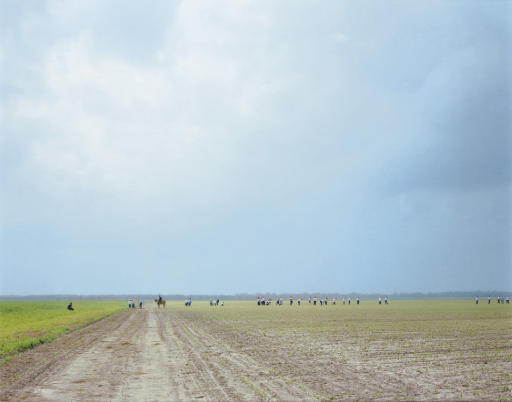
The Farm, Angola State Prison, Louisiana 2002 © Alec Soth
In the same discussion with Andrei Codrescu Soth confessed to avoiding too much research before he goes to a place; he doesn’t want to burden himself with the knowledge. He also expressed surprise and delight at coming across the histories of places and institutions he’d not consciously sought out … and of those he mentioned prisons.
I was going to add some analysis to these pictures but now that I have exorcised my fear of the massive cult, enjoyment and coverage of Soth, I think I’ll just drop him a line and ask him about incarceration in America. Stay tuned.
Klavdij Sluban and Jim Casper of LensCulture talked about Klavdij’s photography workshops in juvenile prisons across the world.
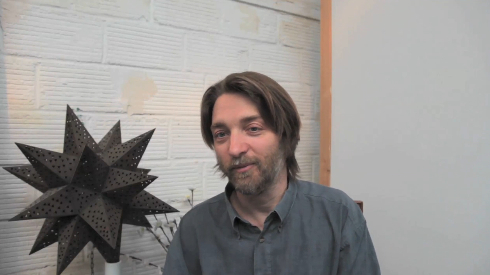
Early in the interview, Klavdij discloses his personal sadness that prisons exist. This emotion may be raw but it is not naive; Klavdij is balanced and realistic about what he can achieve with a camera in these specific distopias. He also says in seven words what I established this blog to say “Jails are a world to be discovered.”
He went to the prisons not as photographer, but as a concerned citizen. He realised if he were to go inside it would need to be with some reciprocity … so he took cameras and used them.
In terms of engagement and commitment to a population – the youth prison population of the world – Klavdij Sluban could and should be considered a ‘Concerned Photographer’. He deserves that loaded epithet.

 Prison Photography