
You are currently browsing the category archive for the ‘Photography: Non-Prison’ category.

From ‘Assisted Self-Portraits’ (2002-2005) by Anthony Luvera.
PHOTOGRAPHY’S NOT JUST DEPICTION!
There’s a fascinating discussion to be had at Aperture Gallery this Saturday December 7th. Collaboration – Revisiting the History of Photography curated by Ariella Azoulay, Wendy Ewald, and Susan Meiselas is an effort to draft the first ever timeline of collaborative photographic projects. Items on the timeline have been submitted either by members of the public or uncovered during research by Azoulay, Ewald, Meiselas and grad students from Brown University and RISD.
“The timeline includes close to 100 projects assembled in different clusters,” says the press release. “Each of these projects address a different aspect of collaboration: 1. the intimate “face to face” encounter between photographer and photographed person; 2. collaborations recognized over time; 3. collaboration as the production of alternative and common histories; 4. as a means of creating new potentialities in given political regimes of violence; 5. as a framework for collecting, preserving and studying existing images as a basis for establishing civil archives for unrecognized, endangered or oppressed communities; 6. as a vantage point to reflect on relations of co-laboring that are hidden, denied, compelled, imagined or fake.
Within the gallery space, Ewald and co. will discuss the projects and move images, quotes and archival documents belonging to the projects about the wall “as a large modular desktop.”
The day will create the first iteration of the timeline which will continue to be added to.
“In this project we seek to reconstruct the material, practical and political conditions of collaboration through photography — and of photography — through collaboration,” continues the press release. “We seek ways to foreground – and create – the tension between the collaborative process and the photographic product by reconstructing the participation of others, usually the more *silent* participants. We try to do this through the presentation of a large repertoire of types of collaborations, those which take place at the moment when a photograph is taken, or others that are understood as collaboration only later, when a photograph is reproduced and disseminated, juxtaposed to another, read by others, investigated, explored, preserved, and accumulated in an archive to create a new database.”
I applaud this revisioning of photo-practice; I only wish I was in NYC to join the discussion.
As you know, I celebrate photographers and activists who involve prisoners in the design and production of work. And I’m generally interested in photographers who have long-form discussions with their subjects … to the extent that they are no longer subjects but collaborators instead.
Photographic artists Mark Menjivar, Eliza Gregory, Gemma-Rose Turnbull and Mark Strandquist are just a few socially engaged practitioners/artists who are keen on making connections with people through image-making. They’ve also included me in their recent discussions about community engagement across the medium. I feel there’s a lot of thought currently going into finding practical responses to the old (and boring) dismissals of detached documentary photography, and into finding new methodologies for creating images.
At this point, this post is not much more than a “watch-this-space-post” so just to say, over the coming weeks, it will be interesting to see the first results from the lab. If you’re free Saturday, and in New York, this is a schedule you should pay attention to:
1:00-2:00 – Visit the open-lab + short presentations by Azoulay, Ewald and Meiselas.
2:00-2:45 – Discussion groups, one on each cluster with the participation of one of the research assistant.
2:45-4:00 – Groups’ presenting their thoughts on each grouping.
4:00-4:30 – Coffee!
4:30-6:00 – Open discussion.
6:00 – Reception.
If any of you make it down there and have the chance, please let me know what you think and thought of the day.

Brandon Tauszik moved to Oakland from San Diego three years ago. He’s got a day job. Some of his images are a little raw — check his Instagram feed @BE_DIZZLE. Tauszik was for a while assistant to the legendary Jim Goldberg. He’s also a big fan of TBW Books the small publisher just down the road run by Paul Schiek. I haven’t asked Tauszik but I reckon he’s probably a fan of the Hamburger Eyes folks too.
Tauszik is making the Bay Area his home and the aesthetic of his work makes obvious sense amid the prevalent scratched-up, banged-up, gritty, kids-street-realism typical of California. Less obvious though are the motives, goals and choices within Tauszik’s latest body of work White Wax.
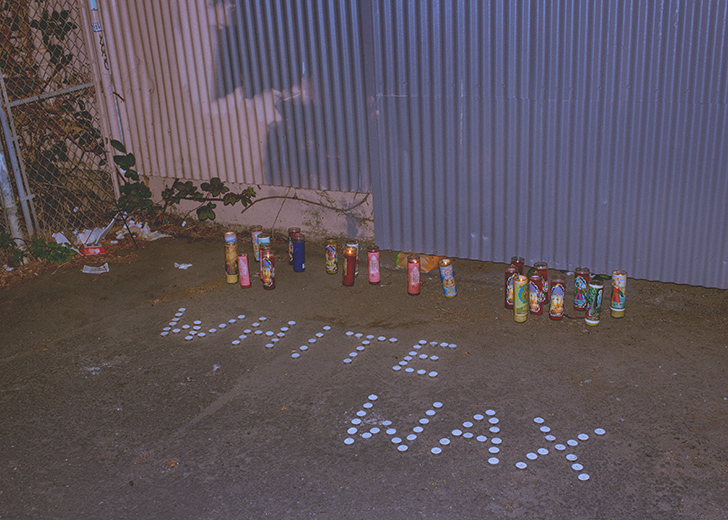
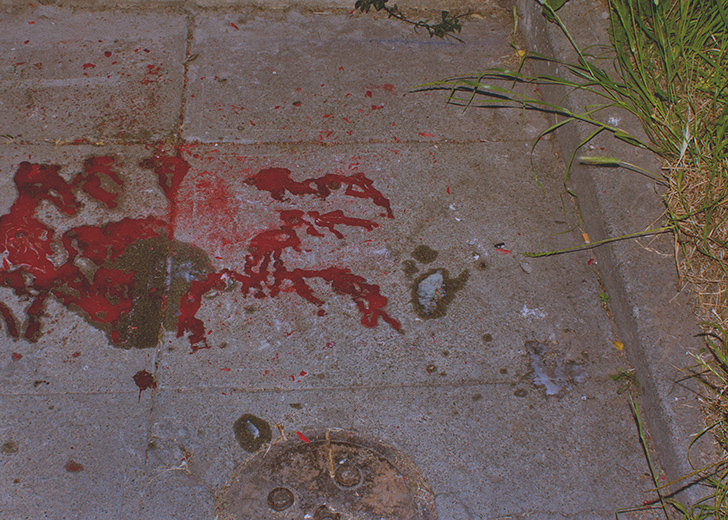
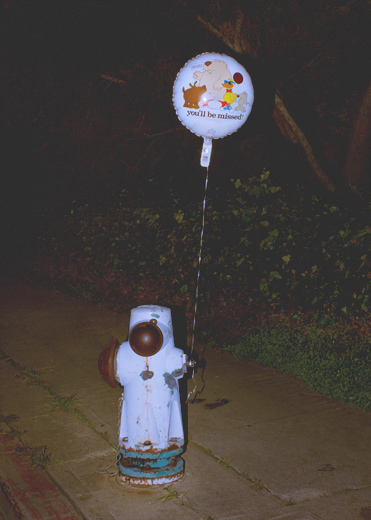
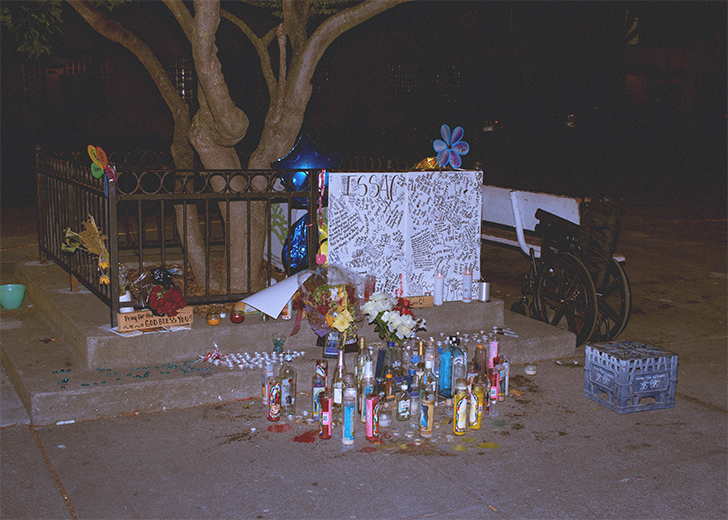
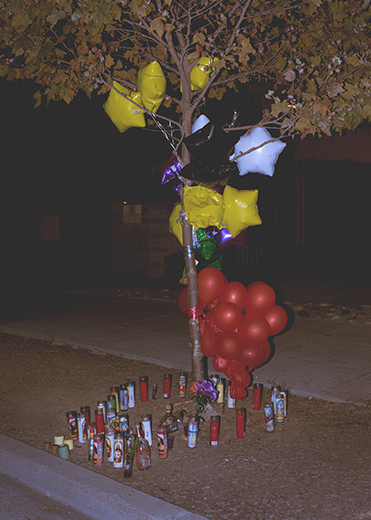
White Wax is a year-long visual document of memorials to homicide victims on the streets of Oakland. Tauszik says in his artist statement that his photos are to serve as a medium for self-examination. He thinks America is in the middle of a collective re-examination of its criminal justice policy, gun culture and post-racial credo.
White Wax is also,I suspect, a means by which Tauszik can remain connected to the place he lives. Unfortunately, for most people, murders are pretty easy to ignore; they just have to stay off the wrong streets. Some Oaklanders don’t have that luxury though.
“Why has the ecology of the American inner city long enabled it’s own self-destruction?” asks Tauszik. “Is it possible to shift our tired narrative of another young black man memorialized with white wax?”
SCROLL DOWN FOR OUR Q&A


Q&A
Prison Photography (PP): Why take on this project?
Brandon Tauszik (BT): Oakland is a violent city, but America is a violent country. Its inner cities particularly so. There is already a great deal of photography approaching this subject with a kind of coarse imagery. We’ve all seen it over and over. I asked myself, ‘How can I photograph gun violence without showing any guns? How can I create an emotional project without showing victims or mourners? How can I approach a politically charged subject, yet leave cops and politicians out of it?’ I hope that with these images I am able to communicate something beyond just melted wax on the sidewalk.
PP: I used to live in San Francisco and there was a bizarre media obsession about the annual homicide rate, as if people were waiting for it to meet or surpass the previous year’s figure. Oakland was always the depressing counterpoint to SF figures as it suffered 2 to 3 times the number of murders. Briefly, can you describe your experience of information, conversation, attitudes about murder? Surely, beyond figures there’s talk of interventions and solutions? Basically, what should Oaklanders do?
BT: That’s a loaded question! There is a lot of social inequality in the Bay Area and particularly here in Oakland. Having been largely de-industrialized over the past few decades, Oakland is currently in the midst of a strong wave of gentrification. Despite this new influx of higher income residents, the crime rate has barely shifted in the past decade. It’s currently the most dangerous city on the west coast and has the highest robbery rate in the whole country. People blame this on the understaffed police department, the economy, the gangs, the guns, whatever.
It’s uncomfortable to address, but ultimately this isn’t about “What should Oakland do?” but instead “What should America do?” In New York City, Memphis, Chicago, Baltimore, Los Angeles (the list goes on and on) young men of color kill and are killed more than any other demographic. We’ve ignored violence in our country because the victims don’t look like us. As one African American mother told me at a memorial, “We have been living a daily Sandy Hook and it’s time for the nation to know.”
There are some very strong local organizations (SAVE, Khadafy Foundation, RJOY) that do amazingly important work, but ultimately this is about a flawed national mindset in regards to prisons, guns and race relations.
SCROLL DOWN TO CONTINUE Q&A



PP: Is White Wax a memorial? A study of vernacular action? Other? Both?
BT: It’s more a study in the unique and visually distinct way that my neighbors mourn the loss of their loved ones. Or in your words, a study of vernacular action.
PP: Was it important to commit to this for one year?
BT: Every big city has their yearly homicide count which is obsessed over and analyzed as strictly data. I wanted to see what that data would look like in context of the shrines, which are a direct result of that count.
PP: White Wax images are taken at night. Was this a deliberate choice? If so, why?
BT: I wanted to capture these scenes as naturalistically as possible. The majority of these murders take place under the cover of darkness, so while this makes my work more difficult and dangerous, nighttime is one of the threads I use to tie the images together.
PP: I know you use Shine In Peace, Google Alerts and word of mouth to discover homicides. Do you fear White Wax has omitted some homicides just as the local news often misses/overlooks these murders? If you have missed some what does that mean?
BT: I’ve definitely missed some, due to a few reasons:
1. These memorials are, by nature, ephemeral and are displayed for anywhere from one day to many weeks. Sometimes I find a site I’ve missed where there are still traces of wax, but the shrine has been removed.
2. The given victim’s family and friends sometimes don’t erect a shrine. If the murder took place in a particular neighborhood where the victim was not welcome, that will usually apply to the victim’s family and acquaintances as well.
3. Many of these murders get little to no media exposure. For example, here is an example of a web-only murder story from last year. I rely on Oakland’s news outlets to report on (or at least tweet on) each murder. However there is low motivation to do so due to the very limited readership on these stories.
There are usually a few murders a week here, so unfortunately it can be hard for me to keep up.
SCROLL DOWN TO CONTINUE Q&A


PP: What about captions? Is there a need (from you or audience) to include information about the homicide?
BT: I have the name/age/race/sex/location information for most of these murders. However, captions have a didactic manner of reducing a photograph down to data and information, which is what I am trying to avoid. A recent study showed that Americans assume black people feel less pain than white people. This is deeply frightening. I want the viewer to ponder these images and wonder, ‘Was this person someone who looked like me?’
PP: What’s been the reaction from folks in Oakland to White Wax?
BT: I have been sitting on this project until very recently. I wanted to give it time to fill in and for the thesis to take shape. The local people I’ve showed it to so far seem to think it’s strong and thoughtful. I would love to arrange an exhibition towards the end of the year in Oakland.
PP: Which photographers are working in ways that you admire and value?
BT: When I first moved to the Bay Area, I assisted Jim Goldberg for a while. That was a pivotal time for me which pulled me away from strict photojournalism toward longer, in-depth projects. Lately though I’ve been into Harry Griffin, Yoshi Kametani, and Viviane Sassen.
PP: What’s the purpose of photography? What should we be trying to do?
BT: We have ears to hear, but also eyes to see. The spoken word can only accomplish so much. You can sometimes say so much without using your mouth … a gesture, a glance.
For me, photography acts as a medium to illuminate ideas and questions on all aspects life.
END


Biography
Brandon Tauszik is a photographer and filmmaker based in Oakland, California. He creates visual media at Sprinkle Lab while pursuing personal photography projects.

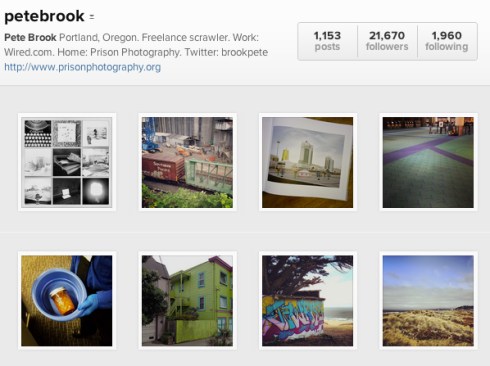
Just a quick heads up to let you know that my Instagram handle has changed to my actual name. Find me at @petebrook from now on.
All those past mentions for @p3t3brook are confined to history and will only guide you to a non-existent account. Such is the price to be paid.
Also, remember that time I laid out my Instagram rules? I’ve had a couple of slips, but generally I think I’ve done an okay job sticking to them.

Following its 66th AGM earlier this week, Magnum Photo Agency announced that Olivia Arthur and Peter van Agtmael are its newest members.
Good choices. Peter’s a nice guy and was kind enough to offer up images and his first hand account of a story we weren’t even sure was a story. I have not met Olivia Arthur. She is a photographer I’ve admired for a long time. I am amazed (and a little embarrassed) that I’ve not mentioned her photography before here on the blog.
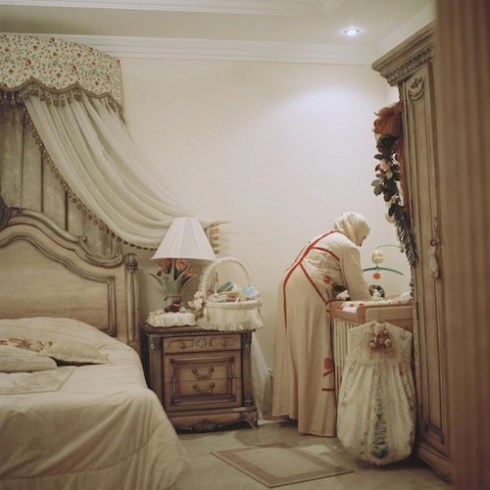
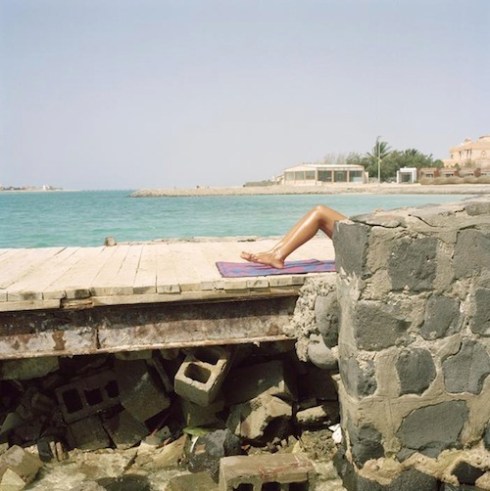
Jeddah Diary is one of the standout photography projects of recent years. Now is a good time to feature some images and publicly applaud Arthur’s tenaciously delicate observations of Saudi women.
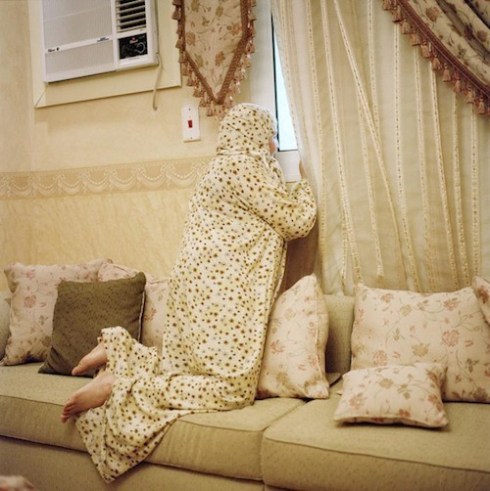
In 2009 , the British Council invited Arthur to conduct a two week photography workshop with women in Jeddah, Saudi Arabia. Jeddah Diary does not feature the photographs made by Arthur’s students; the products of the workshops largely remain a mystery. Instead, Jeddah Diary is comprised of Arthur’s own fragmentary observations and photographic concessions that emerged as she tried to make sense of depicting a veiled subject.

The cultural and religious traditions of Saudi Arabia restrict the opportunities to photograph many women who are not wearing the abaya. As I understand, both Arthur and the women did make images of each other unveiled, but the images could not seen or distributed; conceived of, but not shared.
Arthur says that her first impression of the city of Jeddah was that public spaces were empty. Perhaps the important (human) interactions went on behind closed doors? The abaya is only one form of cover in Saudi society. The fabric of architectures, court yards and corridors bend and shape relationships.
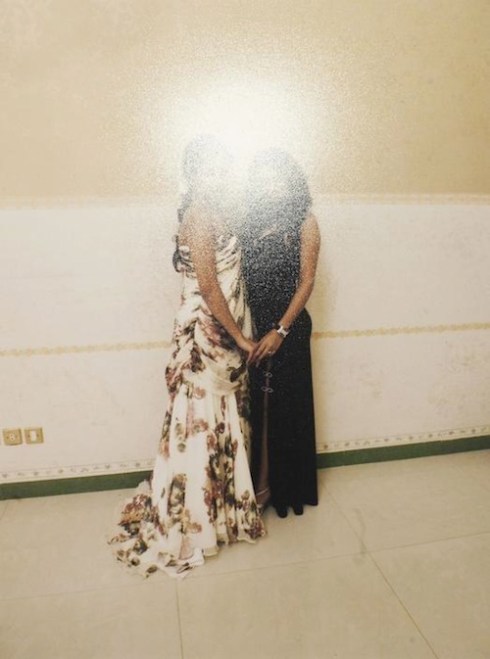
Saudi society thwarts many of the visual relationships — photographer/subject and photographer/audience — that are taken for granted in secular countries and in less traditional regions of the Arab world. As such, Jeddah Diary is a collection of work-arounds and solutions; rephotographed portraits, limbs and parts of people, plays with spotlight and night shadow to obscure identities.

The parameters of negotiation between Arthur and the women about what could be shown trod, at times, strange ground. After using flash to anonymise her subject (above photo), Arthur showed it to the women and they responded, “That’s great, but can’t you show a bit more of her eyes so people can see how beautiful she is?” asked some of the women.
These unique discussions led to photographer and subjects becoming close friends. Arthur says:
“On my first trip to Saudi I worked in medium format but this photo was taken on my second trip, using a little Panasonic Lumix. Because this was the sort of camera the women themselves used, when I used it they started to stop seeing me as a photographer and saw me instead as a friend. At the beginning I’d been clear with them that – as professional photographer – I wanted to show these pictures, but the funny thing was that when I switched cameras they relaxed and I ended up taking pictures that afterwards they didn’t want me to use.”
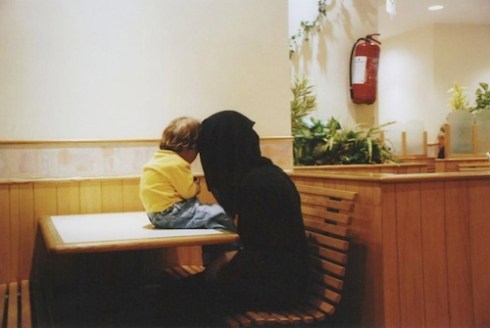
For me, the most compelling images are those of women veiled and in everyday moments; sitting on a kitchen counter, in a restaurant; fooling around while sharing tea. These are intimate events and the challenge to depict a hidden subject can be solved the moment one abandons a battle against restraints. Arthur’s interactions and discoveries are central to the book Jeddah Diary.
“I just thought, let’s take people on the journey that I went on, and show how confusing and contradictory it can be rather than trying to explain it; that’s the point when it finally made sense to me.”
And because of Arthur’s efforts, it starts to make sense for us. As Antone Dolezal remarks in his review of the book, “Jeddah Diary tells a story that could only be informed from a female perspective … a story both hidden from the world of men and only privately discussed in the world of women.”


Jeddah Diary, by it’s nature cannot make full sense to us. Or rather, if we adopt our usual insistence to see idenifiable faces, and know names, and have place and date stamps attached to each image, we’ll be sorely disappointed. Arthur’s primary consideration was to protect her friend-subjects. As Sarah Bradley notes in her review of the book:
“It’s hard to tell who we are looking at in the images — some girls are named, but we see few faces, and in a small postscript Arthur makes it clear that in no way should one infer that the girls attending illegal parties are the same girls depicted elsewhere in the book. Her thank-yous show that many chose not to be named.”
Jeddah Diary is a moment of slippage. It is a document of the undocumentable. In that regard it is also a moment of reflection — and, for me, a cause of sadness — on the fact that Saudi women have limited choices in how they operate in society and interact with the world. Fashion is a flip topic, but clothing is not. It’s a simple point to make, but the abaya limits self-expression. I wouldn’t want to state the degree to which self-expression is limited or even what the results (positive and negative) emerge from a single, designated type of garb for one gender in a society.
The women in Jeddah Diary were, based on Arthur’s report, ambivalent about the project. And, I feel, probably reluctant to think of images as agents for social change.
“I was surprised how few of them had any major feedback. When I was there and tried to ask them how they felt about their situation, they’d say, “You know what – we’re okay” so I’d leave it. They were happy to be in the photographs but they’re not bothered about the comment I’m making on their society.”


Refuge by Joanne Mullin “explores the nature of domestic conflict by examining shelters across Northern Ireland. It is a contemplative observation of a temporary place that allows for women and children to have a period of transition.”
The Eye On PDX series continues with Melanie Flood, who talks about psychtrance, pandas, chance, creative process and Portland friends. Read the full interview on Blake’s blog.
Flood: “I generally dislike separating photography from a larger art scene, but I feel that distinction in Portland much more than in New York. There are a lot of Portland based photographers and few spaces to exhibit their work alongside other mediums, and even fewer spaces that have a collector base. It creates a line between artists and that of hobbyists, amateurs and straight photographers.”
—————————————————————–
Eye On PDX is an ongoing series of profiles of photographers based in Portland, Oregon. See past Eye On PDX profiles here and here.
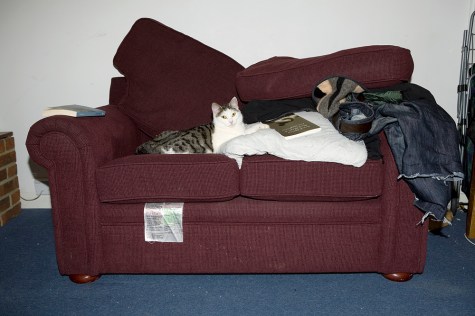
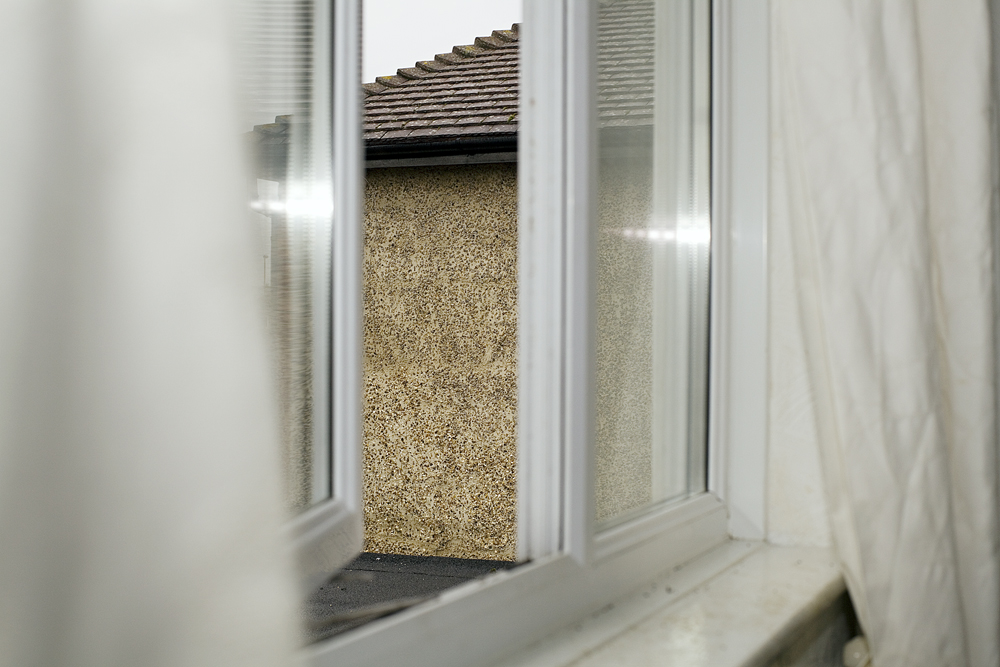
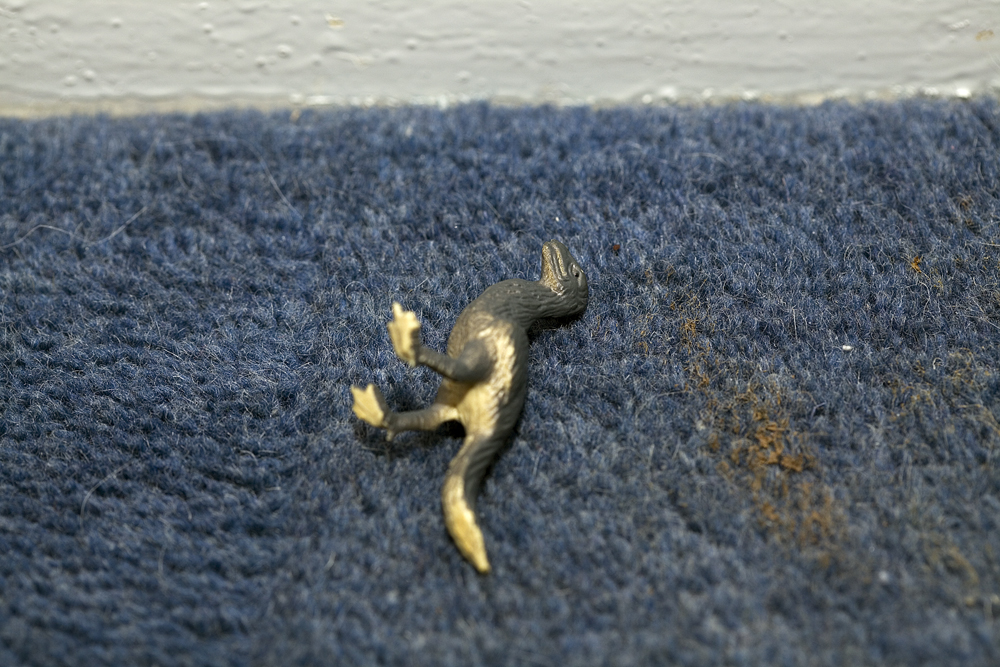
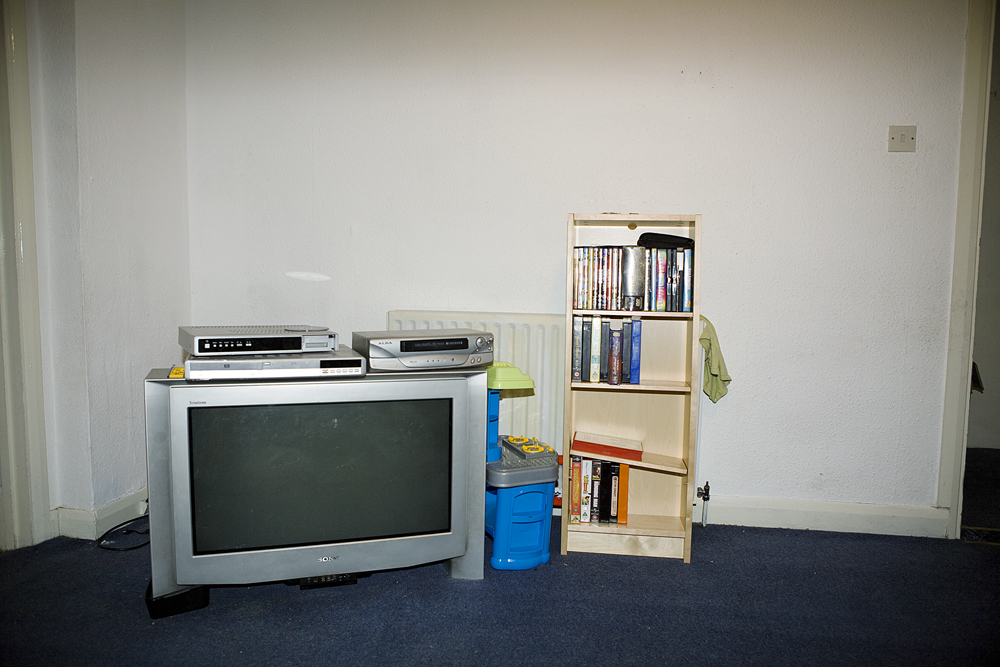
A few weeks ago I wrote, for Wired, a piece about Edmund Clark‘s latest body of work Control Order House. The piece carried the irreverent title This Incredibly Boring House Is a U.K. Terror Suspect’s Lockdown but the details of the project it gets into – two years of negotiating access, Clark’s process which riffs on surveillance and forensic photography, Clark’s the decision to present every photograph he took in the order he took them, etc. are important, mildly complex and worth getting one’s head around.
The house Clark documented belonged to a pre-trail UK terror suspect, under house arrested, referred to in legal documents as CE.
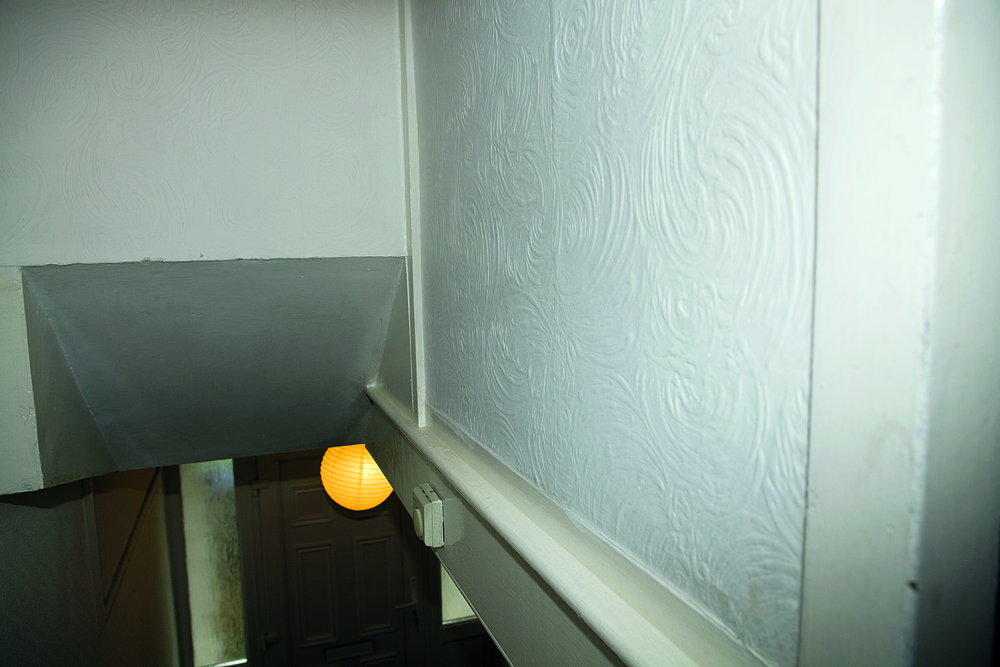

I wrote:
Control Order House is the only existing photographic study of a residence occupied by a person under a UK control order. It is not an exposé, however. Given the legal sensitivities, every image was vetted by UK government officials. Clark was not allowed to reveal the identity of the terror suspect — referred to in legal documents as “CE” — nor his location.
“To reveal CE’s identity would be an offence and in breach of the court-imposed anonymity order,” says Clark. “All the photographs I took or the documents I wanted to use had to be screened by the Home Office.”
For Clark, the project is best appreciated in its book form. Control Order House was published by HERE Press and released May 2nd.
Clark refers to the book as an “object of control” because at a point, he accepted that, with so many attached limitations, his photography was almost an extension of the state power he was documenting. All of his equipment had to be itemized and registered with the UK Home Office before his three visits.
Wired created a Scribd document (that has no URL, but is embedded in the article) with six pages of Clark’s correspondence with both the terror suspect and the UK Home Office employees.
“Even CE’s lawyers made it clear to me that the I had to careful about what I spoke to him about because the house was (very probably) bugged and that my telephone communication with him would be monitored,” explains Clark. “All my material, even my words here [in this interview] could become part of CE’s case.”

Control Order House is a finely balanced project. It is hampered by so many obstacles to unfettered depiction that our traditional notions of what photography is supposed to do are frustrated. It is not exposé; it is completely descriptive of its own limitations. It’s these limitations from which we must depart in thinking about photography in highly policed spaces. Control Order House should kick-start considerations of lesser seen photographs from the Global War On Terror (GWOT), namely, images of drone strike aftermath, Aesthetics of Terror (as, in this case, distilled by artists), redacted images in magazines distributed at Guantanamo (scroll down), Kill Team trophy photos, American personnel’s own vernacular war photography, and Jihad suicide posters.
Control Order House is about the act of photography. It’s self-referential as kids’ MFA work that deconstructs photographic process, but — unlike those studio experiments — it has roots in a clearly identifiable political territory. It shows us more than we knew but not as much as we would like to know. In so doing it reminds us of all the operations, violence and war crimes carried out on our tax dollar that we never see, never know.





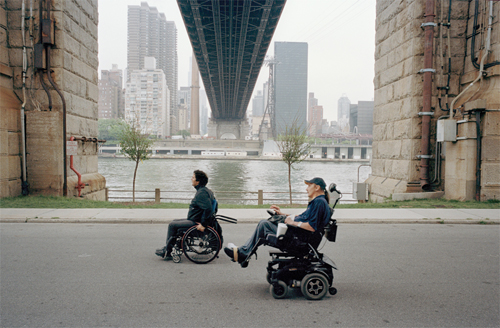
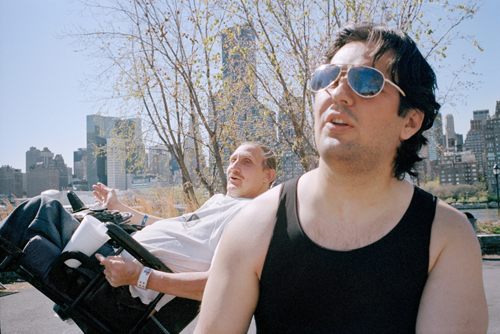
Armand Xama, 31, and Bryan Duggan, 51, are best friends. They both suffered broken necks in diving accidents. Xama and Duggan are just two of 800 patients at Goldwater Hospital, on New York’s Roosevelt Island. Almost every patient at the state-run facility is on Medicaid.
Throughout 2012, photojournalist Daniel Tepper followed Xama and Duggan through their days on and off Roosevelt Island.
In the summer of 2013, Goldwater will be closed and demolished to make way for Cornell University’s new science center. Patients have not yet been to told to where they will be relocated.
“This is a developing and underreported issue,” says Tepper. “The people who call it their home have no way to advocate for themselves and let others know what is happening to them. They are at the mercy of the city’s Health and Hospital Corporation that isn’t doing a great job in handling the closing and relocation.”
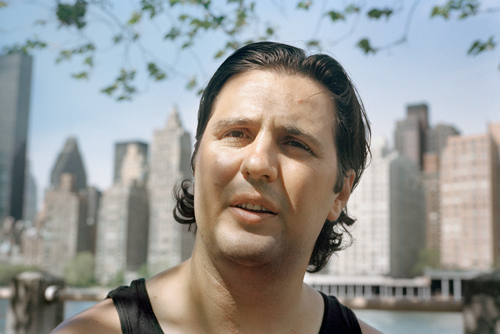
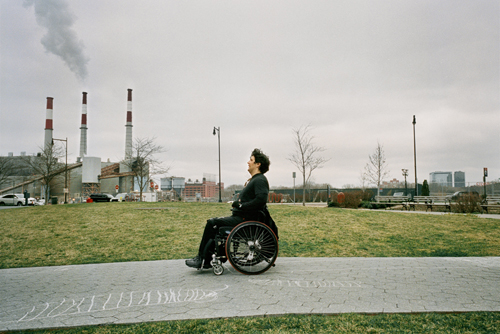
With over 400 individuals who have neck and spinal injuries, Goldwater is home to the largest community of such persons in the New York hospital system.
“The closing of Goldwater is just the tip of the iceberg,” explains Tepper. “Opponents to the science center are alarmed that the development is projected to cost $2 billion dollars and take decades to complete, especially at the time when many city workers don’t have contracts and the schools and hospitals are badly in need of funding. This is a big issue that will change everyone who lives on Roosevelt Island but the first people to feel the effects will be the patients at Goldwater.”
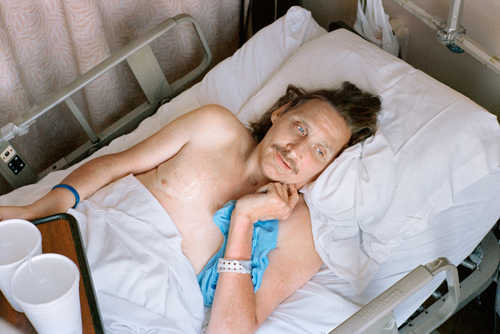
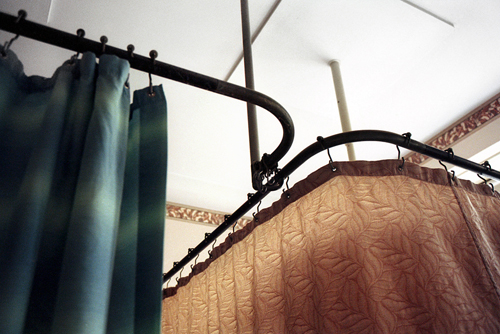

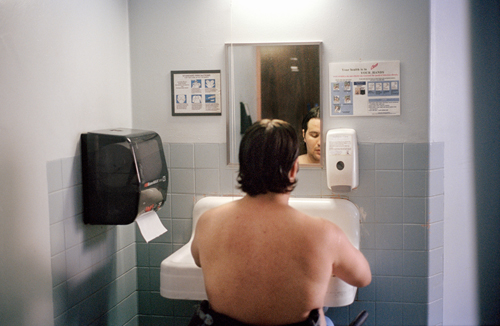
Tepper wrote for the Gothamist about the background to the Cornell science center planning.
In July 2010, the city stated that it was planning to relocate some of Goldwater’s patients and staff to a facility in Harlem.
Five months later, Mayor Bloomberg announced Goldwater’s location as a possible site in a tech campus competition. In December 2011, the mayor named Cornell and Technion universities the winners of a bid to construct a sprawling science and engineering campus where the hospital now stands. This massive, two billion dollar project will take decades to complete and cover nearly one-third of the island. It will radically transform Roosevelt Island and affect all 12,000 of its residents, but the first ones to feel the impact will be the residents of Goldwater. Cornell has said they plan on using some of the rubble from Goldwater’s demolished edifice to raise the level of their campus site out of the floodplain.
The closure of Goldwater Hospital and the imminent relocation have received little media coverage. “This is a really old story and it’s done before,” Evelyn Hernández, the director media relations for the city’s Health and Hospitals Corporation told us over the phone. “I wanted to make sure you know that the story’s been done before, a long time ago. We’ve announced it in press releases.”


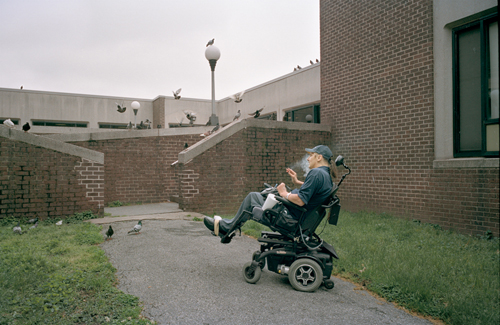

In April, 2013, Tepper returned to Goldwater to catch up with Xama and Duggan – men he now considers his ‘buddies.’
“I was struck by how little their lives have changed since I began this project last year,” reports Tepper. “The daily lives of both men has fallen into a strict routine that I think happens to most people living in a state-run facility, whether it’s a prison or hospital. A times I found myself feeling photographic deja-vu, as a scene I have already captured repeated itself in front of my camera. Both guys are still in the dark about where they will end up and when they will be moved.”
“But they are both as optimistic and good-humored as always.”


 Prison Photography