
You are currently browsing the category archive for the ‘Photography: Non-Prison’ category.

I found Pamela Bannos‘s portfolio via the MoCP, Midwest Photographers Project page. This was the same place I found the work of Tom Jones. There is plenty of other thought-provoking stuff (no prison photography though!) for you to while away an afternoon.
I am really taken by the quiet control of Bannos’ Some Untitled Pictures. Bannos: “In each of these found photographs I have tried to create a new history, or a new way of looking at a face or a gesture from another time. […] I am curious about how the illusion of photographic space can be re-constructed.”
More here.

If you are in NYC and you’re quick on your feet you might just make it to Zwelethu Mthethwa’s artist’s talk tonight. Followed by a reception and book signing at Museum of Contemporary Diasporan Arts in Brooklyn (begins at 6.30pm).
Mthethewa’s work will be on view at The Studio Museum in Harlem until October.
AFRO-PESSIMISM
Afro-Pessimism is a term introduced by Okwui Enwezor (for the essay of Mthethwa’s monograph) in an attempt to describe what Zwelethu Mthethwa’s art is not.
I had dozens of working titles for this blog post each one reflecting an approach (and/or quote) by Mthethwa which described his process, his collaboration with the sitter, the waves of culture in which we exist, whether poverty in photography is a problem for the practitioner or audience, etc, etc. These topics are too huge for a title of course, fortunately there’s plenty of wonderful online videos and chances to hear Mthethwa talk about his art:
Aperture (who are publishing his first monograph) has a four-part interview, Zwelethu Mthethwa: In Conversation with Okwui Enwezor.
The Mail & Guardian has a narrated slideshow, “I hope when people look at these images they are honest and open to learning new things.”
Dazed and Confused visited Mthethwa in his studio, which is a fascinating look at his work space. A great painter as well as a great photographer!
ESSAY
For the SFMoMA ‘Is Photography Over Symposium’, Okwui Enwezor leans on Mthethwa’s work to ask, “How do diverse cultural practices engage with the legacy of photography?”:
“Before foreclosing the effectiveness of photography or to ask whether we have reached the end of photography, we should address the diverse manifestations of photography in societies in transition where its powerful effects of seeing is constantly battling different logics and apparatuses of opacity. All through the years of apartheid, photography was at the center of this battle between transparency and opacity, thus lending the medium a far more discursive possibility than it would have enjoyed as purely an instrument of art. One can in fact, argue, pace Georges Didi-Huberman, that in the context of apartheid photography was an instrument of cogito.”
“In South Africa, for the critics of documentary realism or anthropological realism, especially black artists such as Mthethwa, documentary realism was always at the ready to link the iconic and the impoverished with little recourse to examining its spectral effects on social lives. Because of this, documentary realism generated an iconographic landscape that trafficked in simplifications, in which moral truths were posited without the benefit of proven ethical engagement.”
From what I can gather Georges Didi-Huberman’s thesis is that images are killed, denied their truth, narrative or violence within the dominant art historical canon that has elevated the image to art. The image becomes cogito – an object of thought – not an object pertaining to reality or even to action.
Mthethwa’s images are against such failings; they are attempts at transparency, honesty. Mthethwa talks in the interviews about his ethical and slow engagement with his subjects.
Afro-Pessimism is on the decline.
BIOGRAPHY
Zwelethu Mthethwa (born in Durban, KwaZulu-Natal, South Africa, 1960) received his BFA from the Michaelis School of Fine Art, University of Cape Town, a then–whites-only university he entered under special ministerial consent. He received his master’s degree while on a Fulbright Scholarship to the Rochester Institute of Technology. Mthethwa has had over thirty-five international solo exhibitions and has been featured in numerous group shows, including the 2005 Venice Biennale and Snap Judgments at the International Center of Photography, New York. Mthethwa is represented by Jack Shainman Gallery, New York. He lives in Cape Town, South Africa.

MARTIN BATALLES REPRESENTING URUGUAY

LIVIA CORONA REPRESENTING MEXICO

MARCOS LOPEZ REPRESENTING ARGENTINA
Friend of Prison Photography, Emiliano Granado, likes football as much as he rocks at photography.
We pooled our knowledge to pair each country competing in South Africa with a photographer of the same nationality.
GROUP A
FRA France – JR
MEX Mexico – Livia Corona
RSA South Africa – Mikhael Subotzky
URU Uruguay – Martín Batallés
GROUP B
ARG Argentina – Marcos Lopez
GRE Greece – George Georgiou (Born in London to Greek Cypriot parent)
KOR South Korea – Ye Rin Mok
NGA Nigeria – George Osodi
GROUP C
ALG Algeria – Christian Poveda
ENG England – Stephen Gill
SVN Slovenia – Klavdij Sluban (French of Slovenian origin … I know, I know, but you try to find a Slovenia born photographer!)
USA United States – Bruce Davison
GROUP D
AUS Australia – Stephen Dupont
GER Germany – August Sander
GHA Ghana – Philip Kwame Apagya
SRB Serbia – Boogie
GROUP E
CMR Cameroon – Barthélémy Toguo
DEN Denmark – Henrik Knudsen
JPN Japan – Araki
NED Netherlands – Rineke Dijkstra
GROUP F
ITA Italy – Massimo Vitali
NZL New Zealand – Robin Morrison
PAR Paraguay – ?????
SVK Slovakia – Martin Kollar
GROUP G
BRA Brazil – Sebastiao Selgado
CIV Ivory Coast – Ananias Leki Dago
PRK North Korea – Tomas van Houtryve (it was difficult to find a North Korean photographer)
POR Portugal – Joao Pina
GROUP H
CHI Chile – Sergio Larrain
HON Honduras – Daniel Handal
ESP Spain – Alberto García Alix
SUI Switzerland – Jules Spinatsch
Emiliano has been posting images from each of the photographers and doubled up on a few nations where the talent pool is teeming. You can see them all over on his Tumblr account, A PILE OF GEMS
NOTES
* Don’t even begin arguing about who should represent the USA. It is a never-ending debate.
* I’ll be honest, finding photographers for the African nations was tricky, even for a web-search-dork like myself. But then we knew about the shortcomings of distribution and promotion within the industry, didn’t we?
* For Chile, we had to look to the past legend Larrain. I’ll be grateful if someone suggest a living practitioner.
* North Korean photographer, by name, anyone? We had to fall back on van Houtryve because he got inside the DPR.
* Rineke Dijkstra was one of approximately 4 thousand-trillion dutch photographers who are everywhere.
* Araki was the easy choice. Ill admit – I know next to nothing about Japanese photography (Marc, help?)
* I wanted a few more political photographers in there, while Emiliano goes for arty stuff. I think we found a nice balance overall.
* And, SERIOUSLY, name me a Paraguayan photographer! PLEASE.

AUGUST SANDER REPRESENTING GERMANY

JULES SPINATSCH REPRESENTING SWITZERLAND
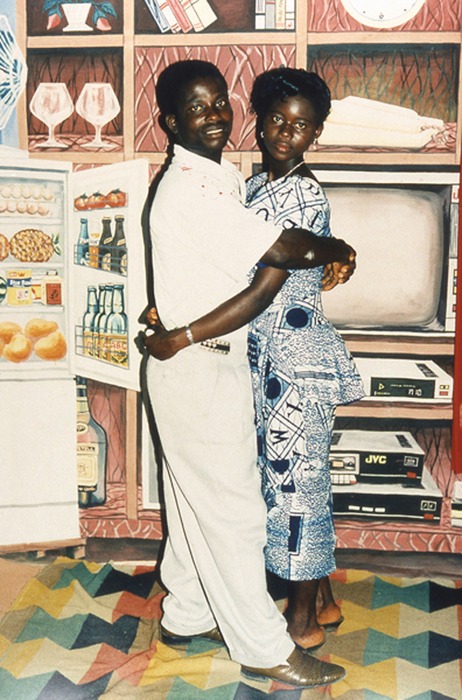
PHILIP KWAME APAGYA REPRESENTING GHANA
This excerpt (0.01 – 3.17 minutes) from Darkness and Light is particularly interesting in light of the recent unanimous celebration of Phil Toledano’s Days with my Father.
Avedon admits that his work was invasive and disturbing and that those tenets always exist within the arena for art. Avedon also faced accusations of exploitation for his later work In The American West.
Avedon’s work is good comparison to Toledano’s because reactions to Toledano’s work has been beyond positive. We have seen it as loving and we have seen it as our privilege; this is probably the case, but it doesn’t explain the absence of any discussion on ethics (however brief). Just a thought.
Personally, I am a fan of Toledano’s Days with my Father, and I wonder … do we respond to death differently today, do we respond to the approach of death in photography differently? Here’s a CNN clip of Toledano “blubbing” about his project.
Happy Fathers Day.
UPDATE: Matt emailed me to let me know of the second chapter in this story. View it here.
THE ROMA

A young man in the Stara Gazela camp. © Matt Lutton
Friend Matt Lutton has presented words and images in the latest Lens Culture (Issue #26). His story is about the destruction of a settlement in Belgrade and the subsequent relocation of the Roma inhabitants.
I know that Matt has been working on this story for a long time and it matters very much to him. In September of last year, Matt put together a small edit of the work with a caveat that he was still working through the project. Matt recommended this local Serbian article for background on the issue.
Matt’s words:
Gazela was an isolated community of over 200 Roma families living abjectly difficult lives under the Gazela road bridge in Belgrade, Serbia. They made their living from the recycling of metals and refuse, and the landscape around their homes was filled with toxic mounds of rotting waste. It was a ghetto split on the banks of one of the region’s most important rivers and on premium real estate eyed by the elites. This photo story begins with the community living under the bridge before its destruction and partial relocation on August 31, 2009.
The people living there, depending on their legal status, would either be given a new container to live in on the outskirts of the city, free transport back to their villages or if they had no papers, an unceremonious trip to the curb and likely a home in another improvised camp.

A girl runs through smoke near a suspected arson in an abandoned home in Nova Gazela, a camp on the New Belgrade side of the Sava River. The fire happened on the day before the relocation and destruction of the settlement. © Matt Lutton
Matt’s task, if he is to compete with other storytellers is tough. The Roma people exist across Europe and have fascinated generations of photographers. The bar was set high by Josef Koudelka upon the 1975 publication of Gypsies.
ROMA ACROSS NATIONS
In recent years, Carlo Gianferro‘s Roma Interiors showed us wealthy Roma residences.
Over seven years, Danish photographer, Joakim Eskildsen, traveled with writer, Cia Rinne, through seven Roma countries (Hungary, India, Greece, Romania, France, Russia, and Finland). Resulting in the book, The Roma Journeys. (Elizabeth Avedon write up).
Amanda Rivkin travelled to Slovakia to photograph Roma theatre productions.
Hungarian, Zsuzsanna Ardó, photographed the Roma travellers in her home country. (Video, via The Rights Exposure)
Similarly to Matt, Sanja Knezevic documented Roma people in Belgrade.
Marco Baroncini (whose work I’ve noted before) photographed the Roma in Italian capital Rome. Most of the 15,000 Roma are immigrants from the Balkans. This work impressed James Estrin and thus received Lens blog exposure.
Most recently, some Roma youth have taken up cameras empowering themselves to self-representat. Greg Ruffing gave a very good summary of the Chacipe Project:
“One project in particular this year has really intrigued me — Chacipe: An Exploration of Roma Images and Identity, which features selected images from the Chacipe Youth Photography Contest. The contest was organized by OSI’s Roma Initiatives and the Open Society Archives as part of the Decade of Roma Inclusion 2005-2015, an international initiative to bring together governments, NGOs and Roma civil society to work towards improving the welfare of Roma communities.”
CONCLUSIONS
If you are Matt, flourish in this rich photographic heritage. If you are not Matt, follow his work!
Paolo Pellegrin gave fashion magazine NOWNESS this brief interview.
Pellegrin, “My working outfit is very casual: jeans, a shirt, documentary photographer shoes and a jacket. When we meet in these godforsaken places, we all look alike with our Timberlands, our scarves and jackets with lots of pockets.”
I guess I’m laughing because the question reminds me of Peter Kay’s “What yer wearin’ on the plane?” (Youtube clip at 6:32)
Pellegrin also describes fashion as “important aspect of man”, loves Tarkovsky, wants to be a Replicant and nevers fails to close his trips with an airport coffee.
ON THE ‘TO DO LIST’
I am going to contact Pellegrin and ask about Guantanamo. I think we need to be discussing Guantanamo again … and we should also be talking more about the US “Black Site” prisons, beginning with Bagram in Afghanistan. More to come.

Polaroid 636 Close-Up
The ever diligent DLK Collection reminded us recently of what is likely the final chapter in the Polaroid Collection – its dispersal and the auction of its individual parts. DLK tell us of Ansel Adams’ donated time and prints to a collection he thought destined for a museum. The intention and the assets have been devoured by greed. Allow me to defer to DLK;
“The whole sordid story, with its corporate buyers, Ponzi schemes, legal wranglings, bankruptcy proceedings, and angry artists has been faithfully investigated and recorded by esteemed critic A.D. Coleman in the past year and a half on his blog, Photocritic International (here). While the rest of the media generally ignored the Polaroid story, Coleman has produced 19 meticulously researched posts covering its many facets, with particular attention paid to tracking down where all the pictures have gone. It’s well worth the time to read through the entire series to see how this drama has unfolded over the past months.”
Bang on! Anyone interested in the “sordid affair” absolutely should check out A.D.Coleman’s coverage. He has pursued the criminal acts and legal gymnastics with tenacity. I admire Coleman’s work as much as I am aghast at the details of the case – a lot.
Reading this was like finding the solution to a problem I never knew existed.
There exist hundreds of catalogues detailing photographs exhibited in the Victorian era and shortly after – such examples being Photographs Exhibited in Britain 1839-1865 and Exhibitions of the Royal Photographic Society 1870-1915. These catalogues (and now databases that mirror the information of the catalogues) provide information to photographs, but crucially no photographic image. It is presumed these photographs exist somewhere.
Likely some of these AWOL photographs are in private ownership, universities and museums. The recent digitisation of many of these types of collections has transformed the photographs into newly-available data for comparison against the catalogues of descriptions.
CRUNCHING DATA
Professor Stephen Brown and Professor Robert John, of De Montfort University, UK, are investigating a form of computational intelligence known as fuzzy logic to see if it can be used to match catalogue entries to images online.
According to Professor John, the software can “make decisions much more quickly than humans and it is not restricted to a simple ‘match’/’no match’ answer.”
Professor Brown describes example issues the software hopes to negotiate:
“Some of the records in the catalogues are rather vague. For instance, you might have the name, but the only address given is ‘London’. If a photograph is then found with the same name but the photographer’s address is given as ‘Blackheath’ then is that the same person? It could well be but further examination is needed. Some photos were exhibited more than once over different years, and that’s fine as long as the same details are recorded for both, but very often this isn’t the case. It wasn’t uncommon for a photographer to sell or loan prints to other people who then exhibit that work under their own name, not claiming to be the photographer, just the exhibitor. There might be a photo floating around online that is listed under the photographer’s name, while we only have the exhibitor’s details.”
The programme is still to be tested, but if successful (the article doesn’t explain how “success” is determined) the intention is to apply the programme to other online collections and potentially reunite more records with their long-lost photographs.
– – – –
If you are not reading the British Photographic History blog, you should – it covers aspects of photographic history and archiving that don’t get covered elsewhere with regular updates on museums, new archives and storage developments for UK prints and paper collections. I have particularly appreciated Michael Pritchard‘s articles.
– – – –
This story has absolutely nothing to do with the Super Furry Animals, I just wanted to take the opportunity to recommend the Furries’ album FUZZY LOGIC.
S.F.A. are Welsh wizards of rock.


 Prison Photography