
You are currently browsing the category archive for the ‘Photojournalism’ category.

The grind and hustle of daily news photojournalism is no joke. Some people can be a bit sniffy about news photographers. Screw them.
As much as possible I try to ignore the haters and the artificial boundaries they construct in the photoworld. True, my interests primarily lie in documentary, participatory, vernacular and some fine art photography, but in every interaction with photographers I want to explore and understand the contexts in which they make work. Therefore, it was a pleasure – for the latest Eye On PDX feature – to chat with Thomas Boyd.
The lifestyle and work-style of news photographers has always intrigued me. Unfortunately, often my discussions of news photography begins with iconic or controversial images, images’ subtexts and imagery’s distribution in our larger ad-fed visual culture; rarely do I get to ask nuts-and-bolts questions to the individuals who create the widely-circulated images we see daily.
An avowed Oregonian, Boyd is a news shooter through-and-through. He is a staffer with The Oregonian, the state’s biggest paper and as such has important insights into journalism (past, present and future). Here, Boyd talks frankly about his experience with the paper; what makes a good image; the peers he admires; and the rise of the amateur.
Scroll down for our Q&A.
– – – – – – – – – – – – – – – – – – – – – – – – – – – – – – – – – – – – – –
Eye On PDX is an ongoing series of profiles of photographers based in Portland, Oregon. See past Eye On PDX profiles here and here.
– – – – – – – – – – – – – – – – – – – – – – – – – – – – – – – – – – – – – –


Prison Photography (PP): How long have you been in Portland? How long have you been with the Oregonian? What’s the deal with this town?
Thomas Boyd (TB): I came up from Eugene five years ago, but before that I lived in the Portland area for about 10-years. I grew up in North Bend on the Oregon Coast and Portland has always been a special place for me. I find it endlessly fascinating.
PP: Day to day, what do you shoot?
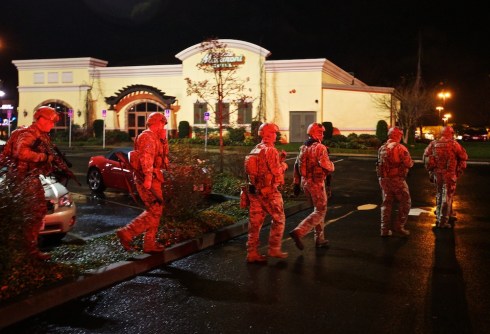
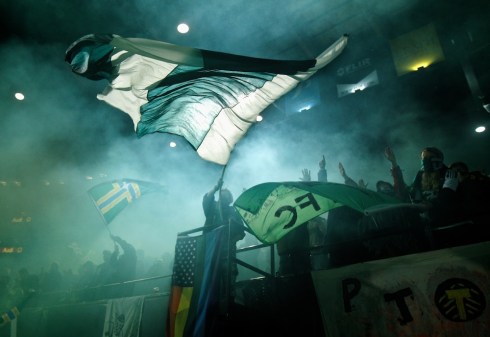
TB: I shoot assignments! I shoot between one and three assignments a day and I never know what they’re going to be until the night before or even an hour before. Yesterday, I shot a basketball game in Eugene, today, I shot a portrait of a documentary filmmaker and an overweight police horse. Tomorrow, I’ll shoot a cat show. That’s a typical random week. I also shoot a lot of Duck football, Portland Timbers and track and field.
PP: I understand the photo staff has shrunk at The Oregonian in recent years? Tell us about the changes at the the newspaper.
TB: Like all newspapers, the business is eroding. With that came layoffs three years ago and buyouts before that. We now have three less photo editors and the staff is down to 10 with two part timers from 19 full timers five years ago. They hire very few freelancers. However, in a recent meeting the we heard the paper met it’s financial goals for 2012 and merit pay raises may be possible. The paper is making money.
But, even with these changes, the way I work really hasn’t changed. I pitch story ideas and I shoot assignments.
I actually see more change with the organizations I cover. I’m seeing them keeping us out of situations so they can document it themselves and drive traffic to their own websites. I’m seeing this with all types of organizations from non-profits to professional/college sports teams. We are essentially competing with the organizations we cover.
Reporters are also being asked to do more with photos, video and social media. I’ve found myself competing with them on stories as well. It’s really awkward for the people we cover. They don’t readily understand what our roles are.
The amount of bloggers covering events is big change too. If you look at the amount of journalists just covering the Timbers, you’ll see that newspapers and television stations are drastically outnumbered. It’s really strange to me. As far as I can tell, none of them are making any real money. If there are two dozen photographers on the field, maybe only four of us are actually getting paid. They do it because they are fans and have day jobs. It’s a head-scratcher for me.


PP: Do you make images outside of work?
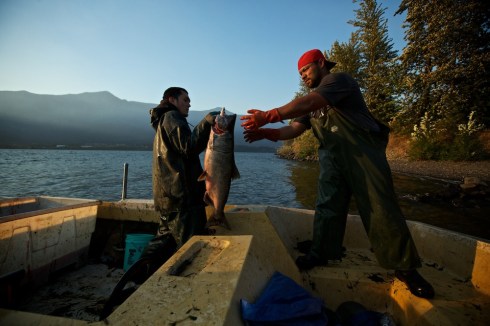
TB: I shoot outside of work quite a bit. I take as much commercial and editorial freelance as I can, shoot a few weddings here and there, and pick away at my personal projects.
PP: Do you have time to follow the news, blogs, discussions online, or are you too busy being a producer and filing stories?
TB: I wouldn’t say I’m too busy because I somehow find the time…but I don’t follow all that stuff as much as I used to. I probably spend as much time online reading about motorcycles and home remodeling as I spend reading about photography. I also write for a blog called ApertureExpert.com.
PP: Does a lot of the gas-bagging (I’m being self-referential there) online affect the daily life and work of photojournalists? If so, how?
TB: Good question. I suppose photojournalists are influenced by influential work. We see a trend and try to emulate that or be inspired by it to some degree. I’m probably more influenced and more interested in talk about the photography business than actual shooting. As far as my daily work, I’ve become pretty good at sticking to my approach and not preconceiving a situation. It took me a long time to get to that point. When I first started I was all over the map stylistically and how I approached a story. I’m much more methodical and disciplined now, but I do still like to try new things and experiment.
PP: How do you define a successful day/shoot/assignment/image? What brings the smiles at the end of a day?
TB: The only thing that makes me happy at the end of the day is walking away with a photo I like. And, that is a rare thing. Starting out I was more into the experience of making the photo. The results were not as important to me, probably because I couldn’t differentiate between an above average image and a great one.
Don’t get me wrong, I enjoy great experiences on assignment and that happens all the time, but making a great image is where it’s at. I will forget all the suffering I experienced, if I end up with something worth looking at.
I really love the rare times when I’m in the creative zone and everything falls into place. I have an idea, the circumstances are ideal, and I get lucky. The thing about photojournalism is, you never really know if what you are doing will work until it’s too late to do anything about it. It’s all about anticipating what will happen instead executing a plan. If what you are striving to create is spontaneous, real and in the moment, there’s a huge amount of luck involved. It’s all about putting your self in a situation to that favors luck. I’d compare it to hitting a home run or a hole in one. The more you do it, the luckier you get.

PP: Are photo editors important?
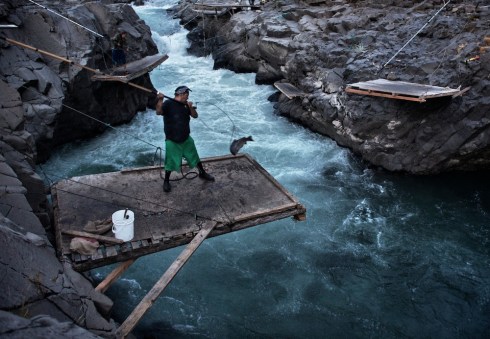
TB: Good photo editors are important in that they can take great work and make it better. Mediocre photo editors get in the way of good work.
I rarely sit with an editor and have them go through my work. I mostly work remotely. I’ll send in my top picks and they take it from there.
I seek out advice on projects, but I believe photo editing is as important and creative as shooting. For that reason, I like to do it myself. I like the idea that I have more authorship in the final product. We make online photo galleries for the web and that’s really what I’m shooting for these days.
PP: How do you characterize the photo scene in Portland?
TB: By my estimation, there are way too many of us. Worse yet, there are too many mediocre photographers that manage to get work by under-cutting better ones. I suspect they won’t last much longer than their trust fund, but that can’t be too soon. That sounds harsh, but I’ve stood in the rental line at Pro Photo and watched a Craigslist wedding photographer rent $400 worth of gear to shoot a $800 wedding. That’s happening in all sectors of photography on different scales.
On the other end of the spectrum, there are some great, highly accomplished Portland photographers that deserve everything they get. Dan Root, Lars Topelmann, Steve Bloch, Sol Neelman, Chris Hornbecker, Bruce Ely, Jamie Francis, Brian Lee, Leah Nash, Chris Onstott, Thomas Patterson, Jonathan Ferrey, Ray Gordon, Anthony Georgis, Craig Mitchelldyer, Andy Batt, and many more that inspire me with solid, professional work.
PP: What lies in the future for you?
TB: If I could have my way, I’d retire at The Oregonian doing what I’m doing now. I’m a newspaper shooter and have been since I started stringing for the AP and The Oregonian while I was still in college at Portland State in the late eighties. I’m a home grown Oregonian and I don’t want to live anywhere else. I’m hardwired to shoot newspaper assignments and I love it.
The future probably won’t turn out the way I want. If it doesn’t, I see myself launching a successful freelance career, starting a business and riding motorcycles.
PP: Anything else you like to add?
TB: For the first time in my career, I’m worried for the future of the photography business. There are just so many forces out there driving down the value of photography and there doesn’t seem to be a bottom. At the same time, there are so many people wanting to do it and schools are cranking out more and more photographers. I’ve always believed that with desire, hard work, a bit of talent, and a little help, a person could make a go of it. I’m not so sure anymore. I wouldn’t advise anyone to do it now.
The internet has created a huge demand for photography, but it hasn’t translated into more work and money for photographers.
The challenge is to avoid thinking about all the negative stuff, and keeping my level of creative energy up. At the end of day, I’m really grateful that I’ve been able to do it this long.
PP: Thanks Thomas.
TB: Thank you, Pete.

– – – – – – – – – – – – – – – – – – – – – – – – – – – – – – – – – – – – –
All images: Thomas Boyd.
– – – – – – – – – – – – – – – – – – – – – – – – – – – – – – – – – – – – –
Eye On PDX is an ongoing series of profiles of photographers based in Portland, Oregon. See past Eye On PDX profiles here and here.

© Mark Murrmann, from the series, Invitation To A Hanging.
Two very potent articles published in Guernica Magazine have impressed recently.
First up, Ann Neumann details the heavy-handed force-feeding procedures by prison staff in response to the longest ongoing hunger strike in America.
The Longest Hunger Strike: American courts recognize rights to refuse life-saving treatment. So why won’t the State of Connecticut let William Coleman die?
“Staff turned off the video camera typically used to record medical procedures. They strapped Coleman down at “four points” with seatbelt-like “therapeutic” restraints. Edward Blanchette, the internist and prison medical director at the time, pushed a thick, flexible tube up Coleman’s right nostril. Rubber scraped against cartilage and bone and drew blood. Coleman howled. As the tube snaked into his throat, it kinked, bringing the force of insertion onto the sharp edges of the bent tube. They thought he was resisting so they secured a wide mesh strap over his shoulders to keep him from moving. A nurse held his head. Blanchette finally realized that the tube had kinked and pulled it back out. He pushed a second tube up Coleman’s nose, down his throat, and into his stomach. Blanchette filled the tube with vanilla Ensure. Coleman’s nose bled. He gagged constantly against the tube. He puked. As they led him back to his cell, the cuffs of Coleman’s gray sweatshirt were soaked with snot, saliva, vomit, and blood.”
““I have been tortured,” he would say later. And it was enough to make Coleman start drinking fluids again. For a while. When he stopped a few months later, the prison force-fed him again, and twelve more times over the next two years. By last year they could no longer use Coleman’s right nostril. A broken nose in his youth and repeated insertion of the tube have made it too sensitive.”
– – – – – – – – – – – – –
Secondly, S.J. Culver writes about his discomfort visiting Alcatraz, discussing the problems that plague all sites of dark tourism.
Escape to Alcatraz: Notes on prison tourism.
“Alcatraz Island, understandably, does not bill itself as a place to spend twenty-eight dollars to get really depressed about a country’s piss-poor priorities regarding human rights. […] I begin to think that, if the point of an authentic tourism experience (if such a thing exists) is to understand another condition closely, the Alcatraz cellhouse tour fails. The punishing repetitiveness of incarceration is utterly absent in the carefully paced rise and fall of the yarns on the recorded tour. Worse, there’s no mention of how the Alcatraz cellblock, with its dioramas meticulously re-creating midcentury prison life, might resemble or not resemble a contemporary working U.S. prison. Plenty of the visitors around me seem to think they are witnessing “real” incarceration. I sense my initial impression had more truth than I realized; what we’re taking in is closer to a film set than to county lockup.”
The gulf between the realities of prison life and museum prison narratives are sometimes more pronounced than the differences between the realities of prison life and photographs of prisons in the media.
– – – – – – – – – – – – – – – – – – – – – – – – – – – – –
While we’re on the topic of prison museums, a mention of Mark Murrmann‘s photographs of Invitation To A Hanging is long overdue. You might know Murrmann as the kick-ass photographer of punk. He is also the very kind and engaged photo editor at Mother Jones.
‘Prison museums?’ I hear you say. There’s more than you think.
Prison museums and dark tourism on Prison Photography
19th Century Museum Prison Ships
Roger Cremers: Auschwitz Tourist Photography
Daniel and Geo Fuchs’ STASI – Secret Rooms
Steve Davis visits the Old Montana Prison
Hohenschönhausen, Berlin: Stasi Prison Polaroids
Philipp Lohöfener at the Stasi Prison Museum, Berlin
San Pedro Prison, Bolivia: As the Tourists, Dollars and Snapshots End the Riots Begin
– – – – – – – – – – – – – – – – – – – – – – – – – – – – –
Thanks to Bob for the tip.
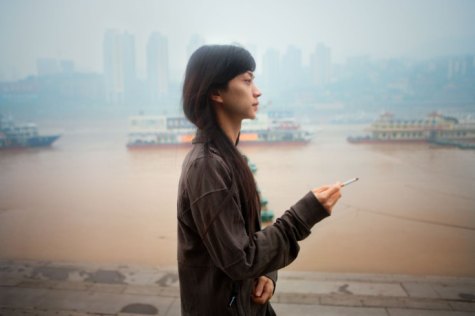
A couple of months ago, I was contacted by the Magnum Foundation (MF) and asked to nominate six photographers who were pursuing projects of social importance. The MF was readying itself to disperse the 2013 Emergency Fund grants.
Today, in conjunction with TIME LightBox, the Magnum Foundation announced the 10 chosen photographers and their bodies of work:
Adam Nadel, Getting the Water Right
Alex Welsh, Home of the Brave
Giulio Piscitelli, From There to Here
Jehad Nga, Unmasking the Unthinkable
Mari Bastashevski, State Business
Olga Kravets, Radicalization
Rafal Milach, The Winners
Tanya Habjouqa, Occupied Pleasures
Philippe Dudouit, The Dynamics of Dust
Tomoko Kikuchi, The River
Two of my nominations won support. That’s a one-in-three strike rate; better than the current form of Blazers’ guard Wesley Matthews.
Nominations by myself and 14 others resulted in a pool of 100 photographers. From that 100, a three-person editorial committee – Philip Gourevitch, contributing writer for the New Yorker and former editor of Paris Review; Marc Kusnetz, former Senior Producer of NBC news and Consultant for Human Rights First; and Bob Dannin, former Editorial Director of Magnum Photos, and professor of history at Suffolk University – chose 10 projects.
10 grants have been dispersed. Regional photographers who live and work near their homes each received between $4,000 and $7,000, while the photographers working internationally secured grants between $7,500 and $12,000.
“The EF 2013 grantees are a group of talented photographers, working internationally and within their home regions. All of the projects anticipate emerging issues that are underreported and show great promise to reveal new perspectives through a range of visual styles and approaches. […] The selected projects address a range of pressing issues including human impact on one of the world’s most delicate ecosystems, systemic roots of violence in vulnerable communities, investigation of human rights abuses, and post-arab spring immigration flows,” says the Magnum Foundation.
Due to the sensitive nature of many of these projects, MF is being careful about the amount of information it shares publicly about the projects’ details and geography. We’ll just have to follow the photographers’ output closely.
Congratulations to all grantees.
See the work at TIME LightBox.
Above image: Tomoko Kikuchi, from the series The River.

Jessica Dimmock. Credit: Unknown
Think Outside The Cell, a NYC based advocacy group, and VII Photo Agency recently collaborated to make and distribute a media campaign to educate the public about the continued struggles for felons post-release. This conversation with Jessica Dimmock is the fourth of a five part series, ‘Ending The Stigma Of Incarceration.’
(Part One): Think Outside The Cell / VII Photo Partnership
(Part Two): A Conversation With Ron Haviv
(Part Three): A Conversation With Ed Kashi
Part Five): A Conversation with Ashley Gilbertson
– – – – – – – – – – – – – – – – – – – – – – – – – – – – – – – – – – – – – – – – – – – – – – – –
Prison Photography (PP): In the first two interviews of this series, I’ve spoken with Ed Kashi and Ron Haviv who followed Ronald Day. You collaborated with Ashey Gilbertson to tell the story of Mercedes Smith. Tell us a little about her.
Jessica Dimmock (JD): Mercedes spent 20 years in prison. She was 24-years-old when she was convicted. She has been out for only two years and she is in her late forties. Her energy is pretty amazing; if you met her you’d have no idea she’d spent so long in prison. She’s the perfect subject in that people ask, ‘what does a person who has been in prison look like?’ and she overturns the stereotypes.
She’s so warm. There’s a giddiness to her energy which, to me at least, indicates a lack of bitterness. Whether or not she’s guilty or innocent doesn’t matter. The reality is that she was in prison for 20 years and she is a lovely person to be around. Her relationship with her children is good. She is close with her granddaughter. They are a strong family for sure and it is good to see.
PP: Could Mercedes success not also have been problematic for you as a storyteller? It might be that you’d present a subject and the audience think, ‘Oh, well, people have no problem readjusting, there is no issue here.’
JD: I don’t wish her situation upon anyone, but in terms of her standing in for a large population in similar circumstances – people going through difficulties with housing, employment, family and reintegration – she is a good subject.
PP: What issues specifically is Mercedes dealing with?
JD: Housing. She currently lives with an aunt. She could stay with her mother – who is an amazing influence in her life – but because her mother’s building is where Mercedes was arrested Mercedes cannot live there. So, she has to stay elsewhere, which in her specific case, is probably more detrimental to her wellbeing and to her chances of reentering successfully.
Employment for her right now is good. That employment is not a problem for her but housing is, is in itself very interesting because you can see she is very high functioning with the type of work she does.
PP: Why were you attracted to the project?
JD: There has been a lot of stories and documentaries about prison – about the wrongfully accused and the exonerated – which are all important stories, but I don’t feel like I’ve seen many documentary treatments about the reintegration process.
In movies we often see an opening scene in which the prison gates open, the main character walks out and that’s the beginning of a character arc. It is a trajectory commonly used in fiction. I realized I didn’t know what the real life version of that was, or is.
PP: How did you approach it then?
JD: We wanted to spend some real time with Mercedes. To see how she reintegrates with her family; how she is with her kids, who are great, by the way; and what it is like for her in the workplace.
PP: What did Mercedes want to get out the project?
JD: Overall, she realizes there’s a lot of stigma attached to former prisoners. Now, she works with at-risk populations and with women who are currently incarcerated. She’s really involved in the church. She prays and that is a process tied very much into decision-making for her. She’s an open person. I don’t think she was overly moralistic about it – she was just thinking, ‘that sounds as if it would break down stigma, go ahead.’ We didn’t feel driven by any agenda of hers.
PP: During the project did you discover anything about how male and female populations function differently inside prison?
JD: Yes. There’s not the same amount of educational programs in women’s prisons.
I know a woman who had been imprisoned at Valhalla [Westchester County Jail], which has a very small female prison population of girls that have been, for example, convicted for shoplifting or prostitution. But because it is such a small prison there are no programs. This woman spent 10 months there and didn’t go outside once. It’s not the longest sentence, but could you spend 10 months indoors? I don’t want to do that.
Mercedes talked about how overall Bedford Hills was a pretty supportive environment in terms of the actual women; there wasn’t a lot of drama; there wasn’t a lot of fights; there wasn’t a lot of craziness; they all took good care of each other. That’s maybe the other side of the gender issue.
PP: The project is on reentry. Does Mercedes feel like she has adequate support?
JD: In some areas, yes, but in housing definitely not. She wants to have her own place – she’s a woman in her late 40s who has a job. It’s valid that she wants that and she’s finding it difficult.
She also doesn’t have credit. If you’ve spent twenty years of your adult life behind bars you’ve not been able to build up credit. It’s not that she has bad credit; she just doesn’t have a credit score. Compared to other adults her age, that is a significant disadvantage and that won’t change unless of some direct intervention. Even though it doesn’t seem like the most soul wrenching part of it – maybe the family reintegration stuff is more emotive – there is a reality that makes credit scores an issue.
PP: I am interested by the word ‘stigma’. How would Mercedes characterize her situation?
JD: One of the things Mercedes discussed was that she will always wear the label ‘felon’. She will always have this version of a scarlet letter. She doesn’t get to walk around free of that. It will interfere with job applications, housing applications, and so on.
The paradox for her and the thing that feels very unfair is that she served time and that’s supposed to be the punishment, so to find you’re still being punished for the one act you were told you served time for is a frustrating process. You want to feel like you’ve done the time. But the reality is, you have to go around and tell people all the time that you’re a person who served time. Mercedes’ frustration makes sense to me.
PP: Was it an emotional story to cover?
JD: Not emotional, more enjoyable and that is down to Mercedes’ personality. She was very forthcoming about all aspects of her life. Mercedes has a son who is currently incarcerated – that’s got to be really hard. A son, who several months after she came home – went into prison. As a parent it’s potentially shameful and difficult to discuss but she would totally talk about it. She had received a letter from her soon one night when we went over and she read it out loud to us. She didn’t say, ‘This is an aspect which should stay hidden’, but rather, ‘This is all of me and you can share it.’
PP: VII has done other partnerships in the past? Starved for Attention probably the biggest example. MSF is international. US Aid is national. Think Outside The Cell is a much smaller organization.
JD: If you dive into the VII archives you’d find similarly small or lesser known organizations in addition to big ones such as Human Rights Watch with whom Marcus Bleasdale works.
VII and other photographers are more and more linking up with NGOs. What is less common, and particular to our work with Think Outside The Cell, was that there were several of us doing it.
People are moving toward more collaborative efforts – a) because people are doing more video, and filming is not a solo project, and b) because there is an interest in watching how several people can work together, even on a single subject.
PP: You’re invested in constructing a narrative, dealing with an issue. My angle for the longest time has been political – I believe there are serious structural problems with the criminal justice system. Some times those arguments can be quite abstract. You’ve said Mercedes wasn’t bitter but how did she feel about the prison system in America?
JD: Mercedes is actively involved with programs that support people still inside and about to reenter. It’s about how she wants to lead her life. I think she thinks, ‘If I don’t get weighed down by my past and I continue to engage with it, I’m not in any denial but instead I am emotionally and psychologically moving forward with it.’
That’s the sense that I get; now that her sentence is over, it is a decision to have that time be over. Even though she struggles, her energies and emotions suggest she is not staying stuck in the past.
PP: What do you hope the VII/TOTC campaign might achieve?
JD: I always try to show things as they are. I really try to not say, ‘Look at how outrageous this is.’ My storytelling might come from a place of thinking there is a problem but I try not to show a story in that light.
If people see something that is authentic and they observe the real things that are happening then they will then come to their own conclusions. I don’t have to be moralistic in my telling of the story. And so what I most immediately hope is that people watch it – I want exposure – and but more than that, I want people to spend time in someones elses experience. I hope we convey it accurately so the audience says, ‘Okay, now you’ve just watched that. That’s what her life is like. That’s what her situation is like.’
PP: You’d be really satisfied if people identified the story with someone in their own lives – a friend, family member, or someone on who lives on their street?
JD: Yes, then they have a reference point and they get it. But, if you push people too much to feel bad for this or that person, it might not happen or translate much in their real life. I want the audience to understand the issue; I don’t want them to feel bad.
PP: You don’t want audiences to say of your subjects, ‘Oh, they are different, and I’ve always thought that.”
JD: Right.
PP: Outside of you as a story teller, and instead you as Jessica Dimmock, do you feel the criminal justice system works?
JD: Definitely not. I am a political person but this project on stigma is not overtly political; it comes from my curiosity about correctional facilities. What it is that correctional facilities do to prepare people to come back to society and not fail? What do they do to make sure that after serving time prisoners are better equipped to come out and not repeat their actions? The locking people up part is happening, but the reentry part is not.
All you must do is look at the statistics in populations that the criminal justice system is directly effecting. How many people on the street have gone through a correctional process? Those figures start to go off the charts. If it’s really failing – and looking at the numbers – it is, then we have a massive problem.
PP: Any thoughts on the intersections between prisons and photography?
JD: There is an organization that takes requests from prisoners in solitary confinement …
PP: Yes, the Tamms Year Ten Project organised by activists based in Chicago. They accept photo descriptions and requests from prisoners in Tamms Supermax Prison in the south of Illinois. Fascinating and unique project.
JD: Some of those requests are so sweet. No one at the Tamms Year Ten Project is saying how you should feel about people on death row. All I did was see these requests and it changed everything. “I would like a picture of a horse galloping in the sunset” – words so sweet and that I could never make up. “I want a picture of a woman and I’m on my knee holding a rose for her.” It’s what every woman would want. Sweet and romantic, which was very surprising. If I’ve ever read paragraphs that break down stereotypes, then those requests are them.
PP: Jess, thanks.
JD: Thank you.
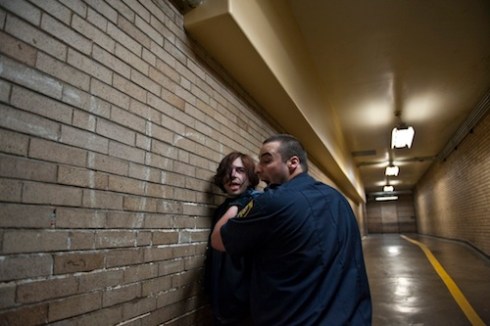
A Corrections Officer forcibly restrains an unruly prisoner who was screaming and claiming abuse by the officer, Cook County Jail, Chicago, Illinois. April, 2011.
CONTEXT
In April 2011, Peter van Agtmael was assigned by Newsweek to photograph Tom Dart, the Sheriff of Cook County, Chicago, Illinois. The coverage involved one day’s access to Cook County Jail and day of access to the ride-alongs with the PD. With a daily average of 11,000 inmates, Cook County Jail is the largest facility of detention in the U.S.
During his time in the jail, van Agtmael witnessed an altercation and heard allegations of abuse.
“The possibility of one more day of access to the jail was floated, but then didn’t come through.”
It is uncertain as to whether van Agtmael’s photographs of the contact between prisoner and deputy affected the decision to cancel the next day’s proposed visit. Van Agtmael isn’t even sure if it was Newsweek or the Sheriff’s department’s decision to cancel.
Newsweek consequently killed the story.
“I don’t know why the story was killed,” says van Agtmael. “No reason was given. Tony Dokoupil, the reporter, briefly referenced the trip in a May 29, 2011 article, Mad As Hell.”
Van Agtmael explains the background to the story, “Dart had became notorious in 2008 for halting evictions tied to foreclosure. He became something of a populist hero, and a deal made with the courts gave homeowners and tenants more leeway to contest their evictions.”
TESTIMONY
Van Agtmael recounts, “Sheriff Dart was giving Tony Dokoupil and I a tour of the jail system, and I heard screams and dull thuds coming from down a corridor. I ran towards the sounds and began photographing a cop pushing the young man against a wall. I began photographing the scene. The young man was screaming that the officer had been beating him, and the officer was yelling at me to stop photographing as he pushed the man further down the hallway. I followed and continued to photograph.”
[Continues below …]
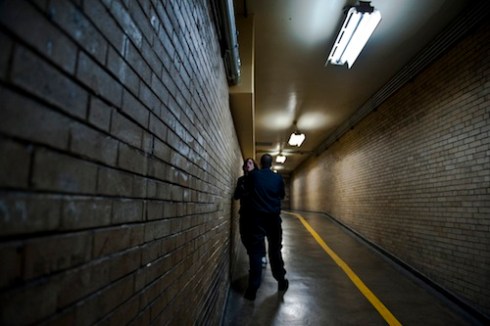
A Corrections Officer forcibly restrains an unruly prisoner who was screaming and claiming abuse by the officer.
“The officer kept yelling at me to stop, and seemed to be trying to simultaneously restrain me as well as the man, but I kept out of arm’s length and explained that I was a guest of Sheriff Dart and had been promised open access to the jail. A moment later, Dart appeared and upon his arrival the situation calmed considerably. He asked the man to explain what had happened to him, wrote a few things down, and then the police officer pushed the young man into an elevator.
[Continues below …]

“A few minutes later we came across the bald man who asked me to take his picture and whispered to me that the cops had punched him repeatedly in the face, resulting in the bruising in the portrait. I had no way of independently verifying the statement,” says van Agtmael.
[Continues below …]

A Corrections Officer leads a prisoner – who had tried to escape – to a holding cell. The man was cut and bruised and claimed he had been beaten by officers after he tried to escape.
“Honestly, it’s very hard for me to make an informed commentary based on a day spent in the jail system. I saw a lot of desperation, and heard stories of alleged abuse, but the context and time limitations would compromise any superficial interpretation. I’ll let the pictures represent my experiences,” van Agtmael concludes.
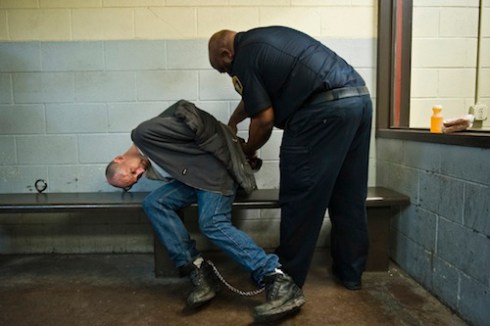
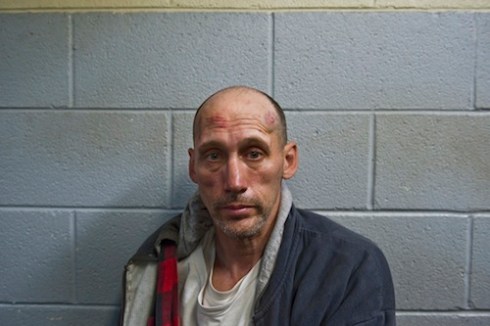
Inmate of Cook County Jail who is cut and bruised. He claimed he had been beaten by officers after he tried to escape.
THOUGHTS
This ambiguous series of photographs goes right to the heart of the efforts I make on Prison Photography to decipher prisons and jails, which for the most part are invisible worlds. Immediately, their meaning and interpretations are up for discussion; they are contested.
Maybe, Newsweek wanted a fuller picture of the Cook County Jail system? Maybe, the relevance of the planned story passed? For me, the fact the story was killed is a sad turn of events.
Getting involved in meta-analysis of journalism can be dangerous but in van Agtmael’s photographs are the kernels of a larger story. It’s not that the stories of these two inmates and these two correctional officers were not told, it is that no story at all was told.
But, let’s not be churlish; this blog post is not an exposé. Van Agtmael’s images are not an illumination of a definable event because the details cannot be verified. They are, however, a depressing suggestion of the fraught and intense-contact situations that play out in prisons and jails across the U.S. every day.
I am not amplifying the inmates’ allegations; to do so would be baseless. I also don’t want to appear to be generally criticising correctional officers. I will however criticise politicians and a voting public that allows mammoth-sized prisons and jails to operate. The experience of prisoners and staff would be less frantic in smaller institutions, and in institutions designed to treat (as well as categorise) and not necessarily detain as their main task.
By publishing these photos my aim is to – again – call readers to think not only about the images they see but those they don’t see. Ultimately, I take van Agtmael’s tack, which is, to let the photographs speak for themselves.
– – – –
Here’s some other selects from van Agtmael’s visit to Cook County Jail:
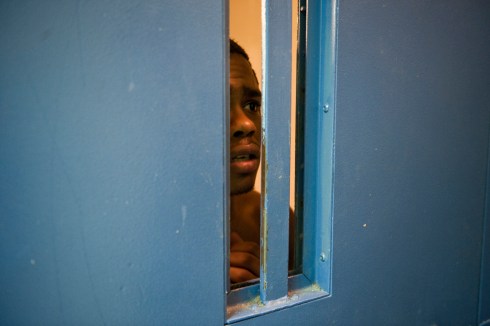
Anthony Smith, a prisoner in the Cook County Jail, Chicago, IL, complains to Sheriff Tom Dart about his treatment and sentence.

Sandwiches for prisoners in the Cook County jail system.

An employee of the Cook County jail system.

A deputy at the Cook County Jail.
PETER VAN AGTMAEL
Peter van Agtmael (b. 1981) graduated from Yale University in 2003 with a degree in History. Following graduation, he spent a year in China on the Charles P. Howland fellowship photographing the effects of the Three Gorges Dam. Since the beginning of 2006, he has documented the consequences of America’s Wars, at home and abroad. A monograph of the work, ‘2nd Tour Hope I Don’t Die’ was published in 2009. In 2008, he helped organize the exhibition and book Battlespace, a retrospective of unseen work from 22 photographers covering Iraq and Afghanistan. Peter is represented by Magnum Photos.
Peter van Agtmael has been awarded the ICP Infinity Award for Young Photographer (2011); PDN Photo Annual (2011); PDN 30 (2010); PDN Photo Annual (2010); American Photography Annual (2010); FOAM Talent (2009); Santa Fe Project Competition – Honorable Mention; Pulitzer Center Grant (2008); World Press Photo Joop Masterclass (2008).
– – – –
All images: Peter van Agtmael/Magnum Photos.
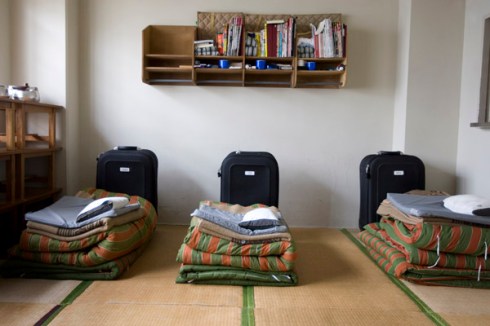
In a room shared by seven prisoners, the folded futon and bedding for three of them sits neatly beside black cases in which they can store their personal belongings during the day in Onomichi prison, Japan. Monday, May 19th, 2008.
– – – – – –
The over 60s are the fastest-growing group of criminals in Japan, which incarcerates its pensioners at a rate far higher than any other country in the industrialised world.
In my last post, I featured Tim Gruber’s photographs of aging prisoners in the U.S. As chance would have it, Jeremy Sutton-Hibbert contacted me about his 4 hour assignment in a Onomichi prison in Japan, designed specifically for the detention of the elderly. Sutton-Hibbert’s photographs are a good point of comparison with Gruber’s photographs of elderly U.S. prisoners.
Sutton-Hibbert’s photographs from Onomichi prison accompanied a thorough investigation of aging Japanese prisoners by Justin McCurry:
The number of Japanese aged 70 and over charged with crimes trebled between 2000 and 2006, from 9,478 to 28,892, according to the national police agency. In Japan, while the number of charges against juveniles increased by 2% from 2000-04, there was a 125% increase among over-70s.
The number of Japanese aged 60 and over grew by 17% between 2000 and 2006, the number of prisoners in the same age bracket soared by 87%.
Most are inside for crimes, that seemingly result from poverty. Again, McCurry:
Of the 46,637 people over 60 convicted in 2006, just over half were found guilty of shoplifting, followed by 23% who had committed petty theft.
Criminologists blame record levels of poverty among pensioners, the breakdown of the extended family, and a lack of professional help for those with depression and other mental illnesses. […] The best chance many [elderly former-prisoners] have of security, decent healthcare and three meals a day is another stint behind bars. […] According to a recent justice ministry study, almost two-thirds of Onomichi’s older inmates will walk back through its doors within five years of their release.
That’s a recidivism rate as bad as that in the U.S. the world’s most renowned broken prison system. We must bear in mind that the U.S. prison system, by population, is roughly 28 times the size of the Japanese (and UK) prison systems. McCurry:
At 80,000, the prison population of Japan is approximate to that of the UK. However, 12% of Japanese prisoners are at least 60, whereas 2.8% of prisoners in the UK are 60 and over.
Regardless of geography, aging prison populations bring about the same challenges, health problems and associated expense. In Japan, about 1,000 prisoners have difficulty walking, feeding themselves or doing prison work. That is surely a figure dwarfed in the states, which has 124,900 prisoners aged 55 or older.
THOUGHTS
Prisons are designed for punishment. The punishment is the deprivation of liberty. Prisons are also designed for a minority of prisoners to ensure public safety and remove violent people off the streets. When it comes to aged people, the first legal constant must remain, but in the case of the second – and when a prisoner is clearly old and infirm – is a prison always the right place for society to mete out it’s judgement? In the case of the UK, Edmund Clark’s photographs and Erwin James’ commentary might help us come to some conclusions.
– – – –

Ramps for elderly inmates to walk up, leading to the bathroom, instead of using stairs, in Onomichi prison , Japan. May 19th 2008.

Elderly prisoners (in white) preparing lunches for their fellow inmates, presided over by a prison guard, in Onomichi prison, Japan. Monday, May 19th, 2008.

Many of the elderly prisoners suffer from high blood pressure and diabetes, with 70-80% of them receiving medication.

Following a roll call of names, elderly prisoners (and one pushing a stroller chair for stability) make their way to a room for their lunch, in Onomichi prison, Japan.

Elderly prisoners playing Japanese board game ‘shogi’, during recreational time in an indoor recreational room, whilst two fellow inmates use the exercise bikes, in Onomichi prison, Japan. Monday, May 19th 2008.

Elderly prisoner exercising on a rowing machine in an indoor recreational room, watched over by guards, in Onomichi prison, Japan. Monday, May 19th 2008.
– – – –
All images: Jeremy Sutton Hibbert
– – – –
JEREMY SUTTON-HIBBERT
Jeremy Sutton-Hibbert‘s work has appeared in magazines such as Time, National Geographic, Italian Geo, Le Figaro, The Guardian, The Sunday Times, and many others. For the past decade, Sutton-Hibbert has been one of the principle photographers for Greenpeace International. His work has taken him to over 40 countries, as far flung as Antarctica and Outer Mongolia. Sutton-Hibbert’s photography has been widely published and exhibited in Europe and USA. For 9 years, Sutton-Hibbert was based in Tokyo, Japan and recently returned to his native Scotland to live and work.

Police stop teenagers for ID and when one can’t produce it he is put in a police van and driven away. The other has to call his mother who didn’t answer. The police were about to haul him away when his brother showed up and presented ID. © Nina Berman
STOP AND FRISK
The controversial Stop & Frisk procedures of the New York Police Department (NYPD) have been enacted for decades, but due to a phenomenal rise in figures over the past decade, the issue has recently become a hot news topic.
Civil rights advocates point out that Stop & Frisks are disproportionately experienced by minorities. The New York Civil Liberties Union (NYCLU) published a report: NYPD Stop-and-Frisk Activity in 2011/2012.
In 2002, the NYPD made 97,296 stops. In 2011, there were 685,724 stops. Not all stops result in frisks. Of the 381,704 frisks, 330,638 (89.2%) were of blacks and Latinos. By contrast, only 27,341 frisks (7.4%) were of whites.
The NYCLU reports:
“Young Black and Latino men were the targets of a hugely disproportionate number of stops. Though they account for only 4.7% of the city, black and Latino males between the ages of 14 and 24 accounted for 41.6% of stops in 2011.” …
“The number of stops of young black men exceeded the entire city population of young black men (168,126 as compared to 158,406). Ninety percent of young black and Latino men stopped were innocent.” …
“The 2011 data are striking in what they reveal about the large percentages of blacks and Latinos being stopped in precincts that have substantial percentages of white residents. For instance, the population of the 17th Precinct, which covers the East Side of Manhattan, has the lowest percentage of black and Latino residents in the city at 7.8%, yet 71.4% of those stopped in the precinct were black or Latino.“
In total, during the 10 years of the Bloomberg administration, there have been over 4,000,000 stops in New York city. The 524,873 extra stops in 2011 (as compared to 2002) recovered only 176 more guns.
In 2011, of the 381,704 frisks, 330,638 (89.2%) were of blacks and Latinos. By contrast, only 27,341 frisks (7.4%) were of whites.
Blacks and Latinos were more likely to be frisked and, among those frisked, are far less likely to be found with a weapon.
The New York Times reported last month that the NYPD has abused Stop & Frisk policies in recent years but others say the NYPD has – with officers’ routine street stops of minorities – been abusing its powers for decades.
Battle lines have been drawn. In May, NYCLU filed a lawsuit“challenging the NYPD’s unlawful practice of detaining, questioning and searching innocent New Yorkers – particularly blacks, Latinos and other non-whites.” In a counter attack, Mayor Bloomberg has called the NYCLU “dangerously wrong” and dismisses them as “no better than the NRA” for opposing the Stop & Frisk.
The Guardian just published data visualisation of NYC Stop & Frisk.
PHOTOGRAPHER’S INTEREST PIQUED
New York-based photographer Nina Berman has recently taken on the challenge of photographing this sprawling, all-encompassing issue. In the early stages of the project, she has published her forays in a couple (one and two) blog posts.
I realise this is a long conversation (possibly the longest I’ve ever published on Prison Photography) but it’s an important topic emerging in the popular consciousness right now.
Nina and I discuss how to make images of police activities and civil disobedience; talk about Nina’s motivations; pay attention to individual and group activists; and consider why attitudes about Stop & Frisk vary so wildly in the context of such controversial and stark statistics.
CONVERSATION
Why has this become a big issue recently?
Stop & Frisk has been a big issue for a long time in New York’s communities of colour. If you live in predominantly white community in New York you wouldn’t notice it because most white people are not stopped and frisked.
I think it’s a noticeable issue now because the numbers have got so high. There’s been some lawsuits and activist agitation so it has become more talked about. We’ve also seen connections made with other police aggressiveness and killings of unarmed black and brown men.
Is this just in NYC or is this indicative of issues at a national level?
It’s a national issue. A legal aid attorney, who lives in D.C., told me some months ago, that it was her feeling that it was worse in D.C. There is just a super-intense activist community here in New York who have just made it a central issue. And then there’s been lawsuits by the NYCLU and that has helped propel it into news reports. But I’ve been following it since November 2011 – at that time there was very little conversation about it. Now, it’s in the national press nearly every day.
How did it fall on to your radar?
I heard about it two years ago, either through a NYCLU or a Center for Constitutional Rights listserv. I read about lawsuits that have been put in against the NYPD. I thought that’s a huge number [of police stops]; what’s that all about?
Later, I saw a couple Stop & Frisks happen in the Bronx and it was just shocking. I started to follow some activists, who are just so dedicated; they are doing stuff everyday. The more I learned about it, the more I saw the connection between Stop & Frisks and what people are now calling the New Jim Crow; it’s not just the physical violation and potential humiliation of being stopped and searched but all the disenfranchisement that come as a result of that. That aspect has been missing in a lot of the news reports.
For instance, you may be stopped and the police officer may ask you for ID, and you may not have ID. As far as I know, there’s no ID law in New York city, but they may say, “You’re trespassing here,” and then you get a trespassing summons, or if you talk back to the officer, and ask ‘”Why are you stopping me?” you could get a disorderly conduct ticket and summons to court.
These are the kind of things that pile up. I’d like to see compiled statistics in New York city on how many disorderly conduct summons are given out, to whom they are given, and where they are given.
You said that you had witnessed a couple of Stop & Frisks?
I was in the Bronx on another project and I didn’t have my camera out. I saw a man riding a bicycle and a cop stopped him in the middle of the street. He stayed on his bicycle and he just immediately put his arms out in the air, like he knew precisely what position to assume. That’s a whole other thing that interests me; how body language for some people according to their race is a normalized gesture. For white people gestures [associated with Stop & Frisk] would be abnormal gestures.
Last summer, I saw a guy – he looked like he was 17 or 18 years old – in the Bronx and two plain-clothed cops came out and pushed him against a wall and stripped him of everything. It was intense.

What are the figures for stop and searches over the years?
Up to 700,000 in 2011. How many of those stops are also searches is unclear. Each year since 2002, stops have gone steadily up. If you calculate it for 2011, it is more than one a minute!* It is beyond comprehension.
What are the attitudes of the people in these communities who are effected?
There’s one guy in East Harlem I’ve come to know rather well. He’s been stopped and frisked his whole life and has never thought anything of it. One day, he saw his stepson stopped and searched. A light went off in his head; “What is going on here?” In another instance, his stepson was stopped and he was able to record the audio of the stop and the stuff the cops were saying was so abusive. After that, the father decided to get involved in civil disobedience and he’s out there every day involved in jail support, court support and rallying at precincts too. Many of the activists have been arrested.
Where have you been making photographs?
Outside precincts mostly; in Harlem, the Bronx, and Police Plaza downtown. Also, courthouses; mainly the Bronx criminal courthouse, the Manhattan criminal court house.
In the midst of the project, there was a police killing of a young man named Ramarley Graham. So the Stop & Frisk opposition got connected to issues around unwarranted police killings. They see it as part of the same racial profiling issue.
And the impact?
The impact has only been because of enormous amount of pressure – it’s kind of astonishing that you can have an impact at the grassroots level. Walking while Black [is the issue.] Jumaane Williams, a city councilman has stepped up and said, “I got stop and frisked, and I’m a councilman.”
The protestors I have met want an entire new style of policing; the police are not being seen as protectors, but as aggressors. Also, as part of some system – through these stops, this harassment, these summons, these stops – it just keeps people down.
If you speak to some of the parents, their concern is, “Okay, so my kid gets stopped 5 or 6 times for some bullshit thing and let’s see what happens when you seek college loan money. That’s the real fear. One of the fears. I guess the real fear is that a cop might kill your son. If he moves his hand the wrong way or something.
The Department of Justice (DOJ) is just beginning inquiries. The NYPD is not really backing down. As of a month or so ago, Mayor Bloomberg and NYPD Commissioner Ray Kelly were saying ‘This is terrific.’
Michelle Alexander’s characterization of this documenting and disciplining on the streets as well as in the prisons as “The New Jim Crow.” It seems these rapidly rising figures of Stop & Frisk support her arguments. That this racial profiling begins on the street makes the larger, national issue even more terrifying and pernicious. A lot of the time people think it is locked facilities that control populations so vigorously, but here’s evidence that racism begins in free society. Would you agree?
One of my first experiences was photographing some boys who were walking back from the gym in the Bronx. They were stopped, taken to the precinct and their mothers were called. They came to the precinct and the mothers started getting upset. The police wouldn’t let the mothers see them. One of the boys was charged with disorderly conduct because he talked back to the cops and one the mothers said. “That’s it, I sending my kid to the South. I have to protect him from the NYPD.” I learned that there’s this whole reverse migration that goes on when a boy hits his teenage years. Families in New York – and this is not the fist time I’ve heard this – want to send their boys back south to live with relative and to protect them from the NYPD! That blew my mind.
Why has the NYPD taken on this policy which is clearly flawed but also a public relations disaster?
Well, so far it hasn’t been a public relations disaster; not until this year. What kicked it off was a very visible civil disobedience action by Professor Cornell West and a bunch of other in front of the Harlem police precinct. That was the first step. Why the NYPD is doing it? I don’t know if it a money maker which would be an interesting things to find out. All these summonses carry fines.
I personally think New York city has too many cops; it is the most heavily policed city in North America. There’s 40,000 cops so they have to do something. The other factor – and this is what people say on the streets – they are too afraid to go after real gangsters so they hit up these people that are doing nothing, so they can show they are meeting quotas.

Law enforcement says there’s some good in the policy – that gang-bangers don’t bring guns on to the street, because they’re afraid of being stopped; so it is kind of a *preventative* policy.
But statistics (see graph above) don’t really support that argument.
Plus, it’s clogged up the entire court system, the holding cells. Say you’re stopped at 3pm and given a disorderly conduct summons, you may not get to the precinct till 10 o’clock at night … and then they might send you to central booking. Can you imagine what that’d do to a kid, or to anyone? If you’re on a job that says, ‘If you don’t show up you get fired [you loose your job].’ These are real stories; they are not just hypotheticals.
This is what Michelle Alexander would refer to as your way into the system.
What usually happens during a Stop & Frisk?
Legally, if a police officer stops you, you don’t have to say a word. There’s all sorts of “know your rights” trainings all over the city now. And there’s CopWatch groups. Neighborhood people are going out in teams in the community and just watching them.
What you’re supposed to do is ask, “Officer, am I under arrest?” and if the officer says no, you’re supposed to walk away. Does it usually happen like that? No. You’re scared when someone comes up to you. You say something. Each Stop & Frisk handles very differently.
If you refuse to answer questions that might cause problems.
They may throw some charge. They could say you’re obstructing justice. They’re supposed to stop you if they suspect you of something. They’re only supposes to frisk you if they suspect you are carrying a weapon.
I think this policy is going to change. I think there has been a tremendous amount of change. I don’t know what they will then do with all these police officers!?
It used to be when a municipality had budget troubles they’d think about dropping the number of cops. They don’t think that any more. It’s an untouchable.
If they pulled this stuff on 57th Street, Park Avenue or Madison Avenue, can you imagine what would happen? Could you imagine someone walking out of Barney’s New York and the NYPD stopping and frisking the person?
The NYPD does it in neighborhoods where people aren’t going to say anything.
What the most egregious case you’ve learnt about?
In my video, a young man speaks. He’s in his twenties. What was he pulled in for? He was in the subway with his girlfriend going downtown. and his girlfriends sister swiped him through on the subway. He was busted for soliciting. They claimed he asked someone to swipe him through. Well, it’s not illegal to swipe someone through. He spent a whole day in the system because of that. You see some subway stations heavy with police officers. Why? Because they have so much crime? I don’t think so.
Tell us about the groups you’ve been working with and following.
There’s a fluid group of people whop aren’t connected through any specific structure. They find each other at events. Or, someone has a problem and knows one person and they reach out to the group. The group I’ve been following is called Stop Stop & Frisk and it is a mix of Black, Hispanic and White people from Bronx, Manhattan, Brooklyn. They plan to go Staten Island, where there’s lots of problems as well.
Opponents are a mix of working class and middle class, some social workers, legal aid workers, some students and some activists. Wherever there’s some action happening they’ll try to show up and show support. There was recently an action at Lehman High School in the Bronx. Kids were being harassed; it’s a very liquid surge of people who are interested. Go to any neighborhood that is predominantly Black or Hispanic and you’ll find people working on this issue.
The NYCLU has been on the forefront of the opposition?
Yes, and there’s been different organizations that have coalesced. There’s the Police Reform Organizing Project (PROP). There is not one central group and that’s what it so amazing about it. People are waking up at the same time and saying, ‘Hey our neighborhood doesn’t have to be like this.’
How do you plan to pursue the story visually? It’s difficult, no?
I can certainly stake out more Stop & Frisks, and I’d like to do that. There’s also newly emerging surveillance infrastructure. The NYPD will roll these watch-towers into neighborhoods and watch certain places. I’d like to find a way to photograph this landscape that is constantly surveyed. You just have to figure out where these things are because they are moving all the time. And then I’m quite drawn to the mothers – the mothers who feel like they are going to lose their sons.
What do you think about this Pete?
Often material that gets to the heart of the matter is not the photography done by the well-meaning documentary photographers, but the images captured by the surveillance or official cameras. Look at the photos in the appendix of the Supreme Court ruling on the Plata vs. Brown case. The ruling established that overcrowding in California prisons led to preventable deaths, and therefore the conditions of detention for approximately 160,000 inmates was – is – cruel and unusual. Those photos were all taken by the California Department of Corrections itself.
Consider the Collateral Damage wikileaks video; it was US Army footage. The Abu Ghraib images were not taken by a journalist. Many of the photos that are central to expose are taken by those on the inside. It’s very difficult for an outsider to get that sort of access necessary.
So, I am interested in these movable NYPD watch towers. I never knew they existed.
They used them during Occupy. What Happened When I Tried to Get Some Answers About the Creepy NYPD Watchtower Monitoring OWS was a great story by Nick Turse about his encounters with the cops manning the occupy towers. Pete, you’re talking about the Prison Industrial Complex, and there’s is the Military Industrial Complex … well, this is the Homeland Security Industrial Complex. There’s money for new toys and they have to use it. They train police forces on them and they pull them out in every situation.
BUT if you’re in a residential neighborhood and you see one of these watchtowers for a few days, you wonder who’s doing the watching? Am I being watched? Maybe the person behind me is threatening? Is that what’s happening? Or am I being violated? Photographically, it’s not that easy to figure out how to cover these issues, but it’s not impossible. I think you just have to be clever; push yourself further. I feel pretty proud of myself for making the start I have, because you don’t see one photographer touching these things. I’m not patting myself on the back about this but I like the idea of engaging with these communities and the city I live in. I feel that’s important.
A couple of years ago, Fred Ritchin encouraged me to move away from purely historical survey of photography in prisons and think about how the strategies and apparatus of discipline and management developed in prisons have been implemented across free society – corporate parks, high-rise surveillance, riot and protest policing.
Your work from Homeland was subtle in how it connected Americans with the hardware for war and surveillance.
I’ve though of just parking myself in front of central booking in Bronx, in front of the courthouse. I was there for a while the other day when a cop was indicted for the killing of a young boy and I saw kid after kid being walked i n there in handcuffs. I foe want to actually photograph those numbers – and maybe you do that; it takes a day, a week, month – how many pictures can I actually make of Black kids in handcuffs? I’d make thousands.
The challenge is that so much of this you can’t see; you’re prevented from seeing. There is a former prosecutor who has become a big opponent of Stop & Frisk. He says the conditions inside the Manhattan holding cells are worse than anything he’s ever seen in his life, and that they’re designed to make you feel like an animal intentionally.
Criticism of holding cells doesn’t surprise. City jails have a more transient population. There’s a general rule of thumb that the shorter the amount of time someone stays in a cell, the less care they’ll take care of it.
Wouldn’t it be amazing to get a look inside a booking cell. Lawyers don’t even see a booking cell. I’ve thought about getting myself arrested just so I could see it and experience it for myself.
Don’t do that, Nina.
No, I don’t think so. But, it has entered my mind more than once. You see the activists who are doing it more and more. They want to get arrested. They’re so caught up in it. They want the reminder of how fucked up things are.
You said earlier that the courts and booking stations were getting backlogged, possibly because of the civil disobedience also?
Yes, apparently. Frivolous charges are clogging the system. Bobby Constantino, a former [and disillusioned] prosecutor from Boston, writes The Crown blog. He moved to New York, got himself arrested in a civil disobedience action and wrote a whole description of his arrest and booking.
Why have you ventured into video?
I realized the stories people were saying were important and they’d be really hard to capture in just stills. And to give my audience a sense of the cat-and-mouse game played out on the streets. Standing in front of a precinct screaming at police officers? People don’t just do that. People have to get to some sense of rage just to do that.
It would be interesting to speak to the District Attorney (DA) that deals with those cases and see how many cases are brought forward and how many get dropped. Often a DA doesn’t want to waste time and resources on petty charges, especially if the courts are stretched.
The thing is, a cop’s quota is still met as long as he writes the ticket. It’s not based on whether or not it goes through the court. For the cop, he doesn’t care if the case is dropped or not and this is where the reporting needs to come in. The Times, Wall Street Journal, Reuters, Daily News; there needs to be a second level of reporting [from those outlets].
What is the infrastructure driving all of this? It’s not just Michael Bloomberg and Ray Kelly saying this is a crime fighting technique. What are the contradictions? If I was an investigative reporter, that’s what I’d be looking into.
Say you have a couple of disorderly conduct summons against you and you don’t show up to court, you’re going to have a warrant against you! Then you have a record … a real record. It’ll be interesting to see how many people come out for the daily marches. Everyday, more people sign on and it could end up being thousands and thousands of people.
Where do you feel you are at with your coverage of this issue?
I like the video I’ve made and I can certainly go more on it. But how do you photograph racial profiling? Or, furthermore the impulse to racial profile? If you look at some of these situations, in particular police killings – which I think of as the result of racial profiling – the cops are operating with one world view and the communities with another. They’re gulfs apart.
– – – – – –
*There are 525949 minutes in a year. Therefore, in 2011, the NYPD stopped someone every 45 seconds.
– – – – – –
NINA BERMAN
Nina Berman is a documentary photographer with a primary interest in the American political and social landscape. She is the author of two monographs Purple Hearts – Back from Iraq and Homeland, both examining war and militarism. Her work has been recognized with awards in art and journalism from the New York Foundation for the Arts, the World Press Photo Foundation, the Open Society Institute Documentary Fund and Hasselblad among others. She has participated in more than 70 solo and group exhibitions including the Whitney Museum of American Art 2010 Biennial, the Milano Triennale, 2010 and Dublin Contemporary 2011. Her work has been featured on CBS, CNN, PBS, ABC, BBC and reviewed in the New York Times, Aperture, Art in America, Afterimage, TIME, American Photo and Photoworks. She is a member of the NOOR photo collective and is an Associate Professor at the Columbia University Graduate School of Journalism. Berman lives in New York City.

Inmates line up for work early in the morning at Estrella jail. © Jim Lo Scalzo/EPA
Yesterday, the Guardian ran a gallery of Jim Lo Scalzo‘s photographs of a female chain-gang in Maricopa County (Phoenix), Arizona.
To people who are unfamiliar with the chain-gangs, established by the controversial Sheriff Joe Arpaio (the self-titled “Toughest Sheriff in America”), Lo Scalzo’s images may be a shock. Certainly, they are fascinating.
Unfortunately, this is not an example of a photographer gaining exclusive access to an invisible institution. To the contrary, inmates of the Maricopa County Jails are arguably the most frequently photographed prisoners in the United States. Approach Lo Scalzo’s work with caution.
Jon Lowenstein photographed the female chain-gangs in March, 2012 and Scott Houston photographed the all-female chain-gang when it was first established almost a decade ago.* These are only three photographers of hundreds who have visited Tent City, Estrella Jail and followed chain gangs out on to the streets.
The Guardian writes in it’s brief introduction, “Many women volunteer for the duty, looking to break the monotony of jail life.” That might be true, but it is also the message peddled by the Sheriff’s office and it also stops short of asking why these women have been ushered into the jail system. I should say at this point, these are women on short sentences locked for non-serious, probably non-violent offenses, likely drug use, prostitution, petty theft. If I may generalise, they are a nuisance more than they are a danger. They are victims as much as they are victimisers.
What must to do with Lo Scalzo’s photographs – and with others like his – is appreciate how they were made; more specifically we must appreciate the pantomime that is put on display for the public and put on for the photographer.
I have spoken to many photographers who have described how Arpaio directs a “media circus.” I have written before about his press-staged march of immigrant detainees through the streets of Phoenix. He dresses citizens serving time and non-citizens awaiting immigration hearings in the same pink underwear and striped jumpsuits.
Let’s not deny that Sheriff Arpaio is on message, dominates message and understands visual symbols and the power of the image probably as well, if not better, as any of us who make, discuss and revel in photography.
There is certainly a lot more to be teased out about Arpaio’s near 20 years in office and his media savvy, but now I’d like to turn our attentions away from photography and towards a socially-engaged art project of admirable sincerity and complexity which might teach us more about Maricopa County than photographs alone.
Throughout 2011, Assistant Professor of Multimedia Gregory Sale at Arizona State University (ASU), carried forth It’s Not All Black & White a program of talks, installation and interventions at the ASU Art Museum.
It’s Not All Black & White intended to give “voice to the multiple constituents who are involved with the corrections, incarceration and the criminal justice systems.” To establish a discussion around the highly contested issues in a divided community, Sale and his team had to rely upon the trust and input of museum curators, university faculty, students, sheriff’s deputies, incarcerated and formerly incarcerated people, family of the incarcerated and so on and so forth. It is quite remarkable that under the same banner, Sale was able to invite Angela Davis to talk and in another event invite Sheriff Arpaio to a discussion on aesthetics.

Round table discussion at ASU Museum. Joe Arpaio on the right.
Incarcerated men were brought onto university grounds to paint the stripes in the ASU museum, Skype dance workshops were done to connect incarcerated mothers and daughters; the museum space was repeatedly given over to engagement instead of objects.
At the fantastic Open Engagement Conference, I shared a panel with Gregory. He said that for so long Sheriff Arpaio had controlled how people think of stripes and think of criminality in their community.
Gregory said one thing that really stayed with me. He said that for a brief period while It’s Not All Black & White was in the museum and the programmes went on, he was able to wrestle that control away from Arpaio and open a discussion that focused not on the blacks and the whites, but on the grey areas. In those grey areas are hard decisions and hard emotions. But, also in those grey areas, are solutions to transgression in our society that might look to root causes and solutions that engender hope and spirit-building instead of humiliation and penalty.
When we look at Lo Scalzo, Lowenstein, Houston and the works of countless others from Maricopa County we need to bear in mind the stripes and the spectacle of the chain gang is deliberate. Are the photographs showing us only the black and white of the stripes or are the photographs introducing us to meditate on the grey areas? I suspect they do mostly the former.

 Prison Photography