
You are currently browsing the category archive for the ‘Words’ category.
PART TWO IN A SERIES OF POSTS DISCUSSING PHOTOGRAPHERS’ ACTIONS AND RESPONSES TO THE KILLING OF FABIENNE CHERISMA IN PORT-AU-PRINCE, HAITI ON THE 19TH JANUARY 2010.
Following up on last months post about Fabienne Cherisma’s murder, it is apt to note Natasha Elkington’s Reuters Photographers blog post.
Amidst a very serious opinion piece about the hardships of childhood in Haiti and Kenya, Elkington includes a comment from the photographer of the renowned image of Fabienne Cherisma.
I spoke to the Reuters photographer in Haiti, Carlos Garcia Rawlins, who took the pictures of Fabianne to find out who shot her and why. He had no answers. By the time he got there she was already dead. She could have been shot by the police or armed security guards hired to protect property, he said. Witnesses said they didn’t know if she was targeted or hit by a stray bullet when police fired into the air to disperse a hungry mob.
What Rawlins did say is that people around her continued looting and would only stop for a moment to look at her body. “I couldn’t believe the indifference of the people around her,” he said.
Which is a different response to that of Jan Grarup.
– – –
ALSO IN THE ‘PHOTOGRAPHING FABIENNE’ SERIES
Part One: Fabienne Cherisma (Initial inquiries, Jan Grarup, Olivier Laban Mattei)
Part Three: Furthermore on Fabienne Cherisma (Michael Mullady)
Part Four: Yet more on Fabienne Cherisma (Linsmier, Nathan Weber)
Part Five: Interview with Edward Linsmier
Part Six: Interview with Jan Grarup
Part Seven: Interview with Paul Hansen
Part Eight: Interview with Michael Winiarski
Part Nine: Interview with Nathan Weber
Part Ten: Interview with James Oatway
Part Eleven: Interview with Nick Kozak
Part Twelve: Two Months On (Winiarski/Hansen)
Reporter Rory Carroll Clarifies Some Details
Part Fourteen: Interview with Alon Skuy
Part Fifteen: Conclusions
While much recent debate has been about if bloggers, indie-writers and stopgap-journos can find ways to make money, Brian Ulrich asks if many of us actually deserve to:
“It’s become fairly commonplace for one to put together a website or blog. Ask several questions of an artist by email, spellcheck and publish them.”
and
“An interview is not a questionnaire and all too many of these interviews are distilled down to a manufactured series of questions where it may even be obvious that the person asking the questions hasn’t even looked to see if those questions were answered somewhere else before. ‘What got you interested in photography?’, ‘tell me some of the inspiration behind your current project _____’, etc…. I hasten to say it but we would not stand for that sort of journalism in the printed press why should we stand for it online?”
and
“I feel we have a responsibility as publishers and broadcasters of media today. If we’re going to do it, let’s make it right, give us something we can learn from.”
[Bolding mine.]
Andy Kershaw‘s view is a welcome counter to the presumptions of an unknown scenario I and others had considered:
“Most journalists were reporting breathlessly that Port-au-Prince’s main prison had collapsed. Good story. But not for the reasons we were told. The inexperience – and indeed arrogance – of every single reporter who drew our attention to the jail, missed the real significance of its destruction.
It was not that “violent criminals”, “murderers”, “gang bosses” “notorious killers” or “drug dealers” had “simply walked out the front gates”. (And just how did these escapees miraculously avoid being crushed to death in their cells?) Even if true, that was a minor detail to the people of Port-au-Prince, who had more urgent concerns.
The true significance of the prison’s implosion was that it represented for ordinary Haitians, like the wreckage of the presidential palace and the city’s former central army barracks, exquisite revenge upon the prime symbols of decades of state cruelty and oppression.
And many of the prison’s inmates were surely not the dangerous stereotypes of these lurid reports. Haiti’s jails were, notoriously, full of petty thieves and other unfortunates who shouldn’t have been in there anyway. I once had to go into that Penitentiaire Nationale, where I saw hundreds of men kept in cages, without room to lie down, shuffling around literally ankle deep in their own shit, to get out of there the son of a Haitian friend who’d been arrested so that the local police could extort money from his father for the release of his boy.”
via Colin
Currently, truth is also a large casualty in Haiti.
Kershaw’s version is as politically self-serving as most accounts coming out of Haiti, in the confusion following the earthquake citizens, aid-workers and journos are making fast assertions based on their own observations. We should expect that most of these assertions will need modifying in time.
Nevertheless, Kershaw’s is the only commentary that has countered the immediate furor and conjecture surrounding the vacated national prison.
Indeed, Kerhsaw makes it clear that the obfuscations of fact are the direct result of the typical blend of fear and uninformed judgement; judgement applied to prison populations of every nation.
–
UPDATED: SARAH SHOURD WAS RELEASED FROM EVIN PRISON ON 14TH SEPTEMBER, 2010. SHANE BAUER WAS RELEASED ON SEPTEMBER 21ST, 2011
–
Shane Bauer, Sarah Shourd and Joshua Fattal are imprisoned in Tehran’s notorious Evin prison. They are not spies; they are principled activists, valued journalists and now political pawns.
I’d like to summarise their situation and then focus on Bauer’s ongoing work in Sudan.
HIKING, CROSSING, LANGUISHING
Earlier this week I met Shon Meckfessel, one-time Cake band-member, occasional anarchist, and long-time writer for literary, political periodicals.
Shon has been known most recently as the fourth member of the hiking party on the Iraqi Kurdistan/Iran border. Shon is not in Tehran’s notorious Evin prison because he – due to illness – delayed the start of his hike by 24 hours.
The day after his three friends Shane Bauer, Sarah Shourd and Joshua Fattal had set out, Shon got on a bus headed to the same trail-head with the intention of catching up. While on the bus, he received a call from Shane telling him that the three of them had just been detained by Iranian border patrol. That was on the 31st July, 2009.
Most US mainstream media coverage has been neutral presentation of the known facts, sometimes peppered with confusion and incredulity. It has focused on the absurdity of the situation instead of the integrity of the writing, teaching and activism of the three members of the party.
Outside of the media, there has been organised support. There has also been the minority view – the predictably offensive right-wing nut-jobs.
To answer briefly the questions of how and why a party of Americans were hiking near the Iranian border, Iraqi Kurdistan has been peaceful for nearly twenty years since the close of the first Gulf war.
Shane, Sarah and Joshua were all seasoned travellers and they had been advised that the mountains and waterfalls of Ahmad Awah in the North East were well worth a visit. Shon and his friends travelled to As Sulaymaniyah together. When they took the two hour bus ride from the city they thought it headed northwest, not eastward. No locals they spoke to mentioned the proximity of the Iranian border.

Shon, Shane, Sarah and Joshua stayed in As Sulaymaniyah (bottom left) for a night. The bus ride they thought went north west in fact headed east to Ahmad Awah (top right).
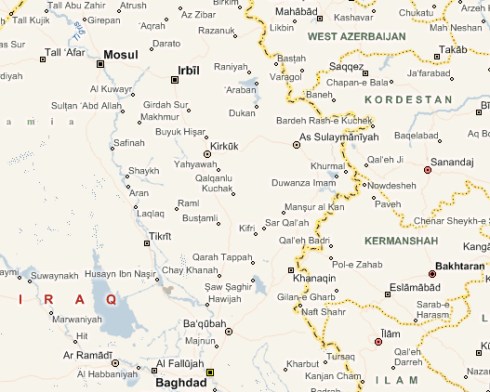
As Sulaymaniyah and Ahmad Awah are in Kurdistan, North Eastern Iraq. The areas marked Kordestan and Kermanshah are in Iran.

Iraq and Iran border and territories.
For a long time – aside of an early factual statement (August 6th) – Shon stayed out of the media spotlight and let the Department of State run its diplomatic channels. However, his friends remain imprisoned. Recently, media coverage of the story has declined (Diane Sawyer’s direct questions to a prevaricating Ahmadinejad the exception). On November 2nd, Shon wrote an open letter to Iranian President Ahmadinejad:
I had hoped that the misunderstanding would be resolved quickly. Three months have now passed, and I cannot imagine what more the Iranian authorities might have to learn about my friends or what they were doing in the area. … Mr. President, by continuing to deprive Shane, Sarah, and Josh of their liberty, Iran is working against some of the very causes it supports. Each of these three has a long and public record of contesting injustice in the world and addressing some of the inequities between rich and poor which you have spoken about through their humanitarian work in their own country and overseas.
Shon goes on to describe their various work and causes. Read the letter in full. Also on November 2nd, Shon appeared on Democracy Now! to reassert his position that the Iranian authorities can have no illusions as to their characters.
On November 9th, the three were charged with espionage.
Of the three, Shane Bauer has written and published the most. Most recently his article, Sheikh Down (Mother Jones) described how the ‘Pentagon bought stability in Iraq by funneling billions of taxpayer dollars to the country’s next generation of strongmen’.
Shon notes, “As a fluent speaker of Arabic, Shane has focused on injustices in the Arab world, in Iraq and Palestine in particular. The Christian Science Monitor published Shane’s January 7th interview with Musa Abu Marzook, the only English-language interview with a Hamas leader during Israel’s attack on Gaza.”
SHANE BAUER’S DARFUR PHOTOGRAPHY
I could have as easily featured the publicly available works of Josh or Sarah; each of the three illustrate their non-spy credentials through their past writings and journalism. That said, neither Josh or Sarah are involved in photojournalism or multimedia journalism as Shane is.
As Shane’s AP editor said in the clip atop this post, there are not many twenty somethings in Darfur freelancing and living with Sudanese rebels.
I have picked out five images from Shane’s Darfur series, but he also has produced two multimedia pieces One Day with the S.L.A. and Darfur: Rebellion from the Margins. In both stills and video he is trying to offer a context for the rebels bearing arms. The equation is simple: without a fight they would have “been run into the desert, where there is no water and left to die”.
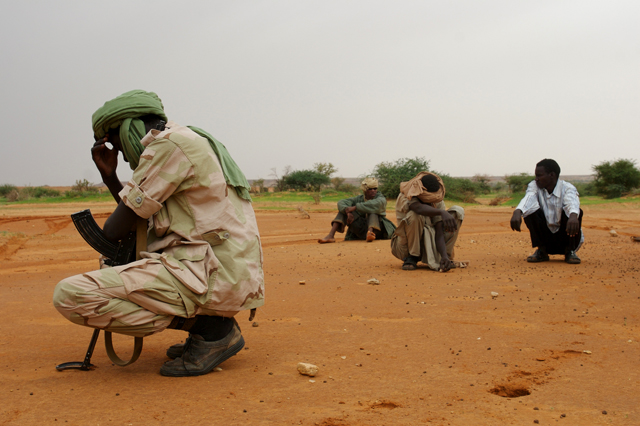
Rebels from the SLA-Unity faction sit stranded in the countryside. North Darfur, 2007. © Shane Bauer
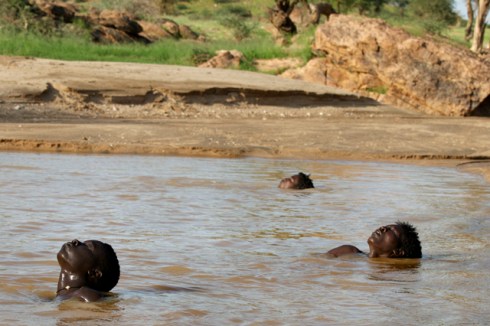
In the heat of the summer, SLA rebels swim near their base after a long night of rain. Deisa, North Darfur, Sudan, 2007. © Shane Bauer

A UN helicopter takes off after delivering medical supplies to a small clinic that was looted by the Janjaweed. Many Darfuris are demanding a UN peacekeeping force to replace the beleagured African Union mission, but for now the UN is limited short stopovers to deliver small boxes of supplies to villagers. Bir Maza, 2007. © Shane Bauer

Village elders meet in North Darfur. Many civilians remain in the countryside, either because they cannot afford to travel to a refugee camp or because they refuse to leave their homes, 2007. © Shane Bauer
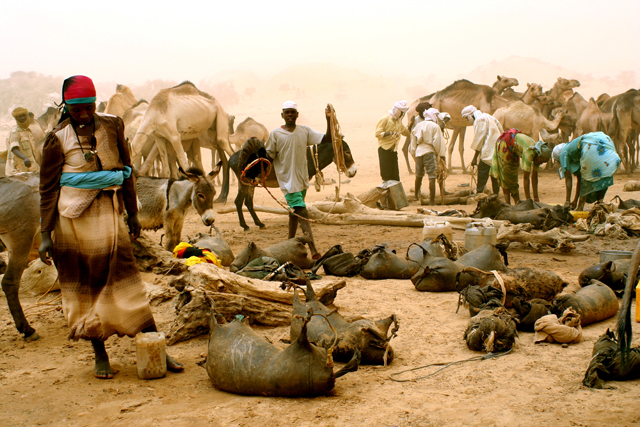
Women collect water in goatskins at a well in Farawia, North Darfur. With no water facilities and many wells poisoned or destroyed by the Sudanese government and its janjaweed militias, people have to travel long distances to find water. 2006. © Shane Bauer
The stills and video are a privileged view of existence for the Sudanese Liberation Army and the civilians they protect, but it is also a view that has dated. Shane continues to work on a feature length film about these same civilians, the S.L.A. and their continued struggle. Time ticks on.
Given that Shane is an accomplished photographer, I was a little surprised that his cause hasn’t been forwarded much in photographic circles, or more specifically the photoblogosphere. Jack Kurtz picked up on the story and posted it to Lightstalkers but it got no takers. Shane is a member.
Tewfic liked Shane’s Darfur multimedia but missed the story of his and his friends capture … as many of us did.
And, of course, we only anticipate Shane’s release in the context of all three’s release.
HELP HERE, HELP THERE
Perhaps, especially when the photographic community are mobilising to help in Haiti, we should also be aware of ongoing problems elsewhere?
The family have set up the Free The Hikers website, and also Facebook and a Twitter. We can start there with our actions.
BIOGRAPHIES
Shane Bauer received 1st place for independent audio slideshow features in the 2008 NPPA’s Best of Photojournalism contest. In 2007, he was a national finalist for photojournalism in the Harry Chapin Media Awards as well as a national finalist for feature photography for the Society of Professional Journalists’ 2007 Mark of Excellence Awards. He also received the Lyon Prize in photography that year. (Source)
Sarah Shourd, 31, is an English teacher in Damascus and is learning Arabic. She previously taught as part of the Iraqi Student Project, a program which gives Iraqi students living in Damascus the skills to continue their education in US schools. Sarah has written articles on travel and social issues reflecting her time in Syria, Ethiopia, Yemen and Mexico (Escape From Iraq: A Muslim Family Finds Solace in Ramadan, Brave Eyes, Laughing Hearts: My First Encounter with Yemen, Families Shout Their Love Across Minefields in Golan Heights). She attended UC Berkeley in the San Francisco Bay Area, where she lived after graduating until moving to Damascus with Shane. (Source)
Joshua Fattal began undergraduate work at UC Santa Barbara and graduated from UC Berkeley (2004). For three years after college he was invested in the Aprovecho Research Center, a sustainable living project in Oregon. In 2009, Josh was on a years travel partly independently and partly as a teaching assistant for the International Honours Program ‘Health and Community’ semester. (Source)
BANNED BOOK S PETITION
Two weeks ago I penned an article about the banning of books in Texas prisons. Attached to the article was a petition to Brad Livingston, Director of the Texas Department of Criminal Justice.
If you are opposed to politically motivated censorship, I urge you to sign the petition. Let me remind you that the book was about the conditions of women in American prisons and it was banned for describing the abuses two females had suffered early in life; abuses that had shaped self-destructive behaviour and consequent incarceration. The descriptions were not graphic. The descriptions were essential for discussion of cycles of violence, perpetrators and victims, and hopes for help instead of punishment.
If you need convincing that petition’s have an effect, I point to Change.org’s previous direct action that caused the Virginia Department of Corrections to overturn their ban on the Virginia Books Behind Bars program.
Signing the petition does mean making a profile at Change.org. Profiles are often a barrier to action but I ask that you put on your hurdling shoes in this instance.
Thanks, Pete
UPDATE: ALL PETITIONS
Change.org is so confident of the power of petitions they have set up a platform to deliver the petition tools of national non-profits to the hands of individuals.
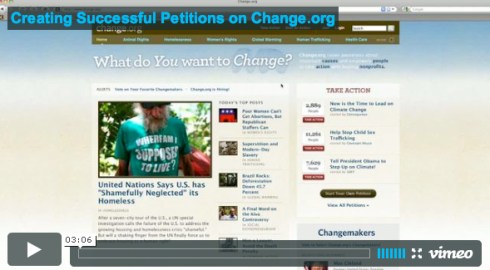
“Our bloggers have recently begun using this tool to start petitions in response to news stories and have won close to a dozen campaigns – successfully pressuring companies and federal agencies to change their policies.”
The Geneva Convention on handling prisoners bans:
– Cruel treatment
– Physical and mental torture
– Humiliating and degrading treatment
– Outrages upon personal dignity
– Reprisals

Past and present ruminations about what is and isn’t a photograph have been a source of frustration for me. For one, people can draw whatever lines they wish to determine the point at which manipulation tricks out a photograph and thus qualifies it as photo-illustration. And for another, as Errol Morris keeps banging on about, ALL photography is lies (and manipulation).
These debates are not about truth. Interventions – power relations, habit, photographic custom, complicity among subjects, props, political agendas (and framing), cropping, tweaking of exposure levels before and after development, digital alterations – mean that photography can never be, will never be truthful.
People forget that often it is the ingenious tricks that have spurred the largest wonder among viewing public – think Oscar Rejlander’s Two Ways of Life, Spirit Photography and – in a different sense – Ansel Adams’ Zone System.
It is therefore, with some relief that an artist like Azzarella comes along using photo-manipulation as the tactic and purpose for his work.
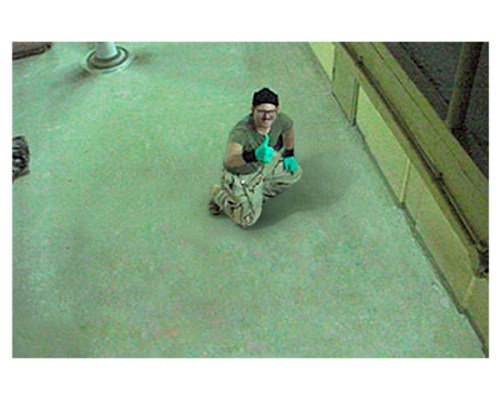

Last week, I questioned Anton Kratochvil’s Homage to Abu Ghraib, mainly because I think it makes little contribution to the discourse on the political aesthetics of Abu Ghraib. The blurry references to torture in Kratochvil’s images are in response only to a personal, conscious and willing point of view. I understand that Kratochvil’s work was an exercise in self-therapy but that shouldn’t stop me comparing it to Azzarella’s broader concerns about more general and unconscious reactions to well-circulated images.
If I w re to wr t th s sent nce wi h lette s m ss ng, you can still read it. The human brain is a wonderful instrument drawing on past experience to quickly filter out the non-possibilities. Just as the brain instantaneously deciphers gaps in text so it does with gaps in images.
With every passing hour the Spectacle suffuses itself further. It isn’t so much us reading images but images reading us. Our involuntary responses to images are predictable, predicted, precoded. The redacted action of violence in Azzarella’s pictures plays second fiddle to the original image, for it is the original image we drooled over and devoured.
The hooded detainee, dead student, wailing child or falling soldier needn’t even be present; our internal, emotional feedback spun by these images will forever be the same. We fill in the gaps and short circuit to prescribed disgust, sadness and politics, thus confirming our prevailing bias.
Azzarella’s works expose the fraud in us all … and our cheapened, robotic response to image.

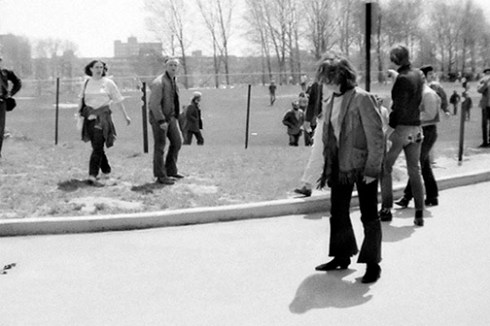
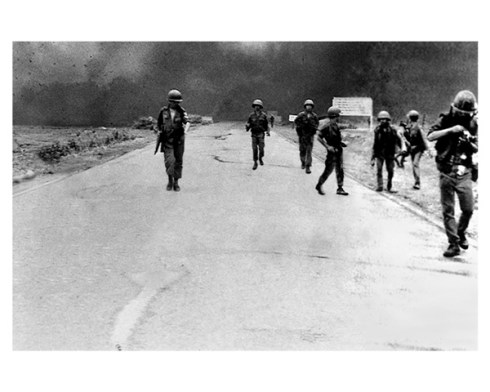
ALL IMAGES © JOSH AZZARELLA. FROM TOP TO BOTTOM: UNTITLED #13 (AHSF); UNTITLED (SSG FREDERICK); UNTITLED #24 (GREEN GLOVES); UNTITLED #35 (CAFETERIA); UNTITLED #39 (265); UNTITLED #20 TRANG BANG; UNTITLED #43 (PAR115311).

Source
Why?
There have been two prevailing attitudes toward the proposed conference/symposium dealing with issues of race and diversity in photography:
a) That it is absolutely necessary & b) It is a terrifying prospect.
The first point speaks for itself, and the second point becomes clear when one considers the kerfuffles, misunderstanding and (dare I say it) vitriol that has accompanied much online discussion.
I have been in contact with some, but by no means all, people who could contribute to an extended dialogue. These include Amy Stein, Ben Chesterton, Colin Pantall, Daniel Cuthbert, Daryl Lang, Jean-Sebastien Boncy, Joerg Colberg, John Edwin Mason, Mark Page, Matt Lutton, Michael Shaw, M. Scott Brauer, Nathalie Belayche, Qiana Mestrich and Stan Banos. They have been very generous in response.
Originally, I suggested mixing things up by means of an in-person meet. This was intended to directly address the inadequacies of online discussion. However, when Qiana Mestrich of Dodge & Burn alerted us to SPE‘s conference in March, 2010: “Facing Diversity: Leveling the Playing Field in the Photographic Arts” it was clear that we may just end up replicating (on a smaller scale) SPE’s efforts.
The early feeling was that to piggyback on the back of an existing photography festival could leverage most involvement and impact. Boncy has had good feedback from Houston Fotofest and Lang believes that PDN would want to collaborate and lend a hand for an event at New York Photo Festival. These are very, very encouraging early signs.
In terms of organisation, these prospects are a far cry from the normal activities bloggers. Bearing in mind that this idea was conceived to challenge the tried and tired modes of photography blog discourse, it is difficult to conceive of good reasons to forsake our collective blogging strengths (wide-reaching audiences, maximum engagement, a breadth of coverage and investigation and first rate methods).
We haven’t abandoned a desire for a face-to-face meet and indeed we’ll continue to lobby established photography festivals and industry expos for the inclusion of extended discussions about race and diversity.
But, we are aware of our strengths. Simply put; a focused and concerted online effort will impact and forward dialogue more than a bunch of bloggers gathering in a single room could.
Early plans
This will be an Online Symposium. I would like see a concerted effort among photobloggers: I offer an open invitation to all those who wish to get involved.
The online symposium will look something like this:
– Occurring mid/late spring 2010
– A one week long, coordinated series of photo-features, interviews, op-eds, inquiries and articles.
– All written works will aim to compliment and build upon one another, not repeat or needlessly criticise.
– All written works will be subject to peer-review (a grand term for “read by another blogger”) prior to publication.
– It will incorporate the widest mix of experiences in the industry as possible. Discussion may vary from academic speculations on representations to the everyday experience of the working photographer.
Aims
– To communicate the wide experiences, attitudes, facts and myths in photography as they relate to race and diversity.
– To achieve respect and understanding among photographers, contributors and readers.
– To test the reach and strength of blog-networks as they relate to photography.
– To be progressive instead of reactive in our tone and objectives.
– To leave a legacy and record of this community action that will be of use and reference for continued learning.
What Should You D0?
– Please think seriously about your experience and knowledge and if you’d like to share that as part of this community project.
– Spread the word. If you don’t wish to get involved, perhaps you know someone who would have a valuable contribution?
– Share your ideas, initially through comments below, or directly with me [prisonphotography at gmail point com] and later on a devoted website.
Thanks! Please don’t hesitate to be in touch/throw ideas about. The projects’ outcomes depend on the quality and commitment of your input.

 Prison Photography