As part of the ongoing OPEN-i project, Edmund Clark and I discussed Ed’s latest project Guantanamo: If the Light Goes Out.

Ed’s nuanced work from on Guantanamo began with his documenting the domestic interiors of released British detainees. As Ed progressed he realised he needed to go to the US base on Cuba. The project deliberately jumps between these environments of “residence”, forcing the viewer to consider the personal as opposed media representations we otherwise rely on.

Ed’s work deliberately excludes portraits of detainees, partly because he feels those images are widespread but also due to a belief that audiences react to “images of bearded men” with unavoidable prejudice.

Ed also looks at the leisure spaces on Guantanamo that US military personnel inhabit during down time. The juxtapositions are poignant.

The photographs in the book Guantanamo: If the Light Goes Out wrap around letters received by detainee Omar Deghayes during his time in Gitmo. Except they are not letters, they are copies, processed, redacted, re-processed, copied again. If he received a colour copy it was a rare treat. Some of the correspondence is so bizarre, Deghayes wondered if the were genuine or if they were props to the mind games played by his captors.

My family has been urging me for years to talk more quickly, and having heard myself here I get their point. The only excuse I have is that it was early in the morning here on the Pacific Coast when we sat down for the webinar.

Ed, on the other hand, talks wonderfully about the images and their situation in our shared GWOT visual landscape.

PHOTOGRAPHS AS IMPLEMENTS OF TORTURE

The book, Guantanamo: If the Light Goes Out concludes with an essay by Dr. Julian Stallabrass. He describes a rather pernicious and Luddite use of photographs in psychological torture at Guantanamo:

Al-Qahtani was repeatedly shown photographs of scantily dressed women, along with images of 9/11, particularly pictures of children who had died that day, had the pictures taped to his body, and to ensure that he had paid them close attention, he was induced to answer questions about them.

This is a practice of interrogation of which I was not aware and is obviously troubling; a deliberate use of imagery to vex and agitate and an example of the power of photography as applied in an abusive context.

OPEN-i

Thanks to OPEN-i coordinator Paul Lowe for inviting me back once again. It’s an honour to speak with a photographer at the top of his game. OPEN-i is a global network hosting monthly live discussions on critical issues relevant to documentary photography and visual storytelling.

EDMUND CLARK

Edmund Clark is winner of the 2010 International Photography Awards (The Lucies), 2009 British Journal of Photography International Photography Award, and the 2008 Terry O’Neill/IPG Award for Contemporary British Photography for his book ‘Still Life Killing Time’. His work is in several collections including The National Portrait Gallery, London, and the Museum of Fine Arts, Houston.

GITMO – OTHER READINGS

Prison Photography archive of posts referring to Guantanamo.

The Prison Photography Guantanamo: Directory of Photographic and Visual Resources (May 2009)

When reading the New York Times’ New York City Police Photograph Irises of Suspects a couple of days ago I was reminded of Sebastian Meyer‘s Guardian video dispatch from Afghanistan.

AFGHANISTAN

In the accompanying article, Jon Boone explains that in Afghanistan,

The US army now has [biometrics] information on 800,000 people, while another database developed by the country’s interior ministry has records on 250,000 people.

It is the sort of operation that would horrify civil liberties campaigners in the west, but there has been little public debate in Afghanistan. […] US soldiers have been collecting huge amounts of biometric data, with little oversight from the Afghan government.

It allows us to understand population shifts and movements, who wasn’t there before and who might be a potential threat just because they are new to that area,” said Craig Osborne, the colonel in charge of Task Force Biometrics.

The Afghanistan government has plans to introduce a biometric ID card by 2013; an attempt to thwart insurgency but it is also thought ID cards will reduce Afghanistan’s rampant voter fraud.

BIG APPLE

Back in New York, the NYPD is keeping track of prisoners and suspects for when they are transported or appear in court:

Authorities are using a hand-held scanning device that can check a prisoner’s identity in seconds when the suspect is presented in court, said Paul J. Browne, the department’s chief spokesman.

Officials began photographing the irises of suspects arrested for any reason on Monday [Nov. 15th] at Manhattan Central Booking and expect to expand the program to all five boroughs by early December, Mr. Browne said.

Mr. Browne said a legal review by the department had concluded that legislative authorization was not necessary. “Our legal review determined that these are photographs and should be treated the same as mug shots, which are destroyed when arrests are sealed,” he said.

[My bolding. Source]

WHERE IS THIS GOING?

It is clear that the US is gathering vast quantities of biometric data at transport hubs, immigration offices, police stations, conflict zones. Am I foolish to think that all this information might not one day be consolidated?

Not even considering Chomskyite accusations of US Imperialism based on military violence, could we not consider silos of biometric data (with global reach) as the foundation par excellence to empire in the networked 21st and 22nd centuries? As an invisible but intractable abundance of strategic knowledge and power?

I accept these questions probably mirror the fears of every era in which people first learn and then come to terms with new technologies that impinge upon the assumptions of the age regarding privacy and civil liberty. But still.

MORE

More from Federal Jack here.

Freelance photographer, Sebastian Meyer has a blog. The image above was sourced from this blog post. On his website, I recommend ‘How to buy a gun in London’

After looking at the TSA’s list of airports with Full Body Scanners, I’ve decided to drive to California for the Christmas Holidays. I’d already made the decision to stay in Seattle for Thanksgiving, so no immediate problems.

This post obviously spurred by the story of unlikely hero, John Tyner.

Some of you might be thinking that it’s not a big deal because those images are not saved, stored or transmitted, right. Wrong.

From the list below, if you’re flying anywhere meaningful in the US, some TSA agent is going to ogle your fancies.

Happy Holidays!

Airports who currently have imaging technology:

  • Albuquerque International Sunport Airport
  • Hartsfield-Jackson Atlanta International Airport
  • Baltimore/Washington International Thurgood Marshall Airport
  • Boston Logan International
  • Bush Houston Interncontinental Airport
  • Boise Airport
  • Bradley International Airport
  • Brownsville
  • Buffalo Niagara International Airport
  • Charlotte Douglas International
  • Chicago O’Hare International
  • Cincinnati/Northern Kentucky International
  • Cleveland International Airport
  • Corpus Christie Airport
  • Dallas/Fort Worth International Airport
  • Denver International Airport
  • Detroit Metro Airport
  • Dulles International Airport
  • El Paso International Airport
  • Fort Lauderdale-Hollywood International
  • Fort Wayne International Airport
  • Fresno Airport
  • Gulfport International Airport
  • Grand Rapids Airport
  • Harrisburg International Airport
  • Harlingen/Valley International Airport
  • Honolulu International Airport
  • Indianapolis International Airport
  • Jacksonville International Airport
  • John F. Kennedy International Airport
  • Kansas City International
  • LaGuardia International Airport
  • Lambert/St. Louis International Airport
  • Laredo International Airport
  • Lihue Airport
  • Los Angeles International
  • Luis Munoz Marin International Airport
  • McAllen Miller Airport
  • McCarran International Airport
  • Memphis International Airport
  • Miami International Airport
  • General Mitchell Milwaukee International Airport
  • Mineta San José International
  • Minneapolis/St.Paul International Airport
  • Nashville International Airport
  • Newark Liberty International Airport
  • Louis Armstrong New Orleans International Airport
  • Oakland International Airport
  • Omaha Eppley Field Airport
  • Orlando International Airport
  • Palm Beach International Airport
  • Philadelphia International Airport
  • Phoenix International Airport
  • Pittsburgh International Airport
  • Port Columbus International
  • Raleigh-Durham International Airport
  • Richmond International Airport
  • Rochester International Airport
  • Ronald Reagan Washington National Airport
  • Salt Lake City International Airport
  • San Antonio International Airport
  • San Diego International Airport
  • San Francisco International Airport
  • Seattle-Tacoma International Airport
  • Spokane International Airport
  • T.F. Green Airport
  • Tampa International Airport
  • Tulsa International Airport

Airports receiving imaging technology soon:

  • Chicago Midway International Airport
  • Houston William P. Hobby Airport
  • Saipan International Airport

It was interesting to watch Marion Jones speak on Monday’s Daily Show. She was locked up for 6 months for lying to federal investigators during the Balco scandal. Jones’ imprisonment included a 45 day stint in solitary confinement.

Jones is now in the very early stages of prison reform advocacy:

“I’m in the process of looking for organizations that I can partner with, get their stories out there, share my experience, use my voice. When I was in prison, some of the women there talked to me and shared their stories with the hope that, because I have a voice on the outside, people will want to hear what I have to say.”

“Too many times, you’ll hear, ‘Aw, there’s just prostitutes or drug-heads or the bottom rung of our society in there.’ Before you jump to a conclusion and make any ignorant or rash comment, take a break – remember, that’s what I’m trying to get out there – find out what you can about the situation and make a smarter response. I’ll do whatever I can do to talk about awareness and change.”

Jon Naiman. Familiar Territory, #21. Chromogenic Print. 32×40″ Image. Unmatted. 3/6. $3600

What is there not to love about Jon Naiman‘s series Familiar Territory? (More here)

Cell with Two Male Convicts

Two months ago, I posted about how the the roundhouse panopticon at Stateville Penitentiary in Joliet, MI had become the subject of art photographers David Leventi, Doug Dubois/Jim Goldberg and Andreas Gursky.

OLD NEWS

These famous names were preceded by anonymous inmate photographers a century previous. Nearly 200 plates from the early 20th century were found by Robert Lawson, a prisoner sentenced to six years in 1969. Lawson was “assigned as an inmate photographer in the Bureau of Identification.”

Lawson: “The B of I maintains mugshots, fingerprints, and criminal records of convicts from the early days of the prison. In a corner of the basement darkroom in a few drawers of an old filing cabinet were several hundred glass-plate negatives which documented Joliet prison around the turn of the century. I spent most of my two years working in these darkrooms, producing a blend of public relations and evidence photographs for the prison administration. The photographs were used in penal publications and were occasionally released to news agencies to illustrate the events and social progress of the prison.”

“The photographs were made by inmate photographers, although their identities still have not been determined. Prison records from 1915 indicate that there were five convicts who listed their previous occupation as photographer. Reports also document that there was a room in the prison designated as the “Photograph Gallery” and that the current warden, Edmund M. Allen, had an annual budget for photographic expenses of almost $1000, approximately three times greater than that of previous administrations.”

“These public relations photographs were taken by an anonymous series of inmate photographers under official direction. It was not necessarily their purpose to create a clear understanding of what prison is and what it does to the minds of those who live there, but it was their purpose to illustrate the progressive changes which were taking place during an era of penal reform which lasted until the beginning of World War I, when public and political attention was diverted to other areas.

[My bolding]

The collection includes Workplaces, The Grounds, Chaplin, Cells, and Mugshots. A catalogue of the images is available on eBay.

The intriguing story of historical prison photography and later discovery have been reported in publications and featured in James R. Hugunin’s, 1996 survey of prison photography, Discipline and Photograph: The Prison Experience, which is the primary academic work on the history of prison photography in public domain.

Here’s a full list of related links and the list of plates.

Fascinating stuff.


Cell for Female Prisoner

Chaplin with Four Inmate Assistants, ca. 1910

Thanks to Stan for the tip.

The Hell of Copper (L'Enfer du Cuivre). Series: The Hell of Copper. 1800x1200. January-November 2008. Accra, Ghana. © Nyaba Leon Ouedraogo

Burkina Faso-born Nyaba Leon Ouedraogo is one of the twelve shortlisted photographers for the Prix Pictet.

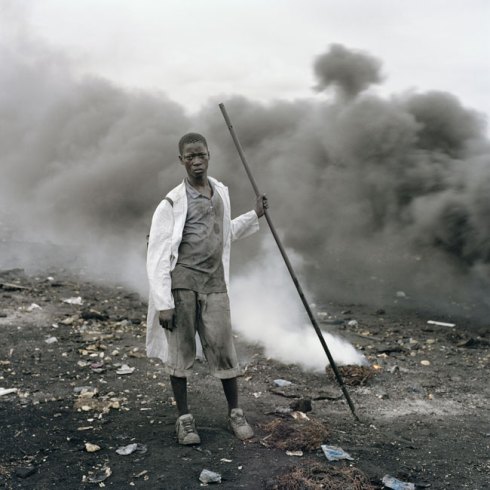
Ouedraogo’s ‘The Hell of Copper’ (L’Enfer du Cuivre) depicts the Aglobloshie Dump in Accra, Ghana. “From dawn to dusk, dozens of young Ghanians, from 10 to 25 years of age, exhaust themselves […] seven days a week. Their mission is to disassemble the old computers and burn certain plastic or rubber components to cull the precious copper, which will then be resold. Everything is done by hand or with iron bars, makeshift tools found among the refuse. They have neither masks nor gloves. There are not even any functioning toilets,” says Ouedraogo.

Ouedraogo quotes a 2008 Greenpeace report on toxic substances at the site:
– lead: in cathode tubes and monitors, harms the nervous, reproductive, and circulatory systems.
– mercury: in flat screens, harms the nervous system and the brain, especially in young children.
– cadmium: in computer batteries, dangerous for the kidneys and the bones.
– PVC: this plastic used to insulate electrical wires, when burned, gives off carcinogenic chemical substances that can cause respiratory, cardiovascular and dermatological problems.

Ouedraogo’s pictures are good, but I don’t think they are good enough. The story is vital but the images don’t live up to its importance (presuming the 10 images edit for the Prix Pictet are his best works.)

In truth, I don’t want to criticise the work of a photographer from Burkina Faso. When was the last time a photographer from Western, Eastern or Central Africa was shortlisted for a major photography prize? We should be celebrating the recognition. But Ouedraogo shouldn’t win; the project is not polished enough.

For the record, I don’t think big-guns like Taryn Simon or Ed Burtynsky should win either: they don’t need the exposure and their work is familiar, a bit dated and easy to digest.

I hope either Stéphane Couturier or Vera Lutter win.

INTRODUCING PIETER HUGO

Back to Aglobloshie. It’s a familiar subject to us photo-nerds, not least because Pieter Hugo’s Permanent Error about Aglobloshie did the rounds a few months back.

Abdulai Yahaya, Agbogbloshie Market, Accra, Ghana. 2010. @ Pieter Hugo

Hugo was very quick at turning his images round. They were distributed within months of his 2010 visit to Aglobloshie. Yet, it was Ouedraogo who went to the toxic site first; in 2008, a full two years before Hugo set up his camera.

Hugo has been the centre of debates on race and representation before, so it is with even more reluctance I draw the comparison to Ouedraogo. Hugo’s portfolio contains dozens of images and so it can boast a wider view of the poisoned micro-environment. This works in Hugo’s favour.

Both photographers emphasise the prevalence of child labour, the presence of grazing livestock and the use of found tools and noxious open fires to extract copper from the scraps. If you look at the statements by Ouedraogo and Hugo they contain virtually the same info.

Again, it is the story that is of primary importance, here.

The ultimate question then, is which portfolio is best likely to capture the attention and imagination of viewers enough for them to shift their worldview of politics, consumption and globally connected “growth”? (“Growth” is the theme of the Prix Pictet this year.)

Hugo’s work sells in galleries and it made for those gallery sales. It’s also a bleak look at the conspicuous consumerism. Ouedraogo’s work is uses photojournalist angles, some portraits and shots of the expanses of computer carcasses. Ouedraogo’s work is less cohesive. And for some reason I want to say it peels away.

I’m not really convinced by either, but I’d still err reluctantly to the foggy Hugo square.

The one thing Hugo’s work lacks is the sentiment (and hope?) of the picture below, with which Ouedraogo closes his portfolio.

The Hell of Copper (L'Enfer du Cuivre). Series: The Hell of Copper. 1800x1200. January-November 2008. Accra, Ghana. © Nyaba Leon Ouedraogo

The other eleven finalists for the Prix Pictet are Christian Als (Denmark); Edward Burtynsky (Canada); Stéphane Couturier (France); Mitch Epstein (US); Chris Jordan (US); Yeondoo Jung (Korea); Vera Lutter (Germany); Taryn Simon (US); Thomas Struth (Germany); Guy Tillim (South Africa); Michael Wolf (Germany). Biographies here.

UPDATE 11.12.2010, 12.30pm PST: Forsell didn’t win. Announced 11.12.2010 in Bristol, UK Yvonne Venegas won for her portrayal of Maria Elvia de Hank, millionaire wife of an eccentric former mayor of Tijuana. Julian Roeder and Rob Hornstra also made the final three.

This will not put me off making predictions in the future. I’ll just have to adopt unpredictable criteria and decision making to mirror the many diverse jury panels. And I stand by everything I said about Forsell’s ‘Life’s a Blast’.

– – – – –

© Linda Forsell

I’ll admit to being rather deflated after looking over the shortlisted photographers for this years Magnum Expressions Award. Many of the portfolios of 15 images had only one or two photographs that held my attention.

The Magnum Expressions Award is in reaction to the brave new world photographers face; new communities, new audiences, new distribution channels and bold ways of working. It is an award designed – so it says – to reward young photographers surfing the shifting sands beneath the industries footings.

It should be said that most of the 19 shortlisted artists have hunted down engaging subjects. Bepi Ghiotti‘s Sources is an enigmatic thesis on man and nature. Yvonne Venegas’ fly-off-the-wall study of Maria Elvia De Hank wife of an eccentric millionaire and former Tijuana mayor bristles with ambivalence toward the subject.

I was pleasantly surprised to see the presence of two photographers who’ve briefly pricked my attentions. Anastasia Taylor-Lind and Irina Rosovsky both deliver strong entries. (On PP, Taylor-Lind, here and Rosovsky here).

These would be my 3rd through 6th placed finalists, but who’s listening to me, eh?

In at second is Jenn Ackerman. This high finish has little to do with my interest in photography that exposes the shortcomings of the US prison system and everything to do with the excellent way Jenn portrays the daily battles and extreme stress of a prison operating as a makeshift and unsuitable lock-up for men with severe mental health disorders – Trapped: Mental Illness in America’s Prisons. (I’ve featured Jenn’s work here on PP before.)

© Linda Forsell

‘LIFE’S A BLAST‘ BLOWS THE COMPETITION AWAY

And, winning by a country mile is Linda Forsell. Gold star.

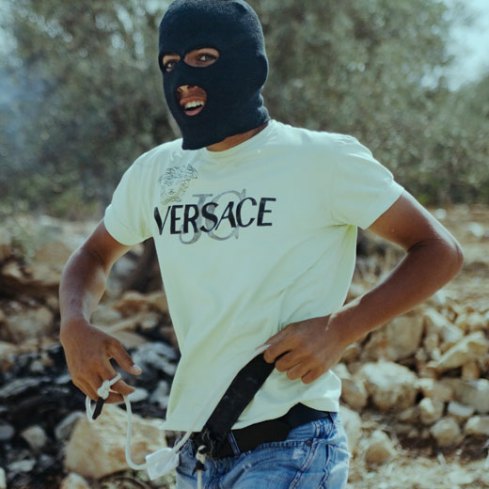
Forsell’s Life’s a Blast is the sweetest, never-escaping-bitter view of Palestine, Gaza & Israel I’ve ever clapped my eyes on. It’s about family more than ideology, but it is never glib. It is work as conscious of history as it is the mores of fashion photography. It’s a slow-ride through the lives of people associated by a larger conflict but not solely defined by it; a stunning presentation of gazes drenched in humanity.

Against all odds, Forsell forces the viewer to think on the stories of her subjects; on the seconds before the shutter snapped and the years yet to come. I have not seen a single project that so swiftly dismantles many of the entrenched tropes of conflict photography. Life’s a Blast shifts perceptions like only the very best of photography can.

© Linda Forsell

EMAIL

prisonphotography [at] gmail [dot] com

Prison Photography Archives

Post Categories