Cutting a chair and stool. © Gary Walrath. Taken with Pentax ME super.

Cutting a chair and stool. © Gary Walrath. Taken with Pentax ME super.

Two years ago, I found Gary Walrath‘s set of photos from a 1970s Logging Show at Oregon State Prison. They are so unique they don’t really fit into any recognisable discussion … still.

I have also repeatedly tried to contact Gary about the background to the series. No luck. So, I simply provide a couple of images, a link and some bemusement at the spectacle of axes and chainsaws within prison walls.

Gary is a busy amateur photographer and a seven times chainsaw World Champion, in the Un-limited Hotsaw Class. His weapon? The Iron Horse.

‘The Iron Horse – 90 hp 500cc Husqvarna Motorcycle Engine. Running Oregon 1/2 pitch chain on a 36″ custom made guide bar. The drive sprocket is 16 tooth. Over 8,000 RPM in the cut.’ (Source)

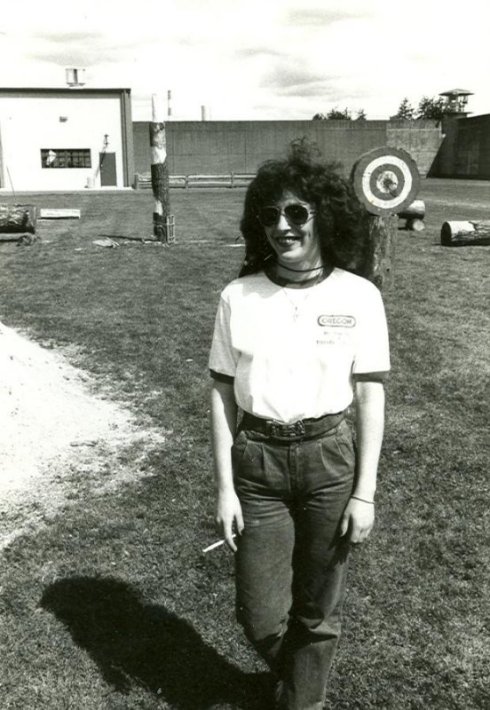
Ronda (she drove the prisoners nuts). © Gary Walrath. Taken with Pentax ME super.

Ronda (she drove the prisoners nuts). © Gary Walrath. Taken with Pentax ME super.

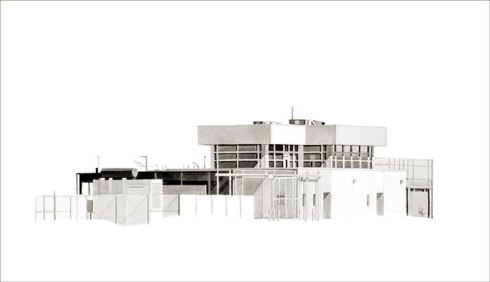
California State Prison, Corcoran. 2006, ink and pencil on paper, 52 x 156 inches.

California State Prison, Corcoran. 2006, ink and pencil on paper, 52 x 156 inches.

Not a photographer, but an illustrator.

Within Buddy Bunting‘s Panorama series are five West Coast prison facilities. Prisons pop up in other series such as High Living too.

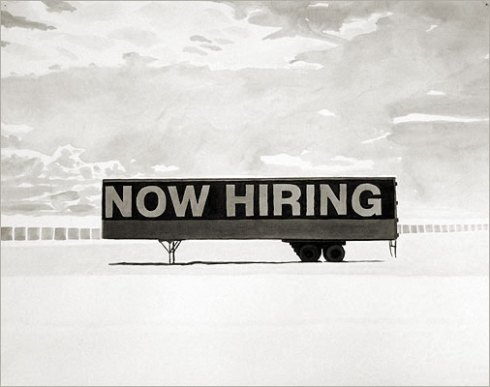
Bunting, like Sandow Birk and Alex Donis before him uses canny illustration to rifle home the banality of (secure) structures and signs in the mundane US hinterlands. Bunting’s grayscale world is one of malls, excavated hillsides, prisons and abandonment.

These subjects are old and familiar to American artists; artists who have attempted to reconcile their art with the psychology of deserts, gas stations and limitless geographies.

Bunting’s work is brooding, but most disturbingly it stakes out an invisible truth – that being, that post-industrial activities in dislocated rural areas are of sinister and charged ideological purpose.

The celebrated colour photography of Shore, Sternfeld and Eggleston is laconic, seductive and – admittedly – sometimes jarring, but never is it so critical or detached as Bunting’s work. Regarding detachment and the artist’s distance, the claim here that sketching has pushed out the great photographers may seem ludicrous and yet that is how I read Bunting’s very intelligent work.

READ & LISTEN

Jen Graves, the art critic for Seattle’s The Stranger (the best free newspaper in America) wrote this article and conducted this audio interview. Well worth your time!

Oregon Gatehouse (its yellow mimicked the shade of rock looming behind as a train went through)  2008, ink and pencil on paper, 30 x 52 in

Oregon Gatehouse (its yellow mimicked the shade of rock looming behind as a train went through). 2008, ink and pencil on paper, 30 x 52 inches.

Walmart Distribution Center. 2008, ink and pencil on paper, 20 x 26 inches.

I came across Julie Adnan‘s Born in Jail series at Bite Magazine. I wanted to know more about the women and of the social backdrop of criminal justice within Northern Iraq. I was happy that Adnan could answer a few questions.

This woman was imprisoned on 8 Feb. 2009. The child was born in prison; he is 6 months old. She, an Arab from Mosul, was arrested for prostitution. At the time of the photograph, she had been imprisoned for 18 months. © Julie Adnan

This woman was imprisoned on 8 Feb. 2009. The child was born in prison; he is 6 months old. She, an Arab from Mosul, was arrested for prostitution. At the time of the photograph, she had been imprisoned for 18 months. © Julie Adnan

CONVERSATION

Why did you choose this subject?
I choose this subject because there are many children in the prison without having committed any criminal offence; there only because they’re children of those who may (or may not) have done something wrong. Nobody thinks about what the children will remember when they grow up.

What prison is this?
This is the Arbil prison for women, in the city of Arbil (also written Erbil or Irbil or Arbela) in Kurdistan of Iraq.

How long were you on assignment?
It took a long time to gain permission from the government, but after [getting permission] I took the photographs in two different visits over two weeks.

This child was born in prison. He is 8 months old. His mother was imprisoned on 29 Jan. 2009, sentenced to a year in prison for illegal sex with another person. She is from Arbil. © Julie Adnan

This child was born in prison. He is 8 months old. His mother was imprisoned on 29 Jan. 2009, sentenced to a year in prison for illegal sex with another person. She is from Erbil. © Julie Adnan

What were the reactions of staff, women and children to your photography?
The children thought it was game and they loved it, but the women was so afraid of the camera and of the photographs. As you can see, they do not want their faces to appear.

Did the families ever see or receive prints?
Unfortunately, I did not send any photos to them and I do not know if they’ve seen the photographs anywhere.

Do you plan to return to this subject or any other stories within prisons?
Yes, but not with photography. I want to document their letters to their families in a booklet.

Five of the eight women are in prison for prostitution. What sort of sentence does that carry?
It depends on their crime. It could range from a few months to five years.

Is there ever a notion that a prostitute might be a victim?
Because Islamic law rules prostitution as a crime, the government and other people can not say anything about them. Prostitution is something in the culture they cannot accept, however we have some people now who allow [make accommodations] for them but they cannot really change or do anything.

One lady was imprisoned for sex outside of marriage. Is a prison sentence common for such a transgression?
Within traditions here, a woman’s family may kill her for that [sex outside of management]. Sometimes, a woman’s stay in the prison is necessary as a secure place or a shelter.

This female gypsy was sentenced to 15 months in prison for robbery. She would like her daughter be with her in prison. Her daughter was 1 year, 8 months old at the time of the portrait. © Julie Adnan

This female gypsy was sentenced to 15 months in prison for robbery. She prefers her daughter to be with her in prison. Her daughter was 1 year, 8 months old at the time of the portrait. © Julie Adnan

MORE READING

Julie Adnan maintains a Lightstalker profile and a Flickr photostream. Her work has been featured at Greater Middle East Photo (a blog I highly recommend).

This article, Life in a Womens’ Shelter, Erbil perhaps more than any other relates the dangers for women should they compromise their families “honour”. It talks about shelters and prisons as being alternative institutions to family homes which – in extreme cases – can harbour the real threat of murder.

BIOGRAPHY

Adnan, from Kirkuk in Iraq, is a 25 year old freelance photographer, and currently a student at the art academy of Sulemanyah University in Iraq. Adnan has worked for a number of agencies newspapers and websites including The New York Times, Reuters, National Geographic, Al-Sharql Awsat, The Washington Post, Jordan Times, Taw photography magazine, Kakh magazine, Kurdistani New, Aso newspaper, Institute for War and Peace Reporting (IWPR), Driknews agency, World News Network, BBC World Website, IO Donna magazine of Italy and L’Express of France.

Jon Feinstein (or it might be Grant Willing?) over at Humble Art Foundation blog has been posting the art of serial killers in recent months.

THE DARKEST PHOTOGRAPHY BLOG ON THE CIRCUIT

If you thought serial killer art was as macabre as photography/arts blog could go, you’d be wrong. Every week, I am made to fear for my life because of what HAFNY has posted … and most weeks I find myself wondering “Is that real blood or fake blood?”

Put on your adult diapers and check it out.

ARGHT

John Wayne Gacy is best known as the “Killer Clown” serial killer who murdered 33 people during the 1970s. While in Prison, Gacy took up painting; his favorite subjects being the Seven Dwarfs, Clowns, and other serial killers. He was executed in 1994 by lethal injection.”

Ottis Toole was an American serial killer who was charged for three counts of murder, but confessed to four more after being incarcerated.”

Henry Lee Lucas is an American serial killer who is best known for lying/falsely confessing to upwards of 600 murders. He was sentenced to life in prison after being convicted of 11 murders; he died of heart failure while in prison, so the actual number of crimes committed will never be truly accurate.”


Claude Hankins

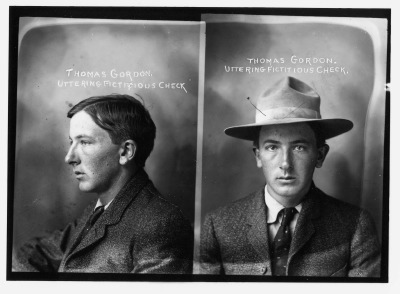
Thomas Gordon

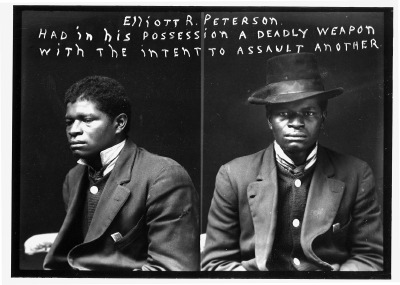
Without question, the mugshot is a dominant “genre” in American photography. Least Wanted, aka Mark Michaelson, has released a book of his collected mugshots, Danny Lyon is fascinated by them, I’ve been seduced from time to time.

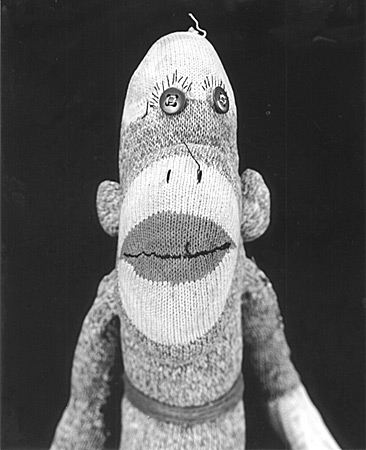
Arne Svenson is another artist who has put together mugshots (this time from the 19th century) to make a book. Svenson is a portraitist and his art is more complex when his collected mugshots and his headshots of forensic dummies & sock monkeys are considered alongside one another.

PRISONERS

“Svenson’s first book entitled Prisoners came about after the discovery of a collection of turn of the century glass plate negatives from Northern California recording convicted criminals as classic frontal and profile mug shots. He lovingly printed these negatives, bringing the subjects alive, and painstakingly researched each of their stories.” (Source)

Elliott Peterson

W.M. Heron

FORENSIC DUMMIES

Svenson spent four years traveling around the country to coroner’s offices and law enforcement agencies photographing forensic identification aids in a classic portraiture style. Twin Palms Publications will publish a book of this work, entitled Unspeaking Likeness, in 2010.

© Arne Svenson

SOCK MONKEYS

Unsurprisingly, the public and the market love Svenson’s 200 Sock Monkey portraits.

Sock Monkey #1761, 2001, Gelatin Silver Print. © Arne Svenson

See more at Jan Kesner Gallery

I found Pamela Bannos‘s portfolio via the MoCP, Midwest Photographers Project page. This was the same place I found the work of Tom Jones. There is plenty of other thought-provoking stuff (no prison photography though!) for you to while away an afternoon.

I am really taken by the quiet control of Bannos’ Some Untitled Pictures. Bannos: “In each of these found photographs I have tried to create a new history, or a new way of looking at a face or a gesture from another time. […] I am curious about how the illusion of photographic space can be re-constructed.”

More here.

It’s pretty cool that if you punch in ‘Broomberg and Chanarin‘ on Google, after their website, my commentary is next up.

I have great respect for Broomberg and Chanarin’s work.

Don’t worry, it won’t go on my resume or anything but it shows at least Google notices what I’m doing.

What would be the phrase for this faceless recognition? Googlelove > G-Love > Glove? I’m wittering.

Image: From Afterlife, an investigation and de-construction of iconic images taken in 1979 that came to define a moment  in both Iranian and photographic history. (Source)

Last week the Daylight/CDS Photography Award winners were announced. Sarah Sudhoff’s latest project stood out. Whether it is deep enough or lasting or I can’t say, but it stood out.

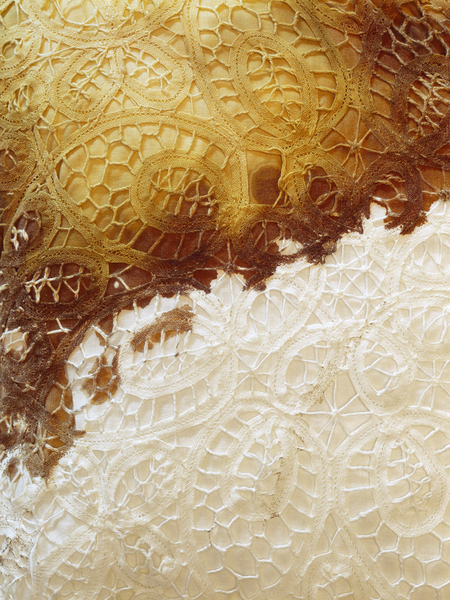
Sudhoff: At the Hour of Our Death takes as its starting point [Phillipe] Aries’s observation that “death’s invisibility enhances its terror”. These large-scale color photographs capture and fully illuminate swatches of bedding, carpet and upholstery marked with the signs of the passing of human life. The fabrics which are first removed by a trauma scene clean up crew, are relocated to a warehouse before being incinerated. It is in the warehouse that I photograph these fragments stained with bodily fluids. I tack each swatch to the wall and use the crew’s floodlights to illuminate the scene.”

Illness, Female, 60 years old. Archival Pigment Print, 2010. 40 x 30 inches

Other series in Sudhoff’s portfolio are worth a look, notably Repository which is a self-portrayal project about Sudhoff’s cervical cancer in 2005.

EMAIL

prisonphotography [at] gmail [dot] com

Prison Photography Archives

Post Categories