Alfie Brooks (not his real name) is the focus of Amelia Gentleman‘s recent Guardian article. Photographer Tom Wichelow spent 12 months with Alfie documenting his life:

It’s a project Alfie agreed to because he thinks it will be interesting to have someone document his life, to supplement the memories he has in his head with real pictures. His numerous friends have accepted the photographer’s presence without much surprise. This is a generation used to cameras, and Alfie, with breezy charm, waves a hand towards Tom and says, “That’s just my photographer.” He agrees to talk about his life to go with the pictures. “My attitude is, ‘Why not?’ People can learn about me,” he says. “I don’t know if people will be interested in me.”

During those 12 months, Alfie was sentenced to eleven days in prison (for stealing 400 balloons). It was his first stay in prison. Alfie intends it to be his only stay in prison. He was bored.

Prison was an ordeal for unexpected reasons. He spent most of the time in his cell watching daytime television. “It was like being in an old people’s home, but everyone was young.”

A coffee table at his flat, on which are instructions on how to use the curfew tag he has to wear. © Tom Wichelow

To the journalist, Alfie is simultaneously endearing and frustrating; he delivers pearls of wisdom and then childish logic. More startlingly, sometimes the two are the same – and we, the reader, need to rethink our perceptions and expectations of a younger generation without the same future-oriented behaviours we value and reward.

As someone who puts his hood up the moment he leaves his home, Alfie is offended by the demonisation of hoodies. “It’s like me calling a disabled person a wheelie leg. It is a disgusting stereotype,” says Alfie.

Alfie is affable and greeted warmly by folk about his hometown. He isn’t violent and has never stolen from an individual, only shops. It is a code he justifies. He has also smoked marijuana for as long as he can’t remember:

“Marijuana, I don’t see it as a drug. It is a plant, the same as nettles. Nettles hurt people much more. Why don’t you criminalise nettles and stop them from stinging people?” he says, with a teenager’s petulant logic.

He thinks he started smoking cannabis before he was 10, but he can’t be sure. “I haven’t decided yet whether marijuana has hindered me or not. We’ll have to wait and see.”

AMELIA GENTLEMAN

For me, Gentleman’s piece is not a ground-breaking piece of journalism, but it is unique. It takes the time to look at a young life that could be the norm for more young lives than we’d like to admit. It really spells out for us the drifting uncertainties of life for youth who’ve opted out of formal education, but are still bright, articulate, playful and “clear with ambition”. Gentleman has a fondness and hope for Alfie which is appropriate and understandable.

TOM WICHELOW

Gentleman’s piece is well supplemented by Tom Wichelow’s photo essay, A Year in the Life of Alfie Brooks. His year long study of Alfie is a nice counterpoint to other work in his portfolio, notably his work on CCTV in the Whitehawk housing estate, Brighton, You’ll Never be 16 Again and 2000 portraits.

In October of last year, when I posted on Jane Evelyn Atwood‘s documentary work from women’s prisons across the globe, the pictures and the message were well received.

Better still, is to listen to Atwood discuss the her photography and its lessons for us all. Her common observation across all women’s prisons is women are very often incarcerated because of the men in their life. They are abused, pimped into prostitution, inducted into crime, manipulated emotionally, and backed into corners – from which retaliatory violence is their only remaining option.

Persevere through the irritating, news-studio interview formula and you’ll be rewarded with Atwood’s insight.

Atwood is currently campaigning on behalf of Gaile Owens, the only woman on death row in Tennessee. During the original trial Owens did not testify to the full degree of the domestic abuse she suffered; she wanted to protect her children from the truth. The result was the absense of mitigating circumstances during consideration of the verdict.

Owens’ execution date has been set for September 18th, 2010. A movement is underway to see her death sentence commuted to life without parole. Visit http://www.friendsofgaile.com/ for all the information on the case and the opportunity to sign a petition.

Atwood is emotionally submerged in her work, close to her subjects. Any distinction between photographer and subject maybe unwanted; “Gaile is a battered woman on death row. And she needs our support.” This statement, as with Atwood’s work,  goes to the heart of the most urgent advocacy – that which is motivated by empathy and kinship.

Watch Atwood’s France24 TV interview.

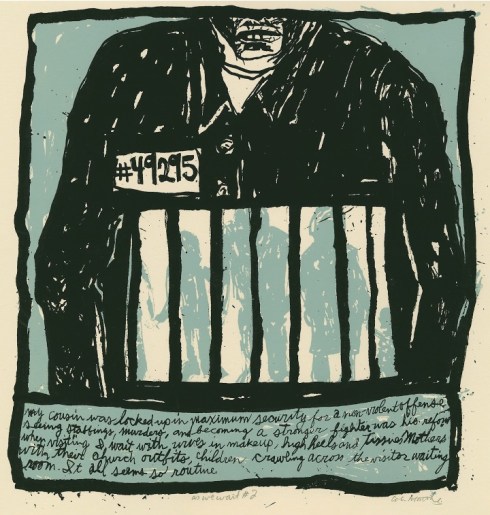
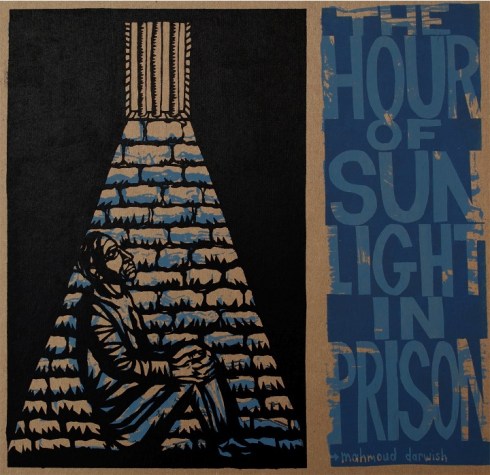
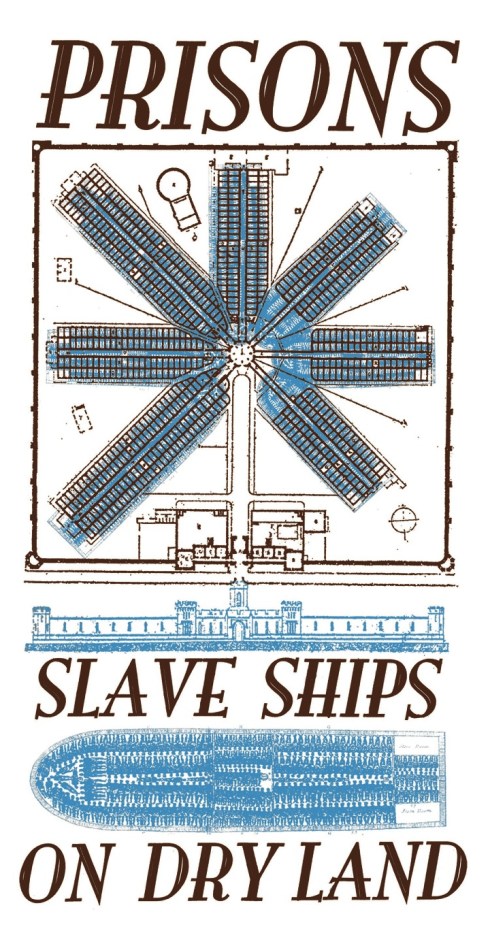
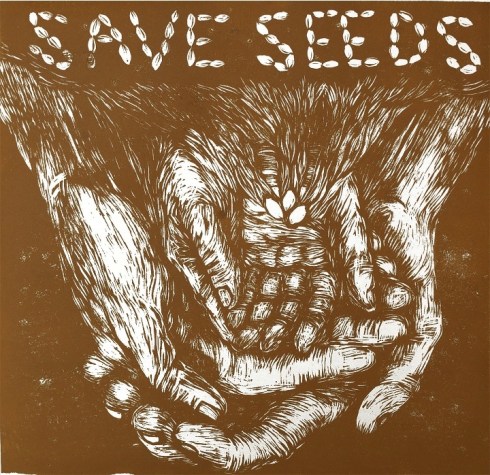
I just received an exquisite collection of prints by the Just Seeds Collective in celebration of Critical Resistance’s 10th anniversary (which was in 2008).

So stoked.

Artists (from top to bottom): Alec Icky Dunn; Lydia Crumbley; Jesse Purcell; Colin Matthes; Erik Ruin; Andalusia Knoll; and Meredith Stern.

MARTIN BATALLES REPRESENTING URUGUAY

LIVIA CORONA REPRESENTING MEXICO

MARCOS LOPEZ REPRESENTING ARGENTINA

Friend of Prison Photography, Emiliano Granado, likes football as much as he rocks at photography.

We pooled our knowledge to pair each country competing in South Africa with a photographer of the same nationality.

GROUP A

FRA France  – JR
MEX Mexico – Livia Corona
RSA South Africa – Mikhael Subotzky
URU Uruguay – Martín Batallés

GROUP B

ARG Argentina – Marcos Lopez
GRE Greece – George Georgiou (Born in London to Greek Cypriot parent)
KOR South Korea – Ye Rin Mok
NGA Nigeria – George Osodi

GROUP C

ALG Algeria – Christian Poveda
ENG England – Stephen Gill
SVN Slovenia – Klavdij Sluban (French of Slovenian origin … I know, I know, but you try to find a Slovenia born photographer!)
USA United States – Bruce Davison

GROUP D

AUS Australia – Stephen Dupont
GER Germany – August Sander
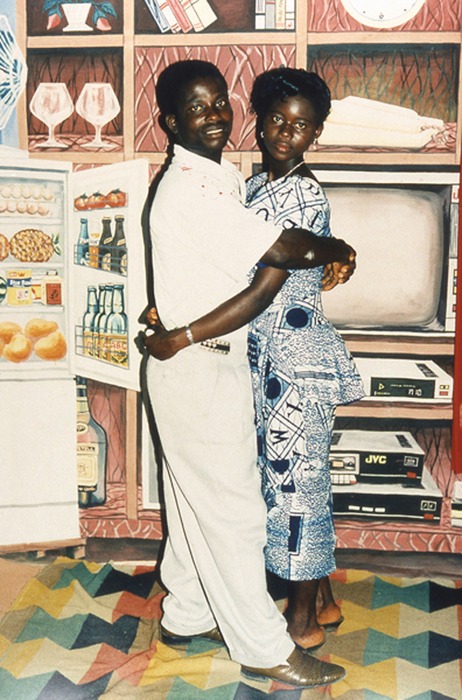
GHA Ghana – Philip Kwame Apagya
SRB Serbia – Boogie

GROUP E

CMR Cameroon – Barthélémy Toguo
DEN Denmark – Henrik Knudsen
JPN Japan – Araki
NED Netherlands – Rineke Dijkstra

GROUP F

ITA Italy – Massimo Vitali
NZL New Zealand – Robin Morrison
PAR Paraguay – ?????
SVK Slovakia – Martin Kollar

GROUP G

BRA Brazil – Sebastiao Selgado
CIV Ivory Coast – Ananias Leki Dago
PRK North Korea – Tomas van Houtryve (it was difficult to find a North Korean photographer)
POR Portugal – Joao Pina

GROUP H

CHI Chile – Sergio Larrain
HON Honduras – Daniel Handal
ESP Spain – Alberto García Alix
SUI Switzerland – Jules Spinatsch

Emiliano has been posting images from each of the photographers and doubled up on a few nations where the talent pool is teeming. You can see them all over on his Tumblr account, A PILE OF GEMS

NOTES

* Don’t even begin arguing about who should represent the USA. It is a never-ending debate.

* I’ll be honest, finding photographers for the African nations was tricky, even for a web-search-dork like myself. But then we knew about the shortcomings of distribution and promotion within the industry, didn’t we?

* For Chile, we had to look to the past legend Larrain. I’ll be grateful if someone suggest a living practitioner.

* North Korean photographer, by name, anyone? We had to fall back on van Houtryve because he got inside the DPR.

* Rineke Dijkstra was one of approximately 4 thousand-trillion dutch photographers who are everywhere.

* Araki was the easy choice. Ill admit – I know next to nothing about Japanese photography (Marc, help?)

* I wanted a few more political photographers in there, while Emiliano goes for arty stuff. I think we found a nice balance overall.

* And, SERIOUSLY, name me a Paraguayan photographer! PLEASE.

AUGUST SANDER REPRESENTING GERMANY

JULES SPINATSCH REPRESENTING SWITZERLAND

PHILIP KWAME APAGYA REPRESENTING GHANA

Ten years ago, Katy Grannan’s photograph of Jeff Stackhouse accompanied The Maximum Security Teenager, a Margaret Talbot article for The New York Times Magazine. Talbot’s long piece explored the growing number of teenagers serving time in adult prison facilities. Stackhouse was fifteen when the article appeared in 2000.

‘Jeff Stackhouse’, Chromogenic print, 2000. Published in New York Times Magazine, September 10, 2000. Collection of the artist, courtesy Greenberg, Van Doren Gallery, New York City; Fraenkel Gallery, San Francisco; Salon 94, New York City. © Katy Grannan

Katy Grannan is best known for her domestic and nude portraits of women (often non-models who Grannan connects with via newspaper ads), so this photograph of Stackhouse is a relative anomaly.

Grannan graduated as part of the Yale MFA grads taught by Gregory Crewdson and known affectionately and disparagingly in equal measure as ‘The Yale Girls’. The complaint has been that Crewdson engineered their early exposure on the art scene with the Another Girl, Another Planet exhibition.

THE BOY

Stackhouse’s portrait was taken on assignment but was also included in the Portraiture Now: Feature Photography exhibit (Nov. 2008-Sept.2009) at the National Portrait Gallery along with photographs by Jocelyn Lee, Ryan McGinley, Steve Pyke, Martin Schoeller, and Alec Soth. The exhibit deliberately selected photographers’ work “for publications such as the New Yorker, Esquire, and the New York Times Magazine, each bringing their distinctive “take” on contemporary portraiture to a broad audience.”

Despite lengthy internet searches, I cannot find any information on Jeff beyond the NYT Magazine piece and a 60 Minutes piece, both shortly after his incarceration. Being tried as an adult, Stackhouse potentially faced a 30 year sentence – incredible if you consider his transgression:

‘Jeff was under a kind of house arrest imposed by the juvenile court – he wasn’t supposed to leave home alone except to attend school. But on Feb. 23, 2000, he was arrested again. He and three other neighborhood kids his age had been ”play boxing,” as the police report termed it, at the school bus stop, and Jeff had given one of the boys a bloody lip. After the fight, the boy and his pals set out for Jeff’s house, where they called him out on the lawn, got him in a headlock and punched him. Jeff ran into the house, found an unloaded antique shotgun that his mother kept in her closet and brought it out to wave at the other kids, shouting, ”Get off my property!” The three boys headed home in a hurry. No one was hurt, and two of the three did not even want to press charges.’ (Source)

THE MAN

Jeff obviously had severe problems as a teenager – as Talbot’s article described – but he would be 25 years old now. The Arizona Department of Corrections returns no record of an inmate with his name. He may have been released, he may have not?

My point? I guess this is merely one of millions of images that have no (widely-distributed) follow up. The forlorn circumstances of Jeff’s experience in 2000 do not exist now; they could be better or worse, but the absence of knowing renders this decade old portrait virtually obsolete.

The portrait was taken as part of a story; as an anchor and human face to the description of changing, harsher laws for sentencing youth. These laws deal in years and so it is that Jeff’s story has unfolded over years. Only we don’t know the details.

I am curious what other events have transpired for Jeff, and mostly I am interested what Jeff thinks about his brief feature in the national media, the fact he has been on the walls of the National Portrait Gallery and if any of that ultimately mattered or changed things for him.

– – –

More of Grannan’s work at Salon 94.

The Fault Lines programme on English Al-Jazeera looks at America’s aging prison population. Reporter Josh Rushing gets exclusive access across the US, but the most astounding footage is from the Geriatric Unit of the Joseph Harp Correction Center, Lexington, Oklahoma.

Fault Lines also visits the Mabel Bassett Correction Center, Oklahoma’s largest women’s prison.

NOTES

* At the time of filming, Oklahoma’s prison system was operating at 75% staffing, referred to by administration as “warehouse mode”; housing but not rehabilitating prisoners.

* Check out Sherman Parker’s situation beginning at 9.38. Sherman is 100 years old. He is cared for by Seth Anderson, another inmate convicted for kidnap and drug and weapon possession. Anderson speaks frankly about the hospice care at the Dick Conner Correctional Center, Oklahoma.

* Prisoners over 55 years account for the fastest growing class of inmates in America.

* Only three out of every 100 inmates over 55 years return to prison after release, compared to the national average of over 60%.

* Fishkill Correctional Facility, 70 miles north of New York is the nations first purpose-built unit for the cognitively impaired. The average age is 63 and many prisoners suffer from Alzheimer’s and other conditions of dementia.

From CONTACT blog:

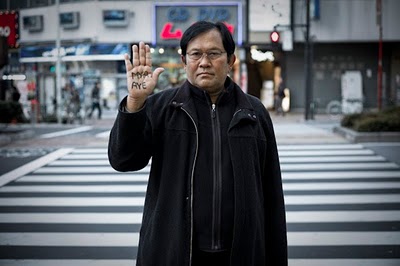
James Mackay‘s project ‘Even Though I’m Free I am Not’ is a confrontational investigation into Burma’s political prisoners. Travelling across the globe, Mackay documents Burma’s former political prisoners.

Visit CONTACT for an interview with James about the project.

Dr Aye Chan, Insein Prison, Tharawaddy Prison, 7 years © James Mackay

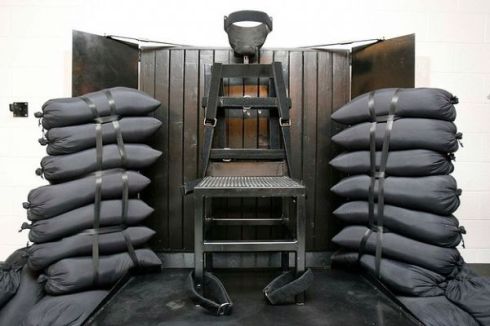
© Trent Nelson/AP - Pool

BagNewsNotes ran the above photograph with commentary. It goes without saying that I am opposed to the death penalty, which is nothing more than foolish symbolic act in our political economy.

Four bullets passed through Ronnie Lee Gardner. In this photograph, three bullet-holes are visible in the wood. Photographer, Trent Nelson presented a six-part series on his coverage of the case, appeals and execution in Utah. Part six is titled ‘The End’:

I’m told that I can only bring one camera, no camera bag, and I must have a lens cap on my lens. That changes things. I grab a body with a 16-35, stick a flash on top, pop in my most reliable battery and an 8 gigabyte card. It’s an uncomfortably light kit for such a big assignment.

The photographs and text are a detailed account of a surreal event:

Immediately there are disagreements about details. Standing at the window of the execution chamber after Gardner was shot, one reporter had drawn a sketch of the target on Gardner’s heart indicating the four bullet marks. He insists his sketch of the target is accurate, while another reporter disputes it, saying that two shots were actually on the left not the right.

and

Reporters are soon climbing all over the chair, pointing at the bullet holes, poking their fingers in them.

In this execution chamber, in this prison, the media record the evidence and in so doing confirm the deed done. Very surreal.

EMAIL

prisonphotography [at] gmail [dot] com

Prison Photography Archives

Post Categories