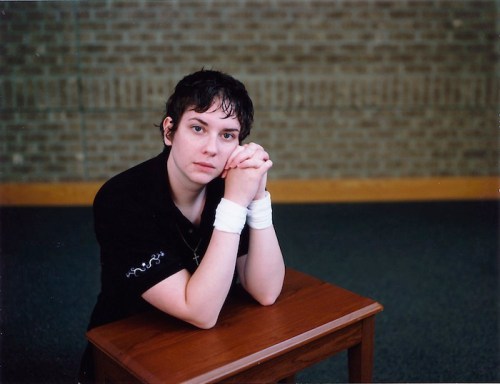
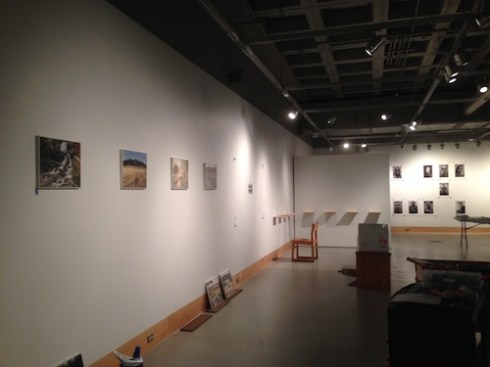
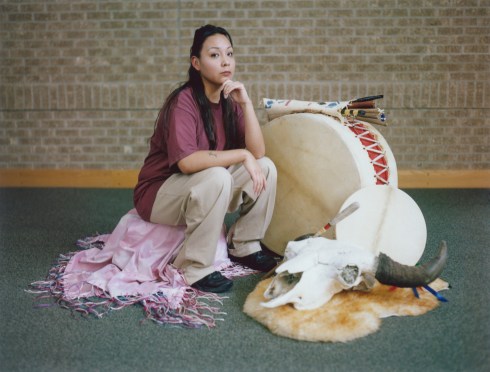
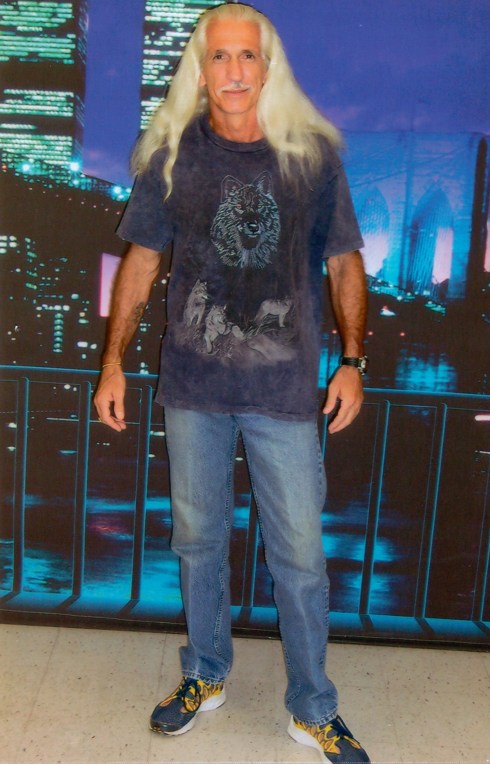
Prison-Obscura-53


EVERGREEN OPENING NIGHT, THURS 14TH JANUARY

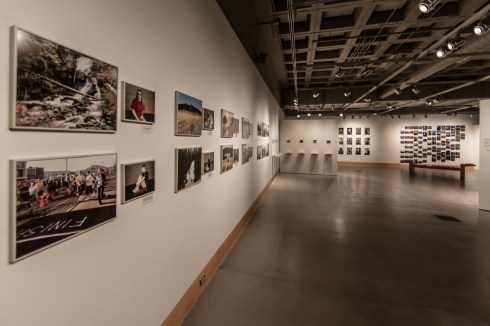
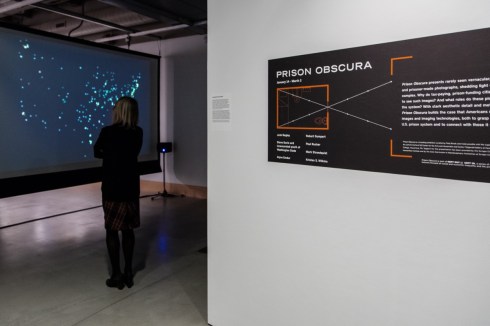
Prison Obscura opened at Evergreen State College in Olympia, Washington last Thursday. It is on show until March 2nd.

Ryan Richardson, manager of the PhotoLab at the college, made these images. They were originally shared in this post by Evergreen.

Prison-Obscura-68

The Evergreen print shop did a stellar job with the decal for the front window of the Evergreen Gallery.

Prison-Obscura-6

(From left to back) Kristen S. Wilkins, Steve Davis, Mark Strandquist, Robert Gumpert and photos from the landmark classaction lawsuit Brown v Plata.

Prison-Obscura-31

One fo the opening reception attendees. Thanks to all those who came out.

Prison-Obscura

Robert Gumpert‘s Take A Picture, Tell A Story in the back of the gallery.

Prison-Obscura-23

Paul Rucker‘s Proliferation shown at a size we’ve never dared before with Prison Obscura. It was right next to the gallery entrance and visible through the windows to the world outside.

Prison-Obscura-33

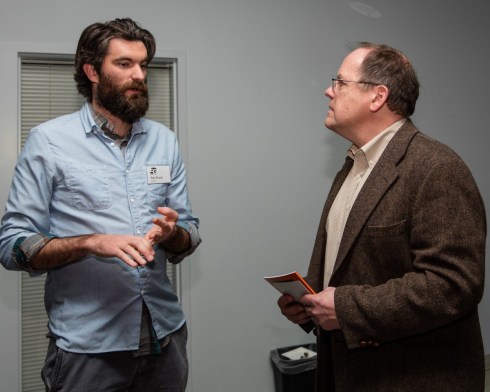
Evergreen President George Bridges (above, right) is a sociologist by training and has written extensively about crime, control and race in America. As an undergrad he interviewed prisoners in Monroe Correctional Complex, just outside Seattle. Bridges felt the strong impact of Robert Gumpert‘s portraits and interviews, he told me.

Prison-Obscura-55

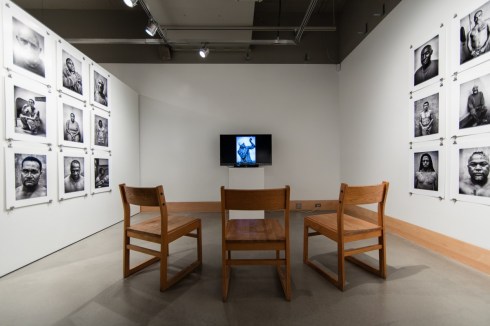
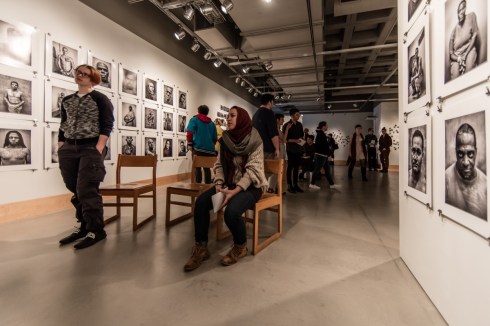
Gallery goers view the audio-slideshow of Gumpert’s interviews surrounded by 30 of his portraits from the San Francisco County jail system.

Prison-Obscura-41

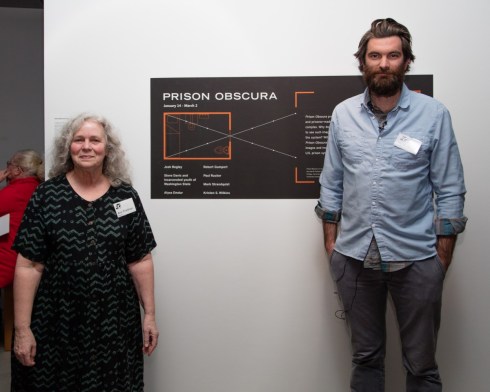
Evergreen Gallery director Ann Friedman and I. Ann and her student staff were phenomenal in their design, PR, audio/visual set-up and all other things. I’d like to thank Ruby, Cambria, Carson, Kelvin and the handful of others whose names escape me but they know who they are. Huge thank you.

UPDATED PRISON OBSCURA WEBSITE

The Prison Obscura website, maintained by the commissioners of the show Haverford College has been updated with installation shots from all venues thus far.

MLK

Martin Luther King faced criticism from clergy leaders in Birmingham Alabama for his direct actions in “their” town in April 1963. They saw him as an outsider (King was based in Atlanta, GA) and as an agitator. They asked him to refrain. He did not. He led a civil disobedience action against the businesses in downtown Birmingham and was arrested for it.

From jail, King wrote a letter explaining why an “injustice anywhere is a threat to justice everywhere.” It was a phrase he’d repeat many times. Letter From Birmingham Jail became one of the key texts of the Civil Rights Movement. Al Jazeera contends that the letter set the tone for the movement and paved the way for the March On Washington four months later, in August 1963.

In April, 1963, King wrote from jail:

“I am cognizant of the interrelatedness of all communities and states. I cannot sit idly by in Atlanta and not be concerned about what happens in Birmingham. Injustice anywhere is a threat to justice everywhere. We are caught in an inescapable network of mutuality, tied in a single garment of destiny. Whatever affects one directly, affects all indirectly. Never again can we afford to live with the narrow, provincial “outside agitator” idea. Anyone who lives inside the United States can never be considered an outsider anywhere within its bounds.”

Read the letter in full here.

I did some internet digging and turned up these images of King’s 1963 arrest.

MLK

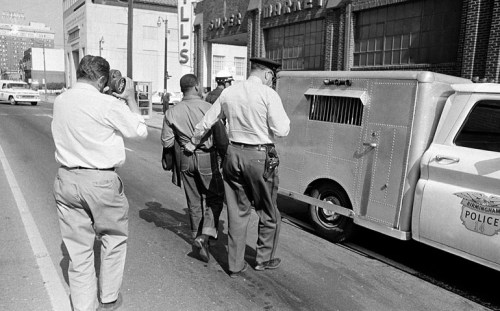
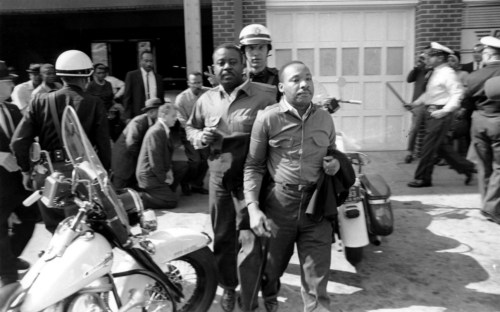
King and Rev. Ralph Abernathy (left) led a line of demonstrators into the business section of Birmingham, Alabama on April 12th, 1963.
MLK2

Abernathy and King are taken by a policeman, Birmingham, Alabama, April 12, 1963.

MLK

MLK8

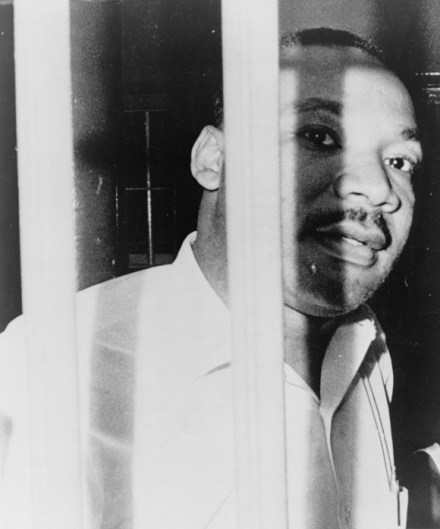
And then at Montgomery County Jail, this mugshot. You can see the date 4.12.63 in the lower right.

MLK3

And later in the jail.

MLK1

1958 + 1963 in Birmingham, Alabama

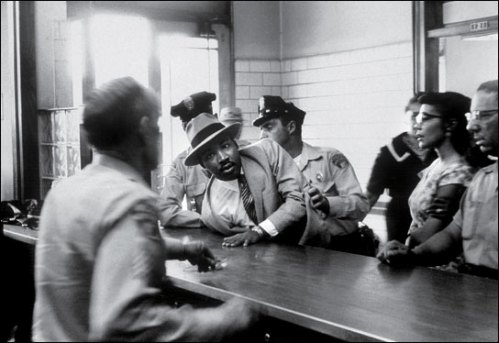
Sometimes the image below is thought to be from the same day. But it is in fact from 1958. The same Montgomery County and likely the same jail.
MLK

King wore a white shirt on both occasions, in 1958 he also wore a tie, beige suit and hat. In 1963, King showed up (knowing he was going to be arrested) in jeans and a denim shirt over his white shirt.

As for the mugshot below, you’ve seen it … or at least versions of it. You may not be familiar with the exact version below which has been *vandalised* with a biro scrawl of the date of King’s death.

MLK4

This image here is a copy of the original file that was kept at the Montgomery Sheriff’s Department. In 2004, a deputy rediscovered the files of King and his fellow protestors from 1958. Therefore, prior to 2004, only unscrawled versions of King’s mugshot circulated.

When one pauses to think about this, it’s quite curious. And it’s quite perverse. Who scrawled on MLK’s mugshot? Someone on the Montgomery County Sheriff’s staff returned to the archive, ten years after the photo was made, to write upon the mugshot that the subject was dead.

Was this standard practice? I doubt it. Say for example, someone gets in a fist-fight, in some year in the late ’50s, in some part of Montgomery County, and was booked into jail. Then suppose, for arguments sake, that that same person died a decade later in another state. It’s not likely the Montgomery Sheriff would even know, let alone direct her or his staff to doctor an archived booking photo. Which leads me to believe that an employee took it upon themselves to return to the file to annotate the photo.

What a strange and disturbing act. Was it born of self-directed stupidity; a procedure by a bureaucrat going the extra mile to fill-in all known information in the crudest of manners? Does the act reflect a disdain for King? Keep guessing; it’s likely we’ll never know who scrawled all over this significant photographic document of the Civil Rights era.

ONE MORE THING

On today, Martin Luther King Day, may I also recommend Wil Haygood’s piece Martin Luther King, Thurgood Marshall and the Way to Justice.

In considering these two visionaries, Haywood outlines who then, now and our future relate. Amidst the current Black Lives Matter movement–when debate about the effectiveness (and speed) of change brought about by protest vs. legal process–is at the forefront, it pays to consider the lives of MLK, a non-violent and civil disobedient leader, and Marshall the first African-American Supreme Court Justice.

I’M JUST GOING TO GO AHEAD AND CALL THIS CHILD ABUSE

I thought the video above was a fake at first. I thought that it was a satire made by green-screening the kids’ performance onto a backdrop of a Trump Rally. But it’s legitimate and just proves Trump can make our worst nightmares come true.

I can explain the headline by saying that today is Martin Luther King Day and I cannot think that this type of glitzy performance was the type of civic engagement for future generations that King had in mind when he urged a more equitable, caring and empowering society. The girls, an entertainment group named USA Freedom Kids, have been trotted out here by conniving, cynical adults. No-one should deny youngsters their wishes to dance, sing and move their bodies, but no adult should be filling children’s minds, lyrics and identity with partisan and jingoistic rah-rah. Shame on those adults.

Guy Debord is turning in his grave because even he, the infamous contrarian and vitriol-fueled leftie, has a heart. He’d see that the kids are victims here. He’d also identify this performance as the example par excellence of the Spectacle–human existence fully mediated by the image and diffuse within it. Ugh, such young lives crushed by the small-minded political fears of the parents’ generation. Identity squished into a For-Cable-TV skit. Self-esteem pulverized into the shape of a faux-patriotic act that exists for the entertainment of adults and at the expense of the children’s curiosity and development.

Johnson, Reagan and Eisenhower are turning in their graves because they are the presidents that did the most for education in the United States and they, from all sides of the political spectrum, would agree that children being primed for the stage of a racist, misogynist, xenophobic billionaire is child abuse at another order of magnitude. Shame on those adults.

I don’t think I’m getting old or jaded and I don’t think I have less optimism than I did than, say, when I was in my twenties. As best as I can evaluate, though, I think America is losing the plot more and more. Even after Bush Jr., Sarah Palin and the Tea-Partiers, the political intelligence of America continues to plummet. Along with it curiosity. And along with it, often, a sense of decency. Trump is a loathsome package. I take no pleasure from seeing the Republican establishment disrupted when the disruption comes from an arrogant, smarmy, full-of-hate loudmouth. Trump’s reckless disregard is no better summed up by this illustration and this politician’s reason.

Trump is disgusting. His rallies reflect that.

1KristenWilkins

Photo: Kristen S. Wilkins, from the series Supplication

Bit of housekeeping folks! I need to let you know three things about Prison Obscura:

  1. Prison Obscura is going to Washington State.
  2. Prison Obscura is going to Oregon.
  3. Prison Obscura will be retired in June, 2016.

WASHINGTON

The exhibition opens at Evergreen State College in Olympia Washington this Thursday, January 16th, from 4pm-6pm. I’ll be there giving a curator’s talk.

Evergreen is hosting Prison Obscura as part of Kept Out/Kept In, a series of talks, shows and presentations examining carceral culture.

evergreen

Prison Obscura Installation in progress, Evergreen State College.

The show is up January 14 – March 2 at Evergreen Gallery, Library 2204, Evergreen State College, 98505 (Google Map)

OREGON

Between April 1 – May 28, Prison Obscura is on show at Newspace Center for Photography in Portland, Oregon.

Mark your calendars waaaaaaay in advance for the opening reception 6-9pm on Friday, April 1st (no joke). I’ll be in Portland all weekend, giving a curator’s talk at the opening and then convening with others for events and panels.

1632 SE 10th Ave., Portland, OR 97214. (Google Map)

supplication004

Supplication #4, Landscape. From the series ’Supplication.’ “The Pryor Mountains. It is so special to me because I am from Pryor and I miss home. Castlerock at sunset.” Photo: Kristen S. Wilkins.

supplication004LAND

Supplication #4, Landscape. From the series ’Supplication.’ “The Pryor Mountains. It is so special to me because I am from Pryor and I miss home. Castlerock at sunset.” Photo: Kristen S. Wilkins.

RETIRING ‘PRISON OBSCURA’

To say that the Cantor Fitzgerald Gallery at Haverford had never travelled a show before, they–namely Matthew Callinan–have done a magnificent and utterly-indispensible job in administering Prison Obscura over what will be seven venues.

I didn’t know exactly what was involved in traveling a show such as this and I’m so so grateful that Callinan had the support of his peers at Haverford College to produce an exhibition that could stretch beyond Philadelphia where it all began. We learnt together.

It’s been a great run. After Olympia and Portland though, it’s time to say goodbye. I celebrate Prison Obscura‘s unexpected and gratifying success, but I know that after 2-and-a-half years, it’s time to move energies on to other things. I need to step back and to think about what next, if anything, is appropriate for a prison-based exhibition.

There are massive amounts of vital work and organizing being done around prison activism, policing, power and community-empowerment. I’d like to learn more; take the time to hear and see. Observe and act more; perhaps talk and type less–for a while, at least.

No doubt, I’ll have more to say when Prison Obscura wraps up in Portland, the final show, toward the end of May. For now, I hope that if you are in the Pacific Northwest you’ll be able to check out the show and engage with the ideas its artists propose. Thanks to Alyse EmdurRobert GumpertSteve Davis, Mark Strandquist, Kristen S. Wilkins,  Josh Begley and Paul Rucker and the City of Philadelphia Mural Arts Program and the men of the Restorative Justice Project at Graterford Prison.

0833_PrisonLandscapes_ins.55.indd

David Wells, Thumb Correctional Facility, Lapeer, Michigan. From the series ‘Prison Landscapes (2005-2011).’ Photo: Anonymous, courtesy of Alyse Emdur.

Even though 1,000 were printed, they’re somewhat of a rarity these days. Hundreds were given out for free during the opening exhibition at Haverford College and they’ve made their way into comrades’ hands, collections and supporters bookshelves ever since.
I have only 18 remaining in my possession.

Fortunately, the physical scarcity needn’t be mirrored in the digital world. Now, via the Haverford Exhibits Prison Obscura page, you can download a PDF of the catalogue.
download


48 pages of pretty pictures, a foreword by Kristen Lindgren and a whopping 5,000-word essay by yours truly.

I’m thrilled by the prospect of people reading on the printed page as opposed to these here screens.

Strandquist
© Mark Strandquist, from the series ‘Some Other Places We Have Missed’
4BrownVsPlata copy
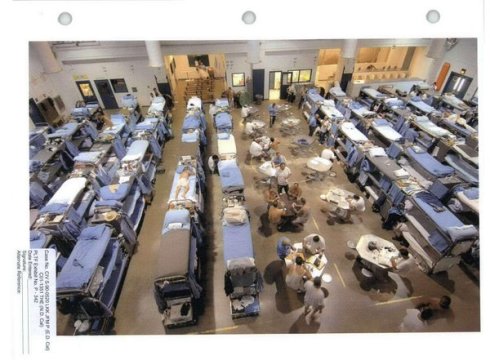
From the Brown v Plata/Coleman lawsuit.
Begleyfacility237
© Josh Begely, from the series ‘Prison Map’
Davis
Photo: Made by a student of Steve Davis during a photography workshop in Washington State juvenile detention facility.
bvp
From the Brown v Plata/Coleman lawsuit.

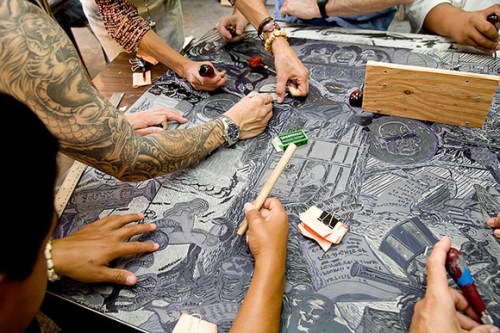
Carving a linoleum block, printmaking class, San Quentin State Prison, California. Photo: Peter Merts.

Do you work in prison arts? Have you got thoughts, advice and problem-solving or teaching techniques you’d like to share?

The William James Association alongside The Prison Arts Coalition and a host of other partners have launched the National Prison Arts Survey to crowdsource all the knowledge and strategies that exists out there in all of your heads and teaching manuals.

CLICK HERE for the National Prison Arts Survey

There is talk about whether to form a national organization of prison arts organizations and your input it crucial at this early stage.

Over recent years, the William James Association and California Lawyers for the Arts has been committed to research into effective prison arts teaching. Most notably they put out the paper Art Practice and Its Impact in California Prisons, by Larry Brewster.

It is thought that a national organization could offer the following to members:

Raise awareness of programmatic efficacy
Host national or regional conferences
Share best practices
Foster community
Support, collect and disseminate relevant research
Offer professional development opportunities

The 5-minute survey is designed to help better understand the need for a national prison arts association and how it might serve potential members like you.

CLICK HERE for the National Prison Arts Survey

The survey was developed with input by prison arts advocates and practitioners, including:

Cynthia Gutierrez – Barrios Unidos Prison Project

Ella Turenne – Artist, Activist, EducatorOccidental College

Freddy Gutierrez – Community Worker, Performing Artist

Illya Kowalchuk – Pop Culture Classroom

Jonathan Blanco – Oregon State Penitentiary Hobby Shop

Laurie Brooks – William James Association

Lesley Currier – Marin Shakespeare Company

Nate Henry-Silva – Imagine Bus Project

Nathalie Costa Thill – Adirondack Center for Writing

Treacy Ziegler – An Open Window

Victoria Sammartino – Voices UnBroken

Wendy Jason – Prison Arts Coalition

Alma Robinson – California Lawyers for the Arts

Weston Dombroski – California Lawyers for the Arts

CLICK HERE for the National Prison Arts Survey

Responses are kindly requested by January 29th.


KatePeters copy

© Kate Peters

Here we are at the end of the first week of 2016. How’s it going so far? I spent the holidays lying in, reading stuff and watching my team Liverpool at silly hours of the morning. When at my desk, I was putting together a series of year end proclamations for Vantage.

It was a marathon, and by marathon I mean a six-parter. Still, that was more than 10,000 words and scores of images.

Part 1: The Best Nature Photos of 2015

Part 2: The Best Photobooks of 2015

Part 3: The Best San Francisco Street Photographer of 2015

Part 4: The Best Portraiture of 2015

Part 5: The Best GIFs of 2015

Part 6: The Best Photography Exhibition of 2015

Are these actually the best of the year? Are these the most watertight objective statements? Of course not, and I admit as much in the pieces. What they are though is my strongest arguments as to why these projects and ideas are more relevant, caring (even), fruitful and connecting.

Put your feet up. Have a glance.

93 copy
© Thomas Roma
ALAN POWDRILL copy
© Alan Powdrill
IMG_8625
© Troy Holden
Opton, Suzanne - Birkholz copy 2
© Suzanne Opton
102 copy
© Thomas Roma
pc1
© Vicente Paredes
Book cover of Vicente Paredes’ Pony Congo
Tauszik
© Brandon Tauszik
terry_pg03_10w
© Sara Terry + Mariam X
Scan-141203-0010
© Troy Holden

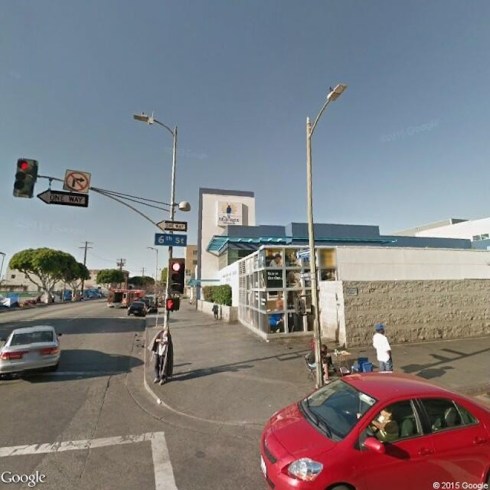
img141

Michael Ireland – Springfield, MO

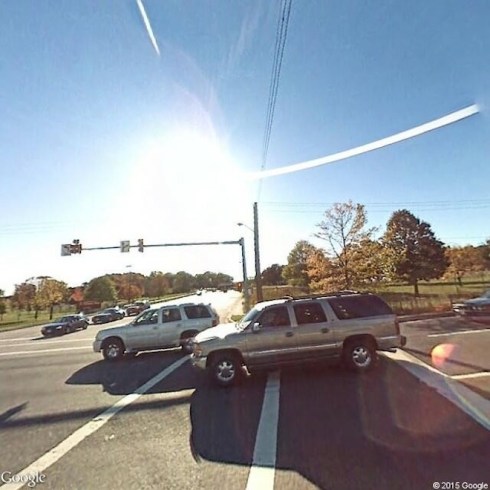
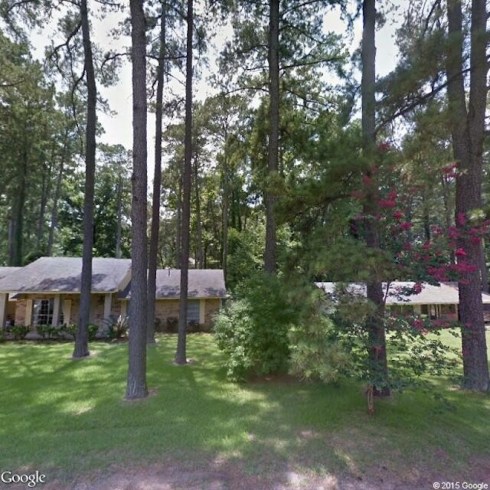
“A cookie-cut subdivision, a mall parking lot, a rural country road. Linking these unremarkable pockets of America, and hundreds of places just as ordinary, is the fact that they’ve all been sites where people were killed by U.S. police officers.”

In my first piece for TIME, I write about Josh Begley‘s project Officer Involved.

Like many of Begley’s previous works, he makes use of third party (activist/research/journalism) data to image a geographically-disparate but nationally-important issue. For Officer Involved he used The Guardian’s data from The Counted.

In 2016, there were 1,138 deaths in which a U.S. law enforcement officers was involved.

Read: Visualizing ‘Officer-Involved’ Deaths Across America

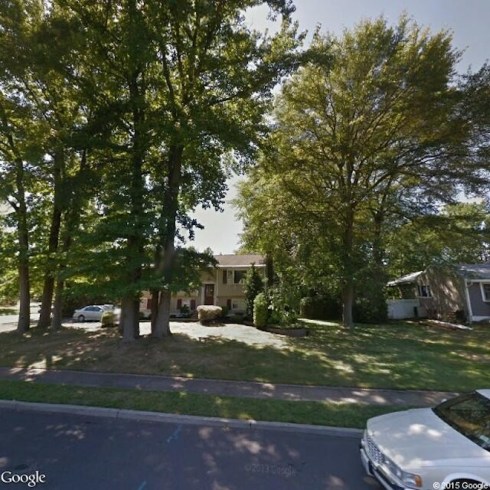
img36
Talbot Schroeder – Old Bridge Township, NJ
img176
Donald Matkins – Lucedale, MS
img229
Alice Brown – San Francisco, CA
img95
Anthony Purvis – Douglas, GA
img19
Omarr Jackson – New Orleans, LA
img276
Ricky Hall – Fort Meade, MD
img117
Brian Fritze – Glenwood Springs, CO
286
Aaron Rutledge – Pineville, LA
img174
Charly ‘Africa’ Keunang – Los Angeles, CA
img396
Lionel Young – Landover, MD

EMAIL

prisonphotography [at] gmail [dot] com

Prison Photography Archives

Post Categories