Young Offenders Workshop - México2013--17

Alonso Castillo is a freelance photographer based in the state of Sonora in northwestern Mexico. Predominantly, he works as a stringer for Reuters. Most of his work focuses on the border and he is a specialist in reporting on migration and social issues. He has instructed workshops in the past, is a college teacher and, since 2009, has worked as an editor at www.numerof.org.

Mauricio Palos, a mutual friend of Castillo and I, contacted me to tell me of Castillo’s 2013 photography workshop in a local youth prison, the Instituto de Tratamiento y de Aplicación de Medidas para Adolescentes (ITAMA) which is in the city of Hermosillo, in Sonora, northwestern México.

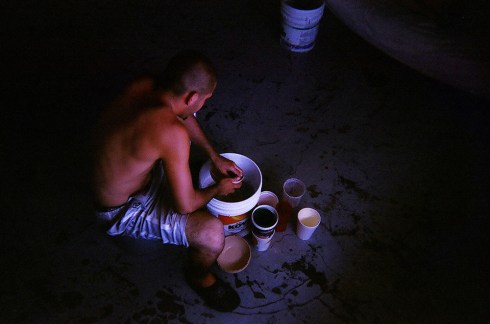
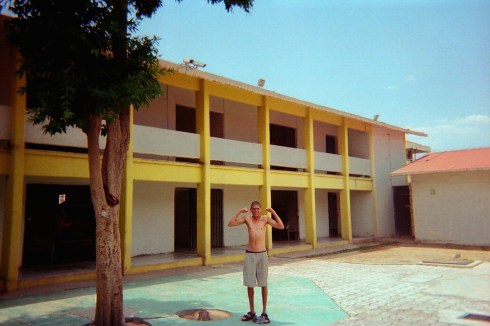
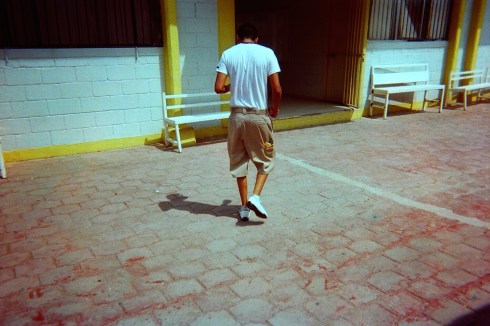
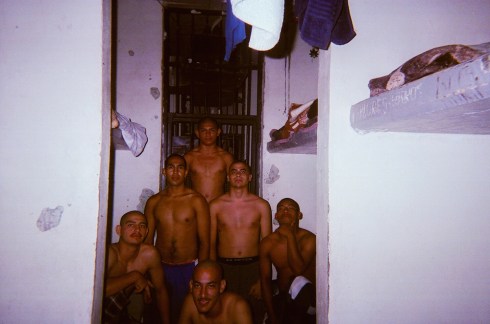
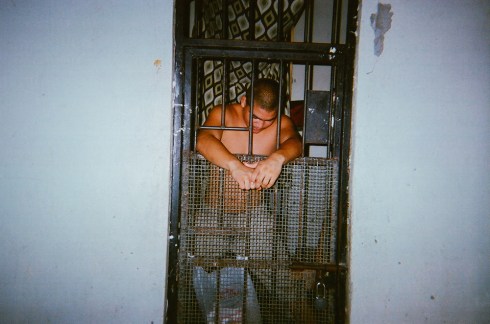
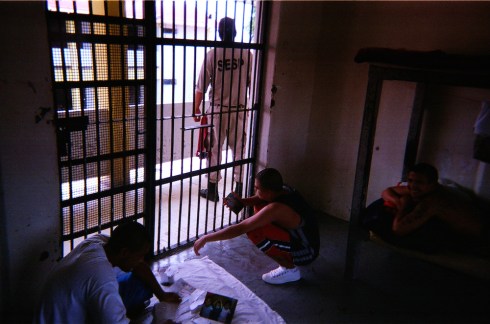
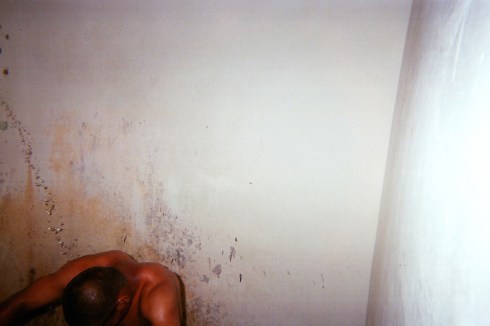
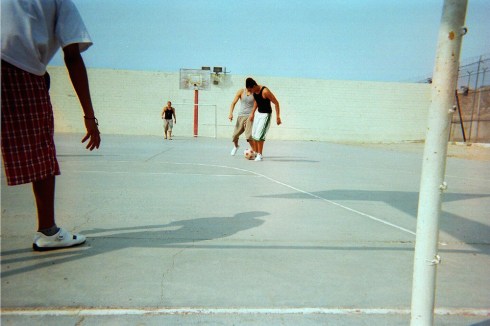
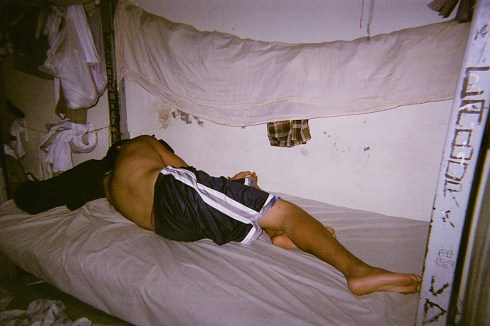
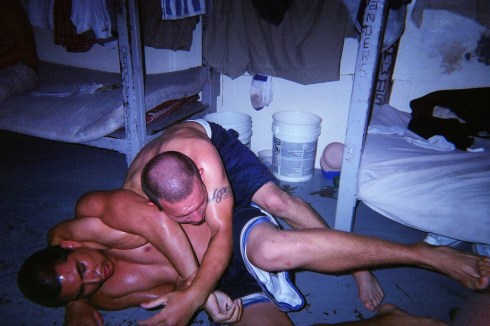
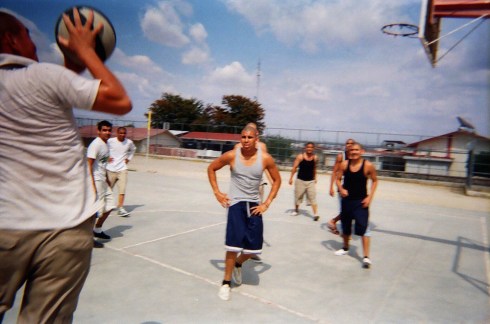
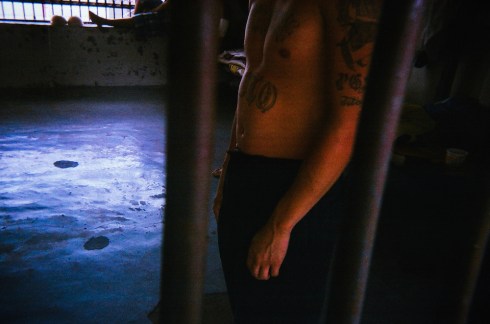
ITAMA houses approximately 450 boys and men. All the prisoners were convicted as juveniles but currently 70% of the prisoners are adults as they’ve turned 18 during their incarceration. Castillo led a photography workshop with 10 boys aged between 15 and 21. When he sent me the photographs I was floored by how sparse and rudimentary the environment for these kids appeared. I wondered if this was a case in which, more so than others, the camera didn’t lie?

All these photographs were made by the 10 participants. Castillo and his colleagues only made technical recommendations in order for the boys to take advantage of available light and framing. “The boys decided how to work and what to photograph,” says Castillo.

Kindly, Castillo answered some questions about the project to accompany this exclusive showing of the juvenile prisoners’ photographs.

Young Offenders Workshop - México2013--3

Young Offenders Workshop - México2013--2

Young Offenders Workshop - México2013--33

Q & A

Prison Photography (PP): Did you find prisons/social justice first? Or did you find photography first?

Alonso Castillo (AC): It is hard to say, I come first of photojournalism but this area is combined with social justice; that is, I do believe that our work is for the other. In this case this two territories are combined with an equal third one that is working with young people who have committed crimes.

Anyway, due to my job, I suppose I found photography first.
Young Offenders Workshop - México2013--52

Alonso Castillo and his students in the middle of a workshop session.

PP: What gave you the idea to do a workshop in the prison?

AC: I’ve taught, and participated in, workshops before—in Mexico, Cuba, El Salvador, Ecuador and Colombia. I try to make workshops part of broader and more complete projects of research into specific topics, or provide media training, or instruct on the practices of street journalism.

I knew a writer, Carlos Sanchez, who taught literature and creative writing at ITAMA. Together, we planned to work with young prisoners and teach photography. Carlos usually facilitates writing workshops so this was the first in which we worked with photography. For me, as a journalist and teacher, it was also a means to research and observe [the prison]. And the way things worked out, it was a very enjoyable observation.

Young Offenders Workshop - México2013--18

Young Offenders Workshop - México2013--22

Young Offenders Workshop - México2013--14

PP: How did you get access?

AC: The workshop was organized in conjunction with Fotoseptiembre an annual photography festival which recently celebrated its 25th year anniversary. Although Fotoseptembiere no longer takes place in all countries, it still exists in the city where I live. The festival served as a pretext to get authorization and work with these guys as part of a program that also included an exhibition to show the end results.

Young Offenders Workshop - México2013--50

Young Offenders Workshop - México2013--41

Young Offenders Workshop - México2013--23

PP: How long was the course?

AC: It lasted about 40 hours but we sometimes relaxed the formal schedule to adjust to the schedule of the boys or what was needed to complete the exercises. It is more accurate to say that we worked during the months of July and August 2013, and mounted a small exhibition in September. First we worked in the classroom with classes on theory; we saw some portfolios and documentary photography and we talked with the group and watched movies about photography. Later, disposable film cameras were given to each participant.

Participants were ten young people from five cities in central, northern and southern Sonora. Some of them came from the border municipalities for drug trafficking and murder.

The first exercise was carried out, then the cameras were processed and together we reviewed the work they had done. Then they were given yet another camera and had a chance to improve the ways they were seeing.

Much of the discussion topic was “everyday life”—their daily lives within ITAMA.

Young Offenders Workshop - México2013--47

Young Offenders Workshop - México2013--39

Young Offenders Workshop - México2013--37

PP: What was the aim of the course?

AC: We wanted to share with them tools and skills to help with their rehabilitation and reintegration; they could acquire knowledge and then approach a job when they finished their detention. We also wanted to give them occupational therapy during their time inside the ITAMA.

As we move forward in the activities it became a very human exchange of experiences between us and them, in which analyzed and talked topics of art, history, music, cultural references and social problems.

The photography and talk about photographs was as a part of healing.

Young Offenders Workshop - México2013--16

PP: Did you achieve the aims?

AC: It is difficult to know if what we did at that time will serve for something when they came out, which was an important part. With what happened in the classroom, yes, I am satisfied.

While in detention because they committed crimes (and some of them very serious), it was very emotional to reveal their “other faces”, the other sides to these young people.

Young Offenders Workshop - México2013--10

Young Offenders Workshop - México2013--28

AC: Although criminals, they remain children. This plain fact is something that the system ignores or cannot sufficiently deal with. All these boys are in the middle of a long learning process and maturation; they experience the same intangible fears as any of us. It is a matter of influencing the values ​​and beliefs they have, rather than corrective measures and punishments.

There are also other related matters. The environment has a very strong and decisive weight. These facilities provide for the operation of organized crime on the streets and in the offices of government. Rehabilitation doesn’t work if the institution operates in the midst of corruption. The Mexican political system besides not favoring conditions for social security and education, seems to be working to do otherwise.

Young Offenders Workshop - México2013--44

PP: Any unexpected surprises?

AC: They showed huge interest in the workshop, which very often does not happen when you’re outside teaching boys in the regular education system and even in college. It is sad but sometimes you find more resistance in a student who had better educational opportunities. With this group, everything happened in an easy way.

There was a boy with a natural look, he made some of the best photos of the workshop; he had a sophisticated way of seeing that gave the images a very contemporary look.

That happens sometimes in the workshops: anyone can worry so much about making a picture look easy and then someone comes in and just do it.
Young Offenders Workshop - México2013--13

Young Offenders Workshop - México2013--4

Young Offenders Workshop - México2013--9

PP: Anything you’d want to do differently if you wanted to/could teach another prison photography workshop?

AC: Of course. Working on more personalized projects. The conditions are limited but we could work with them in a better recognition of the environment. Projects could be designed for collective or personal response — online journals, a newspaper produced by themselves, and so on.
Young Offenders Workshop - México2013--11

Young Offenders Workshop - México2013--27

PP: Why did the prison authorities let you in?

AC: I think they did not take us seriously to consider us as a threat, except for us to fulfill the security conditions such as the introduction of dangerous objects or not allowed.

PP: Had you been in a prison before? What did you expect to find? What did you find?

AC: Yes, I had been before taking pictures for a story. The access we now had was restricted only to the area to teach the workshop, so we only saw facilities from afar … and in photographs!

Young Offenders Workshop - México2013--20

PP: What were the boys’ reactions? How did they work?

AC: The first reaction kept at a distance but then it broke. There were different profiles and even some involving more than others, empathy was virtually total. Then we work with maximum freedom. Sure, they are young and at some point they laughed at us but at no time was any kind of rejection or problem.

Young Offenders Workshop - México2013--31

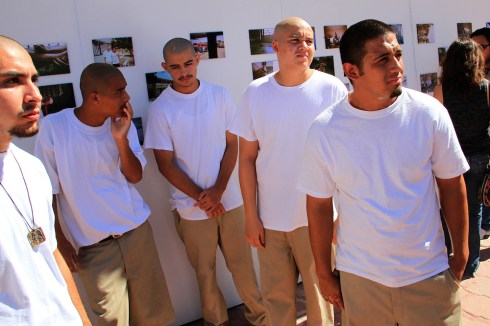
AC: After the workshop we had a very modest exhibition in the courtyards of ITAMA, with some family and other visitors. When we worked on that, we processed some film close to the date and we found a picture of the soles of the boys feet. As the exhibition was to be called Desde Adentro (From Within), the boys did a special photo for that—they sat on the floor and wrote the name of the exhibition on the soles of the feet. That was something we were not expecting.

In 2014, a selection of work from the boys won an honorable mention in a local photo competition.
Young Offenders Workshop 1

PP: What was the staff’s reactions to the boys walking around with cameras?

AC: We did not know of any reaction. You know, reading the photograph depends on the social construction and context. It is that possible for them and the staff of the detention center, there was no threat from outside, were themselves taking pictures around. We did not go as journalists and we weren’t there to make a report or complaint or observation of human rights in the prison.

In a subtle way, these photographs depict these young people for whom we have used the prison to delete their presence and hide them … and we’ve done so only for our own convenience. These photographs confront us with facts that lay counter to our simplistic thinking.
Young Offenders Workshop - México2013--15

Young Offenders Workshop - México2013--21

PP: Do prisons work?

AC: Prisons serve as a reflection of human behavior in which the administration of justice becomes confused with revenge.

We want justice but don’t think very deeply about its application. People go to prison for many different types of crime but when they’re inside we make no distinctions. Initially, justice is operational and later it is a process that becomes bureaucratic, expensive and exhausting for those who experience it. The legal part of the system is a mess; it is much harder to get out even with the law in your favor. Prisons may be where all traffic comes to a dead end.

Young Offenders Workshop - México2013--51

Young Offenders Workshop - México2013--54

PP: Can photography heal social ills?

AC: Yes. It is an effective tool to communicate, to visualize and generate impact to social problems. Although it’s not a massively used tool for educational purposes, I think no efforts are small and everything we do is important.

In the near future, I want to train groups of people to jump-start local journalism projects involving vulnerable sectors of population and minorities (native groups, sexual minorities, neighborhoods, and others.

PP: So reach is a big factor too.

AC: Yes. César Holm, who works on a project for the professionalization of photographers in Mexico, in a conversation we had recently, mentioned the need to get an audience for photography and the promotion of a profile for teaching. I agree with him.

I say it is not a massive tool because although photojournalism represents a broad global distribution circuit, I have the impression that we are producing for ourselves. This phrase I heard a few years ago and I still like it, “only photographers know photographers”. We like to publish books that we read, there are contests and scholarships for specialized circle of consumers, who are we and our friends.

I think we could expand that circle.

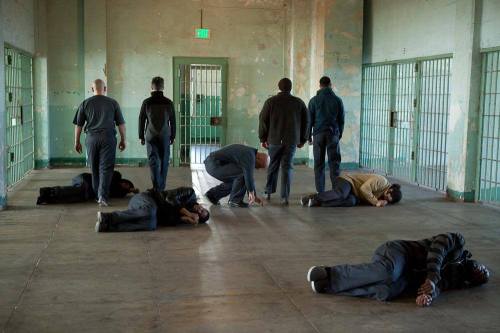
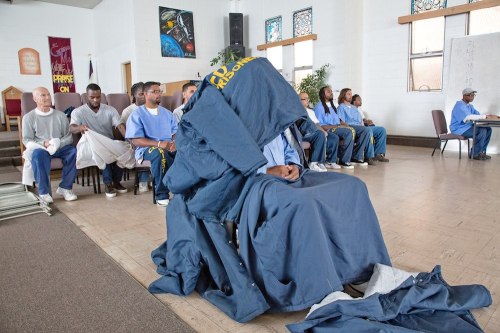
If the picture above looks familiar, it might be because you’ve seen press shots of Alcatraz’s blockbuster Ai Weiwei show At Large. Above is a production still from a lesser-known art intervention on Alcatraz; it shows the filming of Well Contested Sites, a choreographed performance for film made by former prisoners.

Before the Weiwei’s dragon a hall’s-worth of (brilliant) lego portraits, the “gallery” spaces of Alcatraz were host to Well Contested Sites a 13-minute dance and theater collaboration between a group of men who were previously incarcerated, performing artists from the Bay Area, choreographer Amie Dowling and film maker Austin Forbord.

The performance and film draw on the experiences and physical memories, or memories of the physical.

“Using a metaphorical, movement-based aesthetic, the film explores the effect of incarceration on individuals and suggests that the imagination can thrive even while the body is behind bars,” says the makers.


I know next to nothing about dance, but I was moved to write about Well Contested Sites because it achieves several things, responsibly and simultaneously. Firstly, the sound production and the performances are expertly crafted. The thump of bodies and body parts against the confines of the prison and cells is effective and sometimes nauseous in its sickening repeat. Very powerful.

The clap, the slap, the thok. These are visceral sounds that rattle your chest. Listen to the opening credits of any “gritty” TV show intro (Deadwood, True Detective, Rectify, and many more) from the past decade and you’ll hear these same morose and punching drums and woodblocks. They’re designed to drill you into your seat; they create instant alert and a readiness for drama. It’s just a blessing that Well Contested Sites delivers respite with quieter closure. Interestingly Sister Gertrude Morgan’s folk songs are introduced and they have the same cantor and percussion, but nothing like the earlier oppressive audio.

f

Secondly, this is a form of art therapy for the formerly incarcerated. Well Contested Sites represents the highest production that Amie Dowling and her team have brought to a project but they are, regularly, delivering dance and theater classes in San Quentin State Prison and the San Francisco county jail system. What begins inside can continue outside.

Thirdly, and perhaps most significantly,  Well Contested Sites goes beyond a one-off performance. This is the anchor to discussions about mass incarceration and arts role in bettering the lives of men and women inside. The performers and makers have travelled the country (see the Facebook page). It is the starting point for discussion led, in some cases, by formerly incarcerated individuals to educate the public. Now there’s many projects that attempt and achieve that but some are more successful than others. The most successful projects are those that grip audiences attentions by confounding expectations, by showing them something truly different.

banks & luke

Like I said, I don;t know a lot about dance, but I know a fair bit about prisons and it’s a rare and special thing to craft a professional performance as that we see in Well Contested Sites.

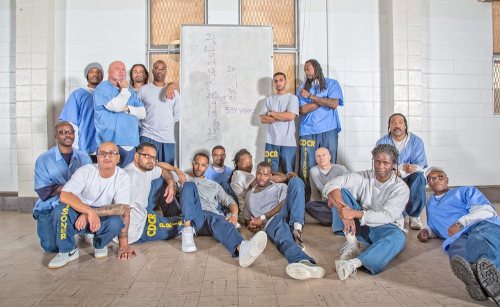
I asked Amie recently to share the new projects she was working on and she sent over Peter Merts‘ photos of a November 2015 performance of Faultline, by the Artistic Ensemble at San Quentin Prison.The Artistic Ensemble is a rigorous, creative group that explores personal narratives and their experiences with systemic forces of poverty, violence, power, and incarceration.

Current Artistic Ensemble members include: Adnan Khan, Anouthinh “Choy” Pangthong, Antwan “Banks” William, Belize Villafranco, Chris Marshall, Sr., Eric Lowery AKA Mike Lowery, Gary Harrell, Gino Sevacos, Ira Perry, Julian Glenn Padgett (Luke), Juancito, Lawrence Pela, Le’Mar “Maverick” Harrison, Maurice “Reese” Reed, Neiland Franks, Nythell “Nate” Collins, Richie Morris, Rodney (RC) Capell, Rauch Draper, Upumoni S. Ama, Sebastian Alvarez, Amie Dowling and Freddy Gutierrez.

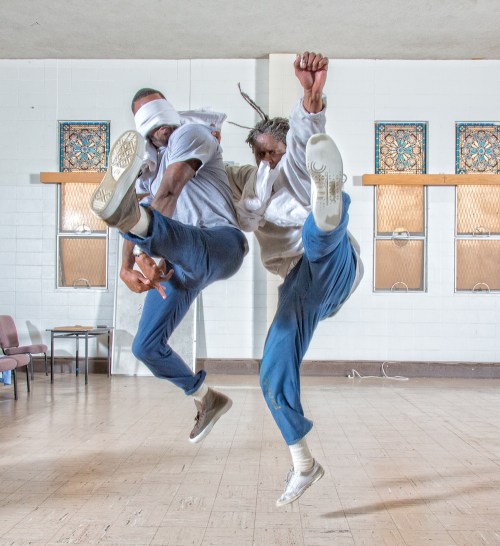
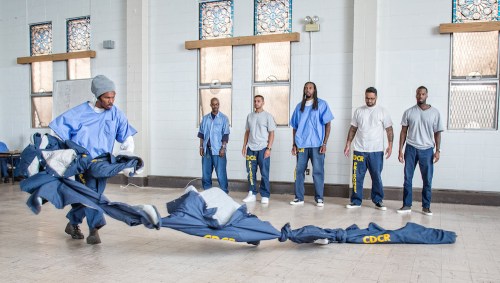
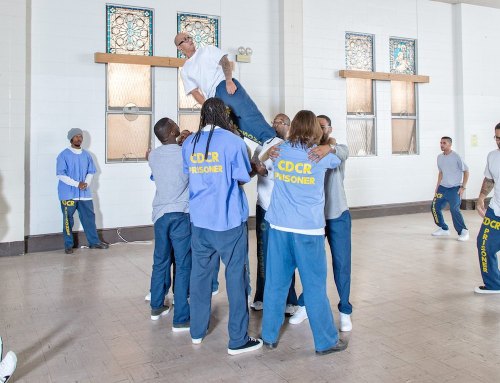
It seems to me that these photos confound expectations; they open up new possibilities for how we envision prisoners. The physical contact involved in choreographed movement is coordinated, mutual and supportive. This type of organisation of bodies in space in this prison chapel doubling as stage demonstrates the vulnerability, the bonds and the daring of men who contemporary society has all but condemned to cruel and unusual existence. But here they are, showing up and announcing themselves. And here’s me, respecting that greatly.

I need to go and learn more about dance. Perhaps the folks at Well Contested Sites can help me with that?

choi leap #1

b


c

a

d

e


header copy

My list of fave photobooks is the Vantage list of fave photobooks. I noted the subheader should read: How four books mailed to the author and two other books he bought in crowdfunding campaigns made the grade

THE ANOINTED ONES

Fan by Rian Dundon (Modes Vu)

rd1 copy

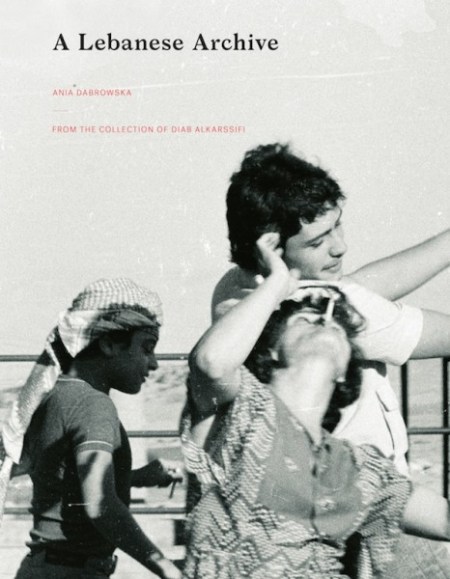
A Lebanese Archive by Ania Dabrowska (Bookworks + Arab Image Foundation)


la1

Deadline by Will Steacy (b.frank books)


ws3


In The Vale of Cashmere by Thomas Roma (Powerhouse)


itvoc


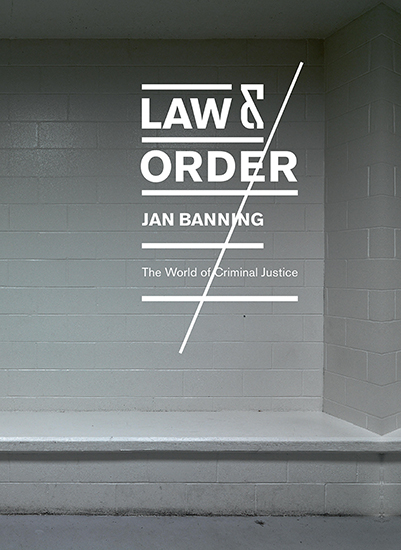
Law & Order by Jan Banning


Pony Congo by Vicente Paredes (This Book Is True)


pc5 copy

I’m perplexed by how exactly the photo-world goes about constructing its holiday exhortations. So much so that Joachim Schmid’s polite takedown of the Photobook-Industrial-Complex is just the best thing.

READ THE FULL REASON BEHIND THE LIST HERE

93 copy

Thomas Roma‘s book In The Vale Of Cashmere is probably familiar to you. It has had enjoyed widespread press and positive comments. And rightly so. It’s one of my favourite books of the year. I just did a review of the book and project for Vantage.

Roma’s arresting photos go inside the Vale of Cashmere a renowned casual hook-up spot that has, for decades, hidden in plain sight on the northern side of New York’s prospect Park–an overgrown, knotty pocket of criss-crossing paths that is of Brooklyn’s most active gay cruising spots. The Vale of Cashmere is commonly, but not exclusively, frequented by African American and Caribbean men.

74 copy

Not only are Roma’s portraits–that take us on long and repeated walks through the foliage and dappled light–wonderful so too is the contributing essay by G. Winston James. Between the two of them we are able to encounter, pass or pause with the men who meet among those trees.

I write:

James reminds us that sex is an activity designated for private spaces, namely the domestic space of the home. But for gay men living in the late nineteenth and early twentieth century, homosexual sex could not be expressed at home so it became a public act in public space. Crucially though, gay cruising and meeting spots only function as such at designated times.

“The most defining characteristic of queer space is its temporality. Queer space is not a permanent fixture of the urban landscape, but a sudden transformation that briefly renders traditional public spaces as something more dynamic,” Shaw once wrote.

James adds, “It is precisely this process of transformation (witnessed by a relative few), this dynamism, this history, that Thomas Roma has photographed.”

Read the full review: Loving Portraits Of Gay Black Men Cruising In Prospect Park

29 copy

57 copy

54 copy

62 copy

132 copy

135 copy

63 copy

Interactive Tool Reveals Counties, Not Cities, Lock Up the Highest Proportions Of People

We’ve known for a long time that state prisons have been built more often in rural areas than in urban areas; that prisons have been job creators in post-industrial America. We also have known that county jails have been built and expanded, too in the era of mass incarceration.

What we have not known, until now, is that county jails in rural areas have been doing much of the heavy lifting in terms of warehousing America’s prisoners.

The distinction between state prisons and county jail is important. When the state sentences someone they are free to ship them anywhere in the state. But when a county sentences someone, or a state sentence is two years or less, the time is served in the county in which the offense occurred. So, one would expect that incarceration rates across counties would be fairly uniform. Also, if the stereotype of the more dangerous urban milieu is to be upheld, we might expect higher rates of incarceration in urban counties. Not so.

A remarkable study by the Vera Institute In Our Own Backyard: Confronting Growth and Disparities in American Jails, reveals that incarceration has grown the most outside of the largest counties and the largest cities.

“While the largest jails—such as those in NYC, LA, and Cook County, often draw the most attention and are the ones most often discussed by policymakers and the media, Vera found that these jails have not grown the most, nor are they among the ones with the highest incarceration rates,” explains Vera Institute.”

Instead, mid-sized and small counties have largely driven growth. Generally, jail populations growing faster than prison populations. 

Overall, there has been more than a four-fold increase in the number of people held in jail, from 157,000 to 690,000, since 1970.

“Large counties [jail rates] grew by 2.8 times, while mid-sized counties more than quadrupled, and small counties experienced almost a seven-fold increase,” reports the Vera Institute.

vera

A VISUALISATION TOOL FOR US ALL

In addition to the surprising results of the report is the way in which Vera Institute has rolled out the findings. They’ve launched an interactive tool.

In the video at the top of this post, Vera Researcher Christian Henrichson discusses the Incarceration Trends tool.

We’ve known for a some years that the data for open and manipulable interactives has been available, but verifying the data, filling in the absent data (which happens a lot through different jurisdictions) and then standardising the data for a software program to convert it to user friendly format takes a lot of time, some cash and a good amount of skills. Vera Institute’s work here should propel us forward.

I contend that data visualisation is as essential, if not more so than photography in terms of informing citizens about the prison industrial complex.

In journalism, Gabriel Dance, at the Marshall Project, is making strides in presenting data for the public, for example Next One To Die. In advocacy, the Prison Policy Initiative has done much in wrangling data on county, state, federal, ICE and private facilities. In art, Josh Begley’s Prison Map and Paul Rucker’s Proliferation have both tried to present the terrifying growth of the PIC in ways that engage gallery goers and screen viewers alike. (It should be noted both Rucker’s work are based on the PPI data.) I’m certain there are other practitioners in these fields and more trying to present data and imagery in engaging ways for us out here.

OTHER VERA INSTITUTE FINDINGS

Within the surprising city/county upturn of conventional wisdom, are these two disturbing trends:

  • African Americans make up nearly 40 percent of the jail population. African Americans have the highest incarceration rates, particularly in mid-sized and small counties.
  • Female incarceration rates have skyrocketed, and are highest in the smallest counties. Since 1970, there has been more than a 14-fold increase in the number of women held in jail, from fewer than 8,000 women in 1970 to 110,000 women in 2014.

DATA HAS THE RIGHT TO PEOPLE

Essential to criminal justice reform efforts is reliable information. The Vera’s Incarceration Trends tool provides easy comparisons on incarceration data for counties nationwide.

I anticipate this new tool will prepare the public, inform legislators and arm activists. As Henrichson encourages, go check out what’s happening in your county

Read the report in full In Our Own Backyard: Confronting Growth and Disparities in American Jails. Check out the accompanying fact sheet, and visit trends.vera.org to research yourself.

More coverage: Who is Putting the Most People in Jail? Not New York, Chicago, or LA. (The Marshall Project)

hdsp

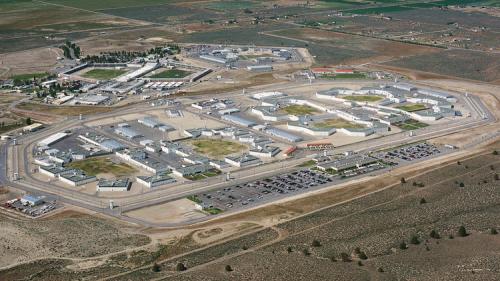
High Desert State Prison, Susanville, Lassen County, California.

As shocking as the crimes covered in the latest investigation of conditions in California’s prisons is the fact the same abuse, racism and corruption continue.

“Guards at an isolated state prison have created a “culture of racism,” engage in alarming use of force against inmates and have a code of silence encouraged by the union that represents most corrections officers,” reports the Sacramento Bee.

The problems have been exacerbated by High Desert State Prison‘s relative isolation in the high Sierra town of Susanville which has a population of only 16,000. The prison holds more than 3,000 prisoners despite only being designed for 2,300.

The report 2015 Special Review: High Desert State Prison, Susanville, CA (PDF) by the California Inspector General details rising violence in special housing units designed to protect vulnerable inmates, including sex offenders, gang dropouts and prisoners with physical disabilities.

“So-called sensitive-needs yards, which are supposed to shelter inmates likely to be attacked in the general population, instead were “just as violent” as the rest of High Desert — “with gang politics meting out abuse and punishment for drug and gambling debts and extorting vulnerable inmates for protection, all of which is exacerbated by the tacit acquiescence of custody staff”,” reports the fastidious and essential Paige St.John for the Los Angeles Times.

The report describes use of the N-word and the derogatory insult “wetback” being used routinely by guards. Prisoners report Green-Walling which is a form of unity and silence that guards adopt to hamper investigation. The California prison-guards’ uniforms is green.

More shocking, but not surprising, the guards union, the California Correctional Peace Officers Association, advised its members not to cooperate and filed a lawsuit and collective bargaining grievance in a bid to hinder the investigation, says Inspector General Robert Barton.

“The union sent a letter last month to Gov. Jerry Brown and every state lawmaker in what Barton called “the latest strong-arm tactic … to obstruct the … review and attempt to discredit the OIG in advance of the release of this report”,” reports the Sacramento Bee.

Read the full report: 2015 Special Review: High Desert State Prison, Susanville, CA (PDF)

turd2

“Being calm in pink and blue will deliver us from evil. Carefully-selected colour swatches, if only some paint-God would reveal itself, are the antidote to war, global warming and bigotry.”

Last week, I went all Beautiful Mind on the Pantone Colour of the Year announcement, specifically its 55-second video accompanying the announcement. Here’s my rant.

turd1

I put together a play-by-play of the vid. It was excruciating work. But the world needed to know.

Read the full piece: The Pantone Color of the Year is a Big Steaming Pile of Turd. 

turdy

rajashree

Rajeshree Roy with Carolyn Miller, a close friend, on a visit at Central California Women’s Facility (CCWF).

IN SOLIDARITY

Something very significant is brewing in California right now. Female prisoners in the Yuba County Jail are organising in solidarity with immigrants in detention.

Yesterday (Monday 14th December) a group of women began a hunger strike, joining hundreds of other detainees taking part in hunger strikes at facilities across the country.

You may or may not have heard about the fasting and hunger strikes going on in immigrant detention facilities across the country. Up and down the country–in the Hutto Immigrant Detention Center in Texas; in an immigrant detention center in the high desert city of Adelanto, California; in the Krome Service Processing Center in Florida; and in Alabama, in El Paso, Texas and in Lasalle, Louisiana, too.

Vikki Law has covered these as a trend. And they are. Collectively, the strikes are known as the #FreedomGiving Strikes and they were launched on Thanksgiving by hundreds of South Asian and African detainees at three separate facilities. The movement has grown.

Never before (to my knowledge) has the political resistance of detained immigrants run in cohort with the political action of citizens in county or state facilities. The Yuba County Jail rents space to Immigration and Customs Enforcement (ICE) to detain people. For the first time, women in criminal custody are fasting with detainees in immigration custody as an act of solidarity. Phenomenal. Principled. Inspiring.

The Yuba Co. Jail hunger strike is led by, and in support of, Rajashree Roy (above). You can read a longer detailed account of Roy’s journey here.

To be brief, Roy faces deportation back to Fiji where she has not lived since she was 8-years-old. As a child, Roy suffered sexual abuse and upon relocation to the United States never received counseling or help. By the time she was in her teens she was both attempting suicide and robbing and beating people. She was very troubled and the undelrying causes had never been addressed.

Sentenced as an adult at age 16, Rajashree spent 17-years at Central California Women’s Facility (CCWF). Nine years later, struggling to survive and feed her children while in an abusive relationship, she stole a garden hosepipe from a store, a misdemeanor petty theft.

Due to her priors, the District Attorney set bail at $1million and offered a 25-to-life sentence. In 2011, Roy accepted a plea bargain of seven years. In November 2014, she qualified for release under Prop 47. When Rajashree Roy stepped foot out of CCWF, she was picked up by ICE and slated for deportation back to Fiji, away from her children.

After years of silence due to shame and stigma as an abuse survivor and ‘criminal’, Rajashree Roy has gained confidence through peer and advocacy support and decided to be public with her story and fight for herself and others.

“We are locked up together and refuse to be divided into immigrants and citizens. None of us belong in this cage separated from our families. We join the brave immigrant hunger strikers across the country in fasting to force recognition of our humanity,” says the staement of Roy and her fellow hunger strikers at Yuba County Jail.

WHAT TO DO

  1. Join community organizers at ASPIRE, the nation’s first pan-Asian undocumented youth-led group, at a fast in solidarity outside Yuba County Jail.
  2. Support the #FreedomGiving strikers by signing the petition.
  3. Help raise funds for Rajashree’s $10,000 bond.
  4. Write letters of support to the women on hunger strike:

Rajeshree Roy
Booking No. 229860
Yuba County Jail
P.O. Box 1031
Marysville, California 95901

Jessica Bullock
Booking No. 235161
Yuba County Jail
P.O. Box 1031
Marysville, California 95901

Tisha Sartor
Booking No. 233892
Yuba County Jail
P.O. Box 1031
Marysville, California 95901

Kyra Beckles
Booking No. 234664
Yuba County Jail
P.O. Box 1031
Marysville, California 95901

Juanita Thomas
Booking No. 235553
Yuba County Jail
P.O. Box 1031
Marysville, California 95901

Ana Marquez
Booking No. 235550
Yuba County Jail
P.O. Box 1031
Marysville, California 95901

EMAIL

prisonphotography [at] gmail [dot] com

Prison Photography Archives

Post Categories