Magnum and Haiti intersect in a number of portfolios. Having done a lot of looking recently (here, here and here) Alex Webb‘s photography stands out.

Webb’s photography is unmistakable; he carries his busy compositions across the globe – Turkey, Santo Domingo, Mexico, Haiti …

Alex Webb. TURKEY. Istanbul. 2001. View from a barbershop near Taksim Square.

Santo Domingo. 1980. ©Alex Webb/Magnum Photos

© Alex Webb, Ponce, Puerto Rico, 1990

© Alex Webb/Magnum photos. TURKEY. Istanbul. 2004. South of Uskudar. Along the sea wall in the late afternoon.

I’ve often wondered what Webb’s thinks when he approaches groups of people and accoutrements. Indeed, I’ve wondered if (at this point) sniffing out these hectic visual environments is an unconscious practice.

On his blog today, Webb responded to a reader’s question about the framing of his images:

Saying “to run an anatomy of the scene” makes the process sound highly analytical.  Nothing could be further from the truth.

My process is not about thought, not about analysis, but rather about feeling the totality of a scene and responding intuitively, emotionally, non-rationally.  I have sometimes used the word “smell” in this context (and I think I am paraphrasing Cartier-Bresson) specifically because smell is sensory, not rational. The process can be a bit mysterious.  When I photograph, I sense the possibility of something — something about the feel of a place, the situation, some impending moment, the light, the color, the space, the shapes — and I often hang out and wait, hoping that something will happen, something will emerge.  But I’m never sure quite what this something is.

For me, the elements that go into the picture are often emotional elements: not just what is in fact “happening” in a situation (the purported “subject” of the image), but the space, the color, the light.  Form isn’t just form, it can be emotion.  Color isn’t just color for color’s sake, it, too, carries emotion.  Sometimes a shape in the foreground becomes some kind of transformative element, sometimes an empty space strikes a special emotional note, sometimes the color changes what wasn’t an evocative scene into something very different.

[My underling]

The term composition is more appropriate to describe Webb’s photography than that of his contemporaries. He stalks opportunities to frame multilayered compositions, in that he puts himself in the best spot and then lies in wait. And his compositions, akin to music, “strike emotional notes”.

Webb states his process is not analytical, but I wouldn’t say it isn’t disciplined.

View Webb’s Magnum portfolio and a sumptuous Webb selection of images with high contrast compositions from The Edelman Gallery.

In a blog post, Shawn Rocco covered yesterday’s exoneration of Greg Taylor

Rocco says, “Exonerating innocent men is a storyline that is sadly becoming all too common in this state over the past few years. Darryl Hunt, Joseph Abbitt and Dwayne Dail were in the courtroom today to hear the verdict and welcome another man into their unique group. DNA (or lack thereof) helped their cases. It did to a certain degree with Taylor. But it was the lack of any substantial evidence that led the the three-judge panel to their decision.”

© Shawn Rocco

For more the full article read here and Rocco’s accompanying photo gallery is here.

_________________________________________________

Regarding exonerations, I have previously featured James Estrin’s New York Times story on Jeffrey Deskovic.

Ken Light is a career photojournalist and a professor of photojournalism at Berkeley. If anyone is going to push back against the abuse of photographers rights, it’d be him right?

Well, he did. He won a small but symbolic $558

Last year, Light licensed his image of Cameron Todd Willingham to several media outlets coinciding with The New Yorker‘s exposé of dodgy arson forensics and the probable innocence of Willingham.

Current TV was not one of those he dealt with, yet they displayed Light’s image for a couple of months.

Light avoided federal court because it is costly and long-winded and filed a small-claims suit in San Francisco. PDN explains:

Light had charged other users $375 to $400 to license the Willingham image, but he says he would have charged Current TV $2,000 because of how long they displayed the photo. In his claim, he said the $2,000 fee should be tripled as punishment for damages. He added $500 to cover attorney’s fees, for a total claim of $6,500.

What is interesting here, is Light wonders avoiding the impractical, less-reflexive, federal route could be a better option for photographers:

“Yes, I got much less than I thought I deserved. [But] Maybe if we attacked in small claims courts and won, some of these companies might be more careful,”

I think Light has a good point and proven a repeatable tactic.

___________________________________________

Postscript: In the summer, I did multiple interviews and one of those was with Light about photographing on Texas’ death row. Everyday, I look at that untranscribed audio file and beat myself up that I haven’t published yet. It’s coming … I promise.

Photo by Sang Cho.

I volunteer with the Seattle organisation Books to Prisoners. It’s a pretty awesome initiative; in 2009 it mailed 12,000 packages to prisoners across the US.

Seattle is helped by satellite groups in Bellingham and Olympia in Washington, and Portland in Oregon.

Books to Prisoners has just been presented with a generous 2:1 matching grant by a local family foundation. That means if you donate $20 it is actually a $60 donation.

If there was ever a time to donate it is now!

Books to Prisoners engages volunteers from all walks of life and has lasting relationships with student volunteers from Mercer Island High School, Seattle University, Shoreline Community College and the University of Washington.

The UW Daily just published this article – quoting my buddies Andy and Kerensa – which explains a little more about the BTP community.

The tasks are simple, the impact huge.

Books to Prisoners is a very slim and simple operation; all donations go directly to operating costs (postage, wrapping paper, tape, and occasionally purchasing dictionaries). It is an all-volunteer staff, so no money goes to salaries, staffing or admin.

There are 2.3 million prisoners in the US, a quarter of the world’s prison population. Ignoring them doesn’t make a society safer, engaging their minds does. 95% of prisoners in the US will be released at some point. It is in all our interests to treat them with dignity and provide simple tools for them to aide their own rehabilitation.

DONATE here

Thank you

© 1989 A.G. Reinhold, 14 Fresh Pond Place, Cambridge, MA 02138. K2PNK "May be freely distributed with attribution."

Recently, I’ve been floored by the quality of writing and fresh analysis springing forth from the biospheroblog:

PRISONS

Sara Mayeux, a relative newbie over at the Prison Law Blog has been busy her first two months. Lots of serious stuff but it was Sara’s reminder that Lil Wayne goes to Rikers in two weeks that held my attention.

“Lil Wayne was supposed to head to Rikers earlier this month, but got his sentencing postponed to accommodate an oral surgery appointment; his new court date is March 2. I’m always curious about what, if any, effect celebrity prison stints such as this will have upon the national dialogue about mass incarceration.”

I think the circus surrounding Lil Wayne’s stint will further obscure the facts of a broken system. If it gets millions of Americans talking, I suspect it’ll be the wrong talk.

Everybody should have Grits For Breakfast in their RSS reader.

Radley Balko on the significance of a milestone exoneration for the Innocence Project:

“These 250 DNA exonerations aren’t proof that the system is working. They’re a wake-up call that it isn’t. Instead of falling back on groups like the Innocence Project to serve as unofficial checks against wrongful convictions, lawmakers, judges, and law enforcement officials should be looking at why there’s so much work for these organizations in the first place.”

PHOTOGRAPHY

The Spinning Head, pulls no punches, especially when talking about photography in Haiti. Rafiqui’s long-form posts are worth their weight in word-count.

I don’t know where Peter Marshall gets the energy to photograph seemingly every protest in the Greater London area, post the images and then offer an editorial for each event! Over at >Re:PHOTO

I found Simon Sticker‘s writing first via A Developing Story swiftly followed by his photography and Ugandan workshops WITH OUR OWN EYES via his site Flow Media

The Visual Student, courtesy of the NPPA, doesn’t waste anyone’s time. The site has filled a much-needed niche offering students advice and most importantly encouragement from other students/recent grads. None of it is patronising and the interviews and showcases are quality. For proof see: Scott Brauer, Dominic Nahr, Kathryn Cook and Alex Welsh. They also announce important stuff like the recent NPPF $16,500 worth of scholarships.

Of course, we are all intrigued by the Hulin’s new aggregation-toy The Photography Post.

JOURNALISM

Charlie Beckett has been coaxing us back to the hard questions about the nature of photojournalism and media coverage. Necessarily, he’s looking at Haiti (Part one & part two).

Rendition. Photographer Unknown

Last week, Eliza Gregory at PhotoPhilanthropy got knee-deep in speculations about prison photography.

Eliza was spurred by NPR’s On the Media which “did a story about a series of images that the International Committee of the Red Cross made of the prisoners at Guantánamo Bay. The ICRC made pictures of the prisoners to send to their families, and allowed each prisoner to choose which particular image would be sent. Naturally, the images the prisoners collaborated in making are very different from the images we’ve seen of them in the news.”

Eliza contacted me and asked me to leave some comments.

I rounded off my comments with a question I think is very important: Could an American photographer complete a project with the access, familiarity and story-telling-verve as Mikhael Subotzky did in South Africa for his project Die Vier Hoeke?

Not wanting to funnel my diatribe down just one web avenue, I copy my comments here …

Eliza,

I’d like to talk about two issues that you point to in your post. First, the general absence of prison imagery in contemporary media and secondly the urge to judge the subjects of the imagery that does crop up.

I doubt highly that Guantanamo would’ve been closed if more photographs had come out of there. While there is no question visuals out of Gitmo were controlled stringently, the MoD had proven itself impermeable to even the most reasonable requests by human rights advocates and legal watchdogs.

The point you make about smiling detainees instantly changing ones perception could be applied to all prison populations. Phillippe Bazin, Luigi Gariglio and Dread Scott have each used straight portraiture to cause audiences think about the individual character of prisoners.

I recommend books by Douglas Hall Kent, Morrie Camhi, Bruce Jackson, Jane Evelyn Atwood and Ken Light. I recommend work by Carl de Keyzer, Joseph Rodriguez, Steve Liss and Andrew Lichtenstein for imagery of prisons beyond the press shots of tiered-cells and orange jump-suits.

More than any of these though I recommend photography of self-representation. I have speculated on it before, and it has been done by Deborah Luster in Louisiana, and by the inmates of Medellin prison, Bogota, Colombia.

All of these photographic interventions are inspiring but barely make it into the mindshare of media consumers. I believe the unforgiven monster who deserves no thought is the predominant version of “the prisoner” in the minds of most Americans and many others in the Western world.

Of course, the invisibility of prisons is a collective tactic. We are molly-coddled by zealous enforcement agencies to whom we’ve outsourced management of transgressors. We have no interest in dealing with the difficult issues surrounding mistakes, mental health, inequalities and human frailty … this is where the “lock ’em up” mentality comes from.

Prisons and prisoners are not scary places because they are threatening and violent, they are scary places because they are wasteful, boring, soul-sapping warehouses. This is the document we never see. America’s prisons are a human-rights abuse.

Photography will play its part, but it’ll take a monumental cultural and media shift to change sentencing and prison policies in the West.

In the meantime, It’d be interesting to see if a long-term project similar to Mikhael Subotzky’s could ever be completed in an American prison?

© Mikhael Subotzky, from the 'Die Vier Hoeke' series.

Louisiana has the highest rates of incarceration of minors of any state in the country. Louisiana has the highest incarceration rate per capita of any state in the country.

It has now become the first state to sue its own death row inmates:

The Louisiana Department of Public Safety and Corrections last Friday sued every inmate on death row, in an effort to block any one of them from challenging the state’s lethal injection procedures. Each of the 84 prisoners in the “death house” at Angola State Penitentiary was personally served papers in the suit, said Nick Trenticosta, who has represented numerous clients on Angola’s death row.

Trenticosta, who is also director of the non-profit Center for Equal Justice in New Orleans, knows of no other instance in which a state sued its death row inmates en masse over legal questions relating to their execution. “I’ve been hanging around death penalty cases for 25 years,” Trenticosta said in a phone interview this morning, “and I have never seen anything like this.”

via Solitary Watch.

The absurdity of this gesture is fitting for a policy that only ensures time and resources are wasted on arguing the merits for and against killing people for symbolic purposes.

Get beyond the obvious – that is that the state shouldn’t be involved in de-existing people – it seems the main conclusion to be drawn is that hundreds if not thousands of jobs rely on the self-indulged death-industry toying with the fate of death-rowers for decades.

It seems to me that victims, victims’ families and those sentenced become a secondary concern; an infrastructure of legal jousting imposes itself, acquires its own logic and fights it out because that what the cogs demand. The results are laughably tragic deadlocks and bizarre gestures such as that of suing convicted individuals who are virtually powerless anyway.

My solution would not be to limit the legal avenues of appeal following conviction, it would be to abolish the death penalty as a sentencing option.

Just as the state should not be involved in killing people, it should not be involved in the retaliatory-posturing concerning the killing of people.

_________________________________________________

Previously on Prison Photography: There is a lot of inequalities within Louisiana’s criminal [in]justice system, that I have touched upon here, here and here. There’s also chinks of light in an unforgiving system such as radio and football programs at Angola.

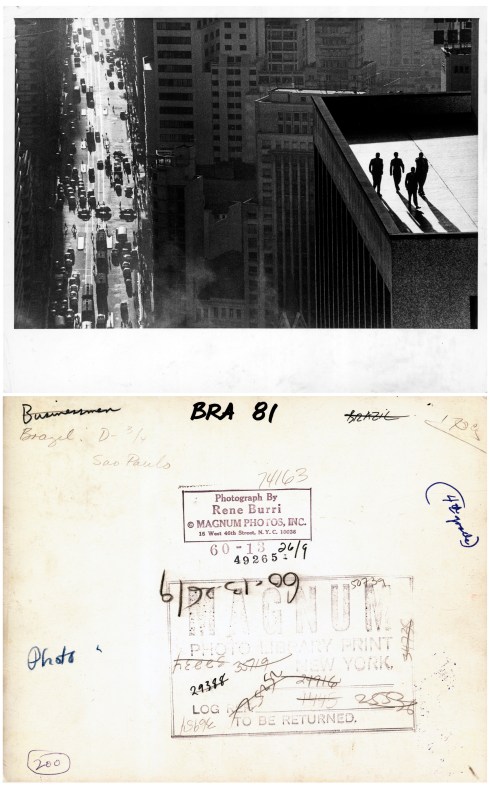
© Rene Burri/Magnum Photos. Brazil. Sao Paulo. 1960 / Back of print.

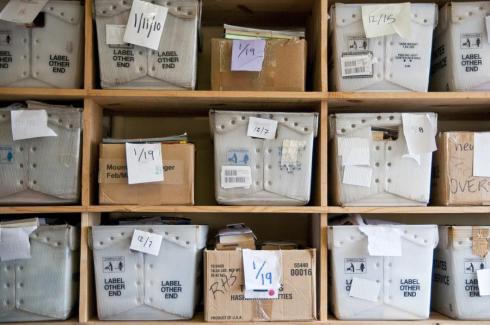
I spent last week on the phone to Mark Lubell, managing director of Magnum Photos; David Coleman, curator of photography at the Harry Ransom Center; and Eli Reed, photographer, Magnum member and UT professor.

The upshot was The Story Behind the Legendary Magnum Archive Sale, an article over on Wired’s Raw File blog.

There’s a couple of great quotes, my favourite is this from Coleman, “The boxes are marked with three-initial codes. I haven’t quite broken the codes that correspond to all the photographers. Robert Capa is CAR but then also BOB, which is funny. Bob.”

It was a story I really wanted to report on because I do think this is an astounding “incentivized” outcome for all involved. Read the article for details.

I do still wonder what will happen in 2015, though?

EMAIL

prisonphotography [at] gmail [dot] com

Prison Photography Archives

Post Categories