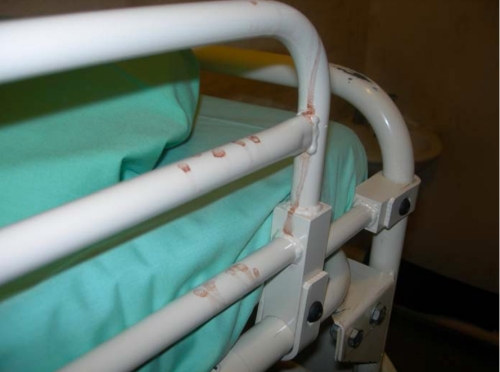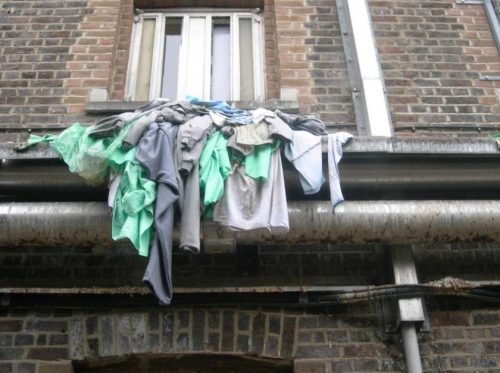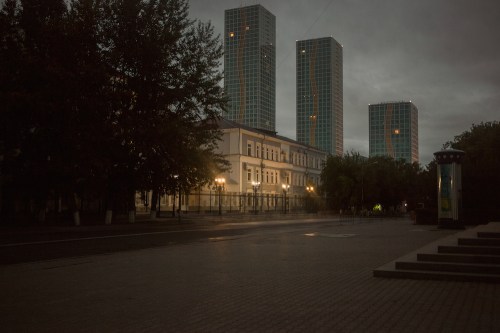
State Business-Chapter III

Verint Israel and NICE System Monitoring Center, Astana, Kazakhstan 2014.

Much of my weekend was spent putting a final editing-touches on the latest Vantage article Panopticon For Sale. The piece, details trade between authoritarian regimes (such as Uzbekistan, Kazakhstan, Azerbaijan, Bahrain and others) and corporations that manufacture and maintain cyber-surveillance.

The author, Mari Bastashevski, spent 12 months researching this shady industry —  trailing paper work, filing FOIA requests, interviewing and protecting sources, and corroborating statements. Many previously unreported (but commonly suspected) business relations uncovered by Bastashevski have been confirmed by information included in the July 5th hack of Hacking Team (a company that manufactures surveillance technologies) when the identities of its clients were posted online.

As Bastashevski writes in her closing statements:

Companies like NICE, Gamma Group, Verint, and Hacking Team, who sell this power to governments for which “watched a YouTube protests video” constitutes criminal behaviour become co-arbiters of what is and isn’t a “wrong act”. Yet for the companies, much like for their clients, their own secrecy remains absolute and proprietary: not something for press consumption, researchers, or advocates.

Private corporations are facilitating the unfettered surveillance of citizens by paranoid rulers.

State Business-Chapter III

NICE Systems HQ, Ra’anana, Israel 2014.

The comparatively unregulated republics in the post-Soviet region are proving grounds for the shit that the power hungry can get away with.

I’ll stop yelling now, encourage you to read Bastashevski’s #longread, and leave you with an my editor’s foreword to further convince you to take in Bastashevki’s text and images.

This is a narrative built upon information that’s incredibly difficult to verify. Outside of the community of privacy advocates and cyber-surveillance researchers, no-one really saw this story, or necessarily knew what it was or why it mattered. That’s because everything that Bastashevski was looking at — or looking for — is invisible, confidential or both.

When Hacking Team was itself hacked, Bastashevski felt vindicated. Not only did the hack confirm the presence of Hacking Team in countries she investigated, it also confirmed the presence of other companies she knew were providing surveillance to those countries. The lies and questionable dealings of a catastrophic industry were laid bare.

“To photograph or to look at what exists on the verge of catastrophe,” critic Ariella Azoulay once wrote, “the photographer must first assume she has a reason to be in the place of the nonevent or event that never was, which no one has designated as the arena of an event in any meaningful way. She, or those who dispatch her, must suspend the concerns of the owners of the mass media regarding the ratings of the finished product and with her camera begin to sketch a new outline capable of framing the nonevent. Photographing what exists the verge of catastrophe thus is an act that suspends the logic of newsworthiness.”

By virtue of hackers’ actions, and not the logic of the news industry, I find myself in a position to publish Bastashevski’s remarkable findings. A condensed version of this work was exhibited at Musee de Elysee and published in the Prix Elysee catalogue (Musee de Elysee, December 2014). It has since been expanded to include a review of targets and surveillance in Azerbaijan, and cross references of the recent evidence obtained through Hacking Team leak.

This is not a photo essay but rather an essay with photos. Bastashevki makes photographs, in many ways, to show her stories cannot be photographed. These images are way-markers along roads of discovery.

Read the full piece Panopticon For Sale and see more large images.

State Business-Chapter III

Ministry of Communication Tashkent, Uzbekistan, 2014.
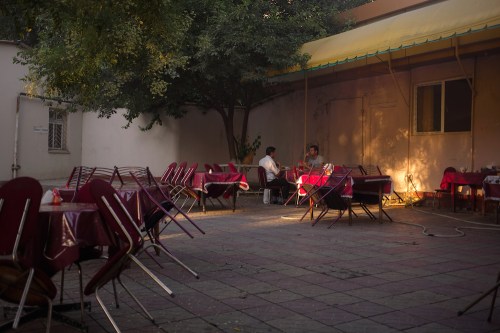
State Business-Chapter III

SNB lunch spot, secure Gazalkent district, Tashkent Uzbekistan. 2014.

State Business-Chapter III

Monitoring centre (roof) -Tashkent, Uzbekistan. 2014. Location where data obtained with Hacking Team, Nice Systems, and Verint Technologies is analysed and processed.
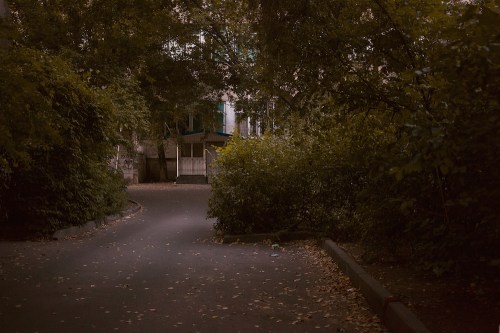
State Business-Chapter III

PU-data collection point Kazakhtelecom-Almaty, Kazakhstan, 2014.

State Business-Chapter III

Presidential Palace and MNS HQ, Baku, Azerbaijan 2013.
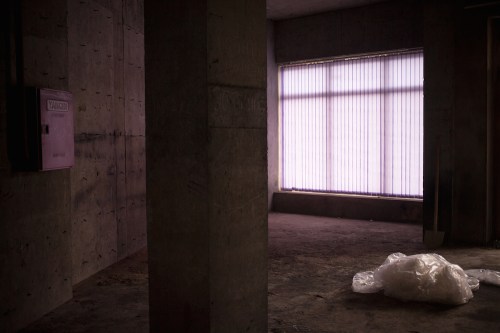
State Business-Chapter III

State Business-Chapter III

Inside Verint Israel HQ, Herzliya Pituach, Israel 2014.

State Business Chapter III

Transaction — Dedeman Silk Road Radisson Blu, Tashkent ,Uzbekistan. 2014.

All images: Mari Bastashevski

abolishsolitary

Statewide Coordinated Action to End Solitary Confinement, Oakland

Critical Resistance, today, reflected back upon the California Prisoner Hunger Strike, which had several iterations beginning in 2011 and culminating in 2013.

The update:

Two years ago today, the largest prisoner hunger strike in California’s history was started by prisoners in solitary confinement at Pelican Bay State Prison. Within the first month of the strike, over 30,000 in California’s prisons had joined, raising the call for the five core demands in unified struggle. The strikers received overwhelming support, with prisoners from across the U.S., in Guantanamo Bay, and as far as Palestine sending statements of solidarity. Outside prison walls, families, loved ones, and organizers elevated the imprisoned voices to an international scale, sparking solidarity actions all over the world, and even prompting the U.N. to call on California to end the use of solitary.

However, the struggle continues. The prison regime has refused to meet the strikers’ demands in any meaningful way, opting to demonize and repress prisoners.

A class action lawsuit brought on behalf of Pelican Bay solitary prisoners in 2012 is ongoing despite numerous attempts by the state to weaken and halt it. Importantly, grassroots organizing has been reinvigorated, with the Prisoner Hunger Strike Solidarity Coalition organizing statewide coordinated actions on the 23rd of each month since March of this year to continue raising awareness and building the movement to end solitary, with the actions growing larger across the state.

In the words of Todd Ashker, one of the hunger strike leaders, “I personally believe the prisoncrats’ efforts to turn the global support we have gained for our cause against us will fail […] CDCr rhetoric indicates desperation – a very concerning desperation in the sense that it is demonstrative of CDCr’s top administrators’ intent to continue their culture of dehumanization, torture and other types of abusive policies and practices […] Our key demands remain unresolved. The primary goal is abolishing indefinite SHU and Ad Seg confinement and related torturous conditions.”

Especially in the wake of Riker’s Island scandal and Kalief Browder’s death, the nation is aware of widespread torture — by means of solitary confinement — in U.S. prisons. But, a few years ago the issue was only just beginning to register on the national conscience. It cannot be overstated how vital California prisoners’ efforts (with support from families and allies outside) led the march against this abusive and invisible practice.

Two long and short years … depending on which side of the box you are.

Also, not to be missed is this extended, #longread analysis of the situation two years on by the indubitable Vikki Law at Truthout, Two Years After Pelican Bay Hunger Strike, What’s Changed for People Inside the Prison?

Law writes:

The California Department of Corrections and Rehabilitation (CDCR) continues to claim that “there is no ‘solitary confinement’ in California’s prisons and the SHU is not ‘solitary confinement,'” but people inside the Pelican Bay State Prison’s security housing unit say they remain locked in for at least 23 hours per day. Meanwhile, in June 2015, the CDCR released proposed new regulations around its use of the security housing unit and administrative segregation – regulations that may, in part, curb participation in future strikes and other prison protests. […] The regulations are currently going through the required public comment period in which any member of the public, incarcerated or otherwise, can submit written comments. A public hearing is scheduled for August 7, 2015.

Author Todd Ashker, who was locked in the security housing unit at the Pelican Bay State Prison, disagrees with the California Department of Corrections and Rehabilitation’s assertion that its prisons do not have solitary confinement.

In a 13-page typed statement, Ashker describes how, along with over 1,000 other people, he is locked for 25 years of his life into 11-by-seven-foot cells for at least 22 hours a day. The security housing unit cells have no windows and their doors face a wall so that those inside cannot see each other through the door slot. Any time they are taken out of their cells – for a shower, a visit or an hour of recreation in an exercise cage – they are handcuffed and ankle chained.

“What would it be like to have one’s bodily contact with others reduced to the fastening and unfastening of restraints, punctuated with the most intimate probing of the surface and depths of one’s body?” Ashker writes in his statement.

Solitary still exists and for long as it does, and for as many years tick by, it must be opposed. By us. We.

a cr

Two years on from the culmination of the California Hunger Strike (and without adequate response from the state) let’s consider what is at stake. These photos. These spaces.

ash1

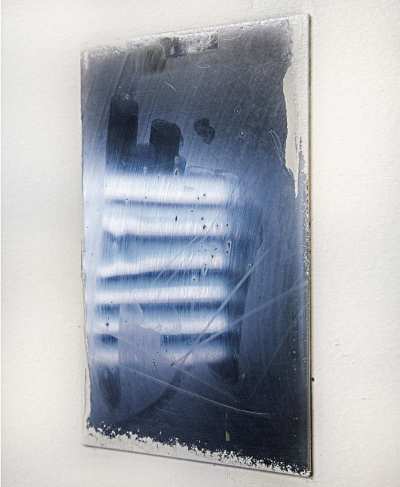
A small, unbreakable tin wall mirror in a solitary cell. Reflection is of a slatted window. Photo: Ashley Gilbertson/VII Photo for New York Magazine.

The suicide of Kalief Browder was the latest, most tragic reminder of how much of a hell hole Rikers Island is. It was the combined effects of broken bail and juvenile prison systems that killed Kalief.

Take your pick of the coverage from The Guardian and the New York Times, to New York Magazine. What has been consistent in the coverage of Rikers as information about conditions and treatment is that visuals have been limited and it has relied on the progression of lawsuits and news FOIA requests. Whistleblowers have been few and far between and prisoners’ testimonies are notoriously difficult to verify.

vid

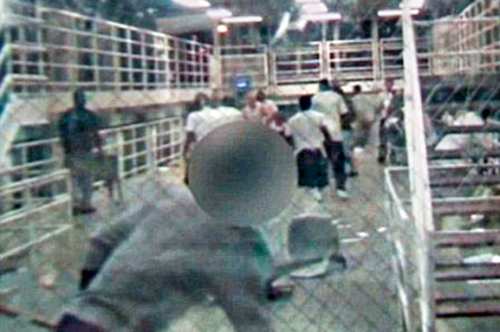
An August 2013 fight in the George R. Vierno Center, caught on surveillance tape.

That makes the recent feature Rikers Island, Population 9,790, a joint effort between The Marshall Project and New York Magazine noteworthy. In the expansive effort involving more than half a dozen journalists, we hear from a couple who both went to Rikers in the same year (she was pregnant); a teacher on Rikers; a couple of recent prisoners; an officer, the commissioner of the department of corrections; a girlfriend of a slain prisoner; a former volunteer-librarian; various visitors; a mental health professional; and others.

The selection of imagery (as well as an overview map) is one of the most diverse visual presentations of Rikers that I have seen online. It includes Ashley Gilbertson‘s straight shots from common areas, wings and solitary cells, Ruth Fremson‘s work from the kitchen, surveillance video stills, photos of prisoners by Clara Vannucci and Julie Jacobson, Instagram images found under the hashtag #Rikers, environmental studies by Librado Romero, and archival photos by my friend and former correctional officer Lorenzo Steele Jr.

Bravo to the photo editors of The Marshall Project and New York Magazine.

steele

The recreation center at the bing. Photo: Officer Lorenzo Steele Jr.

contraband

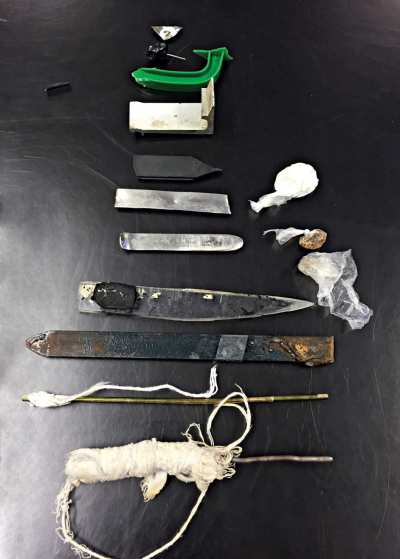
Contraband, including jail-made weapons and drugs. Photo: New York City Department of Correction via AP.

ig

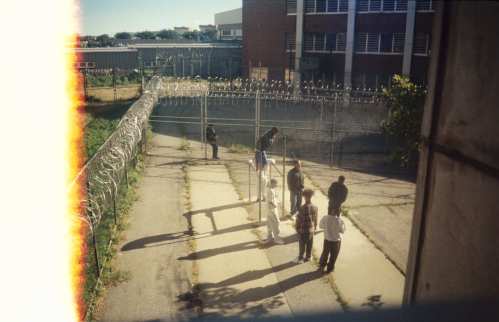
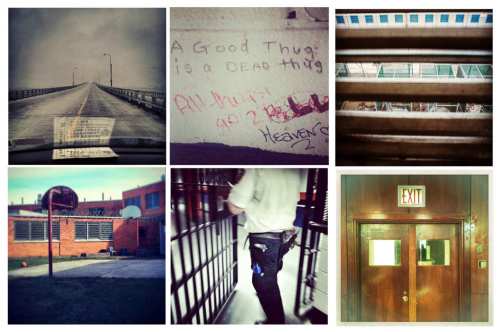
The view from Instagram, #Rikers: Clockwise from left: The bridge to Rikers; bathroom graffiti inside the vistors center; the new maximum-security wing; the entrace to a chapel; a correction officer at an adolescent unit; an exercise and recreation area. Photo: Kelsey Jorgenson/Edgar Sandoval/JB Nicholas/Bryan R. Smith/JR/Gee Force.

vannucci

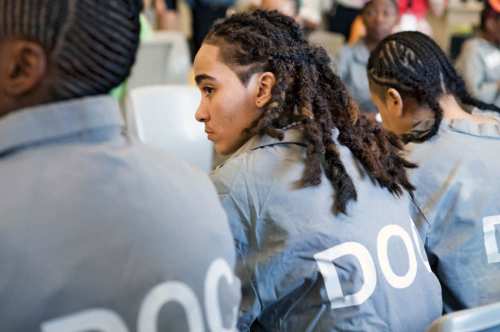
Prisoners at “Rosie’s” the women’s unit. Photo: Clara Vannucci.

ash

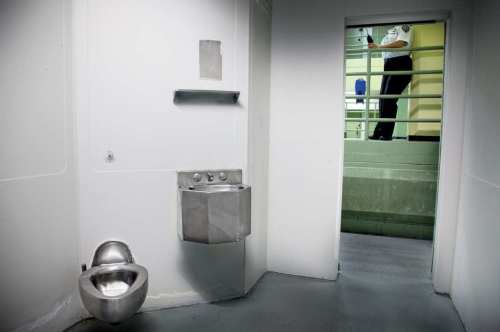
Inside a solitary-confinement cell. Photo: Ashley Gilbertson/VII Photo for New York Magazine.

Grassland21

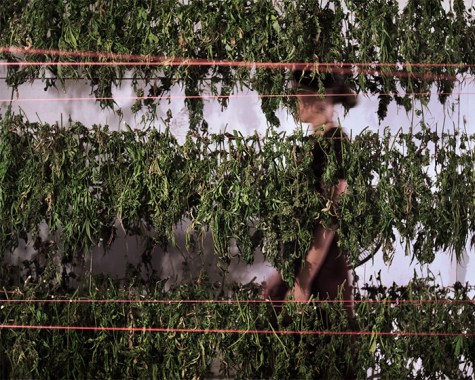
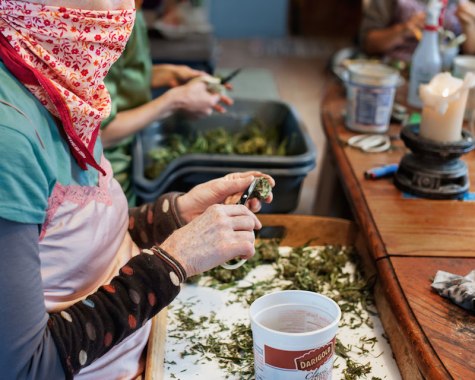
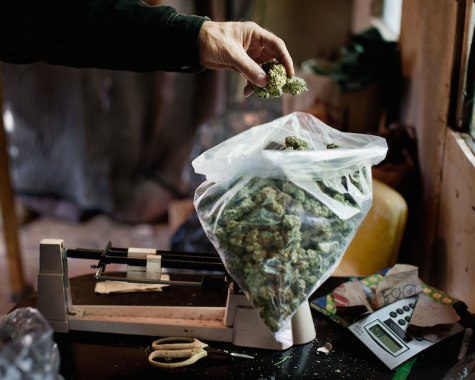
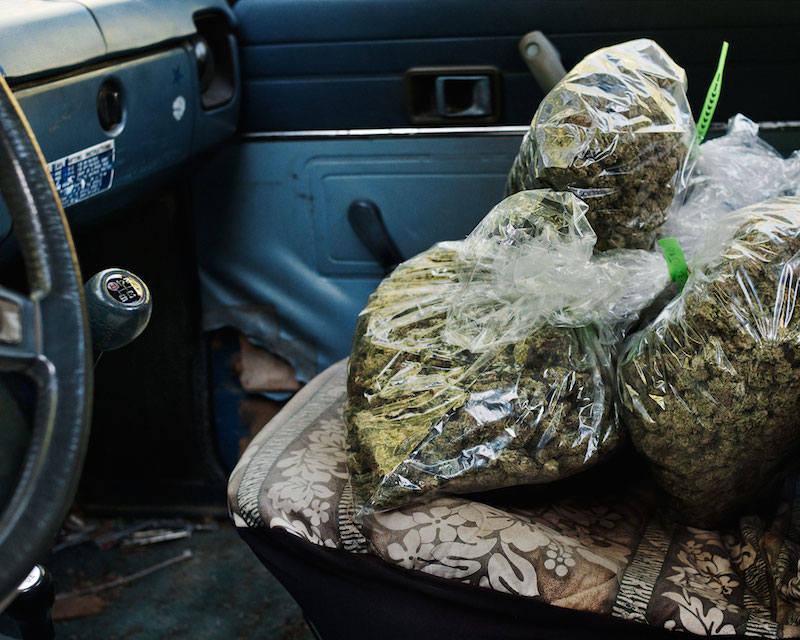
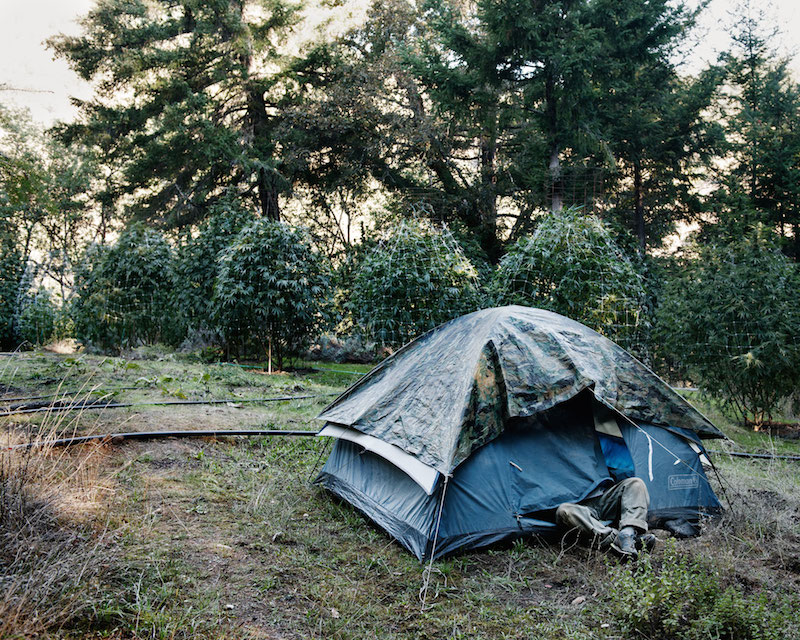
New piece over on Vantage about photographer H. Lee‘s embed on a Humboldt County weed farm.

In 2010, Lee spent a year running up to the fiercely contested Proposition 19 documenting the activities on a pot farm.

Prop. 19 was a ballot initiative that proposed regulation and taxing of the California marijuana industry. Small-holding growers feared its passage would mean the destruction of their livelihoods. Lee had been visiting the pot farm for 8 years prior but never made an image. Then, in 2010, when massive and crushing change loomed, she took up her camera.

 H. Lee is a psuedonym. Promising subjects their anonymity by proxy of her own just made things easier.

“I gave my word to the people I photographed — whether I shot their faces, body parts, plants or farms — that I would use a pseudonym when presenting the work,” says Lee. “I only photographed those who were willing to be photographed.”

Prop 19 was voted down in November 2010.

Read the full story and see photos very large at Vantage: Inside the California Weed Industry

Grassland is published by Kehrer Verlag. Follow the Grassland on Facebook and Twitter.

Follow Vantage on TwitterFacebook and Instagram.

1grassland

Grassland09

Grassland06

5Grassland

Grassland23


2grassland

Grassland05

Grassland18

Grassland14

Grassland19

Grassland11


Grassland12

Grassland07Grassland22

3Grassland

Grassland01

3

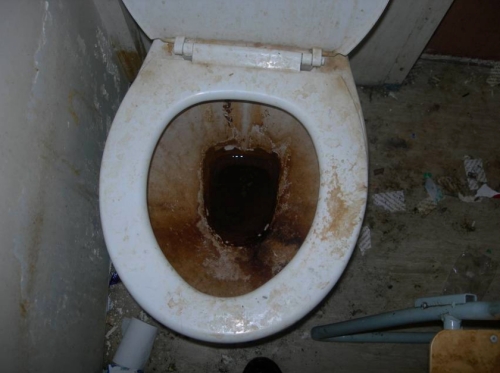
A toilet in an occupied cell on G wing.

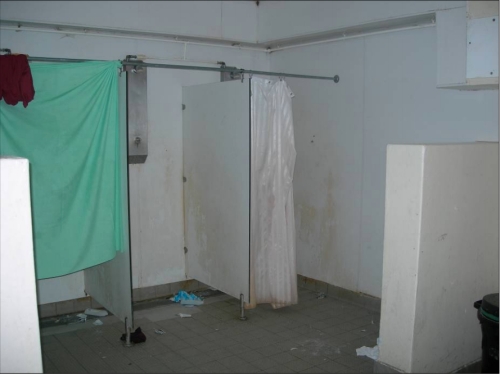
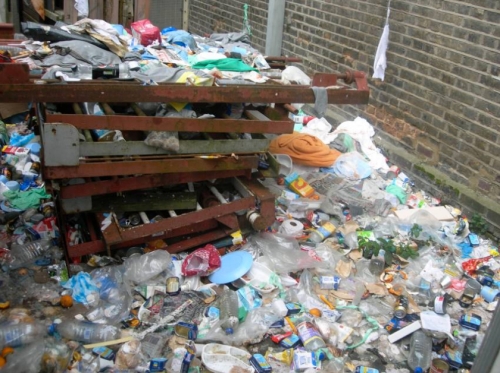
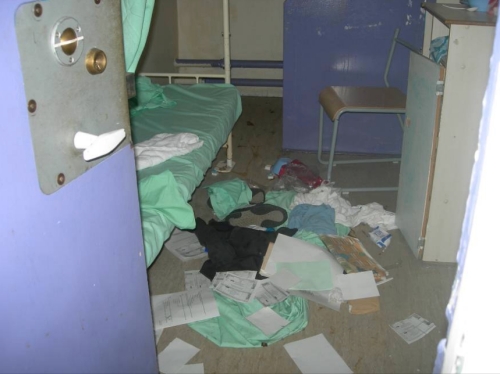
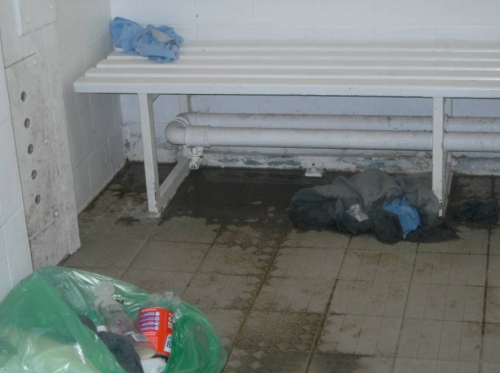
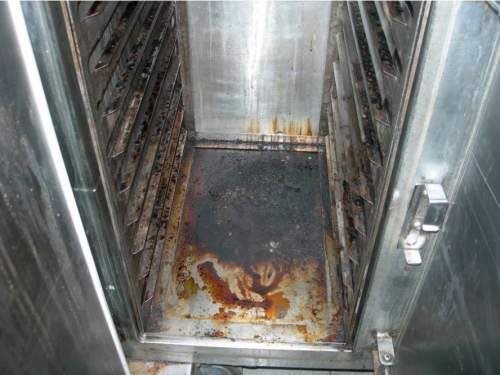
Blood stained, scum-stained, litter-strewn, dirty as all hell, hell-hole of a prison. That’s an accurate description of HMP Pentonville based upon 8 images included in a recent report on the infamous Victorian prison in North London.

I’m intrigued by evidentiary photos; I reckon they can often tell us more than an exposé-chasing photographer can. All we know is that employees of Her Majesty’s Inspectorate Of Prisons made these images. They exist for the record and I can only show them here because HMIP puts out its reports online in PDF format and I took a few grabs. Even then, I only came across them because Charlotte Bilby flagged them for me.

Bilby, Reader in Criminology and Faculty Director of Research Ethics Department at Northumbria University, says that she knows not of previous inclusions of photographs in HMIP reports. I don’t either, but UK prisons are not something I’m particularly knowledgeable about.

Let’s say for now that these photos are a new discover, if not a new departure.

6

The C wing showers.

1

Area outside J wing.

4

An empty G wing cell.

I wonder what other government-employee-made and , technically, publicly-available images exist? I wonder if a broader selection of pics would give the British public a deeper understanding of Her Majesty’s prisons and jails?

Also, I hope other prisons aren’t as bad as Pentonville.

Nick Hardwick, Chief Inspector of Prisons said his team found during an unannounced inspection that consditions at HMP Pentonville had deteriorated since its last inspection (2013) when things were bad already. With 1,200 men and young offenders, HMP Pentonville is overcrowded.

“It continues to hold some of the most demanding and needy prisoners and this, combined with a rapid turnover and over 100 new prisoners a week, presents some enormous challenges,” says a report summary. “Continuing high levels of staff sickness and ongoing recruitment problems meant the prison was running below its agreed staffing level and this was having an impact on many areas.”

5

The changing area in the C wing shower.

7

A food trolley.

8

Blood on a bunk bed.

In response, staffing levels have increased and the authorities remain confident in the warden and the leadership of the institution. While, they believe things can improve quickly, they identified many areas for vast improvement.

  • most prisoners felt unsafe as levels of violence were much higher than in similar prisons and had almost doubled since the last inspection;
  • prisoners struggled to gain daily access to showers and to obtain enough clean clothing, cleaning materials and eating utensils;
  • prisoners said drugs were easily available and the positive drug testing rate was high even though too few prisoners were tested;
  • the prison remained very overcrowded and the poor physical environment was intensified by some extremely dirty conditions;
  • some prisoners spoke about very helpful staff, but most described distant relationships with staff and were frustrated by their inability to get things done;
  • too little was being done to meet the needs of the large black and minority ethnic population, disabled prisoners and older prisoners;
  • prisoners had little time unlocked with the majority experiencing under six hours out of their cells each day and some as little as one hour;
  • the delivery of learning and skills was inadequate and there were not enough education, training or work places for the population;
  • acute staff shortages had undermined the delivery of offender management, which was very poor; and
  • the quality of resettlement services was very mixed.

The UK’s use of an independent inspectorate for prisons is a very effective check-and-balance for a hard-edged system that can easily corrupt itself behind closed doors. The fact that prisoners feel unsafe in the transportation vans and cell tiers is the biggest red flag for me here.

It’s worth noting, then, that these photos only reflect the visible messy disfunctions of HMP Pentonville. The uptick in violence and drug use was learnt through prisoner questionnaires.

Read the full report here.

2

Piles of clothing on ridges outside D wing.

“Kalief Browder may have hung himself, but he was killed by the brokenness of our court system.” This is an important reflection by Raj Jayadev.

acjpdebug's avatarAlbert Cobarrubias Justice Project

by Raj Jayadev (This piece originally ran in the Huffington Post)

09browder-facebookjumbo-v2_large Kalief Browder

To call the death of 22-year-old Kalief Browder a suicide is not the full truth. Kalief Browder may have hung himself, but he was killed by the brokenness of our court system.

The story of his short life, told by Jennifer Gonnerman in The New Yorker last year, chronicles the horrors of a 16-year-old who was charged for a stealing a backpack, sent to the isolation and brutality of Rikers Island prison for three years, only for the charge to eventually be dropped by the prosecutor. Follow up articles report that Kalief was so profoundly haunted from his mental and physical abuse inside that upon his release, he was hospitalized and told his mother, “I can’t take it anymore.” Ultimately, he hung himself with an air-conditioner cord at his home this June.

The ubiquity of his…

View original post 880 more words

rucker

Photo: Paul Rucker

GUNS

When Obama went to Marc Maron’s garage to record a WTF episode, he was in a sober frame of mind. He was frank about our situation right now with gun control. After Sandy Hook, he said, his administration tried everything they could to change laws but the legislation was fought by the usual NRA suspects. The legislation was watered down and achieved little.

Astutely, Obama didn’t pin the blame solely on the NRA and the kowtowing politicians but also on us. Yes, us, we, you and me. Sweeping political changes will follow sweeping social pressure. But in the aftermath of Sandy Hook, in Obama’s estimation, there was lots of talk but ultimately not enough public will to ring in the massive changes we need.

This is a teachable moment of sorts. Here, POTUS is telling us that organising works; he is saying that politicians listen if the swell of opinion is unavoidable and undeniable. The wave of gun opposition wasn’t sustained or powerful enough it seems. Well, yes and no. Yes, in that political change didn’t result. But, no, in that the passions and intelligence of the gun law reformers shouldn’t be dismissed, or pegged as total failure. It is my belief that in gun reform, in prison reform, in education reform — in any movement that demands wide-scale change — the efforts of the activists must compensate for the inertia and fear of the politicians they wish to influence.

Even when it makes moral, social and economic sense to enact positive change, we have seen that politicians find it hard to filter out the sound of the waft of of checkbooks and the loud and persistent lobbyist’s din.

We have to work harder to see gun laws change. We have to work harder to reduce hate and homegrown terror acts.

CONDOLENCES

Paul Rucker is one of the hardest working artists I know. He’s always stationed politics at the center of his practice but in recent years he has ventured fearlessly into America’s racial histories, current psyche and shortcomings. I curated Paul’s work in Prison Obscura. This morning, Paul sent out the following message to those on his email list. I think it is eloquent. It is from a point of knowledge. And I hope Paul doesn’t mind me sharing it.

Dear Friends,

I’ve been in South Carolina this week visiting my mother. The flags are at half staff at the library. The deeply ambivalent feelings I have for home are more real than ever. Growing up, I remember seeing Confederate flags on cars and bumper stickers stating “I should have picked my own damn cotton!” These were just part of the culture. An even deeper and unacknowledged part of the culture are the souls that built this state and this country. In 1860, there were more slaves living in South Carolina than free citizens. Cotton sales were worth $200 million then, the equivalent of $5 billion today. As we argue/discuss the flag, we must also add to our conversation the  true and complete history of the South and America. Cotton was shipped all over the country and the world. The role of slave labor in the economic success of our country must be acknowledged, along with the cost of that success in millions of lives not deemed human. If we remove the flag, let us replace it with knowledge, and so honor the souls that brought us here to the prosperous land that we have today.

My condolences to the families of the nine people murdered a week ago. My heart goes out to them and their loved ones.

With a heavy heart,

Paul

Well said.

COMICS

Also well said.

EMAIL

prisonphotography [at] gmail [dot] com

Prison Photography Archives

Post Categories