1-gAZkEbwQZvO6EMBCHLBURg

I was interviewed by ACLU recently: Prisons Are Man-Made … They Can Be Unmade.

The Q&A focuses around the exhibition Prison Obscura and you’ll notice a return to many of my favourite talking points. Still, the work never ends, and I know that ACLU will push out — to an expanded audience — my argument that we should all be more active and conscientious consumers of prison imagery. My thanks to Matthew Harwood for the questions.


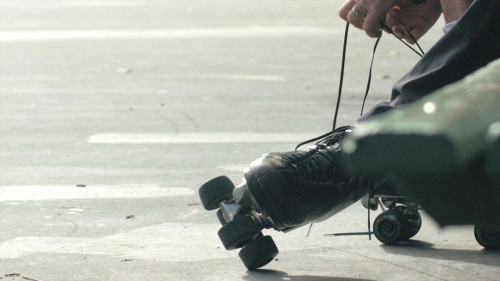
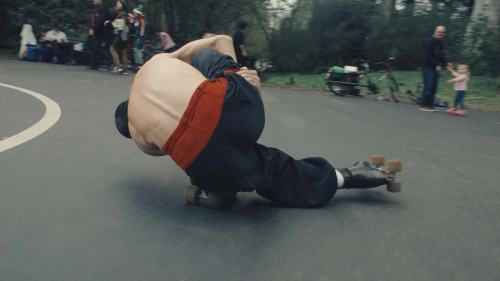
Everyday, there’s rollerbooters doing their circuits and dances on the smooth asphalt at JFK Drive and 6th in Golden Gate Park.

I love them.

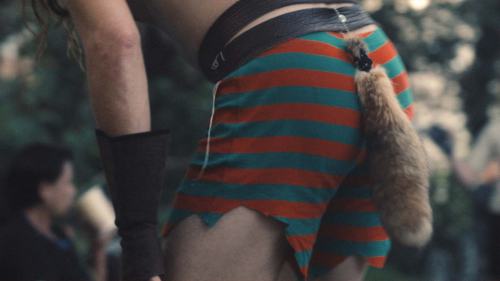
Sunday is the real party. They bring tables and snacks. Pensioners jive with 4-year-olds, ex-cons swing with folks who’ve shed the suit for an afternoon. The posse has its favourite tracks to which they dance and kick their boots in lined formation. Between the routines that function as the glue for the group, they’ll float around in anti-clockwise circles. From sunrise to sunset thousands of people pass by — some throw down blankets and watch for hours, others stop a moment and take a snap. All smile.

I was riding my bike through the park a few weeks ago and wondering why no-one had ever made a feature documentary about this group of typically atypical San Franciscoids. Then, last week, I spotted this.

Totally Free is a film-short made by Daniel Soares (Instagram). And it is beautiful. I sent it to a friend who moved to New Orleans a couple of years ago. He doesn’t have speakers on his computer but watched all 300 seconds of it in silence. He said the footage was hypnotising.

The whole rollerbooting community is hypnotising. I love them. They’re in their bliss. They’re taking it easy for all us sinners out there.

Golden Gate Park was once the crucible for the counter culture movement. Hippie Hill still has its moments, but really the realest community I know that survives is gliding around that most precious and historic 30 x 100ft oval.

totally_free-showcase-3-large

totally_free-showcase-2-large

totally_free-showcase-1-large

totally_free-showcase-5-large

totally_free-showcase-6-large

01_Daylight

AS220 Youth

There are very few organizations like AS220 Youth.

Sure, there’s lots of teen-focused arts organizations across the country but few have achieved the long-lasting and diverse roster of programming and results that AS220 boasts. AS220, similarly to many orgs use arts to connect and empower youth. Very few organizations, however, go into juvenile prisons to deliver photography education. AS220 does.

08_Memorial_Day_Sale

Very few organisations go into juvenile lock-ups to begin programming in order that they may continue it upon release of the teen with whom they work . AS220 does.

Donate to AS220 Youth

Such continuum is practical AND hopeful. It says ‘We are with you, wherever you are. We share your goal to live free once more.’

02_Mask_&_Money_#1

13_Training_School_Room_with_Cross

09_Cash_Rules_Everything_Around_Me

09_Mak_Portrait_#3

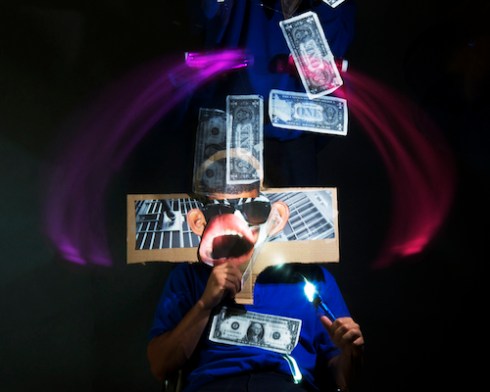
AS220 Youth, based in Providence, Rhode Island, gave me the warmest welcome a few years ago. They opened the door so that I could do a workshop with their incarcerated students. I gave a public lecture on my developing ideas about prison imagery. I interviewed the staff and helped students with portfolio reviews. My eyes were open to what a community can be.

Donate to AS220 Youth

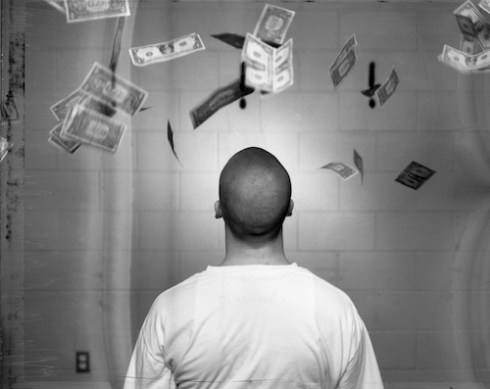
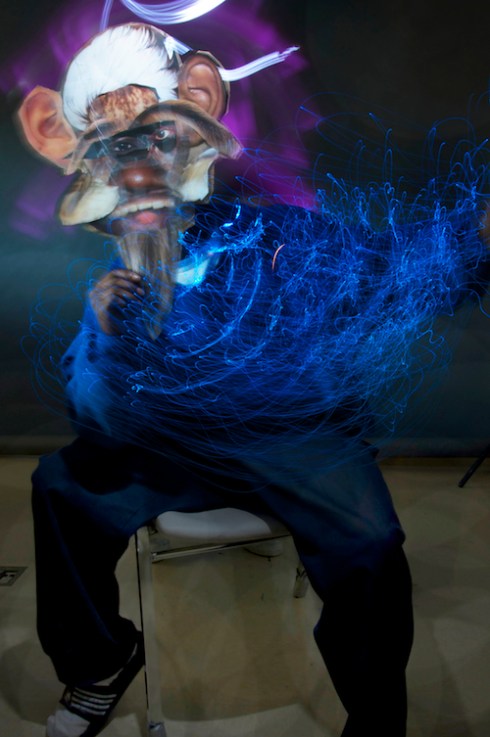
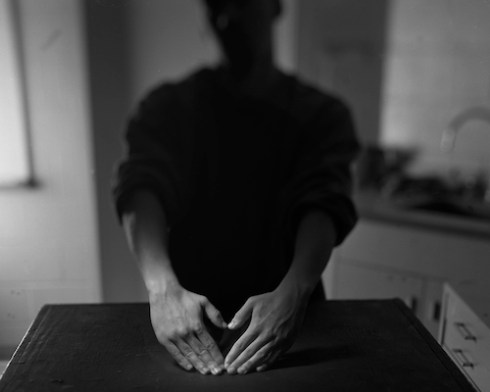
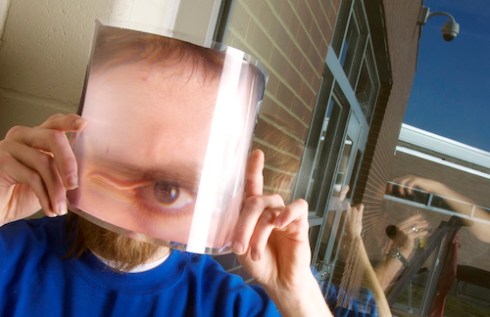
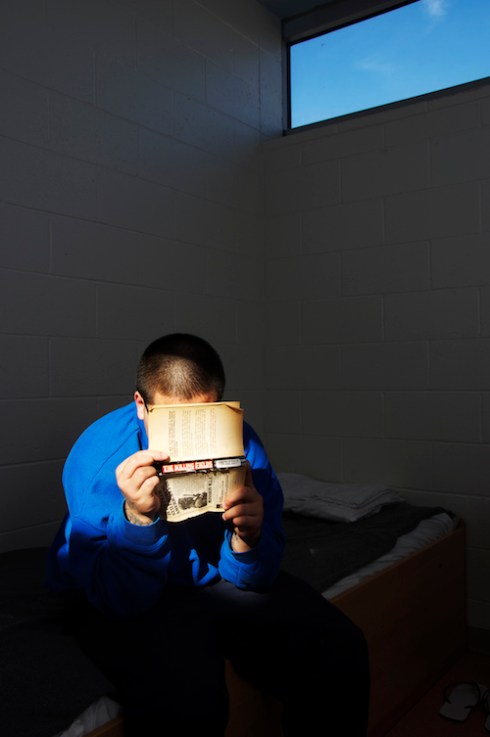
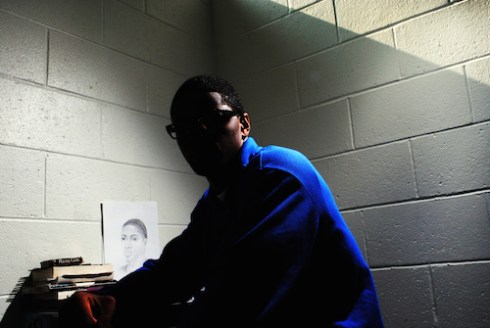
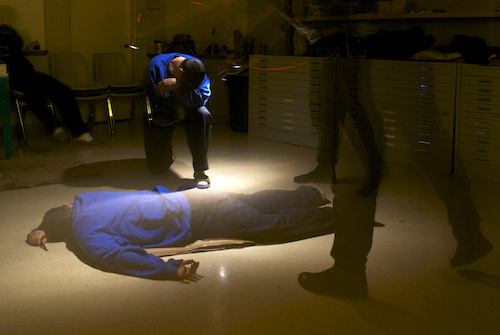
Not only did the people stay in my thoughts, the work did too. In late 2013, I included light-paintings made by youth incarcerated at the Rhode Island Training School in Seen But Not Heard (Belgrade, Serbia) a photography exhibition about U.S. juvenile detention. If AS220 Youth did not exist we wouldn’t see these views of the world created by kids who are locked up.

01_Training_School_BedStand

06_Headbanger

05_Heart_

11_Clowns

I’ve written about AS220’s youth programs before. I have noted how rare it is that photo programs are inside juvenile detention facilities. AS220 is doing things no-one else can do, or have the imagination to do. You’ve no reason not to help them out.

For the first time in AS220 Youth’s 15-year history, it is conducting a individual giving campaign. They’ve turned to IndieGoGo to push alternative revenue streams having seen public money dry up. AS220 Youth has about half the staff this time last year, and yet it is serving more students than this time last year.

Donate to AS220 Youth

“Since I have been working at AS220 Youth,” says Youth Photography Coordinator, Scott Lapham, “five of my students have been accepted and have gone to or are going to RISD, one to Hampshire, one to the School of Visual Arts, one to Savannah College of Art and Design and one to Mass Art. All of these students are from poor/poverty backgrounds and all but one are students of color. While I couldn’t be prouder of those stats an equally ambitious and important accomplishment is working with students from what we have termed Post Risk backgrounds to achieve emotional and economic stability as adults.”

Bravo to Lapham, his colleagues and the AS220 students.

05_Eye

06_The_Killing_Fields_

13_Icarus

09_Training_School_Room_#2

MONEY, MOVIES, PHOTOS

Help them continue their valuable work: visit the AS220 Youth Futureworlds IndieGoGo page.

Check out more about AS220 Youth program Photo Mem. See the students’ portfolios.

Above is a video about a public art project AS220 Youth made. Throughout this post are images made by youth incarcerated at the Rhode Island Training School.

12_Me_&_Myself

Donate to AS220 Youth

wall 3 copy

Some art and artists abide. Works crop up time and time again. Sometimes it’s as if society has demanded a need for the message; it strikes a chord. Sometimes hype and PR operates to elevate average work above the average median (that’s just how it goes). Sometimes, controversy gets something seen. Sometimes a particular artwork is afforded more attention because of an artist’s prior successes. And sometimes, very occasionally, a piece of art is relevant down through the ages, to all ages, and warrants repeated visits. I saw a Joshua Reynolds at the Legion Of Honor last week. I was captivated. It deserves to be hanging on a wall and still demanding attention 250 years after its paint dried.

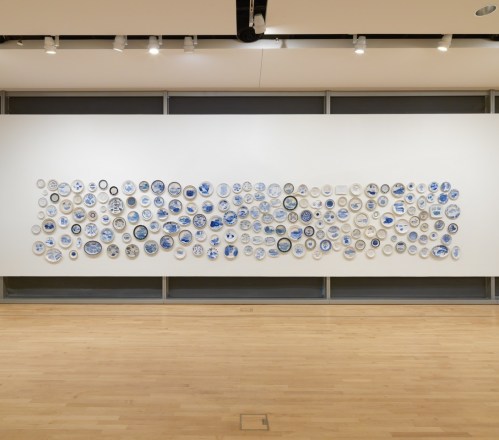
Prison-related art is not in the same demand as portraits of rich patrons. Now or in the 17th century. Maybe, then, I am more impressed when a prison-related art project keeps going and going. One such example is Julie Green’s plates painted with the meals of the executed. This is good art and I’d like to share why.

There’s no fixed number of plates and Green plans to continue painting them in memoriam until the U.S. outlaws the death penalty. It goes without saying that every show, just in terms of numbers, is a new show. Also, some venues haven’t enough wall-space for the sheer scope of the project. Green’s The Last Supper: 600 Plates illustrating Final Meals of U.S. Death Row Inmates is currently on show at the Block Museum at Northwestern University until August 2015.

“In fifteen years of the project, this show is unprecedented in terms of planning, installing, engagement, and press,” said Green in an email.

She’s not kidding. In the past few weeks, it has done the rounds at Huffington PostWBEZ RadioChicago TribuneWGN RadioChicago BusinessChicago Sun-TimesChicago Tribune- Evanston and the KU Alumni.

wall 2 copy

The Last Supper is a project increasing in stature and reputation. Not without discomfort, it does so as more and more people are killed by the state. Needless to say, Green is not a malicious observer of murder. She has rooted The Last Supper in a core activist position; which is to say that she wants to paint herself into obsolescence; she wants to have nothing to push back against. Green wants the injustice of the death penalty gone.

But as the reputation of a piece of art such as The Last Supper grows, so too does the responsibility to deliver perfectly-pitched programming/discussion around each exhibit. When I have curated in the past I have not always succeeded in achieving this — mostly due to scarce time and resources. Great programming often relies on multiple partners and even then it is a mammoth task. For me, fear of not delivering grows proportionately with the responsibility toward, regional and reflexive exhibition programming. Green has named many individuals key to the Block Museum show — she, like most of us, has managed more when assisted by, and in the assistance of, others.

This post isn’t really a reflection on The Last Supper as it is a reflection on what it means when an abolitionist work, or a work with stated political goals, or a anti-prison artwork assumes a momentum that is rapid and big — a momentum characteristic more of the art world than that of the political-activist world.

How an artist responds to such momentum will differ dependent on experience, advise and, yup, the partner(s). Some makers are better at maintaining strong authorial control over their projects. Others are newer to the grooves along which art and art promotion move, and they might be persuaded toward changed elements of the work.

Working with others will almost always increase the audience and the amplification of the message but it’s something that must be exercised consciously. What mouthpieces are in use? Who’s ears are listening? The last thing I want to suggest is that artists with political message should shy away from partnership. Merely, that partnership brings different institutional biographies and political legacies to the fray. Art and politics cannot exist in separate silos and so when art emerges from a political need it must stay true to that need and struggle.

wall 1 copy

There are structural forces at work in the art world. Makers need to carry out due diligence to ensure that the politics of their patrons and sponsors are in line with their own. Audiences need to know that occasionally work rears up because of partners’ involvement or championing and not because of an inherent message in the work or of the artist.

Again this is no comment on Green’s work. In fact the amount of travelling The Last Supper has done is daunting and I cannot imagine how Green has managed the “office” tasks and emails alone — let alone the press, the shipping, the installation details, the admin etc. The Last Supper repeatedly appears at US cultural institutions across the nation because it is good art (here’s what I think of bad art). The Last Supper is good because Green’s act of making is devotional; the simplicity of the concept makes the scope of the project not daunting but, paradoxically, familiar; the artist is passionate in talking about the work. The project is living.

It is living and it is growing.

The Last Supper is only going to get bigger. Big can be beautiful. And it is powerful. As it ships, relocates and appears in different venues, we audiences need to handle its political message as conscientiously as the installers do the porcelain plates. There can be no lack of concentration or complacency. This is life and death.

wall 4 copy

ABOG

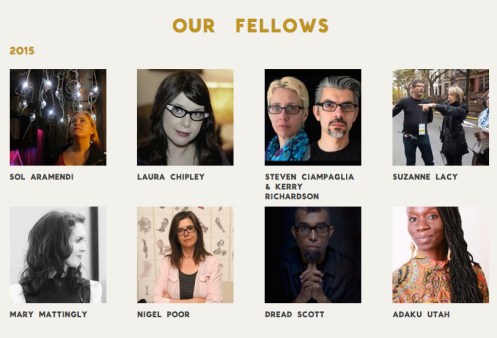
I wanted to congratulate three artists who were recently named as 2015 Fellows at A Blade Of Grass.

Sol Aramendi, Nigel Poor and Dread Scott are three of eight fellows who’ve received $20,000 each to pursue ongoing art projects that better the social, economic and cultural capital of the people with whom they collaborate. I have spoken to the three of them at different points in the past and applaud ABOG on its selection.

This is also a good moment to get A Blade Of Grass on your radar. ABOG has emerged as a thoughtfully-networked, well-advised, organisation with intent to put large amounts of money into the hands of responsible artists who work directly with communities, for dialogue and for change. The fellowships come with fewer strings attached than other funds, thus entrusting artists with the scope and freedom needed for socially engaged projects.

WORKS

Sol Aramendi will use the fellowship to develop Apps for Power  — a smartphone-based app to help workers fight wage theft and restore power to the worker by allowing him or her to safely share worksite experiences, report wage-theft and flag abusive employers. The idea for the app emerged from Aramendi’s discussions with immigrant day laborers. Aramendi has brought in artists, organizers, developers, and lawyers to realise the app which makes transparent a previously exploitative and alienating system.

I interviewed Sol recently: Tapping NYC Migrants’ Creative Energies Through Street & Studio Photography

ABOG Profile

Nigel Poor‘s ongoing San Quentin Prison Report Radio Project will benefit greatly from committed funds. Poor started her work in California’s most famous prison, co-teaching a photo history class inside, with Sacramento State University colleague Doug Dertinger. Later, Poor conducted workshops in which she asked prisoners to annotate San Quentin Prison’s own archive of photos.

Working with incarcerated students changed Poor; she wanted others outside the prison walls to meet these articulate, curious and intelligent man. With a longtime interest in audio, Poor reasoned that radio was the best option. Existing broadcast equipment existed in San Quentin and a local public radio was keen to broadcast Poor’s collaborative efforts. She works with Brian Acey, Greg Eskridge, Jun Hamamoto, David Jassy, Jason Jones, Adnan Khan, Harold Meeks, Tommy Shakur Ross, Louis A. Scott, Shadeed Wallace Stepter and Earlonne Woods. Participants are trained in all aspects of audio and radio production to make stories that are complex and challenge reductive stereotypes, while also providing meaningful work for men who are serving life sentences.

I interviewed Nigel and Doug Dertinger in 2011. (Later this week, I’ll be publishing the full edited text.)

Nigel’s ABOG Profile

Dread Scott is making Slave Rebellion Reenactment (SRR), a reenactment of the largest rebellion of enslaved people in American history. SRR will re-stage and reinterpret Louisiana’s German Coast Uprising of 1811, involving hundreds of re-enactors on the outskirts of New Orleans, in the same locations where the 1811 rebellion occurred.

In the past, I’ve featured Dread’s Lockdown and Stop, about Stop & Frisk in NYC and Liverpool, England. And, by chance, I stumbled upon his well-received, one-time-only performance On the Impossibility of Freedom in a Country Founded on Slavery and Genocide under the Manhattan Bridge in October 2014. Me and hundreds of school-kids and scores of bemused office workers on lunch-break.

Dread’s ABOG profile

BIOGRAPHIES

Sol Aramendi is an artist and educator. A vocal agent for social change, she founded Project Luz, a nomadic physical and conceptual space for immigrant communities to learn, create, and communicate, allowing for the greatest agency and collaborative opportunity for all of the participants. Photography is the main tool of engagement. She holds an MFA in Social Practice from Queens College, an Arte Util Residency at Immigrant Movement International, a fellowship from the Smithsonian Latino Museum Studies and has just completed a CORO Immigrant Civic Leadership program from the Mayor’s Office of Immigrant Affairs.

Nigel Poor is a San Francisco-based artist and photographer and member of the San Quentin Prison Report collective. She is a Professor of Photography at California State University, Sacramento.

Dread Scott makes revolutionary art to propel history forward, working in a range of media including performance, photography, screen-printing, video, installation and painting. He has exhibited and performed at numerous institutions, including the Whitney Museum of American Art, the Contemporary Art Museum Houston, the Walker Art Center and BAM (Brooklyn Academy of Music) and has been written about in numerous publications including The New York Times, Art In America, ArtNews, ArtForum, Art21 Magazine, The Guardian, and Time.

A Blade Of Grass provides resources to artists who demonstrate artistic excellence and serve as innovative conduits for social change. ABOG evaluates the quality of work in this evolving field by fostering an inclusive, practical discourse about the aesthetics, function, ethics and meaning of socially engaged art that resonates within and outside the contemporary art dialogue.

luzira

 Manchester United play Liverpool on a pitch surrounded by watching prison inmates. Photograph: Ronald Kabuubi/EAPPA images/Demotix

This week, it was great to see the Guardian publish a long read about the knockout football tournament at Luzira Upper Prison in Uganda. The article’s author, football historian David Goldblatt, argues that football has helped transform Luzira UP from Uganda’s most notorious prison to one in which self-discipline, shared goals, and self-policing shape the friendly culture..

Read: The Prison Where Murderers Play For Manchester United

Pain, shame, stagnation are not tolerated at Luzira. It is a prison with fixed but fair sentences (no Life Without Parole) and a mandate to prepare prisoners for release. Don’t get me wrong, it’s no cake-walk but the prisoners’ buy-in to the social structure and how football feeds positive engagement between prisoners and prisoners & staff is exemplary.

Nigel Boyle

Nigel Boyle playing at Luzira Upper Prison, Uganda, summer 2014.

You might recall that 5 month’s ago I published an interview with Nigel Boyle, an Englishman and U.S.-based academic specialising in the economics of global football. He reported witnessing the same community as Goldblatt.

“It was the friendliest ‘friendly’ game I have ever played in,” said Boyle. “In fact all games at Luzira are played in a very gentlemanly fashion – the prison soccer association constitution demands it and sets explicit standards for player and fan behavior, above anything FIFA can manage.”

Of course, the shocking scandals over at FIFA are a lighting rod for irony right now. We have long known about FIFA’s corruption but the stunning series of arrests of high-profile FIFA leaders — after US Attorney General Loretta Lynch’s years long investigation — comes at a perfect time.

When money becomes the driving force, football loses its soul. The Ugandan prisoners playing here for a new jersey and share of a slaughtered goat are the true heart and soul of the sport.

All this leads me to ask, who are the real crooks?

cash

Everyone keeps telling me it’s going to be alright. Everyone keeps telling me they didn’t understand my work when I began in 2008 but now they do. They understand it because prison reform and criminal justice reform is in the news. They understand it because Orange Is The New Black is on their screens.

Everyone keeps telling me it is going to be okay because politicians and Departments of Corrections are trying to fix the problems. What? Back up. What makes you think that those who built the Prison Industrial Complex are best positioned to reverse its crimes and abuses?

I want to share in your optimism but I want to retain healthy skepticism toward careering politicians. Dan Berger just penned a sobering Op-Ed Getting The Money Out Of Prison Reform for Truthout.

It begins:

Much has been made about the bipartisan nature of contemporary efforts to end mass incarceration, as everyone from Newt Gingrich and the Koch Brothers to Van Jones and the American Civil Liberties Union, and now even Hillary Clinton, says that the United States needs to reduce the number of people it incarcerates in its own gulag archipelago. If all these people agree, the conventional wisdom goes, surely we can get something done. Are prisons the only thing that can end Washington gridlock?

And it ends:

To paraphrase the poet Gil Scott-Heron, “decarceration will not be incentivized,” decarceration will not be incentivized, decarceration will not be incentivized. Decarceration will not be incentivized.

Any OpEd that ends with that flourish gets my vote. A MUST READ.

Image source: CUNY

People's Paper-Co-op

For the past 18 months, the Philadelphia Lawyers for Social Equity (PLSE) and the People’s Paper Co-op (PPC) have partnered in creating client art as part of the PLSE’s Criminal Record Expungement Project (CREP) clinics. While CREP lawyers, grads and volunteers are pulling up criminal records, assessing eligibility and triggering first steps of expungement, the PPC has been taking physical copies of those records and with clients, shredding and pulping them.

New paper is made from old records, upon which clients write what they are and what their future is without the millstone of a record and its associated barriers to entry into work, housing and education. A Polaroid or digital snap of the client accompanies the testimony. Fantastic artistic strategy.

The result is a massive “quilt” of such testimonies — a detail is shown above and the collection is shown below hanging behind a speaker addressing a PPC event.

2

NEW YORK, TOMORROW

The People’s Paper Co-op has been selected to be part of the New Museum’s Ideas City Festival this weekend. It’ll be displaying the quilt and talking about the project. Representatives of PPC and PLSE will be in the PPC Mobile Studio parked in front of the New Museum tomorrow, Saturday May 30th, from 12-6pm.

If you are interested in the intersection of art and legal advocacy on behalf of those with criminal records stop by!PPC and PLSE’s collaboration was one of 110 projects chosen to represent how artists are responding to changing urban spaces.

I’ve sung the praises of PLSE before. PPC was co-founded by friends of the blog Courtney Bowles and Mark Strandquist. Below is a small selection of images from the workshops and PPC events that Bowles and Strandquist have carried out during their SPACES residency at the Village of Arts & Humanities in Philadelphia.

PLSE and PPC’s work has been featured in Philadelphia InquirerWall Street Journal, NBC and City Paper, to name a few.

6

4

5

3

1

EMAIL

prisonphotography [at] gmail [dot] com

Prison Photography Archives

Post Categories