
If you live in Portland, Oregon and you’re planning to get wed over Memorial Day weekend, why not let a Magnum Photos photographer come by and make some shots? Via.

The Image / Incarceration / Representation / Media / Social Justice / Responsible Photography
If you live in Portland, Oregon and you’re planning to get wed over Memorial Day weekend, why not let a Magnum Photos photographer come by and make some shots? Via.

I’m one of five jurors for this years annual juried show at SF Camerawork. Y’all should enter. Here’s the blurb …
This summer, SF Camerawork teams up with LensCulture to host our Annual Juried Exhibition. The theme this year is HEAT.
HEAT registers the volatility and restlessness that comes with long hot summers: violent crime rates increase, leases expire and people seek new homes, global weather changes signal an alarm, and warm summer days bring adults and children alike into the streets, parks, and beaches.
SF Camerawork invites artists to submit work that responds to HEAT: the social, political, and climatic conditions of rapidly changing environments. Following the lead of social and political advocates around the world, SF Camerawork asks artists working at all levels in photography to participate.
Art is politics. Particularly in the realistic forms of photography and filmmaking, what gets assigned, shown or sold reflects political considerations. […] Politics is in the air. All you need to do to get the message is breathe. – Danny Lyon.

Deadline: Monday, June 15, 2015, 5pm PST.
Notification: Finalists will be contacted on July 1st.
Exhibition Dates: July 23 – August 22, 2015.
Opening Reception: Thursday, July 23, 6-8pm.
Application Fee: $50 application fee for up to 15 images.
ENTER NOW ON LENSCULTURE AND CREATE AN ACCOUNT TO UPLOAD YOUR APPLICATION
EXHIBITION AT SF CAMERAWORK: 2-5 finalists will have a 4-week exhibition at SF Camerawork.
LIVE ONLINE REVIEW SESSION: Finalists will receive a one-on-one review with a juror through this innovative platform hosted by LensCulture.
20 JUROR SELECTIONS FEATURED: 20 juror selections will be exhibited on interactive screens at SF Camerawork as part of the exhibition.
FEATURE ARTICLE ON LENSCULTURE: Finalists will be featured in an article on LensCulture.
ONE YEAR MEMBERSHIP: All entrants will receive a one-year membership to SF Camerawork.
Pete Brook, Writer and Curator, Founder: Prison Photography
Jim Casper, Editor and Publisher, LensCulture
Seth Curcio, Associate Director, Pier 24 Photography
Janet Delaney, Artist and Educator
Heather Snider, Executive Director, SF Camerawork
Please email info@sfcamerawork with “Call for Entries” in the subject line.
Founded in 1974, SF Camerawork‘s mission is to encourage and support emerging artists to explore new directions and ideas in the photographic arts. Through exhibitions, publications, and educational programs, we strive to create an engaging platform for artistic exploration as well as community involvement and inquiry.
SF Camerawork is a membership-based organization.
1011 Market St., 2nd Floor
San Francisco, CA 94103
Gallery hours: 12:00 – 6:00 pm
Tuesday – Saturday (also by appointment)
415.487.1011
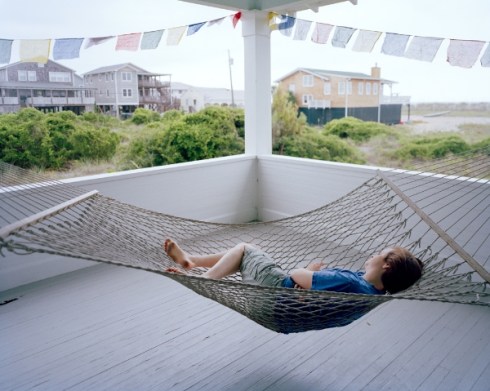
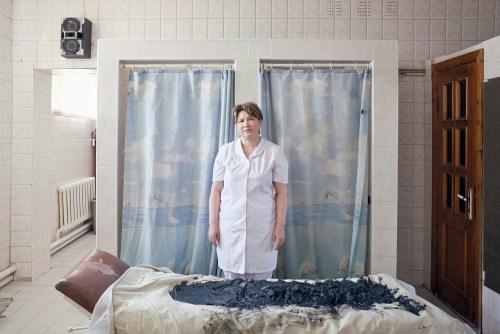
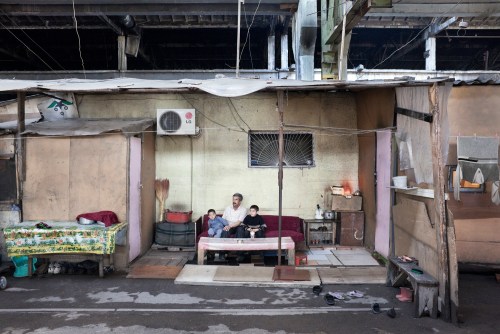
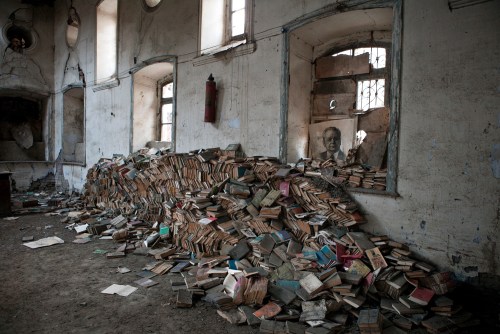
My piece For These Post-Soviet Nations, Big Oil Offers Hope and Fear
about Mila Teshaieva’s Promising Waters pubbed on WIRED this week.
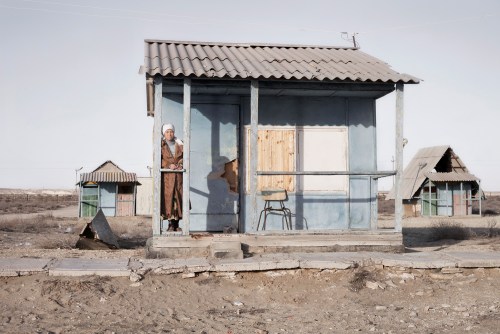
Promising Waters documents changes Kazakhstan, Turkmenistan or Azerbaijan — three countries that touch the Caspian Sea and were for 70 years part of the Soviet Union.
“They are going through total reinvention—the new world, new society, and new futures pushed to rise with the help with oil and gas resources from the Caspian Sea,” says Teshaieva. “This idea of ‘new’ gives particular promises to people.”
Read the full piece and see more here.



Dear all,
I am a portrait photographer and photojournalist keenly interested in documenting the work of prison arts rehabilitation programs. I am a New York City based photographer who has worked on assignment for publications including the Village Voice, New York Observer, Out Magazine, City & State, Capital New York, etc. I have also been fortunate enough to do ongoing pro bono work for UN Women’s global HeForShe initiative for gender equality, an issue that I am extremely passionate about.
For a while now I have been interested in working with prisoners, especially within the context of arts rehabilitation. My aim would be to create a multimedia piece documenting both the work of the organization or program in general, as well as honing in on individuals and telling their stories, focusing on their art and journey through and beyond the criminal justice system.
I was extremely moved by a piece…
View original post 86 more words
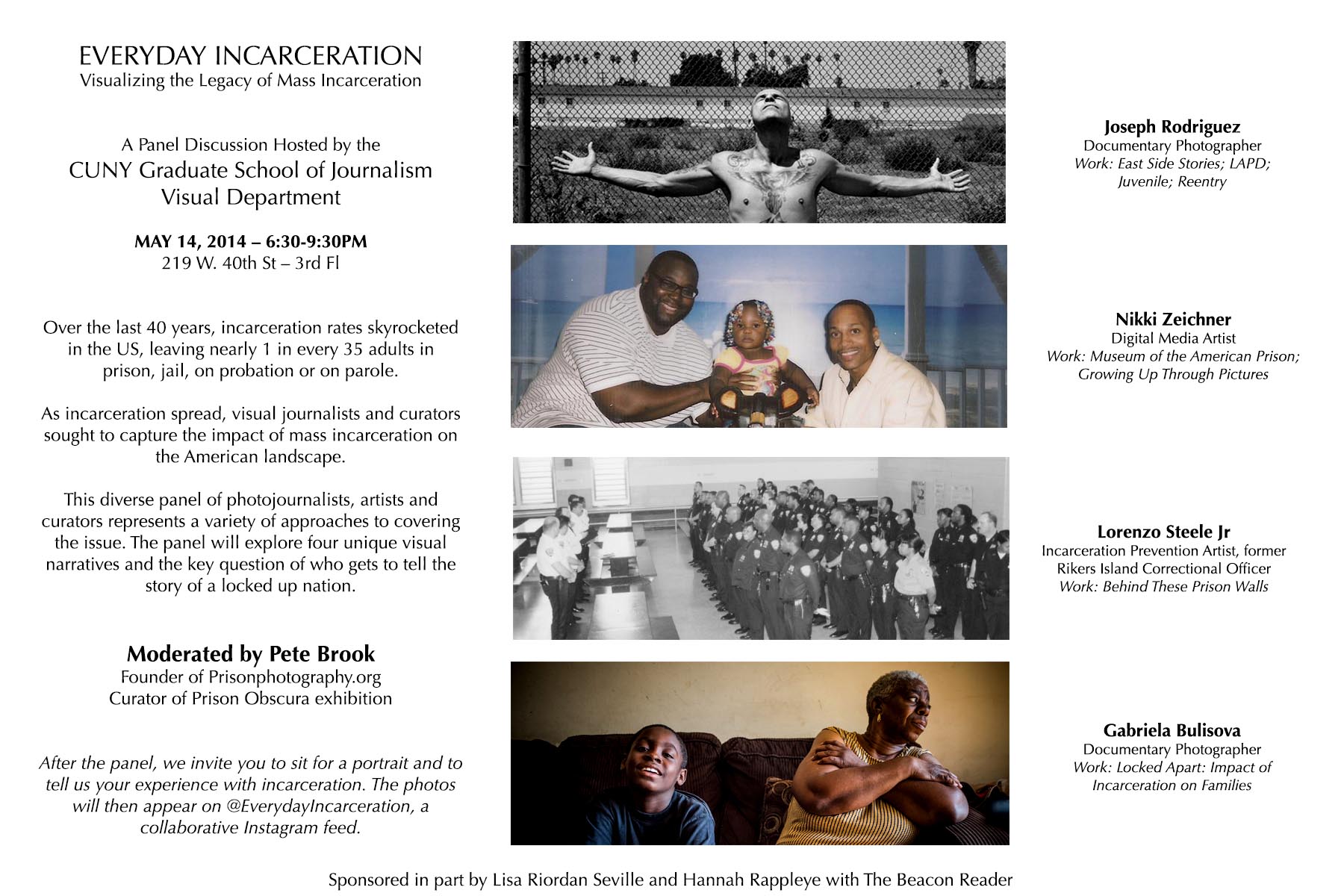
If you’re in New York this Thursday and can spare the time, please think about joining four photo practitioners and I for Everyday Incarceration – Visualizing the Legacy of Mass Incarceration, a panel discussion about images of prisons and the associated social issues. We’ll be tackling the core question: Who gets to tell the story of a locked up nation?
Zara Katz and the Department of Visual Journalism at the CUNY J-School have done a great job of putting together a panel with diverse perspectives and practices – one documentary storyteller using video; one photographer who’s eye on the issues stretches back decades; one lawyer using software code and images to engage audiences and empower prisoners; and one former correctional officer turned campaigner armed with his photos from the job. Check the bios below!
After the panel, we invite you to sit for a portrait and to tell us your experience with incarceration. The photos will appear on @EverydayIncarceration, a collaborative Instagram feed.
The panel takes place in Room 308 of the CUNY Graduate School of Journalism, at 219 W. 40th Street, NY 10018.
6:30-9:30pm on Thursday, May 14th.
The event is free but an RSVP is very appreciated. Do that at – cunyphotowire@journalism.cuny.edu or at the event page on the Facebook.
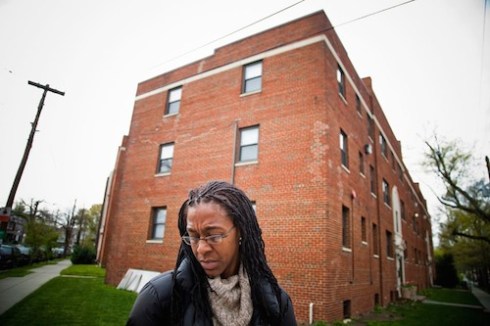
Gabriela Bulisova is a documentary photographer and multimedia artist based in Washington, D.C. Over the past five years, she focused her attention on underreported and overlooked stories regarding incarceration and reentry, especially the impact on families. Bulisova has received numerous recognitions and awards, including The National Press Photographers Association’s Short Grant and Open Society Institute’s Moving Walls 18. In 2005, she was awarded the degree of Master of Fine Arts in Photography and Digital Imaging from the Maryland Institute College of Art (MICA) in Baltimore. She teaches graduate and undergraduate courses in photojournalism at the Corcoran School of Arts and Design in Washington D.C. and is a member of Women Photojournalists of Washington.

Joseph Rodriguez was born and raised in Brooklyn. His four-decade photography career examines incarceration, gangs, police and reentry, as well as families, communities and cultures across the globe. After being incarcerated at Rikers Island as a minor in the late-60s, Rodriguez turned to photography as a guide in his life. In 1985 he graduated from the International Center of Photography in New York. He went on to work for Black Star photo agency, and has published work in multiple top-tier outlets including National Geographic and The New York Times Magazine. He has received numerous awards and grants including New York Foundation for the Arts, Open Society Institute, National Endowment for the Arts, to name a few. Rodriguez currently teaches at New York University and as a visiting artist at national and international universities.

Lorenzo Steele Jr. is a former New York City Correction officer (1987-1999) who mostly worked in the juvenile units at Rikers Island. He was regularly the photographer at events and celebrations with his fellow officers. In 1996, Steele began bringing his camera to the prison to document his experience there. That included daily violence and abuse of inmates and correctional officers. The deep emotional and physiological impact of his experience at Rikers compelled Steele to start a visual arts education program where he shares his photographs and prison experience with middle school and high school students.

Nikki Zeichner began exploring multimedia storytelling with the Museum of the American Prison, a project that she initiated in 2012 to offer mainstream audiences a way to understand personal and experiential details of incarceration in the U.S. Her interest in telling stories about incarceration grew out of her experiences working as a criminal defense attorney in New York City and regularly visiting with clients held in federal and state pretrial detention facilities in lower Manhattan and Brooklyn. Nikki recently completed a Master’s degree in Integrated Digital Media from NYU’s Engineering School and is spending 2015 in San Francisco designing civic tech tools for a small, post-bankrupt municipality in Northern California. She remains in regular contact with the incarcerated individuals she worked with creatively on museum projects.
 Albert Cobarrubias Justice Project
ACJP Organizer Gail Noble writes a commentary on what State Attorney Marylin Mosby’s decision to charge the officers involved in the murder of Freddie Gray means to her as a mother of three black sons.
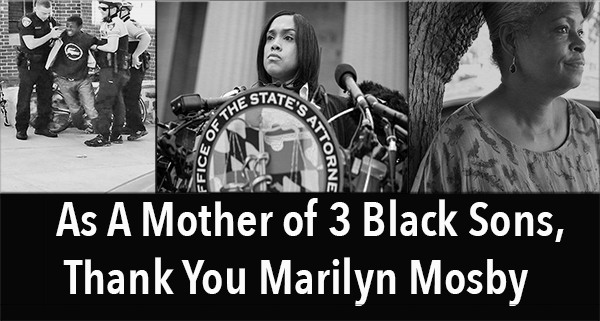
When I heard the six police officers in Baltimore were being charged, I was shocked and overjoyed. “Yes!” I said with fists in the air. I thought about Freddie, the severe pain I heard in his voice when he cried out. I remembered the images of his limp body as they dragged him to the van. If officers are that blind to a person’s welfare, they deserve to be charged and I pray they are convicted.
As a mother of three black sons, hearing State Attorney Marilyn Mosby’s words were especially vital for me. Everyday, I fear for my three sons living in an America which is plagued with racism and police brutality. I have…
View original post 358 more words
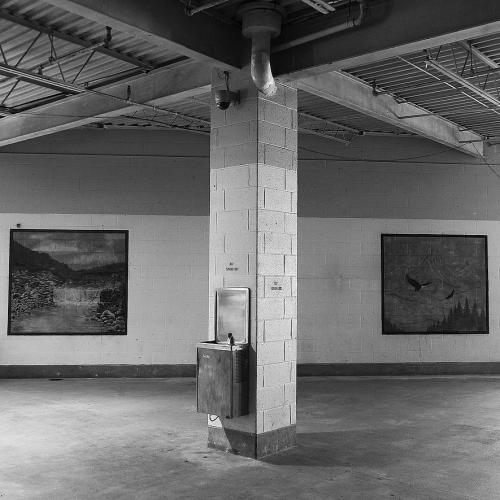
Brett Leigh Dicks is an Australian photographer based in Santa Barbara, California. He’s made many images in abandoned prisons.
It’s always difficult for me to draw meaning from photographs of disused prisons — I’ve challenged Lee Saloutos directly about the utility of his photographs; I am skeptical about the usefulness of Margaret Stratton’s work; and I’m confused by Thomas Roma’s images of Holmesburg Prison. At least in the photographs of David Simonton the closure of the Polk Juvenile Detention Center was recent and, as a local, Simonton could couch the work in a political context.
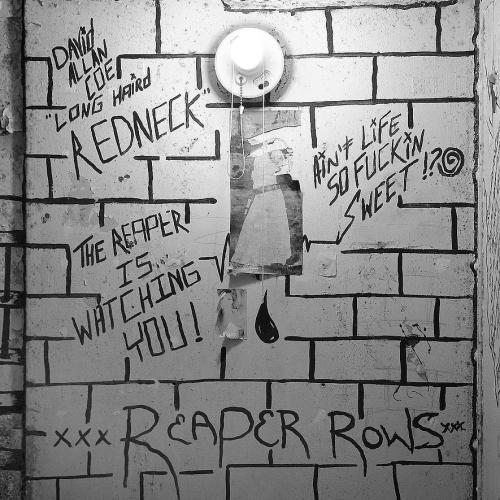
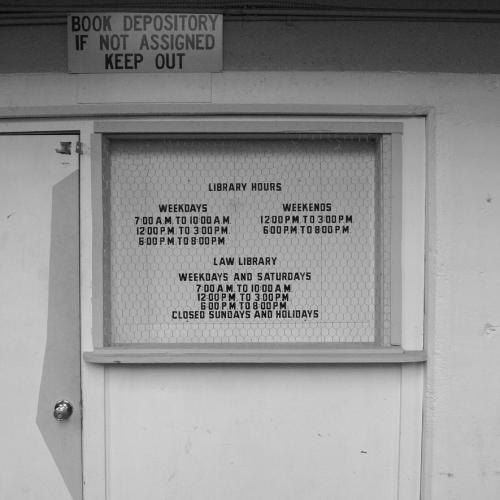
So, what to do with Leigh Dicks’ work? Well, here I’ve brought together half a dozen of my preferred images. They all depict written, painted words or images that are either instructive or rebellious, official or graffiti, in support of the prison rules (signs) or counter to prison reality (murals of wilderness/freedom). These texts and images are common in nearly all prisons (all the ones I’ve ever visited). To the uninitiated eye they are confusing and incongruous. After a short space of time they almost cease to be visible.
These wall paintings, administrative orders and motivational statements I’ve identified in Angola Prison, in Beth Nakamura’s photography in Oregon’s prisons, in Alyse Emdur’s collected portraits, and in Geoffrey James’ work in Kingston Penitentiary in Canada, among other places.
There’s a lot more going on in these deliberated 2D interventions on prison walls than we might initially see or comprehend. That’s a longer discussion for another time. I just wanted to drill down on this type of content within Leigh Dicks’ work.
Leigh Dicks says in his bio that he seeks to “investigate the landscape and the fragile ties that it shares with human history.” That includes the penal landscape, the invisible territories of power within and, yes also, the fake painted landscapes on prisons’ interior walls.





Every day, across the nation, activists and advocates are going to State capitol’s and presenting arguments against the implementation (sometimes blind implementation) of laws that hamper the abilities of prisoners and formerly incarcerated to realistically turn their lives around. In California, many groups such as California Coalition for Women Prisoners (CCWP), Californians United for a Responsible Budget (CURB), The Ella Baker Center, Legal Services for Prisoners with Children (LSPC) and many more.
Commonly, these groups are made up of the family members of prisoners or people who were formerly incarcerated. They carry a knowledge about the draconian, obstructive and overly-punitive criminal justice system that most others in privileged and comfortable living circumstances do not. They are activists by necessity.
It goes without saying that knowing these activists’ experiences and knowing them will only help in bringing us all (California residents or otherwise) to an understanding of what is happening beyond our sight-lines, but in our name, in our prisons.
Legal Services for Prisoners with Children (LSPC) held its annual Formerly Incarcerated Quest for Democracy: Voices and Faces last week. It is a day on which advocates get to educate each other and elected politicians about legislation relevant to formerly incarcerated people and our communities.

LSPC co-ordinated more than 250 advocates, organised into 30 teams to intervene in the business as usual operations of Sacramento. Some legislators met with activists. Senator Holly Mitchell as well as Assembly-members Reginald Jones-Sawyer and Autumn Burke addressed participants.
I cannot know if politicians and their staffers are moved by the personal testimonies of those impacted by the prison system, but I was. And I deeply admire LSPC’s strategic focus on these stories as a way to drive the day of organising, but also to reach secondary audiences such as myself … and yourselves.
With permission of LSPC, I’m reposting its recap of the day, replete with the words of advocates.
Dorsey Nunn, Executive Director of LSPC, reminds us why these faces and voices are the most important:
“It is the drive for greater recognition of a class of people for whom democracy looks a lot different. We don’t have a guaranteed right to vote [in California] – if we move to another state we could easily lose it. We’re still struggling for the fundamental rights of citizenship, such as the right to sit on juries,” says Dorsey. “We’re fighting for all who don’t have political power. We’re crying for justice for the youth – torturing them by locking them in solitary confinement is beyond reprehensible. We’re crying for justice for our elders – locked up so far beyond any pretense of public safety, it simply becomes irrational revenge.”
Hear, hear!
Crucially, LSPC included a list of the state bills it and its allies are backing. Please scroll to the bottom of this post to inform yourselves about those upcoming bills. Their adoption will mean incremental, positive change for communities who have suffered over policing and over-criminalisation for too long.
And now, the words of those for whom democracy look very different.
“I’m a formerly incarcerated person myself. I support a lot of the bills we’re talking about today, but especially the housing bill, AB 1056. I’ve been out for 15 months and could afford my own place but I’ve been turned down over and over again because of my record. If you come out and don’t have a safe place to live, what are your options? I’ve applied to be a security guard, and I have a team of seven people backing me up. They all gave recommendations as to my good character, and I was still turned down. The reason they cited was ‘insufficient rehabilitation.’ What does it take?” — Kevin, Oakland.
“It’s very ironic that we’re here on a quest for democracy in the land of so-called democracy. I’m a youth organizer with Fathers and Families of San Joaquin, and I’m here to support the voice of those who can’t be heard.” — Tariq Muhammad, Stockton.

“Who are we? We are PEOPLE. We want to go in and blow all their stereotypes about who we are.” — Vonya Quarles, All Of Us Or None (Riverside Chapter) and Starting Over, Inc.
“I’m here because I have friends and family still locked up. I want to be a voice for them.” – Ruben, Oakland.
“I’m formerly incarcerated, and feel it’s important to participate. I would like to be a facilitator at some point, so I’m here today to see how that works. I support SB 504. Even as an adult those ‘juvenile’ records can be held against you. It’s a double-edged sword – you get out and try to change, but they hold it against you and you can’t get a job.” — Leon, Riverside.

“I’m an AB 109 resource specialist for Fathers and Families of San Joaquin. As a formerly incarcerated person myself I have a direct empathy for people coming out. Any way we can assist, I’m on the bus. I think AB 1351, allowing pre-plea diversions so crimes are never entered onto a person’s record, is an important bill. With that we can avoid Prop 47 altogether.” — Jagada Chambers, Stockton.
“I’m here because I have a commitment to formerly incarcerated people being treated like human beings. I’ve always felt that way, but a couple of things really solidified that for me. One is my nephew being incarcerated, and the other is witnessing the extreme trauma of my friend’s family over her son’s incarceration. My friend’s young daughter is still traumatized by the years of prison visits to her brother.” — Victoria M.
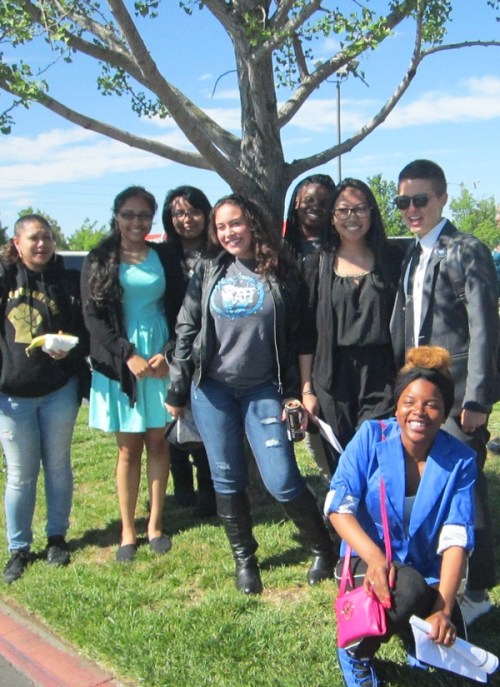
“I’m here because I like the fact that we’re working to change laws that could affect our family members. I’m most interested in the bills for sealing ‘juvenile’ records and getting our elders out on parole.” — Jada Layne, Project WHAT, high school student.
“I’m an organizer and I’m here to be around beautiful people, and to let legislators know that people like myself, formerly incarcerated people, have a stake and a say in the direction of how things are going. I want to advance policies that advance the lives of formerly incarcerated people and also those who aren’t incarcerated but are impacted by it, the larger community that is dealing with poor schools, lack of infrastructure, etc. Too often they want to focus on individuals and not really look at the impact on communities.” — Darris Young, Oakland

“I marched with Martin Luther King, and since then, I have to say, I have not seen enough of a change. I was active in the Tyisha Miller case down in Riverside. The police shot and killed her. After two years of constant protesting the police finally got fired, but no charges were pressed, and one of them was rehired right away in another county. I’m also interested in prison reform, because I have three incarcerated family members – one in juvenile and two others who are in prison and are mentally ill. We have to get better treatment for incarcerated people, because prisons are an extension of our community.” — Gloria Willis, All Of Us Or None (Riverside Chapter).
“I run a house similar to a Catholic Worker’s house for formerly incarcerated men in Fruitvale. I’m another white person trying to be in solidarity as best I can. I do believe that mass incarceration is the defining obscenity of our time, just as slavery was in another era.” — Nicholas Routledge, Oakland.
“I work at Planting Justice in Oakland, and also have my own business. Planting Justice is a permaculture skills training program currently in San Quentin and Solano prisons, and we want to get our program into Mule Creek and Folsom prisons. I’m here to speak in support of the bills providing housing funds for formerly incarcerated people and preventing discrimination based on conviction history. This is important to expanding our program – we teach people permaculture so they can have a job when they get out, but how can they have a job if they don’t have housing?” — Anthony Forrest, Oakland.
“My first arrest was for theft, and I got ‘juvenile’ probation for a year. But what I didn’t get were any resources, for employment or education or housing. I wound up back in detention and had an epileptic seizure. The guards accused me of lying and put me into solitary confinement. I remember it being so cold, and it felt like I was going crazy.” — Devon Williams, Los Angeles.

“I’m formerly incarcerated myself. I was doing a six year term and then my daughter came to the same prison. While I was inside my mom also passed. When I got out my biggest worry was where to live, and I was fortunate to get accepted into A Time for Change in San Bernardino. After being in prison, so many people have low self-esteem, and really need help. I’m a big advocate for Ban the Box. It’s really powerful to be here today!” — Sharina Chavis, San Bernadino.
“I’m a formerly incarcerated person. I work at Amity Foundation, and I’m here for the solitary confinement bill. I spent time in and out of solitary when I was inside, and I know what it does to you both mentally and physically.” — Ernest, Los Angeles
Listed by number, proposal, sponsoring legislator.
AB 1056 – Gives housing funding for people exiting prison (Atkins)
AB 1351 – Prevents deportation by allowing pretrial diversion (Eggman)
AB 1352 – Withdraws plea after successful diversion program (Eggman)
AB 256 – Expands crime of falsifying evidence to include digital video and photo evidence (Jones-Sawyer)
AB 267 – Provides that judges must inform defendants of collateral consequences of convictions (Jones-Sawyer)
AB 324 – Allows people with felonies to serve on juries (Jones-Sawyer)
AB 396 – Ends housing discrimination based on convictions (Jones-Sawyer)
AB 512 – Expands Milestone Program credit incentives to shorten sentences from 6 weeks to 18 weeks (Stone)
AB 829 – Gives people the right to appeal their gang database status (Nazarian)
AB 891 – Decriminalizes fare evasion for school transit (Campos)
AB 926 – Shortens parole terms based on compliance (Jones-Sawyer)
SB 124 – Ends juvenile solitary confinement (Leno)
SB 224 – Gives elder parole program to people over 50 (Liu)
SB 405 – Stops suspending drivers licenses for owing court debt (Hertzberg)
SB 504 – Enacts free sealing of youth records (Lara)
SB 759 – Gives good time credits to prisoners in solitary confinement (Anderson)
 PETE BROOK ON MEDIUM PETE BROOK’S TUMBLR ‘PHOTOGRAPHY PRISON’
 Prison Photography