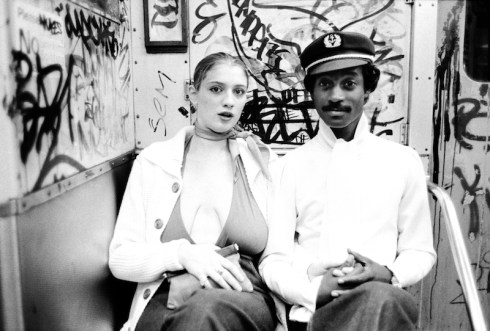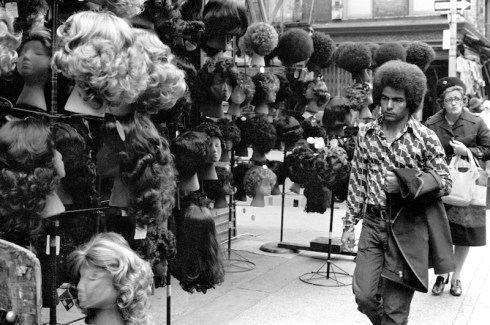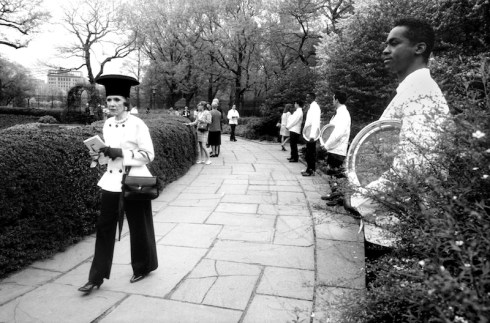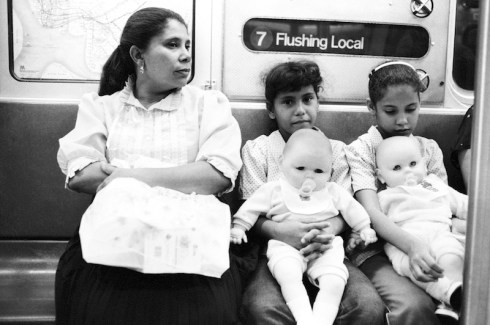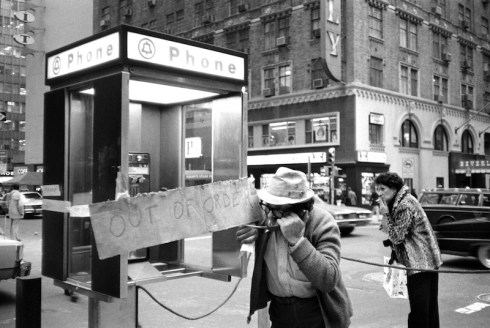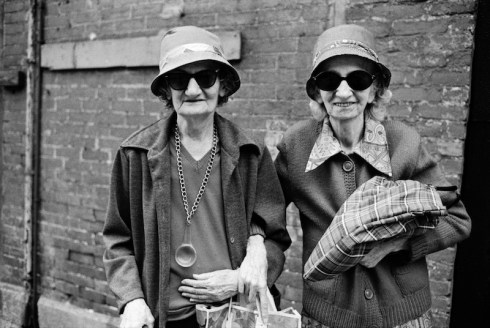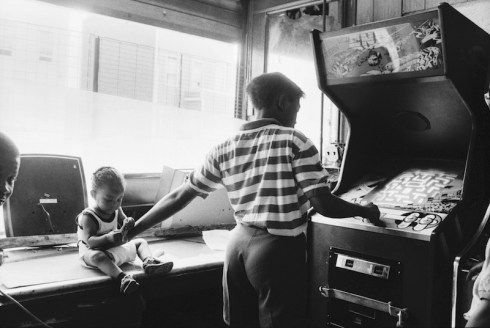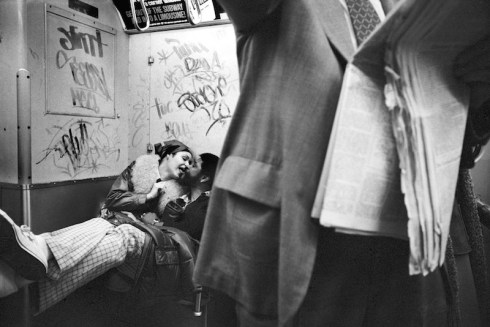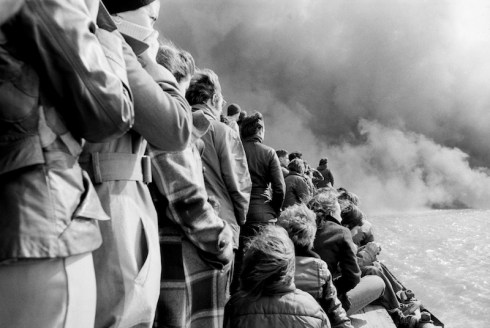
The love affair between street photographers and New York City is rich, lucid, sometimes sordid and, seemingly, unbreakable. Images shot on the fly on the streets of the Big Apple form a significant part of the canon of photographic history — think Helen Levitt’s photos of kids at play, Weegee’s crime scenes crowds, Bruce Davidson’s subway, Jill Freedman’s brilliantly observed moments, Louis Mendes’ fifty-years of street portraits, and Jamel Shabazz’s polychromatic pictures of hip-hop culture. Perhaps the patina of time leads us to romanticize these bygone eras? Perhaps the stand of time between us and the fashions, hairstyles, automobiles and shop-fronts of yesteryear makes looking just simple, uncomplicated fun? Either way, Carrie Boretz’s work is wonderful.


Between 1975 and 1994, Boretz traversed NYC. From Brooklyn to Midtown Manhattan, from Queens to the West Village, and from Harlem to Studio 54, Boretz sought out busy, public scenes that would turn viewers’ attention back toward the everyday wonder of everyday life.

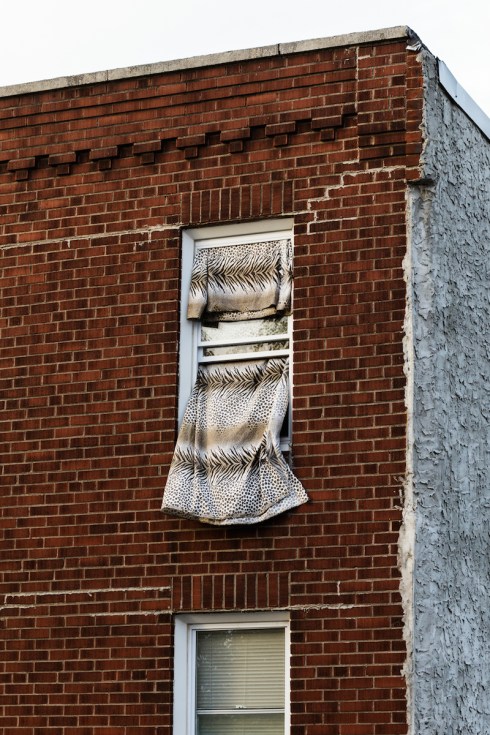
Street: New York City — 70s, 80s, 90s is a book of 103 images from the New York boroughs. It’s an elegy to a time when the city was a bit rough and tumble.

“New York seems less interesting now and more sanitized,” says Boretz.

Carrie Boretz’s Street is published by PowerHouse Books.

Read and see more: These amazing street photos show 20 years of New York’s gritty glam era—through one woman’s eyes


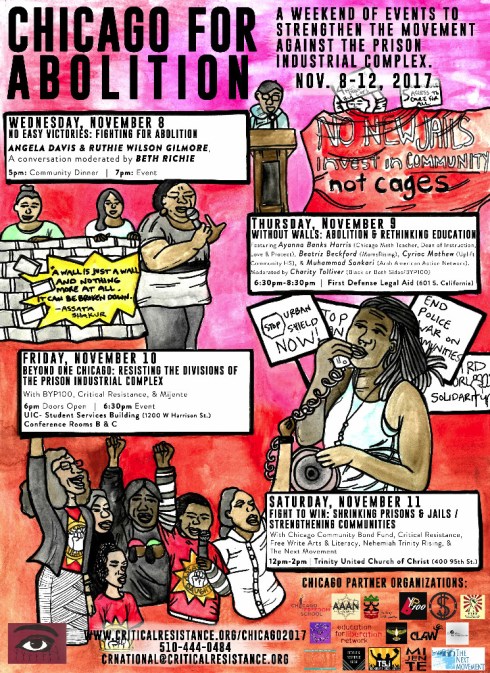
CHICAGO FOR ABOLITION: A SUMMIT ON ORGANIZING AND STRATEGY, NOV. 8-12, 2017

Critical Resistance and Chicago For Abolition have organised a weekend of events to strengthen the movement against the Prison Industrial Complex. If your are in, or near Chicago, go!

“In this period of astonishing energy and public discussion about abolition,” says Critical Resistance, “we are excited to build with organizations and communities in Chicago that are fighting to address and eliminate the harms of the interlocking systems of policing, imprisonment, and surveillance—what we call the prison industrial complex.”

Through a weekend of events, workshops, and political dialogue, Critical Resistance and dozens of communities in Chicago are building stronger organizational relationships shared understanding of PIC abolition and the advancement of local and national efforts.

Chicago for Abolition Summit: November 8-12th, 2017

ALL EVENTS FREE AND OPEN TO THE PUBLIC

Wednesday, November 8

No Easy Victories: Fighting For Abolition

A conversation with Angela Y. Davis and Ruthie Wilson Gilmore, moderated by Beth Richie. (Registration closed and all seats are currently full. CR will make an announcement by email if more seats become available.)

Thursday, November 9

Abolition and Rethinking Education

Organizing to get police out of your school? Working on responses to harm in the classroom and staffroom that do not involve criminalization? Want a curriculum that creates possibilities to imagine and build a world without prisons and borders? Building to protect students and families from immigration enforcement (ICE)? Come to this panel discussion with K-12 educators, youth advocates and abolitionist organizers that will deepen learning between and across these constituencies and identify needed tools and resources.

Featuring:
Ayanna Banks Harris – Chicago Math Teacher and Dean of Instruction, Love & Protect
Beatriz Beckford – MomsRising
Cyriac Mathew – Uplift Community High School
Muhammad Sankari – Arab American Action Network
Moderator: Charity Tolliver, Black on Both Sides/BYP 100

Location: First Defense Legal Aid, 601 S. California Ave, Chicago, IL 61612


Date: Thursday Nov. 9


Time: 6:30-8:30 PM


Friday, November 10

Beyond One Chicago: Resisting the Divisions of the Prison Industrial Complex

An event on resisting criminalization, gang databases, and policing. We will feature the launch of a critical new report on the use of gang databases in Chicago. Community organizers will discuss past efforts to fight policing and criminalization. Together we will build abolitionist visions of expansive sanctuary in Chicago.

Featuring: BYP 100, CR, OCAD, and Mijente.


Location: University of Illinois at Chicago. Student Services Building (1200 W Harrison St., Chicago, IL 60607) Conference Rooms B & C


Date: Friday Nov. 10


Time: Doors open at 6pm, start at 6:30

Saturday, November 11

Fight To Win: Shrinking Prisons and Jails / Strengthening Communities

An event on organizing against imprisonment and strategies to strengthen our fight for a world without cages. We will explore and discuss successful campaigns around stopping jail construction, ending money bail, advocating for prison closure, and for supporting prisoner-led struggles.

This event is hosted by Chicago Community Bond Fund, Critical Resistance, Free Write Arts & Literacy, Nehemiah Trinity Rising, The Next Movement.


Facebook event page.

Location: Trinity United Church of Christ (400 95th St, Chicago, IL 60628)


Date: Saturday Nov. 11


Time: 12pm-2pm

Chicago for Abolition Summit: November 8-12th, 2017

Poster design by Monica Trinidad


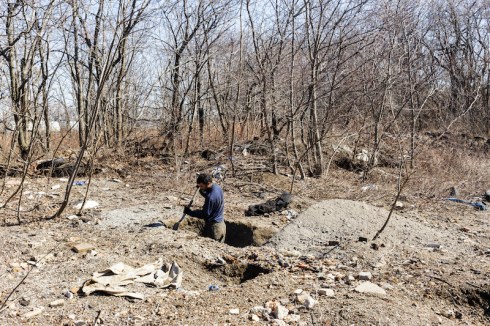
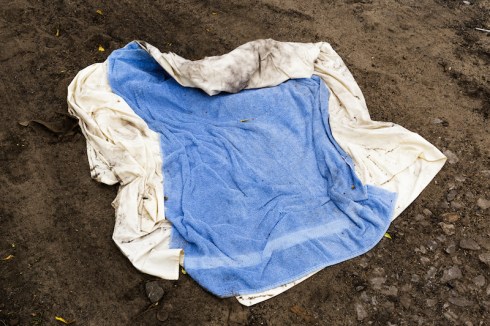
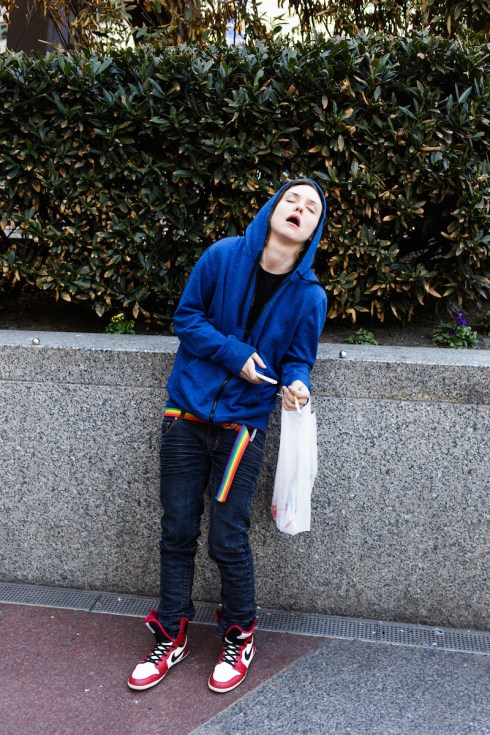
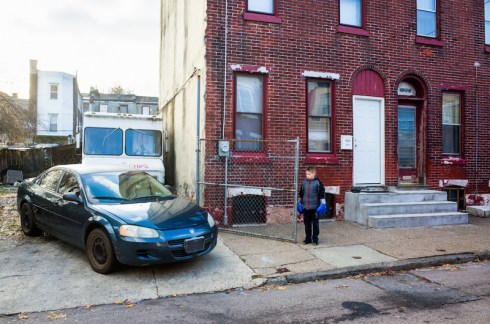
Trump rages on about a broken America. America is raging about a broken Trump. Among the many memes and earworms the Whinger-In-Chief has provided, “American Carnage” is the one that sticks, for me. As long as Trump can convince his base that other people, other milieus and other communities are in carnage, his base will happily cede logic and allow the White House to enact its politics of division. As soon as Trump bellowed “American carnage” during his inauguration speech, the foreboding inevitability of a belligerent, smarting, testy, bickering presidency came to bear. Do images of social blight carry a different message under a fascistic executive?

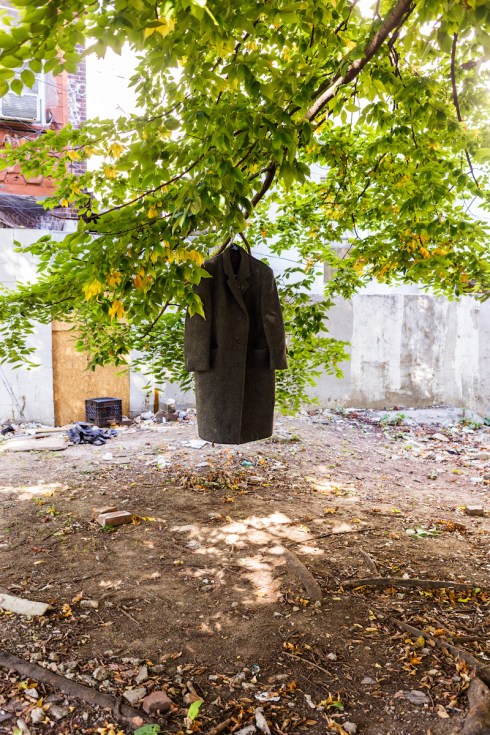
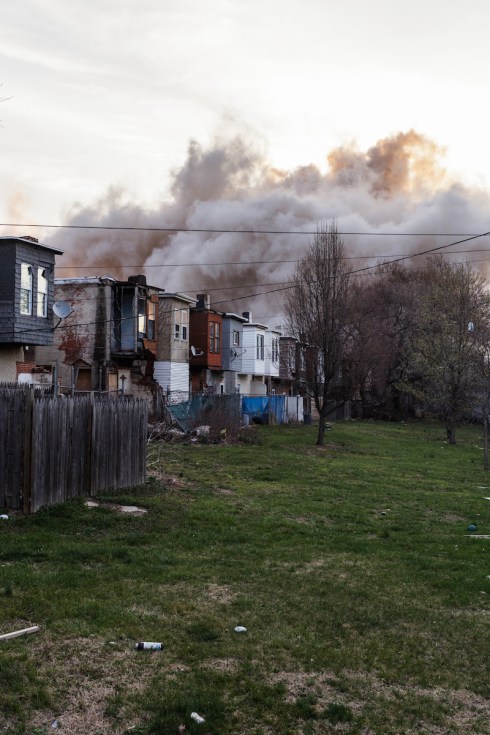
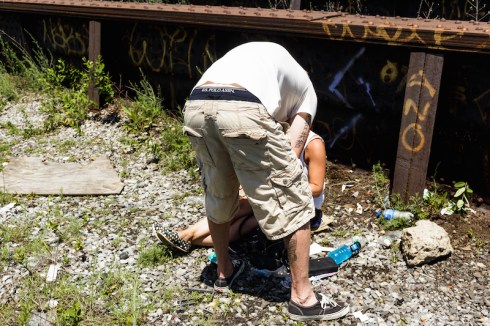
Of his series Slow Blink, Open Mouth, Jordan Baumgarten says, With apparent lawlessness, chaos is inevitable. The world comes alive with bits of magic, bits of darkness, and the inability to discern which is which. In this world, private moments are public, animals and humans roam free, fueled by id, and always, somewhere, there is a fire burning.


While Slow Blink, Open Mouth is difficult for its content alone, it is also difficult because it might provide the ammunition for both sides of the political battle of rhetoric, fought from distance, over the health and feasibility of the nation. In We Look At The Same Photos, We See Different Things, published on Vantage, I investigate the difficulty inherent to images, in the Trump era, of addiction and social stress.

To quote:

When I view these images I think of failed manufacturing, job loss, modern alienation, big pharma pushing painkillers, crimes of need, and cycles of profit and predation that cannot, will not, be broken by the will power of addicts alone. I see the result of decades of inadequate public education, mental and medical health care and viable addiction treatment. I see the legacy of the failed War On Drugs, mass incarceration, and policy and policing that has criminalised poverty. I see the cracks in society through which individuals have fallen and I know the cracks used to be smaller, and fewer and farther between.

I do not discount, however, the fact that others may see a society that’s lost its way; a society that fell from grace decades ago and needs a short, sharp reset. I know viewers might reason they have nothing in common with Baumgarten’s subject(s) and are moved to do nothing but judge. Trump has fueled the aggressive judgement of others. Perversely, though he hasn’t done this by avoiding the topics of poverty and addiction. Instead, he’s pointed (from distance) to problems in inner-city America (Chicago being his preferred bogeyman) and yelled about carnage, wastelands and the opioid epidemic. Trump is correct in identifying the opioid epidemic as specific to our times, but he’s more invested in stoking dangerous rhetoric about *dangerous* cities than he is listening to, or implementing, nuanced policy and social care solutions.


Read and see more: We Look At The Same Photos, We See Different Things

Slow Blink Open Mouth will be published as a book by GOST. Please consider buying a print from the series to help support the production costs.

Follow Jordan Baumgarten on Tumblr and Instagram.


There are countless numbers to keep youth out of custodial settings, not least the threat of waste and violence jail brings.

In New York, one group is using art, photo and video as an alternative to jail. The Young New Yorkers intervenes at the juvenile court, and with sanction of the judge, allows children who are convicted of non-violent misdemeanours (turnstile jumping, graffiti, public disturbance) to embark on 3-day or 8-week art programs instead of heading to jail for 3 months or taking on a long community service stint.

The Young New Yorkers (YNY) uses art to help children imagine different lives for themselves, to conjure new possibilities for their neighbourhoods and to interrogate what community justice is and might be.

Yesterday, YNY kicked off its #ArtNotJail campaign to raise funds for 2018’s programs.

“We are raising $10,000 to cover the costs of the next 6-months of public art projects,” writes YNY on its IndieGoGo crowdfunding page. “The next generation of Young New Yorkers will then use art to advocate for themselves, and advocate for a transformed criminal justice system.”

This humanising program listens to children, it opens up new potential and I’m a huge fan. Please consider giving to The Young New Yorkers.


Follow YNY on Facebook, Tumblr, Instagram, Twitter and Vimeo.


Narratives of abuse leak steadily from our prison systems. All too often, though, the true extent and horror of violence and corruption within remains shrouded or unspoken. And certainly unseen. Frequently, the narratives of abuse are singular incidents deemed extraordinary enough to warrant investigation and perhaps some local news coverage. Frequently, single incidents are described in the media as originating, and limited to, a single institution. The flow of information of, and investigation into, wrongdoing in Florida’s youth prison system is, by comparison, an overwhelming flood of longstanding, coordinated manipulation and orchestrated abuse across multiple facilities.

Recently, The Miami Herald published a years-long investigation into into Florida’s juvenile justice system. Following the death of 17-year-old Elord Revolte, the Herald sourced documents, interviews and surveillance videos that reveal “a disturbing pattern of beatings doled out or ordered by officers”.

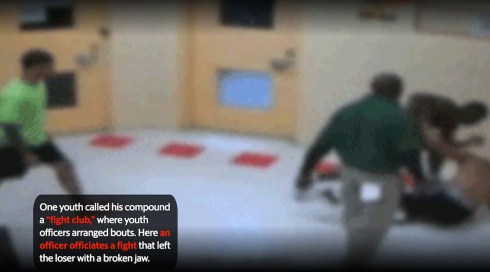
The investigation is aptly, and devastatingly, named Fight Club. It’s a sprawling deep-dive not only into the most egregious incidents of scandal but also into the deaths of 12 children in the system since 2000. This is difficult but important reporting.

Officers staged fights for entertainment, for gambling and to exert control. Officers relied on youths deemed stronger to enforce violent hierarchy and to mete out vicious beatings.

“Youthful enforcers are rewarded with sweet pastries from the employee vending machines, a phenomenon known as honey-bunning,” explains the Herald. “Beatings bought for the price of a pastry.”

The Miami Herald found that many of the staff were rejects from the adult prison system, previously fired due to an array of disqualifying behaviours.

“Florida’s youth corrections programs are sprinkled with hundreds of staffers who were jettisoned by the adult prison system or staffs at local jails but welcomed by institutions looking after incarcerated youths. Some had short-lived second-chance stints. Others remain on the job.”

Predators — both men and women — with violent histories were paid to look over society’s vulnerable children.

“Tommy Williams’ arrest for clobbering a severely disabled man he was paid to protect didn’t discourage his prospective employers at the Duval Youth Academy. They hired him,” writes the Herald. “Uriah T. Harris’ rap sheet featured a long string of arrests, including aggravated battery and child neglect. That didn’t deter his future bosses at the Avon Park Youth Academy. Both were hires that would prove regrettable.”

Some officers initiated sex with youthful detainees; they raped minors in their custody. All the while, staff built up a culture of see-nothing and say-nothing denial.

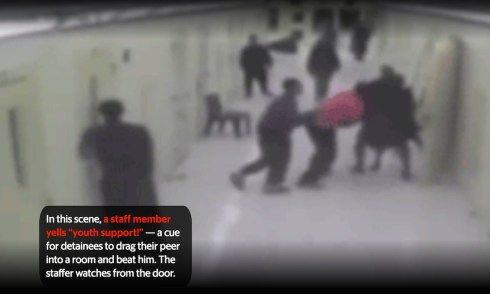
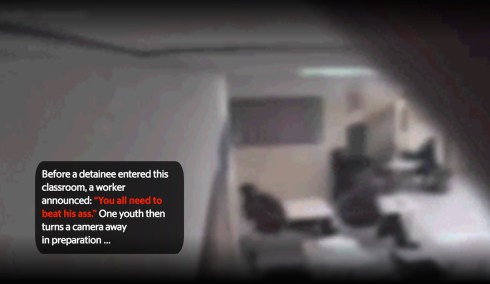
The online presentation of the reporting makes prominent use of acquired CCTV footage. Organised beating after organised beating. It’s shocking to watch. In one video, the youth are ordered to beat another once he enters the room. The staff member then kills the lights to make their ambush harder to deflect.

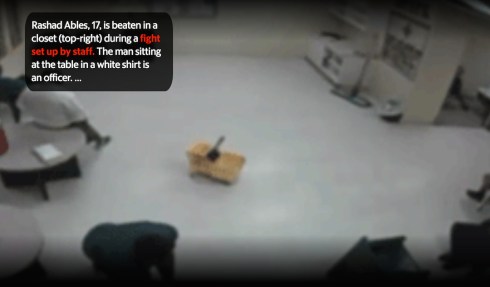
I’ve pulled some screencaps from the Herald’s designated webpage for the investigation. The sadistic manipulation of children as evidenced in weeks of footage the Herald sifted cannot be boiled down to any number of frames but here, at least, the inset captions give you an idea of the sick practices and abuse carried out by staff and by boys under the coercion of staff.

As revelatory as these CCTV videos are (as compared to the usual opaqueness from which prisons benefit) they are not a total indictment in every circumstance. While the videos paint a brutal picture of routine violence they did not, have not, and will not in every circumstance identify the perpetrator. Such was the case in the death of Elord Revolte. He was beaten by over a dozen prisoners and unprotected by staff at the Miami Dade Juvenile Correctional Center. Five staff were fired, but no prosecution was made. (Read the 66-page DJJ report here.)

The investigation, Fight Club, is incredibly difficult viewing and reading but it is a benchmark of prison reporting. Rarely is abuse from inside detailed so thoroughly and viscerally. Of the many profoundly sad aspects of the reporting are the interviews with parents of children killed or severely injured. No matter what your child has done, you do not expect the state to send him or her home in a body bag.

View Fight Club. It is beyond shocking but it is also imperative journalism.


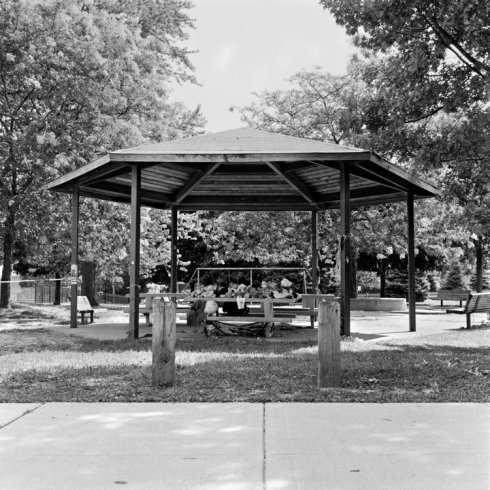
It’s unmistakable. That gazebo. That hexagonal cover to that picnic table. One needn’t notice the flowers, or even the poster, to the memory of Tamir Rice to recognize this utility structure as that under which the 12-year-old was murdered by Cleveland police. Even the bollards between us the viewer and the polygon shelter seem instantly familiar. For it was between those bollards and the gazebo that the cop car screeched to a halt, it’s door flew open and the first emerging officer shot Tamir dead. In the blink of an eye.

Tamir Rice was shot twice from less than 10 feet.

Back in 2014, as I watched the footage of Tamir Rice’s murder, I wondered then, why did the the cops mount the curb? Why did they bypass the pavement and careen the patrol car onto the grass? Into the park? Why the frantic invasion of a place for play and recreation? Why, given the clear lines of sight (evident both in this photo and in the murder footage) from a good distance away, did they not approach slowly and with caution?

“This court is still thunderstruck by how quickly this event turned deadly,” wrote Ronald B. Adrine, Cleveland Municipal Court Administrative and Presiding Judge in an Administrative Order on the case. “On the video, the zone car containing Patrol Officers Loehmann and Garmback is still in the process of stopping when Rice is shot.”

Misinterpreting a situation and mistaking a toy for a gun (in the case of Tamir Rice) — or mistaking anything handheld, or any motion toward a hip or a pocket (in the cases of thousands of others) — is the defense to which law enforcement turns repeatedly and, calamitously, the one which almost always exonerates them of their crimes.

This is a photo made by Alanna Styer. It is part of the project Where It Happened for which Styer visited and photographed 54 sites where people of color were slain at hands of law enforcement. In 2016, The Guardian reports, 1,093 people were killed by police officers in the United States.

“That is an average of three people a day,” writes Styer. “The incidents detailed in my archive span 50 years, from 1965 to 2015. This book documents only 54 of the tens of thousands of deaths that have happened over those 50 years.”

Mostly, the locations and details of those thousands of deaths aren’t known beyond the memory of friends and family, the accounts of the cops involved, and the reach of an investigation … if one occurred. Even then, the details remain contested. The majority of the places in Where It Happened are new to us, the audience. But Styer’s photo of the gazebo at Cudell Recreation Center is not new. It’s power rests, for me, in the fact that I have previous familiarity with the place through the news coverage and activism in the aftermath of Rice’s murder. I recognize the site. You probably do to. We might also recognize the site of Michael Brown’s death on that tarmac road with verges of short, thinning grass. We may recognize other sites of avoidable killings that made it to our news feeds and memory. We don’t, regrettably, recognize the vast majority of the tragic theaters to which Styer’s work speaks. There are too many.

Styer’s photo shifts our vantage point from the elevated view of the CCTV across the street and down to street level. Whereas previously the benches and the posts were rendered in the indistinguishable and out of focus action of the footage, they’re now brought into sharp focus. We see the underside of the gazebo roof, not the top. We’re provided a perspective from the asphalt where the cop car could have and should have been.

Being “in” this image, I only want to get out, of course. A world in which this wasn’t a murder site and you or I didn’t recognize it as such would be, inarguably, a better world. Specifically, I want to step back. The unnecessary haste with which officers Timothy Loehmann and Frank Garmback charged into this scene gloms onto this image. That unfathomable CCTV footage is this photo’s frame.

Loehmann and Garmback’s excessive urgency which escalated the event from zero to murder perverts Styer’s image. But it also makes it. This photo works upon and within the collective exposure we’ve had to that grainy footage. Styer’s tribute here isn’t working in isolation but in extension of previous visual feeds to which we’ve all been audience. This image is an intervention and it works to disrupt our (possibly passive) consumption of death. It revisits the space and time of an event in which Tamir Rice had, essentially, no agency. The stillness is terrifying. True, the image could be read simply as a visual description of a memorial but I argue that precisely because it grounds us between the CCTV camera and Rice’s swift execution, the photo re-activates both the event and our relation to it.

Acts of police brutality (or citizen brutality, e.g. George Zimmerman against Trayvon Martin) frequently spurn a battle of images — calls for the immediate release of dash cam footage; calls for body-cams; different photos are circulated and cast as sympathetic, or not, to the victim and the perpetrator; media outlets trawl the social media feeds of victims, perpetrators and associated individuals. Whether conscious or not, Styer is reacting to such frenzies. She is paying homage to the victims, months or years after the news story has passed and the casket lowered. Where It Happened is a dark type of pilgrimage but I feel Styer is making it in good faith and I argue she’s returning with images that are a positive contribution. Google Street View does not make imagery that is conscious or respectful (interestingly, it hovers above street level like CCTV, delivering a detached record). Cellphone images may carry as much, if not more, respect as Styer’s photographs and this might be based on a personal connection to the victim, but those amateur images are not made by an artists intent on publicly disseminating them and talking about the issues that forged them.

I admire and have reported on Josh Begley’s project Officer Involved which uses code to automatically render both satellite and Street View images of sites of deaths involving law enforcement. Thousands of sites. While the subject is the same Styer’s work is considerably different in tone and effect. If Begley manages to remind us of the scale of the problem then Styer’s work reminds us to recognize each depressing part of the problem. I can’t code or manipulate Google Maps API but I can walk, bike or drive to killing sites within my own city. Styer’s practice takes time and effort, away from the screen. In 2015, Teju Cole reflected upon the problem of the constant visibility of death. In Death In The Browser Tab, Cole recounts his discomfort with only *knowing* the death of Walter Scott through the infamous footage made by passerby Feidin Santana who was hiding in the bushes. Cole had the opportunity to visit North Charleston and with a friend he found the parking lot of Advance Auto Parts on Remount Road in which Officer Michael Slager first stopped Scott. Then Cole traced the steps of them both to the park in which Scott was slain.

“[…] being there also revealed, in the negative, the peculiarities of the video,” writes Cole, “peculiarities common to many videos of this kind: the combination of a passive affect and the subjective gaze, irregular lighting and poor sound, the amateur videographer’s unsteady grip and off-camera swearing. Taken by one person (or a single, fixed camera) from one point of view, these videos establish the parameters of any subsequent spectatorship of the event. The information they present is, even when shocking, necessarily incomplete. They [videos] mediate, and being on the lot helped me remove that filter of mediation somewhat.”

Styer’s practice is one response to the problematic mediation that Cole describes. Few of us can identify the problem, let alone respond to it. And just as Cole felt better for mindfully visiting the site of Walter Scott’s death, and just as Styer was compelled to visit 54 catastrophic sites, we can choose to seek out a different image. Away from local TV news and social media, death might become less abstract? The sheer scale of the issue might become overwhelming. It is. But are we citizens that feel or do we just talk about what it is to feel?

Are we inured and numbed by murder on our screens? Or are we compelled to act because of it? We can all easily research the institutional violence in our communities. Maybe some of us might be compelled to make pilgrimages of our own and to carve out time to think about the violence that always plays out on our streets before it is broadcasted into our homes. Styer took the time and she has mediated at these sites. Her image of the gazebo in which Tamir Rice was shot and killed gave me the opportunity to mediate. I am grateful for that.

Sometimes photographs are about what’s literally depicted. Sometimes the lessons in photographs are in the method by which they were made. In Where It Happened it is both.

Alanna Styer is currently crowdfunding a book of images from her series Where It Happened. Please consider supporting the production of the photobook, titled No Officers Were Injured In This Incident, by visiting Styer’s Kickstarter page

Listen to a radio interview with Styer about the project and her goals for the book.


I wrote about Lucas Foglia’s third and most recent photobook Human Nature for Photo District News: ‘Human Nature’ Finds New Ways To Understand Our Impact On The Environment

To quote:

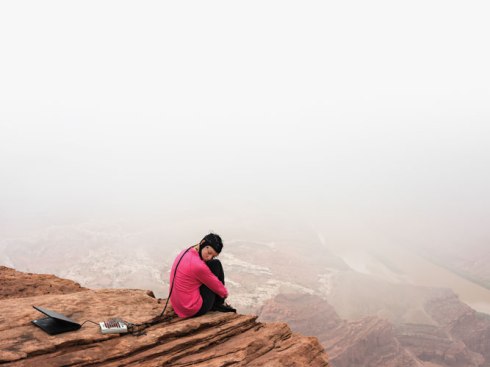
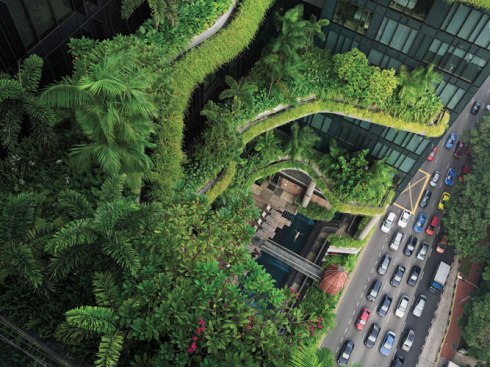
Human Nature (Nazraeli) journeys from Nevada ranch lands to constructed paradises in Singapore, from a farm in a New York City jail to a research station on an Alaska glacier. Foglia not only documents ice floes, clear-cut forests, green urbanism and other common climate change subjects, he meditates on what nature has become and how we interact emotionally, or not, with our planet.

He also pulls back the veil on the work of earth scientists. Having resolved that most places on earth had been visited, documented and altered, Foglia decided to demystify the labor behind our understanding of the planet. “I started photographing scientists who measured the air. Amidst all of the news stories and political arguments about climate change, most people don’t know what the process of the science looks like,” he says.

Foglia photographed field researchers at the Guyana Forestry Commission, the Juneau Icefield Research Program, the NOAA Observatories and USDA Agricultural Research Stations. The scientists granted Foglia free access because, he says, they recognized that he was intent, like they are, on describing the world fairly. “We shared a common cause,” he says. […] The Trump administration has proposed cutting NOAA’s budget by 17 percent, including a 26 percent cut to research. “Most of the scientists I photographed are at risk of losing funding,” Foglia notes.

Read more. See more.


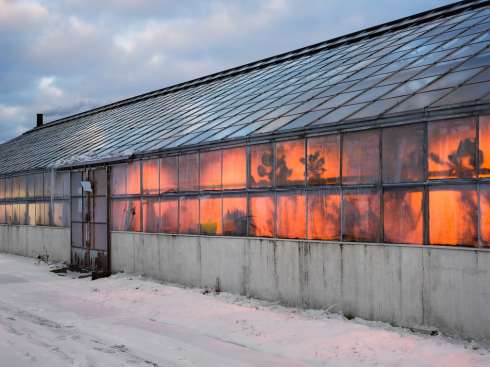
All images: Lucas Foglia. (Top to bottom): 1. Kate in an EEG Study of Cognition in the Wild, Strayer Lab, University of Utah. 2. Esme Swimming, Parkroyal on Pickering, Singapore. 3. Lava Boat Tour, Hawai‘i shows brand new land created by lava pouring into the ocean. 4. Air Sampling, Mauna Loa Observatory, National Oceanic and Atmospheric Administration, Hawai‘i. 5. New crop varieties are grown and tested in the Geneva Greenhouses at the New York State Agricultural Experiment Station. The USDA’s national and regional seed banks store hundreds of thousands of plant varieties, and crop scientists race to create a climate-change-resilient agriculture. As droughts, extreme rainstorms, and other erratic weather patterns intensify, farmers need crops that can cope with such stresses. 6. Ice to Protect Orange Trees from the Cold, California. 7. Evan sleeps at Camp Eighteen, overlooking the Vaughan Lewis Icefall. One of the greatest non-polar concentrations of glaciers in the world, the Juneau Icefield spans 90 miles of southeast Alaska. 8. Icebergs float away from the Gilkey Glacier in Alaska. 9. Kenzie inside a Melting Glacier, Juneau Icefield Research Program, Alaska. 10. Honey bees trail water across a rooftop after rain in Portland, Oregon.


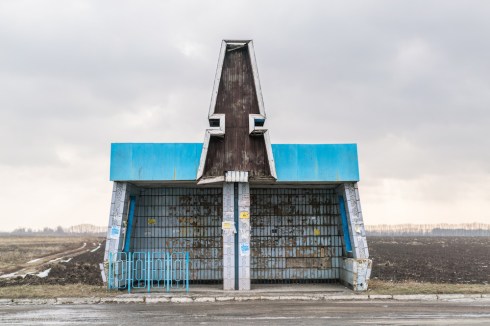
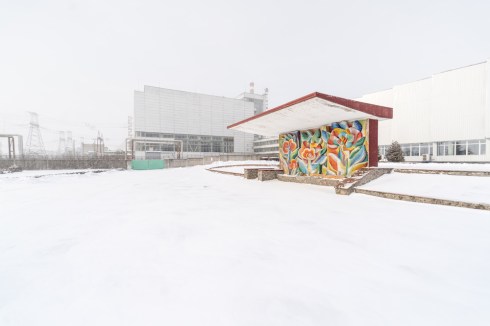
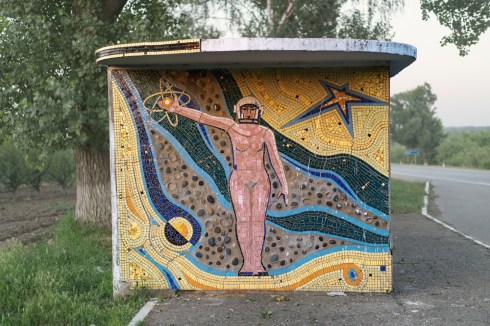
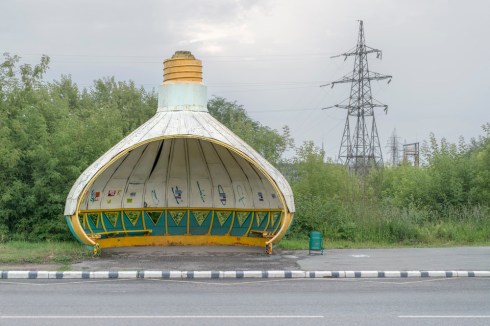
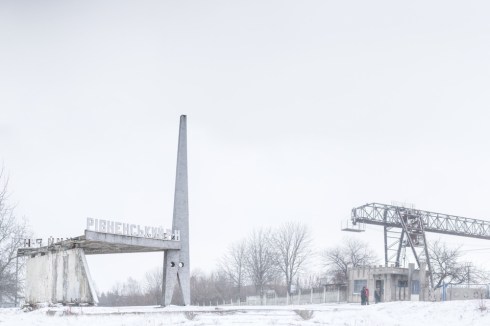
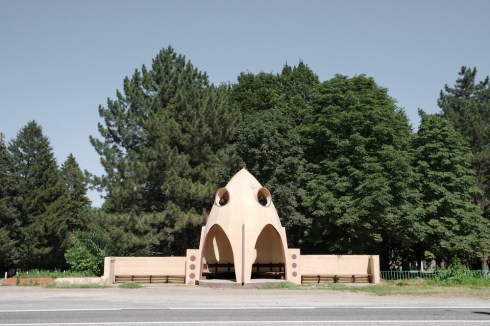
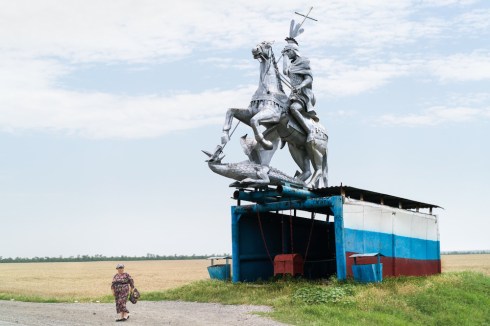
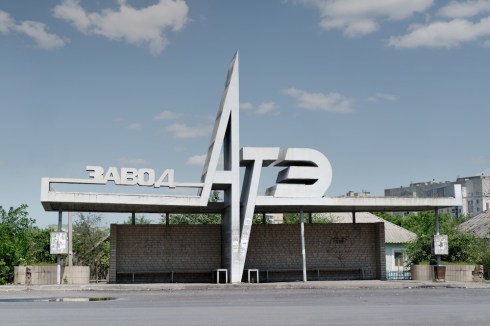
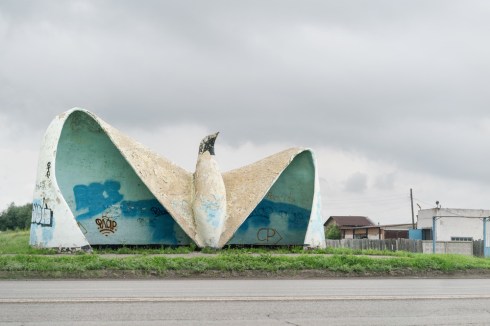
I just wrote about Christopher Herwig’s new book Soviet Bus Stops Volume II for Timeline: Photos: From Brutalism to folk art, Soviet-era bus stops crush the myth of Communist homogeneity:

In 1975, the Soviet Ministry of Transport Construction dictated that bus stops “should pay special attention to modern architectural design, in accordance with the climate and the local and national characteristics of the area. Bus stops should be the compositional centers of the architectural ensemble of the road.” But if the shells of these structures reflected governmental decree, their quirky inventiveness is the result of the mores of local artisans.

These remote bus stops are the little cousins to the monumental Communist construction projects — the high-rises, TV towers, space shuttles, and state-owned factories—most of us are familiar with. In his new book, Soviet Bus Stops Volume II, photographer Christopher Herwig examines the Soviet-era bus stop as an architectural type, where regional planners flexed their patriotic muscle and pushed artistic boundaries. These humble structures challenge the preconception of the Soviet landscape as blandly homogeneous.

“Some were made by famous architects and artists,” says Herwig. “Some were made by road construction workers and probably even decorated by school children or at least university students on summer break. Some are one-offs and some are repeated.”

The book is published by Fuel.

Read and see more.

EMAIL

prisonphotography [at] gmail [dot] com

Prison Photography Archives

Post Categories