UBB

A few months ago, you may recall, I mounted a show in a brewery in Seattle. It was a prison art fundraiser organised by University Beyond Bars and an appended exhibition of prison photography from Washington State – including the work of Bettina Hansen, Tim Matsui, Steve Davis, Cheryl Hanna-Truscott and Erika Schultz.

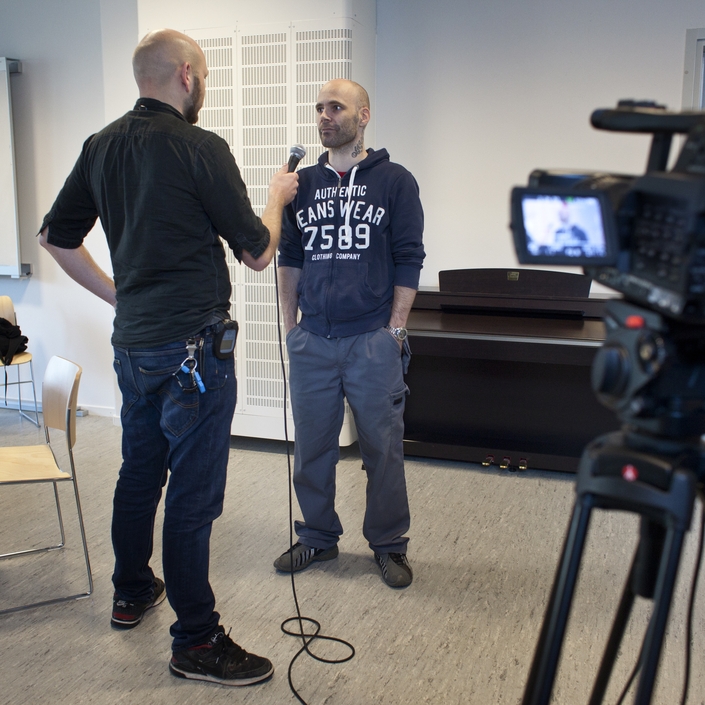
During the opening, there was a couple of filmmakers snagging folk for interviews and trying to make sense of what college education can do for a prisoners’ community and why an art auction and photography show can bring those ideas to the public.

Well, the resulting video has just been published. It’s not the slickest media production you’ll find but it is earnest and the film recognises the work of the many individuals and volunteers who quietly work to make prisons more humane and hopeful.

photo 2

COLORS has been a favourite of mine since their PRISONS Issue #50. By chance I picked up a copy of the Spring 2013 COLORS magazine, Issue #86 MAKING THE NEWS.

Issue #86 is a cracker of an issue: North Korea, Al Qaeda’s film production house, surveillance, Tahrir Square, El Narco Blog,  Pakistani drone attack survivors’ photographs, Will Steacy’s photos of a dead Philadelphia Inquirer and James Mollison’s images from Sierra Leone; the issue deals with heavy topics and uncomfortable imagery.

Also uncomfortable, is the scene of Fabienne Cherisma’s corpse atop a collapsed cement rooftop in Port-au-Prince, Haiti on the 19th January, 2010 (one week after the massive Haiti earthquake). The scene was captured by multiple photojournalists, whose images COLORS features over 4 pages. They are online here.

The photographs and the circumstances in which they were made are very familiar to me. Between January 27th and April 8th, 2010, I published a fifteen-part series (beginning here) about the photos and photographers activities. In short-shrift, from a desktop in Seattle, I uncovered the similar photographs by scouring the wires, agency websites and news feeds. I interviewed a dozen of the photographers on scene.

The scene of Fabienne splayed out was — and remains — stark. It is one of the more indelible images to emerge from the natural and social disaster. So, the image was known but it’s dissection and the placement of multiple photographers’ works was done by me. My inquiries accelerated the image and the stories into the public sphere (the posts remain the most visited of Prison Photography; approximately 240,000 page views all-in-all). If my work had not put the story of Fabienne’s death and its photojournalist treatment into the spotlight maybe the awards that came later for three of the photographers would?

I was surprised to make the discovery of those images of Fabienne within the pages of COLORS. More than that, I was bothered. Why was I perturbed? I don’t own the images and I certainly don’t own the story. I’ve not been wronged.

In short, the problem for me is COLORS treatment. They could not have researched the piece without being aware of my 15-part series. COLORS doesn’t deal with the issue in any depth. In fact, they rely on the images to drive the segment and then raise the question of ethics without really providing their own position. Of the images Nathan Weber’s image of the photographers surrounding Fabienne’s body is printed larger and with prominence. Are we incited by the image? Has COLORS forfeited a nuanced handling the images, and thus the story?

Prison Photography was the first to publish Nathan Weber’s image; without doubt that was the image that launched many hyperbolic statements about the depravity of Western photojournalism. So, maybe if I hadn’t contacted Weber directly and asked him specifically about the circumstances perhaps he would never have sent that image to me … or anyone? That’s a question for Weber.

I guess, at heart, I am protective of the story. There’s so many sides to the coverage of Fabienne’s death that I don’t like to see it reduced to an over-simplified “it-was-wrong/it-was-what-it-is” argument. COLORS barely takes us past that.

Finally, I am bothered by COLORS‘ passive use of an abbreviated Weber quote that describes the circulation of the many images of Fabienne thusly:

“Even though grouping together is common for photographers in dangerous situations, many in the international photojournalist community were unhappy with having “their laundry aired in public.”

Prison Photography was the root and the source for the extended debate about these pictures. I brought the issue to the international community. All the feedback that I received for my digging and analysis was, without exception, positive. Readers were thankful to have had the scene looked at from the multiple angles, appreciated my interviews with the photographers, and understood more deeply the complexity of the situation.

No one felt that I was hanging-out photojournalists or photojournalism to dry. Pick any laundry metaphor you wish, it was not my experience reporting the story that people were upset. To suggest that the photojournalist community was irritated by having this public discussion is, frankly, insulting.

photo 3

617A3353

Brandon Tauszik moved to Oakland from San Diego three years ago. He’s got a day job. Some of his images are a little raw — check his Instagram feed @BE_DIZZLE. Tauszik was for a while assistant to the legendary Jim Goldberg. He’s also a big fan of TBW Books the small publisher just down the road run by Paul Schiek. I haven’t asked Tauszik but I reckon he’s probably a fan of the Hamburger Eyes folks too.

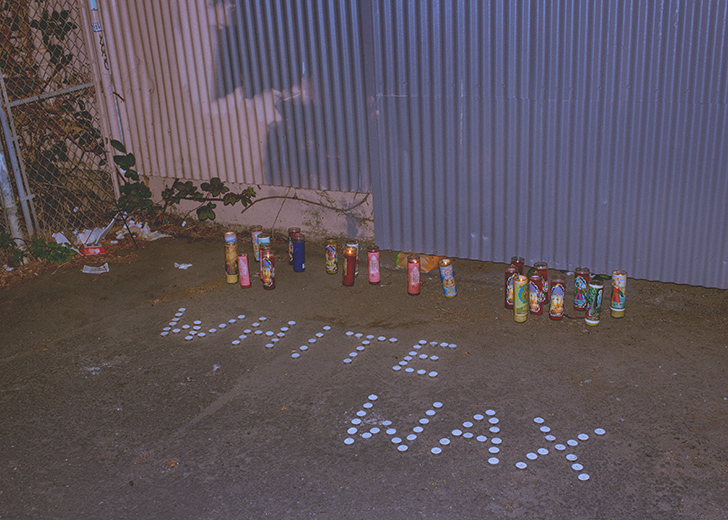
Tauszik is making the Bay Area his home and the aesthetic of his work makes obvious sense amid the prevalent scratched-up, banged-up, gritty, kids-street-realism typical of California. Less obvious though are the motives, goals and choices within Tauszik’s latest body of work White Wax

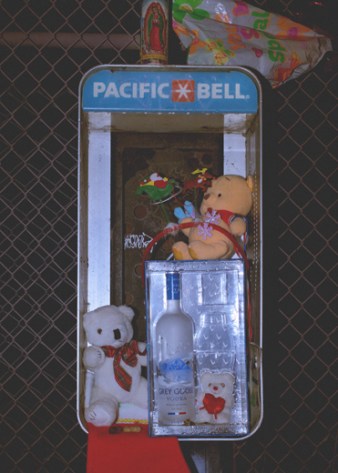
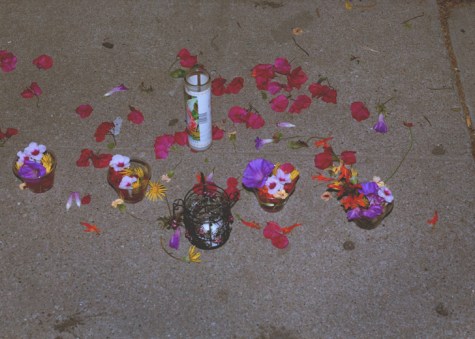
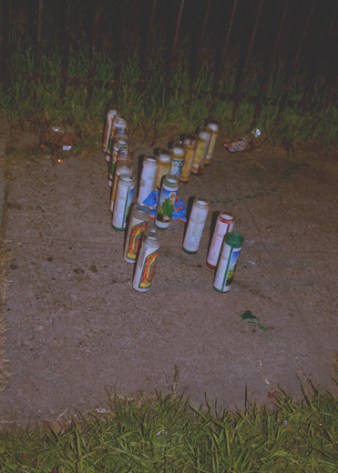
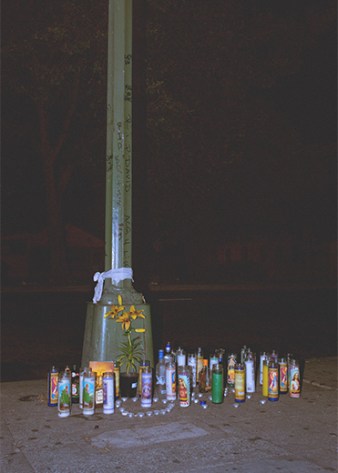
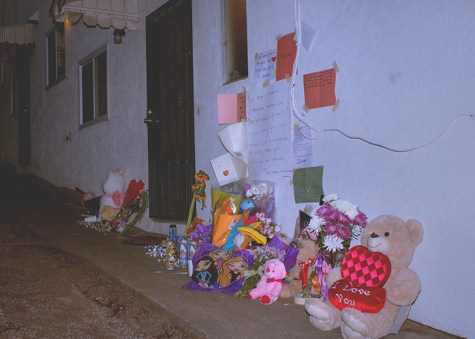
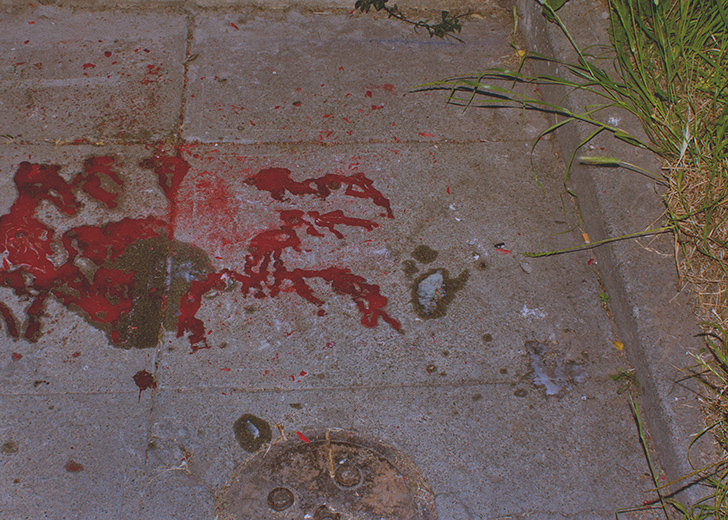
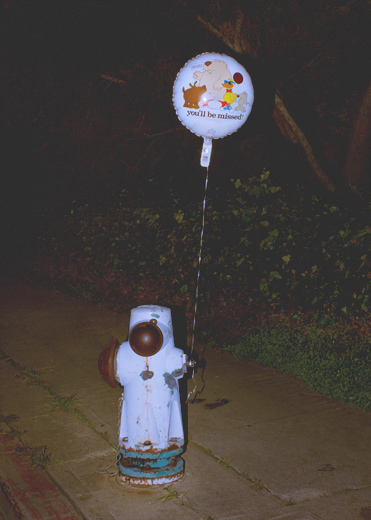
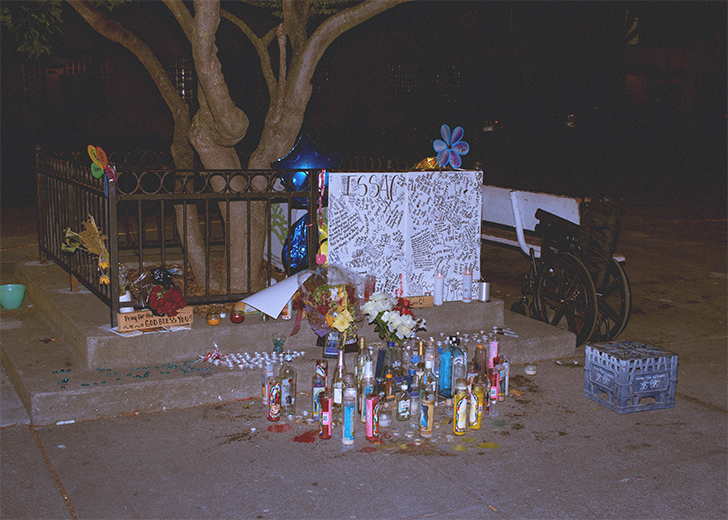
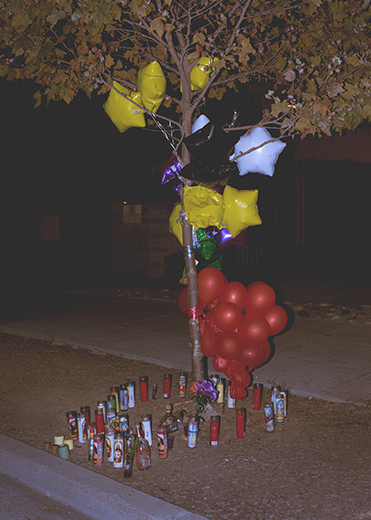
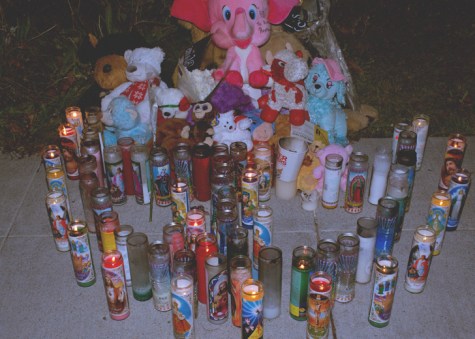
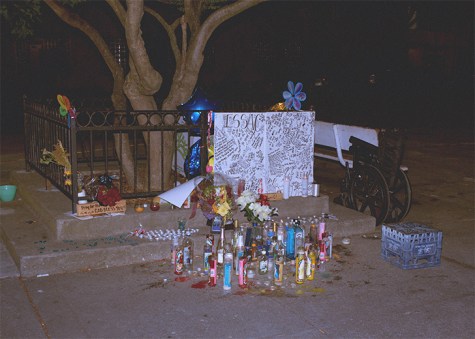
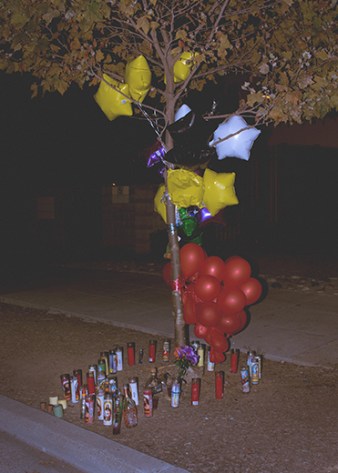
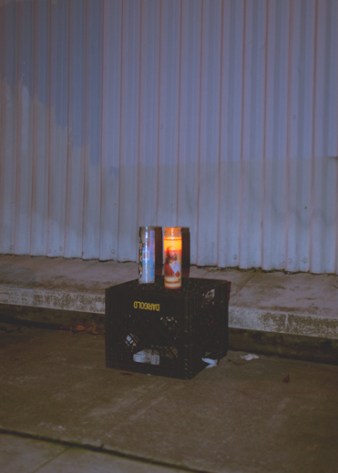
White Wax is a year-long visual document of memorials to homicide victims on the streets of Oakland. Tauszik says in his artist statement that his photos are to serve as a medium for self-examination. He thinks America is in the middle of a collective re-examination of its criminal justice policy, gun culture and post-racial credo.

White Wax is also,I suspect, a means by which Tauszik can remain connected to the place he lives. Unfortunately, for most people, murders are pretty easy to ignore; they just have to stay off the wrong streets. Some Oaklanders don’t have that luxury though.

“Why has the ecology of the American inner city long enabled it’s own self-destruction?” asks Tauszik. “Is it possible to shift our tired narrative of another young black man memorialized with white wax?”

SCROLL DOWN FOR OUR Q&A

TA0A8066

617A3328

617A9539

Q&A

Prison Photography (PP):  Why take on this project?

Brandon Tauszik (BT): Oakland is a violent city, but America is a violent country. Its inner cities particularly so. There is already a great deal of photography approaching this subject with a kind of coarse imagery. We’ve all seen it over and over. I asked myself, ‘How can I photograph gun violence without showing any guns? How can I create an emotional project without showing victims or mourners? How can I approach a politically charged subject, yet leave cops and politicians out of it?’ I hope that with these images I am able to communicate something beyond just melted wax on the sidewalk.

PP:  I used to live in San Francisco and there was a bizarre media obsession about the annual homicide rate, as if people were waiting for it to meet or surpass the previous year’s figure. Oakland was always the depressing counterpoint to SF figures as it suffered 2 to 3 times the number of murders. Briefly, can you describe your experience of information, conversation, attitudes about murder? Surely, beyond figures there’s talk of interventions and solutions? Basically, what should Oaklanders do?

BT: That’s a loaded question! There is a lot of social inequality in the Bay Area and particularly here in Oakland. Having been largely de-industrialized over the past few decades, Oakland is currently in the midst of a strong wave of gentrification. Despite this new influx of higher income residents, the crime rate has barely shifted in the past decade. It’s currently the most dangerous city on the west coast and has the highest robbery rate in the whole country. People blame this on the understaffed police department, the economy, the gangs, the guns, whatever.

It’s uncomfortable to address, but ultimately this isn’t about “What should Oakland do?” but instead “What should America do?” In New York City, Memphis, Chicago, Baltimore, Los Angeles (the list goes on and on) young men of color kill and are killed more than any other demographic. We’ve ignored violence in our country because the victims don’t look like us. As one African American mother told me at a memorial, “We have been living a daily Sandy Hook and it’s time for the nation to know.”

There are some very strong local organizations (SAVEKhadafy FoundationRJOY) that do amazingly important work, but ultimately this is about a flawed national mindset in regards to prisons, guns and race relations.

SCROLL DOWN TO CONTINUE Q&A

IMG_5634

617A3402

TA0A0182

TA0A0254

TA0A2367

617A3396

TA0A2370

PP:  Is White Wax a memorial? A study of vernacular action? Other? Both?

BT: It’s more a study in the unique and visually distinct way that my neighbors mourn the loss of their loved ones. Or in your words, a study of vernacular action.

PP:  Was it important to commit to this for one year?

BT: Every big city has their yearly homicide count which is obsessed over and analyzed as strictly data. I wanted to see what that data would look like in context of the shrines, which are a direct result of that count.

PP:  White Wax images are taken at night. Was this a deliberate choice? If so, why?

BT: I wanted to capture these scenes as naturalistically as possible. The majority of these murders take place under the cover of darkness, so while this makes my work more difficult and dangerous, nighttime is one of the threads I use to tie the images together.

PP: I know you use Shine In Peace, Google Alerts and word of mouth to discover homicides. Do you fear White Wax has omitted some homicides just as the local news often misses/overlooks these murders? If you have missed some what does that mean?

BT: I’ve definitely missed some, due to a few reasons:

1. These memorials are, by nature, ephemeral and are displayed for anywhere from one day to many weeks. Sometimes I find a site I’ve missed where there are still traces of wax, but the shrine has been removed.

2. The given victim’s family and friends sometimes don’t erect a shrine. If the murder took place in a particular neighborhood where the victim was not welcome, that will usually apply to the victim’s family and acquaintances as well.

3. Many of these murders get little to no media exposure. For example, here is an example of a web-only murder story from last year. I rely on Oakland’s news outlets to report on (or at least tweet on) each murder. However there is low motivation to do so due to the very limited readership on these stories.

There are usually a few murders a week here, so unfortunately it can be hard for me to keep up.

SCROLL DOWN TO CONTINUE Q&A
TA0A6000

617A3302

TA0A6003

TA0A6004

TA0A6062

TA0A7775

PP:  What about captions? Is there a need (from you or audience) to include information about the homicide?

BT: I have the name/age/race/sex/location information for most of these murders. However, captions have a didactic manner of reducing a photograph down to data and information, which is what I am trying to avoid. A recent study showed that Americans assume black people feel less pain than white people. This is deeply frightening. I want the viewer to ponder these images and wonder, ‘Was this person someone who looked like me?’

PP: What’s been the reaction from folks in Oakland to White Wax?

BT: I have been sitting on this project until very recently. I wanted to give it time to fill in and for the thesis to take shape. The local people I’ve showed it to so far seem to think it’s strong and thoughtful. I would love to arrange an exhibition towards the end of the year in Oakland.

PP: Which photographers are working in ways that you admire and value?

BT: When I first moved to the Bay Area, I assisted Jim Goldberg for a while. That was a pivotal time for me which pulled me away from strict photojournalism toward longer, in-depth projects. Lately though I’ve been into Harry GriffinYoshi Kametani, and Viviane Sassen.

PP:  What’s the purpose of photography? What should we be trying to do?

BT: We have ears to hear, but also eyes to see. The spoken word can only accomplish so much. You can sometimes say so much without using your mouth … a gesture, a glance.

For me, photography acts as a medium to illuminate ideas and questions on all aspects life.

END
TA0A7877

TA0A9752

TA0A7915

TA0A9950

Biography

Brandon Tauszik is a photographer and filmmaker based in Oakland, California. He creates visual media at Sprinkle Lab while pursuing personal photography projects.
617A3297

Fassino
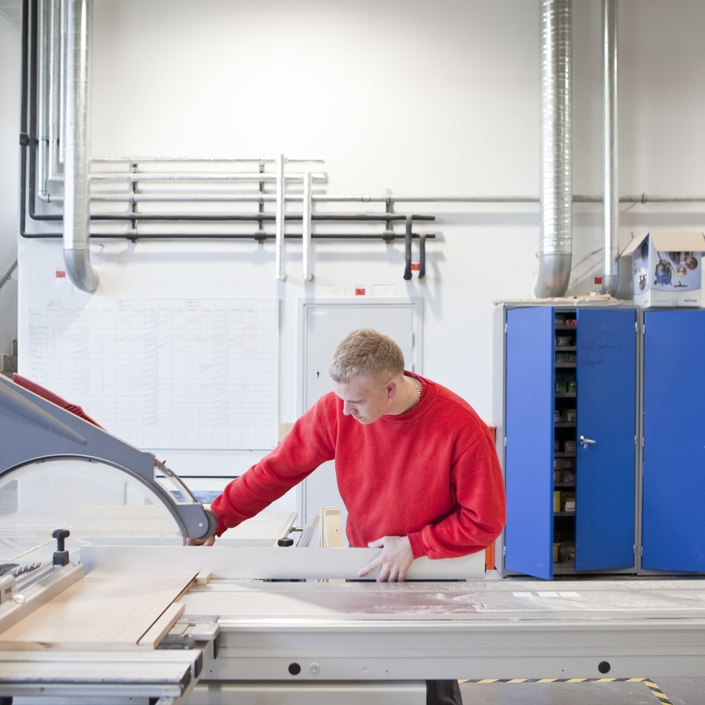
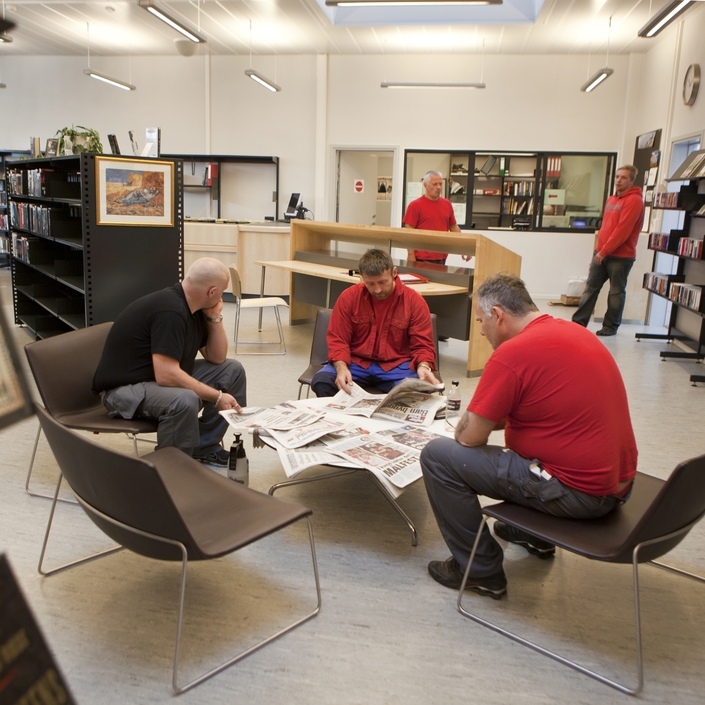
Prison guards in Norway train for two-years in a special program which includes seminars on human rights, ethics and law. Warden Heidal oversees between 250 and 340 prisoners.

This week the University of Oslo admitted mass-murderer Anders Breivik into their Political Science program. It caused astonishment and chagrin for people across the globe. Understandably so. But, equally understandable is the decision, as explained by Ole Petter Ottersen, rector University of Oslo:

The fact that his application is dealt with in accordance with extant rules and regulations does not imply that Norwegians lack passion or that anger and vengefulness are absent. What it demonstrates is that our values are fundamentally different from his. […]

Having been admitted to study political science, Breivik will have to read about democracy and justice, and about how pluralism and respect for individual human rights, protection of minorities and fundamental freedoms have been instrumental for the historical development of modern Europe. Under no circumstances will Breivik be admitted to campus. But in his cell he will be given ample possibilities to reflect on his atrocities and misconceptions.

I have written before about Halden Prison — in which Breivik is held — that time leaning on the photographs of Fin Serck-Hanssen. I still hold that a prison should never alter or lower its operations to equal the depraved levels of its most infamous and criminal prisoners. As institutions, Halden Prison and the University of Oslo are both conducting themselves in ways fitting for a resolute and lawful society.

Gughi Fassino‘s photographs from Halden show us the very contemporary facilities and programs available to prisoners.

I am not interested in famous prisoners; they are famous because their crimes were extraordinary. The disproportionate amount of press coverage they get distorts the debate and distorts our impressions of what a prisoner is. I am more interested in the non-violent prisoners (a category that is proportionally much higher in the U.S.) that wallow in overcrowded prisons and don’t have access to meaningful programs.

Rehabilitation, education and vocational activities REDUCE recidivism and in turn REDUCE the financial burden to society. Men released from Halden Prison succeed at a much higher rate as compared to those released from other prisons in Norway, released from other prisons in Europe and by a distance compared to those released from U.S. prisons. Only 20% of Halden prisoners reoffend in the three years after release. The figure in the U.S. is 65-70%.

Roughly 90% of U.S. prisoners will eventually be released; they need help readjusting after years looked up and they need reason to buy into our society. We don’t need cycles of crime to persist and to pretend prison conditions aren’t the largest factor in that equation is a refusal to deal with the issue. WE deserve better prisons.

So as we look over Fassino’s photographs, let us not think about what these facilities mean for Breivik but what similar facilities could mean for the 2.3 million American prisoners and society as a whole.

View more of Fassino’s photographs here.

Fassino3
Prisoners are allowed to shop in the prison supermarket once a week. Beef tenderloin is $60/kg.
Fassino1
Communication with the outside world is limited. The prisoners are permitted three conversations a week with their family and weekly visits from their families. Here they produce a radio show for broadcast within the prison.
Fassino2
Prisoners are paid $9/day for their work.
  Fassino4

Fassino5

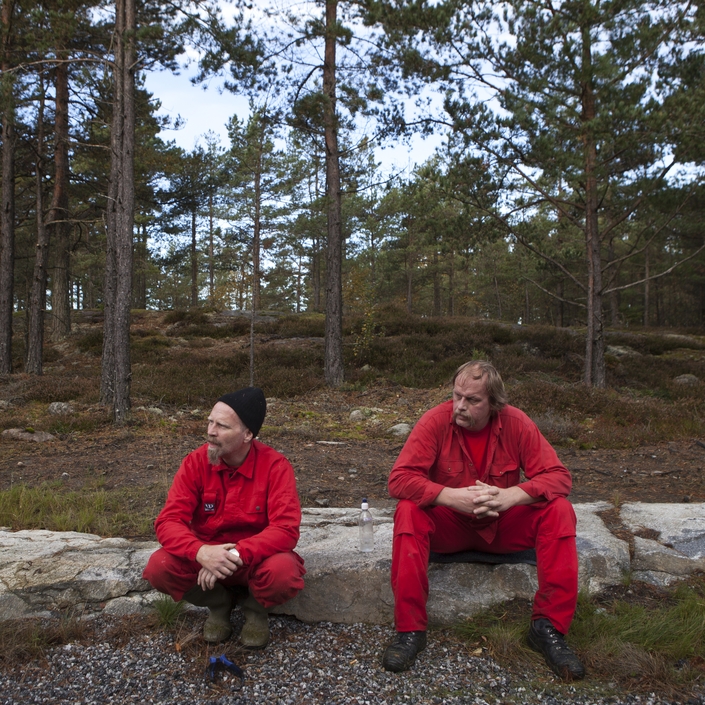
Halden Prison is located on 30 acres of open woodland on which prisoners are allowed to roam. According to the director, there have been no attacks on guards, no fights and no escape attempts.

Khanfar5

With the express intent to shine a light on the lives of women imprisoned in Oklahoma for non-violent crimes, Yousef Khanfar‘s project and book Invisible Eve should be an excellent contribution to the visual resources we can use to inform ourselves about mass incarceration. It is, but it doesn’t go far enough.

Invisible Eve has a couple of inherent problems that I think are worth pointing out. The first, to be fair, might just be a snag of language and a misinterpretation on my part, however, when I read that Khanfar asked the women to write statements of advice to younger generations so that “the fault of one being might be the salvation of another” it raised alarm bells. In the phrasing, there is a presumption of guilt that falls solely on the individual. Nothing is as simple as that and, for me, the way we warehouse non-violent offenders is as criminal as the act for which the individual is condemned and controlled.

If one accepts that the prison industrial complex is the problem, not the solution, any language that verges on the moralistic is troublesome.

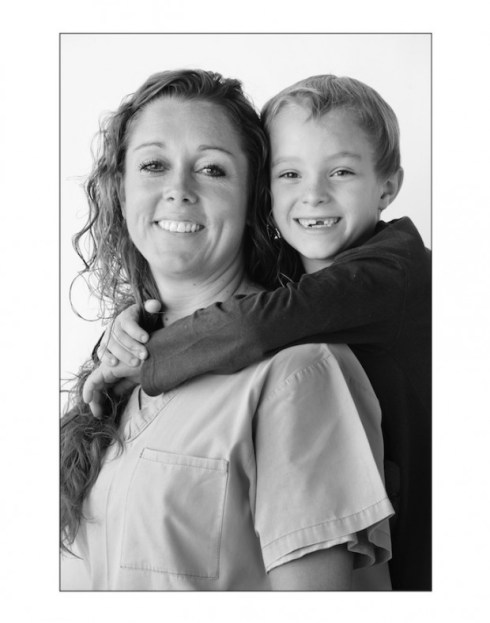
As for the portraits, they are fine. They’re straightforward, maybe a bit sugary, but probably exactly what the women would want (it is safe to presume Khanfar gave them multiple copies). For women with children, the portraits are a particular gift.

Khanfar4

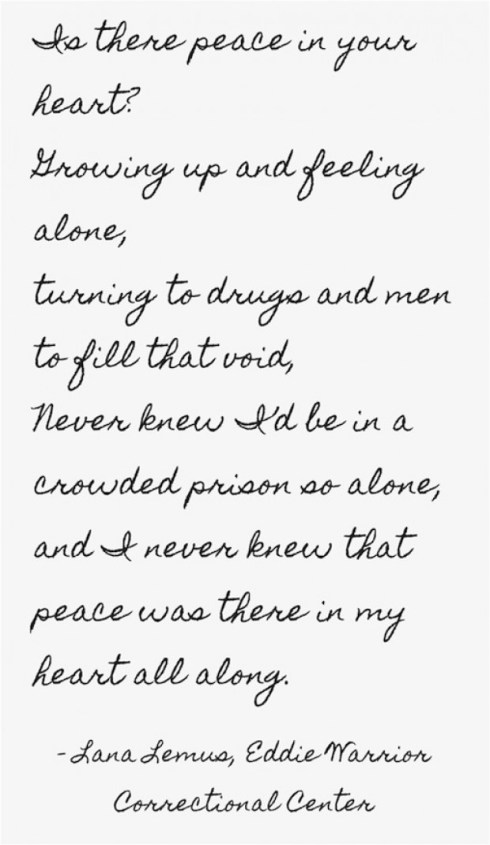
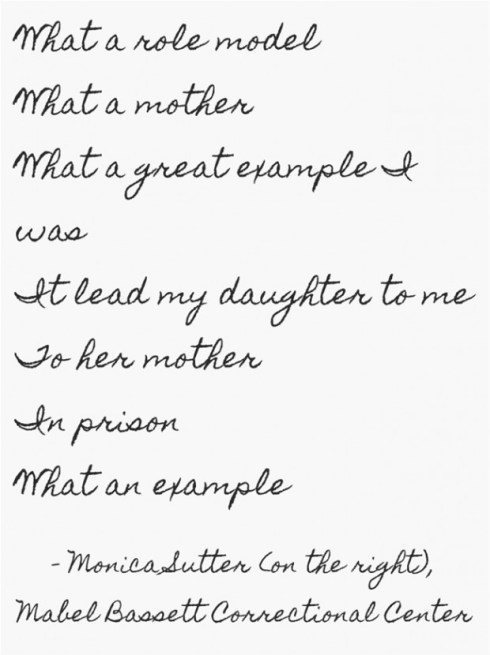
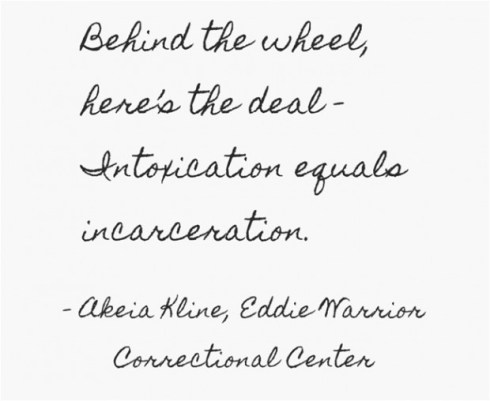
The second, and most glaring, issue for me are the “handwritten” notes. Bear with me.

Khanfar has said that his realisation that he couldn’t change the women’s circumstances and was his motivation to ask them to help others. Oklahoma has the ignoble distinction of being the U.S. state with the highest per capita rate of female incarceration. Khanfar notes that the women are “cast away and forgotten” and that his photographs are “not to condemn or commiserate, but to serve as bridges of understanding.”

Why then, did Khanfar choose to transcribe their words and publish them in a faux-handwritten font? The notes are all in the same handwriting! By choosing to do this, Khanfar has completely erased one of the few evidences that each of these women are individuals; one of the essential bridges to understanding.

The personal touch of individuals’ hand(writing) would have been a powerful element that has been overlooked in the project.

Take a look at the texts below and let me know what do you think. Am I being to precious or is the exclusion of the women’s own scripts a sizable mistake on Khanfar’s part?

Khanfar

Khanfar1

Khanfar2

Khanfar3

ig

Just a quick heads up to let you know that my Instagram handle has changed to my actual name. Find me at @petebrook from now on.

All those past mentions for @p3t3brook are confined to history and will only guide you to a non-existent account. Such is the price to be paid.

Also, remember that time I laid out my Instagram rules? I’ve had a couple of slips, but generally I think I’ve done an okay job sticking to them.

ElainaiseMervil

Elainaise Mervil. Source: The Tallahassee Project via VICE

I was recently speaking with an advocate who visited women’s prisons in California to learn about their circumstances and build cases for release. She said to me, “There needs to be more media in prisons. The women with whom I have conversations totally complicate peoples’ ideas about who a criminal is.”

Unquestionably, photographic media plays a role in telling stories. Some photographs better than others. If storytelling is about connection and about empathy, then what better photographs than the family snap or the amateur portrait?

This week, the unavoidable ordinariness of prisoners’ portraits was in evidence on VICE.

Jamie Lee Curtis Taete did us the service of republishing images from the book The Tallahassee Project: One Hundred Prisoners Of The War On Drugs, by John Beresford, M.D.

“The majority of the women shown in the book were charged with ‘conspiracy’ based on the statements of informants who spoke to authorities in exchange for reduced sentences,” says Curtis Taete.

From a woman whose old phone, still in her name, was used by a drug dealer to a women who drove drugs across state lines. Yes, there may have been a poor decision or lack of inquiry involved but there was also coercion (usually by a male friend or family member) and the result is a long, long mandatory-minimum sentence. Such is the War On Drugs which has been largely responsible for an eightfold increase in the female prison population in the U.S.

It’s likely many women implicated in drugs investigations are mere runners and may not even possess the information needed to bargain with the authorities. The result is destroyed families and ruined lives. 16 years, 24 years and even life for a failure to cooperate with authorities. How do these numbers even make sense? They don’t. They are shameful.

Below, I include a particularly insightful contribution to The Tallahassee Project book [my underlining] by Elainaise Mervil (pictured above).

Inmate ID Number: 20982-018

Sentenced to 20 years for conspiracy to possess with intent to distribute cocaine base and cocaine hydrochloride
.

Estimated release date: 08-07-2014

I am a Haitian lady who has left 4 minor children behind to do this mandatory sentence. I have no criminal history. I am a first-time non-violent offender. It seems the government is tearing families apart and the children are the ones that are really made to suffer for this “War on Drugs.” P.O.W.

I fell into the wrong crowd in Orlando, Florida. I have never had any problems with the law and only am now learning to read and write the English language. I am a native of the beautiful country of Haiti. I love America, but I believe that the judicial system needs some change and review.

Conspiracy is such an all-encompassing category that if no other charge may be brought forth, one is charged with conspiracy and subjected to the 10-year mandatory minimums which increase rapidly in direct proportion to hearsay evidence whether true or not true. It appears that a person who is found in possession of narcotics will receive less time than a person who was not found in possession of anything, since conspiracy seems like the only viable charge.

Conspiracy was originally designed to target “king pins” who are usually sheltered by runners, etc. But what has happened instead is that the king pins are the ones who receive the most favorable deals since they have the most to provide to the government for substantial assistance motions as they possess many many contacts. The “little man” who does not know as much suffers since his assistance is not as valuable; hence, falling victim to the harsh treatment under the law by being required to serve a decade-plus in prison.

I applaud this use of photography. Let’s see more activists and journalists in prisons gathering such image and word to amplify the voices of those callously thrown away by our society.

Go to VICE to read more criminally injust stories and to see pictures of women who look like your neighbours, your sisters and your mothers.
EMAIL

prisonphotography [at] gmail [dot] com

Prison Photography Archives

Post Categories

RSS PETE BROOK’S TUMBLR ‘PHOTOGRAPHY PRISON’

  • An error has occurred; the feed is probably down. Try again later.