Recently, I was asked if I knew Gaylord Herron‘s photography from within prisons. Know the work? I didn’t know the photographer. I haven’t tracked down any of his prison stuff yet, but while I busy myself with that I recommend you watch this film.

The documentary (broken into three bite-size Youtube clips) is a fantastic intro to the life of an extremely talented news-man and photographer. The film revisits the moments of serendipity, hard work and dreamlike exploration in the lives of Dan Mayo (publisher), Bill Rabon (muse) and Herron himself.

Vagabond (1975) was met with huge critical acclaim but it simply wasn’t distributed effectively. Copies are now collectors items.

Sure, there’s anger, disillusionment in Vagabond but there is also lightness or as someone comments in the film, “There is magic.” Vagabond it is a visual poem that stands next to and up to the grittiness and bleak outlook of Larry Clark’s famous book Tulsa. The two photobook projects were contemporaneous.

What I like about the film is that there are no regrets from any of the players. Herron suggests the journey had while making the book was its main purpose. All three of them feel that the book was a product realised in a particular time and that the exploration necessarily had an end point. The story is strangely and simultaneously both wistful and pragmatic.

Herron now runs a bike shop in Tulsa, Oklahoma.

Antoine_Ealy_4x6-660x981

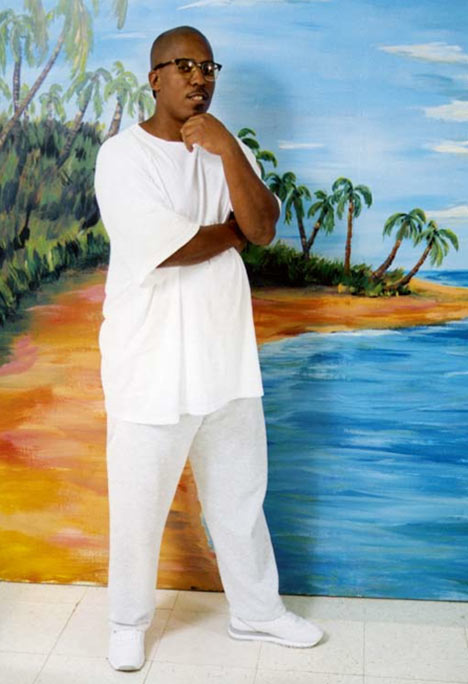
Antoine Ealy, Federal Correctional Complex, Coleman, Florida

You all know I’m a big supporter of Alyse Emdur and her six year project Prison Landscapes, so it was great to feature her work on Wired.com.

“My act as a photographer is not from behind the lens but as a collector of images,” says Emdur. “I see myself as a mediator. These are people who have had no relationship with the outside world so while Prison Landscapes might be a very small gesture, the people who chose to be involved in this project want to be seen; they have their own agency. They want the outside world to know they aren’t the criminals they are stereotyped as.”

Relatively late in the project, Emdur resolved to visit prisons herself to photograph backdrops at a wider angle. In the space of two weeks, she gained access to 10 prisons on the East Coast. Her photographs offer context to the portraits she had already collected. In informal interviews, Emdur was able to get the perspective of the prison administrations, psychiatrists, superintendents, guards – “people who enriched my understanding,” she says.

“Prison portraits are very intentionally framed to exclude the surroundings,” explains Emdur. “They are hiding what the visiting room actually looks like. For me it is very important to show the viewer, who maybe hasn’t been in a prison visiting room, the details, and to place the backdrops in a context.”

It’s gratifying when my interest in prisons overlap with wider issues of visual culture and with the curiosity of mainstream readers.

The article coincides with Emdur’s book Prison Landscapes, published by Four Corners, London is now available. Alyse Emdur is very grateful that Four Corners will donate books to each of the individuals whose portraits feature in the book.

Please read my piece about Emdur on Raw File.

ELSEWHERES

Prison Visiting Room Portraits, An Interview with Alyse Emdur. (Prison Photography)

Escapist Landscape Art From Inside America’s Prisons: The paintings that hide and decorate the lives of the incarcerated. (The Atlantic)

Up Against The Wall: Prison Snapshots. (New York Times)

‘Prison Landscapes’ and the Interior World of the Incarcerated. (KCET)

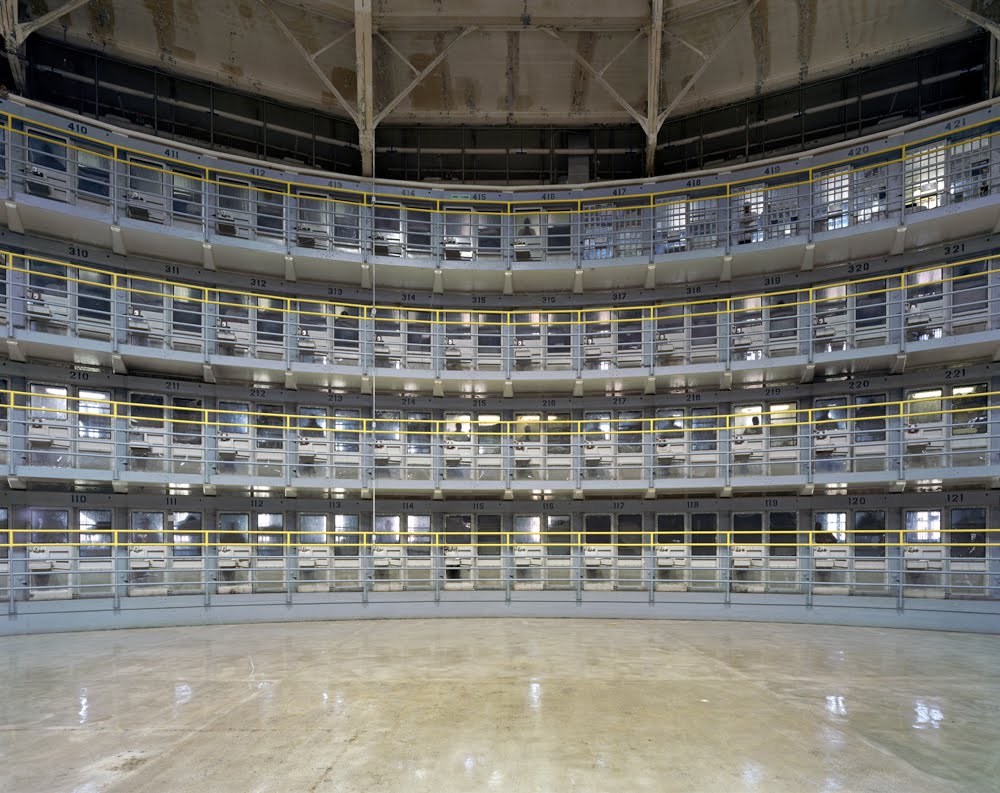
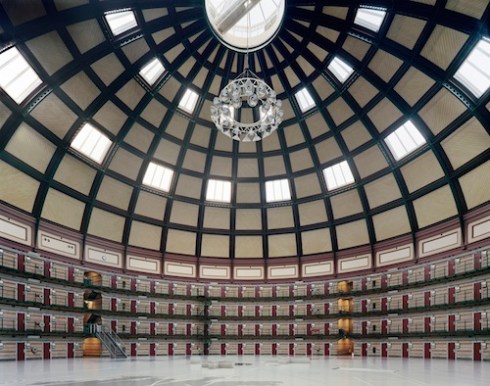
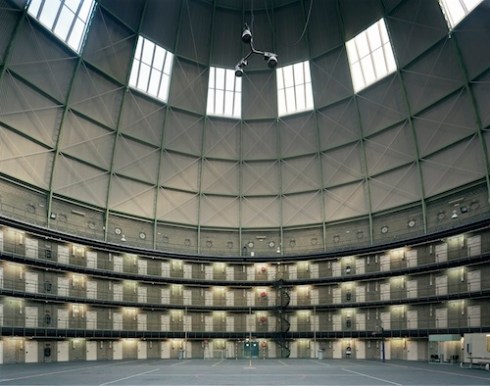
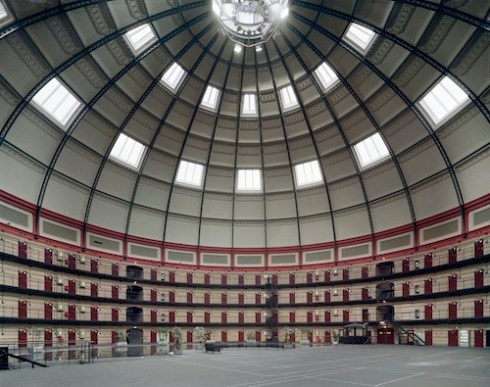
Arnhem Prison, Netherlands, 2011 © David Leventi

When photographer David Leventi saw Andreas Gursky’s famous shot of Stateville Prison, Illinois, he was captivated by the architectural form and wondered if there were more roundhouse prisons.

As we know, and as Leventi says, “everybody has photographed at Stateville.” However, not everybody had photographed the roundhouse prisons of the Netherlands. Leventi has.

I spoke with David via Skype. He provided me with some prepared answers to questions asked by photographer Sarina Finkelstein. I have interwoven answers to my questions. The quotes are verbatim, but the order is not. The flow works.

Q&A

Sarina Finkelstein (SF): What was the first round prison you photographed?

David Leventi (DL): The F-House at Stateville Correctional Center in Illinois is one of the most architecturally striking prisons — it is the last remaining cell block in the U.S. that follows Bentham’s Panopticon model. It was close to home with no language barrier to contend with, and therefore it became my first.

SF: How many round prisons exist in the world? Have you photographed all of them?

DL: Four working prisons and one ruin. I have photographed all the working ones: Stateville Correctional Center in Illinois, Breda Prison in The Netherlands, Arnhem Prison in The Netherlands and Haarlem Prison in The Netherlands. The ruin is the Presidio Modelo on the Isla de la Junvetud in Cuba. Fidel Castro was imprisoned there, and I hope to photograph it one day.

Prison Photography (PP): Now you’ve been to other roundhouse prisons, what do you make of Gursky’s photograph?

DL: All of Gursky’s photos make spaces look bigger. I think Gursky did a lot of post production, I think he extended the space, drawing the image out to the left and right making it look enormous, but its not.

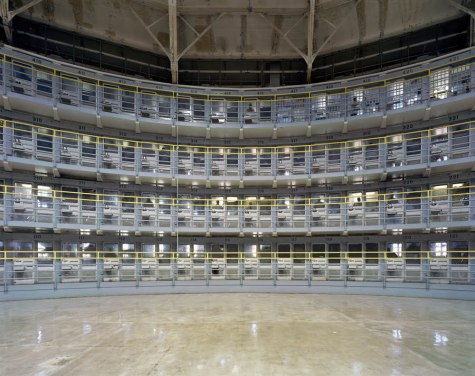
In my photos, Stateville looks big because I’m shooting large format with a wide angled lens, but it’s not THAT big. It’s an illusion.
leventi-david-stateville-joliet-il

F-House #2, Stateville Correctional Center, Crest Hill, Illinois, 2010 © David Leventi

SF: This project photographing round prisons seems to be a drastic content shift from your previous work photographing world-famous opera houses?

DL: The prison project developed out of my previous project shooting opera houses. Each was photographed from center-stage and lit solely by the existing chandeliers and lamps.

The opera houses were spaces in which my Romanian grandfather, Anton Gutman, never got the chance to perform. He was a cantor who was interned in a Soviet prisoner-of-war camp called Krasnogorsk from 1942-1948. Another prisoner, Danish operatic tenor Helge Rosvaenge, heard my grandfather sing an aria from Tosca and gave him lessons. I grew up listening to him sing in our living room.

SF: So, in your previous project, you photographed cultural institutions that are social gathering spaces of entertainment. But, in this work, you’re photographing prisons — places where people are incarcerated and deprived of personal freedoms for commission of a crime. And, you’re specifically photographing domed prisons. How did you come to choose these particular buildings?

DL: Domed prisons are the closest examples of Jeremy Bentham’s Panopticon model of mass surveillance prison design – a central guard tower with a complete view of surrounding prison cells. This concept was designed so a central observer could monitor all of the prisoners at once, without any particular prisoner being able to feel under inspection.

The domed prisons have the same architectural structure as an opera house (without the opulence), but the difference is in who is observing whom. In an opera house, the audience of many is observing a few. In these domed prisons, it’s the reverse.

The domed prisons are stark buildings. On first inspection, I don’t believe that the viewer identifies the interior as a prison. The ceiling of Arnhem in The Netherlands reminds me of the tartan pattern now made famous by Burberry. The photograph is very graphic, quite unlike the opera houses.

Opera houses and prison houses become a study in contrasts between beauty and squalor, opulence and poverty, serenity and cacophony.
Haarlem Prison, Netherlands, 2011 © David Leventi

PP: How did you get access to the Dutch prisons?

DL: I tried to reach out to the prisons and I tried to reach out to the Minister of Justice but no one would return my emails or telephone calls. There was the language barrier too. Nothing was happening.

Then a man who ran a music company in Utrecht wanted to use one of my opera house images as wallpaper in his office. I gave him a quote and he wrote back saying he couldn’t afford it. I asked, “Would you like to barter?” I asked if he knew anyone who could get me into the prisons. He had a client who was a communications director for the Ministry of Justice. That’s how I got permission!

All three of the prisons are no more than an hour from Amsterdam. No crazy travel involved and all under the same authority. Get into one, get into all three, right?

PP: Are you able to compare Stateville with the Dutch prisons?

DL: Prisoners in Stateville prison are treated like animals. The U.S. government is going to say they committed crimes, well people in the Netherlands committed crimes too. Who knows if they are the same level of crimes but in the Netherlands they have privacy. They have microwaves, TVs; they’re like tiny little apartments. I’m not saying they are the best place to be but it seemed a lot more civilized.

Dutch roundhouse prisons had badminton courts, soccer courts, basketball courts. The Breda prison has trees and benches. Half of it is a covered with a glass floor and downstairs there’s a dining hall and ping-pong tables.

When I was there [in one of the Dutch prisons] some smoke was coming out one of the cells, and the guard there knocked on the door and asked, ‘Are you okay? What’s going on?’ They didn’t know, but the prisoner said, ‘Something caught on fire in the microwave, there’s no problem.’ The guard went away.

Once the [Dutch] cell doors close, the prisoners have privacy. At Stateville, with the standard open bars there is no privacy.

PP: You never intended to photograph prisoners, though?

DL: No, only the architecture. It was stipulated that I could not photograph faces anyway. After 6pm in the dutch prisons, men had to be in their cells. Then I was free to walk around and photograph. It’s seems funny for me to say they are beautiful spaces; they are prisons.

PP: Is Stateville beautiful?

DL: It is loud. The warden at Stateville gave me assurances. But he also told me not to show any fear. One prisoners was running against the bars the entire time I was there. Bang. Bang. Bang. Endlessly. It was shocking. Everything at Stateville was the complete opposite to what I experienced in the Netherlands.

SF: What was the process like? How was it different to be in that space, with all eyes on you, vs. being alone in an empty opera house?

DL: I have always had stage fright. Photographing from the center of a round prison causes anxiety. The inmates are all yelling, jeering, talking, in cacophony. You become the center of attention, and taking the photograph becomes a performance in itself. At first I was intimidated, but then I blanked everything out and focused on photographing. It must be the same for the performer.

SF: What equipment are you using and what conscious choices are you making visually?

DL: I work with a large-format camera so that I have the utmost control in making sure the composition of the image is architecturally symmetrical. I pay close attention to ensuring the lines are straight for perfect repetition, curves of the convolutions of ceiling and higher and lower catwalks are parallel and empasize Euclidean geometry.

With this camera, I am also able to flatten out the space to make it look more like a painting. For instance, the industrial chandelier hangs down, but it looks askew, as if it is tilted toward you.

SF: What is the importance of having 40×50, 50×60 and 72×90 inch prints?

DL: Prints have to be large in order for all of the details to separate and be seen. When they are small, details meld together and you lose the ability to feel the texture/coldness of the prison bricks, to see the blur of prisoners behind cell doors.

I want the viewer to experience what it feels like to be surrounded by the space.
Breda Prison, Netherlands, 2011 © David Leventi

photo

Found photo of an unknown prison cell.

Last week, I was interviewed twice  – firstly, for DVAFOTO and secondly, for HERE BE MONSTERS – about Prison Photography On The Road and my activities since.

The DVAFOTO interview opens with my account of my arrest and 9 hours in jail in late 2011. The HBM podcast is about a workshop I delivered in Sing Sing State Prison, New York.

It may be ironic that I’d get locked-up during a research trip that is questioning incarceration, but it’s not funny and it’s no badge of honour. My actions were foolhardy and the police officer’s actions were over-zealous.

I’ve been thinking beyond what I think about the experience (It was stupid, bureaucratic and inconvenient), and more about how I think of the experience (What insight did I gain? What interactions did I have? Who did I meet?)

Inside the release-tank were about 15 men. They were there for different reasons. One young man faced a significant bail amount for a significant possession offense while another was brought in for cycling drunk in the wrong direction of the cycle path on a quiet road. Some men were in for DUI’s and in some cases not their first DUI. Two or three slept through the hours. Others were quiet and some told stories. The younger ones were more talkative and boastful. Several tried using the phone but only one succeeded. When they found out I was in for peeing on a tree and not answering questions they thought it was lame. Lame offense, lame arrest.

A tray of peanut butter sandwiches was brought in, but not enough. Some jumped on them, others weren’t interested. I think one person got two sandwiches.

Of the men with DUIs, I had little sympathy. They didn’t seem to acknowledge that their actions were potentially lethal. For a couple of them, cash-fines, points on their licenses and driving bans didn’t seem to be much deterrent.

A few men seemed contrite. Others seemed beaten down with either addiction or repeated arrogance.

I had huge sympathy for the drunk cyclist. Maybe in this fifties. Grey hair. He thought he was getting out until the administration realised he was a parolee. The bike-ride proved a violation and he was to be automatically rearrested and jailed for a fixed term. He had a job and children. Because of a night of excess, he was to lose those things again. Sure, his behaviour could have been better, but I think the authority’s response was of excess.

I didn’t ask what they did and they didn’t ask me. It was a small space. It was very dirty but not quite filthy. We only moved our place when others left and they did so in groups of 3 and 4 throughout the hours.

Part of me wishes I’d taken the opportunity to ask some questions, tap some opinions (I may have met a great conversationalist who’d improve my thinking as much as I hoped I might improve his). The other part of me knows only an intrusive nerd would be ask out-of-the-blue questions about personal circumstance and attitudes; especially in a temporarily-occupied cell at an unpredictable time.

No clocks.

Two weeks later: No court appearance. No charges brought.

Why is this relevant? The arrest and dismissal of charges — actually, the incomplete documentation of the arrest and dismissal — almost jeopardised my visit to Sing Sing to carry out a workshop with attentive, challenging, respectful and curious students of the education program there.

An arrest will always feature on a record, whether or not a conviction is brought, so-told me a law enforcement employee over the phone. New York Dept. Of Corrections which administers Sing Sing knew I’d been arrested but the information ceased there. I had to scramble for paperwork (that had not been given to me) to prove I had no criminal record. I wonder how much inefficiency and potential mistakes contribute to unfair and/or heightened levels of control. Frustration must be infinite in the prison industrial complex.

All in all, I’m glad I was able to teach and learn in Sing Sing and doubly happy that Jeff Emtman was able to craft a fine podcast splicing together audio of prisoners speaking, myself speaking, music and sound. Jeff conceived of the podcast titled The Other One Percent, to broadly challenge listeners to think about prisons and solutions.

The class, as a whole, discussed many images but specifically in the HBM audio, Robert Rose, Dennis Martinez, Deshawn Smalls and Jermaine Archer talk about these six images.

The first image mentioned is the one below by Brian Moss …

BrianMoss008

“Fear, I think people would think fear,” says Sing Sing prisoner, Robert Rose. “They can’t see what goes on in here, just as we can’t see much of what goes on out there.”

… then the three below by Alyse Emdur

emdur_ruffbey

emdur_newson

“Something needs to be said about the families who also do time. They are part of the narrative of mass incarceration, but they’re not talked about. They end up carrying the burden,” says Deshawn Smalls, Sing Sing prisoner.

emdur_buntyn

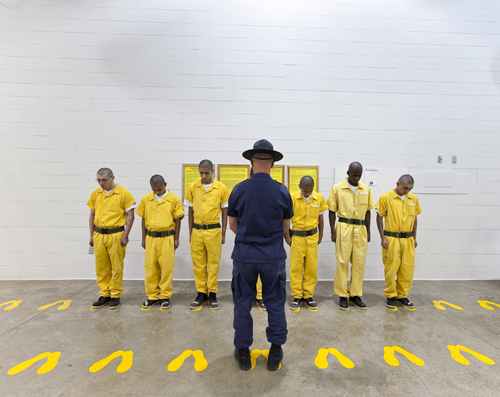
… and finally, the two images below by Richard Ross of juvenile facilities.

Richard_Ross_10

Sing Sing prisoner, Jeremy says, “You may have a man who refused [to adhere to regulations] and this is him in this picture. You probably won’t see the man at first, but he is there.”

Richard_Ross_13

HERE BE MONSTERS (HBM) is a podcast audio series about fear and the unknown, by Jeff Emtman, a 2012 Soundcloud Community Fellow.

HBM has previously covered Juggalo culture; placenta medicine; train-hopping; the disillusion and resignation of a favored NPR correspondent; a children’s book about a hallucinogenic trip; and the mind-made images created by the human brain when the body and the eyes experience total darkness – a condition known as ‘Prisoners Cinema.’

I like what Jeff is doing. I’m happy to share my experiences with him.

If you’re still interested in what I’m up to, I cover my immediate plans in the DVAFOTO interview. We also talk about what bloggers can do and do do.

LINKS

The Other One Percent (Here Be Monsters podcast)

Interview: Pete Brook On The Road (DVAFOTO)

borofsky

“I imagined you’ve seen lots of prison everything so it’s a bit intimidating to send you anything for fear I’m just repeating,” said the anonymous tip off in my inbox. The link was to a film entirely new to me. It blew me away and will you too.

Jonathan Borofsky, famous in recent years for a bunch of monstrous sculptures of 2-D men (usually hammering the air), made Prisoners in 1985. It’s one of the best prison films I’ve seen, mainly because Prisoners doesn’t weave too persistently one particular tale or one particular journey. To be reductive, I’d argue that this is the unique artist’s treatment of the subject in stark contrast to the straight documentarian’s treatment.

Generally, prison documentaries are often about trial and adversity; they necessarily have to depict struggle and hope from all angles. In other words, documentaries are often part-advocacy and answers. Borofsky just had questions. The answers the 32 California prisoners had for him in interviews will stay with you.

Part horror testimony, part philosophy, part confession, part therapy, Borofsky’s Prisoners is a tour de force. It was made in the mid-eighties just as the era of mass incarceration took hold. Back then prisoners had the same issues – poverty, drug addiction, histories of childhood abuse and adulthoods of transgression, bad circumstance and bad choices – there were just fewer of them.

The opening of the film includes atmospheric music and cuts of the more bizarre statements. It jolts. But don’t think Borofsky is setting these men and women up for a fall. Yes, his artistic hand is all over this, but he gives each of the prisoners plenty of time to pierce through our bullshit and take us right to their reality. If it seems weird, it is probably because Borofsky’s subject live weirdness every day. Borofsky let’s them speak. He shows their common institutionalisation but does not pity them.

Hugely compelling.

WATCH IT. 56 MINUTES NEVER FELT SO SHORT.

TOB_4948
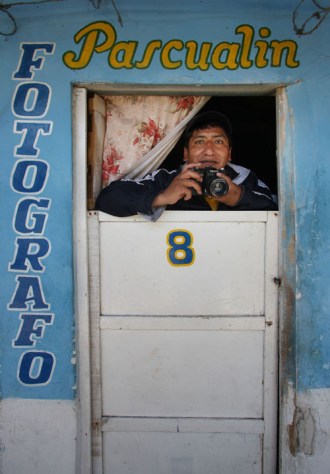
Photographer Pascualin in his Fotografo studio, San Pedro Prison, La Paz.

San Pedro Prison in Bolivia’s capital La Paz, is well-known. It is also well-visited. It is renowned for being a society within itself.

Access to the prison – which holds 1,500 men – is generally not a problem. Persons in the media visit regularly. More astonishingly, access for tourists is common. Over three years ago, I wrote extensively about prison tourism at San Pedro. Changes in security, scrutiny and administrations sometimes close the gates temporarily for tourists, but over the years an open gate policy at San Pedro is the norm.

TThe open gate policy is for the benefit of families. Many women and children live with husbands and fathers locked up, but are free to come and go to school, work and recreate. Without the informal economy – driven by family input – that feeds and clothes the prisoners, San Pedro would grind to a halt. There is also tolerated drug use – and even rumours of manufacture – in San Pedro.

In this context, Toby Binder‘s image are slightly less remarkable. The issue of access is almost obsolete, but the breadth of his study does provide valuable information on the daily lives of prisoners and their families.

San Pedro is probably not the best example of a foreign prison to ask Americans to draw comparison to with U.S. prisons. Maybe, we should think about how the visibility of this Bolivian prison compares with U.S. prisons. But, then again the two culture and visibility are probably forcibly linked.

What I want to do most after seeing Binder’s work is fly to La Paz and interview Pascaulin, the prison portraitist (above.)

Thanks to Toby for sharing his full portfolio. Captions by Binder, edited by myself.

TOB_5087
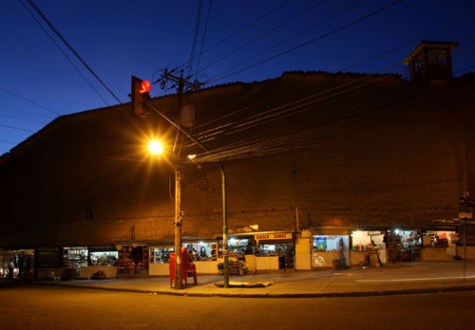
Right in the city center, there is 
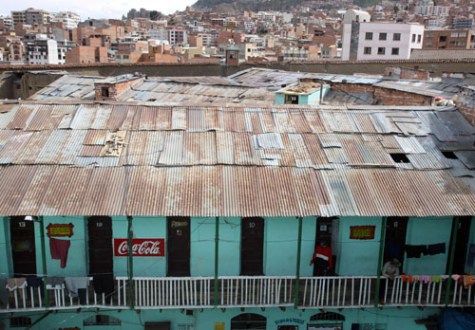
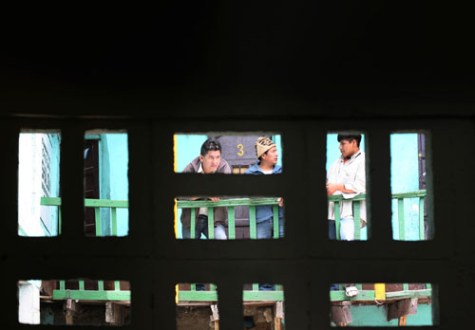
a 12-meters high wall surrounding one whole block. Locals and tourists can be seen on the plaza in front of the main gate which is heavily guarded by policemen. Inside, seven cell blocks with 1,300 prisoners surround a courtyard in 
the center.
TOB_4278
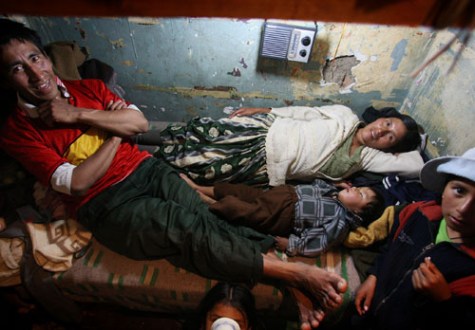
The cell is kitchen, living-room, bedroom and workstation for the whole family.
TOB_4304
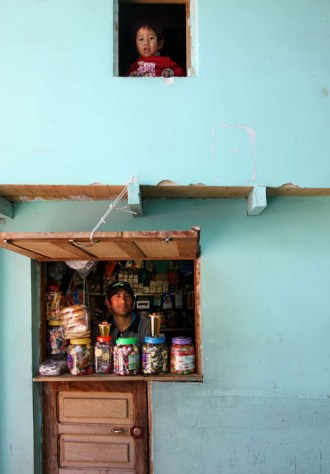
This man runs a kiosk out of his cell. The family sleeps upstairs.
TOB_4346
Each of the seven blocks can fields two teams in San Pedro’s soccer tournament,. The tournament is taken very seriously and highly organized. Sometimes, skilled players are headhunted by another block, thus enabling him to live a more comfortable life.
TOB_4407
Andres (39), photographed here with his son Andres Junior, earns a living by making wooden toys which his wife later sells outside.
TOB_4591
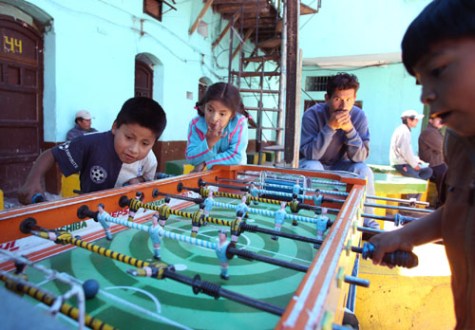
Children play table football.
TOB_4619
Ramiro Quispe and his family in his 4metre square cell. Ramiro (31) was caught with 5 kilos of cocaine in El Alto, the city on the altiplano above La Paz. He serves his time in cell 39 in the “San Martin” block. While two of his children live here with him, his wife, his baby and his oldest son are in El Alto, trying to continue to run a smallholder’s business. Eva (5) spends her time in San Pedro playing. Mirabel (10), her sister, leaves the prison every morning in order to go to school – children are allowed to pass the gate from 9 am to 6 pm every day.
TOB_4654
Eva in the corridor in front of her father’s cell.
TOB_4851
Washing day next to the pool.
TOB_4891
There are lots of playmates for Eva and Mirabel in San Pedro. Up to 300 children live in the prison with their families. “Despite the food rations for all family members, scores of children suffer from malnutrition or neglect”, says Inge Alvensleben, a German pediatrician in San Pedro. Since drug consumption and violence among the prisoners is a daily occurrence it is especially the weak who suffer, whereas those who are better off enjoy a life with good food, expensive clothes and a sauna in their cell block.
TOB_4903
Prisoners working in the kitchen – there is a free lunch for every person living inside San Pedro.
TOB_4934
The shops are run by the prison- ers and their families. At Nicol’s shop, for instance, chicken broth is offered today.
TOB_4961
Kiosk selling ice cream, vegetables and medicine.
TOB_5104
Eva’s favorite place in San Martin is a candy store.
TOB_4759
Although there is lots of business inside the prison, boredom is a daily companion of the prisoners.
TOB_4762
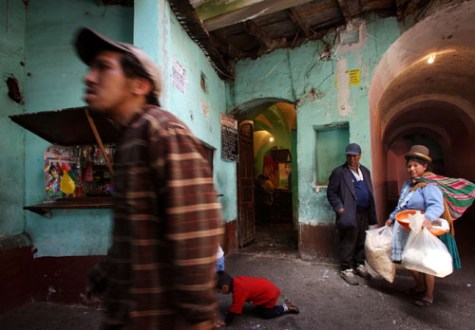
In San Pedro there are restaurants, kiosks, hairdressers, shoemakers, and a photographer. Only the cells remind one of being in a prison and not in any district of La Paz.
TOB_4272
The gates connecting the seven blocks – named Prefectura, Palmar, Cancha, San Martin, Guanay, Alamos, and Pinos – are only closed at night. During the day, the inmates are allowed to move freely in the whole facility.

Count Time

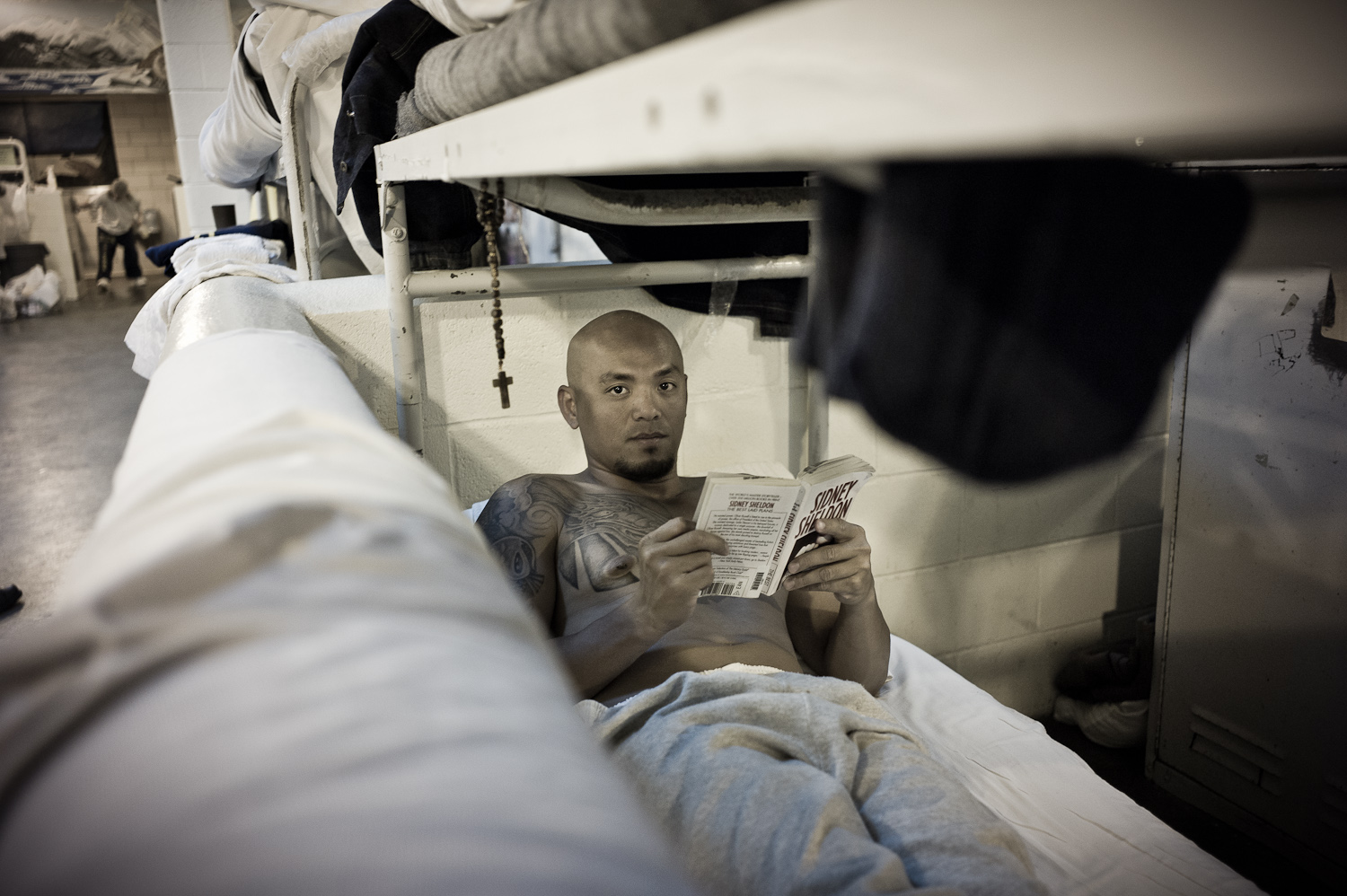
Prisoner reads a book to pass the time during head count, California.

Unlikely Friends is Leslie Neale‘s third feature length film about prisons, so she knows a thing to two. I have spoken before about the difficulty in photographing the two distinguishing features of prison, namely violence and boredom. The former is rare and the latter endemic. Neale observed the same.

“The subjects of my photos aren’t in Unlikely Friends – they are just photos I managed to click off between directing the crew and interviewing people,” says Neale. “Whenever I go into prisons, I am always struck by the culture created by so many living so close together.  Even though the threat of violence is a constant presence, there is a calm peace and the mundanity is palpable.”

These photographs were made in prisons in California and Florida. They’re not the best images, but I don’t think Neale claims them as such. They simply show moments. These are not stolen moments as the rigamarole and boredom of prison is persistent.

Before scrolling down through the images, I encourage you to pay the Unlikely Friends website a visit and view the trailer. Neale has hit upon a theme that is often discredited in the discussion of prisons – that of forgiveness.

Forgiveness is at a premium in the criminal justice system – not because people are incapable, but rather because the system doesn’t facilitate it. The system keeps victims and offenders at great distances. Those distances often have good reason, but in the event that victim and offender wish to embark upon a restorative process, it can be an uphill battle. This difficulty is something that cropped up in my PPOTR discussion with Gail Brown. Advocates such as Brown do not want to see blind forgiveness for perpetrators of serious crimes but they want to see feasible routes for prisoners to take to make as best amends as is possible and also to come to full accountability for their actions. Forgiveness is wrapped up in hearing the effects of ones crime and learning from victims the often life-changing and deeply saddening repercussions crime can have. I applaud Neale for taking on this unlikely and complex aspect of humanity within an inhuman system.

– – – – – – – – – – – – – – – – – –

As a side note, I first heard of Neale’s filmmaking when I interviewed photographer Ara Oshagan. He shot B-roll on set in Californian juvenile lock-ups during the production of Neale’s documentary Juvies.

– – – – – – – – – – – – – – – – – –

You can also see a few more images by Neale here.

Doing Time

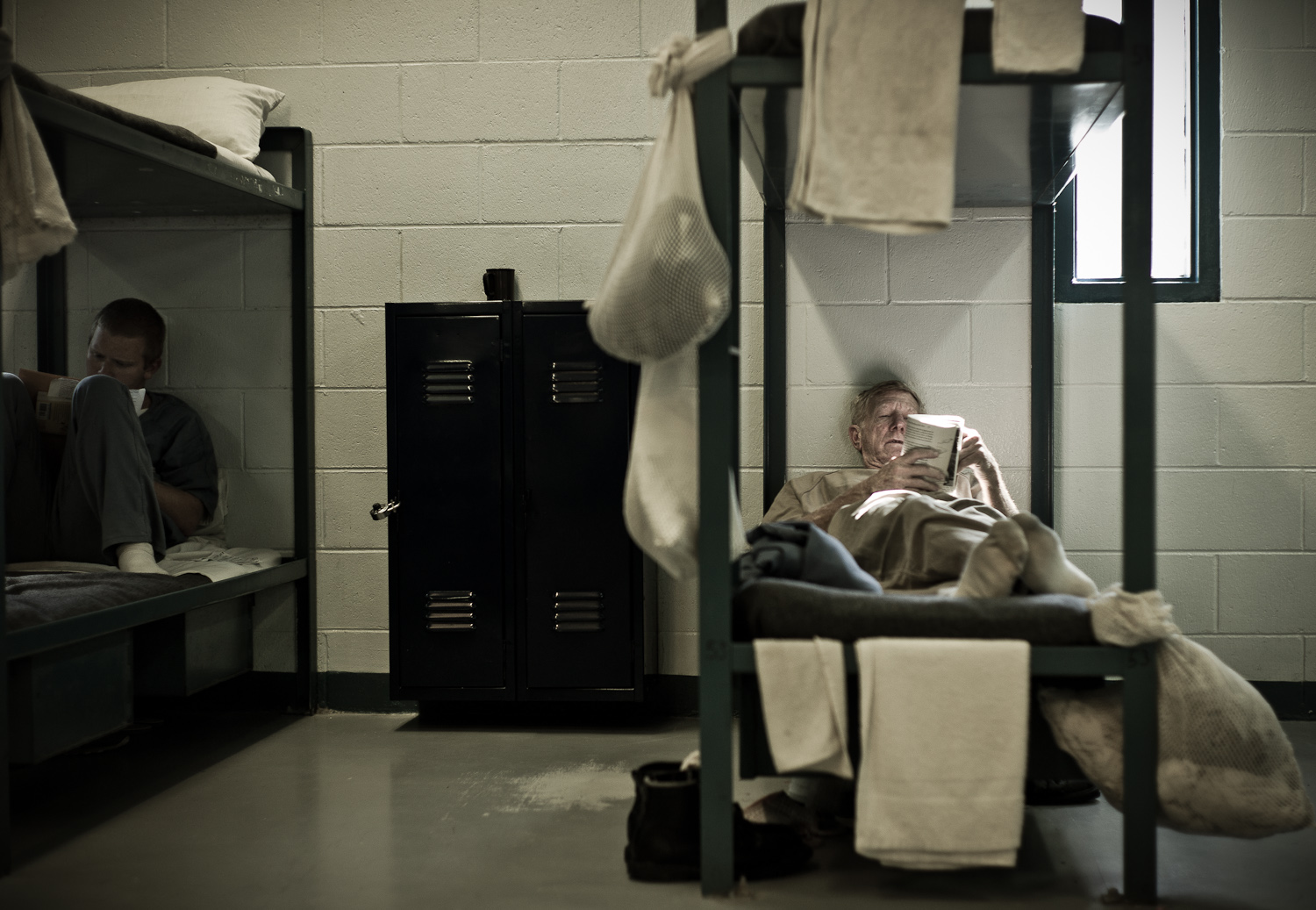
Prisoners read in a dorm room of Moore Haven State Prison, Florida.
Neale_11
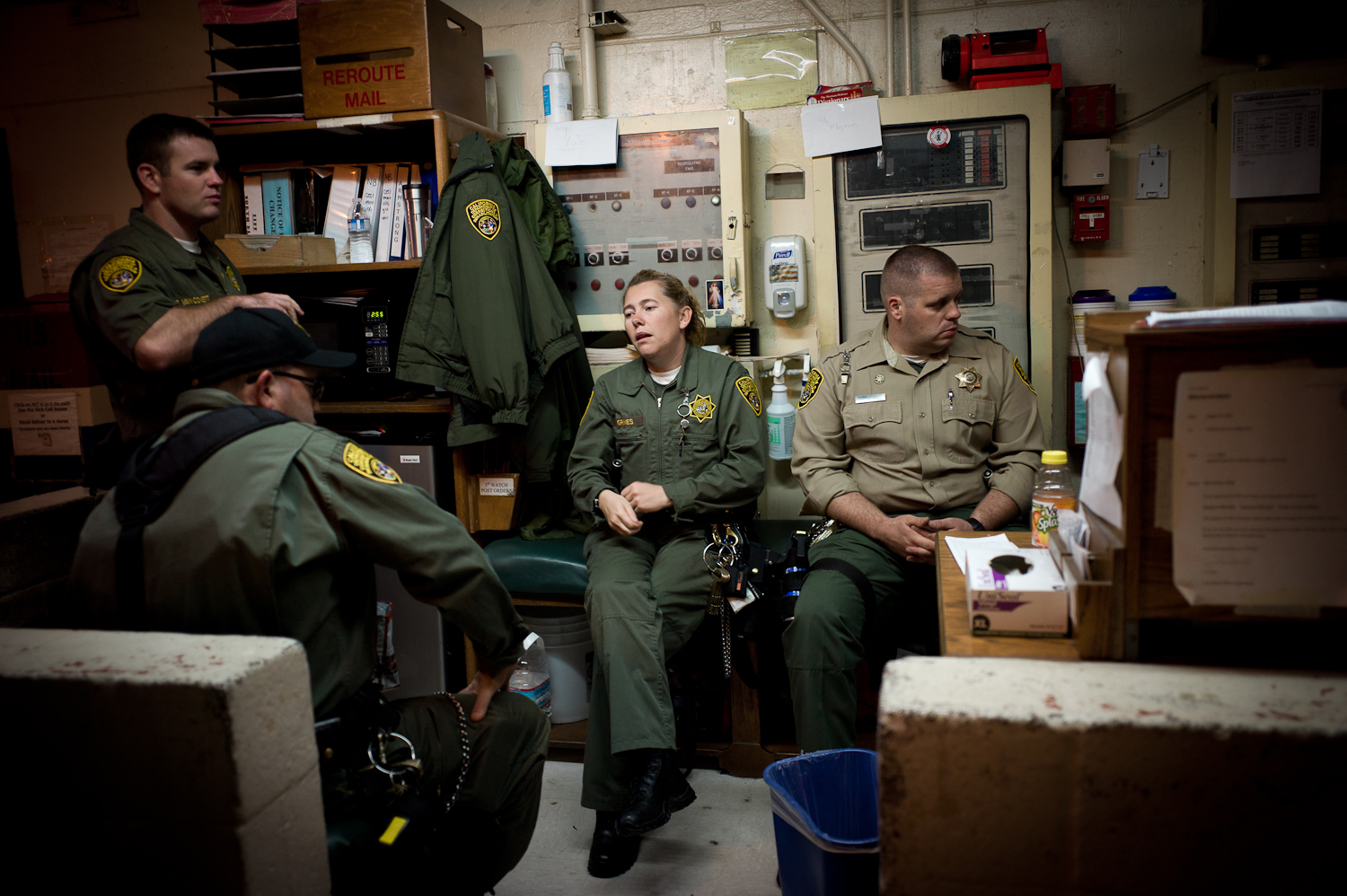
Correctional officers at San Quentin State Prison.
Guard Walking
Neale_8
On the Tier
Two prisoners outside their cells on a tier in San Quentin State Prison, California.
Move
Prisoners play chess in San Quentin State Prison.
Doing Life
Prisoner working in his cell at a makeshift desk, San Quentin State Prison, California.
Neale_10
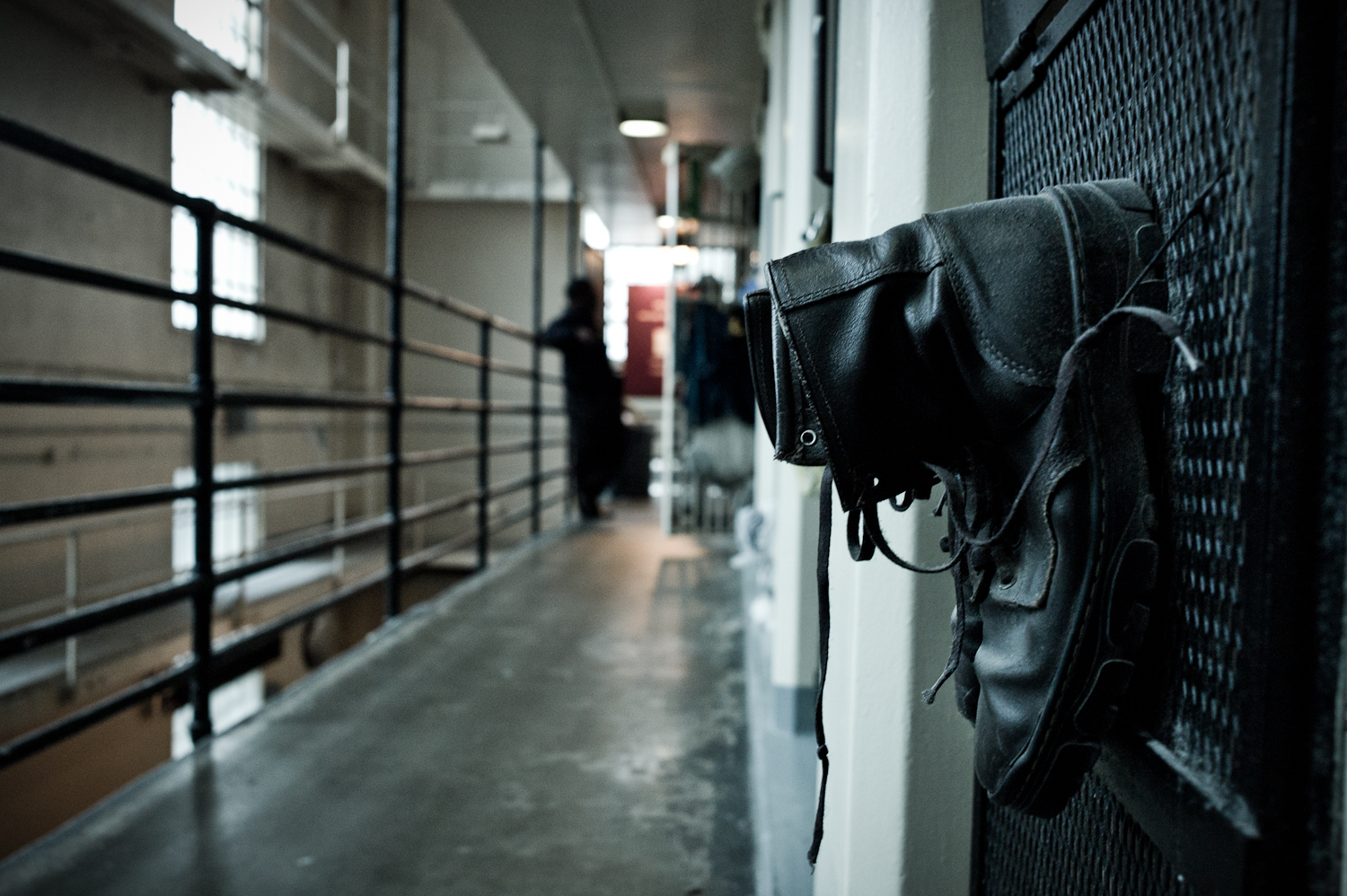
Boots hang outside a cell in San Quentin State Prison, California.
Neale_13
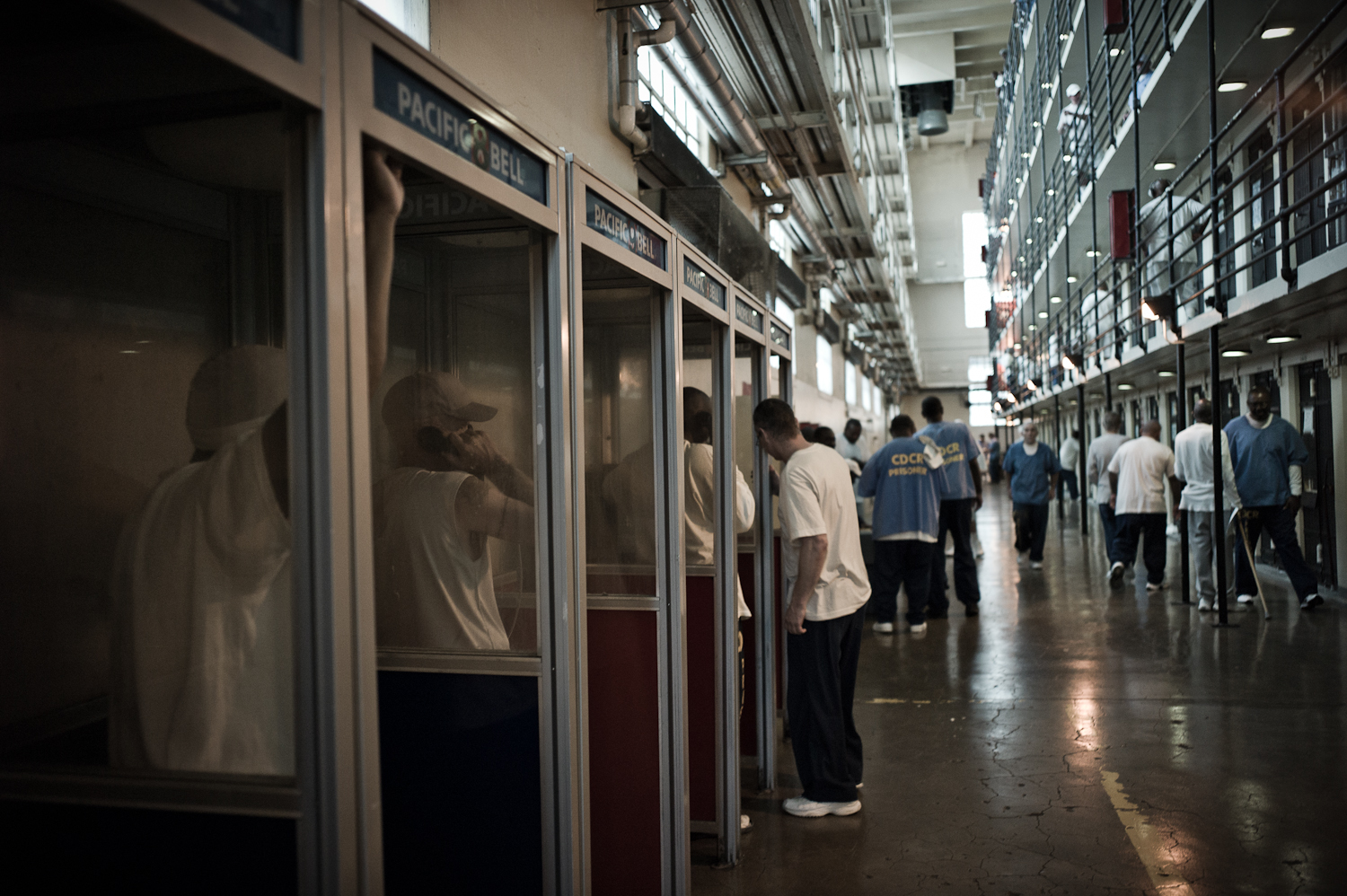
Prisoners in San Quentin State Prison use the phones.
"Yard"
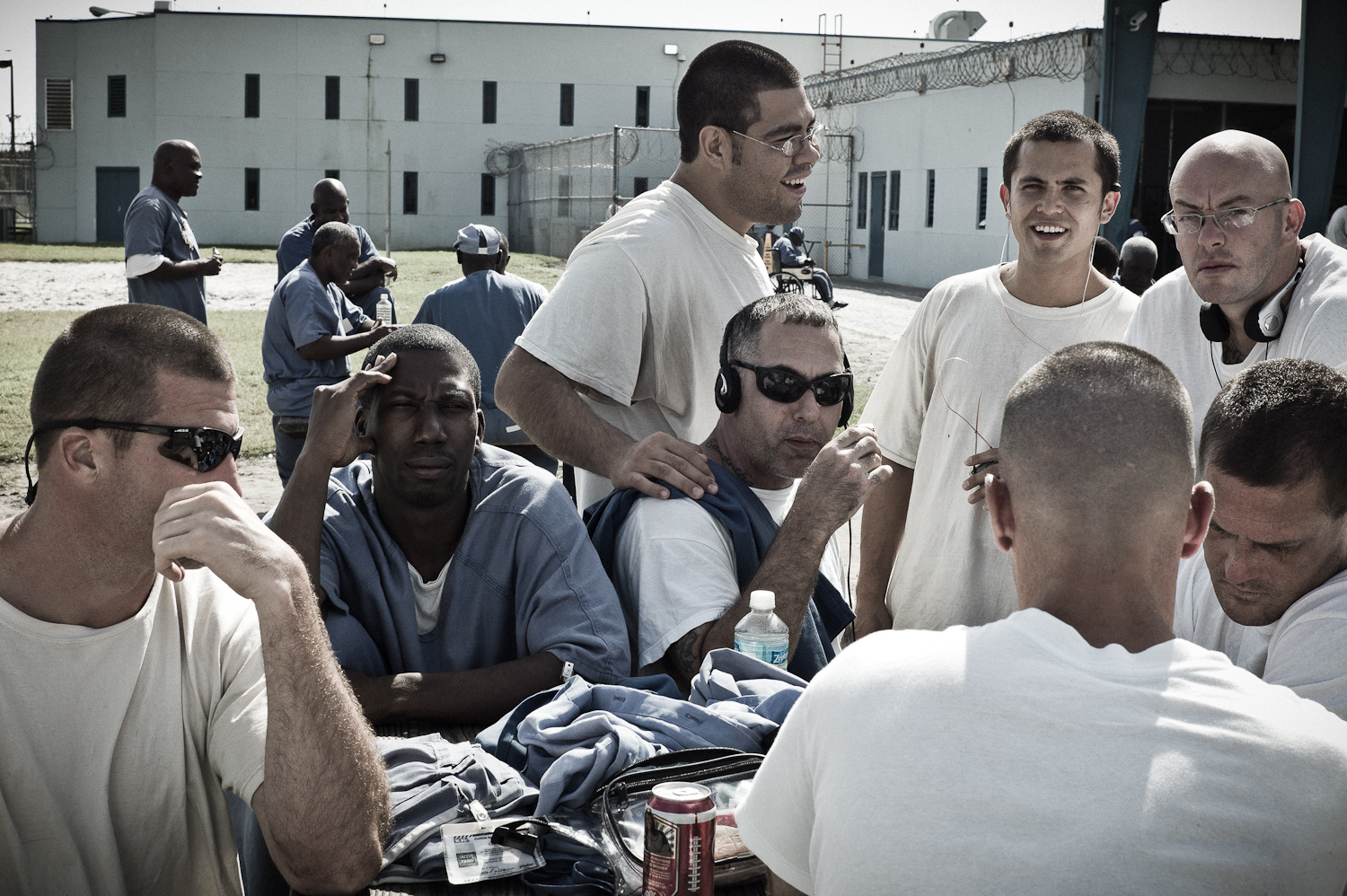
Recreation time for prisoners on the yard of a Florida State Prison.
Girlfriends
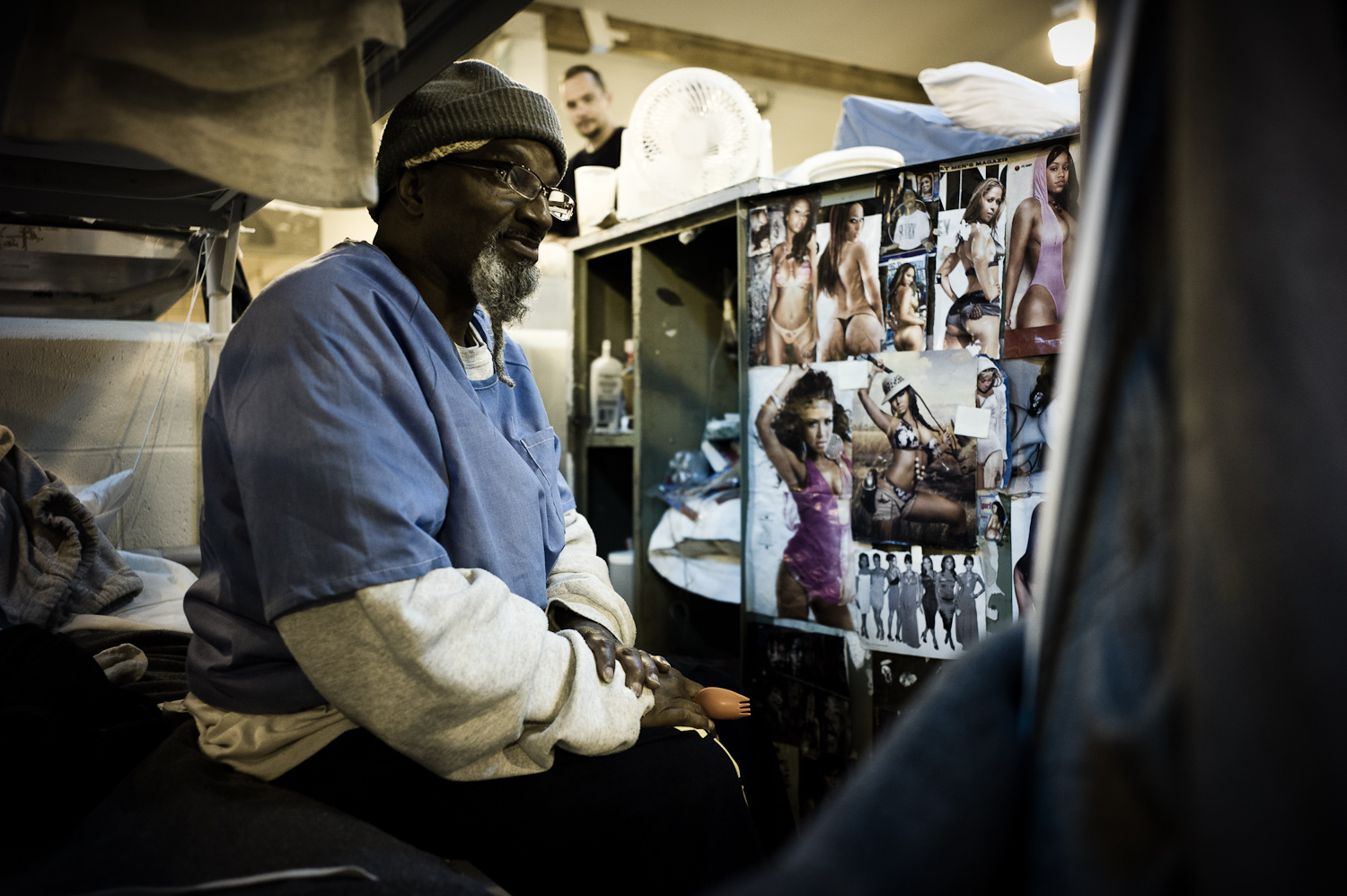
An old man sits on his bunk in a California State Prison.
Napping
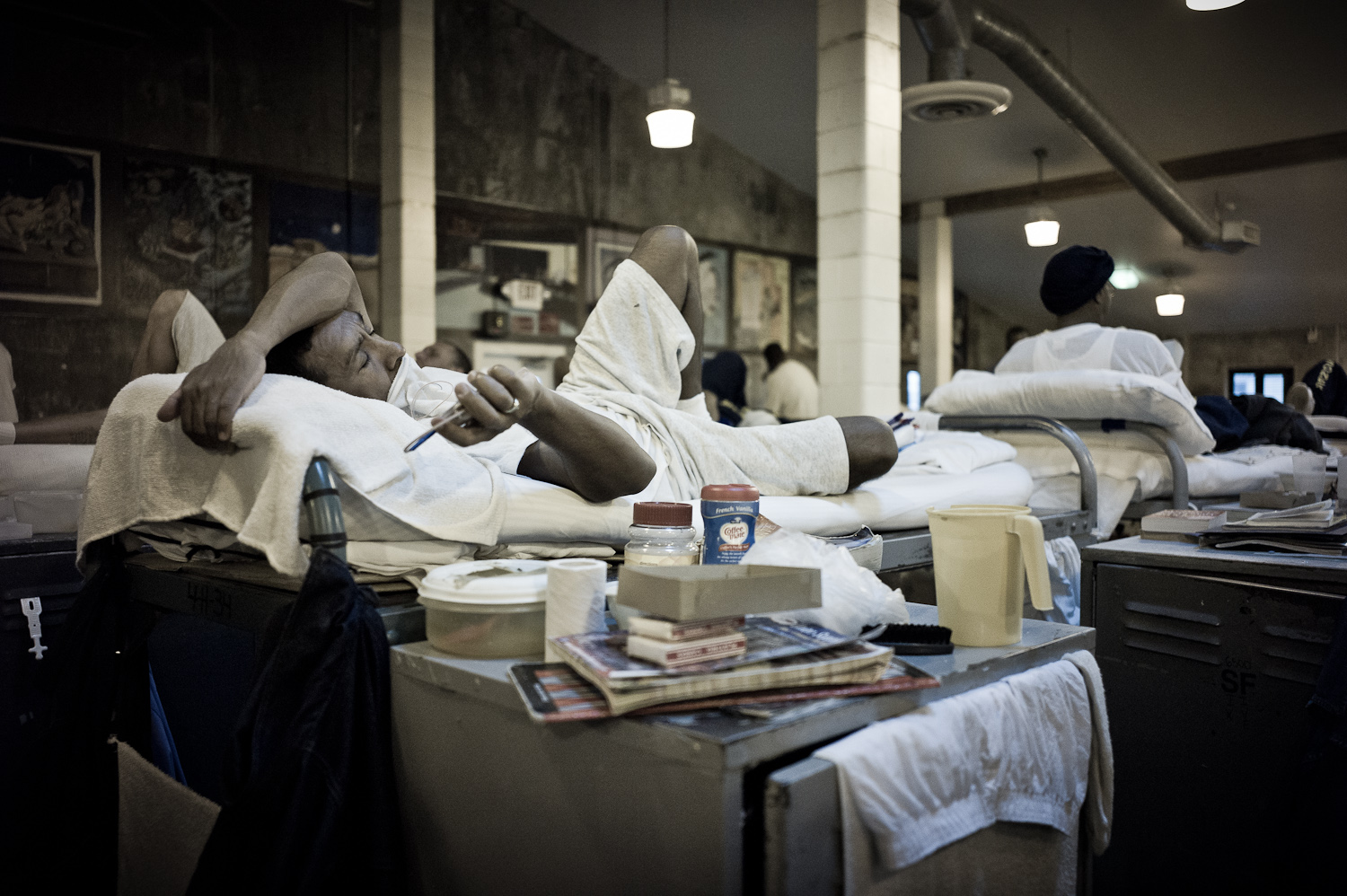
“Life lived in dorm housing in a California State Prison.”

ek_6-DUP2

Death Row with Inmate Mural (Sad Clown) in Sing Sing Correctional Facility. New York, 2011.

My parents are thinking about moving out of the house I grew up in. They asked me how I felt about it. In truth, I don’t mind one bit. Still, I appreciate them asking. Places hold memories, for sure, and it was mindful of them to ask my brothers and I how we felt about the house, its relationship to our memories, and a future without it. We Brooks, though, are a pragmatic bunch and feel that as soon as the house is vacated it stops being a home and just bricks and mortar for others to occupy and make their own memories. Likewise, we Brooks will make newer memories in my parents’ new home when we gather for holidays and so forth.

This occurred to me as I was browsing Emily Kinni‘s series Sites Of Execution. Kinni is interested in how quickly the function and memory of places change and her pictures demonstrate how rapidly change can occur. She has photographed not just former sites of execution in the U.S. but, specifically, the former sites of execution in the 17 states that have abolished capital punishment. If the places in Kinni’s hold memories they are violent, sad, retributive and final.
KINNI_2735_2 copy-DUP

Original Execution Chamber. Electric Chair and Lethal Injection. Now Unused Conference Room in the New Jersey State Prison. New Jersey, 2011.

o0ption

Original Site of Execution. Hanging. Lobby of the State office Department. Alaska, 2011.

I noted Kinni’s work 18-months ago, with criticisms that the series was not complete and that her statement was unintentionally misleading. I am pleased to report that my ‘Watch This Space’ caution has been met with a well-rounded project. Kinni’s survey of the sites (which took over two years) is thorough and her elusive images require work by the viewer to decipher what’s going on. The variety of reused spaces are convincing reminders of how fleetingly history and memory deal with even the most traumatising events.

Interestingly, Kinni is not a crusader for the abolition movement; her images are not intended as a call to challenge death penalty laws in 33 states … and nor do they read that way.

“My affinity for these sites, cannot be considered without the political and historical issues of the death penalty, but it isn’t where it begins,” says Kinni. “My interest is in the evolution of these sites – how places for execution are changed and what the sites become eliminating their historical relevance.”

Many photographers have dealt with memory and landscape by contrasting their images of seemingly benign sites with captions that describe past horrors or crimes. Four worth mentioning would be Eva Leitolf‘s Looking For Evidence – a survey of hate crimes in Europe; Jessica Ingram‘s A Civil Rights Memorial – photographs of hate crimes in America; Joel Sternfeld‘s Landscape In Memoriam – photographs of interpersonal, corporate and environmental crimes; and Taryn Simon‘s The Innocents – an obfuscation of memory and testimony.

Tensions between apparently innocuous images and their factual captions will always capture my attention. Such purposeful tensions are engaging.

chairrrrr

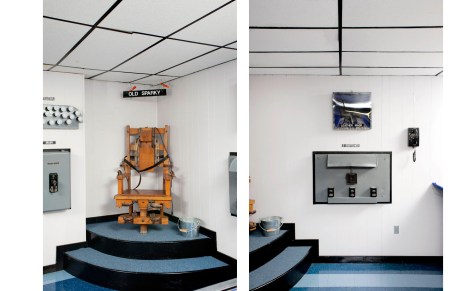
Old Sparky, West Virginia Penitentiary. 2011 (left); Leather Mask and Three Switches, West Virginia Penitentiary. 2011 (right).

ek_4 copy copy

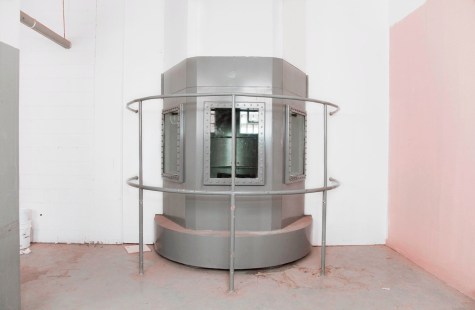
Gas Chamber on the Spectator Side. Gas Chamber. Still sits in the now abandoned New Mexico State State Penitentiary. New Mexico, 2011.

ek_5 copy

Original Execution Chamber. Electric Chair. Now a Vocational Space in Sing Sing Correctional Facility. New York, 2011.

Some of Kinni’s sites are no longer prisons and she was helped with her research by local experts.

“I was fortunate enough to meet people among a select few – if not the only people living – who possess facts and documents about where the last executions took place,” says Kinni. “They owned historical evidence within their personal collections and homes that didn’t exist elsewhere. Without their knowledge, I would have been at a huge loss.”

In other cases, where prison space has been repurposed, Kinni experienced the same labyrinthine negotiations common of prison photography projects.

“The level of negotiation varied state by state,” she says. “The hardest negotiations were in states where people I had begun communication with particular officials, who changed positions or retired unbeknownst to me.”

I like this project. Take a look.

ek_10 copy copy

Original Site of Execution. Hanging. Now a Janitorial Break Room. Minnesota, 2011.

EmilyKinni_03 copy copy copy-DUP1

The Original Site of Execution. Hanging. Now a parking lot in the Oahu Community Correctional Center. Hawaii, 2012.

EmilyKinni_04 copy copy-DUP3

Original Site of the Last Execution. Hanging. Now a Department Store. Rhode Island, 2012.

EmilyKinni_05 copy copy

Original Site of Execution. Hanging. Now a Residence. Wisconsin, 2012.

EmilyKinni_07 copy copy copy-DUP1

Original site of the Execution Chamber. Was last used as a basketball court for inmates until the Prison closed. The chamber has been recreated using original materials inside the prison walls in its own museum. Electric Chair. West Virginia Penitentiary, 2011.

EmilyKinni_11 copy-DUP

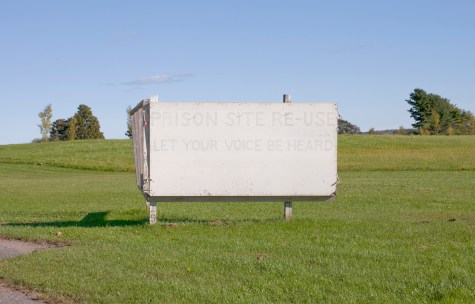
Original Site of Execution, Hanging. The prison was torn down and buried below the field which is now in it’s place. A Sign raises a question of what will be next for the site. Maine, 2012.

vermont-DUP1

Original Site of Execution. Electric Chair. Now a Retirement Home. Vermont, 2012.

EmilyKinni_14 copy copy

Original Site of Execution, Electric Chair. The prison was torn down and is now a highway lane. Massachusetts, 2012.

gaschambers-DUP2

Gas Chamber, Closed, New Mexico State Penitentiary. 2011 (left); Gas Chamber, Open, New Mexico State Penitentiary, 2011 (right).

Iowa1 copy

Site of the Original Execution Chamber, Hanging. Now Empty Space inside Iowa State Penitentiary. Iowa, 2011.

EMAIL

prisonphotography [at] gmail [dot] com

Prison Photography Archives

Post Categories