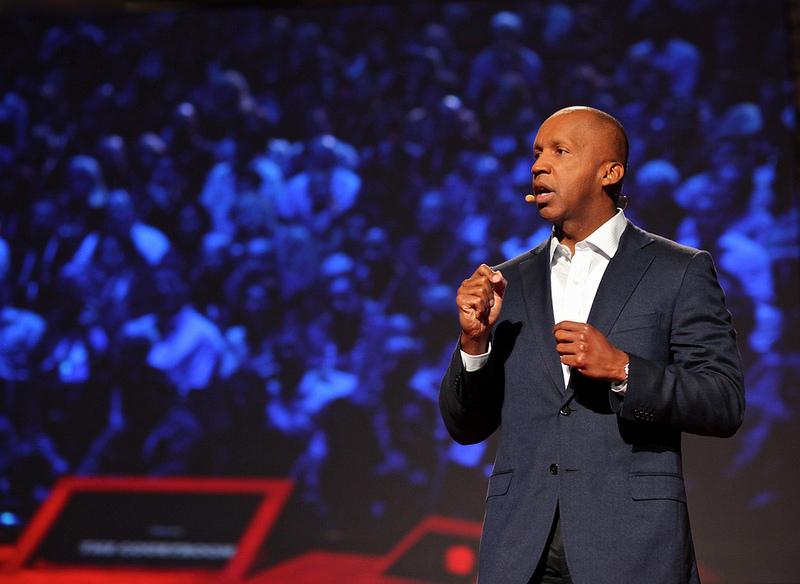
Source: Flickr, Jurvetson

Bryan Stevenson is not a pioneering scientist or tech entrepreneur, nor is he a globally known entertainer, a powerful politician or a media mogul. Given that Stevenson’s day-to-day company includes the poorest Americans, prisoners and the condemned he would not seem to be a likely candidate to speak at the prestigious pay-to-attend TED Conference. And yet, Stevenson, a lawyer of over 25 years, founder and executive director of the Equal Justice Initiative (EJI), stole the show at this year’s TED meet.

Without the aid of flashy visuals, Stevenson described how it is the poor and disadvantaged who suffer the racial and class biases within the US criminal justice system. Not only a breath of fresh air, his presentation was a challenge to both the moneyed and influential TEDsters in the room and we – the online audience – to engage with the facts, laws, and shortcomings of criminal justice within our communities.

Can we reconcile the belief that the US is a society based upon fairness, equality and opportunity when over 7 million citizens are under some form of correctional supervision? Why do we sentence children to an entire life behind bars? Can we adopt restorative justice and move away from an over-reliance on incarceration? Can we truly see and tackle the causes of despair, poverty and crime?

Given his other commitments, appearing at TED was not even Stevenson’s priority. One week after TED, he stood in front of the United States Supreme Court and made arguments in the Jackson vs. Hobbs and Miller vs. Alabama cases against the use of Life Without Parole (LWOP) sentencing for children. Stevenson believes it cruel and unusual – and therefore a violation of the eighth amendment – to sentence a minor as an adult, and especially cruel when the sentence carries no possibility of release.

For many reasons including the current budget crises, criminal justice spending and policy is under scrutiny. Stevenson is at the sharp end of this hot topic. He sat down with Prison Photography to discuss his start in these tough issues, the need for us all to treat issues of poverty and marginalization as our own, and the long arc of the universe that Stevenson – despite the inequalities he battles daily – still believes bends toward justice.

Prison Photography (PP): How did you get invited to TED?

Bryan Stevenson: I hope it’s not too embarrassing to admit that I had never actually heard of TED. I was never really that plugged in to that community. I was given a Four Freedoms Award in New York, last year, and that is where I met Chris Anderson.

Chris was very generous. He said, “I think you might be great for a TED talk.” I said, “Well, I’ll talk to you about that.” I went back to Alabama and asked my staff, “What’s a TED Talk?” and they said I should do one. It was a tough month because I had cases going to the Supreme Court and I wasn’t sure I could do all of it, but I decided I would.

PP: You founded the EJI over two decades ago, and I presume while your focus has changed your message has been consistent. Did the TED conference have any effect on how your message has been received?

Bryan Stevenson: It was really surprised by what a vibrant community TED is. There are a lot of very thoughtful people all engaged in the pursuit of ideas. I listened to many of the presentations and I was quite inspired by them.

Frankly, I was tempted to do things differently to what I had planned; everything there was so visual, dazzling and spectacular. I don’t usually use visual aids or do Powerpoints. I was a little concerned about that but I just decided to give the talk I planned. I was humbled by the response; people were very generous and very enthusiastic. For me, that was very affirming.

I talk in a lot of places where there’s a great deal of hostility, where there is a great deal of resistance; where you know you’re saying things that people don’t really want to hear and frequently they show that. It was very gratifying to be received well at TED. And it has had an impact – just the notion that you can put a talk like that online in a venue that people regularly visit has meant that a lot of people have heard what we are trying to do and they’d otherwise have never heard about our work.

The Equal Justice Initiative (EJI) believes deeply in getting more information out, educating more people. We cannot change this environment inside a courtroom alone; we’re going to have to change the broader political, social and cultural environment; if we are going to have the sort of conversation I think we need to have.

PP: Did you really raise $1million in 15 minutes from TEDster donations?

Bryan Stevenson: Yes. The day after my talk, I had to go to Seattle to give another talk, so I wasn’t at TED, but a lot of people had said that they wanted to advance the work we were doing and to participate directly. Chris was kind enough to have a few minutes to invite people to offer support and they did and we have gotten pledges of about a million dollars which really comes at a critical time. We’re engaged in campaign right now to end excessive sentences of children. The United States is the only nation in the world that still sentences children to die in prison. Life in prison without parole for children as young as thirteen is a sentence that is still widely imposed in the US and we are really actively trying to eliminate that sentence, so we’ve been at the US Supreme Court, we’ve been in courts across the country and we’re now doing a national campaign.

In addition [we’re working on] a couple of other things – stopping the underage prosecution of children as adults, and stopping the incarceration of children with adults. This support will really allow us to move that forward. TED has had a tremendous impact on the visibility of our work and I’m hoping that out of it will come new partnerships, new colleagues, new opportunities for these very critical social justice issues for our era.

PP: One of the biggest laughs you got in the talk was when described writing a motion to have your poor, juvenile client tried as a 75 year-old, white corporate executive! That latter description would fit many in the TED crowd. Beforehand, were you nervous about the demographic and reaction of the TED crowd? Did you think it might be a tough crowd?

Bryan Stevenson: It ended up be a very generous crowd. I was a little nervous about that story, of course, but one thing I’ve learnt is that you want to reach people where you and they are. I talk about a lot of tough issues all the time and I genuinely want us to get to a better place; I genuinely want all people to achieve a relationship within the human community which is full, robust, respectful and appropriate, so whether you’re black or white, rich or poor, employed or not, whatever the dynamic we must find ways to communicate with one another.

We impose on people in the criminal justice system identities that presume guilt, presume dangerousness and a fitness for incarceration. It has contributed to a high rate of error and wrongful convictions. We have to deconstruct that and my story about the motion is just one of the ways I’ve tried to raise important questions about why we are so indifferent to the status of people who are needy and vulnerable when to be just we need to acknowledge those deficits and deal with them appropriately.

PP: You talked about identities, how they are made, individual identity and collective identity. Was there a point in your life that you decided a life of fighting racial bias and inequalities in the criminal justice was for you?

Bryan Stevenson: I grew up in a poor rural community where issues of race and poverty were very dominant. It was a southern community where the legacy of Jim Crow was very evident, schools were segregated, social institutions were segregated and that was all slowly starting to get dismantled as I was coming up. It was hard to not see that.

I decided when I was a senior in college that I’d go to law school really with no clear idea of what type of lawyer I’d be or even if I would practice law. I just knew, as a philosophy major, no-one would pay me to philosophize.

After a year in law school when I had an internship at an organization in the South that provided legal assistance to death row prisoners and I became acutely aware of just how stark the differences were for people who were poor and incarcerated when it came to legal help. I met people on death row who were literally dying for legal assistance.

As a student at Harvard Law School and going back there where people were very anxious about which job they were going to take, not whether they’d get a job, the idea that there were people moving toward execution largely because they could not find legal assistance was pretty startling and compelling to me. I found in that area also some really interesting questions about how we treat the poor and how we deal with racial bias and how we deal with our history of racial discrimination. So all of it spoke to me in a way that I found very hard to ignore.

I started working on death penalty cases when I was a law student and when I graduated I began working at the same organization on criminal justice reform, excessive punishment, conditions of confinement and to this day I find new reasons to pursue this more intensely, to dig deeper and to struggle toward a better future and better solutions to the ones I’ve seen along the way.

PP: So there was no single personal experience in which you or your family were directly involved with the criminal justice system or a personal racist confrontation?

Bryan Stevenson: When people think you’re doing something unexpected and something hard to understand they are always searching for a narrative of something episodic or some incident to help explain how you got thrown off the path that you’re supposed to be on [laughs] to this misguided path that they really have great concerns to see you traveling down.

I do get those questions and I tell people, “No, I’m not motivated because I have a loved one in prison, no-one in my family has ever been executed.” That’s not to say that I don’t have an identity that is deeply vexed by the persistence of racial bias in our society; an identity that is challenged by the pervasive nature of poverty and our indifference to poverty; an identity that very much values freedom and fairness and the application of law that is just and reliable. But it doesn’t come from a place of personal exposure.

I think everyone should realize that these are not issues for activists and advocates; these are basic fundamental issues for people concerned about the quality of society we live in. One of the great problems that we are dealing with is that mass incarceration, excessive punishment, the marginalization of communities of disadvantaged people in this country have been relegated to the boundaries and are not part of mainstream conversation, whereas in fact, I think they reveal more about us than many of the other things we are preoccupied with. If you look at magazines, we spend a lot of time looking at fashion, consumers habits, what we buy, what we watch on TV, the gadgets we use. All of these do reveal things about our culture, but when you have the highest rate of incarceration in the world and a system of justice that is systematically depriving people of basic human dignity and human rights – that says something about the society we live in as well.

I’m always saying to folks that you judge the character of society not by how you treat the privileged the rich and the powerful and the celebrated but how you treat the poor and the incarcerated and the condemned. I do think it is a very mainstream question that it is difficult for many people to ask or respond to because it has been so marginalized in popular discourse.

– – – – – – – – – – – – – – – – – – – – – – – –

The second part of a two-part conversation with Prison Photography can be read here.

I recommend Bryan Stevenson’s TED presentation.
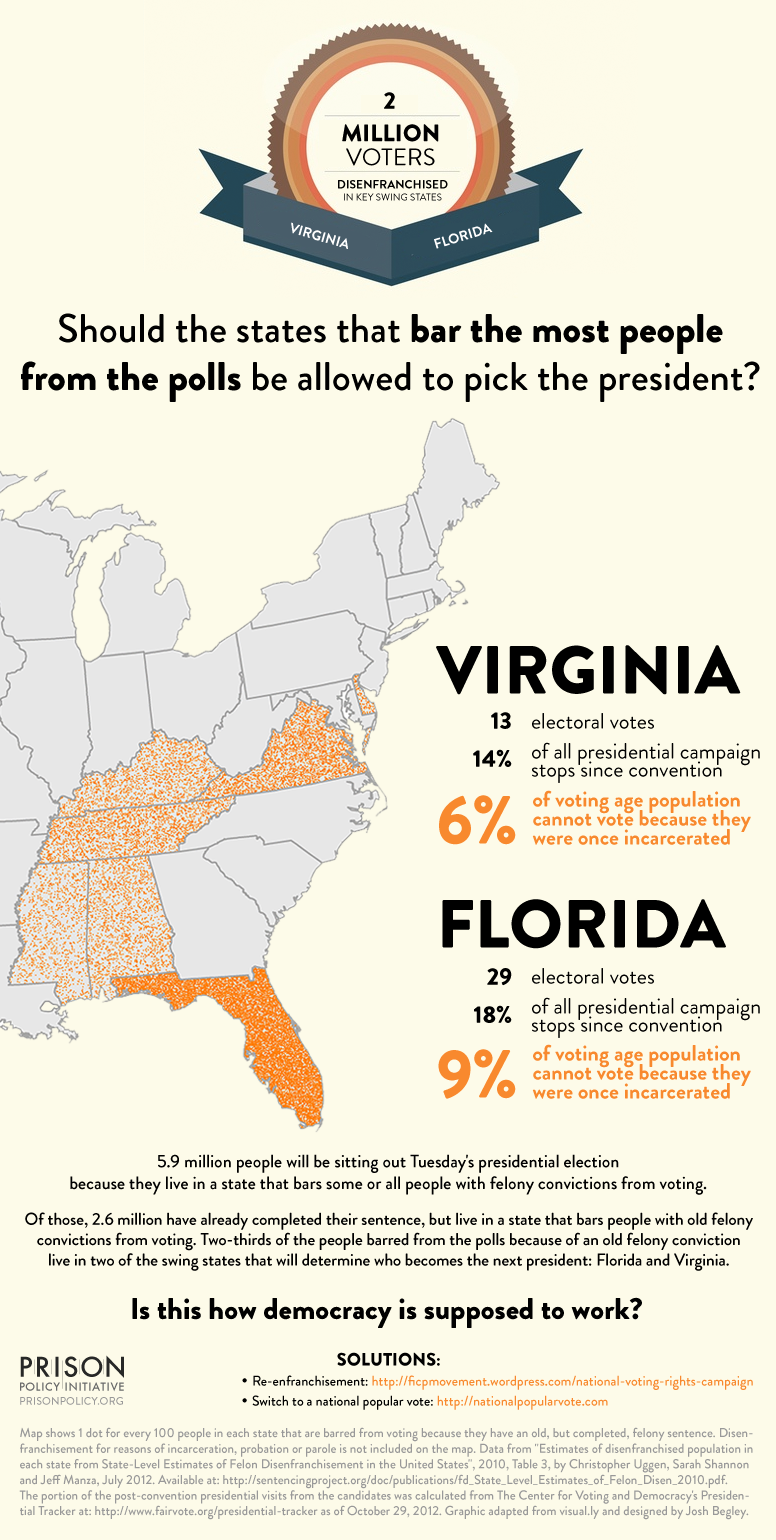
Two million voters disenfranchised in key swing states. Something to think on this week and next.

via Prison Policy Initiative

Click images for full 2000-pixel wide view. 

Kirk Jones is, like many, a photographer with a wandering path. Jones has worked with newspapers, assisted at a large commercial studios, and custom printed Pulitzer Prize winning photographer David Hume Kennerly‘s photographs.

Between 1994 and 1999, Jones freelanced in South East Asia, mainly in Vietnam and Cambodia. Upon returning to the U.S., he concentrated on web design and now manipulates Gigapixel imagery as a Senior Computer Scientist at Adobe. Three years ago, he made a return as a practicing photographer.

“I have slowly been easing myself back into the photographic world,” says Jones. His independent work has been published on CNN.com and NYTimes.com, his images featured in a documentary on Jesse Bernstein. He exhibits locally.

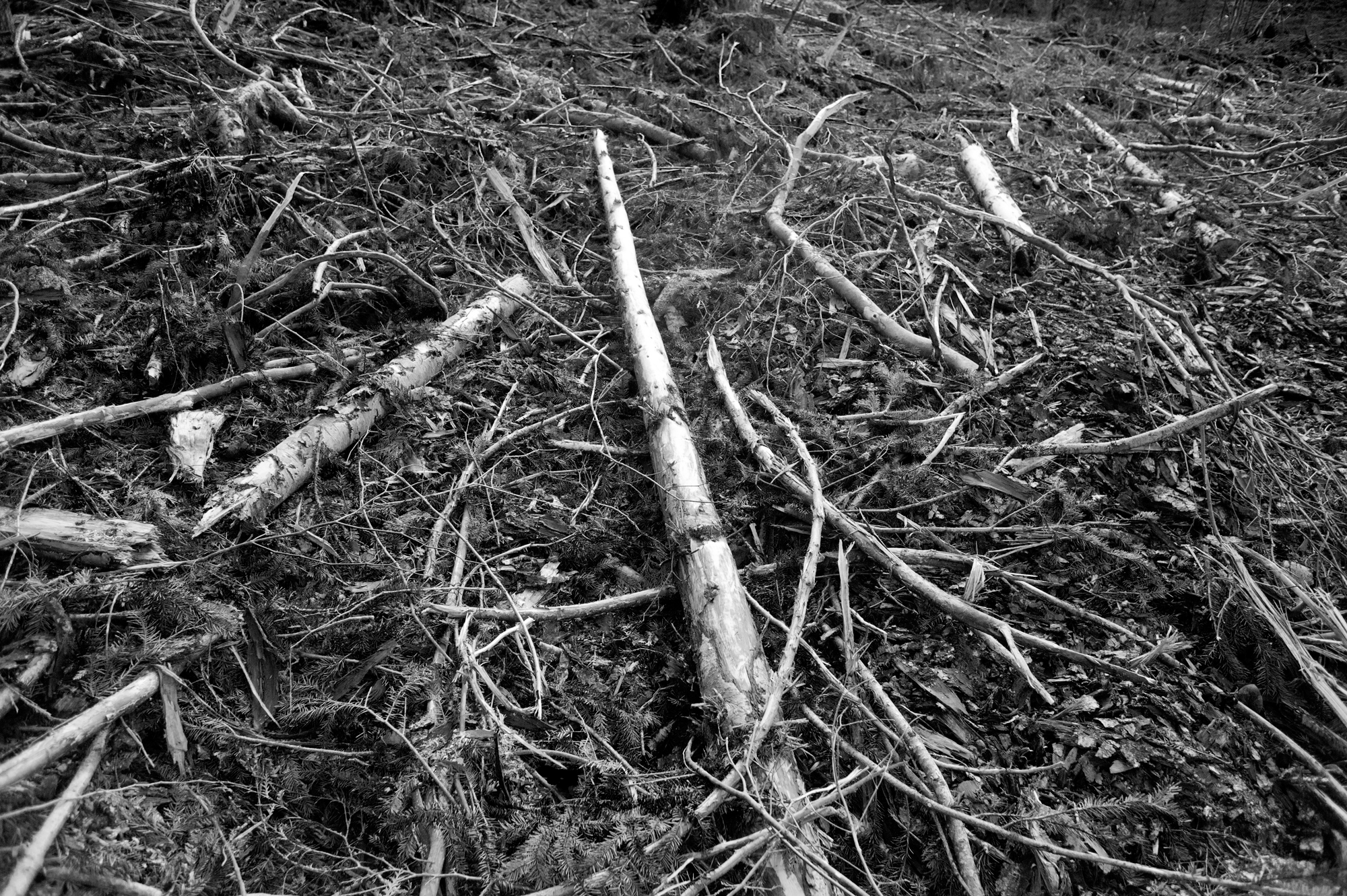
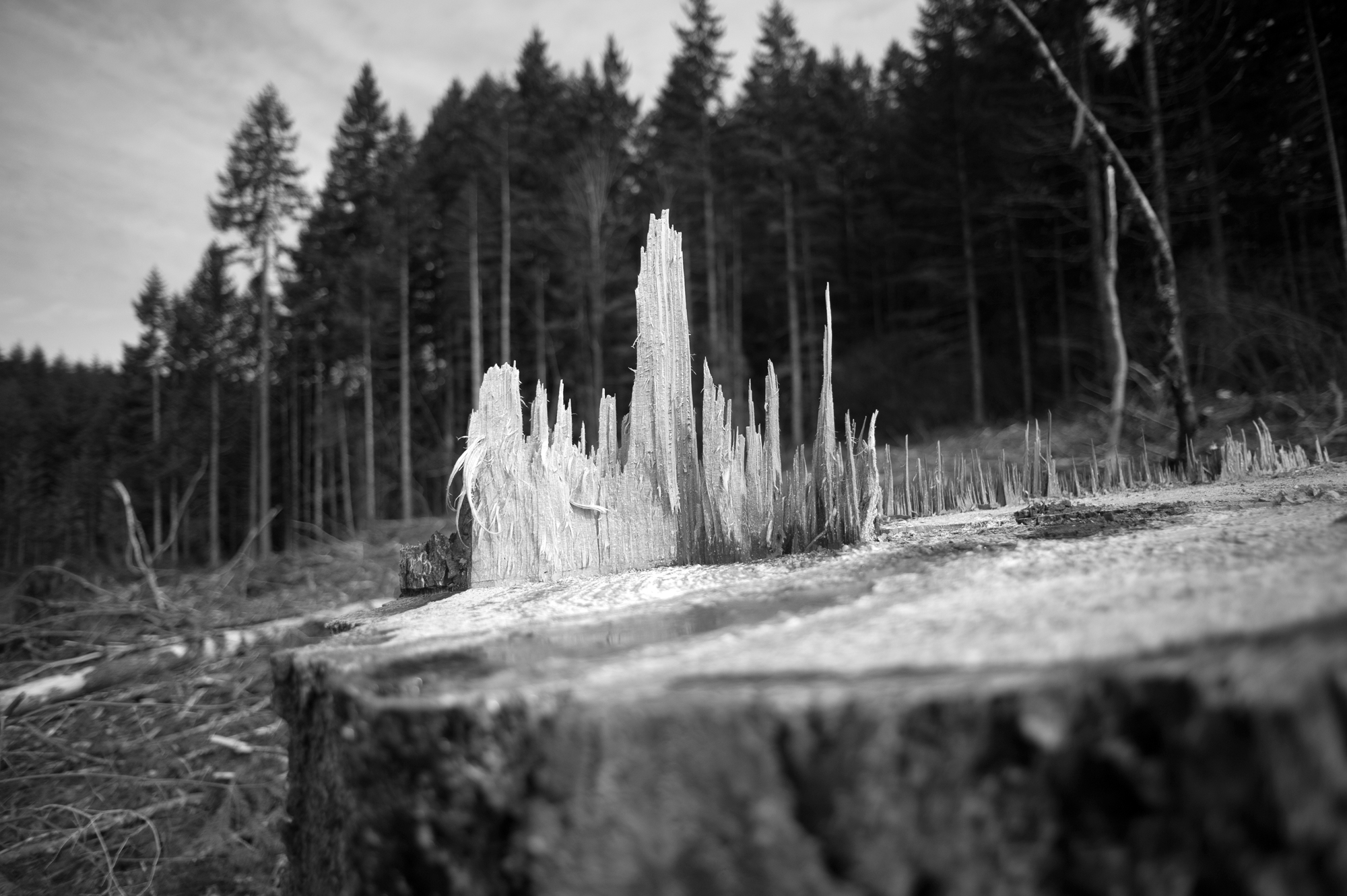
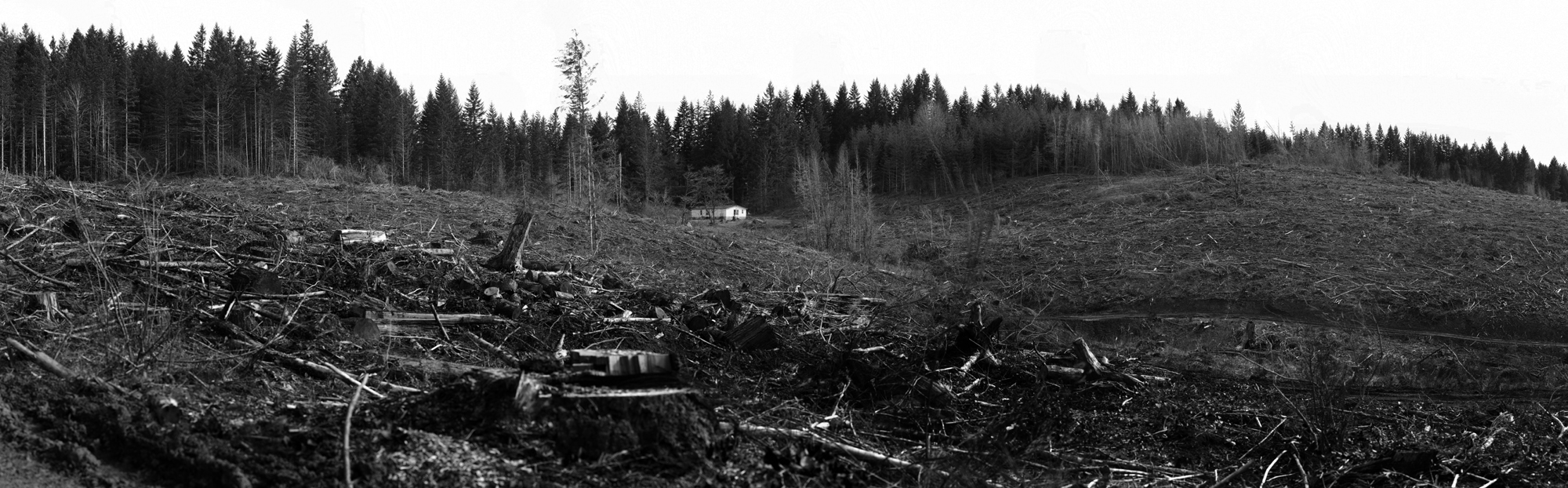
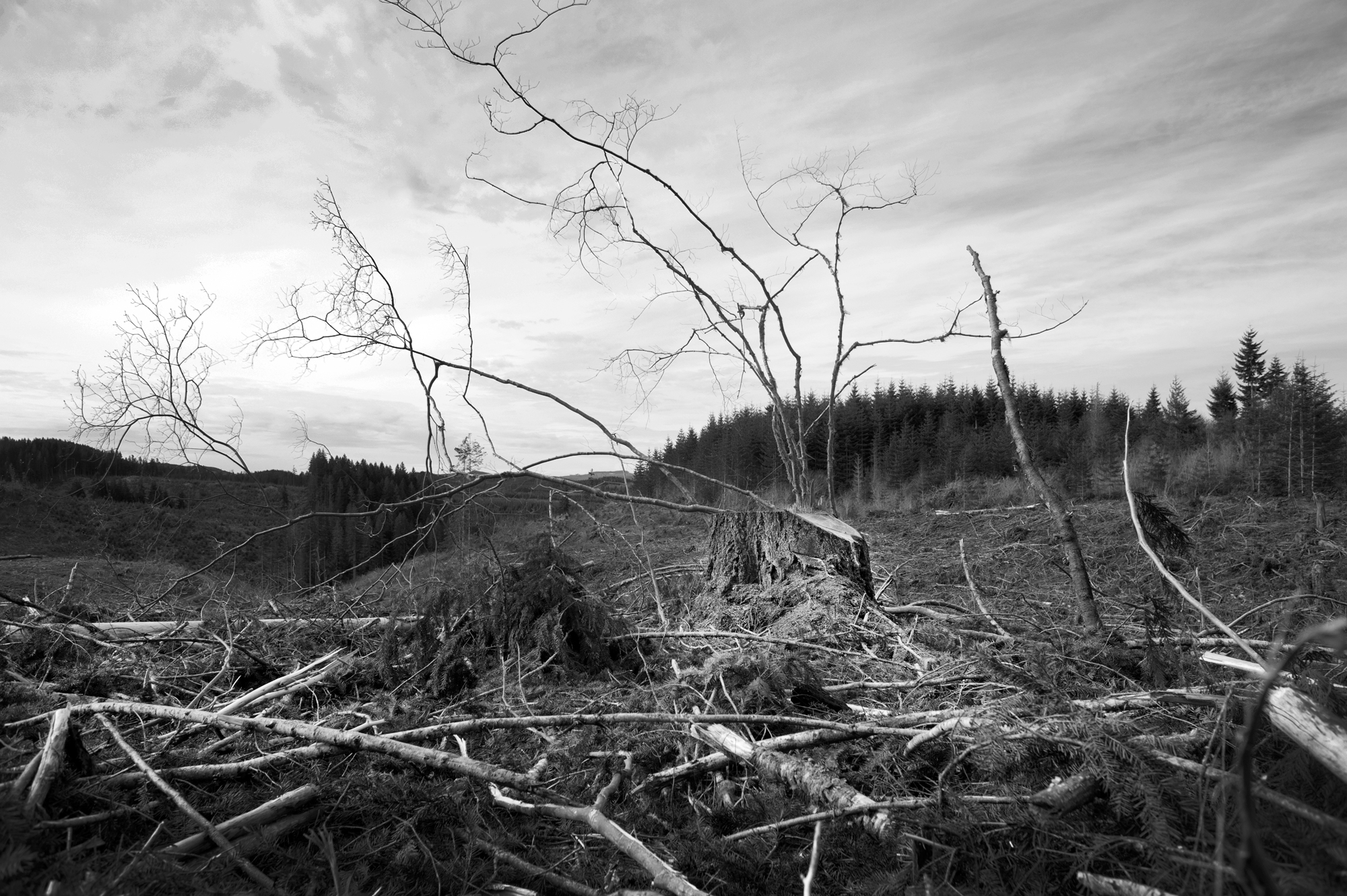
Over the past year, Jones has photographed clearcut logging, the urban growth boundaries that exists near Portland, OR, and the migrant work force that caters to the Oregon wine industry.

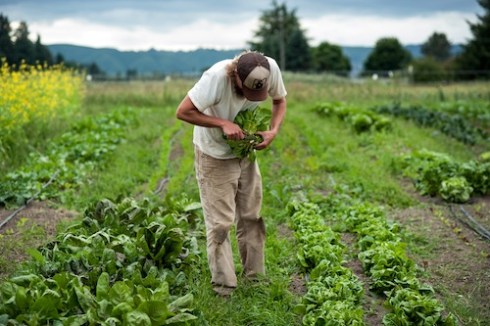
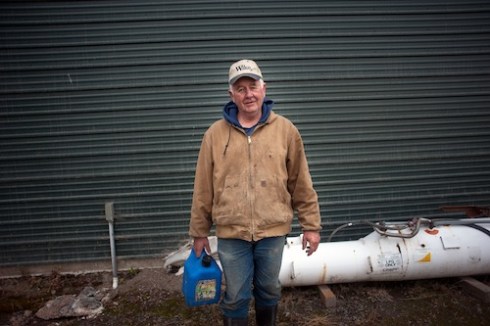
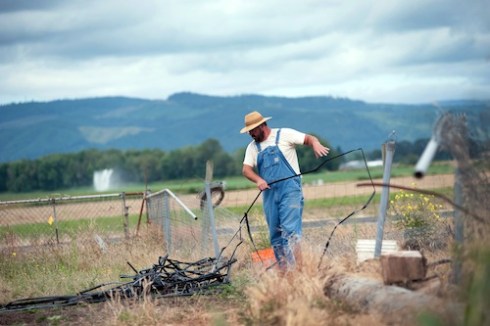
Black & White images from Jones’ Clearcut series and colour images from his Farm To Table series.

Prison Photography (PP): You’ve photographed a lot of different places, but I picked these because they were recent, close to our city of Portland and about economics, industry, nature, and the region’s culture. Why the interest in clearcut logging?

Kirk Jones (KJ): Witnessing the clearcuts along the Western Oregon highways recently, I experienced the same emotions as it did when I was young and gazing from the car window. Most of us that live here, and those that visit, at some point witness these open landscapes – often behind the veil of trees left standing along the roadside.

Photography is a medium to express what I observe happening close to home. Logging is an multi-faceted issue and something that contributes to our economy here in Oregon.

I have a long history of considering nature and my place within it. I grew up in the Midwest and lived in Northern Minnesota until my junior year of high school. The area is known for lakes and forests and natural beauty, but it is also an area known for timber and for massive strip mining.

Attending college at Evergreen in Olympia, WA – around the time of the spotted owl movement – sparked my affinity with the environment. Evergreen College was, and remains, a magnet for environmentalists and environmental theory.

I recall during trips to the coast that the lumber companies left a thick row of trees along the highway to mask the reality of what was going on behind; I felt like they were trying to hide something.

Click images for full 2000-pixel wide view.

PP: This work is in the legacy of Robert Adams, Eirik Johnson, Christopher Lamarca and many others who look at the Pacific Northwest landscape with wry, open eyes. How should we be relating to our natural resources, in life and in photography?

KJ: Without a connection to your natural surroundings it is difficult to connect to feelings of being alive. We are fortunate to live not only in an area of amazing natural beauty, but in a country that (hopefully) will continue to pursue the protection and respect for nature. It’s a fight.

I’m not advocating that natural resources shouldn’t be consumed around us, but I believe there are right ways to do this and wrong ways. I don’t think strip mining and clear cutting are responsible short or long term.

If photography can help illustrate, change or illuminate crisis, then I have faith that imagery can be a catalyst for crisis management.

PP: How do you characterize the Portland photography scene?

KJ: It has been quite a while since I was more entrenched in the photo scene. During the early 1990’s I worked at a large commercial studio in Portland as well as at The Film Lab located on the NW Park (gone now).

At that time there was a lot going on and you could feel Portland growing. I traveled and worked abroad before returning to the region a few years ago so I am just now reconnecting with photography in Portland.

I’ve gone to strobist shoots, stay active on a few mailing lists for local photographers, and test equipment for the teams at Gigapan. I look at local work when I can. The Portland photography scene appears to be healthy and there are a ton of cool things happening. I’ve been working on individual projects over the last few years and look forward to connecting with others.

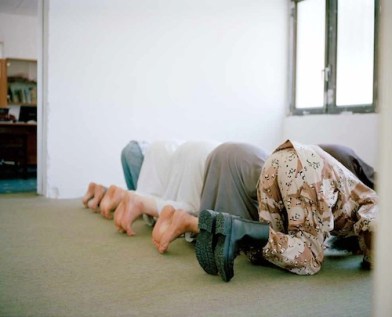
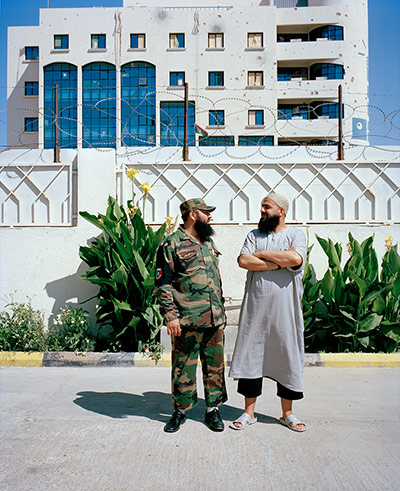
The Prison Governor of the Huda Foundation for prison and Reform, Misrata, prays with colleagues. © Louis Quail

Louis Quail makes a habit of going to zones that have been hit hard by human or natural emergency. He does so after said emergencies have tempered down and the world’s media has generally moved on. I celebrated his close and slow study of Haitians in May, 2010, a full four months after the devastating earthquake.

In the year since the end of the war, Quail has been in Libya. A small selection (seven) of his portraits were featured on the Guardian website yesterday. Quail has 25 images including candid, landscape and street shots on his website. The full body of work (I’ve viewed a PDF) comprises 25 interviews and 58 images.

Included in Quail’s series are three images from a prison.

“The model for the prison is an Islamic one where the prisoners are treated like their brothers, security is minimal with only one gate and a few guards. There is a strong sense of mutual respect and focus on Islam,” writes Quail.

Here I post two images and extended quotes that Quail recorded.

“We respect human rights here,” says a prison guard. “We repair them psychologically and think about how to make them good people – to turn them from fighters into civilians. Gadaffi taught them no respect. He told them they were better than other Libyans.”

“We want all prisons to be like this – if we don’t deal with the prisoners properly we will store up problems for the future – but it’s not popular with the government. It’s not a vote winner.”

“We are under-resourced at the moment. Our doctors and nurses are prisoners who have been trained by Medicine sans Frontiers and volunteers. We have 25 guards and access to 25 katibers outside, but even the prisoners tell us they will not run away because it’s much safer here for them here.”

But forgiveness and forward thinking is difficult when transition and immediate history has been so violent.

“We can’t deny there have been some human rights abuses, deaths in custody, torture in the revolutionary stages,” says a prison guard. “The families here in Misrata have seen their members killed and the girls raped. […] We have some mercenaries [in the prison] but to be honest, most died in the war. There was very little sympathy for them, there were many executions. They were from places like Darfur and Sudan, often on drugs or drunk. The doctors reported 700 cases of rape in Misrata, 132 of them on civilians aged between 12 and 15 years old.”

Omar, a previous Gadaffi militia member, talks to one of the prison guards at The Huda Foundation for Prison and Reform, in Misrata. © Louis Quail

“I was an elite fighter in Regiment 32 ran by Gadaffi’s son,” says Omar, a former Gadaffi loyalist. “In April 2011, I was fighting in Misrata, many people were dying and injured and I was shot in the legs, unable to move and was caught. It’s ok here. It’s very calm, they treat us like brothers. I have heard about other prisons where It’s not so good. After spending time here I no longer want to be a fighter, now we have to forgive each other and move on.”

Mercedes Smith, a formerly incarcerated person, reads a letter from her currently imprisoned son, at a relatives house where she lives after working all day on July 13, 2012, in Manhattan  New York. Ms. Smith is not allowed to live with her family while she is on bail because her mother still lives in the same building as where the crime took place. Ms. Smith served 20 years for 2nd degree manslaughter and was released in 2010. (Photo by Ashley Gilbertson / VII)

– – – – – – – – – – – – – – – – – – – – – – – – – – – – – – – – – – – – –

Think Outside The Cell, a NYC based advocacy group, and VII Photo Agency recently collaborated to create a media campaign to educate the public about the continued struggles for felons post-release. This conversation with Ashley Gilbertson is the final part of a five part series, ‘Ending The Stigma Of Incarceration.’

(Part One): Think Outside The Cell / VII Photo Partnership
(Part Two): A Conversation With Ron Haviv
(Part Three): A Conversation With Ed Kashi
(Part Four): A Conversation Wtih Jessica Dimmock

– – – – – – – – – – – – – – – – – – – – – – – – – – – – – – – – – – – – –

This text has been edited from longer conversation.

– – – – – – – – – – – – – – – – – – – – – – – – – – – – – – – – – – – – –

PP: In part four I spoke with your colleague Jessica Dimmock. How was it working with her?

AG: It was easy. Jess is a photographer as a primary, so she knows how photographers move. We went back to Mercedes’ home one night and Mercedes went into her room and opened a letter. I looked through the door and I saw that it was a handwritten letter and I knew that her son was in prison. It was from her son. She started reading, I took some frames and moved out the way and Jess could shoot. That was an isolating scene that was very poignant – reading a letter from your son, while you are on parole, in a house that you’re trying to get out of.

PP: Why should we care about prisons and their aftermath?

AG: In the aftermath of prison, ideally, prisoners are changed members of society. Prisons are a place where people can at least try to signify to society that they have made recompense for crimes they’ve committed. Why is it important that we pay attention? The size of it. Until I met Mercedes Smith, I had no idea of the intensity of the problems former prisoners are facing.

PP: What type of problems?

AG: Housing. Mercedes living with a family member in housing projects in Manhattan. She wants to move on from that, but housing is so expensive that for her to actually afford something is really hard. And this is where all these elements that former prisoners face come together; she’s working two jobs part time and she’s looking for a third job. But it is very difficult for her to find any type of third job because she has curfew hours. Getting back to her apartment after curfew means she’ll break her terms of parole and potentially face going back to prison. For her to get an apartment she needs a third job.

Say if she wanted to move to New Jersey where housing is cheaper, she can’t. Her terms of parole require her to stay in New York State.

PP: Does she have good support?

AG: She was in a fortunate position because when she came out of prison to a very supportive and loving family. It is not quite accurate to say that Mercedes is fortunate because, in fact, she has worked very hard to get to where she is. Her children had been cared for by her mother and they visited her regularly while she was in prison and they had relationships. So, even after having done 20 years in prison, she had a warm and supportive environment to come back to and that’s something that – as I came to understand the issue better – a lot of people are lacking.

Mercedes is a really supportive mother who is doing everything she possibly can for her children. Two of her children live with her mother, one is down South and one is in prison. I saw her speaking a couple of times with her son that is in prison and it was a really warm and loving exchange – the tone of conversation that we all wish we could have with our mum.

PP: What did Mercedes hope of the project? Why did she go in front of cameras?

AG: Mercedes never said she felt like a role model, but she has figured out how to get out of the hole and she wants to save other women time and energy as they try to do so.

Both of Mercedes’ jobs work around her existence today as a parolee and as a former prisoner. She works with Women On The Rise Telling HerStory (WORTH), a group that lobbies for women who are imprisoned and particularly women who are giving birth in prison. The work plays directly into Mercedes’ experience, as she gave birth to her youngest child in prison, I believe.

Her other job is working with women just out of prison and giving them advice about what they have at their disposal; what organizations that might get in touch with. It is a mentor role. And she works at that second job with her own mentor.

PP: Your work is always about America.

AG: I research ideas and become interested in issues at a concept level, then I’ll start meeting people – community leaders in Pontiac, Michigan, for example, or in the case of Bedrooms Of The Fallen, family members. Everything I do is about America.

I see America as this sort of social experiment. I grew up in Australia; in the Commonwealth. I’ve lived in America for nine years, yes, but it remains so foreign to me. I hadn’t met a large group of Americans until 2003 when they marched into Iraq. I learnt more about America in Iraq than I did in America over those first few years [of the War on Iraq].

Working on different issues, here in America, is to continue to look at this experiment. The way Americans wave flags. It’s the same as how Australians wave flags, but in many ways it is very different.

The way Americans carry guns, the way they incarcerate people – it’s the world leader in so many poor statistics, but then in many great statistics too. I find it so bizarre to work here. There’s just an endless wealth of material. I don’t work on things I have a passing interest in. I have to be actively engaged … and, usually, angry.

Each aspect of American culture I look at, whether that’s politics, incarceration, war, treatment of veterans at home, suicide, post traumatic stress disorder, the auto industry, the economy – each thing adds to this tapestry that I’m trying to understand, and I want to, I just don’t know if I ever will.

PP: Why has VII pursued a partnership with TOTC?

AG: This partnership appealed because it was looking at a project in a way that offered solutions, with stories of people who were actively getting out of the problem, trying to create solutions to it. That is compelling.

I’d say it is a traditional approach to go to a prison and photograph the scenes and problems there. Or, to go to “convict alley” in Harlem, where there is the highest concentration of parolees living within a certain numbers of blocks in Harlem.

I was reading about speech-writing the other day and they were saying at the end of strong speech is a call to action. Both Ronald Day and Mercedes stand as a call to action. It doesn’t matter that they’ve been convicted of crimes because they’ve gotten beyond that and turned into people who empower those around them.

PP: VII wants to extend the project. Do you think you’ll continue involvement?

AG: I hope very much that the project goes on, and that it goes national. Think Outside The Cell is an incredibly powerful approach to this problem, so to see it produced on a national level would be compelling. I’d like to be involved, but I’d like more to see other photographers brought in.

It turned from an issue that I cared about into something that I all of a sudden became involved in. For a lot of us working in the press, it takes a significant amount for us to be shocked by certain things we see people come up against.

The opportunity that I’ve had to meet these inspiring people who are working to get out of this rut and try to change it at a policy level – that should be regarded by as wide a swathe of people as is possible.

– – – – – – – – – – – – – – – – – – – – – – – – – – – – – – – – – – – – –

LG VX5400 flip hone. Born 2006. Laid to rest 2012.

After 6 years with the same LG flip phone, it was long overdue to get a smartphone. The timing was right to get the iPhone 5. Friends who’ve had iPhone’s in the past just want to hold the 5, “It’s so light,” they fawn.

I waited a day to turn the iPhone on – I was hesitant because I was about to voluntarily submit to yet more corporate networks. But, I’d reconciled that with my decision to go for an iPhone weeks ago when I placed the order. Breathe deeply. Sync the thing with Twitter. First app? Instagram. It reamins the only app on my phone.

So yeah, I’ll be using Instagram with the handle @p3t3brook. But I have rules.

THE RULES

1. No cats.
2. No dogs.
3. No cocktails.
4. No pints/jugs of ale.
5. No frothy coffees.
6. No plates of food.
7. No babies. Already bent that rule with my second Instagram pic, but the baby is unidentifiable and I tell myself that the leaf the chubby baby hand holds is the actual subject.

THE WHY

It’s not that there’s anything wrong with cats, dogs or babies; they are wonderful things in life to be with and be around, but as I don’t have any children or pets, it’s hard for me to justify why I’d make photos of those things.

As for food, well, food has become the fastest most unquestioned trope on Instagram. People used to think it silly to waste film on photographs of food, but the digital age allows us to indulge a common urge. We all want to share – and brag about – what we’re about to demolish. Food Instagram photos are part homage, part evidence, part guilt sharing, part all sorts of things but not something I want to be part of. There’s too many photos of food online and you don’t need any more from me.

On beer, cocktails and coffees, just read the previous paragraph replacing the word ‘food’ with the word ‘drink.’

THE WHAT

So what does that leave? Here’s a few things I think are a bit of a challenge.

1. Street photography. Must be well edited. High contrast, light and shadow, unknowing subjects, knowing subjects, reflections, bustle. Avoid reliance on signs; you want the picture to tell you the story, not words (I’ve already failed on that one.)
2. Strange unidentifiable details, preferably achieved by found texture, not filter, but I’ll still take a mix of the two.
3. Inside views of current projects. Tidbits. Teasers.
4. New landscapes. Mad infrastructure. Clever combinations of light as it pings off man-made stuff. LOOK UP!
5. Portraits of strangers.

I’ll try to make images along these lines and I’ll find value in others’ doing the same. So, an emphasis on photos made on the fly and inpublic yes. Which is precisely the point of having a camera with you all times. But, I still want to bring a standard to it – if I feel a photograph is poking fun at someone, or voyeuristic in a creepy way, or that the photographer decided not to get close enough or maybe even have a conversation, I might not Like it.

If Instagram is used consciously, it can be an exercise in mindfulness. Look for interesting views, take the pic, upload, put the phone in your pocket. I want people around me to know that I’m using it in a directed manner. Instagram (and its streaming-app-brethren) counters browbeaten, downward gazes. It remedies our forgetfulness to look up.

Clearly, the majority of what is on Instagram is not good photography, but I reckon we’re seeing millions of experiments of people heading toward good photography, AND at a faster pace than in the past. The end result? Hopefully, widespread understanding of what makes a good photograph.

ALL OVER THE PLACE

If you are short of things to read on the topic of Instagram and cell phone photography:

From Memory To Experience: The Smartphone, A Digital Bridge (Stephen Mayes on Jens Haas’ blog)
Wired Opinion: Rip Off the Filters – We Need a Naked Instagram (Wired.com)
Dappled Things: Pinkhassov on Instagram (The New Inquiry)
Everyone shoots first: reality in the age of Instagram (Verge)
Instagram — It’s About Communication (John Stanmeyer)
Stefano De Luigi’s iDyssey (The New Yorker)
Instagram, The Nostalgia Of Now And Reckoning The Future (Buzzfeed)
Hipstamatic Revolution (Guernica Magazine)
Ben Lowy: Virtually Unfiltered (New York Times)
Magnum Irrelevant? (Wall Street Journal)
Instagram: Photography’s Antichrist, Savior, Or Something In Between? (Huffington Post)
Picturing Everyday Life in Africa (New York Times)
reFramed: In conversation with Richard Koci Hernandez (Los Angeles Times)
In an Age of Likes, Commonplace Images Prevail (New York Times)
Why Instagram is Terrible for Photographers, and Why You Should Use It (Photoshelter)
New Economies of Photojournalism: The Rise of Instagram (British Journal Of Photography)
Instagram Isn’t an App, It’s a Publishing Platform (So Treat It Like One) (Photoshelter)

Doug Lowell, from the series Seated

Eye On PDX is spreading its wings. It’s not migrating and flying the coop, but rather subdividing itself and doubling the product.

From beside a fire pit last month, I asked Blake Andrews if he wanted join the meandering inquiry into photographers here in Portland, OR. Blake hopped on board. The fact Blake lives in Eugene, two hours south, does not effect his credentials. He’s up here every other week to shoot, talk and gallery-hop. Besides, he knows everyone here that needs to be known; he lived in Portland years ago before it was post-Cool.

Eye On PDX is an ongoing series of profiles that feature a brief interview with a PDX photographer accompanied by a handful of photos.

Blake’s profile of Douglas Lowell expands Eye on PDX to B. And Blake is delivering awesome content that I simple can not. “Has a photograph ever made you cry?” Blake asks Doug. C’mon! Awesome.

Doug and Blake’s to-and-fro is lively and considered – the photobook as poetry and the importance of ideas over place. Read the full interview with Doug Lowell.

One point of clarification. When Blake says, “Pete will handle all of the photographers who are imprisoned felons and I will handle the rest,” he is having a lark. Any photographers I interview who work in Portland and happen to be felons will not be imprisoned.

The dining room. © Mariam Amurvelashvili 

Mariam Amurvelashvili, a Georgian photographer has been documenting lives inside Georgia’s prisons since 2004.

She has not, however, the author of images of beatings and rape that surfaced in the past month, sparked protests among horrified citizens, forced the resignation of Georgia’s senior prison official, and rocked Mikheil Saakashvili’s government.

DOCUMENTARY vs. EXPOSE

I’ve argued in the past that the photo and video footage that changes a system is rarely that made by a documentarian. It is the expose, the surveillance tape, the illicit and leaked images that reveal to wider society the worst acts of closed institutions. Amurvelashvili’s work is interesting, concerned, but it doesn’t have a pointed edge.

This is by no way a criticism; it’s just worth considering how we think about images. I made a similar plea a couple of weeks ago when I asked how we should compare Michal Chelbin’s portraiture with mobile phone camera shots taken by Russian juvenile prisoners.

ABUSE REPLACES ABUSE

Amurvelashvili’s basic position is a simple one – that the deprivation of liberty by imprisonment is the greatest measure by which one man can punish another. I agree with her. Furthermore, the prison should not degrade the prisoner nor violate human rights with poor conditions, inadequate food or abuse of any kind. In 2004, Amurvelashvili reports, a Tbilisi prison held over ten times the prisoners than its design capacity allowed.

When Amurvelashvili began photographing Georgian prisons I expect she thought she was photographing the end of an era. The new prisons of a newly democratic Georgia could cleanse itself of it’s communist past and notorious prison archipelago. Unfortunately, the new super jails have engendered a more-exacted breed of violence.

Journalist Gavin Slade argues the roots to the abuse scandal are the associated policies of zero tolerance and mass incarceration pursued recently in Georgia which has one of the highest incarceration rates in the world – 531 prisoners per every 100,000 people.

Problems, summarised here, have long been rife throughout Georgia’s prison system. Beginning in late 2010, reports emerged of physical abuse. Ksani prison was under scrutiny by the Georgian Public Defender’s Office in 2011 for poor treatment of inmates.

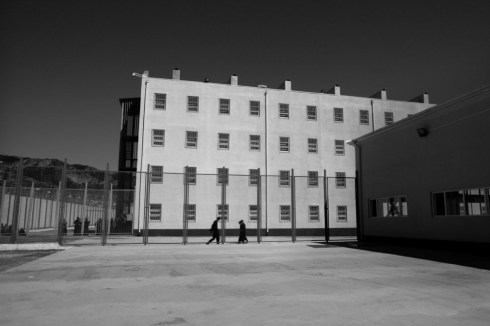
Newer facilities such as Ksani prison, says Amurvelashvili, were designed to be sanitary, have adequate healthcare, libraries and family visitation. And yet, last month’s torture scandal within Ksani proves that care for prisoners extends far past concerns about conditions and to the philosophy of leadership and the break-down of discipline among the staff. Ksani was a hell hole.

Listen to this interview with a prisoner who was beaten and electrocuted in Ksani Prison.

Ksani prison. © Mariam Amurvelashvili

If an authority cannot control nor redirect its prison population into productive activities, the prison is likely too large. It is probably overcrowded, too. State authorities need to understand that better conditions in prisons reduces crime. Reduce populations and pursue alternatives to incarceration. And find leaders with moral fibre.

AMURVELASHVILI ELSEWHERE

Bigger images here, and featured portfolios on Georgian Photographers website here.

Conscientious likes Amurvelashvili’s Dukhobors a portrayal of a Christian sect in Georgia/Russia. Fotovisura has a gallery of her photos of animal sacrifice and behind bars.

EMAIL

prisonphotography [at] gmail [dot] com

Prison Photography Archives

Post Categories