Friend of the blog, Scott Houston, has a spangly new website featuring not one but four portfolios of his work from Maricopa County, “Tent City” and the show that is Sheriff Arpaio’s chain gangs.
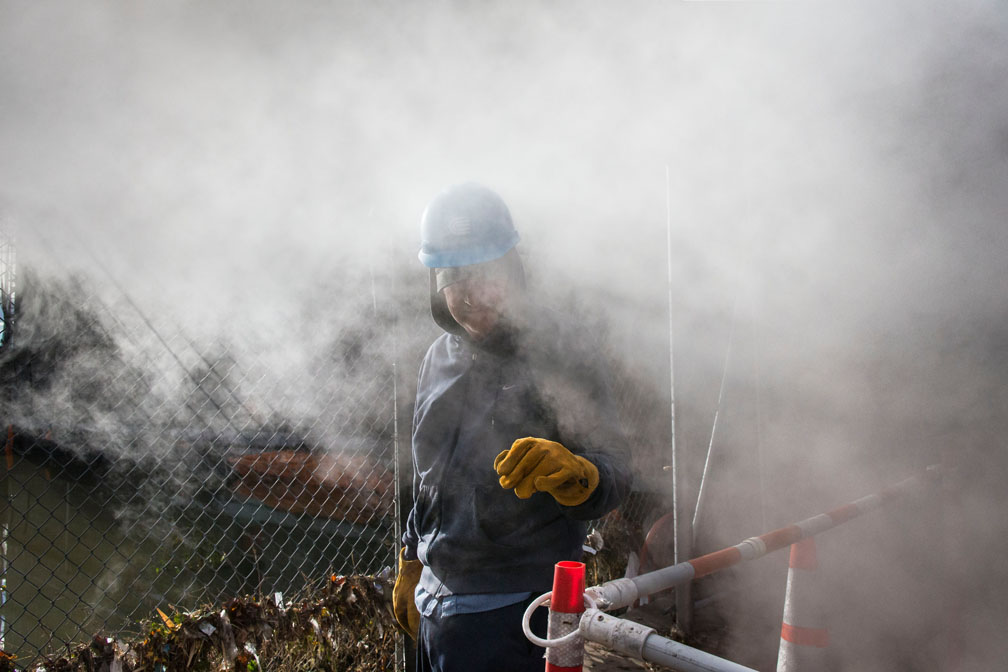
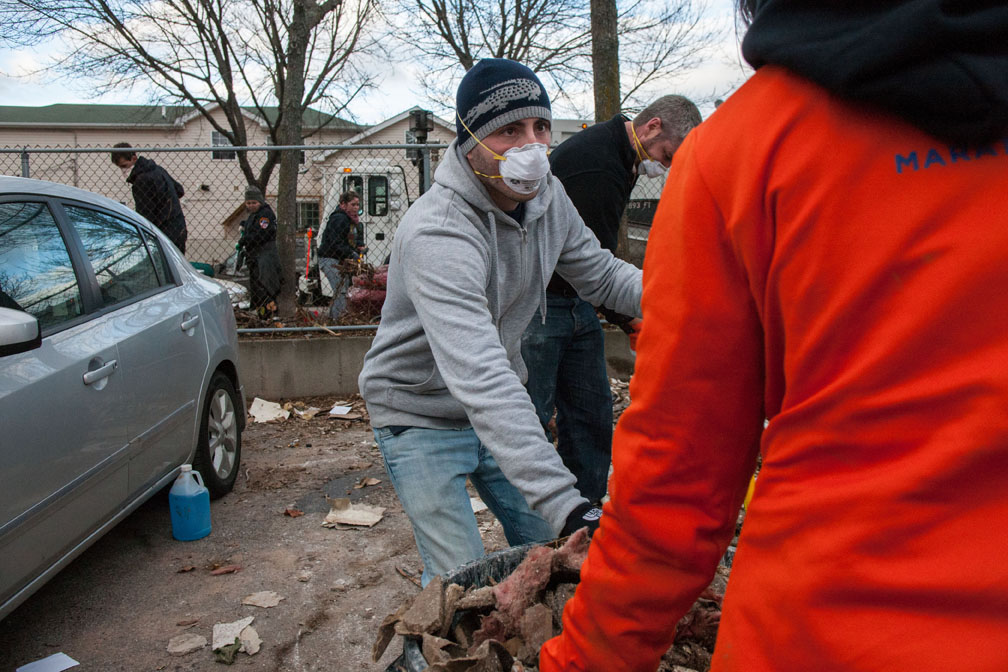
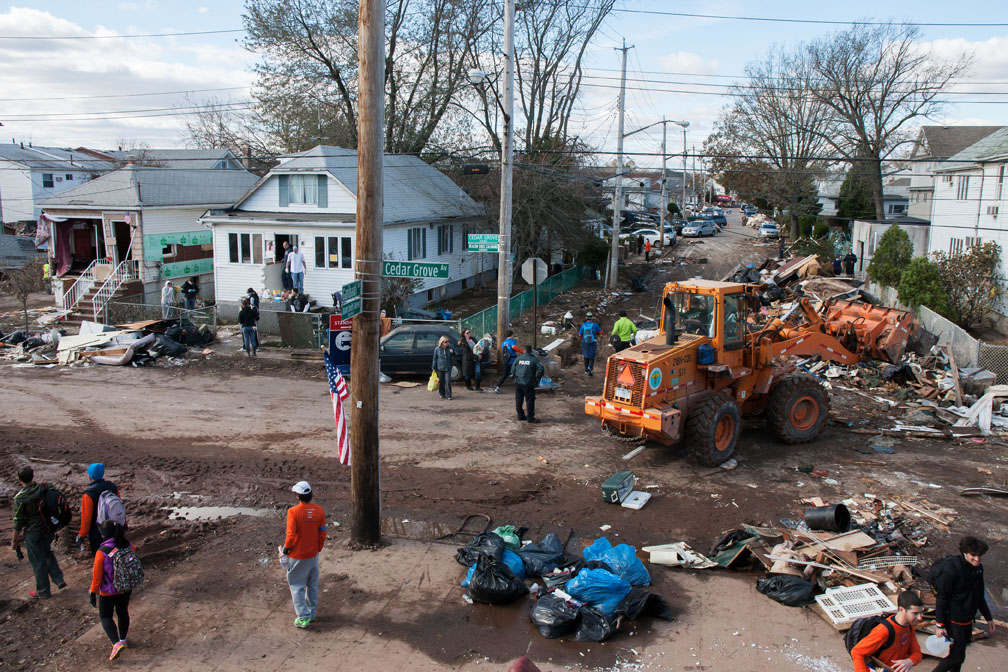
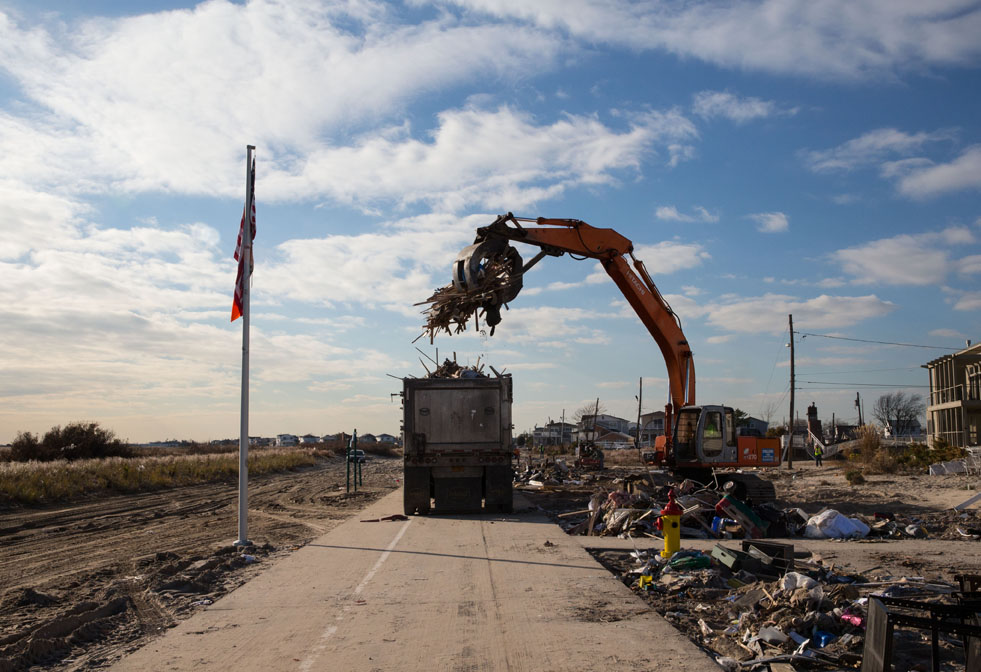
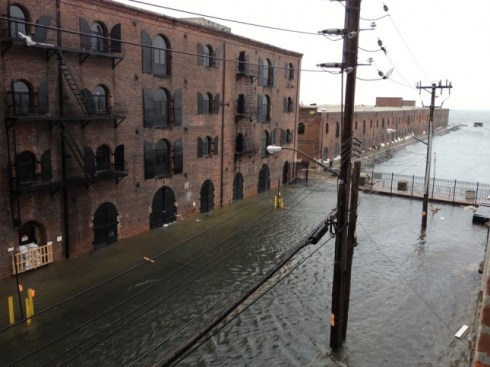
Scott is a New York resident and like most with a camera got out to photograph the aftermath of Hurricane Sandy. He sent me some images. I’ve had my own thoughts on the photo coverage of Sandy, so I’ve tried to select an edit here that shows some things other photographs have not – namely Con Ed workers, different-enough compositions and laughter (click any image to see it larger.)
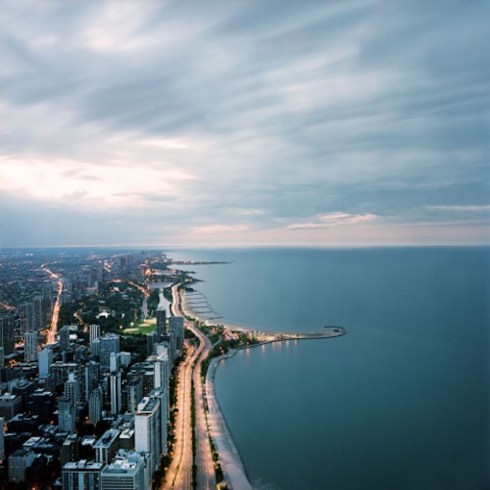
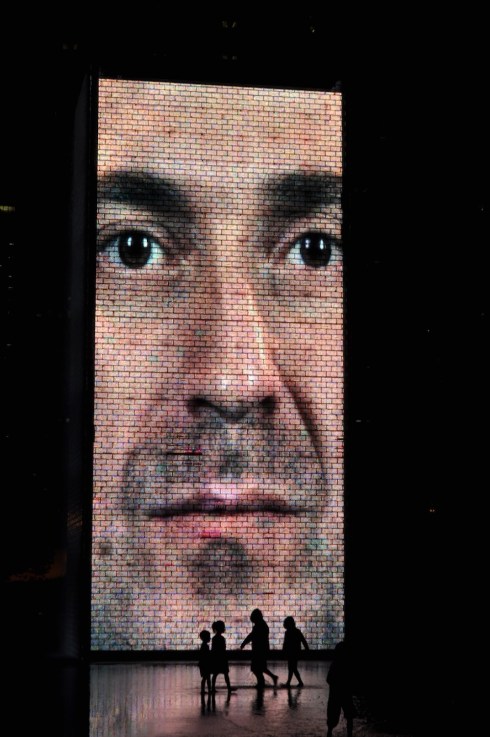
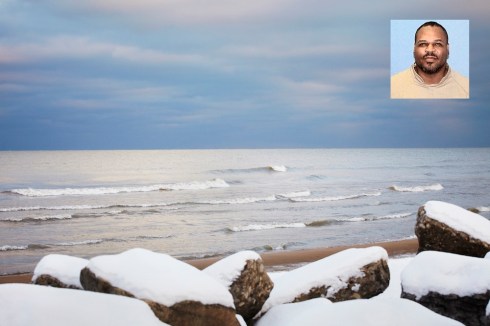
Request: “I would like to see the downtown Chicago or the lake of Chicago it will bring me happiness to see a real nice picture of the downtown. Please! A good place to eat! Nice cars! I been locked up for 17 long years!”
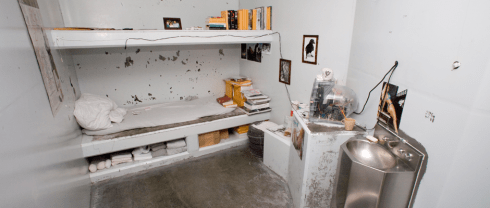
Last week, I asked Where Are All The Photographs Of Solitary Confinement? In terms of evidential imagery, the question still stands. A very different but equally interesting angle to take in the inquiry into images from within solitary is to consider the imagined and idealised images that persist within the minds of prisoners.
FROM LOCKED DOWN MINDS TO TANGIBLE PRINTS
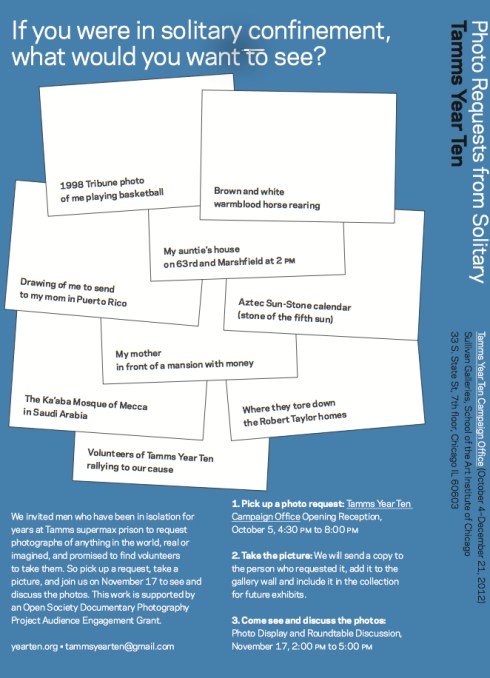
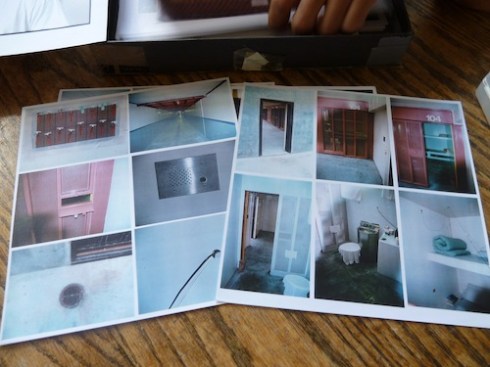
Tamms Year Ten (TY10), a Chicago-based activist group campaigning to close down the controversial Tamms Supemax in Illinois, is not only finding out what the precious images are in the minds of men in solitary, they are going out into the world and making those images a reality – making files, prints to be mailed to each man, and prints for awareness-raising exhibitions.
TY10 asked scores of men in solitary, “If you could have one picture, what would it be?” The requests can be anything in worlds real or imagined. Once made, the images are opportunities for prisoners to see what they want to, what they used to, or perhaps what they may never see again.
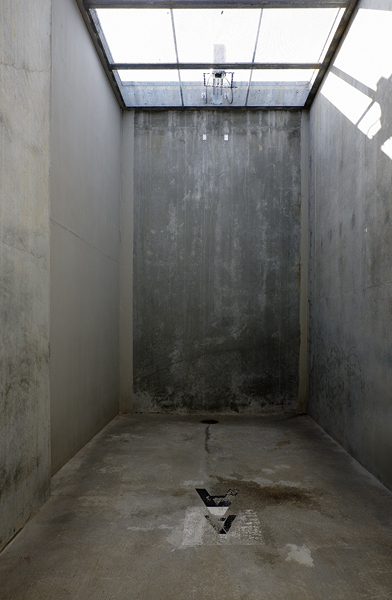
Tamms prisoners never leave their cells except to shower or exercise alone in a concrete pen. Meals are pushed through a slot in the cell door. There are no jobs, communal activities or contact visits. Suicide attempts, self-mutilation, psychosis and serious mental disorders are common at Tamms, and are an expected consequence of long-term isolation.
The U.N. Committee Against Torture considers such conditions to be cruel, inhuman and degrading, and when the isolation is indefinite – as at Tamms – to be form of torture. Last year, the U.N. Special Rapporteur on torture Juan E. Méndez called for a global ban on solitary confinement in excess of 15 days.
This year, Governor Pat Quinn announced his plans to shut down the prison but closure has been halted because of lawsuits by the prison guards’ union, AFSCME.
FRAMEWORK FOR CONSIDERING THESE IMAGES
Below are a selection of the requests and resulting images. They are a hodge-podge collection of styles and approaches and clearly many of the images do not meet the standards of fine art aesthetics. But, those standards are not by which these images should be judged.
The images originate from the minds of men who exist in environments of severe sensory deprivation. Each image is conjured from the absence of imagery.
Process trumps product in the TY10 Photo Requests From Solitary project. These images connect and educate people across supermax divides – the most opaque divides of prison regulation. The Photos From Solitary Project – one of the many TY10 efforts to engage the public on the issue of cruel and unusual detention – was conceived of to capture the eyes and ears of people and draw them in to protest and resistance.
The processes in making these images buttress, and spread, committed social justice activism; that is their worth.
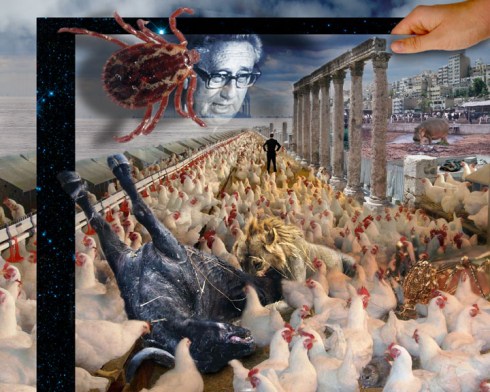
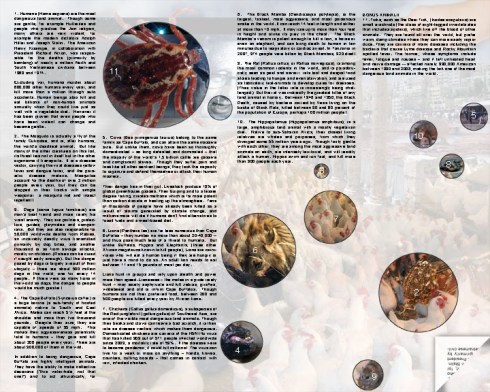
Request: “If you please, send me photographs of laser-printed image on white paper or the 10 most-dangerous land animals in the world. If you do not find it onerous and unreasonable, send me pictures of the land animals too, with a description of each animal.”
Photo montage by Mark Cooley; research and text by Stephen F. Eisenman.
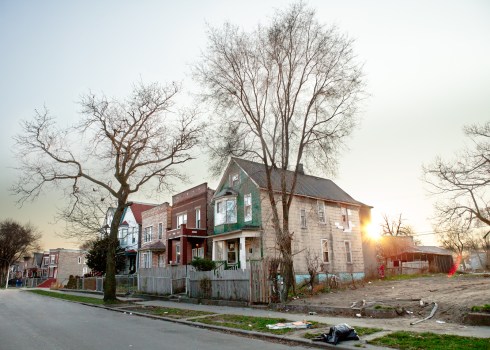
Request: “I want a photo of the whole block of 63rd and Marshfield, on the south-side in the Englewood community – the 6300 block of south Marshfield is where I’m from. I would like it taken in the day time, between two and four o’clock p.m. It’s a green and white duplex-like house – the only green and while house on the block – that my Auntie “Gibby” lives in. I want the picture taken from the sidewalk (that leads to the T-shape alley going towards Ashland and 63rd) in front of the alley, facing slightly towards 64th Marshfield. But, make sure majority of the west-side of the block gets pictured.”
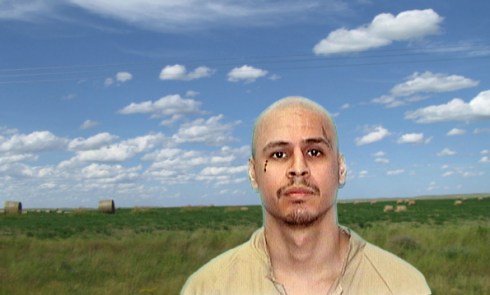
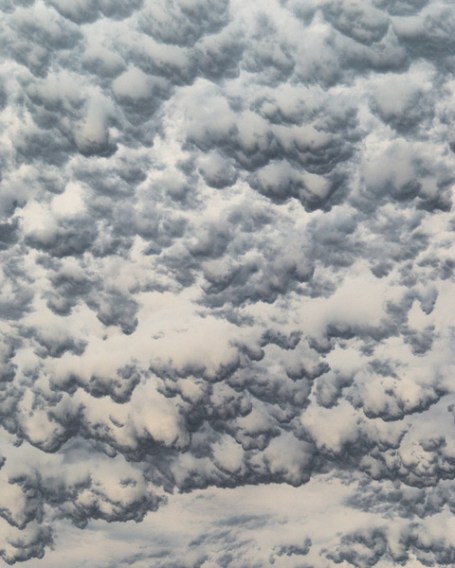
Request: “I would like my own picture done with an alternate background from the IDOC picture. I have no pictures of myself to give my friends and family. This would mean a great deal to me. If this is not able to be done. Then I’ll leave the picture for you to decide. If you can place my picture on another background. Nothing too much please. Something simple like a blue sky with clouds or a sunset in the distance would be fine.”
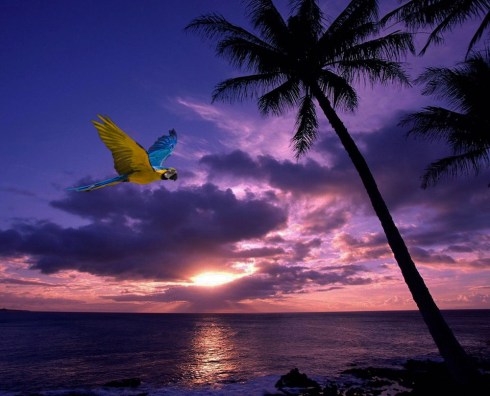
Request: “I would like to see a picture of a beach with the clearest water, and palm trees and birds with colorful plume, and maybe with the sun setting low on the horizon. The only instruction I have would be for you to create this photo with imagination and serenity.”
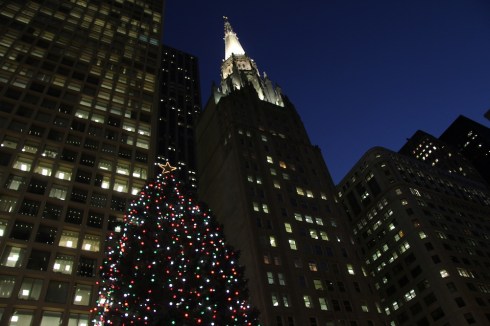
Request: “It’ll be great to get a picture of the chicago skyline at night, with all the big buildings (Willis Tower, etc) and lakefront. really I would just like pictures of the city, the x-mas tree down town, mag-mile, Mill park the places people come to chicago to see. Hey, you’re the photographer, just do what you do!”
Request: “Jennifer Lopez music videos with her ex Ben Affleck on the boat with her butt showing. I will like to see her butt.”
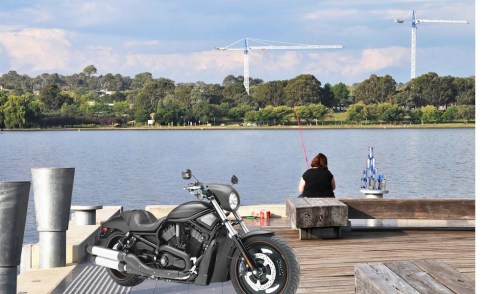
Request: “I would love a photograph of a woman setting by a lake fishing, with an empty chair next to her, with a cooler of beer. And in the empty chair have a sign with FreeBird on it! And have a Harley Davidson motorcycle in the background! I’d prefer the photographer take the photo from a boat out in the lake! Also, I’d prefer a woman that’s over 40!”
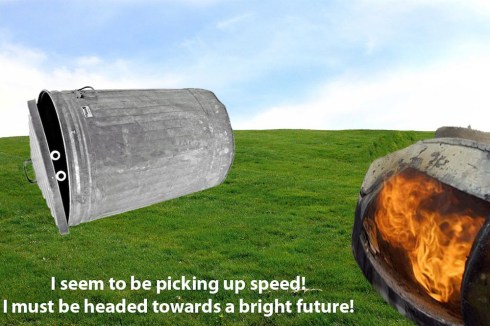
Request: “At 66 yrs. of age I try to use a little humor. I want a picture of a trash-can with the lid half off, with two eyes peeking out of the half-open lid. The trash can is rolling down the hill toward an incinerator with the caption: ‘I seem to be picking up speed I must be headed towards a bright future.’ I was in Florence, CO. So if you could get a picture of me in the Feds and in the state Max joints you could caption both: ‘From Max to Max and no end in sight’.”
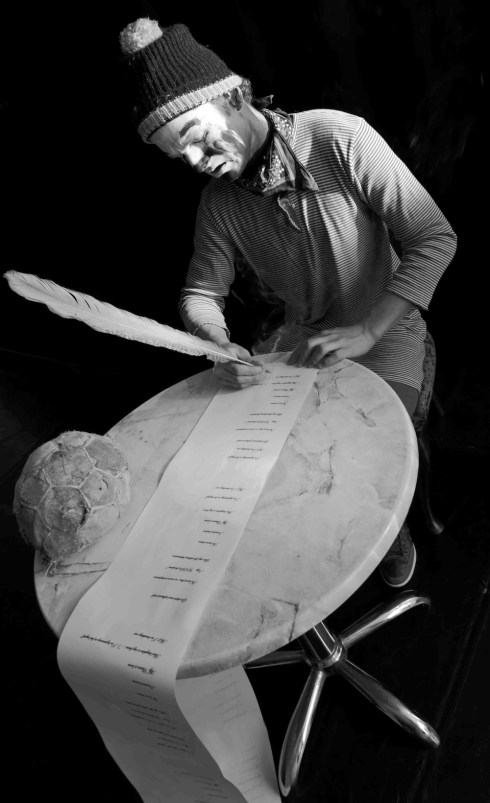
Request: “A lovesick clown, holding a old fashioned feathered pen, as if writing a letter. From the waist up, in black and white. As close up as possible with as much detail as possible, and with the face about four inches big.”
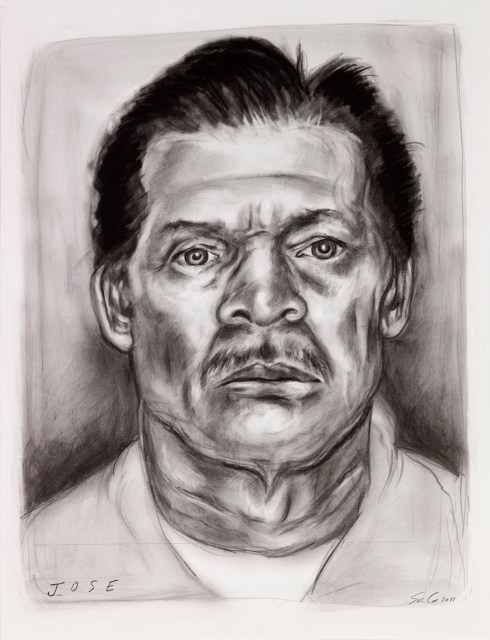
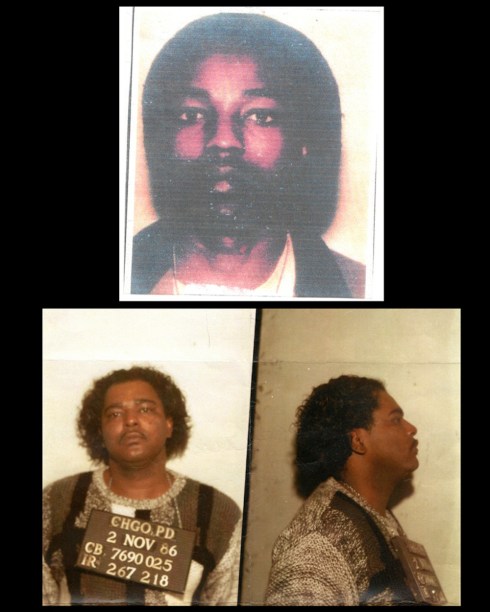
Request: “I would like this picture drawn my ID as is. Don’t add a thing. Just the face will do. Thank you for this blessing. I don’t have any pictures of myself; they all were confiscated, years back, when I was at Pontiac. So I would like to know if you could get a picture of me off the internet or the ID photo that I believe you have. Don’t worry I still don’t smile or laugh it’s been years since I smiled, but thanks to your offer I will be smiling if I get the picture your offering. I believe you could get my mug shot off the internet. The picture is to be sent to my mother in Puerto Rico.”
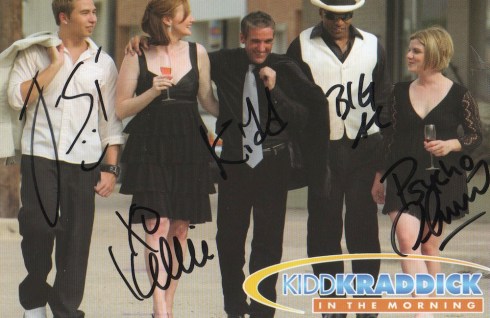
Request: “Cast of the Kidd Kraddick in the Morning Show: Kelly Rasberry; Big Al Mack; Jenna; Psycho Shannon; Kidd Kraddick; JS.” [This is the cast of the radio show he listens to every day. He has been in isolation for 12 years.]
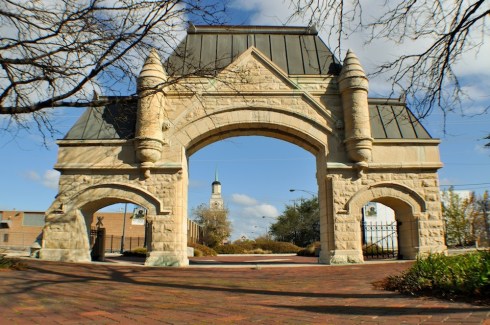
Request: “A picture of the stone archway in the back of the yard’s neighborhood located at 40th and Exchange St; between Halsted and Racine Streets on the South Side. It’s the last remaining thing from the Union Stockyards. I used to climb up on this structure as a kid; a few angle’s of it taken from different directions. I am not limited to any photo amounts.”
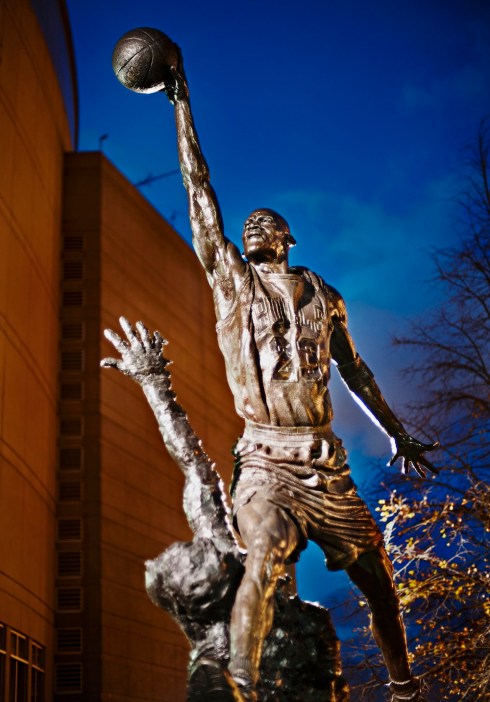
Request: “I would like a photograph of Madison and Ashland looking West towards the United Center, and if you could, I would like a full frontal view of the Michael Jordan statue in front of the United Center. THANK YOU!”
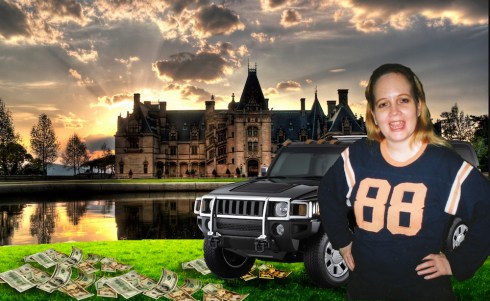
Request: “A photo of my deceased mother standing in front of a mansion, or big castle with a bunch of money on the ground and a black Hummer parked in front of it. I truly appreciate this a lot. I have been trying to get a picture of this, for a long time now. Please send the picture back when you are finished. We can’t receive Polaroids, just regular pictures that is 15 pictures, but 10 per envelope. I’m sending you two poems I wrote. I would truly appreciate it a lot from you helping me out, especially as I don’t have nobody out there. Now I know somebody out there in the world cares about us in here.”
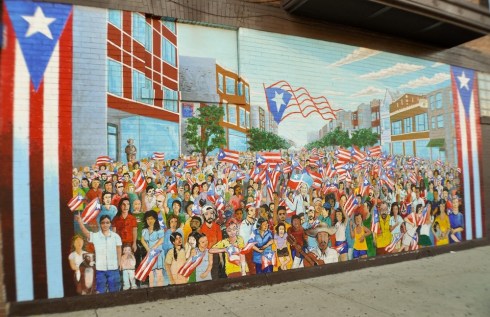
Request: “I would like to receive a photograph of a “8×10″ Puerto Rican Flag. Thank you in advance! This could be taken in the Humboldt Park neighborhood in Chicago.”
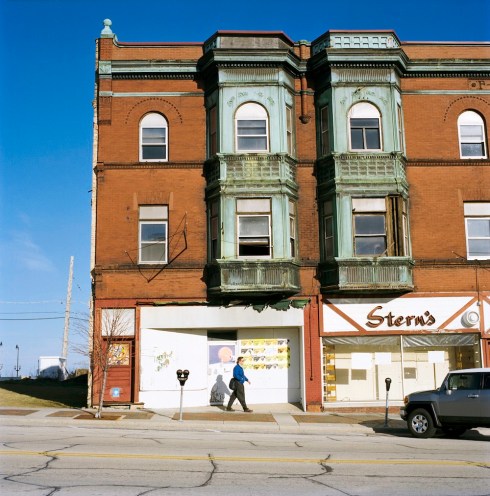
Request: “I would like a picture of downtown Waukegan, IL located in Lake County, IL. The best place to photograph would be Genesse St.”
Request: “Photographs of Tamms Year Ten – that is, if they are not prohibited. :< I’d just like to be able to put the faces to the names we’ve seen over the years so the humanity of each can shine forth – a name on paper at the end of the day is still just a name on paper!”
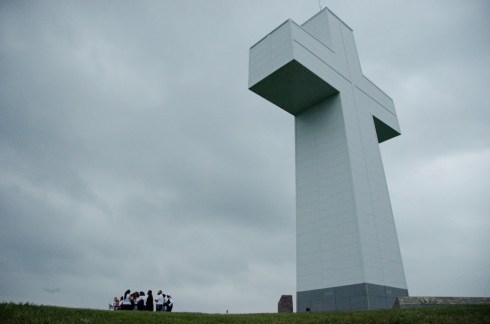
Request: “The Bald Knob Cross in the Southern area of Illinois with someone of the Christian faith going there praying for me with the Grand Cross in the picture praying that I am released from Tamms and that I make parole. I’ve been locked up 36 long years, and time in Tamms is hindering my chances of making parole. I am asking for intercession prayers for my release from Tamms by this personal Bald Knob Cross and the chain will cause my family and others to go there too. Be sure to include the Bald Knob Cross in the picture and to pray for my release from Tamms and to make parole. My family and church will also finish linking the chain of this event. Persistently offering prayers combined with solemn earnest efforts and devoted work to change things. God + Tamms Year Ten + dynamic team!”
TY10 note: We coordinated with the management at Bald Knob Cross, gathered his family members and others, drove six hours to Bald Knob Cross and held a beautiful litany with prayer, song and verse and every family member speaking. The next day we took family members to visit Tamms. Willie was transferred from Tamms the day before the prayer vigil! This summer – after 37 years in prison – he got parole. Willie was put on a Greyhound bus and was back in Chicago the next day. We had a Welcome Home party for him and he talked about this photograph.
Request: “A photograph within a photo of me + the lake front. A photograph within a photo of me + Navy Pier. A photograph within a photo of me + wild lions. A photograph within a photo of me + wild wolves. A photograph within a photo of me + Chinese Dragon. For next Christmas mailing of cards. Please place me in the right, upper corner of the photo within a photo and make copies of them 5 each. Thank you very much and many blessings. Get my photo off the Tamms, prison profile website.”
Request: “A photo of the Christmas tree downtown.”
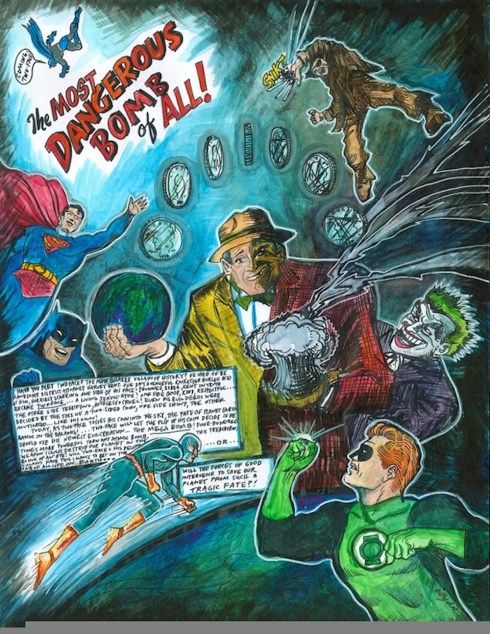
Request: “I don’t know if this like an artist drawing a picture if so I got into the whole superhero thing and I had this idea where two major comic Marvel/DC. It’s a mural with Thor, Captain America, Wolverine, Venom, Iron Man, Hulk teamed up with Superman, Green Arrow, Flash, and Batman against Two Face, Joker, Magneto, Dr Doom, Saber Tooth, Kingpin, and Green Goblin. A battle of good-vs-evil theme.”
Request: “I would like to receive an image laser-printed on regular white paper photograph a myself off the internet without my criminal convictions or other information attached to the photo. I would like the three photographs I am sending to you copied onto digital paper that can be used in a computer enhancement. If someone can do this for me, I will appreciate it very much and thank you. If you can not do it send my photos back, please. “
TY10 Note: We completed this one and the IDOC censored it and returned it to us.
Request: “I would like a photographer to capture the image of a little boy and girl, sitting side by side, on a piano bench, the two of them playing together, with a single bright red rose on the piano keys. If possible, make sure the kids are anywhere from 3-7 years old, dressed in sunday best. It shall be a romantic photo, which I hope to give to my wife. 8×10 copy of the completed photo.”
TAMMS YEAR TEN & PHOTO REQUESTS FROM SOLITARY
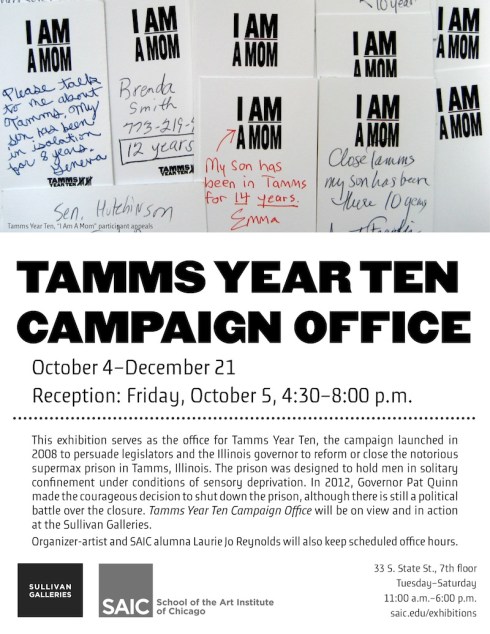
The exhibition Photo Requests From Solitary is on show until the 21st December, at theTamms Year Ten Campaign Office, Sullivan Galleries, School of the Art Institute of Chicago, 33 S. State St., 7th Floor, Chicago IL 60603.
The Tamms Year Ten Photos Requests From Solitary is supported by an Open Society Documentary Photography Audience Engagement Grant. In partnership with the National Religious Campaign Against Torture, the project is to expand to supermaxes in California and Virginia.
Tamms Year Ten is a grassroots coalition formed in 2008 to persuade Illinois legislators and the governor to reform or close Tamms supermax prison. Follow them on Facebook.
Through a website, positive networks, karma in the plus column, and not a small amount of effort, Kevin Miyazaki‘s Collect.Give has steadily been making the world a better place. It’s ridiculous that I’ve not sung the praises of Collect.Give‘s work here on PP before.
In just a few years, Collect.Give has raised tens of thousands of dollars through print sales for worthy charities hand-picked by the photographers themselves.
The latest offering is Love You by Nate Larson and Marni Shindelman. It is from their project Geolocation that, according to Larson, “tracks geotag coordinates associated with Twitter tweets and pairs the text with a photograph of the originating site to mark the virtual information in the real world.”
I’m still undecided about the merits of Geolocation. I saw it at Blue Sky Gallery recently. The images are well made and the concept is stronger than most, but I’m still not sure. Then again, I recently, I big-upped the work of Dan Gluibizzi because he has managed to find a constructive use of – and end point to – Tumblr, so I should be big-upping Larson and Shindelman’s Geolocation because they have managed to step back, find a constructive use of – and an end point to – Twitter.
What really gets me excited, right now though, is the fact that all profits from the sales of Love You go to the Southern Poverty Law Center (SPLC).
The SPLC is an incredibly effective and committed advocacy group of lawyers, researchers and paralegals based in Atlanta, Georgia. The SPLC “fights hate and bigotry and seeks justice for the most vulnerable members of our society.” Often this means providing legal assistance and representation to poor prisoners denied basic human rights during their incarceration, trial hearings and appeals.
I met with several staffers at the SPLC last year and was deeply impressed by SPLC’s work and deeply, deeply effected when I learnt about the inequalities of Southern states’ criminal justice systems. The SPLC mounts lawsuits within the states of Georgia and Alabama (two of the poorest states in the union) against inadequate medical care, prosecutorial misconduct and institutional abuse. Never before have I seen so clearly the link between the prison system and the social inequalities that feed it.
SPLC gives the voiceless the possibility of a voice, despite the obstacles.
“It’s the best show of portraits I’ve seen in Portland in a long time,” said Blake Andrews when he told me he was interviewing Clarke Galusha whose tintype portraits of children are on display at Newspace Center for Photography in Portland through November.
“For many of the subjects in this project, this might have been the first picture-taking experience where they were not asked to smile,” says Galusha who only learned to make tintypes a few months ago!
Recently, journalists from across America have contacted me looking for photographs of solitary confinement to accompany their article. I could only think of three photographers – one of whom wishes to remain anonymous; another, Stefan Ruiz is not releasing his images yet; which leaves Richard Ross‘ work which is well known.
Stefan Ruiz’ photographs of Pelican Bay State Prison, CA made in 1995 for use as court evidence. (See full Prison Photography interview with Ruiz here.)
With a seeming paucity, I went in search of other images. I found an image of a “therapy session” by Lucy Nicholson from her Reuters photo essay Inside San Quentin. A scene that has been taken to task by psychologist and political image blogger Michael Shaw.
Pelican Bay has been hosting media tours and welcoming journalists in the past year – partly due to public pressure and partly through a strategic shift by the CDCR to appear to be responding to public outcry. Maybe the courts have had a say, too?
Correctional Officer Lt. Christopher Acosta is seen in the exercise area in the Secure Housing Unit at the Pelican Bay State Prison near Crescent City, Calif., Wednesday, Aug. 17, 2011. State prison officials allowed the media to tour Pelican’ Bay’s secure housing unit, known as the SHU, where inmates are isolated for 22 1/2 hours a day in windowless, soundproofed cells to counter allegations of mistreatment made during an inmate hunger strike last month. Photo: Rich Pedroncelli, AP/SF (Source)
The amount of visual evidence still seems limited. It’s not that reporting on solitary confinement is lax or missing. To the contrary, I’ve listed at the foot of this piece some excellent recent journalism on the issue form the past year. We lack images.
Why do we need to see these super-locked facilities? Well, depending on your sources there are between 15,000 and 80,000 people held in isolation daily (definitions of isolation differ). My conservative estimate is that 20,000 men, women and children are held in single occupancy cells 23 hours a day.
“For the past 16 years, I have spent at least 22 1/2 hours of every day completely isolated within a tiny, windowless cell. […] The circumstances of my case are not unique; in fact, about a third of Pelican Bay’s 3,400 prisoners are in solitary confinement; more than 500 have been there for 10 years, including 78 who have been here for more than 20 years.”
“A growing body of academic research suggests that solitary confinement can cause severe psychological damage, and may in fact increase both violent behavior and suicide rates among prisoners. In recent years, criminal justice reformers and human rights and civil liberties advocates have increasingly questioned the widespread and routine use of solitary confinement in America’s prisons and jails, and states from Maine to Mississippi have taken steps to reduce the number of inmates they hold in isolation.”
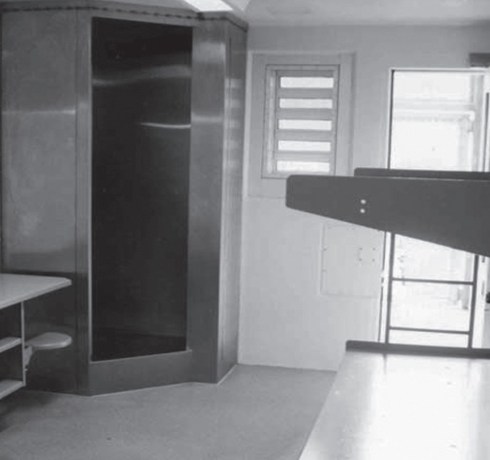
The over zealous and under regulated use of solitary confinement to control risk and populations within U.S. prisons is a cancer within already broken corrections systems. I’m posting a few more image that Google images afforded me – but I urge caution – these are just a glimpse and may not be indicative of solitary/SHU conditions. Windows are a rarity in solitary despite three images below showing them.
The main reason I’m posting here is to ask for your help in sourcing all the photography of U.S. solitary confinement we can. Please post links in the comments section and I’ll add them to the article as time goes on.
A typical special housing unit (SHU) cell for two prisoners, in use at Upstate Correctional Facility and SHU 20.0.s in New York. Photo: Unknown. (Source)
Solitary Confinement at the Carter Youth Facility. Since the arrival of the girls’ program at Carter, the administration has created a new seclusion cell. This cell contains no pillow, sheet, pillow case or blanket. In fact, there is nothing in the cell other than a mattress, which was added after numerous requests from the monitor. Girls are routinely placed in this room for “time out.” Photo: Maryland Juvenile Justice Monitoring Unit. (Source)
First of all, Arrangements needs a proper title, but it’s a work in progress so I suppose it’ll do for now. In Arrangements I’m referencing the current language of photography of post-productions, studio practices and manipulations. It’s definitely a trend and it is a shift that has opened the door for a lot of people to experiment. We’re seeing a lot of the same imagery. Lots of patterns and fabrics, and mirrors to create something – props that are about perception and optics.
But I’m looking for naturally occurring abstractions. Arrangements is basically an old school approach to new school imagery. I’m recognizing moments [of light, color and form] when they happen in real life. I’m interested in photography that is out in the real world. I mean, taking a moment and making it into a two-dimensional image, that’s always seemed abstract to me.
When you talk of current studio experiments are we thinking of photography such as that of Jessica Eaton or Georg Parthen?
My friend Sarah Palmer won the Aperture prize. Sarah is doing constructions in the studio. Her work looks at signs in visual language. I am interested in these signs and symbols and contemporary visual language but finding these things out in the real world.
When I was in SVA grad school, if anyone shot straight photographs, people were really concerned that it would be placed within the realm of documentary. In a lot of people’s eyes, the straight photograph isn’t artistic like it once was. Paul Graham’s essay The Unreasonable Apple is really important; he’s the most interesting photographer dealing with straight photographs and with sequencing.
You have a particular relationship to nature?
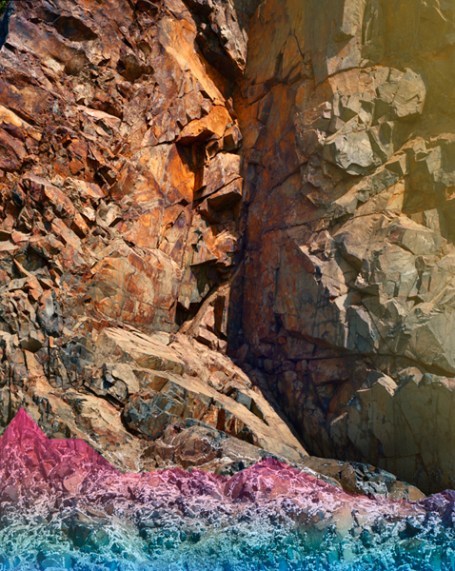
I’m a rock climber so my connection is direct and physical. I’m in awe of towering cliffs and the sublime nature of mountains. I don’t know whether it’s dumb to talk about climbing. Is it that interesting?
I think so. You spend weekends on rock faces. You don’t spend all your time chasing photographs.
It’s easy to get burnt out about something if you obsess over it constantly, especially if you want to keep it going all your life.
I’ve been taking pictures since I was 14 and even then I was serious about making a good photograph. Now, photography is part of who I am and what I do, but I’m not constantly doing it.
Why do you go climbing?
I can’t get the high any other way. I like aggression but I don’t like aggression put on me by someone else. I like pulling hard on a hold and using my muscles. Doing something that is scary but I don’t have to worry about anyone else injuring me. It’s not like wrestling or football.
And photography? Fun or bruising?
The best thing for me is when I start working on an image and figure, ‘Yes, there’s something here.’ I do love having exhibitions, putting something together and having it on the wall. It can be laborious and frustrating but when it’s on the wall it is super rewarding.
The pace that you’re working at, it seems like photography fits in between all the other stuff in life.
At this point in my career, I don’t feel pressure to be producing tons of work. I have no gallery. I have no expectations set upon me except from myself.
I go in waves of producing a lot and then looking at what I’ve done. I’ve been fairly consistent with shooting for the last year and I feel good about it. That’s where the new language comes into play. I don’t think I can have a deadline with my photography. I only know it when I see it.
That’s refreshing, no?
I’ve been studying photographs for a long time and I’m interested in new images. I can see something and know what focal length I want to shoot it at before I even pick my camera up.
I need to change my environments pretty often to find new things. I’ll walk around the neighborhood just to get my eye going but I rarely get something. Being in new places help, which is another reason why I really like photography. You have to be in the place at the time to make the picture. I could never work in a studio.
How do you characterise the Portland photo scene?
The Portland photo scene has a lot going for it and I’ve really only been exposed to what I assume is a small portion. Many of the photographers I’ve met I’ve known about for some time – Shawn Records, Teresa Christiansen, Corey Arnold.
I’ve only been here a year but already feel like I have a strong community of peers. In terms of the gallery scene, I think it’s growing. Spaces like Ampersand Gallery & Fine Books are indicative of a new sensitivity to fine art and vernacular photography praxis here in Portland.
I was disappointed with early coverage of the Hurricane. Given the superstorm conditions photographers were getting many more misses than hits.
The biggest miss was TIME’s first dispatch of Instagram images the day after Sandy hit. Only Michael Christopher Brown of the five photographers – Kashi, Quilty, Lowy, Wilkes and Brown – had some successful frames. TIME has continued adding to its gallery of Sandy images so the older photos (31 – 57) are toward the end.
Photo: Michael Christopher Brown/TIME. Con Edison workers clean a manhole on 7th Avenue and 22nd Street in Manhattan. Source
BUT, photographers were not at fault. It was editors’ mistakes to publish below par images. Half of the photographers images I saw in the first 36 hours were from assigned photographers carrying smartphones. In low light, blustery weather the smartphones fell way short of the test.
THE MONEY SHOT
Kenneth Jarecke lays into TIME for their use of Instagram photos. Okay he references Gene Smith where there is perhaps little relevance and lists all sorts of other reasons such as Instagram getting rich of millions off other peoples’ content, but those are not the core of his burning anger. Jarecke is angry because the pictures are poor, and I can’t disagree with him. Of TIME, Jarecke says:
It’s shameful and you should be embarrassed. Not to say these shots weren’t well seen (which is the hardest part), just that they were poorly executed. Which is to say they fail as photographs.
What was weird was that in a Forbes article largely defending TIME mag’s use of Instagram images there was little discussion of the images qualities, more an emphasis on stats and page views.
Time’s photography blog, was “one of the most popular galleries we’ve ever done,” says [Photo Editor, Kira] Pollack, and it was responsible for 13% of all the site’s traffic during a week when Time.com had its fourth-biggest day ever. Time’s Instagram account attracted 12,000 new followers during a 48-hour period.
Sometimes articles are written as if it is still some surprise that amateur photographs shape our media and consciousness. American Photo describes the lifecycle of a viral photo.
Photo: Nick Cope. Rising flood waters as seen from the window of his Red Hook, Brooklyn apartment.
When we’re all hungry for information and we’re all sharing everything we can get a peek at then an amateur snap, if it is informative enough, will find it’s way to us very quickly.
I admire that American Photo quoted fully from this dude who got that photo.
“It was hard to track [the photo’s path to “viral”] — I was also preparing for a hurricane at the time! And for a good part of the morning I was at a cafe in the neighborhood, chatting with the owner who was mixing up Bloody Marys, and so it was a combination of hanging out with folks in the neighborhood and getting prepared for the storm. And then I start getting all these calls.”
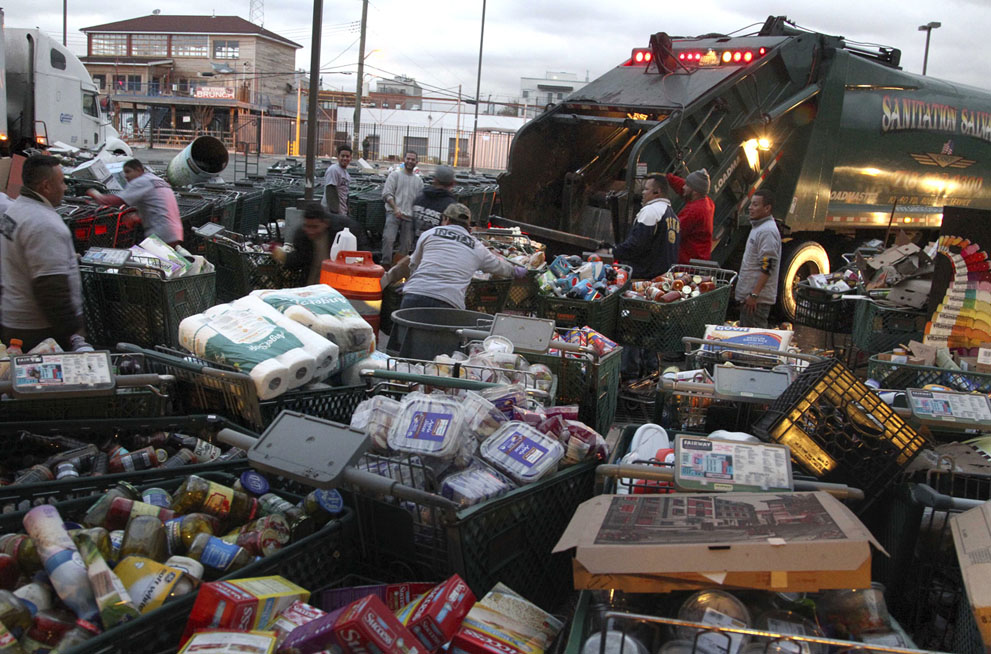
The BIG Atlantic In Focus delivers with a typically epic selection off the wires. Crushed cars, boats on boats, burnt embers, friends hugging/crying, aerial shots of devastation, gas lines, strewn debris (homes), rescued old english sheepdog, destroyed pier and amusement rides, phones charging, pitch black streets, canoe in a living room, downed bridge and then this incredible picture by Seth Wenig of food being dumped.
Men dispose of shopping carts full of food damaged by Hurricane Sandy at the Fairway supermarket in the Red Hook section of Brooklyn in New York, on October 31, 2012. The food was contaminated by flood waters that rose to approximately four feet in the store during the storm. (AP Photo/Seth Wenig)
THE HORROR SHOT
Gilles Peress‘ very personal letter in which he appears to be having a breakdown is shared with the world.
“I have to say that in twelve years, to have shot pictures at 9/11 downtown, and again downtown in 2008 when the financial system collapsed, and now, is intense: big city, big tragedies, and a sense of having entered into a different period of history.”
I really want to know who CK and GH, the letters recipients, are.
Peress talks about homelessness and the poor being forgotten in the delivery of aid and services. Michael Shaw at BagNewsNotes wrote about the homeless being forgotten in the coverage.
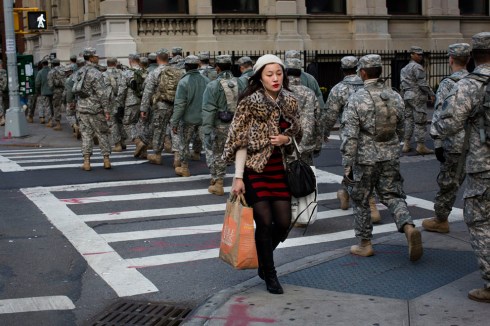
Back to In Focus. Today, another good edit by Alan Taylor’s team. These two images stood out.
Photo: AP Photo/John Minchillo. A woman passes a group of National Guardsmen as they march up 1st Avenue towards the 69th Regiment Armory, on November 3, 2012, in New York. National Guardsmen remain in Manhattan as the city begins to move towards normalcy following Superstorm Sandy earlier in the week.
It’s only fitting to finish these thoughts with a nod to two perhaps lesser feted Instagram photographers – after all, Instagram had record number of hashtaggles for #Sandy #HurricaneSandy and #Frankenstorm.
Clayton Cubittis a bit more wry in his approach including this GSV comparison which is typical of Cubitt’s sideways thinking on most things visual. Good stuff.
Photo: Clayton Cubitt. Posted on Instagram, “One day you’re living the American dream. The next…”
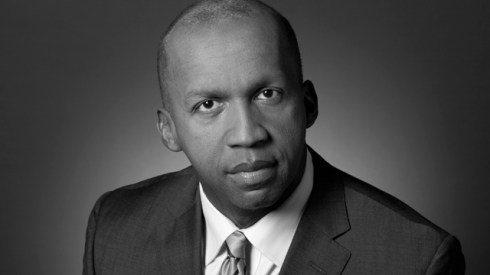
Bryan Stevensonfounder and executive director of the Equal Justice Initiative (EJI) made arguments to the United States Supreme Court in May 2012 against the sentencing of Juvenile to Life Without Parole. He is fervently against the death penalty and has consistently pointed out the injustices within the US legal system that benefit the rich over the poor.
This is the second part of a two-part conversation with Prison Photography. You can read part one here.
PP: While presenting at TED, you encouraged the audience to educate themselves about communities beyond their circles, but you also warned the audience that the type of awareness that spurs you and your work – an awareness of profound inequality in American society – “will get to you”. Can you expand on that?
Bryan Stevenson: It is a challenge. It’s a new relationship with the world of injustice, poverty and bias that implicates you in ways in which you are otherwise not implicated. That’s both a burden and – in my judgment – a privilege, because to be able to respond to those things animates human beings in ways that very few things do. It creates meaning and purpose that can be transcendental.
I think the way you do it is by trying to insulate yourself from the politics of fear that have created many of these dynamics. We very rarely ask ourselves ‘What are we afraid of?’, ‘What are we angry about?’ but in public life we’ve been encouraged through our political leaders to be very angry about crime, to be very afraid of the society that we live in. There are things that we should be legitimately angry and legitimately concerned about, but I think as a world view this is a very destructive way to live.
When you’re consumed with fear and anger you make decisions about how you treat other people, even about how you think of your own needs, that often time leads to inequality, injustice and oppression. When you look at every example of massive human rights violations the story always begins with a narrative around fear and anger. I think one of the things we have to do is step back from that and begin to ask harder, more critical questions about the issues around us. Is it better to punish crime or to prevent crime? Are there things that we can do to reduce the prison population? Is it better to have a free population or an incarcerated population? If you start asking those kind of questions it will lead you to different policy outcomes than the outcomes we’ve largely elected.
What that means for individuals – and I think for me – is that you sometimes have to say things which are challenging; you have to be willing to stand when everyone else is sitting and be the voice that says ‘But what about this?’ You have to be willing to speak when everyone else is quiet. That’s not always easy and that’s not always comfortable. Certainly for me, it has at times been pretty overwhelming and vexing to be the target of other people’s anger and frustration because of what I am saying and who I am representing.
It has been frustrating to deal with this wall of ignorance when people are making decisions with so little information and with so little context of the people whose lives are being directly affected. What it has taught me is that I do have to believe things I haven’t seen and that is not always easy for people to embrace but I think it essential if you are going to create justice, if you’re going to create a new world.
As a little boy, growing up in the civil rights movement you’d hear Martin Luther King say, “The moral arc of the universe is long but it bends toward justice.” I heard the words, I understood their individual meaning but I didn’t really get what he was talking about until I became actively engaged in advocating for people who were hated and condemned.
One of the great challenges for our generation and community today is that so much of academic training is trying to deconstruct the things we believe, know and understand, and to make you accept the status quo – it is really intended to make you less idealistic, less aspirational, less confident that you can change the world in which you inhabit. That is unfortunate and while we have to be smart and strategic, we still have to be hopeful and we still have to believe in things we haven’t seen.
PP: This year you presented arguments in the cases Jackson vs. Hobbs and Miller vs. Alabama at the US Supreme Court. How did it go?
Bryan Stevenson: The United States Supreme Court is a tough room full of smart, thoughtful people who know these issues inside out. They ask a lot of difficult questions. Many of the justices asked some interesting questions about what sort of remedy would be necessary if relief were granted which is more encouraging than if they had asked no questions! I was pleased that the court granted review – that’s the hard part. There are thousands of petitions filed every year and the court rarely grants review, so for the court to do so on such an important constitutional question like this is even less common.
Bryan Stevenson: EJI will be dealing with as many of those cases as we can. We have made commitment to over 100 people in the last few months. We prepared to help those who would be affected by a favorable ruling. A lot of these kids don’t have right to counsel so even if the court grants relief, they’re going to have a hard time finding the legal help they need to get their sentence corrected. We’re trying to take that up.
In addition to ending LWOP for children, we are committed to ending the incarceration of children with adults. There’s still 27 or 28 states that put kids in adult facilities so that’s another campaign we’re trying to advance. We’ll take those cases on. We’re very interested in ending the underage prosecution of children; there is still a lot of states that have no minimum age for trying a child as an adult so frequently 9 and 10 year olds are looking at adult prosecution, something we think should never happen and we’ll keep doing those cases no matter what the court rules on Miller and Jackson.
PP: EJI was one of the earliest organizations to partner with Richard Ross. He has provided EJI with photographs for its reports and advocacy. In April, I wrote a piece for Wired.com titles Uncompromising Photos Expose Juvenile Detention In Americaabout Richard’s photographs. What does photography do or change – if anything at all – in helping EJI describe these worlds we can talk about but rarely see?
Bryan Stevenson: I think photography is essential. There’s no question that Richard’s images provide a power and an intimacy to these issues that cannot be achieved any other way. It is important for photography and photojournalism to be a component of the kind of work we’re trying to do because in many ways the issues we’re discussing are underground issues.
We don’t really know what prisons and jails look like. We don’t know what the people inside them look like. We have some very outdated and exaggerated presentations of jails and prisons in popular culture. I don’t think people can get a perspective on what it is like to lock someone down 23 hours a day, year after year, decade after decade. We don’t understand what it is like for a child to be in custody in an adult facility where the risk of sexual assault is 10 times greater than it would be for an adult. We don’t know what it is like to go week after week with no contact with anybody who is not either a prisoner or a prison guard, which is true for many of our clients.
There is cruelty, real misconduct and brutality in prisons. There are all of these realities that good photographers can expose and give a lens to that is critical. Richard’s work has been hugely influential and we’ve worked with other photographers to bring these issues to light. Our first report in 2007 was mostly photographs, driven by images by Steve Liss who’d spent time in facilities taking photographs of young kids incarcerated.
Until we show people these children and the conditions of confinement in which we find these children we are not going to be able to get people to deal carefully and honestly with these issues. Photo-advocacy is critical to the work we do.
PP: Once an image is made and seen of a child in a prison cell it smashes all the stereotypes that you talked about within our a culture of fear?
Bryan Stevenson: That’s right.
PP: You argued at the Supreme Court that Juvenile Life Without Parole (JLWOP) is cruel and unusual. Definitions of cruel and unusual change over time. We perceive punishments as cruel and unusual depending on what we collectively consider socially reasonable. What do we need to do as a society to label practices that lead to mass incarceration as cruel and unusual?
Bryan Stevenson: We need to be quite intentional about how recognizing that having the highest rate of incarceration in the world is a negative thing. It is not a good reflection on a society that is committed to freedom and equality. We’re going to have to be as deliberate in our efforts to eliminate and reduce mass incarceration as we have been in creating it.
We have to begin a conversation where we say it would be better if 1 out 3 young men of color were not in jail, prison, probation or parole. It would be a positive thing if we solved the problems of drug addiction and misuse in our society rather than just continuing to imprison people. If you orient that way, then you can ask ‘What can we do instead?’
One of the things EJI talks about is having a deliberate target of reducing the prison pollution by 50% over the next 6 or 7 years. We have to be intentional. Drug policy is the largest contributor to our current prison population. We started about 30 years ago making something like simple drug possession a crime. We made drug addiction a crime. If we thought about drugs and drug abuse as a healthcare problem, rather than a criminal justice problem not only would we not be saving the thirty, forty, fifty thousands dollars a year to it costs incarcerate a person who has a health problem we could actually begin to pursue the interventions that reduce drug addiction. Redirect the resources.
That’s not just good for the government and for taxpayers; it’s good for families and communities. That orientation would go a long way to move us forward and eliminate these race disparities and the disparities that are created by class and status. If we did that seriously over the next 2 or 3 years we would dramatically reduce our prison population almost overnight.
If we added to that a punishment system and scale influenced by what science has to teach us about rehabilitation, behavior modification, about how human beings can recover, I think we’d also save billions of dollars – billions with a B – on resources that are now being invested in doing nothing more than warehousing people, further damaging them before we release them back into society.
There are states where we spend over $100,000 per year to keep teenagers incarcerated. I can’t identify any educator who couldn’t make better use of those dollars. Most educators will tell you that for half of that – for a quarter of that – invested in each child you are working with, you could do some magical things to re-orient them and prevent crime and the problems we’re trying to deal with in the public safety sphere. We must approach this problem by first acknowledging it’s a PROBLEM, it’s not just an aspect of life in America that we incarcerate the poor and disadvantaged.
You’re right; the notion of cruel and unusual has evolved. It is rooted in a concept of how we relate to one another, but it is also related in a vision of human rights and human dignity that the framers of our constitution understood was critical in a free society. If we tolerate cruelty and violations of human rights we sow the seeds of destruction, discontent and animosity that ultimately undermine any free community. That’s why we can never make peace – in my judgment – the type of cruelty we see too much. To say to any child of thirteen, ‘You are only fit to die in prison’ is cruel. I don’t think you need a law degree or a degree in adolescent development to acknowledge that. You just need to be willing to think critically and honestly about what protecting children requires. A lot of these issues are much more simple than people think.
PP: It’s the first time I’ve heard someone put a figure on targets for decarceration in America. A reduction of 50% would mean releasing more than 1.1 million people. That figure would scare the hell out of most Americans.
Bryan Stevenson: [Laughs] Only because they don’t know who those people are!
There are hundreds of thousands of people in jails and prisons who have never committed a violent crime, they’ve never hurt anybody. We have close to a million people in prison for non-violent property crimes or drug crimes. Frankly, if someone stole $50 from your house, you’re never going to get that back in our current system, but you can imagine a world where the obligation to pay back to restore and to compensate the victims of crime in ways that are meaningful could replace the use of prisons to punish and crush folks.
All of a sudden a whole host of things are happening that I think are positive to our society; once we begin defining and describing how people get to prison and who they are, the idea of reducing the prison population becomes a lot more attractive. Also, when we start talking about the collateral consequences of the money we’re spending; we are undermining education in this country because of mass incarceration. We are depleting resources for public safety because of mass incarceration. We are stripping basic services and public utilities because of mass incarceration.
PP: At TED, you said that as a society we will not be judged by our technology. Will we be judged by the fairness of our laws?
Bryan Stevenson: Our laws express our fundamental norms and our fundamental values; I think it more complex than just our laws or just our technology. It has to do with the dynamics in our community. If we get comfortable with widespread racial bias and discrimination; if we get comfortable with a widespread population of people who are desperately poor; if we get comfortable with these vertical relationships then we are destined to become a different kind of America – an America that is not defined by commitment to fairness, equality and opportunity.
We have to pay attention to all of the strategies and techniques that create opportunity, and technologies are at the heart of that, design is at the heart of that, even entertainment can stimulate the kind of creativity we need. Those are important parts of it, and so are our laws. Ultimately, for me, the measure is what we do with technological tools and where we stand. There are more people living under the poverty line today than there were forty years ago. That’s a bad thing. Having 2.3 million people in jails and prisons is a bad thing. The growing population of people who have permanently lost the right to vote who are African-American – after the civil rights struggle – is a bad thing. The despair and hopelessness that I see in poor communities and minority communities – where 13 year old children believe they’re either going to be dead or incarcerated by the time they are 21 – is a bad thing. We will ultimately have to measure our commitment to society and to our norms and values by how we respond to those problems.
PP: And you’re helping us learn deeply about the problems, and offering solutions. More power to you. Thank you Bryan.






















 Prison Photography